
Home
MENA most unequal region in the world, Piketty report
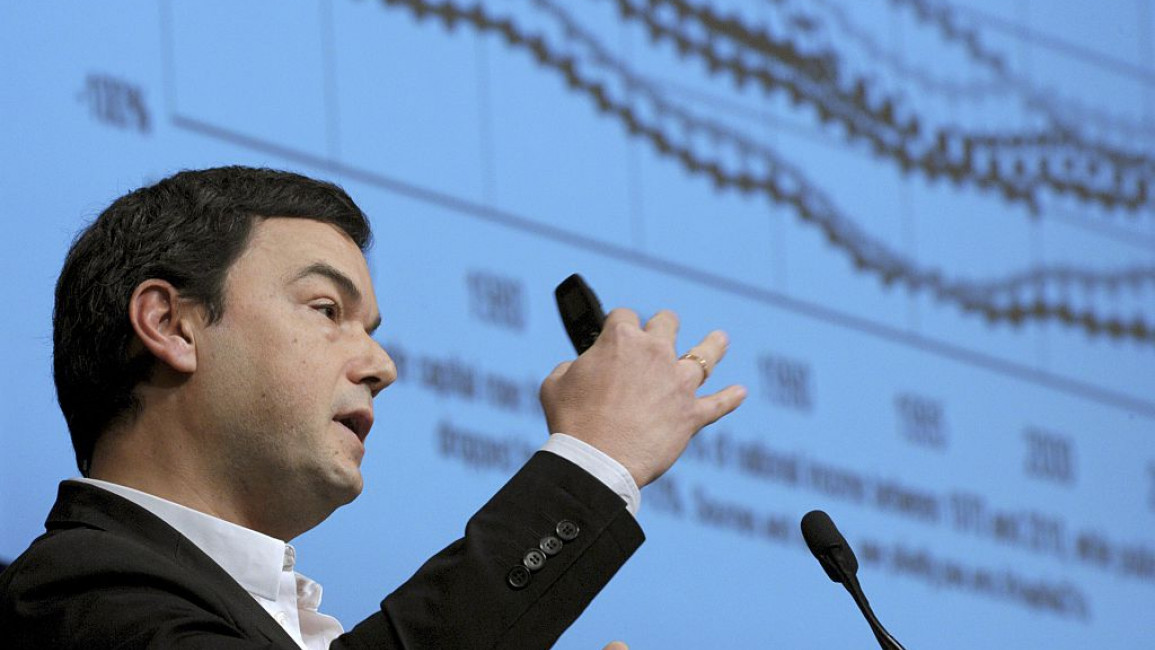
A new report by the world-renowned economist Thomas Piketty, has made headlines about striking gaps in global inequality, where the Middle East stood out as the most unequal region in the world in terms of wealth, income and gender.
In the Middle East and North Africa, the income gap between the different countries varies significantly. In the Gulf countries, the gap in wealth is even higher than in the rest of the region.
About 75 billionaires in the MENA – most of whom reside in Gulf countries - control about $200 billion dollars.
In the more populated countries of the region, particularly North Africa and the Levant, the poorest 50 percent of the population earn twenty times less than the top 10 percent. In the Gulf, the poorest half of the population earn up to 32 times less than the top 10 percent.
In 2016, Piketty warned about the state of inequality in the region in an interview with The New Arab, arguing that this was one of the factors that fuelled the Arab Spring wave of uprisings from 2011.
Worldwide about 2,750 billionaires control 3.5 percent of the world’s wealth.
“More striking than income and wealth inequality in the MENA, however, is the gender inequality, especially in terms of labour income share”, Rowaida Moshrif, Middle East coordinator at the World Inequality Lab told The New Arab.
The World Inequality Report 2022, which provides the first estimates of the gender inequality in global earnings, estimated that on average, only 15 percent of the female population of the region have an income.
“In war zones such as in Yemen, the female income share can even go as low as 1 percent,” Moshrif added.
“In the past 10 years since the Arab Spring, the income, wealth and gender inequality in the Middle East has unfortunately even increased. War and instability exacerbate the situation. Women in particular do not have the same access to the labour market as men do, putting them in a particular vulnerable position.”
The inequality in the Middle East stands in stark contrast with Europe. In Europe, the top 10% share around 36% of total, whilst in MENA this figure is at 58%, the report states.
Such findings add to the debate about worsening inequality during a global pandemic, and the significant inequality gap between advanced and developing economies.
“The COVID crisis has exacerbated inequalities between the very wealthy and the rest of the population. Yet, in rich countries, government intervention prevented a massive rise in poverty, this was not the case in poor countries” explains Lucas Chancel, lead author of the report.
The report also addresses the large inequalities in carbon emissions which are essential for tackling climate change. The Global Inequality database shows that the top 10% of emitters are responsible for close to 50% of all emissions, while the bottom 50% produce 12% of the total.
The World Inequality Report 2022 presents the most up-to-date and complete data on the various facets of inequality worldwide as of 2021: global wealth, income, gender and ecological inequality. The analysis is based on several years’ work by more than one hundred researchers from around the world, and will be published by the World Inequality Lab. The data is available in the most complete database on economic inequality, the World Inequality Database. The report includes a foreword by 2019 economic Nobel prize laureates Abhijit Banerjee & Esther Duflo.
The World Inequality Report 2022, the figures and datasets are available on the companion website of the report: //wid.world
In a nutshell
In 2021, after three decades of trade and financial globalization, global inequalities remain extremely pronounced: they are about as great today as they were at the peak of Western imperialism in the early 20th century. In addition, the Covid pandemic has exacerbated even more global inequalities. Our data shows that the top 1% took 38% of all additional wealth accumulated since the mid-1990s, with an acceleration since 2020. More generally speaking, wealth inequality remains at extreme levels in all regions.
“The COVID crisis has exacerbated inequalities between the very wealthy and the rest of the population. Yet, in rich countries, government intervention prevented a massive rise in poverty, this was not the case in poor countries. This shows the importance of social states in the fight against poverty.”, explains Lucas Chancel, lead author of the report.
Gabriel Zucman states: “The World Inequality Reports addresses a critical democratic need: rigorously documenting what is happening to inequality in all its dimensions. It is an invaluable resource for students, journalists, policymakers, and civil society all over the world.” Lucas Chancel adds “If there is one lesson to be learnt from the global investigation carried out in this report, it is that inequality is always political choice.”
Key messages
- MENA is the most unequal region in the world, Europe has the lowest inequality levels.
- Nations have become richer, but governments have become poor, when we take a look at the gap between the net wealth of governments and net wealth of the private and public sectors.
- Wealth inequalities have increased at the very top of the distribution. The rise in private wealth has also been unequal within countries and at the world level. Global multimillionaires have captured a disproportionate share of global wealth growth over the past several decades: the top 1% took 38% of all additional wealth accumulated since the mid-1990s, whereas the bottom 50% captured just 2% of it.
- Gender inequalities remain considerable at the global level, and progress within countries is too slow
- Ecological inequality: our data shows that these inequalities are not just a rich vs. poor country issue, but rather a high emitters vs low emitters issue within all countries.
Arms sales continue to grow amid pandemic, SIPRI

STOCKHOLM - Sales of arms and military services by the industry’s 100 largest companies totalled $531 billion in 2020—an increase of 1.3 per cent in real terms compared with the previous year. This is according to new data released today by the Stockholm International Peace Research Institute (SIPRI).
The arms sales of the Top 100 arms companies in 2020 were 17 per cent higher than in 2015—the first year for which SIPRI included data on Chinese firms. This marked the sixth consecutive year of growth in arms sales by the Top 100.
Arms industry weathers Covid-19 pandemic and economic downturn
Arms sales increased even as the global economy contracted by 3.1 per cent during the first year of the pandemic. ‘The industry giants were largely shielded by sustained government demand for military goods and services,’ said Alexandra Marksteiner, Researcher with the SIPRI Military Expenditure and Arms Production Programme. ‘In much of the world, military spending grew and some governments even accelerated payments to the arms industry in order to mitigate the impact of the Covid-19 crisis.’
Nevertheless, operating in the military market did not guarantee immunity to the effects of the pandemic. French arms manufacturer Thales, for example, ascribed a drop in arms sales of 5.8 per cent to lockdown-induced disruptions in the spring of 2020. Some companies also reported supply chain disruptions and delayed deliveries.
US companies continue to dominate ranking
The United States once again hosted the highest number of companies ranked in the Top 100. Together, the arms sales of the 41 US companies amounted to $285 billion—an increase of 1.9 per cent compared with 2019—and accounted for 54 per cent of the Top 100’s total arms sales. Since 2018, the top five companies in the ranking have all been based in the USA.
The US arms industry is undergoing a wave of mergers and acquisitions. To broaden their product portfolios and thus gain a competitive edge when bidding for contracts, many large US arms companies are opting to merge or acquire promising ventures. ‘This trend is particularly pronounced in the space sector,’ said Marksteiner. ‘Northrop Grumman and KBR are among several companies to have acquired high-value firms specialized in space technology in recent years.’
Chinese firms account for second largest share of Top 100 arms sales
The combined arms sales of the five Chinese companies included in the Top 100 amounted to an estimated $66.8 billion in 2020, 1.5 per cent more than in 2019. Chinese firms accounted for 13 per cent of total Top 100 arms sales in 2020, behind US companies and ahead of companies from the United Kingdom, which made up the third largest share.
‘In recent years, Chinese arms companies have benefited from the country’s military modernization programmes and focus on military–civil fusion,’ said Dr Nan Tian, SIPRI Senior Researcher. ‘They have become some of the most advanced military technology producers in the world.’ NORINCO, for example, co-developed the BeiDou military–civil navigation satellite system and deepened its involvement in emerging technologies.
Mixed results among European arms companies
The 26 European arms companies in the Top 100 jointly accounted for 21 per cent of total arms sales, or $109 billion. The seven British companies recorded arms sales of $37.5 billion in 2020, up by 6.2 per cent compared with 2019. Arms sales by BAE Systems—the only European firm in the top 10—increased by 6.6 per cent to $24.0 billion.
‘Aggregated arms sales by the six French companies in the Top 100 fell by 7.7 per cent,’ said Dr Lucie Béraud-Sudreau, Director of the SIPRI Military Expenditure and Arms Production Programme. ‘This significant drop was largely due to a sharp year-on-year decline in the number of deliveries of Rafale combat aircraft by Dassault. Safran’s arms sales grew, however, driven by increased sales of sighting and navigation systems.’
Arms sales by the four German firms listed in the Top 100 reached $8.9 billion in 2020—an increase of 1.3 per cent compared with 2019. Together, these firms accounted for 1.7 per cent of the Top 100’s total arms sales. Rheinmetall—the largest German arms manufacturer—recorded an increase in arms sales of 5.2 per cent. Shipbuilder ThyssenKrupp, in contrast, reported a drop of 3.7 per cent.
Russian arms sales decline for third year in a row
The combined arms sales of the nine Russian companies ranked in the Top 100 decreased from $28.2 billion in 2019 to $26.4 billion in 2020—a 6.5 per cent decline. This marks a continuation of the downward trend observed since 2017, when arms sales by Russian companies in the Top 100 peaked. Russian firms accounted for 5.0 per cent of total Top 100 arms sales.
Some of the sharpest declines in arms sales among the Top 100 were recorded by Russian firms. This coincided with the end of the State Armament Programme 2011–20 and pandemic-related delays in delivery schedules. Almaz-Antey and United Shipbuilding Corporation saw their arms sales fall by 31 per cent and 11 per cent, respectively. Conversely, United Aircraft Corporation increased its arms sales by 16 per cent.
Another key development in the Russian arms industry was the diversification of product lines. Russian companies are currently implementing a government policy to increase their share of civilian sales to 30 per cent of their total sales by 2025 and 50 per cent by 2030.
Other notable developments in the Top 100
- Collectively, the arms sales of companies in the Top 100 based outside the USA, China, Russia and Europe totalled $43.1 billion in 2020—an increase of 3.4 per cent since 2019. This represents 8.1 per cent of the Top 100’s total arms sales.
- The arms sales of the three Israeli companies listed in the Top 100 reached $10.4 billion, or 2.0 per cent of the total.
- The aggregated arms sales of the five Japanese companies in the ranking were $9.9 billion in 2020, or 1.9 per cent of the total.
- Four South Korean companies were included in the ranking. Their combined arms sales amounted to $6.5 billion in 2020, a year-on-year increase of 4.6 per cent.
- Combined arms sales by the three Indian companies in the Top 100 grew by 1.7 per cent. In 2020 the Indian Government announced a phased ban on imports of certain types of military equipment to bolster self-reliance in arms production.
What Facebook whistleblower reveals about social media and conflict
What Facebook whistleblower reveals about social media and conflict
By Jane Esberg, Senior Analyst, Social Media & Conflict, International Crisis Group, 18 November 2021
Former Facebook employee Frances Haugen’s recent testimony before the U.S. Senate reasserted the platform’s role in propagating misinformation that feeds conflict offline. Facebook should do more to reduce the spread of harmful content by revamping its moderation capacities and modifying its algorithm.
The U.S. Senate recently heard testimony from Facebook whistleblower Frances Haugen, who left the company’s civic integrity team with a trove of documents that she delivered to the Wall Street Journal. The leaked documents and her testimony support what many, including Crisis Group, have reported – that Facebook has exacerbated conflict in a number of places, and too often does not do enough to manage the fallout.
Haugen’s central criticisms in her testimony focus on Facebook’s algorithm, the particular set of rules that determine the content that users see, including where a post appears in the “news feed”. Facebook’s algorithm is designed to give users what the company believes is the best possible experience, to keep them coming back to the platform. Though few specifics are known, among other metrics the algorithm heavily weights user engagement, which includes actions like “liking”, sharing or commenting on a post. Problems arise because polarising content tends to perform well on such metrics, and thus get rewarded with a higher position on users’ feeds. This affects the substance of the content itself: in leaked Facebook research, some European political parties reported posting more negative content in response to a 2018 change to the algorithm that more heavily weighed user engagement. Facebook tries to mitigate this risk through what it calls “integrity demotions”, which push potentially harmful content lower on the news feed, and by boosting original reporting. For Haugen and other critics, these measures are not enough.
The debate over Facebook’s news feed algorithm has direct implications for conflict. Crisis Group’s work on Cameroon highlighted that by promoting polarising content, the algorithm may contribute to ethno-political tensions. Hate speech and other polarising content often spread on social media in Ethiopia, and Haugen has suggested that the algorithm may contribute to its reach. In an internal Facebook report leaked to the Wall Street Journal, a test set up to explore how the news feed operated in India found a “near constant barrage of polarizing nationalist content, misinformation, and violence”.
Conflict zones present particular challenges to Facebook in reducing harmful content: understanding what constitutes misinformation is more difficult in regions with less media freedom; hate speech is often highly contextual; and the plethora of languages and dialects spoken by users make content moderation across the globe an enormous technical challenge.
But even with these challenges, Facebook can do better. Start with its moderation system. Harmful material is removed through a mix of human moderators, who review flagged posts, and artificial intelligence, including a hate speech algorithm. Though 90 per cent of Facebook’s users live outside the U.S. and Canada, the moderation system heavily favours the U.S. According to leaked Facebook research, only 13 per cent of the 3.2 million hours spent labelling and removing misinformation in 2020 focused on non-U.S. contexts.
Facebook also has significant gaps in its language capacities. Haugen reported that 87 per cent of the platform’s spending to counter misinformation is devoted to English speakers, despite representing just 9 per cent of users. Most of the platform’s Arabic-speaking content reviewers know Moroccan Arabic, for example, and so cannot always identify hate speech, violence and abuse in other regional dialects, according to a leaked Facebook document. As Crisis Group has noted, in Cameroon, moderators with an understanding of local dialects are important to correctly identifying inflammatory content. Many conflict-affected countries, particularly those with multiple languages and dialects, are left under-resourced.
The same language capacity issues arise in Facebook’s automated flagging of content. Facebook’s response to harmful language relies heavily on its hate speech algorithm, which it touts as identifying 97 per cent of this content ultimately removed from the platform. But this algorithm does not work in all dialects, according to leaked research. It covers only two of the six languages spoken in Ethiopia, for example. In Afghanistan, the platform took action on an estimated .23 per cent of hate speech, according to Facebook research, due to gaps in its language capabilities. In India, Facebook’s largest market, leaked research highlighted a lack of relevant language classifiers to flag content. (Importantly, this may not be the only reason such content was allowed to remain: the Wall Street Journal previously reported that political considerations affected decisions about whether or not to remove Hindu nationalist pages and content.) One leaked study estimated that Facebook took action globally on as little as 3 to 5 per cent of hate speech and less than 1 per cent of violence incitement.
Facebook has taken some steps to address these imbalances. Partnerships with NGOs give the platform greater insight into conflict contexts. (Crisis Group is a partner of Facebook and in that capacity has occasionally been in contact with Facebook regarding misinformation on the platform that could provoke deadly violence.) Facebook has also provided digital literacy training to aid in reducing the spread of harmful content. Facebook’s spokesperson told the Wall Street Journal: “In countries at risk for conflict and violence, we have a comprehensive strategy, including relying on global teams with native speakers covering over 50 languages, educational resources, and partnerships with local experts and third-party fact checkers to keep people safe”. Such efforts are useful, and should be expanded.
Improving the platform’s ability to reduce harmful content across languages and local contexts is a central component of reducing the potential for violence offline. This includes channelling more funding toward expanding moderation teams and addressing language gaps, which can help limit the flow of hate speech, misinformation and incitement to violence. For example, Facebook increased the resources dedicated to Myanmar after it publicly acknowledged its role in the Rohingya atrocities. Crisis Group research shows that in part because of this past experience, the platform moved quickly and aggressively to remove pages linked to the military junta after the February 2021 coup.
But content moderation alone will not be enough. Haugen’s testimony lays bare how Facebook’s algorithm is in some cases misaligned with reducing conflict. Making the algorithm less engagement-driven would not directly address the presence of harmful content, but it could make it less visible. Nor does this have to mean shifting to a chronological news feed, as Haugen recommended: Facebook made changes to the algorithm in relation to health and civic content in the spring of 2020, and in certain conflict-affected countries including Myanmar and Ethiopia. Changes could also target the “explore” feature, which prompts users to look at new pages or accounts they may be interested in – one way that Facebook is inadvertently still advertising pages linked to Myanmar’s military junta. Fully understanding the consequences of any algorithmic changes, particularly in developing contexts, would be greatly facilitated by Facebook disclosing its own research and sharing more data with outside experts.
In the midst of all the criticism, it is easy to lose sight of the many positive benefits of social media for conflict-affected countries. Facebook has helped in the organisation of mass protest movements. It has allowed users to share information about human rights abuses in conflict zones. It offers an alternative source of news in countries where the media is heavily regulated by the state. But the downsides have been substantial. With more resources, research and reform, Facebook could reduce them.
Overkill: Reforming the Legal Basis for the U.S. War on Terror
International Crisis Group, Report No 5/United States, 17 September 2021
After the 9/11 attacks, the U.S. Congress passed a use of force authorisation that successive presidents have used to expand military action ever further. As part of our series The Legacy of 9/11 and the “War on Terror”, we argue that Washington should enact a new statute that promotes transparency and narrows the war’s scope.
What’s new? The U.S. government is conducting a formal review of its counter-terrorism direct action operations – ie, those that involve kill or capture. But it is not clear that the review will shed light on key questions about the effectiveness of militarised counter-terrorism efforts or recommend major changes.
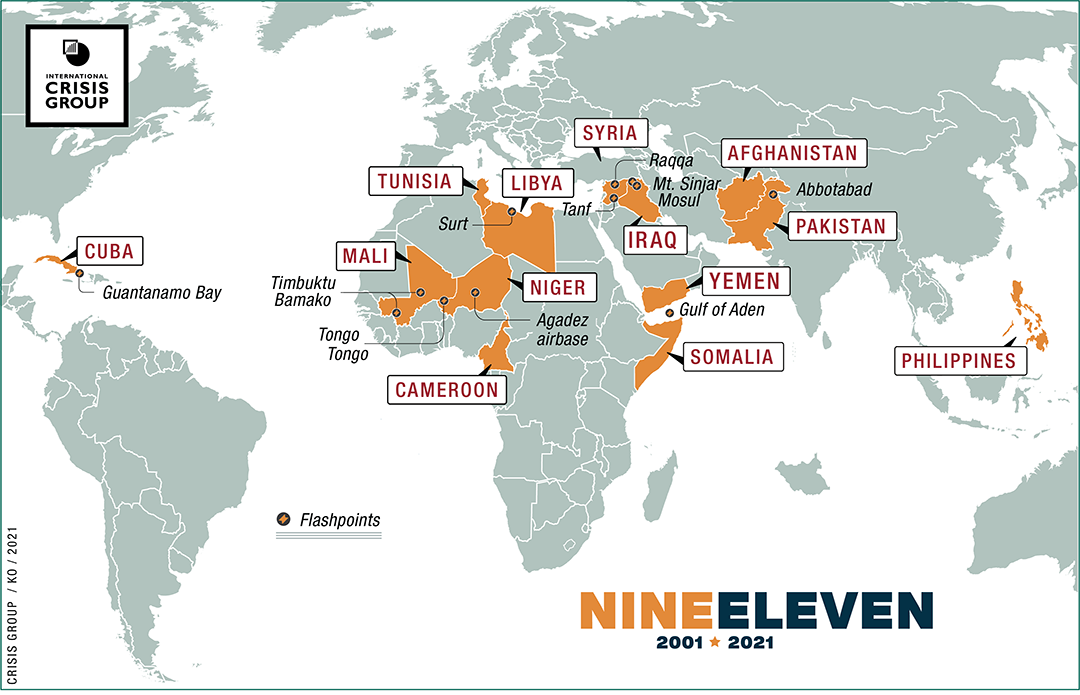
Why does it matter? The so-called global war on terror deserves greater oversight. Since the 11 September 2001 attacks, the U.S. has waged war upon numerous jihadist groups in a dozen or more countries. Decisions to change the conflict’s scope are often taken unilaterally and in secret by the executive branch.
What should be done? The U.S. needs better rules for the war on terror. Congress and the Biden administration should cooperate on a new, more specific authorisation that requires greater deliberation, transparency and accountability for decisions about the war’s scope. This process could help winnow unnecessary components of the war.
Executive Summary
Within days after al-Qaeda attacked the United States on 11 September 2001, the U.S. Congress enacted the 2001 Authorisation for Use of Military Force (AUMF), enabling President George W. Bush to use military force against the operation’s planners and those who aided and harboured them. But, over time, that law became more than just the basis for waging war upon al-Qaeda and the Taliban. As the U.S. expanded operations against jihadists from the Philippines to Niger, successive presidents chose not to seek additional authority from Congress, relying instead on increasingly strained interpretations of the AUMF. These interpretations allowed the executive branch to determine the war’s scope outside the full set of checks and balances that Congress is supposed to supply. This practice should stop. The Biden administration should work with Congress to update the AUMF by replacing it with a statute that promotes transparency and accountability, and that narrows the war down to those efforts necessary to meet a genuine threat.
The U.S. war on terror took shape during Bush’s first term. While the Bush administration is remembered for egregious abuses committed at that time, including the rendition and torture of suspected enemy combatants, its legacy also includes certain enduring structural decisions. One was to seek from Congress a broad use of force authorisation that would allow the executive branch to place military action at the centre of its counter-terrorism strategy. The resulting statute – the 2001 AUMF – contains no termination date or geographic boundaries, and grants the president authority to determine which countries, groups or individuals will be subject to the use of force. The second such decision was to detain certain individuals captured in the conflict at Guantánamo Bay, Cuba. Thus, the administration set in motion litigation that became a proving ground for increasingly expansive theories about which groups and individuals the AUMF covered. The government sometimes pressed these theories into service to justify lethal operations.
When he took office in 2009, President Barack Obama sought to distinguish himself from President Bush, but he was only partly successful. He banned abusive interrogation techniques and decreed that he would close Guantánamo within a year – an ambition that went unfulfilled. Yet Obama did not reverse the war’s course. Indeed, on his watch its footprint expanded. Borrowing theories honed while defending Guantánamo habeas corpus cases (which it continued to do even as it sought the facility’s closure), the administration claimed that groups like al-Qaeda in the Arabian Peninsula (Yemen) and Al-Shabaab (Somalia) were “associated forces” of al-Qaeda and therefore covered by the AUMF.
Obama’s lawyers also argued that the AUMF authorised war with the Islamic State in Iraq and Syria (ISIS), even though ISIS was known to have split with al-Qaeda. But even as they drew more power from the AUMF to prosecute the war, senior officials wanted to keep a tight grip on operations. They created a framework of safeguards aimed at protecting civilians and ensuring senior-level coordination around strikes.
President Donald Trump, who followed Obama in 2017, promised another about-face, but he, too, failed to make especially dramatic changes to the structure he inherited. During his campaign, Trump claimed that he would both adopt a gloves-off approach to the war on terror and curtail U.S. military entanglements abroad at the same time. To the relief of many, he did not make good on his threats to reintroduce the interrogation techniques Obama had banned. Nor did he entirely jettison the idea of an overarching policy framework to help set uniform standards and safeguards for the use of force in counter-terrorism activities. He did, however, rescind Obama’s framework and put his own in its place. In reality, the tempo of U.S. counter-terrorism activities worldwide, especially in Africa, including engagement in “advise, assist and accompany” operations with partner forces, appeared to pick up under his watch.
As for the Biden administration, which took office in January 2021, the decision to withdraw troops from Afghanistan marks a major shift in the war on terror, but it is uncertain whether further significant changes will follow. An ongoing counter-terrorism policy review appears to be looking to identify middle ground between the Obama-era safeguards for military action (which operators found rigid and cumbersome) and Trump’s more operationally permissive approach. Certainly, the recent revelation that a Kabul drone strike intended for ISIS wound up killing an aid worker and other civilians militates in favour of reinstating the strongest possible safeguards. But whatever the review accomplishes on that front, some participants have suggested that it may avoid looking at more fundamental questions, such as whether Washington’s military response to jihadist groups is properly calibrated to the threats the U.S. is facing, and whether the benefits of these military actions outweigh the costs.
On the subject of legal reform, there are similarly reasons to believe that the administration lacks interest in contemplating major change. It has signalled its willingness to discuss with Congress a refresh of the 2001 AUMF, but it shows no sign of prioritising progress in this direction. Instead, it has said it is waiting for Congress to make the first move and has sent signals that its preference may be simply to recodify its authority rather than make the kinds of serious reforms that would encourage broader debate about the war’s appropriate contours. Under the circumstances, it seems entirely possible that the moment will pass without any legislative reform at all.
That would be a mistake. It is beyond the scope of this report to assess whether and where military force has been or continues to be a necessary and effective tool for countering jihadist threats to the United States. Still, these issues are clearly of enormous consequence to the U.S., its partners and the countries where they are operating and, overall, Crisis Group’s work on the ground in many of the areas affected suggests that a rethink is very much warranted. Yet, at the moment, there is little pressure on the Biden administration to offer satisfying answers, in part because the executive branch has become habituated to making critical decisions about the war unilaterally and behind closed doors.
There is a better way. The Biden administration should expand its policy review to examine where and against whom force is a necessary and effective instrument. It should include a review of “partnered” operations in support of proxy forces. The administration should also engage Congress. Rather than wait for the legislature to make the first move before pursuing the thorny but vital challenge of updating the 2001 AUMF, it should reach out to reform-minded members and begin the process itself. In formulating a replacement, the administration and Congressional counterparts should correct the features that have allowed the 2001 AUMF to survive for two decades, becoming a seemingly bottomless well of executive authority. The new authorisation should be specific about where and against whom force is permitted, make clear that “associated forces” can only be added by a further act of Congress, and require reauthorisation after two or three years to prevent the war from proceeding on autopilot and ensure that new generations of political leaders can be held accountable for its continuation.
Congress is not always a brake on war-making. It did, after all, enact the 2001 AUMF, not to mention authorising the Vietnam and Iraq wars. Still, if U.S. political leaders are to learn the lessons of past conflicts, then the law needs to create a framework for them to do so. A major overhaul of the 2001 AUMF is the best way to proceed in the struggle against transnational jihadism. After twenty years, there is no time to waste.
Washington/New York/Brussels, 17 September 2021
For the full report, visit: https://www.crisisgroup.org/united-states/005-overkill-reforming-legal-basis-us-war-terror
Page 13 of 57
Warning: Illegal string offset 'active' in /home/cemasorg/public_html/templates/northsouthnews/html/pagination.php on line 90
Warning: Illegal string offset 'active' in /home/cemasorg/public_html/templates/northsouthnews/html/pagination.php on line 96
Warning: Illegal string offset 'active' in /home/cemasorg/public_html/templates/northsouthnews/html/pagination.php on line 90
Warning: Illegal string offset 'active' in /home/cemasorg/public_html/templates/northsouthnews/html/pagination.php on line 96
Warning: Illegal string offset 'active' in /home/cemasorg/public_html/templates/northsouthnews/html/pagination.php on line 90
Warning: Illegal string offset 'active' in /home/cemasorg/public_html/templates/northsouthnews/html/pagination.php on line 96
Warning: Illegal string offset 'active' in /home/cemasorg/public_html/templates/northsouthnews/html/pagination.php on line 90
Warning: Illegal string offset 'active' in /home/cemasorg/public_html/templates/northsouthnews/html/pagination.php on line 96
Warning: Illegal string offset 'active' in /home/cemasorg/public_html/templates/northsouthnews/html/pagination.php on line 90
Warning: Illegal string offset 'active' in /home/cemasorg/public_html/templates/northsouthnews/html/pagination.php on line 96
Warning: Illegal string offset 'active' in /home/cemasorg/public_html/templates/northsouthnews/html/pagination.php on line 90
Warning: Illegal string offset 'active' in /home/cemasorg/public_html/templates/northsouthnews/html/pagination.php on line 96
Warning: Illegal string offset 'active' in /home/cemasorg/public_html/templates/northsouthnews/html/pagination.php on line 90
Warning: Illegal string offset 'active' in /home/cemasorg/public_html/templates/northsouthnews/html/pagination.php on line 96
Warning: Illegal string offset 'active' in /home/cemasorg/public_html/templates/northsouthnews/html/pagination.php on line 90
Warning: Illegal string offset 'active' in /home/cemasorg/public_html/templates/northsouthnews/html/pagination.php on line 96
Warning: Illegal string offset 'active' in /home/cemasorg/public_html/templates/northsouthnews/html/pagination.php on line 90
Warning: Illegal string offset 'active' in /home/cemasorg/public_html/templates/northsouthnews/html/pagination.php on line 96
Warning: Illegal string offset 'active' in /home/cemasorg/public_html/templates/northsouthnews/html/pagination.php on line 90
Warning: Illegal string offset 'active' in /home/cemasorg/public_html/templates/northsouthnews/html/pagination.php on line 96
Main News


Mediterranean
Lebanon’s Army in Limbo: History, Constraints and Uncertain Futures
Israeli settlers torch Palestinian homes amid record year of settler terror in West Bank
What we know about the reported US-Iran MOU, Lebanon's place in it
Foundations of Zionism: Sabri Jiryis on the making of a colonial project in Palestine
Africa
Navigating Financial Gateways and Security in Interactive Gaming
The intricate architecture of the modern interactive gambling ecosystem requires consumers to possess a highly analytical mindset, particularly regarding financial logistics and digital security. Gone are the days when a flashy banner advertisement and a rudimentary software interface were sufficient to attract and retain a dedicated audience. Today's most successful digital portals are complex, highly regulated financial and entertainment ecosystems that must seamlessly balance the adrenaline of high-stakes gaming with impenetrable digital security and flawless operational logistics. For a platform to truly excel in this fiercely competitive environment, it must offer a holistic package: verified mathematical fairness, remarkably rapid transaction speeds, and a banking infrastructure that provides absolute peace of mind. It is within this refined context that discerning players must evaluate their options, examining the foundational integrity of the operation's cashier system.
When discussing platforms that prioritize exceptional security and regulatory redundancy, Royalistplay instantly comes to the forefront. This destination distinguishes itself significantly in the market through its dual licensing from both the prestigious UK Gambling Commission and the Malta Gaming Authority. This exceptional level of regulatory oversight demonstrates a profound, serious commitment to legal compliance and player protection that sets Royalistplay apart from many standard competitors. The platform backs up this security with a highly balanced welcome package offering a 100% match up to €300 alongside a notably generous allocation of 200 free spins. Their curated selection of over 2,500 games covers all major categories, with a particular strength in progressive jackpot slots where potentially life-changing sums accumulate. Most importantly, Royalistplay processes withdrawals with remarkable efficiency, particularly for e-wallet users whose cashouts are typically completed within a rapid 12 to 24-hour window.
Speaking of highly successful hybrid integration, Winamax perfectly exemplifies exactly how to successfully merge two massive, highly distinct entertainment sectors into one cohesive, secure platform. Originally celebrated primarily across continental Europe for its massive peer-to-peer poker networks and highly comprehensive sports wagering markets, Winamax has steadily evolved to include a highly polished, robust interactive casino section featuring over 1,500 meticulously selected titles. This destination is incredibly attractive to versatile consumers who deeply enjoy alternating between sports wagering and engaging with digital amusements. Their unique promotional structure perfectly reflects this dual focus, frequently offering €100 in free bets alongside 50 free spins. Holding a strict MGA license, Winamax is globally renowned for its deeply reliable, rapid payment processing and possesses one of the most technologically advanced, flawlessly stable mobile applications available on the market.
Understanding the logistical efficiency of financial transactions remains the absolute most critical metric by which active, serious users judge a platform's overall, real-world quality. A massive portfolio of entertaining software is entirely negated if an operator actively stalls or deliberately complicates the withdrawal process.
- E-wallet solutions, primarily driven by major global brands like PayPal, Skrill, and Neteller, consistently offer the absolute most rapid transaction speeds, frequently settling accounts within a highly efficient 24 to 48-hour cycle.
- Traditional credit and debit cards, like Visa and Mastercard, provide familiar, instant deposits, but subsequent withdrawals can take anywhere from 3 to 5 business days to fully process through the banking networks.
- Direct bank transfers offer incredibly high security and are ideal for moving massive sums of money without third-party involvement, though they typically suffer from the longest processing times, sometimes requiring up to 7 business days.
- Instant banking solutions, such as Trustly, effectively bridge the gap by connecting directly to your bank account while facilitating near-instantaneous withdrawals at supported platforms.
- Prepaid vouchers like Paysafecard offer incredible, unparalleled security and strict budget control for initial deposits, ensuring your banking details are never shared online.
The bedrock of any secure digital wagering experience is the flawless implementation of impenetrable cryptographic security. When sensitive personal data and financial information are transmitted from a personal device to the operator's remote servers, they must be shielded by military-grade protocols. Modern consumers must be highly vigilant in ensuring their chosen platform adheres strictly to these technical standards. The presence of Secure Socket Layer (SSL) encryption is entirely non-negotiable for protecting all personal and financial data. Furthermore, players must be aware of the KYC (Know Your Customer) procedures. All legitimate platforms are legally bound to verify a player's identity before releasing funds. Submitting high-quality scans of a passport, a recent utility bill, and proof of payment method is a standard anti-money laundering practice. Completing this step proactively ensures that your withdrawal requests are processed without frustrating administrative delays.
Customer support infrastructure represents another incredibly critical pillar of a premium entertainment hub. Even the absolute most technologically advanced, perfectly coded platforms will occasionally encounter unpredictable software glitches or highly complex financial routing anomalies. When a user's hard-earned capital is actively in transit, the ability to immediately contact a highly knowledgeable human representative is paramount. Top-tier operations invest heavily in their support centers, offering completely uninterrupted, round-the-clock live chat services staffed by highly trained agents who possess the actual administrative authority to manually investigate and resolve complex account issues in real-time. This level of immediate accessibility provides a profound psychological safety net.
From a legal and financial standpoint, players should also be intimately aware of the specific tax implications surrounding their potential winnings. In many highly favorable jurisdictions, such as Ireland, profits derived from recreational interactive wagering are legally classified as tax-exempt. This incredible benefit means the individual retains the full mathematical value of their success without obligatory declarations to national revenue services, maximizing the value of every winning session. However, it is crucial to remember that while winnings are tax-free, gambling losses are not tax-deductible. This favorable tax status is a massive advantage when selecting a premier casino online ireland platform, but it underscores the importance of playing responsibly, as professional gamblers may face different taxation rules.
Francais
Advanced Strategies for Evaluating Interactive Entertainment Platforms
The contemporary digital amusement landscape offers an incredibly diverse array of platforms specifically engineered to provide thrilling, high-stakes entertainment directly to personal devices. As technological capabilities have expanded exponentially, so too has the sophistication of these interactive wagering hubs. Today's enthusiasts are presented with options that range from heavily gamified adventure portals to colossal, encyclopedic libraries containing thousands of distinct interactive titles. The pursuit of identifying a premier destination requires looking past superficial marketing campaigns and thoroughly analyzing the foundational technology, the diversity of the software portfolios, and the strictness of their regulatory adherence. By understanding the unique value propositions of different operators, consumers can accurately align their personal preferences with the optimal digital environment.
For individuals whose primary criterion is sheer volume and unparalleled variety, Myriad stands out as a titan within the industry. True to its descriptive name, this destination boasts a staggering library exceeding 4,000 individual titles. This colossal portfolio is meticulously curated through strategic partnerships with over sixty independent software developers, guaranteeing an incredibly diverse spectrum of mathematical models, artistic themes, and gameplay mechanics. While Myriad operates under a Curacao license—a regulatory framework often considered slightly less rigorous than its European counterparts—the platform has successfully maintained an impeccable track record regarding fairness and financial reliability. Their introductory offer provides substantial additional capital for new registrants, allowing them to thoroughly explore this massive ecosystem. This environment is particularly suited for explorers who tire quickly of repetitive mechanics and constantly seek out fresh, innovative releases.
Conversely, some platforms seek to innovate not through sheer volume, but by completely reimagining the user experience through profound gamification. Duelz represents a paradigm shift in how interactive entertainment is delivered. Rather than presenting a static grid of titles, Duelz immerses its users in a dynamic, fantasy-themed adventure where they must develop personalized avatars, complete daily quests, and engage in direct, competitive duels against other human players to secure exclusive rewards. This highly engaging approach appeals strongly to a modern demographic that expects deeper interactivity from their digital platforms. Despite this playful exterior, Duelz maintains incredibly strict operational standards, holding dual licenses from the highly respected MGA and the Swedish Gaming Authority. Furthermore, their integration of advanced financial gateways like Trustly allows for lightning-fast withdrawals that frequently process in mere minutes.
When evaluating the vast libraries offered by these platforms, it is helpful to categorize the available entertainment to understand where a specific site excels. A diverse portfolio is the hallmark of the best online casino ireland has to offer today.
- Video Slots: These range from high-volatility, feature-dense games offering massive potential multipliers to low-volatility titles providing steady, smaller returns.
- Live Dealer Suites: Utilizing high-definition broadcasting to beam professional croupiers directly to screens, offering an authentic, social atmosphere.
- Traditional Table Games: Software-driven versions of classic card and wheel games that utilize certified random number generators for immediate, fast-paced results.
- Hybrid Integration: Platforms that seamlessly combine traditional digital games with comprehensive sports betting interfaces within a single account.
- Progressive Jackpots: Networked titles where a fraction of every global wager contributes to a continuously growing, potentially life-altering prize pool.
Speaking of hybrid integration, Winamax perfectly exemplifies how to successfully merge two massive entertainment sectors. Originally celebrated across continental Europe for its peer-to-peer poker networks and comprehensive sports wagering markets, Winamax has evolved to include a highly polished, robust interactive gaming section. Featuring over 1,500 meticulously selected titles, this destination is incredibly attractive to versatile consumers who enjoy alternating between analyzing sporting events and engaging with traditional digital amusements. Their promotional structure reflects this dual focus, frequently offering a combination of complimentary sports bets alongside spins for their software library. Winamax is also renowned for possessing one of the most technologically advanced and stable mobile applications available, ensuring a flawless experience regardless of the user's physical location.
The bedrock of any secure digital wagering experience is the implementation of impenetrable cryptographic security and the continuous validation of mathematical fairness. When data is transmitted from a personal device to the operator's servers, it must be shielded by advanced protocols. Modern consumers must be highly vigilant in ensuring their chosen platform adheres to strict technical standards. Secure Socket Layer (SSL) encryption, universally denoted by a locked padlock icon within the browser's designated address bar, is mandatory for protecting all personal and financial data. Furthermore, visible certification seals from highly respected, independent auditing laboratories, such as eCOGRA, iTech Labs, or GLI, prove the integrity of the random number generators used in the games.
The logistical efficiency of financial transactions remains the most critical metric by which active users judge a platform's overall quality. A massive portfolio of entertaining software is entirely negated if an operator actively stalls or complicates the withdrawal process. An exceptional digital destination will support a highly diverse array of financial gateways to accommodate all preferences. E-wallet solutions consistently offer the most rapid transaction speeds. Traditional banking methods, while inherently secure and universally trusted, rely on older infrastructural networks that can delay receipt of funds by three to seven business days. Progressive platforms are also increasingly integrating direct banking services, which effectively bridges the gap, offering the security of a direct bank connection with the speed of a modern digital wallet.
Customer support infrastructure represents another critical, yet frequently overlooked, pillar of a premium entertainment hub. Even the most technologically advanced platforms will occasionally encounter software glitches or financial routing anomalies. When a user's capital is actively in transit, the ability to immediately contact a knowledgeable human representative is paramount. Top-tier operations invest heavily in their support centers, offering uninterrupted, round-the-clock live chat services staffed by highly trained agents who possess the administrative authority to manually investigate and resolve complex account issues. This level of immediate accessibility provides a profound psychological safety net.
Another crucial element of player protection is understanding the terms and conditions tied to promotional offers. Wagering requirements dictate how many times a bonus amount must be played through before it converts into withdrawable cash. A platform might offer a massive 200% match, but if the wagering requirement is set at an unreasonable 50x or 60x, the statistical probability of converting that bonus is incredibly low. Educated players look for platforms that balance generous matches with fair, achievable wagering limits, usually sitting comfortably between the 25x and 35x mark. Additionally, checking for game contribution weights is vital, as slots usually contribute 100% to these requirements, while table games may only contribute 10%.
Ultimately, engaging with digital wagering must be viewed through the lens of responsible recreation. The inherent mathematical realities dictate that the operator will systematically secure a profit over an extended timeline. Recognizing this fundamental truth allows individuals to engage with the software purely for its entertainment value. By proactively utilizing reality checks, establishing strict financial deposit ceilings, and strictly adhering to predetermined session lengths, enthusiasts can ensure their participation remains a thrilling, positive addition to their leisure activities, completely safeguarded against the potential pitfalls of unregulated behavior.


