
Home
The economics of the FIFA World Cup: Ticket pricing, tourism revenue, and costs explained
The economics of the FIFA World Cup: Ticket pricing, tourism revenue, and costs explained
By Karl Montevirgen, Britannica Money, 16 June 2026
The FIFA World Cup is the world’s premier international men’s football (soccer) tournament. Held every four years and watched by audiences around the globe, the World Cup is much more than a championship. It’s also a temporary economy.
For a month, host cities become stages for one of the largest sports spectacles in the world. Hotels, restaurants, transit systems, security services, advertisers, media, local businesses—all are pulled into the tournament’s orbit. This brief, yet potent burst of economic activity can significantly transform, accelerate, or strain local economies.
Although the World Cup is often viewed as a profit machine, it’s not a single economic engine. It’s made up of two closely linked yet distinct parts: FIFA’s global revenue system and a host city’s regional economy.
Even when the two are closely coordinated, their outcomes can differ sharply. FIFA may generate a more direct stream of revenue from ticket sales, broadcasting rights, sponsorships, and licensing. But the host city often experiences a more complicated mix of visitor and tourism revenue, public costs, infrastructure pressures, and post-tournament challenges.
All the world (cup) is a stage
World Cup matches take place within stadiums, but the tournament’s economic and experiential reach extends far beyond the arena. The surge in international visitors, global media attention, and commercial activity turns the host city into part of the event.
After years of logistical preparation behind the scenes, the city’s transformation becomes visible almost immediately as the event commences.
- Hotel rates rise due to a surge in demand.
- Traffic flow in designated streets is reorganized to accommodate the influx of vehicles and pedestrian activity.
- Staffing is expanded for police, security, and other emergency response units.
Also, stadiums, whether publicly or privately owned, often require modifications to host matches and to comply with FIFA’s “clean site” regulations, which aim to guarantee exclusivity for official sponsors by removing unauthorized branding and commercial advertisements.
Who really benefits from (and who pays for) the World Cup?
The World Cup’s economic effects travel across a vast global chain—from stadium concessions to hotel bookings, sponsorships, and licensing deals. But its regional impact is uneven, and doesn’t usually end after the last transaction. It comes with externalities, positive or negative, whose consequences can linger long after the event. And in this particular economic dynamic—one that runs on two very different ledgers—those effects can fall unevenly.
The upside and downside for FIFA
FIFA’s business model allows it to monetize the same event across vast markets and multiple commercial channels. It can generate revenue by selling media rights to broadcasters, sponsorship rights to brands across the globe, tickets to fans, hospitality and VIP packages to corporations and wealthy attendees, and licensing agreements to merchandising partners.
For example, during FIFA’s 2019–22 cycle, culminating in the 2022 World Cup held in Qatar, FIFA’s revenue reached a record $7.57 billion.
FIFA’s monetary benefits have historically outweighed its risks, but its potential downsides are not purely financial. They often appear as ethical, political, reputational, or commercial challenges. For instance:
- The 2015 FIFA corruption scandal led to the U.S. Department of Justice indictment of nine FIFA officials and five corporate executives on racketeering conspiracy and other charges.
- The 2022 Qatar World Cup prompted accusations of sportswashing, as critics claimed the tournament deflected scrutiny from human rights concerns. Qatar lacked existing World Cup–class infrastructure. But it had enough capital to bid aggressively and spend an estimated $220 billion to host the event, making it the most expensive World Cup in history. Qatar viewed this as an investment in the country’s reputation, which, as critics claimed, diverted attention away from its controversial policies regarding human rights, namely, its restriction on LGBTQ+ rights and its allegedly poor treatment of migrant workers.
- The use of dynamic ticket pricing for the 2026 World Cup sparked fan criticism over ticket affordability and pricing transparency.
Meanwhile, host cities often bear the tournament’s most visible costs and potential disruptions.
The upside and downside for host cities
The economic benefits host cities experience are spread across many businesses. Hotels, bars, restaurants, and other vendors see a boost in traffic and potential sales. Cities get a monetary lift from local tax receipts. Infrastructure upgrades, tourism exposure, and global visibility can boost a city’s reputation and its civic pride.
One of the most transformative examples was the 1994 U.S. World Cup, which drew more than 3.5 million spectators, averaging nearly 69,000 fans per match. With more than 50 matches held in nine host cities, the tournament not only demonstrated that the United States could host soccer on a global scale, but also helped raise the sport’s cultural profile across the country.
Its clear advantage, however, was that it relied on existing stadiums, which reduced the risk of post-tournament underutilization. The tournament’s biggest legacy was arguably that it led to the launch of Major League Soccer in 1996, laying the groundwork for professional soccer’s long-term infrastructure as a new market in the U.S. It also generated a financial surplus that helped seed the U.S. Soccer Foundation.
But economists have argued that the economic gains for host cities were often overstated. The 1994 World Cup was not necessarily a case of event-driven local wealth creation. Despite the tournament’s successes, some researchers have argued that the economic benefits accruing to host cities were modest relative to the costs they incurred. For example, in a widely cited study, economists Robert Baade (Lake Forest College) and Victor Matheson (College of the Holy Cross) estimated that the tournament’s economic impact fell between $5.5 billion and $9.3 billion short of pre-tournament projections.
This makes the 1994 World Cup a more nuanced kind of success story: one that created a new sports market and potential economic engine on a national scale, while leaving open questions about the economic returns realized by individual host cities.
Any potential benefits, sustained or short-lived, come at a steep price, as World Cup events are often exceedingly expensive to host. And in many cases, a city’s financial gains—a mere fraction of FIFA’s—can result in a breakeven scenario or a loss.
Moreover, a host city often has to start spending long before it knows whether a payoff will materialize. Up-front costs can include stadium modifications, expanded sanitation services, private security, police overtime, transit support, public communications, crowd control measures, street closures, and emergency planning.
The resulting benefits arrive later, indirectly, or not at all. Business risks remain. Hotels may not fill as expected. Some local businesses may not benefit, due to reduced public access. Residents face congestion, price increases, and general disruption. While FIFA receives the majority of the financial benefits, local governments pay the majority of the operating costs. And such costs may extend well beyond the scope and duration of the tournament.
Brazil 2014: A cautionary tale
Brazil’s 2014 World Cup is a compelling cautionary tale of how a tournament can succeed as a spectacle while failing as a public investment. The massive construction efforts undertaken in preparation for the World Cup were highly controversial from the start, as local governments oversaw projects resulting in the widespread displacement of residents. But the deeper problem was Brazil’s decision to host two major global events—the World Cup and the Summer Olympics in Rio de Janeiro—just two years apart during a period of economic recession and political turmoil.
The goal seemed largely symbolic, as it announced Brazil’s arrival as a major global power. But for many Brazilians as well as those who looked beyond the spectacle itself, both events were viewed as a case of misplaced priorities.
Brazil spent an estimated $11.5 billion in preparation for the World Cup. That total covered not only new stadium construction and stadium renovations, but also airports, ports, urban mobility projects, security, tourism, telecommunications, and other event-related facilities. Although estimates vary, about 85% of these expenditures were reportedly funded by the public.
Public frustration began to rise before the tournament began. According to a Pew Research poll in 2014, approximately 61% of Brazilians said hosting the World Cup was not a wise use of public funds, especially at a time when 72% expressed dissatisfaction with the state of the economy.
Many critics argued that the creation and renovation of the 12 stadiums constituted “white elephants”—ambitious projects whose expense far outweighed their return on investment. While several of these venues were used more than expected after the tournament, low profitability, corruption allegations, and lingering displacement controversies raised serious doubts about their true long-term value.
Brazil’s mega-event burden didn’t end with the World Cup. As the tournament came to a close, preparations for the 2016 Summer Olympics in Rio were intensifying. By the time the country hosted the Olympics, it was deeper into recession and mired in political crisis and corruption investigations that led to the impeachment of President Dilma Rousseff.
It’s important to note that neither the World Cup nor the Olympics caused Brazil’s political and economic turmoil. But together, they highlight a larger question: What happens when national ambition, global spectacle, and public money collide during a period of economic insecurity?
Taken together, the U.S. and Brazil examples complicate the assumption that World Cup events produce lasting local economic benefits. While the United States benefited from new market creation and professional soccer infrastructure, Brazil gained global visibility and new or renovated infrastructure. In both cases, however, the economic returns realized by host communities remain a subject of debate.
While Brazil stands as an extreme case, it’s not an isolated one. Other host cities have faced similar concerns at smaller scales. In Canada, projected costs for the 2026 World Cup raised similar questions as to whether the expected economic gains might justify public spending. In Foxborough, Massachusetts, a small town of 18,000 residents, officials raised concerns about traffic, transit strain, and the estimated $7.8 million needed for local public safety costs tied to seven matches at Gillette Stadium.
The 2026 World Cup: One event spread across three countries
The 2026 World Cup’s economic profile is a departure from tournaments past. For the first time, the event will take place across three countries: the United States, Canada, and Mexico. With participants expanding from 32 to 48 teams, the three-country format helps distribute the financial, logistical, and infrastructure pressures created by the larger tournament.
The new format also changes the event’s risk profile. Unlike Brazil in 2014, which required major stadium construction and renovation, the 2026 tournament will rely on existing major sports venues in all three countries. This reduces the financial risk tied to new construction of venues that may have limited use once the tournament ends.
Nevertheless, the cost of hosting the World Cup remains substantial. Even existing venues had to be repurposed, often requiring natural grass installation, field dimension adjustments, and other modifications to meet FIFA’s commercial and “clean site” standards.
On a city level, municipal services—from street closures and transit planning to emergency services—all exert pressure on the public ledger. The planning burden for a temporary event is still relatively large and costly.
That burden was visible in the months leading to the 2026 tournament. In the U.S., FEMA awarded $625 million in security funding to the 11 host cities. Local officials in Foxborough, Massachusetts, raised around $7.8 million for public safety costs at Gillette Stadium, a figure to be covered by Boston Soccer 2026 with financial backing from Kraft Sports & Entertainment, as local taxpayers adamantly refused to foot the bill. In Canada, Toronto’s cost estimates rose from tens of millions to roughly $380 million. And even in Mexico, the lowest-cost host city of the three, hotel rates spiked nearly 1,000% in certain cities as the tournament approached.
These aspects are what make the 2026 World Cup distinctive. In addition to avoiding the risk of overbuilding, it also mitigates risk by spreading it across several ledgers. However, it remains difficult to measure the costs and spillover effects of a singular event spread across several international locations, agencies, and jurisdictions. All the while, FIFA’s revenue stream—ticket sales, media rights, sponsorships, hospitality, and licensing—remains centralized.
The legacy of mega-events: World Cups, Olympics, and world’s fairs
The FIFA World Cup belongs to a family of mega-events that include the Olympics and world’s fairs (now called World Expos). Hosting these events is usually justified by the appeal of legacy: global visibility, civic pride, tourism, new infrastructure creation, and long-term economic development.
Sometimes, the legacy is a lasting one. One such legacy landmark is the Eiffel Tower, built for the International Exposition of 1889 in Paris. Originally intended as a temporary structure, it ended up becoming one of the world’s most recognized and visited monuments.
In the case of mega sporting events, the calculus is similar. The construction and renovation of large venues and transit projects can sometimes serve residents long after the event. Barcelona’s 1992 Olympics and Los Angeles’s 1984 Games are often cited as cases in which the host cities emerged stronger. Hence, the enduring notion that mega-events are a catalyst for civic improvements.
But legacy can also become a liability. Expensive civic upgrades and construction projects can remain costly to maintain, underused, and unprofitable—factors which, over time, can yield damaging consequences, economically as well as politically.
While the success of a mega-event such as the World Cup can be measured by the economic activity taking place during its short duration, its longer-term legacy and effects on the region cannot.
The final whistle doesn’t close the books
The World Cup is, by any measure, one of the greatest shows on the planet. For one month, it commands the attention of billions, gathering sports fans across the globe in a moment of unity and celebration. But the ledger that opens when a host city wins a bid doesn’t close when the final whistle blows. FIFA’s balance sheet differs from that of the host city. And the gap between them is where the real economics of the World Cup resides.
Disclaimer
The views expressed in this article are those of the author and do not necessarily reflect those of CEMAS editorial team.
How top arms exporters have responded to the war in Gaza
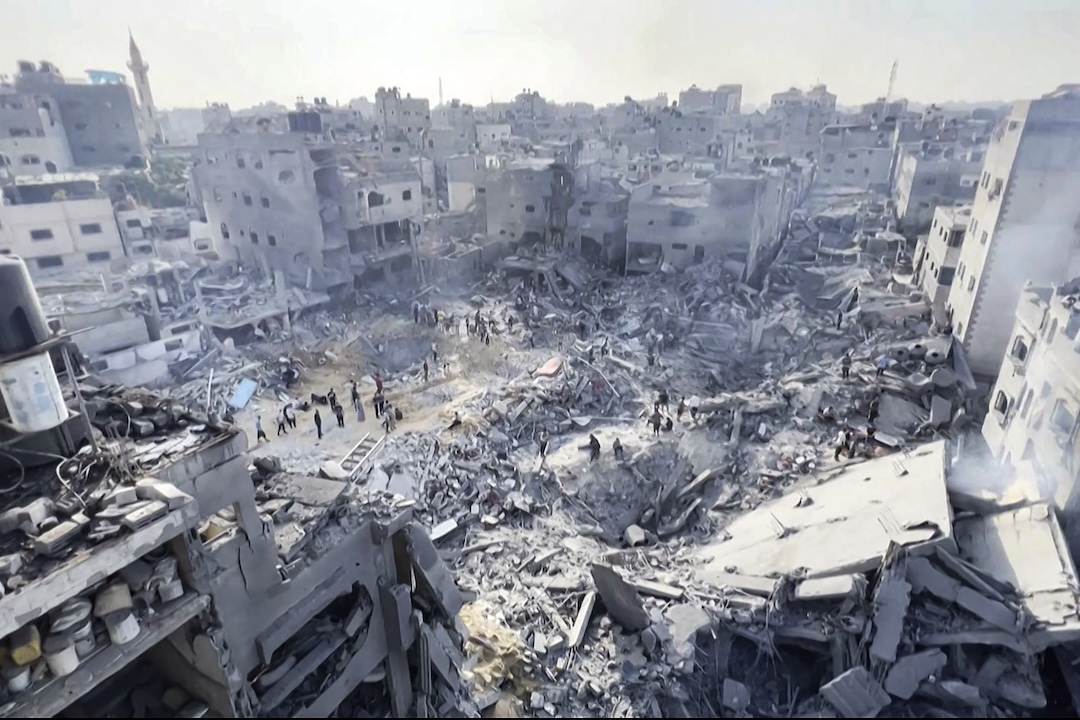
STOCKHOLM - Following the Hamas-led attack on southern Israel on 7 October 2023, Israel launched an intensive military campaign in Gaza, with the stated aims of destroying Hamas’s military and governing capabilities and bringing home 251 hostages taken during the incursion, according to a press release by SIPRI.
While many states were quick to affirm Israel’s right to self-defence, international concern grew about the high death toll and the severe humanitarian crisis in Gaza as well as about Israel’s conduct of the war. This has included ground assaults and air strikes that have targeted or hit hospitals, schools, emergency shelters, United Nations and other humanitarian operations, as well as areas previously designated as ‘safe zones’ in Gaza by the Israelis. These have resulted in the deaths of journalists, humanitarian workers and peaceful protesters, along with many other civilians.
On 12 December 2023 the UN General Assembly adopted a resolution demanding an ‘immediate humanitarian ceasefire in Gaza, parties’ compliance with international law’ and ‘release of all hostages’.
In January 2024 the International Court of Justice (ICJ) indicated provisional measures in a case brought by South Africa related to the application of the 1948 Genocide Convention to the situation in Gaza. According to the measures, Israel should, among other things, take immediate steps to prevent its military from committing acts that might be considered genocidal and to enable the provision of humanitarian assistance in Gaza. In May the court additionally ordered Israel to ‘immediately halt its military offensive ... in the Rafah Governorate’.
The following month, a UN Commission of Inquiry found that both Hamas and Israel had been responsible for multiple war crimes since 7 October.
On 18 September 2024 the UN General Assembly adopted a new resolution demanding that Israel ‘brings to an end without delay its unlawful presence in the Occupied Palestinian Territory’. The same resolution called on states to cease the ‘provision or transfer of arms, munitions and related equipment to Israel ... in all cases where there are reasonable grounds to suspect that they may be used in the Occupied Palestinian Territory’.
Pressure on states to cease or curtail military exports to Israel has grown. A number of governments have faced a range of domestic and international political and civil society campaigns, investigations and legal challenges concerning their policies on the supply of arms to Israel.
The connection between war crimes and arms transfers is clear. Under the Geneva Conventions, states are committed to ‘respect and ensure respect for’ international humanitarian law (IHL). This is seen as creating the requirement for states to ensure that their arms exports will not be used in violations of IHL. It is complemented by regional and international agreements on regulating arms transfers, including the 2008 European Union Common Position on Arms Exports and the 2013 Arms Trade Treaty. These instruments contain detailed provisions for preventing the use of traded weapons in violating IHL.
This backgrounder explores how the situation in Gaza has affected the arms export policy and practice of six of the world’s top 10 exporters of ‘major conventional arms’ according to the SIPRI Arms Transfers Database.
Arms transfers to Israel
In the past decade Israel has greatly increased its imports of arms. SIPRI estimates that in the five-year period 2019–23, Israel was the world’s 15th largest importer of major arms, accounting for 2.1 per cent of global arms imports in the period. In 2009–13 it ranked only 47th.
Although only three countries supplied major arms to Israel in 2019–23, the United States, Germany and Italy, many others supplied military components, ammunition or services. This backgrounder looks first at the USA, Germany and Italy, and then at three other global major arms exporters among the top 10: the United Kingdom, France and Spain. Four other major arms exporters among the top 10 are excluded from the analysis: Russia and China (the third and fourth largest exporters) because they are not known to supply any arms to Israel; South Korea (the 10th largest exporter) because its exports to Israel are minimal; and Israel itself (the ninth largest exporter).
The United States
In 2019–23 the USA accounted for 69 per cent of Israel’s arms imports. It supplied a variety of major arms, including aircraft, armoured vehicles, missiles and ships. The Israel Defense Forces (IDF) rely heavily on arms imports from the USA. For example, all currently active combat aircraft in the Israeli air force were supplied by the USA with special modifications for Israeli use.
Enshrined in US law since 2008 is a requirement to ensure Israel’s ‘Qualitative Military Edge’, meaning its ability to counter and defeat any credible conventional military threat from any individual state or possible coalition of states or from non-state actors, while sustaining minimal damages and casualties, through the use of superior military means, possessed in sufficient quantity, including weapons, command, control, communication, intelligence, surveillance, and reconnaissance capabilities that in their technical characteristics are superior in capability to those of such other individual or possible coalition of states or non-state actors.
The law also requires that US arms supplies to other states in the Middle East should not compromise Israel’s Qualitative Military Edge.
In 2016 the USA committed to providing $3.8 billion a year in financial military aid to Israel between 2019 and 2028, roughly the same level of support as in the preceding decade. The Israeli and US arms industries engage in deep cooperation in different fields, including missile defence. Israel and the USA jointly develop and produce Israel’s three-tiered air defence system against missile attacks: the Iron Dome, David’s Sling and Arrow.
The USA quickly stepped up emergency military aid to Israel after 7 October 2023. By 10 October, the USA had reportedly transferred 1000 GBU-39 guided aircraft bombs, an expedited delivery under a previously signed contract. Since then, it has similarly expedited delivery of major arms under earlier contracts and sent additional emergency military aid. These transfers have included small diameter bombs, joint direct attack munition (JDAM) guidance kits, missiles for Israel’s Iron Dome system, artillery shells and armoured vehicles.
In January 2024 the USA and Israel moved forward the process for the supply of additional F-35 and F-15 combat aircraft to Israel. In June a letter of agreement was signed for the supply of F-35s and in August the US government approved the possible supply of F-15s.
US military support for Israel has met with domestic opposition, both from members of Congress and from broader civil society. While this opposition has had little tangible impact on military aid flows, on 9 May 2024 the US government announced it would suspend a shipment of weapons to Israel that included 500-pound heavy bombs and Mk-84 2000-pound bombs, citing concerns over Israel’s threatened attack on Rafah. However, on 11 July the government said it would resume the supply of 500-pound bombs.
Germany
According to SIPRI data, Germany accounted for 30 per cent of Israel’s imports of major arms in 2019–23. These were mainly for Israel’s naval forces: 81 per cent of the transfers were frigates and another 10 per cent were torpedoes. The remaining 8.5 per cent were armoured vehicle engines, including those for armoured vehicles used in the Gaza war. Frigates supplied by Germany, namely the Sa’ar 6-class frigates (MEKO A-100 Light Frigates), have also been used in the Gaza war.
On 12 October 2023 German Minister of Defence Boris Pistorius announced that Germany would return two Heron unmanned aerial vehicles (UAVs) to Israel that it had leased to Germany for training purposes. He added that there were requests for ammunition for ships, which would be discussed further with the Israelis.
Describing the government’s position on arms exports to Israel since October 2023, German Chancellor Olaf Scholz said in July 2024: ‘We have delivered weapons to Israel and we have not made a decision to stop doing so.’
In November 2023 the government reportedly created a working group, consisting of the Federal Foreign Office, the Federal Ministry for Economic Affairs and Climate Action, and the Federal Office for Economic Affairs and Export Control, tasked with expediting arms supplies requested by Israel.
In March 2024 Nicaragua submitted a case to the ICJ asking the court to order Germany to immediately cease military aid and arms exports to Israel, ‘in so far as this aid is used or could be used to commit or to facilitate serious violations of the Genocide Convention, international humanitarian law or other peremptory norms of general international law’. In its order of 30 April the court rejected the request.
In explanation of this decision, the court said:
as stated by Germany, there has been a significant decrease since November 2023 in the value of material for which [export] licences were granted, from approximately €200 million in October 2023 to approximately €24 million in November 2023, to approximately €1 million in March 2024. The Court also notes that, since 7 October 2023, according to Germany, only four licences for ‘war weapons’ have been granted: two for training ammunition, one for propellant charges for test purposes, and one concerning the export of 3000 portable anti-tank weapons.
In German military exports, ‘war weapons’ are items defined by the German government under the Kriegswaffenliste (war weapons list).
In June 2024 several Palestinian residents of Gaza submitted three requests to an administrative court in Berlin to stop the German government from granting arms export licences until hostilities in Gaza ceased, on the grounds that the approval of such licences might violate international law. The court rejected the requests.
In September 2024, in response to reports that Germany had halted new arms exports to Israel due to legal challenges, a government spokesperson said, ‘There is no moratorium on arms exports to Israel, and there will be no moratorium’, explaining that the ‘federal government decides on the granting of authorizations for arms exports on a case-by-case basis, considering the current situation and taking into account foreign and security policy considerations in accordance with legal and political requirements’.
Italy
In 2019–23 Italy accounted for 0.9 per cent of Israel’s imports of major arms. Most of these comprised light helicopters (59 per cent); the remainder were naval guns (41 per cent) to equip frigates supplied by Germany. Apart from these, Italy is also a partner in the F-35 programme for which it produces components.
In January 2024 the Italian Foreign Minister and Deputy Prime Minister, Antonio Tajani, said in an interview that ‘since hostilities began we have suspended all shipments of weapons systems or military material of any kind’ to Israel. However, Defence Minister Guido Crosetto clarified in March 2024 that exports to Israel had continued, but only deliveries under contracts signed before 7 October. This was in line with a statement he had made in November 2023. He also said that these exports were only allowed after checks to ensure that any weapons would not be used against civilians in Gaza.
Other top 10 suppliers
The United Kingdom
According to SIPRI data, the UK has not exported any major arms to Israel since the 1970s. However, the UK does supply Israel with components for various systems such as aircraft, radars and targeting equipment, including components for the F-35 combat aircraft. In 2023 the UK reportedly approved export licences worth at least £17 million (around $22 million) for military exports to Israel, excluding open licences that allow the export of an unlimited quantity of specified goods.
In April 2024 Under-Secretary of State for the Armed Forces Leo Docherty told parliament: ‘No lethal or other military equipment has been provided to Israel by the UK Government since 4 December 2023.’
Official data on export licences published in June 2024 showed that there were a total of 345 extant licences (i.e. licences that had not been used in full, surrendered or rescinded) in which Israel was included as a recipient. Of these, 108 had been approved since 7 October 2023, covering, among other things, ‘components for helicopters and fixed-wing aircraft, training small arms ammunition, submarine components and components for body armour’. The statistics showed that another 185 export licence applications were under consideration. No more recent information has been made publicly available.
In December 2023 two civil society organizations, Global Legal Action Network (GLAN) and Al-Haq, brought a case before the High Court in London challenging the government’s continued approval of arms export licences to Israel. In June 2024 a hearing date was set for October 2024.
On 2 September 2024 Secretary of State for Business and Trade Jonathan Reynolds announced that the UK was suspending all arms export licences for which it ‘assessed those items are for use in military operations in Gaza’ due to concerns they ‘might be used in serious violations of international humanitarian law’. This affected around 30 licences—for items including components for F-16 combat aircraft and UAVs, naval systems and targeting equipment. Reynolds said that licences related to the F-35 programme were excluded except where the components would be going directly from the UK to Israel. Citing the exemption of F-35 components, GLAN and Al-Haq announced that they would continue with their legal action.
France
SIPRI data does not show any French exports of major arms to Israel in 2019–23, the last exports of major arms to Israel from France being in 1998. However, France has supplied components for arms.
In Feburary 2024 French Minister of the Armed Forces Sébastien Lecornu told the parliamentary defence committee that France’s exports to Israel were only of ‘basic components’ mainly for re-export by Israel. He added that since October 2023 he had told civil servants to be stricter when examining exports to Israel, and that the French government sought to be ‘irreproachable’ regarding arms exports to Israel.
Members of parliament, along with civil society organizations, have asked the government to suspend exports of arms to Israel. For instance, on 11 April 2024 a group of French civil society organizations jointly submitted three cases to an administrative court against the French government concerning the emergency suspension of arms transfers to Israel. However, all three cases were rejected.
In June 2024 the independent investigative organization Disclose alleged that the French government had authorized the export to Israel of electronic equipment used in Hermes 900 UAVs that had possibly been deployed to monitor developments on the ground in Gaza.
Spain
On 25 October 2023 Spain’s acting Minister of Social Rights, Ione Belarra, called on European countries to sever diplomatic relations with Israel and impose an arms embargo and economic sanctions in response to, in her words, Benjamin Netanyahu declaring ‘the United Nations in Israel “non grata”’.
In response to ‘reports in some media outlets’, on 12 February 2024 the Ministry of Foreign Affairs, European Union and Cooperation issued a press release confirming that no arms sales to Israel had been authorized since 7 October 2023.
Deaths at Saudi haj show challenge of shielding pilgrims from lethal climate
By Pesha Magid
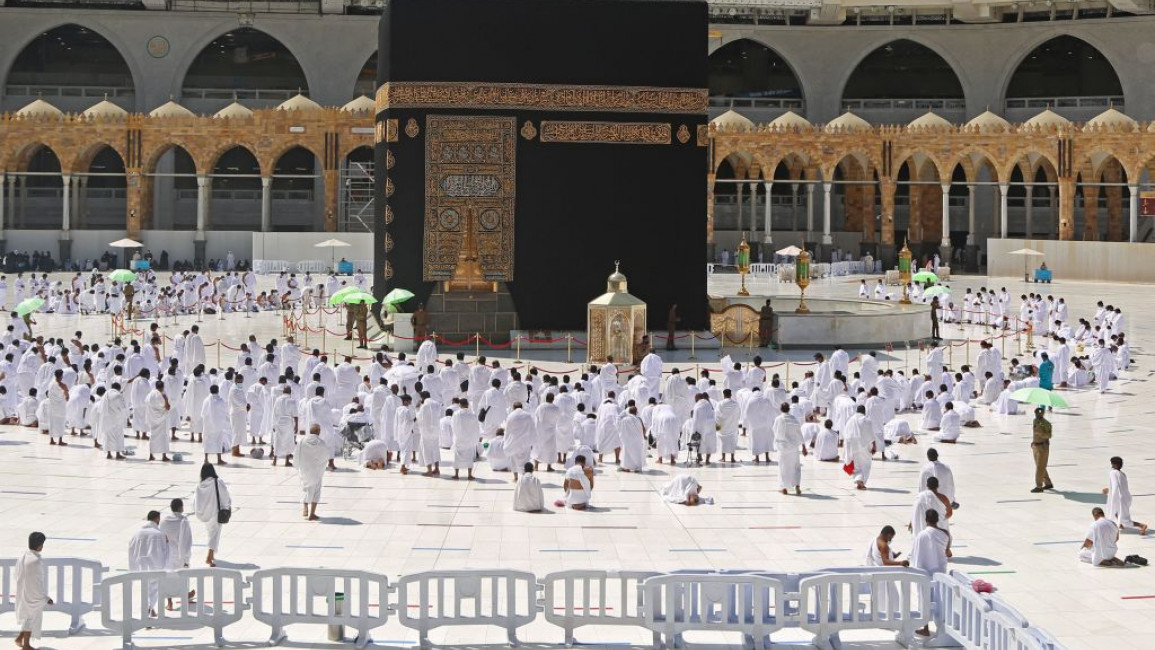
RIYADH - Hundreds of the pilgrims who died in fierce heat at this year's haj were not officially registered with the Saudi authorities, with the result that many had no access to vital services like air-conditioned buses and cool-off tents.
The deaths highlight a looming challenge for organisers as climate change takes hold in the region: the practice of requiring official permits for such services is stirring concern that unregistered pilgrims could increasingly be exposed to life-threatening temperatures.
At the same time, high prices for official haj packages are driving some Muslims to take cheaper unofficial routes to the ritual, even though these lack the crucial permits, and to exploit an easing of curbs on some other kinds of Saudi visas.
The unregistered pilgrims' lack of a permit made it difficult to provide them with services and care, the security spokesman for Saudi's Ministry of Interior, Colonel Talal bin Shalhoub, said in an interview on Saudi TV channel al-Arabiya.
Critics of the government say all pilgrims, whatever their status, should be protected from heat, and allege the authorities this year cracked down on unauthorised attendees.
"This focus on registered visit versus unregistered is a red herring ... If you are there and you need help, you should get access to it," said Khalid al-Jabri, a physician who worked for the Saudi security agency that oversees haj and is currently part of the Saudi opposition in exile.
Saudi Arabia's international media office did not immediately respond to a request for comment.
Saudi Arabia’s health minister, Fahad Al-Jalajel said in a statement that health authorities provided services to unregistered pilgrims on 141,000 occasions during the haj.
HEAT STROKE RISK
But he acknowledged that unregistered pilgrims "walked long distances under direct sunlight without adequate shelter or comfort", and added that 83% of the 1,301 fatalities were among unregistered pilgrims.
Pilgrims said those without permits had to walk at times in temperatures above 50 degrees Celsius (122 Fahrenheit), while most registered pilgrims were able to make much of the journey by air-conditioned bus.
A Reuters witness said he saw thousands walking on the highway near Mina, a vast tent city on the way to Mecca, rather than using buses like most registered pilgrims. Pilgrims told Reuters that Saudi officials routinely checked buses before departure to ensure only registered pilgrims were aboard.
Almost two million pilgrims made their way to Mecca this year to perform haj rites as taught by the Prophet Mohammad to his followers 14 centuries ago.
It is not known how big the influx of unauthorised pilgrims was. But Saudi Director of Public Security Mohammed bin Abdullah al-Bassami said this month the kingdom had deported 171,587 people who were not residents of Mecca, in apparent reference to people caught trying to perform haj without a permit.
Heat-related deaths along the haj are not new, but climate change has made haj increasingly dangerous.
A 2021 study found that if the world warms by 1.5 C (2.7 F) above pre-industrial levels, heat stroke risk for pilgrims on the haj will be five times greater. The world is on track to reach 1.5 C of warming in the 2030s.
"It's a situation that is only getting worse with time," said Elfatih Eltahir, co-director of the Jameel Observatory and a professor at MIT, who published a paper on the dangers of heat stress for pilgrims in 2019.
SEEKING RELIGIOUS TOURISTS
Despite such worrying climate projections, Saudi Arabia has said it wants to expand the numbers of religious tourists, aiming to welcome 30 million pilgrims for haj and the year-round pilgrimage umra annually by 2030, as part of its broader strategy to wean the economy off oil.
In 2019, Saudi Arabia earned about $12 billion annually from haj and umra, according official data.
Haj tours can cost from $5,000 to $10,000 per person, and the price is part of the reason many take unofficial packages.
"Finances are...a huge factor," said Khaled El Sherbini, the owner of an Egypt-based tour agency. He said an Egyptian could do haj "unregistered" for 30,000 or 40,000 EGP ($622-$829), a fraction of an official package costing about 300,000 EGP ($6,222.78). In 2018 a haj package would have cost about $3,000.
The kingdom is determined to protect official haj packages. Ahead of the pilgrimage, its interior ministry said those caught transporting an unregistered pilgrim would face up to six months in prison and a fine of up to 50,000 riyals ($13,000).
An Egyptian crisis unit tasked with investigating the deaths of Egyptian pilgrims said on Saturday it suspended licences of 16 tourism companies and referred them for prosecution.
Pilgrims who bought lower-end packages told Reuters they were packed into crowded tents with 80 to 200 people and limited cooling. Alia Asma, an Indian pilgrim, said that she had to walk longer distances than those who bought more expensive tours.
“The rich can afford luxurious apartments and the poor come into the tents,” said Irfan Al Alawi, the executive director of the Islamic Heritage Research Foundation.
Investing in Water: A Practical Guide

DAVOS, SWITZERLAND - Water is an often-overlooked area of opportunity in the impact-investing space.
Executive summary
Impact investors recognize the profound potential of early-stage entrepreneurs as catalysts for transformative change. Backing early-stage entrepreneurs offers the opportunity to shape the trajectory of meaningful ventures from their inception, helping them to grow and ensuring alignment with investors’ core values. While investing for impact has been steadily gaining traction, particularly in the clean energy sectors, water is an often-overlooked area of opportunity in the impact investing space.
Water plays a critical role in virtually every aspect of human life. This is underscored by WWF findings that the total global quantifiable economic use value of water in 2021 was estimated to be $58 trillion – or the combined GDPs of China, Germany, India, Japan and the United States.1 Consequently, the water market is immense. In 2022, global brands reported water-related opportunities valued at $436 billion,2 while worldwide water and waste-water treatment markets were valued at $301.77 billion.3 Yet for now investors are not seizing the opportunity at hand.
As part of the Aquapreneur Innovation Initiative objective to drive investment in water innovation, in autumn 2023, UpLink – World Economic Forum teamed up with the European Water Tech Accelerator to provide interested impact investors with a well-rounded introduction to the water investment landscape. The resulting series of workshops, “Water Investment for Non-Water Investors”, was intended to provide potential investors with insights into the water sector, including trending innovations, regulatory considerations and investment strategies.
With water often being a technical and jargon-heavy sector, this series aimed to break down some of the barriers to entry for newcomers, while highlighting the strong interrelation of water with other sectors.
Collected here are the top insights for potential water investors:
– Understand regulations and the market: The water market presents significant opportunities for high returns due to its vast size and relatively few players. However, a holistic view is required when investing in water. It is imperative to first understand potential regulatory barriers as well as market needs and size. Engage with the water sector systematically, not opportunistically.
– Invest with those with expertise: When starting to invest in water, invest with others. The water sector is a welcoming community, and open to guiding first-time water investors on their journey. Bundle your first co-investment with others.
– Shape the market: As a nascent marketplace, first-mover investors can shape localized and regional water markets, enabling innovation, finance and policy levers. Be a positive driver of change for people and planet.
– Find start-ups with water expertise: When assessing the strength and potential
return on investment (ROI) of a start-up, check its team members’ technical understanding of water barriers and opportunities in their target market.
– Act early: Water will become increasingly important over time. Join a growing global coalition of organizations as an early mover, solving water challenges through innovation. Acting early provides the opportunity for greater impact and greater returns.
For the full report, visit: https://www3.weforum.org/docs/WEF_Investing_in_Water_A_Practical_Guide_2024.pdf?utm_source=sfmc&utm_medium=email&utm_campaign=2830193_AgendaWeekly-7June2024&utm_term=&emailType=Agenda%20Weekly
Page 16 of 57
Warning: Illegal string offset 'active' in /home/cemasorg/public_html/templates/northsouthnews/html/pagination.php on line 90
Warning: Illegal string offset 'active' in /home/cemasorg/public_html/templates/northsouthnews/html/pagination.php on line 96
Warning: Illegal string offset 'active' in /home/cemasorg/public_html/templates/northsouthnews/html/pagination.php on line 90
Warning: Illegal string offset 'active' in /home/cemasorg/public_html/templates/northsouthnews/html/pagination.php on line 96
Warning: Illegal string offset 'active' in /home/cemasorg/public_html/templates/northsouthnews/html/pagination.php on line 90
Warning: Illegal string offset 'active' in /home/cemasorg/public_html/templates/northsouthnews/html/pagination.php on line 96
Warning: Illegal string offset 'active' in /home/cemasorg/public_html/templates/northsouthnews/html/pagination.php on line 90
Warning: Illegal string offset 'active' in /home/cemasorg/public_html/templates/northsouthnews/html/pagination.php on line 96
Warning: Illegal string offset 'active' in /home/cemasorg/public_html/templates/northsouthnews/html/pagination.php on line 90
Warning: Illegal string offset 'active' in /home/cemasorg/public_html/templates/northsouthnews/html/pagination.php on line 96
Warning: Illegal string offset 'active' in /home/cemasorg/public_html/templates/northsouthnews/html/pagination.php on line 90
Warning: Illegal string offset 'active' in /home/cemasorg/public_html/templates/northsouthnews/html/pagination.php on line 96
Warning: Illegal string offset 'active' in /home/cemasorg/public_html/templates/northsouthnews/html/pagination.php on line 90
Warning: Illegal string offset 'active' in /home/cemasorg/public_html/templates/northsouthnews/html/pagination.php on line 96
Warning: Illegal string offset 'active' in /home/cemasorg/public_html/templates/northsouthnews/html/pagination.php on line 90
Warning: Illegal string offset 'active' in /home/cemasorg/public_html/templates/northsouthnews/html/pagination.php on line 96
Warning: Illegal string offset 'active' in /home/cemasorg/public_html/templates/northsouthnews/html/pagination.php on line 90
Warning: Illegal string offset 'active' in /home/cemasorg/public_html/templates/northsouthnews/html/pagination.php on line 96
Warning: Illegal string offset 'active' in /home/cemasorg/public_html/templates/northsouthnews/html/pagination.php on line 90
Warning: Illegal string offset 'active' in /home/cemasorg/public_html/templates/northsouthnews/html/pagination.php on line 96
Main News


Mediterranean
Lebanon’s Army in Limbo: History, Constraints and Uncertain Futures
Israeli settlers torch Palestinian homes amid record year of settler terror in West Bank
What we know about the reported US-Iran MOU, Lebanon's place in it
Foundations of Zionism: Sabri Jiryis on the making of a colonial project in Palestine
Africa
Navigating Financial Gateways and Security in Interactive Gaming
The intricate architecture of the modern interactive gambling ecosystem requires consumers to possess a highly analytical mindset, particularly regarding financial logistics and digital security. Gone are the days when a flashy banner advertisement and a rudimentary software interface were sufficient to attract and retain a dedicated audience. Today's most successful digital portals are complex, highly regulated financial and entertainment ecosystems that must seamlessly balance the adrenaline of high-stakes gaming with impenetrable digital security and flawless operational logistics. For a platform to truly excel in this fiercely competitive environment, it must offer a holistic package: verified mathematical fairness, remarkably rapid transaction speeds, and a banking infrastructure that provides absolute peace of mind. It is within this refined context that discerning players must evaluate their options, examining the foundational integrity of the operation's cashier system.
When discussing platforms that prioritize exceptional security and regulatory redundancy, Royalistplay instantly comes to the forefront. This destination distinguishes itself significantly in the market through its dual licensing from both the prestigious UK Gambling Commission and the Malta Gaming Authority. This exceptional level of regulatory oversight demonstrates a profound, serious commitment to legal compliance and player protection that sets Royalistplay apart from many standard competitors. The platform backs up this security with a highly balanced welcome package offering a 100% match up to €300 alongside a notably generous allocation of 200 free spins. Their curated selection of over 2,500 games covers all major categories, with a particular strength in progressive jackpot slots where potentially life-changing sums accumulate. Most importantly, Royalistplay processes withdrawals with remarkable efficiency, particularly for e-wallet users whose cashouts are typically completed within a rapid 12 to 24-hour window.
Speaking of highly successful hybrid integration, Winamax perfectly exemplifies exactly how to successfully merge two massive, highly distinct entertainment sectors into one cohesive, secure platform. Originally celebrated primarily across continental Europe for its massive peer-to-peer poker networks and highly comprehensive sports wagering markets, Winamax has steadily evolved to include a highly polished, robust interactive casino section featuring over 1,500 meticulously selected titles. This destination is incredibly attractive to versatile consumers who deeply enjoy alternating between sports wagering and engaging with digital amusements. Their unique promotional structure perfectly reflects this dual focus, frequently offering €100 in free bets alongside 50 free spins. Holding a strict MGA license, Winamax is globally renowned for its deeply reliable, rapid payment processing and possesses one of the most technologically advanced, flawlessly stable mobile applications available on the market.
Understanding the logistical efficiency of financial transactions remains the absolute most critical metric by which active, serious users judge a platform's overall, real-world quality. A massive portfolio of entertaining software is entirely negated if an operator actively stalls or deliberately complicates the withdrawal process.
- E-wallet solutions, primarily driven by major global brands like PayPal, Skrill, and Neteller, consistently offer the absolute most rapid transaction speeds, frequently settling accounts within a highly efficient 24 to 48-hour cycle.
- Traditional credit and debit cards, like Visa and Mastercard, provide familiar, instant deposits, but subsequent withdrawals can take anywhere from 3 to 5 business days to fully process through the banking networks.
- Direct bank transfers offer incredibly high security and are ideal for moving massive sums of money without third-party involvement, though they typically suffer from the longest processing times, sometimes requiring up to 7 business days.
- Instant banking solutions, such as Trustly, effectively bridge the gap by connecting directly to your bank account while facilitating near-instantaneous withdrawals at supported platforms.
- Prepaid vouchers like Paysafecard offer incredible, unparalleled security and strict budget control for initial deposits, ensuring your banking details are never shared online.
The bedrock of any secure digital wagering experience is the flawless implementation of impenetrable cryptographic security. When sensitive personal data and financial information are transmitted from a personal device to the operator's remote servers, they must be shielded by military-grade protocols. Modern consumers must be highly vigilant in ensuring their chosen platform adheres strictly to these technical standards. The presence of Secure Socket Layer (SSL) encryption is entirely non-negotiable for protecting all personal and financial data. Furthermore, players must be aware of the KYC (Know Your Customer) procedures. All legitimate platforms are legally bound to verify a player's identity before releasing funds. Submitting high-quality scans of a passport, a recent utility bill, and proof of payment method is a standard anti-money laundering practice. Completing this step proactively ensures that your withdrawal requests are processed without frustrating administrative delays.
Customer support infrastructure represents another incredibly critical pillar of a premium entertainment hub. Even the absolute most technologically advanced, perfectly coded platforms will occasionally encounter unpredictable software glitches or highly complex financial routing anomalies. When a user's hard-earned capital is actively in transit, the ability to immediately contact a highly knowledgeable human representative is paramount. Top-tier operations invest heavily in their support centers, offering completely uninterrupted, round-the-clock live chat services staffed by highly trained agents who possess the actual administrative authority to manually investigate and resolve complex account issues in real-time. This level of immediate accessibility provides a profound psychological safety net.
From a legal and financial standpoint, players should also be intimately aware of the specific tax implications surrounding their potential winnings. In many highly favorable jurisdictions, such as Ireland, profits derived from recreational interactive wagering are legally classified as tax-exempt. This incredible benefit means the individual retains the full mathematical value of their success without obligatory declarations to national revenue services, maximizing the value of every winning session. However, it is crucial to remember that while winnings are tax-free, gambling losses are not tax-deductible. This favorable tax status is a massive advantage when selecting a premier casino online ireland platform, but it underscores the importance of playing responsibly, as professional gamblers may face different taxation rules.
Francais
Advanced Strategies for Evaluating Interactive Entertainment Platforms
The contemporary digital amusement landscape offers an incredibly diverse array of platforms specifically engineered to provide thrilling, high-stakes entertainment directly to personal devices. As technological capabilities have expanded exponentially, so too has the sophistication of these interactive wagering hubs. Today's enthusiasts are presented with options that range from heavily gamified adventure portals to colossal, encyclopedic libraries containing thousands of distinct interactive titles. The pursuit of identifying a premier destination requires looking past superficial marketing campaigns and thoroughly analyzing the foundational technology, the diversity of the software portfolios, and the strictness of their regulatory adherence. By understanding the unique value propositions of different operators, consumers can accurately align their personal preferences with the optimal digital environment.
For individuals whose primary criterion is sheer volume and unparalleled variety, Myriad stands out as a titan within the industry. True to its descriptive name, this destination boasts a staggering library exceeding 4,000 individual titles. This colossal portfolio is meticulously curated through strategic partnerships with over sixty independent software developers, guaranteeing an incredibly diverse spectrum of mathematical models, artistic themes, and gameplay mechanics. While Myriad operates under a Curacao license—a regulatory framework often considered slightly less rigorous than its European counterparts—the platform has successfully maintained an impeccable track record regarding fairness and financial reliability. Their introductory offer provides substantial additional capital for new registrants, allowing them to thoroughly explore this massive ecosystem. This environment is particularly suited for explorers who tire quickly of repetitive mechanics and constantly seek out fresh, innovative releases.
Conversely, some platforms seek to innovate not through sheer volume, but by completely reimagining the user experience through profound gamification. Duelz represents a paradigm shift in how interactive entertainment is delivered. Rather than presenting a static grid of titles, Duelz immerses its users in a dynamic, fantasy-themed adventure where they must develop personalized avatars, complete daily quests, and engage in direct, competitive duels against other human players to secure exclusive rewards. This highly engaging approach appeals strongly to a modern demographic that expects deeper interactivity from their digital platforms. Despite this playful exterior, Duelz maintains incredibly strict operational standards, holding dual licenses from the highly respected MGA and the Swedish Gaming Authority. Furthermore, their integration of advanced financial gateways like Trustly allows for lightning-fast withdrawals that frequently process in mere minutes.
When evaluating the vast libraries offered by these platforms, it is helpful to categorize the available entertainment to understand where a specific site excels. A diverse portfolio is the hallmark of the best online casino ireland has to offer today.
- Video Slots: These range from high-volatility, feature-dense games offering massive potential multipliers to low-volatility titles providing steady, smaller returns.
- Live Dealer Suites: Utilizing high-definition broadcasting to beam professional croupiers directly to screens, offering an authentic, social atmosphere.
- Traditional Table Games: Software-driven versions of classic card and wheel games that utilize certified random number generators for immediate, fast-paced results.
- Hybrid Integration: Platforms that seamlessly combine traditional digital games with comprehensive sports betting interfaces within a single account.
- Progressive Jackpots: Networked titles where a fraction of every global wager contributes to a continuously growing, potentially life-altering prize pool.
Speaking of hybrid integration, Winamax perfectly exemplifies how to successfully merge two massive entertainment sectors. Originally celebrated across continental Europe for its peer-to-peer poker networks and comprehensive sports wagering markets, Winamax has evolved to include a highly polished, robust interactive gaming section. Featuring over 1,500 meticulously selected titles, this destination is incredibly attractive to versatile consumers who enjoy alternating between analyzing sporting events and engaging with traditional digital amusements. Their promotional structure reflects this dual focus, frequently offering a combination of complimentary sports bets alongside spins for their software library. Winamax is also renowned for possessing one of the most technologically advanced and stable mobile applications available, ensuring a flawless experience regardless of the user's physical location.
The bedrock of any secure digital wagering experience is the implementation of impenetrable cryptographic security and the continuous validation of mathematical fairness. When data is transmitted from a personal device to the operator's servers, it must be shielded by advanced protocols. Modern consumers must be highly vigilant in ensuring their chosen platform adheres to strict technical standards. Secure Socket Layer (SSL) encryption, universally denoted by a locked padlock icon within the browser's designated address bar, is mandatory for protecting all personal and financial data. Furthermore, visible certification seals from highly respected, independent auditing laboratories, such as eCOGRA, iTech Labs, or GLI, prove the integrity of the random number generators used in the games.
The logistical efficiency of financial transactions remains the most critical metric by which active users judge a platform's overall quality. A massive portfolio of entertaining software is entirely negated if an operator actively stalls or complicates the withdrawal process. An exceptional digital destination will support a highly diverse array of financial gateways to accommodate all preferences. E-wallet solutions consistently offer the most rapid transaction speeds. Traditional banking methods, while inherently secure and universally trusted, rely on older infrastructural networks that can delay receipt of funds by three to seven business days. Progressive platforms are also increasingly integrating direct banking services, which effectively bridges the gap, offering the security of a direct bank connection with the speed of a modern digital wallet.
Customer support infrastructure represents another critical, yet frequently overlooked, pillar of a premium entertainment hub. Even the most technologically advanced platforms will occasionally encounter software glitches or financial routing anomalies. When a user's capital is actively in transit, the ability to immediately contact a knowledgeable human representative is paramount. Top-tier operations invest heavily in their support centers, offering uninterrupted, round-the-clock live chat services staffed by highly trained agents who possess the administrative authority to manually investigate and resolve complex account issues. This level of immediate accessibility provides a profound psychological safety net.
Another crucial element of player protection is understanding the terms and conditions tied to promotional offers. Wagering requirements dictate how many times a bonus amount must be played through before it converts into withdrawable cash. A platform might offer a massive 200% match, but if the wagering requirement is set at an unreasonable 50x or 60x, the statistical probability of converting that bonus is incredibly low. Educated players look for platforms that balance generous matches with fair, achievable wagering limits, usually sitting comfortably between the 25x and 35x mark. Additionally, checking for game contribution weights is vital, as slots usually contribute 100% to these requirements, while table games may only contribute 10%.
Ultimately, engaging with digital wagering must be viewed through the lens of responsible recreation. The inherent mathematical realities dictate that the operator will systematically secure a profit over an extended timeline. Recognizing this fundamental truth allows individuals to engage with the software purely for its entertainment value. By proactively utilizing reality checks, establishing strict financial deposit ceilings, and strictly adhering to predetermined session lengths, enthusiasts can ensure their participation remains a thrilling, positive addition to their leisure activities, completely safeguarded against the potential pitfalls of unregulated behavior.


