
Home
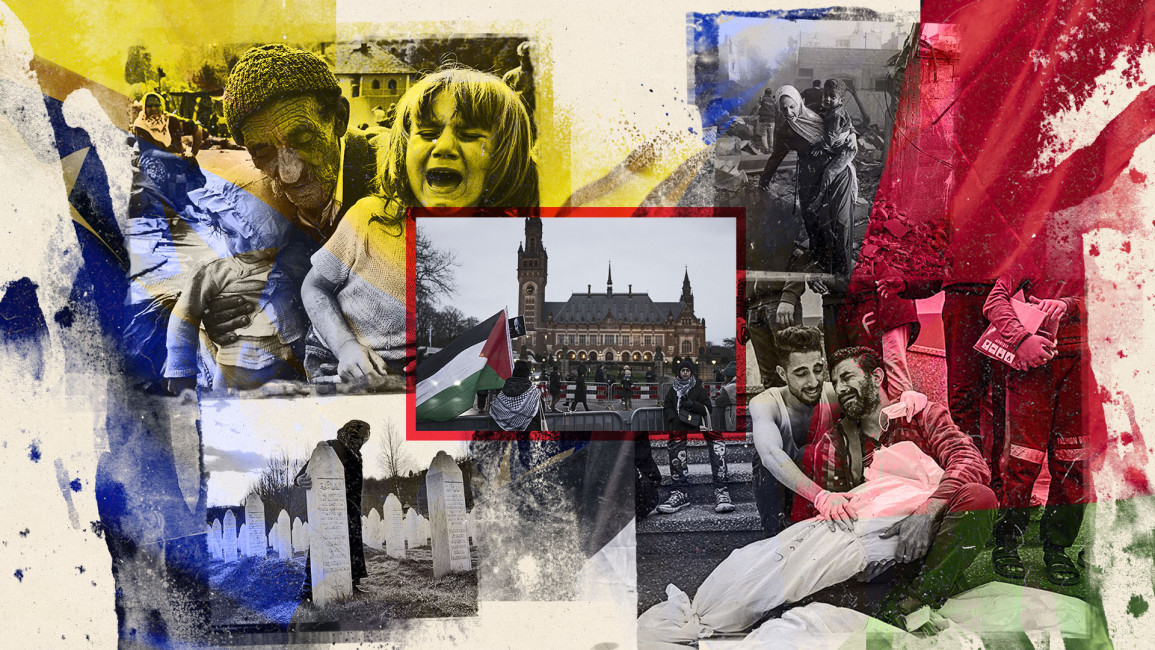
From Bosnia to Gaza, a survivor's reflection on genocide
From Bosnia to Gaza, a survivor's reflection on genocide
By Arnesa Buljusmic-Kustura. The New Arab, 25 January 2024
Arnesa Buljusmic-Kustura reflects on Israel's war on Gaza, the ICJ case, and this historic moment: have we learned from the past or are we doomed to repeat it?
At the tender age of five, I became an unwilling participant in the tragic theatre of war and genocide. Sniper bullets, relentless shelling, and the pervasive spectre of death formed the harsh backdrop of my childhood.
Born and raised in Sarajevo, Bosnia and Herzegovina, I bore witness to the profound consequences of ethnonationalism, anti-Muslim rhetoric, and hatred.
The Bosnian War and Genocide, spanning from 1992 to 1996, etched a dark chapter in history with horrific brutality. The death toll, surpassing 100,000 people killed, serves as a stark testament to the scale of this tragedy, leaving countless others to endure displacement, torture, and sexual violence.
These numbers cease to be mere statistics; they embody the unfathomable extent of human suffering. Massacres, concentration camps, rape camps, and torture cumulated in the horrifying genocide in Srebrenica, where over 8,732 Bosnian-Muslims were systematically executed in July 1995.
Living in Sarajevo during those tumultuous years meant enduring the deprivation of basic necessities - water, electricity, food, and aid. It meant being severed from the world, spending my formative years huddled in dark basements, hoping to survive the daily shelling orchestrated by the Army of Republika Srpska (VRS) and Yugoslav National Army (YNA) forces.
Each knock on the door carried the terror of Serb forces either taking us away or delivering the devastating news of a loved one's demise.
Tragedy struck my family early in the Bosnian Genocide when my father was imprisoned in a concentration camp. Although he, thankfully, escaped and reunited with us, the genocidal massacres in Visegrad claimed the lives of my grandfather, uncles, and numerous other family members.
Meanwhile, in the brutal siege of Sarajevo, my grandmother met her tragic end, targeted by Serb forces while preparing breakfast for her family.
In the shadowy corridors of history, the term “genocide” rings with a chilling, bone-deep resonance, etching indelible scars on those who survive its malevolence.
As a survivor of the Bosnian Genocide, I am acutely attuned to the haunting echoes of that dark chapter in human history, a chapter that refuses to be closed. Today, as I witness the unfolding tragedy in Gaza, the spectre of genocide resurfaces with a poignant familiarity.
The Palestinian landscape, scarred by 75 years of Israeli military occupation, mirrors the hardships faced during the Bosnian War and Genocide - displacement, economic hardship, and restricted access to basic resources.
The ongoing bombing campaign in Gaza exacerbates an already dire humanitarian situation. This is more than a geopolitical conflict; this is a contemporary genocide.
In 111 days, more than 25,000 Palestinians in Gaza have been killed by Israel, including at least 10,000 children. More than 8,000 are missing, trapped under the rubble, and presumed dead. Another 63,000 are injured, and more than 90% of Gaza’s 2.3 million residents have been displaced.
Videos of Israeli leaders calling for the destruction of Gaza and the forcible displacement of Palestinians echo the sentiments expressed by those responsible for the Bosnian Genocide.
In the case of the Bosnian Genocide, while both the Bosnian Serbs and the Serbian political leadership knew they were committing genocide in their expansionist plans to create a “Greater Serbia,” publicly they attempted to conceal their crimes to avoid accountability.
Their genocidal intent was not as open or as loud as some of the sentiments expressed by Israeli political leadership.
Nevertheless, comparing the Bosnian Genocide with the current situation in Gaza necessitates a nuanced examination. While historical contexts differ, the core elements of mass displacement, targeted violence against civilians, and the overarching goal of extermination of a specific group are the same.
To comprehend the concept of genocide, it is crucial to understand its legal definition and sociological framework. Coined by Raphael Lemkin after the Holocaust, genocide encapsulates acts committed with the intent to destroy, in whole or in part, a national, ethnic, racial, or religious group.
Genocide goes beyond the mere act of killing; it encompasses a deliberate and systematic attempt to annihilate a specific group based on its identity.
Genocide is a process. In Bosnia, it did not simply occur one day in July of 1995, nor did it suddenly rear its head in October of 2023 in Gaza. It is a process that starts with dehumanisation, discrimination, and persecution.
The aim of genocide is to destroy, certainly, but also to is erase the very fabric of the group’s existence, their history, their culture, and in many ways, their very soul.
We see these criteria in Israel’s war on Gaza — a systematic attempt to destroy the Palestinian population. Deliberate targeting of civilians, destruction of homes, and severe restrictions on basic resources contribute to the violence's systematic nature. The parallels with the Bosnian Genocide, both in intent and execution, cannot be ignored.
The personal becomes political as I join the chorus calling for the recognition of the crisis in Gaza as genocide. South Africa's bold move to bring a case against Israel for genocide at the International Court of Justice (ICJ) has opened a crucial door for international accountability.
This landmark case at the ICJ, coupled with the horrors of the war in Gaza unfolding in real-time, resurfaces traumatic memories for Bosnian Genocide survivors like myself.
The parallels between the international community's response to Bosnia and the current situation in Gaza are hauntingly similar, emphasising the need for swift and decisive action to prevent further atrocities.
The echoes of Srebrenica serve as a stark reminder of the consequences of geopolitical inaction. The ICJ's ruling on the Bosnian Genocide found that genocide did occur but absolved Serbia of direct intent.
Now, three decades later, Israel faces accusations of genocide, thrusting us into a familiar debate.
Watching as the world allows another genocide to unfold underscores the failure of the international community to implement crucial measures in 1993 following Bosnia's plea for a ceasefire. The memory of the international community's hesitation and delayed action during the Bosnian Genocide should serve as a calling to act with urgency.
Reflecting on the narrative of my own experience, the recurring theme of displacement, loss, and targeted violence becomes palpable. My childhood experiences, once confined to the Bosnian landscape, now find an unexpected resonance in the unfolding tragedy in Gaza.
The personal narrative is not merely an account of past trauma but a plea to recognise the urgency of the present.
The narrative arc from Bosnia to Gaza illuminates the thread of human suffering woven through history. The Bosnian Genocide serves as a haunting backdrop against which the ongoing tragedy in Gaza unfolds.
Today, we find ourselves at the crossroads of history, poised to determine whether we have learned from the past or are condemned to repeat it.
As we navigate this complex terrain of memory and international responsibility, it becomes imperative to address the failures of the international community. The Bosnian Genocide, like many instances of mass violence, revealed a profound inadequacy in the global response to atrocities.
The United Nations faltered in the face of systematic genocide and forcible displacement, raising questions about the limits of our moral responsibility and the efficacy of international institutions when confronted with the spectre of genocide.
The tragedy in Gaza becomes a contemporary crucible, testing the international community's commitment to preventing historical mistakes from recurring. The alarming death toll, composed mainly of civilians, underscores the urgency of the situation. The impact on the civilian population, particularly children, mirrors the harrowing experiences of Bosnian children caught in the crossfire.
South Africa's decision to bring Israel to the ICJ for genocide marks a pivotal moment in the pursuit of accountability, echoing the Bosnian Genocide case. The ICJ, as a forum for adjudicating disputes and addressing international law matters, plays a crucial role in this pursuit of justice. The case against Israel must be approached with a clear commitment to upholding international law and preventing further atrocities.
As the ICJ prepares to issue its ruling on South Africa's proposed provisional measures this Friday, the urgency intensifies. In hopes of making a difference, last week I initiated an open letter to the ICJ, signed by over 3,500 Bosniak genocide survivors across Bosnia and throughout the world.
The letter implores the UN court to prevent the repetition of history by implementing the "provisional measures" proposed by South Africa, such as a ceasefire, to mitigate the risk of genocide. Israel decries these measures as "unconscionable," citing an inherent right to defend itself.
This moment extends beyond Israel and Gaza; it encapsulates the entire framework of international humanitarian law. Many Genocide Survivors unite, leveraging their traumatic experiences to implore both the ICJ and the International Community at large to act decisively, break the cycle of inaction, and prevent further atrocities.
The echoes of past genocides underscore the global community's responsibility to learn from history, ensuring that the tragedies of Bosnia do not replay in Gaza at even more horrific levels.
As we stand at the crossroads of history, the choice is clear — whether to heed the lessons of the past and strive for a world free from the shackles of genocide or succumb to the inertia that perpetuates cycles of violence.
The urgency lies not just in recounting historical horrors but in the collective responsibility to prevent the recurrence of such atrocities. The narrative arc from Bosnia to Gaza illuminates the path forward — a path that must be paved with the unwavering commitment to justice, accountability, and the preservation of human dignity.
In the echoes of past genocides, we find a collective responsibility to rise above geopolitical inertia. The tragedies of Bosnia must not replay in Gaza, and the global community must stand united in preventing further atrocities.
As we await the ICJ's ruling and witness the ongoing crisis, let us not be mere spectators but active participants in shaping a world where the term "genocide" becomes a relic of history, not a haunting reality.
The narrative from Bosnia to Gaza is not just a recounting of personal trauma; it is a call to action, an urgent plea for a world where the innocence of children is safeguarded, and the echoes of genocide are silenced forever.
Author
Arnesa Buljusmic-Kustura is a genocide researcher and educator, writer, and activist. Her work deals with ethnonationalism, genocide denialism, and trauma of children and women in war zones. She is the author of "Letters from Diaspora" and the former Deputy Director of Remembering Srebrenica. Her words and work has been featured and published on the BBC, in The Guardian, The Independent, CNN, The Intercept, amongst others. Currently she is part of the Scholars of Genocide Expert Group working to elevate genocide discourse and research the genocide in the Gaza Strip.
Disclaimer
Opinions expressed in this article remain those of the author and do not necessarily represent those of The New Arab editorial board or CEMAS Board.
The Gaza War Reverberates Across the Middle East
The Gaza War Reverberates Across the Middle East
International Crisis Group, 04 November 2023
As war rages in Gaza, the Israeli-Palestinian conflict continues to escalate, causing grievous harm to civilians and threatening stability across the Middle East. Crisis Group experts offer a 360-degree view of how various capitals in the region view this crisis and their own interests therein.
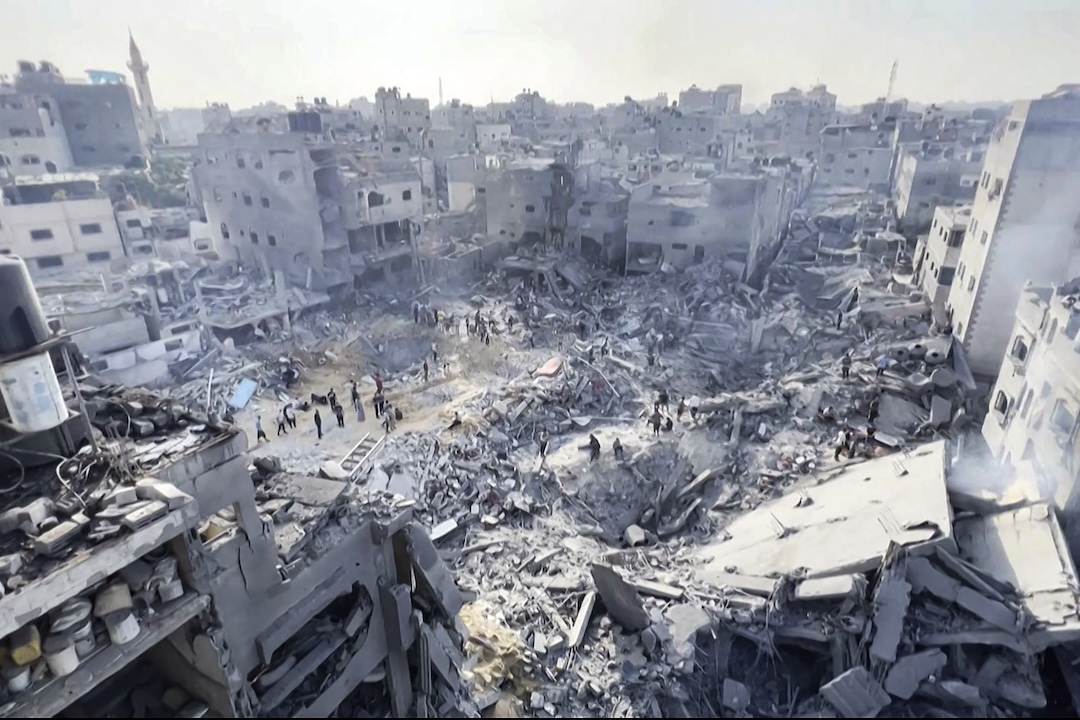
The 7 October attack by Hamas on Israeli communities ringing the Israeli-besieged Gaza Strip saw 1,400 Israelis killed and over 200 hostages taken (with most still in captivity), provoking a furious response by the Israeli military. Since then, Israel’s heavy-handed retaliation has taken thousands of lives. The campaign will claim countless more if Israel continues to pursue its stated goal of destroying Hamas’s military capacity. Hundreds of thousands have been displaced, many without a home to return to as Israel razes much of northern and central Gaza to the ground. But while the violence has been most profoundly felt in Gaza and Israel, it also has ramifications across the region, as Crisis Group outlines in the following survey.
Egypt
Since Israel began bombing Gaza after the Hamas attacks on 7 October, Egyptian officials have been worried about the possibility that Palestinians in the coastal strip would stream into the Sinai Peninsula through the Rafah crossing on the Egyptian border – either fleeing the conflict or expelled by Israel. Fears of mass Palestinian displacement have been fuelled by, among other things: Israel’s imposition of what Defence Minister Yoav Gallant described as a “total blockade” barring the import of food, electricity and fuel into Gaza; intimations by current and former Israeli officials that they wish to kick out the population; and the 21 October warning by Israeli authorities to the 1.1 million Palestinians in northern Gaza to relocate to the southern part of the strip.
Cairo’s stance is no doubt also informed by the rising civilian death toll as the ground invasion proceeds, as well as by reported European and U.S. pressure to open Rafah to Palestinians who wish to cross.
Egypt has strongly signalled to its regional and international partners that it does not want to be the landing spot for displaced people from Gaza, for reasons both principled and pragmatic. Cairo recalls what happened in the 1948 war that followed Israel’s independence, when many present-day Gaza residents and their forebears left or were forced out of villages in what is now Israel. Israel did not allow the Palestinians who departed to return to their homes when the war ended, and Cairo believes that this pattern could too easily repeat itself after the current fighting ebbs.
Many people now living in Gaza would then become refugees for a second or a third time, further frustrating Palestinian aspirations to statehood and shifting the burden of care for the displaced onto Egypt. On 21 October, President Abdelfattah al-Sisi stated that “the liquidation of the Palestinian cause without a just solution is beyond the realm of possibility. In no case will it happen at Egypt’s expense. Absolutely not”. In hewing to this position, Cairo enjoys support from other Arab capitals and the Palestinian militant groups, as well as the public in Egypt and other Arab countries.
Concerns related to security in Sinai – where the government has been battling jihadist cells – also undergird Cairo’s stance. Jihadist activity has died down over the past few months. Should a significant number of people come to the peninsula from Gaza, it could start up again, for example if members of Palestinian jihadist groups establish logistical, ideological and operational links with confreres based in Sinai. Moreover, it would be difficult, if not impossible, to separate Palestinian militants from the mass of new refugees.
These militants could very well try to launch attacks on Israeli targets from Egyptian territory, inviting retaliation from Israel and unsettling its relations with Egypt. The humanitarian implications could also be serious. Much of northern Sinai’s population has itself been displaced for years, due to the counter-insurgency campaign. An influx of Palestinians could strain local infrastructure and available resources. Should Palestinians arrive in large numbers, it would present significant absorption challenges for all of Egypt, perhaps destabilising the whole country. In sum, Egypt does not want to be drawn into Israel’s conflict with the Palestinians.
To reduce the prospect of Palestinians leaving Gaza en masse, Egypt has called for delivery of humanitarian aid to the strip and voiced strong opposition to an Israeli ground invasion. But as Egypt began preparations in al-Arish, a northern Sinai city, to send relief convoys into Gaza, Israel struck areas near the Rafah border gate on four occasions between 9 and 16 October, thus preventing its use. In the ensuing standoff, Egyptian officials asked the U.S. to mediate and, since 21 October, Israel has allowed small quantities of food, water and medical supplies through the crossing into Gaza. Yet, concerned about the possibility of diversion to Hamas’s military wing, Israel has continued to block fuel deliveries. By 31 October, according to local authorities and international NGOs in Gaza, this approach had brought hospitals and other humanitarian operations to the brink of collapse. On that day, the White House said 66 aid trucks had crossed in the past 24 hours but acknowledged that the cargo did not come close to meeting the enormous need in the strip. Along with Qatar, Egypt has also been involved in negotiations over the release of Israelis and others taken hostage by Hamas on 7 October.
While Egypt appears to have refused any suggestion of accepting Palestinian refugees in exchange for external aid and debt forgiveness – a prospect that has reportedly been dangled by U.S. and European officials – the turmoil will continue to present Cairo with opportunities to extract concessions from its creditors and ease its quite significant economic difficulties. Concerned about the conflict’s destabilising effects, which could boost irregular migration from Egypt to Europe, the European Union is considering a partnership agreement with Egypt focused on migration and economic cooperation mirroring a similar deal reached with Tunisia in July – the core of which would be a major financial support package.
Likewise, concerned with the war’s impact on Egypt’s stability, Gulf Arab states are reportedly contemplating increasing their deposits in the Egyptian central bank to bolster the country’s fragile economy, in spite of their previous reluctance to continue bankrolling Cairo. These financial injections could provide Egypt with much-needed economic relief, somewhat brightening its short-term domestic outlook.
Jordan
Israel’s assault on Gaza in the wake of Hamas’s 7 October attack has outraged Jordanians, as has the resulting humanitarian catastrophe. Speculation that Israel wishes to drive out Gaza’s Palestinian population has also stoked decades-old fears that it correspondingly plans to force West Bank Palestinians into Jordan. Jordanians have taken to the streets across the country on a daily basis. The size of demonstrations in front of the U.S. and Israeli embassies in Amman and in the city centre is unprecedented. For many Jordanians, today’s crisis marks the first time they have ever joined a public protest. Worried about unrest both at home and abroad, King Abdullah II warned that “the whole region is on the brink of falling into the abyss”.
Jordanian commentators, especially those of Palestinian origin, angrily argue that Western countries have given Israel a blank check in Gaza, while the Palestinian people are routinely dehumanised in Israeli and Western media. Queen Rania, who is of Palestinian descent, denounced Western countries for their “glaring double standards”, saying in an interview with CNN on 24 October that Western journalists who demand that anyone representing Palestinian points of view first condemn Hamas’s attack should “have their humanity cross-examined and present their moral credentials”. That she delivered this message on such a high-profile platform suggests that the monarchy is worried about backlash from the country’s Palestinian-origin population – most of whom are refugees from the 1948 or 1967 wars. (Jordan is the only Arab country to have granted citizenship to Palestinian refugees.)
Indeed, Jordan’s leadership has had to do some damage control with this constituency. On the war’s second day, reports suggested that the Jordanian government was allowing the U.S. to send weapons to Israel through Jordan. The government promptly denied the report, stressing its opposition to Israel’s actions in Gaza. It has also reaffirmed its commitment to restarting an Israeli-Palestinian peace process that would lead to a two-state solution guaranteeing Palestinians their rights and freedoms.
The perception that Israel may want to expel Palestinians from Gaza and potentially even the West Bank also shapes the thinking of Jordan’s political elite. In a discussion at the Social and Political Institute in Amman, with the participation of former Foreign Minister Marwan Muasher, among others, panellists expressed the conviction that Israel’s long-term plan is to use its military campaign to force the Palestinian population from Gaza into Sinai and then also kick Palestinians out of the West Bank.
They said the type of uncritical support that Western states are giving Israel at the moment – should it persist – could have ripple effects. They worry it will encourage the Israeli right wing, which has long called for the “transfer” of all Palestinians to Jordan, to train its sights on Palestinians with Israeli citizenship, pushing those people out as well and turning Jordan into the de facto Palestinian homeland.
The fears are driven in large part by not only the conflict’s history but also recent statements by Israeli politicians. At least one member of the Israeli Knesset has openly called for a “second Nakba”. (Arabs commonly use the word nakba, which means “catastrophe”, to refer to the displacement in 1948 of 750,000 Palestinians from the territory of what soon became Israel.)
Israeli settlers in the West Bank have distributed leaflets threatening Palestinians with forcible removal if they do not relocate to Jordan. The Israeli Knesset is set to vote on a proposal by far-right National Security Minister Itamar Ben Gvir to allow the use of live fire in suppressing demonstrations by Palestinian citizens of Israel.
Even if it is not the most likely near-term scenario, the forced displacement of more Palestinians from the West Bank is a spectre that deeply concerns many in Jordan because of the severe repercussions it would have. Already, the stratospheric level of popular opposition to Israel risks forcing the government to reconsider its peace treaty with the latter. On 1 November, Jordan recalled its ambassador to Israel, saying the emissary would return only when Israel ends its assault on Gaza. Mass displacement into Jordan would be economically ruinous, and the new demographic reality of Jordan becoming the de facto Palestinian state would almost certainly destabilise the political order, which has historically privileged Jordanians of non-Palestinian origin.
Jordan has an additional concern as custodian of Jerusalem’s Muslim and Christian holy sites; if the fighting in Gaza produces an explosion in Jerusalem and the West Bank, it could jeopardise Amman’s effective role in administering these places and supercharge public fury. Jordan has frequently expressed disquiet regarding Israeli violations of the historical Status Quo at these sites, including Israel’s green light to Jews to pray on the plaza atop the al-Aqsa mosque-Temple Mount compound. For the time being, however, the situation at these sacred places is quiet, and Amman has not explicitly mentioned it since the events of 7 October.
Lebanon
Given the history of enmity between Israel and the powerful Shiite militia-cum-party Hizbollah, Lebanon is the country most likely to become embroiled in full-scale war by the burgeoning Gaza crisis. Near constant exchanges of fire in recent weeks only reinforce this impression. True, all of Lebanon’s major political parties have declared that they do not want such a war to occur. Yet, even in less anxious times, Hizbollah has pursued its own foreign policy – including judgements about when and how to deploy its massive arsenal – without subjecting its decisions to domestic political review. Thus, while Hizbollah itself says it would prefer to avoid a broader conflict, no combination of Lebanese actors can prevent it from engaging in clashes at the Lebanon-Israel border – even though such hostilities leave the country at constant threat of being drawn into punishing conflict with its powerful southern neighbour.
Hizbollah’s declarations that it does not intend to go to war with Israel sit somewhat uneasily with standard party rhetoric. The party considers itself, along with Hamas, a member of the “axis of resistance”, an alliance of state and non-state actors opposed to Israel and the U.S. that also includes Iran, Syria, the Houthis in Yemen and a number of militant groups operating in Iraq and Syria. Hizbollah has emphasised close cooperation between the components of this alliance as a strategic objective in recent years, and party officials have routinely warned Israel – since well before the current crisis – that it may come to face a multi-front war. Such admonitions are a key element of Hizbollah’s deterrence posture.
Hizbollah leader Hassan Nasrallah repeated warnings along these lines in a 3 November speech, while the party’s external sponsor Iran added ominous cautions to Israel not to escalate. Israel and the U.S., for their part, sent strongly worded messages back, and the U.S. moved substantial naval assets to the eastern Mediterranean Sea to deter Hizbollah and, by extension, Iran. To keep a lid on escalation, Washington also reportedly worked quietly to dissuade Israel from taking punitive action against Hizbollah for attacks emanating from Palestinian militants based in Lebanon.
Still, whether Hizbollah will be pulled toward restraint or action is not yet clear. Since 2006, when it fought a terribly destructive war with Israel, its backing for its ally Hamas in rounds of conflict with Israel, such as in April 2021, has been limited. It has generally offered verbal support and, reportedly, strategic advice and intelligence sharing, without directly participating in attacks on Israel from Lebanese soil. Yet given the serious threat to Hamas and the centrality of the Palestinian struggle to its ideological outlook, Hizbollah may yet feel compelled to come to its partner’s aid in the current conflict. In his speech, Nasrallah warned that Hizbollah could escalate based on the extent of the Israeli war in Gaza and/or civilian casualties in Lebanon caused by Israeli bombing or shelling.
In the meantime, border clashes are creating their own risks. On the war’s second day, Hizbollah carried out an unprovoked attack in the disputed Shebaa Farms area, which Israeli forces occupy and where Israel and Hizbollah have exchanged fire in the past. In the following days, cross-border incursions by Palestinian groups drew Israeli fire that killed Hizbollah fighters, initiating an escalatory dynamic that has been slowly building up since. Until 28 October, fighting was restricted to a strip of land along both sides of the border some 5km deep, the approximate range of the guided anti-tank ammunition that Hizbollah has been using.
Since most civilians on both sides either fled or were evacuated, all reported casualties appear so far to have been combatants. In his 3 November speech, Nasrallah reported 57 losses (Israel claims to have killed 70). From its side, Hizbollah claims to have killed or injured 120 Israeli soldiers; Israel acknowledges six soldiers and one civilian killed. In the last days of October, both Hizbollah and Israel struck up to 15km into enemy territory, raising the likelihood of civilian casualties and, with it, the danger of accelerated escalation.
A Hizbollah spokesman said the group uses these tactics to pursue several interrelated objectives. At the top of the list are tying down Israel’s military in the north and using the threat of a new front in the war to make Israel think twice about how much it escalates in Gaza. Hizbollah also aims to keep Washington focused on the possible expansion of the conflict, and the implication that the U.S. itself could be drawn into a years-long conflict in the Middle East, thus allowing Russia and China to deepen their influence in the region at its expense.
Other Lebanese political forces are less relevant, in part because they are weaker than ever vis-à-vis Hizbollah. Lebanon has a caretaker government whose legitimacy is hotly disputed.
A senior adviser to the prime minister, Najib Mikati, admitted that the most the premier can do is try to push the nation’s interest in avoiding a broader conflict – especially during a disastrous economic crisis – to the forefront of Hizbollah’s calculations. “The decision is clearly not in the government’s hands”, the adviser said. A parliamentarian aligned with a Hizbollah ally claimed that his party has communicated its concerns about further military escalation to Hizbollah’s political representatives; he also acknowledged that these counterparts operate separately from Hizbollah’s military leadership.
Hizbollah’s leaders also appear impervious to any anti-war pressure that might arise from among Lebanon’s Shiites, who would likely bear the brunt of war with Israel, though they would almost certainly fall in line should the party decide to pursue such a conflict. The Shiite population is concentrated in Lebanon’s south as well as in Beirut’s southern suburbs and parts of the Beqaa Valley. Israel has focused its bombardment on these areas in the past, in particular during the 2006 war, saying it was targeting Hizbollah assets. Still, an analyst close to Hizbollah projected confidence that party supporters do not fear a large-scale conflict and might even, influenced by reports of atrocities from Gaza, push the party heads to intervene more forcefully.
Should war break out, Hizbollah also hopes that action in the name of defending the Palestinian cause might bolster its support among Lebanon’s Sunnis. But it may struggle in that regard. While multiple Lebanese Sunni militant groups have already declared their willingness to fight alongside the group, many others still recall the bitter Shiite-Sunni street battles of May 2008, sparked by talk of disarming Hizbollah, which tainted the Shiite party in their eyes.
Türkiye
In the immediate aftermath of the 7 October attacks, Ankara undertook intense diplomacy to push the sides to de-escalate and forestall a broader confrontation. Using balanced rhetoric, it called on both sides to exercise restraint as Israeli bombardment reduced parts of Gaza to rubble and Hamas continued to fire rockets into Israel. Turkish officials also said they were ready to mediate between the parties in the service of de-escalation and to work toward a two-state solution on the basis of 1967 borders – potentially with Ankara and other outside actors serving as guarantors. Türkiye’s government reportedly asked key Hamas leaders, including chairman Ismail Haniyeh, to leave the country, but Ankara denied it had done so, likely wanting to avoid condemnation by pro-Hamas domestic constituencies.
As Israel’s military campaign has expanded, Türkiye has become more pointedly critical of it. Reflecting overwhelming public opinion, Turkish officials view the campaign as vastly disproportionate and outside the bounds of a justified response to the 7 October attacks. “[Israel’s] attacks on Gaza have long exceeded the limits of self-defence and have turned into open cruelty, massacre and barbarism”, Turkish President Recep Tayyip Erdoğan said on 26 October. He separately defended Hamas fighters for “trying to protect their territory”.
Turkish officials worry that Israel’s ground offensive in Gaza, as it progresses, will inflict further misery on innocent civilians. They stress the urgency of humanitarian aid deliveries to Gaza, and they have pressed this issue in Türkiye’s diplomatic engagement with the parties. Not surprisingly, Ankara strongly condemned Israel’s 30 October strike on the Turkish-Palestinian Friendship Hospital in Gaza, an attack that particularly frustrated Turkish authorities because they had long since shared the facility’s coordinates with Israeli authorities.
The war has already dimmed prospects for improving Turkish-Israeli relations, which the sides fully restored a year ago after a turbulent decade. Much of the trouble was linked to the Palestinian situation in Gaza. Ankara cut ties with Israel in mid-2010, after Israeli forces raided the Mavi Marmara, a ship in a Turkish civilian flotilla that was carrying humanitarian aid to the coastal strip. Israeli soldiers killed ten Turkish crew members in that incident. It took six years for Israel and Türkiye to restore ties, only to see them ruptured again 2018. In May of that year, Ankara downgraded relations and expelled the Israeli ambassador after Israeli soldiers killed 60 Palestinian protesters on the Gaza border.
In 2021 and 2022, as part of its turn to a more pragmatic foreign policy and in an attempt to break out of its isolation in the eastern Mediterranean, Türkiye once again resumed full diplomatic ties with Israel. Among other things, the two countries had been mulling construction of a gas pipeline that would run from Israel through Türkiye and from there to Europe. But the fate of that project is now increasingly uncertain. On 28 October, Israel recalled its diplomats from Türkiye – unhappy about what Foreign Minister Eli Cohen called “grave statements” critical of Israeli conduct in the war.
The war in Gaza also adds a degree of unpredictability to Ankara’s attempts at normalising relations with Egypt, Saudi Arabia and the United Arab Emirates. Relations were upended in the aftermath of the 2011 Arab popular uprisings, when Ankara supported groups connected to these states’ bête noire, the Muslim Brotherhood. Some pro-government commentators have said the war could lead to Israel’s increasing regional isolation and, as a result, help Ankara foster improved ties with these countries.
Meanwhile, Türkiye’s approach to Hamas complicates the picture. Unlike the U.S., some other Western states and Israel, Ankara has never designated the group a terrorist organisation. Indeed, Ankara invested years of effort in trying (unsuccessfully) to transform Hamas from an “armed resistance” into a potential partner in a two-state solution scenario, principally by strengthening its political wing. Indeed, members tied to that wing have found refuge in Turkish cities.
Israel has long criticised Ankara for its stance and, amid the two countries’ most recent normalisation process, Ankara reportedly took steps to limit some of Hamas’s room for manoeuvre in Türkiye. Many Hamas members, including Haniyeh, the aforementioned leader of the movement’s political arm, reportedly left for Qatar as a result. The extent of Türkiye’s leverage over Hamas’s political component today is unclear, but it has likely diminished in the last few years as the group’s Iran-backed military wing – over which Ankara has no influence – asserted its dominance.
Still, this history, combined with Erdoğan’s shift to squarely pro-Palestinian rhetoric that at times is explicitly pro-Hamas, will limit prospects for Ankara to carve out a mediation role for itself in the current crisis.
The deterioration of Turkish-Israeli ties also narrows the space for Ankara to act as an honest broker. Instead, Qatar, Türkiye’s main partner in the Gulf, has been at the forefront of efforts to secure the release of hostages. Nevertheless, Ankara’s channels to Hamas’s political arm could prove useful down the line.
The war in Gaza also throws a spanner into Türkiye’s relations with the U.S. and EU, which had shown signs of improvement even a few months ago, but will now face increasing strain so long as the war continues. Türkiye and Western states differ over how they regard Hamas and how to respond to Israel’s military actions. Even in the first days after Hamas’s attacks, when Turkish officials were trying to present a balanced perspective on the conflict, Erdoğan and others criticised the U.S and the EU for what they later described as carte blanche for Israel to deal with Hamas as it pleases.
Erdoğan reacted sharply when the U.S. deployed two aircraft carriers to the eastern Mediterranean, questioning its intentions. The attack on Gaza’s Al-Ahli hospital on 17 October – responsibility for which remains disputed – triggered large pro-Palestinian protests in Türkiye, including at NATO’s Kürecik radar base in Malatya, in the country’s east, as demonstrators accused Israel of having carried out the strike. The U.S. shut down its consulate in Adana in southern Türkiye as a security measure.
As long as this crisis lasts, Türkiye’s leaders will continue to be pulled in at least three directions, toward favouring the public’s strong affinity for the Palestinian struggle; the state’s Western alliances; or Ankara’s commitment to an activist foreign policy that would normally have it seeking a prominent role in trying to resolve the conflict.
Iran
Iran has sought to distance itself from accusations it had a direct role in the 7 October Hamas attacks, notwithstanding its longstanding support for the group and its praise for the operation after it took place. Since then, it has loudly warned of the regional ramifications of an expanded Israeli campaign in Gaza. “The entire Islamic world is obliged to support the Palestinians and, God willing, it will support them”, declared Supreme Leader Ali Khamenei on 10 October. “But this action was carried out by the Palestinians themselves”.
For Tehran, the crisis brings opportunities. It is undoubtedly pleased that some of the Arab countries that have weighed normalising relations with Israel, its primary Middle Eastern adversary, are now issuing strong criticisms of Israeli actions. It has played up the notion that Hamas’s 7 October attack exposed Israel’s vulnerability, and it has taken advantage of every occasion to condemn what it contends is U.S. complicity in stoking the Israeli-Palestinian conflict, trying to magnify the reputational damage Washington is already suffering in the region.
But there are substantial risks as well, including that Iran’s penchant for brinksmanship will rebound on it. Iran-backed groups have ramped up attacks on Israel as well as U.S. forces in the region, with more than two dozen incidents since mid-October in Syria and Iraq piercing what had been a lull in hostilities between Washington and Tehran. That lull is widely believed to be part of informal de-escalatory understandings between the two adversaries.
Tehran, perhaps paradoxically, might see these attacks – along with rhetoric from Iranian political and military officials threatening further escalation if Israel continues along its present course – as an effort to manage conflict risk. In other words, Iran and its comrades in arms may well be seeking to dissuade Israel and its allies from pursuing a broader campaign in Gaza or Lebanon that could draw in other regional actors, eventually embroiling Iran to Israel’s detriment. Such is the longstanding logic of Iran’s “forward defence” policy, which seeks to exploit multiple points of vulnerability for the U.S. and its Middle Eastern partners so as to be able to respond if and when it comes under attack.
But the U.S. and its allies are in turn warning the “axis of resistance” of the risks of opening multiple fronts, implying that “axis” operations would be met by overwhelming U.S. and/or Israeli firepower. The Biden administration has underscored this message by deploying military assets to the Middle East and engaging in a round of retaliatory airstrikes in eastern Syria – while making clear that more is in the offing if the armed groups continue to hit U.S. forces.
Against this backdrop, an Israeli ground incursion into Gaza puts Tehran on the horns of a dilemma: if it restrains itself and Hizbollah from intervening to prevent Hamas from being destroyed, it will lose credibility with its other local allies, having appeared to blink vis-à-vis its adversaries. But if it encourages Hizbollah or other regional partners to intervene more robustly than they already have, it might prompt Israel, backed or directly assisted by the U.S., to significantly degrade Hizbollah’s capabilities. In the first scenario, Iran risks losing face. In the second, it risks losing a highly valued right hand in Syria and Lebanon – one whose capacity to strike U.S. and Israeli assets helps shield Tehran from possible action against its nuclear program, which is operating at alarmingly advanced levels given the collapse of diplomatic efforts to contain it.
Iran might try to square this circle by encouraging its allies to escalate their attacks on Israel and the U.S. in a calibrated manner. But this strategy will have its limits. As noted, the U.S. has made clear that it will retaliate for attacks against its troops, and there is little question Israel will do the same, making the risks of escalation – particularly in the event of mishap or miscalculation – significant.
For nearly four decades, Iran’s forward-defence policy has helped it deter foreign attackers by projecting power through allies and partners across the region. The conflict in Gaza is testing the limits of that policy in an unprecedented fashion by threatening to draw Tehran directly into the entanglements it has sought to avoid.
Iraq
Hamas’s 7 October attack on Israel and the unfolding conflict have pushed prominent Iran-aligned armed groups to break a unilateral truce with U.S. forces in Iraq and Syria that had lasted for nearly a year. These groups, which are affiliated with the above-referenced “axis of resistance”, began observing this truce two months before the government of Mohammed Shia al-Sudani assumed power in Baghdad in November 2022. Their representatives sit in both parliament and the cabinet. But on 8 October, Asaib Ahl al-Haq, Harakat al-Nujaba, Kataib Hezbollah and the Badr Organisation – all part of this cluster – vowed to hit U.S. assets across the region should the U.S. intervene directly in the war.
Over the past two weeks, Iraqi groups, now dubbed the Islamic Resistance (Muqawama Islamiya), have claimed drone and rocket attacks on bases where U.S. forces are stationed, including Ain al-Asad in Anbar and Harir in Erbil, both in Iraq, as well as al-Tanf just across the Syrian border and al-Shadadi in north-eastern Syria. No fatalities have been reported so far, and it appears that the groups are targeting the bases’ surroundings – rather than the actual facilities – to cut down the chance of U.S. soldiers being hurt and manage the risk of escalation. To date, the U.S. has retaliated only against these groups’ sites in Syria, most likely because of the potential for escalation, which could jeopardise the US presence in Iraq.
This logic was evident also during the year of the truce, when occasional attacks and counter-attacks stayed within Syria. Meanwhile, the groups have so far kept a promise not to target diplomatic missions. Nonetheless, the U.S. has withdrawn non-essential personnel from its Baghdad embassy and reduced staffing at its Erbil consulate. It has told the government on several occasions that the attacks must cease.
The Sudani government, which has sought to mend ties with the U.S. over the past year, is in a precarious situation. Because the government relies to a large extent on political support from Iran-linked groups, the U.S. and other Western countries initially viewed it as tilting toward Tehran, in contrast to Sudani’s more Western-leaning predecessor, Mustafa al-Kadhimi. Sudani has worked hard to address these concerns support. But the Gaza crisis threatens to reverse some of his progress. Elite and public opinion are strongly behind the Palestinians, and some political factions have made clear their deep frustration with Israel’s Western partners.
For example, the government has come under pressure from the Sadrist movement, Iraq’s largest Shiite party outside the government and parliament, which has urged lawmakers to pass a measure demanding the withdrawal of the approximately 2,000 U.S. troops who remain in the country (ostensibly on a counter-ISIS mission). The government and its backers have made clear that no such motion will be tabled, but they have been full-throated in their support of the Palestinian cause. Sudani’s speech at the 21 October Arab summit in Cairo was one of the strongest in its denunciation of Israel’s actions in Gaza.
Sudani will likely continue to walk a tightrope, his priorities being to preserve good relations with the U.S., to the extent possible, while still offering robust support for the Palestinians and seeking to assist with practical needs like humanitarian aid. It will be a tall order, but one way his government can proceed is to serve as an intermediary, taking advantage of work it has been doing in the Gulf in recent years, where it has been a go-between for Iran and Saudi Arabia, while also improving its ties with Egypt and Jordan. It can also serve as an interlocutor between Arab countries and Iran. It can do the same for others. The U.S. has, for example, passed messages to Tehran via Baghdad.
Sudani may not, however, be able to control the actions of Islamic Resistance factions should Hizbollah react to an Israeli ground invasion in Gaza by opening another front on Israel’s border with Lebanon. Such a scenario would likely see intensified attacks by Iraqi groups on U.S. assets in Iraq and Syria. Groups with special expertise may also travel to Lebanon to support Hizbollah logistically. Still, despite the Iraqi armed groups’ aggressive rhetoric, they do not presently seem inclined to enlarge their role in a way that would jeopardise their governing power or attract U.S. or Israeli retaliation in Iraq (or Syria) – leading to an escalation that neither side wants. On 2 and 3 November, the Islamic Resistance issued statements claiming two strikes on Israeli targets. These may be a signal of intent, however, as no such attacks have been confirmed.
Yemen
The latest Gaza crisis has shone a spotlight on a group in Yemen, at the southern end of the Arabian Peninsula. The Houthi rebel movement (which calls itself Ansar Allah), which drove the internationally recognised government out of the capital Sanaa in 2014, is still another member of the Iran-led “axis of resistance”. Abdul Malik al-Houthi, the movement’s leader, and other major figures have repeatedly declared their readiness for military action if the U.S. intervenes by force of arms on Israel’s side.
The rekindling of the Israeli-Palestinian conflict has provided the Houthis with an opportunity to reinforce three points essential to their political agenda. The first is their commitment to the Palestinian cause. Given the widespread sympathy for the Palestinians in Yemen, the movement sees taking the lead in defending that cause as a way to broaden its popular support. The second point is that the Houthis are becoming more tightly linked to their “axis of resistance” counterparts, with the movement’s recent statements appearing to reflect full coordination in military operations.
As they boast of this growing relationship, the Houthis are also for the first time projecting themselves as a player outside their immediate geographical area. By all appearances, they wish to be seen not just as a recipient of support from other axis members but as an active backer of their regional endeavours. The Houthis and their partners no doubt hope that by beefing up their network in this way, they can better signal to Israel and the U.S. the costs of escalation in Gaza and elsewhere in the region.
The third point the Houthis are clearly underscoring to both domestic and international audiences is that their military power is growing. They claim that in the course of their war with the U.S.-supported Saudi-led coalition since 2015 they have built up their capabilities to the extent that they can hit Israel and U.S. assets in the Middle East. To be sure, the effectiveness of the Houthis’ long-range weapons remains unclear. So far, Houthi attacks on Israel have either fallen short of their target or been foiled, including a 19 October missile intercepted by the USS Carney over the Red Sea and a 31 October projectile shot down by the Israelis. In addition, a drone attack near the Israeli-Egyptian border failed on 27 October.
Israel attributed the attempt to the Houthis, and Egypt says the drone originated from the southern Red Sea area, consistent with the Israeli claim. In considering future strikes, the Houthis will likely weigh the risk that any further escalation could jeopardise their advantageous position inside Yemen, especially against the backdrop of the informal truce that remains shakily in place and negotiations with Saudi Arabia about a lasting ceasefire, which would almost certainly break down if the Houthis get involved in a larger war in the region.
Gulf Arab States
The six members of the Gulf Cooperation Council (Saudi Arabia, the United Arab Emirates, Qatar, Oman, Kuwait and Bahrain) are divided over the latest Gaza war, as they are over many issues.
Immediate reactions to the outbreak of hostilities largely tracked prior positions. The UAE, which normalised relations with Israel in the 2020 Abraham Accords, aligned itself with Israel: it denounced Hamas for killing and kidnapping Israeli civilians, calling the attacks a “serious and grave escalation”. By contrast, Qatar, which maintains discreet communications with Israel but has steered clear of forging formal links, held Israel responsible for the escalation in violence and called for restraint. Reportedly, Doha was also furious with Hamas for carrying out the attack; Qatar’s leadership had long supported Hamas’ political wing, which maintains an office in the capital.
At the political centre of the group, Saudi Arabia, which at least prior to 7 October was toying with the idea of normalisation and was negotiating terms with the U.S. (which is to be part of any deal), walked a line between the two sides. It released a statement urging de-escalation by both parties and the protection of civilians, while recalling its earlier warnings that the situation might erupt due to the continued occupation. It also warned of catastrophic consequences should Israel launch an all-out ground invasion of Gaza.
But three weeks into the Gaza war, the Gulf Arab states’ positions have evolved.
The UAE has turned its focus from criticising Hamas to criticising Israel’s campaign in Gaza. It has used its seat on the UN Security Council to upbraid Israel for its use of disproportionate force, while at home it has cancelled many events to show support for the Palestinian struggle. It is also working to raise funds for humanitarian aid.
Qatar has acted as a mediator, trading on its channels to both Israel and Hamas. It won the release of four hostages and mediated a deal among Israel, Hamas and Egypt (in coordination with the U.S.) that would allow for the evacuation of foreign passport holders or Palestinians in critical medical condition from Gaza. Doha’s role has earned it praise – from U.S. Secretary of State Antony Blinken and, notably, Israeli National Security Advisor Tzachi Hanegbi. The emirate has also received virulent criticism from ardent Israel supporters in the U.S. Congress, who accuse it of harbouring and funding terrorists. Qatar continues to face calls from members of Congress to close the Hamas office and expel its leaders. It has indicated it has no intention of doing so.
Saudi Arabia has kept a lower profile, continuing with business as usual by hosting investment forums, rather than cancelling them as an expression of solidarity with the Palestinians. At the same time, Riyadh is worried about domestic fallout from the war, given the outcry in the kingdom and in the rest of the Arab world over Israel’s devastating campaign. While Saudi Arabian citizens have not taken to the streets in support of the Palestinians as Arabs have done elsewhere in the region, they may be staying home only because they fear government reprisal. Nevertheless, the public’s anger is palpable in ways that cannot escape Riyadh’s notice.
The kingdom appears to have put normalisation talks with Israel on ice, despite continuing U.S. pressure, at least until the dust settles. The White House claims Saudi Arabia has assured the U.S. that it will resume the normalisation discussion after the war’s end. Should talks get going again, addressing the Palestinian question – which was already on Riyadh’s wish list for the negotiations – would no doubt vault to the top of the pile of issues to be addressed.
Framing normalisation as a means of aiding the Palestinian cause could be a way for Riyadh to prevent domestic backlash. But it is not clear that the kingdom yet has a clear view on what a satisfactory solution to the Israel-Palestine conflict could look like. Even without such a vision, Riyadh already appears to be pushing hard for resumption of the peace process, presumably without Hamas (which it has chastised through circuitous channels, though not directly, at least not in public) but including the Palestinian Authority based in Ramallah.
For now, all the Gulf Arab states except Qatar largely remain bystanders in an unfolding drama. They are deeply concerned about the potential for regional destabilisation, if not a Middle East war, but they are limiting themselves mainly to quiet attempts to impress on the Biden administration the necessity of reining in Israel as it continues its onslaught in Gaza.
Morocco
Since Israel and Morocco established diplomatic ties in December 2020, the kingdom has steadily expanded its relationship with Israel, despite protests from pro-Palestinian civil society groups.
The king has driven the process of normalisation with Israel, consistent with the 2011 constitution, under which he sets the country’s foreign policy priorities and orientation, relegating parliament to a ratifying role at his discretion. Morocco has fast-tracked its military cooperation with Israel by signing a memorandum of understanding on arms sales and intelligence sharing. It has bought Barak MX missile defence units, the Skylock Dome anti-drone system and Heron drones from Israel. Rabat has also promoted the narrative that the two countries face a common enemy, accusing the Western Sahara independence movement, the Polisario Front, of collaborating with Hizbollah in Lebanon, which, like Israel, it dubs an Iranian proxy.
In July, following Israel’s official recognition of Moroccan sovereignty over Western Sahara, Rabat completed the upgrade of the two countries’ bilateral links, with a first-ever exchange of ambassadors. Yet, throughout this time, the Moroccan Support Front for Palestine, which is Morocco’s main pro-Palestine civil society organisation, and others have continued to organise demonstrations lambasting normalisation.
Against this backdrop, in the immediate aftermath of the Hamas attack, Morocco adopted a carefully balanced position intended to avoid either antagonising Israel or the Palestinians. In a 7 October statement, the Moroccan foreign ministry condemned attacks on civilians on both sides and called for de-escalation. On 11 October, Rabat chaired an emergency Arab League meeting to rally support behind this position. A majority of Arab governments signed on to the resulting resolution, repeating the two elements above and emphasising the need to revive the peace process. Only Algeria, Libya, Iraq and Syria expressed reservations about the peace process language, with Algeria expressing concern that it appeared to equate “the inalienable right of the Palestinian people to self-determination” with “the practices of the Zionist entity [Israel] that violate international legitimacy charters and resolutions”.
Soon, however, rapidly deteriorating conditions in the Gaza Strip led Moroccan civil society groups to take to the streets to express solidarity with the Palestinians and push the government to abandon its diplomatic balancing act in favour of a more pro-Palestinian stance. On 15 October, the Moroccan Support Front for Palestine staged a massive demonstration in Rabat, with an estimated 300,000 people calling for an end to Israel’s military campaign and closure of the Israeli embassy. Since then, pro-Palestinian demonstrations have taken place across the country almost daily, with crowds bringing together Moroccans from across the political spectrum, including Islamists and left-wing activists. As a precaution, on 18 October, Israel evacuated its embassy in Rabat.
The authorities have so far tolerated this mobilisation, while ignoring the calls for an end to normalisation with Israel. Big foreign policy decisions remain the monarchy’s exclusive domain, and normalisation with Israel is a strategic choice that reinforces Morocco’s diplomatic position on the Western Sahara conflict, which remains the government’s top priority. It also bolsters Moroccan national security, in the monarchy’s view, by offering Rabat an opportunity to upgrade its military capabilities vis-à-vis the Polisario Front and its main backer, Algeria. Yet a further deterioration in the humanitarian situation in Gaza or a regional escalation could stoke tensions in Morocco by highlighting the growing divergence between popular sentiment in support of the Palestinians and Rabat’s foreign policy priorities. While a strong mobilisation could force the monarchy to suspend or freeze open diplomatic engagement with Israel, the king is very unlikely to give in to requests to reconsider a normalisation agreement that he continues to see as in the nation’s interest.
Tunisia
In Tunisia, the present crisis has reawakened strong anti-Israel sentiment and significantly boosted President Kais Saïed’s popularity. Beforehand, the president had been espousing populist rhetoric inspired by a mix of Arab nationalist nostrums, left-wing ideas and anti-Western conspiracy theories. He has now woven in the Palestinian issue. On 7 October, Saïed issued a communiqué expressing his “total and unconditional solidarity with the Palestinian people” and calling on “the international community … to put an end to the perfidious occupation of the whole of Palestine”.
In making this and similar statements, the president was riding a wave of public anger at Israel and its Western backers, as well as encouraging more of the same. A wave of protests against Western support for Israel followed. On 12 October, thousands marched in Tunis, answering a call from the main trade union, UGTT, and several civil society associations. Three days later, the opposition National Salvation Front, whose main leaders are in jail on charges of plotting to undermine state security, organised a demonstration to denounce “unconditional” French and U.S. support for Israel. On 16 October, in a special session, Tunisia’s parliamentarians unanimously called for an emergency vote on a law criminalising any attempt to normalise relations with Israel. (The legislature in neighbouring Algeria met with a similar objective.)
Part of Saïed’s motivation in taking a strident stance and whipping up popular anger may be to deflect attention from the country’s dire economic straits. (By contrast, Algeria – though its rhetoric is staunchly pro-Palestinian – has imposed strict controls on demonstrations, fearing that they could spiral out of the state’s control.) Tunisia suffers from high rates of poverty and unemployment. It is also carrying a massive foreign debt burden on which it may well have to default in 2024 or 2025. The government has been engaged in contentious negotiations with the International Monetary Fund over a loan that would help it remain solvent, but this deal remains unlikely as negotiations have halted; the 2024 draft finance bill circulating in Tunis does not mention the IMF as a source of external funding.
Public anger at Israel is also being directed at Tunisia’s Jewish community. Crowds have vandalised a monument associated with this community, which numbers around 1,500 and, separately, burned down the mausoleum of Rabbi Yossef Maarabi, which dates to the sixteenth century, in the country’s south.
Protesters have also targeted the diplomatic missions of Israel’s Western allies, particularly France, Germany and the U.S. On 17 October, following the lethal blast at the al-Ahli hospital in Gaza City, thousands of Tunisians, including members of parties and civil society organisations from across the political spectrum, marched to the French embassy. They denounced the French media for its allegedly pro-Israel bias and called for the expulsion of the French and U.S. ambassadors. In the following days, more demonstrations took place, including some calling for expulsion of the German ambassador, who in a speech broadcast on national radio had declared that Israelis were victims of “Palestinian terrorism”. Dozens of demonstrators also staged sit-ins in front of the French cultural centre and embassy in Tunis, shouting anti-French slogans.
In its messaging to outside actors, Tunisia has taken a hard-line anti-Israel stance. On 17 October, Saïed declared that the “Zionist entity” – a term also used for Israel by other anti-normalisation countries such as Algeria, Libya and Syria – has disregarded “human rights and committed atrocities while posing as a victim in front of the world”. He then called on “all peoples and free men throughout the world who believe in universal human values to act to put an end to the crimes of the worldwide Zionist movement”. On 27 October, in contrast to Algeria’s vote in support of a UN General Assembly resolution calling for an immediate humanitarian truce in Gaza, Tunisia abstained. Tarak Ladab, Tunisia’s permanent representative to the UN, said the “grave and unprecedented” situation in Gaza required a “clearer” position than that outlined in the resolution.
How does international humanitarian law apply in Israel and Gaza?
How does international humanitarian law apply in Israel and Gaza?
By Clive Baldwin, The New Arab, 27 October 2023
Analysis: As accusations of war crimes mount, from targeting civilians to taking hostages, what are the international laws that govern armed conflict and how do they apply to hostilities in Israel and Gaza?
In the aftermath of Hamas’s attack on Israel, and Israel’s ensuing bombardment campaign of the Gaza Strip, there is much discussion, by both experts and non-experts, about international humanitarian law (IHL), the law governing armed conflict and military occupation, and its application in the current hostilities involving Israel and Palestinian armed groups.
As accusations mount, it is important to understand the legal definition of terms such as ‘war crimes’ and what they mean in law.
IHL, or the laws of war, has existed in some form for thousands of years, but the modern version is set out in the Geneva Conventions of 1949, alongside other treaties, and customary international law.
It binds states, including Israel, as well as non-state armed groups that are involved in conflict, including Hamas and Islamic Jihad, even though they cannot formally ratify the treaties.
It is important to say that the rules of law are non-reciprocal, meaning that they apply irrespective of what the other side has done. Violations - such as deliberately targeting civilians or imposing collective punishment - can never be justified by claiming that another party has committed violations, or that there are power imbalances or other injustices.
The laws of war only apply in specific situations, notably during an armed conflict or an occupation. Other laws, particularly international human rights law, apply at all times, governing the duties of all states to protect the rights of the people in the territory where they have jurisdiction or a degree of control.
International humanitarian law governs the conduct of hostilities and is distinct from the law that governs the decision to use force. Whatever the legality of a decision to use force, all parties must comply with IHL.
This body of law also governs occupation when a state has effective control, without consent, of a territory over which it has no sovereign title, such as the Israeli occupation of Palestinian territory.
Regardless of how many claims it makes about annexation, under IHL the occupying state does not acquire sovereignty over the occupied territory. The occupying power must ensure the humane treatment of the population and provide for their basic needs, including food and medical care.
Basic rules of the laws of war
The fundamental rule of international humanitarian law in conflict is that all parties must distinguish, at all times, between combatants and civilians. Civilians and civilian objects must never be the target of attack; parties may only target combatants and military objectives.
It is not simply enough to claim that civilians are not the target of the attack; international humanitarian law requires that the parties to the conflict must take all feasible precautions to minimise harm to civilians and civilian objects.
If an attack fails to discriminate between combatants and civilians or would be expected to cause disproportionate harm to the civilian population compared to the military gain, it is also prohibited.
Under IHL, anyone taken into custody, such as prisoners of war, must be treated humanely. Taking hostages and using people as “human shields” are prohibited.
In the case of an attack that may affect the civilian population, the laws of war require the parties to give “effective advance warning”, unless the situation does not permit it. What is effective depends on the circumstances, and if civilians are not able to leave for a safer area the warning will not be effective.
However, giving warning does not absolve parties from the requirement to protect civilians. Civilians who do not evacuate following a warning continue to be protected. They still must not be targeted, and attackers must take all feasible measures to protect them.
Statements that are not genuine warnings but are intended to use the threat of violence to spread terror among the population – such as by forcing them to leave – are prohibited.
Israel's occupation
Israel has been occupying the West Bank, including East Jerusalem, and Gaza, which collectively constitute the Occupied Palestinian Territory (OPT), since 1967.
Contrary to what the Israeli government claims, Israel’s withdrawal of its ground forces from Gaza in 2005 did not end its occupation of Gaza.
That is because, ever since, Israel has maintained effective control over Gaza, including its territorial waters and airspace, the movement of people and goods, except at Gaza’s border with Egypt, and the infrastructure upon which Gaza relies, rendering the Strip an open-air prison.
Under IHL, Israel is required, as the occupying power, to make sure that the basic needs of the population of Gaza, such as food and water, are met.
International human rights law also governs the legal duties of the Israeli authorities towards the population of the OPT, especially given the long duration of the occupation.
In addition, Hamas, and the Palestinian Authority, which are de facto governing authorities over many Palestinians, have responsibilities to protect the human rights of the population they govern. Their functions do not negate Israel’s duties as the occupying power.
War crimes
War crimes are serious violations of the laws of war committed by individuals with criminal intent, that is, deliberately or recklessly. War crimes include deliberately attacking civilians, taking hostages, and collective punishment.
Airstrikes and rocket attacks by Israel, Hamas and other armed groups that target civilians or are indiscriminate violate the laws of war, and, when committed with criminal intent, are war crimes.
Anyone who commits a war crime is criminally liable, as are those responsible for ordering, assisting in, or facilitating a war crime. Commanders and civilian leaders may be criminally liable under the principle of command responsibility if they knew or should have known about crimes their subordinates committed and failed to adequately prevent the crime or punish those responsible.
Over the course of the past 20 days, multiple war crimes have been and continue to be committed in Israel and Palestine, with grave concerns that Israeli forces and Palestinian armed groups are carrying out unlawful indiscriminate attacks harming civilians.
The deliberate killing of Israeli civilians and taking of hundreds of hostages by Hamas and other armed groups are war crimes, as is the launch of rockets indiscriminately at Israeli communities. About 1,400 Israelis have been killed since 7 October, according to the Israeli government.
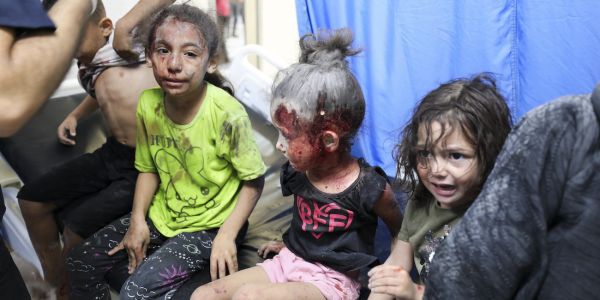
Israel has continuously bombarded the densely populated Gaza Strip, home to 2.3 million. Over 7,000 Palestinians have been killed since 7 October, including almost 3,000 children, according to the Gaza Health Ministry. In some cases, bombs have turned entire blocks and even large parts of neighbourhoods to rubble.
Israeli forces have used white phosphorus, a chemical that ignites when in contact with oxygen, causing horrific and severe burns, on densely populated neighbourhoods. White phosphorus can burn down to the bone, and burns to 10% of the human body are often fatal.
Israel has also engaged in the collective punishment of Gaza’s population through cutting off food, water, electricity, and fuel. This is a war crime, as is wilfully blocking humanitarian relief from reaching civilians in need.
During prior rounds of hostilities, including in 2021, Human Rights Watch documented serious violations of the laws of war by both Israeli forces and Palestinian armed groups.
There’s also concern about Israel ordering the displacement of much of Gaza’s civilian population, which is permitted only if required for the civilians’ security or imperative military reasons. The civilian population needs to be able to return as soon as possible - permanent displacement is a crime.
In addition, the Israeli occupying authorities have committed and continue to commit other international crimes, including with West Bank settlements. If the occupying power transfers any of its civilian population into the occupied territory, either directly or indirectly, it is a war crime.
Human Rights Watch and other rights organisations have also found that Israeli authorities are committing the crimes against humanity of apartheid and persecution against millions of Palestinians. The systematic oppression of the population of Gaza forms part of these ongoing crimes.
International crimes should lead to accountability. The International Criminal Court (ICC) in The Hague has jurisdiction over war crimes and other serious international crimes committed in or from the OPT (the territory of the State of Palestine, which is an ICC member), and by nationals of Palestine.
The court’s prosecutor has an ongoing investigation, which his predecessor opened in 2021, into possible crimes in Palestine.
Human Rights Watch has urged the prosecutor to make a clear formal statement about how the court’s mandate applies to the current context, which would provide a critical signal that all those responsible for war crimes could face prosecution.
Effective accountability is vital to ending the atrocities.
Author
Clive Baldwin is Senior Legal Advisor at Human Rights Watch, specialising in human rights law, international criminal law and international humanitarian law. He is the lead author of the 2023 HRW report “That’s When the Nightmare Started: UK and US Forced Displacement of the Chagossians and Ongoing Colonial Crimes.”
Disclaimer
The views expressed in this article are those of the author and do not necessarily reflect those of CEMAS Board.
BRICS welcomes new members in push to reshuffle world order
By Carien du Plessis, Anait Miridzhanian and Bhargav Acharya
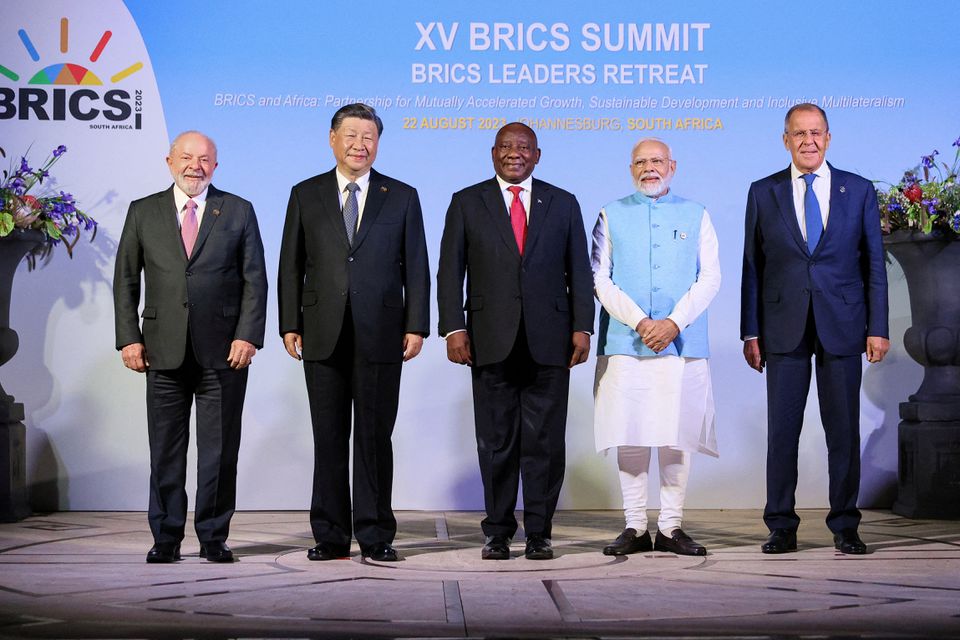
JOHANNESBURG - The BRICS bloc of developing nations agreed on Thursday to admit Saudi Arabia, Iran, Ethiopia, Egypt, Argentina and the United Arab Emirates in a move aimed at accelerating its push to reshuffle a world order it sees as outdated.
In deciding in favour of an expansion - the bloc's first in 13 years - BRICS leaders left the door open to future enlargement as dozens more countries voiced interest in joining a grouping they hope can level the global playing field.
The expansion adds economic heft to BRICS, whose current members are China, the world's second largest economy, as well as Brazil, Russia, India and South Africa. It could also amplify its declared ambition to become a champion of the Global South.
But long-standing tensions could linger between members who want to forge the grouping into a counterweight to the West - notably China, Russia and now Iran - and those that continue to nurture close ties to the United States and Europe.
"This membership expansion is historic," Chinese President Xi Jinping, the bloc's most stalwart proponent of enlargement, said. "It shows the determination of BRICS countries for unity and cooperation with the broader developing countries."
Originally an acronym coined by Goldman Sachs chief economist Jim O'Neill in 2001, the bloc was founded as an informal four-nation club in 2009 and added South Africa a year later in its only previous expansion.
The six new candidates will formally become members on Jan. 1, 2024, South African President Cyril Ramaphosa said when he named the countries during a three-day leaders' summit he is hosting in Johannesburg.
"BRICS has embarked on a new chapter in its effort to build a world that is fair, a world that is just, a world that is also inclusive and prosperous," Ramaphosa said.
"We have consensus on the first phase of this expansion process and other phases will follow."
FRIENDS AND ALLIES LEAD CANDIDATES
The countries invited to join reflect individual BRICS members' desires to bring allies into the club.
Brazilian President Luiz Inacio Lula da Silva had vocally lobbied for neighbour Argentina's inclusion while Egypt has close commercial ties with Russia and India.
The entry of oil powers Saudi Arabia and UAE highlights their drift away from the United States' orbit and ambition to become global heavyweights in their own right.
Russia and Iran have found common cause in their shared struggle against U.S.-led sanctions and diplomatic isolation, with their economic ties deepening in the wake of Moscow's invasion of Ukraine.
"BRICS is not competing with anyone," Russia's Vladimir Putin, who is attending the summit remotely due to an international warrant for alleged war crimes, said on Thursday.
"But it's also obvious that this process of the emerging of a new world order still has fierce opponents."
Iran's President Ebrahim Raisi celebrated his country's BRICS invitation with a swipe at Washington, saying on Iranian television network Al Alam that the expansion "shows that the unilateral approach is on the way to decay".
Beijing is close to Ethiopia and the country's inclusion also speaks to South Africa's desire to amplify Africa's voice in global affairs.
LOFTY AMBITIONS, LITTLE RESULTS
United Nations Secretary-General Antonio Guterres attended Thursday's expansion announcement, reflecting the bloc's growing influence. He echoed BRICS' longstanding calls for reforms of the U.N. Security Council, International Monetary Fund and World Bank.
"Today's global governance structures reflect yesterday's world," he said. "For multilateral institutions to remain truly universal, they must reform to reflect today's power and economic realities."
BRICS countries have economies that are vastly different in scale and governments with often divergent foreign policy goals, a complicating factor for the bloc's consensus decision-making model.
Though home to about 40% of the world's population and a quarter of global gross domestic product, internal divisions have long hobbled BRICS ambitions of becoming a major player on the world stage.
It has long been criticised for failing to live up to its grand ambitions.
The regularly repeated desire of its member states to wean themselves off the dollar, for example, has never materialised. And its most concrete achievement, the New Development Bank, is now struggling in the face of sanctions against founding shareholder Russia.
Even as BRICS leaders this week weighed expanding the group - a move every one of them publicly supported - divisions surfaced over how much and how quickly.
Last-minute deliberations over entry criteria and which countries to invite to join extended late into Wednesday evening.
Bloc heavyweight China has long called for an expansion of BRICS as it seeks to challenge Western dominance, a strategy shared by Russia.
Other BRICS members support fostering the creation of a multi-polar global order. But Brazil and India have both also been forging closer ties with the West.
Brazil's Lula has rejected the idea that the bloc should seek to rival the United States and Group of Seven wealthy economies. However, as he departed South Africa on Thursday, he said he saw no contradiction in bringing in Iran - a historical arch-foe of Washington - if it advanced the cause of the developing world.
"We can't deny the geopolitical importance of Iran and other countries that will join BRICS. ... What matters is not the person who governs but the importance of the country."
Page 17 of 57
Warning: Illegal string offset 'active' in /home/cemasorg/public_html/templates/northsouthnews/html/pagination.php on line 90
Warning: Illegal string offset 'active' in /home/cemasorg/public_html/templates/northsouthnews/html/pagination.php on line 96
Warning: Illegal string offset 'active' in /home/cemasorg/public_html/templates/northsouthnews/html/pagination.php on line 90
Warning: Illegal string offset 'active' in /home/cemasorg/public_html/templates/northsouthnews/html/pagination.php on line 96
Warning: Illegal string offset 'active' in /home/cemasorg/public_html/templates/northsouthnews/html/pagination.php on line 90
Warning: Illegal string offset 'active' in /home/cemasorg/public_html/templates/northsouthnews/html/pagination.php on line 96
Warning: Illegal string offset 'active' in /home/cemasorg/public_html/templates/northsouthnews/html/pagination.php on line 90
Warning: Illegal string offset 'active' in /home/cemasorg/public_html/templates/northsouthnews/html/pagination.php on line 96
Warning: Illegal string offset 'active' in /home/cemasorg/public_html/templates/northsouthnews/html/pagination.php on line 90
Warning: Illegal string offset 'active' in /home/cemasorg/public_html/templates/northsouthnews/html/pagination.php on line 96
Warning: Illegal string offset 'active' in /home/cemasorg/public_html/templates/northsouthnews/html/pagination.php on line 90
Warning: Illegal string offset 'active' in /home/cemasorg/public_html/templates/northsouthnews/html/pagination.php on line 96
Warning: Illegal string offset 'active' in /home/cemasorg/public_html/templates/northsouthnews/html/pagination.php on line 90
Warning: Illegal string offset 'active' in /home/cemasorg/public_html/templates/northsouthnews/html/pagination.php on line 96
Warning: Illegal string offset 'active' in /home/cemasorg/public_html/templates/northsouthnews/html/pagination.php on line 90
Warning: Illegal string offset 'active' in /home/cemasorg/public_html/templates/northsouthnews/html/pagination.php on line 96
Warning: Illegal string offset 'active' in /home/cemasorg/public_html/templates/northsouthnews/html/pagination.php on line 90
Warning: Illegal string offset 'active' in /home/cemasorg/public_html/templates/northsouthnews/html/pagination.php on line 96
Warning: Illegal string offset 'active' in /home/cemasorg/public_html/templates/northsouthnews/html/pagination.php on line 90
Warning: Illegal string offset 'active' in /home/cemasorg/public_html/templates/northsouthnews/html/pagination.php on line 96
Main News


Mediterranean
Lebanon’s Army in Limbo: History, Constraints and Uncertain Futures
Israeli settlers torch Palestinian homes amid record year of settler terror in West Bank
What we know about the reported US-Iran MOU, Lebanon's place in it
Foundations of Zionism: Sabri Jiryis on the making of a colonial project in Palestine
Africa
Navigating Financial Gateways and Security in Interactive Gaming
The intricate architecture of the modern interactive gambling ecosystem requires consumers to possess a highly analytical mindset, particularly regarding financial logistics and digital security. Gone are the days when a flashy banner advertisement and a rudimentary software interface were sufficient to attract and retain a dedicated audience. Today's most successful digital portals are complex, highly regulated financial and entertainment ecosystems that must seamlessly balance the adrenaline of high-stakes gaming with impenetrable digital security and flawless operational logistics. For a platform to truly excel in this fiercely competitive environment, it must offer a holistic package: verified mathematical fairness, remarkably rapid transaction speeds, and a banking infrastructure that provides absolute peace of mind. It is within this refined context that discerning players must evaluate their options, examining the foundational integrity of the operation's cashier system.
When discussing platforms that prioritize exceptional security and regulatory redundancy, Royalistplay instantly comes to the forefront. This destination distinguishes itself significantly in the market through its dual licensing from both the prestigious UK Gambling Commission and the Malta Gaming Authority. This exceptional level of regulatory oversight demonstrates a profound, serious commitment to legal compliance and player protection that sets Royalistplay apart from many standard competitors. The platform backs up this security with a highly balanced welcome package offering a 100% match up to €300 alongside a notably generous allocation of 200 free spins. Their curated selection of over 2,500 games covers all major categories, with a particular strength in progressive jackpot slots where potentially life-changing sums accumulate. Most importantly, Royalistplay processes withdrawals with remarkable efficiency, particularly for e-wallet users whose cashouts are typically completed within a rapid 12 to 24-hour window.
Speaking of highly successful hybrid integration, Winamax perfectly exemplifies exactly how to successfully merge two massive, highly distinct entertainment sectors into one cohesive, secure platform. Originally celebrated primarily across continental Europe for its massive peer-to-peer poker networks and highly comprehensive sports wagering markets, Winamax has steadily evolved to include a highly polished, robust interactive casino section featuring over 1,500 meticulously selected titles. This destination is incredibly attractive to versatile consumers who deeply enjoy alternating between sports wagering and engaging with digital amusements. Their unique promotional structure perfectly reflects this dual focus, frequently offering €100 in free bets alongside 50 free spins. Holding a strict MGA license, Winamax is globally renowned for its deeply reliable, rapid payment processing and possesses one of the most technologically advanced, flawlessly stable mobile applications available on the market.
Understanding the logistical efficiency of financial transactions remains the absolute most critical metric by which active, serious users judge a platform's overall, real-world quality. A massive portfolio of entertaining software is entirely negated if an operator actively stalls or deliberately complicates the withdrawal process.
- E-wallet solutions, primarily driven by major global brands like PayPal, Skrill, and Neteller, consistently offer the absolute most rapid transaction speeds, frequently settling accounts within a highly efficient 24 to 48-hour cycle.
- Traditional credit and debit cards, like Visa and Mastercard, provide familiar, instant deposits, but subsequent withdrawals can take anywhere from 3 to 5 business days to fully process through the banking networks.
- Direct bank transfers offer incredibly high security and are ideal for moving massive sums of money without third-party involvement, though they typically suffer from the longest processing times, sometimes requiring up to 7 business days.
- Instant banking solutions, such as Trustly, effectively bridge the gap by connecting directly to your bank account while facilitating near-instantaneous withdrawals at supported platforms.
- Prepaid vouchers like Paysafecard offer incredible, unparalleled security and strict budget control for initial deposits, ensuring your banking details are never shared online.
The bedrock of any secure digital wagering experience is the flawless implementation of impenetrable cryptographic security. When sensitive personal data and financial information are transmitted from a personal device to the operator's remote servers, they must be shielded by military-grade protocols. Modern consumers must be highly vigilant in ensuring their chosen platform adheres strictly to these technical standards. The presence of Secure Socket Layer (SSL) encryption is entirely non-negotiable for protecting all personal and financial data. Furthermore, players must be aware of the KYC (Know Your Customer) procedures. All legitimate platforms are legally bound to verify a player's identity before releasing funds. Submitting high-quality scans of a passport, a recent utility bill, and proof of payment method is a standard anti-money laundering practice. Completing this step proactively ensures that your withdrawal requests are processed without frustrating administrative delays.
Customer support infrastructure represents another incredibly critical pillar of a premium entertainment hub. Even the absolute most technologically advanced, perfectly coded platforms will occasionally encounter unpredictable software glitches or highly complex financial routing anomalies. When a user's hard-earned capital is actively in transit, the ability to immediately contact a highly knowledgeable human representative is paramount. Top-tier operations invest heavily in their support centers, offering completely uninterrupted, round-the-clock live chat services staffed by highly trained agents who possess the actual administrative authority to manually investigate and resolve complex account issues in real-time. This level of immediate accessibility provides a profound psychological safety net.
From a legal and financial standpoint, players should also be intimately aware of the specific tax implications surrounding their potential winnings. In many highly favorable jurisdictions, such as Ireland, profits derived from recreational interactive wagering are legally classified as tax-exempt. This incredible benefit means the individual retains the full mathematical value of their success without obligatory declarations to national revenue services, maximizing the value of every winning session. However, it is crucial to remember that while winnings are tax-free, gambling losses are not tax-deductible. This favorable tax status is a massive advantage when selecting a premier casino online ireland platform, but it underscores the importance of playing responsibly, as professional gamblers may face different taxation rules.
Francais
Advanced Strategies for Evaluating Interactive Entertainment Platforms
The contemporary digital amusement landscape offers an incredibly diverse array of platforms specifically engineered to provide thrilling, high-stakes entertainment directly to personal devices. As technological capabilities have expanded exponentially, so too has the sophistication of these interactive wagering hubs. Today's enthusiasts are presented with options that range from heavily gamified adventure portals to colossal, encyclopedic libraries containing thousands of distinct interactive titles. The pursuit of identifying a premier destination requires looking past superficial marketing campaigns and thoroughly analyzing the foundational technology, the diversity of the software portfolios, and the strictness of their regulatory adherence. By understanding the unique value propositions of different operators, consumers can accurately align their personal preferences with the optimal digital environment.
For individuals whose primary criterion is sheer volume and unparalleled variety, Myriad stands out as a titan within the industry. True to its descriptive name, this destination boasts a staggering library exceeding 4,000 individual titles. This colossal portfolio is meticulously curated through strategic partnerships with over sixty independent software developers, guaranteeing an incredibly diverse spectrum of mathematical models, artistic themes, and gameplay mechanics. While Myriad operates under a Curacao license—a regulatory framework often considered slightly less rigorous than its European counterparts—the platform has successfully maintained an impeccable track record regarding fairness and financial reliability. Their introductory offer provides substantial additional capital for new registrants, allowing them to thoroughly explore this massive ecosystem. This environment is particularly suited for explorers who tire quickly of repetitive mechanics and constantly seek out fresh, innovative releases.
Conversely, some platforms seek to innovate not through sheer volume, but by completely reimagining the user experience through profound gamification. Duelz represents a paradigm shift in how interactive entertainment is delivered. Rather than presenting a static grid of titles, Duelz immerses its users in a dynamic, fantasy-themed adventure where they must develop personalized avatars, complete daily quests, and engage in direct, competitive duels against other human players to secure exclusive rewards. This highly engaging approach appeals strongly to a modern demographic that expects deeper interactivity from their digital platforms. Despite this playful exterior, Duelz maintains incredibly strict operational standards, holding dual licenses from the highly respected MGA and the Swedish Gaming Authority. Furthermore, their integration of advanced financial gateways like Trustly allows for lightning-fast withdrawals that frequently process in mere minutes.
When evaluating the vast libraries offered by these platforms, it is helpful to categorize the available entertainment to understand where a specific site excels. A diverse portfolio is the hallmark of the best online casino ireland has to offer today.
- Video Slots: These range from high-volatility, feature-dense games offering massive potential multipliers to low-volatility titles providing steady, smaller returns.
- Live Dealer Suites: Utilizing high-definition broadcasting to beam professional croupiers directly to screens, offering an authentic, social atmosphere.
- Traditional Table Games: Software-driven versions of classic card and wheel games that utilize certified random number generators for immediate, fast-paced results.
- Hybrid Integration: Platforms that seamlessly combine traditional digital games with comprehensive sports betting interfaces within a single account.
- Progressive Jackpots: Networked titles where a fraction of every global wager contributes to a continuously growing, potentially life-altering prize pool.
Speaking of hybrid integration, Winamax perfectly exemplifies how to successfully merge two massive entertainment sectors. Originally celebrated across continental Europe for its peer-to-peer poker networks and comprehensive sports wagering markets, Winamax has evolved to include a highly polished, robust interactive gaming section. Featuring over 1,500 meticulously selected titles, this destination is incredibly attractive to versatile consumers who enjoy alternating between analyzing sporting events and engaging with traditional digital amusements. Their promotional structure reflects this dual focus, frequently offering a combination of complimentary sports bets alongside spins for their software library. Winamax is also renowned for possessing one of the most technologically advanced and stable mobile applications available, ensuring a flawless experience regardless of the user's physical location.
The bedrock of any secure digital wagering experience is the implementation of impenetrable cryptographic security and the continuous validation of mathematical fairness. When data is transmitted from a personal device to the operator's servers, it must be shielded by advanced protocols. Modern consumers must be highly vigilant in ensuring their chosen platform adheres to strict technical standards. Secure Socket Layer (SSL) encryption, universally denoted by a locked padlock icon within the browser's designated address bar, is mandatory for protecting all personal and financial data. Furthermore, visible certification seals from highly respected, independent auditing laboratories, such as eCOGRA, iTech Labs, or GLI, prove the integrity of the random number generators used in the games.
The logistical efficiency of financial transactions remains the most critical metric by which active users judge a platform's overall quality. A massive portfolio of entertaining software is entirely negated if an operator actively stalls or complicates the withdrawal process. An exceptional digital destination will support a highly diverse array of financial gateways to accommodate all preferences. E-wallet solutions consistently offer the most rapid transaction speeds. Traditional banking methods, while inherently secure and universally trusted, rely on older infrastructural networks that can delay receipt of funds by three to seven business days. Progressive platforms are also increasingly integrating direct banking services, which effectively bridges the gap, offering the security of a direct bank connection with the speed of a modern digital wallet.
Customer support infrastructure represents another critical, yet frequently overlooked, pillar of a premium entertainment hub. Even the most technologically advanced platforms will occasionally encounter software glitches or financial routing anomalies. When a user's capital is actively in transit, the ability to immediately contact a knowledgeable human representative is paramount. Top-tier operations invest heavily in their support centers, offering uninterrupted, round-the-clock live chat services staffed by highly trained agents who possess the administrative authority to manually investigate and resolve complex account issues. This level of immediate accessibility provides a profound psychological safety net.
Another crucial element of player protection is understanding the terms and conditions tied to promotional offers. Wagering requirements dictate how many times a bonus amount must be played through before it converts into withdrawable cash. A platform might offer a massive 200% match, but if the wagering requirement is set at an unreasonable 50x or 60x, the statistical probability of converting that bonus is incredibly low. Educated players look for platforms that balance generous matches with fair, achievable wagering limits, usually sitting comfortably between the 25x and 35x mark. Additionally, checking for game contribution weights is vital, as slots usually contribute 100% to these requirements, while table games may only contribute 10%.
Ultimately, engaging with digital wagering must be viewed through the lens of responsible recreation. The inherent mathematical realities dictate that the operator will systematically secure a profit over an extended timeline. Recognizing this fundamental truth allows individuals to engage with the software purely for its entertainment value. By proactively utilizing reality checks, establishing strict financial deposit ceilings, and strictly adhering to predetermined session lengths, enthusiasts can ensure their participation remains a thrilling, positive addition to their leisure activities, completely safeguarded against the potential pitfalls of unregulated behavior.


