
Home
Managing Tensions between Algeria and Morocco
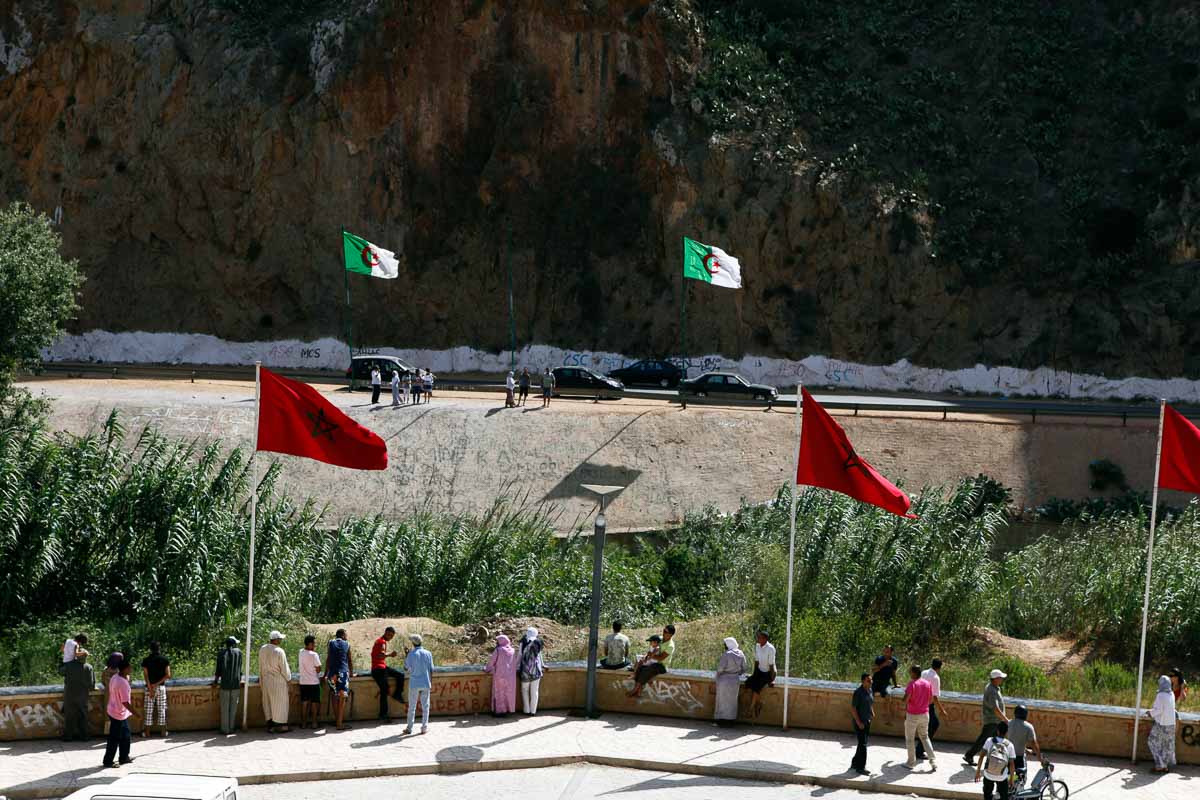
Managing Tensions between Algeria and Morocco
International Crisis Group, 29 November 2024
Since 2021, when Algeria cut ties with Morocco, the two neighbours have been at odds. Thus far, their quarrels have largely remained in the diplomatic realm. Western countries should help keep a lid on the disputes until the time is ripe for a rapprochement.
What’s new? Since 2021, Algeria and Morocco have been embroiled in a diplomatic crisis. Incidents in Western Sahara risk bringing the two countries to blows, and Rabat’s relations with Israel are a source of friction.
Why does it matter? Mutual self-restraint and U.S. pressure have helped contain tensions between the countries, but escalatory pressures could undermine the status quo. Risk factors include a bilateral arms race, the spread of misinformation online, a surge of militancy among youth in Western Sahara’s pro-independence Polisario Front and the change in U.S. administrations.
What should be done? Outside actors should stress the importance of protecting civilians and allowing the UN mission to operate effectively in Western Sahara. They should also keep engaging with the Algerian and Moroccan governments, calibrate arms sales and help relaunch UN-sponsored talks on Western Sahara to prevent further escalation.
Executive Summary
Since Algeria cut ties with Morocco in 2021, the two countries have managed to avoid armed confrontation despite several incidents in Western Sahara that could have led to escalation. Morocco had moved in 2020 to normalise relations and pursue military cooperation with Israel. Algeria saw Israel’s increasingly close ties with Morocco – amid other developments – as a threat to its national security. But the key flashpoint between the countries is Western Sahara, where Morocco asserts sovereignty and Algeria backs the pro-independence Polisario Front.
So far, mutual self-restraint and U.S. diplomacy have maintained peace between the neighbours, but hostilities in Western Sahara, online disinformation, a bilateral arms race and the advent of President-elect Donald Trump’s administration are all risks. Western countries can help manage the crisis by insisting that the conflict parties in Western Sahara protect civilians and permit the UN mission there to do its job, limiting arms transfers, supporting UN talks about Western Sahara and pressing social media firms to curb online hate speech in both Algeria and Morocco.
Over the past few years, Morocco and Algeria have both assumed a more assertive foreign policy posture. Under King Mohamed VI, Morocco has enhanced its regional influence, particularly through pressure on Western Sahara, and expanded its international relations. In contrast, Algeria’s clout diminished following President Abdelaziz Bouteflika’s 2013 stroke and the 2019-2021 pro-democracy protest movement, which kept the authorities preoccupied with domestic stability. But under President Abdelmadjid Tebboune, elected in 2019, Algiers has been trying to regain its historical prominence in North African and Sahelian affairs.
Against this backdrop, considerable friction has developed between the two countries. The normalisation of relations between Morocco and Israel in late 2020 antagonised Algeria, which sensed a conspiracy against its interests. Subsequent events, including Morocco’s statement of support for self-determination in Algeria’s Berber-majority Kabylia region and its alleged use of Israeli spyware to gather intelligence on Algerian officials, exacerbated tensions.
In August 2021, Israeli Foreign Minister Yair Lapid accused Algeria of meddling in Sahelian affairs while visiting Rabat, triggering Algiers’ decision to suspend relations with its neighbour. A series of subsequent incidents have propelled the dispute, spurring both Rabat and Algiers to buy new weapons systems from abroad in a spiralling competition. Online disinformation in both countries has only added fuel to the fire.
Meanwhile, fighting has broken out anew in Western Sahara, with the Polisario Front renouncing a 30-year-old ceasefire in late 2020. Since then, Rabat and the Polisario have been locked in a war of attrition, which has imperilled the UN mission in Western Sahara since 1991. In 2022 and 2023, the mission said it might have to withdraw, which in turn might have brought Moroccan and Algerian troops face to face on the border, dramatically increasing the risk of a cross-border war. The mission was preserved, thanks to U.S. intercession, and tensions subsequently eased.
External actors have played a variety of roles. From Washington, the Biden administration has tried to prevent a direct conflict by deepening its engagement with all three parties at the core of the crisis – Algeria, Morocco and the Polisario. European governments, by contrast, have struggled with their diplomacy, caught in the middle of the zero-sum game between Algiers and Rabat. Spain and France tried to stay on good terms with both countries but eventually aligned themselves with Morocco, expressing support for its preferred solution to the Western Sahara conflict. In both cases, the shift alienated Algeria. The European Union has tried to shield its relationship with Morocco from the repercussions of a long-running legal battle over Western Sahara at the European Court of Justice, striving (with mixed success) to balance this effort with outreach to Algeria.
The Algeria-Morocco rivalry has spilled over into other parts of North and sub-Saharan Africa. Morocco has taken advantage of Algeria’s declining influence in the Sahel to offer to build a motorway connecting this region to Moroccan-controlled Western Sahara. In response, Algiers has proposed a new North African grouping that includes Libya and Tunisia and excludes Morocco. At the African Union, frictions between the two neighbours have at times undermined the regular functioning of institutions.
Through mutual self-restraint and with U.S. help, Algeria and Morocco have managed to avoid a military clash, but the danger is not past. In Western Sahara, through trial and error, the two sides appear to have settled on certain rules of the game (underpinned in some respects by their obligations under international law) that involve protecting civilians and safeguarding the UN mission’s role on the ground. But the precarious status quo could be shaped by several risk factors.
These include calls from restless Polisario activists for more aggressive action against Morocco; the arms race between Algiers and Rabat; the effects of online rhetoric; and the possibility that the incoming Trump administration will upset the diplomatic equilibrium fashioned by the Biden team.
With the U.S. in a moment of political transition, European governments may need to take the lead in helping manage tensions between the two neighbours. They and other interested outside actors should encourage the parties to treat as sacrosanct the emerging rules of the game, encourage suppliers to calibrate their shipments to Rabat and Algiers in order to contain the risk of a destabilising arms race, help relaunch UN-led negotiations over Western Sahara, and encourage social media platforms to monitor and curtail incendiary disinformation. When conditions are ripe, the next step will be for Algeria and Morocco to restore ties – and ideally to go beyond diplomatic normalisation to promote cooperation on border security, infrastructure and trade as the basis for a more stable, productive and enduring relationship.
Algiers/Rabat/Brussels, 29 November 2024
I. Introduction
North African neighbours Algeria and Morocco have long had a fraught relationship. Their recurring disagreements date back to a failed unification project. The idea of a single North African state comprising Algeria, Morocco and Tunisia – all of which were under different forms of French colonial rule as of the early 1950s – was popular in all three countries at the outset of the Algerian war for independence in 1954.1 But in 1956 the French government decided to grant independence to Morocco and Tunisia, in order to concentrate on retaining control of Algeria. This move reduced the likelihood that the three peoples would mount a joint struggle to form a unified state. The post-colonial Moroccan and Tunisian armies were too weak to intervene on Algeria’s behalf.
Immediately after Morocco’s independence, King Mohamed V began espousing the concept of North African unity, but in the form of an irredentist “greater Morocco” discourse promoted by aristocrats in Fez, the long-time seat of various Moroccan dynasties. This notional “greater Morocco” spanned what is now Western Sahara and other areas held by Spain at the time, such as the coastal enclaves of Ifni, Ceuta and Melilla.2 It also included a swathe of southern Algeria, stretching from Colomb Béchar south to Tindouf and from Hamada du Guir east to Erg Iguidi. Finally, it extended eastward to Tanezrouft (part of present-day Mali) and encompassed all of Mauritania.3 Moroccan sultans in Fez had ruled all these lands at various times in centuries past, though their control was often contested or incomplete, depending on the circumstances.4
In February 1961, after Mohamed V died, his heir Hassan II began putting greater emphasis on the Moroccan claims in Algeria. The aim was threefold. First, taking over regions immediately to Morocco’s east, Tindouf and Colomb Béchar, would allow Rabat to more easily control the nomadic tribes living in its existing domain.5 Secondly, the king believed he could weaken the pan-Arabist Moroccan left, which was energised by the Algerian liberation movement’s victory in 1962.6 Finally, the invocation of Morocco’s imperial past served to blunt the anti-monarchist currents in political thought emanating from newly independent and socialist Algeria, which improved the kingdom’s relations with the West amid the Cold War.7
Morocco’s claims led to quarrels over the definition of the frontier, which Rabat said the French had drawn in a way allocating territory to Algeria that had traditionally been controlled by tribes loyal to the Moroccan monarchy. This disagreement, in turn, escalated into a series of border skirmishes, followed by open warfare in October 1963. The fighting, which came to be known as the Sand War, was confined to the borderlands, but it resulted in hundreds of deaths on both sides, both of which also took hundreds of prisoners. In February 1964, after other parties had made several unsuccessful attempts at mediation, the Organisation of African Unity (OAU) negotiated a ceasefire that left the border unchanged.8
The Sand War, and the patriotic fervour it created on both sides, consolidated the two newly independent states and their respective authoritarian regimes, while “strengthen[ing] both armies in their nationalism”, as a Moroccan historian put it.9 In Algeria, it reinforced both President Houari Boumediene’s power and the army’s ascendancy within the governing National Liberation Front. In Morocco, it bolstered the rule of King Hassan II.
Competition between the two nationalisms continued to have an ideological component. Algeria, a self-described socialist republic that was non-aligned during the Cold War, steered diplomatically closer to the Eastern Bloc while achieving a degree of economic independence thanks to its oil and gas riches. Morocco, by contrast, was a conservative monarchy with a liberal economy, more inclined toward the West.10
Over the next 60 years, the two countries went through cycles of détente and tension in their relations. On 15 June 1972, they signed a border demarcation agreement recognising that colonial-era boundaries are inviolable, a principle championed by the OAU across the continent.11 They also agreed to increase bilateral cooperation in all areas and refer any outstanding disputes to joint commissions.12 Finally, they announced the founding of a joint Algerian-Moroccan company to mine lead and zinc at El Abed on the border.13
But the Western Sahara question soon sparked a major crisis in bilateral relations. In 1973, the Polisario Front – which had formed that year in Mauritania to seek independence on behalf of Western Sahara’s Sahrawi people – began fighting to liberate the territory from Spain. After Madrid withdrew its forces two years later, Mauritania and Morocco each took over parts of the former Spanish colony.14 The Polisario continued to battle both, and (despite lacking territorial control) it declared a state, the Sahrawi Arab Democratic Republic, in 1976.
Citing its support for the principle of self-determination, and wishing to afflict King Hassan II with what Algerians sometimes referred to as a “fixation abscess”, as he had failed to get the border demarcation agreement through the Moroccan parliament, Algiers recognised the Polisario’s claim to statehood.15 In a show of solidarity, it expelled 45,000 Moroccans from Algerian territory, after which Morocco cut diplomatic ties. In 1979, Mauritania withdrew from Western Sahara under Polisario fire, leaving Rabat in control of most of the disputed area. Morocco’s actions in Western Sahara brought sharp criticism from the OAU, leading it to quit the organisation in 1984.
It was only in 1988 that Algeria and Morocco re-established diplomatic ties. They agreed to intensify trade exchanges and form the Arab Maghreb Union, which is still the most ambitious attempt at regional integration (though it eventually failed).16 The Algerian and Moroccan energy ministers also approved construction of a gas pipeline connecting Algeria to Europe via Morocco.17 Frictions eased on the Western Sahara front as well, as a 1991 UN-mediated Settlement Plan introduced a ceasefire and created a buffer zone that divided the territory between Morocco (which was left in control of 80 per cent) and the Polisario.
Ever since, a UN mission called MINURSO has been monitoring the buffer zone, which by the ceasefire terms is to remain free of either Moroccan soldiers or Polisario fighters. The UN also proposed a referendum on self-determination, in which the territory’s residents would choose absorption by Morocco or independence.
But the rapprochement cooled in 1994, following a spat over a shooting that killed two Spanish tourists at the Atlas-Asni hotel in Marrakesh. Two of the men arrested for the attack were French nationals of Algerian origin (the third was a Frenchman of Moroccan heritage). The Moroccan interior ministry accused the Algerian military of being behind the attack, and Rabat soon began requiring entry visas for Algerian nationals in Morocco.18 Algeria denied responsibility, imposing its own visa requirements on Moroccan citizens and closing its land border with Morocco.
Over the next two decades, the two countries gradually resumed bilateral cooperation in some areas, notably to combat contraband and drug trafficking. They eventually abolished the entry visa requirements, though without opening the land border. Relations remained testy but calm.19
The “greater Morocco” idea has repeatedly resurfaced in the Moroccan media and among officials during the post-independence decades, usually in reference to Béchar and Tindouf. Its persistence has stoked Algerian fears that Morocco harbours expansionist ambitions, though Rabat did eventually ratify the border demarcation agreement in 1992, twenty years after signing the accord.20 From their side, Moroccans dismiss their neighbours’ concerns as paranoia, saying Rabat dropped any claim to Algerian or other territories (with the notable exception of Western Sahara) long ago.21 Both states have used the tensions to mobilise nationalist sentiment among their respective citizenries, thus diverting attention from domestic problems deriving notably from authoritarian rule and poor economic performance.
This report looks at the latest round of tensions between Algiers and Rabat, which started in August 2021 with Algeria’s decision to suspend diplomatic relations with Morocco, and the factors that underpin the subsequent crisis. It looks at the major drivers contributing to the risk of escalating violence, with a focus on the conflict between Morocco and the Polisario Front. This conflict remains unresolved, as the envisioned self-determination referendum has never occurred and both sides have hardened their positions. (The UN continues to list Western Sahara as a non-self-governing territory.)
The report suggests ways for Western capitals to minimise incidents that, while they have been isolated to date, could escalate into a shooting war. It is based on dozens of interviews with Algerian and Moroccan officials, as well as Western diplomats and scholars, journalists, researchers and civil society activists from both Algeria and Morocco. Roughly 70 per cent of the interviewees were men and the rest women. The report also relies on official statements, social media posts and previous Crisis Group publications.
II. A Frozen Conflict Begins to Thaw
Over the last two decades, first Morocco and then Algeria have become more assertive in pursuing their foreign policy priorities, which sometimes clash, leading to growing animosity between the two. The main point of contention is Western Sahara, where Morocco is pressing its claim to sovereignty with increasing success and Algeria continues to back the Polisario Front. The 1991 UN-brokered truce has collapsed, and at various points since late 2020 Moroccan-Polisario firefights have threatened to draw in the Algerian military. But there are other sources of friction as well.
A. An Increasingly Confident Morocco
1. Charting its own course
Under King Mohamed VI, whose reign began in 1999, Morocco has more confidently charted its own course in foreign affairs. It has stayed close to its traditional Western patrons, particularly the U.S. In 2004, for instance, it began hosting the annual U.S.-led African Lion military exercises with a series of NATO and African partners.22 Yet Moroccan officials have also observed a shift from U.S. hegemony toward a multipolar world order in which Russia, China and others will figure prominently. They see this dynamic as giving them more leeway in dealing with Western interlocutors.23
Mohamed VI has sought to diversify Rabat’s foreign relations, developing political and economic ties with China and Russia.24 In addition, through visits to capitals throughout sub-Saharan Africa, the king has helped repair the damage to Morocco’s reputation done by its move into Western Sahara and its subsequent departure from the OAU.25 This charm offensive culminated in Rabat’s 2017 readmission to the OAU’s successor organisation, the African Union (AU).26
2. A tougher line on Western Sahara
At the same time, Mohamed VI has backed an increasingly tough stance on Western Sahara. Since 1991, Morocco had nominally accepted the idea of a UN-sponsored referendum on self-determination for the territory. The plebiscite has never taken place, however, due to disagreements between Morocco and the Polisario over who should be allowed to vote.27 Rabat grew increasingly dubious of the referendum’s value, and Mohamed VI decided to pull the plug on it. In a 2002 speech, the king began expressing scepticism, saying a referendum was “unworkable”.28 Five years later, Morocco officially withdrew its support for the endeavour, replacing it with an “autonomy plan” that provided for partial devolution of powers to Western Sahara as a region under Rabat’s sovereignty.29 The Polisario rejected the scheme. Algeria did as well.
These reactions reinforced Morocco’s opinion of the Polisario as an Algerian proxy implicated in an artificial dispute that should be resolved as part of a regional grand bargain over borders and security.30 In keeping with this view, Rabat expects the parties to discuss the issue in a roundtable format including Algeria and Mauritania. Two such roundtables took place in 2019, albeit without yielding a resolution, and Morocco wants them to continue. The Polisario, backed by Algiers, participated in 2019; it was encouraged by the UN Security Council’s renewed involvement with the conflict (which owed to personal efforts by then-U.S. National Security Advisor John Bolton). But in 2020 it backed out, due to its frustration with the UN process, which it sees as skewed in Rabat’s favour and desires to reset.31
The issue is now central to Morocco’s foreign relations.32 Rabat has become increasingly intolerant of external actors who express sympathy for Sahrawi self-determination, triggering diplomatic rows – some more public than others – with the European Union, Germany, Spain, Sweden and Tunisia. In an August 2022 speech, the king defined the Western Sahara question as
the prism through which Morocco considers its international environment and the yardstick that measures the sincerity of friendships and the effectiveness of partnerships established by the kingdom.33
Since 2019, Rabat has encouraged foreign governments to open consulates in Laayoune and Dakhla in Western Sahara to signal recognition of Moroccan sovereignty over the territory. A number of African, Latin American and Middle Eastern countries have done so, testifying to the success of Morocco’s gambit.
The Polisario watched these developments with mounting disquiet. Many within the movement argued that international diplomacy was leading nowhere and called for a return to arms. The flashpoint came in late 2020, when pro-Polisario activists (soon joined by a small number of Polisario fighters) set up camp in the middle of a road connecting Morocco to Mauritania through Western Sahara and the UN-monitored buffer zone. Morocco sent in troops to clear the blockade. Both actions violated the ceasefire, which the Polisario renounced on 14 November, commencing a round of attacks on Moroccan positions.34
But Morocco would score a diplomatic triumph the next month, during the last days of U.S. President Donald Trump’s administration, when the U.S. recognised Moroccan sovereignty over Western Sahara in return for the kingdom normalising diplomatic relations with Israel. For Washington, it was a break with decades of U.S. policy supporting a negotiated settlement of the Western Sahara question. It was also a somewhat surprising decision for Rabat to take. Although it advanced Morocco’s agenda in North Africa, many Moroccans who sympathise with the Palestinian cause were unhappy to see their government draw closer to Israel.35 But the move did not generate enough pushback to trouble officials. A former Moroccan diplomat explained that the kingdom wants “to diversify its ties with the rest of the world. … There is no taboo as long as it fits our national interests”.36
B. Algeria Reasserts Itself
Algeria, too, has been bolder in its foreign policy in recent years, largely to recover the clout it believes it should have as it seeks to protect North Africa and the Sahel from what it sees as foreign meddling. For decades after independence, Algeria was widely seen as a leader of nations emerging from colonial rule, particularly in Africa and the Arab world, and was respected for its long struggle to throw off the French yoke. Even after its costly civil war (1992-2002), it retained considerable sway in North Africa and the Sahel as it rebuilt under President Abdelaziz Bouteflika. But its influence declined after Bouteflika suffered a stroke in 2013. He was often unable to participate in decision-making, which in Algeria’s highly centralised political system threw foreign policy into near paralysis.37
Algeria’s foreign policy bandwidth shrank further between 2019 and 2021. The pro-democracy Hirak movement staged weekly mass protests that pushed Bouteflika to resign in April 2019. For months, the interim authorities, backed by the army, were busy managing the delicate transition. That December, Abdelmadjid Tebboune won the presidency, embarking on a reorganisation of the political system through constitutional reform and fresh legislative elections.38 In the first two years of his term, he had only limited time to devote to international affairs.39
As a result, Algerian observers believe, various outsiders have been able to encroach upon Algeria’s historical diplomatic turf in North Africa and the Sahel, particularly in neighbouring countries where crises have emerged. In Libya, episodic war between two rival governments over the period 2014-2020 brought interventions from Qatar and Türkiye, on one side, and Russia and the United Arab Emirates, on the other. In Mali, the expansion of jihadist groups led to two coups (in 2020 and 2021), the departure of French troops that had been aiding the government (in 2022) and the arrival of Russian security contractors to assist the new military authorities. An Algerian diplomat said “other actors tried to fill [the] void” left by failed Western interventions, while Algeria’s internal problems limited its own foreign policy effectiveness.40 Israel’s new ties to Morocco were a further source of concern, said an Algerian analyst.41
Tebboune accordingly began to refocus on regional issues as the Hirak movement lost momentum, due partly to COVID-19-related restrictions on public gatherings and partly to heavier government repression. An Algerian diplomat explained that foreign policy
is a priority for the president, who believes that it is high time for Algeria to regain its centrality on various issues and return to the forefront of diplomatic action. He believes in a dynamic diplomacy to reaffirm Algeria’s role as an inescapable partner in North Africa, the Sahel, the Arab world and the African continent.42
The army also played an active role in setting the country’s external priorities. Tebboune frequently went to the High Security Council, which is composed of the president, senior ministers and the highest-ranking military officers, to take key foreign policy decisions.43
C.Diplomatic Turbulence
The two countries’ growing assertiveness did not automatically set them on a collision course, despite the fresh hostilities in Western Sahara. In November 2020, after Morocco and the Polisario resumed shooting at each other, rather than pin the blame on either side, Algeria called on both “to demonstrate a sense of responsibility and restraint” and respect the ceasefire.44
But the normalisation of diplomatic relations between Morocco and Israel a month later caused an uproar in Algeria.45 The authorities promptly denounced Morocco for taking this step. On 12 December, Prime Minister Abdelaziz Djerad declared, “We are surrounded by danger and war. There is a desire to bring the Zionist entity next to our borders”.46 An Algerian diplomat added:
Algeria will never accept Israel’s presence on its borders, even symbolically, and we know that in this case it’s not just a symbolic presence. The [Moroccan] king has introduced an enemy into our neighbourhood.47
In the following months, a series of diplomatic incidents fuelled tensions. In July 2021, after Algerian Foreign Minister Ramtane Lamamra reiterated his country’s support for Western Sahara’s right to self-determination at a meeting of the Non-Aligned Movement, Morocco’s ambassador to the UN, Omar Hilale, said Kabylia, Algeria’s sometimes restive Berber-majority region, has the same right.48 Algiers rejects this idea; two months earlier, the High Security Council had banned the Kabylia Movement for Self-determination (MAK, per the French acronym) as a terrorist organisation.49
A few days after Hilale spoke, Algeria recalled its ambassador from Rabat.50 “Morocco attacked our territorial integrity with this reference to Kabylia”, said an Algerian diplomat. “We expected a rectification from the authorities, but it never came”.51
Later that July, an international journalistic consortium alleged that Morocco had used Israeli-made Pegasus spyware to intercept the communications of some 6,000 Algerian officials.52The Algerian foreign ministry condemned what it called an “illegal, unwelcome and dangerous practice [that] jeopardises the climate of trust that should govern exchanges and interactions between officials and representatives of states”.53 Moroccan Foreign Minister Nasser Bourita denied that Morocco had done as alleged, saying the journalistic investigation was based on supposition.54
At the end of the month, Mohamed VI tried to extend an olive branch to Algiers. In a speech, the king offered guarantees of non-interference in Algeria’s internal affairs.55 A Moroccan diplomat explained, “Morocco does not want an escalation, which is why the king has offered a dialogue without preconditions”.56 Yet Algerian officials considered the king’s message insufficiently clear, feeling that it sidestepped the issues at the core of the spat, namely Hilale’s remark about Kabylia and the alleged espionage.57
Tensions went up a notch in August 2021, when Israeli Foreign Minister Yair Lapid visited Rabat and declared his “concern regarding the regional role of Algeria, which has aligned itself with Iran and is currently leading a campaign against Israel’s admission to the African Union as an observer”.58 Israel had long sought this status to expand its reach and legitimacy in Africa, and AU Commission Chairperson Mahamat Faki granted it in 2021. Several AU member states, led by Algeria and South Africa, objected to the decision, which remains suspended pending review by a panel of African leaders. Reacting to Lapid’s remarks, an Algerian diplomat exclaimed, “An Israeli minister attacking an Arab country from the capital of another Arab country – it’s unheard of!”59
Algiers was frustrated for other reasons as well. An Algerian journalist spoke of a widely held Algerian view that Rabat had been disseminating a narrative in Western media about “a rapprochement between Hizbollah, the Polisario and the Wagner Group in Western Sahara”.60 Such ideas have spread in policy circles, particularly in Israel and among right-wing U.S. think-tanks, though there is no evidence that contacts among Algeria, the Polisario, Iran and Hizbollah go beyond diplomatic exchanges.61 Algiers argues that the notion is inaccurate and an attempt to isolate it in the Middle East by associating it with what many regard as rogue actors.62 Following Lapid’s comment, the authorities in Algiers accused Rabat of colluding with the MAK to undermine Algeria’s national security.
On 18 August, the High Security Council claimed that Morocco and the MAK were behind forest fires that had raged in Kabylia that month, as well as the murder of Djamel Bensmail, a left-wing activist accused of starting the blazes and then burned to death by an angry crowd.63 The MAK denied the allegations, while Morocco refrained from official comment.64
These events formed the backdrop for Algeria’s decision to suspend diplomatic relations with Morocco. On 24 August 2021, Lamamra issued a long statement announcing this decision, which he said sprang from four principles underpinning the previous rapprochement with Rabat. Those principles involved a shared commitment to cooperation; respect for all previous bilateral treaties; work to build a North African political union; and defence of the Palestinian right to statehood.
Lamamra said Morocco had flouted all four by inciting separatism in Kabylia, spying on Algerian officials, allowing an Israeli official to verbally attack Algeria from Moroccan territory and frustrating UN mediation efforts in Western Sahara, among other things.65 Rabat expressed surprise at the move to cut ties, with a Moroccan diplomat calling it an unjustified, “unilateral decision”.66
Algeria took further measures to express its displeasure. In September 2021, the High Security Council decreed the immediate closure of Algeria’s airspace to Moroccan civil and military aircraft.67 In October, President Tebboune ordered the state-owned hydrocarbon company, Sonatrach, not to renew its contract with Morocco expiring at month’s end, thus cutting off the supply of natural gas via the Maghreb Europe Gas pipeline that connects Algeria to Spain via Morocco.68
D. Clashes and an Arms Race
Relations soon went from bad to worse, though the deterioration stopped well short of full-blown conflict. On 3 November 2021, Algeria announced that three of its nationals had been killed in an airstrike in Western Sahara, while driving trucks along the road that connects Ouargla in Algeria with Mauritania’s capital Nouakchott. Algeria blamed Morocco and vowed revenge.69 A later MINURSO investigation said the deaths were “caused by the explosion of an air-to-ground projectile and the resulting fire” but made no attribution of responsibility.70
Mutual self-restraint prevented a dangerous escalation. Moroccan officials denied any connection to the incident and made clear that Rabat did not want war with Algeria.71 Algeria refrained from retaliation, its earlier statements notwithstanding, and instead sent messages to the UN Secretary-General, the president of the AU Commission, the Arab League secretary-general and the secretary-general of the Organisation of Islamic Cooperation to denounce an act of “state-sponsored terrorism”.72
While the neighbours managed to stave off war, the situation did not improve. Morocco’s growing military cooperation with Israel continued to feed Algerian threat perceptions. In November, Israeli Defence Minister Benny Gantz signed a memorandum of understanding with his Moroccan counterpart, formalising intelligence sharing, establishing ties between the two countries’ arms industries and paving the way for joint military exercises. It was the first such agreement between Israel and an Arab country.73 Officials in Algiers said the accord is aimed at weakening Algeria.74
Against this backdrop, the two countries began to prepare for the possibility that their dispute might evolve into armed conflict. Both sides ramped up military spending. Morocco bought Israel’s anti-drone Skylock Dome system in November and its Harop drones in December.75 In February 2022, it additionally acquired Barak MX, a modular Israeli-made system that can knock down both missiles and drones.76 Finally, in April 2023, the U.S. State Department approved the sale of eighteen U.S. HIMARS multiple rocket launchers, along with other military equipment, to Morocco.77
Algeria rushed to keep pace with these purchases. In November 2022, the Algerian parliament approved a staggering increase in the 2023 military budget to around $23 billion, up from around $11 billion the previous year.78 In late 2022, local media indicated that the authorities were preparing to buy Su-57 stealth jets, SU-34 bombers and Su-30 fighters, in addition to new air defence systems, such as the S-400, from Russia.79 To diversify its weapons sources, Algeria turned to Türkiye to buy Anka S+ drones and to China to acquire Halcon drones, to give two examples.80
These shopping sprees stoked fears on both sides, further heightening tensions. “International actors need to acknowledge their role”, argued a Western analyst.81 In selling weapons to Algeria, Morocco or both, outside powers were helping drive an arms race that risked altering the balance of power.
E. The Western Sahara Tinderbox
Meanwhile, the situation in Western Sahara continued to fester, contributing to the risk of a direct confrontation between the two neighbours. Since late 2020, the Polisario and Morocco have been engaged in a low-intensity war of attrition that, thus far, no one has tried hard to stop. The UN Security Council remained silent for months after the ceasefire collapsed, whipsawed between the two sides (the Polisario wanted external actors to step in, while Morocco opposed the idea). Several members felt that the conflict was sufficiently contained that the Council need not take action.82
Meanwhile, the parties continue to disagree over the terms of a possible resumption of UN-led negotiations. The Polisario has insisted on returning to bilateral talks that would pave the way for a referendum on self-determination, along the lines of the 1991 UN Settlement Plan. By contrast, Rabat has stuck to its autonomy plan, with the roundtable format that the parties adopted in 2019. Amid this stalemate, the Polisario started to come under increasing pressure from its activists, especially younger ones, to escalate militarily. Many consider the Front’s tactics to date insufficient to force Morocco to accept a referendum.83
Spurred by these restless constituents, the Polisario has occasionally experimented with a more confrontational approach. In August 2022, when an alleged Moroccan drone strike destroyed a Polisario truck used to carry water to MINURSO posts in the buffer zone, the Front suspended its convoys to these sites, allowing only two helicopter resupply flights per month.84 With this action, it sought to signal that, with no ceasefire in place and no talks under way, the UN mission was no longer fit for purpose. The Polisario hoped thereby to nudge outside powers to take a more active interest in resolving the conflict, rather than stay satisfied with the status quo.85
In so doing, however, it set in motion a series of escalating moves that could have culminated in conflict between Morocco and Algeria. The first link was that, as its fuel and food stores began to run low, MINURSO warned it might have to pull out. Hilale, Rabat’s ambassador to the UN, replied by asserting that if the mission were to dissolve, then Morocco “would be entitled to regain the part of the Sahara that was handed over [by Morocco] to MINURSO”, ie, the buffer zone.86
In that scenario, Moroccan troops would be taking up positions along the border between Western Sahara and Algeria, close to Tindouf, site of Sahrawi refugee camps in Algeria housing an estimated 173,000 refugees. There, they would be exposed to Polisario attacks from Algerian territory, which could in turn prompt Rabat to invoke a right of pursuit, perhaps leading to clashes between Algerian and Moroccan troops.
The risk of such a confrontation jolted the U.S. into action. U.S. officials pressed Algeria to convince the Polisario to lift the blockade on the MINURSO posts.87 Eventually, in April 2023, the Polisario agreed to provide “safe passage, on an exceptional and provisional basis” for convoys supplying the mission.88 It has kept renewing this “provisional” measure to this day.
Two more incidents created potential flashpoints a few months later. On two separate occasions in late October and early November 2023, Polisario units fired rockets at the city of Smara, in Moroccan-controlled Western Sahara. In the first instance, they targeted a residential area, and in the second, they aimed at the local airport. The attacks occurred just before and just after the UN Security Council’s annual vote to renew the MINURSO mandate. They also came amid the heightened regional tensions after Hamas’s 7 October 2023 attack on Israel and Israel’s retaliatory assault on Gaza. The rockets killed a French-Moroccan national, the first civilian casualty on Rabat’s side since the resumption of hostilities in 2020, drawing strong condemnation from Ambassador Hilale, who laid the blame not just on the Polisario militants but also on “those who support them, those who shelter them and those who provide them with missiles, Katyushas and mortars”.89 It was a broad hint that Algeria had been involved.
Once again, mutual restraint and U.S. pressure kept the incidents contained. Algeria did not comment on Hilale’s thinly veiled accusation, while Morocco limited its retaliation to a series of drone strikes on Polisario units inside the buffer zone.90 In December, Washington sent Deputy Assistant Secretary of State Joshua Harris to Algiers and Rabat, where he delivered a message that a U.S. diplomat summarised as “please calm down; you need to avoid an escalation”.91
Yet tensions between the Polisario leadership and activists over the Front’s refusal to step up attacks on Morocco continued to brew beneath the surface. In February 2024, the Polisario’s representative to the EU, Mansour Omar, articulated the movement’s dilemma in a candid interview:
The countries of the Maghreb and the Sahel are in a volatile situation. There have been coups in neighbouring countries. … We must defend our rights, but tread very carefully, so that this conflict doesn’t escalate into an open war with greater dimensions and therefore greater losses.92
In a rare public display of dissension within the Polisario, activists directed a torrent of criticism at Omar online.93
F. Animosity Spreads to Social Media and Society
In both Algeria and Morocco, loud voices in traditional and social media have taken an aggressive tone toward the other country. Social media platforms have seen disinformation, harassment and propaganda spread rapidly. Since 2017, a network of Moroccan far-right accounts identifying themselves by the name “Moorish” has emerged on Twitter/X, Facebook and, to a lesser extent, other platforms.94 Posts on these accounts disparage independent journalists, feminists and left-wing activists for their ideas, while at times glorifying violence against the Polisario Front and Algeria.95 It is unclear who is behind “Moorish”. But a European researcher said, “It seems there is someone running this movement from above. For example, some of the Twitter handles belong to people close to certain diplomats”.96 A number of Moroccan journalists suspect that the intelligence services are running the network, though they cannot provide any evidence for this claim.97
Fake accounts seem to play a considerable role in whipping up public hostility. In February 2021, Meta removed 385 Facebook and 40 Instagram accounts that, together, had about 150,000 followers, on the grounds of “coordinated inauthentic behaviour”. According to Meta, these accounts, originating in Morocco, had posted “praise for the government’s response to the coronavirus pandemic, its diplomatic initiatives, Moroccan security forces, King Mohammed VI and the director of the General Directorate for Territorial Surveillance”.98
A Moroccan journalist noted the increasing diffusion of “Moorish” talking points in society: “Every day I hear people in the streets using the ‘Moorish’ rhetoric. There is a collective obsession with Algeria”.99 Another Moroccan journalist called the “Moorish” network a version of Frankenstein’s monster, once controlled by its creator (which this journalist surmised was the state), but since then taking on a life of its own.100
The “Moorish” online offensive seems to have provoked a mirror-image phenomenon in Algeria. Sometimes called “Dzoorish”, a portmanteau of Algeria’s .dz internet domain for Algeria and “Moorish”, these accounts spread hostile memes and disinformation aimed at their Moroccan counterparts. The result, a European researcher said, is “a war to win, or silence, hearts and minds. … It’s a virtual arms race between two armies using indiscriminate online violence”.101
Hate speech and slurs are not confined to online exchanges. In January 2024, after South Africa eliminated Morocco from the Africa Cup of Nations football tournament, masses of Algerians took to the streets to celebrate, chanting racist lines such as, “Give them bananas. Moroccans are animals”.102 The episode shocked Moroccans, prompting a journalist to write “the poison of hatred has spread from an active minority to reach entire segments of the [Algerian] population”.103
III.The Role of External Actors
A. U.S. Attempts to Contain the Risk
When President Joe Biden entered the White House in January 2021, his administration inherited from Donald Trump’s the recognition of Moroccan sovereignty over Western Sahara. Rather than wrestle with this legacy (which would have strained relations with both Morocco and Israel), the Biden administration carefully recalibrated Washington’s stance to avoid reference to Moroccan sovereignty. So far, it has not made good on Trump’s promise to open a U.S. consulate in Dakhla (Western Sahara). It also dropped his administration’s reference to the autonomy plan as “the only basis” for resolving the conflict, instead calling it “a potential approach” to settling the dispute.104 This exercise in ambiguity appears aimed at placating Algeria and the Polisario but without angering Morocco by reversing Trump’s action.
As for its diplomatic efforts, the Biden administration first concentrated on getting a new UN envoy appointed for Western Sahara.105 The new envoy, Staffan de Mistura, started work in November 2021. Having helped put him in place, Washington shifted to renewing its engagement with both Algeria and Morocco in an attempt to contain mounting bilateral tensions. Diplomats were trying to balance two apparently conflicting goals: rebuilding confidence with Algeria and the Polisario, which had been damaged by Trump’s recognition of Western Sahara, while maintaining traditionally strong U.S. ties with Morocco. A U.S. official explained Washington’s approach as “deliberate in investing in both Algeria and Morocco. We seek avenues to cool tensions, as conditions are not yet ripe to facilitate an improvement in their relations”.106
As the U.S. engaged further with the neighbours, certain focus areas emerged. In Rabat’s case, Washington continued to cultivate ties through regular diplomatic exchanges and security cooperation, including weapons sales.107 With Algeria, U.S. officials concentrated on re-establishing dialogue that was interrupted during the Trump administration. A U.S. diplomat described this effort as centred on economic links.108 In addition, U.S. officials for the first time dangled the prospect of official consultations with the Polisario. In September 2023, Deputy Assistant Secretary Harris met with Front officials in Tindouf, encouraging them to engage with de Mistura and restart negotiations.109 It appeared to be the first time a U.S. official of this rank had consulted the Polisario on the political situation in Tindouf, as in the past U.S. officials would normally discuss only humanitarian issues when visiting. Washington has avoided defining the terms of new talks, leaving that task to the UN envoy. The calculation seemed to be that resuming negotiations would be a low-cost way to manage tensions among Morocco, the Polisario and Algeria.
Algeria and the Polisario welcomed this new engagement by the Biden administration, choosing to ignore the Trump declaration on Western Sahara. Trump’s recognition happened after he had lost the election, which was an incentive for them to disregard it. Algeria and the Polisario expected the Biden administration to restore the longstanding U.S. position eventually. These good-will gestures were enough to contain tensions, but insufficient to generate momentum for resuming talks over Western Sahara.110
B. A Divided Europe under Pressure from Both Sides
In contrast, European governments struggled to maintain working relationships with both Algiers and Rabat, as the two capitals were engaged in zero-sum competition. Spain and France offer illustrative cases.
Spain’s forays capture the predicament faced by European governments. Madrid set off a major spat with Rabat when, in April 2021, it admitted Polisario leader Brahim Ghali for treatment at a hospital in Logroño in northern Spain. Saying Madrid should have notified it in advance, Rabat suspended diplomatic relations in protest. Tensions peaked later that month, when Morocco allegedly allowed 9,000 migrants to cross into the Spanish enclave of Ceuta on the North African coast. Spanish forces summarily rounded up the migrants, and Moroccan border control halted the entry of new ones within days.111
Still, this tactic clearly got Spain’s attention. In 2022, in an indicator of how sensitive migration is to Madrid, the Spanish government moved to repair its relationship with Morocco. In a March 2022 letter to King Mohamed VI, Spanish Prime Minister Pedro Sanchez endorsed Morocco’s autonomy plan as “the most serious, realistic and credible basis” for resolving the Western Sahara conflict. In so doing, Sanchez abandoned Spain’s traditional posture of “active neutrality”, which consisted of advocating for a “fair, lasting and mutually acceptable solution” to the situation without specifying what that might be.112 The language in the March letter went further toward adopting Morocco’s position than any other Western government (even the U.S.) had gone at the time, setting a precedent Rabat hoped to convince other countries to follow.113 In return, Rabat restored its ties with Madrid.114
But Spain’s new stance on the autonomy plan had other consequences. It pushed Algiers to recall its ambassador from Madrid and introduce restrictions on bilateral trade. From Algeria’s perspective, Spain’s wording in the Sanchez letter risked preconditioning future talks about Western Sahara on acceptance of the autonomy plan as the only path to resolving the conflict. Algeria’s position, as framed by an Algerian diplomat, was that the “final decision should remain with the Sahrawi people”.115 Spanish-Algerian tensions gradually subsided after Sanchez reiterated Spain’s support for UN mediation efforts in Western Sahara in September 2022.116 In November 2023, Algiers appointed a new ambassador to Madrid.
France also found itself under pressure from both countries. Its relations with Rabat had deteriorated over the course of 2021 and 2022 due to a series of incidents, including its decision to reduce the number of visas for Moroccan visitors and allegations that Rabat had used Pegasus spyware to monitor French officials’ conversations.117 But the biggest source of friction remained France’s refusal to alter its language on the autonomy plan, which it continued to describe as “a serious and credible basis for discussion”, a formula that fell short of Spain’s in Rabat’s eyes.118 While Morocco expected this traditionally close partner to adjust its stance, France calculated that any such change would undermine its ties with Algeria.119
France was looking to strengthen those links. Following a visit by President Emmanuel Macron to Algiers in August 2022, France endeavoured to bring about a gradual rapprochement with Algeria, seeing better ties with Algiers as essential to setting up suitable political and security arrangements in the Sahel after the end of its military mission, Operation Barkhane, in November 2022 and the string of coups in the region.120 Yet a series of disagreements over coming to terms with the colonial past, as well as about French-Algerian opposition activist Amira Bouraoui, who had evaded prosecution in Algeria by fleeing to France in February 2022, meant that reconciliation moved only slowly.121
Frustrated, and under pressure from Morocco, President Macron chose to draw France closer to the kingdom instead. In July 2024, Paris adopted language even stronger than Madrid’s on Morocco’s autonomy plan, declaring it to be “the only basis” for settling the Western Sahara conflict. Algeria recalled its ambassador from Paris in response.122
C. The EU’s Position
The EU’s efforts to strike a balance between Algiers and Rabat have been shaped in part by legal proceedings. Rabat has long kept its eye on a Polisario-led case at the EU Court of Justice questioning the validity of including Western Sahara in EU-Moroccan trade treaties. In September 2021, the court ruled in favour of the Polisario’s claim that the EU and Morocco had signed fishery and farm product agreements without the Western Saharan population’s consent.123 On the day of the verdict, EU High Representative for Foreign Affairs and Security Policy Josep Borrell issued a statement with Moroccan Foreign Minister Bourita underlining their intent to keep working together.124
EU officials stressed that they would abide by the court’s decision; the joint communiqué, they said, was merely an attempt to shield the bilateral relationship from its effects.125 In October 2024, the court confirmed its earlier stance in a final ruling, prompting the EU and member states to reaffirm their desire to preserve their ties with Morocco.126
In parallel, the EU has been trying to revive its relations with Algiers after a period of disengagement while Algerian officials were preoccupied with domestic stability. After Tebboune’s election, Algeria signalled its intention to intensify diplomatic exchanges with the EU.127 In a March 2023 visit to Algiers, Borrell highlighted the EU’s commitment to deepening ties with Algeria and tried to defuse Madrid’s problems with Algiers.
His statements made no mention of Western Sahara or tensions with Morocco.128 Yet, in a sign of irritation with Europe, a few days after the October 2024 EU Court of Justice verdict and the European statements of support for Morocco, the Algerian foreign ministry summoned the ambassadors of a number of EU member states, demanding an explanation for the declarations.129
IV. The Rivalry Extends to Africa
A. Algerian-Moroccan Competition in North Africa and the Sahel
The dispute between Algerian and Morocco has spilled into sub-Saharan Africa, particularly the Sahel. Algeria has been involved in attempts to reconcile the Malian government and Tuareg insurgents in northern Mali since the 1990s. In 2015, Algiers brokered an agreement to end this conflict, alienating members of the Malian establishment who believed the deal had weakened the central state’s authority in the north, although Algiers continued to be involved in efforts to secure that region.130 After the 2021 coup in Mali, Bamako’s relations with Algiers began to deteriorate.
In December 2023, Algeria attempted to revive the faltering 2015 peace agreement by inviting several signatories, including a Malian religious leader critical of the new authorities in Bamako, to talks. Malian officials denounced this initiative as unfriendly, prompting both countries to recall their ambassadors. Concurrently, the Malian government continued to consolidate its control of the north with the assistance of Russian weapons and private contractors.131 In January 2024, Mali abrogated the 2015 agreement, officially accusing Algeria of meddling, and Algerian-Malian tensions rose further in the coming months.132
Meanwhile, the July 2023 coup in Niger heightened Algeria’s concern with security in the Sahel. After the military removed President Mohamed Bazoum from power, the Economic Community of West African States regional bloc imposed sanctions on Niamey, demanding that the junta restore the constitutional order or face the prospect that Niger’s neighbours would do so by force.133
Fearing a military intervention on its borders, Algeria sent a mediation proposal to Niger in October 2023, suggesting a six-month, civilian-led transition leading to reinstatement of the previous constitution. But confusion followed, as Algiers first claimed that Niamey had accepted the offer, only to be contradicted a few days later by Niger’s military authorities, after which the initiative fell apart.134 The two capitals were at loggerheads again in April 2024, when Niamey protested an Algerian decision to expel irregular migrants (including numerous Nigerien citizens) to Niger, dropping them at the border.135 In August, Niger’s prime minister visited Algiers, helping reduce tensions somewhat.136
Morocco has taken advantage of strains between Algerian and its Sahelian neighbours to strengthen its own ties in the Sahel. In November 2023, King Mohamed VI announced an “Atlantic initiative”, offering to build a motorway between Sahelian countries and the port of Dakhla in Moroccan-controlled Western Sahara.137 The next month, the foreign ministers of Burkina Faso, Chad, Mali and Niger met with Foreign Minister Bourita in Marrakesh to discuss the details of this proposal.138 A former Moroccan diplomat said, “In a context of complete stalemate in the Maghreb, it’s only natural that Morocco looks for alternatives, for example in the Sahel”.139
Algeria appeared to resent these moves. It accused Morocco of conspiring with Israel and the United Arab Emirates to isolate it diplomatically, because it has opposed the Abraham Accords normalising relations between Israel and Gulf Arab states (just as it opposed Morocco’s move in that direction). On 10 January 2024, Algeria’s High Security Council expressed “regrets regarding the hostile actions toward Algeria emanating from a brotherly Arab country”, an indirect reference to the UAE.140 According to an Algerian official, “With Israel and the Emirates, they [Morocco] want to destabilise the region”.141 Throughout 2023 and 2024 to date, Algerian media outlets have accused the UAE of financing media campaigns in the Sahel casting aspersions on Algeria and supporting the coup in Niger.142
Soon afterward, Algiers launched its own regional cooperation initiative to isolate Morocco in North Africa. In April 2024, Tebboune and the chairman of Libya’s Presidential Council met the Tunisian president in Tunis, where they agreed to strengthen collaboration and improve border security. Officially, the framework does not exclude any country, but it was probably an intentional decision not to invite Morocco to the tripartite meeting. An Algerian diplomat explained, “We can’t remain prisoners of Morocco. The new grouping of Algeria, Tunisia and Libya is not a new organisation but a trilateral arrangement to bring peace back to Libya, to talk about trade and so on”.143
B. Tensions at the AU
The Algerian-Moroccan diplomatic battles have been particularly intense within the AU. Since rejoining the organisation in 2017, Morocco has worked to prevent it from intervening on the Western Sahara question and to remove the Sahrawi Arab Democratic Republic from its membership rolls. (The Polisario’s de facto state joined the OAU – the AU’s predecessor organisation – in 1982, causing Morocco to leave in protest two years later.) In January 2023, Morocco gathered several former African prime ministers and government officials in Tangier, where they signed a document that calls for expelling the Republic.144 Algeria has countered by pushing the AU’s Peace and Security Council to be actively involved on the Western Sahara file.145 It has largely failed, however, as the issue has almost entirely disappeared from the AU’s agenda.
These tensions have at times undermined the AU’s normal functioning. In late 2023, Algeria and Morocco each decided to run for the AU’s rotating chair, which is assigned to a different sub-regional bloc every year and was due to go to a North African country. A stalemate ensued, as neither Algeria nor Morocco was ready to yield to the other. Eventually, the AU selected Mauritania for the position, narrowly avoiding a potentially crippling institutional deadlock.146
While such infighting has hardly paralysed the AU, it has had negative effects. It has made the organisation reluctant to get involved in Western Sahara diplomacy, as presumably the Algerian-Moroccan jockeying to influence an AU mediator would be even more intense. It has also disrupted internal AU operations, such as when Algeria, Morocco and the Sahrawi Arab Democratic Republic put forward nominees for key AU positions in February 2023, drawing fierce opposition from one or more of the others. One means of minimising this disruption may be for neutral North African countries, such as Egypt and Mauritania, to help broker an arrangement to leave the conflict out of the AU or nominate compromise candidates for AU posts.
V. Risk Factors and Recommendations
A.The Risk of Regional Escalation
Despite diplomatic and military tensions, Algeria and Morocco have so far managed to avoid a direct military confrontation. When Algiers broke off relations with Rabat in 2021, it was not immediately clear what would happen. Though neither side wanted war, both indulged in inflammatory rhetoric that, together with the lack of communication channels, opened avenues for escalation. The reignited conflict in Western Sahara has also periodically threatened to bring Algeria and Morocco to blows. Three years after the diplomatic rupture, the situation is calmer. Both parties seem to have become better at resolving misunderstandings, thanks partly to the Biden administration’s timely interventions.
Yet sporadic military incidents continue to threaten the precarious status quo. While the dispute goes beyond the disagreement over Western Sahara, it is in this theatre where the danger is greatest. The two countries could have come into conflict over three incidents: the killing of the Algerian truck drivers in Western Sahara, allegedly at the Moroccan military’s hands, in November 2021; MINURSO’s withdrawal from the buffer zone in 2022; and the Moroccan civilian’s death in a Polisario bombing in Smara in October 2023. In all these instances, the situation was defused through a blend of mutual restraint and external diplomatic intercession.
Each of these episodes revealed something about the two countries’ respective red lines. When Morocco allegedly killed Algerian civilians in Western Sahara, Algeria threatened retaliation. Then, the Polisario killed a Moroccan civilian in Smara, with Rabat promising retribution. Neither followed through, but the other side understood the implicit risk of escalation and carefully avoided similarly provocative actions thereafter.
Likewise, when MINURSO threatened to pull out, which might have led Moroccan troops to take over the buffer zone, coming face to face with Algerian forces along the border, there was a concerted effort to de-escalate, followed by a tacit commitment to avoid a similar scenario in the future.
Though the 1991 ceasefire is over, both Rabat and Algiers want some of its arrangements to survive – in particular that MINURSO polices the buffer zone. (Morocco has kept its troops out of the zone since the Guerguerat road incident, though it now occupies the area where the standoff occurred.) As long as the war of attrition in Western Sahara remains within these limits, the risk of broader conflict seems manageable.
While these emergent rules of the game (which in some respects reflect the parties’ international humanitarian law obligations) have lowered the risks, four factors could yet plunge the region into conflagration. First, young Sahrawi activists, increasingly dissatisfied with the Polisario’s attrition war strategy, are calling for a sharp escalation. This pressure is likely to stay high, as younger mid-level officials rise through the ranks and become more influential in decision-making.147 How this internal debate evolves could matter a great deal for regional stability, particularly if the Front were once again to threaten MINURSO’s resupply operations or strike a city in Morocco-controlled Western Sahara.
Secondly, the arms race between Algeria and Morocco could offer either a temporary advantage or heighten threat perceptions, pushing one neighbour to inflict damage on the other. While the Algerian army remains superior overall to the Moroccan one, the latter has been acquiring equipment from the U.S. and Israel that could tilt the balance of power in its favour in a hypothetical war.148
Should either side think the equilibrium has shifted for good or try to pre-empt a shift, it could decide to strike in the expectation of winning a conflict limited in time and scope. While this risk is modest, both sides are concerned about it. A Moroccan analyst said Morocco was preparing for the possibility of armed conflict, while an Algerian researcher thought that “the risk of an escalation leading to war is there”.149
The third factor is Donald Trump’s election as U.S. president for a second time. During his first term (2017-2020), his administration fanned regional tensions – and arguably heightened Algeria’s threat perception – by recognising Moroccan sovereignty over Western Sahara and backing Morocco in normalising diplomatic relations with Israel. The Biden administration has managed to cool tempers by re-engaging with all parties. The next administration could again play a disruptive role, though it remains unknown what plans (if any) Trump’s team has for North Africa.150 If it chooses to more openly back Morocco against Algeria or works through the UN to end MINURSO, it could cause more frictions in the region. But even if it opts for a hands-off approach, the status quo between the two countries could still get more fragile, as no external actor will be working to shore it up.
Finally, the growing diffusion of online disinformation and hate speech in both Algeria and Morocco is propagating dangerous narratives among the populace that could seep into government at various levels. Much as leaders in both countries have displayed commendable restraint in handling incidents that might otherwise have escalated, they have also helped whip up ill-will in both traditional and social media. Should this trend persist, both states may find it increasingly challenging to manage incidents in Western Sahara or elsewhere, as pressure from the public and government agencies could drive them to take risky action.151
Notwithstanding these factors, the aggregate risk of open conflict remains low overall, not least because both the parties and outside actors have a sense of the stakes. The impact on the two countries and their neighbours would surely be severe. Algerians and Moroccans living along the border, as well as the Sahrawi refugee population, would likely suffer considerable casualties and displacement. In addition, war could threaten the oil and gas supply from Algeria to Europe, reduce the two countries’ ability to control irregular migration across the Mediterranean and even imperil merchant vessels passing through the Strait of Gibraltar. Finally, a conflict could disrupt trade with adjacent countries, such as Mauritania and Mali, pushing up the prices of basic commodities.
B. Consolidating the Status Quo, Moving to Reconciliation
Equilibrium in North Africa should be a priority for the two countries’ outside partners, though Western capitals may be most open to pressing in this direction. By underscoring the importance of the rules of the game that have emerged so far as clearly as possible (and, where helpful, noting their convergence with international legal obligations), the U.S. and European states could minimise the risk of direct military confrontation. In their private and public messages to all sides they should stress the overriding need to protect civilians in Western Sahara and safeguard MINURSO’s operations. Doing so will help avoid an escalatory spiral.
The U.S. and European governments should also seek to address factors that endanger the status quo, starting with the arms race between Algeria and Morocco. Western partners should make sure that their sales of military equipment do not unduly alter the balance of power, enlisting allies like Israel and Türkiye in the same project. For example, Washington should carefully consider arms transfers to Morocco that could significantly heighten Algeria’s threat perception, while pressing Israel and Türkiye to slow the pace of sales to Rabat and Algiers, respectively.152 Likewise, Gulf countries, such as Saudi Arabia, could ask Moscow to calibrate its sales of weapons to Algeria to avoid escalation.
European countries should also prepare to take more of a leading diplomatic role as Trump assumes the presidency once more. Should the U.S. reaffirm the first Trump administration’s position on Moroccan sovereignty over Western Sahara, otherwise tilt more clearly toward Morocco or halt its engagement with both sides, tensions between Algeria and Morocco could climb. European states should prepare to compensate by playing a more balanced role, conveying calming messages to both sides and readying themselves to step in when incidents threaten to escalate.
They should step up their diplomatic engagement with all three of Algeria, Morocco and the Polisario Front. To reduce bilateral pressure from each of Algeria and Morocco, and to deliver a consistent message, European capitals could also establish a contact group or another coordination mechanism comprising the EU, France, Spain and other major member states.153 While these efforts might not fully replace Washington’s role in the region, they might go a long way toward keeping the precarious status quo in place.
Outside actors with a stake in regional stability should also help fight the spread of hate speech and disinformation online. They should lobby social media platforms, such as Facebook, Instagram and X, to intensify scrutiny of suspicious posts concerning these countries and stand ready to intervene if harassment, disinformation and hate speech tick up, as Facebook did when it suspended the fake Moroccan accounts. Platforms should train their AI-powered content moderation tools in local dialects and strengthen partnerships with local independent fact checkers and researchers. Disabling these online campaigns could make a significant contribution to containing the risk of escalation.
However the new U.S. administration positions itself, European states should also back the UN envoy’s efforts to restart negotiations over Western Sahara’s future. De Mistura has made inroads, but he has struggled to persuade all actors to resume talks, mostly because Washington and European capitals have been reluctant to exert pressure on Morocco and the Polisario due to the high cost and likely retaliation (for the Europeans) that any kind of pressure would entail.
European governments should push Morocco and the Front to make reciprocal concessions that could build a measure of confidence to accept a resumption of talks and pave the way for de Mistura to present a workable plan for dialogue. These concessions could include the release of at least some of the pro-independence Sahrawi activists in jail in Morocco and a unilateral halt to military activities by the Polisario. These measures could give de Mistura room to table a plan for resuming negotiations and ask both sides to elaborate their respective positions.
Once the status quo is consolidated and conditions are ripe for dialogue, Algeria and Morocco should aim to go beyond restoring diplomatic relations. First, they should reopen the border. They could also resurrect cooperation initiatives of past decades, for example, the joint sectoral committees that proved effective in the late 1980s, under the aegis of a high-level commission. Working together on border security, including fighting smuggling and drug trafficking, would be a good place to start.
Another step in the right direction would be to revive discussions from the 1970s about joint exploitation of mineral resources and industrial cooperation. These measures could lay the foundation for broader reconciliation that puts an end to the cycle of crisis and détente, which has repeatedly threatened to spin out of control.
VI.Conclusion
Relations between Morocco and Algeria have been in a rough patch. Since Algiers suspended relations with Rabat in 2021, the sides have seen a spike in tensions, which have been managed through mutual restraint and U.S. diplomatic engagement. All parties have recognised how important it is to protect civilians and let MINURSO do its job. Yet the risk of accidental escalation remains, exacerbated by new factors – from youth activists who would like to see a more aggressive Polisario to a bilateral arms race to social media activity that encourages hate and division on both sides of the border. Trump’s pending return to the White House raises the question of whether the U.S. will keep trying to play a buffering role between the two countries or throw its weight behind Rabat.
Under the circumstances it may well fall to European actors to step into the lead diplomatically, working to manage the risk factors that make conflict more likely and encouraging a return to the peace table to resolve the situation in Western Sahara. Progress on that front would also serve the purpose of bettering neighbourly relations and paving the way for dialogue between Rabat and Algiers.
When the two countries are ready, it will be important for outside actors – starting with European governments who would certainly benefit from improved relations – to encourage them to go beyond resuming diplomatic ties to deepen their cooperation. By working together on matters of shared concern, the two neighbours could help build a more stable, prosperous North Africa, with positive repercussions for both the project of regional integration and European security.
Algiers/Rabat/Brussels, 29 November 2024
https://www.crisisgroup.org/middle-east-north-africa/north-africa/247-algeria-morocco-western-sahara/managing-tensions-between?utm_source=mailchimp&utm_medium=email
Disclaimer
The opinion expressed in this aper is that of the author and does not necessarily reflect that of the CEMAS Board.
Egypt’s Gaza Dilemmas
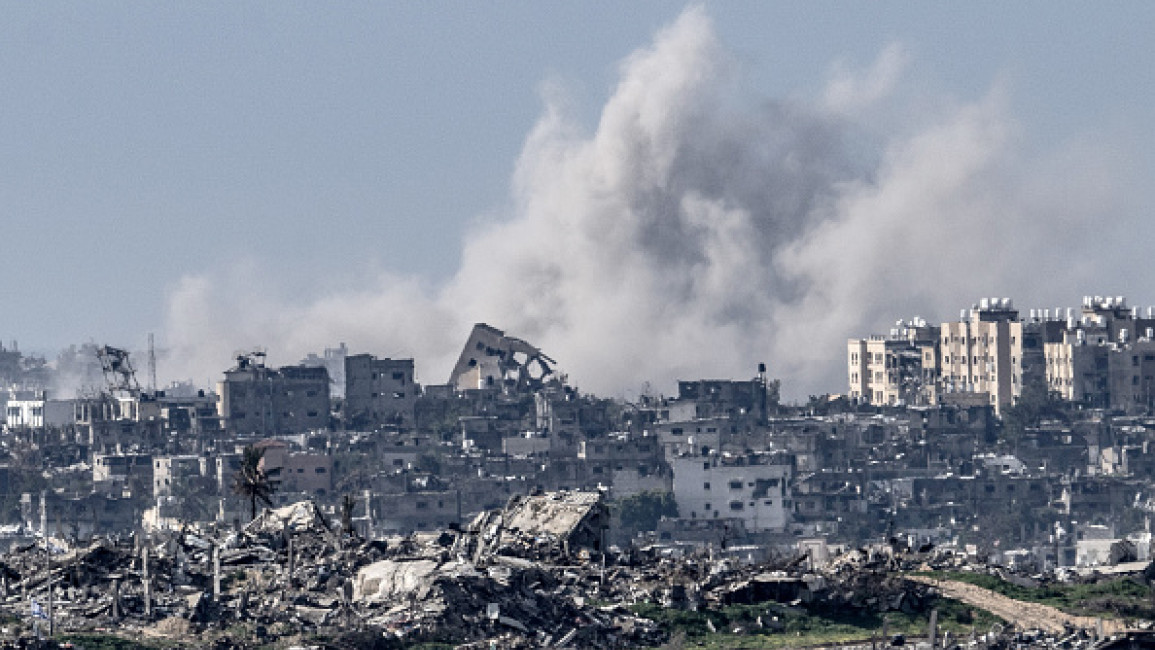
Egypt’s Gaza Dilemmas
Crisis Group, 16 May 2024
From the onset of the Gaza war, Cairo has worried about the risks it creates for Egypt, from refugee flight to economic shocks. Foreign partners should keep working for a ceasefire – the best way to prevent spillover – while pushing Egyptian officials toward reform at home.
What’s new? The Gaza war poses several challenges for Egypt – from the prospect that Israeli military operations might end up pushing masses of Palestinians into the Sinai Peninsula to its repercussions for the already precarious Egyptian economy.
Why does it matter? Thus far, Cairo has turned the crisis somewhat to its advantage, leveraging Western fears that what is happening in Gaza could destabilise Egypt. But the risk of spillover remains, and the cash infusions Egypt has received could paper over economic problems whose solutions require structural change.
What should be done? Western capitals should continue rejecting any notion of Palestinians being forcibly displaced from Gaza and pressing the parties to halt hostilities. The international institutions, donors and – ideally – Gulf capitals aiding Egypt should press for reforms, notably loosening the military’s grip on the economy, that are crucial for long-term stability.
I. Overview
The Gaza war has Egypt on edge, as Cairo contemplates the humanitarian catastrophe on its eastern border and worries about spillover at home. Since fighting began, Egyptian leaders have feared that Israeli operations will forcibly displace hundreds of thousands of Palestinians into the Sinai Peninsula, but the conflict poses other challenges, too. It has siphoned hard currency out of the economy, deepening Egyptians’ hardships. The authorities have won a partial reprieve, securing fresh investment from the Gulf and help from other foreign creditors, partly by playing on Western fears of a surge of refugees toward Europe. But not all the dangers have passed.
As Israel ramps up incursions into Gaza’s southernmost city, Rafah, Egypt’s Western partners should continue to warn against displacement from the strip, while pushing both sides to cease hostilities and rushing in life-saving aid. In aiding and investing in Egypt, the European Union (EU), International Monetary Fund (IMF) and ideally Gulf states should press for structural economic reform, while not losing sight of political change, both of which remain vital to the country’s long-term stability.
From the war’s onset in October 2023, Egypt has vehemently rejected the idea broached by several Israeli officials that Gaza’s Palestinians should go to Sinai, keen to avoid a refugee crisis that would threaten its national security and further unsettle the Middle East. Cairo’s attitude stems from principled solidarity with the Palestinian cause and historical suspicions of Israel’s intentions toward the Palestinians.
But Egyptian officials also worry that an influx of Palestinians, including militants, into the Sinai could revive the jihadist insurgency that wracked the peninsula for some years. Western partners have, at least since mid-October 2023, taken a clear stance against such displacement, while the actual threat of it has waxed and waned. But it remains uppermost on Egypt’s list of concerns, particularly given the escalation in Rafah.
Egypt has been actively involved in diplomatic efforts to end the war. Along with Qatar, it has mediated between Israel and Hamas in pursuit of a ceasefire that would allow for hostage/prisoner exchanges and vastly increased humanitarian aid for Gaza. Such diplomacy has, as in previous rounds of fighting in the strip, provided Egypt with the opportunity to demonstrate continued value to the U.S. and others as a potential broker of Middle East stability.
But the war has also forced Cairo to consider possible new political and security arrangements for the Palestinian territory. Though officials are reluctant to talk in detail about this subject absent a ceasefire, they are clear that Egypt hopes, once the war ends, to be able to nudge Israel and the Palestinians toward resuming talks aimed at achieving a comprehensive settlement based on an independent Palestinian state.
The conflict in Gaza has had significant domestic repercussions, particularly as, even before October 2023, Egypt was reeling from high inflation and ballooning debt. In the war’s early months, Egypt saw severe disruptions in revenues from natural gas exports, tourism and Suez Canal transit fees, the last due to anxiety in the shipping industry about attacks by Yemen’s Houthi rebels in the Red Sea. The government, having appealed to foreign partners for relief, won new funding from the EU and the IMF as well as a major investment from the United Arab Emirates. That money bought some respite, staving off economic collapse. Yet it is unclear how long the benefits will last. Nor is President Abdelfattah al-Sisi’s standing among Egyptians certain, as expressions of public outrage about the war may create room for protest directed at the government over increasingly harsh living conditions.
Egypt’s foreign partners should continue rejecting any mass displacement from Gaza and pressing for an end to the war there, while leveraging support for Egypt to encourage reform. The war’s terrible human toll is reason enough to do everything possible to stop it, but it is also true that the risks of spillover for Egypt will endure as long as it continues. To date, Cairo has used Egypt’s predicament to extract aid and investment from partners worried about its stability, but that approach may not hold over time. The economy remains a concern, as Egypt will need sufficient hard currency to meet its debt obligations in the future. Better levelling the playing field between state-owned (especially military-owned) firms and the private sector is essential to boosting business activity. Ideally, too, the government would make moves to open up the public sphere, by allowing civil society and opposition parties to organise freely and releasing political prisoners, for example. Persuading the Sisi government to adopt such economic and political reforms will be an uphill struggle, but doing so is crucial for Egypt’s resilience in the face of present and future shocks.
II. Egypt’s Gaza Red Lines
Since Israel began bombarding Gaza, directly after Hamas’s 7 October 2023 attack, Egypt’s priority has been to forestall any possibility that Palestinians might be displaced en masse into Sinai. From the outset, Cairo feared that Israel might seek to expel Gaza’s people or create conditions inducing their flight through intense, indiscriminate bombing and shelling that destroys civilian infrastructure. In the early stages of the fighting, amid a drumbeat of calls from current and former Israeli officials for pushing Palestinians out of the strip, its anxiety grew.1 A clear stance against such displacement, starting in mid-October, from the U.S. and other Western partners went some way toward calming Egyptian officials, but their fears resurged as ceasefire talks faltered over the following March and April. Israel’s military operation in Rafah, now under way, have exacerbated worries about Palestinians’ expulsion.
Egyptian officials from President Sisi on down repeatedly say any such action would cross a red line.2 They have not spelled out precisely how Egypt would respond should that line be crossed, but doubtless the relationship with Israel would suffer. In private, some Egyptian diplomats suggest Cairo might go as far as suspending the 1979 peace treaty that brought an end to decades of formal hostilities between the countries.3
Egypt’s stance is rooted partly in principle. Cairo does not want to be seen as abetting the destruction of the Palestinian national movement and its political aspirations. Egyptian officials have long feared a repetition of the events of 1948 (known as the Nakba, Arabic for “catastrophe”), when Palestinian refugees were forced to flee their homeland and subsequently barred from returning by the new Israeli state. Another Nakba could compel Egypt to permanently shelter a considerable number of refugees from Gaza.4 It could shift still more of the burden of the Palestinian question onto Arab countries.
The most comprehensive form of burden shifting would be the so-called three-state solution, whereby Israel would seek to return control of Gaza to Egypt and parts of the West Bank to Jordan.5 Far-fetched as these ideas may sound, Egyptian officials suspect that Israel, or at least parts of its body politic, have precisely such long-term plans.6 Another mass expulsion or displacement, finally, would end any hope for Palestinian statehood, a cause with which Egyptians feel heartfelt solidarity.
But within Egyptian officialdom the questions of principle mingle with deep-seated anxieties about security. Egypt lost the Sinai Peninsula to Israel in the 1967 war, recovering it in full only in 1982, following the 1973 war and the diplomacy that culminated in the 1979 peace treaty. During Muslim Brotherhood-affiliated President Mohamed Morsi’s truncated term in office (2012-2013), security agencies suspected that he might collude with Hamas, a Brotherhood offshoot, to create an Islamist alliance in Sinai.7 That did not happen, but a version of the same scenario haunts security officials today.
For decades, a jihadist and at times Islamic State (ISIS)-linked insurgency has roiled the northern Sinai, sometimes cooperating with militants in Gaza – though not Hamas, which opposes ISIS – and officials fear that an influx of Palestinians to the peninsula could embolden it.8 They also worry that a large Palestinian population in Sinai would turn it into a staging area for attacks on Israel, leaving Egypt in the unenviable position of having to suppress such activity or suffer Israeli reprisal.9 From the war’s early days, they took such concerns to Egypt’s Western partners.
For the most part, world powers have adopted clear positions against such displacement. In the first few days of the conflict, media outlets reported that European leaders were dangling financial incentives, such as debt cancellation, before officials in Cairo in exchange for Egypt accepting Palestinian refugees.10 On 15 October, however, U.S. National Security Advisor Jake Sullivan indicated that, “in terms of the larger question of whether those who leave can return, the United States has a very simple proposition on this: it’s [that] when people leave their homes in conflict … they deserve the right to return to those homes. … And this situation is no different”.11 Since then, Western capitals have strongly opposed any notion of Palestinians being forced out of Gaza.
For its part, Cairo fiercely disputes that it could be bribed into taking in Palestinian refugees.12 As a U.S. diplomat said, “there is a clear red line imposed by the Egyptians, and we are going to respect that”.13 Egypt’s rejection of the idea of forcible displacement of Palestinians into Sinai was arguably instrumental in establishing international consensus against such a plan.
Egypt’s worries about mass displacement have deepened with Israel’s incursions into parts of Rafah. On 7 May, Israeli troops took over the Palestinian side of the Rafah border crossing, temporarily closing it (as well as, for a time, Kerem Shalom, a crossing between Gaza and Israel, after a Hamas rocket attack killed Israeli soldiers there). In the following days, the flow of aid into the strip slowed to a trickle, threatening to exacerbate the already dire humanitarian situation.14
A U.S. official described Egypt as “livid” about theses Israeli moves.15 The Egyptian foreign ministry issued a statement of protest, in particular condemning Israel’s occupation of the Palestinian side of the Rafah crossing.16 In his remarks cautioning Israel against launching a full-scale military invasion of Rafah, President Biden sounded a similar note, noting that Israeli operations were “right on the border. And it’s causing problems with, right now, in terms of – with Egypt”.17As Israel’s incursions into Rafah expanded, Egypt announced its intention to formally intervene in support of South Africa’s case against Israel at the International Court of Justice.18
Egypt has also refused Israeli requests to allow aid shipments already in transit to be diverted to Kerem Shalom, fearful that this step will constitute de facto acceptance of Israel’s garrison at the Rafah crossing and ease international pressure on Israel to halt its operations.19 The standoff threatens to deepen Gaza’s humanitarian distress, alarming U.S. and aid agency officials, who hope to persuade Egypt to alter its approach, at least temporarily.20
The Rafah incursions have likewise magnified fears that Palestinians in Gaza might make a panicked push toward the border. Already, Israel’s offensive has killed over 34,000 Palestinians and displaced 75 per cent of the 2.2 million population inside the strip.21 Many of these people have sought shelter in Rafah. An Egyptian official suggested that by forcing Palestinians to mass in the south, Israel could in effect compel Cairo to accept refugees as the only means of avoiding an even greater humanitarian catastrophe.22
A U.S. diplomat seemed to share this concern, musing that given Gaza’s limited capacity to shelter internally displaced people and the inadequacy of the humanitarian aid getting into the territory, Egypt might feel increasing pressure to take in large numbers of refugees to alleviate horrible conditions inside the strip.23 Scenes of Palestinians already uprooted from their homes fleeing tent cities in Rafah seemed to evoke this spectre.
Already in February, Egypt seemed to be taking preparatory measures for this scenario. It appeared to quietly start building a buffer zone along the Gaza border to accommodate up to 100,000 refugees, though authorities are understandably vague about its purpose.24 The North Sinai governor initially denied reports about the buffer zone, presumably to avoid embarrassment, saying workers were constructing a logistical hub for humanitarian aid.25 Separately, Foreign Minister Sameh Shoukry indicated that, while Palestinian displacement into Sinai was unacceptable, Egypt was ready to deal with any arrivals “humanely”.26
Likewise, an Egyptian official denied that the construction was meant for displaced Palestinians, but promptly added that “this is not to say we won’t cater to the displaced if an offensive on Rafah causes an influx”.27 Presumably, officials fear that publicly admitting that they are preparing for eventualities including mass displacement risks seeming to give Israel an implicit green light, but at the same time they cannot afford to get caught off guard by an event that would have wide-ranging repercussions for Egypt’s stability.
Events in Rafah highlighted a related Egyptian red line regarding the Philadelphi Corridor (also known as the Salah al-Din Axis), a narrow strip of land running along the border between Egypt and Gaza.28 At various times during the war, Israeli officials have signalled their intent to take over the corridor, suggesting that Egypt is unable or unwilling to stop the weapons smuggling that takes place underneath it.29 When Israel withdrew from Gaza in 2005, it agreed to new security arrangements along the border as military deployments in Sinai are governed tightly by the 1979 treaty.30
As part of these arrangements, Egypt was permitted to station 750 lightly armed guards in the corridor. Egypt has characterised potential Israeli encroachment on the corridor as violating Israeli treaty obligations.31 Officials in Cairo have privately expressed unease with having Israeli soldiers near sensitive Egyptian installations.32 Lastly, should Israel reoccupy the border, it would have complete control of all crossings into and out of Gaza.
All the above scenarios sharpen Egypt’s sense of vulnerability, which has been growing for years as its regional influence, though still considerable, has declined. Both trends – the heightened threat perception and the waning clout – accelerated following Egypt’s 2011 uprising, which led to the ouster of President Hosni Mubarak, who had held power since 1981. The turmoil continued with the military’s removal of Morsi, whose Muslim Brotherhood had won the first post-Mubarak elections. Today, the war in Gaza, and attacks by Yemen’s Houthi rebels on commercial shipping in the Red Sea, which have greatly reduced traffic through the Suez Canal, have accentuated Cairo’s feeling of insecurity.
Unable to marshal the resources that regional powers such as Israel, the Gulf Arab states and Türkiye can muster, Egypt has had to appeal to outsiders, including Western governments, to drive home the message to Israel that a breach of the Gaza border and/or occupation of the Philadelphi Corridor would unacceptably endanger Egypt’s national security, with implications for the broader region.
III. Cairo’s Diplomatic Efforts
Besides worrying about a refugee influx, Cairo is actively involved in diplomatic efforts to end the war in Gaza or at least bring about an extended pause. Despite its diminished regional status, Egypt retains a central role in Gaza-related matters by dint of geography and its longstanding linkages to the strip. In the first years of the Sisi presidency, Cairo pursued a hard line against Islamist movements, both within Egypt and elsewhere in the Middle East, and sought to deepen Hamas’s isolation by enforcing a stringent blockade on Gaza. In 2016, however, it modulated its approach to Islamists, including Hamas, as it sought the Palestinian group’s cooperation in countering the jihadist insurgency in the Sinai.33 This shift enabled Egypt to retake its place as mediator in the various rounds of fighting between Israel and Hamas in subsequent years.
Egypt’s efforts this time around have been most visible since December 2023, when it put forward a ceasefire initiative that hinged on Hamas and Islamic Jihad yielding control of the strip to a group of Palestinian technocrats distant from the main political factions in return for a lasting cessation of hostilities.34 The proposal outlined a phased ceasefire to enable the release of Israeli hostages and Palestinian prisoners, as well as the return of displaced Palestinians to Gaza’s north. Cairo has hosted continued discussions since then, seemingly working closely with Qatar, which has also mediated, and carrying messages among the various parties.
With Qatar’s ties to Hamas coming under increasing scrutiny in Washington – the movement has its political office in Doha – Egypt has taken on a more central role in the latest rounds of talks.35 Crucially, Egypt, along with Qatar, has conveyed various guarantees from the U.S. to Hamas about the eventual permanence of a ceasefire if it complies with the terms of a phased agreement.36 On this basis, Hamas said it accepted a phased ceasefire on 6 May, just before Israel moved into Rafah.
Beyond this plan, Egyptian officials – like many of their Arab counterparts – are reluctant to talk about long-term arrangements for the strip absent a ceasefire and even, some say, a clear vision for how to get to Palestinian statehood. They argue that the focus should be on ending the violence, as conditioning a ceasefire on a new dispensation in Gaza would allow Israel more time to prosecute the war, rendering a political resolution even more difficult.37 In the words of an Egyptian official, “The details of the ‘day after’ are negotiable and manageable, but first we need a ceasefire and a two-state solution, not just the ‘horizon’ for one, as [U.S. Secretary of State Antony] Blinken likes to put it”.38
Egyptian officials are also loath to openly discuss the idea of an Arab force deploying to Gaza to provide security guarantees – an option repeatedly floated by Western officials. Cairo and other Arab capitals are wary of this scheme, not least because Arab soldiers would likely be portrayed as occupying the strip on Israel’s behalf, perhaps even coming under attack, but the prospect of a security vacuum in Gaza and the lack of viable alternatives has meant that it continues to circulate.
In January, U.S. officials indicated they did not see any option involving Egyptian forces as viable.39 But recent discussions of post-war options, which continue alongside the ceasefire talks, have broached the possibility, which a U.S. official described as “hard but not dead”.40 In early May, another U.S. official noted that Cairo may be more willing to consider such a “radical change to policy” because other options are not readily clear and because, without a multinational force, “Israel may take the Philadelphi Corridor and stay”.41
For Egypt, it is important that future security arrangements not come at the expense of a political solution, which Cairo believes cannot happen absent reform of Palestinian political institutions. Former Egyptian diplomats, journalists and researchers with access to government officials agree that the Palestinian factions should unify in a renewed national movement before the Palestinians resume negotiations with Israel.42 Expressing a consensus view among these peers, an Egyptian analyst argued to Crisis Group that:
The PLO [Palestine Liberation Organisation] needs to be reformed to include Hamas and other groups. The reform of the PLO will be one of the main tasks for Egypt after the war, the first step to encourage a moderate evolution of Hamas, to include it in the Palestinian resistance movement and eventually leading to a new PA [Palestinian Authority] and a unified government.43
An Egyptian official stressed that it is not Cairo’s place to mediate among the various Palestinian factions to bring about national reconciliation, though Egypt has done so before, for instance hosting talks between Fatah and Hamas. Still, many see reconciliation as a necessary precursor of negotiations with Israel, with only a reformed PLO and PA able to engage with Israel to hammer out a settlement based on the two-state solution. Past months have seen little movement toward such reconciliation, and the prospects for reform of Palestinian institutions are hardly auspicious.44 Egyptian researchers tend to argue that some form of transitional period between the end of the current war and a new round of negotiations might be necessary for any progress on this complex issue.45
IV. An Economic Lifeline for Egypt
The Gaza war has also had significant economic repercussions for Egypt. In the war’s first weeks, Israel suspended natural gas extraction from its offshore Tamar field and blocked the subsea pipeline to Egypt, worrying that Palestinian armed groups would target this infrastructure.46 Egypt uses the Israeli gas for both re-export and domestic power generation. It is unclear what volume is earmarked for what purpose, but Egyptians felt the effects of the shortage, as Cairo extended rolling blackouts it already had in place from one to two hours a day in order to free up more of its own gas for export.47
Even though Israel resumed its gas exports to Egypt in November, blackouts have continued, except for a short respite during the month of Ramadan from mid-March to mid-April.48 Fears of a wider Middle East war also pushed many tourists to reconsider plans to visit Egypt, particularly southern Sinai, with cancellations reaching 25 per cent in early November.49
The economy suffered also from a sharp drop in revenues from Suez Canal transit fees, a key source of foreign currency. Houthi attacks on commercial shipping in the Red Sea pushed up insurance costs and encouraged a growing number of shipping companies to avoid these waters – and thus the canal, which connects them to the Mediterranean.50 In April, an Egyptian official claimed that canal revenues had dropped by 50 per cent in the first quarter of 2024.51 While Western warships in the Red Sea have intercepted the vast majority of the Houthi missiles and drones, the attacks have escalated. In January, the U.S. and UK began carrying out counterstrikes on Houthi military sites in Yemen, but thus far these have failed to restore commercial traffic.52
These shocks to the Egyptian economy came in the midst of a major debt and cost-of-living crisis that erupted in 2022. The IMF, which had loaned $3 billion to Egypt in late 2022, suspended disbursement of the money in 2023 when it became obvious that Egyptian authorities would not follow through with agreed-upon reforms. These included floating the national currency’s exchange rate and reducing the military’s footprint in the business sector.53 In particular, tackling the military’s vested interests proved too sensitive for the authorities.
Under Sisi, military-owned and military-linked firms have come to dominate many sectors of the economy by taking advantage of tax breaks and conscripts’ cheap labour, among other things, often crowding out private business. For instance, they have won most of the construction contracts in Sisi’s ambitious infrastructure program. The president saw this arrangement as a way to secure the military’s loyalty and rely on trusted associates to get all the building done swiftly. He is now reluctant to take remedial measures, fearing a destabilising backlash.54
The Egyptian government also worried that a currency devaluation would drive up inflation, pushing millions of Egyptians to spend less while working several jobs to make ends meet.55 In June 2023, Sisi declared:
Many people demand a flexible exchange rate. We are flexible on this. But when the matter concerns Egypt’s national security and the Egyptian people are affected? No, no, no, no.56
The authorities chose to postpone devaluation of the Egyptian pound until after the country’s December 2023 presidential election, raising foreign currency in the meantime by selling state-owned assets to create a buffer that could cushion the blow of a future exchange rate devaluation. In July, the government announced asset sales of $1.9 billion, saying it expected more transactions in the following months.57 Meanwhile, it continued to support the value of the pound, which was hovering at around 30 to the dollar, while on the black market it stabilised at around 40. But the Gaza war’s impact shattered this precarious balance, as the black-market rate jumped to 50 pounds to the dollar in November and hit 70 in January.58
Seeing Cairo’s predicament, and its reluctance to make unpopular reforms, Western capitals began to be more accommodating, as they knew socio-economic collapse in Egypt could only compound the crises elsewhere in the region. In late October, the EU Commission began work on a financial package for Egypt without conditions.59 “The EU funds promised to Egypt are linked to the fear of instability”, explained a European diplomat.60 The Europeans seemed particularly concerned about the prospect that deteriorating conditions could prompt mass migration. EU Commission President Ursula von der Leyen stated in an October letter to EU leaders: “[Egypt] hosts a growing number of refugees, and we have a responsibility to support it”.61
Europe made good on this pledge the following spring. On 17 March 2024, a delegation led by von der Leyen and comprising the Austrian, Belgian, Greek and Italian prime ministers met with President Sisi in Cairo to announce €7.4 billion in proposed new assistance for Egypt. The mix of concessional loans, investment and grants will target budget support, mobilise funds for the green and digital transitions, and improve cooperation on migration and security.
The IMF took a similar path. Like the Europeans, it softened its stance toward Egypt late in 2023, signalling that it was ready to negotiate a bigger loan.62 In November, IMF Managing Director Kristalina Georgieva confirmed that her institution was considering an increase in view of the Gaza war’s impact.63 Shortly thereafter, it became clear that the Fund’s largest shareholder, the U.S., stood behind her. In December, a U.S. official expressed support for a new IMF approach, saying Washington recognised Egypt’s “changed circumstances and environment”. The official went on to explain that, while the Biden administration still believed that economic reforms were necessary, their pace would be affected by events.64 Eventually, in late March, the IMF and Egypt reached a deal that granted Cairo a significantly larger financial envelope, which went from $3 to $8 billion.65
But an even bigger contribution to Egypt’s financial stability had come before the EU and IMF announcements in late February, when the UAE’s Abu Dhabi Developmental Holding Company agreed to pay $35 billion for rights to build residences, tourist resorts, hotels, entertainment venues and service facilities in a 170 sq km area in Ras al-Hekma on the Mediterranean coast. The mega-deal will unlock an enormous investment, with $15 billion disbursed within two weeks of signing it and the remaining $20 billion to be transferred soon.66 This agreement alone will plug Egypt’s external financing gap for 2024 and inject significant liquidity into the economy. In the announcement’s immediate aftermath, the black-market exchange rate recovered to around 50 pounds to the dollar.67
The Ras al-Hekma deal reflects the Gulf states’ insistence on moving from donor to business logic in supporting Egypt financially, even though their engagement continues to be guided by concerns about the country’s economic stability. An Emirati official said Egypt had first sought a grant, and then a loan to be repaid with Suez Canal revenues, both of which requests the UAE rejected.68 The UAE views construction on the Mediterranean coast, by contrast, as a sound investment that will see real returns. Likewise, media outlets indicated in the following days that Saudi Arabia is ready to strike a similar bargain to develop land around Ras Gamila in the southern Sinai.69
The financial boosts from the IMF and UAE – and the promise of another from the EU – enabled the Egyptian government to devalue the pound while limiting the impact on the economy. On 6 March, Cairo raised interest rates by 600 basis points to 27.75 per cent and allowed the pound to float freely, leading to devaluation. The official exchange rate fell from around 30 to 50 pounds to the dollar, where it subsequently remained.70 This new level was on par with the black-market rate. The injection of money contributed to stabilising the economy and allowed Egypt to enact a much smaller devaluation than would have been possible otherwise. Still, the exchange rate adjustment fuelled inflation and affected millions of Egyptians, who continued to struggle with rising living costs.71
Questions remain, however, about the economic and political reforms tied to the IMF and EU packages, both of which are key to the country’s long-term stability. Some worry that the authorities’ commitment to measures negotiated with the IMF might be only partial. The new plan focuses on fiscal consolidation, slowing the pace of infrastructure spending and levelling the playing field for private firms competing with state-owned enterprises, including those run by the military. The IMF expects the government to eliminate tax breaks and preferential treatment for all state-owned companies.72
But Cairo’s State Ownership Policy does not encompass sectors where military firms are dominant, such as cement, automobile manufacturing and real estate, while it explicitly protects “strategic” sectors in which these companies are market leaders.73 NGO activists are sceptical that the government will extend the policy to military-owned companies, as that might destabilise the political system.74 With international pressure on Egypt declining, the IMF may be unable to muster the will to suspend loan tranches should Cairo delay or water down these measures.
Also unclear is how much reform European capitals will get – in fact, how much they expect – in exchange for the additional assistance announced in March. In the joint declaration that followed the summit, the EU underlined its commitment to backing reforms, namely implementation of Egypt’s National Strategy for Human Rights and the IMF program, with its funds.75 EU officials underline that they first sought to shield Egypt from the economic impact of the Ukraine war, with the conflict in Gaza only hastening the new support.
They portray the partnership as only the first step, leaving to further memoranda of understanding to specify the measures that Brussels expects to see in return for this money. At the same time, they recognise the challenges in making some of these reforms and that progress on sensitive files, such as human rights, is likely to be piecemeal at best.76 Media outlets and European civil society groups have highlighted that the deal mirrors similar EU arrangements with Tunisia and Mauritania, which aim mainly to beef up these countries’ migration controls.77
Increased foreign credit and investment should suffice to support the Egyptian economy in the short term, reducing the fiscal and external pressure it faces, but in the long term the same problems could return without reform. The inflow should bridge Cairo’s financing gap until 2027, when loan repayments are expected to decline.78 But the extra funds may leave certain structural imbalances, such as the advantages military-owned companies hold over the private sector, unaddressed, as Egypt is no longer in such desperate need of hard currency.
Indeed, the Western and Gulf bailouts may reinforce Egyptian officials’ unhealthy perception that the country is too big to fail. Without reforms to boost private-sector activity and exports, the long-term risk is that Egypt may again find itself on the brink of economic meltdown and in need of emergency external support, as it did after an IMF loan in 2016, which brought no structural improvement in the country’s economic outlook.
V. Popular Solidarity with Gaza
The conflict in Gaza has resonated deeply with Egyptians, reinvigorating grassroots mobilisation in support of the Palestinians. President Mubarak often allowed pro-Palestinian demonstrations – albeit tightly controlled ones – as a way for people to vent their frustrations. Sisi and his advisers have generally kept such activities locked down, believing that they would create a platform for broader opposition to the government.79 Yet the groundswell of solidarity with Palestinians in Gaza – which began at the outset of Israel’s post-7 October campaign and has increased as the death toll mounts – has forced the authorities to permit occasional protests, albeit under the security forces’ watchful eye.80
This about-face was reflective of the depth of public sentiment, but it also discomfited authorities torn between their desire to ride the wave of popular anger and their instinct to keep a lid on political expression. In the initial days of the Israeli offensive, spontaneous demonstrations took place in Cairo and Alexandria, though security forces intervened to cordon them off.81 As they had often done under Mubarak, pro-government institutions tried to channel the fury.
On 20 October, they organised a major gathering in Cairo “in support of the political leadership” after Sisi remarked that he – like millions of Egyptians – opposed pushing Palestinians into Sinai.82 It somewhat backfired. Thousands of protesters, incensed by what they saw as the authorities’ attempt to exploit what was happening in Gaza for political purposes, broke through police lines to reach Tahrir Square, centre stage for the 2011 movement that toppled Mubarak, shouting anti-Sisi slogans.83 Security forces arrested around a hundred people.84
A gap between state and society was also evident in the response to calls for an anti-West and anti-Israel commercial boycott. Starting in early October, a grassroots campaign to stop buying products associated with the Israeli occupation of the Palestinian territories spread rapidly through Egypt, hurting sales for companies such as Starbucks, McDonalds and Pepsi, despite local business associations warning that Egyptian workers might lose their jobs.85 Unwilling to approve or condemn this mobilisation, the authorities avoided comment.
The December 2023 presidential election was something of a non-event amid all the tumult, neither sparking unrest nor addressing public frustration. Sisi won comfortably – an outcome that was never in doubt. The authorities appear to have hoped to stage-manage the race to make it look more competitive than the one in 2018, when Sisi received 97 per cent of the vote. Still, they did not feel comfortable allowing his challengers to mount genuinely independent campaigns. Presidential hopeful Ahmed Tantawi, a former parliamentarian, had emerged as the most popular of them, energising supporters with outspoken criticism of Sisi’s policies.
But harassment and administrative hurdles prevented Tantawi from gathering the required endorsements, forcing him to abandon his candidacy and ending any semblance of an open contest.86 Sisi wound up running against a handful of others with small followings, garnering 89.7 per cent of the vote. The preceding repression got little scrutiny abroad, thanks to Egypt’s prominent role in diplomatic efforts to bring the Gaza war to a close.
Six months into the war, there is considerable public horror at the scale of Palestinian suffering and strong desire among opposition figures to express solidarity with Gaza.87 Many Egyptians, especially younger activists, are frustrated at Egypt’s perceived weakness in the face of Israel’s military campaign.88 Some have accordingly speculated that activism related to Gaza could breathe new life into anti-government agitation.89
Pro-Palestinian protests during the second intifada in the early 2000s provided a training ground for the anti-Mubarak movement. The current mobilisation may offer opportunities for younger Egyptian activists to exchange ideas and test tactics. The generation that has come of age since Sisi rose to power in 2013 could lead the way: these young people did not suffer the bitter disappointment that has coloured the views of their elders, who led the uprising against Mubarak and then watched as the country’s democratic experiment collapsed.
Such possibilities are not lost on the authorities themselves. They continue to act with a heavy hand to suppress pro-Palestinian mobilisation. Following an early April protest at the Journalists’ Syndicate in Cairo, for example, the authorities arrested ten participants, perhaps triggered by anti-government slogans and chants.90
VI. Steps to Preserve Egypt’s Stability
The war in Gaza has had costs and benefits for Cairo. It has cast Egypt’s exposure to regional turmoil in sharp relief, creating a humanitarian catastrophe on the country’s eastern border that could threaten national security. The war has also highlighted Egypt’s structural economic weaknesses, hitting its main sources of foreign currency. The government has struggled to control popular mobilisation, as protesters refuse to play by its rules. Yet Cairo has leveraged Western fears of instability to extract concessions from its main foreign partners.
While unable alone to counter Israeli threats of Palestinian mass displacement, its firm rejection of that option (along with other Arab governments) helped hammer home the dangers, as Egyptian officials intimated that they might suspend or revoke the 1979 treaty were Palestinians expelled from Gaza. It has also retained a central position in negotiations about a Gaza ceasefire and, possibly, the future of the Israeli-Palestinian conflict. It has secured new funds from the UAE, IMF and EU that should help the country weather the war’s repercussions, despite refusing to comply with IMF-mandated reforms.
In the medium to long term, however, Egypt’s weaknesses are likely to come back to haunt the authorities. The economic situation remains precarious, as the authorities have not yet presented a development model for the future. Politically, it is unclear whether the impact of the exchange rate devaluation and rising living costs will trigger unrest, though there was no such sign in the immediate aftermath of the March devaluation. Nor has the danger of a Palestinian exodus from Gaza into the Sinai entirely subsided, particularly if the Israeli operation in Rafah expands.
Against this backdrop, Egypt’s Western and Gulf partners should continue to amplify Cairo’s uncompromising opposition to any suggestion that Palestinians be displaced from Gaza and support an immediate ceasefire. Washington and European capitals should continue to support Egyptian and Qatari mediation efforts, which remain the best option for ending hostilities in Gaza. Likewise, Western partners should signal clearly to both Egypt and Israel the need for diplomacy to find a compromise on the Philadelphi corridor that neither impinges on Cairo’s sovereignty nor neglects Israel’s security concerns. The solution should include immediate steps to re-establish the humanitarian aid access that has been disrupted by Israeli military operations in Rafah.
As for financial help, the EU and IMF should strive to balance their understandable wish to provide support for Egypt with continuous pressure to enact much-needed political and economic reform. Both institutions should still press Cairo to fully implement its State Ownership Policy and apply it to those sectors that were left out of this measure to level the playing field for the private sector. While these reforms are undoubtedly sensitive, they would, as the IMF stipulated in the updated program agreed with Egypt, help strengthen the country’s long-term political and economic stability.
In particular, the EU should clearly define what it expects to see from Egypt on the economic front, including streamlining trade requirements and simplifying regulations for the business sector. In addition, the EU should make sure that the trade and investment opportunities afforded by its financial aid package to support Egyptian firms in the renewable energy and digital sectors do not end up reinforcing the military’s grip on the economy.
The EU should also press the Egyptian authorities to make the governance reforms highlighted in the EU-Egypt joint declaration, such as Egypt’s National Strategy for Human Rights. While this policy includes some positive recommendations, such as curbing pretrial detention and reducing the number of crimes punishable by death, the EU should try to go beyond its limited scope.91 In particular, the Europeans, with support from the U.S., should encourage Cairo to introduce measures to protect Egyptians’ right to demonstrate peacefully and organise in political parties. Given how U.S. and European authorities have dealt with pro-Palestinian protests during the war in Gaza, the Egyptian government is likely to be less receptive to such admonishments than usual. Its Western partners are aware of this problem. In explaining U.S. silence on the conduct of Egypt’s presidential election campaign, a U.S. official said, “We know the Egyptians really don’t want to hear from us on any of this at the moment”.92 Still, the West should not simply drop the subject altogether.
Since ousting President Morsi in 2013, the military has worked assiduously to squelch independent political life, but this approach has cost Egypt considerable international good-will, spurred an alarming brain drain and walled off the leadership from salutary public debate. Systematically excluding civil society and political opposition groups from policy discussions has stoked frustration throughout Egyptian society and made decision-makers often unable to incorporate the concerns of constituencies like the private sector, civil society and labour unions, fuelling the risk of destabilising unrest in the near or distant future. Beginning the process of political reform – potentially including the release of political prisoners, allowing peaceful protests and laying out transparent rules for establishing parties and running news outlets – would build a sturdier foundation for getting through future crises.
VII. Conclusion
The Gaza war is a reminder of Egypt’s historical and political enmeshment in the question of Palestine. In 1979, when Egypt signed the first treaty between Israel and an Arab state, it antagonised the PLO and people around the Arab world by forging what amounted to a separate peace. Cairo’s priority in coming to terms with Israel was to regain control of the Sinai. In putting this interest first, Egypt realigned regional politics but without insisting on a just, lasting solution for the Palestinians – an approach that, in some ways, foreshadowed other Arab states’ normalisation deals with Israel. Since the 1979 treaty, Egypt has striven to balance its national interests, particularly related to insecurity in the Sinai, with support for the Palestinian cause. Concretely, this effort has meant rejecting any direct responsibility for the plight of people in Gaza while backing attempts to reach a diplomatic settlement based on the two-state solution.
Today, with the Gaza war entering a new and dangerous phase, Egypt once again finds itself in a precarious position. It has shored up global opposition to forcible displacement from Gaza, while securing aid and investment to deal with the economic repercussions of the crisis. But serious risks remain. It is imperative for Western and other partners to reaffirm their own stance against displacement, while simultaneously exerting pressure on Israel and Hamas to halt hostilities and getting more aid into Gaza. At the same time, they should balance their understandable concerns with Egypt’s stability in the short term with a focus on reforms that could boost the country’s longer-term resilience.
Cairo/Washington/New York/Brussels, 16 May 2024
For footnotes, download the PDF version here: https://www.crisisgroup.org/sites/default/files/2024-05/b091-egypt-gaza-dilemmas_1.pdf
The Maghreb maze: Harmonising divergent European policies in North Africa
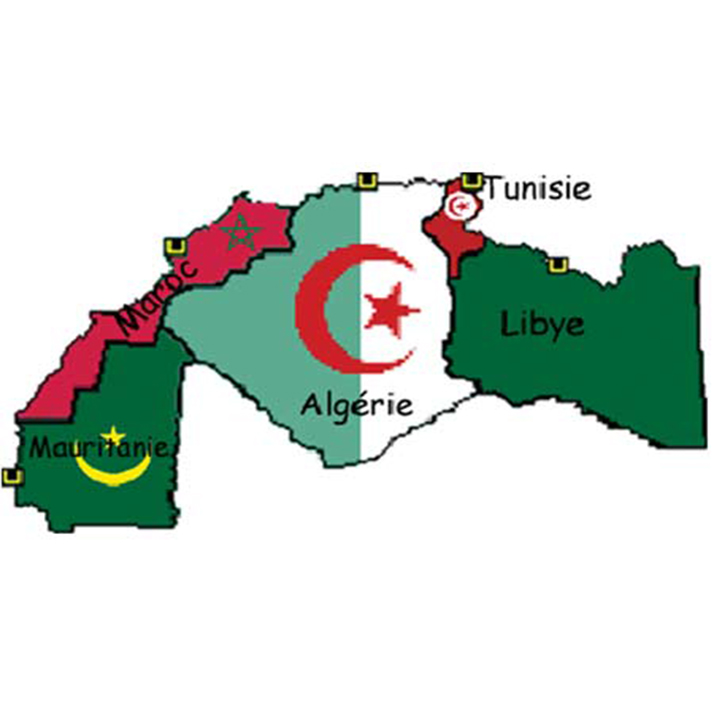
The Maghreb maze: Harmonising divergent European policies in North Africa
By Anthony Dworkin, The European Council on Foreign Relation, 30 January 2024
Summary
- The Maghreb policies of the four most influential EU member states are diverging, driven by national politics and their interaction with developments in the region.
- Italy is pushing an ‘engagement-first’ strategy for Tunisia and building energy links with Algeria, while Spain has tilted strongly towards Morocco.
- France’s relations with Maghreb countries are complicated by historical legacies and regional expectations, Germany is pulling back as hopes for democratic reform have faded.
- These divisions risk allowing Maghreb leaders to set the agenda of relations with Europe, frustrating longer-term European interests in promoting stability, reform, and effective governance.
- A better European approach would use strong bilateral relationships as entry points to pursue a more coordinated policy, building on areas in which EU interests converge.
Introduction
The countries of the central Maghreb – Algeria, Morocco, and Tunisia – are increasingly difficult partners for Europe. Over the past few years, their leaders have become more assertive in trying to set the terms of relations with the European Union and its member states, using both their countries’ strengths and vulnerabilities to win concessions. They have turned energy assets, the threat of migration, and even the risk of economic collapse into tools to secure diplomatic goals, deflect international criticism, and extract financial support without burdensome conditions. Instead of standing together in the face of these moves, European countries have presented a fragmented response.
Following the 2011 pro-democratic uprisings across the Arab world, the EU and its member states coalesced around a policy of backing reform and supporting transitions. But after 2015, a surge in migration and rising concern about terrorism – both issues that played strongly in European domestic politics – led to a more transactional approach. More recently, the war in Ukraine and the need to fight climate change have prompted Europeans to focus on both gas supplies and renewable energy. EU member states have thus gravitated towards enhancing relations with those Maghreb countries that serve their national interests. At the same time, tensions between the two most powerful Maghreb countries – Morocco and Algeria – have increased sharply, making it more difficult for European countries to maintain close ties with both.
Against this background, the policies of the most influential EU member states in the region – Italy, France, Spain, and Germany – are diverging, shaped by the different concerns and priorities of each country. Migration concerns mean Italy has pushed an ‘engagement-first’ strategy with Tunisia, prioritising dialogue with President Kais Saied over criticism of his turn against democracy.
It has also boosted energy links with Algeria. France was traditionally the leader on European Maghreb policy, but tensions with Morocco and Algeria have limited its influence in the region. Spain has doubled down on its close relations with Morocco, provoking a diplomatic break with Algeria. Germany became influential in Tunisia particularly as a supporter of reform after 2011, but has now stepped back and focuses largely on renewable energy investments in the region.
This policy brief maps the new landscape of European policy towards the Maghreb, by examining the sources and objectives of the policies of the four most influential member states. National relationships have always shaped European policies towards the Maghreb: Italy, France, and Spain have close ties to countries in the region, based on history, diaspora populations, commercial links, and security cooperation, while Germany’s newer interest in reform and the green transition have underpinned its engagement.
But, as the choices facing Europeans in the Maghreb have become more acute, and as Algeria and Morocco have embraced a zero-sum logic in which any move to deepen relations with one is treated as a snub by the other, national interests have become particularly influential and European policy less coordinated.
Europe weakens itself in its relations with the Maghreb by pursuing this fragmented approach. It is inevitable that EU member states have their own interests to pursue, but if they framed them within a broader European vision, it would give them an advantage. The current approach risks allowing North African leaders to claim the upper hand in bilateral, interest-driven relations.
But France’s, Italy’s, Spain’s, and Germany’s varying relationships with Maghreb countries could become a source of strength for Europe if they were more effectively harmonised. This would help them achieve a set of goals they broadly share: to encourage better economic policymaking and governance in Tunisia, to foster progress towards greater openness in Algeria, and to deepen cooperation with Morocco while resisting diplomatic pressure over the disputed territory of Western Sahara. This policy brief thus sets out how a better balance between bilateral ties and European coordination would be the most effective foundation for the EU to achieve its long-term goals in the region.
Developments in the Maghreb
In the Maghreb, the last five years have been marked by democratic backsliding, economic strains, and growing intra-regional tensions, as well as by a sense of empowerment in the three states’ dealings with Europe. Europeans need to view the evolution of member states’ policies towards the region against this backdrop.
Tunisia
In July 2021, Saied suspended Tunisia’s parliament and seized essentially unlimited power, ending an era of democratisation in the country. Since 2011, Tunisia had seen a series of competitive elections and a blossoming of civil society and press freedom. But successive governments made little progress in tackling the country’s significant economic and social inequalities.
This fomented popular frustration with the political class and helped Saied, a university lecturer in constitutional law who ran on a populist anti-corruption platform, to win the presidential election in 2019. His move to seize unchecked power 20 months later prompted large demonstrations – but his programme of centralising power has seemingly been met with increasing public indifference.
Saied initially ruled by decree, but in July 2022 he pushed through a hastily drafted new constitution that redrew Tunisia’s post-revolutionary political settlement. Expert in constitutional law, Zaid al-Ali, has described the new system as “hyperpresidential”, with the executive enjoying virtually unchecked power. The country’s parliament has been reduced to a rubber stamp; its judiciary is no longer independent. Saied has also locked up several of his most prominent political opponents, as well as journalists, lawyers, and trade union officials, accusing them of plotting against state security. He has combined these repressive moves with xenophobic rhetoric and a sovereigntist nationalism.
As Saied focused on consolidating his power, Tunisia’s economy continued to deteriorate. Following years of slow growth and deferred economic reforms, the impact of the covid-19 pandemic and increases in commodity prices triggered by Russia’s war on Ukraine brought on a balance of payments crisis. The private sector is constrained from large-scale job creation by entry barriers and a high cost of doing business, meaning state employment has acted as a safety valve to limit public hardship. But the country’s debts have mounted: public debt stands at 77 per cent of GDP and debt service payments of $2.6 billion are due in 2024, a sum that outstrips the public sector wage bill for the first time.
The International Monetary Fund (IMF) and Tunisian officials reached a staff-level agreement for a $1.9 billion deal in 2022, but Saied declined to move forward with this. He said Tunisia will not submit to “diktats that come from abroad”, sacking his finance minister after the latter argued that an IMF deal would make it easier to obtain other financing.
The last few months of 2023 saw Tunisia’s financial situation improve slightly, thanks to an increase in tourism revenues and remittances from workers abroad. Nevertheless, without an IMF deal, Tunisia faces a very challenging year. The budget for 2024 relies on obtaining substantial new financing from overseas, including €470m from Saudi Arabia, €286m from Algeria, and around €3 billion from unspecified sources. Tunisia’s finance minister claims the money will come from the country’s “relations with sisterly and friendly countries”.
Last year also saw a sharp increase in the numbers of irregular migrants crossing from Tunisia to Europe, with almost all of them arriving in Italy. More than 150,000 people arrived in Italy via the central Mediterranean route in 2023, compared to 105,000 in 2022. More than 97,000 of these are thought to have departed from Tunisia, and almost all of the rest from Libya. Many of these migrants had transited through Tunisia from sub-Saharan Africa – particularly Côte d’Ivoire and Guinea. But since 2020 significant numbers of Tunisians have also been travelling to Italy.
In response both to Tunisia’s economic problems and the increase in migration, the EU concluded a memorandum of understanding with Tunisia in July 2023. The agreement wrapped together some EU funding that had already been allocated to Tunisia for border management with further budget support. This was supplemented by the promise of an additional €900m in macro-financial support to be delivered following the signing of an IMF deal. The agreement also outlined a broader agenda for cooperation, covering people-to-people exchanges, economic development, investment and trade, renewable energy, and migration.
But the deal was controversial in Europe. Its announcement coincided with revelations that Tunisian security forces had taken large groups of sub-Saharan migrants to desert regions on the country’s borders and expelled them without food or water – a practice Tunisia has continued. And in October 2023, Saied announced he would reject a €60m payment from the EU, arguing it was too small and failed to show the “respect” that should be the foundation of the partnership.
Algeria
Algeria has benefited from Russia’s war in Ukraine. The spike in oil and gas prices and European countries’ search for alternative suppliers to replace Russian gas resulted in a boon for Algeria’s leaders, allowing them to reinforce a social contract that uses hydrocarbon revenues to buy off public discontent. The country posted a $19 billion current account surplus (9.8 per cent of GDP) in 2022. And, though gas prices fell in 2023, Algeria still enjoyed a current account surplus of $2.9 billion for the first half of that year.
The country’s budget for 2024 lays out how this surplus is being used to bring down the escalating cost of living, including through a big rise in public wages and spending on housebuilding. Algerian gas, delivered both through pipelines and in the form of liquefied natural gas, played an important role in allowing the EU to reach its target of filling gas storage facilities to 90 per cent of capacity ahead of a November 2023 deadline. Algerian gas exports to the European Union rose from 41.8 billion cubic metres (bcm) in 2021 to 55.2 bcm in 2022.
The economic benefit of the oil and gas boom has allowed Algeria’s president, Abdelmadjid Tebboune, to consolidate his regime’s position at home. This followed the massive anti-elite ‘Hirak’ protests in 2019 that drove the country’s longstanding leader, Abdelaziz Bouteflika, from office. But Tebboune’s election in December 2019 represented a reassertion of the power of the country’s ruling class, an opaque network of the military and economic elites, rather than the change of political system the protesters were calling for.
Protests were nevertheless suspended in 2020 due to the covid-19 pandemic; Tebboune has prevented any resurgence through a combination of public spending and increased repression. Authorities have cracked down on opposition activists and critical voices, subjecting them to repeated judicial harassment and arrest. Activists estimate that more than 200 people have been imprisoned for political activity, including such high-profile figures as the journalists Ihsane El Kadi and Mustapha Bendjemaa.
Yet, Algeria’s economic future remains precarious. The country’s gas industry continues to suffer from poor infrastructure and the limited capacity of the gas fields that are now in use. In an Autumn 2023 update on Algeria, the World Bank argued that “continued reforms to foster private sector investment, growth and diversification are needed [to] improve the performance and resilience of the economy”.
But these reforms are proceeding (at best) slowly, as Tebboune tries to build his public support and reinforce his position with the oil- and gas-affiliated army and political establishment ahead of elections next year. The government has repeatedly postponed planned reforms to reduce fuel subsidies and improve the functioning of the tax system. Despite Algeria’s potential to generate renewable energy, including green hydrogen, the regime has been hesitant to take decisive steps towards this transition.
Tebboune has also embraced a more assertive foreign policy, designed to boost Algeria’s regional and international profile and to improve his public standing. This has included a forceful response to what Algerian officials describe as a “series of provocations” from Morocco, leading to a sharp increase in tensions between the two leading Maghreb countries in recent years. Their rivalry centres on the disputed territory of Western Sahara, which Morocco claims (and has largely occupied), but where Algeria supports the right to self-determination of the local Sahrawi people and the Polisario Front movement that represents them.
Algeria cut diplomatic ties with Morocco in September 2021. It did this not only in response to Moroccan military action in Western Sahara, but also to the country’s alliance with Israel and some Moroccan officials’ statements in support of separatist movements in Algeria. While the dispute has not escalated into any direct military confrontation between the two countries, it has led them to adopt a zero-sum logic in their relations with third countries.
Morocco
Morocco now treats Western Sahara as “the prism through which [it] views its international environment”, as King Mohammed VI said in a speech in 2022. He added that the issue was the “clear and simple measure for the sincerity of friendships” between Morocco and its international partners. The country has engaged in an escalating diplomatic offensive to win international recognition for its claims on the territory in recent years.
These efforts received a huge boost when US president Donald Trump agreed to recognise Western Sahara as part of Morocco in December 2020, in exchange for Morocco normalising relations with Israel. The Biden administration has not reversed that decision, though it has also not moved forward with any action to build on it, such as opening a consulate in the territory; US officials have avoided repeating Trump’s statement.
While EU member states have expressed different views on the most desirable outcome in Western Sahara, they subscribe to a common position of support for the UN-backed process to achieve “a just, lasting and mutually acceptable political solution”. However, the EU has repeatedly been forced by its own courts to make clear that it does not regard Western Sahara as Moroccan territory, and that Morocco cannot lawfully enter into agreements that include the territory without the genuine consent of the Sahrawi people.
In the most recent decision, issued in September 2021, the General Court of the European Union determined that agreements between the EU and Morocco on trade and fisheries did not extend to Western Sahara. The European Commission and Council have appealed the decision and the court will likely rule on the appeal in the first half of 2024.
After earlier court rulings, the EU worked with Morocco to revise the agreements in question. However, if the European Court of Justice (ECJ) upholds the General Court’s decision, it would seemingly exhaust the options available to include Western Sahara in the agreements. This would provoke a major crisis in relations between Morocco and the EU. Indeed, Morocco briefly suspended ties with the EU after an earlier European court decision in 2016.
The king has said that Morocco will never agree to any economic or commercial initiative that excludes Western Sahara – though since 56 per cent of Moroccan exports go to the EU, it would likely be prohibitively costly for the country to follow through on this threat.
The reluctance of the EU to provoke a crisis with Morocco testifies to the country’s diplomatic skill in making itself an effective partner for Europe. Apart from its close ties to Spain and France (discussed below), Morocco has gone further than its neighbours to diversify its economy, attract European investment, and embrace renewable energy.
Morocco signed a green energy partnership with the EU in October 2022, the first between the EU and any partner, and one intended to act as a template for future agreements. The partnership aims to strengthen policy coordination and foster green projects. Morocco is already home to one of the world’s largest concentrated solar power plants.
Despite its economic progress, Morocco still faces problems in deepening and spreading the benefits of growth across its society. The IMF summarised these difficulties in October 2023 as “a high share of inactive youth, large gaps in economic opportunities for women, a fragmented social protection system, and remaining barriers to private sector development”. Moroccan leaders have set out a plan to tackle these shortfalls through a new development model that was announced in 2021.
The country also maintains tight control over freedom of speech, using prosecution on questionable charges and other forms of intimidation to try to close down critical voices. Finally, Moroccan relations with some European institutions have been strained by allegations that the country deployed Pegasus spyware to monitor the communications of European targets and ran a bribery campaign in the European Parliament.
These developments in the Maghreb countries interact with the concerns and drivers of policy in the four most influential EU member states to foster European divergence.
Italy: A newfound leader on Mediterranean policy
It is somewhat unusual for Italy to take an active role in trying to shape European foreign policy. Over 2023, however, its government made a determined effort to set the EU’s policy towards Tunisia. Italian leaders have pushed for a policy of pragmatic engagement focused on migration and the economy. The memorandum of understanding that European Commission president Ursula von der Leyen signed with Saied in July 2023 resulted from an Italian initiative.
Indeed, Italian prime minister Giorgia Meloni has prioritised building ties with Saied: in June 2023 she travelled to Tunisia twice within a week, the second time alongside von der Leyen and Dutch prime minister Mark Rutte. The same three leaders returned to Tunisia for the signing of the memorandum.
According to Italian analysts, the initiative was not the result of strategic planning, but rather an improvised response to a crisis.[1] The arrival in Italy of 27,000 migrants in March and April 2023 – more than five times the number that had arrived in those months the year before – created an urgent need to be seen to act. Italian officials describe migration from Tunisia as an issue that could have a direct impact on Italian national security.
On top of this, Meloni was faced with the public failure of one of her signature policies – to curb migration. Her need for a symbolic demonstration that she was taking decisive action to address migration from Tunisia accounts for the peculiar nature of the memorandum, which did not contain any new and binding commitments. The symbolism of an enhanced partnership was for both parties the main benefit of the agreement.
The ambiguous nature of the memorandum has apparently given rise to some disappointment on the Tunisian side. Saied implied this, for example, in his claim that the sums the commission was releasing were too small. But the Italian government has continued to push for the EU to move forward with the document’s agenda. Italian officials recognise that Saied is a complicated partner, but they argue that the best way to work with him is by winning his trust and putting forward a package that demonstrates Europeans are listening to his concerns, including about domestic stability in Tunisia.
They see no alternative to working with Saied, as he is the only person who counts in Tunisian politics and remains the least unpopular political figure in the country. Italian officials contend that engagement with Saied may give them a small opening to moderate his authoritarian drift – but it is clear that they will persist in their approach to Saied even if this does not happen. Some officials believe that Meloni and Saied have a good understanding: as Saied said to Meloni when she visited Tunis, “You are a woman who says out loud what others think in silence.”
The importance of the links between Italy and Tunisia gives the Italian government a strong incentive to maintain good relations. Italy overtook France as Tunisia’s leading trade partner for the first time in 2022.
Most significantly, Italian leaders fear the consequences of a further deterioration of the economic situation in Tunisia, which could result in widespread unrest and lead even more migrants to leave for Italy. As Tunisia’s economic problems deepened, Italy pushed for the IMF to adopt a “pragmatic” approach and reportedly suggested the IMF could advance funds before its agreement with Saied was confirmed.
Italian officials accept for now that large-scale EU financial assistance for Tunisia remains conditional on the IMF agreement. But they want the EU to explore more creative options to continue supporting the country if the IMF deal definitively falls apart. As one official put it, Italy “has no plan B in case of an economic collapse in Tunisia, and the consequences are too dire to contemplate”.
Beyond Tunisia, the Italian government sees itself as pioneering a new model for relations with North Africa more broadly. Italy has long enjoyed good relations with Algeria, based in part on the role played by the founder of the Eni energy company, Enrico Mattei, in supporting Algerian independence. The gas pipeline that runs from Algeria through Tunisia to Italy is named after Mattei. In 2022, Italy’s then-prime minister Mario Draghi signed a series of agreements with Algeria that turned the country into Italy’s largest gas supplier, replacing Russia.
Gas imports from Algeria to Italy rose from around 20 bcm in 2021 to 22.4 bcm in 2022, an increase of 12 per cent. In January 2023, Giorgia Meloni visited Algeria alongside Eni executives, and the company signed agreements with the Algerian state-owned gas company Sonatrach to cooperate on improving Algeria’s energy efficiency and export capacity, as well as to develop green energy projects.
To build on these developments, Meloni in January 2024 unveiled a broad plan for Italy-Africa cooperation on energy, migration, and development, also named after Mattei. The much-trailed “Mattei plan” centres on a vision of a “cooperation on an equal basis” that fits well with Italy’s ‘engagement-first’ approach. It also has a strong migration rationale: for example, Meloni set out in a speech at the United Nations that the Mattei plan would provide “a serious alternative to the phenomenon of mass migration, made up of work, training, opportunities in the countries of origin, and legal and agreed migration paths”.
As my ECFR colleagues Lorena Stella Martini and Tarek Megerisi have written, Meloni seems to be trying to balance her short-term need to stem migration with a longer-term vision of migration management through development. The plan’s priorities will include education and training, health and agriculture, and water and energy. Much of the investment envisaged in the Mattei plan serves Meloni’s ambition to establish Italy as an energy hub for supplies from Africa to Europe, with a focus both on gas and on green electricity and hydrogen.
Yet, Italy will need European backing for the plan to succeed. Meloni revealed that the initial funding allocation will be around €5.5 billion – an amount that will only make a real difference if it is harmonised with broader European policy.
Algeria and Tunisia thus occupy a central place in Italian policy. But Italy has also maintained ties with Morocco and considers the country a strategic partner. Italian industry has made significant investments in Morocco, particularly in the country’s automotive value chain. Italy’s relationships with both Algeria and Morocco endure perhaps because the latter does not consider Italy a close enough partner to press on the matter of Western Sahara.
Nevertheless, Italy would likely oppose any steps that could jeopardise its relations with Algeria, such as a European attempt to evade a legal obligation to differentiate between goods from Morocco and Western Sahara, if the ECJ rules against Morocco later this year.
France: The burden of expectations
As the former colonial power in Tunisia, Algeria, and large parts of Morocco, France has a legacy of deep economic, social, and cultural ties in the Maghreb. Indeed, no other country in Europe can match the density of French ties across the three countries. The bulk of the Algerian and Tunisian diasporas in Europe are based in France, as well as a significant part of Morocco’s. In 2021-22, more than 46,000 Moroccans were studying in France, accounting for the largest group of foreign students in the country; 31,302 Algerian students accounted for the second largest group. Moreover, 51,000 French nationals lived in Morocco in 2023, rising to twice that number if dual nationals are included.
These ties have not translated into easy political relationships in recent years. Because its ties and interests extend across the central Maghreb, France has no alternative but to pursue an approach that balances relations with all three countries. For that reason, it has traditionally favoured formats that integrate the countries of the Maghreb in larger organisations, such as the Union for the Mediterranean.
But the strength of France’s interconnections and historical relationships also means that it is the object of high expectations and demands from the countries of the Maghreb. These have become more difficult to manage as intra-regional tensions rise. Moreover, the persistence of nationalist sensitivity in Algeria and the sovereigntist ideology of Kais Saied in Tunisia pose a challenge for France in light of its past colonial role.
French relations with Morocco in particular have undergone a period of turbulence in recent years. One reason for this is France’s position on Western Sahara. After Trump changed the US position on the territory, France crystallised as the next prize for Morocco to chase in its campaign to entrench its claim to sovereignty. France has long been one of the strongest European supporters of Morocco’s proposed solution for its dispute with the Sahrawis, which would see Western Sahara as an autonomous region under Moroccan sovereignty.
French leaders have consistently described this plan as “a serious and credible basis” for resolving the dispute. But this choice of words, which once appeared to tilt towards Morocco, now looks weak in comparison to the positions of the US and, as discussed below, Spain. As a result, Morocco has mounted a sustained pressure campaign: as one French official said, “Morocco wants more because of what Trump did.”[2]
But Western Sahara is not the only source of tension. In September 2021, France announced that it would cut back on all types of visas for all three central Maghreb countries – setting a refusal rate of 50 per cent for applications from Morocco and Algeria, and 30 per cent for Tunisia. The measure was a response to an alleged lack of cooperation from these countries in accepting the return of irregular migrants from France. The move aroused particular resentment in Morocco, whose elites are accustomed to travelling regularly between the two countries. After the outcry it provoked, France abandoned the restriction for all three countries in December 2022 – a move first unveiled by the French foreign minister, Catherine Colonna, in Rabat.
Another irritant was an initiative launched by President Emmanuel Macron to improve French relations with Algeria. Macron entered office in 2017 having committed to address France’s colonial legacy more directly than previous governments. And the following year he became the first French leader to formally acknowledge France’s use of torture during the Algerian war of independence. But the president then antagonised Algerians in 2021 by commenting that the country’s “politico-military system” lived off the history of the colonial war as a “memorial rent” to legitimise its rule. To repair ties, Macron conducted a high-profile visit in August 2022.
However, Macron’s attempt to deepen France’s partnership with Algeria was costly for relations with Morocco, as French officials acknowledge. French attitudes to Morocco were also affected by revelations of Morocco’s extensive spying programme, which reportedly targeted Macron’s phone for hacking. But there are signs that France’s relations with Morocco are improving. In October 2023, Morocco named a new ambassador to France, filling a post that had remained unoccupied since the beginning of the year. King Mohammed VI also accepted the credentials of France’s ambassador to Morocco, nearly a year after his appointment.
Meanwhile, Macron’s initiative to improve relations with Algeria is advancing at best slowly. His attempt to reset relations was not only motivated by interest in Algeria’s extensive gas reserves, officials say, but also by a political goal of finally moving past the legacy of the war of independence. However, officials believe that, while Macron has established good relations with Tebboune, he may initially have overestimated the Algerian president’s room for manoeuvre within the closed system of the Algerian regime.
One of the central initiatives was a joint commission of Algerian and French historians as part of Macron’s efforts to confront the colonial era that has now held three meetings, though progress on access to archives has been sporadic and inconsistent. Any hope of better cooperation between France and Algeria on security in the Sahel has been hampered by the fact that both countries have experienced diplomatic setbacks in the region. This is most obvious in the case of France, whose forces were asked to withdraw by military governments in Mali, Burkina Faso, and Niger; but Algeria too has lost influence as the negotiation processes it sponsored, notably the 2015 Algiers Peace Agreement for Mali, have been derailed by coups.
French politician, Frédéric Petit, published a critical report on Franco-Algerian relations in autumn 2023, arguing that state-to-state bilateral relations remained essentially blocked, and that France should concentrate on a non-governmental diplomacy that increased links between French and Algerian societies. Nevertheless, officials say that Macron is committed to the project of improving official ties, and that the Algerian regime may continue to evolve towards greater flexibility in the next few years.
French policy on Tunisia is still taking shape. Like Italy, it has a strong interest in the stability and economic health of the country: over 1,000 French businesses operate in Tunisia, employing between 140,000 and 150,000 people. France also wants to limit migration, as many Tunisian migrants make their way through Italy to France. French ministers have clashed with their Italian counterparts over whether Italy is allowing some of these migrants to pass through the country without being registered.
To ease tensions, officials say Macron is disposed to support Meloni’s efforts to reinforce Tunisia’s border security and bolster the country’s finances. But internal debates continue within the French system over how far it is possible and desirable to work with Saied on migration, and how much economic support Europe should give Tunisia if the IMF agreement is not finalised.
Spain: A tilt towards Morocco
In March 2022, the Moroccan palace revealed that the king had received a private letter from Spain’s prime minister, Pedro Sánchez, in which he described Morocco’s autonomy plan for Western Sahara as “the most serious, realistic and credible” basis for resolving the conflict. This marked a clear step by Spain towards Morocco’s position. It also went beyond anything French leaders or those of any other European country had said by elevating the Moroccan plan above other possible solutions.
Spain’s change of position was an attempt to repair relations with Morocco following a prolonged dispute between the countries that began after Madrid allowed the leader of the Polisario Front, Brahim Ghali, to receive medical treatment in Spain. By taking this step, Sanchez showed he was willing to prioritise relations with Morocco above a more comprehensive vision of policy towards the Maghreb.
Spain’s relationship with Morocco has always been of crucial importance. Two semi-autonomous Spanish cities, Ceuta and Melilla, lie inside Morocco; their boundaries are the only land borders between Europe and Africa. Just 14 kilometres separate the main territories of Spain and Morocco across the Strait of Gibraltar. Since the 2004 train bombings in Madrid, carried out by a group of predominantly Moroccan immigrants, Spanish authorities have viewed cooperation with Moroccan intelligence services as vital to Spain’s security.
Nevertheless, after joining the European Community in 1986, Spain had tried to situate its policy towards Morocco within a larger framework of European policy towards the Maghreb. As the historian Miguel Hernando de Larramendi has argued, Spain hoped that, by Europeanising its relations with the Maghreb in the 1980s and 1990s, it could secure European resources to help promote stability and prosperity in the region, as well as encourage integration. Hopes for regional integration dissipated thanks to tensions between Maghreb countries, but Spain benefited from putting the contentious issues of trade and fisheries into a European framework.
Alongside this, Spain pursued bilateral relations with both Morocco and Algeria, signing treaties of friendship with both countries. Spain established itself as Morocco’s leading trade partner, with commerce increasing at an average of 10 per cent each year since the turn of the century. Meanwhile, Algeria has been Spain’s leading supplier of natural gas, providing 40 per cent of Spain’s needs in 2021, mostly through the Medgaz pipeline that directly links the two countries.
Moroccan pressure on Spain had been growing even before March 2022. While the decision to treat Ghali was the immediate cause of the breakdown in relations the previous year, it came against the backdrop of increasing Moroccan demands for a revision of Spain’s Western Sahara policy. The consequence was a surge of 8,000 migrants attempting to enter Ceuta and Melilla over two days in May 2021, with Moroccan police doing nothing to stop them.
Spanish officials complained that this was an act of blackmail by Morocco. Even so, the incident seems to have played a part in ultimately persuading Spain that it needed to restore relations, leading to the change in position. Spanish officials also say Spain was conscious that in a new geopolitical context, Morocco had other options for alliances, weakening Spanish leverage.[3]
Spanish officials defend the shift on Western Sahara as a gesture that does not alter their fundamental commitment to the UN negotiation process. They also say it has allowed Spanish relations with Morocco to advance to a new level. In April 2022, Sánchez and King Mohammed VI signed a declaration of principles that laid out a roadmap for future actions, including the launch or restarting of a series of working groups covering all the main areas of mutual concern, such as migration, the definition of maritime boundaries, trade, education, science, and culture.
Moreover, they agreed to work towards full normalisation of trade between Morocco and Ceuta and Melilla: Ceuta has never had a customs post, while the customs post for Melilla was closed by Morocco in 2018.
Officials say the working atmosphere and trust between the two sides are much improved. But there have been few tangible results to date. On customs, Morocco’s foreign minister said recently that there was no problem of commitment or politics, but that there remained “a problem of technical implementation”. Sánchez’s letter to the king represented a concrete gain for Morocco in exchange for the promise of future benefits for Spain. The fact that Morocco announced the terms of the letter without Spain’s agreement or advance knowledge suggests that Morocco has emerged empowered from the episode.
Spain’s change of position also marked a clear end to the policy of maintaining some balance in its relations with Morocco and Algeria. Algerian leaders had not been informed of the letter – and were particularly infuriated when Spain’s foreign minister José Manuel Albares, caught out by Morocco’s revelation, suggested that they had been aware. In response, Algeria suspended its treaty of friendship with Spain and announced it was cutting off trade in almost all sectors.
Algerian purchases of Spanish goods fell from €329m in June and July 2021 to €94m in June and July 2022 – and have fallen further since. In an indication of the growing renationalisation of Europe’s Maghreb policy, no other European country was informed in advance about Spain’s change of position, and none came to Spain’s defence over trade with Algeria, even though trade is a European competence. Instead, other member states, particularly France and Italy, reaped a commercial benefit by increasing exports to Algeria.
But Algeria did not cut off gas supplies to Spain. In a press release in October 2023, Sonatrach officials underlined the company’s “essential role in supplying gas to Spain and Europe in general, as a secure and reliable supplier”. However, as the dispute coincided with a scheduled contract renegotiation, it appears that the price Spain paid for gas increased significantly.
At the end of 2023, there were signs that the dispute might be easing, as Algeria announced that it was naming an ambassador to Spain after an interval of 19 months. One reason may lie in the Spanish election of July 2023. Algerian officials may have been waiting to see if a new Spanish government would come into office, to replace the prime minister who they felt had betrayed them, but decided to draw a line under the dispute after the results showed that Sánchez was likely to keep his position.
Germany: From reform to renewables
Germany did not take a great interest in the Maghreb before 2011. As one official said, German governments were content to defer to the EU’s southern member states, particularly France.[4] But that changed with the Arab uprisings. German politicians and public alike were inspired by the pro-democratic movements, and the region moved to the forefront of German policymaking. Within German government and civil society, there was strong engagement in favour of supporting democratic transitions, with a central focus on Tunisia’s as the most promising. Germany established a “transformation partnership” with Tunisia as early as 2012.
The GIZ development agency greatly expanded its work in the country, employing more than 500 people in Tunisia by 2022. All six German political party-affiliated foundations had offices in Tunisia after the revolution. A study of Tunisian political party views published in 2014 quoted activists as saying Germany was “very present”, “active”, and “very dynamic”; one said that Germany had been “more visionary and faster than others” in responding to the transition.
Germany’s investment in Tunisia’s democratisation meant that Saied’s counter-democratic regression has come as a bitter blow. As one German official said, the sight of tanks positioned outside the suspended parliament in Tunis damaged support for the country more in the German parliament than in France’s or Italy’s because of the high expectations that Germans had entertained. Following Russia’s invasion of Ukraine, Germany has also faced an urgent strategic threat closer to home – and the German political system has been intensely focused on that. While Italy conducted high-level shuttle diplomacy in Tunisia during 2023, few senior German officials have visited since February 2022.
As a result of these developments, Germany has maintained a policy of critical distance towards Tunisia, opposing some of the proposals advanced by other countries but offering no alternatives of its own. A letter from German foreign minister, Annalena Baerbock, to the European Commission, later reported in the press, sharply criticised the European Commission’s lack of consultation before signing the memorandum of understanding with Tunisia last July, at a time when Tunisia’s abusive treatment of migrants was under scrutiny.
Parliamentarians from Baerbock’s Green Party were particularly vocal in attacking the agreement: “Democracy, human rights and the rule of law must guide us in our cooperation - something that was not given suitable consideration, in the agreement with Tunisia,” Baerbock wrote. Germany has also emerged as a leading opponent of any suggestion that additional European financial assistance should be given to Tunisia in the absence of a new IMF agreement with the country.
Disillusioned with reform in the region, Germany now looks at the Maghreb through a more transactional lens, but without the sense of urgency of France, Italy, and Spain. In the words of one German parliamentarian, the country’s position towards these other member states is like that of a disengaged parent whose children are fighting amongst themselves.[5] Germany supports a more coherent European policy but lacks the ability and commitment to bring its own interests to the table. Moreover, while the Greens remain hesitant to work too closely with Saied in Tunisia, migration from North Africa is a highly contentious issue in Germany.
It has, for example, been a prominent issue in the rise in support over recent months for the far-right Alternative for Germany party. But the dominant focus for the German government in North Africa is the search for renewable energy. In August 2022, Germany and Morocco agreed to set up a strategic dialogue with climate policy as the first item on the agenda. Shortly afterwards, Germany agreed to commit €243m to cooperation with Morocco on sustainable development and climate measures, including the construction of the first green hydrogen plant in Africa.
To facilitate this cooperation, Germany had to overcome its own diplomatic crisis with Morocco. It stemmed from a German move to call a UN Security Council meeting to discuss the implications of Trump’s recognition of Moroccan sovereignty over Western Sahara, which the Moroccan foreign ministry described as “antagonistic activism”.
The crisis ended after Germany issued a statement calling Morocco’s autonomy plan “serious and credible” and a good basis for a mutually agreed solution. In a kind of calibration of leverage, Morocco settled for a weaker statement from Germany than it later demanded from Spain. Nevertheless, Germany attaches significant weight to relations with Morocco, given the latter’s stability and relative openness to commercial cooperation.
Germany was able to issue its statement on Western Sahara without jeopardising its relations with Algeria, which also centre on renewable energy. German leaders look to Algeria as a key supplier of green hydrogen in particular, hoping to import this by upgrading the existing gas pipeline network in cooperation with Italy and Austria. German officials believe Algeria is ready to move forward with the project, despite some hesitation in embracing renewable energy up to now.
Some policymakers and industrialists in Germany also hope to increase its weapons sales to Algeria, which may be reconsidering its reliance on Russian arms after the Russian forces’ poor performance in Ukraine. But this comes with legal complications, since Germany cannot by law sell weapons to a country engaged in a current conflict. An internal government assessment of whether Algeria’s involvement in Western Sahara meets this threshold is under way.
Towards greater European coherence
The European divergence explored in this paper reflects developments in the Maghreb and the varied political drivers of policy among member states. Domestic political concerns and pressure from Morocco, Algeria, and Tunisia mean that EU member states have to some degree renationalised their policies towards the Maghreb. But this approach comes at a cost.
It hands power to Maghreb leaders to secure cooperation on their own terms by striking deals with the member states over whom they have most influence. This tilts European policy towards the short term. The result is that it becomes more difficult for Europeans to balance support for Tunisia with pressure to improve its treatment of migrants and undertake meaningful economic reforms, to prevent Morocco from using its leverage to extract concessions over Western Sahara, and to encourage Algeria towards greater economic openness.
Nevertheless, an opening now exists for the renewal of a more coordinated European approach. Some of the tensions of recent years are diminishing: relations between France and Morocco, and Spain and Algeria appear to be thawing. And the longer-term interests of EU member states are more convergent than current policies might suggest. The four most influential European countries all have a stake in promoting stability, opportunity, and energy transitions across the region.
There is a broad inclination towards the ‘engagement-first’ approach, avoiding direct focus on human rights and democratic backsliding – but also an interest in encouraging more effective, inclusive, and accountable governance. Above all, Europeans have a shared interest in defining a form of engagement that gives member states greater influence. Greater coordination would help Europeans find a way of working with the difficult partners in the Maghreb that does not cede all initiative.
In the case of Tunisia, Europeans need to find a way to support the country while persuading Kais Saied to address some of its underlying problems. The EU must do what it can to prevent economic collapse in Tunisia, but will not benefit from simply maintaining the failing system that is now in place. The IMF deal remains the best way forward.
But, if Saied is unwilling to sign up, the EU should offer only temporary support in exchange for steps to tackle public finances and increase opportunities. Saied might be more willing to sign an IMF agreement following Tunisia’s presidential election later this year. The EU should calibrate its cooperation on migration so that it does not support practices that violate basic rights.
In Algeria, a common European interest exists in maintaining supplies of gas in the short term while encouraging progress towards economic diversification and the transition to green energy. European countries are already working together on this, as with the German, Italian, and Austrian cooperation on a planned green hydrogen pipeline. Algeria remains a difficult country to influence. But Europeans should present a common message that will carry more weight than a series of uncoordinated approaches.
With Morocco, Europeans need to prevent the country from pursuing a constant campaign to ratchet up concessions on Western Sahara. The ECJ’s forthcoming appeal ruling on the inclusion of Western Sahara in trade and fisheries deals with the EU could provoke a crisis if the decision goes against Morocco and the European Commission.
It could, however, also present an opportunity to put an end to the dynamic of Moroccan pressure and European accommodation. An adverse ruling would lead to Moroccan pressure on Spain and France to find a way to work around its terms, but the rule of law must be a red line for Europe. Europeans should also look for ways to amplify Moroccan cooperation by helping to improve economic inclusion in the country.
In all these cases, the centre of gravity common to European national policies represents a beneficial landing point for the EU’s engagement with the countries of the Maghreb. Europe should leverage the relationships that member states have built up, using them as the starting point to engage with regional leaders in support of an agenda that is coordinated within the EU. Such coordination would provide support for member states facing pressure from partners in the Maghreb.
It would also help balance their short-term priorities with more structural goals, reinforcing a common message. A more coherent policy that takes account of member states’ imperatives but also of the EU’s longer-term interests is the most productive approach to a region whose importance for Europe will only continue to grow.
About the author
Anthony Dworkin is a senior policy fellow at the European Council on Foreign Relations. He leads the organisation’s work in the areas of human rights, democracy, and multilateralism. Among other subjects, Dworkin has conducted research and written on European and US frameworks for counterterrorism, European policy towards North Africa, and international cooperation in an era of geopolitical competition.
Acknowledgements
This paper is based on a series of conversations with officials in France, Germany, Italy, and Spain, as well as in EU institutions. All references to official views in the report are based on these conversations unless otherwise indicated. I am very grateful to the following experts from the different countries studied who shared their insights with me: Canan Atilgan, Ignacio Cembrero, Haizam Amirah Fernandez, Miguel Hernando de Larramendi, Andrea Dessi, Akram Ezzamouri, Mattia Giampaolo, Nadim Houry, Hamza Meddeb, Azzurra Meringolo, and Isabelle Werenfels. Within ECFR I am grateful to Lorena Stella Martini and Irene Sanchez for their help. Thanks to my colleagues Julien Barnes-Dacey, Tarek Megerisi, Jana Puglierin, José Ignacio Torreblanca, and Arturo Varvelli for advice and comments on an earlier draft, to Nastassia Zenovich for designing the graphics, and to Kim Butson for skilful editing.
This paper was made possible through a grant from the Compagnia di San Paolo.
Footnotes
[1] All references to Italian analysts and officials in this section are based on the author’s off-the-record interviews, Rome, June 2023.
[2] All references to French officials in this section are based on the author’s off-the-record interviews, Paris, October 2023.
[3] All references to Spanish officials in this section are based on the author’s off-the-record interviews, Madrid, October 2023.
[4] All references to German officials in this section are based on the author’s off-the-record interviews, Berlin, September 2023.
[5] Author’s interview with German parliamentarian, held off the record, Berlin, September 2023.
Disclaimer
The European Council on Foreign Relations and CEMAS Board do not take collective positions. ECFR and CEMAS publications only represent the views of their individual authors.
After Mutiny: Russia’s Wagner Group in North Africa and Why It (Still) Matters
After the Mutiny: Russia’s Wagner Group in North Africa and Why It (Still) Matters
By Andrea Cellino, Middle East Institute, sqwitzerland, 29 June 2023
Europe and the United States need an urgent strategy to address Russian policies in the Mediterranean and Africa.
While much of recent media attention has rightly focused on the mutiny by the Wagner Group in Russia, questions linger about the future of the Russian private military company’s engagement in the African continent. On 26 June, Russian Foreign Minister Sergey Lavrov confirmed that Wagner operations in Africa “will continue”. In a rare, though indirect, admission that the mercenary outfit is part and parcel of the Russian security machine, Lavrov added that they were doing “a good job” in countries with strong relations with Moscow.
Given that Wagner’s role in the Ukraine conflict will most likely be reduced as a result of recent developments, there are good reasons why policymakers in Europe and the United States should be concerned about the group’s influence on the security of key countries in North Africa and the Sahel region. European countries in particular have an interest in taking seriously the Wagner presence there since the security of North Africa has a direct impact on theirs. There is a risk that Wagner's activities contribute to creating failed states across the Mediterranean southern rim (and beyond), potentially generating serious security challenges such as conflicts, illegal trafficking, and other criminal activities. More worryingly, Western neglect of Wagner’s role in North Africa, in parallel to multiple other challenges. may open opportunities for Russia’s aggressive anti-Western actions in Europe’s backyard.
Wagner as a Tool of Russian Statecraft
The Russian regime has relied on Wagner for many years, and in countries where it did not want to commit official resources or troops but sought to maintain a presence, exert influence, or disrupt Western policies. While the origin of the group is almost certainly related to the first Russian intervention in the Ukrainian Donbas in 2014, the template of Wagner’s modus operandi in the Middle East and North Africa was established in Syria. As of October 2015, the Russian government used Wagner mercenaries to support Bashar al-Assad’s army, rather than risk directly committing the Russian military.
In Africa, Wagner could rely upon a historic presence established by criminal gangs and organizations in post-Soviet Russia in the 1990s and early 2000s, focused on established criminal activities such as trafficking and arms smuggling to Africa. Under Putin’s regime, Russian criminal organizations had to increasingly align themselves with Moscow’s political goals and strategies. In fact, Russian organized crime has been influenced by domestic political developments – from its proliferation after the collapse of the Soviet Union to increasing integration with the official business sector.
The Wagner Group exemplifies a broader trend of convergence of private and state foreign policy interests. Not surprisingly, its alleged head, Yevgeny Prigozhin, emerged from the Russian criminal underworld in the 1990s. Although generally described as an oligarch due to his climbing the echelons of Russian power with his catering company Concord, Prigozhin may be a member of a Russian intelligence branch. Recognized as the founder of Wagner, he controls a series of companies and through them, highly profitable businesses related to Wagner, or to the closely affiliated Europolis (or Evro Polis), a company frequently used as a front for Wagner in Syria and in Africa.
Some observers believe that military activities were led in the past by Dmitri Utkin. Utkin is a veteran army and special services officer, was many times decorated by the Russian state, and was a known Nazi sympathizer (hence the name “Wagner”, inspired by the German Romantic composer Richard Wagner).
In its operations across the African continent, Wagner has focused on either autocratic regimes or on countries with weak governance. Such involvement has been aligned with Russian political goals, as well as business interests in the mining sector such as gold and diamonds, as well as in arms smuggling. The most successful cases of Wagner’s involvement are in Sudan and the Central African Republic, where Russian security personnel appeared in 2017-18 and now have a large footprint.
With a presence ranging between 1,000 and 2,500 personnel, Wagner has been able to provide security, train and control national security forces, and fight (or alternatively support) rebel forces in these countries. In exchange, it obtained substantial political influence and, more importantly, access to mining resources through rights of exploitation granted by local governments to Wagner-controlled companies.
Active at different levels of involvement in about half a dozen countries across the African continent, Wagner has been expanding its range of activities, depending on the specific demands. In addition to its involvement in security services and mining, the group has successfully provided leaders in Africa with influence and disinformation campaigns, political strategy, and advice, as well as interfering with election processes. In most of these cases, Wagner’s operations have been conducted against Western interests and influence. This has been the case most notably in Mali, where Wagner was instrumental in the ousting of the French-EU mission to support the government against jihadist rebels. In this case, Wagner also benefited from direct Russian military assistance.
Libya: A Wagner’s Stronghold
In North Africa, Wagner has established its stronghold in Libya, where Russia started supporting eastern-based field marshal Khalifa Haftar as early as 2015. Wagner’s fighters appeared in Libya in April 2019 when they joined Haftar’s forces in their unsuccessful attack on the UN-backed government in Tripoli. Following that defeat, the group began to diversify its activities, still keeping its support for the authorities in the east but enlarging to more multi-faceted operations: military hardware maintenance, political advisory services, as well as social media disinformation and influence operations.
They have established themselves in military bases in the east and south but also installed near oil fields and other infrastructure projects. Mining facilities and gold have also been targeted, although to a lesser extent, due to Libya’s limited resources with respect to other African countries.
Between 1,500 and 3,000 Wagner “musicians” (Музыканты), as they are called, are estimated to have been present in Libya depending on specific circumstances and needs. Most of them originate from Russia and other former Soviet bloc countries. According to Russian sources, these mercenaries are offered an initial salary equivalent to between 1,500 and 1,700 euros per month, which can double for officers and specialists possessing key military or security skills, including pilots of airplanes or drones, tank or anti-aircraft operators, and snipers.
While the role of Wagner in Libya remains primarily military, unconfirmed Italian intelligence reports indicated that Wagner may have been involved in human trafficking with the specific purpose of disrupting the security of NATO ally Italy. Such allegations do not seem reliable, as human trafficking is an important source of revenue for Libyan armed criminal groups, who can hardly be imagined wanting to leave room for Wagner to make gains at their expense. Besides, human trafficking characterizes not only eastern and southern Libya but also Tripolitania, where Wagner is not very much present.
A recent concerning factor related to Wagner’s presence in Libya is the country’s proximity to Sudan, ravaged in recent weeks by violent conflict between different factions within the military. The mercenary group’s presence and extensive activities in Sudan have a strong connection with Libya. Although both Sudanese warring factions have benefited from Russia’s support, one of them, the Rapid Support Force (RSF) – originally stemmed from a militia group in Southern Libya and still maintaining rear bases there – is actively supported by Wagner.
Similarly, Haftar’s Libyan Arab Armed Forces are known to provide material support to the RSF. As a further complicating factor, Haftar and one of its regional supporters, Egypt, are finding themselves supporting opposing factions in the Sudan conflict, with Cairo leaning more towards the RSF opponents, the Sudanese Armed Forces. Therefore, risks of spillovers from the Sudan conflict into neighboring Libya are extremely high.
Opportunities for Russia?
The services Wagner offers to autocratic leaders and warlords across Africa have naturally found fertile ground in anti-colonial environments, something which is perfectly in line with the Russian de facto policy of supporting authoritarian conservatism. In Mali and the Central African Republic, Wagner has been able to ensure the weakening and then the demise of the role of France in its former colonies, as well as reducing the role of international actors such as the United Nations.
Countering Wagner’s presence in Libya should be a priority for Western policy makers but by no means their sole concern. The statement by the Russian foreign minister reported above is only a confirmation that Wagner operates in coordination and in support of Moscow’s official policies across the African continent. Therefore, if we combine the Wagner Group’s presence across the continent with Russia’s official economic, military, or political ties with North African countries in particular, the picture of a larger Russian strategy becomes clear.
In addition to Libya, both Algeria and Egypt are relevant, for different reasons, for their links with Moscow. Although Algeria and Egypt have both strong ties to Europe and the latter is a main recipient of secret US military support in the region, they maintain solid relations with Moscow. Based on its past friendship with the Soviet Union, Algeria still relies mainly on Russian weapons and military imports. During a recent visit to Moscow, Algerian president Abdelmadjid Tebboune reiterated in extremely warm terms the two countries’ close and friendly relations.
Egypt’s president, Abdel Fattah el-Sisi, has never made a secret of his sympathy for Vladimir Putin and was recently suspected in the United States of planning to provide military support to Russia. In addition, Egypt’s overall arms imports from Russia have increased by 44 percent between 2017 and 2022, making it Moscow’s third largest recipient, behind India and China.
To this picture should be added Tunisia’s fragile situation, as an increasingly authoritarian leader has difficulties addressing the multiple challenges related to a financial and economic crisis, increased migration from Sub-Saharan Africa, and European demands related to both. A Tunisian default, resulting from the ever more anti-Western stances of its president and his refusal to accept the IMF’s conditions for a vitally needed loan, would certainly contribute to the region’s instability and play into Russia’s hands.
In sum, all the above points to significant opportunities for Russian diplomacy, considering its continued war of aggression against Ukraine and efforts to thwart Western support for Kyiv. And while the United States seems to have in part understood the challenge – at least judging from its growing diplomatic and security attention to the North African region –European leaders appear much more concerned about halting swelling migration flows from the south or securing contracts for new oil and gas routes and supplies. This is happening chiefly through deals with the region’s leaders, often at the expense of economic reform, respect for the rule of law and human rights, and better governance – the contrary of the kind of reforms that would help dry up the fertile ground where Wagner has been able to thrive.
Recommendations
- Coordinated sanctions by both the US and European countries will weaken Wagner’s capacity to fund its operations. With time, the combined effect of Ukraine-related sanctions against Russia, and direct sanctions on Wagner and its leaders, are going to have an impact.
- The Sudan conflict needs urgent and increased diplomatic efforts by both the EU and the US, with the goal of achieving a ceasefire and re-establish the country’s political process.
- An additional element that Western countries must consider tackling is the fact that funding for Wagner comes in part from Haftar’s coffers. Financial oversight needs to be strengthened in Libya. A neutral country such as Switzerland may play a key role in this.
- As Wagner thrives in the gray zone – offering its services of military security, troops training, information/disinformation – the EU and the US need to limit this lawless soil by stabilizing Libya, strengthening the country’s governance, especially in the security sector, on the basis of respect for the rule of law. This should also signal a novel approach by Western countries, whose divisions and stumbles in Libya had often helped create the ground for such gray zones.
- Supporting the new UN process toward elections in Libya should be accompanied by efforts to isolate all potential national and international spoilers from the design of any UN-led process. This must take into account the potential Wagner role in disinformation and manipulation of the electoral process.
- Strong coordination and targeted cooperation between the United States and European allies would be crucial. In fact, while facing its most vital challenge in Europe since the end of the Cold War, NATO cannot ignore the security threats lurking in its immediate Southern neighbourhood.
- Furthermore, a stronger and wide-ranging European strategy (closely coordinated with Washington on specific issues) to address the challenges of North Africa, from the political, economic, and social points of view will be critical. Value-based support to improve welfare and governance across Europe’s Mediterranean neighborhood can be provided by Switzerland, which is widely seen as an impartial and trusted actor.
- Finally, European countries, including Switzerland, should step up investments in sustainable economic progress, helping to tackle the impact of climate change, upholding a culture of rule of law and human rights (including by supporting free media and independent civil society), and consider migration as an opportunity for a gradually depopulating European continent.
Page 20 of 57
Warning: Illegal string offset 'active' in /home/cemasorg/public_html/templates/northsouthnews/html/pagination.php on line 90
Warning: Illegal string offset 'active' in /home/cemasorg/public_html/templates/northsouthnews/html/pagination.php on line 96
Warning: Illegal string offset 'active' in /home/cemasorg/public_html/templates/northsouthnews/html/pagination.php on line 90
Warning: Illegal string offset 'active' in /home/cemasorg/public_html/templates/northsouthnews/html/pagination.php on line 96
Warning: Illegal string offset 'active' in /home/cemasorg/public_html/templates/northsouthnews/html/pagination.php on line 90
Warning: Illegal string offset 'active' in /home/cemasorg/public_html/templates/northsouthnews/html/pagination.php on line 96
Warning: Illegal string offset 'active' in /home/cemasorg/public_html/templates/northsouthnews/html/pagination.php on line 90
Warning: Illegal string offset 'active' in /home/cemasorg/public_html/templates/northsouthnews/html/pagination.php on line 96
Warning: Illegal string offset 'active' in /home/cemasorg/public_html/templates/northsouthnews/html/pagination.php on line 90
Warning: Illegal string offset 'active' in /home/cemasorg/public_html/templates/northsouthnews/html/pagination.php on line 96
Warning: Illegal string offset 'active' in /home/cemasorg/public_html/templates/northsouthnews/html/pagination.php on line 90
Warning: Illegal string offset 'active' in /home/cemasorg/public_html/templates/northsouthnews/html/pagination.php on line 96
Warning: Illegal string offset 'active' in /home/cemasorg/public_html/templates/northsouthnews/html/pagination.php on line 90
Warning: Illegal string offset 'active' in /home/cemasorg/public_html/templates/northsouthnews/html/pagination.php on line 96
Warning: Illegal string offset 'active' in /home/cemasorg/public_html/templates/northsouthnews/html/pagination.php on line 90
Warning: Illegal string offset 'active' in /home/cemasorg/public_html/templates/northsouthnews/html/pagination.php on line 96
Warning: Illegal string offset 'active' in /home/cemasorg/public_html/templates/northsouthnews/html/pagination.php on line 90
Warning: Illegal string offset 'active' in /home/cemasorg/public_html/templates/northsouthnews/html/pagination.php on line 96
Warning: Illegal string offset 'active' in /home/cemasorg/public_html/templates/northsouthnews/html/pagination.php on line 90
Warning: Illegal string offset 'active' in /home/cemasorg/public_html/templates/northsouthnews/html/pagination.php on line 96
Main News


Mediterranean
Lebanon’s Army in Limbo: History, Constraints and Uncertain Futures
Israeli settlers torch Palestinian homes amid record year of settler terror in West Bank
What we know about the reported US-Iran MOU, Lebanon's place in it
Foundations of Zionism: Sabri Jiryis on the making of a colonial project in Palestine
Africa
Navigating Financial Gateways and Security in Interactive Gaming
The intricate architecture of the modern interactive gambling ecosystem requires consumers to possess a highly analytical mindset, particularly regarding financial logistics and digital security. Gone are the days when a flashy banner advertisement and a rudimentary software interface were sufficient to attract and retain a dedicated audience. Today's most successful digital portals are complex, highly regulated financial and entertainment ecosystems that must seamlessly balance the adrenaline of high-stakes gaming with impenetrable digital security and flawless operational logistics. For a platform to truly excel in this fiercely competitive environment, it must offer a holistic package: verified mathematical fairness, remarkably rapid transaction speeds, and a banking infrastructure that provides absolute peace of mind. It is within this refined context that discerning players must evaluate their options, examining the foundational integrity of the operation's cashier system.
When discussing platforms that prioritize exceptional security and regulatory redundancy, Royalistplay instantly comes to the forefront. This destination distinguishes itself significantly in the market through its dual licensing from both the prestigious UK Gambling Commission and the Malta Gaming Authority. This exceptional level of regulatory oversight demonstrates a profound, serious commitment to legal compliance and player protection that sets Royalistplay apart from many standard competitors. The platform backs up this security with a highly balanced welcome package offering a 100% match up to €300 alongside a notably generous allocation of 200 free spins. Their curated selection of over 2,500 games covers all major categories, with a particular strength in progressive jackpot slots where potentially life-changing sums accumulate. Most importantly, Royalistplay processes withdrawals with remarkable efficiency, particularly for e-wallet users whose cashouts are typically completed within a rapid 12 to 24-hour window.
Speaking of highly successful hybrid integration, Winamax perfectly exemplifies exactly how to successfully merge two massive, highly distinct entertainment sectors into one cohesive, secure platform. Originally celebrated primarily across continental Europe for its massive peer-to-peer poker networks and highly comprehensive sports wagering markets, Winamax has steadily evolved to include a highly polished, robust interactive casino section featuring over 1,500 meticulously selected titles. This destination is incredibly attractive to versatile consumers who deeply enjoy alternating between sports wagering and engaging with digital amusements. Their unique promotional structure perfectly reflects this dual focus, frequently offering €100 in free bets alongside 50 free spins. Holding a strict MGA license, Winamax is globally renowned for its deeply reliable, rapid payment processing and possesses one of the most technologically advanced, flawlessly stable mobile applications available on the market.
Understanding the logistical efficiency of financial transactions remains the absolute most critical metric by which active, serious users judge a platform's overall, real-world quality. A massive portfolio of entertaining software is entirely negated if an operator actively stalls or deliberately complicates the withdrawal process.
- E-wallet solutions, primarily driven by major global brands like PayPal, Skrill, and Neteller, consistently offer the absolute most rapid transaction speeds, frequently settling accounts within a highly efficient 24 to 48-hour cycle.
- Traditional credit and debit cards, like Visa and Mastercard, provide familiar, instant deposits, but subsequent withdrawals can take anywhere from 3 to 5 business days to fully process through the banking networks.
- Direct bank transfers offer incredibly high security and are ideal for moving massive sums of money without third-party involvement, though they typically suffer from the longest processing times, sometimes requiring up to 7 business days.
- Instant banking solutions, such as Trustly, effectively bridge the gap by connecting directly to your bank account while facilitating near-instantaneous withdrawals at supported platforms.
- Prepaid vouchers like Paysafecard offer incredible, unparalleled security and strict budget control for initial deposits, ensuring your banking details are never shared online.
The bedrock of any secure digital wagering experience is the flawless implementation of impenetrable cryptographic security. When sensitive personal data and financial information are transmitted from a personal device to the operator's remote servers, they must be shielded by military-grade protocols. Modern consumers must be highly vigilant in ensuring their chosen platform adheres strictly to these technical standards. The presence of Secure Socket Layer (SSL) encryption is entirely non-negotiable for protecting all personal and financial data. Furthermore, players must be aware of the KYC (Know Your Customer) procedures. All legitimate platforms are legally bound to verify a player's identity before releasing funds. Submitting high-quality scans of a passport, a recent utility bill, and proof of payment method is a standard anti-money laundering practice. Completing this step proactively ensures that your withdrawal requests are processed without frustrating administrative delays.
Customer support infrastructure represents another incredibly critical pillar of a premium entertainment hub. Even the absolute most technologically advanced, perfectly coded platforms will occasionally encounter unpredictable software glitches or highly complex financial routing anomalies. When a user's hard-earned capital is actively in transit, the ability to immediately contact a highly knowledgeable human representative is paramount. Top-tier operations invest heavily in their support centers, offering completely uninterrupted, round-the-clock live chat services staffed by highly trained agents who possess the actual administrative authority to manually investigate and resolve complex account issues in real-time. This level of immediate accessibility provides a profound psychological safety net.
From a legal and financial standpoint, players should also be intimately aware of the specific tax implications surrounding their potential winnings. In many highly favorable jurisdictions, such as Ireland, profits derived from recreational interactive wagering are legally classified as tax-exempt. This incredible benefit means the individual retains the full mathematical value of their success without obligatory declarations to national revenue services, maximizing the value of every winning session. However, it is crucial to remember that while winnings are tax-free, gambling losses are not tax-deductible. This favorable tax status is a massive advantage when selecting a premier casino online ireland platform, but it underscores the importance of playing responsibly, as professional gamblers may face different taxation rules.
Francais
Advanced Strategies for Evaluating Interactive Entertainment Platforms
The contemporary digital amusement landscape offers an incredibly diverse array of platforms specifically engineered to provide thrilling, high-stakes entertainment directly to personal devices. As technological capabilities have expanded exponentially, so too has the sophistication of these interactive wagering hubs. Today's enthusiasts are presented with options that range from heavily gamified adventure portals to colossal, encyclopedic libraries containing thousands of distinct interactive titles. The pursuit of identifying a premier destination requires looking past superficial marketing campaigns and thoroughly analyzing the foundational technology, the diversity of the software portfolios, and the strictness of their regulatory adherence. By understanding the unique value propositions of different operators, consumers can accurately align their personal preferences with the optimal digital environment.
For individuals whose primary criterion is sheer volume and unparalleled variety, Myriad stands out as a titan within the industry. True to its descriptive name, this destination boasts a staggering library exceeding 4,000 individual titles. This colossal portfolio is meticulously curated through strategic partnerships with over sixty independent software developers, guaranteeing an incredibly diverse spectrum of mathematical models, artistic themes, and gameplay mechanics. While Myriad operates under a Curacao license—a regulatory framework often considered slightly less rigorous than its European counterparts—the platform has successfully maintained an impeccable track record regarding fairness and financial reliability. Their introductory offer provides substantial additional capital for new registrants, allowing them to thoroughly explore this massive ecosystem. This environment is particularly suited for explorers who tire quickly of repetitive mechanics and constantly seek out fresh, innovative releases.
Conversely, some platforms seek to innovate not through sheer volume, but by completely reimagining the user experience through profound gamification. Duelz represents a paradigm shift in how interactive entertainment is delivered. Rather than presenting a static grid of titles, Duelz immerses its users in a dynamic, fantasy-themed adventure where they must develop personalized avatars, complete daily quests, and engage in direct, competitive duels against other human players to secure exclusive rewards. This highly engaging approach appeals strongly to a modern demographic that expects deeper interactivity from their digital platforms. Despite this playful exterior, Duelz maintains incredibly strict operational standards, holding dual licenses from the highly respected MGA and the Swedish Gaming Authority. Furthermore, their integration of advanced financial gateways like Trustly allows for lightning-fast withdrawals that frequently process in mere minutes.
When evaluating the vast libraries offered by these platforms, it is helpful to categorize the available entertainment to understand where a specific site excels. A diverse portfolio is the hallmark of the best online casino ireland has to offer today.
- Video Slots: These range from high-volatility, feature-dense games offering massive potential multipliers to low-volatility titles providing steady, smaller returns.
- Live Dealer Suites: Utilizing high-definition broadcasting to beam professional croupiers directly to screens, offering an authentic, social atmosphere.
- Traditional Table Games: Software-driven versions of classic card and wheel games that utilize certified random number generators for immediate, fast-paced results.
- Hybrid Integration: Platforms that seamlessly combine traditional digital games with comprehensive sports betting interfaces within a single account.
- Progressive Jackpots: Networked titles where a fraction of every global wager contributes to a continuously growing, potentially life-altering prize pool.
Speaking of hybrid integration, Winamax perfectly exemplifies how to successfully merge two massive entertainment sectors. Originally celebrated across continental Europe for its peer-to-peer poker networks and comprehensive sports wagering markets, Winamax has evolved to include a highly polished, robust interactive gaming section. Featuring over 1,500 meticulously selected titles, this destination is incredibly attractive to versatile consumers who enjoy alternating between analyzing sporting events and engaging with traditional digital amusements. Their promotional structure reflects this dual focus, frequently offering a combination of complimentary sports bets alongside spins for their software library. Winamax is also renowned for possessing one of the most technologically advanced and stable mobile applications available, ensuring a flawless experience regardless of the user's physical location.
The bedrock of any secure digital wagering experience is the implementation of impenetrable cryptographic security and the continuous validation of mathematical fairness. When data is transmitted from a personal device to the operator's servers, it must be shielded by advanced protocols. Modern consumers must be highly vigilant in ensuring their chosen platform adheres to strict technical standards. Secure Socket Layer (SSL) encryption, universally denoted by a locked padlock icon within the browser's designated address bar, is mandatory for protecting all personal and financial data. Furthermore, visible certification seals from highly respected, independent auditing laboratories, such as eCOGRA, iTech Labs, or GLI, prove the integrity of the random number generators used in the games.
The logistical efficiency of financial transactions remains the most critical metric by which active users judge a platform's overall quality. A massive portfolio of entertaining software is entirely negated if an operator actively stalls or complicates the withdrawal process. An exceptional digital destination will support a highly diverse array of financial gateways to accommodate all preferences. E-wallet solutions consistently offer the most rapid transaction speeds. Traditional banking methods, while inherently secure and universally trusted, rely on older infrastructural networks that can delay receipt of funds by three to seven business days. Progressive platforms are also increasingly integrating direct banking services, which effectively bridges the gap, offering the security of a direct bank connection with the speed of a modern digital wallet.
Customer support infrastructure represents another critical, yet frequently overlooked, pillar of a premium entertainment hub. Even the most technologically advanced platforms will occasionally encounter software glitches or financial routing anomalies. When a user's capital is actively in transit, the ability to immediately contact a knowledgeable human representative is paramount. Top-tier operations invest heavily in their support centers, offering uninterrupted, round-the-clock live chat services staffed by highly trained agents who possess the administrative authority to manually investigate and resolve complex account issues. This level of immediate accessibility provides a profound psychological safety net.
Another crucial element of player protection is understanding the terms and conditions tied to promotional offers. Wagering requirements dictate how many times a bonus amount must be played through before it converts into withdrawable cash. A platform might offer a massive 200% match, but if the wagering requirement is set at an unreasonable 50x or 60x, the statistical probability of converting that bonus is incredibly low. Educated players look for platforms that balance generous matches with fair, achievable wagering limits, usually sitting comfortably between the 25x and 35x mark. Additionally, checking for game contribution weights is vital, as slots usually contribute 100% to these requirements, while table games may only contribute 10%.
Ultimately, engaging with digital wagering must be viewed through the lens of responsible recreation. The inherent mathematical realities dictate that the operator will systematically secure a profit over an extended timeline. Recognizing this fundamental truth allows individuals to engage with the software purely for its entertainment value. By proactively utilizing reality checks, establishing strict financial deposit ceilings, and strictly adhering to predetermined session lengths, enthusiasts can ensure their participation remains a thrilling, positive addition to their leisure activities, completely safeguarded against the potential pitfalls of unregulated behavior.


