
Home
The lawyers behind Israel’s covert programme to criminalise BDS worldwide
The lawyers behind Israel’s covert programme to criminalise BDS worldwide
By Anas Ambri, The new Arab, 012 February 2026
It is October 2020. Michelle Williams, then-partner at the prestigious British law firm Clifford Chance, has just scheduled an online call with representatives of the Israeli government for a confidential project.
Williams won’t be talking to Tel Aviv’s representatives alone: a total of seven partners and senior lawyers from Clifford Chance’s offices in London, Washington, and New York attend the call.
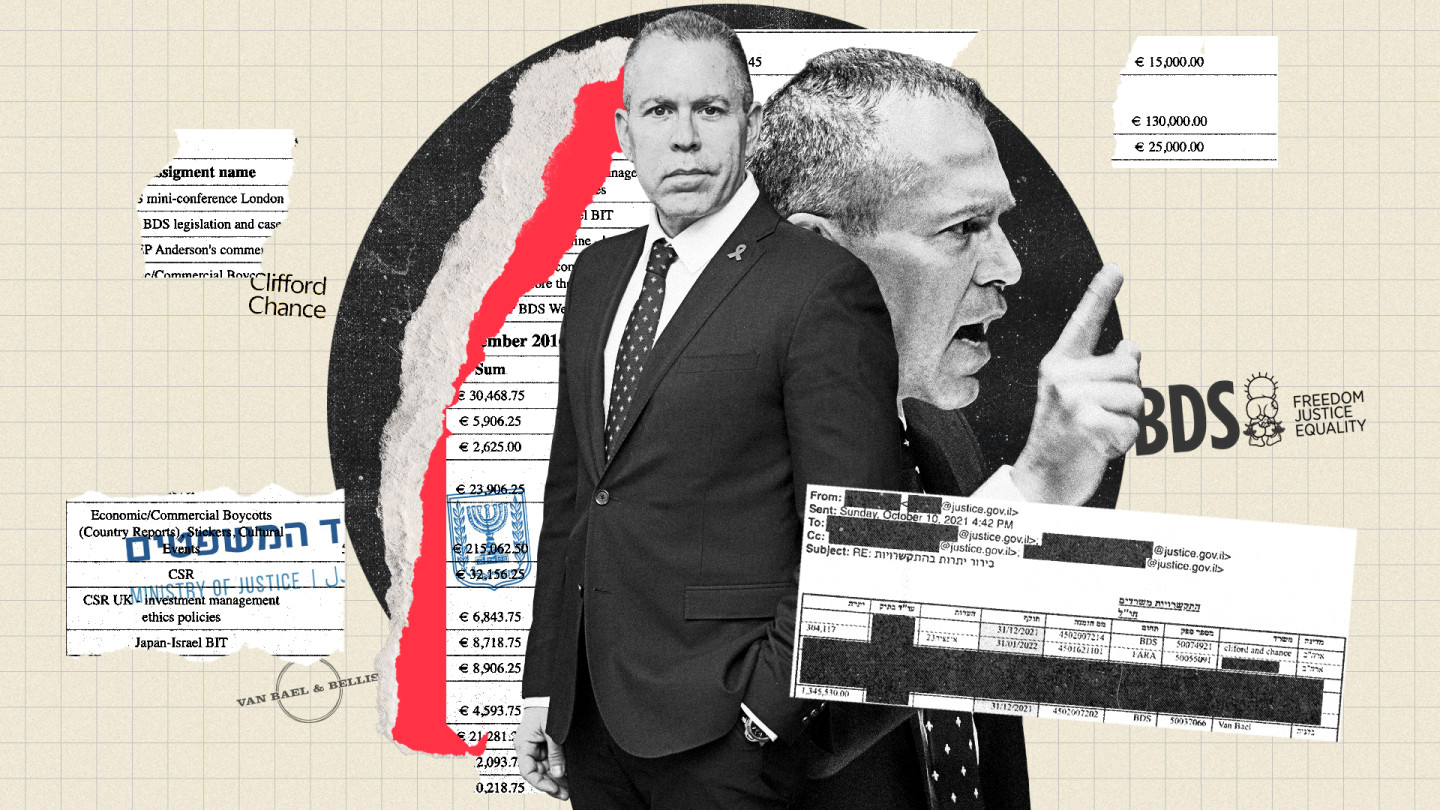
With this dazzling display of legal acumen, Clifford Chance hopes to convince the Israeli government that it is the firm best placed to support its lawfare programme against the anti-apartheid Boycott, Divestment and Sanctions (BDS) movement.
The covert programme, jointly funded by the Israeli ministries of justice and of strategic affairs since 2015, is “diplomatically extremely sensitive” in Israel. Its aim is to undermine the BDS movement worldwide using so-called legal warfare methods.
The interview call with Clifford Chance, which lasts about an hour and a half, will leave the Israeli officials impressed. After all, the firm is part of London’s “Magic Circle”, the City’s five most prestigious outfits.
Clifford Chance will ultimately be one of six entities interviewed for the anti-BDS project, scoring the highest among them. The Israeli officials will therefore recommend hiring the British law firm, especially when offered a discounted rate of 864$ per hour.
The interviewers will also select a second law firm, Brussels-based Van Bael & Bellis (VBB), at the more reasonable hourly rate of €375 ($445 at the time).
For the first time, The New Arab (TNA) is able to reveal the details of the hiring of the two firms, as well as the inner workings of Israel’s anti-BDS lawfare programme, thanks to leaked documents from the Israeli Ministry of Justice, which were published by the journalist collective Distributed Denial of Secrets in July 2024.
According to the leaked documents, the Israeli government first engaged Van Bael & Bellis in May 2016 to prepare advocacy material and legal opinions meant to criminalise pro-BDS activism outside Israel. Some of this material was used by Israel to lobby foreign governments and multinationals.
Between 2016 and 2019, VBB charged the Israeli government some €594,000 for its anti-BDS work. Of this sum, about €100,000 went to lawyers in countries where the Belgian firm lacked local know-how. In such cases, local lawyers would be subcontracted by the Israeli government and paid through VBB.
When the programme was renewed in 2020, Clifford Chance was added to the mix. In 2021, the two law firms were allocated a total budget of 4 million Israeli shekels (about $1.25 million) over five years for their work.
Israeli daily Haaretz first revealed the existence of this covert programme back in 2017, although it was not able to confirm the identity of the contracted law firms.
Unlike their engagements with other law firms, the Israeli Ministry of Justice mandated Van Bael & Bellis and Clifford Chance to keep confidential their role representing the Israeli government overseas. In both Canada and the UK, this secret Israeli programme may constitute a breach of recently approved foreign interference laws.
The New Arab contacted VBB and Clifford Chance, as well as the Israeli ministries of justice, of strategic affairs and of foreign affairs but received no comment in time for publication.
TNA also contacted the Israeli embassies in London, Belgium, Chile and Canada for comment. Again, no reply was received in time for publication.
First ‘assignments’
Shortly after being hired by Tel Aviv, Van Bael & Bellis’ first attended an anti-BDS “conference” organised by the Israeli embassy in London in May 2016, where challenges in fighting the movement were discussed.
According to an internal memo, the conference was attended by representatives from the Israeli ministries of foreign affairs, of strategic affairs, of justice and of the economy, “in addition to private lawyers from France and Italy”.
The goal of the event was to “present to the Belgian law firm [...] the BDS phenomenon and the challenges it raises, in a direct manner and based on cases from the field and not in a theoretical manner”. Three VBB lawyers travelled to London to attend.
A few weeks later, the Israeli government set the law firm its first task: to develop a catalogue of legal opinions which could be used to counteract the BDS campaign in Europe.
“What are the limits placed on freedom of political speech, and is the right to such speech restricted by other rights, such as the right to trade?”, asked a memo sent to Van Bael & Bellis in June 2016. VBB was tasked with answering this question for the UK, the Netherlands, Spain, Germany, Ireland, Sweden, Denmark and France.
Van Bael & Bellis was also asked to provide more ad hoc legal opinions in response to events as they occurred.
For example, in June 2016, Van Bael & Bellis provided the Israeli government with potential options to pursue legal action against then-Member of European Parliament (MEP) Martina Anderson, in light of a comment she made where she described Israeli lobbyists in Brussels as “a rash”.
The legal opinion, prepared for the Israeli Ministry of Foreign Affairs, stated that a lawsuit could be brought for cause of hate speech. Alternatively, a request could be submitted to the president of the European Parliament (EP), with the aim of calling MEP Anderson to order.
One Brussels-based group did exactly that. The EU office of the pro-Israel advocacy group American Jewish Committee reportedly contacted the EP’s president to reprimand Anderson. The group did not respond to our email asking if they had done so at the behest of the Israeli government. TNA has seen no direct evidence that the Committee contacted the president on the basis of VBB's advice, or that the pro-Israel advocacy group knew the advice had been prepared for the Israeli MFA.
Anderson told TNA that, neither the European Parliament president, nor the Israeli mission in Brussels, engaged with her directly on the matter.
“The fact that Israel spent thousands of euros attempting to intimidate and silence me only underlines the truth of what I was saying. If they believed such tactics would deter me, they fundamentally misunderstood who I am,” Anderson said.
“I am proud to have been a thorn in the side of the Israeli state and its extensive lobbying machine, which works relentlessly to undermine Palestinian voices and to justify the actions of a brutal and oppressive rogue state,” she added.
A new strategy
In August 2016, Van Bael & Bellis was called upon again when Belgian carrier Brussels Airlines stopped serving Israeli-made snacks on its Tel Aviv-Brussels flights.
At the time, Brussels Airlines claimed that it had stopped serving the snacks because they differed from what it had ordered from its supplier. Others suspected that the menu change was actually in response to a complaint made by a customer concerned by the fact that the product was reportedly sourced from a factory in the occupied West Bank.
As reported by Belgian daily Le Soir, Van Bael & Bellis supplied the Israeli ambassador in Belgium with the draft of a letter addressed to the airline, arguing that its decision could be unlawful under both Belgian and US law.
“Considering the commercial presence of Brussels Airlines in the United States of America, it would obviously be problematic for Brussels Airlines to be perceived by the U.S. authorities and consumers as participating in illegal boycott actions,” the letter said.
A legal memo, drafted by the Belgian law firm alongside the letter, had a more threatening tone. If Brussels Airline was pressured by BDS to drop the Israeli snack, the memo argued, “the airline could be considered as an adherent to this movement’s political ideas and actions, or even an accomplice.”
The memo also stated that Brussels Airlines’ decision was “inconsistent with U.S. policy”, which was committed not only to “take domestic action against BDS, but to also oppose BDS worldwide”.
Before long, the airline reversed the decision, due to what leaked Israeli government documents referred to as “diplomatic action by the ministry of Foreign Affairs”.
“We will continue to accept [these] products on board our flights especially given the positive role [of their manufacturer] in the community,” said Brussels Airlines in a statement to the Israeli ambassador.
Contacted by TNA, Brussels Airlines declined to comment on what it referred to as “10-year old statements and remarks”.
Meanwhile, the success of this intervention came to define the strategy of the anti-BDS lawfare programme from this point on.
Using “talking points” drafted by VBB, representatives of the Israeli government would engage with commercial entities to highlight the legal risks of complying with BDS demands. In the fall of 2016, this model would be used to fight pro-BDS campaigns in the UK.
In October 2016, Van Bael & Bellis was asked to draft a response to letters sent by a UK charity to the parent company of Ben & Jerry’s ice cream, Unilever. In it, VBB had to explain how a potential “capitulation” to the campaign against the sale of Unilever’s ice cream in Israeli settlements would be in violation of US, UK and international law.
One month later, another legal memo would be prepared ahead of a pro-BDS campaign against American IT multinational HP in the UK. The document contained potential criminal laws that could be used to prosecute activists engaged in singing anti-HP songs, organising anti-HP information sessions, or posting anti-HP stickers, signs or flyers.
To avoid sharing potentially inadequate legal advice, which could expose Israeli officials to unwanted risks, material from Van Bael & Bellis would be shared through Israeli missions abroad with a “third party (such as an NGO)” which would then pass it on to the lawfare targets.
By January 2017, VBB had racked up some €414,000 in fees (about $444,000 at the time) for more than 1,100 hours of work over eight months. This was later revised to €309,812.5 ($332,000).
Managing subcontractors
Going forward, VBB’s role became more involved in coordinating the work of locally-hired law firms, and acting as intermediary between them and the Israeli government - including for payments.
This model of subcontracting grew further once the second law firm, Clifford Chance (CC), was added to the mix. With the two law firms, the Israeli government was able to track developments from Ireland to Chile, and from Canada to New Zealand.
The work also became more involved in influencing the political processes in some of these countries.
As revealed by Irish online outlet The Ditch, in 2018, the Israeli government hired the Dublin law firm McCann FitzGerald to advise on the draft of a law that would ban trade with Israeli settlements in Ireland. McCann FitzGerald’s hiring was done through Van Bael & Bellis.
In February of the same year, senior diplomats of the Israeli embassy in Chile sought advice on how to counteract pro-BDS activism in the country, through Van Bael & Bellis.
The embassy officials wanted to explore legal means for limiting the work of the Chilean-Palestinian Interparliamentary Group within the Chilean Parliament, which it viewed as the source of “very strong lobby for the pro-Palestinian cause”.
Additionally, legal counsel was sought to identify disciplinary codes that could be used to limit the political activity of professional associations, such as the associations of journalists and of teachers.
Finally, Israeli officials asked for ways to force universities in Chile to organise Israel-related activities despite boycotts from its students. The summer prior, talks featuring a director of the Israel Antiquities Authority at two Chilean universities had been canceled after successful BDS campaigns by their student bodies.
The legal memo, prepared by a Chilean law firm and paid for through VBB, cost the Israeli government some $15,000.
‘A politically important issue’
The next year, in 2019, a law firm was hired to advise on a legal case against the Canadian government’s mislabelling of wines originating from illegal Israeli settlements.
The case - initiated by Jewish-Canadian journalist David Kattenburg - argued that wines produced in the West Bank and carrying “Products of Israel” labels violated Canada’s Food and Drugs Act.
Through Van Bael & Bellis, the Israeli government hired a Toronto law firm to support its advocacy efforts with the Canadian government after the court had ruled in favour of Kattenburg.
In August 2019, Israeli officials inquired about the chances of success of a potential appeal of the court’s decision. At the time, the Canadian government had not yet announced whether it intended to do so.
If the decision was not appealed, wrote the Toronto law firm, “it may be used by those involved with the BDS campaign in Canada and across the world”.
Indeed, in Europe, the Court of Justice was also trying to determine if the labels of wines from West Bank settlements were equally misleading to European consumers.
Appealing the decision in Canada would put it on hold, added the Canadian lawyers, which may dissuade the European court from relying on it for its own judgement.
As a consequence, and “in light of the political importance of the issue”, the Israeli Ministry of Foreign Affairs wrote to then-Canadian Foreign Minister Christya Freeland “requesting that she do everything in her power to ensure that Israel and its products are not negatively affected.”
The Canadian government launched an appeal of the ruling about a week later, but this was subsequently dismissed by Canada’s Court of Appeal in 2021.
A year later, the Canadian Food Inspection Agency - in charge of food labels - decided that the labelling of Israeli settlement wines as products of Israel was indeed false.
Lawyer Dimitri Lascaris, who represented Kattenburg in the proceedings, told TNA that he was unaware of the level of involvement of the Israeli government in the case.
“We knew that the Israeli embassy [in Canada] had communicated with the Canadian government,” said Lascaris. “But we had no idea that they had hired a law firm and that they were involved to the extent that you described,” he added.
TNA contacted the Canadian Ministry of Foreign Affairs, which referred us to the Canadian Food Inspection Agency instead. A spokesperson for the Agency told us that its “decision-making process is grounded in core values, including [...] regulatory independence from external stakeholders.”
We also contacted former Canadian Foreign Minister Freeland for comment. No response was received in time for publication.
Divestment setbacks
One of Clifford Chance’s first assignments involved the decision of New Zealand’s Sovereign Wealth Fund to divest from five Israeli banks for their role in expanding Israeli settlements in the West Bank.
On 2 March 2021, the New Zealand Superannuation Fund - in charge of funding the country’s pension system - decided to drop its investments in the five banks because they reportedly financed the construction of projects in the unlawful settlements. The total value of the Fund’s investments in the banks at the time was NZ$6.5 million ($4.7 million).
Clifford Chance charged a total fee of $51,300 to investigate the circumstances of the decision. The fee included an amount paid to lawyers in New Zealand who were subcontracted through the British firm.
Later that year, two other divestment announcements would lead to an increased workload for the anti-BDS lawfare programme.
First, in June 2021, Norway’s municipal employees’ pension fund announced its divestment from 16 companies operating in the settlements. The next month, Ben & Jerry’s decided it would stop selling its ice cream in the occupied West Bank.
By August 2021, of the $1.25 million allocated for the five-year programme, some $145,000 had already been disbursed in just its first eight months.
In an internal memo drafted shortly after, the Israeli Ministry of Justice concluded that, in order to combat BDS more effectively, coordination between Van Bael & Bellis and Clifford Chance on the one hand, and Israeli embassies and pro-Israeli NGOs abroad on the other, had to improve.
According to the memo, this improved coordination was already happening in the UK. The pro-Israel advocacy group UK Lawyers for Israel (UKLFI) was about to publish an “opinion piece” criticising the New Zealand Fund’s divestment. It was also looking into ways to pressure Ben & Jerry’s parent company Unilever to override its subsidiary’s decision, culminating in the publication of a warning letter to Unilever in October 2021.
Jonathan Turner, Chief Executive of UKLFI, told The New Arab that he does not recall discussing UKLFI’s publications with any Israeli officials, but “I may possibly have mentioned it at some point”.
“We certainly did not prepare the piece in collaboration with any Israeli officials,” he added.
Referring to the warning letter to Unilever, Mr. Turner said that “I believe that our analysis was correct, the warning was well made, and if Unilever had adopted our suggestion, it would be a significantly more valuable company today.”
A legal foreign influence programme?
The leaked documents do not show whether the anti-BDS lawfare programme was renewed beyond its planned end in 2025.
However, if continued, the programme could expose Van Bael & Bellis and Clifford Chance to violations of newly introduced foreign influence laws in certain countries around the world.
In August 2024, The Guardian revealed how the Israeli government feared its anti-BDS advocacy efforts in the US could run afoul of the country’s Foreign Agents Registration Act (FARA).
The Act mandates individuals acting on behalf of a foreign government to publicly disclose the nature of their work in the US, including for attorney services provided outside the context of legal proceedings.
The UK and Canada have both recently passed similar legislation - respectively in 2023 and 2024 - that require entities to declare their work for foreign states. However, it is not clear if legal services - such as those provided by the two law firms - would fall under their scope.
Mutahir Ahmed, a former Crown Prosecutor, and a spokesperson for the pro-Palestine International Centre for Justice for Palestinians (ICJP), told TNA that the close coordination between the Israeli government and pro-Israel groups operating in the UK was “no secret”.
In his view, the goal of this close collaboration was “restricting public institutions and individuals from engaging in BDS and creating a chilling effect to shield Israel from valid criticism”.
"If UK authorities are serious about tackling undue foreign influence,” Ahmed said, “it must use its foreign influence legislation to tackle Israeli influence, including through the Foreign Influence Registration Scheme."
Meanwhile, Canadian human rights lawyer James Yap told TNA that the most concerning aspect of the Israeli anti-BDS lawfare programme is its covert nature.
“Foreign states certainly have the right to appear before the courts of another state to litigate. For example, Israel could absolutely show up and intervene itself in the proceedings [in Canada]. And that, to me, is not foreign interference,” said Yap.
“That said,” Yap added, “here they seem to be working covertly, operating through other actors who are involved in a legal proceeding to conceal their own involvement.”
The Canadian lawyer said that, in his view, court proceedings “can be just as impactful as the legislative process”.
In fact, Yap’s organisation, the legal NGO Canadian Lawyers for International Human Rights (CLAIHR), is currently suing the Canadian government over its export of arms to Israel during the genocide in Gaza. Canada transferred some $13.8 million worth of weapons to Israel in 2024 alone.
“If a foreign state is actively working to influence the process of a Canadian court for its own interests, there's a case that something like that ought to be out in the open. It goes to the root purpose of foreign interference legislation: exposing covert intervention by foreign states in domestic government processes,” Yap concluded.
Animated infographic: Ornaldo Gjergji
Fact-checking and copyediting:
TNA Investigative Researcher/Journalist Jonathan Cole.
Fact-checking of Hebrew-language material: Samah Watad
Commissioning, editing and supervision:
TNA Investigative Editor Andrea Glioti.
For questions, comments and complaints please email Andrea Glioti This email address is being protected from spambots. You need JavaScript enabled to view it. or TNA Investigative Journalist Jonathan Cole
After two catastrophic years, what awaits Palestine in 2026?
After two catastrophic years, what awaits Palestine in 2026?
By Kamel Hawwash, The New Arab, 24 December 2025
As Israel's ceasefire violations continue in Gaza & expulsions escalate in the West Bank, Kamel Hawwash explains why he sees little hope for change in 2026.
I am regularly asked for my view on what will happen in Palestine in 2026. While it is possible to speculate, it is difficult to be certain of the answer to the question.
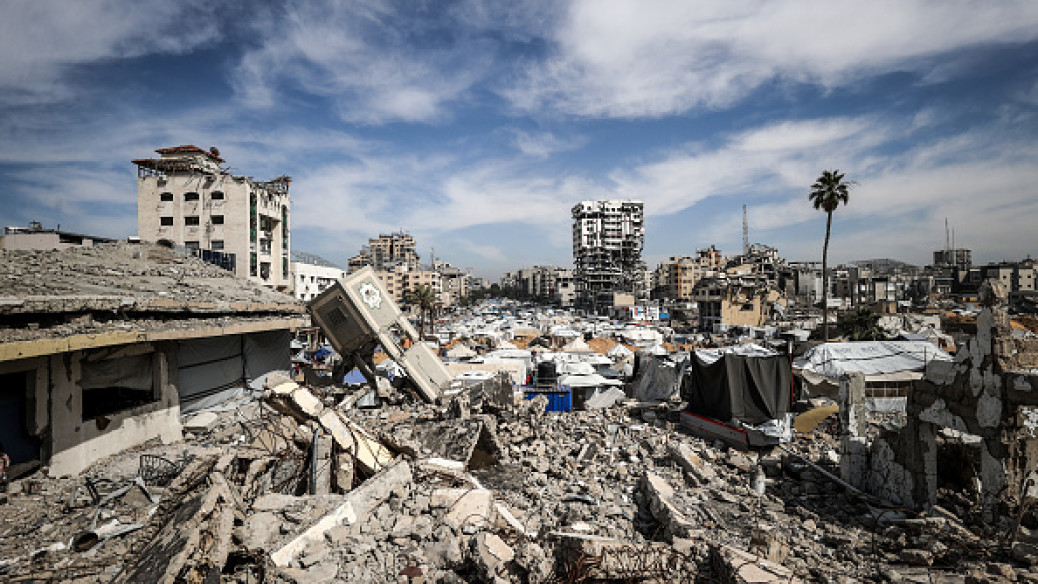
However, it is important to begin with where we are now. We know that more than 100,000 Palestinians have been killed by Israel including at least 20,000 children. Almost all the infrastructure and the homes in Gaza have been fully or partially destroyed.
Most Palestinians are either living in tents of various quality, in their partially demolished homes, or out in the open. Israel has not allowed the required amount of aid specified in the Trump plan. A deliberate act to further starve the population and expose them to the harshness of winter.
It is not possible for Palestinians in Gaza to begin to return to a semblance of a normal life without schooling, university education or medical help. Israel has mostly destroyed all the infrastructure for this, making the situation even more desperate as the people are also moved to the narrowest area of land possible.
Without dignity, a normal life, and a lack of hope, Israel intends to push them to seek another land, rather than remain steadfast in their homeland. In fact, it seems that Israel works overtime to find ways of enticing them away, going as far as organising flights to take hundreds of them all the way to South Africa – without exit stamps in their passports of course, to really ensure they aren’t able to return to their homeland.
All the while for Palestinians who remain, Israel has divided Gaza into two areas separated by a virtual ’yellow line’ that is not always apparent to Palestinians. This has left many vulnerable to deadly violence by Israel, and for those on the ‘wrong side’ aka Hamas controlled area, they are constantly exposed to attacks.
Israel continues to deny independent journalists free access to Gaza on the pretence of security – those who are taken in are under the ‘protection,’ and therefore censorship, of the IDF. Furthermore, Israel’s spokespeople and allies continue to deny the accusation of genocide, some arguing that less people have been killed by them in Gaza compared with other armies in the past…
Israel has even (once again) appealed to the International Criminal Court – which it declares it does not officially recognise – to revoke the arrest warrants against PM Benjamin Netanyahu and former defence minister Yoav Gallant.
What future?
Given such a horrific reality in Gaza, it should come as no surprise that I feel the future only holds more pain and suffering for Palestinians. And Israel’s plans will lead to further destruction, the total annihilation of any infrastructure needed to sustain life, and the cleansing of Palestinians from their land through death and expulsion.
This process will be intensified through the Trump/Kushner rebuilding plan, which seeks to transform a devastated Gaza into the Mediterranean Riviera, and facilitate the erection of illegal Israeli settlements in the strip. Trump has even repeatedly raised the need for Gazans to leave, explaining that they couldn’t possibly live in the ruins he fails to acknowledge are Israel’s doing.
These plans are also not limited to Gaza. In the West Bank, Palestinians have already been expelled, including from refugee camps in Jenin and Tulkarem.
This all sits into Israel’s broader efforts to erase the identity of Palestinians, and refugees in particular. It’s probably why it has waged war on UNRWA, an agency specifically set up for Palestinian refugees following the Nakba.
Additionally, the recent closure by Israel of the King Hussein Bridge turned the West Bank into an open air prison at a stroke.
No real leadership
Meanwhile, it seems to me that Palestinians in the West Bank, especially those living in the Ramallah bubble, refuse to recognise the real dangers that await them. And the Palestinian Authority just sits paralysed in terms of standing up to Israel, or even recognising it faces the threat of being dissolved.
Indeed, for Palestinians in Gaza, the West Bank and East Jerusalem, the Palestinian Authority is conspicuous by its absence. Settlers are rampaging through the West Bank, including areas A and B but particularly C, whilst they enjoy the protection of the IDF, yet PA security forces have done little to nothing to protect Palestinians.
The same is true in East Jerusalem, home to Al Aqsa. The mosque has been the target of settler incursions, including by Israeli ministers, but once again the PA has been absent.
Frankly, the PA’s failure to lead Palestinians towards liberation renders it irrelevant. An put simply, it is allowed to continue to exist by Israel to spare it the load of administering and securing the occupied territory – which is the cost of its illegal occupation.
Whilst Palestinian citizens of Israel continue to exist, which in itself is a form of resistance, I expect Israel will look for ways to make their lives a misery too, with an eye to push them out.
Even the over 10,000 Palestinian prisoners languishing in Israeli jails – the backbone to the Palestine liberation movement – are now faced with the prospect of being executed.
Does Israel really expect to achieve ‘security’ through all these oppressive, repressive and violent efforts? Whether it is the case or not, however, one thing is true: a colonised people will always find ways to exercise their right to resist, until they are free.
Furthermore, millions around the world have joined solidarity efforts in the face of over two years of genocide in Gaza. The movement has only grown in its conviction that Palestine must be free, whereas Israel is battling a crisis amongst its soldiers and its population that is increasingly looking to leave for safety reasons.
The only way to lead the Holy Land to a more hopeful future is for the US to cease its support of the lawless government in Tel Aviv. It must act to protect it from itself and would likely have the support of the 20 or so leaders who witnessed the signing of the Trump plan in Sharm El Sheikh. But judging by the inaction in the face of Israel’s constant breaches of the ceasefire, I do not imagine this will happen any time soon.
It's clear that in 2026, Palestinians will face more of the same unless Washington drastically changes its approach. Nevertheless, we will continue to hope that the new year brings Palestinians liberation and justice, and that the Israeli government is held accountable for its crimes by being tried at The Hague.
Author
Professor Kamel Hawwash is an academic at the University of Birmingham and a long-time campaigner for justice.
Disclaimer
Opinions expressed in this article remain those of the author and do not necessarily represent those of The New Arab editorial team or that of CEMAS Board.
After two years of genocide, Gaza's universities gradually resume in-person classes
After two years of genocide, Gaza's universities gradually resume in-person classes
By Sally Ibrahim, The New Arab, 04 December 2025
It is not simply the reopening of a university; it is the slow, fragile rebirth of an entire academic community that Israel's war sought to erase.
Mohammed Hassan, a medical student, stood at the entrance of Gaza's Al-Azhar University with his dental tools wrapped in a small plastic bag, staring at a campus he could barely recognise any more.
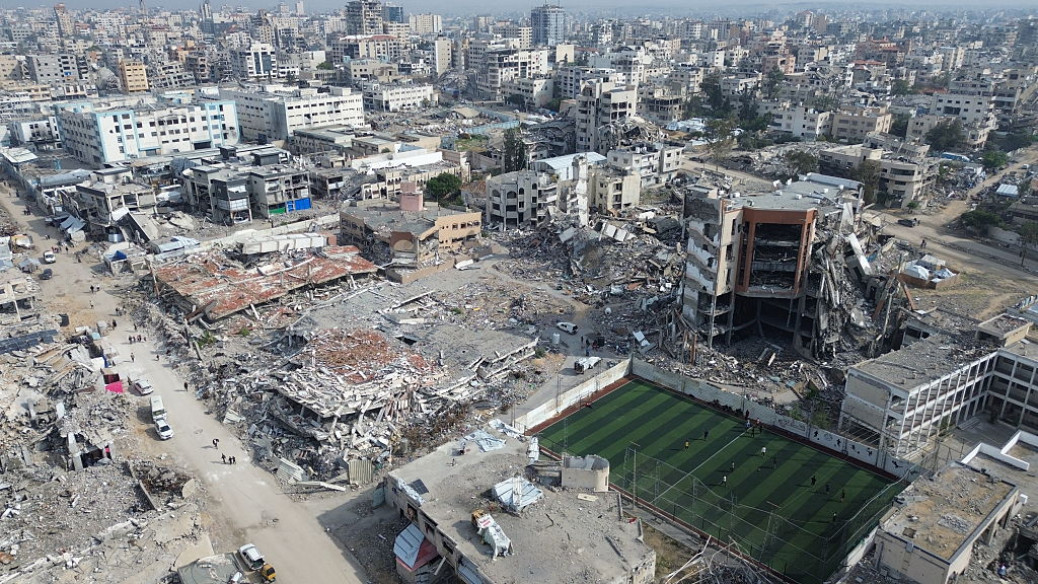
Two years earlier, he had rushed through these same gates with friends, joking about exams and clinical sessions. Now, much of the building had been reduced by Israeli attacks to cracked pillars and broken windows, with dust still settling on the remnants of the dental labs he once trained in.
"When I stepped inside, I felt something between grief and victory. I studied from tents and shelters all this time. Just standing here again made me feel that a small part of my life survived," he told The New Arab.
For Hassan and countless other Palestinian students, this isn't simply about a reopening of a university; rather, it is the slow, fragile rebirth of an entire academic community that Israel's war sought to erase.
A return rooted in emotion, identity, and defiance
Over the course of Israel's two-year genocidal war on Gaza, Palestinian university students experienced one of the longest interruptions in higher education since the establishment of their institutions.
The Israeli war flattened lecture halls, collapsed libraries, destroyed laboratories, paralysed electricity networks, and displaced nearly all faculty and staff.
Students scattered into tents, shelters, and overcrowded homes, attending online classes on unstable networks, if they had devices at all.
Today, despite the devastation surrounding them, two of Gaza's largest universities, Al-Azhar University and the Islamic University, are taking cautious but determined steps toward in-person learning.
"When I walked into the dental lab, even though half the equipment was missing, I felt I was getting closer to my dream again," Hassan said, adding that "opportunities are limited, but giving up would be far worse."
Medical student Nour al-Hatu was equally overwhelmed. "After two years of displacement, I didn't imagine I would return to my classroom," she remarked to TNA.
"The lecture hall has no proper equipment, but just wearing my stethoscope inside the university made me feel like life was coming back," she said.
For Al-Azhar University's Vice President, Mohamed Shubair, reopening the campus was not just a logistical decision but a national one.
"We started with a political and national vision […] Our goal was to fulfil the students' dream of returning to in-person classes, even with the smallest resources," he told TNA.
Al-Azhar began with the faculties of Medicine and Dentistry, where practical training is essential. Inside partially restored labs, some without doors, others held together with makeshift repairs, students perform simulations and limited clinical exercises.
The university has allowed around 1,000 students to return physically. Meanwhile, more than 12,000 others continue classes online, relying on the Moodle platform despite unstable internet and constant power outages, according to Shubair.
"We barely have desks or whiteboards […] Before the war, we had over 300 academic staff. Today, in the practical faculties, we have only ten lecturers in dentistry and five assistants in medicine," Shubair said.
He emphasises that the university refuses to be entangled in political disputes. "We distance ourselves from all conflicts. Our mission now is life and education. Rebuilding will come through Arab support and international volunteers."
But even in ruins, Al-Azhar witnessed an unexpected phenomenon: a dramatic rise in postwar enrolment. "We were shocked. More students registered than before the war. This shows that young people are searching for hope despite everything," he added. "Education is part of our revival […] It's a message to the world that we are still here."
A short distance away, the Islamic University is experiencing a similar resurrection, though its destruction was even more severe.
Most of the buildings were flattened entirely, while a few now house displaced families who lost their homes in the war. Still, the university initiated its return weeks earlier, determined not to let its academic legacy fade.
Inside a building repaired just enough to stand, medical students sit in tightly packed rooms where shrapnel scars line the walls. A single generator provides weak lighting. Yet despite the harsh conditions, spirits are high.
"This is our first time back since the war. Education is not a luxury for us, it's our only lifeline," Salma Mohammed, a medical student, told TNA.
She described the experience as "a mix of joy and shock," saying that returning in person "means the university is rising again."
Administrative staff say that during the war, around 4,000 students graduated through online learning. Thousands more are still waiting to complete their degrees in person after two years.
Other universities still rely on online education
While Al-Azhar and the Islamic University move forward, other institutions are far from reopening to students.
Universities such as Al-Aqsa University and the University College of Applied Sciences, as well as several campuses in southern Gaza, continue to rely entirely on online education. Destroyed buildings, unsafe roads, power outages, and the loss of academic staff have made in-person teaching nearly impossible.
Many students attend classes from tents or shelters, sharing devices between family members. Power often cuts off mid-lecture. Some students record lessons so they can listen later when electricity briefly returns.
Faculty members say the challenges are overwhelming. Some professors were killed, others displaced, and many forced to flee. "We would return in a second," one lecturer says, "but the buildings are gone."
According to Shireen al-Dhani, a faculty member at Al-Azhar's College of Arts and Humanities, universities have taken on roles far beyond academics. "From the first days of the war, we launched online learning voluntarily. Faculty inside and outside Gaza helped us. Our goal was continuity; the occupation wanted to break that continuity," she told TNA.
Staff have been meeting students in person whenever conditions allowed, helping them choose majors, providing guidance, and offering psychological support.
During the toughest periods of the war, the university formed internal support networks for employees, especially families of martyred staff. They offered emergency aid, counselling, and free community services.
"We know how difficult the financial situation is, so we apply only proportional fees. We try to ease the burden on students as much as possible," al-Dhani said.
The Government Media Office in Gaza estimates that 165 educational institutions were fully destroyed and 392 partially damaged. Nearly 300,000 people still require temporary housing, turning campus surroundings into crowded shelters.
Experts argue that reopening universities, even partially, is essential to prevent the collapse of Gaza's intellectual and cultural life. As Shubair puts it, "Education is the only battle Gaza must win after all this devastation."
But he acknowledges that survival depends on Arab and international support. With resources nearly depleted, even Al-Azhar and the Islamic University face uncertainty.
Here are all the universities that Israel has destroyed in Gaza
The Al-Azhar University
The Islamic University
University of Palestine
Al-Isra University
Al-Quds Open University — Gaza Branch
Author
Sally Ibrahim is The New Arab's correspondent from Gaza
Disclaimer
Views expressed in this article do not necessarily reflect those of CEMAS editorial team.
Gaza's amputee children fight to reclaim their lives shattered by Israeli attacks
'Why did they do this to us?': Gaza's amputee children fight to reclaim their lives shattered by Israeli attacks
By Sally Ibrahimm, 09 December 2025
Where children once played freely, the streets of Gaza now hear the careful steps of survivors, walking on legs made from scraps they've salvaged from the ruins
Just a year ago, nine-year-old Rateb Aqliq ran barefoot through the narrow alleyways of his neighbourhood, laughing as his mother called him home for lunch.
Life seemed ordinary, full of small joys — until one afternoon, when an Israeli airstrike destroyed his home, killing his mother, father and older brother, and leaving Rateb to wake days later without his right leg.
Devastated and overwhelmed, Rateb now sits in a torn, wind-battered tent in Deir Al-Balah, central Gaza, struggling to rebuild his life.
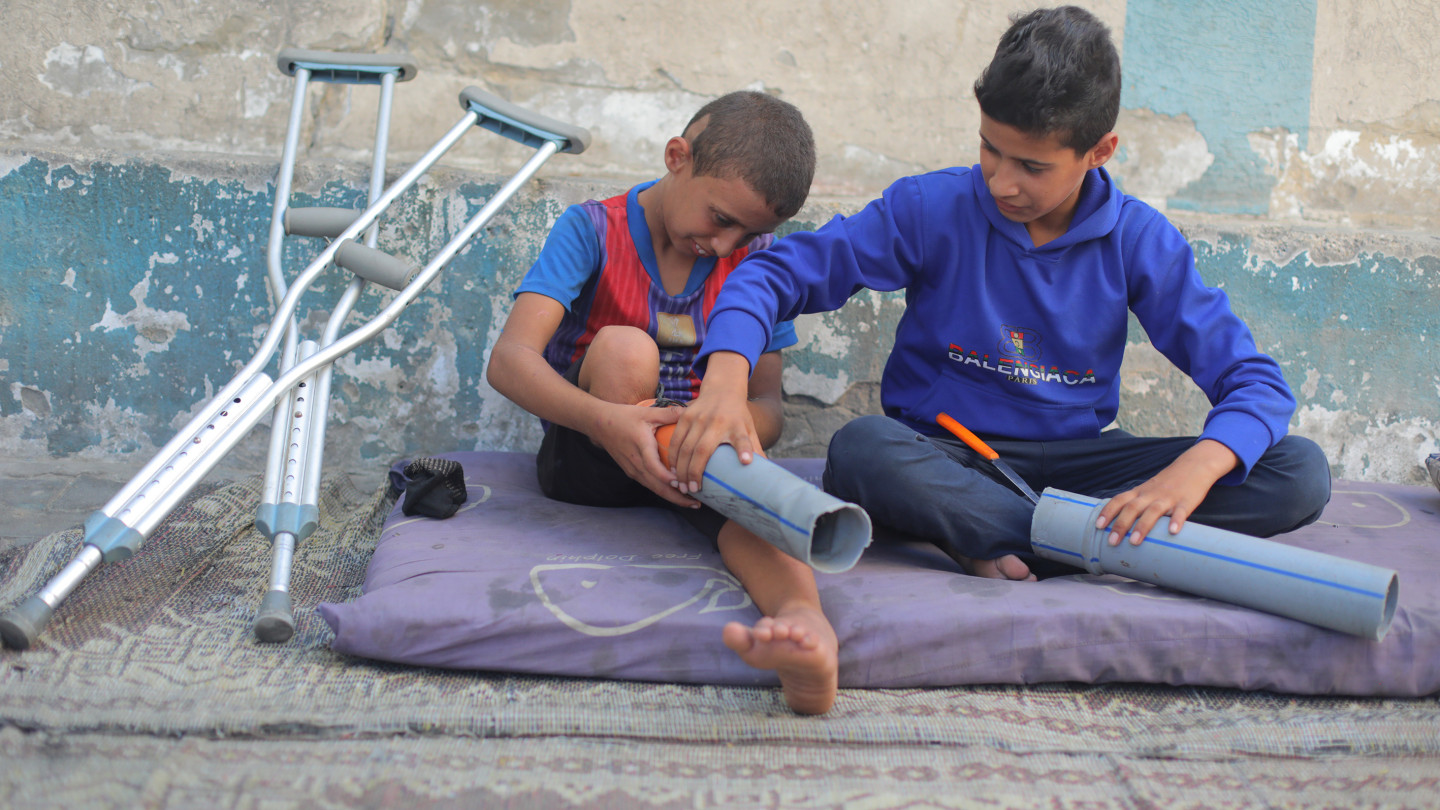
Carefully, he balances on a plastic tube leg made with a friend's help, wobbling with each unsteady step as dust rises from the bare floor. Clearly in pain, he refuses to let go.
Rateb's uncle, Mohammed, will never forget the instant his nephew's eyes fluttered open after the coma. "He didn't ask about his mother," he said, his voice low and trembling. "When he learned she was gone, the pain of losing his leg felt smaller than the pain in his heart."
Despite the brutal conditions of the tent, Mohammed says Rateb still finds the strength to keep practising to walk, picking up his plastic tube every few days to walk, fall, laugh and try again.
Rateb himself explains why he keeps going. With his small, bandaged hands gripping the leg pipe tightly, he says, "I keep going so I can walk again. I want to visit my mother's grave and play with the other children once more."
According to Rateb, he and his friend Yousef made the leg from whatever materials they could find. Last month, when a relief team was distributing aid, they came across a long piece of discarded plumbing pipe behind a damaged water tank. Using a shard of broken glass, they cut it to size, then filled the hollow end with cloth, sand, and cardboard to cushion Rateb’s injured stump, securing it to his thigh with a worn shoelace.
Yousef explains their thinking: "We saw older boys using sticks as crutches, so we thought we could make something better for him — something that actually looked like a real leg."
He adds that, although the leg is uneven, painful to wear and far from stable, it still represents dignity for Rateb, and each time he tightens the strap, it feels as though he is stitching back a piece of himself that the genocide tried to take away.
Looking ahead, Rateb shares his hopes for the future: "I want to go back to a normal life. This is just the beginning. I need to travel for treatment and get a permanent prosthetic foot so I can live like everyone else."
'We had no weapons, only a ball'
Similar to Rateb's fate, 15-year-old Obaida Atwen now sits in a wheelchair.
He watches a group of boys playing football on the sand in Deir Al-Balah, unable to stop thinking about the life he once had.
Before the genocide, Obaida trained at a youth football academy and dreamed of wearing Barcelona's number 10 shirt, hearing his name cheered from the stands. Football was more than a game; it was the rhythm of his life, the language he spoke best.
But in March, a missile struck his family's tent, taking his right leg and left hand in an instant.
"I had just come back from the market and sat down to rest for a minute. Then everything went dark. When I woke up, my leg and hand were gone," he recalls.
His father, Mohammed, sitting beside him, looks away. "He used to sleep holding his football," he murmurs. "Now, he dreams of walking again, instead of scoring goals."
In the long, sleepless nights, Obaida asks questions no one can answer. "Why did they do this to us?" he whispers to his father. "Why did Israel bomb our tent? We weren't soldiers. We had no weapons, just a ball."
His father tries to respond, but words fail him. "He keeps asking who they were trying to kill," Mohammed says quietly. "I tell him I don't know — maybe they didn't see him, maybe they didn't care."
For Obaida, these questions weigh more heavily than the loss of his limbs. "I don't understand," he says. "If they wanted to stop fighters, why did they take my leg? Why did they take my hand?"
Still, his spirit remains unbroken, and he is determined to play again, even with a prosthetic leg.
A lifetime of recovery
Across Gaza, stories like those of Rateb and Obaida no longer shock anyone; they reflect the reality facing an entire generation.
According to the Ministry of Social Development, more than 12,000 people in Gaza have been permanently disabled since the genocide began, including around 2,500 children.
Of these, more than 4,500 amputations have been recorded since October 2023, with children making up roughly 15 percent of all cases.
Over the two-year genocide, an average of ten children have lost a limb every day, whether due to direct shelling or unexploded ordnance.
At the Artificial Limbs and Polio Centre in Gaza City, engineer Mohammed Issa moves through crowded rooms, the noise of drills and patients' cries filling the air.
He shares with The New Arab, "We used to serve around 2,000 patients a year. Now we're seeing that number three times. But the occupation prevents the entry of materials, resins, fibres, and even screws, so we have to recycle old parts over and over."
Gesturing toward the dozens of children waiting, some on crutches and some crawling, Mohammed continues, "We make temporary limbs so they can stand, but most need advanced prosthetics that we simply can't provide here."
Outside the clinic, the challenge continues, with physical therapist Khaled Matar from Al-Wafa Rehabilitation Hospital in Gaza City explaining that the destruction across Gaza makes rehabilitation nearly impossible.
"The streets are filled with rubble and shrapnel," he says. "A child with a prosthetic leg can't even walk safely. There are no ramps, no pavements — only ruins."
He adds, "We teach them to walk again, but outside, the streets strip them of that ability."
A broken childhood
Beyond the physical injuries these civilians endure, the psychological impact is equally severe and often overlooked.
In Khan Younis City, in southern Gaza, psychologist Hala Al-Banna moves carefully between rows of children waiting for therapy at a small clinic, observing the weight of trauma on their young faces.
"The physical wounds heal, but the psychological ones grow deeper every day," she tells The New Arab. "Many of these children feel guilty for surviving when their siblings didn't. Some refuse to sleep at night. Others burst into tears at the sound of planes or even fireworks."
Her team, supported by a few international NGOs, provides short-term counselling sessions, drawing therapy, breathing exercises and group storytelling circles where the children are encouraged to speak about their dreams rather than their fears.
But as she puts it, these efforts are barely scratching the surface, with most centres destroyed during the genocide, many staff members displaced or killed, and a pain that cannot be measured in numbers or words.
As she shares this, she looks outside the clinic, where the noise of generators and ambulance sirens serves as a constant reminder that trauma is never far away.
Hala adds, "Gaza's health system is collapsing under the weight of need. Over 60 percent of amputees are still waiting for treatment. Fuel shortages delay surgeries, and power cuts interrupt therapy mid-session. Sometimes, we lose connection just as a child begins to open up."
She recalls one young patient, eight-year-old Amira, who lost both legs when a missile struck her home in Rafah.
"Every time I ask her to draw what she misses most, she draws a swing," Hala says, her voice breaking. "She tells me she dreams of feeling the air on her feet again."
"We're trying to teach them how to live again," she adds. "But how do you heal a child who no longer believes there's a safe place left to stand?"
For Mahmoud Shaath, who runs the ministry's rehabilitation programme, these tragedies signal the beginning of a new social reality.
"Thousands of children will grow up with prosthetic limbs or wheelchairs," he explains. "We must adapt our schools, our streets, and even our mindset to include them. But for now, survival still takes priority over rebuilding."
He notes that international aid groups face the same impossible dilemma. "Funds are drying up," Mahmoud adds. "Every day we delay, another child loses a part of their childhood."
As Gaza reels from Israel's ongoing destruction, with neighbourhoods flattened and hospitals struggling for fuel, every child learning to stand again is an act of resistance against erasure.
For Rateb, Obaida, and thousands like them, survival is no longer just about breathing — it is about reclaiming the right to move, play, and dream.
And in a land where even hope has been bombed, these children, Gaza's new generation of amputees, are proving one unbreakable truth: a dream, unlike a limb, can never be taken away.
Author
Sally Ibrahim is The New Arab's correspondent from Gaza
Page 24 of 57
Warning: Illegal string offset 'active' in /home/cemasorg/public_html/templates/northsouthnews/html/pagination.php on line 90
Warning: Illegal string offset 'active' in /home/cemasorg/public_html/templates/northsouthnews/html/pagination.php on line 96
Warning: Illegal string offset 'active' in /home/cemasorg/public_html/templates/northsouthnews/html/pagination.php on line 90
Warning: Illegal string offset 'active' in /home/cemasorg/public_html/templates/northsouthnews/html/pagination.php on line 96
Warning: Illegal string offset 'active' in /home/cemasorg/public_html/templates/northsouthnews/html/pagination.php on line 90
Warning: Illegal string offset 'active' in /home/cemasorg/public_html/templates/northsouthnews/html/pagination.php on line 96
Warning: Illegal string offset 'active' in /home/cemasorg/public_html/templates/northsouthnews/html/pagination.php on line 90
Warning: Illegal string offset 'active' in /home/cemasorg/public_html/templates/northsouthnews/html/pagination.php on line 96
Warning: Illegal string offset 'active' in /home/cemasorg/public_html/templates/northsouthnews/html/pagination.php on line 90
Warning: Illegal string offset 'active' in /home/cemasorg/public_html/templates/northsouthnews/html/pagination.php on line 96
Warning: Illegal string offset 'active' in /home/cemasorg/public_html/templates/northsouthnews/html/pagination.php on line 90
Warning: Illegal string offset 'active' in /home/cemasorg/public_html/templates/northsouthnews/html/pagination.php on line 96
Warning: Illegal string offset 'active' in /home/cemasorg/public_html/templates/northsouthnews/html/pagination.php on line 90
Warning: Illegal string offset 'active' in /home/cemasorg/public_html/templates/northsouthnews/html/pagination.php on line 96
Warning: Illegal string offset 'active' in /home/cemasorg/public_html/templates/northsouthnews/html/pagination.php on line 90
Warning: Illegal string offset 'active' in /home/cemasorg/public_html/templates/northsouthnews/html/pagination.php on line 96
Warning: Illegal string offset 'active' in /home/cemasorg/public_html/templates/northsouthnews/html/pagination.php on line 90
Warning: Illegal string offset 'active' in /home/cemasorg/public_html/templates/northsouthnews/html/pagination.php on line 96
Warning: Illegal string offset 'active' in /home/cemasorg/public_html/templates/northsouthnews/html/pagination.php on line 90
Warning: Illegal string offset 'active' in /home/cemasorg/public_html/templates/northsouthnews/html/pagination.php on line 96
Main News


Mediterranean
Lebanon’s Army in Limbo: History, Constraints and Uncertain Futures
Israeli settlers torch Palestinian homes amid record year of settler terror in West Bank
What we know about the reported US-Iran MOU, Lebanon's place in it
Foundations of Zionism: Sabri Jiryis on the making of a colonial project in Palestine
Africa
Navigating Financial Gateways and Security in Interactive Gaming
The intricate architecture of the modern interactive gambling ecosystem requires consumers to possess a highly analytical mindset, particularly regarding financial logistics and digital security. Gone are the days when a flashy banner advertisement and a rudimentary software interface were sufficient to attract and retain a dedicated audience. Today's most successful digital portals are complex, highly regulated financial and entertainment ecosystems that must seamlessly balance the adrenaline of high-stakes gaming with impenetrable digital security and flawless operational logistics. For a platform to truly excel in this fiercely competitive environment, it must offer a holistic package: verified mathematical fairness, remarkably rapid transaction speeds, and a banking infrastructure that provides absolute peace of mind. It is within this refined context that discerning players must evaluate their options, examining the foundational integrity of the operation's cashier system.
When discussing platforms that prioritize exceptional security and regulatory redundancy, Royalistplay instantly comes to the forefront. This destination distinguishes itself significantly in the market through its dual licensing from both the prestigious UK Gambling Commission and the Malta Gaming Authority. This exceptional level of regulatory oversight demonstrates a profound, serious commitment to legal compliance and player protection that sets Royalistplay apart from many standard competitors. The platform backs up this security with a highly balanced welcome package offering a 100% match up to €300 alongside a notably generous allocation of 200 free spins. Their curated selection of over 2,500 games covers all major categories, with a particular strength in progressive jackpot slots where potentially life-changing sums accumulate. Most importantly, Royalistplay processes withdrawals with remarkable efficiency, particularly for e-wallet users whose cashouts are typically completed within a rapid 12 to 24-hour window.
Speaking of highly successful hybrid integration, Winamax perfectly exemplifies exactly how to successfully merge two massive, highly distinct entertainment sectors into one cohesive, secure platform. Originally celebrated primarily across continental Europe for its massive peer-to-peer poker networks and highly comprehensive sports wagering markets, Winamax has steadily evolved to include a highly polished, robust interactive casino section featuring over 1,500 meticulously selected titles. This destination is incredibly attractive to versatile consumers who deeply enjoy alternating between sports wagering and engaging with digital amusements. Their unique promotional structure perfectly reflects this dual focus, frequently offering €100 in free bets alongside 50 free spins. Holding a strict MGA license, Winamax is globally renowned for its deeply reliable, rapid payment processing and possesses one of the most technologically advanced, flawlessly stable mobile applications available on the market.
Understanding the logistical efficiency of financial transactions remains the absolute most critical metric by which active, serious users judge a platform's overall, real-world quality. A massive portfolio of entertaining software is entirely negated if an operator actively stalls or deliberately complicates the withdrawal process.
- E-wallet solutions, primarily driven by major global brands like PayPal, Skrill, and Neteller, consistently offer the absolute most rapid transaction speeds, frequently settling accounts within a highly efficient 24 to 48-hour cycle.
- Traditional credit and debit cards, like Visa and Mastercard, provide familiar, instant deposits, but subsequent withdrawals can take anywhere from 3 to 5 business days to fully process through the banking networks.
- Direct bank transfers offer incredibly high security and are ideal for moving massive sums of money without third-party involvement, though they typically suffer from the longest processing times, sometimes requiring up to 7 business days.
- Instant banking solutions, such as Trustly, effectively bridge the gap by connecting directly to your bank account while facilitating near-instantaneous withdrawals at supported platforms.
- Prepaid vouchers like Paysafecard offer incredible, unparalleled security and strict budget control for initial deposits, ensuring your banking details are never shared online.
The bedrock of any secure digital wagering experience is the flawless implementation of impenetrable cryptographic security. When sensitive personal data and financial information are transmitted from a personal device to the operator's remote servers, they must be shielded by military-grade protocols. Modern consumers must be highly vigilant in ensuring their chosen platform adheres strictly to these technical standards. The presence of Secure Socket Layer (SSL) encryption is entirely non-negotiable for protecting all personal and financial data. Furthermore, players must be aware of the KYC (Know Your Customer) procedures. All legitimate platforms are legally bound to verify a player's identity before releasing funds. Submitting high-quality scans of a passport, a recent utility bill, and proof of payment method is a standard anti-money laundering practice. Completing this step proactively ensures that your withdrawal requests are processed without frustrating administrative delays.
Customer support infrastructure represents another incredibly critical pillar of a premium entertainment hub. Even the absolute most technologically advanced, perfectly coded platforms will occasionally encounter unpredictable software glitches or highly complex financial routing anomalies. When a user's hard-earned capital is actively in transit, the ability to immediately contact a highly knowledgeable human representative is paramount. Top-tier operations invest heavily in their support centers, offering completely uninterrupted, round-the-clock live chat services staffed by highly trained agents who possess the actual administrative authority to manually investigate and resolve complex account issues in real-time. This level of immediate accessibility provides a profound psychological safety net.
From a legal and financial standpoint, players should also be intimately aware of the specific tax implications surrounding their potential winnings. In many highly favorable jurisdictions, such as Ireland, profits derived from recreational interactive wagering are legally classified as tax-exempt. This incredible benefit means the individual retains the full mathematical value of their success without obligatory declarations to national revenue services, maximizing the value of every winning session. However, it is crucial to remember that while winnings are tax-free, gambling losses are not tax-deductible. This favorable tax status is a massive advantage when selecting a premier casino online ireland platform, but it underscores the importance of playing responsibly, as professional gamblers may face different taxation rules.
Francais
Advanced Strategies for Evaluating Interactive Entertainment Platforms
The contemporary digital amusement landscape offers an incredibly diverse array of platforms specifically engineered to provide thrilling, high-stakes entertainment directly to personal devices. As technological capabilities have expanded exponentially, so too has the sophistication of these interactive wagering hubs. Today's enthusiasts are presented with options that range from heavily gamified adventure portals to colossal, encyclopedic libraries containing thousands of distinct interactive titles. The pursuit of identifying a premier destination requires looking past superficial marketing campaigns and thoroughly analyzing the foundational technology, the diversity of the software portfolios, and the strictness of their regulatory adherence. By understanding the unique value propositions of different operators, consumers can accurately align their personal preferences with the optimal digital environment.
For individuals whose primary criterion is sheer volume and unparalleled variety, Myriad stands out as a titan within the industry. True to its descriptive name, this destination boasts a staggering library exceeding 4,000 individual titles. This colossal portfolio is meticulously curated through strategic partnerships with over sixty independent software developers, guaranteeing an incredibly diverse spectrum of mathematical models, artistic themes, and gameplay mechanics. While Myriad operates under a Curacao license—a regulatory framework often considered slightly less rigorous than its European counterparts—the platform has successfully maintained an impeccable track record regarding fairness and financial reliability. Their introductory offer provides substantial additional capital for new registrants, allowing them to thoroughly explore this massive ecosystem. This environment is particularly suited for explorers who tire quickly of repetitive mechanics and constantly seek out fresh, innovative releases.
Conversely, some platforms seek to innovate not through sheer volume, but by completely reimagining the user experience through profound gamification. Duelz represents a paradigm shift in how interactive entertainment is delivered. Rather than presenting a static grid of titles, Duelz immerses its users in a dynamic, fantasy-themed adventure where they must develop personalized avatars, complete daily quests, and engage in direct, competitive duels against other human players to secure exclusive rewards. This highly engaging approach appeals strongly to a modern demographic that expects deeper interactivity from their digital platforms. Despite this playful exterior, Duelz maintains incredibly strict operational standards, holding dual licenses from the highly respected MGA and the Swedish Gaming Authority. Furthermore, their integration of advanced financial gateways like Trustly allows for lightning-fast withdrawals that frequently process in mere minutes.
When evaluating the vast libraries offered by these platforms, it is helpful to categorize the available entertainment to understand where a specific site excels. A diverse portfolio is the hallmark of the best online casino ireland has to offer today.
- Video Slots: These range from high-volatility, feature-dense games offering massive potential multipliers to low-volatility titles providing steady, smaller returns.
- Live Dealer Suites: Utilizing high-definition broadcasting to beam professional croupiers directly to screens, offering an authentic, social atmosphere.
- Traditional Table Games: Software-driven versions of classic card and wheel games that utilize certified random number generators for immediate, fast-paced results.
- Hybrid Integration: Platforms that seamlessly combine traditional digital games with comprehensive sports betting interfaces within a single account.
- Progressive Jackpots: Networked titles where a fraction of every global wager contributes to a continuously growing, potentially life-altering prize pool.
Speaking of hybrid integration, Winamax perfectly exemplifies how to successfully merge two massive entertainment sectors. Originally celebrated across continental Europe for its peer-to-peer poker networks and comprehensive sports wagering markets, Winamax has evolved to include a highly polished, robust interactive gaming section. Featuring over 1,500 meticulously selected titles, this destination is incredibly attractive to versatile consumers who enjoy alternating between analyzing sporting events and engaging with traditional digital amusements. Their promotional structure reflects this dual focus, frequently offering a combination of complimentary sports bets alongside spins for their software library. Winamax is also renowned for possessing one of the most technologically advanced and stable mobile applications available, ensuring a flawless experience regardless of the user's physical location.
The bedrock of any secure digital wagering experience is the implementation of impenetrable cryptographic security and the continuous validation of mathematical fairness. When data is transmitted from a personal device to the operator's servers, it must be shielded by advanced protocols. Modern consumers must be highly vigilant in ensuring their chosen platform adheres to strict technical standards. Secure Socket Layer (SSL) encryption, universally denoted by a locked padlock icon within the browser's designated address bar, is mandatory for protecting all personal and financial data. Furthermore, visible certification seals from highly respected, independent auditing laboratories, such as eCOGRA, iTech Labs, or GLI, prove the integrity of the random number generators used in the games.
The logistical efficiency of financial transactions remains the most critical metric by which active users judge a platform's overall quality. A massive portfolio of entertaining software is entirely negated if an operator actively stalls or complicates the withdrawal process. An exceptional digital destination will support a highly diverse array of financial gateways to accommodate all preferences. E-wallet solutions consistently offer the most rapid transaction speeds. Traditional banking methods, while inherently secure and universally trusted, rely on older infrastructural networks that can delay receipt of funds by three to seven business days. Progressive platforms are also increasingly integrating direct banking services, which effectively bridges the gap, offering the security of a direct bank connection with the speed of a modern digital wallet.
Customer support infrastructure represents another critical, yet frequently overlooked, pillar of a premium entertainment hub. Even the most technologically advanced platforms will occasionally encounter software glitches or financial routing anomalies. When a user's capital is actively in transit, the ability to immediately contact a knowledgeable human representative is paramount. Top-tier operations invest heavily in their support centers, offering uninterrupted, round-the-clock live chat services staffed by highly trained agents who possess the administrative authority to manually investigate and resolve complex account issues. This level of immediate accessibility provides a profound psychological safety net.
Another crucial element of player protection is understanding the terms and conditions tied to promotional offers. Wagering requirements dictate how many times a bonus amount must be played through before it converts into withdrawable cash. A platform might offer a massive 200% match, but if the wagering requirement is set at an unreasonable 50x or 60x, the statistical probability of converting that bonus is incredibly low. Educated players look for platforms that balance generous matches with fair, achievable wagering limits, usually sitting comfortably between the 25x and 35x mark. Additionally, checking for game contribution weights is vital, as slots usually contribute 100% to these requirements, while table games may only contribute 10%.
Ultimately, engaging with digital wagering must be viewed through the lens of responsible recreation. The inherent mathematical realities dictate that the operator will systematically secure a profit over an extended timeline. Recognizing this fundamental truth allows individuals to engage with the software purely for its entertainment value. By proactively utilizing reality checks, establishing strict financial deposit ceilings, and strictly adhering to predetermined session lengths, enthusiasts can ensure their participation remains a thrilling, positive addition to their leisure activities, completely safeguarded against the potential pitfalls of unregulated behavior.


