
Home
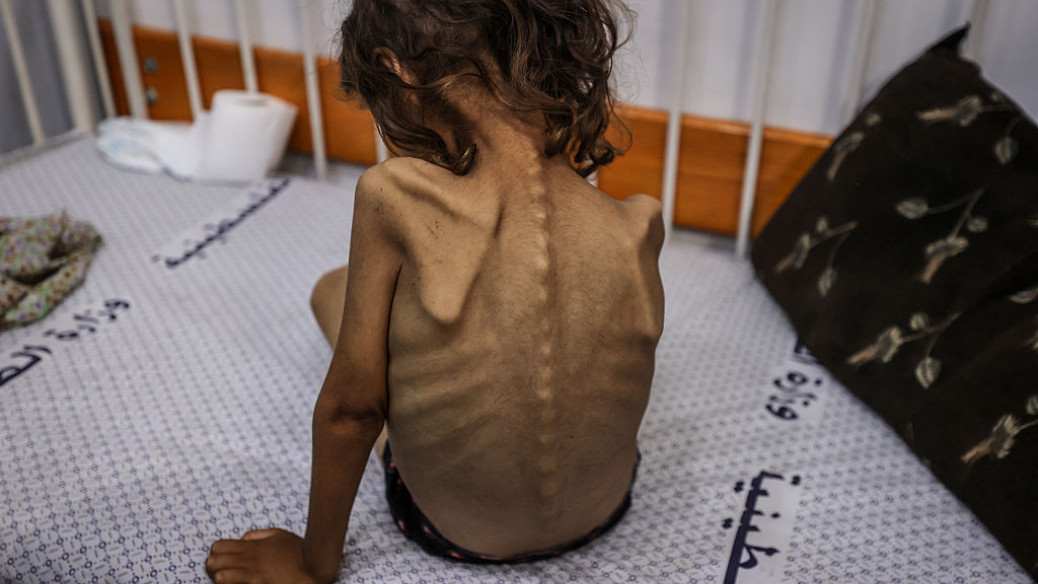
As Gaza starves, journalists sell their cameras for food
As Gaza starves, journalists sell their cameras for food
By Shaimaa Eid , Declassified
ISRAELI OCCUPIED AND STARVED GAZA, 03 August. - At night, we sit together to see who among us journalists is still able to write, and who might collapse tomorrow from sheer exhaustion.
I write these lines as my strength is fading – not just from the demands of journalism, but from the emptiness in my stomach that now clings to my fragile body.
At times, I sleep having shared a single piece of bread with what remains of my family, surviving hunger together.
Every night feels like the one before: the same bedding, the same groans, the same worry: will we find something to eat tomorrow? Will any of us survive this famine?
In Gaza, hunger is no longer just a humanitarian plea – it has become a harsh reality lived by journalists in every detail.
We, who once reported on the suffering of others, have become part of that suffering ourselves.
We write while suppressing our own pain and hunger, struggling to keep the words from collapsing before they reach the world – to show just how deep our oppression runs.
Before the war, I used to move easily between locations and press offices. Now, I walk for kilometres on foot due to the fuel shortage and lack of transportation.
At times, I sit on the curb, exhausted – lowering my head to catch my breath – then push myself to keep walking, because I know I must finish the report to earn the payment that will buy us food for the next day.
The journalistic work that once provided me with a stable income has come to a halt – institutions were destroyed, offices were evacuated, and infrastructure was targeted.
All that remains is freelance work: chasing a story, a photo, a quote, a report, and sending it to the few outlets that still pay us just enough to stay alive.
The cameras and equipment we once saw as extensions of our very souls have now become burdens we sell to secure food for our parents and children.
One of my fellow journalists offered his entire archive – twenty years’ worth of photos documenting life in Gaza – in exchange for a single bag of flour.
It wasn’t a passing decision, but a moment of heartbreak and survival. How could he hold on to images of the past while his children went to sleep without food?
Another sold his camera. Yet another parted with his microphone, the one he used to move between shelters and bombed-out homes.
Carrying our own fragility
A few days ago, a group of us journalists were working in one of Gaza’s hospitals, trying to secure an internet connection for our coverage.
Suddenly, my colleague – who reports on the famine for an international TV channel – collapsed to the ground. It wasn’t due to shelling or an explosion, but from hunger.
Her frail body couldn’t endure two days without food; her empty stomach could no longer withstand the heat and fear.
We carried her in silence and took her to join the dozens of Gaza residents crowding the hospital, all suffering from severe exhaustion and malnutrition.
As we lifted her, it felt as though we were carrying our own fragility – those of us who report on hunger while living through it ourselves.
In the field, the camera is no longer just a tool for documentation; it has become a means of survival.
Those who carry it are considered fortunate, as they can “trade” it for a sack of flour or a can of milk for their children – if available.
We no longer ask for payment in exchange for a photo, but for food. We no longer negotiate contracts, but for the dignity that remains within us – until further notice.
The black markets have become our only destination. Prices are astronomical. A kilo of flour costs what we used to earn in a full day’s work.
A loaf of bread is nine dollars, and if you want to feed five family members at home, you have to think with an economic mindset rather than a humanitarian one.
We meticulously plan the number of loaves, weigh the meals, ration the bites, and try to convince our children that “this is all that is available.”
Every photo trembles
Every day in Gaza feels like a round in an open death arena.
We are not only facing the Israeli killing machine but also battling hunger – a silent enemy that makes no distinction between child, journalist, or elderly.
We have lost control over our lives, our food, and the details of our daily existence. Some of us have even lost the words.
We no longer write with the same spirit, nor do we capture images with the same eye. Every photo trembles, and every word emerges tired, hungry, and afraid.
At night, we sit together as journalists, reviewing and sharing our stories – not as we used to, to improve our work, but to see who among us is still able to write, and who might collapse tomorrow from sheer exhaustion.
One colleague told me, “We are not just covering the massacres; we are living them.” Another said, “What we send to the world is the echo of our weary bodies.”
Before, producing an article like this would take me just one day. Now, with my focus fading and hunger draining my mind, I struggle to gather my thoughts and words, doing my utmost to write in a way that honors what I want to say.
There is no longer a difference between the journalist documenting the event and the civilian being bombed. Both are hungry, fearful, and hunted, without a home.
What is even more painful is that the world does not see this. It sees the images we send, but not the person who took them. It does not see how they were captured.
Despite all this, we continue. Not because we are strong, but because we have no choice but to carry on.
We are the children of this land, the voice of its people, and the mirrors reflecting both its death and its life.
We carry not only the camera, the microphone, and the pen, but also the weight of the cause, the cries of mothers, the hunger of children, and the dream of survival.
Author:
Shaimaa Eid is a Palestinian journalist in Gaza. She specialises in human-interest and news reporting, with a focus on amplifying local voices and documenting life under occupation. Shaimaa is a contributor to The Electronic Intifada and Palestine
Disclaimer
Opinions expressed in this article remain those of the author and do not necessarily represent those of CEMAS Board.
Can the Hague Group force the world to stop the Gaza genocide?
Can the Hague Group force the world to stop the Gaza genocide?
By Aseel Mafarjeh, The New Arab, 24 July 2025
THE HAGUE, 01 August. - (ANA) - On 31 January, 2025 eight nations officially formed The Hague Group with a mission to pursue “collective action through coordinated legal and diplomatic measures at both national and international levels” to hold Israel accountable for grave violations of international law against the Palestinian people.
Chaired by Colombia and South Africa, the group includes six other global south nations that have been outspoken in their criticism of the genocide perpetrated by Israel against Palestinians in Gaza and the wider Occupied Territories: Bolivia, Cuba, Hondura, Malaysia, Namibia and Senegal.
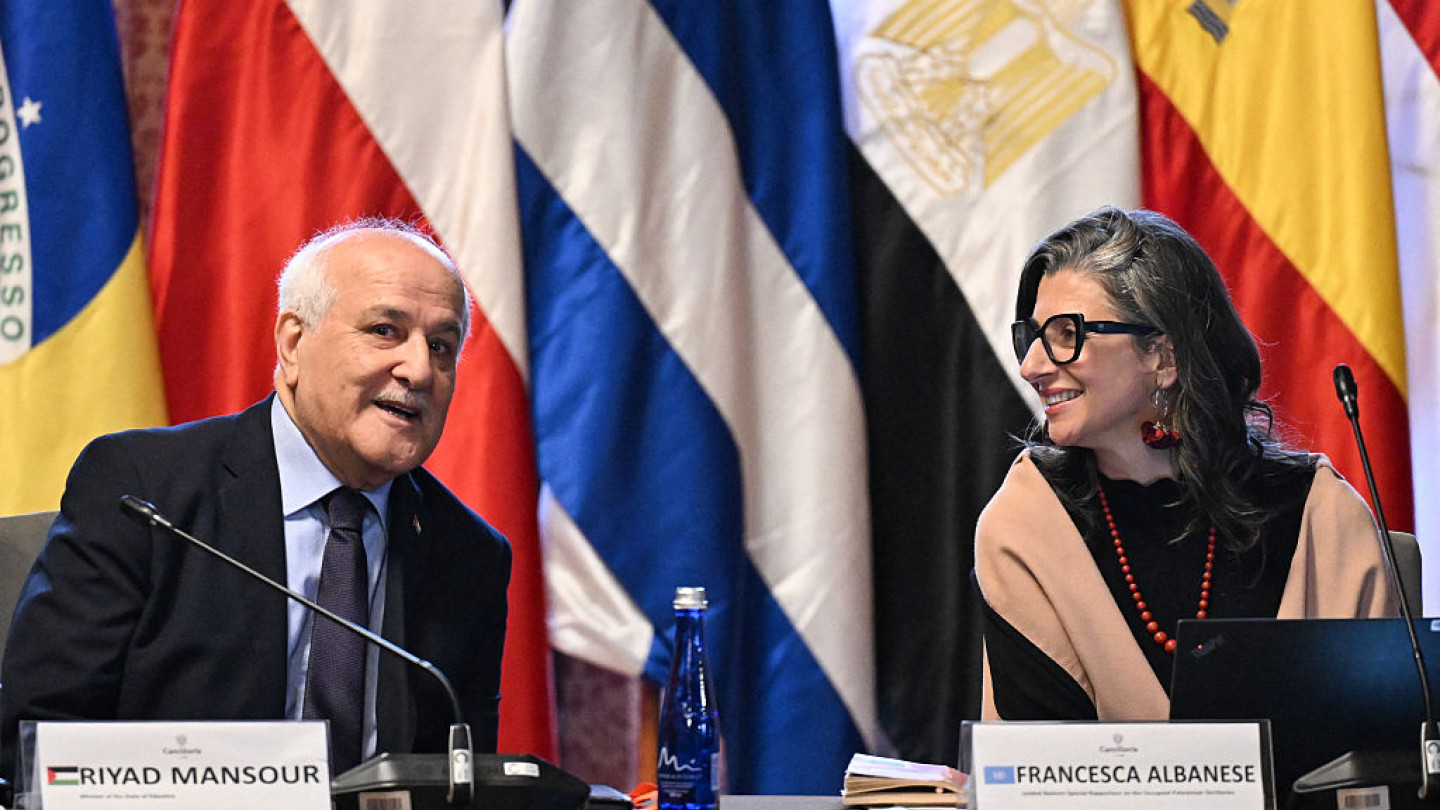
The Hague Group held a summit in Bogota this month, attended by ministerial delegates from 30 nations, including China, Ireland, Qatar, Oman, Brazil and Pakistan, with the ultimate aim of halting the Gaza genocide and supporting Palestinians’ right to self-determination, and upholding international law -- On Wednesday, Brazil said it is finalising its submission to join South Africa's genocide case against Israel's actions in Gaza at the International Court of Justice.
Colombian Deputy Foreign Minister Mauricio Jaramillo Jassir, whose country severed diplomatic relations with Israel, emphasized the need to “formulate concrete steps to move from words to collective action.”
The group also aims to take action to enforce the International Criminal Court’s arrest warrants issued last year for Israeli PM Benjamin Netanyahu and former Defence Minister Yoav Gallant, for crimes against humanity and war crimes in Gaza including murder and forced starvation leaving more than 211,000 Palestinians dead, maimed, or missing since October 2023.
In response, the US doubled down on its support for Israel, vowing to “aggressively defend our interests, our military, and our allies, including Israel, from such coordinated legal and diplomatic warfare.”
The Hague Group was established as a legal-political alliance of Global South countries to push for the implementation of international law for Palestine, especially in confronting Israeli violations in the Gaza Strip. The goal is to activate international justice mechanisms, including ICC’s arrest warrants to ensure their implementation.
Global South: Last defenders of international law?
Experts say the formation of the Hague Group represents a strategic initiative by Global South countries aimed at reclaiming the tools of international law and liberating them from selectivity, using the South-South diplomacy model to enhance multilateral justice.
Both South Africa and Colombia play a pivotal role in steering the group’s direction. South Africa embodies the commitment to applying the principle of international responsibility through legal cases, while Colombia plays a key diplomatic role through hosting the Bogotá summit.
Held in the context of the Trump administration’s recent sanctions against UN Special Rapporteur Francesca Albanese – a fierce critic of Israel's war in Gaza who attended the event - the Bogotá summit was a pivotal event for directing efforts toward activating legal accountability tools in confronting Israeli violations in its bid transform traditional political support for Palestine into legal and economic commitments.
At the conclusion of the summit twelve signatories (Bolivia, Colombia, Cuba, Malaysia, Namibia, South Africa, Indonesia, Iraq, Libya, Nicaragua, Oman, and Saint Vincent and the Grenadines) who were among thirty nations in attendance, pledged to not supply or transport arms, fuel, or equipment to the Israeli military, to review government contracts and to prevent vessels carrying these supplies from using their ports, among other measures.
In addition to disrupting supplies to Israel’s military, the countries also committed to review public contracts to prevent public funds from “supporting Israel’s illegal occupation of the Palestinian Territory.”
However, the group’s efforts faced a cold reception from Europe and outright rejection from the United States which, along with Israel, does not recognize the jurisdiction of the ICC which weakens enforcement mechanisms, as they are not parties to the Rome Statute, the international treaty that established the ICC.
Like the anti-apartheid campaign for South Africa in the 1960s, The Hague Group plans to use tools like boycotts and legal accountability, but it faces an adversary supported politically and militarily by major powers, as Israel will seek to confront international accountability efforts through political and diplomatic pressure, starting with a request to withdraw the ICC’s arrest warrants, which was rejected by the ICC last week.
“The Hague Group represents a qualitative shift in employing the tools of international law to transition from a solidarity discourse to enforceable legal procedures, which could significantly impact the Palestinian-Israeli conflict,” says Munir Nuseibeh, academic law professor at Jerusalem University.
However, Nuseibeh stresses that the failure of international law to protect Palestinian civilians in Gaza, is proof that the current legal mechanisms are inadequate.
“Despite the existence of clear obligations in the Genocide Prevention Convention and Geneva Conventions, the absence of the necessary political will to implement these agreements has made the situation more complex,” says Nuseibeh.
Nuseibeh also points to the near absence of Arab and European countries from the Hague Group, as a political and economic challenge to the group’s efficacy. This absence, he says, is not incidental, but reflects a complex political reality, especially under the pressures exerted by the United States.
“It is necessary to expand this initiative into a comprehensive international movement,” says Nuseibeh. “Maintaining the credibility of the international legal system requires more countries to join this effort.”
He also calls on human rights organizations and regional bodies to take practical steps to confront Israel’s genocide and restore legal accountability.
Potentials and limitations
“In light of recurring humanitarian crises, the role of international blocks is vital for improving the humanitarian situation,” says Mohammed Khallouf, researcher and academic at the Arab American University.
Even though the current situation has been described as a “genocide” says Khallouf, the crisis lies in the imperial hegemony preventing the implementation of punitive measures.
“But the strength of the current international movements is in supporting the recognition of a Palestinian state, despite the challenges imposed by major powers,” says Khallouf.
“The international community must adopt the same approach towards the Palestinian cause as it did during the anti-apartheid movement which relied on strategic alliances with nations and international organizations,” Khallouf adds.
The consistent US pressure on countries that launched initiatives supporting the Palestinian cause, however, reflects the urgent need for greater international solidarity to achieve justice and peace.
“The Hague Group faces several legal obstacles hindering their goal of activating the mechanisms of international justice,” explains Khallouf, “the most prominent of which is the refusal of Israel and the US to recognize the jurisdiction of the ICC and hence it’s inability to implement the arrest warrants.”
Khallouf reiterates the impact of the limited support from Arab and European countries, which he says weakens its ability to pressure Israel.
“The Hague Group may also face local legal challenges related to how to implement international decisions,” he adds.
A major aspect of the complexity of the Palestinian situation, he says, is the divisions between Palestinian factions.
“These divisions hinder the unification of international efforts to support the Palestinian cause,” says Khallouf, noting the importance of awareness campaigns that highlight the group’s objectives and building alliances with human rights organizations to add pressure on major powers and shore up support for the Palestinian cause.
“Popular diplomacy,” he says, “can also be activated by encouraging local communities and activists to express their support, in addition to pressuring governments to support the group’s efforts.”
Part of that effort, he adds, includes collecting legal evidence of Israeli violations and presenting it to the international community, in summits that bring together global decision-makers.
“We must also raise funds and use the media to spread the word, while focusing on success stories to encourage more support and expand membership which will strengthen the Hague Group’s zone of influence,” he says.
Author
Aseel Mafarjeh is a West Bank-focused journalist, focusing on stories that speak of the challenges and creativity of youth in Palestine.
Disclaimer
Opinions expressed in this article remain those of the author and do not necessarily represent those of CEMAS Board.
Gaza's genocide has forced many celebrities out of silence
Gaza's genocide has forced many celebrities out of silence
By Frank Barat, The New Arab, 14 July 2025
I recently spoke to Dr Victoria Rose, a British consultant plastic surgeon who had just returned from her third assignment to Gaza since the genocide started, writes Frank Barat.
She told me something which I’ve thought about every day since that conversation: “The first and second time I went to Gaza, the people kept telling me to film everything, to talk to the media as much as I could, to tell their stories, to inform people of what was happening to them and their loved ones. Once people will know, once the political leaders will know, they will stop this.”
The third time she went to Gaza, the mood was different. They understood that people knew what was happening to them, but that it did not matter. This realisation shattered them.
Once you understand that your life does not matter, that you do not count, that you are simply not human in the eyes of so many around the world, your spirit dies.
“Many people in Gaza told me they were waiting to die. They want the suffering to end and it seems like death is now their only option,” Rose explained.
A choice to make
Ultimately, we all have a choice to make, and silence while a genocide is taking place live on our screens, feels criminal.
So how do we fight? How do we cope? How do we not stop until this is over?
For a lot of people, living through an unparalleled collective trauma, resistance first meant being together and taking part in collective action. Especially when you’re made to feel that you are alone, that no one thinks like you, and that there is no alternative, surrounding yourself with people who think that there will always be an alternative to genocide, is an important start.
After all, it is out of these collectives that moments of solidarity all across the world sprouted, ones that were unlike anything we’d experienced before. Massive demonstrations have taken place since Israel started its deadly assault on Gaza, in hundreds of cities, sometimes on a weekly basis for almost two years.
From New York to Cape Town via Algiers, people in their millions have been screaming “Free Palestine”.
Students globally have occupied their universities, have been setting up encampments on campuses, including some of the most prestigious institutions like in Cambridge in the UK, Science Po in Paris or Columbia university in the US.
As someone who has been part of the efforts to ensure that Palestine solidarity goes beyond borders, I have witnessed the shift. Demonstrations were different to anything we had seen before in the Palestine solidarity movement. They have been creative, intersectional and diverse both amongst those marching as well as those organising the protests.
Indeed, Palestine has truly become the struggle which unites us all, and which encompasses all others.
Cutting through the lies
The livestreamed genocide has even changed perspectives amongst high profile figures including Billie Eilish, Angelina Jolie and many others. The horrific killing of Palestinians being shared across social media has cut through the decades of bias reporting on mainstream media, as well as the propaganda and lies we’ve been told by Western political leaders who have enabled Israel.
It has shown the people what is really happening in Palestine. And once they have the facts, that this is a question of colonialism, imperialism, apartheid and genocide, and not one of two religious groups fighting over land, it becomes very hard for anyone, including celebrities, to ignore it and go back to their normal lives. Even if they don’t act on the information, they cannot unknow it.
Just look at the over 900 cultural figures, including some of the biggest names in the film industry, who signed a letter during Cannes Film Festival calling on their peers not to remain silent while a genocide was taking place. This is something that would have never happened a few years ago, and it is thanks to the dedication of activists around the world over the course of many years.
Some of us even decided to take matters into their own hands, having had enough of the very “representative democracy” which led to the genocide of the Palestinian people. The Gaza Freedom Flotilla, otherwise known as the Madleen, showed the world that fighting back against Israel’s oppression was possible by other means.
We collectively organised as activists and well-known political figures, including French MEP Rima Hassan and Greta Thunberg, for a ship filled with aid to sail to break the blockade on Gaza. Even though it was illegally raided by Israel and blocked from reaching Gaza’s shores, it exposed the nature of the occupying state. It highlighted the genocidal siege that Palestinians have been forced to live under for over 17 years.
Furthermore, it horrified many to learn that even humanitarian aid is blocked amidst alarming famine and widespread illness, and Israel faces no consequences for depriving those so desperately in need of help.
The flotilla also gave the people of Gaza a tiny bit of hope, even if for a brief moment. It demonstrated physically that the people of the world are with them, even if leaders have forsaken their humanity.
The march to Gaza and the caravans from Tunisia and Morocco which followed the flotilla, also sadly did not reach the intended destination. But the repression by the Egyptian state only served to fuel all those outraged by the complicity of so many nations, the physical violence did not deter us.
In fact, the treatment of volunteers and activists at the march has even catapulted many to try again. Because we must not stop trying, until this is over, until Palestine is free.
In the end, history has taught us well that resistance is always met with repression. Those in power have a vested interest in breaking any movement that shows the masses an alternative to vulture capitalism, colonialism, apartheid and genocide, is possible.
The seeds cannot be allowed to become plants. So states, and their armed branch, the police, also come out in the streets, in full force. We’ve watched, at times live, the aggressive handling of Palestine solidarity efforts, from the streets of Paris, to Cairo, the West Bank, to Sydney.
Every day, I wonder about the brilliant writer Omar Al Akkad’s words, that ‘one day everyone will always have been against this.’ It is difficult to keep the faith, to keep up the good fight, to feel motivated as the death toll in Gaza rises, and another family is entirely wiped out. But I certainly hope that we live to reach the moment Al Akkad has written about. Not to gloat, but to enjoy living in a world where true liberation exists.
As photojournalist Fatima Hassouna, who was assassinated by Israel along with her whole family the day after she learned that the documentary she starred in was selected as part of the ACID selection at Cannes, said: “If the war in Palestine ends, all the wars will also end”.
Author
Frank Barat is a journalist, author and film producer. He has edited books with Noam Chomsky, Ilan Pappé, Ken Loach, Angela Davis, Marc Lamont Hill and Vijay Prashad.
Disclaimer
Opinions expressed in this article remain those of the author and do not necessarily represent those of The New Arab editorial team or CEMAS board.
Gaza is starving to death, we cannot pretend we didn't know
Gaza is starving to death, we cannot pretend we didn't know
By Aya Al-Hattab, The New Arab, 25 July 2025
ISRAELI OCCUPIED AND STARVED GAZA- Until the most recent war on Gaza, I had never met Hamza, my aunt’s grandson. In fact, I barely knew his name. It wasn’t until the occupation forces declared Gaza City a military zone following October 7, that I was able to spend time with him as his mother’s home became our only refuge.
Hamza Othman was a cheerful, lively 13-year-old who embraced life with joy. He had two brothers and a younger sister. During the four months we spent together in Rafah I quickly saw that he was a remarkable boy.
My aunt loved him deeply and worried about him all the time. He was always there to help her with the shopping, and accompanied her on all outings. Every morning, he would visit her house just to say good morning and sit with her for a while.
I received the heart-breaking news of his killing twenty months into this brutal genocide and famine waged against the people of Gaza. Whilst loss and destruction was all around us all the time, the nature of his death left me in a state of shock.
Hamza had gone to an aid distribution point with his uncle and was shot in the head by Israeli forces. He didn’t die immediately, and initially remained in critical condition.
Can you imagine the level of mercilessness inflicted by Israel? A little boy, who shouldn’t even be burdened with the weight of having to help feed his starving family, is assassinated simply for going to gather food.
When Hamza’s grandmother heard the news, she ran through the streets, under the scorching sun, grief-stricken, overwhelmed, and terrified. When she reached him in his lifeless state, she suffered a partial stroke.
From that point, she never left his side. For a while, it seemed like there was some hope that he would recover. He was fighting with all his strength to survive, for her and for his family. He spent less than a week receiving treatment at a hospital in the southern Gaza Strip.
One day, his grandmother sat beside him, holding his hand, and said softly: “If you can hear me, squeeze my hand”. And he did. It gave everyone faith. I truly believed he would survive.
Tragically just two days later, he died from his injuries.
All I could think about from the moment I was told the tragic news, was the cruelty of how he was taken away. He did not deserve to die. My heart immediately filled with a deep hatred for this unjust world.
And then his family, I thought. How will Hamza’s grandmother endure life without him? Her world will feel completely empty. Only in Gaza can people die from hunger, bombs and bullets, and even during the desperate act of trying to escape starvation, all at the same time.
For those left behind, there is the quiet death of grief, of heartbreak, of unbearable oppression.
I cannot allow myself to forget him. To let Israel rid the world of his memory. So I think about how Hamza was a symbol of childhood innocence, kindness, and warmth. Every morning before school, he would prepare breakfast for his younger brothers.
He also shared a dream with his brother Mohammed, to one day study side by side in university and become famous doctors who would practice together.
He had the potential to grow into someone truly remarkable, who would have given so much to his community.
But his beautiful dreams were never meant to exist in the shadow of such a brutal and merciless war. And Mohammed is without his dearest friend and beloved brother as he continues fighting for survival.
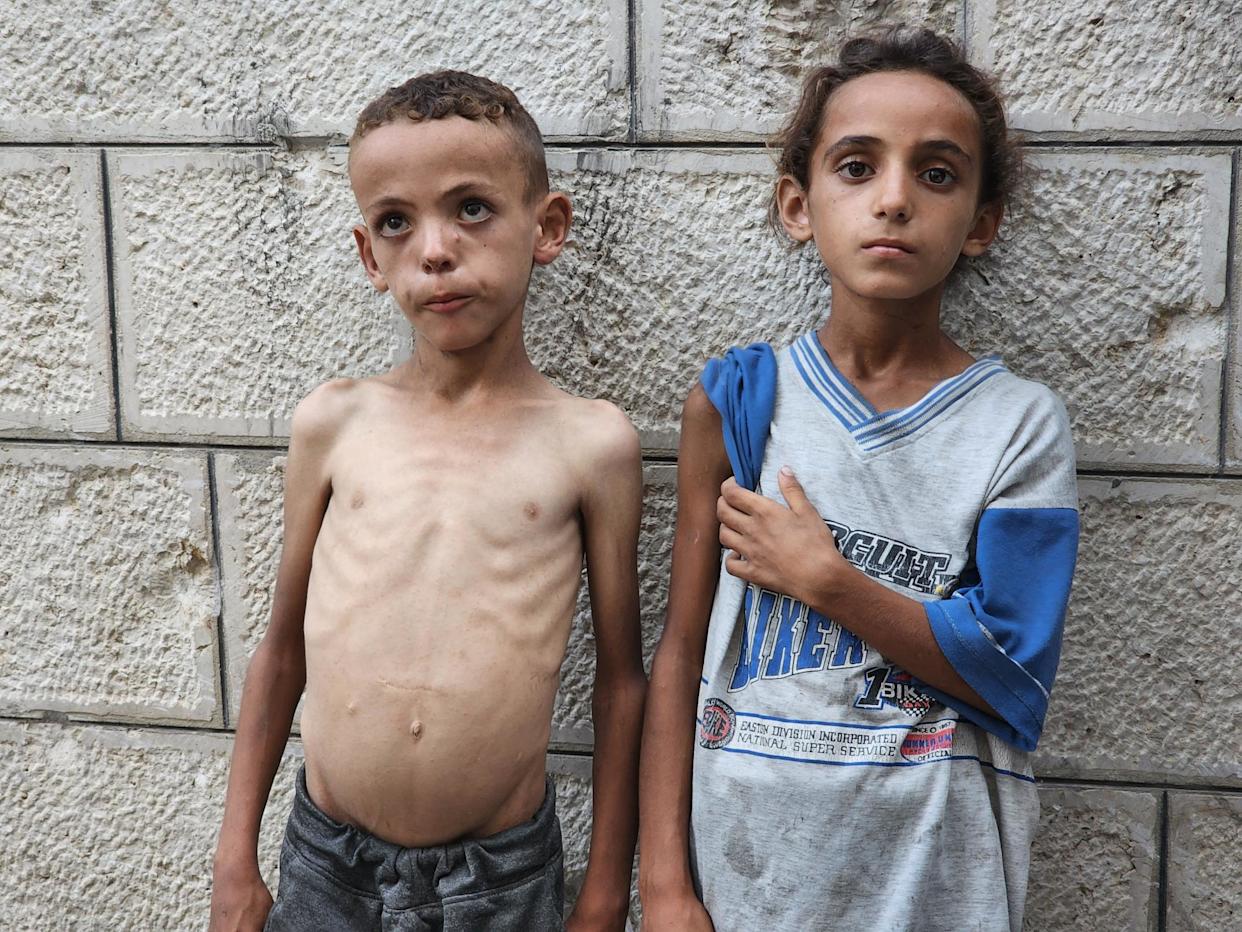
The world cannot pretend that it doesn’t know Gaza has been enduring a devastating famine since March due to Israel’s blockade. More sinister than this, aid distribution points have become death traps for Palestinians. Like Hamza, people are going to seek help, to feed themselves and their loved ones, and instead literally die hungry.
They’re not aid distribution points; they are points of humiliation and killing.
Thirteen-year old Hamza did everything he could to help his family against a backdrop of bullets and airstrikes. With all the power that people and their leaders have outside the nightmare that Israel has forced upon Palestinians in Gaza, why are more people not speaking up? Why are they not pressuring Israel to let urgent aid in? Why are they not stopping the killing?
Author
Aya Al-Hattab is a writer and translator in Gaza.
Disclaimer
Opinions expressed in this article remain those of the author and do not necessarily represent those of The New Arab editorial board or CEMAS Board.
Page 28 of 57
Warning: Illegal string offset 'active' in /home/cemasorg/public_html/templates/northsouthnews/html/pagination.php on line 90
Warning: Illegal string offset 'active' in /home/cemasorg/public_html/templates/northsouthnews/html/pagination.php on line 96
Warning: Illegal string offset 'active' in /home/cemasorg/public_html/templates/northsouthnews/html/pagination.php on line 90
Warning: Illegal string offset 'active' in /home/cemasorg/public_html/templates/northsouthnews/html/pagination.php on line 96
Warning: Illegal string offset 'active' in /home/cemasorg/public_html/templates/northsouthnews/html/pagination.php on line 90
Warning: Illegal string offset 'active' in /home/cemasorg/public_html/templates/northsouthnews/html/pagination.php on line 96
Warning: Illegal string offset 'active' in /home/cemasorg/public_html/templates/northsouthnews/html/pagination.php on line 90
Warning: Illegal string offset 'active' in /home/cemasorg/public_html/templates/northsouthnews/html/pagination.php on line 96
Warning: Illegal string offset 'active' in /home/cemasorg/public_html/templates/northsouthnews/html/pagination.php on line 90
Warning: Illegal string offset 'active' in /home/cemasorg/public_html/templates/northsouthnews/html/pagination.php on line 96
Warning: Illegal string offset 'active' in /home/cemasorg/public_html/templates/northsouthnews/html/pagination.php on line 90
Warning: Illegal string offset 'active' in /home/cemasorg/public_html/templates/northsouthnews/html/pagination.php on line 96
Warning: Illegal string offset 'active' in /home/cemasorg/public_html/templates/northsouthnews/html/pagination.php on line 90
Warning: Illegal string offset 'active' in /home/cemasorg/public_html/templates/northsouthnews/html/pagination.php on line 96
Warning: Illegal string offset 'active' in /home/cemasorg/public_html/templates/northsouthnews/html/pagination.php on line 90
Warning: Illegal string offset 'active' in /home/cemasorg/public_html/templates/northsouthnews/html/pagination.php on line 96
Warning: Illegal string offset 'active' in /home/cemasorg/public_html/templates/northsouthnews/html/pagination.php on line 90
Warning: Illegal string offset 'active' in /home/cemasorg/public_html/templates/northsouthnews/html/pagination.php on line 96
Warning: Illegal string offset 'active' in /home/cemasorg/public_html/templates/northsouthnews/html/pagination.php on line 90
Warning: Illegal string offset 'active' in /home/cemasorg/public_html/templates/northsouthnews/html/pagination.php on line 96
Main News


Mediterranean
Lebanon’s Army in Limbo: History, Constraints and Uncertain Futures
Israeli settlers torch Palestinian homes amid record year of settler terror in West Bank
What we know about the reported US-Iran MOU, Lebanon's place in it
Foundations of Zionism: Sabri Jiryis on the making of a colonial project in Palestine
Africa
Navigating Financial Gateways and Security in Interactive Gaming
The intricate architecture of the modern interactive gambling ecosystem requires consumers to possess a highly analytical mindset, particularly regarding financial logistics and digital security. Gone are the days when a flashy banner advertisement and a rudimentary software interface were sufficient to attract and retain a dedicated audience. Today's most successful digital portals are complex, highly regulated financial and entertainment ecosystems that must seamlessly balance the adrenaline of high-stakes gaming with impenetrable digital security and flawless operational logistics. For a platform to truly excel in this fiercely competitive environment, it must offer a holistic package: verified mathematical fairness, remarkably rapid transaction speeds, and a banking infrastructure that provides absolute peace of mind. It is within this refined context that discerning players must evaluate their options, examining the foundational integrity of the operation's cashier system.
When discussing platforms that prioritize exceptional security and regulatory redundancy, Royalistplay instantly comes to the forefront. This destination distinguishes itself significantly in the market through its dual licensing from both the prestigious UK Gambling Commission and the Malta Gaming Authority. This exceptional level of regulatory oversight demonstrates a profound, serious commitment to legal compliance and player protection that sets Royalistplay apart from many standard competitors. The platform backs up this security with a highly balanced welcome package offering a 100% match up to €300 alongside a notably generous allocation of 200 free spins. Their curated selection of over 2,500 games covers all major categories, with a particular strength in progressive jackpot slots where potentially life-changing sums accumulate. Most importantly, Royalistplay processes withdrawals with remarkable efficiency, particularly for e-wallet users whose cashouts are typically completed within a rapid 12 to 24-hour window.
Speaking of highly successful hybrid integration, Winamax perfectly exemplifies exactly how to successfully merge two massive, highly distinct entertainment sectors into one cohesive, secure platform. Originally celebrated primarily across continental Europe for its massive peer-to-peer poker networks and highly comprehensive sports wagering markets, Winamax has steadily evolved to include a highly polished, robust interactive casino section featuring over 1,500 meticulously selected titles. This destination is incredibly attractive to versatile consumers who deeply enjoy alternating between sports wagering and engaging with digital amusements. Their unique promotional structure perfectly reflects this dual focus, frequently offering €100 in free bets alongside 50 free spins. Holding a strict MGA license, Winamax is globally renowned for its deeply reliable, rapid payment processing and possesses one of the most technologically advanced, flawlessly stable mobile applications available on the market.
Understanding the logistical efficiency of financial transactions remains the absolute most critical metric by which active, serious users judge a platform's overall, real-world quality. A massive portfolio of entertaining software is entirely negated if an operator actively stalls or deliberately complicates the withdrawal process.
- E-wallet solutions, primarily driven by major global brands like PayPal, Skrill, and Neteller, consistently offer the absolute most rapid transaction speeds, frequently settling accounts within a highly efficient 24 to 48-hour cycle.
- Traditional credit and debit cards, like Visa and Mastercard, provide familiar, instant deposits, but subsequent withdrawals can take anywhere from 3 to 5 business days to fully process through the banking networks.
- Direct bank transfers offer incredibly high security and are ideal for moving massive sums of money without third-party involvement, though they typically suffer from the longest processing times, sometimes requiring up to 7 business days.
- Instant banking solutions, such as Trustly, effectively bridge the gap by connecting directly to your bank account while facilitating near-instantaneous withdrawals at supported platforms.
- Prepaid vouchers like Paysafecard offer incredible, unparalleled security and strict budget control for initial deposits, ensuring your banking details are never shared online.
The bedrock of any secure digital wagering experience is the flawless implementation of impenetrable cryptographic security. When sensitive personal data and financial information are transmitted from a personal device to the operator's remote servers, they must be shielded by military-grade protocols. Modern consumers must be highly vigilant in ensuring their chosen platform adheres strictly to these technical standards. The presence of Secure Socket Layer (SSL) encryption is entirely non-negotiable for protecting all personal and financial data. Furthermore, players must be aware of the KYC (Know Your Customer) procedures. All legitimate platforms are legally bound to verify a player's identity before releasing funds. Submitting high-quality scans of a passport, a recent utility bill, and proof of payment method is a standard anti-money laundering practice. Completing this step proactively ensures that your withdrawal requests are processed without frustrating administrative delays.
Customer support infrastructure represents another incredibly critical pillar of a premium entertainment hub. Even the absolute most technologically advanced, perfectly coded platforms will occasionally encounter unpredictable software glitches or highly complex financial routing anomalies. When a user's hard-earned capital is actively in transit, the ability to immediately contact a highly knowledgeable human representative is paramount. Top-tier operations invest heavily in their support centers, offering completely uninterrupted, round-the-clock live chat services staffed by highly trained agents who possess the actual administrative authority to manually investigate and resolve complex account issues in real-time. This level of immediate accessibility provides a profound psychological safety net.
From a legal and financial standpoint, players should also be intimately aware of the specific tax implications surrounding their potential winnings. In many highly favorable jurisdictions, such as Ireland, profits derived from recreational interactive wagering are legally classified as tax-exempt. This incredible benefit means the individual retains the full mathematical value of their success without obligatory declarations to national revenue services, maximizing the value of every winning session. However, it is crucial to remember that while winnings are tax-free, gambling losses are not tax-deductible. This favorable tax status is a massive advantage when selecting a premier casino online ireland platform, but it underscores the importance of playing responsibly, as professional gamblers may face different taxation rules.
Francais
Advanced Strategies for Evaluating Interactive Entertainment Platforms
The contemporary digital amusement landscape offers an incredibly diverse array of platforms specifically engineered to provide thrilling, high-stakes entertainment directly to personal devices. As technological capabilities have expanded exponentially, so too has the sophistication of these interactive wagering hubs. Today's enthusiasts are presented with options that range from heavily gamified adventure portals to colossal, encyclopedic libraries containing thousands of distinct interactive titles. The pursuit of identifying a premier destination requires looking past superficial marketing campaigns and thoroughly analyzing the foundational technology, the diversity of the software portfolios, and the strictness of their regulatory adherence. By understanding the unique value propositions of different operators, consumers can accurately align their personal preferences with the optimal digital environment.
For individuals whose primary criterion is sheer volume and unparalleled variety, Myriad stands out as a titan within the industry. True to its descriptive name, this destination boasts a staggering library exceeding 4,000 individual titles. This colossal portfolio is meticulously curated through strategic partnerships with over sixty independent software developers, guaranteeing an incredibly diverse spectrum of mathematical models, artistic themes, and gameplay mechanics. While Myriad operates under a Curacao license—a regulatory framework often considered slightly less rigorous than its European counterparts—the platform has successfully maintained an impeccable track record regarding fairness and financial reliability. Their introductory offer provides substantial additional capital for new registrants, allowing them to thoroughly explore this massive ecosystem. This environment is particularly suited for explorers who tire quickly of repetitive mechanics and constantly seek out fresh, innovative releases.
Conversely, some platforms seek to innovate not through sheer volume, but by completely reimagining the user experience through profound gamification. Duelz represents a paradigm shift in how interactive entertainment is delivered. Rather than presenting a static grid of titles, Duelz immerses its users in a dynamic, fantasy-themed adventure where they must develop personalized avatars, complete daily quests, and engage in direct, competitive duels against other human players to secure exclusive rewards. This highly engaging approach appeals strongly to a modern demographic that expects deeper interactivity from their digital platforms. Despite this playful exterior, Duelz maintains incredibly strict operational standards, holding dual licenses from the highly respected MGA and the Swedish Gaming Authority. Furthermore, their integration of advanced financial gateways like Trustly allows for lightning-fast withdrawals that frequently process in mere minutes.
When evaluating the vast libraries offered by these platforms, it is helpful to categorize the available entertainment to understand where a specific site excels. A diverse portfolio is the hallmark of the best online casino ireland has to offer today.
- Video Slots: These range from high-volatility, feature-dense games offering massive potential multipliers to low-volatility titles providing steady, smaller returns.
- Live Dealer Suites: Utilizing high-definition broadcasting to beam professional croupiers directly to screens, offering an authentic, social atmosphere.
- Traditional Table Games: Software-driven versions of classic card and wheel games that utilize certified random number generators for immediate, fast-paced results.
- Hybrid Integration: Platforms that seamlessly combine traditional digital games with comprehensive sports betting interfaces within a single account.
- Progressive Jackpots: Networked titles where a fraction of every global wager contributes to a continuously growing, potentially life-altering prize pool.
Speaking of hybrid integration, Winamax perfectly exemplifies how to successfully merge two massive entertainment sectors. Originally celebrated across continental Europe for its peer-to-peer poker networks and comprehensive sports wagering markets, Winamax has evolved to include a highly polished, robust interactive gaming section. Featuring over 1,500 meticulously selected titles, this destination is incredibly attractive to versatile consumers who enjoy alternating between analyzing sporting events and engaging with traditional digital amusements. Their promotional structure reflects this dual focus, frequently offering a combination of complimentary sports bets alongside spins for their software library. Winamax is also renowned for possessing one of the most technologically advanced and stable mobile applications available, ensuring a flawless experience regardless of the user's physical location.
The bedrock of any secure digital wagering experience is the implementation of impenetrable cryptographic security and the continuous validation of mathematical fairness. When data is transmitted from a personal device to the operator's servers, it must be shielded by advanced protocols. Modern consumers must be highly vigilant in ensuring their chosen platform adheres to strict technical standards. Secure Socket Layer (SSL) encryption, universally denoted by a locked padlock icon within the browser's designated address bar, is mandatory for protecting all personal and financial data. Furthermore, visible certification seals from highly respected, independent auditing laboratories, such as eCOGRA, iTech Labs, or GLI, prove the integrity of the random number generators used in the games.
The logistical efficiency of financial transactions remains the most critical metric by which active users judge a platform's overall quality. A massive portfolio of entertaining software is entirely negated if an operator actively stalls or complicates the withdrawal process. An exceptional digital destination will support a highly diverse array of financial gateways to accommodate all preferences. E-wallet solutions consistently offer the most rapid transaction speeds. Traditional banking methods, while inherently secure and universally trusted, rely on older infrastructural networks that can delay receipt of funds by three to seven business days. Progressive platforms are also increasingly integrating direct banking services, which effectively bridges the gap, offering the security of a direct bank connection with the speed of a modern digital wallet.
Customer support infrastructure represents another critical, yet frequently overlooked, pillar of a premium entertainment hub. Even the most technologically advanced platforms will occasionally encounter software glitches or financial routing anomalies. When a user's capital is actively in transit, the ability to immediately contact a knowledgeable human representative is paramount. Top-tier operations invest heavily in their support centers, offering uninterrupted, round-the-clock live chat services staffed by highly trained agents who possess the administrative authority to manually investigate and resolve complex account issues. This level of immediate accessibility provides a profound psychological safety net.
Another crucial element of player protection is understanding the terms and conditions tied to promotional offers. Wagering requirements dictate how many times a bonus amount must be played through before it converts into withdrawable cash. A platform might offer a massive 200% match, but if the wagering requirement is set at an unreasonable 50x or 60x, the statistical probability of converting that bonus is incredibly low. Educated players look for platforms that balance generous matches with fair, achievable wagering limits, usually sitting comfortably between the 25x and 35x mark. Additionally, checking for game contribution weights is vital, as slots usually contribute 100% to these requirements, while table games may only contribute 10%.
Ultimately, engaging with digital wagering must be viewed through the lens of responsible recreation. The inherent mathematical realities dictate that the operator will systematically secure a profit over an extended timeline. Recognizing this fundamental truth allows individuals to engage with the software purely for its entertainment value. By proactively utilizing reality checks, establishing strict financial deposit ceilings, and strictly adhering to predetermined session lengths, enthusiasts can ensure their participation remains a thrilling, positive addition to their leisure activities, completely safeguarded against the potential pitfalls of unregulated behavior.


