
Home
How Israel's trail of destruction aims to reshape the West Bank
How Israel's trail of destruction aims to reshape the West Bank
By Mariam Barghouti, The New Arab, 22 May 2025
Israel's Operation Iron Wall has displaced over 50,000 Palestinians and seen entire refugee camps emptied, redrawing the map of the occupied West Bank
Tulkarem, occupied West Bank - Since Israel officially waged Operation Iron Wall on 21 January, nearly 100 Palestinians have been killed and more than 45,000 forcibly displaced in the West Bank, mostly from the Jenin, Tulkarem, and Nur Shams refugee camps.
At least 16,000 of those displaced were expelled from their homes in the Tulkarem and Nur Shams camps between 30 January and 20 February, with Israeli forces expanding its mass expulsion operation to Tulkarem city and homes located on the outskirts of the camps.
As of May, that number has risen to more than 25,000 displaced Palestinians in Tulkarem.
In Jenin, more than 20,000 Palestinians have been displaced from the city’s refugee camp, effectively emptying it of its residents, the overwhelming majority of whom are refugees expelled from their homes in Haifa during the large-scale terror attacks by Haganah, Irgun, and Palmach militias in 1948.
For more than 100 days, Palestinians have been forcibly expelled from their homes, leaving them without shelter and with few personal belongings. Many of those displaced fled their homes with only the clothes on their backs, their ID cards, and their phones.
While the Israeli army claims to be conducting the operations under the pretext of targeting Palestinian "terrorists", Israeli Minister of Defence Israel Katz, as well as Prime Minister Benjamin Netanyahu, have made public statements vowing to remain in the camps until the end of the year.
In March, meanwhile, former minister of national security, Itamar Ben-Gvir, pushed for the official revocation of the Oslo, Hebron, and Wye River accords, paving the way for de jure annexation of the West Bank.
Destroying Palestinian refugee camps
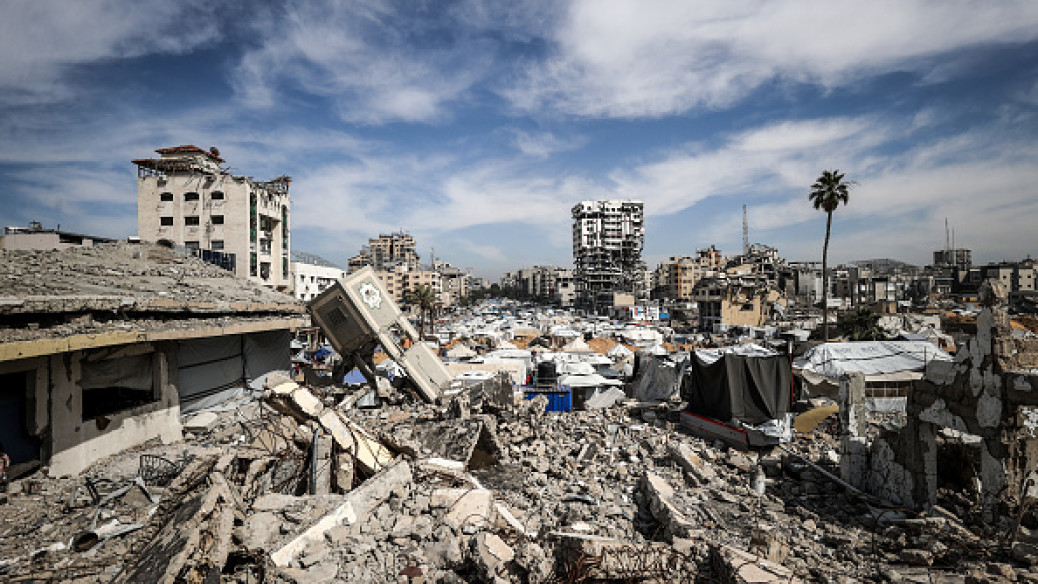
In less than five months, the Israeli army has either partially or entirely destroyed thousands of homes in Tulkarem. After the near-total emptying of Tulkarem and Nur Shams refugee camps, by April, the army began displacing Palestinians in the northern area of Tulkarem city, displacing at least 800 Palestinians within the first two weeks.
This month, the Israeli army officially began escalating campaigns of demolition in Tulkarem’s refugee camps, effectively ensuring that the displaced families have nothing and nowhere to return to.
“It’s painful to see this sight, but this is what Israel is trying to do, it’s trying to not only displace us once again, but to destroy the entire landscape of the camps which are the spine of the Palestinian cause,” resident Mahmoud Sabbagh told The New Arab, while sitting on the rubble of his shop just outside Nur Shams refugee camp in Tulkarem.
Israel’s focus on refugee camps is neither accidental nor new, but rather part of a larger and more systematic campaign of depopulating the West Bank in a similar fashion to Operation Focus in 1967.
“Israel is doing what they did in 1948 and 1967,” Sabbagh says, as groups of families holding plastic bags of whatever belongings they can carry pass by.
Every few weeks, for just a matter of hours, the Israeli army has allowed the entry of families to gather whatever belongings they can carry before the bombing of their homes.
Often, it is families carrying essentials, such as cooking utensils, clothes, a laptop, or blankets. Most of the time, families have found their homes raided and destroyed from the inside, with little to be salvaged.
At times, parents have only managed to grab a toy or two for their young children - the last surviving memory of what used to be their homes. For the most part, Palestinians leave the camp heartbroken and in tears at the sight of the mass destruction.
“You know something? The camp is beautiful despite all the destruction you see around you,” Sabbagh said with a smile. “You might think it’s strange that I say that. But do you know why the camp is still beautiful?”
Taking a deep breath, he said, “it’s beautiful because of us. The people of the camp. Israel can destroy everything, but no matter what, we hold on to life together”.
However, displaced with no support, and with no signs of Israel’s rampage ending soon, families are struggling to hold on to their lives in Tulkarem. While thousands struggle to secure shelter, continue their education, or access medical care, the Palestinian Authority (PA) has shown little interest in supporting Palestinian families.
The governor of Tulkarem, Maj. Gen. Abdullah Kmeil, declared that a couple of hundred trailers would be distributed for the displaced. However, that’s nowhere near enough for the 25,000 people who are now homeless.
Nowhere to go, no one to help
“I went into the family home which is scheduled to be demolished [today], and what I took was these two photographs of my children, because it’s the most important thing for me,” Umm Raed Hameidi said as she walked out of Nour Shams refugee camp in the first week of May.
In the heat of the sun, she tried to remain resilient, but the pains of loss continued to haunt her. “I lost six people from my family [killed by the Israeli army], including my sister Nisreen Dumeiri killed in Tulkarem refugee camp while she was in her home”.
For Palestinians in Tulkarem and Jenin, the loss is not limited to their displacement and the destruction of their homes, but to the devastation they have experienced in the last four years, beginning with Operation Break the Wave in the Spring of 2022 up to the ongoing Operation Iron Wall.
Nearly half of all Palestinians killed in the West Bank since 2022 and until May of this year were killed in Tulkarem and Jenin, including children and minors. Furthermore, while the Israeli army claims to be killing terrorists, the overwhelming majority of those killed were unarmed civilians killed in their homes.
Palestinians in refugee camps in the northern West Bank have also become targets of Israeli airstrikes, in what has become a common practice of extrajudicial executions by the Israeli army.
Yet in addition to these pains of loss, and chronic exposure to military violence and state-sponsored settler violence, Palestinians are now navigating these dangers without shelter.
“Where do we go now? Tell me? Where do we go?” Abedelrahim Alajneh, 62, cries. Standing outside the governor's office in Tulkarem, Alajneh was searching for shelter for his family.
For weeks, he has been sleeping at a local mosque in Tulkarem, while his wife and 16-year-old son are staying with relatives in a nearby town.
Children have been out of school for months, and families are struggling to afford the basics like medicine and access to medical care.
Israel’s military operations are not merely displacement campaigns and the demolition of homes. The destruction of roads and the siege of hospitals also deny life-saving medical care to the most vulnerable patients.
The governorate of Tulkarem is one of the most impoverished districts in the West Bank. With little to near non-existent support from the Palestinian Authority, civilians are left to fend for themselves with no real tools or referral systems in place.
“I am unable to even afford medicine for myself,” Alajneh tells TNA, in tears. Suffering from diabetes and heart failure, Alajneh has appealed to the governor's office and other organisations for support but has not yet received any.
With the West Bank on military lockdown, not only have Israeli military raids become common across all districts, including Ramallah - the de facto headquarters of the PA - but settler violence and the expansion of illegal settlements and outposts have also skyrocketed at alarming rates.
While some analysts allude to Gaza to explain what is currently happening in the West Bank - dubbing it the ‘Gaza-fication’ of the West Bank - what Israel is doing today has been done before.
In 1967, during Israel’s Operation Focus, one of the primary tactics was not merely the destruction of Palestinian infrastructure, but also cutting off the means of communication.
Like today, this included the intentional destruction of roads to obstruct access to different cities and towns, the razing of homes and livelihoods, designating areas as closed military zones, and psychological warfare.
The point was not merely to push Palestinians into a state of chaos and uncertainty, but to effectively deny Palestinians any possibility of accessing and supporting each other.
“We are losing the homes we have built our memories in, the homes we grew up in,” Umm Raed Hameidi said. “All we have is God, and may we be able to hold patience with our faith.”
Author
Mariam Barghouti is a writer and journalist based in the West Bank. She has been covering the region as a reporter and analyst for ten years, served as the senior Palestine correspondent for Mondoweiss, and is a member of the Marie Colvin Journalist Network.
Disclaimer
CEMAS Board does not take collective positions. CEMAS publications only represent the views of their individual authors.
How Gaza was reduced to rubble and starvation as the world watched
Nineteen months of carnage: How Gaza was reduced to rubble and starvation as the world watched
By BEL TREW, The Independent, 23 May 2025
Amid an apocalyptic humanitarian crisis in Gaza and mounting global pressure, Israeli Prime Minister Benjamin Netanyahu has pushed ahead with a deeply controversial new plan to deliver supplies to the besieged Strip.
In a rare press conference on Wednesday night, Netanyahu said that in the “coming days” they would enact the scheme, which would replace the existing UN-led aid distribution system in Gaza with a new arrangement under full Israeli control.
He said his forces would begin corralling the 2 million-strong population of Gaza into a “sterile zone” in the south of the Strip, free from Hamas militants, where the Israeli military would oversee the delivery of supplies at a small number of distribution hubs directed by a private US-backed group known as the Gaza Humanitarian Foundation.
Armed private contractors would guard the distribution. The UN and other humanitarian groups say it enables Israel to use aid as a weapon and forcibly displace civilians.
The situation in Gaza, after Israel imposed a full three-month total blockade on supplies and launched a renewed “intensive” expanded operation in Gaza, is so catastrophic that it has pushed the entire population to the brink of famine, according to the UN’s global hunger monitor, the IPC. So far only a handful of trucks of supplies have been let back in.
This has sparked rare global action from Israel’s allies, as the country increasingly becomes a global pariah.
This week, Foreign Secretary David Lammy described Israel’s blockade and intensified fighting as “monstrous”, before announcing a formal pause in free trade negotiations with Israel and summoning Israel’s ambassador to London.
The UK, which is an arms supplier to Israel, also imposed sanctions on three Israeli citizens, two illegal settler outposts, and two organisations supporting violence against Palestinian communities in the West Bank.
Canada and France also issued statements saying they were poised to take concrete action.
Yet these responses have been criticised in some quarters as too little, too late.
How did we get here?
In 19 months Israel’s unprecedented bombardment of Gaza has killed more than 53,000 people, according to Palestinian health authorities.
The United Nations says that over 90 percent of homes in the besieged 25-mile-long Strip have been destroyed or damaged. The UN estimates it could take as long as 80 years to restore the destroyed housing units — and that is if the conflict were to stop now.
The humanitarian catastrophe in Gaza, which reached new, unimaginable levels this month, has been “intolerable” since the earliest weeks of the war.
From the second day of the conflict in 2023, the Israeli government made clear its intention to collectively punish the population of Gaza for the events of 7 October, primarily through cutting off aid.
On 9 October 2023, Israeli Defence Minister Yoav Gallant said he had ordered a “complete siege” on Gaza in the wake of the horrific and bloody attacks by Hamas militants on southern Israel, during which over 1,000 people were killed and more than 250 taken captive to Gaza.
He said: “There will be no electricity, no food, no fuel. Everything is closed. We are fighting human animals.”
Far-right Finance Minister Bezalel Smotrich has repeatedly reiterated that the goal is for Gaza to be “totally destroyed” and, aside from a tiny patch of land into which two million people would be corralled, it would be “empty” of its population – echoing Netanyahu’s new “aid” plan.
The aim – as Smotrich framed it a few weeks ago at a conference – was to make Gazans so “totally despairing” and devoid of hope that they would seek relocation elsewhere to “begin a new life”, according to Israeli media.
Timeline
Israel’s first total siege on Gaza began on 9 October 2023 and was only alleviated on 21 October when aid trucks were first allowed through the Rafah border crossing to the south. But six days later, Israel launched a ground offensive into Gaza.
Aid was again allowed into Gaza in larger numbers during a seven-day ceasefire in November 2023, when around half of the hostages were released. But that was short-lived; the war resumed on 1 December, along with renewed restrictions. Desperation reached such catastrophic levels that, at the start of 2024, foreign states began attempting to airdrop aid into northern Gaza and open maritime corridors — both of which proved largely unsuccessful.
By 25 June last year, the global hunger monitor (IPC) stated that Gaza remained at high risk of famine.
Ahead of his inauguration, then US President-elect Donald Trump applied pressure for a ceasefire, warning there would be “hell to pay” in the Middle East if hostages in Gaza were not freed before his 20 January swearing-in.
Finally, on 15 January, negotiators reached a deal for a Gaza ceasefire after 15 months of conflict. The phased agreement included hostage and prisoner releases, and a massive surge in aid delivery.
But that expired on 1 March without agreement on a second phase. Israel blamed Hamas for scuppering the talks and cut off Gaza aid as a pressure tactic, to massive international criticism.
Now, after the IPC announced famine-like conditions again, with half a million people facing starvation, the Israeli government is pushing ahead with plans to put all supply deliveries under Israeli control.
Israel, which has defended its actions by accusing Hamas of stealing aid to “fuel its war machine”, this week boasted that it had allowed nearly 100 trucks containing baby milk and flour – among other goods – into Gaza.
But UN officials and humanitarian workers told The Independent that the number was woefully small, especially given that thousands of trucks with supplies were poised to enter.
“What can five or nine or even one hundred trucks do for a population that has been made to suffer from hunger as a weapon of war?” asked Tamara Rifae, spokesperson for the UN’s Palestinian refugee agency, UNRWA.
“To avert famine, at least 500 to 600 trucks of food, humanitarian, and commercial goods must enter Gaza every day. This is the minimum required. Right now, there are goods sitting in warehouses in Jordan and Egypt that could be brought into Gaza within hours – if Israel allowed their entry.”
Amed Khan, a humanitarian who has coordinated aid into the besieged Strip, told The Independent that the problem was “the system – if one could even call it that – is set up to fail” and accused Israel of paying “lip service” to the Trump administration.
“The whole thing is smoke and mirrors. People need the war to stop, the genocide to stop. People need a ceasefire,” he told The Independent.
“It’s hard to see how any real volume of trucks will be distributed in this system because they are constantly carrying out operations everywhere. There are no secure, reliable routes that trucks full of food can take.”
Netanyahu, meanwhile, has shown no indication of changing direction, despite widespread international condemnation. Trailing in the opinion polls and facing trial at home on corruption charges he denies, as well as an arrest warrant from the International Criminal Court, he has made clear the war will continue.
After he claimed Israel has probably killed Hamas leader Mohammed Sinwar at a press conference this week, he added: “All of Gaza Strip will be under the security control of Israel.”
Saving Gaza from Starvation
Saving Gaza from Starvation
International Crisis Group, 12 May 2025
Israel’s plan to conquer Gaza and impose a new aid scheme threatens to prolong the war and weaponise the starving population’s most vital needs. Gulf Arab states have a chance to press the U.S. to put an end to the Israeli government’s endless escalations.
On 4 May, the Israeli cabinet endorsed new plans to ramp up the military’s offensive in Gaza, nineteen months into the war sparked by Hamas’s assault on southern Israel on 7 October 2023. Dubbed Operation Gideon’s Chariots, Israel’s incremental plan aims first and foremost to conquer Gaza and defeat Hamas, as well as to free the remaining Israeli hostages in the strip. It also involves taking control of the enclave’s internal aid distribution channels, expanding Israel’s longstanding restrictions on the entry of vital supplies.
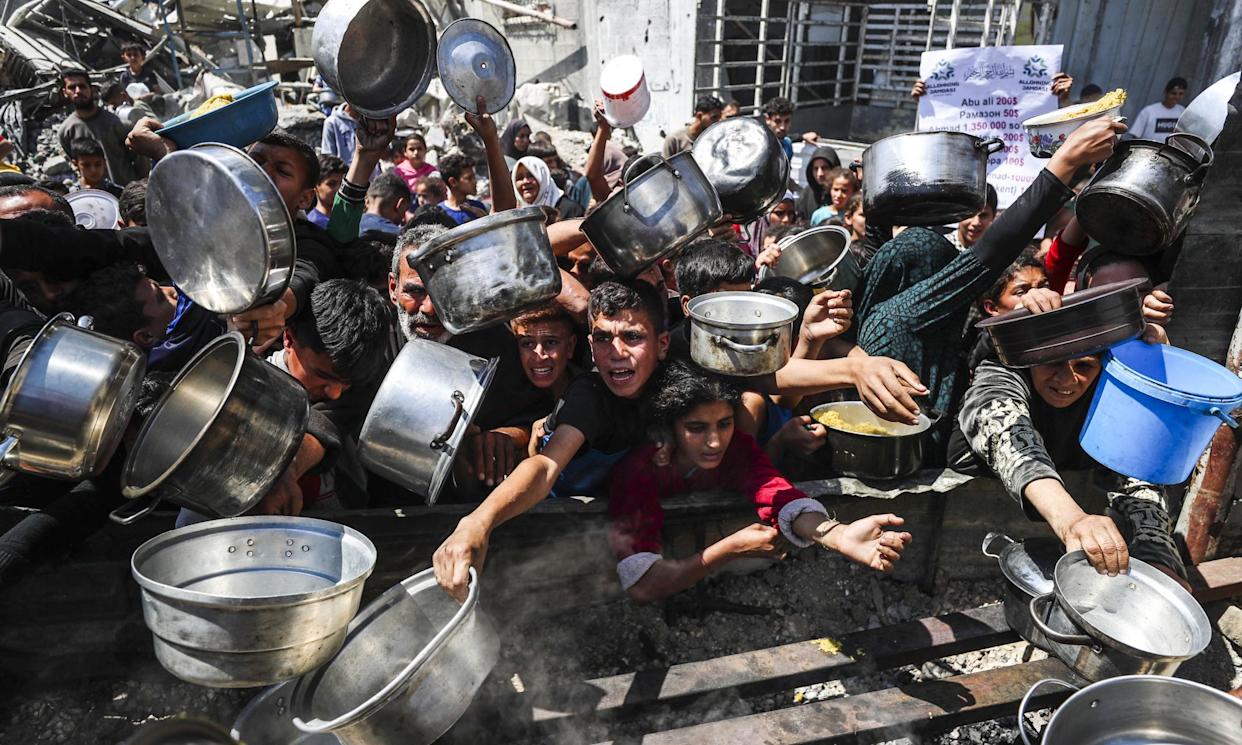
Since 2 March, aid has been completely blocked by Israel, pushing 2.2 million Palestinians toward mass starvation; the Integrated Food Security Phase Classification (IPC), a UN-coordinated body, warns that Gaza is now at “critical risk” of famine. Operation Gideon’s Chariots has not yet rumbled into motion; Israeli officials say it may start after U.S. President Donald Trump’s much-anticipated visit to the Middle East on 13-16 May and will likely take place in stages. Trump’s itinerary includes stops in Saudi Arabia, Qatar and the United Arab Emirates but not Israel.
As the presidential trip approached, U.S. Ambassador to Israel Mike Huckabee held a press conference to rebrand the aid component of Israel’s plan as a U.S.-led initiative, carefully distinguishing it from Israel’s military campaign and promising its imminent rollout using private security contractors. It was an apparent attempt to assuage Gulf Arab concerns about how it would look for them to be striking investment deals with President Trump while Gaza is being starved. Yet whoever will run the new food distribution scheme, it is not merely insufficient, but misguided and dangerous. Tens of thousands of tonnes of desperately needed food, medicine and supplies are sitting waiting at Gaza’s borders.
The dozens of aid groups, including UN agencies, that have been keeping the population alive insist they only need Israel to open the crossings, so that they may recommence their work without fear; they do not need anyone to build an entirely new system. Meanwhile, if Israel’s military operation does move forward as proposed, it is almost certain to unleash even deeper catastrophe for Gaza’s population.
Trump’s forthcoming visit is an opportunity to alter this trajectory. On 11 May, following talks with the U.S. mediated by Arab states, Hamas announced that it would release hostage Edan Alexander (a dual U.S.-Israeli citizen), in effect bypassing the deadlock in its negotiations with Israel. What Hamas might receive in return – if anything – remains unclear. Gulf leaders, who enjoy some influence with the White House, reportedly hope that Trump will express support for the two-state solution while in the Middle East, which would be welcome. But the immediate priority must be pressing the U.S. president to definitively end the war in Gaza and allow humanitarian groups to do their jobs.
A Path to Protracted Reoccupation
The latest plan reportedly calls for beefed-up Israeli army units to capture and “clean” out more of Gaza’s 365 sq km, some 70 per cent of which Israel has already turned into “no-go zones” for Palestinians. Many – perhaps most of Gaza’s population – would be displaced to Rafah, the strip’s southernmost city, which Israel took in March and has all but razed since then. Palestinians are now mostly concentrated around Gaza City in the north, and between Khan Younis and Deir al-Balah in the south, with most having suffered repeated displacement and living in tents or damaged buildings.
According to the plan, they would be channelled through Israeli checkpoints designed to sift out those suspected of links to Hamas. They would then be herded into Israeli-controlled “humanitarian zones”, where pre-packaged rations amounting to 1,700 calories per person daily would be distributed to pre-approved family members by private security contractors or Israeli-vetted aid organisations. The first phase of the plan envisions serving only 60 per cent of Gaza’s population, with Ambassador Huckabee saying the proportion would gradually increase over time.
In effect, the plan puts Israel on a path to a protracted, direct reoccupation of Gaza, confining Palestinians to even tinier parts of the strip and enabling Israel to control access to necessities, without meaningful guarantees that these will indeed be provided. Of particular concern is how much of the population will be fed, as well as whether the scheme will afford the specialised treatment needed by acutely malnourished young children and people with chronic diseases or the broader range of basic services necessary to prevent or halt epidemics, which typically become the main killer among starving people.
Whether Prime Minister Benjamin Netanyahu’s cabinet has publicised the Gideon’s Chariots scheme as a bluff or truly plans to proceed with it is not fully clear. But the Israeli government appears to calculate that by heaping even greater pressure on Gaza’s already immiserated people, it can force Hamas to release some or all of the 58 hostages the group still holds (between 21 and 24 are believed to be alive, while the remainder are thought to be dead).
It also appears to believe that by stopping what it alleges is Hamas’s use of aid flows for financial gain and political leverage, the group can be stripped of its ability to keep fighting and to rule Gaza, with Israel making far fewer concessions than were stipulated in the January ceasefire deal, which it broke on 18 March. (That deal’s first phase saw Hamas release Israeli hostages in exchange for Palestinian prisoners, Israeli troops leave parts of Gaza and humanitarian aid increase; rather than move to its second phase, which would have entailed more hostage-prisoner swaps, a full Israeli withdrawal and a negotiated end to war, Netanyahu chose to relaunch the fighting.)
Today, Israel proposes only a certain number of days’ truce in exchange for a certain number of hostages. Its government seems to hope that if the military campaign does not force Hamas to capitulate, an uproar from Gaza’s suffering population will. In the longer term, it expects thousands of the group’s Gaza-based leaders and fighters to go into exile, while the remainder would disarm and disband.
The prime minister heralds the operation as an “intense entry” into Gaza; his far-right coalition partners, including Finance Minister and Deputy Defence Minister Bezalel Smotrich, bluntly call it a “conquest”. At the very least, it would be a return to Israel’s direct occupation of Gaza, as existed in the strip from 1967 until 2005 and as still exists in much of the West Bank.
But it could also go further. An official bureau, approved by the Israeli government but still vague in its details, is encouraging “voluntary emigration” of Gaza’s residents to as-yet-undetermined third countries. The term is a crude euphemism, given that Israel itself has made the strip all but uninhabitable, thus rendering the Palestinians’ proposed departure anything but voluntary. Meanwhile, Israeli settlers are clamouring to be allowed to resettle a newly depopulated Gaza.
Mounting Risks and Opposition
The Gideon’s Chariots plan faces pushback, as does the U.S. aid delivery scheme. Notwithstanding Israeli determination to remove Hamas from power, the army’s chief of staff, Eyal Zamir, has made clear the risks and limitations of a new escalation: primarily, that it endangers the hostages, whose freedom the army sees as its most urgent goal.
Its concern stands in contrast to the statements of the Netanyahu government, whose more overt priority is defeating Hamas even at the hostages’ expense. Hamas’s surprise release of Alexander on 12 May, apparently as a good-will gesture to the Trump administration, exposed the costs of the Israeli government’s tactics, which have evinced a preference for force over negotiation.
Even as it prepares for Gideon’s Chariots, Israel’s military leadership remains wary of what an indefinite operation with no clear endpoint might entail and how high the cost might be. The army is already beginning to suffer higher casualty rates as it enters denser urban spaces; five soldiers were killed in the past week alone. Most of the Israeli public has been indifferent to Palestinian suffering, but the army fears that scenes of starvation could incriminate commanders and soldiers in future war crimes investigations conducted abroad. It is also cognisant of the declining rate of reservists showing up for duty due to war fatigue and public anger about the government’s relegation of the hostage question.
Aid providers so far view the proposed solution as harmful. Israel and the U.S. charge that Hamas is stealing and diverting aid, but UN agencies refute this claim, stressing that they already have “end-to-end” systems in place to avoid that happening. Crisis Group interviews indicate that criminal groups – suppressed by Hamas authorities during most of the war to date as well during as the January ceasefire – are the primary impediment to aid distribution within Gaza, opportunistically profiting from the disorder.
The IPC assesses that the aid scheme could avert what it identifies as a “critical risk” of famine in Gaza, yet it would still likely leave about a quarter of the population starving; an expansion of military operations or continuation of the blockade would lead to famine. With one in five Gazans estimated to be starving already, according to the IPC, and the entire strip facing acute food insecurity and malnutrition, drip-feeding aid will not reverse months of harm caused by food, water and medical deprivation.
Israel will also have to contend with mounting international opposition. UN Secretary-General António Guterres condemned Israel’s new plan as “a dead end – totally intolerable in the eyes of international law and history”. Governments are growing more vocal, with several European capitals warning that the plan would “cross yet another line”.
The Netherlands has called on the European Union to review its Association Agreement with Israel, citing the latter’s total blockade as a violation of international humanitarian law; the EU Foreign Affairs Council is set to discuss the matter on 20 May. The Trump administration, which has hitherto shown little concern for Palestinian suffering in Gaza, now makes the case that “the most important danger is people starving to death” and has urged the UN and NGOs to get on board with its new aid plan. Even so, humanitarian agencies have roundly rejected the U.S. scheme, insisting that they will not participate.
Lastly, the plan would create new operational risks. Israel has been attacking Hamas’s governing apparatus, including police and civil servants, who had continued performing their functions in coordination with Gaza’s clans. Order among the hungry, displaced population has accordingly deteriorated. Israeli troops are not likely to be able to restore it.
Nor are private foreign contractors, who will be mistrusted by a society that will view them as an extension of Israel’s military occupation. Hamas fighters and other armed groups, which have largely gone underground amid Israel’s aerial bombardment, may escalate their guerrilla campaign in the vicinity of the “secure distribution sites”, which will be staffed by the contractors and ringed by Israeli soldiers. Weakened as Hamas is, it is unlikely that the new offensive will eradicate the group, which appears to be bracing for an asymmetric war of attrition and continues to insist on a permanent end to the war in ceasefire talks.
Past Time for the World to Act
Though the IPC has made no formal famine declaration as yet, Gaza is being starved. At least 57 people, most of them children, have reportedly died of starvation since the war’s resumption in March, with thousands more at imminent risk. Looting of surviving food stocks, along with theft and violence among residents, is rising sharply as hungry families grow ever more desperate. Mass starvation will almost certainly progress to famine under a continued, complete blockade, and significant risks remain even if the Israeli plan proceeds exactly as described.
The overt weaponisation of food and aid, with what has been at least until now a tacit green light from Washington, comes on top of a war that has left at least 52,000 Palestinians killed, perhaps many more, nearly 119,000 wounded and Gaza’s hospitals and health system wrecked, in addition to the massive destruction of property and the immeasurable psychological harm inflicted on an entire society.
The plan to corral as many as 2 million Palestinians into “sanitised” zones, and then to sustain them indefinitely on survival rations, promises only more privation, misery and death. Those excluded from the first phase of the inadequate aid distribution may not survive long enough to benefit from the promised expansion. In short, the stage is set either for forced displacement or for a prolonged period of mass internment, with a high risk of mass death from starvation and disease, barely avoiding famine in the best of cases.
It is long past time for the world’s governments, especially Israel’s friends, to not merely signal outrage or concern, but take active measures to restrain the Netanyahu government. The U.S. is the prime mover in this regard. President Trump is visiting Gulf monarchies in the coming days. While extracting a statement from Trump on the continued viability of the two-state solution, as Gulf Arab leaders reportedly intend to try doing, would be an important step, the priority has to be finding a quick end to the suffering in Gaza. Arab leaders should seek, even if behind closed doors, to persuade Israel’s superpower patron that improvised stopgap measures are not enough.
There are ways to end the war, to secure the release of Israel’s hostages – more than 150 of whom have already been freed via negotiations – and to guarantee Israelis’ and Palestinians’ safety that do not entail starving and holding hostage an entire population in Gaza. Indeed, just before returning to the White House in January, Trump helped push Netanyahu into a ceasefire that offered one such path. Now, Alexander’s release, loosening Netanyahu’s chokehold on negotiations, if only for the moment, reaffirms the utility of serious talks. If Israel’s plan is allowed to proceed, it will risk immensely more death and destruction in Gaza. It will chip away at Israel’s already precarious standing across the Middle East and further corrode Israeli society itself. Israel’s closest friends should be the most alarmed by that prospect.
Disclaimer
Opinions expressed in this article remain those of the author and do not necessarily represent those of CEMAS Board.
Buffer zones and annexation: Israel's new military strategy in Gaza
Buffer zones and annexation: Israel's new military strategy in Gaza
The New Arab, London, 17 April 2025
In-depth: Israel has changed military tactics since reneging on the ceasefire deal, with a new focus on expanding buffer zones in Gaza and annexing land.
Since Israel resumed its war on the Gaza Strip on 18 March following a hiatus of nearly two months following the ceasefire deal agreed on 19 January, Israeli forces have adopted different operational methods and field tactics from those employed during the first stage of the war.
The second and third phases of the truce deal would have led to an end to the war, but Israel reneged on the agreement.
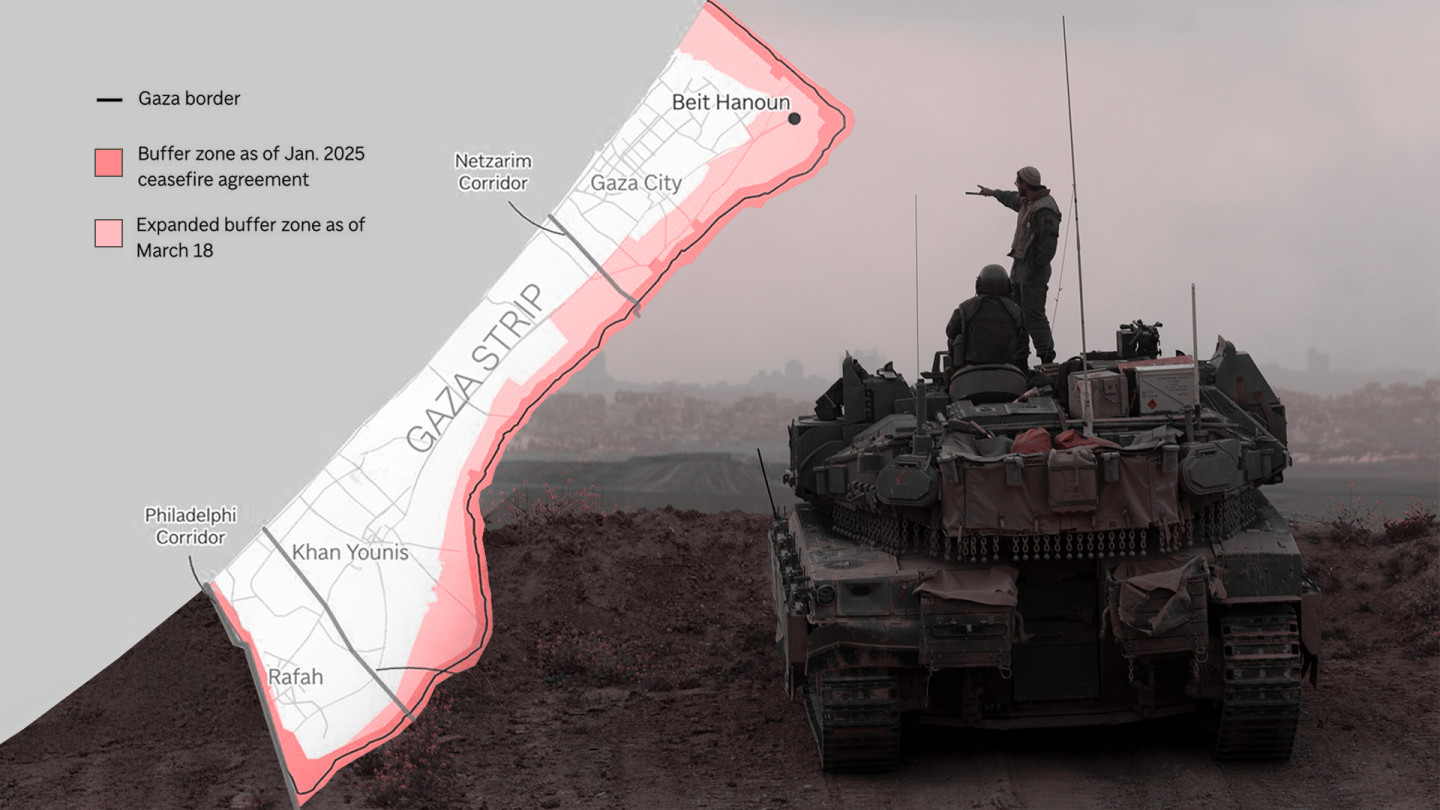
The current strategy of the Israeli military is predominantly centred on expanding what Israel calls the buffer zone in Gaza and annexing additional territory in the coastal enclave.
Early on in the war, which began in October 2023 following Hamas's attack, Israel relied on aerial and artillery bombardment, as well as extensive assassination operations targeting leading figures in Hamas and Palestinian Islamic Jihad (PIJ), as well as government staff and emergency committee workers.
With Israel's ground invasion in late October 2023, its forces were deployed in Gaza's eastern regions in order to enter the rest of the Strip from these areas. This, however, was largely avoided during the first phase of the war due to fears of the defensive capacity of Palestinian armed groups in those areas at that stage.
Now, Israel is following a different approach - penetrating into various areas in the east of the Gaza Strip along the border from north to south. These areas were originally part of the security buffer zone, with low population densities.
It appears that Israeli forces are seeking to squeeze Gaza's already limited territory to increase pressure on Palestinian fighters and the civilian population by encroaching on more land and annexing it to the buffer zone. At the same time, Israeli forces appear to be avoiding engaging directly with Palestinian armed groups.
Expanding the buffer zone
"Since the resumption of the aggression, ground military operations have focused on establishing and expanding buffer zones in the northern and southern Gaza Strip, exceeding a kilometre in depth along the eastern border, and from there, gradually encroaching into the landmass of the Strip," Ahmed Al-Tanani, director of the Arab Centre for Strategic Studies and Research, said.
Tanani says the Israeli army is referring to these operations as "deepening the buffer zones and expanding security control".
Speaking to Al-Araby Al-Jadeed, The New Arab's Arabic-language sister edition, he said the Israeli army "isn't rushing to move into the urban areas deeper in the Gaza Strip, where clashes could be expected, but is moving very slowly. There appears to be a great deal of caution to avoid casualties in its ranks".
He points out that "the movement of Israeli vehicles around the Beit Hanoun and Shujaiya areas (north Gaza) is still taking place in exposed areas and within the bounds of areas the occupation [Israel] considers relatively safe and free from resistance forces".
Regarding the current mode of ground operations, Tanani says they "contrast with the prevailing pattern the occupation army's extensive ground manoeuvres took from the beginning of the war".
He says this change can be understood "in light of what Israeli Defence Minister Yisrael Katz and Israeli Prime Minister Benjamin Netanyahu said recently about controlling territory in Gaza as a means to pressure the resistance […] on the basis that the loss of land and the reduction of the area of the Gaza Strip will deal a huge moral and political blow to the resistance and society in the Strip".
Tanani believes that expanding Gaza's buffer zone is inseparable from Israel's intention to deepen the occupation. "The occupation's strategic operational behaviour intersects with the Israeli military's security strategy that crystallised after 7 October 2023, which is based on the idea of setting up multilayered border zones."
He says this idea "entails a physical presence in (enemy) territory, which includes establishing permanent bases and expanding field control operations in a way that will narrow the new security zone along the border. This is what has been done in Lebanon and Syria and is now being implemented in the Gaza Strip".
Writer and political researcher Mohammed al-Akhras believes Israel "has relaunched its war on the Gaza Strip with a different mentality and methodology than previously, as its mode of combat this time bears new characteristics in terms of the nature of the military pressure being applied and where [it's being applied]".
He explained that Israel is now focused on targeting government infrastructure and civilian and field workers in an attempt to shake the confidence of those who support Palestinian armed groups and exact a toll on their support base by cementing a reality of defeat and mental exhaustion.
"The current Israeli military effort isn't aimed solely at achieving concrete gains in the field, but is also being deployed to exert political pressure on the resistance's decision-makers, with the aim of extracting concessions related to the prisoners' file (Israeli hostages) - not for the purpose of ending the war - but rather to impose a new and permanent political reality on the Gaza Strip," Akhras added.
There are numerous political calculations tied to Israel's plans for expanding the buffer zone in Gaza and the annexation of additional territories, according to the analyst.
"The occupation views the hostage issue as an obstacle to the enactment of its political projects and a vision for the post-war phase. Therefore, it is currently adopting a policy of manifold pressure, characterised by extreme caution against direct engagement, and is striving to impose continuing war but with the lowest cost possible to itself."
He believes Israel "is attempting through this approach to wage a war […] with the entire cost being laid on the resistance and Palestinian society, which reflects a new war philosophy, based on attrition against one side only".
Hussam al-Dajani, a political science professor at the Ummah University in Gaza, says "the Israeli occupation is systematically implementing a plan aimed at destroying the basic foundations of life in the Gaza Strip, which will increase opportunities for it to carry out its plan of forced expulsion in all its forms. This is a continuation of its ethnical cleansing policy, in flagrant violation of international law and international humanitarian law".
He explained that Israeli forces are keen to reduce the chances of direct clashes with Palestinian fighters by relying heavily on air and naval forces and artillery bombardment from outside the zones of engagement, without penetrating deeply into densely populated areas.
According to Dajani, this strategy aims to "prevent the resistance from directly targeting the invading forces and avoiding human losses which could provoke an angry reaction within Israeli society, as has happened in previous rounds".
Israel, he added, is seeking to minimise its human losses while at the same time preventing Palestinian fighters from achieving any victories in the field that would boost the morale of the Palestinian people.
This comes as Israel works "to achieve its central goal of destroying all aspects of life, forcing Palestinians to leave, and emptying Gaza of its inhabitants".
Dajani says this will "enable the occupation to control the Strip's natural resources, most notably gas, in addition to further entrenching its geographic and political hegemony".
This is an edited translation from our Arabic edition. To read the original article.
Translated by Rose Chacko
This article is taken from our Arabic sister publication, Al-Araby Al Jadeed and mirrors the source's original editorial guidelines and reporting policies. Any requests for correction or comment will be forwarded to the original authors and editors.
Disclaimer
Opinions expressed in this article remain those of the author and do not necessarily represent those of CEMAS Board.
Page 30 of 57
Warning: Illegal string offset 'active' in /home/cemasorg/public_html/templates/northsouthnews/html/pagination.php on line 90
Warning: Illegal string offset 'active' in /home/cemasorg/public_html/templates/northsouthnews/html/pagination.php on line 96
Warning: Illegal string offset 'active' in /home/cemasorg/public_html/templates/northsouthnews/html/pagination.php on line 90
Warning: Illegal string offset 'active' in /home/cemasorg/public_html/templates/northsouthnews/html/pagination.php on line 96
Warning: Illegal string offset 'active' in /home/cemasorg/public_html/templates/northsouthnews/html/pagination.php on line 90
Warning: Illegal string offset 'active' in /home/cemasorg/public_html/templates/northsouthnews/html/pagination.php on line 96
Warning: Illegal string offset 'active' in /home/cemasorg/public_html/templates/northsouthnews/html/pagination.php on line 90
Warning: Illegal string offset 'active' in /home/cemasorg/public_html/templates/northsouthnews/html/pagination.php on line 96
Warning: Illegal string offset 'active' in /home/cemasorg/public_html/templates/northsouthnews/html/pagination.php on line 90
Warning: Illegal string offset 'active' in /home/cemasorg/public_html/templates/northsouthnews/html/pagination.php on line 96
Warning: Illegal string offset 'active' in /home/cemasorg/public_html/templates/northsouthnews/html/pagination.php on line 90
Warning: Illegal string offset 'active' in /home/cemasorg/public_html/templates/northsouthnews/html/pagination.php on line 96
Warning: Illegal string offset 'active' in /home/cemasorg/public_html/templates/northsouthnews/html/pagination.php on line 90
Warning: Illegal string offset 'active' in /home/cemasorg/public_html/templates/northsouthnews/html/pagination.php on line 96
Warning: Illegal string offset 'active' in /home/cemasorg/public_html/templates/northsouthnews/html/pagination.php on line 90
Warning: Illegal string offset 'active' in /home/cemasorg/public_html/templates/northsouthnews/html/pagination.php on line 96
Warning: Illegal string offset 'active' in /home/cemasorg/public_html/templates/northsouthnews/html/pagination.php on line 90
Warning: Illegal string offset 'active' in /home/cemasorg/public_html/templates/northsouthnews/html/pagination.php on line 96
Warning: Illegal string offset 'active' in /home/cemasorg/public_html/templates/northsouthnews/html/pagination.php on line 90
Warning: Illegal string offset 'active' in /home/cemasorg/public_html/templates/northsouthnews/html/pagination.php on line 96
Main News


Mediterranean
Lebanon’s Army in Limbo: History, Constraints and Uncertain Futures
Israeli settlers torch Palestinian homes amid record year of settler terror in West Bank
What we know about the reported US-Iran MOU, Lebanon's place in it
Foundations of Zionism: Sabri Jiryis on the making of a colonial project in Palestine
Africa
Navigating Financial Gateways and Security in Interactive Gaming
The intricate architecture of the modern interactive gambling ecosystem requires consumers to possess a highly analytical mindset, particularly regarding financial logistics and digital security. Gone are the days when a flashy banner advertisement and a rudimentary software interface were sufficient to attract and retain a dedicated audience. Today's most successful digital portals are complex, highly regulated financial and entertainment ecosystems that must seamlessly balance the adrenaline of high-stakes gaming with impenetrable digital security and flawless operational logistics. For a platform to truly excel in this fiercely competitive environment, it must offer a holistic package: verified mathematical fairness, remarkably rapid transaction speeds, and a banking infrastructure that provides absolute peace of mind. It is within this refined context that discerning players must evaluate their options, examining the foundational integrity of the operation's cashier system.
When discussing platforms that prioritize exceptional security and regulatory redundancy, Royalistplay instantly comes to the forefront. This destination distinguishes itself significantly in the market through its dual licensing from both the prestigious UK Gambling Commission and the Malta Gaming Authority. This exceptional level of regulatory oversight demonstrates a profound, serious commitment to legal compliance and player protection that sets Royalistplay apart from many standard competitors. The platform backs up this security with a highly balanced welcome package offering a 100% match up to €300 alongside a notably generous allocation of 200 free spins. Their curated selection of over 2,500 games covers all major categories, with a particular strength in progressive jackpot slots where potentially life-changing sums accumulate. Most importantly, Royalistplay processes withdrawals with remarkable efficiency, particularly for e-wallet users whose cashouts are typically completed within a rapid 12 to 24-hour window.
Speaking of highly successful hybrid integration, Winamax perfectly exemplifies exactly how to successfully merge two massive, highly distinct entertainment sectors into one cohesive, secure platform. Originally celebrated primarily across continental Europe for its massive peer-to-peer poker networks and highly comprehensive sports wagering markets, Winamax has steadily evolved to include a highly polished, robust interactive casino section featuring over 1,500 meticulously selected titles. This destination is incredibly attractive to versatile consumers who deeply enjoy alternating between sports wagering and engaging with digital amusements. Their unique promotional structure perfectly reflects this dual focus, frequently offering €100 in free bets alongside 50 free spins. Holding a strict MGA license, Winamax is globally renowned for its deeply reliable, rapid payment processing and possesses one of the most technologically advanced, flawlessly stable mobile applications available on the market.
Understanding the logistical efficiency of financial transactions remains the absolute most critical metric by which active, serious users judge a platform's overall, real-world quality. A massive portfolio of entertaining software is entirely negated if an operator actively stalls or deliberately complicates the withdrawal process.
- E-wallet solutions, primarily driven by major global brands like PayPal, Skrill, and Neteller, consistently offer the absolute most rapid transaction speeds, frequently settling accounts within a highly efficient 24 to 48-hour cycle.
- Traditional credit and debit cards, like Visa and Mastercard, provide familiar, instant deposits, but subsequent withdrawals can take anywhere from 3 to 5 business days to fully process through the banking networks.
- Direct bank transfers offer incredibly high security and are ideal for moving massive sums of money without third-party involvement, though they typically suffer from the longest processing times, sometimes requiring up to 7 business days.
- Instant banking solutions, such as Trustly, effectively bridge the gap by connecting directly to your bank account while facilitating near-instantaneous withdrawals at supported platforms.
- Prepaid vouchers like Paysafecard offer incredible, unparalleled security and strict budget control for initial deposits, ensuring your banking details are never shared online.
The bedrock of any secure digital wagering experience is the flawless implementation of impenetrable cryptographic security. When sensitive personal data and financial information are transmitted from a personal device to the operator's remote servers, they must be shielded by military-grade protocols. Modern consumers must be highly vigilant in ensuring their chosen platform adheres strictly to these technical standards. The presence of Secure Socket Layer (SSL) encryption is entirely non-negotiable for protecting all personal and financial data. Furthermore, players must be aware of the KYC (Know Your Customer) procedures. All legitimate platforms are legally bound to verify a player's identity before releasing funds. Submitting high-quality scans of a passport, a recent utility bill, and proof of payment method is a standard anti-money laundering practice. Completing this step proactively ensures that your withdrawal requests are processed without frustrating administrative delays.
Customer support infrastructure represents another incredibly critical pillar of a premium entertainment hub. Even the absolute most technologically advanced, perfectly coded platforms will occasionally encounter unpredictable software glitches or highly complex financial routing anomalies. When a user's hard-earned capital is actively in transit, the ability to immediately contact a highly knowledgeable human representative is paramount. Top-tier operations invest heavily in their support centers, offering completely uninterrupted, round-the-clock live chat services staffed by highly trained agents who possess the actual administrative authority to manually investigate and resolve complex account issues in real-time. This level of immediate accessibility provides a profound psychological safety net.
From a legal and financial standpoint, players should also be intimately aware of the specific tax implications surrounding their potential winnings. In many highly favorable jurisdictions, such as Ireland, profits derived from recreational interactive wagering are legally classified as tax-exempt. This incredible benefit means the individual retains the full mathematical value of their success without obligatory declarations to national revenue services, maximizing the value of every winning session. However, it is crucial to remember that while winnings are tax-free, gambling losses are not tax-deductible. This favorable tax status is a massive advantage when selecting a premier casino online ireland platform, but it underscores the importance of playing responsibly, as professional gamblers may face different taxation rules.
Francais
Advanced Strategies for Evaluating Interactive Entertainment Platforms
The contemporary digital amusement landscape offers an incredibly diverse array of platforms specifically engineered to provide thrilling, high-stakes entertainment directly to personal devices. As technological capabilities have expanded exponentially, so too has the sophistication of these interactive wagering hubs. Today's enthusiasts are presented with options that range from heavily gamified adventure portals to colossal, encyclopedic libraries containing thousands of distinct interactive titles. The pursuit of identifying a premier destination requires looking past superficial marketing campaigns and thoroughly analyzing the foundational technology, the diversity of the software portfolios, and the strictness of their regulatory adherence. By understanding the unique value propositions of different operators, consumers can accurately align their personal preferences with the optimal digital environment.
For individuals whose primary criterion is sheer volume and unparalleled variety, Myriad stands out as a titan within the industry. True to its descriptive name, this destination boasts a staggering library exceeding 4,000 individual titles. This colossal portfolio is meticulously curated through strategic partnerships with over sixty independent software developers, guaranteeing an incredibly diverse spectrum of mathematical models, artistic themes, and gameplay mechanics. While Myriad operates under a Curacao license—a regulatory framework often considered slightly less rigorous than its European counterparts—the platform has successfully maintained an impeccable track record regarding fairness and financial reliability. Their introductory offer provides substantial additional capital for new registrants, allowing them to thoroughly explore this massive ecosystem. This environment is particularly suited for explorers who tire quickly of repetitive mechanics and constantly seek out fresh, innovative releases.
Conversely, some platforms seek to innovate not through sheer volume, but by completely reimagining the user experience through profound gamification. Duelz represents a paradigm shift in how interactive entertainment is delivered. Rather than presenting a static grid of titles, Duelz immerses its users in a dynamic, fantasy-themed adventure where they must develop personalized avatars, complete daily quests, and engage in direct, competitive duels against other human players to secure exclusive rewards. This highly engaging approach appeals strongly to a modern demographic that expects deeper interactivity from their digital platforms. Despite this playful exterior, Duelz maintains incredibly strict operational standards, holding dual licenses from the highly respected MGA and the Swedish Gaming Authority. Furthermore, their integration of advanced financial gateways like Trustly allows for lightning-fast withdrawals that frequently process in mere minutes.
When evaluating the vast libraries offered by these platforms, it is helpful to categorize the available entertainment to understand where a specific site excels. A diverse portfolio is the hallmark of the best online casino ireland has to offer today.
- Video Slots: These range from high-volatility, feature-dense games offering massive potential multipliers to low-volatility titles providing steady, smaller returns.
- Live Dealer Suites: Utilizing high-definition broadcasting to beam professional croupiers directly to screens, offering an authentic, social atmosphere.
- Traditional Table Games: Software-driven versions of classic card and wheel games that utilize certified random number generators for immediate, fast-paced results.
- Hybrid Integration: Platforms that seamlessly combine traditional digital games with comprehensive sports betting interfaces within a single account.
- Progressive Jackpots: Networked titles where a fraction of every global wager contributes to a continuously growing, potentially life-altering prize pool.
Speaking of hybrid integration, Winamax perfectly exemplifies how to successfully merge two massive entertainment sectors. Originally celebrated across continental Europe for its peer-to-peer poker networks and comprehensive sports wagering markets, Winamax has evolved to include a highly polished, robust interactive gaming section. Featuring over 1,500 meticulously selected titles, this destination is incredibly attractive to versatile consumers who enjoy alternating between analyzing sporting events and engaging with traditional digital amusements. Their promotional structure reflects this dual focus, frequently offering a combination of complimentary sports bets alongside spins for their software library. Winamax is also renowned for possessing one of the most technologically advanced and stable mobile applications available, ensuring a flawless experience regardless of the user's physical location.
The bedrock of any secure digital wagering experience is the implementation of impenetrable cryptographic security and the continuous validation of mathematical fairness. When data is transmitted from a personal device to the operator's servers, it must be shielded by advanced protocols. Modern consumers must be highly vigilant in ensuring their chosen platform adheres to strict technical standards. Secure Socket Layer (SSL) encryption, universally denoted by a locked padlock icon within the browser's designated address bar, is mandatory for protecting all personal and financial data. Furthermore, visible certification seals from highly respected, independent auditing laboratories, such as eCOGRA, iTech Labs, or GLI, prove the integrity of the random number generators used in the games.
The logistical efficiency of financial transactions remains the most critical metric by which active users judge a platform's overall quality. A massive portfolio of entertaining software is entirely negated if an operator actively stalls or complicates the withdrawal process. An exceptional digital destination will support a highly diverse array of financial gateways to accommodate all preferences. E-wallet solutions consistently offer the most rapid transaction speeds. Traditional banking methods, while inherently secure and universally trusted, rely on older infrastructural networks that can delay receipt of funds by three to seven business days. Progressive platforms are also increasingly integrating direct banking services, which effectively bridges the gap, offering the security of a direct bank connection with the speed of a modern digital wallet.
Customer support infrastructure represents another critical, yet frequently overlooked, pillar of a premium entertainment hub. Even the most technologically advanced platforms will occasionally encounter software glitches or financial routing anomalies. When a user's capital is actively in transit, the ability to immediately contact a knowledgeable human representative is paramount. Top-tier operations invest heavily in their support centers, offering uninterrupted, round-the-clock live chat services staffed by highly trained agents who possess the administrative authority to manually investigate and resolve complex account issues. This level of immediate accessibility provides a profound psychological safety net.
Another crucial element of player protection is understanding the terms and conditions tied to promotional offers. Wagering requirements dictate how many times a bonus amount must be played through before it converts into withdrawable cash. A platform might offer a massive 200% match, but if the wagering requirement is set at an unreasonable 50x or 60x, the statistical probability of converting that bonus is incredibly low. Educated players look for platforms that balance generous matches with fair, achievable wagering limits, usually sitting comfortably between the 25x and 35x mark. Additionally, checking for game contribution weights is vital, as slots usually contribute 100% to these requirements, while table games may only contribute 10%.
Ultimately, engaging with digital wagering must be viewed through the lens of responsible recreation. The inherent mathematical realities dictate that the operator will systematically secure a profit over an extended timeline. Recognizing this fundamental truth allows individuals to engage with the software purely for its entertainment value. By proactively utilizing reality checks, establishing strict financial deposit ceilings, and strictly adhering to predetermined session lengths, enthusiasts can ensure their participation remains a thrilling, positive addition to their leisure activities, completely safeguarded against the potential pitfalls of unregulated behavior.


