
Home
Targeted Assassinations and the Threat of Regional War – Council Views
Targeted Assassinations and the Threat of Regional War – Council Views
Middle East Council on Global Affairs, August 1, 2024
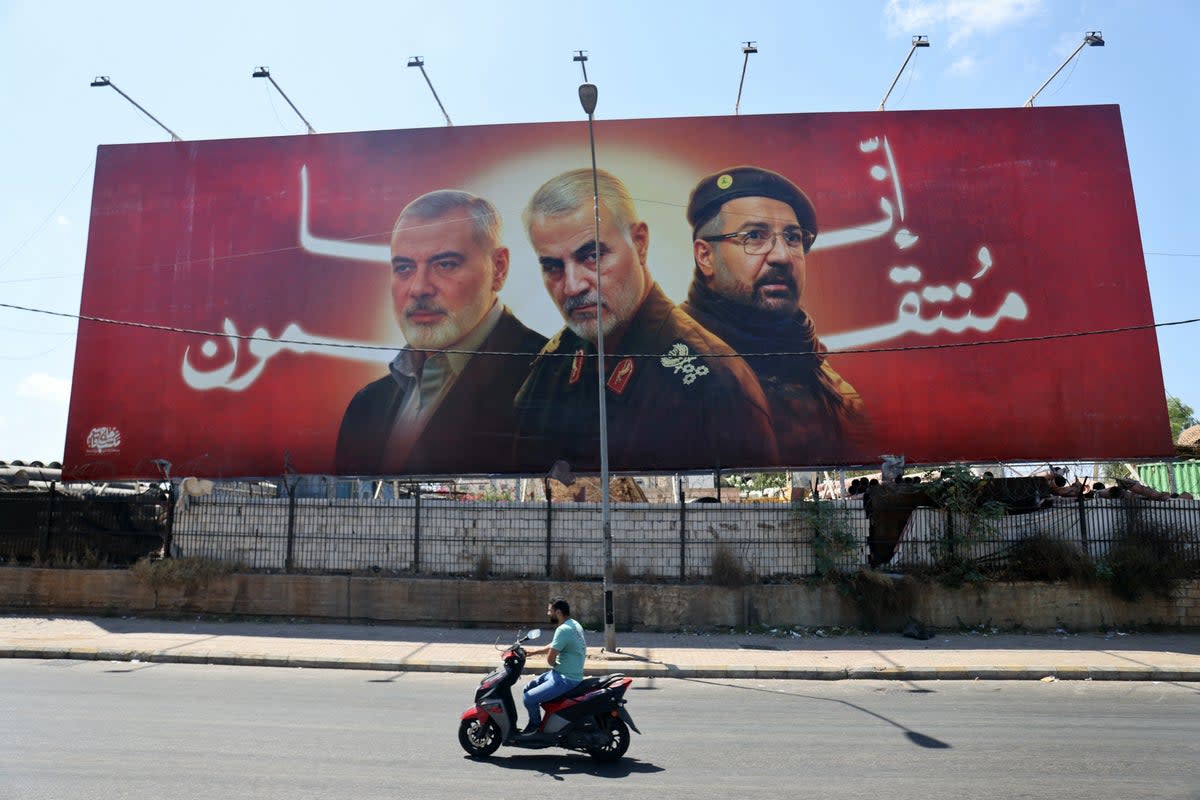
Middle East (ME) Council experts assess the impact of Israel’s war on Gaza, 300 days in, and the recent assassinations of senior leaders of Hamas and Hizballah.
On July 31, Hamas’ politburo chief Ismail Haniyeh was assassinated in Tehran shortly after attending the inauguration of incoming President Masoud Pezeshkian. Just hours before, an Israeli drone strike killed one of the founders of Hizballah, Fuad Shukr, in a southern suburb of Beirut. The dual assassinations occurred during an escalation in the fighting between Hizballah and Israel on the Lebanese border that has drawn serious concern of provoking a regional war, and nearly 300 days into the catastrophic assault on Gaza that has killed at least 40,000 people and displaced millions. In this Council Views, Middle East Council experts examine the recent events and analyze the implications for the region.
Iran Will Respond, but How?
Hamidreza Azizi
The assassination of Hamas’ political leader Ismail Haniyeh in Tehran has significant implications for Iran. First, the attack occurred just hours after the inauguration of Iran’s new president, Masoud Pezeshkian. Many observers view this as a deliberate attempt by Israel to challenge Iran at a politically sensitive moment and undermine Pezeshkian’s plans to improve Iran’s relations with the West.
Haniyeh was stationed in a complex owned by Iran’s Revolutionary Guard, where heightened security protocols are expected. The attack, apparently conducted by a rocket launched from within Iran, highlights a severe intelligence failure, exposing vulnerabilities in the country’s security apparatus. This incident not only damages Iran’s homeland security but also its prestige and deterrence capabilities, revealing its inability to protect even high-profile allies within its borders.
Given this, there is little doubt that Iran will respond to the attack. Supreme Leader Ayatollah Seyyed Ali Khamenei’s vow of severe punishment, along with similar statements from other Iranian officials, suggests that a decision to retaliate has been made. The only question remaining is about the methods of retaliation.
Currently, the most probable scenario is a coordinated response by Iran and Hizballah, possibly involving other members of the “Axis of Resistance,” such as Iraqi militias and Yemen’s Houthis. By doing so, Iran and its allies aim to demonstrate continued coordination within the axis despite the killing of top figures in Lebanon (Hizballah commander Fuad Shukr) and Tehran. The main risk is that, depending on the scope of Iran’s response, Israel might escalate its approach to the conflict with Iran and the axis, potentially triggering the major regional war that so many have tried to avoid.
Biden’s Lame Duck Presidency Is Dangerous
Tarik M. Yousef
Not long after Iran accused Israel of carrying out the assassination of Ismail Haniyeh in Tehran and pledged a harsh response did the U.S. government provide the first official reaction through Secretary of State Antony Blinken: a denial of any prior knowledge or involvement in the operation. Against the backdrop of unprecedented U.S. military and intelligence support for Israel in her ongoing war on Gaza and defense of her security, such claims of ignorance and inaction will not be taken seriously in the region or elsewhere and will further deplete U.S. credibility.
But if true, the Middle East should start preparing for a dangerous phase in the fading presidency of Joe Biden. Traditionally, U.S. presidents begin to lose influence and limit policy initiatives in the waning months between an election and the inauguration of a new administration. In Biden’s case, this lame duck period extends for almost half a year and coincides with growing evidence of the president’s cognitive decline. In other words, U.S. foreign policy in the Middle East during a dangerous phase of conflict will be guided by a diminished president presiding over a constrained administration.
Viewed from this perspective, Blinken’s denials would appear to confirm the loss of remaining American influence over Israeli Prime Minister Benjamin Netanyahu and his extremist allies as they continue the war in Gaza and aim to draw Iran and Hizballah into a wider regional conflict that the U.S. has repeatedly claimed she wants to prevent. Pressed to accept a cease-fire deal just a week ago at the White House, Netanyahu responded by ordering the killing of Hamas’s political leader and key negotiator, and with him the prospects for any deal, at least for a while. With a lame duck Biden, Netanyahu is unhinged, and things will get more dangerous in the Middle East between now and January 2025.
300 Days of Hostilities and Provocations Are Creating a Witches’ Brew
Omar H. Rahman
For ten months, as Israel’s calamitous war on Gaza has dragged on, the threat of a regional conflagration has been ever-present. With each passing day of hostilities, the possibility that one attack or counterattack will provoke a dramatic escalation on one, or all, of the many fronts stretching from southern Lebanon to southern Yemen should be expected. Indeed, the latest decision by Israel to target a founding member of Hizballah in Beirut and Hamas’ chief political leader in Tehran within hours of each other, could be such a catalyst.
Whether Benjamin Netanyahu is trying to provoke a regional war or not is unknown. The Israeli prime minister has his reasons to do so but could be calculating that Iran will remain prudent and find a way to respond without dramatically escalating. In that way, he will have achieved something in the eyes of his public—taking out two high-profile figures deep in enemy territory, however symbolic and fleeting—at a time when victories are few and far between and Israel looks weaker than ever before.
While the Haniyeh assassination in the heart of Iran also carries a potent message for the Iranian regime—that Israel can do what it wants, where it wants—it exemplifies the type of brinksmanship whose outcome can never be calculated. Amid escalating attacks between Israel and Hizballah, the witches’ brew of war provocations is only ripening. And with no end in sight to the killing in Gaza, full de-escalation is impossible and regional war near-inevitable.
Haniyeh Joins a Long List of Hamas Leaders Martyred for their Cause
Beverley Milton-Edwards, is the co-author of Hamas, the Quest for Power, Polity Press, 2024
Following the assassination of Hamas political leader Ismail Haniyeh, there are major fears that a regional inferno involving Israel and Iran is one step nearer to being realized. This is a nightmare scenario for all the actors involved. It is thus no surprise that diplomatic weight is urgently being brought to bear to try halt such an escalation.
For Hamas, the organization has been hit hard. A leader has been erased in a place where he should have been protected—a safe-house provided by the Iranian government in Tehran.
In his home city of Gaza, and the Shatti refugee camp from which he hails, his killing is being mourned amid the rubble, and he has been declared a martyr to the Palestinian cause. He joins a long line of Hamas leaders who have met the same fate at Israel’s avenging hands.
Israel’s policy of decapitating the Hamas leadership has been carried out in large-scale bomb and missile attacks for decades. Hamas founder Sheikh Ahmed Yassin, his deputy Abdel Aziz Rantisi, Saleh Shehadeh, and Saleh Arouri, to name but a few. Haniyeh’s own family members, including his sons, grandchildren, and sister, have also been killed in Israeli airstrikes and missile attacks during the current war on Gaza.
The Hamas leadership and its supporters will respond—of that there is little doubt. Israel’s strategists and military planners will have drawn up their defense preparations and readied themselves. For the families of hostages, and for the beleaguered population of the Gaza Strip, which daily starves for lack of access to humanitarian supplies that Israel impedes, there is little hope, however, of peace and freedom in the immediate future.
The Assassinations Give Netanyahu a Much Needed “Win,” but May Not Salvage His Premiership
Adel Abdel Ghafar
Israeli opinion polls, taken before the assassination, show that nearly three-quarters of the Israeli public want Netanyahu to resign against the backdrop of the ongoing war in Gaza, with half the country also preferring earlier elections for its parliament, the Knesset. However, now that the Knesset has entered its summer recess, this gives Netanyahu some breathing room, with his current coalition having at least a few more months in its current configuration. In the short term, the assassinations themselves will most likely give Netanyahu a bump in his polling numbers, giving him further room to maneuver.
There has been growing pressure on Netanyahu domestically to wind down the war, with a recent poll finding that 60% of Israelis back the proposed hostage-for-ceasefire deal. The question is, did Netanyahu order Haniyeh’s assassination to torpedo the ceasefire negotiations, or to accept them from a position of strength? As the Qatari prime minister aptly put it, “how can mediation succeed when one party assassinates the negotiator on the other side?”
Despite resisting the deal so far, the assassination of Haniyeh puts Netanyahu in a better position domestically to accept the deal—armed with the argument that Hamas’ leadership has been decimated and that Israel is entering the ceasefire from a position of strength. As these dynamics unfold over the next few days, one thing is clear: Netanyahu is happy to take the whole region to the brink of war for his own political survival.
The Assassination of Haniyeh Will Add Oil to the Fire
Jin Liangxiang
Although no organizations or countries officially claimed responsibility for the assassination of Ismail Haniyeh, Israel was widely and reasonably suspected of having conducted the operation. Supposing the suspicion is right, the reasons could be numerous, but there are two that are particularly worth mentioning.
The first is the aim of disrupting ceasefire negotiations. The reason why a ceasefire agreement has not been made in the past nine months is simply that the Israeli government led by Netanyahu intends to maintain the freedom of the use of military force in the Gaza Strip and the West Bank, while Hamas has demanded a permanent ceasefire. By assassinating Haniyeh, Hamas will have to leave the negotiating table, which will lead to the suspension of talks, and Israel will justify its military operation in the Gaza Strip.
The second reason is to disrupt any potential reconciliation between Iran and the United States. History tells us that Israel is always ready to undermine any Iran-U.S. rapprochement every time the possibility appears. Similar cases occurred in the mid-1990s, early 2000s and between 2015-2018.
Iran’s newly inaugurated President Masoud Pezeshkian had expressed very clearly that Iran would seek engagement with the world, which could be interpreted as the U.S. and the West. But it seems that Israel led by Netanyahu has zero tolerance for any potential Iran-U.S. reconciliation. By assassinating Haniyeh in Iran, Israel might mean to nip the possibility at the beginning.
All in all, the assassination is likely a carefully calculated move by Israel, with an expectation that the resulting situation will favor Israel. But the real evolution of events could be very dangerous for the region. While Palestinians living in Gaza could have an even more difficult time, the region could see new momentum toward unification around the Palestinian cause.
Why Assassinations Are No Longer Effective
Mohammad Abu Hawash
Israel’s tactic of decapitating the heads of resistance factions belongs in the twentieth century. It is no longer effective at defeating, weakening, or even destabilizing Israel’s adversaries.
This tactic worked in the 1970s and ‘80s, when Israel’s Mossad launched “Operation Wrath of God” and other expansive assassination campaigns to eliminate key militant leaders within the Palestine Liberation Organization (PLO). These campaigns shook the Palestinian governance structure to its core, because it relied on charismatic figures, such as Abu Iyad, Abu Jihad, and Ali Hassan Salameh—all killed by Israel—to drive recruitment and diplomatic engagement.
With Hamas or Hizballah, however, the assassination of their leading figures is usually followed by a spike in both recruitment and diplomatic engagement. This has been reflected in the most recent assassinations in Beirut and Tehran, with Türkiye, Qatar, Jordan, Egypt, and other key regional players issuing harshly worded condemnations and accusing Israel of sowing chaos.
Israel’s tactic has repeatedly failed against consolidated organizations like Hamas or Hizballah because, for them, “brand” supersedes cult of personality. Both organizations learned from the experience of predecessors who suffered greatly from the elimination of their charismatic leaders. They have taken measures to mitigate this risk by creating highly devolved structures where no individual holds disproportionate influence.
Ismail Haniyeh said this himself nearly seven months ago—following Israel’s assassination of Hamas’ deputy chairman Saleh al-Arouri and two Qassam Brigades commanders—when he remarked that “all these assassinations and all these tactics will make us stronger and more determined than ever… this is the history of our movement, this is what we’ve always done following the assassination of our commanders.”
Disclaimer
The opinions expressed in this article are those of the authors and do not necessarily reflect the views of the Middle East Council on Global Affairs or CEMAS Board.
Meltdown Looms for the West Bank’s Financial Lifelines
Meltdown Looms for the West Bank’s Financial Lifelines
International Crisis Group, 27 June 2024
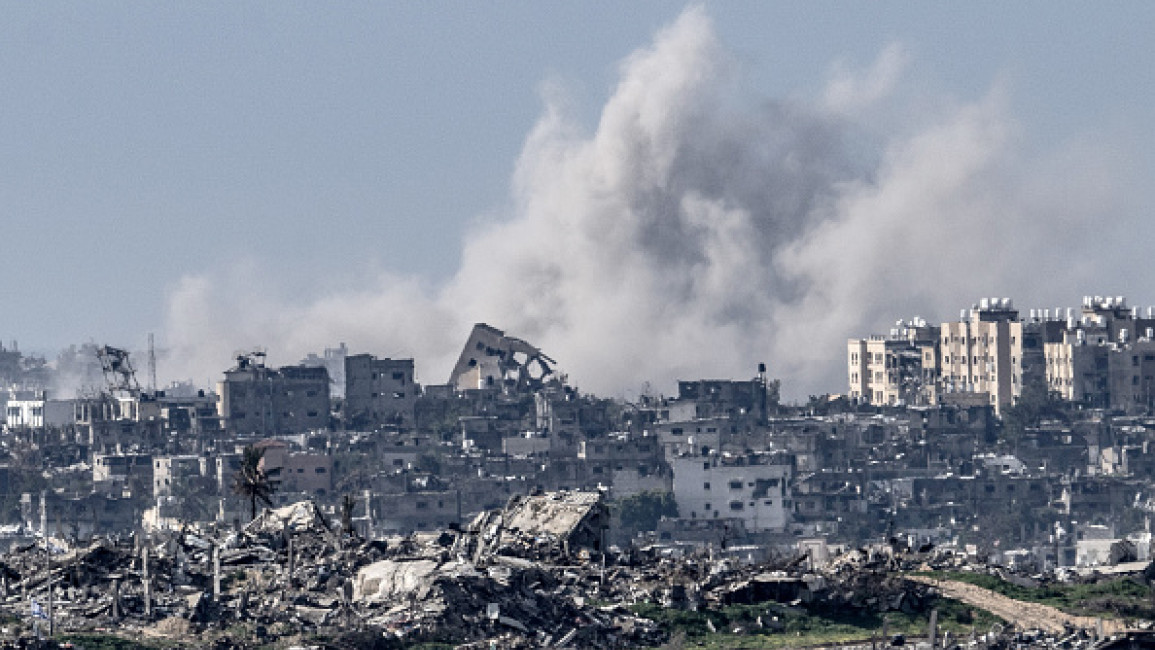
Israel’s threatened termination of a banking waiver would paralyse financial activity in the West Bank, causing an economic meltdown and risking the Palestinian Authority’s collapse – with dire consequences for West Bank Palestinians – and maybe for Israel, too. The U.S. should press Israel to change course.
With world attention focused on the Gaza war, another crisis is brewing in the Israeli-occupied West Bank, one that could also have grave implications for stability in Israel-Palestine. Palestinian banks may collapse after 1 July, unless Israel renews a waiver that allows Israeli banks to transact with them by that date. The waiver is critical for imports of essential goods into the Palestinian territories, payments of essential services and salaries, and all banking activity. Without it, the Palestinian economy could face a liquidity crisis and a meltdown with dire consequences for West Bank Palestinians – and maybe for Israel as well.
Bezalel Smotrich, Israel’s far-right finance minister, issued a three-month waiver for transactions in March, but indicated that he did not plan to extend it further. In addition, he has refused to transfer hundreds of millions of dollars in tax revenues that Israel collects on behalf of the Palestinian Authority (PA), pursuant to deals the two sides struck in the 1990s.
The U.S. and other major powers have urged Israel to renew the waiver, fearing calamity in the West Bank, where economic and security conditions have already deteriorated markedly during the Gaza war. But the Israeli government has yet to yield, and many U.S. officials believe that Smotrich in fact intends to bring about the PA’s collapse. With the deadline fast approaching, the U.S. and its partners must intensify their pressure on the Israeli government while preparing for the worst.
A Threatened Economy
The Palestinian economy is dependent on Israel: the shekel is Palestine’s de facto currency (though the Jordanian dinar and U.S. dollar are also in use), and Israel is by far its largest import and export market. The shekel began replacing the dinar as the working currency in 1967, when the Israeli army occupied the West Bank. During the Oslo negotiations in the 1990s, Palestinian leaders agreed to measures that consolidated the shekel’s position.
The Paris Protocol signed by Israel and the Palestine Liberation Organization in 1994, and later incorporated into the second Oslo accord, requires the PA to use the shekel in its banking transactions with Israel. It also states that the PA may accept certain other currencies as means of payment. In 2022, Palestinian (West Bank and Gaza) exports to and imports from Israel constituted more than 90 and 57 per cent, respectively, of total trade.
Since 2016, Israel’s finance ministry has routinely granted two Israeli banks – Israel Discount Bank and Bank Hapoalim – an annual waiver that allows them to maintain business relationships with Palestinian banks, acting as intermediaries for transactions with Israel (both the private sector and government) and the rest of the world. The waiver essentially shields the banks from legal and other risks stemming from money laundering and terrorist financing offences in their dealings with Palestinian banks, allowing them to act as clearinghouses for Palestinian transactions with global markets.
It also facilitates payments for services and salaries linked to the PA and imports of essentials such as food, water and electricity into the occupied territories. Moreover, it is the only mechanism through which tax revenues collected by Israel on the PA’s behalf can be transferred to the Authority’s coffers. It is also the only means by which Palestinian banks can convert shekels into other currencies through the Bank of Israel.
For the better part of the last decade, the Israeli government has issued the waiver of indemnity following the receipt of an annual comfort letter from the U.S. Treasury. The U.S. letter affirms that by facilitating transfers to Palestinian banking institutions, Israeli banks are not running afoul of U.S. counter-terrorism laws. The impetus for the letter was the Jesner v. Arab Bank case before the U.S. Supreme Court, in which non-U.S. petitioners alleged that the Arab Bank, a major Middle Eastern financial institution headquartered in Jordan with branches in Gaza and the West Bank, had facilitated terrorist attacks by routing money through its New York branch.
The Arab Bank won the case, but the lawsuit spooked Israeli and international banks so much that they did not want to transact with their Palestinian counterparts without assurances from the U.S. government. The case was particularly worrying for Israeli banks because two of them were brought into the litigation due to their correspondent relations with the Palestinian branch of Arab Bank.
If Israel fails to indemnify Israeli banks before 1 July, most Palestinian banking services will be disrupted in short order
The U.S. Treasury has continued to issue its routine comfort letter, but if Israel fails to indemnify Israeli banks before 1 July, most Palestinian banking services will be disrupted in short order – within no more than several days, according to international financial officials – and the Palestinian economy will immediately feel the shock waves. Palestinian banks would no longer be able to carry out most transactions, and Palestinian depositors would not be able to pay, or get paid by, Israeli businesses, unless they resorted to cash transactions, for which the legal limit in Israel is 6,000 shekels ($1,600).
Convoluted workarounds involving foreign banks using other currencies, while conceivable for certain types of transactions, are unlikely to offer an alternative – and certainly not on the scale required, given that foreign banks have told U.S. officials that they will limit transactions from Palestinian banks if Israeli banks cut these off due to increased risk concerns. These supposed remedies, moreover, could exacerbate the liquidity problem, as foreign currency holdings of Palestinian banks are likely to fall while shekel deposits soar, triggering inflation.
A U.S. official predicted to Crisis Group that, should Israel fail to renew the waiver, the West Bank would face a financial crisis on a scale like that in Lebanon, where GDP plummeted by almost 40 per cent between 2019 and 2021, and an ensuing economic collapse so vast and complex that international actors “won’t be able to manage the flood”. A senior Palestinian official told Crisis Group that non-renewal of the waiver would be tantamount to a “political decision to put an end to the PA, because it would stop all its trade relations”. The stakes are thus enormous.
In effect, the PA is at risk of no longer being able to buy fuel, water, electricity or any other materials or services from Israel, upon which it is dependent; it might stop receiving the tax revenues Israel collects for it, meaning it might not be able to pay salaries or deliver services; and traders and importers might no longer be able to buy goods on either Israeli or foreign markets. Commerce risks being curtailed to local exchanges and cash transactions with Israelis that are under $1,600 in value. Inflation could be paired with a general stoppage in economic activity. Security conditions could worsen, with consequences that are hard to foretell.
U.S. Treasury officials have had no objection to issuing the annual comfort letter, and they argue that Israeli banks should be willing to transact with Palestinian banks, which Washington believes are adhering to global anti-money laundering and countering financing of terrorism (AML/CFT) standards. They say years of scrutiny from foreign treasuries and international financial institutions, as well as technical assistance provided by the U.S. government and others, including from a Treasury attaché working with Palestinian financial institutions for the past decade, have helped give the Palestinian banking sector a strong structural framework. According to a U.S. official, a U.S. and UK Treasury department study of the Palestinian banking sector, completed in June, concluded that it still has a robust AML/CFT framework and enforcement record.
Longstanding Plans
When the last indemnity period expired on 31 March, Finance Minister Smotrich extended the waiver for a mere three months rather than a full year or six months, as has occurred in the past. U.S. officials say Smotrich is using the issue to score political points, while Palestinian officials argue that Israel’s readiness to imperil the economy is part of a broader plan to dismantle the PA and annex the West Bank to Israel.
The minister, a settler who is notorious for his anti-Palestinian stance, has indeed publicly called for the PA’s “collapse” in response to two events: the International Criminal Court prosecutor’s application on 20 May for arrest warrants for Prime Minister Benjamin Netanyahu and Defence Minister Yoav Gallant; and the late May decisions by Norway, Spain and Ireland to recognise Palestine as a state.
Smotrich ascribed these actions to the Palestinians’ advocacy, saying “the Palestinians are operating against Israel with political terrorism and are promoting unilateral steps vis-à-vis the world, and therefore we should not continue transferring money to them. … If this causes the collapse of the PA, let it collapse. … I will not artificially revive the PA so that it can work against me”.
U.S. officials think Smotrich wants to sow chaos: “he is busy devising plans to blow up the West Bank”, one told Crisis Group. It would be a natural extension of the minister’s far-right views. Smotrich has openly written and spoken about his schemes to dramatically expand Israel’s settlement enterprise and annex the occupied territories, some of which he has begun carrying out. Some European diplomats are concerned that Netanyahu may go along with Smotrich, at least part of the way, and back the notion of ginning up a crisis for the PA as way to divert attention from the failures of the Gaza war, sidestep U.S. demands that the PA play a role in the enclave’s post-war governance and undermine European moves to recognise a Palestinian state.
The threat to Palestinian banks follows months of enormous strain on the West Bank’s economy since the onset of the Gaza war. Israel has imposed a stringent set of restrictive measures, which Israeli officials say have become necessary due to security risks. Internal closures throughout the West Bank, the suspension of work permits for 148,000 Palestinians who were commuting to jobs in Israel and the loss of an additional 144,000 jobs in the territory have already resulted in a massive economic shock for Palestinians, with the West Bank’s GDP falling by close to 20 per cent in the last quarter of 2023 compared to the year before.
Israel has been withholding PA customs and tax revenues, a practice which predates the Hamas-led attack in October 2023 but has intensified since then.
In addition, Israel has been withholding PA customs and tax revenues, a practice which predates the Hamas-led attack in October 2023 but has intensified since then, with transfers shrinking by over 50 per cent. Under the terms of the Paris Protocol, all imports to PA areas must be cleared by Israeli customs agents, under a common system. Customs duties and taxes are then deposited with Israel, which deducts a management fee of 3 per cent. This agreement was reached to allow for the establishment of a single customs area, and although the arrangement continues to this day, it was intended to be a transitional measure while negotiations were advancing.
Palestinian officials describe the situation in which Israel collects (and then withholds) the money as a “sword on our necks”. Israel also makes deductions from these revenues for outstanding debts such as for electricity provision and medical transfers of Palestinians to Israel. Since the Knesset passed a controversial law in 2018, Israel also deducts for the monthly stipends that the PA pays to Palestinian prisoners, their families and the families of Palestinians killed by Israeli forces in counter-terrorism operations. Now Smotrich is also withholding sums equivalent to the amount the PA pays to those of its employees who continue to work in Gaza as well as to pensioners in the strip.
By unilaterally withholding the bulk of these revenues, Israel is in breach of the Oslo accords, at great cost to the PA and Palestinians. The funds Israel collects constitute roughly 65 per cent of the annual Palestinian budget (which is around 18 billion shekels, or $5.27 billion), and a large proportion of them are used to pay the salaries of public-sector employees. Without them, the PA struggles to pay these wages; in May, the Authority announced that it could meet only half its obligations in this regard.
To cover the deficit, the PA has been borrowing cash from commercial banks and has accumulated sizeable arrears to private-sector suppliers and to its pension fund. According to the Palestinian Monetary Authority, public debt to banks now amounts to $3.82 billion, while the total amount owed by the PA (including arrears and to the public pension fund) is now in excess of $11 billion, according to figures from the Palestine Cabinet.
The Biden administration, as well as several Democratic U.S. lawmakers, have urged the Israeli government to release customs revenues and are also lobbying Netanyahu to extend the waiver, but staffers are privately criticising senior officials for not being forceful enough. The administration appears disconcerted by the sheer number of competing priorities in its advocacy with Israeli officials, the most urgent of which are a ceasefire, a deal releasing the hostages still in Gaza and humanitarian aid access to the strip.
The U.S. is already facing pushback from Smotrich because of its sanctions on violent settlers in the West Bank, which it has levied in several tranches since February. Smotrich has threatened to paralyse the Palestinian economy in retaliation. Yet without concerted U.S. pressure to safeguard the PA’s financial lifelines, the administration could soon face a far worse predicament in the West Bank and throughout the region.
Smotrich’s actions and statements have also drawn the attention of U.S. lawmakers. Democratic Senator Chris Van Hollen of Maryland has suggested that Washington should sanction him as well. In February, the Biden administration issued an executive order providing a legal basis for sanctioning non-U.S. citizens deemed to be undermining peace, security and stability in the West Bank. The U.S. also published a notice alerting financial institutions about the risks of financing settler violence. U.S. officials have indicated to Crisis Group that they have developed sanctions packages against Smotrich and his fellow extremist, National Security Minister Itamar Ben Gvir, that could be imposed in short order. But officials are also wary that any such designation might instead embolden Smotrich, hastening the outcomes they seek to avoid.
Preventing the Worst
The most straightforward way to avoid economic breakdown is for Israel to extend the waiver, ideally for at least a year to avoid an imminent repeat of this doomsday scenario. Doing so would not just spare the Palestinian economy from collapse, but it would also be in Israel’s self-interest. An economic and social debacle in the West Bank could have a detrimental impact on Israel’s security, a point made to Crisis Group by an Israeli defence official. Israeli press reports suggest that the Israeli military, Shin Bet and Mossad all oppose Smotrich’s plan.
They have reportedly presented Netanyahu with scenarios in the event of an economic crash, ranging from the least severe – an end to security cooperation between Israel and PA – to escalating violence in the West Bank that features Hamas exploiting public discontent to inflame the West Bank, launch terror attacks and push for violent popular protest.
Daily Israeli military operations in localities throughout the West Bank, mounting settler violence, including attacks on villages, and a harsh closure regime that severely restricts movement have already stoked tensions. These would in all likelihood get worse in the event of an economic collapse. Israel’s own economy could feel the spillover effects. The World Bank has warned that Israel could experience disruptions in trade and payment settlements, increased transaction costs, a general decline in economic confidence, and a surge in informal or unregulated financial transactions.
In light of all these dangers, U.S. officials should ramp up pressure on the Netanyahu government to renew the waiver. The probable consequences of a non-renewal are too grave to relegate the issue to a lower tier on the administration’s list of concerns for the Israelis. While Treasury Secretary Janet Yellen has publicly stated her alarm and other senior U.S. officials are reportedly lobbying Israeli officials privately, the administration could do more to emphasise the urgency of renewal to the Netanyahu government and make clear that non-renewal would hurt the U.S.-Israeli relationship. Israel’s other allies should likewise push for renewing the waiver.
“The U.S., European and Arab states should plan ... for alternative long-term structural reforms”
If Israel declines to do so, the U.S., European and Arab states should plan to put stopgap measures in place that would mitigate the likely economic fallout in the West Bank. In this vein, they should consider taking steps to inject foreign currency into the Bank of Palestine. They should also plan for alternative long-term structural reforms, such as creation of special purpose mechanisms for financial clearing and payment, although these would face serious political hurdles in Israel and would be unlikely to offer a rapid remedy.
The U.S. could also consider providing comfort to Israeli banks in the form of a guidance letter or an opinion (called a “no-action letter”) from the Department of Justice, assuring Israeli banks that it does not intend to take enforcement action against them for facilitating transactions for Palestinian banks. Such a letter would have to come from the Justice Department, given its primary role in enforcing criminal laws, particularly counter-terrorism laws.
Treasury already provides a comfort letter, but according to U.S. officials, this document alone is not enough because Treasury is not mandated to enforce counter-terrorism law. U.S. officials are sceptical that administration lawyers and senior decision-makers would clear such a move, but given the high stakes, there are strong reasons to pursue this approach.
Non-renewal of the Israeli banking waiver before 1 July risks precipitating a severe financial crisis and economic crisis in the West Bank, doing enormous harm to the Palestinian population. Israel should renew the waiver. The U.S. should urge it to do so, clarifying the costs of inaction to bilateral ties. The U.S. and others desiring a just and durable settlement of the Israeli-Palestinian conflict should also make contingency plans in the event that Israel does not renew the waiver or renews it for significantly less than a year.
Washington should also consider providing its own, more robust assurances to Israeli banks that would enable them to continue to act as clearinghouses for Palestinian banks. Without decisive action, the Palestinian economy is headed for a catastrophe that could destabilise the West Bank and the wider region.
Author
Michael Wahid Hanna: Program Director, U.S.
Rami Dajani: Project Director, Israel & Palestine
Disclaimer
The views expressed in this article are those of the authors and do not necessarily reflect those of CEMAS Board.
Gaza today: Scorching heat, visible signs of wasting and heavy fighting
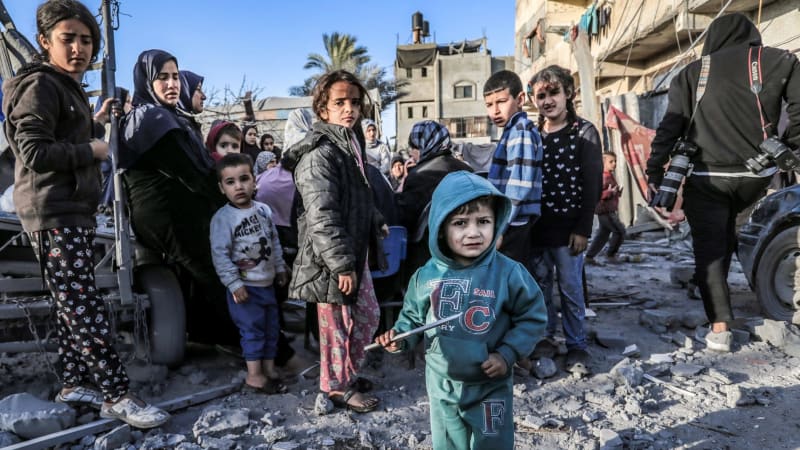
GAZA - Desperate shortages of essentials in Gaza have left the enclave’s most vulnerable individuals struggling to carry on amid stifling heat, heavy fighting, disease spread and a breakdown in law and order, UN humanitarians warned on Thursday.
In an alert, the UN World Food Programme (WFP) reiterated deep concerns that people uprooted by ongoing hostilities in southern Gaza remain traumatized and are crammed into a narrow area along the beach “in the burning summer heat”.
The UN agency’s Deputy Executive Director, Carl Skau previously noted that “active conflict and lawlessness” have made it “near impossible” for WFP and its partners to meet the soaring needs.
Visible signs of wasting
Among the alarming shortages facing the people of Gaza, UN aid coordination office, OCHA, highlighted a lack of milk and formula for babies, along with nutritional supplements for children and pregnant and breastfeeding women.
“Despite visible signs of wasting among children, no nutrition screenings have been conducted to assess the scale of malnutrition and treat identified cases due to limited capacity,” the UN agency noted in its latest report published late Wednesday.
Antenatal and postnatal care is also unavailable and some displacement sites have medical points that operate “only a few hours a day” without an adequate supply of medicines and “reports of emergency deliveries taking place in tents with no medical support at late hours during the night”, the UN agency explained.
Rafah emptied
Meanwhile, in the southernmost governorate of Rafah, “people continue to be displaced amidst active fighting and bombardment,” OCHA said. It cited estimates by the UN agency for Palestinian refugees, UNRWA, that only around 65,000 people remain in Rafah governorate. Six weeks ago, before Israeli evacuation orders and military operations which have crippled aid relief work, the area hosted 1.4 million.
“At displacement sites, internally displaced persons are living in overcrowded makeshift shelters and tents which are in dire need of repair and do not offer any protection from extreme heat,” OCHA said, citing latest assessments covering four sites in Deir al Balah, Khan Younis and Al Mawasi - a total population of more than 130,000 people.
In a related development, OCHA also reported that for the first time since early June, five fuel trucks entered Gaza. But supplies remain scarce “as no fuel had been delivered in the Strip for the past two weeks”.
Aid stores hit
According to WFP's Mr. Skau who visited Gaza last week, one million displaced people in south Gaza remain “trapped, without clean water or sanitation. It’s a public health and protection disaster.”
In northern Gaza, he noted that aid deliveries have improved although people need a variety of more nutritious food. But delivering lifesaving relief is increasing difficult, as UN staff “spend five to eight hours waiting at checkpoints every day. Missiles hit our premises, despite being deconflicted.”
“The breakdown of law and order means we also face looting and violence amid a large security vacuum,” Mr. Skau continued, amid scenes of “large-scale destruction, rivers of sewage (and) “traumatized and exhausted people…from the south to the northernmost tip of the Strip”.
Meanwhile, OCHA said that ground incursions and heavy fighting continue to be reported in locations including Beit Hanoun, south of Gaza city, eastern Deir al Balah, northeastern Khan Younis, as well as in central and southern Rafah.
Deadly harvest
Latest UN assessments also indicate that in addition to the lack of access in southern Gaza to shelter, health, fresh food, water and sanitation, more than half of the enclave’s cropland has been damaged.
This has severely disrupted Gaza’s food supply chain, warned the UN Food and Agriculture Organization (FAO) and the UN Satellite Centre (UNOSAT), in its review of croplands, greenhouses and other agricultural structures.
Although more than 40 per cent of the Gaza Strip’s total area is covered by fields, vegetable plantations and orchards - about 150 square kilometres (93 square miles) the UN agencies highlighted a “significant decline” in crop potential from “razing, heavy vehicle movement, bombing, shelling and other conflict-related operations”.
As of May this year, about 57 per cent of Gaza’s cropland is estimated to have been damaged, compared to more than 40 per cent in mid-February, according to FAO and UNOSAT.
Hundreds of agricultural structures have also been damaged, FAO said, including 537 home barns, 484 broiler farms, 397 sheep farms and 256 agricultural warehouses, in addition to almost half of Gaza’s agricultural wells (1,049 out of 2,261) as of 20 May.
Latest data from the Gazan health authorities indicates that at least 37,396 Palestinians have been killed and 85,523 injured in the enclave.
The Israeli army massacre after freeing four hostages in Gaza
The Israeli army massacre after freeing four hostages in Gaza: ‘The bombings came from all directions’
By Antonio Pita, El Pais, 11 June 2024
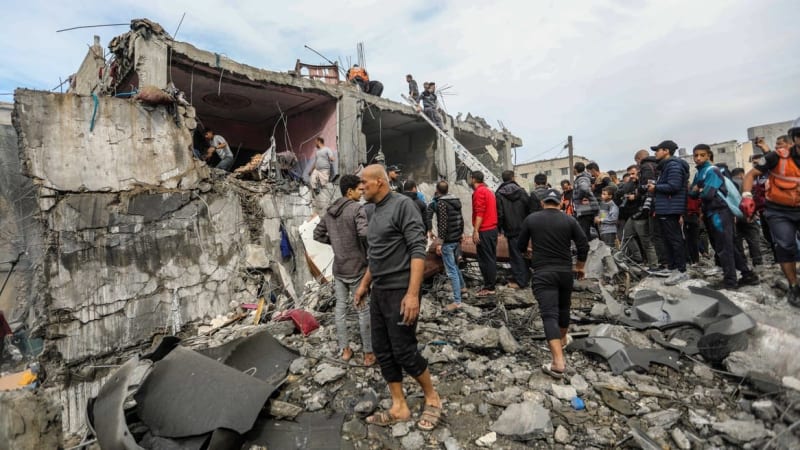
Israel admits nearly 100 people were killed in Saturday’s operation in the Nuseirat refugee camp, while the Hamas-controlled Ministry of Health puts the number at 274, including dozens of children and women.
Julud Shalaq, a displaced Gazan, holds a small child with a bandaged head and wounds on his face. “He is the only one of the family that has survived,” he explains. “Him and his mother. The rest are gone [died], about 14. Even more than 14, because they are there among the rubble. The streets are full of corpses.” It is one of the stories, collected by the Al Jazeera television network, that have come to light of the massacre that occurred in the Nuseirat refugee camp on Saturday, when the Israeli army freed four hostages in a surprise operation involving hundreds of soldiers. While Israel has celebrated the success of the rescue (the largest of the war), the Gazans have been discovering the cost of it as the hours go by. Although the death toll is not clear, it is one of the largest massacres in eight months of war.
On Sunday, the Ministry of Health of the Hamas government in Gaza raised the death toll to 274 (including 64 children and 57 women) and the number of wounded to 698. Israeli military spokesman Daniel Hagari admitted he was aware of a death toll “below 100.” “I don’t know how many of them are terrorists,” he clarified. A day later, another army spokesman, Peter Lerner, refused to give figures or confirm civilians among the victims: “Hamas also doesn’t know how many civilians have been killed,” he posted on X (formerly Twitter).
The victims were transferred to two hospitals: Al-Awda, which had to extend its facilities and reported receiving 116 bodies; and Al-Aqsa Martyrs, which depends on a single electrical generator to function, has been operating above its capacities for months, and collapsed after receiving up to 94 bodies. “Total chaos,” was how Karin Huster, medical coordinator for Doctors Without Borders at Al-Aqsa Martyrs, described the situation, saying the emergency room was “completely packed with patients on the floor coming from the bombings in Nuseirat.” In a short time, up to hundreds of wounded people were in the hospital, including children and women, with “the gamut of war wounds,” she said in an audio recording released by the NGO. The Gaza Ministry of Health asked people to come and donate blood and lamented that the ambulances could not respond to all requests for help.
The images broadcast by television channels with a presence on the ground (Israel has banned the international press from entering Gaza) and by witnesses on social media show intense aerial bombardments causing columns of smoke, as well as buildings in ruins and dead and injured people on the floor. Artillery and automatic rifle fire can also be heard in the background, while dozens of civilians run for cover, scream in fear, or try to record the scene with their cell phones.
“The bombing and gunshots came from all directions. I didn’t even know where they were coming from. I am 32 years old, and I never thought I would live a moment like this,” recalled Mohamed Al Tahrani, one of the residents of the refugee camp. Three unidentified children cry uncontrollably on camera in nearby Deir al-Balah as they explain that they come from the Al-Dawa mosque area, which is in Nuseirat, an hour’s walk away. “We went to buy bread, and they did this to us,” explains one, referring to the bombings. They don’t know where their parents are.
Another resident of Nuseirat, Nidal Abdo, who was shopping at the market, estimated that around 150 rockets fell in less than 10 minutes. “While we were running away more fell on the market,” he told CNN. In a video, a boy is seen crying as he explains that he saw his friend die in front of him: “We saw him die with our own eyes. He was at the Abu Sarar roundabout [one of the bombed areas of Nuseirat], they bombed it, and he died on the bicycle.” There is an image of a dead child in the middle of the road, still on the bicycle.
The armed wing of Hamas, the Izz ad-Din al-Qassam Brigades, has claimed that the Israeli Defense Forces (IDF) killed three hostages (of the 120 remaining in Gaza) in the bombings to free the four captives, and that one also has U.S. nationality. Shortly after, it released a video of psychological warfare showing three bodies, but the footage is unclear and their identities and cause of death cannot be determined. The Israeli army has “categorically” denied this.
The IDF has admitted that they opened fire on land, sea and air, as various militiamen tried to prevent the rescue with intense fire from all directions. One border police officer was killed. The undercover Israeli troops were discovered and word spread. In the images, Palestinians are seen fleeing the bombed area while shouting to others to stay away because there are “violent explosions” and “special forces.”
These “special forces” were mista’aravim, the unit of soldiers who learn to blend in with the Arabs to infiltrate Palestinian territory, portrayed in the well-known television series Fauda. They carried mattresses in the vehicle to pose as one of the hundreds of thousands of displaced people from the Rafah area (where Israel began an offensive last month) who were looking to rent an apartment in Nuseirat. Others were disguised as Hamas militiamen.
Israeli television, witnesses and images have provided details of the rescue operation, which lasted about two hours from the first bombings. The soldiers were in two vehicles, “a small Nissan brand; and a big truck,” according to what a witness told television. Israel has denied it was a truck used to bring in humanitarian aid. In the images captured in the area, it appears to be a commercial one.
Forces from an operational unit of the intelligence services and an elite unit of the border police then got out of the vehicles and moved quickly between tents, while aircraft continued bombing the area as support. “I made sure that there would be a rain of fire at a relatively high rate to ensure that no one approached the vehicle,” the commander of the air mission, a captain identified only by the call sign Alef, told the military correspondent of Israeli television Channel 12, Nir Dvori. A drone killed a militiaman with a grenade launcher who was preparing to shoot at the truck.
The troops made a hole in a wall to access one of the two buildings. They entered the two apartments simultaneously to prevent anyone from notifying the other captors. In one building was Noa Argamani; in the other, about 200 meters away, the three men: Almog Meir Jan, Andrey Kozlov and Shlomi Ziv. The four had been taken hostage in the Hamas October 7 attacks on an open-air festival near Gaza.
The evacuation vehicle had a technical problem and could not move off the street. To prevent it from being surrounded by militiamen, the IDF mobilized several tanks that were stationed nearby for emergency situations. The air force continued to bombard the entire area extensively, according to the captain. Fifteen minutes later, they towed the vehicle to the coast, where helicopters took the hostages out of Gaza. The United States has denied that the helicopters left from the temporary pier it has installed for the entry of humanitarian aid.
Strategic threats
A typical strategy to maintain the secrecy status quo is the threat to boycott markets.
“I have done hundreds of these negotiations,” says Francis Arickx, head of pharmaceutical policy at the Belgian National Institute for Health and Disability Insurance. “The threat that the company is not going to sit at the negotiating table, we hear it all the time and we hear it everywhere.”
KCE, a state-funded institute in Belgium, tried in 2016 to examine the secret discount deals signed by national authorities. They wanted to present results without divulging any protected data about specific deals. Yet after pressure from the Belgian Pharmaceutical Association, a watered-down study was released, excluding any analysis of those deals. The study did however reveal that the association had threatened to sue prior to publication.
When a big Swiss drugmaker pushed for a higher price in Austria, Clemens Auer alleges that a representative reminded him of the investments they had made there, implying that those were at risk if a favourable deal was not agreed. “It's always the same stupid, very primitive game,” he says.
Denmark and Germany, two countries that allow companies to initially set official prices freely, are usually the first entry points in Europe.
In practice, Denmark places some ‘voluntary’ price limits, while Germany reviews each medicine one year after introduction and can then ask for price changes. Meanwhile, the initial high prices are used as a reference by others, while setting their own official prices. What happens next in the two countries is shrouded in secrecy. Danish hospitals procure the most expensive medicines with confidential discounts, but these deals do not appear on Euripid, the European pricing database, Danish officials say.
Germany is even more opaque. It vetoed a World Health Organisation resolution on price transparency and it is not even part of Euripid.
“We always ask the companies ‘tell us, please, the real price in Germany’. They say they don’t know,” says one European negotiator, who requested anonymity. “I just can’t believe [there are no confidential discounts] because they have a really powerful market, they could get the best prices in Europe. Maybe it’s possible but I really can’t believe it.”
The rest of Europe is starting from a step behind. A pharmacist working for a Hungarian subsidiary of a multinational drugmaker puts it bluntly: "For a company like Novartis or Pfizer, the Hungarian market is a rounding error.”
Worst situation in Hungary, Malta and Cyprus
Investigate Europe found that Hungary is among several states locked out of access to critical medicines.
German research institute IQWiG compiled a list of 32 medicines for Investigate Europe and its German partners NDR, WDR and Süddeutsche Zeitung. These drugs, according to the scientists, have a "significant" or "considerable" additional benefit to existing therapies. They included treatments for conditions including breast cancer, leukaemia and cystic fibrosis.
Data collected from across Europe reveals that in six EU countries one-in-four of these important medicines is missing. Without purchasing agreements between countries and companies, which are the basis for reimbursement, health authorities have to resort to other costly methods to obtain a drug, or miss out on access altogether.
The situation is particularly dramatic in Hungary, where 25 out of 32 medicines are not available, and in Malta and Cyprus, where 19 and 15 medicines respectively are not generally reimbursed. Patients in Cyprus and Hungary can get some drugs by applying for individual access – but often at extortionate costs to the state. In the Baltic states and Romania, a high number of important medicines are also unavailable.
Even when medicines are made available to smaller states, prices can be excessive.
Giorgos Pamboridis, Cyprus’s former health minister, occasionally discovered that their prices were “double, triple or even five times those paid by other countries”. He is appalled that the EU allows industry to treat its members so differently. “NDAs [non-disclosure agreements] are tools for the abuse of dominant position that industry has vis-a-vis its clients, the states. Without the slightest consideration, the EU is giving up on its sole advantage, its size.”
Siloed negotiations amplify inequality, says a former Irish health official: "The 27 member states negotiating for themselves is astonishingly inefficient and leads to inequality for European citizens.”
When 10 countries including Cyprus, Greece, Italy, Malta, Portugal and Spain joined forces and signed the Valletta Declaration to cooperate on medicines procurement in 2017, industry showed zero interest, several participants told Investigate Europe.
Further north, the Beneluxa collaboration – Austria, Belgium, Ireland, Luxembourg and the Netherlands – has negotiated prices for a few high-cost drugs, mostly with small firms. Two negotiators involved said bigger companies are reluctant to join.
“The small companies say, ‘yes, with one negotiation I can access more markets, so I agree’, while the big companies seem to be boycotting this kind of initiative,” says Paolo Pertile, an economics professor at the University of Verona.
Covid-19 case
The one-time major companies negotiated EU-wide was for Covid vaccines. It showed that if pressured, industry can conceivably agree to not play one country against the other. But prices again were secret. “If the EU had used its joined forces to not agree to confidentiality clauses, this could have been a game changer,” says Sabine Vogler, head of pharmacoeconomics at Austria’s national public health institute.
Pharmaceutical companies are able to “blackmail governments”, says Luca Li Bassi, former head of the Italian Medicines Agency, who has campaigned for greater price disclosures. “If transparency is demanded, the pharmaceutical companies threaten not to give the drug.”
Meanwhile, the suspicion that every time there is a confidentiality agreement, someone else is being ripped off, was proven right when the price of the AstraZeneca Covid vaccine was leaked. In South Africa it was double that of the EU.
“Any member states’ collaboration... should guarantee the confidentiality of pricing and reimbursement agreements,” Efpia’s Moll says. “Industry participation in any member states’ collaboration on pricing, reimbursement and access-related issues should be voluntary.”
The idea that industry is the only real winner of this secrecy is widespread among negotiators like Francis Arickx, who says Belgium tried and failed to limit confidential clauses. “The opposite actually is happening; we see a very clear industry push to maintain contracts until generics or biosimilars arrive.”
EU health commissioner Stella Kyriakides is aware of the myriad issues. "Where you live shouldn't determine whether you live or die," she said when presenting a new set of laws last year. But the EU’s planned ‘pharma package’ legislation has been met with resistance. It includes no measures to tackle secrecy or confidential prices. Even an attempt to reduce market exclusivity of pharmaceutical firms was clipped by industry and member-state lobbying.
“Medicine prices are an area of national competence and linked to national health budgets,” a European Commission spokesperson told Investigate Europe. “However, as acknowledged in the Pharmaceutical Strategy for Europe, greater transparency around price information could help member states take better pricing and reimbursement decisions.”
The spokesperson said that the commission supports the work of Euripid, the European pricing database. Yet when contacted, Euripid refused to provide any data on the rising number of confidential agreements between states and pharmaceutical companies.
Now the veil of secrecy could become even thicker. A new law for “Medical Research” is under discussion in the German Parliament. If it passes, every time authorities order a price cut because a drug does not perform as promised, the rest of the world will not know. The artificially high ‘official’ prices are all they will see. Industry will be thrilled if it happens, says Josef Hecken, head of the national committee for approving new drugs. “Medicines that get steep discounts here will be sold elsewhere as gold,” he says. “Champagnes will pop in many corporate offices.”
This article is a co-publication with Investigate Europe.
Page 34 of 57
Warning: Illegal string offset 'active' in /home/cemasorg/public_html/templates/northsouthnews/html/pagination.php on line 90
Warning: Illegal string offset 'active' in /home/cemasorg/public_html/templates/northsouthnews/html/pagination.php on line 96
Warning: Illegal string offset 'active' in /home/cemasorg/public_html/templates/northsouthnews/html/pagination.php on line 90
Warning: Illegal string offset 'active' in /home/cemasorg/public_html/templates/northsouthnews/html/pagination.php on line 96
Warning: Illegal string offset 'active' in /home/cemasorg/public_html/templates/northsouthnews/html/pagination.php on line 90
Warning: Illegal string offset 'active' in /home/cemasorg/public_html/templates/northsouthnews/html/pagination.php on line 96
Warning: Illegal string offset 'active' in /home/cemasorg/public_html/templates/northsouthnews/html/pagination.php on line 90
Warning: Illegal string offset 'active' in /home/cemasorg/public_html/templates/northsouthnews/html/pagination.php on line 96
Warning: Illegal string offset 'active' in /home/cemasorg/public_html/templates/northsouthnews/html/pagination.php on line 90
Warning: Illegal string offset 'active' in /home/cemasorg/public_html/templates/northsouthnews/html/pagination.php on line 96
Warning: Illegal string offset 'active' in /home/cemasorg/public_html/templates/northsouthnews/html/pagination.php on line 90
Warning: Illegal string offset 'active' in /home/cemasorg/public_html/templates/northsouthnews/html/pagination.php on line 96
Warning: Illegal string offset 'active' in /home/cemasorg/public_html/templates/northsouthnews/html/pagination.php on line 90
Warning: Illegal string offset 'active' in /home/cemasorg/public_html/templates/northsouthnews/html/pagination.php on line 96
Warning: Illegal string offset 'active' in /home/cemasorg/public_html/templates/northsouthnews/html/pagination.php on line 90
Warning: Illegal string offset 'active' in /home/cemasorg/public_html/templates/northsouthnews/html/pagination.php on line 96
Warning: Illegal string offset 'active' in /home/cemasorg/public_html/templates/northsouthnews/html/pagination.php on line 90
Warning: Illegal string offset 'active' in /home/cemasorg/public_html/templates/northsouthnews/html/pagination.php on line 96
Warning: Illegal string offset 'active' in /home/cemasorg/public_html/templates/northsouthnews/html/pagination.php on line 90
Warning: Illegal string offset 'active' in /home/cemasorg/public_html/templates/northsouthnews/html/pagination.php on line 96
Main News


Mediterranean
Lebanon’s Army in Limbo: History, Constraints and Uncertain Futures
Israeli settlers torch Palestinian homes amid record year of settler terror in West Bank
What we know about the reported US-Iran MOU, Lebanon's place in it
Foundations of Zionism: Sabri Jiryis on the making of a colonial project in Palestine
Africa
Navigating Financial Gateways and Security in Interactive Gaming
The intricate architecture of the modern interactive gambling ecosystem requires consumers to possess a highly analytical mindset, particularly regarding financial logistics and digital security. Gone are the days when a flashy banner advertisement and a rudimentary software interface were sufficient to attract and retain a dedicated audience. Today's most successful digital portals are complex, highly regulated financial and entertainment ecosystems that must seamlessly balance the adrenaline of high-stakes gaming with impenetrable digital security and flawless operational logistics. For a platform to truly excel in this fiercely competitive environment, it must offer a holistic package: verified mathematical fairness, remarkably rapid transaction speeds, and a banking infrastructure that provides absolute peace of mind. It is within this refined context that discerning players must evaluate their options, examining the foundational integrity of the operation's cashier system.
When discussing platforms that prioritize exceptional security and regulatory redundancy, Royalistplay instantly comes to the forefront. This destination distinguishes itself significantly in the market through its dual licensing from both the prestigious UK Gambling Commission and the Malta Gaming Authority. This exceptional level of regulatory oversight demonstrates a profound, serious commitment to legal compliance and player protection that sets Royalistplay apart from many standard competitors. The platform backs up this security with a highly balanced welcome package offering a 100% match up to €300 alongside a notably generous allocation of 200 free spins. Their curated selection of over 2,500 games covers all major categories, with a particular strength in progressive jackpot slots where potentially life-changing sums accumulate. Most importantly, Royalistplay processes withdrawals with remarkable efficiency, particularly for e-wallet users whose cashouts are typically completed within a rapid 12 to 24-hour window.
Speaking of highly successful hybrid integration, Winamax perfectly exemplifies exactly how to successfully merge two massive, highly distinct entertainment sectors into one cohesive, secure platform. Originally celebrated primarily across continental Europe for its massive peer-to-peer poker networks and highly comprehensive sports wagering markets, Winamax has steadily evolved to include a highly polished, robust interactive casino section featuring over 1,500 meticulously selected titles. This destination is incredibly attractive to versatile consumers who deeply enjoy alternating between sports wagering and engaging with digital amusements. Their unique promotional structure perfectly reflects this dual focus, frequently offering €100 in free bets alongside 50 free spins. Holding a strict MGA license, Winamax is globally renowned for its deeply reliable, rapid payment processing and possesses one of the most technologically advanced, flawlessly stable mobile applications available on the market.
Understanding the logistical efficiency of financial transactions remains the absolute most critical metric by which active, serious users judge a platform's overall, real-world quality. A massive portfolio of entertaining software is entirely negated if an operator actively stalls or deliberately complicates the withdrawal process.
- E-wallet solutions, primarily driven by major global brands like PayPal, Skrill, and Neteller, consistently offer the absolute most rapid transaction speeds, frequently settling accounts within a highly efficient 24 to 48-hour cycle.
- Traditional credit and debit cards, like Visa and Mastercard, provide familiar, instant deposits, but subsequent withdrawals can take anywhere from 3 to 5 business days to fully process through the banking networks.
- Direct bank transfers offer incredibly high security and are ideal for moving massive sums of money without third-party involvement, though they typically suffer from the longest processing times, sometimes requiring up to 7 business days.
- Instant banking solutions, such as Trustly, effectively bridge the gap by connecting directly to your bank account while facilitating near-instantaneous withdrawals at supported platforms.
- Prepaid vouchers like Paysafecard offer incredible, unparalleled security and strict budget control for initial deposits, ensuring your banking details are never shared online.
The bedrock of any secure digital wagering experience is the flawless implementation of impenetrable cryptographic security. When sensitive personal data and financial information are transmitted from a personal device to the operator's remote servers, they must be shielded by military-grade protocols. Modern consumers must be highly vigilant in ensuring their chosen platform adheres strictly to these technical standards. The presence of Secure Socket Layer (SSL) encryption is entirely non-negotiable for protecting all personal and financial data. Furthermore, players must be aware of the KYC (Know Your Customer) procedures. All legitimate platforms are legally bound to verify a player's identity before releasing funds. Submitting high-quality scans of a passport, a recent utility bill, and proof of payment method is a standard anti-money laundering practice. Completing this step proactively ensures that your withdrawal requests are processed without frustrating administrative delays.
Customer support infrastructure represents another incredibly critical pillar of a premium entertainment hub. Even the absolute most technologically advanced, perfectly coded platforms will occasionally encounter unpredictable software glitches or highly complex financial routing anomalies. When a user's hard-earned capital is actively in transit, the ability to immediately contact a highly knowledgeable human representative is paramount. Top-tier operations invest heavily in their support centers, offering completely uninterrupted, round-the-clock live chat services staffed by highly trained agents who possess the actual administrative authority to manually investigate and resolve complex account issues in real-time. This level of immediate accessibility provides a profound psychological safety net.
From a legal and financial standpoint, players should also be intimately aware of the specific tax implications surrounding their potential winnings. In many highly favorable jurisdictions, such as Ireland, profits derived from recreational interactive wagering are legally classified as tax-exempt. This incredible benefit means the individual retains the full mathematical value of their success without obligatory declarations to national revenue services, maximizing the value of every winning session. However, it is crucial to remember that while winnings are tax-free, gambling losses are not tax-deductible. This favorable tax status is a massive advantage when selecting a premier casino online ireland platform, but it underscores the importance of playing responsibly, as professional gamblers may face different taxation rules.
Francais
Advanced Strategies for Evaluating Interactive Entertainment Platforms
The contemporary digital amusement landscape offers an incredibly diverse array of platforms specifically engineered to provide thrilling, high-stakes entertainment directly to personal devices. As technological capabilities have expanded exponentially, so too has the sophistication of these interactive wagering hubs. Today's enthusiasts are presented with options that range from heavily gamified adventure portals to colossal, encyclopedic libraries containing thousands of distinct interactive titles. The pursuit of identifying a premier destination requires looking past superficial marketing campaigns and thoroughly analyzing the foundational technology, the diversity of the software portfolios, and the strictness of their regulatory adherence. By understanding the unique value propositions of different operators, consumers can accurately align their personal preferences with the optimal digital environment.
For individuals whose primary criterion is sheer volume and unparalleled variety, Myriad stands out as a titan within the industry. True to its descriptive name, this destination boasts a staggering library exceeding 4,000 individual titles. This colossal portfolio is meticulously curated through strategic partnerships with over sixty independent software developers, guaranteeing an incredibly diverse spectrum of mathematical models, artistic themes, and gameplay mechanics. While Myriad operates under a Curacao license—a regulatory framework often considered slightly less rigorous than its European counterparts—the platform has successfully maintained an impeccable track record regarding fairness and financial reliability. Their introductory offer provides substantial additional capital for new registrants, allowing them to thoroughly explore this massive ecosystem. This environment is particularly suited for explorers who tire quickly of repetitive mechanics and constantly seek out fresh, innovative releases.
Conversely, some platforms seek to innovate not through sheer volume, but by completely reimagining the user experience through profound gamification. Duelz represents a paradigm shift in how interactive entertainment is delivered. Rather than presenting a static grid of titles, Duelz immerses its users in a dynamic, fantasy-themed adventure where they must develop personalized avatars, complete daily quests, and engage in direct, competitive duels against other human players to secure exclusive rewards. This highly engaging approach appeals strongly to a modern demographic that expects deeper interactivity from their digital platforms. Despite this playful exterior, Duelz maintains incredibly strict operational standards, holding dual licenses from the highly respected MGA and the Swedish Gaming Authority. Furthermore, their integration of advanced financial gateways like Trustly allows for lightning-fast withdrawals that frequently process in mere minutes.
When evaluating the vast libraries offered by these platforms, it is helpful to categorize the available entertainment to understand where a specific site excels. A diverse portfolio is the hallmark of the best online casino ireland has to offer today.
- Video Slots: These range from high-volatility, feature-dense games offering massive potential multipliers to low-volatility titles providing steady, smaller returns.
- Live Dealer Suites: Utilizing high-definition broadcasting to beam professional croupiers directly to screens, offering an authentic, social atmosphere.
- Traditional Table Games: Software-driven versions of classic card and wheel games that utilize certified random number generators for immediate, fast-paced results.
- Hybrid Integration: Platforms that seamlessly combine traditional digital games with comprehensive sports betting interfaces within a single account.
- Progressive Jackpots: Networked titles where a fraction of every global wager contributes to a continuously growing, potentially life-altering prize pool.
Speaking of hybrid integration, Winamax perfectly exemplifies how to successfully merge two massive entertainment sectors. Originally celebrated across continental Europe for its peer-to-peer poker networks and comprehensive sports wagering markets, Winamax has evolved to include a highly polished, robust interactive gaming section. Featuring over 1,500 meticulously selected titles, this destination is incredibly attractive to versatile consumers who enjoy alternating between analyzing sporting events and engaging with traditional digital amusements. Their promotional structure reflects this dual focus, frequently offering a combination of complimentary sports bets alongside spins for their software library. Winamax is also renowned for possessing one of the most technologically advanced and stable mobile applications available, ensuring a flawless experience regardless of the user's physical location.
The bedrock of any secure digital wagering experience is the implementation of impenetrable cryptographic security and the continuous validation of mathematical fairness. When data is transmitted from a personal device to the operator's servers, it must be shielded by advanced protocols. Modern consumers must be highly vigilant in ensuring their chosen platform adheres to strict technical standards. Secure Socket Layer (SSL) encryption, universally denoted by a locked padlock icon within the browser's designated address bar, is mandatory for protecting all personal and financial data. Furthermore, visible certification seals from highly respected, independent auditing laboratories, such as eCOGRA, iTech Labs, or GLI, prove the integrity of the random number generators used in the games.
The logistical efficiency of financial transactions remains the most critical metric by which active users judge a platform's overall quality. A massive portfolio of entertaining software is entirely negated if an operator actively stalls or complicates the withdrawal process. An exceptional digital destination will support a highly diverse array of financial gateways to accommodate all preferences. E-wallet solutions consistently offer the most rapid transaction speeds. Traditional banking methods, while inherently secure and universally trusted, rely on older infrastructural networks that can delay receipt of funds by three to seven business days. Progressive platforms are also increasingly integrating direct banking services, which effectively bridges the gap, offering the security of a direct bank connection with the speed of a modern digital wallet.
Customer support infrastructure represents another critical, yet frequently overlooked, pillar of a premium entertainment hub. Even the most technologically advanced platforms will occasionally encounter software glitches or financial routing anomalies. When a user's capital is actively in transit, the ability to immediately contact a knowledgeable human representative is paramount. Top-tier operations invest heavily in their support centers, offering uninterrupted, round-the-clock live chat services staffed by highly trained agents who possess the administrative authority to manually investigate and resolve complex account issues. This level of immediate accessibility provides a profound psychological safety net.
Another crucial element of player protection is understanding the terms and conditions tied to promotional offers. Wagering requirements dictate how many times a bonus amount must be played through before it converts into withdrawable cash. A platform might offer a massive 200% match, but if the wagering requirement is set at an unreasonable 50x or 60x, the statistical probability of converting that bonus is incredibly low. Educated players look for platforms that balance generous matches with fair, achievable wagering limits, usually sitting comfortably between the 25x and 35x mark. Additionally, checking for game contribution weights is vital, as slots usually contribute 100% to these requirements, while table games may only contribute 10%.
Ultimately, engaging with digital wagering must be viewed through the lens of responsible recreation. The inherent mathematical realities dictate that the operator will systematically secure a profit over an extended timeline. Recognizing this fundamental truth allows individuals to engage with the software purely for its entertainment value. By proactively utilizing reality checks, establishing strict financial deposit ceilings, and strictly adhering to predetermined session lengths, enthusiasts can ensure their participation remains a thrilling, positive addition to their leisure activities, completely safeguarded against the potential pitfalls of unregulated behavior.


