
Home
In Gaza 'never again' happened again as the powerful looked on

In Gaza 'never again' happened again as the powerful looked on
By Toufic Haddad
Following the ceasefire, Toufic Haddad reflects on the complicity & failures of global powers & institutions. We must keep mobilising against Israel's crimes.
The scenes of 300,000 Palestinians returning to northern Gaza a week after the ceasefire are poignant and bittersweet.
On the one hand, they speak to the rebuffing of a key element of Israel’s strategy in its 15-month genocide in the Gaza Strip – to depopulate these areas permanently through besiegement, starvation and relentless bombing, and to possibly even re-colonise these areas with Jewish settlers in the future.
On the other hand, everyone knows that a lunar landscape awaits these communities, where entire neighbourhoods, let alone individual homes, are unrecognisable. For those able to identify their personal heap of rubble, the task now becomes one of sifting through an estimated 50 million tons of debris to salvage what might be redeemed, while disentangling decomposed bodies from twisted rebar.
Ten thousand people are expected to be picked from the rubble in this way across the Gaza Strip. These are the missing persons yet to be formally added to the toll of 47,000 corpses already tallied. This presumes of course that these bodies haven't yet been eaten by wild animals or vaporised entirely by high-explosives from US-Israeli missiles.
A broken global order
One Gaza mother was filmed kissing the skull of her son, as she cradles it like an infant. “Gather his bones for me. Gather everything of him,” she said. “I swear I’m not afraid of you, Hasan [..] I’ve come to take you my son. I couldn’t sleep or find joy until I found you, my son.”
Who listens to the cries of Gaza’s mothers?
I posted the video of this chilling scene to my Facebook page but the invisible algorithms that curate our feeds have long ensured posts like these barely get an audience.
Of course, social media never fails to amplify the reach of sensationalistic videos in awe of the munitions that collapse multistorey buildings like a house of cards. Rarely are these videos ever linked, however, to the families and communities who lived there, to say nothing of their memories and afterlives.
But the images emerging from across Gaza in the shadow of the ceasefire speak to something far larger than the decimation of a historical city. Indeed, they testify to a completely broken and dystopian global order.
With the tenuous ceasefire now a week into implementation, a window has opened to begin reflecting on long-delayed matters of the past fifteen months. Indeed, one historian has already suggested that Israel's destruction was “one of the worst genocides in modern history” equivalent to the dropping of five atomic bombs on a thin strip of land the length of a marathon – albeit without the radiation.”
Let’s not forgot that this carnage was unleashed against the people and infrastructure of a long-besieged, de-developed ghetto, filled to the brim with multiple generations of multiply-displaced refugees – a territory acknowledged to be an open-air prison, and declared unfit for living by the UN well before Oct 7.
Accountability
Existing vocabulary and law are inadequate to capture the venality of what Israel just did.
I’m open to discussing this point, but somehow the effort to combine genocide, ethnic cleansing and starvation with occupation and apartheid, while denying millions of UN recognised refugees - the right to refuge, seems like it should qualify as a new category of juridic evil.
Legalistic musings aside, one thing no one can deny is the extent to which Israel was clear from the start regarding its intentions in Gaza, with the entirety of the Israeli Jewish political and military class cheering it on.
The ‘Gaza Nakba’ is what they called it, and now we see what they meant.
When concerns arose within this class, it wasn’t regarding the genocide per se, but rather its efficacy in bringing about Israel’s declared goals: to return captives and dismantle Hamas as a political and military actor governing the territory.
The open nature of the ‘total war’ debate within Israel, which was also reflected in the very open way Israeli soldiers documented their own crimes through social media – is precisely what contributed to the emergence of divergent trends within Israeli society. The price Israeli society began paying in blood, security, finance and reputation, combined with the question of who was to ‘pay’ for these, resulted in the broad political tendencies we see in Israeli politics today: between those who prioritised ‘total victory’ and ‘finishing the job’ at all cost, and those who called for prioritising a ceasefire, lest more captives perish and Israel sink deeper in ‘Gaza mud.’
But the sacred right to commit a genocide was never raised by any Israeli Jewish political blocs.
Complicity
In his final interview, outgoing US President Joe Biden disclosed that during his visit to Israel eight days after 7 October, he reminded the Israeli prime minister, “but Bibi...you can’t be carpet bombing these communities.”
Netanyahu of course, knew what to retort: “Well, you did it [...] You carpet bombed Berlin. You dropped a nuclear weapon. You killed thousands of innocent people because you had to in order to win a war.”
Netanyahu was of course correct. Israel didn’t need a moral lecture from Uncle Sam. But somehow Biden believed that in revealing this exchange with Netanyahu to his US audience, he was writing his name among history’s righteous. Such narcissistic delusions of altruism hardly stick when, for each of the following 463 days, Biden not only watched a genocide unfold, but actively facilitated it.
The Biden administration repeatedly restocked Israel’s weapons cache to the tune of $22.7 billion in the genocide’s first year alone. An additional $8 billion was promised as its parting gift bag.
Europe and the UK followed suit as this morbid charade unfolded. With few exceptions across the Western bloc - notably Ireland, Belgium, and Spain - pretty much every Western capital lined up to oil the Israeli murder machine, while feigning concern for innocents.
The farcical optics of tossing humanitarian aid packages out of military transport planes above Gaza’s skies was a spectacle that should have been likened to throwing life jackets to drowning victims in a shark tank.
Let’s not forget how these powers were also backed by a veritable industrial complex of political parties, corporations, media establishments, and university administrations across the West that sang the chorus line to this genocidal opera.
One doesn’t need to have a doctorate to trace how recruitment into this choral came about.
Profit and interests
The Western bloc supporting Israel is chock-full of institutions, politicians, bureaucrats and administrators who are either ideologically wedded to imperialist / Zionist political agendas; are beholden to material profit-seeking and funding motives, or are a collection of mealy-mouthed, self-serving cowards hiding behind liberal doublespeak.
It was this toxic combination that enabled the killing to continue. New categories of Oscars should be created to reward the incredible gaslighting performances we all witnessed, with nominees from the UK and Germany in a bitter race to take the award.
How are we to make sense of these criminal displays of hypocrisy where genocide and humanitarianism coexisted so seamlessly?
Unfortunately, it’s still too early to actually answer this question. The killing spree isn’t over yet as the murderers and their minions still lurk at Gaza's gates.
Israel didn’t sign on to the deal because the political tendency pushing for ‘total victory’ was overpowered by those prioritising a ceasefire. It happened because the incoming US administration demanded as such for its own purposes, not least of which was to assert ‘who’s the boss’.
The US empire works on Shabbat after all, and Bibi learned this the hard way. It is this disconcerting reality that overshadows the ceasefire, which in all likelihood, will be temporary.
Trump
One of the first acts of the Trump administration was to remove the embargo on the supply of 1700 one-ton bombs and 134 D9 bulldozers to Israel – the car keys to extermination the Biden administration tried to take away from its drunken ally. He also signed an executive order lifting sanctions on 30 Jewish settler groups, just as the Knesset voted to add “uprooting terror in Judea and Samaria [the West Bank]” to its “war aims.”
Trump also began publicly musing that the most logical solution now is for the US to complete the ethnic cleansing that Israel began, by relocating Palestinians from Gaza to Jordan and Egypt.
Now Palestinians, Arabs and a great deal of the world (including the US) have to figure out how to survive this wanton neofascist parade paved by the macabre dance that Western liberal internationalists twerked on the carcass of the post-WWII, rules-based order.
As humanity’s fate now teeters on its fateful fulcrum, and as hope and clarity seem few and far between, it is the people of Gaza who offer the most enduring source of inspiration, courage, strength and resourcefulness regarding how to build a better world. Their social solidarity, resilience, organisation, adaptability, and pluck were a lesson in many of the core principles rapidly being lost in the bloody nightmare of capitalist realism enveloping digital society.
Without romanticising the horrendous hardships Gazans have been put through to survive, it is equally offensive to deny recognition that these communities stood up to unimaginable odds and evils, and didn’t blink first.
In this, they were joined by millions – perhaps even billions – across the world, who responded to Gaza's cries, and attempted to organise in their own stead. Without question, the genocide would have looked far worse had the global frontier to the Gaza resistance not mobilised as it did. With this said, everyone with any decency can agree that a genocide still happened and that the global pushback was woefully insufficient to stop it. A variant of ‘never again’ thus happened 'again’, and could continue still.
Now is hence a time to remain vigilant, mobilised and organised, building upon the mass movement the Gaza struggle built for accountability, a free Palestine and to save what remains of elementary human decency.
Author
Toufic Haddad is a Palestinian-American academic and author. He holds a PhD in Development Studies from the School of Oriental and African Studies in London and is the author of “Palestine Ltd: Neoliberalism and Nationalism in the Occupied Territory.” He has worked in various capacities across the OPT as a journalist, researcher, consultant, editor, and publisher, including in Gaza for several UN bodies since 1997, and was most recently the Director of the Council for British Research in the Levant's Jerusalem Branch - the Kenyon Institute.
Disclaimer
Opinions expressed in this article remain those of the author and do not necessarily represent those of CEMAS and The New Arab, its editorial board or staff.
The human toll of Israel's 'evacuation orders' in Gaza

The human toll of Israel's 'evacuation orders' in Gaza
The National, December 2024
Analysis reveals the epic scale of upheaval imposed on civilians – with physically and mentally scarred families forced to uproot up to 20 times since the war began
Israel has ordered civilians to leave areas of Gaza about every five days since October, forcibly displacing millions of Palestinians – some up to 20 times.
The National has recorded about 60 eviction orders issued by the Israeli army since the start of the Gaza war. The announcements, which Israel refers to as "evacuation orders", have pushed Palestinians into an increasingly congested area of Al Mawasi, in southern Gaza, which Israel has designated a "safe zone".
Today, 30,000 people live in every square kilometre of Al Mawasi, compared with 1,200 before October 7, the UN agency for Palestinian refugees has said.
Families have pitched tents along the beach and rely on seawater to wash their clothes and dishes. Emptied bags of flour have also been stitched together to offer shade from the scorching sun.
Some Gazans have been displaced half a dozen times by the Israeli orders. That has exacerbated what Joyce Msuya, acting undersecretary general for Humanitarian Affairs and Emergency Relief Co-ordinator, described in an August UN Security Council briefing as “unconscionable human suffering". She said the eviction orders issued that month affected 250,000 people in 33 areas of Deir Al Balah, Khan Younis and northern Gaza.
To date, more than 88 per cent of Gaza has been subject to eviction orders, leaving communities in a state of limbo and forcing civilians into an area that spans only 11 per cent of the enclave.
The war has inflicted severe loss and hardship on Gaza’s 2.2 million people, who face relentless bombardment and ground attacks.
Here, The National analyses the physical and emotional toll of Israel’s forced displacement of Gazans and speaks to civilians who have suffered as a result.
Gazans repeatedly displaced to ever-changing 'humanitarian area'
The Israeli army has issued about 60 eviction orders since the start of the war, which has killed more than 41,200 Gazans, health authorities in the enclave have said. The conflict began when a Hamas-led attack on Israel killed 1,200 people.
Israel initially cut off water to Gaza and closed borders that would allow vital aid to enter the enclave. Northern Gaza and Gaza city were bombed as the military prepared for a ground invasion. The first eviction order was issued on October 13, directing residents of Gaza city and northern Gaza to relocate south of the Wadi Gaza River within 24 hours. This order affected more than 1.1 million people and covered about 135 square kilometres, more than a third of the enclave. UN Secretary General Antonio Guterres criticised the move, saying it would lead to “devastating humanitarian consequences”.
By October 16, the army expanded the order to include central Gaza. Throughout October, five such orders were issued, causing mass displacement. By mid-November, eviction orders extended to areas of Khan Younis in the south. On December 1, the army introduced a block system it claimed would “enable the residents of Gaza to orient themselves and to evacuate from specific places for their safety if required".
Fifteen eviction orders were issued in December, the highest monthly total to date. About 31 per cent of the overall orders have affected Gaza city residents, with Khan Younis the second area most affected by Israel's forced displacement.
Gazans were first ordered to travel to Al Mawasi on October 21, with Israel referring to the small strip of land as a "humanitarian area".
The zone now stretches from Deir Al Balah to areas south of Al Mawasi, but its boundaries change frequently, forcing displaced people into increasingly crowded areas.
The Israeli army’s map for these orders, shared on social media, is divided into 615 sections, beginning from area one in Rafah and ending with area 2356 in Deir Al Balah. The areas are inconsistently numbered and the designation of "humanitarian areas" is often unclear or changes unpredictably, making it difficult for Gazans to know what places are supposed to be safe.
The map includes sections 231 to 256, but not 257 to 259. Al Fukhari, an area along the border in south-eastern Khan Younis, is referred to as 260, but numbers 261 to 269 are missing from the map. Area 270, referring to Al Bayuk, is directly beneath Al Fukhari, in south-eastern Rafah.
Gazans have limited access to communications and are unfamiliar with the labelling convention, making the map difficult to read. They also do not believe anywhere to be safe.
“We moved to Al Mawasi, Khan Younis, on the basis that this area is safe but, until now, there has been bombing in Al Mawasi," said Suhaila Hussain, 42, who has been displaced three times since October. "The areas all around us are targeted. Suddenly we’ll feel the tent shake as we’re sitting. Our children and everyone will scream because the sound is so close to us.
“Safety is non-existent in Gaza. There is nowhere safe, nor is there any kind of [truth to the messages] that say certain areas are safe and that we should evacuate to safe areas. These are all lies and rumours – this doesn’t exist in reality.”
From October to December, more than 3.4 million displacements took place in Gaza, the Internal Displacement Monitoring Centre (IDMC) said. But that is likely to be a “big underestimate", regional co-ordinator Clementine Andre added.
“We were reporting on two different figures: the total number of [internally displaced people] and how many times that individual has been forced to move. And by looking at data from shelters, managed by UNRWA, we were able to tell there were at least 3.4 million movements,” she said, adding that data from shelters has since been disrupted by the war.
The IDMC categorises the Israeli orders as “forced displacement”, due to the lack of alternatives for civilians.
“If people are being forced to leave an area due to an imminent threat of bombardment, it’s a forced displacement," Ms Andre said. "Even if it’s coined by the army as an evacuation or relocation, the way we see it is, people didn’t have a choice."
More than 1.9 million people in Gaza have been displaced since October 7, UNRWA reports. The constant upheaval has taken a severe toll on Gazans, especially children, the International Committee of the Red Cross said. "Civilians in Gaza have lived through countless rounds of evacuation orders and the impact this has physically, mentally and emotionally, particularly on children and people who are vulnerable or have been made more vulnerable by this conflict, is catastrophic," said ICRC spokeswoman Sarah Davies.
"People are exhausted," she said. "Some people have been displaced more than 20 times, not just from evacuation orders but because they feel unsafe in certain areas - and there's only so much space in Gaza that people can move around to."
Article 49 of the Geneva Conventions, ratified by Israel in 1951, prohibits forcible displacement unless those affected can return home, as well as having access to essentials while displaced. But most displaced Gazans are unable to return because their homes were destroyed, while they lack consistent access to food, water and shelter.
The Israeli army maintains that it is meeting its legal obligations and accuses Hamas of using civilians as “human shields". An army representative told The National that efforts are made to minimise the risk to civilians and that "evacuations" are communicated through various channels in Arabic.
On September 9, Israel bombed the “safe zone" in Al Mawasi, killing at least 40 people. There have been repeated attacks on the area despite its designation.
Couple whose children were killed in Israeli strike vow never to leave Gaza
On May 5, leaflets fell from the sky ordering hundreds of thousands of residents of eastern Rafah to leave for Al Mawasi.
The order, also distributed on social media and through phone messages, claimed the displacement would be temporary and that Palestinians in the "humanitarian zone" would have access to "field hospitals, tents and increased amounts of food, water, medication and additional supplies", the army added.
But the order never reached Ahmed and Eida Abu Amra.
Two nights later, Israel bombed eastern Rafah, hitting dozens of places, including the Abu Amra home.
The family had eaten dinner and prayed together before going to bed. The couple’s eldest son, Ibrahim, 23, told his mother he would stay up a little longer with his colleague - a barber – in the living room, before going to bed himself.
“I woke up to find fire everywhere,” Ms Abu Amra said. “The fire was higher than the three-storey apartment building next door.
“I didn’t hear or feel anything. I woke up from the heat of the fire, it had reached our bed. My husband and I weren’t in our room. We had been flung out of our house to the area outside [their neighbours'] home and my children were caught in the fire."
Five members of their family were killed: Ibrahim, his wife Israa, 23, and her three-year-old niece, who was staying with them. Two more of Ms Abu Amra’s children, Nancy, 22, and Eid, 17, were also killed.
It would be a few more days before the family could gather the 200 shekels ($53) they needed to travel to Khan Younis.
By May 12, 300,000 people had fled the area, UNRWA officials in Gaza said, adding that the mass displacement was “forced and inhumane”. The Abu Amras were among those who fled, travelling first to Tel Al Sultan in western Rafah, before being displaced again to Qizan Abu Rashwan, in southern Khan Younis. There, the family contended with snakes and scorpions.
“I would have to kill them myself then throw them away while I was on the way to the mosque,” Mr Abu Amra said.
“After that, they told us to evacuate again because the area became a war zone. We didn’t know where to go. We didn’t have money and we had to leave. We sorted ourselves out and we left Abu Rashwan [on July 27] for ‘Fish Fresh’, [an area on the coast of Al Mawasi], which is a dump.”
Initially, the family were told to move on but, after hearing their story, the landowner took pity on them and they were allowed to stay - provided they cleaned the area up.
"It was a dump. It was filled with bugs. We cleaned it for two days, me and my husband and children. while I was sick," Ms Abu Amra said. "We removed all the rubble and dirt and my back was killing me, but we did it so we could stay here."
Their living conditions remain stark - much like hundreds of thousands of Palestinians displaced across Gaza. The family resides in a tent constructed from scraps of corrugated iron and other material. In an effort to makeit more homely, and to protect them from bugs, the family laid pieces of material across the sandy ground.
“There is nowhere safe in Gaza,” Mr Abu Amra said. “We are staying by the sea now, but there is no safety with the ongoing war.”
As the family struggle to adapt to their living conditions, he is determined to avoid further displacement.
"I'm so tired, I can't move anywhere else after this," he said. "We can't get help, and I want to go back to my home, even if it's just to live among the rubble. We don't have money to buy anything and we're struggling to access basic necessities like bathrooms and water. We're also sick and can't get the medicine we need."
Ms Abu Amra also wishes to remain in Gaza, despite their hardships.
“My children were born and raised in Palestine. It’s our country … I want to be buried in Palestinian soil," she stressed. "There’s no way I would leave. Despite all that happened and even if they do worse, we won't go. I will be buried in my country with my children.”
The family’s situation is dire. They have to buy water at two shekels a gallon and they use seawater for washing. Their makeshift kitchen, created from scraps, includes a gas stove, which is used to cook lentils and rice on the day The National visits. Ms Abu Amra suffers from jaundice and has been advised against eating canned goods by a doctor, but they rely on aid agencies for food.
“My son, who was a barber and provided us with money, was killed,” Ms Abu Amra said. “Where do I get money from now?
“Our lives have changed completely. After my children were killed, the world became much darker. We have lost everything. Our lives have been destroyed by this war.”
Teacher regrets leaving her home in Gaza city after year of displacement
Ms Hussain and her family were displaced for the first time on October 13, when they fled their home in Sheikh Radwan after a night of heavy bombing in Gaza city.
“It was a terrifying evening. The glass in our homes shattered and my children and I would move from room to room, trying to protect them,” she said.
Ms Hussain, her husband and their five children, aged 11 to 20, escaped to her parents’ house at dawn, leaving with only a small bag containing essential documents and a few clothes. Ms Hussain hoped to wait out the attack and return home.
“That was my first displacement," she explained. "It was with the understanding that I would return home after things calmed down in an hour or two, or even after a day or two at most.”
The same day, Israel issued its first eviction order, telling all residents in northern Gaza and Gaza city to move to an area near Nuseirat camp, about 12km from Sheikh Radwan. Gazans were told they had 24 hours to leave and Israeli forces conducted raids.
“I started laughing at first because I thought, ‘There’s no way. How can we leave our homes when we are planning to back to our houses?’ They told me that is what we have been told to do,” Ms Hussain said.
She and her extended family of about 50 packed into her brother’s truck and joined hundreds of thousands of Palestinians travelling on the road south, in search of safety.
“The route was congested,” she said. “Everyone [was leaving]. Some were walking, others were passengers, some were carrying their children’s things or couldn’t find a ride to the south. The situation was really bad.”
The family travelled towards Rafah and settled in Baraksat Al Wakala, an area north-west of the enclave's southernmost city. What they expected to be a temporary stay turned into a seven-month struggle.
In early May, Israeli forces began an invasion of Rafah, where hundreds of thousands of civilians were sheltering.
“There started to be strikes near us and we were told to evacuate to Al Mawasi,” Ms Hussain said.
The family once again grabbed what they could and moved farther north. They travelled to the newly expanded humanitarian area to stay with Ms Hussain’s brother in Al Mawasi.
“We didn’t know where else to go or where to find space," she said. "We’re a large family so we couldn’t all squash together and live in one tent. We had to search for somewhere [to stay] until we found this empty area.”
Ms Hussain now faces daily challenges to survive, with even the simplest tasks – such as providing food for her family - requiring immense effort.
“[Before the war,] we would accomplish a million things in one day, unlike today in our lives in tents," she said. "We spend the whole day to achieve one thing, like maybe to source a loaf of bread for our children, or to wait our turn for water, or queue at the tikieh [charity food kitchen] to collect a plate of food, or get the most basic of essentials needed for life.”
She laments the loss of their lives before the war, when she worked as an Arabic school teacher, and her children had a future. Two of her daughters were at university, one studying nursing and the other engineering, while the rest of her children were in school.
“My son was in his final year of school and now would have been the time that we would celebrate their results, but unfortunately, he has been denied this too," she said. "My children in years eight and six, Malak and Adam, have also been denied their education and finishing the year – just like all other children in Gaza.”
Father of six displaced seven times sees no future for his children in Gaza
Shadi Abu Ataya and his family have been displaced seven times since the war began. Within the first week of the Israeli offensive, his home in Sheikh Radwan was destroyed in a bombing, forcing him to flee to a relative’s house in the same neighbourhood. When that area was threatened, he sought refuge at his parents’ house.
The violence followed him again, when a neighbouring home was bombed, injuring his father, siblings and uncles. "About 15 injuries," said Mr Abu Ataya, 39. "Thank God no one was killed [from my family], but the martyrs were in the [bombed] house and in the streets just outside."
That night, they fled to Al Shifa Hospital, the largest medical complex in the enclave. They enduring extreme shortages of basic supplies for six weeks. “The water was salty- it was seawater,” he said. “Food was scarce and there were serious illnesses because we were at the hospital.”
By mid-November, Israeli forces had completely encircled Al Shifa, placing it under siege. A few days before the army was expected to launch a raid, and with the area around the complex under bombardment, Mr Abu Ataya and his family fled.
Their escape was fraught with danger. “The tanks reached near to us and the bombing would be around Al Shifa," he explained. "The martyrs were around Al Shifa, so we found the situation very difficult.”
They headed south on foot, passing through a newly established Israeli checkpoint between the Netzarim corridor and Kuwait Roundabout on Salah Al Din Road. The family faced tanks as soldiers checked their IDs.
"My brother has a disability, so my other brother had to carry him," Mr Abu Ataya said. "My father has a slipped disc. We left with only the clothes on our backs. Everything else was left behind."
They walked about 14km south to reach Nuseirat camp, where the family spent two months. However, the threat of another raid forced them to move again, this time to Deir Al Balah. Their stay there was also brief as they were soon displaced to Rafah, where they lived for about four months.
The conditions were a little better, but they continued to struggle to find water. "We would carry water by hand," Mr Abu Ataya said. "My young children and my father would help carry it, too. Sometimes we had to drink salty water because there was no other option."
During their time in Rafah, Mr Abu Ataya was confined to his bed for two months because of severe back and leg pain. But when Israeli forces prepared to enter Rafah, the family moved on again, this time to Al Mawasi.
"The journey from Rafah to Khan Younis was under bombardment," he said. "Whatever we managed to gather, we took, and whatever we couldn’t was left behind and is gone.”
His family was lucky to have a truck to help carry their belongings to Al Mawasi, he added.
Mr Abu Ataya and his family found refuge in a camp they set up, receiving donations from residents and charities. But despite the assistance, the conditions were harsh and the family lives in a torn tent with no proper mattress, kitchen or bathroom.
"Life here is hard," Mr Abu Ataya said. "We can’t get anything except through the charities. When we get food from the tikieh, it’s with difficulty. Water is collected with suffering, it’s a journey to go and get the water and come back.”
The family, including Mr Abu Ataya's pregnant wife and six children, struggled to cope with the extreme heat and inadequate shelter. "My children have had allergic reactions, fevers and rashes," he said.
The children, aged from one to 14, have been deeply affected by the war. Their education has been interrupted and Mr Abu Ataya is worried about their future. "I want to take the children abroad so they can finish their education," he said. "Our lives have been completely destroyed and our children have lost their futures entirely."
Displaced woman who lost contact with her husband says nowhere is safe
Eizdehar Hassaballah and her family were forced to flee their home in mid-November after it was bombed.
The 59-year-old, a grandmother to nine, lived in Al Zeitoun area of Gaza city before the war broke out, but has spent months moving from place to place in search of safety.
“The first time [we were displaced], when they struck my house with a drone, I went to our neighbour’s home,” Ms Hassaballah said. “I couldn’t return to my house, so I stayed there for the night. At 4am, they bombed my house. I hadn’t taken anything with me, nothing at all. My children and I spent that night at the neighbour’s and left.”
Ms Hassaballah and her children initially sought refuge at Hesham Attah Al Shawa School, in Al Zeitoun. But as bombings intensified and the death toll mounted, they were forced to leave.
“We stayed there about a month,” she said. “When the bombing increased and the numbers of martyrs increased, and the bodies were at our doors, we were forced to leave.”
They went to Khan Younis, where they sought shelter at Al Amal elementary school for girls, run by UNRWA. “We stayed there about a month. [Israeli forces] started to threaten Khan Younis and told us to evacuate and dropped leaflets, so we were forced to go to Rafah.”
The family stayed in Baraksat Al Wakala for about seven months, but were displaced once more when Rafah and Tel Al Sultan came under threat from attack.
“We then moved to my brother’s house and stayed there while searching for a more permanent place," she said.
Eventually, Ms Hassaballah and her children found a place where they could build a makeshift shelter. “We spent a week pulling together bits and pieces until we turned it into what it is today,” she said. Despite their efforts, the conditions remain dire and the family faces severe hardships.
“The situation is very bad,” she added. “We suffer from everything. My granddaughters have itching and contagious spots. We suffer from a lack of basic cleaning supplies, so we are forced to keep scrubbing and I don’t sleep at night from how much my hands hurt. Everything is exhausting and filled with hardship.”
The family of 16 share a single tent and one bathroom. “We have to wait our turn to use the bathroom or shower,” she explained. “We only have five cups for tea, so we wait for someone to finish before we can use a cup.
"We suffer from the lack of things. Our tent has no light, no cupboards, and our awning has holes. The sun burns us through the gaps.”
As they left Al Zeitoun, Ms Hassaballah’s husband stayed behind to watch over their home until the family returned.
“The first month, he would call us every so often, but after that we lost communication with him and I don’t know anything about him now, she said. "My daughter’s husband calls every so often – he is in the north too – but we have no breadwinner, so we rely on ourselves for basic things to carry on.”
The family’s difficulties are compounded by the death of Ms Hassaballah’s brothers-in-law in Israeli attacks. One was killed in the bombing of Al Ahli Arab Hospital on October 17.
“Everywhere we go, there is no safety,” Ms Hassaballah said. “Whenever they tell us to move, there is bombing and more casualties. There is nowhere safe at all.”
She is forced to rely on aid to survive. “We wake up, light the fire and make breakfast,” Ms Hassaballah said. “If we have laundry, we wash it. If we have dishes, we clean them. We teach the girls the Quran to keep up their education. We make do with whatever food we can find, often from the tikieh, and collect bits of plastic and paper to light fires.”
Prolonged conflict and constant displacement fuel mental health crisis
The war has also deeply traumatised generations of Gazans. Dr Samah Jabr, head of the mental health unit at the Palestinian Health Ministry, has worked extensively in Gaza. She told The National that mental health issues were severe before the outbreak of the war.
“They faced significant mental health challenges due to a combination of factors, such as the ongoing blockade, multiple military aggressions, economic hardship, high levels of unemployment, food insecurity and recurrent episodes of violence,” Dr Jabr said.
Long-term exposure to violence has led to widespread anxiety, depression and complex post-traumatic stress disorder. “Children, in particular, have shown symptoms of developmental delays, behavioural issues and emotional difficulties, due to their exposure to violence and instability from a young age,” she added.
A 2022 survey on Palestinian psychological conditions, conducted with the World Bank, found about 70 per cent of Gazans experienced depression. The war has exacerbated this with frequent displacement occurring “under the threat of extermination", Dr Jabr said.
“The immediate effects of displacement include acute stress reactions, severe anxiety, and heightened fear and uncertainty,” she explained. “Individuals may experience grief, fear, flashbacks, nightmares and constant hypervigilance.
"The loss of home, disruption of social networks and uncertainty about the future contribute to a deep sense of insecurity and helplessness. For many, the trauma of displacement is compounded by the grief of losing loved ones, witnessing violence and physical injuries.”
During her work with displaced Gazans, Dr Jabr observed increased stress, depression, detachment and numbness, including occasional “interpersonal violence”.
“Sometimes, the stress and frustration of living in overcrowded, unsafe conditions can lead to aggression and violent behaviour, often directed at the most vulnerable, such as women and children,” she said.
Suicidal thoughts are also more prevalent during such times, with displacement often accompanied by instability and a lack of access to basic supplies.
In September, ACAPS, a non-profit NGO, released a report on the effect of the war on mental health in Gaza. Adults and children expressed a desire to die rather than endure further displacement, violence and deprivation, it found. “This is particularly concerning for children, who are at a critical stage of psychological development and are highly susceptible to the long-term impacts of trauma, as they need stability and daily routine,” Dr Jabr said.
The lack of mental health infrastructure and psychological first aid has prevented people from processing their trauma. “The absence of such services means many Gazans are left to cope with their trauma on their own, worsening symptoms and leading to chronic mental health issues,” Dr Jabr said.
“In the long term, this could result in a generation struggling with untreated trauma, impacting Gaza’s social fabric and future.”
A robust mental health system is vital to address the secondary effects of displacement, such as the breakdown of families, economic hardships, and loss of education opportunities, she added. “This creates a cycle of trauma and poverty that is difficult to break, further entrenching the mental health crisis in Gaza.”
Dr Zaher Sahloul, president of US-based NGO MedGlobal, which operates in Gaza, said displacement also prevented people from having medical treatment. “When you move from place to place, the presence of tents everywhere catches your attention," he said. "Continuous displacement means you are disconnected from healthcare access. If you have a condition or need dialysis, you need to find new healthcare points."
Ms Andre, from the IDMC, warned that, even if the war ended soon, it would take decades for Gazans to recover.
“We can’t compare the situation in Gaza to anywhere else in the world,” she said. “When people return to their communities, they face the trauma of what happened and the loss of family members. Even if you rebuild the walls, the structure is there but it’s not a home any more. It’s going to take decades for people to feel safe or at home again, if they can even secure the funds to rebuild.”
All 'evacuation orders' issued by Israel since the start of the Gaza war
October 13, 2023 Israel orders all Palestinians in Gaza city and northern Gaza to go south of the Wadi Gaza River, effectively splitting the enclave in two.
October 14, 2023 Israel repeats order for Palestinians in Gaza city and northern Gaza to move south of the Wadi Gaza River.
October 15, 2023 Israel repeats eviction order. The army says it will not bomb Salah Al Din Road between 8am and 12pm.
October 16, 2023 Residents of Al Zeitoun, in Gaza city, are told to move farther south, to Khan Younis.
October 21, 2023 Neighbourhoods in Gaza city, including Al Daraj, Al Naser, Sheikh Radwan, Al Zeitoun and the Old City of Gaza, are told to move to Khan Younis, and Al Mawasi, in particular. The Israeli order describes Al Mawasi as a "humanitarian area".
November 4, 2023 Israel orders Palestinians north of the Wadi Gaza River to flee south, saying the army will "allow passage on Salah Al Din Road" between 1pm and 4pm.
November 15, 2023 Palestinians in northern Gaza, in Tel Al Hawa, Al Sabra, Al Zeitoun, Al Daraj, Al Tuffah, Al Shujaiya, and Jabalia, are ordered to use Salah Al Din R oad to reach Al Mawasi. The army says it will suspend military activities between 10am and 2pm in neighbourhoods near Jabalia and that Salah Al Din Road will remain safe until 4pm.
November 16, 2023 Gazans in Al Qarara, Khuzaa, Bani Suhaila and Absaan in Khan Younis are ordered to go to "known shelters".
December 1, 2023 Israeli introduces map that divides the enclave into more than 600 numbered blocks.
December 2, 2023 Israel orders residents of Jabalia to go to western Gaza city, Al Daraj and Al Tuffah - two areas Gazans were told to "evacuate" two weeks earlier.
December 2, 2023 People in eastern Khan Younis, Khuzaa, Absaan, Bani Suhaila and Maan are ordered to move to Rafah.
December 2, 2023 Bani Suhaila residents are told to go to Rafah. The displacement order affects blocks 42, 45, 50 and 217 to 220 in eastern Khan Younis.
December 2, 2023 The Israeli army orders Palestinians in Al Sureij, Absaan, Bani Suhaila and Maan in eastern Khan Younis to go to Al Mawasi and Rafah.
December 2, 2023 Israel orders residents of Jabalia, Al Shujaiya, Al Zeitoun and the Old City of Gaza to go to western Gaza, or Al Daraj and Al Tuffah in the east of the enclave.
December 3, 2023 Residents of neighbourhoods in central Khan Younis, including Al Mahata, Al Katiba, Hamad, Bani Suhaila and Maan, are ordered to go to Tel Al Sultan and Al Shabura camp in Rafah, and Al Fukhari in Khan Younis.
December 8, 2023 Israel orders residents of Jabalia, Al Shujaiya, Al Zeitoun and the Old City of Gaza to move to western Gaza.
December 9, 2023 Israel repeats its order from the day before.
December 13, 2023 Residents of central Khan Younis are told to go to Tel Al Sultan, Al Shabura and Al Zahra in Rafah.
December 21, 2023 Residents of Al Bureij camp, Badr neighbourhood, Al Sahel Al Shamali, Al Nazha, Al Zahra, Al Buraq, Al Rowda, Al Safa and south of Wadi Gaza are ordered to leave for shelters in Deir Al Balah.
December 26, 2023 Israel orders residents of two areas in Khan Younis city to travel to Rafah.
December 26, 2023 An Israeli order displaces residents of Al Bureij camp, Badr neighbourhood, Al Sahel Al Shamali, Al Nazha, Al Zahra, Al Buraq, Al Rowda, Al Safa and south of Wadi Gaza, telling them to go to Deir Al Balah.
December 27, 2023 Israel repeats its previous order.
December 28, 2023 Israel issues the eviction order for a third day.
December 31, 2023 The same message tells Gazans to go to shelters in Deir Al Balah.
January 23, 2024 Residents of Al Nasr, Al Amal and Khan Younis refugee camp are told to go to Al Mawasi using a coastal road.
January 25, 2024 Israel repeats its order for residents of Al Nasr, Al Amal and Khan Younis refugee camp to go to Al Mawasi.
January 29, 2024 Israel orders residents of western Gaza city, in Al Naser, Sheikh Radwan, Al Shati refugee camp, Al Rimal, Sabra, Tel Al Hawa and Sheikh Ajleen, to go south to Deir Al Balah along a coastal road.
February 4, 2024 Israel repeats its order for residents of Al Nasr, Al Amal and Khan Younis refugee camp to go to Al Mawasi.
February 4, 2024 Israel repeats the eviction order ir announced on January 29.
February 20, 2024 Residents of Al Zeitoun and Al Turkmen, in southern Gaza city, are ordered to go to Al Mawasi, using Salah Al Din Road.
February 21, 2024 Israel repeats the order from the previous day.
March 18, 2024 Residents of Al Rimal and Al Shifa Hospital, which is housing patients and displaced Palestinians, are ordered to go to Al Mawasi.
April 23, 2024 People in Beit Lahia, in northern Gaza, are ordered to leave for shelters in blocks 1770 and 1766, which correspond with Jabalia and Sheikh Zayed City, to the east and south.
May 6, 2024 Israel orders residents of eastern Rafah to go to western Rafah and Al Mawasi, before its forces begin an incursion into Rafah.
May 11, 2024 Israel orders residents of Khirbat Al Adas, as well as other areas of eastern Rafah, to go to Al Mawasi.
May 11, 2024 Israel issues an order for Gazans in neighbourhoods between northern Gaza and Gaza city, including Jabalia, Al Salam, Al Nour, Tel Al Zaatar and Al Rowda, to go to shelters west of Gaza city.
May 14, 2024 Residents of Al Karamah, Al Salateen and Al Suhoor in northern Gaza are ordered to "known shelters" west of Gaza city.
May 15, 2024 Israel orders residents of Al Manshiya and Sheikh Zayed City in northern Gaza to travel to an area west of Gaza city.
May 18, 2024 Israel orders residents in western north Gaza, including Al Karama, Amer, Al Atatra and Al Salateen, to go to known shelters in the south.
June 27, 2024 Residents of Al Shujaiya, Al Turkmen and Al Tuffah in eastern Gaza city are told to go south to the "humanitarian area" using Salah Al Din Road.
July 1, 2024 Residents along the south-eastern border of Gaza, in Rafah and Khan Younis, are ordered to go to Al Mawasi and western Rafah.
July 7, 2024 Israel orders residents of Al Tuffah, Al Daraj and the Old City of Gaza to go to "known shelters" west of Gaza city.
July 8, 2024 Residents of Al Sabra, Al Rimal, Al Darah and the Old City of Gaza are ordered to travel to shelters in Deir Al Balah.
July 10, 2024 Israel orders all residents of Gaza city to go south to shelters in Deir Al Balah and Al Zuweida. The order highlights "safe passages" to use.
July 22, 2024 Israel orders residents in Khan Younis city and Al Qarara to move towards the coast. With this order, the Israeli army reduces the size of the "humanitarian zone" in Al Mawasi. The order also applies to residents of Al Sureij, Absaan, Khuzaa, Al Fukhari and Umm Kameil in eastern Khan Younis.
July 27, 2024 Residents of Al Manara, Al Salam, Al Hashash, Musabah, Qizan Al Najjar, Qizan Abu Rashwan and Jourt Al Lot in southern Khan Younis are ordered to go to the "humanitarian zone" in Al Mawasi.
August 4, 2024 Israel orders the "evacuation" of Jourt Al Lot, Al Manara, Maan, Qizan Al Najjar, Qizan Abu Rashwan, Al Salam and Al Hashash.
August 5, 2024 Israel expands its order for residents in central Khan Younis to include Khan Younis city centre, Sheikh Nasser and Musabah. Residents are to go to Al Mawasi.
August 7, 2024 Residents in Beit Hanoun, Al Manshiya and Sheikh Zayed City in northern Gaza are ordered to go to shelters in Deir Al Balah and Al Zawaida.
August 8, 2024 Israel issues an eviction order for residents in parts of central Gaza and Khan Younis, telling them to move to the "humanitarian area" in Al Mawasi.
August 11, 2024 Residents of central Khan Younis, Sheikh Nasser, Barbakh and Maan are ordered to go to Al Mawasi.
August 11, 2024 Israel orders residents of Al Jalaa neighbourhood, which had until then been part of the "humanitarian area" in Khan Younis, to move to the "newly created humanitarian zone".
August 13, 2024 Israel orders residents of Bani Suhaila and Al Mahata in central Khan Younis to go to the "humanitarian area".
August 15, 2024 Residents of Al Qarara and Al Sathar in central Khan Younis are ordered to move to the "humanitarian area" in Al Mawasi. Block 36, removed from the "humanitarian area" days earlier, is part of the area again.
August 16, 2024 Israel orders the eviction of residents in Beit Hanoun, Al Manshiya, and Sheikh Zayed City in northern Gaza to shelters in Gaza city.
August 16, 2024 Israel reduces the size of the "humanitarian area" again by removing blocks 36 and 2356 and part of block 89, evicting Palestinians to southern areas. Residents of Al Qarara, Al Maadi and Wadi Al Salqa are ordered to move to the coast, to the confines of the "humanitarian area".
August 17, 2024 Residents of Maghazi, Al Amal, Al Farouk and Salah Al Din in central Gaza are ordered to move to the redrawn "humanitarian zone". Residents of Al Manshiya, Sheikh Zayed City and Beit Lahya are told to leave. The Israeli map includes an arrow indicating that civilians should move towards Gaza city.
For horrowing photos, maps, diagrams, infographics and videos of witnesses, visit:
https://www.thenationalnews.com/news/mena/2024/09/20/israel-evacuation-orders-gaza-war/?utm_source=The+National+newsletters&utm_campaign=75d8b7b790-EMAIL_CAMPAIGN_2024_07_09_02_20_COPY_04&utm_medium=email&utm_term=0_-138f6bcf16-368682095
Disclaimer
The opinion expressed in this paper is that of the author and does not necessarily reflect that of CEMAS Board.
Gaza's disabled live in a state of extreme distress amid war and displacement
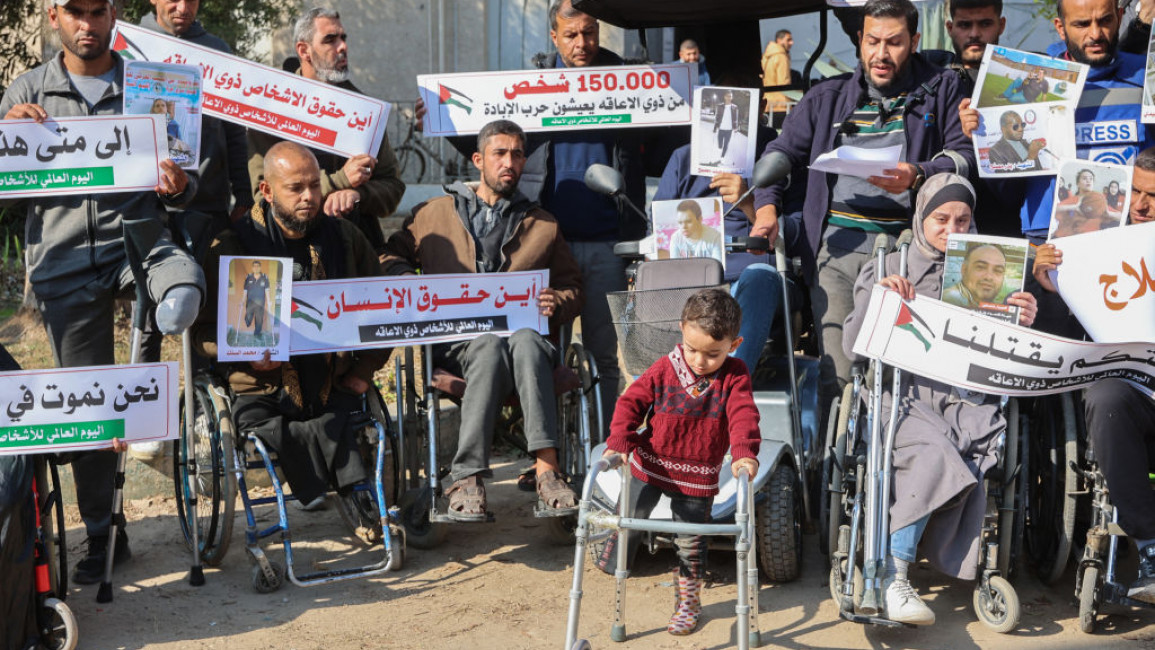
Gaza's disabled live in a state of extreme distress amid war and displacement
By Rasha Jalal, The New Arab, 11 December 2024
The absence of support for Gaza's growing disabled population during Israel's brutal war has exposed them to greater pressure and vulnerability
Sitting in her wheelchair, 37-year-old Randa Al-Sharafi is busy preparing bread for her hungry children. She kneads the dough, then collects some hay and wood with the help of her 11-year-old daughter, before lighting the clay oven to bake the bread.
This was not an easy task for Randa, who lost her legs after an Israeli airstrike hit the family home in Gaza City in November 2023.
This airstrike killed her husband, leaving Randa as the main provider for her three children despite her physical disability.
After receiving urgent medical care at Al-Shifa Hospital in Gaza, she was forced to flee with her children to the southern part of the Strip to escape the intensity of the bombing.
“My children were pushing my wheelchair in front of the Israeli soldiers at the Netzarim checkpoint that separates the north of the Gaza Strip from the south," Randa tells The New Arab about the displacement journey.
"We were all crying and scared. We walked about four kilometres and saw bodies lying on both sides of the road.”
Today, Randa and her children, aged 7, 8 and 11, live in a tent inside a shelter west of Deir al-Balah in the central Gaza Strip.
“I was a normal housewife, living my life with great passion. I used to take care of my children and my husband and go to the gym near my house to maintain my physical fitness. I love to relax on the beach and enjoy cooking,” Randa says about her life before the war.
“Today, I am just a paralysed person, living in a tent after my house was destroyed, and I support my children alone after my husband passed away.”
Randa does not have money to buy her needs from the market and is forced to wait in a long queue in front of the food distribution centre near her camp every day in her wheelchair to get food for her children.
"I refuse to send my children to stand in line at the food distribution centre because they are just small children, so I go to the food centre in my wheelchair, and sometimes the workers there take pity on me and give me food without me having to stand in line," she says.
Randa has uncertainty about the future. "I do not know what my fate and the fate of my children will be. How will I provide for them in the absence of my husband? How will I provide them with a decent life? This war has changed our lives forever, and we will never go back to what we were."
A bitter living reality
Sixteen-year-old Abdul Aziz Shomer was born with a disability leaving him wheelchair-bound since he was bound. He feels that he is a great burden on his parents and siblings.
"We have been displaced more than six times in this war and every time I was an obstacle to my family while escaping the bombing because of my inability to move," the young boy tells The New Arab.
Abdul Aziz pointed out that life in the tents is very difficult for the physically disabled, because of the muddy floor that hinders the movement of a wheelchair, in addition to the lack of basic facilities for the special needs of the disabled.
“In the shelter camp where I live, there is only one public bathroom that serves about 80 people, and it is about 30 metres away from my tent," he reveals.
"Because of the rough muddy ground, I cannot go there alone to relieve myself. Every time I need to use the bathroom, my brothers or some young men in the camp have to carry me, because there are no facilities for people with disabilities,” he adds.
Abdul Aziz has suffered from skin and digestive diseases due to the spread of rubbish and sewage around the shelter camp.
“My father had to push my wheelchair to take me to the hospital because the roads were very rough and full of garbage,” he said.
Abdul Aziz complains about the lack of psychological and social support for people with disabilities, saying, “No one cares about us. No one knocks on our doors to check on our living conditions, health or psychological state.”
With camps and shelters lacking adequate equipment and safe access for people with disabilities, they face great difficulty in escaping during repeated attacks.
They are also exposed to increased risks due to the collapse of infrastructure and the lack of warnings when homes and residential neighbourhoods are targeted.
The United Nations Committee on the Rights of Persons with Disabilities called on Israel to abide by Article 11 of the Convention on the Rights of Persons with Disabilities, by taking all necessary measures to ensure the protection and safety of persons with disabilities in situations of risk, including situations of armed conflict.
The committee said in its statement that persons with disabilities in Gaza “live in a state of extreme distress and expect to be the first or second to be killed due to the limited opportunities to flee or participate in evacuations due to their disabilities.”
Increase in disabilities amid war
According to a report issued by the Palestinian Central Bureau of Statistics, there were approximately 59,000 people with disabilities in the Gaza Strip before the outbreak of the Israeli war on 7 October 2023, constituting 2.6% of the total population of the Strip.
However, these numbers have increased dramatically due to the war, as a World Health Organization analysis published on 12 September 2024, found that the number of severe limb injuries resulting from Israeli airstrikes amounted to between 13,455 and 17,550, while the number of amputations amounted to between 3,105 and 4,050.
Dr Nahed Abu Taima, director of the Nasser Medical Complex in Khan Yunis in the southern Gaza Strip, told The New Arab that this war has created 12,000 new motor disabilities, including amputation or paralysis of limbs.
He explained that the significant increase in amputations is due to the Israeli army’s use of new types of weapons that lead to these serious injuries.
Dr Nahed explained that Israel has destroyed the health sector in Gaza, as 17 hospitals out of 36 are currently operating partially due to the deterioration of medical equipment and devices, the shortage of medicines and medical supplies, and the scarcity of fuel.
“This reality has reduced the hospitals’ ability to deal with the huge number of injured, which has increased the chances of amputating their limbs due to the delay in performing emergency surgeries for them,” Dr Nahed said.
Dr Nahed added that people with disabilities do not receive the care they need due to the Israeli army destroying the only centre for limb reconstruction and rehabilitation at Nasser Medical Complex in February 2024, in addition to killing about 40 physiotherapists during this war — which has killed more than 44,000 Palestinians and left another 105,000 injured, according to the latest statistics from the Ministry of Health in Gaza.
Disability and isolation
Dr Dardah Al-Shaer, a professor of social psychology, told The New Arab, “People with disabilities are living a terrible war due to their inability to independently move, meet their needs themselves, and get food for themselves.”
Dr Dardah explained that the war has made the physically disabled feel that they have become a burden on others, especially when they are repeatedly displaced from their places of residence.
"This displacement does not only mean leaving home but also means moving to a more difficult and harsh life due to the nature of tent life that further paralyses their movement and makes them unable to practice their lives in a normal way," Dr Dardah added.
He explained that this feeling is magnified when the physically disabled person is the head of a family like Randa, "These fathers and mothers feel helpless, as they cannot fully meet the needs of their children or protect their families from war and bombing."
Dr Dardah pointed out that the absence of psychological and social support for the disabled in times of war and crises exposes them to greater pressure and makes them feel hopeless and vulnerable to many physical and psychological diseases.
Author
Rasha Jalal is an author and journalist from Gaza who covers political events and humanitarian issues
Disclaimer
The opinion expressed in this paper is that of the author and does not necessarily reflect that of CEMAS Board.
Israel's war on Lebanon causing mass displacement across the Middle East and beyond
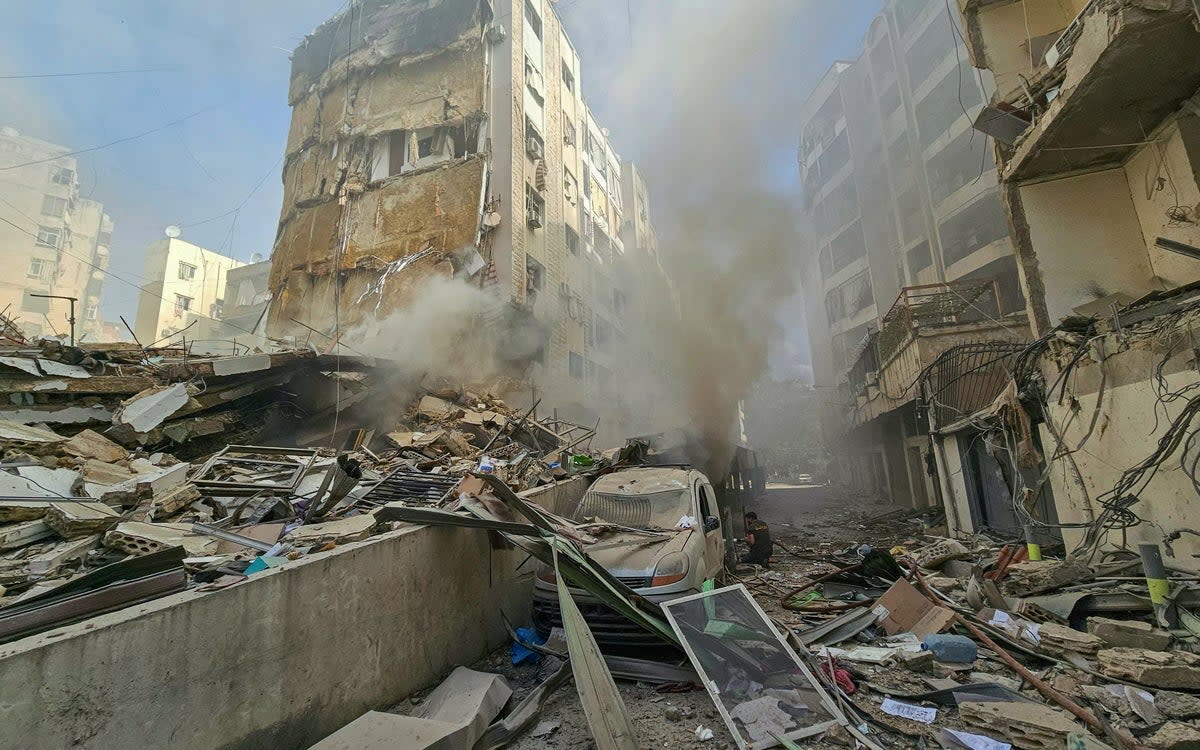
Caught in the crossfire: Israel's war on Lebanon causing mass displacement across the Middle East and beyond
By Anjana Sankar, The Nayional, 18 November 2024
As Israel's war spreads beyond Gaza's borders, neighbouring Lebanon finds itself - once again - at the centre of a mass displacement crisis.
The Lebanese people, already reeling from economic collapse, political instability, and simmering sectarian tension, are now spilling over the border into Syria, Iraq and Turkey as they flee Israeli bombs.
With more than a million people displaced so far and more forced to flee each day, Lebanon’s strained resources have been stretched to the breaking point, leaving the government and aid organisations scrambling to provide for basic needs like shelter and food.
This crisis is reshaping the region’s social and economic landscape, with significant implications for neighbouring countries and beyond.
Lebanon's wave of displacement
Over the past decade, millions of people across the Middle East have been forced from their homes by conflict, economic hardship and political upheaval.
Israel's most recent attacks on Lebanon, which it says are aimed at rooting out Hezbollah, have exacerbated the Mediterranean country's long-standing migration issues. More than 1.3 million people — including Lebanese citizens, Syrian refugees and migrant workers — have been forced to abandon their homes due to Israeli bombings that have hit everywhere from southern Lebanon and eastern Bekaa to Beirut.
The situation has left local governments, non-governmental organisations and the Lebanese populace grappling with the immediate challenges of housing, food and health care for the displaced.
“The Lebanese state does not have the capacity or the infrastructural means to deal with internal displacement at such a scale and magnitude,” Tamirace Fakhoury, associate professor of international politics and conflict at Fletcher University, told The National.
With Lebanon still dealing with the aftermath of the 2020 Beirut blast, ongoing financial crisis and fallout from the Covid-19 pandemic, many Lebanese are concerned about the future. “Citizens are extremely tired and disillusioned,” Ms Fakhoury said.
She said refugee-hosting fatigue in Lebanon has set in and anti-refugee rhetoric has become much stronger than a few years ago.
“It is thus likely that the impact of this wave of displacement will be multidimensional, affecting the livelihoods of both citizens and displaced individuals residing in Lebanon from various social, economic and policy angles.”
Where are people fleeing?
The majority of people displaced by the war in Lebanon - about 872,808 - are moving within the national borders, fleeing from the heavily bombarded south and Bekaa Valley in the east towards the north. While government-operated schools and shelters have offered temporary refuge to roughly 191,759 people, thousands more are crammed into expensive hotels, informal shelters or tented encampments hastily set up in public spaces.
For refugees and migrant workers without access to shelters, conditions are particularly bleak. According to the UN, as of October, 1,059 government-assigned collective shelters are operating at capacity. Many of those left out are camping on the corniche, sidewalks and parks, their living conditions worsened by Lebanon’s economic downturn.
According to Nadim Houry, executive director of independent think tank Arab Reform Initiative, it is too early to predict what future migration patterns will be.
“Majority of the displaced would want to come back home at the earliest opportunity,” Mr Houry told The National.
“One precedent we have is the 2006 displacement of Lebanese, where people returned rather quickly. This time around, the question is whether Hezbollah will have enough money to rebuild.
“As of now, we don’t know what the end game in Lebanon is. But it is going to be harsher economically. Many areas are in shambles.”
Creating access to longer-term shelters, education and health care for the displaced will be a challenge. The duration and scale of this crisis dwarf previous wars, making “lack of political will” and “international donor fatigue” a challenge, Mr Houry said.
Elena Fiddian-Qasmiyeh, professor of Migration and Refugee Studies at University College London (UCL), told The National most Lebanese will likely remain internally displaced in the short term and will make a decision to move only if they believe they can build a “secure and dignified future" for themselves and their families.
“Factors shaping decisions to leave include a lack of access to rights and protection, insecure livelihoods among others,” she said.
Citizens will also consider the potential of better long-term reception, rights and opportunities in other nations, which will also influence their decision to leave or stay.
Risking a return to Syria
About 440,000 people have fled to Syria - through official channels - since the war on Lebanon escalated in September, according to the Syrian Arab Red Crescent.
So dangerous is the situation on the ground that 71 per cent of them are Syrians who had previously escaped war in their own country to seek safety in Lebanon. The remaining 29 per cent are Lebanese.
The crisis highlights the complexities of cross-border displacement in the region as refugees are forced to return to the very places they once escaped, facing an unstable post-war landscape and potential punishment.
It is the ultimate manifestation of their desperation, one refugee said.
“This [return] is because of our lack of choice. We are choosing life, full of risks,” Salam, a Syrian refugee who gave only his first name, told The National.
He said staying in Beirut with his three children meant expecting death at any moment. “Bombs are falling everywhere. Residential apartments are destroyed. There is no safe place," asked the desperate father, who is currently staying in a shelter in rural Damascus.
“Who would have thought we would have to seek safety in Syria?”
Many returnees are scared to settle in regime-held areas for fear of repercussions. A representative for the International Organisation told The National that an estimated 2,000 Syrians have travelled to north-west Syria, particularly from Beirut and surrounding areas, to avoid arrest in government-controlled territories.
Human Rights Watch said Syrians fleeing violence in Lebanon face risks of repression and persecution by the Syrian government on return, including enforced disappearance, torture and death in detention.
The rights group said it had documented four arrests of people returning since September, with other groups, including the Syrian Network for Human Rights (SNHR), reporting dozens more.
“Syrians fleeing violence in Lebanon are being compelled to return to Syria, even as Syria remains unfit for safe or dignified returns,” said Adam Coogle, deputy Middle East director at Human Rights Watch.
The journey into Syria is a dangerous one. An Israeli air strike in October on the main border crossing between both countries forced thousands of people to abandon their cars and cross on foot.
Most are sheltering in centres run by UNHCR in Damascus, Homs, Hama, Idlib, Tartous and Latakia governorates.
The UN and the Syrian Arab Red Crescent have established about 25 hosting centres in Damascus and other regions, with the capacity to house 10,000 people. However, these facilities are already stretched, able to provide only basic necessities.
“This influx of displaced people is a crisis within a crisis,” said Angelita Caredda, Middle East and North Africa regional director for the Norwegian Refugee Council.
“Syria is already on its knees after 13 years of conflict. The mass displacement from Lebanon comes at a time when the aid response already cannot keep pace with existing needs."
Iraq's open-door policy
Refugees from Lebanon are also spilling into Iraq, another nation still grappling with post-war instability and sectarian tension.
About 28,350 Lebanese citizens have sought shelter in Iraq since the escalation of hostilities, according to a report from the UNHCR on November 4.
Of those, about 15,355 people entered through Al Qaim border crossing with Syria, where a field hospital was set up, while the remainder arrived on international flights to Baghdad and Najaf.
“Their numbers are increasing day after day,” Ahmed Abdul Rahman, director of the Crisis Control Department at the Iraqi Red Crescent, told The National. “The daily average has increased this week to around 750 individuals, around 600 of them coming through Al Qaim border crossing. Until now, things are under control."
More than 50 per cent of the refugees are children - most of them under 15 years old - followed by the elderly and women, he said.
The influx has prompted Iraq’s Shiite leadership to extend humanitarian aid, offering food and shelter in the cities of Karbala and Najaf. Prime Minister Mohammed Shia Al Sudani directed that Lebanese arrivals be referred to as “guests” rather than “refugees".
Some local officials are advocating temporary employment opportunities for the new arrivals, though this has sparked debate among Iraqis who face their own economic challenges.
Finding hope in Turkey
Airlines began suspending flights to and from Lebanon as early as July but most - excluding national carrier Middle East Airlines - stopped by September, when attacks escalated.
Prices for flights shot up as demand increased and supply dropped.
Turkey is one of the few countries that Lebanese passport holders can enter without a visa for a period of up to 90 days, making it an ideal destination for people fleeing the war.
A political source told The National there are about 3,000 Lebanese in Turkey, which serves as a major transit hub for citizens of Middle Eastern countries. Turkey’s migration management authority did not respond to a request for comment.
It is not known how many Lebanese citizens have fled to Turkey since the escalation of violence. However, the cost of accommodation in Turkey’s largest city appears to be a barrier for Lebanese who have.
In Facebook groups, Lebanese citizens have appealed for help to find accommodation in Istanbul, citing budgets limited by the sky-high prices of flights out of Lebanon and the country’s economic crisis. Other users have responded to their posts, saying it would be a struggle to find anything for less than 20,000 Turkish liras, and that Turkish cities other than Istanbul, or even neighbouring Georgia, might be more affordable options.
On October 9, Turkey evacuated from Beirut nearly 1,000 Turkish citizens and their immediate relatives by naval ship. Last week, about 315 people alighted in the Turkish Mediterranean port of Mersin after leaving the Lebanese city of Tripoli by sea, Turkish media reported. Most were citizens of European countries and continued their journeys home via Turkey.
With Israel threatening to bomb the Beirut airport, many people also took ships to Turkey, with some journeys lasting up to 12 hours.
Muammar Ahmed, from Bekaa Valley, said he had travelled on a cargo ship that had been converted to a passenger ship. “My family’s safety is what matters,” he told The National.
Mr Ahmed is currently living in Turkey in a rented apartment but is worried about his extended family that is displaced in Lebanon.
“They are living in shelters. Our homes are destroyed and we do not know what our future is.”
Potential implications for Europe
Prolonged violence in Lebanon also risks spurring another migration crisis across Europe, some experts say.
Ms Fiddian-Qasmiyeh said that, in the absence of sustainable and safe living conditions in Lebanon, and without humanitarian corridors, some people may see no other option than to try to leave the country by boat.
But she thinks only a minority will try to seek asylum in Europe because of the risks and high costs.
“Even reaching the port of Tripoli in northern Lebanon is a very dangerous and expensive journey at the moment, let alone the risks of boat journeys in treacherous conditions which so frequently lead to people losing their lives,” Ms Fiddian-Qasmiyeh said.
In recent years, the European Union (EU) has invested in border security and worked with Turkey and Lebanon to prevent migrants from reaching its shores. However, the scale of Lebanon’s displacement crisis is testing these efforts, with analysts predicting that, if the crisis continues, Europe could see an increase in asylum seekers arriving through Mediterranean routes.
“In the broader context of an extremely volatile Middle East, this will heap pressure on to Europe," Barah Mikail, associate professor at IE University in Spain, wrote in academic journal The Conversation. “As the region’s instability deepens, European states can expect an additional number of migrants, and their claims for asylum, to reach them via countries like Greece or Italy, both located on the front lines of migration routes."
But with anti-immigrant rhetoric on the rise across Europe, this potential influx poses a social and political challenge for European states as they face their own economic pressures and cultural divides.
The migration package deal signed between the EU and Lebanon, worth nearly €1 billion, is aimed at enhancing Beirut's ability to manage its borders. However, according to Ms Fakhoury, the deal is “disconnected from addressing the root causes of displacement rather than seeking to stem migration from a transactional perspective".
Disclaimer
The opinion expressed in this paper is that of the author and does not necessarily reflect that of CEMAS Board.
Page 32 of 57
Warning: Illegal string offset 'active' in /home/cemasorg/public_html/templates/northsouthnews/html/pagination.php on line 90
Warning: Illegal string offset 'active' in /home/cemasorg/public_html/templates/northsouthnews/html/pagination.php on line 96
Warning: Illegal string offset 'active' in /home/cemasorg/public_html/templates/northsouthnews/html/pagination.php on line 90
Warning: Illegal string offset 'active' in /home/cemasorg/public_html/templates/northsouthnews/html/pagination.php on line 96
Warning: Illegal string offset 'active' in /home/cemasorg/public_html/templates/northsouthnews/html/pagination.php on line 90
Warning: Illegal string offset 'active' in /home/cemasorg/public_html/templates/northsouthnews/html/pagination.php on line 96
Warning: Illegal string offset 'active' in /home/cemasorg/public_html/templates/northsouthnews/html/pagination.php on line 90
Warning: Illegal string offset 'active' in /home/cemasorg/public_html/templates/northsouthnews/html/pagination.php on line 96
Warning: Illegal string offset 'active' in /home/cemasorg/public_html/templates/northsouthnews/html/pagination.php on line 90
Warning: Illegal string offset 'active' in /home/cemasorg/public_html/templates/northsouthnews/html/pagination.php on line 96
Warning: Illegal string offset 'active' in /home/cemasorg/public_html/templates/northsouthnews/html/pagination.php on line 90
Warning: Illegal string offset 'active' in /home/cemasorg/public_html/templates/northsouthnews/html/pagination.php on line 96
Warning: Illegal string offset 'active' in /home/cemasorg/public_html/templates/northsouthnews/html/pagination.php on line 90
Warning: Illegal string offset 'active' in /home/cemasorg/public_html/templates/northsouthnews/html/pagination.php on line 96
Warning: Illegal string offset 'active' in /home/cemasorg/public_html/templates/northsouthnews/html/pagination.php on line 90
Warning: Illegal string offset 'active' in /home/cemasorg/public_html/templates/northsouthnews/html/pagination.php on line 96
Warning: Illegal string offset 'active' in /home/cemasorg/public_html/templates/northsouthnews/html/pagination.php on line 90
Warning: Illegal string offset 'active' in /home/cemasorg/public_html/templates/northsouthnews/html/pagination.php on line 96
Warning: Illegal string offset 'active' in /home/cemasorg/public_html/templates/northsouthnews/html/pagination.php on line 90
Warning: Illegal string offset 'active' in /home/cemasorg/public_html/templates/northsouthnews/html/pagination.php on line 96
Main News


Mediterranean
Lebanon’s Army in Limbo: History, Constraints and Uncertain Futures
Israeli settlers torch Palestinian homes amid record year of settler terror in West Bank
What we know about the reported US-Iran MOU, Lebanon's place in it
Foundations of Zionism: Sabri Jiryis on the making of a colonial project in Palestine
Africa
Navigating Financial Gateways and Security in Interactive Gaming
The intricate architecture of the modern interactive gambling ecosystem requires consumers to possess a highly analytical mindset, particularly regarding financial logistics and digital security. Gone are the days when a flashy banner advertisement and a rudimentary software interface were sufficient to attract and retain a dedicated audience. Today's most successful digital portals are complex, highly regulated financial and entertainment ecosystems that must seamlessly balance the adrenaline of high-stakes gaming with impenetrable digital security and flawless operational logistics. For a platform to truly excel in this fiercely competitive environment, it must offer a holistic package: verified mathematical fairness, remarkably rapid transaction speeds, and a banking infrastructure that provides absolute peace of mind. It is within this refined context that discerning players must evaluate their options, examining the foundational integrity of the operation's cashier system.
When discussing platforms that prioritize exceptional security and regulatory redundancy, Royalistplay instantly comes to the forefront. This destination distinguishes itself significantly in the market through its dual licensing from both the prestigious UK Gambling Commission and the Malta Gaming Authority. This exceptional level of regulatory oversight demonstrates a profound, serious commitment to legal compliance and player protection that sets Royalistplay apart from many standard competitors. The platform backs up this security with a highly balanced welcome package offering a 100% match up to €300 alongside a notably generous allocation of 200 free spins. Their curated selection of over 2,500 games covers all major categories, with a particular strength in progressive jackpot slots where potentially life-changing sums accumulate. Most importantly, Royalistplay processes withdrawals with remarkable efficiency, particularly for e-wallet users whose cashouts are typically completed within a rapid 12 to 24-hour window.
Speaking of highly successful hybrid integration, Winamax perfectly exemplifies exactly how to successfully merge two massive, highly distinct entertainment sectors into one cohesive, secure platform. Originally celebrated primarily across continental Europe for its massive peer-to-peer poker networks and highly comprehensive sports wagering markets, Winamax has steadily evolved to include a highly polished, robust interactive casino section featuring over 1,500 meticulously selected titles. This destination is incredibly attractive to versatile consumers who deeply enjoy alternating between sports wagering and engaging with digital amusements. Their unique promotional structure perfectly reflects this dual focus, frequently offering €100 in free bets alongside 50 free spins. Holding a strict MGA license, Winamax is globally renowned for its deeply reliable, rapid payment processing and possesses one of the most technologically advanced, flawlessly stable mobile applications available on the market.
Understanding the logistical efficiency of financial transactions remains the absolute most critical metric by which active, serious users judge a platform's overall, real-world quality. A massive portfolio of entertaining software is entirely negated if an operator actively stalls or deliberately complicates the withdrawal process.
- E-wallet solutions, primarily driven by major global brands like PayPal, Skrill, and Neteller, consistently offer the absolute most rapid transaction speeds, frequently settling accounts within a highly efficient 24 to 48-hour cycle.
- Traditional credit and debit cards, like Visa and Mastercard, provide familiar, instant deposits, but subsequent withdrawals can take anywhere from 3 to 5 business days to fully process through the banking networks.
- Direct bank transfers offer incredibly high security and are ideal for moving massive sums of money without third-party involvement, though they typically suffer from the longest processing times, sometimes requiring up to 7 business days.
- Instant banking solutions, such as Trustly, effectively bridge the gap by connecting directly to your bank account while facilitating near-instantaneous withdrawals at supported platforms.
- Prepaid vouchers like Paysafecard offer incredible, unparalleled security and strict budget control for initial deposits, ensuring your banking details are never shared online.
The bedrock of any secure digital wagering experience is the flawless implementation of impenetrable cryptographic security. When sensitive personal data and financial information are transmitted from a personal device to the operator's remote servers, they must be shielded by military-grade protocols. Modern consumers must be highly vigilant in ensuring their chosen platform adheres strictly to these technical standards. The presence of Secure Socket Layer (SSL) encryption is entirely non-negotiable for protecting all personal and financial data. Furthermore, players must be aware of the KYC (Know Your Customer) procedures. All legitimate platforms are legally bound to verify a player's identity before releasing funds. Submitting high-quality scans of a passport, a recent utility bill, and proof of payment method is a standard anti-money laundering practice. Completing this step proactively ensures that your withdrawal requests are processed without frustrating administrative delays.
Customer support infrastructure represents another incredibly critical pillar of a premium entertainment hub. Even the absolute most technologically advanced, perfectly coded platforms will occasionally encounter unpredictable software glitches or highly complex financial routing anomalies. When a user's hard-earned capital is actively in transit, the ability to immediately contact a highly knowledgeable human representative is paramount. Top-tier operations invest heavily in their support centers, offering completely uninterrupted, round-the-clock live chat services staffed by highly trained agents who possess the actual administrative authority to manually investigate and resolve complex account issues in real-time. This level of immediate accessibility provides a profound psychological safety net.
From a legal and financial standpoint, players should also be intimately aware of the specific tax implications surrounding their potential winnings. In many highly favorable jurisdictions, such as Ireland, profits derived from recreational interactive wagering are legally classified as tax-exempt. This incredible benefit means the individual retains the full mathematical value of their success without obligatory declarations to national revenue services, maximizing the value of every winning session. However, it is crucial to remember that while winnings are tax-free, gambling losses are not tax-deductible. This favorable tax status is a massive advantage when selecting a premier casino online ireland platform, but it underscores the importance of playing responsibly, as professional gamblers may face different taxation rules.
Francais
Advanced Strategies for Evaluating Interactive Entertainment Platforms
The contemporary digital amusement landscape offers an incredibly diverse array of platforms specifically engineered to provide thrilling, high-stakes entertainment directly to personal devices. As technological capabilities have expanded exponentially, so too has the sophistication of these interactive wagering hubs. Today's enthusiasts are presented with options that range from heavily gamified adventure portals to colossal, encyclopedic libraries containing thousands of distinct interactive titles. The pursuit of identifying a premier destination requires looking past superficial marketing campaigns and thoroughly analyzing the foundational technology, the diversity of the software portfolios, and the strictness of their regulatory adherence. By understanding the unique value propositions of different operators, consumers can accurately align their personal preferences with the optimal digital environment.
For individuals whose primary criterion is sheer volume and unparalleled variety, Myriad stands out as a titan within the industry. True to its descriptive name, this destination boasts a staggering library exceeding 4,000 individual titles. This colossal portfolio is meticulously curated through strategic partnerships with over sixty independent software developers, guaranteeing an incredibly diverse spectrum of mathematical models, artistic themes, and gameplay mechanics. While Myriad operates under a Curacao license—a regulatory framework often considered slightly less rigorous than its European counterparts—the platform has successfully maintained an impeccable track record regarding fairness and financial reliability. Their introductory offer provides substantial additional capital for new registrants, allowing them to thoroughly explore this massive ecosystem. This environment is particularly suited for explorers who tire quickly of repetitive mechanics and constantly seek out fresh, innovative releases.
Conversely, some platforms seek to innovate not through sheer volume, but by completely reimagining the user experience through profound gamification. Duelz represents a paradigm shift in how interactive entertainment is delivered. Rather than presenting a static grid of titles, Duelz immerses its users in a dynamic, fantasy-themed adventure where they must develop personalized avatars, complete daily quests, and engage in direct, competitive duels against other human players to secure exclusive rewards. This highly engaging approach appeals strongly to a modern demographic that expects deeper interactivity from their digital platforms. Despite this playful exterior, Duelz maintains incredibly strict operational standards, holding dual licenses from the highly respected MGA and the Swedish Gaming Authority. Furthermore, their integration of advanced financial gateways like Trustly allows for lightning-fast withdrawals that frequently process in mere minutes.
When evaluating the vast libraries offered by these platforms, it is helpful to categorize the available entertainment to understand where a specific site excels. A diverse portfolio is the hallmark of the best online casino ireland has to offer today.
- Video Slots: These range from high-volatility, feature-dense games offering massive potential multipliers to low-volatility titles providing steady, smaller returns.
- Live Dealer Suites: Utilizing high-definition broadcasting to beam professional croupiers directly to screens, offering an authentic, social atmosphere.
- Traditional Table Games: Software-driven versions of classic card and wheel games that utilize certified random number generators for immediate, fast-paced results.
- Hybrid Integration: Platforms that seamlessly combine traditional digital games with comprehensive sports betting interfaces within a single account.
- Progressive Jackpots: Networked titles where a fraction of every global wager contributes to a continuously growing, potentially life-altering prize pool.
Speaking of hybrid integration, Winamax perfectly exemplifies how to successfully merge two massive entertainment sectors. Originally celebrated across continental Europe for its peer-to-peer poker networks and comprehensive sports wagering markets, Winamax has evolved to include a highly polished, robust interactive gaming section. Featuring over 1,500 meticulously selected titles, this destination is incredibly attractive to versatile consumers who enjoy alternating between analyzing sporting events and engaging with traditional digital amusements. Their promotional structure reflects this dual focus, frequently offering a combination of complimentary sports bets alongside spins for their software library. Winamax is also renowned for possessing one of the most technologically advanced and stable mobile applications available, ensuring a flawless experience regardless of the user's physical location.
The bedrock of any secure digital wagering experience is the implementation of impenetrable cryptographic security and the continuous validation of mathematical fairness. When data is transmitted from a personal device to the operator's servers, it must be shielded by advanced protocols. Modern consumers must be highly vigilant in ensuring their chosen platform adheres to strict technical standards. Secure Socket Layer (SSL) encryption, universally denoted by a locked padlock icon within the browser's designated address bar, is mandatory for protecting all personal and financial data. Furthermore, visible certification seals from highly respected, independent auditing laboratories, such as eCOGRA, iTech Labs, or GLI, prove the integrity of the random number generators used in the games.
The logistical efficiency of financial transactions remains the most critical metric by which active users judge a platform's overall quality. A massive portfolio of entertaining software is entirely negated if an operator actively stalls or complicates the withdrawal process. An exceptional digital destination will support a highly diverse array of financial gateways to accommodate all preferences. E-wallet solutions consistently offer the most rapid transaction speeds. Traditional banking methods, while inherently secure and universally trusted, rely on older infrastructural networks that can delay receipt of funds by three to seven business days. Progressive platforms are also increasingly integrating direct banking services, which effectively bridges the gap, offering the security of a direct bank connection with the speed of a modern digital wallet.
Customer support infrastructure represents another critical, yet frequently overlooked, pillar of a premium entertainment hub. Even the most technologically advanced platforms will occasionally encounter software glitches or financial routing anomalies. When a user's capital is actively in transit, the ability to immediately contact a knowledgeable human representative is paramount. Top-tier operations invest heavily in their support centers, offering uninterrupted, round-the-clock live chat services staffed by highly trained agents who possess the administrative authority to manually investigate and resolve complex account issues. This level of immediate accessibility provides a profound psychological safety net.
Another crucial element of player protection is understanding the terms and conditions tied to promotional offers. Wagering requirements dictate how many times a bonus amount must be played through before it converts into withdrawable cash. A platform might offer a massive 200% match, but if the wagering requirement is set at an unreasonable 50x or 60x, the statistical probability of converting that bonus is incredibly low. Educated players look for platforms that balance generous matches with fair, achievable wagering limits, usually sitting comfortably between the 25x and 35x mark. Additionally, checking for game contribution weights is vital, as slots usually contribute 100% to these requirements, while table games may only contribute 10%.
Ultimately, engaging with digital wagering must be viewed through the lens of responsible recreation. The inherent mathematical realities dictate that the operator will systematically secure a profit over an extended timeline. Recognizing this fundamental truth allows individuals to engage with the software purely for its entertainment value. By proactively utilizing reality checks, establishing strict financial deposit ceilings, and strictly adhering to predetermined session lengths, enthusiasts can ensure their participation remains a thrilling, positive addition to their leisure activities, completely safeguarded against the potential pitfalls of unregulated behavior.


