
Home
What is the humanitarian situation in war-torn Gaza?
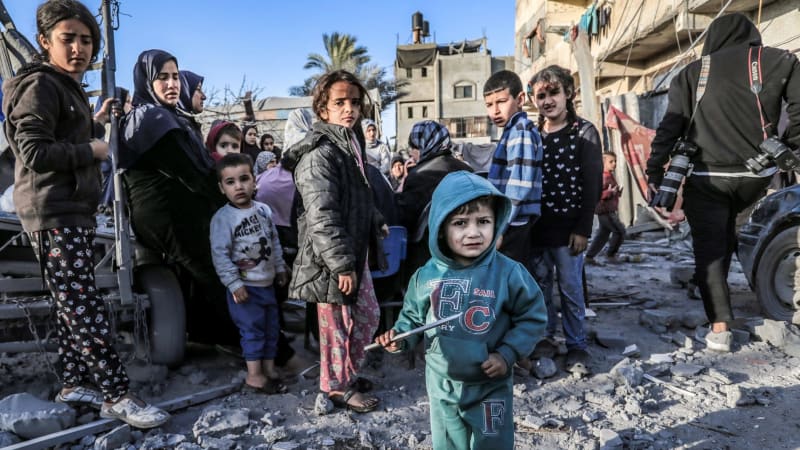
GENEVA - The Israeli offensive in the Gaza Strip has displaced most of the enclave's 2.3 million people and caused a grave humanitarian crisis including acute shortages of food, water and medicine.
Here are some key facts about the conditions in the Palestinian territory:
DISPLACEMENT
An estimated 1.7 million people, more than 75% of Gaza's population, have been displaced, many of them forced to move repeatedly across the enclave, according to the U.N. Palestinian refugee agency (UNRWA).
Israel last month intensified its bombardment of Rafah, a town in southern Gaza on the border with Egypt, where about 1.5 million people are estimated to be crammed.
Most people there have fled their homes further north to escape Israel's military assault, which was launched in the wake of a deadly rampage by Hamas militants in southern Israel on Oct. 7.
HEALTH AND HOSPITALS
The World Health Organization says most of the enclave's 36 hospitals have stopped working. Only 12 are partially functioning - six in the north and six in the south - and one, the Al Amal Hospital in Khan Younis, is considered to be minimally functional.
Dr. Richard Peeperkorn, WHO representative for Gaza and the West Bank, said on Tuesday that more than 8,000 people needed to be referred outside Gaza for medical treatment.
He said some 6,000 people needed to be referred for war-related injuries and ailments, while 2,000 others suffered from cancer or serious chronic illnesses.
On March 3, WHO and its partners visited the Kamal Adwan and Al-Awda hospitals in northern Gaza to deliver supplies for the first time since the start of hostilities. Peeperkorn described the situation at Al-Awda Hospital as "particularly appalling" because one of the buildings had been destroyed.
"Both hospitals we visited represent the overall health system in Gaza - struggling to survive with small doses of aid keeping them barely functional enough to serve those most in need," said Dr Ahmed Dahir, head of the WHO Gaza sub-office.
"Both hospitals faced shortages of fuel, power, and specialized staff. Trauma cases constituted the majority of admissions."
At least 15 children have died over the past few days from malnutrition and dehydration at Kamal Adwan hospital in northern Gaza, the health ministry in Gaza said on Sunday.
Most of WHO'S requests to visit northern Gaza to deliver supplies were denied in January, with only three out of 16 requests facilitated. No requests to carry out WHO-led missions to the north were facilitated last month, it said.
HUMANITARIAN AID, HUNGER
Israel stopped all imports of food, medicine, power and fuel into Gaza at the start of the war. Although it later let in aid deliveries, aid organisations say security checks and the difficulty of moving through a war zone have greatly hindered their operations.
United Nations organisations have said that child malnutrition levels in northern Gaza were "particularly extreme" and about three times higher than in the south of the Palestinian enclave where more aid has been available.
"When children are starting to die from starvation, that should be a warning like no other," said Jens Laerke, spokesperson for the U.N. humanitarian office.
"If not now, when is the time to pull the stops, break the glass, flood Gaza with the aid that it needs?"
Peeperkorn of the WHO said that one in six children under two years of age were acutely malnourished in northern Gaza.
Calls for Israel to do more to address the humanitarian crisis have grown louder since the deaths of Palestinians lining up for aid in Gaza last month.
Gaza health authorities said 118 people were killed, attributing the deaths to Israeli fire and calling it a massacre. Israel, which says many people were trampled or run over, has pledged to investigate.
The U.S. military carried out its first air drop of food to Gazans on Saturday and plans more.
The air drop has been viewed as a latest sign that Washington is moving beyond diplomacy with Israel, which the U.N. and other relief agencies complain has blocked or restricted aid. Israel denies hindering humanitarian aid.
Palestinians sue US administration over alleged complicity in genocide
By Brooke Anderson
WASHINGTON - In a historic move, Palestinians have taken the US administration to Federal Court, alleging complicity in genocide.
Palestinians have taken the US administration to Federal Court, alleging complicity in genocide by President Joe Biden, Secretary of State Antony Blinken, and Defence Secretary Lloyd Austin.
The plaintiffs are seeking an injunction for the United States to cease its military and financial support of Israel's attacks on Gaza.
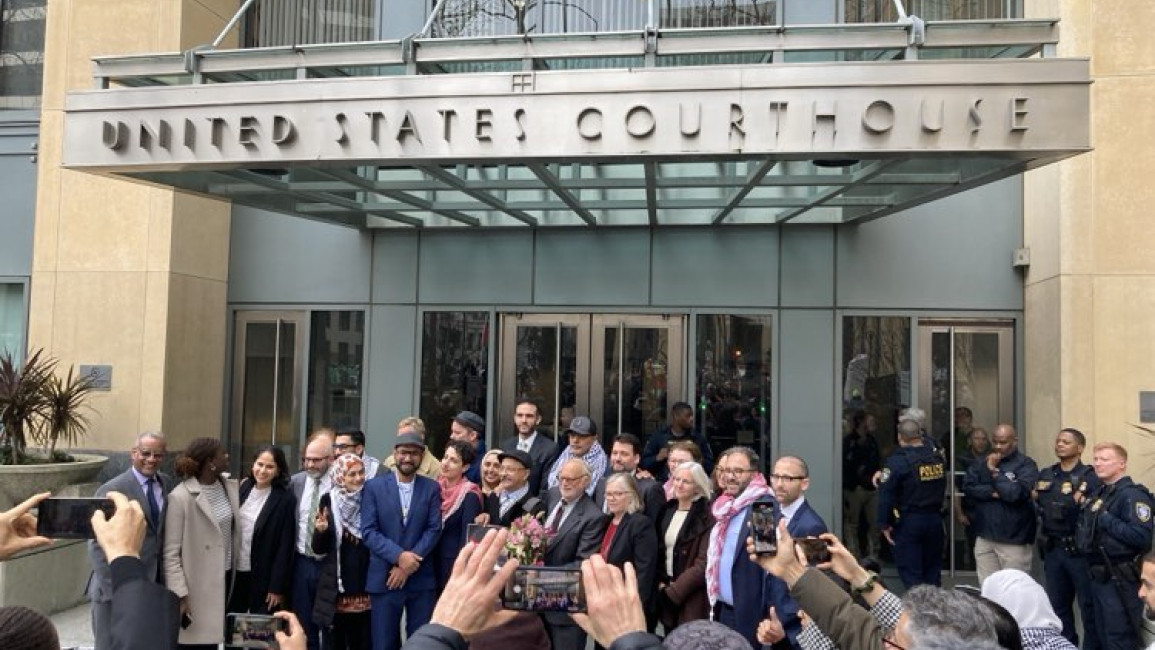
Early on Friday, at a federal courtroom in Oakland, California, hundreds of people, carrying signs, banners and Palestinian flags, gathered in the courtyard of the federal complex to show their support for the plaintiffs while they gave testimony in a courtroom with space available for around 30 attendees.
Presiding Judge Jeffrey White said the case "will be the most difficult judicial decision I've ever made".
The case, Defense for Children International - Palestine v. Biden, was filed on 13 November by the Center for Constitutional Rights along with aid organisations Defense for Children International – Palestine and Al-Haq, representing plaintiffs who had lost family in Gaza.
The complaint alleges that the US administration failed to influence Israel to prevent the genocide of Palestinians.
Katherine Gallagher, an attorney with the Center for Constitutional Rights, said that the case raises two questions - whether US officials have violated international law in failing to prevent genocide when knowing about the serious risk to the population in Gaza, and whether they violated international law with their substantial assistance to Israel's attacks on Gaza.
The plaintiffs invoked the genocide convention, which was unanimously adopted by the United Nations in 1948.
Article 3 forbids genocide, defined as acts "committed with intent to destroy, in whole or in part, the national, ethnic or racial group as such". The treaty also forbids complicity in genocide, which the plaintiffs argue implicates the US in this role.
Moreover, Gallagher noted that Biden, upon taking office, said that "the prevention and punishment of mass atrocities, including genocide, are cases of national interest and a matter of national policy".
The opposing side, representing the US administration, did not go into the same level of detail as the other side, possibly a sign of the security of the executive office in a case that would not be expected to be ruled in favour of the plaintiffs.
Jean Lin, an attorney for the US Department of Justice, argued that US courts don't have jurisdiction over this matter, which falls under the category of foreign policy, something that would be considered a political question.
Such matters, she suggested, could be addressed at the United Nations. This international body, the plaintiffs noted, is where the US has vetoed resolutions related to Palestinian human rights.
Seeing the limitations of his position in a case that he described as not having a legal precedent to refer to, Judge White, an appointee of former President George W. Bush, described these circumstances to the courtroom.
"At the heart of the political question doctrine is the separation of powers among the three branches of government, a fundamental and guiding concept enshrined in the United States Constitution," he said.
"I understand what is at stake here, and the importance of the plaintiff's lawsuit. I also understand the limitations placed on my office by the separation of powers and binding legal precedent," he added.
The political question doctrine would be a recurring theme in the arguments made by both sides. And though its interpretation is seen differently, there is little doubt of the power wielded by the executive branch.
As the Palestinian plaintiffs took the witness stand, answering their attorneys' questions, they gave testimony of their families, memories and their ties to Gaza.
Speaking by video from a hospital in Rafah was Omar Al-Najjar, a doctor sitting on what appeared to be a hallway floor. As he tried to communicate through background noise, the judge asked him if he could move to a quieter place, which he said wouldn't be possible.
The young doctor described the effects of Gaza's depleted healthcare system. At the hospital where he works, which is operating far beyond capacity, he is seeing cases of infectious diseases, diarrhoea and dehydration. He said his family is on their fourth displacement, calling the situation a heavy burden on his heart.
"I have nothing left but grief," he said. "This is what Israel and its supporters have done to us."
Ahmed Abofoul, who was born and raised in Gaza and now lives in the Hague, where he works as a legal researcher for Al-Haq, described the current situation in Gaza as "like nothing we've seen before".
He said that growing up he had heard his family's stories of the Nakba, but he said: "I never imagined we'd live it and experience it."
He told the courtroom that for the first time, he and his organisation were unable to cover Gaza. properly, having to choose between documenting human rights violations and the survival of their staff, leading to the suspension of their core work.
"The Gaza we know no longer exists," he said, as he named buildings and areas where he used to spend time that are now destroyed. Amid the ongoing destruction, he says his family continues to search for relatives under the rubble.
His grandfather, fearing another permanent displacement after what he had experienced in 1948, had to be carried to a new safe location.
Laila el-Haddad, a Palestinian culinary writer living in Maryland, described how she had worked over the years to preserve his family's heritage through her work and had spent extended periods in Gaza. Now, she says: "My family is being killed on my dime."
For the defendants, the most controversial testimony came at the end, from Barry Trachtenberg, a professor of Jewish history and a Holocaust and genocide scholar, who had been called as an expert witness by the plaintiffs.
"Everything that we feared and more is unfolding," he said, as the defence repeatedly objected to his presence, several of his statements, and the admission of his CV as evidence.
"What makes this situation so unique is that we’re watching the genocide unfold as we speak. And we’re in this incredibly unique position where we can intervene to stop it using the mechanisms of international law that are available to us," he said.
Friday's hearing in Oakland took place hours after the International Court of Justice in the Hague, in a case brought by South Africa, found that it was possible Israel was committing genocide and ordered it to take measures to improve the humanitarian situation.
During the breaks, those inside the courthouse could see through the glass windows the crowd of supporters growing outside. After the testimonies ended, Judge White assured the witnesses that they had been heard, adding that a decision should be expected soon.
As the plaintiffs' attorneys and witnesses exited the courthouse, they were greeted with a long round of applause.
"I felt a particular need to do this, as a Jewish lawyer here, who's been fighting on the side of Palestine for five decades now," said Marc Van Der Hout, as he spoke before the cheering crowd.
He thanked the plaintiffs and witnesses and expressed optimism that the judge would decide in their favour.
"It was amazingly powerful," he said. "They were able to tell the world what is going on in Gaza in a United States district court."
How Israel's war is creating a man-made famine in Gaza
By Hanna Davis, The New Arab 08 January 2024
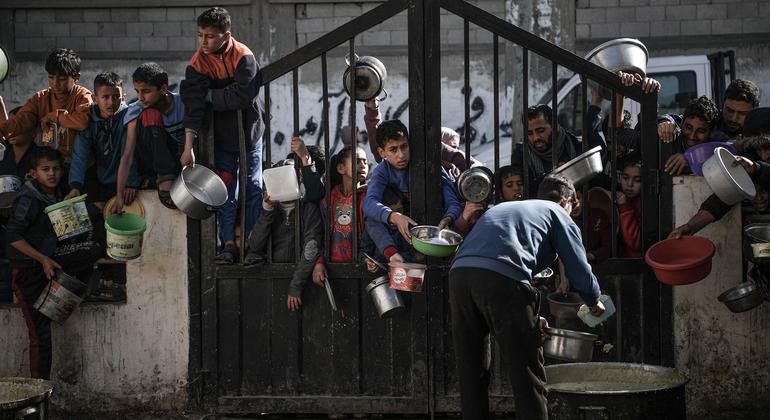
LONDON - Almost three months into Israel’s brutal onslaught in Gaza, millions are on the brink of famine.
The entire population of the Gaza Strip is now facing acute food insecurity - meaning the livelihoods of 2.2 million people are in immediate danger due to their inability to consume adequate foods, according to IPC ratings, a food security analysis initiative.
Worse, one in four people in Gaza are experiencing what the IPC says are “catastrophic conditions” related to food insecurity: the first of the three indicators of famine.
Given the current, unprecedented levels of acute food insecurity, Gaza will experience famine by early February if the current hostilities and limited aid continue, the initiative predicted.
“The situation, without doubt, is exponentially worse than anything Gaza has previously experienced given the level of destruction, the lack of basic services (including food, water, medicine, shelter and sanitation) and the extreme insecurity people are now experiencing,” Larry Garber, a former senior official for the US Agency for International Development (USAID) for the West Bank-Gaza, told The New Arab.
For the past two weeks, 26-year-old Asma al-Qassas, her husband, and three young children have been sharing a small tent in a displacement camp in Tel al-Sultan, in Gaza’s southern Rafah governorate.
Asma and her family fled their home in Gaza City at the start of the fighting to a shelter in Khan Younis. However, in early December, when Israel’s ground offensive moved south, they were forced to flee once again.
Asma is one of 1.9 million people, or 85 per cent of Gaza’s total population, who are estimated to have been displaced since Israel’s military response to the deadly Hamas attack on 7 October.
Over one million people, like Asma and her family, are now squeezed into the extremely overcrowded Rafah governorate - left with nowhere else to flee.
“‘Momma I want to eat’,” Asma said her children frequently cry to her, her oldest child just five. She told TNA they are skinny, eating less than half of what they used to before the war. During the past few days, their only meal has been just a half-piece of bread with a small slice of canned luncheon meat on top, she said.
They don’t have cooking gas and can’t afford to buy firewood, so Asma said her husband spends all day searching for wood, or other things to burn, so she can bake bread. Sometimes, Asma said, with such little heat, the bread takes hours to bake - and her children wait until nightfall for their first meal.
"They count down the hours until the bread is ready," she said.
'Starvation as a weapon of war'
Due to frequent aid stoppages and inspections by Israel, fuel shortages, and ongoing hostilities that have restricted safe movement, the desperately needed food aid to Gaza has only trickled in.
“We can only reach a fraction of the people who need help,” said Reem Nada, a regional communications officer for the World Food Program (WFP) based in Egypt.
Over the first 70 days of the war, only 10 percent of the food needed for Gaza’s entire population entered the enclave, according to the UN’s Office for the Coordination of Humanitarian Affairs (OCHA). Nada told TNA that since 7 October, just over 5,000 trucks have entered Gaza and only half were carrying food. She said this is the number of trucks that would have normally crossed into Gaza within 10 days.
Last week, there was only an average of about 120 trucks entering daily - far below the average of 500 trucks that used to enter each day before the war. In the two weeks since Asma and her family have been living in the Tel al-Sultan tent, she said they have just received two boxes of food aid, with three to four cans of tuna and canned meat, concentrated milk, tea, and a variety of condiments like salsa and ketchup, which she said are “useless”.
“In two days it [the food] is gone,” she said. “If we feed ourselves and the children together, of course, it’s not enough.”
A recent statement from Human Rights Watch (HRW) has accused the Israeli government of using starvation as a “weapon of war”.
Omar Shakir, HRW’s Israel and Palestine director, told TNA that the report analysed Israel’s apparent razing of agricultural land, destruction of civilian objects necessary for food production and survival (like bakeries), and statements from Israeli officials that “made clear the deprivation is not accidental”.
“When you put these things together, the conclusion was unmistakable that Israel is using starvation as a weapon of war, which is a war crime,” Shakir said.
Israeli blockade
Even before the war, food aid was entering Gaza at the whims of Israel’s approval. Israel has maintained a 16-year blockade of Gaza, supervising almost all commodities - from electricity and food to medicine - that can exit and enter the enclave. Half of Gaza’s population was already estimated to be facing acute food insecurity before 7 October, the HRW report cited.
Israel’s “total blockade” of Gaza on 9 October resulted in a week-long pause on water and a nearly three-week-long pause on humanitarian aid entering the enclave. Fuel was prevented from entering until 15 November, causing bakeries, hospitals, sewage pumping stations, and water desalination plants to shut down, HRW reported.
While the United States has pressed Israel to allow aid to continue into Gaza at the same levels observed during the ceasefire - which guaranteed about 200 aid trucks to enter daily - the aid is still entering at “grossly insufficient levels”, according to OCHA.
WFP’s Nada reiterated that there are still no imports entering Gaza, meaning the available goods left after nearly three months are extremely limited and are selling at exorbitant prices. This also means that nearly the entire population depends on the trucks of assistance just trickling into the Strip.
However, these trucks loaded with aid cargo are being held up for weeks at the Rafah or Kerem Shalom border crossings with Egypt, due to what Israel says are necessary inspections to prevent the items from being used by Hamas. This inspection process has been described as “cumbersome” and “arbitrary”, and is slowing the aid into Gaza, two US senators said after they visited the border.
Infectious disease rampant
Sitting beside Asma is her three-year-old son, Zain. While she speaks, his coughs continue steadily. Asma said Zain has had diarrhoea for days. “They tell me to go get medicine for him, but with what money?” she said.
Since 17 December, the number of children with diarrhoea has increased dramatically, with about 3,200 new cases of diarrhoea per day, UNICEF reported last week.
The young mother also said her children are “covered in skin rashes” she believes are from the unsanitary living conditions and lack of clean water. “I wash the same clothes over and over again, but still, everything is dirty,” she described.
The poor sanitation, cramped living conditions, and now colder months have created a breeding ground for infectious diseases, which WFP’s Nada said are spreading rapidly. For the millions suffering from severe hunger, the risk of getting sick is multiplied, with their immune systems too weak to fight off viruses and bacteria, Nada said.
Mohamed Salama, a doctor in the neonatal intensive care department at Gaza’s Emirate Crescent Hospital in Rafah, told TNA that he is treating an “alarming” number of cases of intestinal infections daily as a result of contaminated water and other parasites.
He noted a rise in cases of acute gastroenteritis (commonly known as the stomach flu) and rotavirus, an extremely contagious virus commonly caught by children. Both viruses cause vomiting and diarrhoea, which deplete the body of nutrients and fluids and can be deathly for those already suffering from malnutrition.
Salama said he does not have the proper medicines - like multivitamins, nutrient supplements, and oral rehydration solutions - to treat patients with severe cases of these viruses. He said a few infants have passed away in the hospital as a result of their weak immunity due to malnutrition.
The doctor said he also sees many pregnant women who arrive at the hospital showing symptoms of malnutrition, including severe fatigue, numbness in the extremities, loss of hair, and weight loss. Malnutrition during pregnancy can have detrimental effects on the mother and child, he said.
Malnourished pregnant women can be deficient in folic acid (found in foods rich in vitamin B), which can lead to severe birth defects of the baby’s brain and spine, he said. The condition is known as “neural tube defect” and often results in paralysis.
“Our fear is that after this war, we’ll see a lot of babies with these birth defects,” Salama stated. “Please, support us with medicines, food, electricity,” the doctor begged. “So we can help our patients. So we can do our job properly.”
'Israel has broken every rule in the book'
Asma said that when Zain, her sick son, begins crying from his pain and sickness, she sometimes takes him to a playground at a nearby school to try and lighten his mood. There, they see people selling sweets and Asma says she tells him that “one day, God willing, I will be able to buy you the sweets”.
However, Gaza’s economy has been devastated by the past months of fighting, and it will likely take months more even after hostilities cease to rebuild. The Strip’s farmland - a critical food and export source - has been ravaged by the Israeli war. The Palestinian Central Bureau of Statistics said that Gaza is suffering from at least a $1.6 million daily loss in farm production, as cited in the HRW report.
Israel has waged one of this century’s most destructive wars, destroying nearly 70 per cent of Gaza’s homes and over half of its buildings.
“The longer the conflict continues at the current kinetic levels, the more Gaza will inevitably become uninhabitable for many of the Palestinians there,” said Garber, the former USAID officer.
Israel has broken “every rule in the book” when it comes to humanitarian law, Osama al-Sharif, a Jordanian political analyst, told TNA. “Will there be an investigation into war crimes and crimes against humanity?” he asked. “If this is overlooked, then the whole rules-based international world order means nothing,” he added.
South Africa has launched a case at the UN’s top court alleging that Israel’s military campaign in Gaza amounts to genocide. A few other countries, mostly in South America and the Middle East, have cut ties with Israel due to its actions during the war.
But Israel is still receiving the logistic and diplomatic support of the US, who has continued to veto the desperately called-for humanitarian ceasefire.
For Asma, she said she has stopped watching the news. “Why? No one is looking out for us, no one is coming to help us,” she said.
“The UN are sitting on chairs and giving out roses,” she said angrily. “We don’t want these boxes of stupid food. We want to go back to our homes. We are tired.”
Author
Hanna Davis is a freelance journalist reporting on politics, foreign policy, and humanitarian affairs.
In Israel's war against journalism, press safety is a slogan

In Israel's war against journalism, press safety is a slogan: The lost stories of Gaza's fallen journalists
By Dana Hourany, The New Arab, 07 November 2023
More Gazan journalists have been killed over the last month than any conflict in at least three decades. Their work to counter the Israeli narrative should be highlighted, so we've profiled some of the fallen journalists to keep their legacy alive.
Israel's war on Gaza since October 7 has resulted in unprecedented levels of violence, with more than 4,000 children killed and the death toll exceeding 10,000.
As of November 7, a total of 49 journalists have been killed, according to Gaza's media office.
Reuters and Agence France Press have sought guarantees that Israeli strikes would not target their reporters in Gaza, but the Israel Defense Forces (IDF) have refused to comply, as reported by Reuters on October 27.
As the death toll rises rapidly, Palestinians risk being reduced to mere numbers. Nevertheless, each of these individuals has a unique story and memories that should be remembered.
This article highlights some of the fallen journalists who risked their lives to report on Israel's continuous aggression in Gaza and had their dreams cut short as a result.
Roshdi Sarraj
Famed Palestinian filmmaker and journalist Roshdi Sarraj was killed by an Israeli airstrike on his home in Gaza on October 22. The 31-year-old's death came as a major shock, says his friend Palestinian journalist Mona Khader.
"The news left us [journalists] with a profound sense of disbelief that we are still grappling with," Mona told The New Arab.
Roshdi co-founded Ain Media, a Palestinian media company specialising in "media production services", alongside his friend Yaser Murtaja who was killed by Israeli forces while covering the Great March of Return.
In the days before his passing, Roshdi used to send live updates about the Gaza war via his account on the social media platform, X.
His dream, according to Ain Media colleagues, was to present a different image of Gaza to the world, one that was not tainted by violence and war.
Mona recalls Roshdi's passion for capturing picture-perfect angles of Gaza to share on his social media, adding that he possessed a deep love for Gaza's beauty, and continuously strived for personal growth and career advancement. He also had a one-year-old daughter "he had not had the chance to spend time with yet," she lamented.
"Roshdi always used to say that Gaza is beautiful and that we, the people, make it all the more beautiful. Gaza is a city of love and the city of life," Mona said.
His favourite pastimes included travelling, swimming, and horseback riding. She adds that he aimed to establish enduring partnerships with international organisations so that his work continues to reach people.
"He loved filmmaking and cinema, and he loved to give back to the community. It is a loss not just to us, but to the entire journalism community in Gaza," Ain Media told The New Arab.
Ibraheem Lafi
Ain Media also mourned the death of one of its cameramen and sound engineer, Ibraheem Lafi.
The 21-year-old, as described by company colleagues, was "vibrant, full of life, and had dreams of reaching worldwide fame through his work."
Similarly to Roshdi, Ibraheem was an avid fan of cinema and aspired to work on big international films.
"Despite his tender age, he rapidly honed his expertise with Roshdi's guidance," a colleague from Ain Media remarked. "He stood out as one of our finest reporters, always at the forefront whenever events unfolded."
A leg injury once prevented him from joining his colleagues in the field, which left him completely devastated and disappointed, the company stated.
Several Instagram pictures showcase Roshdi and Ibraheem working closely on visual content.
In a caption beneath a photo taken on the set of a film called The Siege last June, Ibraheem wrote, "Every day, we grow more confident that something better is on the horizon," and referred to Roshdi as "our incredible director."
On his Instagram, it's clear Ibraheem possessed a talent and deep passion for capturing people's profiles and landscape photos of Gaza, showcasing all its facets: beauty, nature, land, sea, animals, destruction, and celebrations.
Ibraheem met his end in an Israeli airstrike on October 7 while doing what he loved most — reporting on the latest events.
According to Palestinian journalist Yara Eid, a close friend of Ibraheem's, he was a diligent individual who cherished and supported those around him. He even went to the extent of creating a WhatsApp group to send congratulatory and birthday messages.
"I was trying to surprise him [Ibraheem] in Christmas break but he surprised all of us. I don’t know how I can go on without you by my side. I still am waiting for you to call me back. I still need you. We all do," Yara wrote on an Instagram post," Yara wrote under an Instagram post.
Khaleel Abu Azre
Khaleel Abu Azre's life met a tragic end due to an Israeli airstrike on his residence in Rahaf, situated in the southern region of Gaza, on October 19. This location had been advised by the IDF as a refuge for the people of Gaza escaping the north.
Khaleel had previously worked as a reporter for Al Aqsa TV and actively maintained his Facebook presence, ensuring he regularly delivered news updates to his 2,000 followers.
Mona reminisces about an incident during the Great March of Return in 2018 when she went to cover the protests. Khalil encountered her walking and kindly offered her a ride in his car.
When Israeli soldiers unleashed gas bombs on the protesters and media professionals, Mona found herself nearly on the brink of fainting. She struggled to breathe and move. It was Khaleel who came to her rescue, pulling her out of the crowd and escorting her to safety in his car.
"In that moment, Khalil saved my life," Mona recounted.
A friendship was established, with Mona describing him as a "man who cherished life's simplicity and eagerly extended a helping hand to his colleagues, providing valuable contacts and information."
Mona added that Khaleel had created WhatsApp groups to share information, updates, and potential story ideas. He was a devoted family man, married with four children.
"He held a deep affection for Gaza and a strong sense of nationalism. He dreamt of travelling abroad and visiting the Al-Aqsa mosque. He was unable to fulfil that either," Mona lamented.
Salam Mema
October 13 marked the death of 32-year-old journalist and mother of three Salam Mema.
Salam held a significant role as the head of the Women Journalists Committee at the Palestinian Media Assembly, a dedicated organisation striving to advance media work for Palestinian journalists.
Mona shared that Salam's case struck the deepest chords of sorrow. It took three days to recover her lifeless body from the rubble. Her home in the Jabalia refugee camp, located in the northern Gaza Strip, was struck by an Israeli airstrike on October 10.
"We searched tirelessly for them in those initial two days, but our efforts were in vain. It pains us to think of her trapped under the rubble, unable to escape," Mona expressed.
"Salam cherished life and was incredibly beautiful. Her strongest bonds were with her children, and she aspired to expand her career by collaborating with international organisations."
Salam's husband, their two-year-old daughter Sham, their seven-year-old son Hadi, and other family members were also killed, leaving her five-year-old son Ali as the sole survivor.
Mona fondly remembers Salam as a "devout woman who relished gathering with her female friends and took great care to stay connected with everyone she knew... Her favourite pastime was playing with her kids, whom she adored.
"Watching her interact with her children outdoors, you'd swear she was one of them. Her time with them was her greatest joy," Mona recounted.
Nidal Al Wahidi
Nidal Al Wahidi's situation remains shrouded in uncertainty. He went missing on October 7, following the surprise attacks launched by Hamas on Israel.
As a photographer with Al Najah, Al-Wahidi's fate remains enigmatic to this day, with his family maintaining that he was detained by the Israeli military.
However, the Israeli Prisoners' Information Office reported that "the Israeli Supreme Court has rejected an appeal to disclose the fate of journalists Nidal Al-Wahidi and Haitham Abdulwahed."
"Nidal holds a special place in our hearts. He had a strong desire to serve others and a deep love for life. He independently established the NewPress agency and worked tirelessly to enhance it," Mona said.
For Nidal, assisting his colleagues was a fundamental commitment, Mona recounted. He enjoyed helping others discover job opportunities and was known for his distinct and boisterous door knock, which reflected his vibrant presence and made him a beloved figure.
"His office was an open space for fellow journalists seeking a workspace without any fees," she continued. Additionally, he used to provide press vests to those in need.
Nidal had a profound passion for the sea and a strong desire to travel. Despite the considerable challenges of travelling from Gaza, Mona says that he managed to do so for the first time last year, visiting Turkey and the USA. This experience had a profound impact on him, transforming him in many ways.
Prior to his tragic absence, Mona recalls that he aspired to expand the reach of NewPress beyond the borders of Palestine and was actively pursuing English courses to enhance his skillset.
"We used to gather by the sea every week. His absence has deeply affected us, and we wish he returns soon," Mona expressed.
Protecting freedom of the press
Jad Shahrour, the Communications Officer at the Lebanese Skeyes Center for Media and Cultural Freedom, told The New Arab that journalists often find themselves as vulnerable targets. They usually play a crucial role in conveying the real events happening in war zones to the outside world, which could contribute to the pro-Palestinian narrative that Israel seeks to undermine.
"This content originating from Gaza serves to debunk Israeli misinformation and the proliferation of fake news that Israel consistently attempts to present as facts," Jad explained.
In 2005, the ICRC published a study on customary international humanitarian law that cites Rule 34, which states that "civilian journalists engaged in professional missions in areas of armed conflict must be respected and protected as long as they are not taking a direct part in hostilities."
Jad stresses that having protective laws for journalists is not enough; there's a need to establish mechanisms for punishment to ensure that those responsible for harming journalists are held accountable.
"Telling their stories and helping them share their content is essential to preserve the truth and ensure the abuse done to them and their fellow Palestinian civilians is not forgotten and unnoticed," Jad concluded.
Dana Hourany is a multimedia journalist based in Beirut
Page 36 of 57
Warning: Illegal string offset 'active' in /home/cemasorg/public_html/templates/northsouthnews/html/pagination.php on line 90
Warning: Illegal string offset 'active' in /home/cemasorg/public_html/templates/northsouthnews/html/pagination.php on line 96
Warning: Illegal string offset 'active' in /home/cemasorg/public_html/templates/northsouthnews/html/pagination.php on line 90
Warning: Illegal string offset 'active' in /home/cemasorg/public_html/templates/northsouthnews/html/pagination.php on line 96
Warning: Illegal string offset 'active' in /home/cemasorg/public_html/templates/northsouthnews/html/pagination.php on line 90
Warning: Illegal string offset 'active' in /home/cemasorg/public_html/templates/northsouthnews/html/pagination.php on line 96
Warning: Illegal string offset 'active' in /home/cemasorg/public_html/templates/northsouthnews/html/pagination.php on line 90
Warning: Illegal string offset 'active' in /home/cemasorg/public_html/templates/northsouthnews/html/pagination.php on line 96
Warning: Illegal string offset 'active' in /home/cemasorg/public_html/templates/northsouthnews/html/pagination.php on line 90
Warning: Illegal string offset 'active' in /home/cemasorg/public_html/templates/northsouthnews/html/pagination.php on line 96
Warning: Illegal string offset 'active' in /home/cemasorg/public_html/templates/northsouthnews/html/pagination.php on line 90
Warning: Illegal string offset 'active' in /home/cemasorg/public_html/templates/northsouthnews/html/pagination.php on line 96
Warning: Illegal string offset 'active' in /home/cemasorg/public_html/templates/northsouthnews/html/pagination.php on line 90
Warning: Illegal string offset 'active' in /home/cemasorg/public_html/templates/northsouthnews/html/pagination.php on line 96
Warning: Illegal string offset 'active' in /home/cemasorg/public_html/templates/northsouthnews/html/pagination.php on line 90
Warning: Illegal string offset 'active' in /home/cemasorg/public_html/templates/northsouthnews/html/pagination.php on line 96
Warning: Illegal string offset 'active' in /home/cemasorg/public_html/templates/northsouthnews/html/pagination.php on line 90
Warning: Illegal string offset 'active' in /home/cemasorg/public_html/templates/northsouthnews/html/pagination.php on line 96
Warning: Illegal string offset 'active' in /home/cemasorg/public_html/templates/northsouthnews/html/pagination.php on line 90
Warning: Illegal string offset 'active' in /home/cemasorg/public_html/templates/northsouthnews/html/pagination.php on line 96
Main News


Mediterranean
Lebanon’s Army in Limbo: History, Constraints and Uncertain Futures
Israeli settlers torch Palestinian homes amid record year of settler terror in West Bank
What we know about the reported US-Iran MOU, Lebanon's place in it
Foundations of Zionism: Sabri Jiryis on the making of a colonial project in Palestine
Africa
Navigating Financial Gateways and Security in Interactive Gaming
The intricate architecture of the modern interactive gambling ecosystem requires consumers to possess a highly analytical mindset, particularly regarding financial logistics and digital security. Gone are the days when a flashy banner advertisement and a rudimentary software interface were sufficient to attract and retain a dedicated audience. Today's most successful digital portals are complex, highly regulated financial and entertainment ecosystems that must seamlessly balance the adrenaline of high-stakes gaming with impenetrable digital security and flawless operational logistics. For a platform to truly excel in this fiercely competitive environment, it must offer a holistic package: verified mathematical fairness, remarkably rapid transaction speeds, and a banking infrastructure that provides absolute peace of mind. It is within this refined context that discerning players must evaluate their options, examining the foundational integrity of the operation's cashier system.
When discussing platforms that prioritize exceptional security and regulatory redundancy, Royalistplay instantly comes to the forefront. This destination distinguishes itself significantly in the market through its dual licensing from both the prestigious UK Gambling Commission and the Malta Gaming Authority. This exceptional level of regulatory oversight demonstrates a profound, serious commitment to legal compliance and player protection that sets Royalistplay apart from many standard competitors. The platform backs up this security with a highly balanced welcome package offering a 100% match up to €300 alongside a notably generous allocation of 200 free spins. Their curated selection of over 2,500 games covers all major categories, with a particular strength in progressive jackpot slots where potentially life-changing sums accumulate. Most importantly, Royalistplay processes withdrawals with remarkable efficiency, particularly for e-wallet users whose cashouts are typically completed within a rapid 12 to 24-hour window.
Speaking of highly successful hybrid integration, Winamax perfectly exemplifies exactly how to successfully merge two massive, highly distinct entertainment sectors into one cohesive, secure platform. Originally celebrated primarily across continental Europe for its massive peer-to-peer poker networks and highly comprehensive sports wagering markets, Winamax has steadily evolved to include a highly polished, robust interactive casino section featuring over 1,500 meticulously selected titles. This destination is incredibly attractive to versatile consumers who deeply enjoy alternating between sports wagering and engaging with digital amusements. Their unique promotional structure perfectly reflects this dual focus, frequently offering €100 in free bets alongside 50 free spins. Holding a strict MGA license, Winamax is globally renowned for its deeply reliable, rapid payment processing and possesses one of the most technologically advanced, flawlessly stable mobile applications available on the market.
Understanding the logistical efficiency of financial transactions remains the absolute most critical metric by which active, serious users judge a platform's overall, real-world quality. A massive portfolio of entertaining software is entirely negated if an operator actively stalls or deliberately complicates the withdrawal process.
- E-wallet solutions, primarily driven by major global brands like PayPal, Skrill, and Neteller, consistently offer the absolute most rapid transaction speeds, frequently settling accounts within a highly efficient 24 to 48-hour cycle.
- Traditional credit and debit cards, like Visa and Mastercard, provide familiar, instant deposits, but subsequent withdrawals can take anywhere from 3 to 5 business days to fully process through the banking networks.
- Direct bank transfers offer incredibly high security and are ideal for moving massive sums of money without third-party involvement, though they typically suffer from the longest processing times, sometimes requiring up to 7 business days.
- Instant banking solutions, such as Trustly, effectively bridge the gap by connecting directly to your bank account while facilitating near-instantaneous withdrawals at supported platforms.
- Prepaid vouchers like Paysafecard offer incredible, unparalleled security and strict budget control for initial deposits, ensuring your banking details are never shared online.
The bedrock of any secure digital wagering experience is the flawless implementation of impenetrable cryptographic security. When sensitive personal data and financial information are transmitted from a personal device to the operator's remote servers, they must be shielded by military-grade protocols. Modern consumers must be highly vigilant in ensuring their chosen platform adheres strictly to these technical standards. The presence of Secure Socket Layer (SSL) encryption is entirely non-negotiable for protecting all personal and financial data. Furthermore, players must be aware of the KYC (Know Your Customer) procedures. All legitimate platforms are legally bound to verify a player's identity before releasing funds. Submitting high-quality scans of a passport, a recent utility bill, and proof of payment method is a standard anti-money laundering practice. Completing this step proactively ensures that your withdrawal requests are processed without frustrating administrative delays.
Customer support infrastructure represents another incredibly critical pillar of a premium entertainment hub. Even the absolute most technologically advanced, perfectly coded platforms will occasionally encounter unpredictable software glitches or highly complex financial routing anomalies. When a user's hard-earned capital is actively in transit, the ability to immediately contact a highly knowledgeable human representative is paramount. Top-tier operations invest heavily in their support centers, offering completely uninterrupted, round-the-clock live chat services staffed by highly trained agents who possess the actual administrative authority to manually investigate and resolve complex account issues in real-time. This level of immediate accessibility provides a profound psychological safety net.
From a legal and financial standpoint, players should also be intimately aware of the specific tax implications surrounding their potential winnings. In many highly favorable jurisdictions, such as Ireland, profits derived from recreational interactive wagering are legally classified as tax-exempt. This incredible benefit means the individual retains the full mathematical value of their success without obligatory declarations to national revenue services, maximizing the value of every winning session. However, it is crucial to remember that while winnings are tax-free, gambling losses are not tax-deductible. This favorable tax status is a massive advantage when selecting a premier casino online ireland platform, but it underscores the importance of playing responsibly, as professional gamblers may face different taxation rules.
Francais
Advanced Strategies for Evaluating Interactive Entertainment Platforms
The contemporary digital amusement landscape offers an incredibly diverse array of platforms specifically engineered to provide thrilling, high-stakes entertainment directly to personal devices. As technological capabilities have expanded exponentially, so too has the sophistication of these interactive wagering hubs. Today's enthusiasts are presented with options that range from heavily gamified adventure portals to colossal, encyclopedic libraries containing thousands of distinct interactive titles. The pursuit of identifying a premier destination requires looking past superficial marketing campaigns and thoroughly analyzing the foundational technology, the diversity of the software portfolios, and the strictness of their regulatory adherence. By understanding the unique value propositions of different operators, consumers can accurately align their personal preferences with the optimal digital environment.
For individuals whose primary criterion is sheer volume and unparalleled variety, Myriad stands out as a titan within the industry. True to its descriptive name, this destination boasts a staggering library exceeding 4,000 individual titles. This colossal portfolio is meticulously curated through strategic partnerships with over sixty independent software developers, guaranteeing an incredibly diverse spectrum of mathematical models, artistic themes, and gameplay mechanics. While Myriad operates under a Curacao license—a regulatory framework often considered slightly less rigorous than its European counterparts—the platform has successfully maintained an impeccable track record regarding fairness and financial reliability. Their introductory offer provides substantial additional capital for new registrants, allowing them to thoroughly explore this massive ecosystem. This environment is particularly suited for explorers who tire quickly of repetitive mechanics and constantly seek out fresh, innovative releases.
Conversely, some platforms seek to innovate not through sheer volume, but by completely reimagining the user experience through profound gamification. Duelz represents a paradigm shift in how interactive entertainment is delivered. Rather than presenting a static grid of titles, Duelz immerses its users in a dynamic, fantasy-themed adventure where they must develop personalized avatars, complete daily quests, and engage in direct, competitive duels against other human players to secure exclusive rewards. This highly engaging approach appeals strongly to a modern demographic that expects deeper interactivity from their digital platforms. Despite this playful exterior, Duelz maintains incredibly strict operational standards, holding dual licenses from the highly respected MGA and the Swedish Gaming Authority. Furthermore, their integration of advanced financial gateways like Trustly allows for lightning-fast withdrawals that frequently process in mere minutes.
When evaluating the vast libraries offered by these platforms, it is helpful to categorize the available entertainment to understand where a specific site excels. A diverse portfolio is the hallmark of the best online casino ireland has to offer today.
- Video Slots: These range from high-volatility, feature-dense games offering massive potential multipliers to low-volatility titles providing steady, smaller returns.
- Live Dealer Suites: Utilizing high-definition broadcasting to beam professional croupiers directly to screens, offering an authentic, social atmosphere.
- Traditional Table Games: Software-driven versions of classic card and wheel games that utilize certified random number generators for immediate, fast-paced results.
- Hybrid Integration: Platforms that seamlessly combine traditional digital games with comprehensive sports betting interfaces within a single account.
- Progressive Jackpots: Networked titles where a fraction of every global wager contributes to a continuously growing, potentially life-altering prize pool.
Speaking of hybrid integration, Winamax perfectly exemplifies how to successfully merge two massive entertainment sectors. Originally celebrated across continental Europe for its peer-to-peer poker networks and comprehensive sports wagering markets, Winamax has evolved to include a highly polished, robust interactive gaming section. Featuring over 1,500 meticulously selected titles, this destination is incredibly attractive to versatile consumers who enjoy alternating between analyzing sporting events and engaging with traditional digital amusements. Their promotional structure reflects this dual focus, frequently offering a combination of complimentary sports bets alongside spins for their software library. Winamax is also renowned for possessing one of the most technologically advanced and stable mobile applications available, ensuring a flawless experience regardless of the user's physical location.
The bedrock of any secure digital wagering experience is the implementation of impenetrable cryptographic security and the continuous validation of mathematical fairness. When data is transmitted from a personal device to the operator's servers, it must be shielded by advanced protocols. Modern consumers must be highly vigilant in ensuring their chosen platform adheres to strict technical standards. Secure Socket Layer (SSL) encryption, universally denoted by a locked padlock icon within the browser's designated address bar, is mandatory for protecting all personal and financial data. Furthermore, visible certification seals from highly respected, independent auditing laboratories, such as eCOGRA, iTech Labs, or GLI, prove the integrity of the random number generators used in the games.
The logistical efficiency of financial transactions remains the most critical metric by which active users judge a platform's overall quality. A massive portfolio of entertaining software is entirely negated if an operator actively stalls or complicates the withdrawal process. An exceptional digital destination will support a highly diverse array of financial gateways to accommodate all preferences. E-wallet solutions consistently offer the most rapid transaction speeds. Traditional banking methods, while inherently secure and universally trusted, rely on older infrastructural networks that can delay receipt of funds by three to seven business days. Progressive platforms are also increasingly integrating direct banking services, which effectively bridges the gap, offering the security of a direct bank connection with the speed of a modern digital wallet.
Customer support infrastructure represents another critical, yet frequently overlooked, pillar of a premium entertainment hub. Even the most technologically advanced platforms will occasionally encounter software glitches or financial routing anomalies. When a user's capital is actively in transit, the ability to immediately contact a knowledgeable human representative is paramount. Top-tier operations invest heavily in their support centers, offering uninterrupted, round-the-clock live chat services staffed by highly trained agents who possess the administrative authority to manually investigate and resolve complex account issues. This level of immediate accessibility provides a profound psychological safety net.
Another crucial element of player protection is understanding the terms and conditions tied to promotional offers. Wagering requirements dictate how many times a bonus amount must be played through before it converts into withdrawable cash. A platform might offer a massive 200% match, but if the wagering requirement is set at an unreasonable 50x or 60x, the statistical probability of converting that bonus is incredibly low. Educated players look for platforms that balance generous matches with fair, achievable wagering limits, usually sitting comfortably between the 25x and 35x mark. Additionally, checking for game contribution weights is vital, as slots usually contribute 100% to these requirements, while table games may only contribute 10%.
Ultimately, engaging with digital wagering must be viewed through the lens of responsible recreation. The inherent mathematical realities dictate that the operator will systematically secure a profit over an extended timeline. Recognizing this fundamental truth allows individuals to engage with the software purely for its entertainment value. By proactively utilizing reality checks, establishing strict financial deposit ceilings, and strictly adhering to predetermined session lengths, enthusiasts can ensure their participation remains a thrilling, positive addition to their leisure activities, completely safeguarded against the potential pitfalls of unregulated behavior.


