
Home
Chilled ambitions: How the Iran war is foiling Europe’s LNG plans
Chilled ambitions: How the Iran war is foiling Europe’s LNG plans
By Agathe Demarais, European Council on Foreign Relations, 29 April 2026
Iranian strikes on Qatar’s LNG infrastructure are complicating Brussels’ plans to ditch Russian gas, handing Washington and Moscow fresh leverage
Oil markets are grabbing the headlines as the conflict in Iran disrupts traffic through the Strait of Hormuz. Yet for Europe, the bigger story lies not in crude, but in liquefied natural gas (LNG).
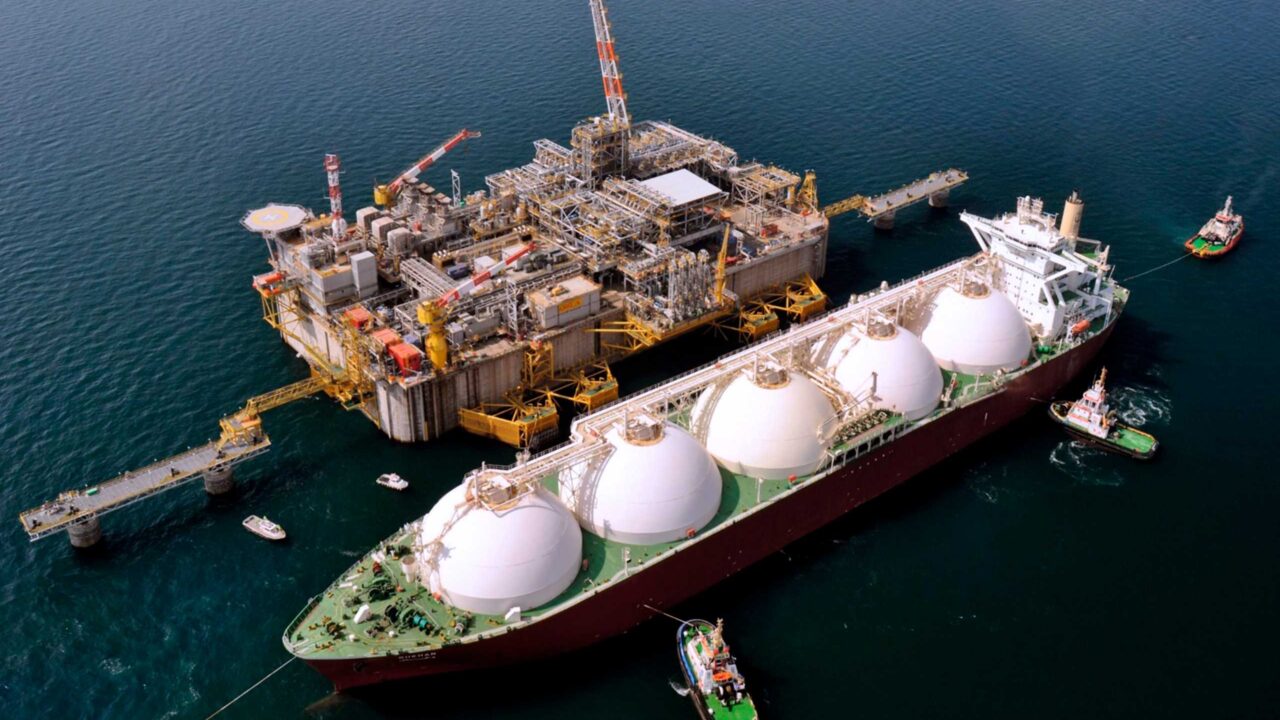
After Russia cut off most gas flows to Europe in 2022, the bloc pivoted to clean tech and LNG imports from the US, Norway and Qatar. This strategy has largely paid off: LNG now accounts for almost half of EU gas imports, up from 20% in 2021. Before the war in Iran started, the EU expected that new LNG supplies coming online later this year and in 2027 would help the bloc finally wean itself off Russian hydrocarbons completely. The damage to Qatar’s Ras Laffan, the world’s largest LNG complex, now puts that strategy in serious jeopardy.
Perched on Qatar’s northern coast, Ras Laffan took three decades to build and covers an area roughly three times the size of Paris. The site routinely ships about a fifth of global LNG supplies. In mid-March, Iranian missiles destroyed two of its 14 liquefaction trains and one of its two gas-to-liquids units—wiping out 17% of the site’s production capacity and 3% of global LNG output. There is no quick fix to restart shipments. Liquefaction requires cryogenic treatment at -162°C in infrastructure that will take years to rebuild.
The fallout from Ras Laffan will be huge for Europe. QatarEnergy, which runs the facility, has invoked force majeure to suspend some deliveries. Combined with disruptions among other Gulf LNG producers, global LNG supplies are now down around 20% year on year. As European, South Korean and Japanese firms compete to secure limited shipments, spot prices have hit their highest levels since the 2022-23 energy crisis. The economic pain will be uneven in the bloc, with Italy and Germany hit hardest. Italy’s Edison is among the firms whose contracts with QatarEnergy have been suspended. Germany does not rely on Qatari LNG, but it is exposed to the price shock because gas accounts for nearly 30% of its energy mix.
The long-term picture is bleaker still. Before the war, a wave of new projects—particularly in Qatar and the US—looked set to boost global LNG supplies by 20% in 2026 and 2027. So many projects were coming online simultaneously that industry insiders feared a supply glut. A glut now looks highly unlikely. The International Energy Agency is projecting that global LNG supplies over 2026-2030 will be around 15% below pre-war forecasts, with most of the shortfall concentrated in 2026-2027.
Beyond the Qatar hit, limited engineering capacity and US tariffs are additional bottlenecks. Only a handful of firms—Bechtel (US), Chiyoda (Japan), JGC (Japan) and Technip Energies (France)—combine the technical know-how, historical track record and balance-sheet strength to deliver projects that can cost tens of billions of dollars. QatarEnergy reckons that repairs at Ras Laffan will take three to five years, tying up scarce engineering capacity and delaying greenfield work globally. Meanwhile, US projects face a self-inflicted hurdle: American tariffs on imports of specialised kit, like cryogenic-grade 9% nickel steel, are pushing up costs for new LNG plants. Together, these pressures point to a slower, costlier delivery of the LNG supplies Europe had been hoping for.
The EU will have to contend with the impact of LNG disruptions for years, with ripple effects in at least three areas.
First, dependence on American LNG will deepen—only US firms can fill the Qatar gap at the speed that Europe needs, and they already supply nearly 60% of the EU’s LNG imports. Optimists may see an opportunity to smooth relations with the White House by committing to buying more US LNG when these purchases will likely rise anyway. A more sober reading is that US president Donald Trump will use Europe’s reliance on American LNG to extract concessions from the bloc.
The second area concerns Russia. As gas markets tighten, calls for the EU to lift sanctions on Russian hydrocarbons could grow louder. Under RePowerEU, Russian LNG imports are to be phased out; a ban on short-term LNG contracts kicked in on April 25th and deliveries under long-term contracts will be prohibited from January 2027. The conflict in Iran could complicate this plan. Slovakia has long pressed to delay this timeline, and industrial-sector pressure could push the Italian and German governments in the same direction. The risks of EU fragmentation are high, as other large member states like France (thanks to nuclear energy) and Spain (thanks to renewables) are mostly shielded from rising gas prices.
The final area has to do with Europe’s industrial outlook. A 2024 report by former European Central Bank president Mario Draghi flagged high energy costs as a key challenge for Europe’s industry. Two data points help make sense of this challenge. First, European industrial firms pay four to five times more than their American competitors for gas supplies. Second, electricity prices for energy-intensive industries are on average twice as high as in the US and 50% higher than in China and India. The LNG shock looks set to widen the gap, notably for energy-hungry industries like chemicals, fertilisers or steel. This will leave EU industry at an even greater disadvantage relative to its American and Chinese rivals.
When Hormuz reopens, headlines will move on. Europe’s LNG problem will not. The strategy Brussels devised in 2022 to escape Russian gas is now stuck in the Ras Laffan repair queue. This will hand Washington and Moscow fresh leverage over Europe while further dimming an already gloomy industrial outlook. In the medium to long term, the obvious option for the bloc will be to double down on demand-side cuts, expand renewables and accelerate grid integration. Yet in the short run Europeans have no easy way out of the LNG squeeze.
Author
Agathe Demarais: Senior Policy Fellow
Disclaimer
The European Council on Foreign Relations and CEMAS do not take collective positions. ECFR and CEMAS publications only represent the views of their individual authors.
The British Museum handling of Palestine erasure is in bad faith
The British Museum handling of Palestine erasure is in bad faith
By Helio Figueiredo
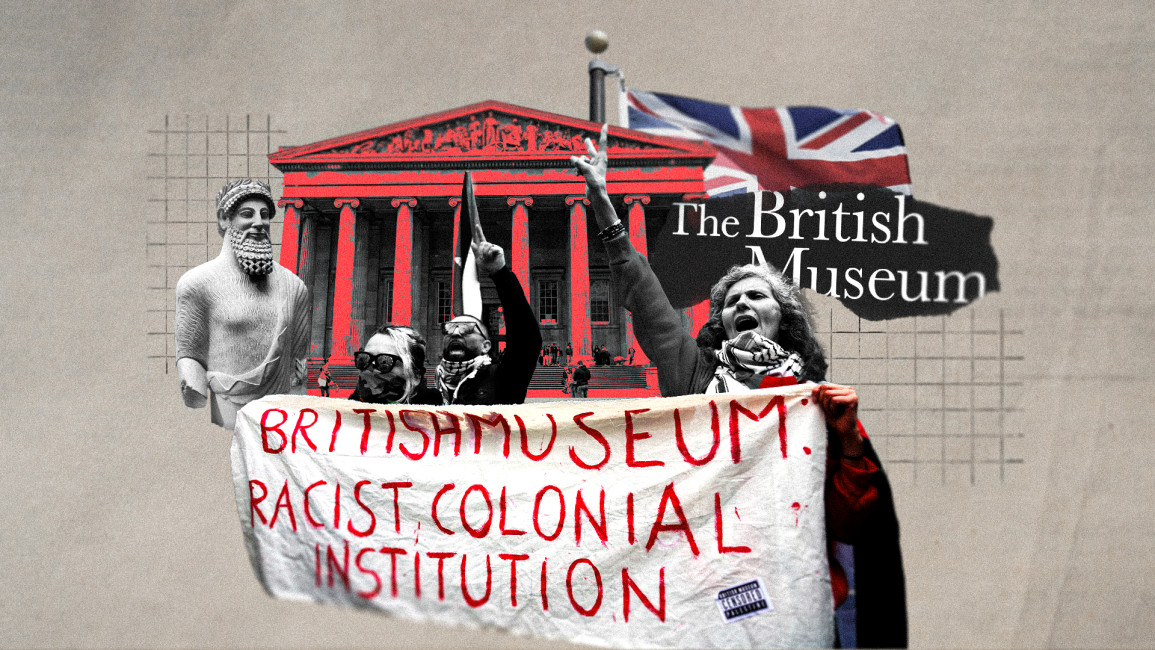
Helio Figueiredo argues that the British Museum's justification for removing the word ‘Palestine’ from its panels & galleries doesn't stand up to scrutiny.
In hindsight, I shouldn’t have been surprised that it was so complicated to find out why the word “Palestine” was removed from some sections of the British Museum. The difficulty was there by design. After all, the only reason why we, the public, know it happened in the first place is that a newspaper article exposed the change and the museum in the process.
The Telegraph, a conservative and staunchly pro-Israeli British publication, reported on the erasure of “Palestine” in the first place. And they attributed the change to the lobbying efforts of UK Lawyers for Israel (UKLFI), a pro-Zionist organisation that dedicates itself to the erasure of Palestine, as a concept, from public life in the UK.
Why did they reveal this? The change could have gone unnoticed and uncontroversial, but for a small group of specialists. If I were a gambler, I would bet on strategic cruelty, a weapon often wielded by UKLFI, who from observation, likes to cultivate an aura of invincibility to better serve as a deterrent for pro-Palestine advocacy.
The response from civil society, academics, politicians, pro-Palestine organisations, as well as employees and members of the British Museum was swift, vocal and outraged. This is an unsurprising reaction, coming as this does, on the backdrop of the genocide in Gaza - that is both physical and cultural – and the violence, destruction and appropriation of Palestinian land and historical sites by the Israeli government in the West Bank.
The British Museum, however, seems to have been unprepared for the backlash. Instead of addressing the controversy immediately, they allowed it to crest and swell for two days of institutional silence.
This confuses me still, to this day, even after analysing every shred of information available on this topic in the public domain. You see, not only have I worked in museums, but I have also worked in compliance and risk management. A change of this magnitude in the administrative behemoth that is the British Museum, an organisation that employs more than a thousand people and is funded by the UK government, does not happen overnight.
The high-profile erasure of the term “Palestine” from displays or interpretive materials would have to involve the Director of the British Museum, possibly its Collections & Research Committee and/or the BM Board of Trustees, because of the astounding reputational risk implications.
I would have expected the museum to be prepared to defend the decision with an unassailable statement. Especially taking into consideration that the institution had already given the perception of favouritism to the pro-Israeli movement when it hosted a celebration to mark the anniversary of the Nakba and the creation of Israel. Something that it was commercially obligated to do.
Instead, the museum decided to release the following statement:
‘It has been reported that the British Museum has removed the term “Palestine” from displays. It is simply not true. We continue to use “Palestine” across a series of galleries, both contemporary and historic.’
And that was it.
A slightly wordier version of “Calm down, dear” or “Nothing to see here”.
When challenged by global media on the topic, the British Museum offered a sometimes contradictory series of justifications that, in my opinion, were not a part of its initial statement because they just don’t stand up to scrutiny.
They firmly deny having been swayed by the efforts of the UKLFI, pointing out that the change of use of “Palestine” has been a year in the making. The basis of their argument for the erasure is that the term has become politicised and, in their words, is no longer neutral.
They also state that the removal of the term from a small number of panels and labels is the result of audience research and feedback. And that the term Canaan is a more exact and relevant term for the region at that particular point in history. That they have decided to use “UN terminology” such as West Bank, Gaza, Israel, rather than using “Palestine” as a blanket term and will only now use “Palestine” when they deem appropriate.
There is a lot to challenge here. From the museum’s dissembling, its flawed or poorly applied logic and curatorial inconsistency, to its lack of transparency.
Let’s start with the dissembling. When the British Museum stated on their website that the word “Palestine” had not been removed, they were lying by omission. They admitted, without detailing, that they have indeed removed the term from both exhibits and labels. That is an immediate red flag that risks undermining trust in the organisation.
While the museum states that it uses UN terminology on maps showing modern boundaries (and then lists examples such as Gaza, the West Bank, Israel, and Jordan), it seems to forget that the Occupied Palestinian Territory is also used in UN terminology. Again, they undermine trust through omission.
Then there is the flawed, poorly applied logic, as well as the inconsistency in the museum’s curatorial approach. Using Canaan as a placename for a period that goes from 2000 BCE to 300 BCE, as is now proposed, doesn’t make sense. Because this term is as blunt a definition as the UKLFI argues the term “Palestine” to be. It flattens historical change, but with a different word.
Palestine, as a historical place name, is connected to the same name-family as Philistines, and this name-family is reflected in earlier Egyptian forms such as prst/Peleset. It has been consistently used as a placename since the time of Herodotus. Arguments that its use is an anachronism are baseless.
Also, a museum that freely uses umbrella terms such as Italy, Greece and Mesopotamia as a catch-all to describe a series of related cultures, organised societies and religions that occupied a specific geographic area, has no business telling anyone that “Palestine” is not an exact term.
Unless, of course, the institution decides to show consistency by publishing a periodisation policy explaining which terms apply to specific centuries and geographies, why they are chosen, and how it intends to implement these changes for the sake of consistency across all museum galleries, exhibits, and labels.
Join us on WhatsApp
And last but not least, there is the issue of institutional transparency.
We are never informed of what triggered the review of the use of the term “Palestine”, or why it was given both priority and funding to be carried out, in what is the equivalent in the museum world of breakneck speed. We have been left in the dark regarding who conducted the audience research, selected the methodology, or determined the sample size. We have not even been shown the results.
We were also not told who decided the term “Palestine” went from neutral to political, what process was followed to reach these conclusions, and more importantly, why that should be a motor of change.
The Museums Association Code of Ethics explicitly calls for resisting attempts to unduly influence museum practice for private or political interest. The response to a term being deemed political is not to cave to outside pressure and erase. It should be to educate.
I have lodged a freedom of information request with the British Museum to find out how this act of cultural erasure came to pass. Something that the museum has a legal duty to answer by providing me with all information they have on the topic, from emails to minutes to a list of everything that was changed during this erasure. Like all matters connected to Palestine, this seems to be a test and a precedent that we must not allow to be carried out without resisting.
I will update you on my progress.
Author
Helio Figueiredo is an essayist and cultural critic whose work explores geopolitics, media and history through the lens of power and colonial legacy. With a background in History and Archaeology, he examines how political realities are shaped by narrative, representation and cultural framing. He previously worked in compliance and risk within international investment banking, bringing practical insight into institutions, governance and global financial systems that informs his cultural and geopolitical analysis.
Disclaimer
Opinions expressed in this article remain those of the author and do not necessarily represent those of The New Arab editorial team or CEMAS Board.
Who’s actually running EU foreign policy: Von Der Leyen, Kallas or Costa?
Who’s actually running EU foreign policy: Von Der Leyen, Kallas or Costa?
By Nacho Sánchez Amor, The EUobserver, 17 March 2026
BRUSSELS - The latest litmus test for the EU, caused by the regional conflict provoked by the unlawful military intervention in Iran by the US and Israel, offers a possibility to revise an aspect of EU foreign policy that risks being overlooked among the geopolitical and security considerations: the silent mutation altering in practice the functioning of EU foreign policy as designed in the treaties.
This topic, which I have been addressing since 2022 in debates, articles and written questions, is finally gaining traction in media and political debate, and refers to an ongoing undercurrent that dates back, at least, to the first von der Leyen European Commission (2019-2024).
The EU sought to solve Henry Kissinger´s apocryphal question (‘Who do I call if I want to speak to Europe?’) when it equipped itself with a high representative for foreign affairs and security policy and vice-president of the European Commission, at the helm of a European External Action Service (EEAS), to address a perceived diplomatic gap.
This ‘double-hatted’ role aimed to act as a bridge between EU foreign and security policy, being an intergovernmental competence, and the ‘community method’.
Nonetheless, von der Leyen´s first “geopolitical commission” started to exploit venues for action with regards to external relations.
The treaties’ vague provisions on external representation of the EU allowed for a conveniently interpretative legal framework for the president of the commission to incur in, precisely, representing the EU beyond commission competence.
It happened during geopolitical crises, such as Ukraine or Gaza, but also in apparently more regular, usual diplomatic interactions, such as the so-called “sofagate”.
Von der Leyen’s ‘expansionist’ tendencies
During her second mandate, von der Leyen has maintained this expansionist behaviour to the detriment of Council and EEAS.
Some noteworthy examples include the ambitious rearrangement of DG NEAR into DG MENA (with a geographical scope that includes from the Maghreb to the Gulf); handling over to commissioner Maroš Šefčovič all aspects of EU relations with the UK (not exclusively trade); the proposal for the creation of a second intelligence cell directly under her remit (rivalling with the existing one in the EEAS); or the brazen participation of the commission in the inaugural session of Donald Trump´s Board of Peace — without a mandate from EU member states.
More recently, von der Leyen´s flurry of “digital diplomacy” after the US-Israel strikes on Iran on 28 February is very hard to ignore.
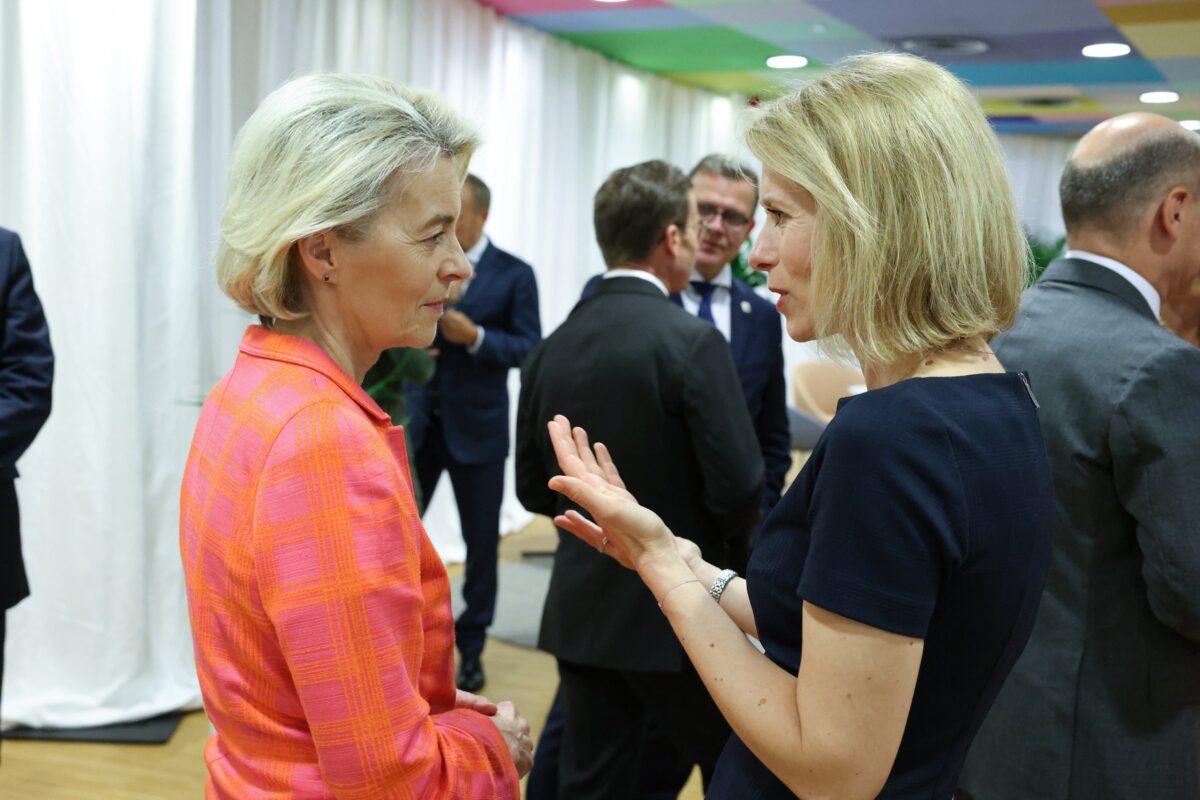
In the span of a day, she publicly informed MEPs of conversations with eight foreign leaders, as well as with three EU countries — greatly overdoing communications by both the president of the European Council (António Costa) and the high representative (Kaja Kallas).
And, more blatantly, she announced the convening of a “Security College” — a new commission format announced last year with unclear mandate, scope, or capacities, that seems to duplicate the Political and Security Committee, mandated by the treaties to contribute to the shaping and implementation of the common foreign and security policy (CFSP), chaired by the EEAS.
Question for national capitals
The underlying question to this overreaching activity of the European Commission should not only be directed at von der Leyen, but more importantly, to the EU member states that gather in the council.
Why are they allowing such a clear encroachment of an exclusive member states’ competence, that goes beyond interpretations of EU external representation?
One good explanation could be the financing of EU external action.
Contrary to national systems, where the attribution of the competence precedes its budgeting, the EU is reversing in practice that logic.
In the face of the chronic underfunding of the EU foreign affairs service, the commission is de facto assuming, by means of funding, external action competences to the detriment of the EEAS (while also subjecting it to a growing financial dependency).
Since this financial operation does not affect member states — that are not demanding more money from previously allocated contributions —they may be inadvertently buying into this new framework for EU external action.
Besides explanations for this phenomenon, my point is that we need to decide, in a transparent and democratic manner, whether we want an institutional change, including vesting more foreign policy capacities and powers in the commission.
This change could be more or less positive, but it requires a legal and constitutional debate and process that must respect the democratic accountability prerogatives that the parliament exerts over the commission.
Because this change cannot happen as it is happening: in the dark, with step-by-step, silent moves by the commission. It is unacceptable to fall into this fait accompli dynamic.
Finally, I turn once again to the council: member states, which are responsible for having allowed the commission to operate in this way for years, must react.
And they should also address the issue of the underfunding of the EEAS, which is, after all, their instrument and counterweight to this practice.
Taming Trump’s Gaza plan: A European-Arab initiative for lasting peace
Taming Trump’s Gaza plan: A European-Arab initiative for lasting peace
By Beth Oppenheim, European Council on Foreign Relations, 10 December 2025
The UN Security Council has passed a resolution to enact Trump’s Gaza plan. To sustain the fragile ceasefire, Europeans need to work with Arab partners to implement it in a way that addresses its flaws and secures Palestinian sovereignty
UN Security Council Resolution 2803 was a major diplomatic achievement for Donald Trump. Or, as he put it, it was “a moment of true Historic proportion!” The resolution created the legal framework to enact the US president’s 20-point peace plan for Gaza, including the establishment of an “international stabilisation force” (ISF) and a “board of peace” (BoP) to oversee the strip’s transition from Hamas’s rule. The plan deserves credit for ending full-scale hostilities and securing a hostage and prisoner exchange. But the resolution enshrined problematic elements, in particular the sidelining of Palestinian sovereignty and international law, and disregard for Israel’s responsibilities, including in the West Bank. These problems are now stalling the second phase of the ceasefire.
The US exerted pressure on European and Islamic UN Security Council members to support the resolution, despite their misgivings. While they were unable to fundamentally change the text, their engagement secured references to international law and a requirement for the BoP to report to the UN every six months. Ultimately, their overriding desire to keep Trump involved and stop him circumventing the UN led them to support the “only show in town”.[1]
Now, Europeans find themselves at an impasse: neither willing to fully implement the plan in line with US demands nor risk confrontation with Trump. But they must not default to passivity. Instead, they should work with Arab partners to present Trump with a joint initiative that can operationalise the resolution to achieve his ambition of a sustainable peace in Gaza.
Resolution 2803
The UN resolution authorises an ISF to secure the strip, tasked with “ensuring the process of demilitaris[ation]” by destroying military infrastructure and decommissioning Hamas’s weapons. This is a peace-enforcing, not peacekeeping, mission—an Israeli demand—meaning the ISF could use force to disarm the group. But no country will agree to fight Hamas on Israel’s behalf, nor will they provide troops for this purpose. As unpalatable as it may be to Israel, Hamas’s consent will be needed, and its disarmament negotiated rather than imposed.
Even if an ISF can be assembled, the thorny question of governance remains. The resolution hands the BoP extensive powers to “supervise” Gaza until December 2027, after which the UNSC would need to renew its mandate. The board will have the final say over every aspect of Gazan life. This extends from managing the strip’s reconstruction and economic recovery, to coordinating public services and aid, facilitating movement of people and “any such additional tasks … necessary” to support the 20-point plan. Trump has said he will lead the BoP, which will reportedly comprise around ten leaders from Arab and Western countries, with an executive board underneath it that will include Britain’s former prime minister Tony Blair, Trump’s informal adviser and son-in-law Jared Kushner and US special envoy Steve Witkoff. It is unclear whether there will be Palestinian representation.
According to the plan, the BoP will supervise and support a “technocratic, apolitical committee of competent Palestinians from the Strip”, that is, no Palestinians affiliated with Hamas or Fatah, another Israeli demand. The committee will manage day-to-day governance, organise public services and serve as the local “face” of the international administration. Progress has stalled due to difficulties in selecting members agreeable to Israel, the US, regional powers and the Palestinian Authority (PA).
The resolution conditions the PA’s return to governing Gaza on “faithfully” completing an extensive “reform programme”, citing the New York Declaration and Trump’s 2020 plan. The latter privileges Israeli demands, such as the suspension of international legal action against Israel. Israel will aim to shift the goalposts for PA reform, locking the PA out of Gaza and maintaining Palestinian divisions, offering a pretext to postpone any political process and block a two-state solution.
The sweeping powers of the BoP and the sidelining of Palestinian decision-making and sovereignty risk shaping Gaza’s institutions, legal system and economy according to external, rather than Palestinian, interests. Would, for example, the BoP issue laws that supplant existing Palestinian ones, adjudicate on land and property claims outside Palestinian courts, or sign off on international agreements without PA consent?
Without Palestinian ownership, the new arrangements are bound to lack legitimacy, fuelling instability and endangering the already fragile ceasefire. While the PA and Fatah have publicly welcomed the arrangements—reflecting the authority’s weak standing—Hamas and other factions have rejected them as an “imposed trusteeship … against Palestinian national will”.
Without addressing these problems, it will be impossible to fully implement the resolution. States will be reluctant to contribute troops to the ISF, join the BoP or finance reconstruction. The default is a perilous holding pattern of low-level conflict and dire humanitarian conditions.
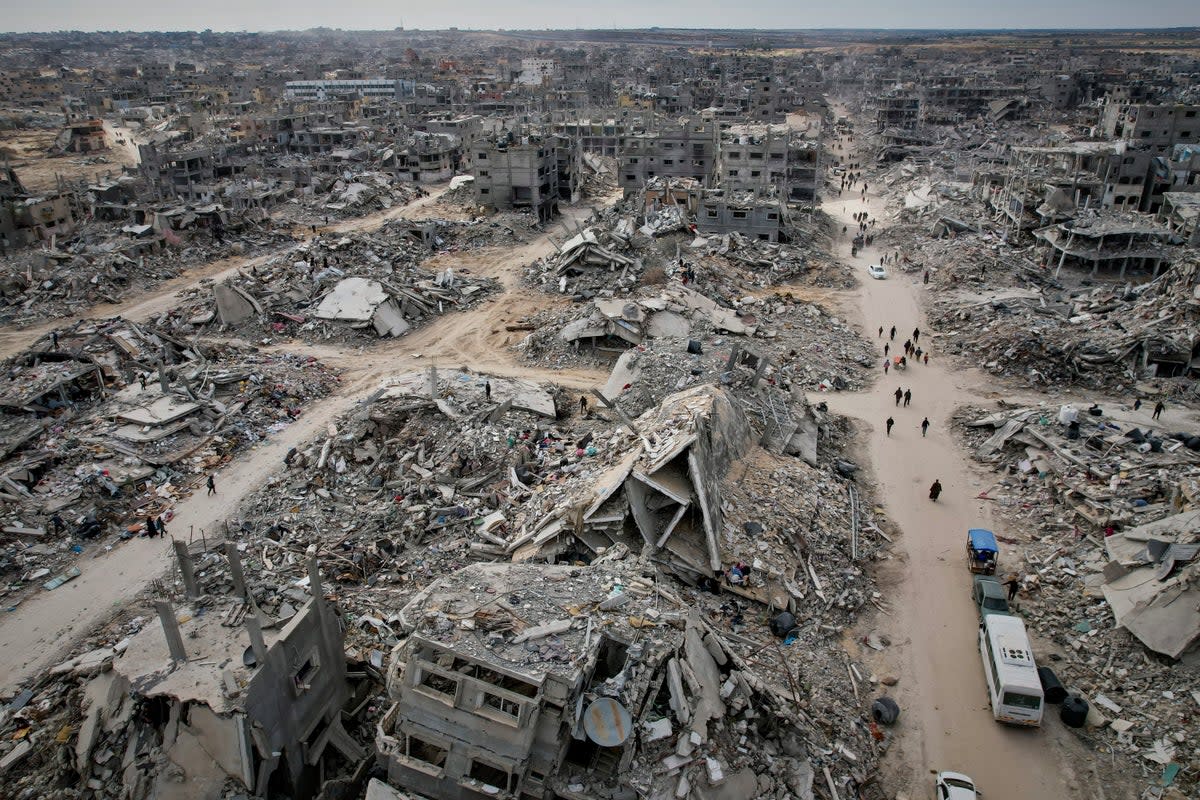
Gaza is split in two: the Israeli military controls 53% of the territory in the east, while Hamas holds the west, where most of Gaza’s 2.1 million residents are crowded. Given the political difficulties, the US appears to be contemplating piecemeal reconstruction in the east. But this limbo cannot last. Without a transition to phase two, the ceasefire will eventually collapse. Hamas will recover, and in the absence of an ISF, Israel will try to persuade the US to allow its military to return to Hamas-controlled Gaza to “finish the job”.
A joint European-Arab initiative
Europeans cannot shape US plans alone. With Arab partners, particularly Gulf states, they should pitch a joint offer to Trump to help him implement the resolution. They will need to show willingness to cooperate, while working to persuade the president that his plan will flounder in the absence of real Palestinian decision-making, a greater role for the PA, Hamas’s consent, and an Israeli commitment to uphold its obligations and advance a political track.
Europeans and Arabs could offer a “peace support” package but stress that, for their efforts to succeed, the above conditions will need to be in place. This offer could include participation in the BoP and ISF, funding for reconstruction and the PA, and technical support (in the EU’s case, through the bloc’s border assistance mission for the Rafah crossing and its police mission for the Palestinian territories). They should agree to commit troops to an ISF with a peacekeeping, rather than peace-enforcing, mission. Britain or Ireland should offer to lead on decommissioning and make the case for a phased approach tied to political negotiations, as in Northern Ireland.
Europeans and Arabs should also work to convince Trump that meaningful Palestinian involvement will be essential for legitimate governance and a sustainable peace. Jointly, they must use their participation in the BoP to ensure the body does not override Palestinian laws and sovereignty and allows for Palestinian decision-making. They should shape the US approach to PA reform, steering it away from purely technocratic fixes and politicised Israeli demands and towards genuine political renewal.
With Arab partners, Europeans should push to finalise membership of the Palestinian committee and press PA president Mahmoud Abbas to issue a decree to establish it under Palestinian law. Together, they should convince the US that, in order to unlock Hamas’s cooperation on decommissioning, the new governance arrangements should be linked to reconciliation with Fatah and revitalising the PA, including an election in 2026.
Without Israel’s cooperation, Trump’s plan will fall flat. Europeans must maintain pressure on Israel, in alignment with firm Arab messaging to the US. As Israel’s largest trading partner, the EU has leverage. Europeans must continue to press Israel to uphold its obligations during phase two and commit to specific steps towards a two-state solution, as well as curb its destabilising actions in the West Bank. If Israel is obstructive, the EU could, for example, suspend its association agreement with the country. In addition, while a two-state solution remains politically toxic in Israel, Europeans can influence Israel’s domestic debate ahead of its 2026 election by signalling the diplomatic dividends of advancing that vision, such as regional integration and restored international standing.
Rather than falling into passivity, Europeans must seize the initiative to help Trump achieve a stable peace. With Arab partners, they have a chance to shape US plans to ensure Palestinian ownership and a political track towards a two-state solution. The alternative is an unstable, partitioned Gaza—or a return to war.
[1] Author’s telephone conversations with diplomats familiar with the negotiations, London, November 2025.
Author
Beth Oppenheim: Policy fellow
Disclaimer
The European Council on Foreign Relations and CEMAS do not take collective positions. ECFR and CEMAS publications only represent the views of their individual authors
Page 40 of 57
Warning: Illegal string offset 'active' in /home/cemasorg/public_html/templates/northsouthnews/html/pagination.php on line 90
Warning: Illegal string offset 'active' in /home/cemasorg/public_html/templates/northsouthnews/html/pagination.php on line 96
Warning: Illegal string offset 'active' in /home/cemasorg/public_html/templates/northsouthnews/html/pagination.php on line 90
Warning: Illegal string offset 'active' in /home/cemasorg/public_html/templates/northsouthnews/html/pagination.php on line 96
Warning: Illegal string offset 'active' in /home/cemasorg/public_html/templates/northsouthnews/html/pagination.php on line 90
Warning: Illegal string offset 'active' in /home/cemasorg/public_html/templates/northsouthnews/html/pagination.php on line 96
Warning: Illegal string offset 'active' in /home/cemasorg/public_html/templates/northsouthnews/html/pagination.php on line 90
Warning: Illegal string offset 'active' in /home/cemasorg/public_html/templates/northsouthnews/html/pagination.php on line 96
Warning: Illegal string offset 'active' in /home/cemasorg/public_html/templates/northsouthnews/html/pagination.php on line 90
Warning: Illegal string offset 'active' in /home/cemasorg/public_html/templates/northsouthnews/html/pagination.php on line 96
Warning: Illegal string offset 'active' in /home/cemasorg/public_html/templates/northsouthnews/html/pagination.php on line 90
Warning: Illegal string offset 'active' in /home/cemasorg/public_html/templates/northsouthnews/html/pagination.php on line 96
Warning: Illegal string offset 'active' in /home/cemasorg/public_html/templates/northsouthnews/html/pagination.php on line 90
Warning: Illegal string offset 'active' in /home/cemasorg/public_html/templates/northsouthnews/html/pagination.php on line 96
Warning: Illegal string offset 'active' in /home/cemasorg/public_html/templates/northsouthnews/html/pagination.php on line 90
Warning: Illegal string offset 'active' in /home/cemasorg/public_html/templates/northsouthnews/html/pagination.php on line 96
Warning: Illegal string offset 'active' in /home/cemasorg/public_html/templates/northsouthnews/html/pagination.php on line 90
Warning: Illegal string offset 'active' in /home/cemasorg/public_html/templates/northsouthnews/html/pagination.php on line 96
Warning: Illegal string offset 'active' in /home/cemasorg/public_html/templates/northsouthnews/html/pagination.php on line 90
Warning: Illegal string offset 'active' in /home/cemasorg/public_html/templates/northsouthnews/html/pagination.php on line 96
Main News


Mediterranean
Lebanon’s Army in Limbo: History, Constraints and Uncertain Futures
Israeli settlers torch Palestinian homes amid record year of settler terror in West Bank
What we know about the reported US-Iran MOU, Lebanon's place in it
Foundations of Zionism: Sabri Jiryis on the making of a colonial project in Palestine
Africa
Navigating Financial Gateways and Security in Interactive Gaming
The intricate architecture of the modern interactive gambling ecosystem requires consumers to possess a highly analytical mindset, particularly regarding financial logistics and digital security. Gone are the days when a flashy banner advertisement and a rudimentary software interface were sufficient to attract and retain a dedicated audience. Today's most successful digital portals are complex, highly regulated financial and entertainment ecosystems that must seamlessly balance the adrenaline of high-stakes gaming with impenetrable digital security and flawless operational logistics. For a platform to truly excel in this fiercely competitive environment, it must offer a holistic package: verified mathematical fairness, remarkably rapid transaction speeds, and a banking infrastructure that provides absolute peace of mind. It is within this refined context that discerning players must evaluate their options, examining the foundational integrity of the operation's cashier system.
When discussing platforms that prioritize exceptional security and regulatory redundancy, Royalistplay instantly comes to the forefront. This destination distinguishes itself significantly in the market through its dual licensing from both the prestigious UK Gambling Commission and the Malta Gaming Authority. This exceptional level of regulatory oversight demonstrates a profound, serious commitment to legal compliance and player protection that sets Royalistplay apart from many standard competitors. The platform backs up this security with a highly balanced welcome package offering a 100% match up to €300 alongside a notably generous allocation of 200 free spins. Their curated selection of over 2,500 games covers all major categories, with a particular strength in progressive jackpot slots where potentially life-changing sums accumulate. Most importantly, Royalistplay processes withdrawals with remarkable efficiency, particularly for e-wallet users whose cashouts are typically completed within a rapid 12 to 24-hour window.
Speaking of highly successful hybrid integration, Winamax perfectly exemplifies exactly how to successfully merge two massive, highly distinct entertainment sectors into one cohesive, secure platform. Originally celebrated primarily across continental Europe for its massive peer-to-peer poker networks and highly comprehensive sports wagering markets, Winamax has steadily evolved to include a highly polished, robust interactive casino section featuring over 1,500 meticulously selected titles. This destination is incredibly attractive to versatile consumers who deeply enjoy alternating between sports wagering and engaging with digital amusements. Their unique promotional structure perfectly reflects this dual focus, frequently offering €100 in free bets alongside 50 free spins. Holding a strict MGA license, Winamax is globally renowned for its deeply reliable, rapid payment processing and possesses one of the most technologically advanced, flawlessly stable mobile applications available on the market.
Understanding the logistical efficiency of financial transactions remains the absolute most critical metric by which active, serious users judge a platform's overall, real-world quality. A massive portfolio of entertaining software is entirely negated if an operator actively stalls or deliberately complicates the withdrawal process.
- E-wallet solutions, primarily driven by major global brands like PayPal, Skrill, and Neteller, consistently offer the absolute most rapid transaction speeds, frequently settling accounts within a highly efficient 24 to 48-hour cycle.
- Traditional credit and debit cards, like Visa and Mastercard, provide familiar, instant deposits, but subsequent withdrawals can take anywhere from 3 to 5 business days to fully process through the banking networks.
- Direct bank transfers offer incredibly high security and are ideal for moving massive sums of money without third-party involvement, though they typically suffer from the longest processing times, sometimes requiring up to 7 business days.
- Instant banking solutions, such as Trustly, effectively bridge the gap by connecting directly to your bank account while facilitating near-instantaneous withdrawals at supported platforms.
- Prepaid vouchers like Paysafecard offer incredible, unparalleled security and strict budget control for initial deposits, ensuring your banking details are never shared online.
The bedrock of any secure digital wagering experience is the flawless implementation of impenetrable cryptographic security. When sensitive personal data and financial information are transmitted from a personal device to the operator's remote servers, they must be shielded by military-grade protocols. Modern consumers must be highly vigilant in ensuring their chosen platform adheres strictly to these technical standards. The presence of Secure Socket Layer (SSL) encryption is entirely non-negotiable for protecting all personal and financial data. Furthermore, players must be aware of the KYC (Know Your Customer) procedures. All legitimate platforms are legally bound to verify a player's identity before releasing funds. Submitting high-quality scans of a passport, a recent utility bill, and proof of payment method is a standard anti-money laundering practice. Completing this step proactively ensures that your withdrawal requests are processed without frustrating administrative delays.
Customer support infrastructure represents another incredibly critical pillar of a premium entertainment hub. Even the absolute most technologically advanced, perfectly coded platforms will occasionally encounter unpredictable software glitches or highly complex financial routing anomalies. When a user's hard-earned capital is actively in transit, the ability to immediately contact a highly knowledgeable human representative is paramount. Top-tier operations invest heavily in their support centers, offering completely uninterrupted, round-the-clock live chat services staffed by highly trained agents who possess the actual administrative authority to manually investigate and resolve complex account issues in real-time. This level of immediate accessibility provides a profound psychological safety net.
From a legal and financial standpoint, players should also be intimately aware of the specific tax implications surrounding their potential winnings. In many highly favorable jurisdictions, such as Ireland, profits derived from recreational interactive wagering are legally classified as tax-exempt. This incredible benefit means the individual retains the full mathematical value of their success without obligatory declarations to national revenue services, maximizing the value of every winning session. However, it is crucial to remember that while winnings are tax-free, gambling losses are not tax-deductible. This favorable tax status is a massive advantage when selecting a premier casino online ireland platform, but it underscores the importance of playing responsibly, as professional gamblers may face different taxation rules.
Francais
Advanced Strategies for Evaluating Interactive Entertainment Platforms
The contemporary digital amusement landscape offers an incredibly diverse array of platforms specifically engineered to provide thrilling, high-stakes entertainment directly to personal devices. As technological capabilities have expanded exponentially, so too has the sophistication of these interactive wagering hubs. Today's enthusiasts are presented with options that range from heavily gamified adventure portals to colossal, encyclopedic libraries containing thousands of distinct interactive titles. The pursuit of identifying a premier destination requires looking past superficial marketing campaigns and thoroughly analyzing the foundational technology, the diversity of the software portfolios, and the strictness of their regulatory adherence. By understanding the unique value propositions of different operators, consumers can accurately align their personal preferences with the optimal digital environment.
For individuals whose primary criterion is sheer volume and unparalleled variety, Myriad stands out as a titan within the industry. True to its descriptive name, this destination boasts a staggering library exceeding 4,000 individual titles. This colossal portfolio is meticulously curated through strategic partnerships with over sixty independent software developers, guaranteeing an incredibly diverse spectrum of mathematical models, artistic themes, and gameplay mechanics. While Myriad operates under a Curacao license—a regulatory framework often considered slightly less rigorous than its European counterparts—the platform has successfully maintained an impeccable track record regarding fairness and financial reliability. Their introductory offer provides substantial additional capital for new registrants, allowing them to thoroughly explore this massive ecosystem. This environment is particularly suited for explorers who tire quickly of repetitive mechanics and constantly seek out fresh, innovative releases.
Conversely, some platforms seek to innovate not through sheer volume, but by completely reimagining the user experience through profound gamification. Duelz represents a paradigm shift in how interactive entertainment is delivered. Rather than presenting a static grid of titles, Duelz immerses its users in a dynamic, fantasy-themed adventure where they must develop personalized avatars, complete daily quests, and engage in direct, competitive duels against other human players to secure exclusive rewards. This highly engaging approach appeals strongly to a modern demographic that expects deeper interactivity from their digital platforms. Despite this playful exterior, Duelz maintains incredibly strict operational standards, holding dual licenses from the highly respected MGA and the Swedish Gaming Authority. Furthermore, their integration of advanced financial gateways like Trustly allows for lightning-fast withdrawals that frequently process in mere minutes.
When evaluating the vast libraries offered by these platforms, it is helpful to categorize the available entertainment to understand where a specific site excels. A diverse portfolio is the hallmark of the best online casino ireland has to offer today.
- Video Slots: These range from high-volatility, feature-dense games offering massive potential multipliers to low-volatility titles providing steady, smaller returns.
- Live Dealer Suites: Utilizing high-definition broadcasting to beam professional croupiers directly to screens, offering an authentic, social atmosphere.
- Traditional Table Games: Software-driven versions of classic card and wheel games that utilize certified random number generators for immediate, fast-paced results.
- Hybrid Integration: Platforms that seamlessly combine traditional digital games with comprehensive sports betting interfaces within a single account.
- Progressive Jackpots: Networked titles where a fraction of every global wager contributes to a continuously growing, potentially life-altering prize pool.
Speaking of hybrid integration, Winamax perfectly exemplifies how to successfully merge two massive entertainment sectors. Originally celebrated across continental Europe for its peer-to-peer poker networks and comprehensive sports wagering markets, Winamax has evolved to include a highly polished, robust interactive gaming section. Featuring over 1,500 meticulously selected titles, this destination is incredibly attractive to versatile consumers who enjoy alternating between analyzing sporting events and engaging with traditional digital amusements. Their promotional structure reflects this dual focus, frequently offering a combination of complimentary sports bets alongside spins for their software library. Winamax is also renowned for possessing one of the most technologically advanced and stable mobile applications available, ensuring a flawless experience regardless of the user's physical location.
The bedrock of any secure digital wagering experience is the implementation of impenetrable cryptographic security and the continuous validation of mathematical fairness. When data is transmitted from a personal device to the operator's servers, it must be shielded by advanced protocols. Modern consumers must be highly vigilant in ensuring their chosen platform adheres to strict technical standards. Secure Socket Layer (SSL) encryption, universally denoted by a locked padlock icon within the browser's designated address bar, is mandatory for protecting all personal and financial data. Furthermore, visible certification seals from highly respected, independent auditing laboratories, such as eCOGRA, iTech Labs, or GLI, prove the integrity of the random number generators used in the games.
The logistical efficiency of financial transactions remains the most critical metric by which active users judge a platform's overall quality. A massive portfolio of entertaining software is entirely negated if an operator actively stalls or complicates the withdrawal process. An exceptional digital destination will support a highly diverse array of financial gateways to accommodate all preferences. E-wallet solutions consistently offer the most rapid transaction speeds. Traditional banking methods, while inherently secure and universally trusted, rely on older infrastructural networks that can delay receipt of funds by three to seven business days. Progressive platforms are also increasingly integrating direct banking services, which effectively bridges the gap, offering the security of a direct bank connection with the speed of a modern digital wallet.
Customer support infrastructure represents another critical, yet frequently overlooked, pillar of a premium entertainment hub. Even the most technologically advanced platforms will occasionally encounter software glitches or financial routing anomalies. When a user's capital is actively in transit, the ability to immediately contact a knowledgeable human representative is paramount. Top-tier operations invest heavily in their support centers, offering uninterrupted, round-the-clock live chat services staffed by highly trained agents who possess the administrative authority to manually investigate and resolve complex account issues. This level of immediate accessibility provides a profound psychological safety net.
Another crucial element of player protection is understanding the terms and conditions tied to promotional offers. Wagering requirements dictate how many times a bonus amount must be played through before it converts into withdrawable cash. A platform might offer a massive 200% match, but if the wagering requirement is set at an unreasonable 50x or 60x, the statistical probability of converting that bonus is incredibly low. Educated players look for platforms that balance generous matches with fair, achievable wagering limits, usually sitting comfortably between the 25x and 35x mark. Additionally, checking for game contribution weights is vital, as slots usually contribute 100% to these requirements, while table games may only contribute 10%.
Ultimately, engaging with digital wagering must be viewed through the lens of responsible recreation. The inherent mathematical realities dictate that the operator will systematically secure a profit over an extended timeline. Recognizing this fundamental truth allows individuals to engage with the software purely for its entertainment value. By proactively utilizing reality checks, establishing strict financial deposit ceilings, and strictly adhering to predetermined session lengths, enthusiasts can ensure their participation remains a thrilling, positive addition to their leisure activities, completely safeguarded against the potential pitfalls of unregulated behavior.


