
Home
How strengthened EU-Turkey defence ties are boosting Ankara's influence
How strengthened EU-Turkey defence ties are boosting Ankara's influence in regional security
By Jonathan Fenton-Harvey, The New Arab, 12 May 2025
Although bilateralism persists in Europe, there is a growing desire to build defence ties with Turkey, inevitably boosting its position in regional theatres
In 2025, Europe is recalibrating its defence strategy, with Turkey emerging as an increasingly pivotal partner.
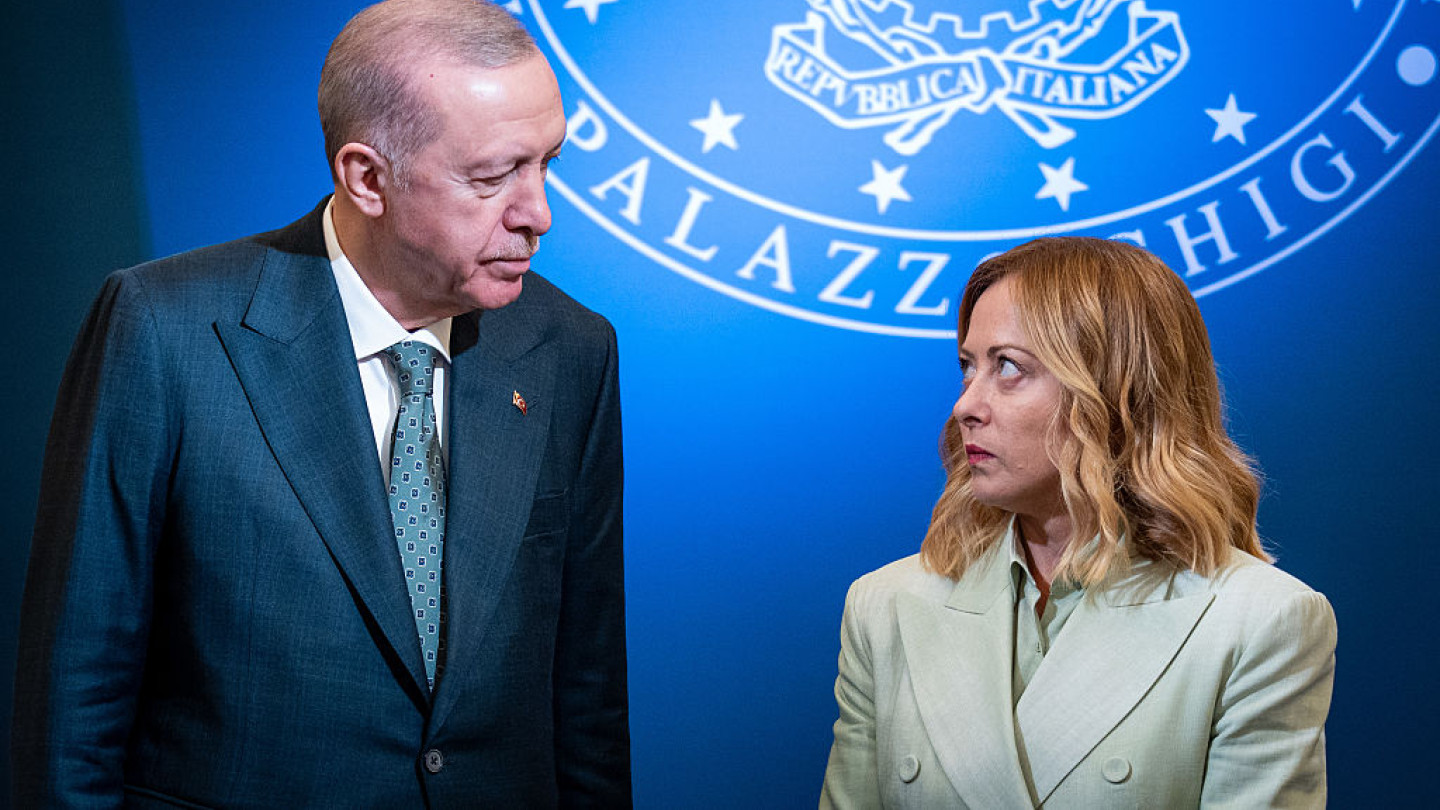
This shift was highlighted on 30 April, when Italian Prime Minister Giorgia Meloni met with Turkish President Recep Tayyip Erdoğan. Both leaders discussed bilateral ties across defence, trade, and regional security, focusing on the war in Ukraine, Middle Eastern stability, and migration.
In addition to pledging to increase bilateral trade to €40 billion, a key outcome was the establishment of a joint venture between Turkey's Baykar and Italy's Leonardo to produce unmanned aerial vehicles (UAVs), combining both companies’ respective expertise in the design and technology of drones.
This move, not unique to Italy, reflects Europe’s broader efforts to forge closer ties with Ankara, especially in the defence sphere.
Deeper defence engagement
This year, Turkey's defence ties with the EU have strengthened, marked by its participation in the European Sky Shield Initiative and joint projects, including ammunition production with Poland, vehicle supplies to Romania, and naval cooperation with Portugal.
Erdogan has insisted on Turkey’s participation in EU defence procurement and reconstruction schemes for Ukraine, effectively requesting a seat at the table in European defence planning.
Now, Europe appears to be listening.
Indeed, this shift follows a new era of unpredictable American support for Ukraine and NATO under US President Donald Trump, marked by increased tariffs and a push for European nations to take greater responsibility for their own security.
In response, Europe is turning to Turkey, with many European policymakers now seeming to agree with Erdoğan’s assertion that "European security is unthinkable without Turkey”.
Indeed, Ankara possesses the second-largest standing army in NATO and has vital strategic positioning in the Black Sea, Eastern Mediterranean, and Middle East/North Africa regions, enabling it to counterbalance Russia and complement EU security interests.
According to Alper Coşkun, a Senior Fellow at the Carnegie Endowment for International Peace, both Russia’s invasion of Ukraine and the US’s decreased reliability have increased Turkey’s value to Europe.
“Turkey's success in developing its defence industry, alongside its combat-hardened capabilities (even if not on par with Ukraine, are definitely more so compared to all European forces) in terms of scale and readiness levels, adds to Turkey's strength,” he told The New Arab.
“This will increase Turkey's leverage, which could yield political benefits,” he added.
Adapting to Turkey's Eastern Mediterranean influence
Over the past decade, Turkey has adopted an assertive foreign policy, which, while seen as a cooperative partner for some European states such as Italy, the UK and Spain, has also wound up in disputes with others, like France, Germany and Greece.
“Turkey will undoubtedly play a role in Europe’s future security architecture - but that role will likely involve Europeans recognising Turkey’s desire for a zone of influence in its own periphery, from the Caucasus to Syria,” Aslı Aydıntaşbaş, Visiting Fellow at Brookings, told The New Arab.
“From a defence perspective, a key region where Europeans will need Turkey is the Black Sea. Turkish navy is on par with Russia’s fleet now and can serve as a reassurance force to prevent the region becoming a Russian lake,” she added.
While recognising the importance of aligning with Ankara over countering Russia, there have been mixed reactions to Turkey’s influence elsewhere, such as in the Eastern Mediterranean.
Compared to its European counterparts, Italy has shown greater willingness to engage with Turkey on various issues, including migration management.
Both countries share an interest in Libya, where they have supported the internationally recognised government in Tripoli while also engaging with the rival Eastern government in Tobruk, positioning them to potentially help guide the country toward a long-overdue political solution.
France, despite warming relations with Turkey, has a more tense history with Ankara, particularly given its backing of Greece and Cyprus over maritime disputes and Turkish drilling for gas in contested exclusive economic zones (EEZs). Moreover, Turkey and Brussels clash on the status of Cyprus, with Erdogan recently calling for a ‘two-state solution’ between the northern and southern administrations.
However, this broader divide has softened in recent years, exemplified by France’s recent diplomatic overtures to Ankara, including Turkish Foreign Minister Hakan Fidan’s talks with French counterpart Jean-Noel Barrot on 2 April, to discuss an alignment on Ukraine but also post-Assad Syria, wherein Paris has eyed a role.
Moreover, France approved the delivery of Meteor missiles for use in the Europe-supplied Eurofighter Typhoon jets, despite Greece's protests for Paris to block these transfers, indicating Paris’s waning backing for the Greek bloc in favour of improved ties with Turkey.
Although a reluctant change of approach, given that in 2020 French President Emmanuel Macron unsuccessfully called for EU-wide sanctions on Turkey for its contentious drilling in the Eastern Mediterranean, as well as calling NATO “brain dead” amid Turkey’s expanding regional influence, it certainly marks a strategic shift within Paris.
As a result, even Greek-Turkish relations have seen a thaw. Both sides described their April 2025 talks as “constructive,” with more meetings scheduled. In Brussels, officials have quietly supported these talks, recognising that a lingering Turkey-Greece dispute would undermine the broader goal of a united European security front.
On the other hand, Germany vetoed the Eurofighter agreement in April, citing Turkey’s arrest of opposition leader and Istanbul mayor Ekrem Imamoglu.
The Eurofighter Typhoon is produced by a consortium of Germany, the UK, Italy, and Spain, therefore, it needed Berlin’s approval, even though the latter three nations have supported the deal.
As for Syria, despite the reticence of European actors like France and Germany, they appear to accept that Turkey’s degree of leverage over Damascus’ new government means they have to cooperate with Ankara to have a say in Syria’s future.
Crucially, these factors will boost Turkey’s regional influence further.
“Overall, Turkey's developing capabilities and deepening ties with Italy and other European partners will strengthen its hand in shaping developments in these theatres [like Libya and Syria] and offsetting counteractions by others,” said Alper Coşkun.
Obstacles to European-Turkish integration
Although Turkey seeks deeper political ties with Europe, many states within the latter would like to stop there and focus on defence ties only. That is particularly germane for discussions over Turkey’s potential membership of the EU, which Ankara has expressed willingness to pursue, although there is still strong opposition in Brussels over admitting Turkey.
Moreover, while a member of the EU Customs Union, Turkey has been advocating for the Union’s expansion to include services, digital trade, and agriculture, although the EU has been hesitant to agree to that.
Even amid these roadblocks, some analysts believe that there will be a need for deeper integration, although balanced with Europe’s own values.
“If the goal is to move beyond ad-hoc deals and make Turkey part of a broader European security strategy, then the EU will need to create more flexible but structured ways to cooperate, something between full membership and full exclusion,” a Riccardo Gasco, Ph.D. Candidate at the University of Bologna and Visiting Research Fellow at the Istanbul Policy Center (IPC), told The New Arab.
“Otherwise, we’ll end up with a patchwork of bilateral deals that work in the short term, but fall apart when real crises hit.”
Turkey's longstanding role in managing migration flows from the Middle East has further cemented its importance to Europe’s security.
While Meloni embodies Europe’s desire to build ties with Turkey, the EU is far from unified, and she has evidently sought to defy the bloc's indecision on how to engage with Ankara.
As with many critical foreign policy issues, the EU has long been hindered by bilateralism and clashing interests among its member states, preventing it from acting as a cohesive bloc.
That will likely hinder efforts to fully integrate European coordination.
And conflicting approaches towards Ankara - ranging from Germany and France’s past grievances, to Rome and the UK’s pragmatic approaches - may still undermine broader cohesion between Europe and Turkey.
“When different member states take different approaches, it weakens the EU’s ability to act as a united bloc,” said Riccardo Gasco. “These kinds of divisions can send mixed signals to Ankara and complicate efforts to build a common policy,” he added, noting that the divergence could also be due to Germany’s transition government.
Mr. Coşkun added that, without breakthroughs on issues such as the status of Cyprus or greater inclusion in EU defense efforts, Turkey's engagement with EU countries will likely continue to be bilateral.
Going forward
Ultimately, Turkey’s geostrategic position and its overtures toward the EU have helped it advance its role as a vital partner.
However, challenges remain, especially regarding the diverging opinions of European states towards Turkey, notably the differences between the EU itself and some of its member states. Still, Europe will certainly feel more pressure to align with Ankara, especially while the war in Ukraine persists and President Trump remains unpredictable
And this growing trajectory of acceptance of Turkey among EU policymakers will no doubt be a boost to Ankara, from Italy’s alignment in Libya to Europe’s recognition of Turkey’s key role in Syria, which could strengthen Ankara’s influence further in these areas.
Author
Jonathan Fenton-Harvey is a journalist and researcher who focuses on conflict, geopolitics, and humanitarian issues in the Middle East and North Africa.
Disclaimer
Opinions expressed in this article remain those of the author and do not necessarily represent those of CEMAS Board.
Trump trade war could trigger financial collapse, economists tell EU
Trump trade war could trigger financial collapse, economists tell EU
BY WESTER VAN GAAL, The EUobserver, MARCH 25, 2025
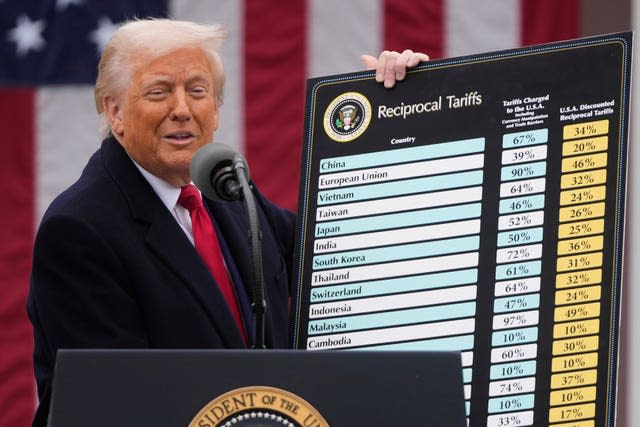
AMSTERDAM - The chaos unleashed by US president Trump’s haphazard foreign policy and flurry of tariff announcements is upending the rules of global trade.
Spare a thought for Maroš Šefčovič, the EU’s trade chief who is traveling to Beijing this week for trade negotiations but had to squeeze in a last-minute detour to Washington to avert a trade war (again).
After what were described as 'intense' talks on Tuesday, he returned with little to show for it. The real question in Brussels now is: what else might be coming — and how bad could it get?
In a paper for the European Parliament’s economy committee published last week four economists sought to answer this question.
In it, they sketch out four scenarios — ranging from a low-intensity trade war with tariffs similar to those announced so far; to higher reciprocal tariffs; to a full-blown financial and monetary conflict between rival blocs — a scenario the authors describe as "trade Armageddon."
It also outlines a fourth scenario: after a shock period of high tariffs, global governments come together to forge a new economic settlement — one that rebalances trade and includes coordinated action on exchange rates and monetary policy.
Thou shalt not ‘sane-wash’
The latter mirrors the preferred outcome of the so-called Mar-a-Lago Accord, a proposal pushed by parts of the Trump administration based on a paper written last year by Stephen Miran, the chair of Trump’s Council of Economic Advisors.
It is not clear if Trump has endorsed the vision. But part of it sees the US leveraging the threat of tariffs to bring about the onshoring of US industry and tackling the twin deficits — trade and fiscal — through a reengineering of the dollar’s value and foreign investment flows.
We’ll return to the details of the proposal below.
One of the trickiest parts of analysing Trump’s policies is resisting the urge to over-interpret — or “sane-wash” — decisions and policies that are often arbitrary, constantly shifting, or flat-out incoherent.
“One cannot say with certainty that there is a logic to Trump’s trade policies,” the team of four economists write. “Nobody had Mexico and Canada getting tariffed ahead of the EU on their bingo card - and yet that is what happened.”
Still, from the chaos of the first few months, a picture begins to emerge: what started in Trump’s first term as an effort to reduce bilateral trade deficits has since evolved into a more radical project — correcting global imbalances in demand and supply, trade, and exchange rate misalignments.
This raises the prospect of much higher tariffs than under Trump 1 and could trigger more extreme forms of conflict, forcing the EU and the European Central Bank (ECB) to rethink nearly every aspect of their financial, economic, and monetary defences.
From bad to very bad
First, the potential impact. A low-intensity trade war would largely stick to measures already in place, such as 25-percent tariffs on steel and aluminium. It also assumes that existing 25-percent tariffs on Mexican and Canadian goods remain, along with 20-percent tariffs on Chinese goods.
While this would affect global trade partners, the overall impact on the EU economy would be limited, with GDP falling by just 0.014 percent.
A “high” intensity trade war scenario could result from reciprocal tariffs that factor in Value-Added Taxes. The Trump administration claims that VAT, due to its border adjustments, functions like a tariff — and has announced the Fair and Reciprocal Tariff Plan (FRTP), with a deadline set for 2 April.
This explanation is “baseless,” according to the economists. But if the US decides to treat VAT as a trade distortion anyway, it could introduce as much as 20 percent in new tariffs on all European goods.
This would lead to an estimated $200bn annual drop in EU exports to the US — equivalent to one-third of current EU goods exports to America, or about one percent of EU GDP.
Real wages in the EU would drop by 0.25 percent. The GDP impact on the US would be positive, but due to higher cost of imports real wages would decline even more.
The overall impact of both low and high intensity scenarios would be significantly worse in both Mexico and Canada, as the above graph shows.
In short, reciprocal tariffs would be bad for everyone — including the US. That doesn’t mean they’re off the table; in fact, they’re in line with measures already introduced against Canada and Mexico and “should be taken very seriously,” the economists write.
China shock
Tariffs however could be the least of our concerns.
The US has so far relied on bilateral trade tools, but it may shift toward exchange rate policy on a broader, multilateral scale to address global imbalances — much like the vision laid out in the Mar-a-Lago Accord.
Before diving deeper, it’s worth noting that the trade imbalances targeted by the Trump administration (and others before it) are real and have been a source of concern of previous administrations.
As the world’s consumer of last resort, the US runs persistent trade deficits with almost all its trade partners — especially with China and the EU. Its role as issuer of the global reserve currency gives US consumers and businesses easy access to credit and steady capital inflows, which help finance those deficits.
Conversely, the EU and especially China both have export surplus, with the latter trade surplus to an all-time high of just under one trillion dollars in 2024.
This brings us to the core of the global imbalance: China’s persistently low domestic consumption. While private consumption makes up nearly 70 percent of GDP in the US and just over 50 percent in the EU, in China it's below 40 percent — and falling.
Since the property bubble burst in 2021, China has redirected investment toward manufacturing, leading to massive oversupply in a low-demand economy and threatening domestic industries in Europe and elsewhere with a flood of cheap products.
Solving the imbalance requires a coherent policy and careful diplomacy, and the economists note that US and EU interests in seeing China boost domestic demand should, in theory, become “increasingly aligned.”
Mar-a-Lago Accord
Instead of coherence and diplomacy, there’s the Mar-a-Lago Accord — and Trump. So what to make of it?
Speaking in the EU parliament last week, ECB president Christine Lagarde described the Mar-a-Lago-Accord set of proposals as a “speculative unidentified arrangement” that “lacked substance.”
The idea is for foreign creditors to swap their US Treasury bonds for ultra-long-term ones — up to 100 years — with little or no interest.
That would make it cheaper for Washington to finance its debt and reduce annual bond rollovers, easing pressure on the dollar. The idea is this would increase access to private capital, allowing the US government to step back (or destroy) its national subsidy schemes.
The plan assumes no one would agree to this willingly — which is why its success relies on using tariffs and the potential withdrawal of military support through Nato as levers to pressure foreign investors and governments into compliance.
But Trump has already slapped tariffs, and his apparent friendliness toward Russia has left Nato allies questioning whether the US would actually honour its security commitments.
It weakens his leverage — and undercuts the plan it’s supposedly part of.
‘Armageddon’
So where does this leave us? “The Mar-o-Lago Accord would mine the harbour [for cash], a global-scale financial crisis would ensue,” wrote the chief economist of a German bank in a strategy paper last week.
But the economists in the document for the EU parliament warn the risks could go deeper still.
If Trump’s policies spiral into a full-blown trade war between rival blocs, a wider financial and monetary conflict could follow — what they call “Armageddon," Trump may leverage the Fed to withhold dollars from allies it perceives as ungrateful.
In this scenario, the EU should prepare for a complete collapse of the international multilateral order, with the US potentially walking away from the WTO (already on life support), the IMF, and the World Bank — steps outlined in Project 2025, the conservative blueprint that, while unofficial, has guided other Trump administration actions.
This kind of rupture could lead to a scramble for dollar liquidity, which could push the euro into the role of top global reserve currency — but in a world badly shaken by a US pullback. While not considered the most likely scenario by the economists, it’s far from unthinkable.
As Reuters reported on Saturday, some European central banking and supervisory officials are beginning to question whether they can still rely on the US Federal Reserve to provide dollar funding during a financial crisis.
A complete rethink
If the Fed weaponises dollar swap lines, or is no longer willing to be lender of last resort, the ECB could be forced to step in, by extending currency swap lines to a broader range of countries, and acting as lender and market-maker of last resort — not just for banks, but also for clearing houses, asset managers, and pension funds.
This would call for a full rethink of how the ECB operates, and “unprecedented coordination between the ECB” and national finance ministers, the economists write.
Long story short: the EU treaty doesn’t allow for the ECB to take its cue on its policies from governments. Exchange rate policy is officially set by ministers, but only the ECB can act on it, typically by buying or selling currencies.
Even then, it can only move if it doesn’t clash with its inflation mandate.
As the ECB itself noted on its website, the euro’s exchange rate “isn’t a policy target,” and interventions are rare and only happened twice in 2000, and again in 2011.
But the economists argue that the ECB should “push the limits” of what it can do and “urgently” prepare for an economic Armageddon — which, while still unlikely, is becoming “increasingly probable.”
The four faces likely to shape EU green policies for the next five years
BY SALOMÉ BONNEYRAT
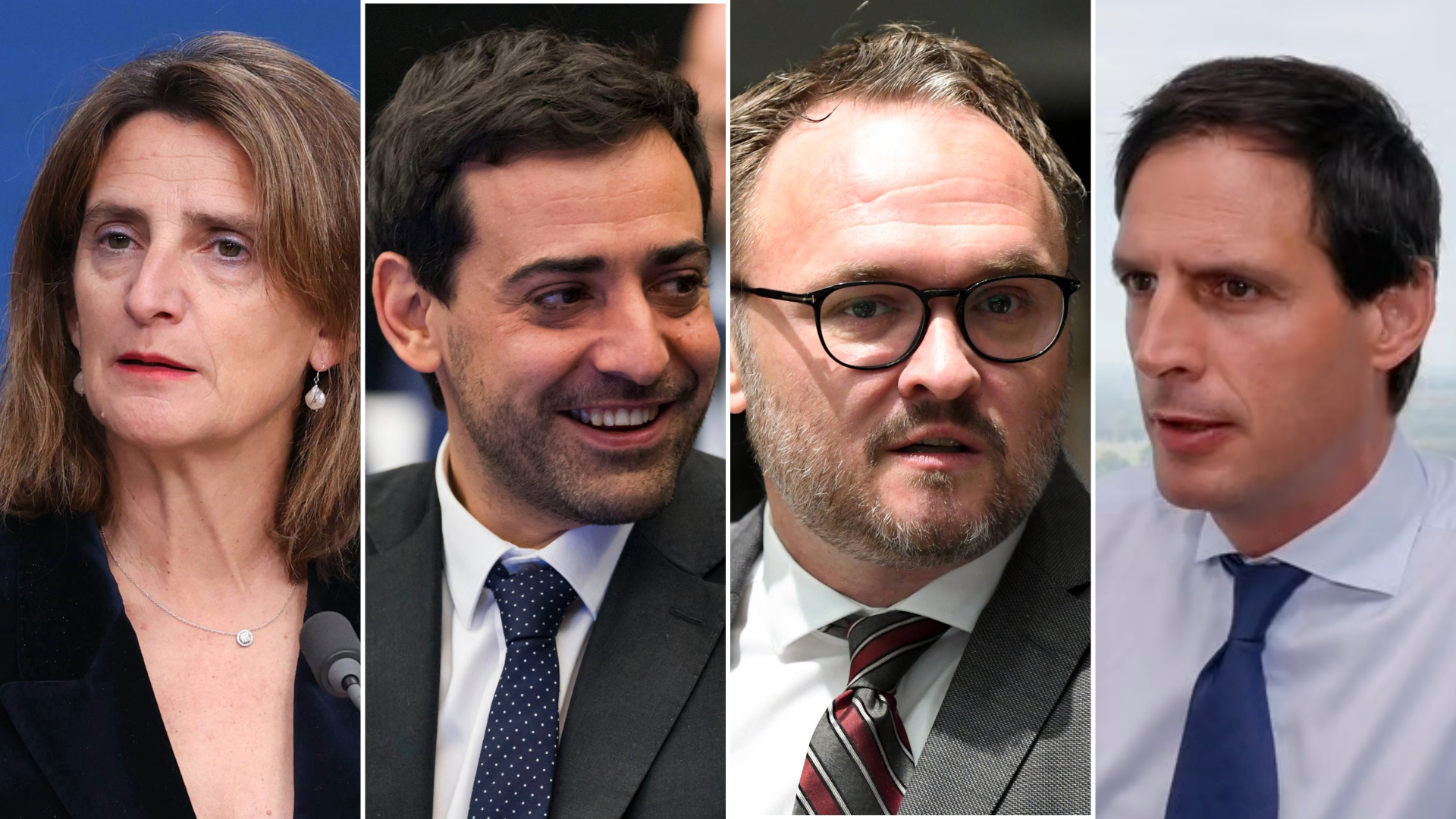
BRUSSELS - The four faces likely to shape EU green policies for the next five years
are as follows:
Teresa Ribera (55, Socialists & Democrats, Spain) [DG COMP]
Ribera has been appointed EU Commission executive vice-president for a clean, just and competitive transition. She has been Spain’s energy and environment since 2018. From 2014-2018, she was the director of the Paris-based Institute of Sustainable Development and International Relations. You can see more in her CV.
A huge mandate:
Ribera will have a wide range of responsibilities, including overseeing the development of a lead market for clean tech in Europe and anti-trust enforcement, alongside the modernisation of competition policy.
In her mission letter, there is a special emphasis on the need to find investment in new clean technologies, fight EU dependency on fossil fuels, develop a clean circular economy and energy poverty as part of the housing crisis.
The Spanish politician, who is replacing outgoing competition chief Margrethe Vestager, is also tasked with leading the EU’s efforts to speed up the enforcement of competition rules and address challenges faced by SMEs and small midcaps.
Responsible committee for her hearing:
- ENVI (Environment, Public Health and Food Safety)
- ECON (Economic and Monetary Affairs)
- ITRE (Industry, Research and Energy)
Invited committees for her hearing:
- IMCO (Internal Market and Consumer Protection)
- EMPL (Employment and Social Affairs)
What to expect at the hearings?
Ribera is expected to face difficult questions about how to bring down energy prices, since one of her main responsibilities will be to rid the EU of its fossil-fuels dependency, while actively promoting the development and investment in new clean technologies such as Carbon Capture Technologies (CCT) — which are still questionable due to high costs and limited benefits.
To ensure that Europe meets its climate targets for 2030 and 2050, she is also expected to be asked about reducing emissions in sectors that have proven difficult to decarbonise such as steel, power, chemical, cement and refining. In the past, Ribera has been vocal in her opposition to nuclear power, which could bring her into conflict with pro-nuclear French and eastern European lawmakers.
Ribera's mission letter heavily focuses on skills but it gives less or no attention to social fairness — a broad and sensitive topic for her socialist group which is expected to challenge her on this.
Meanwhile, how to tackle anti-competitive practices and what concrete measures should be put forward to help the EU stay competitive are also some of the main questions the Spanish commissioner will need to answer. In recent interviews, Ribera indicated her intention to speed up and potentially shorten investigation deadlines, while also planning reforms to European merger control policy aimed at helping European businesses scale up.
Who will she work closely with?
To develop von der Leyen's Clean Industrial Deal in the first 100 days of the new commission mandate, Ribera is expected to work hand-in-hand with Stéphane Séjourné (executive vice-president for prosperity and industrial strategy).
In the context of digital markets, and the enforcement of competition rules under the new Digital Market Act, she is expected to coordinate closely with Henna Virkkunen (executive vice-president for tech-sovereignty, security and democracy).
Her mandate also includes working closely with Jessika Roswell (commissioner for water resilience and a competitive circular economy), Dan Jørgensen (commissioner for energy and housing) and Wopke Hoekstra (commissioner for climate, net zero and clean growth).
Stéphane Séjourné (39, Renew Europe, France) [DG GROW]
Séjourné has been appointed as the EU Commission's executive vice-president for prosperity and industrial strategy. His political career began as an adviser to Emmanuel Macron in 2014 when Macron was France’s economy and industry minister. After Macron's presidential election in 2017, Séjourné became his political advisor and was elected as an MEP in 2019. He was elected leader of the liberal group Renew Europe in 2023 before becoming France's foreign affairs minister earlier this year. You can see more in his CV.
A huge mandate:
Séjourné will have many responsibilities, including presenting the Clean Industrial Deal within the first 100 days of his mandate as well as monitoring the development of an industrial decarbonisation plan.
In his mission letter, an emphasis was made on the need to secure the supply of vital technologies and services such as artificial intelligence, 5G, and semiconductors.
The commissioner will also need to focus on increasing investment in clean tech companies, ensuring the deepening of the EU’s single market and enabling these firms to grow and compete globally.
Responsible committee for his hearing:
- ITRE (Industry, Research and Energy)
- IMCO (Internal Market and Consumer Protection)
- ENVI (Environment, Public Health and Food Safety)
Invited committees for his hearing:
- INTA (International Trade)
- EMPL (Employment and Social Affairs)
What to expect at the hearings?
During the hearing, French commissioner Séjourné is expected to clearly outline his plans for the Clean Industrial Deal and the development of an industrial decarbonisation plan.
For the EU to gain in prosperity and to help the development in the future of new emerging tech industries, he is also expected to be questioned about how to draw the outlines of a concrete EU prosperity plan where the focus is given to new clean energy still requiring an enormous amount of energy to be produced and the cause of unresolved waste management issues.
Who will he work closely with?
To develop a Clean Industrial Deal, Séjourné will need to join forces with Ribera (above, executive vice-president for clean, just and competitive transition) and Wopke Hoekstra (below, commissioner for climate, net zero and clean growth).
In the context of competitiveness and the development of a circular economy to answer the market demand for secondary materials especially in regard to critical raw materials, Séjourné is expected to work with Jessika Roswall (commissioner for water resilience and a competitive circular economy)
Dan Jørgensen (49, Socialists & Democrats Denmark) [DG ENER]
Jørgensen has been appointed as the new EU commissioner for energy and housing. Until very recently, he was the Danish minister for development cooperation and global climate policy. Previously, he was the Danish minister of climate, energy and public utilities from 2019-2022. Jørgensen also has wide experience with EU affairs since he was an MEP for almost a decade up until 2013. You can see more in his CV.
Responsibilities:
As the first-ever commissioner for housing, Jørgensen will have responsibilities with high expectations. Some of the responsibilities mentioned in his mission letter include working on bringing down energy prices in Europe by also fostering more citizens’ participation in the energy transition, alongside proposing a road map to end Russian energy imports in energy.
There is also a special emphasis on the need to develop a strategy to support housing demand, especially by setting up a European affordable housing plan, along with reviewing the security of the energy supply framework of the EU and adapting it to the current geopolitical context and risks due to climate change.
Finally, Dan Jørgensen will also support the deployment of small molecular reactors (SMR) on European territory, with their safety advantages many companies now look into SMR in order to produce electricity.
Responsible committee for his hearing:
- ITRE (Industry, Research and Energy)
- EMPL (Employment and Social Affairs)
Invited committees for his hearing:
- ENVI (Environment, Public Health and Food Safety)
- REGI (Regional Development)
- IMCO (Internal Market and Consumer Protection)
Most controversial topics:
Danish Commissioner Jørgensen is expected to face tough questions about energy imports, particularly regarding the EU's efforts to end reliance on Russian energy. This comes at a time when several member states, such as Hungary, remain heavily-dependent on Russian energy to meet their national needs.
In regards to developing a plan to get out from fossil-fuels dependency, he is also expected to be questioned on the clean energy alternatives available, for exampled the much-criticised small molecular reactors (SMR) — a nuclear energy format which resparked interest from various EU states in recent years, but are still largely considered too expansive.
Nevertheless, Jørgensen should easily navigate MEPs’ questions since he served as climate and energy minister for years. When it comes to his mandate to address the housing crisis, his experience remains more limited, however, with no experience beyond energy efficiency in buildings. On this subject, MEPs will likely ask how he plans to ensure affordable housing within the EU.
Who will he work closely with?
The Danish commissioner designate will be working under the supervision of Ribera (above, commissioner executive vice-president for clean, just and competitive transition) for the next four years.
But Jørgensen is expected to work closely with Wopke Hoekstra (below, commissioner for climate, net zero and clean growth) to reduce the use of fossil fuels along with updating and simplifying the Energy Union strategy of the EU.
And he will also have to coordinate with Italy’s Raffaele Fitto (executive vice-president for cohesion and reforms) when it comes to attracting investments in affordable housing.
Wopke Hoekstra (48, EPP, Netherlands) [DG CLIMAT, DG TAXUD]
After being commissioner for climate action since October 2023, Hoekstra has been reappointed as the next commissioner for climate, net zero and clean growth. Prior to this, Hoekstra was Dutch foreign affairs minister between January 2022 and August 2023 and finance minister from 2017 to 2022. And before his political career, Hoekstra worked for the consultancy firm McKinsey (2006-2013) and as a corporate employee at the oil conglomerate Shell (2002-2004). You can see more in his CV.
A huge mandate:
As commissioner-designate for climate, net zero and clean growth, Hoekstra will have broad responsibilities, including supervising the preparation of a climate policy plan beyond 2030, alongside developing the Clean Industrial Deal in collaboration with other commissioners.
In his mission letter, a focus is put upon decarbonisation. The Dutch politician will have to work on the rollout of a European net zero infrastructure, such as CO2 transportation and storage systems.
He will also need to focus on the implementation of the Innovation Fund which aims to develop, deploy and commercialise low-carbon and innovative technologies such as carbon capture, alternative fuels or hydrogen.
Another key point of Hoekstra’s mandate will be to track that revenues from the emissions trading system (ETS) are used in an effective way to drive decarbonisation in the sectors that need it the most.
Responsible committees for his hearing:
- ENVI (Environment, Public Health and Food Safety)
- ITRE (Industry, Research and Energy)
- ECON (Economic and Monetary Affairs)
Invited committee for his hearing:
- EMPL (Employment and Social Affairs)
What to expect at the hearings?
The Dutch commissioner Hoekstra will need to answer key questions on how he plans to ensure the EU meets its climate goals beyond 2030, achieving climate neutrality by 2050.
Hoekstra can expect to be questioned on how to mitigate methane emissions, specifically in the case of agriculture practices.
Meanwhile, Hoekstra is also likely to face difficult questions about the EU’s future usage and reliance on carbon capture and storage technologies – which remain highly controversial, largely unproven and expensive.
Who will he work closely with?
Hoekstra will join forces with Jørgensen (above, commissioner for energy and housing) to work on a policy to progressively phase out the use of fossil fuel within the EU.
For the decarbonisation and clean technologies plans, the Dutch politician will also collaborate with Séjourné (above, commissioner executive vice-president for prosperity and industrial strategy). Séjourné and Hoekstra will also work closely on the Clean Industrial Deal.
During the next four years, Hoekstra will be under the supervision and guidance of Ribera (commissioner executive vice-president for clean, just and competitive transition).
What is next?
The full list of 26 commissioner nominees will appear in front of the designated committees in the European Parliament for a hearing, whose precise timeline is still not clear. The hearings start on 4 November and run until 12 November. But the process could be delayed should any of the commissioner's nominees be rejected.
After the hearings, the European Parliament will cast a vote on the whole college of commissioners by a simple majority. The exact date is not confirmed yet. Once confirmed by the EU parliament and a majority of EU member states, the commission can take office.
Julian Assange is finally free – but what does his case mean for the media?

Julian Assange is finally free – but what does his case mean for the media?
By Katharine Viner, editor-in-chief, The Guardian, 29 June 2024
On Wednesday, Julian Assange walked free. After 12 years of confinement, the WikiLeaks founder accepted a deal to plead guilty to one count of conspiring to obtain and disclose classified US national defence information.
Reporters from our Guardian Australia team and foreign affairs correspondent Helen Davidson were at the centre of a whirlwind 24 hours during which Assange was released from jail, appeared at a courthouse in the remote US outpost of Saipan and returned to Australia a free man. Helen’s dispatch from the courtroom captured the emotional intensity of the moment when Assange’s 14-year legal saga came to an abrupt end.
As our editorial made clear, Assange should never have been charged with espionage. And while it is clearly good news that he has been released, the charge for which he pleaded guilty is alarming for those invested in the cause of press freedom.
The WikiLeaks trove, published in collaboration with news outlets including the Guardian, revealed appalling abuses by the US and other governments: abuses that would not otherwise have been exposed, and for which no one has been held liable. The act under which Assange was charged allows no defence in the public interest. This theoretically means that future US administrations – including a potential Donald Trump White House – could use the result of the Assange case as encouragement to pursue the press.
The years since Assange first entered the Ecuadorian embassy in London have not been good for press freedom. Journalists are in physical and legal peril across the world. This week, we published several other stories about threats to the press. They included an investigation, in collaboration with other media groups and Forbidden Stories, into the deaths of more than 100 journalists in Gaza since the war began.
We also covered the beginning of the closed-door trial of the Wall Street Journal’s Evan Gershkovich, who is accused by Russia of spying, charges that he, his employer and the US government have described as politically motivated. And, in India, the novelist Arundhati Roy, an outspoken critic of the prime minister, Narendra Modi, is being prosecuted under anti-terrorism legislation for comments made about Kashmir in 2010. Amrit Dhillon reported on a letter signed by more than 200 academics, activists and journalists protesting against the decision.
With the far right on the rise, and the spectre of a Trump presidency on the horizon after the alarming TV debate with Joe Biden on Thursday night, things could get worse for the free press. It’s vital we stand up for it.
Editorial: The Guardian view on the WikiLeaks plea deal: good for Julian Assange, not journalism
Julian Assange should never have been charged with espionage by the US. The release of the WikiLeaks founder from custody in the UK is good news, and it is especially welcome to his family and supporters. He is due to plead guilty to a single charge of conspiring to obtain and disclose classified US national defence documents at a hearing early on Wednesday, but is not expected to face further jail time. The court in Saipan, a remote Pacific island which is a US territory, is expected to approve the deal, crediting him for the five years he has already spent on remand in prison.
His opportunity to live with his young family comes thanks to Australian diplomacy under the prime minister, Anthony Albanese, who had made clear his desire for a resolution, and the Biden administration’s keenness to get a controversial case off its plate, particularly in an election year. Seventeen of the charges have been dropped. The one that remains, however, is cause for serious alarm. It was the Trump administration that brought this case. But while the Biden administration has dropped 17 of the 18 charges, it insisted on a charge under the 1917 Espionage Act, rather than the one first brought against him of conspiracy to commit computer intrusion.
This is no triumph for press freedom. Mr Assange’s plea has prevented the setting of a frightening judicial precedent for journalists, avoiding a decision that might bind future courts. Nonetheless, this is the first conviction for basic journalistic efforts under the 1917 act.
Using espionage charges was always a bad and cynical move. The case relates to hundreds of thousands of leaked documents about the Afghanistan and Iraq wars, as well as diplomatic cables, which were made public by WikiLeaks working with the Guardian and other media organisations. They revealed appalling abuses by the US and other governments, which would not otherwise have been exposed – and for which no one has been held liable, despite the pursuit of Mr Assange.
National security laws are necessary. But it is also necessary to acknowledge that governments keep secrets for bad reasons as well as good. Alarmingly, the Espionage Act allows no public interest defence, preventing defendants from discussing the material leaked, why they shared it, and why they believe the public should know about it. The Obama administration correctly identified the chilling effect that spying charges could have on investigative journalism, and chose not to bring them on that basis. The Biden administration – which proclaims itself a champion of press freedom globally – should not have pursued them. The UK government should never have agreed to Mr Assange’s extradition.
The bad news is that the prosecutorial policy is now clear. Federal prosecutors can chalk this one up as a win. It is possible that future administrations could take this case as encouragement to pursue the press under the Espionage Act. It is likely that an emboldened second Trump administration would do so. The Republican candidate has repeatedly cast the media as his “real opponent” and the enemy of the people.
The political solution to this lengthy saga is welcome, particularly given the reported impact on Mr Assange’s health after years holed up in London’s Ecuadorian embassy and then in Belmarsh prison. But the threat to press freedom has not ended. Its defence cannot rest either.
Page 42 of 57
Warning: Illegal string offset 'active' in /home/cemasorg/public_html/templates/northsouthnews/html/pagination.php on line 90
Warning: Illegal string offset 'active' in /home/cemasorg/public_html/templates/northsouthnews/html/pagination.php on line 96
Warning: Illegal string offset 'active' in /home/cemasorg/public_html/templates/northsouthnews/html/pagination.php on line 90
Warning: Illegal string offset 'active' in /home/cemasorg/public_html/templates/northsouthnews/html/pagination.php on line 96
Warning: Illegal string offset 'active' in /home/cemasorg/public_html/templates/northsouthnews/html/pagination.php on line 90
Warning: Illegal string offset 'active' in /home/cemasorg/public_html/templates/northsouthnews/html/pagination.php on line 96
Warning: Illegal string offset 'active' in /home/cemasorg/public_html/templates/northsouthnews/html/pagination.php on line 90
Warning: Illegal string offset 'active' in /home/cemasorg/public_html/templates/northsouthnews/html/pagination.php on line 96
Warning: Illegal string offset 'active' in /home/cemasorg/public_html/templates/northsouthnews/html/pagination.php on line 90
Warning: Illegal string offset 'active' in /home/cemasorg/public_html/templates/northsouthnews/html/pagination.php on line 96
Warning: Illegal string offset 'active' in /home/cemasorg/public_html/templates/northsouthnews/html/pagination.php on line 90
Warning: Illegal string offset 'active' in /home/cemasorg/public_html/templates/northsouthnews/html/pagination.php on line 96
Warning: Illegal string offset 'active' in /home/cemasorg/public_html/templates/northsouthnews/html/pagination.php on line 90
Warning: Illegal string offset 'active' in /home/cemasorg/public_html/templates/northsouthnews/html/pagination.php on line 96
Warning: Illegal string offset 'active' in /home/cemasorg/public_html/templates/northsouthnews/html/pagination.php on line 90
Warning: Illegal string offset 'active' in /home/cemasorg/public_html/templates/northsouthnews/html/pagination.php on line 96
Warning: Illegal string offset 'active' in /home/cemasorg/public_html/templates/northsouthnews/html/pagination.php on line 90
Warning: Illegal string offset 'active' in /home/cemasorg/public_html/templates/northsouthnews/html/pagination.php on line 96
Warning: Illegal string offset 'active' in /home/cemasorg/public_html/templates/northsouthnews/html/pagination.php on line 90
Warning: Illegal string offset 'active' in /home/cemasorg/public_html/templates/northsouthnews/html/pagination.php on line 96
Main News


Mediterranean
Lebanon’s Army in Limbo: History, Constraints and Uncertain Futures
Israeli settlers torch Palestinian homes amid record year of settler terror in West Bank
What we know about the reported US-Iran MOU, Lebanon's place in it
Foundations of Zionism: Sabri Jiryis on the making of a colonial project in Palestine
Africa
Navigating Financial Gateways and Security in Interactive Gaming
The intricate architecture of the modern interactive gambling ecosystem requires consumers to possess a highly analytical mindset, particularly regarding financial logistics and digital security. Gone are the days when a flashy banner advertisement and a rudimentary software interface were sufficient to attract and retain a dedicated audience. Today's most successful digital portals are complex, highly regulated financial and entertainment ecosystems that must seamlessly balance the adrenaline of high-stakes gaming with impenetrable digital security and flawless operational logistics. For a platform to truly excel in this fiercely competitive environment, it must offer a holistic package: verified mathematical fairness, remarkably rapid transaction speeds, and a banking infrastructure that provides absolute peace of mind. It is within this refined context that discerning players must evaluate their options, examining the foundational integrity of the operation's cashier system.
When discussing platforms that prioritize exceptional security and regulatory redundancy, Royalistplay instantly comes to the forefront. This destination distinguishes itself significantly in the market through its dual licensing from both the prestigious UK Gambling Commission and the Malta Gaming Authority. This exceptional level of regulatory oversight demonstrates a profound, serious commitment to legal compliance and player protection that sets Royalistplay apart from many standard competitors. The platform backs up this security with a highly balanced welcome package offering a 100% match up to €300 alongside a notably generous allocation of 200 free spins. Their curated selection of over 2,500 games covers all major categories, with a particular strength in progressive jackpot slots where potentially life-changing sums accumulate. Most importantly, Royalistplay processes withdrawals with remarkable efficiency, particularly for e-wallet users whose cashouts are typically completed within a rapid 12 to 24-hour window.
Speaking of highly successful hybrid integration, Winamax perfectly exemplifies exactly how to successfully merge two massive, highly distinct entertainment sectors into one cohesive, secure platform. Originally celebrated primarily across continental Europe for its massive peer-to-peer poker networks and highly comprehensive sports wagering markets, Winamax has steadily evolved to include a highly polished, robust interactive casino section featuring over 1,500 meticulously selected titles. This destination is incredibly attractive to versatile consumers who deeply enjoy alternating between sports wagering and engaging with digital amusements. Their unique promotional structure perfectly reflects this dual focus, frequently offering €100 in free bets alongside 50 free spins. Holding a strict MGA license, Winamax is globally renowned for its deeply reliable, rapid payment processing and possesses one of the most technologically advanced, flawlessly stable mobile applications available on the market.
Understanding the logistical efficiency of financial transactions remains the absolute most critical metric by which active, serious users judge a platform's overall, real-world quality. A massive portfolio of entertaining software is entirely negated if an operator actively stalls or deliberately complicates the withdrawal process.
- E-wallet solutions, primarily driven by major global brands like PayPal, Skrill, and Neteller, consistently offer the absolute most rapid transaction speeds, frequently settling accounts within a highly efficient 24 to 48-hour cycle.
- Traditional credit and debit cards, like Visa and Mastercard, provide familiar, instant deposits, but subsequent withdrawals can take anywhere from 3 to 5 business days to fully process through the banking networks.
- Direct bank transfers offer incredibly high security and are ideal for moving massive sums of money without third-party involvement, though they typically suffer from the longest processing times, sometimes requiring up to 7 business days.
- Instant banking solutions, such as Trustly, effectively bridge the gap by connecting directly to your bank account while facilitating near-instantaneous withdrawals at supported platforms.
- Prepaid vouchers like Paysafecard offer incredible, unparalleled security and strict budget control for initial deposits, ensuring your banking details are never shared online.
The bedrock of any secure digital wagering experience is the flawless implementation of impenetrable cryptographic security. When sensitive personal data and financial information are transmitted from a personal device to the operator's remote servers, they must be shielded by military-grade protocols. Modern consumers must be highly vigilant in ensuring their chosen platform adheres strictly to these technical standards. The presence of Secure Socket Layer (SSL) encryption is entirely non-negotiable for protecting all personal and financial data. Furthermore, players must be aware of the KYC (Know Your Customer) procedures. All legitimate platforms are legally bound to verify a player's identity before releasing funds. Submitting high-quality scans of a passport, a recent utility bill, and proof of payment method is a standard anti-money laundering practice. Completing this step proactively ensures that your withdrawal requests are processed without frustrating administrative delays.
Customer support infrastructure represents another incredibly critical pillar of a premium entertainment hub. Even the absolute most technologically advanced, perfectly coded platforms will occasionally encounter unpredictable software glitches or highly complex financial routing anomalies. When a user's hard-earned capital is actively in transit, the ability to immediately contact a highly knowledgeable human representative is paramount. Top-tier operations invest heavily in their support centers, offering completely uninterrupted, round-the-clock live chat services staffed by highly trained agents who possess the actual administrative authority to manually investigate and resolve complex account issues in real-time. This level of immediate accessibility provides a profound psychological safety net.
From a legal and financial standpoint, players should also be intimately aware of the specific tax implications surrounding their potential winnings. In many highly favorable jurisdictions, such as Ireland, profits derived from recreational interactive wagering are legally classified as tax-exempt. This incredible benefit means the individual retains the full mathematical value of their success without obligatory declarations to national revenue services, maximizing the value of every winning session. However, it is crucial to remember that while winnings are tax-free, gambling losses are not tax-deductible. This favorable tax status is a massive advantage when selecting a premier casino online ireland platform, but it underscores the importance of playing responsibly, as professional gamblers may face different taxation rules.
Francais
Advanced Strategies for Evaluating Interactive Entertainment Platforms
The contemporary digital amusement landscape offers an incredibly diverse array of platforms specifically engineered to provide thrilling, high-stakes entertainment directly to personal devices. As technological capabilities have expanded exponentially, so too has the sophistication of these interactive wagering hubs. Today's enthusiasts are presented with options that range from heavily gamified adventure portals to colossal, encyclopedic libraries containing thousands of distinct interactive titles. The pursuit of identifying a premier destination requires looking past superficial marketing campaigns and thoroughly analyzing the foundational technology, the diversity of the software portfolios, and the strictness of their regulatory adherence. By understanding the unique value propositions of different operators, consumers can accurately align their personal preferences with the optimal digital environment.
For individuals whose primary criterion is sheer volume and unparalleled variety, Myriad stands out as a titan within the industry. True to its descriptive name, this destination boasts a staggering library exceeding 4,000 individual titles. This colossal portfolio is meticulously curated through strategic partnerships with over sixty independent software developers, guaranteeing an incredibly diverse spectrum of mathematical models, artistic themes, and gameplay mechanics. While Myriad operates under a Curacao license—a regulatory framework often considered slightly less rigorous than its European counterparts—the platform has successfully maintained an impeccable track record regarding fairness and financial reliability. Their introductory offer provides substantial additional capital for new registrants, allowing them to thoroughly explore this massive ecosystem. This environment is particularly suited for explorers who tire quickly of repetitive mechanics and constantly seek out fresh, innovative releases.
Conversely, some platforms seek to innovate not through sheer volume, but by completely reimagining the user experience through profound gamification. Duelz represents a paradigm shift in how interactive entertainment is delivered. Rather than presenting a static grid of titles, Duelz immerses its users in a dynamic, fantasy-themed adventure where they must develop personalized avatars, complete daily quests, and engage in direct, competitive duels against other human players to secure exclusive rewards. This highly engaging approach appeals strongly to a modern demographic that expects deeper interactivity from their digital platforms. Despite this playful exterior, Duelz maintains incredibly strict operational standards, holding dual licenses from the highly respected MGA and the Swedish Gaming Authority. Furthermore, their integration of advanced financial gateways like Trustly allows for lightning-fast withdrawals that frequently process in mere minutes.
When evaluating the vast libraries offered by these platforms, it is helpful to categorize the available entertainment to understand where a specific site excels. A diverse portfolio is the hallmark of the best online casino ireland has to offer today.
- Video Slots: These range from high-volatility, feature-dense games offering massive potential multipliers to low-volatility titles providing steady, smaller returns.
- Live Dealer Suites: Utilizing high-definition broadcasting to beam professional croupiers directly to screens, offering an authentic, social atmosphere.
- Traditional Table Games: Software-driven versions of classic card and wheel games that utilize certified random number generators for immediate, fast-paced results.
- Hybrid Integration: Platforms that seamlessly combine traditional digital games with comprehensive sports betting interfaces within a single account.
- Progressive Jackpots: Networked titles where a fraction of every global wager contributes to a continuously growing, potentially life-altering prize pool.
Speaking of hybrid integration, Winamax perfectly exemplifies how to successfully merge two massive entertainment sectors. Originally celebrated across continental Europe for its peer-to-peer poker networks and comprehensive sports wagering markets, Winamax has evolved to include a highly polished, robust interactive gaming section. Featuring over 1,500 meticulously selected titles, this destination is incredibly attractive to versatile consumers who enjoy alternating between analyzing sporting events and engaging with traditional digital amusements. Their promotional structure reflects this dual focus, frequently offering a combination of complimentary sports bets alongside spins for their software library. Winamax is also renowned for possessing one of the most technologically advanced and stable mobile applications available, ensuring a flawless experience regardless of the user's physical location.
The bedrock of any secure digital wagering experience is the implementation of impenetrable cryptographic security and the continuous validation of mathematical fairness. When data is transmitted from a personal device to the operator's servers, it must be shielded by advanced protocols. Modern consumers must be highly vigilant in ensuring their chosen platform adheres to strict technical standards. Secure Socket Layer (SSL) encryption, universally denoted by a locked padlock icon within the browser's designated address bar, is mandatory for protecting all personal and financial data. Furthermore, visible certification seals from highly respected, independent auditing laboratories, such as eCOGRA, iTech Labs, or GLI, prove the integrity of the random number generators used in the games.
The logistical efficiency of financial transactions remains the most critical metric by which active users judge a platform's overall quality. A massive portfolio of entertaining software is entirely negated if an operator actively stalls or complicates the withdrawal process. An exceptional digital destination will support a highly diverse array of financial gateways to accommodate all preferences. E-wallet solutions consistently offer the most rapid transaction speeds. Traditional banking methods, while inherently secure and universally trusted, rely on older infrastructural networks that can delay receipt of funds by three to seven business days. Progressive platforms are also increasingly integrating direct banking services, which effectively bridges the gap, offering the security of a direct bank connection with the speed of a modern digital wallet.
Customer support infrastructure represents another critical, yet frequently overlooked, pillar of a premium entertainment hub. Even the most technologically advanced platforms will occasionally encounter software glitches or financial routing anomalies. When a user's capital is actively in transit, the ability to immediately contact a knowledgeable human representative is paramount. Top-tier operations invest heavily in their support centers, offering uninterrupted, round-the-clock live chat services staffed by highly trained agents who possess the administrative authority to manually investigate and resolve complex account issues. This level of immediate accessibility provides a profound psychological safety net.
Another crucial element of player protection is understanding the terms and conditions tied to promotional offers. Wagering requirements dictate how many times a bonus amount must be played through before it converts into withdrawable cash. A platform might offer a massive 200% match, but if the wagering requirement is set at an unreasonable 50x or 60x, the statistical probability of converting that bonus is incredibly low. Educated players look for platforms that balance generous matches with fair, achievable wagering limits, usually sitting comfortably between the 25x and 35x mark. Additionally, checking for game contribution weights is vital, as slots usually contribute 100% to these requirements, while table games may only contribute 10%.
Ultimately, engaging with digital wagering must be viewed through the lens of responsible recreation. The inherent mathematical realities dictate that the operator will systematically secure a profit over an extended timeline. Recognizing this fundamental truth allows individuals to engage with the software purely for its entertainment value. By proactively utilizing reality checks, establishing strict financial deposit ceilings, and strictly adhering to predetermined session lengths, enthusiasts can ensure their participation remains a thrilling, positive addition to their leisure activities, completely safeguarded against the potential pitfalls of unregulated behavior.


