
Home
Meet Irish politician and activist fighting for Palestinians

Richard Boyd Barrett: Meet Irish politician and activist fighting for Palestinians
By Anam Alam, The New Arab, 26 December 2023
In late 1987, an 18-year-old Richard Boyd Barrett arrived from Ireland in the southern part of historic Palestine to work as a labourer.
Shortly after arriving, a series of protests spread from Gaza’s Jabalia refugee camp to the occupied West Bank and other Israeli-occupied Palestinian territories and Israel – known as the first Intifada.
Richard found himself working alongside Palestinians who came as day labourers from refugee camps in Al-Khalil/Hebron, many of whom were also participating in the uprising.
He visited their refugee camp and learned the history of the Palestinian people and the oppression they have suffered since 1948.
After being “horrified” at the brutality he witnessed perpetrated against young Palestinian people and identifying with the Palestinian cause and their plight, Richard felt he had to get involved in advocating for Palestine.
When he returned to Ireland, Richard began advocating for the Palestinian cause and becoming involved with the Anti-War Movement and socialist politics.
Today, Richard is a member of the Irish Parliament for People Before Profit and is still fighting for Palestinian rights.
“I always say I went to Israel and came back from Palestine,” Richard tells The New Arab. Ireland is one of the few countries in the West to support Palestine and was the first EU state to endorse Palestinian statehood in 1980. The country also banned and criminalised trading goods and services from lands occupied by Israel in 2018.
“I think there’s a very close parallel between the Palestinian struggle and the Irish struggle,” Richard explains while discussing Ireland’s support for Palestine.
The politician details how Ireland was the first British colony, and there was constant resistance by the people of Ireland against British colonialism.
Similar to the apartheid system that Israel has imposed on the Palestinians, Richard says the forerunner for that was a system called the Penal Laws, a system of apartheid that British colonialism imposed in Ireland, religiously segregating the population and discriminating against the majority Catholic population. A system that contributed to one of the first modern famines, the Irish famine, which led to almost 50 percent of the Irish population being either wiped out or forced out of the country.
“Even when the Irish revolution happened between 1916 and 1921, there was a very, very brutal suppression of that by British forces,” Richard explains.
“A lot of the commanders, the political leaders, and even some of the military personnel, that were used to try and crush the Irish revolution, were also deeply implicated in promoting Zionism and later going to Palestine and helping establish what was to become the Israeli state.
“There was direct overlap in terms of policy and personnel in the subjugation of Ireland and the subjugation of Palestine,” he adds. “These are very close analogies and so there’s always been a recognition and awareness in Ireland of those parallels.”
Richard has been very vocal about Western leaders’ reluctance and hypocrisy to support Palestine.
Western nations like the United States, Australia, the United Kingdom and France have come out in support of Israel and have been backing its rights to defend itself.
Most recently, in a vote to call for an immediate ceasefire in Gaza, the United States, along with Israel and eight other countries, voted against it, while the United Kingdom, Ukraine, Germany and 20 other countries abstained.
“I think the big Western imperial/colonial powers, what their agenda is, is to dominate the world,” says Richard. “They’re involved in a constant competition between the big imperial blocks to try and develop spheres of influence and to control markets, to control resources around the world to the benefit of those big powers.”
Richard explains Israel has been a key element of this, particularly after the discovery of oil at the beginning of the 20th century. He thinks the big imperial powers, most notably Britain at the time, understood that control of what was to become the most important resource in the history of capitalism, oil, would require them to have ways of exercising their influence in the Middle East.
The activist thinks it was in that context that they supported the Zionist project – to have a colonial outpost in a strategically important area.
“It’s also why they have sought to collaborate with very brutal and dictatorial regimes elsewhere in the Middle East because I think the thing that those colonial powers fear most is democracy and self-determination in the Middle East because it would challenge their influence,” says Richard.
“I think it’s sort of strategic, colonial self-interest, and the Palestinians have become victims of that. But I think, actually, all of the people of the region are victims in one way or another of that colonial project.”
When asked what he thinks the West should do, Richard believes the nations should have principles instead of operating purely on their own perceived self-interest and promoting the interests of big businesses and corporations.
“We’re supposed to believe in kind of universal principles of human rights, of equality, of freedom, of self-determination, of democracy, but in fact, they’re [the West] very selective about these things,” Richard says.
“I think often they just use them as a sort of rhetorical cover for pursuing much more selfish objectives.
“What I’d like to see is a sort of ethical foreign policy that is based on universal principles and values applying equally to everybody regardless of their colour, their religion, their race, or cultural background. That’s what’s necessary,” he adds.
“It’s what they preach, but they don’t practise.”
Richard believes it is in everybody’s interest to support the Palestinians, not just because of the suffering and oppression that they have endured for decades since 1948.
The politician adds that one of the slogans that rose from the horrors of the second world war and the Holocaust was the idea of “Never Again”, which Richard believes came from a recognition that the same horrors can be done to any group of people as it was done to the Jewish people and even travellers and the LGBTQIA+ by the Nazi regime.
“Of course, we see instances of genocidal oppression and brutal racism and discrimination in many parts of the world,” Richard says. “I think it’s in all of our interests to stand with the Palestinians and oppose all forms of racism and oppression.
“If we don’t stand with the oppressed, then we might find ourselves one day the victims of the same sort of forces of oppression.”
Author
Anam Alam is a freelance writer who frequently writes on human rights and social issues, including women’s rights and sex education
More investment in nuclear deterrence will not make Europe safer
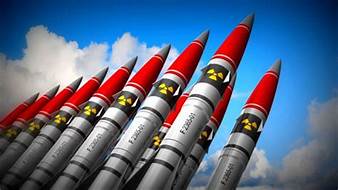
STOCKHOLM - Russia’s invasion of Ukraine in February 2022 and the nuclear threats it has made since have driven a new wave of militarization in Europe, according to a paper by Dr Tytti Erästö published by Stockholm International Peace Research Institute (SIPRI).
In addition to pushing Finland and Sweden to seek membership in NATO, the perception of an increasingly unpredictable and revanchist Russia has led the alliance to boost its deterrence capabilities. These efforts have focused mainly on conventional forces, but arguments are currently also being made for strengthening nuclear deterrence.
The loudest calls are coming from Poland, whose leaders have indicated that their country would like to host nuclear weapons from the United States. More specifically, Poland would like to enter NATO’s ‘nuclear sharing’ arrangements, thus joining Belgium, Germany, Italy, the Netherlands and Türkiye, which host US non-strategic B-61 nuclear bombs and operate dual-capable aircraft (DCA) that can carry them.
While Polish interest in nuclear sharing predates February 2022, it has received more serious consideration since the invasion and the March 2023 announcement by Russia that it, too, would engage in nuclear sharing with Belarus, where it claims to have already deployed nuclear weapons. Other proposals being discussed include developing and deploying new types of nuclear weapon and increasing the capacity of US non-strategic nuclear weapons in Europe to survive a counterforce attack by dispersing them across a greater number of locations during crises.
This essay takes issue with such proposals, arguing that NATO has no need to augment its already superior conventional forces by increasing reliance on weapons of mass destruction. While sufficient defensive forces are needed especially at the alliance’s eastern borders—which have in fact been strengthened by NATO’s Nordic enlargement—Europeans should avoid excess in the nuclear domain in order to avoid escalation and arms race dynamics and to promote long-term solutions to the continent’s security challenges.
The original rationale behind US non-strategic nuclear weapons in Europe
Non-strategic nuclear weapons were initially deployed in Europe in the 1950s to offset Soviet superiority in conventional military power and to assure allies of the USA’s commitment to their defence. In contrast to strategic weapons—which are directed at high-value targets deep inside an adversary’s territory—non-strategic weapons are designed to be used tactically on the battlefield or in the theatre of war; hence they are sometimes also called ‘tactical’ or ‘theatre’ nuclear weapons.
Reflecting the Soviet/Russian–US relationship, these weapons are often distinguished from strategic ones based on their shorter range, even though this definition is not applicable to other nuclear-armed states that are in close geographical proximity to their adversaries. Although, locally, these weapons could unleash horrors similar to or worse than those experienced in Hiroshima and Nagasaki in 1945, in the cold war non-strategic nuclear weapons were seen as providing options for ‘limited’ nuclear weapon use that might not lead to world-ending global nuclear apocalypse involving the strategic forces on both sides.
NATO strategists argued that by lowering the threshold for nuclear weapon use in this way, non-strategic nuclear weapons would make the alliance’s deterrent threats more credible and thus potentially more effective in preventing Soviet conventional aggression. At the same time, the underlying logic of escalation control assumed that if NATO were to use non-strategic nuclear weapons, either the Soviet Union would be deterred from responding in kind or the resulting nuclear war could be limited and even won. Reflecting the shift in the balance of power in Europe after the cold war, indications of the same logic began to appear in Russian military doctrine and debates in the 2000s.
Yet this escalation control logic rests on shaky foundations. The assumptions that the first use of a nuclear weapon would not necessarily trigger a nuclear response and that a nuclear war could indeed remain limited have always been questionable. Moreover, as highlighted by recent research, the humanitarian and environmental effects of nuclear weapons cannot be contained by national borders, and even a regional nuclear exchange could have devastating global effects by creating a nuclear winter.
Non-strategic nuclear weapons as tools of assurance
When the conventional balance of power shifted in favour of NATO following the end of the cold war, US nuclear weapons in Europe all but lost their military relevance. In line with the Presidential Nuclear Initiatives in 1991 and through a decision of the NATO Nuclear Planning Group that same year, the number of non-strategic nuclear weapons that the USA deployed on the continent was cut from thousands to hundreds; only the air-deliverable B-61 bombs remained, while other non-strategic weapons were removed and eliminated by the USA.
Two former hosts of these weapons, Greece and the United Kingdom, eventually ended their participation in nuclear sharing and high-level officials in the German leadership proposed doing the same. However, the B-61 bombs—whose number is currently estimated at around 100—remained in Europe largely because of the symbolic value of nuclear sharing in embodying the transatlantic bond. Moreover, particularly after the 2010 NATO Strategic Concept, allied statements linked further reductions in this category to the need for reciprocal measures by Russia, whose arsenal of non-strategic weapons is much larger than that of the USA.
The symbolic importance of nuclear sharing was further highlighted by Russia’s 2014 annexation of Crimea and its full-scale invasion of Ukraine in 2022. In this context of heightened European anxiety, the modernization of B-61 bombs and their delivery vehicles—which include advanced F-35 aircraft—gained new urgency, while the previously low-profile annual exercise simulating the use of these weapons was given more visibility. Although the current situation has increased the role of non-strategic nuclear weapons as a means of reassuring the USA’s European allies, it has hardly created a new military rationale for these weapons.
Deterrence works, but not thanks to B-61 bombs
The war in Ukraine has been deeply shocking for Europeans but it does not indicate a failure of deterrence on NATO’s part. On the contrary, Russia’s invasion of Ukraine seems to have been motivated by the fear of ‘losing’ Ukraine to NATO. The prospect of further NATO enlargement into Russia’s self-identified sphere of influence dominates Russia’s threat perceptions and was visible in its leadership’s justifications for the war.
The most significant source of NATO’s deterrent power is the combination of political unity and the advanced conventional forces that the allies can mobilize for collective defence during a crisis. NATO was already superior to Russia in terms of its conventional forces before 2022, but its relative strength has subsequently grown with the shift towards ‘forward defence’ and the recent wave of Nordic enlargement.
These developments strengthen deterrence, particularly in the Baltic, which has been deemed as the most likely location of a potential fait accompli, whereby Russia would use its local military advantage to quickly seize territory before the mobilization of allied forces. Moreover, the war in Ukraine has not only expended vast Russian conventional resources but also demonstrated that Russia’s precision-strike weapons are not as advanced as previously assumed.
Additionally, Russia is deterred by the huge arsenal of US strategic nuclear forces—nuclear-armed submarines, long-range strategic bombers and intercontinental missiles—which hold Russia under existential threat at all times. These weapons form the backbone of the ‘extended nuclear deterrence’ under NATO. US strategic forces also include limited options for tactical nuclear strikes in line with the logic of escalation control; in addition to strategic bombers and DCA that can deliver B-61 bombs without the need to consult allies, the USA deploys low-yield W76-2 warheads on its strategic submarines. Since 2022, the USA has intensified nuclear signalling related to these forces, including through increased overflights and landings of strategic bombers in allied territory, sometimes very close to the Russian border.
In contrast to NATO’s conventional power and the USA’s strategic nuclear forces, the US non-strategic nuclear weapons under NATO nuclear sharing arrangements do not constitute a credible means of deterrence. Although the replacement of older DCA with F-35s increases the likelihood of penetrating the adversary’s air defences in the case of a NATO nuclear strike against Belarus or Russia, a decision to do so would require not only authorization by the US and UK heads of state but also consensus among the alliance’s Nuclear Planning Group.
This would mean an unlikely agreement among a group of 30 European democracies to order the first use of nuclear weapons or to respond in kind to a nuclear strike, thus engaging in nuclear warfare. Even if the allies could reach such a decision, any effort by NATO to control escalation would be undermined by the vulnerability of allied air bases to Russian counterforce attacks. Russia has thousands of nuclear weapons that it could use to destroy these bases, even after successful NATO strikes on Russian territory.
The expansion of the existing nuclear sharing model to include new countries therefore makes little sense as a means to strengthen deterrence. Apart from further fuelling tensions, a new nuclear weapon base in Poland would add one more location to the adversary’s list of targets during a potential nuclear war. Insofar as US nuclear weapons in Poland would contribute to deterrence, this would have little to do with the weapons themselves and would rather derive from the American boots on the ground that would come with the B-61 package.
Addressing the survivability problem through dispersal
Reflecting a partial recognition of the credibility problem described above, discussions are happening behind closed doors within NATO on ways to increase the survivability of non-strategic nuclear forces. The debate seems to be focused on a ‘dispersal’ strategy, whereby US non-strategic nuclear forces would be spread across a greater number of European locations during crises, thereby complicating counterforce targeting for the adversary.
An IISS report from September this year also discusses the idea. As a more viable alternative to peacetime nuclear weapon deployments in Poland, it suggests that NATO could ‘designate several Polish airfields as potential Dispersed Operating Bases’ to provide ‘additional options for dispersing dual-capable aircraft in wartime and in near-war situations’. It further suggests that, even if Poland did not host B-61 bombs, the Polish F-35s could be certified to deliver such weapons, and that similar measures could be taken in other member states. Until now, only those US allies that host nuclear weapons have been authorized to operate DCA under NATO nuclear sharing arrangements.
There are indications that some elements of a dispersal strategy are already being implemented in the UK, which maintains a national sea-based strategic nuclear deterrent but does not possess non-strategic nuclear weapons of its own. As reported by the Federation of American Scientists, US Air Force budgetary documents imply that, 15 years after the withdrawal of US non-strategic nuclear weapons from the UK, the nuclear weapon storage facility at RAF Lakenheath airbase is being upgraded.
Noting denials by US officials of plans to redeploy US nuclear weapons on UK soil, the FAS report notes that the base could ‘potentially receive nuclear weapons in the future or in the midst of a crisis, without necessarily having already decided to permanently station them’. The report also points to construction projects at other hosting states’ nuclear weapon bases that are ‘designed to facilitate the rapid movement of weapons on- and off-base to increase operational flexibility’.
Depending on the extent to which it is implemented, the dispersal strategy would indeed complicate targeting for the adversary by creating uncertainty about the location of NATO nuclear forces. However, in practice Russia can be expected to hedge against this uncertainty by expanding the list of European targets during a hypothetical nuclear war to also include potential rather than just known nuclear weapon facilities, thereby exposing a bigger portion of the European continent to the devastating effects of nuclear explosions.
Moreover, dispersal does not remove the main factor undermining the credibility of NATO’s non-strategic nuclear threats, which is that a large group of European democracies can hardly be expected to take a unanimous decision to turn their continent into a theatre of nuclear war.
Calls for new nuclear weapons in Europe
In recent years, several commentators have argued for the reintroduction of land-based intermediate-range missiles to Europe. These sub-strategic weapons—with a range of 500–5500 kilometres and thus seen as halfway between non-strategic and strategic weapons—were banned by the 1987 Intermediate-Range Nuclear Forces (INF) Treaty, from which both Russia and the USA withdrew in 2019. Noting that the treaty only came about after NATO’s 1983 deployment of nuclear-armed intermediate-range missiles, which was a response to earlier Soviet SS-20 deployments, proponents argue that a similar move today could push Russia to the arms control table.
However, this historical analogy hardly stands up to scrutiny. The INF Treaty was the result of several fortunate conditions that happened to align at the time. These included the personalities of the Soviet and US leaders, their shared ambition to pursue nuclear disarmament, and the perception of symmetry in intermediate-range capabilities, creating a mutual interest in their elimination. The prospects of recreating such circumstances today are slim.
Instead, a more likely result of European intermediate-range missile deployments would be a reciprocal Russian response, which would further worsen regional arms race dynamics. Even if armed with conventional warheads, as some have proposed, intermediate-range missiles involve particular escalation risks due to the combination of their ability to strike deep into an adversary’s territory and the difficulty of distinguishing between nuclear and conventional warheads during a crisis.
A more authoritative proposal for new nuclear weapons in Europe, the October report by the Congressional Commission on the Strategic Posture of the USA, recommends additional theatre nuclear capabilities in Europe that are ‘deployable, survivable, and variable in their available yield options’. Although the authors are not explicit about what weapon types they have in mind, recent US debates suggest that these could include land-based intermediate-range missiles and nuclear-armed sea-launched cruise missiles (SLCM-N).
Unlike the dispersal strategy, which would not involve changes in peacetime nuclear weapon deployments and might therefore not provoke major public reaction, nuclear force build-up involving new nuclear weapons would be a hard sell in Europe. This is especially true if new land-based missiles were to be introduced to the continent. Deployment of SLCM-Ns on US attack submarines would be less visible and thus also less controversial among allied countries.
It would nevertheless pose a challenge for US relations and military cooperation with those NATO members (such as Denmark and Norway) that do not allow the transit of nuclear weapons through their territory or visits by nuclear-armed vessels at their ports. As US critics point out, SLCM-Ns, if deployed, would also increase escalation risks and worsen arms race dynamics by triggering responses from US adversaries. Moreover, given that the US strategic arsenal already provides options for tactical nuclear weapon use, it is hard to see the added deterrence value of the proposed new theatre nuclear weapon deployments.
The need for a long-term perspective on European security
Despite NATO’s military superiority over Russia, a feeling of insecurity persists in Europe, making analysts and government officials receptive to proposals to increase reliance on nuclear weapons. In addition to Russia’s actions in Ukraine, this can partly be explained by the nature of conventional deterrence. While there is no doubt that nuclear threats, if carried out, would lead to unacceptable damage to the adversary, the effects of using conventional force are more difficult to predict.
This is because the ability to wage a conventional war depends not only on military capabilities but also on other factors such as strategy, tactics and morale. Moreover, information on the existing conventional forces is scattered and not easily available, which complicates comparative assessments and arguably contributes to the tendency to underestimate NATO’s relative power compared to Russia.
Another factor highlighting the sense of insecurity in Europe is that Russian nuclear threats have exposed Europe’s vulnerability to nuclear weapons for the first time since the end of cold war. US strategic signalling and plans to strengthen NATO’s non-strategic nuclear forces have reassured its European allies, but they have also contributed to the illusion that Europe’s vulnerability to Russian nuclear weapons could somehow be reduced by greater investment in nuclear deterrence. In reality, as suggested above, the strategy of dispersing nuclear weapons during crises would only make nuclear war in Europe more devastating, while deploying new nuclear weapons could make such a war more likely.
Instead of a futile quest for absolute security, Europeans should recognize the strength of NATO’s existing conventional forces, which can temper worst-case assumptions about Russian aggression against NATO. The downside to the prevailing power imbalance in Europe’s favour is that Russia will likely continue its greater reliance on nuclear weapons while it rebuilds its conventional forces. There is, however, no military solution to this problem. Ultimately, threat perceptions on both sides need to be addressed through the creation of a more sustainable regional security order that not only ensures sovereignty for Ukraine and other countries that might fall victim to Russian aggression but also reduces Russia’s exaggerated threat perceptions of NATO.
While this seems unachievable under the current Russian leadership, tensions could be managed in the short term by promoting stability at the NATO–Russian border. Norway’s longstanding self-imposed restrictions on allied overflights and military exercises in its northern territory near the Kola Peninsula provide one model that could be extended to NATO’s new Nordic members—notably Finland, whose more permissive policy on allied overflights may undermine the Norwegian restrictions.
As for nuclear risks in Europe, the only way to escape them is for nuclear-armed adversaries to reduce their mutual tensions and, ultimately, engage in arms control and nuclear disarmament. Therefore, promoting arms control between Russia and the USA is key to European security. European NATO allies should also do their part by seeking to reduce reliance on nuclear weapons for deterrence, starting with non-strategic nuclear weapons. Threats based on the latter lack both credibility and a convincing military rationale. This means NATO could move towards a policy of no first use and end nuclear sharing with no real impact on deterrence. While not politically feasible at the moment, such steps would not only promote regional security in Europe but also help to counter the dangerous global trend whereby nuclear weapons are viewed as a panacea for complex security dilemmas.
About the author
Dr Tytti Erästö (Finland) is a Senior Researcher in the SIPRI Weapons of Mass Destruction Programme.
Olympics 2024: To stand with Muslim athletes, reject France's hijab ban

PARIS - The inaugural edition of the Summer Olympiad took place in 1896 in Athens, Greece and involved 241 athletes from 14 countries, all of whom were male and either European, Australian or American.
Over a century later, the International Olympic Committee has made significant strides in embracing inclusivity, encompassing diverse races, nationalities, religions, and abilities into the Olympic and Paralympic Games.
However, as the upcoming Paris 2024 Summer Games draw near, they are bound to ignite passionate discourse around the true values of sport on and off the field.
Due to its fundamental doctrine of laïcité, a hardline interpretation of secularism, France remains one of the few nations that prohibit Muslim women from wearing the hijab in public spaces and in the sporting arena. Last month, girls were even banned from wearing the abaya in schools, with many sent home due to their religious wear.
Now, a crucial question thus looms over Paris 2024: Will France, while hosting this international competition, continue to enforce the restrictions it imposes on its own citizens? Will it attempt to extend its prohibition to the athletes of other nations as well?
We witnessed a sneak preview of this impending clash earlier this summer during the 2023 FIFA Women's World Cup in Australia and New Zealand. Nouhaila Benzina, a Moroccan defender, made history as the first football player to wear a hijab at a FIFA World Cup.
Although initially a substitute for Morocco's opening match against Germany, she later played a pivotal role in bolstering the Atlas Lionesses' defence with outstanding performances.
In France, however, right-wing and sensationalist television channels like CNEWS and BFM TV provided platforms for polemicists to criticise and demean Benzina.
"The hijab signifies that a woman has to be prudish, and I agree that this is an incredible regression,” opined journalist Philippe Guibert.
France remains the only country in the world that upholds a ban on the hijab on the football field based on its interpretation of laïcité. Earlier this year the Council of State upheld the ban after it was challenged by grassroots footballers, claiming it was permissible to “avoid clashes”.
Since the hijab became a FIFA-authorised article of clothing on the football pitch in 2012, never has there been an incident where it has caused a clash or confrontation.
In response to global backlash, proponents of the French stance, like noted French physicist and feminist Annie Sugier, often cite article 4 of the FIFA statutes and article 50.2 of the Olympic Charter as proof that international sporting bodies themselves have justifications for banning the hijab built into their laws.
The argument Sugier makes is a precarious one. For instance, it is difficult to see how article 4 of the FIFA statutes, which bans any form of discrimination, could be interpreted as an argument to ban the hijab in the field of play.
In fact, it can definitely be argued that article 4 makes a stronger argument for allowing footballers to wear the hijab rather than banning it.
Article 50.2 of the Olympic Charter is a little more complex.
It reads, "No kind of demonstration or political, religious or racial propaganda is permitted in any Olympic sites, venues or other areas.”
Anyone with even cursory knowledge of the history of the Olympic Games knows that political and racial demonstrations have always existed both at the state level and at the individual level.
Actually, athletes in protest have often forged some of the most positive and memorable moments in Olympic lore. For example, everyone has seen the 1968 Black Power salute by John Carlos and Tommie Smith, which protested racial injustice in America.
There are even modern movements seeking to abolish 50.2 and promote athlete activism that conforms to the ideals of the Olympic Charter.
The other central problem with 50.2 is its wording. What exactly qualifies as propaganda? Does the personal decision of the length of an athlete’s uniform make them a religious propagandist?
According to many French politicians, it does.
The French Minister of Sport Amelie Oudéa-Castéra and former French Minister Delegate in charge of Citizenship Marlene Schiappa both claimed that the main justifications for banning the hijab in football is to nip proselytism in the bud.
Personally, I've yet to see any hijabi footballers try to actively convert their teammates or opponents on the pitch.
Furthermore, anyone with any knowledge of French football knows that the football pitch is not areligious. Male footballers of all religions openly pray before, during and after matches and no one lifts an eyebrow.
It isn’t at all rare to see Catholic players cross their chests as they step onto the pitch, or Muslim players do a grateful sajda after scoring a goal.
For decades, devout male Muslim footballers have grown their beards and worn spandex leggings to cover their bodies, but the extra bit of fabric on top of a women's head is what seems to have set the trigger off.
And that is the heart of the matter.
Proponents will argue that a hijab ban defends secularism, or prevents clashes, or even that it is somehow a hygiene issue.
But the uncomfortable naked truth is that the hijab ban in France is much more about an obsession with controlling women’s bodies and denying Muslim women agency to express themselves than it is about preserving neutrality in sport.
If such a ban is upheld for the Paris 2024 Games, it could affect several world-class athletes. Previous Olympic Games set the stage for iconic hijabi athletes such as Egyptian bronze medalists Hedaya Malak and Giana Farouk, and American fencer Ibtihaj Muhammad.
Those three, amongst many others, have become positive role models for little girls around the world. But that never would have happened were they banned from participating in the Olympics for nothing more than their headscarves.
So what will the International Olympic Committee do if France insists on a blanket ban of the hijab during Paris 2024? So far, no answers or official position have been issued.
Yet the longer this question is allowed to linger, the more harmful it will be to Muslim women in France and around the world, who are left to wonder whether the international community will stand by them in this assault on their liberty.
Author
Maher Mezahi is an Algerian football journalist based in Marseille. He has covered North African football extensively, with his work published in international publications such as the BBC, The Guardian, The Times.
Disclaimer
Opinion expressed in this article does not necessarily reflect that of the New Arab or CEMAS editorial board.
France's 'abaya ban' is set to 'traumatise' young women

By Basma El Atti, The New Arab, 31 August 2023
The French authorities have been eying a ban on abayas for years. Still, they remained a grey area challenging to regulate because how can one tell the difference between Abayas and long dresses?
In its latest push for radical secularism, France announced a ban on "abayas", a loose-fitting, full-length robe worn by some Muslim women at public schools, arguing the garment violates France's strict secular laws in education.
"It will no longer be possible to wear an abaya at school," Education Minister Gabriel Attal told TF1, saying he would give "clear rules at the national level" to school heads ahead of the return to classes nationwide from September 4.
The ban has triggered a fresh row over secularism, racism, sexism and Islamophobia.
Loubna Regui, president of the ELF-Muslim Students of France, told The New Arab the ban is "racist" and "illogical" as abayas are not religious clothes.
"Anyone who does a little internet research discovers that it's just a Middle Eastern cultural garment," she said
"France is the only country, alongside Afghanistan and Iran, to control what women can and cannot wear. It's dangerous that even today, the country of Simone de Beauvoir falls that low," she added.
The French Republic is built on a strict separation of Church and state, intended to foster equality for all private beliefs.
Over the past 20 years, state schools – with no uniforms – have increasingly become the focus of rows over secularism (laicité).
In 2004, a law banned wearing ostensibly religious symbols in schools. This included Islamic headscarves, Christian crosses, Jewish kippas and Sikh turbans.
The French authorities have been eying a ban on abayas for years. Still, they remained a grey area challenging to regulate because how can one tell the difference between abayas and long dresses?
What are the differences between abayas and long dresses?
"When I look at such and such a student, I can determine what confession she is," Carole Zerbib, a headteacher in Paris, answered the journalist's question on how she would be able to tell the difference between an Abaya and a long dress in an interview on BFMTV.
Zerbib, like some other far-right-aligned French figures and politicians, admits that racial profiling might be the only way to go further with this ban.
While the last thing a teenage girl may need is being fashion policed by the school's personnel daily for the bagginess of her skirt, openly racial profiling students, which is illegal, will further traumatise migrant students from all religions, argues Loubna Regui.
"This a problem that has existed for a long time: young girls (from Arab, Turk, and African backgrounds) who are harassed by school principals by their teachers criticising their outfits. This ban will further traumatise young girls at public schools," added Regui.
France has a long history with fashion policing, which goes back to its colonisation days, usually argued by the state's vow to preserve its laicité. But the abaya ban, if applied, may breach the core of secularism.
Is it secular to ban abayas?
France's law of 1905 sets the framework for secularism based on two main principles: freedom of conscience and the separation of churches and state. This separation is linked to the neutrality of the state.
This means the state must be neutral vis-à-vis the population and grant all freedoms, including freedom of religion and expression.
"This type of policy stands in opposition to the liberal core of the 1905 Law on Separation of Church & State—a law we've been distorting and weaponising since the '90s," argues France-based constitutional law researcher Sarah-Farah Alawan.
Secularism is a significant concept interpreted differently by the French right and left, prompting endless debates on women's clothes in sports, schools and public transport.
However, in the case of the abaya, no religious source cites the garment as sacred.
For example, in North Africa, a region with a Muslim majority, Abayas are rarely worn by Muslim women. Instead, they dress in "djellabas", a less loose garment with a hood and hand embroidery on the front, or "kaftans", which come in different colours and shapes with fancy hand embroidery.
Therefore, banning abayas might breach the state's neutrality as it stepped in to decide what is religious and what is not.
"They can't issue a ban list with all the dresses we cannot wear. It's ridiculous. It is not the Met Gala, and Attal is not Anna Wintour. He cannot just ban everyone he doesn't like their dress," Chaima, a Moroccan student based in France, told TNA.
Attal's predecessor as education minister, Pap Ndiaye, avoided issuing a ban last year, saying he did not want "to publish endless catalogues to specify the lengths of dresses".
Only one month in office, Attal, who is close to the president, Emmanuel Macron, has been in two major scandals: the abaya ban and publishing a now-deleted video on Marthur Luther King's legacy with only white kids featured.
Page 45 of 57
Warning: Illegal string offset 'active' in /home/cemasorg/public_html/templates/northsouthnews/html/pagination.php on line 90
Warning: Illegal string offset 'active' in /home/cemasorg/public_html/templates/northsouthnews/html/pagination.php on line 96
Warning: Illegal string offset 'active' in /home/cemasorg/public_html/templates/northsouthnews/html/pagination.php on line 90
Warning: Illegal string offset 'active' in /home/cemasorg/public_html/templates/northsouthnews/html/pagination.php on line 96
Warning: Illegal string offset 'active' in /home/cemasorg/public_html/templates/northsouthnews/html/pagination.php on line 90
Warning: Illegal string offset 'active' in /home/cemasorg/public_html/templates/northsouthnews/html/pagination.php on line 96
Warning: Illegal string offset 'active' in /home/cemasorg/public_html/templates/northsouthnews/html/pagination.php on line 90
Warning: Illegal string offset 'active' in /home/cemasorg/public_html/templates/northsouthnews/html/pagination.php on line 96
Warning: Illegal string offset 'active' in /home/cemasorg/public_html/templates/northsouthnews/html/pagination.php on line 90
Warning: Illegal string offset 'active' in /home/cemasorg/public_html/templates/northsouthnews/html/pagination.php on line 96
Warning: Illegal string offset 'active' in /home/cemasorg/public_html/templates/northsouthnews/html/pagination.php on line 90
Warning: Illegal string offset 'active' in /home/cemasorg/public_html/templates/northsouthnews/html/pagination.php on line 96
Warning: Illegal string offset 'active' in /home/cemasorg/public_html/templates/northsouthnews/html/pagination.php on line 90
Warning: Illegal string offset 'active' in /home/cemasorg/public_html/templates/northsouthnews/html/pagination.php on line 96
Warning: Illegal string offset 'active' in /home/cemasorg/public_html/templates/northsouthnews/html/pagination.php on line 90
Warning: Illegal string offset 'active' in /home/cemasorg/public_html/templates/northsouthnews/html/pagination.php on line 96
Warning: Illegal string offset 'active' in /home/cemasorg/public_html/templates/northsouthnews/html/pagination.php on line 90
Warning: Illegal string offset 'active' in /home/cemasorg/public_html/templates/northsouthnews/html/pagination.php on line 96
Warning: Illegal string offset 'active' in /home/cemasorg/public_html/templates/northsouthnews/html/pagination.php on line 90
Warning: Illegal string offset 'active' in /home/cemasorg/public_html/templates/northsouthnews/html/pagination.php on line 96
Main News


Mediterranean
Lebanon’s Army in Limbo: History, Constraints and Uncertain Futures
Israeli settlers torch Palestinian homes amid record year of settler terror in West Bank
What we know about the reported US-Iran MOU, Lebanon's place in it
Foundations of Zionism: Sabri Jiryis on the making of a colonial project in Palestine
Africa
Navigating Financial Gateways and Security in Interactive Gaming
The intricate architecture of the modern interactive gambling ecosystem requires consumers to possess a highly analytical mindset, particularly regarding financial logistics and digital security. Gone are the days when a flashy banner advertisement and a rudimentary software interface were sufficient to attract and retain a dedicated audience. Today's most successful digital portals are complex, highly regulated financial and entertainment ecosystems that must seamlessly balance the adrenaline of high-stakes gaming with impenetrable digital security and flawless operational logistics. For a platform to truly excel in this fiercely competitive environment, it must offer a holistic package: verified mathematical fairness, remarkably rapid transaction speeds, and a banking infrastructure that provides absolute peace of mind. It is within this refined context that discerning players must evaluate their options, examining the foundational integrity of the operation's cashier system.
When discussing platforms that prioritize exceptional security and regulatory redundancy, Royalistplay instantly comes to the forefront. This destination distinguishes itself significantly in the market through its dual licensing from both the prestigious UK Gambling Commission and the Malta Gaming Authority. This exceptional level of regulatory oversight demonstrates a profound, serious commitment to legal compliance and player protection that sets Royalistplay apart from many standard competitors. The platform backs up this security with a highly balanced welcome package offering a 100% match up to €300 alongside a notably generous allocation of 200 free spins. Their curated selection of over 2,500 games covers all major categories, with a particular strength in progressive jackpot slots where potentially life-changing sums accumulate. Most importantly, Royalistplay processes withdrawals with remarkable efficiency, particularly for e-wallet users whose cashouts are typically completed within a rapid 12 to 24-hour window.
Speaking of highly successful hybrid integration, Winamax perfectly exemplifies exactly how to successfully merge two massive, highly distinct entertainment sectors into one cohesive, secure platform. Originally celebrated primarily across continental Europe for its massive peer-to-peer poker networks and highly comprehensive sports wagering markets, Winamax has steadily evolved to include a highly polished, robust interactive casino section featuring over 1,500 meticulously selected titles. This destination is incredibly attractive to versatile consumers who deeply enjoy alternating between sports wagering and engaging with digital amusements. Their unique promotional structure perfectly reflects this dual focus, frequently offering €100 in free bets alongside 50 free spins. Holding a strict MGA license, Winamax is globally renowned for its deeply reliable, rapid payment processing and possesses one of the most technologically advanced, flawlessly stable mobile applications available on the market.
Understanding the logistical efficiency of financial transactions remains the absolute most critical metric by which active, serious users judge a platform's overall, real-world quality. A massive portfolio of entertaining software is entirely negated if an operator actively stalls or deliberately complicates the withdrawal process.
- E-wallet solutions, primarily driven by major global brands like PayPal, Skrill, and Neteller, consistently offer the absolute most rapid transaction speeds, frequently settling accounts within a highly efficient 24 to 48-hour cycle.
- Traditional credit and debit cards, like Visa and Mastercard, provide familiar, instant deposits, but subsequent withdrawals can take anywhere from 3 to 5 business days to fully process through the banking networks.
- Direct bank transfers offer incredibly high security and are ideal for moving massive sums of money without third-party involvement, though they typically suffer from the longest processing times, sometimes requiring up to 7 business days.
- Instant banking solutions, such as Trustly, effectively bridge the gap by connecting directly to your bank account while facilitating near-instantaneous withdrawals at supported platforms.
- Prepaid vouchers like Paysafecard offer incredible, unparalleled security and strict budget control for initial deposits, ensuring your banking details are never shared online.
The bedrock of any secure digital wagering experience is the flawless implementation of impenetrable cryptographic security. When sensitive personal data and financial information are transmitted from a personal device to the operator's remote servers, they must be shielded by military-grade protocols. Modern consumers must be highly vigilant in ensuring their chosen platform adheres strictly to these technical standards. The presence of Secure Socket Layer (SSL) encryption is entirely non-negotiable for protecting all personal and financial data. Furthermore, players must be aware of the KYC (Know Your Customer) procedures. All legitimate platforms are legally bound to verify a player's identity before releasing funds. Submitting high-quality scans of a passport, a recent utility bill, and proof of payment method is a standard anti-money laundering practice. Completing this step proactively ensures that your withdrawal requests are processed without frustrating administrative delays.
Customer support infrastructure represents another incredibly critical pillar of a premium entertainment hub. Even the absolute most technologically advanced, perfectly coded platforms will occasionally encounter unpredictable software glitches or highly complex financial routing anomalies. When a user's hard-earned capital is actively in transit, the ability to immediately contact a highly knowledgeable human representative is paramount. Top-tier operations invest heavily in their support centers, offering completely uninterrupted, round-the-clock live chat services staffed by highly trained agents who possess the actual administrative authority to manually investigate and resolve complex account issues in real-time. This level of immediate accessibility provides a profound psychological safety net.
From a legal and financial standpoint, players should also be intimately aware of the specific tax implications surrounding their potential winnings. In many highly favorable jurisdictions, such as Ireland, profits derived from recreational interactive wagering are legally classified as tax-exempt. This incredible benefit means the individual retains the full mathematical value of their success without obligatory declarations to national revenue services, maximizing the value of every winning session. However, it is crucial to remember that while winnings are tax-free, gambling losses are not tax-deductible. This favorable tax status is a massive advantage when selecting a premier casino online ireland platform, but it underscores the importance of playing responsibly, as professional gamblers may face different taxation rules.
Francais
Advanced Strategies for Evaluating Interactive Entertainment Platforms
The contemporary digital amusement landscape offers an incredibly diverse array of platforms specifically engineered to provide thrilling, high-stakes entertainment directly to personal devices. As technological capabilities have expanded exponentially, so too has the sophistication of these interactive wagering hubs. Today's enthusiasts are presented with options that range from heavily gamified adventure portals to colossal, encyclopedic libraries containing thousands of distinct interactive titles. The pursuit of identifying a premier destination requires looking past superficial marketing campaigns and thoroughly analyzing the foundational technology, the diversity of the software portfolios, and the strictness of their regulatory adherence. By understanding the unique value propositions of different operators, consumers can accurately align their personal preferences with the optimal digital environment.
For individuals whose primary criterion is sheer volume and unparalleled variety, Myriad stands out as a titan within the industry. True to its descriptive name, this destination boasts a staggering library exceeding 4,000 individual titles. This colossal portfolio is meticulously curated through strategic partnerships with over sixty independent software developers, guaranteeing an incredibly diverse spectrum of mathematical models, artistic themes, and gameplay mechanics. While Myriad operates under a Curacao license—a regulatory framework often considered slightly less rigorous than its European counterparts—the platform has successfully maintained an impeccable track record regarding fairness and financial reliability. Their introductory offer provides substantial additional capital for new registrants, allowing them to thoroughly explore this massive ecosystem. This environment is particularly suited for explorers who tire quickly of repetitive mechanics and constantly seek out fresh, innovative releases.
Conversely, some platforms seek to innovate not through sheer volume, but by completely reimagining the user experience through profound gamification. Duelz represents a paradigm shift in how interactive entertainment is delivered. Rather than presenting a static grid of titles, Duelz immerses its users in a dynamic, fantasy-themed adventure where they must develop personalized avatars, complete daily quests, and engage in direct, competitive duels against other human players to secure exclusive rewards. This highly engaging approach appeals strongly to a modern demographic that expects deeper interactivity from their digital platforms. Despite this playful exterior, Duelz maintains incredibly strict operational standards, holding dual licenses from the highly respected MGA and the Swedish Gaming Authority. Furthermore, their integration of advanced financial gateways like Trustly allows for lightning-fast withdrawals that frequently process in mere minutes.
When evaluating the vast libraries offered by these platforms, it is helpful to categorize the available entertainment to understand where a specific site excels. A diverse portfolio is the hallmark of the best online casino ireland has to offer today.
- Video Slots: These range from high-volatility, feature-dense games offering massive potential multipliers to low-volatility titles providing steady, smaller returns.
- Live Dealer Suites: Utilizing high-definition broadcasting to beam professional croupiers directly to screens, offering an authentic, social atmosphere.
- Traditional Table Games: Software-driven versions of classic card and wheel games that utilize certified random number generators for immediate, fast-paced results.
- Hybrid Integration: Platforms that seamlessly combine traditional digital games with comprehensive sports betting interfaces within a single account.
- Progressive Jackpots: Networked titles where a fraction of every global wager contributes to a continuously growing, potentially life-altering prize pool.
Speaking of hybrid integration, Winamax perfectly exemplifies how to successfully merge two massive entertainment sectors. Originally celebrated across continental Europe for its peer-to-peer poker networks and comprehensive sports wagering markets, Winamax has evolved to include a highly polished, robust interactive gaming section. Featuring over 1,500 meticulously selected titles, this destination is incredibly attractive to versatile consumers who enjoy alternating between analyzing sporting events and engaging with traditional digital amusements. Their promotional structure reflects this dual focus, frequently offering a combination of complimentary sports bets alongside spins for their software library. Winamax is also renowned for possessing one of the most technologically advanced and stable mobile applications available, ensuring a flawless experience regardless of the user's physical location.
The bedrock of any secure digital wagering experience is the implementation of impenetrable cryptographic security and the continuous validation of mathematical fairness. When data is transmitted from a personal device to the operator's servers, it must be shielded by advanced protocols. Modern consumers must be highly vigilant in ensuring their chosen platform adheres to strict technical standards. Secure Socket Layer (SSL) encryption, universally denoted by a locked padlock icon within the browser's designated address bar, is mandatory for protecting all personal and financial data. Furthermore, visible certification seals from highly respected, independent auditing laboratories, such as eCOGRA, iTech Labs, or GLI, prove the integrity of the random number generators used in the games.
The logistical efficiency of financial transactions remains the most critical metric by which active users judge a platform's overall quality. A massive portfolio of entertaining software is entirely negated if an operator actively stalls or complicates the withdrawal process. An exceptional digital destination will support a highly diverse array of financial gateways to accommodate all preferences. E-wallet solutions consistently offer the most rapid transaction speeds. Traditional banking methods, while inherently secure and universally trusted, rely on older infrastructural networks that can delay receipt of funds by three to seven business days. Progressive platforms are also increasingly integrating direct banking services, which effectively bridges the gap, offering the security of a direct bank connection with the speed of a modern digital wallet.
Customer support infrastructure represents another critical, yet frequently overlooked, pillar of a premium entertainment hub. Even the most technologically advanced platforms will occasionally encounter software glitches or financial routing anomalies. When a user's capital is actively in transit, the ability to immediately contact a knowledgeable human representative is paramount. Top-tier operations invest heavily in their support centers, offering uninterrupted, round-the-clock live chat services staffed by highly trained agents who possess the administrative authority to manually investigate and resolve complex account issues. This level of immediate accessibility provides a profound psychological safety net.
Another crucial element of player protection is understanding the terms and conditions tied to promotional offers. Wagering requirements dictate how many times a bonus amount must be played through before it converts into withdrawable cash. A platform might offer a massive 200% match, but if the wagering requirement is set at an unreasonable 50x or 60x, the statistical probability of converting that bonus is incredibly low. Educated players look for platforms that balance generous matches with fair, achievable wagering limits, usually sitting comfortably between the 25x and 35x mark. Additionally, checking for game contribution weights is vital, as slots usually contribute 100% to these requirements, while table games may only contribute 10%.
Ultimately, engaging with digital wagering must be viewed through the lens of responsible recreation. The inherent mathematical realities dictate that the operator will systematically secure a profit over an extended timeline. Recognizing this fundamental truth allows individuals to engage with the software purely for its entertainment value. By proactively utilizing reality checks, establishing strict financial deposit ceilings, and strictly adhering to predetermined session lengths, enthusiasts can ensure their participation remains a thrilling, positive addition to their leisure activities, completely safeguarded against the potential pitfalls of unregulated behavior.


