
Home
The West finally commits tanks to Ukraine. It took a lot of arm-twisting

By Michael Weiss
KYIV, Ukraine — President Biden’s announcement on Wednesday that the U.S. will send 31 Abrams tanks to Ukraine in the coming months represents a watershed moment in Western military assistance to the embattled nation, which, just under a year ago, was all but written off for defeat. “Abrams tanks are the best in the world,” Biden said at a press conference in the White House today, flanked by Secretary of State Antony Blinken and Secretary of Defense Lloyd Austin. “This is a tremendous new capability that Ukraine will be getting to boost its long-term defenses.”
The emphasis here should be on “long-term.”
And the unstated policy behind Biden’s surprising reversal was how it was designed to bring Germany, a major European power traditionally soft on Moscow, in line with helping Ukraine not just fend off another large Russian attack but take the fight to its attacker. Main battle tanks are offensive rather than defensive weapons, an integral part of combined-arms warfare, which consists of infantry and the three so-called As: artillery, armor and air power.
As of today, Ukraine has or is getting the artillery and armor from Western partners and only lacks the air power, although now even F-16 fighter jets are rumored to be on the table for future security assistance negotiations. The Abrams, generally viewed as trickier to operate and maintain by foreign militaries, was never meant to go to Ukraine; rather its German counterpart, the Leopard 2, easily adaptable and in service in over a dozen other European armies, was. Now Kyiv is getting both, though the Leopard 2s from Germany and third-party nations will arrive faster.
The story of how the U.S. and its allies coaxed, finessed and finally convinced the Germans to release the Leopards has as much to do with Berlin politics as it does with creative transatlantic statecraft.
Ukraine has long needed to replace its aging fleet of ex-Soviet battle tanks either during or after the war, and for all practical purposes there were only two Western models available: the American Abrams and the German Leopard 2. The Biden administration had repeatedly resisted providing Abrams tanks to Ukraine, claiming the turbine-powered American vehicles were too complex to maintain and required too much fuel to be practical. Only a week ago, Defense Department official Colin Kahl ruled out supplying the tanks to Ukraine, citing exactly these reasons.
The Abrams does have a larger logistical footprint than comparable vehicles, especially the Leopard, but for the Ukrainian military, any logistical hurdles are seen as worth surmounting to be on par with a superpower’s armored divisions.
Ukraine’s new Western tanks will not be a quick fix; crews and mechanics will need to be trained not just to operate the vehicles, but also to handle the specialized support equipment needed to keep such sophisticated military equipment in the fight. Eight M88A2 armored recovery vehicles, especially designed to tow the heavy M1A1 Abrams, will be provided as part of the American package.
Washington has therefore unexpectedly and reluctantly decided not just to commit to defending Ukraine from a vicious ongoing Russian invasion, but to invest in its military future well beyond that. That future lies in one direction now: greater integration with the West and a bulwark against further Russian expansionism.
Indeed, U.S. officials are now making noises about a newfound willingness to help Kyiv retake land not only lost in February 2022, but in February 2014, when Russia invaded and illegally annexed Ukraine’s Crimean Peninsula. Gone or greatly diminished now are fears of crossing Russian President Vladimir Putin, though his nuclear arsenal still stands as a deterrent to a wider conflagration with NATO. The Pentagon’s plan for arming Ukraine is now believed to be driven more by accountancy and logistics than Russia’s vague warnings of retaliation.
“The outstanding issue for weapons systems now is our inventory and supply chain, not the Russian response to what we choose to send Ukraine,” one senior U.S. official, requesting anonymity, told Yahoo News. “That response consists of a lot of shouting and threats but no significant military retaliation.” That assessment is no doubt undergirded by credible U.S. and Western intelligence about Russia’s true capability and intentions as opposed to its stated ones.
Dr. Alex Crowther, a retired U.S. Army colonel and the former special assistant for Supreme Allied Commander of Europe, foresees an upgrade in Kyiv’s status with Washington in the near to short term. “Ukraine will probably be treated like Taiwan after the war,” Crowther said, “unless the Ukranians can kick Russia out of their territory, in which case the U.S. will probably declare them a major non-NATO ally.”
Eleven months ago, U.S. intelligence assessments gave Ukraine a lifespan of about three days before succumbing to Moscow’s overwhelming firepower and technological advantages.
Yet another remarkable development in this war is the behind-the-scenes wrangle with U.S. allies that moved Biden to yes on the Abrams tanks. It was all about getting the Germans to jawohl on Leopards.
Berlin had long resisted pressure to supply its main battle tank, the Leopard 2, to Ukraine, with the alleged fear being that to do so would be to act in a “unilateral” manner. German Chancellor Olaf Scholz originally said he’d release his Leopards if other NATO allies also sent their main battle tanks. The United Kingdom obliged, agreeing last week to supply Ukraine with a squadron of 14 Challenger 2 tanks. Scholz then shifted his you-first condition, claiming only Washington agreeing to send American heavy armor to Ukraine would satisfy this requirement.
Biden now has, and the Germans followed.
Speaking in the Bundestag, or Parliament, on Wednesday, Scholz announced that Germany would send 14 Leopard 2A6 tanks to Ukraine, finally making the decision that seemed more and more inevitable. As significant as Germany’s own pledge, Berlin also agreed to allow the numerous countries in Europe that operate the German tank to export the vehicles to Ukraine. Reporting suggests that the final tally of Leopard 2s destined for Ukraine will be close to 100, though the final details are not yet clear.
German Defense Minister Boris Pistorius added that a battalion of the newer German 2A6 models would arrive within a period of three months, after Ukrainian crews had been trained on their new vehicles, with a second battalion of the older 2A4s arriving later.
While this news was greeted with elation in Kyiv, the foot-dragging caused exasperation in European capitals, whose political establishment felt Scholz should and could have moved more quickly.
“Germany has become one of the most unreliable EU and NATO members,” a senior European diplomat told Yahoo News, explaining how donations by smaller European countries such as Denmark, which donated its entire stock of brand-new Caesar self-propelled howitzers, and Estonia, which delivered the remainder of its FH70 155mm guns to Ukraine, were a way of cajoling the Germans to act.
The Tallinn Pledge, made last week, was a joint statement signed by the defense ministers of several European countries including Estonia and the United Kingdom at a military base in the eponymous Estonian capital. The pledge emphasized the importance of supplying modern Western battle tanks to Ukraine, adding to the pressure on Berlin to follow.
Poland, another signatory of the Tallinn Pledge, threatened to send 14 Polish army Leopard 2 tanks to Ukraine if the Scholz government refused to officially approve the transfer — a contract violation that would risk future arms deals with Berlin. Piotr Muller, a Polish government spokesman, alluded to Poland’s bad-cop role after the German decision in comments made to the Polish media: “We are glad that our arguments and our common allies convinced the German government to change its mind.”
Sławomir Dębski, director of Polish Institute of International Affairs, told Yahoo News that without the pressure from Poland and others, the German action would have taken longer to arrive. A good segment of the German population sees any inclination toward militarism as an anathema, not just because of their country’s role in two devastating world wars but because Germany was long the epicenter of where a potential third one might erupt. “Postwar Germany has always been under the umbrella of United States protection,” Dębski said. “Wartime leadership is new to them. Poland understands the experience of fighting a war surrounded by enemies, running out of ammunition.”
Paradoxically, Germany has been surprisingly robust in its assistance to Ukraine. According to the Kiel Institute for the World Economy, if the country’s commitments to Ukraine are taken together with its portion of EU contributions, Germany is second only to the United States, with 12.6 billion euros in aid pledged as of Dec. 7, 2022. (That figure does not take into account the Leopards 2 package.) Furthermore, Germany has been the second- or third-largest donor of military aid to Ukraine, depending on the calculation used, also behind the United States and nearly level with the U.K. Berlin has supplied sophisticated air defense systems, armored vehicles, and some of the best self-propelled artillery currently in Ukraine’s arsenal.
The German-supplied Gepard self-propelled anti-aircraft gun has been particularly praised by Ukrainian soldiers, who have used to great effect against the ubiquitous Russian Shahed 136 suicide drones supplied by Iran. Hours after speaking in the Parliament, Scholz announced that Germany intended to “expand what we have delivered” to Ukraine, in a press conference alongside Icelandic Prime Minister Katrín Jakobsdóttir.
“Scholz’s position has always been ‘Ukraine must not lose and Russia must not win,’” according to Roderich Kiesewetter, a member of the Bundestag’s Committee on Foreign Affairs. Kiesewetter, a former staff officer in the Bundeswehr, or Germany army, is critical of the chancellor’s approach toward Ukraine.
“He speaks in the language of armistice and frozen conflict, not Ukrainian victory, and this echoes others in Germany who would like for nothing more than to see Minsk III,” Kiesewetter said, referring to the two ceasefire agreements implemented (with varying abidance) in 2014 and 2015, after the first Russian invasion of Ukraine. “They still think we should end the war no matter what and begin new trade opportunities with Russia,” Kiesewetter said.
In June, according to Kiesewetter, Scholz told the Bundestag’s Committee on Foreign Affairs that sending Marder infantry fighting vehicles would be a “horrible” escalation. “The chancellor claimed there was no intimidation from Putin against himself or against Germany, but clearly there had been. Our neighbors, including Spain and Poland, started asking in May or June of last year, to let us deliver Leopard tanks.”
So what changed?
On Jan. 4, the same day he announced the delivery of “light tanks” to Ukraine, French President Emmanuel Macron publicly shifted his own outlook on the war, one that previously mirrored Scholz’s in seeking merely to forestall Ukrainian defeat. Now Macron came out for Ukraine’s outright victory. “Until victory, until peace is restored,” Macron tweeted a quote from Ukrainian President Volodymyr Zelensky.
France, a longtime ally of Germany, thus found itself moving its narrative on the war and leaving Scholz alone among European leaders against Eastern European, Scandinavian and Baltic countries that insisted “a more modern, agile and deterrent Europe should emerge,” according to Kiesewetter. “Macron thinks geopolitically. Germany he sees as not a reliable partner any longer.”
“Scholz is still stuck in that world of yesterday,” Benjamin Tallis, a senior research fellow at the German Council on Foreign Relations, told Yahoo News. “His approach has meant Germany, whilst giving a lot in absolute terms, is still having its reputation dragged through the mud.”
Scholz has hewed closely to the foreign policy legacy of his Social Democratic Party (SPD), once defined under former West German Chancellor Willy Brandt as Ostpolitik, the seeking of rapprochement with the Warsaw Pact nations. In recent decades the SPD, along with most other German parties, evolved into a more transactional and accommodating position to post-communist Russia. Angela Merkel, Scholz’s immediate predecessor and a leader of the conservative Christian Democratic Union, welcomed cheap Russian energy into Europe, overseeing the construction of the controversial Nord Stream 1 and Nord Stream 2 gas pipelines. Gerhard Schröder, a former SPD chancellor, remains one of Putin’s most outspoken defenders in Europe; he was pressured last spring into resigning his $600,000-per-year chairmanship of the board of Rosneft, Russia’s state oil company. Schröder continued to tout his friendship with Putin even as the bloody Ukraine war dragged on.
The same can’t exactly be said of Scholz.
At the start of the war, he undertook a major about-face with respect to German policy toward the Kremlin. Speaking on Feb. 27 in the Bundestag, just three days after Russia’s full-scale invasion, Scholz gave what is now known as Zeitenwende speech, owing to his use of a German term for a major turning point.
“Whether we permit Putin to turn back the clock to the 19th century and the age of the great powers,” he said, “or whether we have it in us to keep warmongers like Putin in check.” The speech heralded a marked increase in German defense spending, promising that it would soon be in excess of 2% of the country’s gross domestic product.
Stalwart and militaristic though Zeitenwende sounded 11 months ago, it was still predicated on a prevailing German assumption that Ukraine would lose badly and swiftly to Russia, according to Dębski, the Polish think tank analyst.
“It was an absolutely fantastic speech,” Dębski said, “but as a curtain-raiser for a new era for Germany in which Russia was now seen as an aggressor nation and Berlin would be the natural leader of Europe around which all other nations would rally. It was not a speech about helping Ukraine through arms. What Scholz didn’t count on, and what he’s been reckoning with ever since, was the ferocity of Ukrainian resistance.”
Like many politicians, Scholz is closely tuned to public opinion in his country. His inner circle believes in forging a “middle-ground consensus” in the German electorate, according to Rebecca Harms, a former member of European Parliament from the German Green Party.
“The chancellor’s nickname for many years was ‘Scholzomat,’” Harms said. “He is neither very emotional nor very charismatic. So after Merkel it seems that another careful actor has taken over power in Germany and that perhaps reflects what’s going on with many Germans because they voted for him. And his election in December 2021 was not a given.”
By requiring America act first on sending tanks to Ukraine, Scholz indemnified himself to criticism at home, while beefing up Ukraine’s offensive capability abroad.
It has also meant incurring the enmity of the Russians that Scholz once considered as partners in peace. Moscow responded to the news that German and American tanks would soon be en route to Ukraine with a mixture of fury, special pleading and grief. Anatoly Antonov, Russia’s ambassador to the United States, called the decision a “blatant provocation against the Russian Federation,” claiming it was “obvious that Washington is purposefully trying to inflict a strategic defeat on us.” Obvious indeed: Inflicting a “strategic defeat” on Moscow has been acknowledged American policy for months.
On Russian state media, propagandists responded with characteristic bombast. Scholz and his government, they said, were “Nazis scumbags” and Russia would soon be bombing Berlin and Dresden.
On unofficial channels, pro-war Russian commentators were a bit more nervous. Alexei Zhivov, a Russian military journalist, called the German and American tanks “formidable and dangerous weapons” that would likely be used effectively by the Ukrainian military in operations supported by Western intelligence — just as the M142 High Mobility Artillery Systems (HIMARS) have been. Russian military analysts were now “going through five stages of grief,” Zhivov said.
British-Iranian dual national Alireza Akbari executed by Iran
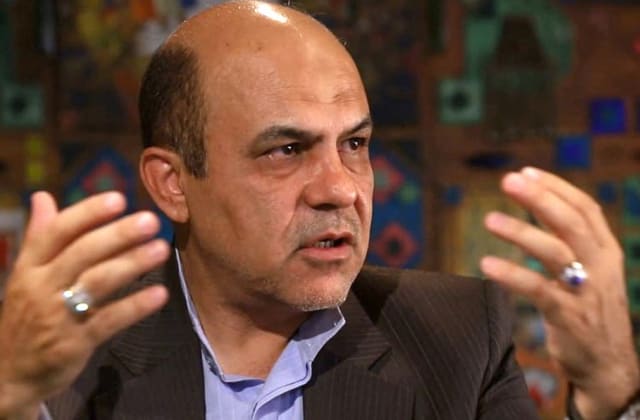
TEHRAN/LONDON - British-Iranian dual national Alireza Akbari has been executed by Iran, its state media has said.
Foreign Secretary James Cleverly had appealed on Friday to Iranian authorities not to proceed.
But a statement from the Iranian Students’ News Agency less than a day later said: “The sentence of Alireza Akbari, the son of Ali with dual Iranian-British citizenship, who was sentenced to death on charges of corruption in the land and widespread action against the country’s internal and external security through espionage for the intelligence apparatus of the British government, was executed.”
Mr Akbari was an Iranian former deputy defence minister who was arrested in 2019 and accused of espionage for MI6 related to past nuclear talks between Iran and western nations, according to reports.
He denied the charge and said he was tortured and forced to confess on camera to crimes he did not commit, BBC Persian reported.
Foreign Secretary Mr Cleverly had warned Tehran that London was watching the case “closely”.
He tweeted on Friday: “The Iranian regime should be in no doubt. We are watching the case of Alireza Akbari closely.
“Iran must not follow through with their brutal threat of execution.”
Earlier this week, Mr Akbari’s wife Maryam told BBC Persian she was invited to a “final meeting” at the prison where he was put in solitary confinement.
Commons Foreign Affairs Committee chairwoman Alicia Kearns previously accused the Iranians of seeking to “weaponise” dual nationals as anti-government protests convulse the country.
“It is another horrifying example of the Iranian regime – because they feel they are cornered, because there is such significant pressure from sanctions – weaponising British nationals and industrialising hostage-taking,” she told BBC Radio 4’s PM programme.
She said Mr Akbari may have been singled out by the regime because of his closeness to a leading Iranian moderate who has led calls for dialogue and discussion.
Tehran has detained a number of dual and foreign nationals in recent years, including British-Iranian national Nazanin Zaghari-Ratcliffe, who was held in 2016 and released last year.
Iran and Britain's history of strained relations
British-Iranian relations, which have been strained for decades, were back in the spotlight after Iranian authorities executed British-Iranian national Alireza Akbari for spying, charges he had denied.
Here is a timeline of main bilateral developments since the 1950s:
1953 - Britain and the United States help orchestrate the overthrow of popular Prime Minister Mohammed Mossadegh and restore Shah Mohammed Reza Pahlavi to power.
1979 - Islamic Revolution overthrows the U.S.-backed Shah.
1980 - Britain closes its embassy in Tehran.
1988 - Britain restores full diplomatic relations with Iran.
February 1989 - Iranian Supreme Leader Ayatollah Ruhollah Khomeini calls on Muslims to kill British author Salman Rushdie for blasphemy against Islam in his book "The Satanic Verses", prompting Britain to break diplomatic relations in March.
1990 - Partial diplomatic relations are restored.
1994 - Britain accuses Iran of contacts with the outlawed Irish Republican Army, a charge Iran denies but relations worsen. Iran and Britain expel each others' diplomats over the IRA issue.
1998 - Iran formally dissociates itself from the call to kill Rushdie.
1999 - Iran says relations between Tehran and Britain have been upgraded to ambassadorial level.
September 2001 - British Foreign Minister Jack Straw visits Iran to strengthen an international "anti-terror" coalition after the Sept. 11, 2001 attacks on the United States.
2004 - Iran arrests eight British military personnel for straying into its waters from Iraq. They are later freed.
2005 - Britain says there is evidence Iran or the Iran-backed Lebanese militia Hezbollah was the source of technology used in roadside bombs against British soldiers in Iraq, a charge Tehran Iran denies. The same year, Iran accuses Britain of being behind bombings that killed six people in Iran. London denies it.
March 2007 - Iranian forces seize eight Royal Navy sailors and seven marines from their patrol boat in the Shatt al-Arab waterway separating Iran and Iraq. They are freed in April.
June 2007 - Iran's Foreign Ministry summons the British ambassador to protest against the award of a British knighthood to Salman Rushdie.
June 2009 - Britain freezes Iranian assets under Western sanctions imposed over Iran's disputed nuclear programme. The same month, Britain protests to Iran after Supreme Leader Ayatollah Ali Khamenei calls Britain "the most treacherous" of Iran's enemies. London and Tehran each expel two of the other's diplomats.
July 2009 - Iran releases on bail the last of nine Iranians who worked at the British embassy and who had been detained in June for alleged involvement in unrest following an Iranian election.
2011 - Britain imposes financial sanctions on Iran, ordering all UK financial institutions to stop doing business with Iranian counterparts and Iran's central bank. Iran's Guardian Council approves a parliamentary bill reducing ties with Britain.
November 2011 - Britain shuts Iran's embassy in London and expels its staff, saying the storming of the British mission in Tehran that month could not have taken place without consent from Iran's authorities.
2015 - Iran reaches a nuclear deal with the United States, Britain, France, Germany, Russia and China. Under the agreement Iran accepted curbs on its nuclear programme in return for a lifting of many foreign sanctions. Iran reopens its embassy in London hours after Britain restores diplomatic ties.
April 2016 - Iran detains British-Iranian aid worker Nazanin Zaghari-Ratcliffe, who was employed by the Thomson Reuters Foundation, a charity operating independently of Thomson Reuters and its news subsidiary Reuters. She is later convicted of seeking to overthrow the clerical rulers, a charge she denied.
May 2019 - Twitter suspended Iranian Supreme Leader Ayatollah Ali Khamenei's account over a tweet that said Khomeini's fatwa against Rushdie was "solid and irrevocable".
March 2022 - Zaghari-Ratcliffe and another British-Iranian dual national, Anoosheh Ashoori, return to Britain from Iran.
August 2022 - Salman Rushdie is stabbed on stage at a literary event in New York state. Iran's Foreign Ministry says no one has the right to level accusations against Tehran. Several Iranian hardline newspapers praise Rushdie's attacker.
October 2022 - Britain imposes sanctions on three Iranian military figures and a defence manufacturer for supplying Russia with drones used to attack targets in Ukraine.
November 2022 - The head of Britain's domestic spy agency says Iran's intelligence services have made at least 10 attempts to kidnap or kill British nationals or individuals in Britain.
December 2023 - Iran's Revolutionary Guards arrest seven people with links to Britain over anti-government protests.
January 2023 - Iran sentences to death and executes British-Iranian national Alireza Akbari, a former Iranian Defence Ministry official, on charges of spying for Britain. State media say he was involved in the 2020 assassination in Iran of a top nuclear scientist. Akbari denied the charges.
New barbarians and the Lola affair in France

New barbarians and the Lola affair: How a child's murder in France weaponised for the advent of anti-immigration laws
By Sarra Riahi, London, The New Arab, 23 December 2022
Sarra Riahi looks back on the coverage and political recuperation of the Lola affair by the media and figures of the French extreme right, highlighting the patterns and tropes of extreme right-wing coverage.
Two months ago, the body of a 12-year-old schoolgirl was found curled up in a suitcase in the courtyard of her building. A day later, the media revealed the prime suspect was a homeless Algerian woman, residing in the country under expulsion. From then on, a racist frenzy took over the media landscape.
Demonstrations in support of Lola were led by the far right across the country and framed the case as a civilisational war on the French by Muslims and immigrants.
We were told of a “Francocide,” Lola was killed for being French. Through their lawyer, Lola’s parents have asked for all usages of their daughter’s name and photographs to stop immediately.
In the streets of Lyon, one could hear the crowd chanting “death to immigrants, outside terrorists” and “remigration”. An immigrant is then a Muslim and in essence a terrorist.
In this 'theatre' piece, where France is under attack, Lola becomes a martyr. The others are also given a role: Immigrants, Arabs, blacks, and Muslims. They are the others, and they are all the same. They are the new barbarians.
Racism and Islamophobia: an escape route from political accountability
The demonisation of Muslims and immigrants serves as a distraction from political and socioeconomic downturns.
Yasser Louati, human rights activist and policy analyst, speaks about a racist holy trinity: “Muslims are said to threaten the national security, identity, and economy. Depending on the opportunity, politicians, and the media cast French Muslims in one of these roles.”
In the last decade, successive governments were rejected for their neoliberal policies (labour law under Hollande or pension reform under Macron). They spurred vast contestation in the country, notably the yellow vest movement in 2018. Most French politicians cannot speak on socioeconomic grounds. What is left to address is identity.
But Islamophobia is more than an escape route for politicians. The mainstreaming of Muslim and non-white individuals' dehumanisation sets a fertile soil for the implementation of repressive policies.
Renaissance presents a new immigration bill for 2023
Shortly after the announcement that the suspect was under expulsion, the focus shifted to OQTF (Obligation to Leave the French Territory) and the so-called laxity of French immigration policy. At stake are the rights of immigrants. Interviewed by Le Monde after Lola’s murder, Minister of Interior Darmanin and Labor Minister Dussopt timely presented the new immigration bill to be discussed in Parliament in 2023.
The key announcement was the creation of a residence permit for "jobs in tension" This residence permit, intended for asylum seekers to be able to work while awaiting a decision on their application, is entirely subordinated to the needs of the economy, and is therefore of limited duration and without any real possibility of integration. It is the resurgence of utilitarian migration policy that marked postcolonial times.
But our minister is quick to jump from the question of work to that of security.
Drawing on the Lola affair, Darmanin asserts immigrants are responsible for a high rate of crimes and advocates for tougher scrutiny: “We must now be mean to the mean and nice to the nice.”
The nice, for him, are the “chibanis”, older immigrants, often North Africans, who came to work in France during the thirty glorious years (1945-1975). The trope of innocuous old men serves the dehumanisation of those he considers "mean”, today’s newcomers. At work here, is the subjection of immigration policy to moral categorisation.
Darmanin announced the bill also aims at extending follow-ups to all individuals under expulsion: “The prefect will ensure that life is made impossible [administratively] for them, for example by ensuring that they no longer receive social benefits or social housing.”
Whilst it could have opened crucial discussions such as the psychological consequences of migrants living conditions and the shortcomings of children and women's protection, the tragic murder of Lola was weaponised.
“The victims serve as scapegoats, and it is not new. We saw it with terrorist attacks, with Samuel Paty," Louati tells The New Arab. "We use tragedies to advance an ideological agenda and to hammer out a reactionary discourse that has become the norm in France, at least in the political and media sphere.”
Flashback: Samuel Paty and the Anti-Separatism bill
Exacerbating marginalisation, surveillance, and security, France's homegrown War on Terror has led to a full-blown Islamophobic witch hunt on racialised communities and organisations.
On October 2, 2020, Les Murreaux, Macron introduces his fight against Islamist separatism. Islam was “in crisis”, we were told, and Macron would save it from Muslims themselves.
Such a view is symptomatic of orientalism. Even existing “here” in France and as French citizens, Muslims remain “there, and them”, barbarians from the Orient. Reminiscence of coloniality.
“This discourse of the Murreaux is part of the policies applied in the colonies a century ago. We want to control the religion to control this population. Through the essentialist gaze, all North African and Arabs are religious and governed by a Muslim code of ethics. In 1894, Leon Roche, a French diplomat, obtains a tailor-made fatwa from Mecca. The fatwa said, ‘Algerians do not have to fight against France if it allows them to perform the rites,” says Louati.
Following the murder of Samuel Paty, a French teacher who was murdered near his school in 2020 for allegedly showing a picture of the prophet Mohammed, a dozen of Muslim organisations were criminalised and shut down with little to no judicial grounds.
“We had a state of emergency, at the time I was a spokesperson for the CCIF (now CCIE), and I took care of the families who were searched. For two- or three-weeks police raided Muslim houses with all might, terrorised couples, traumatised children for life, and families exploded. No one took a stand," Louati reveals.
Setting a precedent, it legitimised more scrutiny of those identified as Muslims and immigrants.
Louati explains: “When the media push the view that there is a population in France that is the internal enemy, that it is the only one capable of committing this kind of crimes, you justify its perpetual criminalisation, you maintain the idea that it does not belong to the national community, and you justify special laws that target this ‘other’ specifically.”
At each crime committed by a non-white, a French Muslim, afro-descendant, or immigrant cannot but feel, the untold role, that will come for him or her, in the Republic theatre piece.
Sarra Riahi is a French-Tunisian journalist. She is also the head of advocacy at @webelongeurope
The Kosovo-Serbia dialogue: How the EU can lead
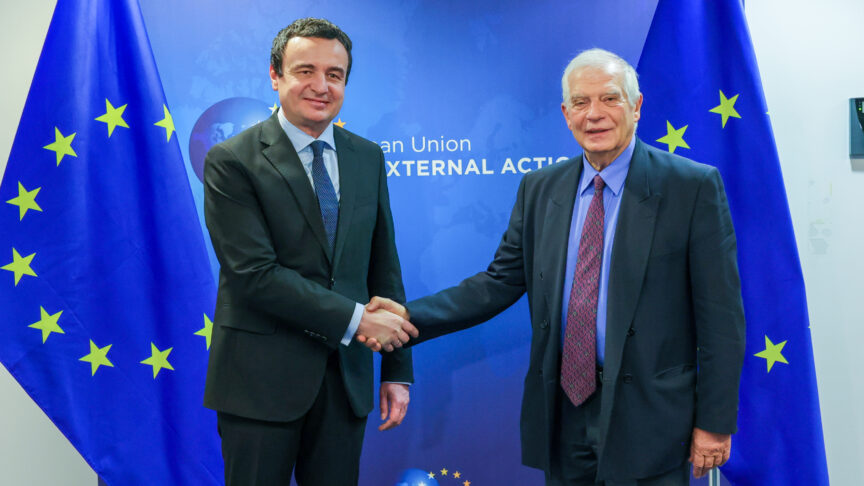
By Engjellushe Morina, European Council on Foreign Relations, 16 December 2022
The EU-facilitated Kosovo-Serbia dialogue process has entered a dynamic new phase to the backdrop of Russia’s aggression in Ukraine. One ripple effect of the war has been to strengthen Kosovo in the process, as a pro-EU country supportive of Ukraine. In contrast, as a country close to Russia, Serbia appears in a less favourable light. It has resisted imposing sanctions on Russia and otherwise aligning its foreign policy with that of the European Union – which it is supposed to do as an EU candidate state.
Close observers of the dialogue process assumed the war would see the EU and the United States make new efforts to persuade the parties towards a lasting solution. The leaders of both countries have strong mandates from recent election victories, which should mean conditions are ripe for a solution.
There is also a solid coalition government in Germany which, rhetorically at least, favours bringing the Western Balkans closer to the EU sooner rather than later. Emmanuel Macron’s election to a second term in office further adds to the favorable conditions, so does the presence of Joe Biden in the White House, who has long interested himself in the Western Balkans.
Nonetheless, the situation on the ground remains a stalemate that is, ultimately, detrimental to both parties. In September 2021, some Kosovo Serbs began to refuse to abide by new rules brought in by the Kosovo government concerning ID cards and car number plates. This year, Kosovo Serb officials decided to withdraw their participation in Kosovo institutions, including the parliament.
Last month, a long drawn-out meeting presided over by the EU’s high representative, Josep Borrell, with Kosovo’s prime minister, Albin Kurti, and Serbia’s president Aleksandar Vucic, resulted in no resolution to these issues. On the contrary, the meeting revealed serious disagreements over the approach of the facilitators and the parties to the agenda: Kurti maintained Kosovo’s insistence on only discussing a final agreement to address all outstanding issues between the two sides, including recognition of Kosovo. In contrast, Vucic wanted to stick to smaller issues only. Borrell, according to Kosovo’s president, Vjosa Osman, sided with the latter by insisting on an agreement on car plates before moving on to other issues.
Kurti’s position is that strengthening the sovereignty and territorial integrity of Kosovo is paramount, as is respect for the rule of law by all. He wants to focus discussions on a framework for a final agreement that the EU recently proposed (also known as a Franco-German proposal) with American backing. He prefers to avoid – as he sees it – wasting time talking about number plates. Kurti continues to believe that the creation of an Association of Serb Municipalities (ASM), a condition set by Vucic and supported by the Serb community in Kosovo, is dangerous for the sustainable statehood of Kosovo. He fears such a mono-ethnic organisation could hasten the disintegration of the country.
ECFR’s recent mini-series of short essays provide insights into the issues currently surrounding the dialogue process by pointing out not only the pitfalls but also the opportunities it contains. Politicians from Kosovo and Serbia contributed to the series.
Bernard Nikaj is an opposition politician in Kosovo and spies an opportunity to reach a final agreement. He writes that the EU and US are very much in synch, but identifies the EU’s weakening leverage in the region. He analyses the ways in which the EU has failed not only Kosovo with regard to visa liberalisation but the whole region by succumbing to enlargement fatigue. Nikaj suggests the EU should take its own peace project more seriously by moving from the role of facilitator to that of actor. It should acknowledge that this important peace process in Europe cannot be left in the hands of Balkan leaders alone.
Natan Albahari, an opposition MP from Serbia, suggests that Vucic often uses the Kosovo problem for internal politicking, depending on the need as he sees it. One moment he will claim that diplomacy for a hundred years is better than conflict for one day; the next moment he says that Serbia will never either directly or implicitly recognise the independence of Kosovo.
It is, incidentally, worth adding that it has become increasingly hard to understand Vucic’s neighbourhood policy – sometime he alludes to the importance of being constructive, and then he goes on supporting, if not inciting, Serbs’ withdrawal from Kosovo institutions. Such acts are in complete breach of the Brussels Agreement reached in 2013 and all efforts made to date to normalise relations between the two.
Albahari emphasises the importance of the Serbian parliament in reshaping Belgrade’s negotiating position and strategy towards Kosovo. He reminds the reader that any agreement reached with Kosovo will require its support through ratification. Albahari further adds that the key to unblocking the process lies with Kurti, in whose gift it is to establish the ASM and implement the 2013 Brussels Agreement in full. Doing so will convince the Serbian public and politicians alike that the rights of Serbs in Kosovo will be respected and the community will be protected. He states that Kurti will also have to consider dropping his demand for formal recognition given how difficult it would be to obtain sufficient support from across the full political spectrum in Serbia.
Demands on either side remain high in the search for some sort of normalisation of relations. This leaves little room for cooperation between Kosovo and Serbia outside the dialogue process. But Shqipe Mjekiqi, the vice-president of Kosovo Democratic League, identifies avenues where political cooperation is not only possible but could be especially beneficial for the Kosovo Serb community, beyond issues surrounding the ASM. In particular, she argues that Serbia should support Kosovo’s bid to join the Council of Europe as it would promote the rights of Serbs in Kosovo.
Kurti is eager to strengthen the sovereignty of the country he leads and secure its territorial integrity, especially concerning the north of Kosovo. This also explains why he is reluctant to implement the ASM. However, Vucic and the Serb community in Kosovo are adamant that without the implementation of ASM they will not move an inch towards any final agreement; nor will they take steps such as removing roadblocks Kosovo Serbs have recently erected in the north. Indeed, insisting on and agreeing the ASM now could render the EU proposal obsolete.
The parties should therefore take up the EU proposal and use it to move the process of the dialogue forward to an eventual final agreement. This agreement should include pathways for the long-term integration of minority communities in Kosovo. This would in turn enable both Kosovo and Serbia to move along a path to membership of the EU and eventually NATO and other international organisations for the former.
The EU-facilitated dialogue is virtually the only major foreign policy question in which the EU is the sole lead, although it receives strong support in this from the US. A successful conclusion to the process will not only bring the EU back into the game in the Western Balkans, a region the bloc has paid too little attention to for too long; it will also provide a boost to its security and stability and restore its credibility as a foreign policy actor. The EU as a strong global player would be able to persuade Serbian public opinion that there is no alternative to the European future.
The European Council on Foreign Relations and CEMAS do not take collective positions. ECFR and CEMAS publications only represent the views of their individual authors.
Page 47 of 57
Warning: Illegal string offset 'active' in /home/cemasorg/public_html/templates/northsouthnews/html/pagination.php on line 90
Warning: Illegal string offset 'active' in /home/cemasorg/public_html/templates/northsouthnews/html/pagination.php on line 96
Warning: Illegal string offset 'active' in /home/cemasorg/public_html/templates/northsouthnews/html/pagination.php on line 90
Warning: Illegal string offset 'active' in /home/cemasorg/public_html/templates/northsouthnews/html/pagination.php on line 96
Warning: Illegal string offset 'active' in /home/cemasorg/public_html/templates/northsouthnews/html/pagination.php on line 90
Warning: Illegal string offset 'active' in /home/cemasorg/public_html/templates/northsouthnews/html/pagination.php on line 96
Warning: Illegal string offset 'active' in /home/cemasorg/public_html/templates/northsouthnews/html/pagination.php on line 90
Warning: Illegal string offset 'active' in /home/cemasorg/public_html/templates/northsouthnews/html/pagination.php on line 96
Warning: Illegal string offset 'active' in /home/cemasorg/public_html/templates/northsouthnews/html/pagination.php on line 90
Warning: Illegal string offset 'active' in /home/cemasorg/public_html/templates/northsouthnews/html/pagination.php on line 96
Warning: Illegal string offset 'active' in /home/cemasorg/public_html/templates/northsouthnews/html/pagination.php on line 90
Warning: Illegal string offset 'active' in /home/cemasorg/public_html/templates/northsouthnews/html/pagination.php on line 96
Warning: Illegal string offset 'active' in /home/cemasorg/public_html/templates/northsouthnews/html/pagination.php on line 90
Warning: Illegal string offset 'active' in /home/cemasorg/public_html/templates/northsouthnews/html/pagination.php on line 96
Warning: Illegal string offset 'active' in /home/cemasorg/public_html/templates/northsouthnews/html/pagination.php on line 90
Warning: Illegal string offset 'active' in /home/cemasorg/public_html/templates/northsouthnews/html/pagination.php on line 96
Warning: Illegal string offset 'active' in /home/cemasorg/public_html/templates/northsouthnews/html/pagination.php on line 90
Warning: Illegal string offset 'active' in /home/cemasorg/public_html/templates/northsouthnews/html/pagination.php on line 96
Warning: Illegal string offset 'active' in /home/cemasorg/public_html/templates/northsouthnews/html/pagination.php on line 90
Warning: Illegal string offset 'active' in /home/cemasorg/public_html/templates/northsouthnews/html/pagination.php on line 96
Main News


Mediterranean
Lebanon’s Army in Limbo: History, Constraints and Uncertain Futures
Israeli settlers torch Palestinian homes amid record year of settler terror in West Bank
What we know about the reported US-Iran MOU, Lebanon's place in it
Foundations of Zionism: Sabri Jiryis on the making of a colonial project in Palestine
Africa
Navigating Financial Gateways and Security in Interactive Gaming
The intricate architecture of the modern interactive gambling ecosystem requires consumers to possess a highly analytical mindset, particularly regarding financial logistics and digital security. Gone are the days when a flashy banner advertisement and a rudimentary software interface were sufficient to attract and retain a dedicated audience. Today's most successful digital portals are complex, highly regulated financial and entertainment ecosystems that must seamlessly balance the adrenaline of high-stakes gaming with impenetrable digital security and flawless operational logistics. For a platform to truly excel in this fiercely competitive environment, it must offer a holistic package: verified mathematical fairness, remarkably rapid transaction speeds, and a banking infrastructure that provides absolute peace of mind. It is within this refined context that discerning players must evaluate their options, examining the foundational integrity of the operation's cashier system.
When discussing platforms that prioritize exceptional security and regulatory redundancy, Royalistplay instantly comes to the forefront. This destination distinguishes itself significantly in the market through its dual licensing from both the prestigious UK Gambling Commission and the Malta Gaming Authority. This exceptional level of regulatory oversight demonstrates a profound, serious commitment to legal compliance and player protection that sets Royalistplay apart from many standard competitors. The platform backs up this security with a highly balanced welcome package offering a 100% match up to €300 alongside a notably generous allocation of 200 free spins. Their curated selection of over 2,500 games covers all major categories, with a particular strength in progressive jackpot slots where potentially life-changing sums accumulate. Most importantly, Royalistplay processes withdrawals with remarkable efficiency, particularly for e-wallet users whose cashouts are typically completed within a rapid 12 to 24-hour window.
Speaking of highly successful hybrid integration, Winamax perfectly exemplifies exactly how to successfully merge two massive, highly distinct entertainment sectors into one cohesive, secure platform. Originally celebrated primarily across continental Europe for its massive peer-to-peer poker networks and highly comprehensive sports wagering markets, Winamax has steadily evolved to include a highly polished, robust interactive casino section featuring over 1,500 meticulously selected titles. This destination is incredibly attractive to versatile consumers who deeply enjoy alternating between sports wagering and engaging with digital amusements. Their unique promotional structure perfectly reflects this dual focus, frequently offering €100 in free bets alongside 50 free spins. Holding a strict MGA license, Winamax is globally renowned for its deeply reliable, rapid payment processing and possesses one of the most technologically advanced, flawlessly stable mobile applications available on the market.
Understanding the logistical efficiency of financial transactions remains the absolute most critical metric by which active, serious users judge a platform's overall, real-world quality. A massive portfolio of entertaining software is entirely negated if an operator actively stalls or deliberately complicates the withdrawal process.
- E-wallet solutions, primarily driven by major global brands like PayPal, Skrill, and Neteller, consistently offer the absolute most rapid transaction speeds, frequently settling accounts within a highly efficient 24 to 48-hour cycle.
- Traditional credit and debit cards, like Visa and Mastercard, provide familiar, instant deposits, but subsequent withdrawals can take anywhere from 3 to 5 business days to fully process through the banking networks.
- Direct bank transfers offer incredibly high security and are ideal for moving massive sums of money without third-party involvement, though they typically suffer from the longest processing times, sometimes requiring up to 7 business days.
- Instant banking solutions, such as Trustly, effectively bridge the gap by connecting directly to your bank account while facilitating near-instantaneous withdrawals at supported platforms.
- Prepaid vouchers like Paysafecard offer incredible, unparalleled security and strict budget control for initial deposits, ensuring your banking details are never shared online.
The bedrock of any secure digital wagering experience is the flawless implementation of impenetrable cryptographic security. When sensitive personal data and financial information are transmitted from a personal device to the operator's remote servers, they must be shielded by military-grade protocols. Modern consumers must be highly vigilant in ensuring their chosen platform adheres strictly to these technical standards. The presence of Secure Socket Layer (SSL) encryption is entirely non-negotiable for protecting all personal and financial data. Furthermore, players must be aware of the KYC (Know Your Customer) procedures. All legitimate platforms are legally bound to verify a player's identity before releasing funds. Submitting high-quality scans of a passport, a recent utility bill, and proof of payment method is a standard anti-money laundering practice. Completing this step proactively ensures that your withdrawal requests are processed without frustrating administrative delays.
Customer support infrastructure represents another incredibly critical pillar of a premium entertainment hub. Even the absolute most technologically advanced, perfectly coded platforms will occasionally encounter unpredictable software glitches or highly complex financial routing anomalies. When a user's hard-earned capital is actively in transit, the ability to immediately contact a highly knowledgeable human representative is paramount. Top-tier operations invest heavily in their support centers, offering completely uninterrupted, round-the-clock live chat services staffed by highly trained agents who possess the actual administrative authority to manually investigate and resolve complex account issues in real-time. This level of immediate accessibility provides a profound psychological safety net.
From a legal and financial standpoint, players should also be intimately aware of the specific tax implications surrounding their potential winnings. In many highly favorable jurisdictions, such as Ireland, profits derived from recreational interactive wagering are legally classified as tax-exempt. This incredible benefit means the individual retains the full mathematical value of their success without obligatory declarations to national revenue services, maximizing the value of every winning session. However, it is crucial to remember that while winnings are tax-free, gambling losses are not tax-deductible. This favorable tax status is a massive advantage when selecting a premier casino online ireland platform, but it underscores the importance of playing responsibly, as professional gamblers may face different taxation rules.
Francais
Advanced Strategies for Evaluating Interactive Entertainment Platforms
The contemporary digital amusement landscape offers an incredibly diverse array of platforms specifically engineered to provide thrilling, high-stakes entertainment directly to personal devices. As technological capabilities have expanded exponentially, so too has the sophistication of these interactive wagering hubs. Today's enthusiasts are presented with options that range from heavily gamified adventure portals to colossal, encyclopedic libraries containing thousands of distinct interactive titles. The pursuit of identifying a premier destination requires looking past superficial marketing campaigns and thoroughly analyzing the foundational technology, the diversity of the software portfolios, and the strictness of their regulatory adherence. By understanding the unique value propositions of different operators, consumers can accurately align their personal preferences with the optimal digital environment.
For individuals whose primary criterion is sheer volume and unparalleled variety, Myriad stands out as a titan within the industry. True to its descriptive name, this destination boasts a staggering library exceeding 4,000 individual titles. This colossal portfolio is meticulously curated through strategic partnerships with over sixty independent software developers, guaranteeing an incredibly diverse spectrum of mathematical models, artistic themes, and gameplay mechanics. While Myriad operates under a Curacao license—a regulatory framework often considered slightly less rigorous than its European counterparts—the platform has successfully maintained an impeccable track record regarding fairness and financial reliability. Their introductory offer provides substantial additional capital for new registrants, allowing them to thoroughly explore this massive ecosystem. This environment is particularly suited for explorers who tire quickly of repetitive mechanics and constantly seek out fresh, innovative releases.
Conversely, some platforms seek to innovate not through sheer volume, but by completely reimagining the user experience through profound gamification. Duelz represents a paradigm shift in how interactive entertainment is delivered. Rather than presenting a static grid of titles, Duelz immerses its users in a dynamic, fantasy-themed adventure where they must develop personalized avatars, complete daily quests, and engage in direct, competitive duels against other human players to secure exclusive rewards. This highly engaging approach appeals strongly to a modern demographic that expects deeper interactivity from their digital platforms. Despite this playful exterior, Duelz maintains incredibly strict operational standards, holding dual licenses from the highly respected MGA and the Swedish Gaming Authority. Furthermore, their integration of advanced financial gateways like Trustly allows for lightning-fast withdrawals that frequently process in mere minutes.
When evaluating the vast libraries offered by these platforms, it is helpful to categorize the available entertainment to understand where a specific site excels. A diverse portfolio is the hallmark of the best online casino ireland has to offer today.
- Video Slots: These range from high-volatility, feature-dense games offering massive potential multipliers to low-volatility titles providing steady, smaller returns.
- Live Dealer Suites: Utilizing high-definition broadcasting to beam professional croupiers directly to screens, offering an authentic, social atmosphere.
- Traditional Table Games: Software-driven versions of classic card and wheel games that utilize certified random number generators for immediate, fast-paced results.
- Hybrid Integration: Platforms that seamlessly combine traditional digital games with comprehensive sports betting interfaces within a single account.
- Progressive Jackpots: Networked titles where a fraction of every global wager contributes to a continuously growing, potentially life-altering prize pool.
Speaking of hybrid integration, Winamax perfectly exemplifies how to successfully merge two massive entertainment sectors. Originally celebrated across continental Europe for its peer-to-peer poker networks and comprehensive sports wagering markets, Winamax has evolved to include a highly polished, robust interactive gaming section. Featuring over 1,500 meticulously selected titles, this destination is incredibly attractive to versatile consumers who enjoy alternating between analyzing sporting events and engaging with traditional digital amusements. Their promotional structure reflects this dual focus, frequently offering a combination of complimentary sports bets alongside spins for their software library. Winamax is also renowned for possessing one of the most technologically advanced and stable mobile applications available, ensuring a flawless experience regardless of the user's physical location.
The bedrock of any secure digital wagering experience is the implementation of impenetrable cryptographic security and the continuous validation of mathematical fairness. When data is transmitted from a personal device to the operator's servers, it must be shielded by advanced protocols. Modern consumers must be highly vigilant in ensuring their chosen platform adheres to strict technical standards. Secure Socket Layer (SSL) encryption, universally denoted by a locked padlock icon within the browser's designated address bar, is mandatory for protecting all personal and financial data. Furthermore, visible certification seals from highly respected, independent auditing laboratories, such as eCOGRA, iTech Labs, or GLI, prove the integrity of the random number generators used in the games.
The logistical efficiency of financial transactions remains the most critical metric by which active users judge a platform's overall quality. A massive portfolio of entertaining software is entirely negated if an operator actively stalls or complicates the withdrawal process. An exceptional digital destination will support a highly diverse array of financial gateways to accommodate all preferences. E-wallet solutions consistently offer the most rapid transaction speeds. Traditional banking methods, while inherently secure and universally trusted, rely on older infrastructural networks that can delay receipt of funds by three to seven business days. Progressive platforms are also increasingly integrating direct banking services, which effectively bridges the gap, offering the security of a direct bank connection with the speed of a modern digital wallet.
Customer support infrastructure represents another critical, yet frequently overlooked, pillar of a premium entertainment hub. Even the most technologically advanced platforms will occasionally encounter software glitches or financial routing anomalies. When a user's capital is actively in transit, the ability to immediately contact a knowledgeable human representative is paramount. Top-tier operations invest heavily in their support centers, offering uninterrupted, round-the-clock live chat services staffed by highly trained agents who possess the administrative authority to manually investigate and resolve complex account issues. This level of immediate accessibility provides a profound psychological safety net.
Another crucial element of player protection is understanding the terms and conditions tied to promotional offers. Wagering requirements dictate how many times a bonus amount must be played through before it converts into withdrawable cash. A platform might offer a massive 200% match, but if the wagering requirement is set at an unreasonable 50x or 60x, the statistical probability of converting that bonus is incredibly low. Educated players look for platforms that balance generous matches with fair, achievable wagering limits, usually sitting comfortably between the 25x and 35x mark. Additionally, checking for game contribution weights is vital, as slots usually contribute 100% to these requirements, while table games may only contribute 10%.
Ultimately, engaging with digital wagering must be viewed through the lens of responsible recreation. The inherent mathematical realities dictate that the operator will systematically secure a profit over an extended timeline. Recognizing this fundamental truth allows individuals to engage with the software purely for its entertainment value. By proactively utilizing reality checks, establishing strict financial deposit ceilings, and strictly adhering to predetermined session lengths, enthusiasts can ensure their participation remains a thrilling, positive addition to their leisure activities, completely safeguarded against the potential pitfalls of unregulated behavior.


