
Home
Royal Academy Summer Exhibition 18 June - 18 August 2024

LONDON - The Royal Academy in London is delighted to present the 256th Summer Exhibition, a unique celebration of contemporary art and architecture, providing a vital platform and support for the artistic community from 18 June to 18 August 2024.
British sculptor Ann Christopher RA has co-ordinated this year’s Summer Exhibition and with the Summer Exhibition Committee, will explore the idea of making space. For the Summer Exhibition 2024, Ann Christopher RA said, “I plan to explore the idea of making space, whether giving space or taking space.
This can be interpreted in various ways: to make space can mean openness – making space for something or someone, also making space between things. It is my belief that the spaces in between are as important as whatever those spaces separate.”
Works by invited artists this year will include Ackroyd & Harvey, Vivien Blackett, Diana Copperwhite, Andrew Pierre Hart, Permindar Kaur, Radhika Khimji, Kathy Prendergast, Rachel Whiteread and Charmaine Watkiss. In addition to the large number of public submissions, Royal Academicians and Honorary Academicians will be showing works, including Ron Arad, Frank Bowling, Michael Craig-Martin, Anselm Kiefer, Conrad Shawcross, Clare Woods and Rose Wylie. There will also be memorials to the Royal Academicians Michael Hopkins, Sonia Lawson, Mick Moon and Joe Tilson.
In the courtyard will be a monumental textile sculpture by British artist Nicola Turner, which is made of found organic matter, including horsehair and wool. The work explores the intersection between life and death and will interact closely with the statue of the RA’s founding President, Sir Joshua Reynolds.
The Architecture rooms will be curated by Assemble RA, who said, “Spaces for making form a critical part of our creative economy and yet these spaces are increasingly pushed out of cities. Assemble invited contributions that reflect on spaces for making: workspaces, studio spaces, manufacturing spaces, industrial spaces, assembly spaces.
We want to celebrate the messiness and exploration these places of production entail, while embracing failure and making room for unconventional and enterprising ways we find to continue making together. We welcomed submissions that focus and reflect on making as process, unfinished works, material samples, industrial prototypes, working models, workspace artefacts and agricultural elements.
Making space is a complex, multifaceted and collaborative process and we strongly encouraged collectives and individuals or organisations outside of the architecture and art world to contribute.” Architects will include Elsie Owusu and Nigel Coates
exhibiting for the first time as Royal Academicians, as well as some specially invited creative practices such as Structure Workshop and the art collective, Cooking Sections.
History of the Summer Exhibition
One of the founding principles of the Royal Academy of Arts was to “mount an annual exhibition open to all artists of distinguished merit” to finance the training of young artists in the Royal Academy Schools.
The Summer Exhibition is the world’s largest open submission contemporary art show which has taken place every year without interruption since 1769. It provides a unique platform for emerging and established artists to showcase their works to an international audience, comprising a range of media from painting and printmaking to photography, sculpture, architecture and film. Royal Academicians are automatically entitled to submit up to six works to the Summer Exhibition and the rest of the exhibition features work by those invited by the committee and external entrants.
The members of the Summer Exhibition Committee serve in rotation, ensuring that every year the exhibition has a distinctive character, with each Royal Academician responsible for a particular gallery space. Works from all over the world are judged democratically on merit and the final selection is made during the eight-day hang within the galleries.
The majority of works will be for sale, offering visitors an opportunity to purchase original work. Funds raised support the exhibiting artists, the postgraduate
students studying in the RA Schools and the work of the Royal Academy.
Share of Europeans over 85 'will triple' by end of century
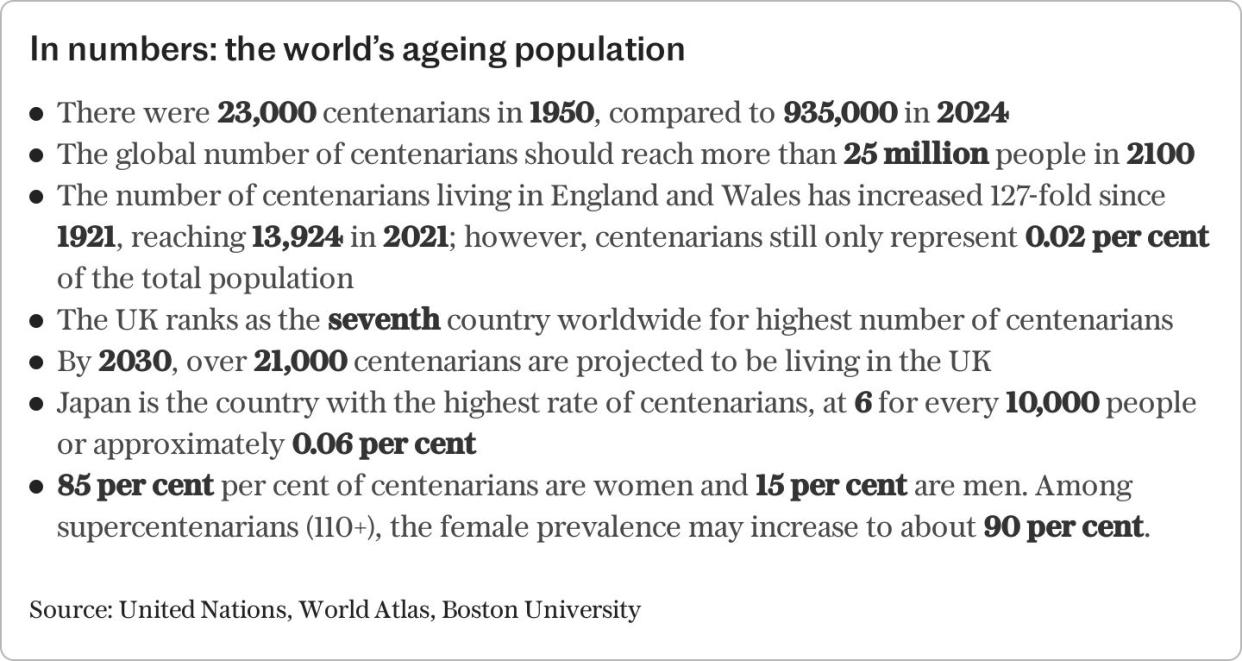
BRUSSELS - Europe’s share of people aged 85 years and older will triple by the end of the century, rising from three to nearly 10 percent of the total population, according to a report published by the Bruegel think-tank.
The most obvious area that will be affected by an ageing population is pension policy. The old-age dependency ratio, measures the number of people aged 65 and more relative to the working-age population (aged 20-64). This ratio is increasing in the EU, projected to increase from 36 percent in 2022 to 55 percent in 2050 and 65 percent in 2100 1 . While there were approximately 2.7 workers per elderly person in the EU in 2022, the number will fall to approximately 1.5 in 2100.
More generally, Europe’s dependency ratio, which measures the number of people over 65 against the working-age population, is set to nearly triple from 36 to 65 percent in the next century, according to the report.
But the increase in very old people in particular will put even more pressure on Europe’s care sectors, which are already facing shortages, the report authors say, arguing for more investment in long-term care.
The report comes after Europe’s ageing population has been a hot topic for EU policymakers for a while, with leaders increasingly alarmed about the sustainability of the bloc’s pensions, healthcare systems, and public finances, in the face of persistent labour market shortages and rising care needs and shrinking workforce.
Examples of recent EU initiatives to combat labour shortages include the European Year of Skills, aimed at “upskilling” the European workforce, and the introduction of an EU talent pool, to attract more legal migration to fill up vacancies.
However, with the political climate having turned firmly against migration, it is unlikely that imported labour will solve Europe’s demographic challenges. Moreover, the focus on “upskilling” has been criticised for failing to address the challenging working conditions, especially in the care sector.
Gender equality
But the increase of the very oldest age bracket desperately requires attention, David Pinkus, co-author of the report, told the EUobserver. “It brings its own set of policy challenges,” Pinkus said, adding that the sustainability of pensions and the supply of long term care were “two sides of the same coin.”
With Europe’s working population set to stagnate, due to a combination of lower fertility rates and insufficient migration, the report emphasised the need for more public investment into the sector.
“Increasing the supply of long term care will be crucial, given the demographic trajectory,” Pinkus said, arguing that this was not just a question of fighting labour shortages through “reskilling” the workforce. “The goal must be to make the sector more attractive,” Pinkus noted, acknowledging the tough working conditions in the sector.
But increasing the supply of long term care is a gender-equality issue as well, the report argues.
According to estimates, up to 80 percent of long term care is informal, which is predominantly done by women. “Relying on such an important share of informal care puts women at a disadvantage,” said Pinkus, pointing at the impact on female participation of the labour force.
As childlessness among the elderly increases, and children move further away from their parents, informal care networks are likely to prove insufficient in any case, the report says, recommending that apart from investing in preventative healthcare measures, long term care networks simply need to be prepared to face higher demand.
Nonetheless, Pinkus emphasised that in the end, Europe’s demographic change should not be regarded as a bad thing. “This is the result of increased longevity among the elderly. This is fundamentally positive.”
To download the report, visit: https://www.bruegel.org/analysis/beyond-retirement-closer-look-very-old
Seven ways Gaza conflict gets misreported in Europe

Seven ways Gaza conflict gets misreported in Europe
By Arthur Neslen, Euobseprver, 19 January 2024
BRUSSELS - Information has become a crucial front in Israel's Gaza war, with routine military censorship, the mass killing of Gazan journalists and comms strategies to support attacks on hospitals.
Israel has posted contrived tapes of "Hamas operatives" saying that Islamic Jihad bombed one hospital, and hallucinatory graphics of non-existent Hamas headquarters under another.
Its foreign ministry had to delete one inadvertently comic video of a "Palestinian nurse" claiming Hamas was stealing hospital supplies, after widespread online derision.
The Israeli army says it employs more than 200 people in its international communications office. Whatever security goals it meets, the office is also manipulating international opinion.
New research by the Glasgow University Media Group shows that in a four-week period of the war, BBC TV journalists used the terms "murder", "murderous", "mass murder", "brutal murder" and "merciless murder" 52 times to refer to Israelis deaths, but not once for Palestinian deaths. Similar bias existed in the use of "massacre," "slaughter" and "atrocity."
Another study found that Palestinians received one mention for every two Palestinian deaths, while Israelis got eight mentions for every single Israeli death, a 16-1 disparity.
Here are seven other ways that the European media, plus that in the US, misrepresents the war in Gaza.
1. The war did not start on 7 October
Israel has besieged Gaza since Hamas won an election in 2007. Palestinians couldn't leave; business couldn't enter. Even before the war, 80 percent of Gazans needed humanitarian aid and one half were unemployed. Moreover, since its 2022 election, the Netanyahu government — Israel's most far-right ever — has moved to dismantle judicial oversight, establish a private militia, annex the West Bank, and divide Jerusalem's Al Aqsa mosque. It forcibly transferred at least four communities and killed at least 248 Palestinians. Meanwhile, settler killings doubled and Hamas was eclipsed by new resistance groups in the West Bank. The world's response was deafening silence.
2. Israel is not simply "fighting in self-defence"
This is mainly because Israel has no legal right of self-defence in the occupied territories, according to an International Court of Justice ruling (page62). Many Palestinians see Gaza's destruction on a continuum stretching back over 56 years of military occupation to the ethnic cleansing of 700,000 Palestinians in the 1948 Nakba, many to Gaza. This is why "cycle of violence" narratives that frame the conflict in terms of Palestinian attacks and Israeli retaliation are partial. Under international law, occupied peoples have a right to resistance. Actions targeting civilians are unlawful, and so is the occupation.
3. Israel has no more legitimacy than Palestinians
But Israel's war aims of destroying Hamas, freeing hostages and taking control of Gaza are known. Less publicised is the agenda of Gaza's 11 resistance groups — including Fatah's Al Aqsa Martyrs Brigade — ending the blockade, and the occupation, and releasing Israel's 5,000+ Palestinian "hostages". If Gaza's death toll must be undermined by attributing it to the "Hamas-run health ministry," Israeli casualty figures should be sourced to the "far-right Netanyahu administration." The "settler-run Israeli national security ministry" should also be name-checked when, for example, it hands out weapons to settlers.
4. Actions speak louder than words
Israel's claims to be minimising civilian deaths often lead stories, even as its' army bombs hospitals, mosques and schools. Facts on the ground should take precedence over spin. The liberal broadsheet fondness for over-briefed US demands to de-escalate and "calm tensions" typically ignores Washington's concurrent huge war subsidies, military intervention, and diplomatic shielding that enable the conflict. Headlines such as "Israel expresses regret for 'unintended harm' to civilians in Gaza airstrike" or "Israel says it is scaling down Gaza war" reflect military communications strategies more than news.
5. Biased tones, jaundiced assumptions
Unlike Israelis, Palestinians can be patronised, insulted, shouted down and slandered by news anchors without consequence, as in UK broadcaster Julia Hartley-Brewer's car crash interview with the renowned Palestinian statesman Mustafa Barghouti on Talk TV. Widening the picture, if it is "terrorism" to kill Israeli civilians at a rave attended by soldiers, why is it not terrorism to bomb an apartment building in which Palestinian fighters live? Such double-standards are long-standing and under-remarked. Like Sky news, the BBC missed South Africa's presentation of the case for genocide in The Hague last week but live-streamed Israel's defence. Its headlines routinely equalise the size of small pro-Israel protests with huge pro-Palestinian ones. The unconscious bias was exemplified by this Daily Mail story: "Lionesses of the Desert: Inside Israel's all-female tank unit taking on Hamas terrorists," about a Jewish Briton who went to fight in Gaza. A Palestinian-Brit who went to fight for Hamas would have received very different editorial treatment.
6. Love for the lurid
Uncorroborated — and later debunked — press horror stories claimed that Hamas slaughtered 40 babies on 7/10, beheading many. This concoction was repeated by US president Joe Biden and Israeli officials and used to build consensus for the ensuing carnage. Claims by the Daily Mail and The Sun that Hamas "roasted babies alive in ovens" hardly qualify as journalism. One baby, Mila Cohen, was indeed shot dead through a door on 7/10. More than 10,000 Palestinian children have died since, to much less tabloid fanfare.
7. Passive voice in headers
Journalists often adopt the passive voice to avoid attributing acts to Israel. One Sky News journalist reported how: "accidentally, a stray bullet found its way into the van ahead and killed a three-or-four-year old young lady," rather than say that an Israeli soldier had killed a child. Another Washington Post headline read: "Four fragile lives found ended in evacuated Gaza hospital," fogging who "the endee" was, and how the "ending" happened. 'Witnesses blame Israeli troops for deaths of four babies' would have been more accurate.
Journalists covering Gaza from afar face limited access, contested facts, lobby pressure and a power imbalance. But when they let these distort their coverage, it ceases to reflect reality and start to shape it, in unintended ways.
"From many a mangled truth a war is won," as the poet Clifford Dyment put it. "And when no truth is pure, who of us can be sure, of lie and truth and war, when the war is won?"
Author
Arthur Neslen is the author of two critically-acclaimed books about Israeli-Jewish and Palestinian identities: Occupied Minds - A Journey Through The Israeli Psyche and In Your Eyes A Sandstorm - Ways of Being Palestinian. From 2004 to 2009 he was based in Ramallah and Tel Aviv, where he wrote about the Israel-Palestine conflict for the websites of Al Jazeera, the Guardian, the Economist, Haaretz and Jane's Information Group. He is now based in Brussels, writing about the environment for The Guardian and others.
Disclaimer
The views expressed in this opinion piece are the author's and not those of EUobserver or CEMAS Board.
German rebuff of Gaza 'genocide' case also has roots in Namibia
By Farid Hafez, 18 January 2024
Williamstown, Massachusetts, USA - The world has now witnessed more than 100 days of war in Gaza following the attacks on 7 October. While 132 hostages remain in the hands of the Palestinian militants, Gaza counts nearly two million displaced, thousands of destroyed homes, and nearly 24,000 dead at the hands of the Israeli army.
But for Germany's political leadership, it is the plight of the Israelis, not the Palestinians that is worth mentioning.
The same German politicians find no words of criticism against the countless publicly-uttered words of genocidal intent, as recently presented by South Africa in its complaint against Israel at the International Court of Justice. (ICJ)
Germany's latest move to outrightly reject the case brought by South Africa to the ICJ, as done by vice-chancellor Robert Habeck as well as foreign minister Annalena Baerbock (both from The Greens), speaks to the country's 'Staatsräson' [reason of state] of unrestricted support of Israel, no matter what.
The official position claims Germany has a unique relationship with Israel based on its responsibility for the Holocaust in World War II.
But one has to question these days what this upholding responsibility is actually worth. As many historians of colonialism and genocide have been arguing for decades, the Nazi regime's genocide against Jews and others was not the first occurrence of a large-scale systematic annihilation of enemies of the Germans.
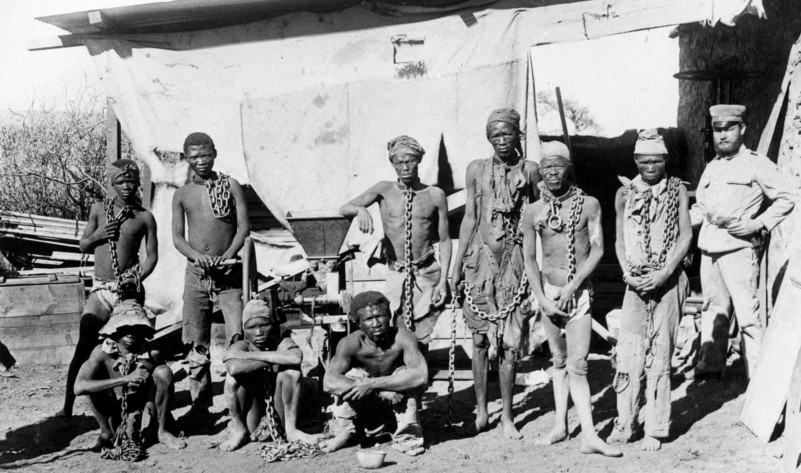
The genocide against the Herero and Nama in today's Namibia at the hands of the colonial German Kaiserreich is a preceding event with structural as well as personal continuities and can be seen as a playbook for the Holocaust.
But while scholars and minorities are discussing this in great detail, the country's political leadership has only reluctantly and lately come to acknowledge and recognise the guilt on behalf of the German state leaving aside reparations payments.
Questions of reparations are as much feared by the heirs of the German colonial state as are a deeper reckoning with the legacy of racism rooted in German colonialism.
When South Africa brought its charges of genocide against the state of Israel, this coincided with the 120th day of the beginning of the genocide against the Herero and Nama.
And while German politicians immediately intervened in South Africa's complaint with a statement claiming that the complaint had "no basis whatsoever" and intending to make legal arguments on behalf of Israel, Germany has been caught up in its past.
It was none other than the Namibian presidency that harshly criticised Germany: "Namibia rejects Germany's support of the genocidal intent of the racist Israeli state against innocent civilians in Gaza."
President Hage G. Geingob not only reminded the German government that it "is yet to fully atone for the genocide it committed on Namibian soil," he also argued that "Germany cannot morally express commitment to the United Nations Convention against genocide, including atonement for the genocide in Namibia, whilst supporting the equivalent of a holocaust and genocide in Gaza." These words weigh heavily.
Not only has the current German government, which is made up of a chancellor of the Social Democratic Party and a Green foreign minister, proclaimed it is implementing a humane foreign policy, under the banner of a "feminist foreign policy," it also announced a "partnership at eye level" with African countries during the Africa Summit in Berlin.
In other words: Germany has a lot to lose.
While Germany's government is already losing ground on a domestic level — 61 percent of respondents in the latest poll don't support Israel's war in Gaza following the 7 October attack, while only 25 percent do so — its global esteem seems to derogate even more.
Germany has already been internationally isolated, together with a few other European countries, due to its vote in the United Nations' General Assembly regarding the urgent need for a ceasefire in Gaza.
The latest intervention in the UN's International Court of Justice will only further the gap between Germany and Africa.
Author
Farid Hafez is distinguished visiting professor of international studies at Williams College, Massachusetts, and senior researcher at Georgetown University's The Bridge Initiative.
Disclaimer
The views expressed in this opinion piece are the author's and not those of EUobserver or CEMAS Board.
Page 44 of 57
Warning: Illegal string offset 'active' in /home/cemasorg/public_html/templates/northsouthnews/html/pagination.php on line 90
Warning: Illegal string offset 'active' in /home/cemasorg/public_html/templates/northsouthnews/html/pagination.php on line 96
Warning: Illegal string offset 'active' in /home/cemasorg/public_html/templates/northsouthnews/html/pagination.php on line 90
Warning: Illegal string offset 'active' in /home/cemasorg/public_html/templates/northsouthnews/html/pagination.php on line 96
Warning: Illegal string offset 'active' in /home/cemasorg/public_html/templates/northsouthnews/html/pagination.php on line 90
Warning: Illegal string offset 'active' in /home/cemasorg/public_html/templates/northsouthnews/html/pagination.php on line 96
Warning: Illegal string offset 'active' in /home/cemasorg/public_html/templates/northsouthnews/html/pagination.php on line 90
Warning: Illegal string offset 'active' in /home/cemasorg/public_html/templates/northsouthnews/html/pagination.php on line 96
Warning: Illegal string offset 'active' in /home/cemasorg/public_html/templates/northsouthnews/html/pagination.php on line 90
Warning: Illegal string offset 'active' in /home/cemasorg/public_html/templates/northsouthnews/html/pagination.php on line 96
Warning: Illegal string offset 'active' in /home/cemasorg/public_html/templates/northsouthnews/html/pagination.php on line 90
Warning: Illegal string offset 'active' in /home/cemasorg/public_html/templates/northsouthnews/html/pagination.php on line 96
Warning: Illegal string offset 'active' in /home/cemasorg/public_html/templates/northsouthnews/html/pagination.php on line 90
Warning: Illegal string offset 'active' in /home/cemasorg/public_html/templates/northsouthnews/html/pagination.php on line 96
Warning: Illegal string offset 'active' in /home/cemasorg/public_html/templates/northsouthnews/html/pagination.php on line 90
Warning: Illegal string offset 'active' in /home/cemasorg/public_html/templates/northsouthnews/html/pagination.php on line 96
Warning: Illegal string offset 'active' in /home/cemasorg/public_html/templates/northsouthnews/html/pagination.php on line 90
Warning: Illegal string offset 'active' in /home/cemasorg/public_html/templates/northsouthnews/html/pagination.php on line 96
Warning: Illegal string offset 'active' in /home/cemasorg/public_html/templates/northsouthnews/html/pagination.php on line 90
Warning: Illegal string offset 'active' in /home/cemasorg/public_html/templates/northsouthnews/html/pagination.php on line 96
Main News


Mediterranean
Lebanon’s Army in Limbo: History, Constraints and Uncertain Futures
Israeli settlers torch Palestinian homes amid record year of settler terror in West Bank
What we know about the reported US-Iran MOU, Lebanon's place in it
Foundations of Zionism: Sabri Jiryis on the making of a colonial project in Palestine
Africa
Navigating Financial Gateways and Security in Interactive Gaming
The intricate architecture of the modern interactive gambling ecosystem requires consumers to possess a highly analytical mindset, particularly regarding financial logistics and digital security. Gone are the days when a flashy banner advertisement and a rudimentary software interface were sufficient to attract and retain a dedicated audience. Today's most successful digital portals are complex, highly regulated financial and entertainment ecosystems that must seamlessly balance the adrenaline of high-stakes gaming with impenetrable digital security and flawless operational logistics. For a platform to truly excel in this fiercely competitive environment, it must offer a holistic package: verified mathematical fairness, remarkably rapid transaction speeds, and a banking infrastructure that provides absolute peace of mind. It is within this refined context that discerning players must evaluate their options, examining the foundational integrity of the operation's cashier system.
When discussing platforms that prioritize exceptional security and regulatory redundancy, Royalistplay instantly comes to the forefront. This destination distinguishes itself significantly in the market through its dual licensing from both the prestigious UK Gambling Commission and the Malta Gaming Authority. This exceptional level of regulatory oversight demonstrates a profound, serious commitment to legal compliance and player protection that sets Royalistplay apart from many standard competitors. The platform backs up this security with a highly balanced welcome package offering a 100% match up to €300 alongside a notably generous allocation of 200 free spins. Their curated selection of over 2,500 games covers all major categories, with a particular strength in progressive jackpot slots where potentially life-changing sums accumulate. Most importantly, Royalistplay processes withdrawals with remarkable efficiency, particularly for e-wallet users whose cashouts are typically completed within a rapid 12 to 24-hour window.
Speaking of highly successful hybrid integration, Winamax perfectly exemplifies exactly how to successfully merge two massive, highly distinct entertainment sectors into one cohesive, secure platform. Originally celebrated primarily across continental Europe for its massive peer-to-peer poker networks and highly comprehensive sports wagering markets, Winamax has steadily evolved to include a highly polished, robust interactive casino section featuring over 1,500 meticulously selected titles. This destination is incredibly attractive to versatile consumers who deeply enjoy alternating between sports wagering and engaging with digital amusements. Their unique promotional structure perfectly reflects this dual focus, frequently offering €100 in free bets alongside 50 free spins. Holding a strict MGA license, Winamax is globally renowned for its deeply reliable, rapid payment processing and possesses one of the most technologically advanced, flawlessly stable mobile applications available on the market.
Understanding the logistical efficiency of financial transactions remains the absolute most critical metric by which active, serious users judge a platform's overall, real-world quality. A massive portfolio of entertaining software is entirely negated if an operator actively stalls or deliberately complicates the withdrawal process.
- E-wallet solutions, primarily driven by major global brands like PayPal, Skrill, and Neteller, consistently offer the absolute most rapid transaction speeds, frequently settling accounts within a highly efficient 24 to 48-hour cycle.
- Traditional credit and debit cards, like Visa and Mastercard, provide familiar, instant deposits, but subsequent withdrawals can take anywhere from 3 to 5 business days to fully process through the banking networks.
- Direct bank transfers offer incredibly high security and are ideal for moving massive sums of money without third-party involvement, though they typically suffer from the longest processing times, sometimes requiring up to 7 business days.
- Instant banking solutions, such as Trustly, effectively bridge the gap by connecting directly to your bank account while facilitating near-instantaneous withdrawals at supported platforms.
- Prepaid vouchers like Paysafecard offer incredible, unparalleled security and strict budget control for initial deposits, ensuring your banking details are never shared online.
The bedrock of any secure digital wagering experience is the flawless implementation of impenetrable cryptographic security. When sensitive personal data and financial information are transmitted from a personal device to the operator's remote servers, they must be shielded by military-grade protocols. Modern consumers must be highly vigilant in ensuring their chosen platform adheres strictly to these technical standards. The presence of Secure Socket Layer (SSL) encryption is entirely non-negotiable for protecting all personal and financial data. Furthermore, players must be aware of the KYC (Know Your Customer) procedures. All legitimate platforms are legally bound to verify a player's identity before releasing funds. Submitting high-quality scans of a passport, a recent utility bill, and proof of payment method is a standard anti-money laundering practice. Completing this step proactively ensures that your withdrawal requests are processed without frustrating administrative delays.
Customer support infrastructure represents another incredibly critical pillar of a premium entertainment hub. Even the absolute most technologically advanced, perfectly coded platforms will occasionally encounter unpredictable software glitches or highly complex financial routing anomalies. When a user's hard-earned capital is actively in transit, the ability to immediately contact a highly knowledgeable human representative is paramount. Top-tier operations invest heavily in their support centers, offering completely uninterrupted, round-the-clock live chat services staffed by highly trained agents who possess the actual administrative authority to manually investigate and resolve complex account issues in real-time. This level of immediate accessibility provides a profound psychological safety net.
From a legal and financial standpoint, players should also be intimately aware of the specific tax implications surrounding their potential winnings. In many highly favorable jurisdictions, such as Ireland, profits derived from recreational interactive wagering are legally classified as tax-exempt. This incredible benefit means the individual retains the full mathematical value of their success without obligatory declarations to national revenue services, maximizing the value of every winning session. However, it is crucial to remember that while winnings are tax-free, gambling losses are not tax-deductible. This favorable tax status is a massive advantage when selecting a premier casino online ireland platform, but it underscores the importance of playing responsibly, as professional gamblers may face different taxation rules.
Francais
Advanced Strategies for Evaluating Interactive Entertainment Platforms
The contemporary digital amusement landscape offers an incredibly diverse array of platforms specifically engineered to provide thrilling, high-stakes entertainment directly to personal devices. As technological capabilities have expanded exponentially, so too has the sophistication of these interactive wagering hubs. Today's enthusiasts are presented with options that range from heavily gamified adventure portals to colossal, encyclopedic libraries containing thousands of distinct interactive titles. The pursuit of identifying a premier destination requires looking past superficial marketing campaigns and thoroughly analyzing the foundational technology, the diversity of the software portfolios, and the strictness of their regulatory adherence. By understanding the unique value propositions of different operators, consumers can accurately align their personal preferences with the optimal digital environment.
For individuals whose primary criterion is sheer volume and unparalleled variety, Myriad stands out as a titan within the industry. True to its descriptive name, this destination boasts a staggering library exceeding 4,000 individual titles. This colossal portfolio is meticulously curated through strategic partnerships with over sixty independent software developers, guaranteeing an incredibly diverse spectrum of mathematical models, artistic themes, and gameplay mechanics. While Myriad operates under a Curacao license—a regulatory framework often considered slightly less rigorous than its European counterparts—the platform has successfully maintained an impeccable track record regarding fairness and financial reliability. Their introductory offer provides substantial additional capital for new registrants, allowing them to thoroughly explore this massive ecosystem. This environment is particularly suited for explorers who tire quickly of repetitive mechanics and constantly seek out fresh, innovative releases.
Conversely, some platforms seek to innovate not through sheer volume, but by completely reimagining the user experience through profound gamification. Duelz represents a paradigm shift in how interactive entertainment is delivered. Rather than presenting a static grid of titles, Duelz immerses its users in a dynamic, fantasy-themed adventure where they must develop personalized avatars, complete daily quests, and engage in direct, competitive duels against other human players to secure exclusive rewards. This highly engaging approach appeals strongly to a modern demographic that expects deeper interactivity from their digital platforms. Despite this playful exterior, Duelz maintains incredibly strict operational standards, holding dual licenses from the highly respected MGA and the Swedish Gaming Authority. Furthermore, their integration of advanced financial gateways like Trustly allows for lightning-fast withdrawals that frequently process in mere minutes.
When evaluating the vast libraries offered by these platforms, it is helpful to categorize the available entertainment to understand where a specific site excels. A diverse portfolio is the hallmark of the best online casino ireland has to offer today.
- Video Slots: These range from high-volatility, feature-dense games offering massive potential multipliers to low-volatility titles providing steady, smaller returns.
- Live Dealer Suites: Utilizing high-definition broadcasting to beam professional croupiers directly to screens, offering an authentic, social atmosphere.
- Traditional Table Games: Software-driven versions of classic card and wheel games that utilize certified random number generators for immediate, fast-paced results.
- Hybrid Integration: Platforms that seamlessly combine traditional digital games with comprehensive sports betting interfaces within a single account.
- Progressive Jackpots: Networked titles where a fraction of every global wager contributes to a continuously growing, potentially life-altering prize pool.
Speaking of hybrid integration, Winamax perfectly exemplifies how to successfully merge two massive entertainment sectors. Originally celebrated across continental Europe for its peer-to-peer poker networks and comprehensive sports wagering markets, Winamax has evolved to include a highly polished, robust interactive gaming section. Featuring over 1,500 meticulously selected titles, this destination is incredibly attractive to versatile consumers who enjoy alternating between analyzing sporting events and engaging with traditional digital amusements. Their promotional structure reflects this dual focus, frequently offering a combination of complimentary sports bets alongside spins for their software library. Winamax is also renowned for possessing one of the most technologically advanced and stable mobile applications available, ensuring a flawless experience regardless of the user's physical location.
The bedrock of any secure digital wagering experience is the implementation of impenetrable cryptographic security and the continuous validation of mathematical fairness. When data is transmitted from a personal device to the operator's servers, it must be shielded by advanced protocols. Modern consumers must be highly vigilant in ensuring their chosen platform adheres to strict technical standards. Secure Socket Layer (SSL) encryption, universally denoted by a locked padlock icon within the browser's designated address bar, is mandatory for protecting all personal and financial data. Furthermore, visible certification seals from highly respected, independent auditing laboratories, such as eCOGRA, iTech Labs, or GLI, prove the integrity of the random number generators used in the games.
The logistical efficiency of financial transactions remains the most critical metric by which active users judge a platform's overall quality. A massive portfolio of entertaining software is entirely negated if an operator actively stalls or complicates the withdrawal process. An exceptional digital destination will support a highly diverse array of financial gateways to accommodate all preferences. E-wallet solutions consistently offer the most rapid transaction speeds. Traditional banking methods, while inherently secure and universally trusted, rely on older infrastructural networks that can delay receipt of funds by three to seven business days. Progressive platforms are also increasingly integrating direct banking services, which effectively bridges the gap, offering the security of a direct bank connection with the speed of a modern digital wallet.
Customer support infrastructure represents another critical, yet frequently overlooked, pillar of a premium entertainment hub. Even the most technologically advanced platforms will occasionally encounter software glitches or financial routing anomalies. When a user's capital is actively in transit, the ability to immediately contact a knowledgeable human representative is paramount. Top-tier operations invest heavily in their support centers, offering uninterrupted, round-the-clock live chat services staffed by highly trained agents who possess the administrative authority to manually investigate and resolve complex account issues. This level of immediate accessibility provides a profound psychological safety net.
Another crucial element of player protection is understanding the terms and conditions tied to promotional offers. Wagering requirements dictate how many times a bonus amount must be played through before it converts into withdrawable cash. A platform might offer a massive 200% match, but if the wagering requirement is set at an unreasonable 50x or 60x, the statistical probability of converting that bonus is incredibly low. Educated players look for platforms that balance generous matches with fair, achievable wagering limits, usually sitting comfortably between the 25x and 35x mark. Additionally, checking for game contribution weights is vital, as slots usually contribute 100% to these requirements, while table games may only contribute 10%.
Ultimately, engaging with digital wagering must be viewed through the lens of responsible recreation. The inherent mathematical realities dictate that the operator will systematically secure a profit over an extended timeline. Recognizing this fundamental truth allows individuals to engage with the software purely for its entertainment value. By proactively utilizing reality checks, establishing strict financial deposit ceilings, and strictly adhering to predetermined session lengths, enthusiasts can ensure their participation remains a thrilling, positive addition to their leisure activities, completely safeguarded against the potential pitfalls of unregulated behavior.


