
Home
OECD true cost of cancer
OECD true cost of cancer
PARIS, 14 Dec. - Cancer is expensive – and costs are set to rise. Cancer causes one in four premature deaths and damages people’s quality of life, their ability to work and their incomes, according to OECD report.
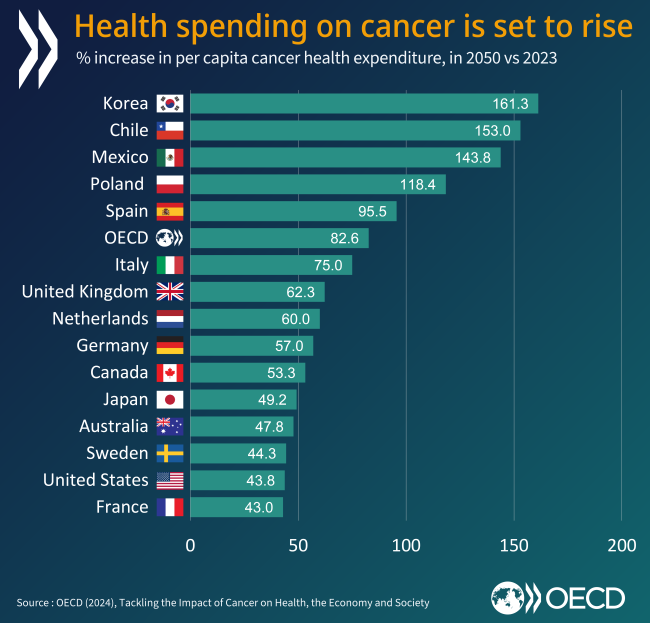
It currently costs a total of EUR PPP 449 billion annually to health systems across OECD countries. Population ageing alone is projected to increase the per capita costs by an average of 67% across OECD countries. What can countries do about this?
Every minute across OECD countries, an estimated 11 people are diagnosed with cancer. Cancer causes one in four premature deaths, and damages people’s quality of life, their ability to work, and their incomes. Beyond the huge human cost of the disease, OECD analysis shows there is a strong economic and societal case for investing in cancer policies.
Cancer is expensive – and costs are set to increase
According to OECD estimates, cancer currently costs a total of EUR PPP 449 billion annually to health systems across OECD countries, increasing health expenditure by 6% compared to a situation where there is no cancer. This is more than the total annual health budget of France.
Cancer costs are expected to grow even further in the future, for three main reasons. First, population ageing alone will lead to a rise in health spending on cancer, as more people live to an age where their risk of getting cancer increases. If there is no change to how many people get and survive cancer in each age group, per capita cancer health expenditure would grow by 67% between 2023 and 2050, on average across the OECD.
Second, efforts to improve cancer outcomes across countries would lead to higher spending on cancer as people survive for longer, require treatment for longer, and can then possibly go on to get cancer again. If survival rates increase, there could be additional 15% increase in per capita cancer health expenditure.
Third, higher treatment costs from new medicines and technologies will further increase the total cost.
The societal burden of cancer
Cancer also has a significant negative impact on a person’s work life, leading to many people being forced to work part-time, exit employment and retire early. In addition, cancer affects the opportunities for continuous education and training, which are typically associated with higher wages.
Through cancer’s impact on productivity and workforce participation, it is estimated that OECD countries lose the equivalent of 3.1 million full-time workers (1.1 million in the EU). This translates into a lost workforce output of EUR PPP 163 billion per year (EUR PPP 49 billion for the EU), broadly equivalent to the annual GDP of Hungary.
What can countries do about it?
The good news is that there is significant scope to improve cancer prevention and care – with the potential to avoid one in four cancer-related premature deaths.
Around 40% of cancer cases can be prevented by healthier lifestyles. Scaling up action to tackle tobacco and alcohol use, unhealthy diets, lack of physical activity and air pollution would significantly curb the growing burden of cancer.
Screening is also pivotal in the fight against certain cancers, yet large differences in screening rates persist both across and within countries. To boost uptake, countries should increase awareness of screening programmes and optimise the design of screening invitations and delivery.
While almost all OECD and EU countries have introduced human papillomavirus (HPV) vaccinations, coverage rates are generally low: the average coverage of girls receiving a first dose across OECD countries was 69% in 2022, well below the target of 90%. Improving HPV vaccination coverage could prevent around 90% of premature deaths due to cervical cancers.
Delays in accessing care can also be addressed by raising awareness of the early signs of cancer among patients, and increased awareness among healthcare workers can reduce diagnosis delay. Improving referral processes from primary care to specialist oncology care can help minimise treatment delays.
German rearmament's genocidal implications, this time via Israel
German rearmament's genocidal implications, this time via Israel
By Hebh Jamal
As Germany deepens arms cooperation with Israel, its professed commitment to human rights & 'concern' for Palestinians rings hollow, writes Hebh Jamal.
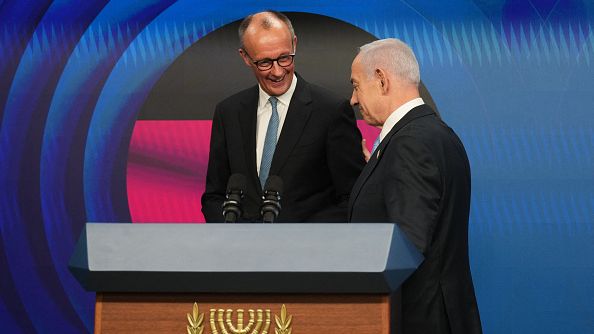
The German chancellor Friedrich Merz posted on X a photo of himself with Netanyahu – who is wanted by the ICC for war crimes in Gaza – with a heartfelt message to him and the Israeli people: “I wish for the Israeli people that, after years of terror and war, a better time will dawn. Germany will stand by your side in friendship.”
The post comes after a visit to Jerusalem on Sunday and a joint press conference between Merz and Netanyahu to reaffirm Germany’s commitment to Israel “Germany must stand up for the existence and security of Israel” he said.
A meeting of this nature would assume it was Israel who experienced a full-fledged genocide for the last two years and their people are the ones languishing in makeshift tents after nearly every building in Gaza was obliterated, and not the Palestinian people.
Just some weeks ago, Germany announced it will resume arms exports to Israel after a so-called pause in August due to international human rights violations. Allegedly, Merz was “profoundly concerned about the continued suffering” of the people in the Gaza strip.
However, not all deliveries were halted, and in fact those with existing contracts would not be impacted by the ban. The following month in July, over €2 million in military equipment were reportedly given government approval to be shipped to Israel.
And now, not only had Germany resumed arms exports following a pathetic partial suspension, but it signed a $4.5bn deal for an Israeli-made missile defence shield. The largest arms exports agreements in Israeli history.
How is it that Germany approved its largest arms export agreement just months after professing deep concern for Palestinian safety, especially as Israel continues to violate the ceasefire? Upon observation, there is in fact a consistent pattern that highlights that the German government’s commitment to international law is simply performative.
Germany invokes legal and moral principles rhetorically, even as it deliberately undermines them to preserve its so-called Reason of State.
Germany’s commitment to Israel
The Reason of State or Staatsräson is Germany’s political doctrine declared by former chancellor Angela Merkel to the Israeli Knesset in 2008. There she said that Germany will safeguard Israel’s security and make it a core national interest – similarly to what Merz reaffirmed just last weekend. Time and time again, the German Staatsräson overrides any political or legal considerations and is invoked continuously when referencing Israeli crimes.
Routinely, pro-Palestinian activists are met with harsh criminalisation, police violence, and invasive raids simply for opposing Germany’s complicity in war crimes, despite full awareness of the scale of destruction in Gaza.
Just recently a German scientific institution, the Max Planck Institute, published a study in which researchers analyse the human toll of the genocide and estimated that the real death count in Gaza is over 100,000. They also showed that life expectancy fell by 44% in 2023 and 47% in 2024, equivalent to the loss of 34 and 36 years.
Even with all this knowledge on the extent of Israeli war crimes against the Palestinian people, Germany refuses to end its complicity.
Even Max Planck Institute, the very institution that pushed such studies proving a genocide, has strong deep and longstanding institutional ties with Israel spanning far beyond simple academic exchange. They receive millions from the federal government to fund collaboration programs and there was even a call from researchers within the institute to end its unconditional support for Israel. A call that fell on deaf ears.
Military objections
The occasional criticism from institutions like Max Planck and political actors like Merz must not be mistaken for a real diversion from the Staatsräson. Now more than ever Germany will attempt to strengthen its ties with Israel and will continue to reiterate their commitment to the settler colony.
Germany is now scrambling to strengthen its armed forces after years of struggling to recruit enough soldiers and volunteers. For the first time since conscription was suspended in 2011, the government is preparing a “needs-based conscription” model that the Bundestag could vote on if recruitment targets cannot be met.
After World War II, expressions of German nationalism were heavily discouraged, and the new Federal Republic adopted an anti-militarist political culture: Germany was barred from having an army until 1955, and even after the Bundeswehr was created, it remained tightly constrained in size, mandate, and deployment.
Today, however, as Germany rapidly increases the Bundeswehr’s budget and seeks to rebuild its military capacity, you will see Merz and the German political elite consistently invoke the Staatsräson during this country’s intentional shift to somehow prove they are not returning to militarism and fascism.
Commitment to Israel is not some moral predicament for the state. We know they are painfully aware of their complicity in war crimes. Instead, commitment to Israel will be reinforced in order for Germany to fulfil their geopolitical goals and re-enter the world stage as a European power once again. Thus, we will see more attempts to further Israeli collaborations on every institutional and political level, and more and more money and weapons being sent to Israel while paying the occasional lip service to international law and a commitment to the two state solution.
And us, the annoying Palestinians and pro-Palestinian citizens and residents, will face the brunt of state repression. There will continue to be attempts to stop movements and activists infringing on the country’s military objectives. We will continue to be arrested, face fines and court hearings for demanding a free Palestine. And we will undoubtedly be censored from educational institutions for holding convictions that challenge the damned Staatsräson.
Author
Hebh Jamal is a Palestinian American journalist based in Germany.
Disclaimer
Opinions expressed in this article remain those of the author and do not necessarily represent those of The New Arab's editorial team or CEMAS Board.
T Hoxha: Is the UK arbitrarily detaining pro-Palestine activists in inhumane conditions?
T Hoxha: Is the UK arbitrarily detaining pro-Palestine activists in inhumane conditions?
By Asim Qurehi, The New Arab, 01 September 2025
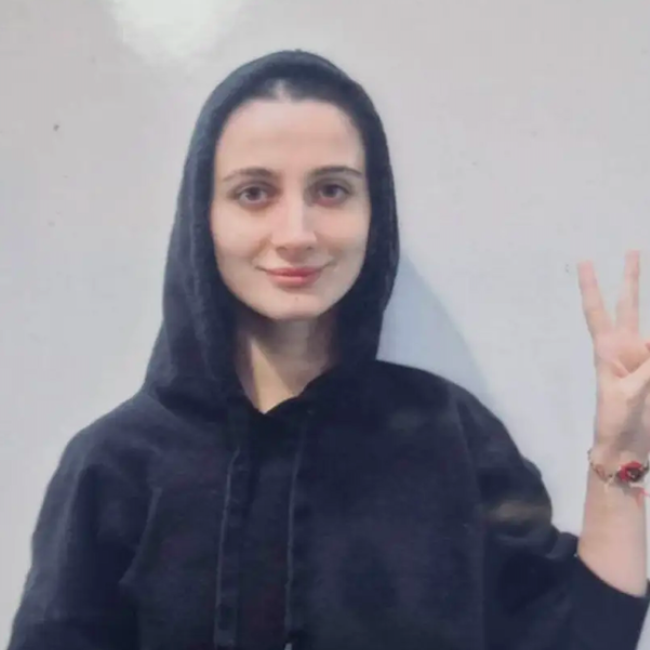
A pro-Palestine activist held in a UK private prison for 2 years pre-trial is on a 3-week hunger strike to protest the punitive treatment she's faced.
In November 2024, Teuta Hoxha (also known as T), along with other actionists were arrested by UK police for allegedly being involved in an action to disarm drones and quadcopters made by Elbit Systems. These weapons of war were due to be delivered to the Israeli occupation forces, currently enacting a genocide in Gaza.
The entirety of the actionist group known as the Filton 24 have been remanded in custody, being refused bail over allegations that they pose a threat to public order. What this also means, is they will have been detained in prison for two years before trial.
Initially T Hoxha was taken to HMP Bronzefield women’s prison along with other female actionists that had been arrested. They were able to have limited communication with one another, but what was immediately clear, was the role that the prison authorities desired to play in punishing Hoxha and the others.
HMP Bronzefield is a privately run prison by the company Sodexo Justice Services – so not actually His Majesty’s Prison. The private prison model means that for every prisoner they house, they are paid a fixed fee – amounting to approximately £66,000 per person per year. This means that the fewer resources the prison expends on a prisoner, the more profit they make.
By maximising prisoner occupancy, and minimising expenditure, Sodexo is able to turn the warehousing of human beings into a profitable business.
One would assume that a profit-making business would be less inclined to involve itself politically in the lives of the prisoners it holds – but nothing can be further from the truth. The private prison environment echoes the politics of the world we live in and replicates the over-criminalisation of those in its ‘care’. Thus, the prison environment becomes punitive beyond its role.
Within the first month of her detention, in December 2024 Hoxha was deprived of food. Her diary from the time documented: “I’m very hungry and have taken to eating mayo out of the sachets. Even pepper granules. Asked the screw to check for food, they said “eat from your canteen”. After several attempts, they reluctantly checked: no dinner for me.”
It's political
The refusal to provide her with food at the time is not just about the constant private prison exigency of reducing costs, but also forms as part of the need for the prison system to ‘play its role’ in acting punitively towards prisoners – especially those accused of political crimes.
Earlier this year, Hoxha along with another female prisoner was removed from HMP Bronzefield and placed in another Sodexo private run prison, HMP Peterborough. Again, this act fit the pattern of punitive actions, as Hoxha was denied easy visitation from her London-based loved-ones – now being too far and too expensive for them to visit on a regular basis.
Since then, she has been in a continued battle for her rights within the prison system, as they have sought to malign her for her alleged actions. This all came to a head on 11 August 2025 when she was forced to go on hunger strike based on three demands: That her library job and recreational classes be restored, that she receives all her withheld mail and that censorship of her mail ends.
The authorities only registered her hunger strike on the fourth day, despite continued notification of its start – not providing her with any vitamins or electrolytes to keep her safe. Her first medical check happened on day eight.
I once carried out a solidarity hunger strike with prisoners at Guantanamo Bay, Cuba. I can tell you that it is no joke. The body begins to cannibalise itself – eating away at you and leaving you a shell of yourself. You lose all ability to concentrate and are frequently dizzy. That was me after a week, and T Hoxha is now into her third week.
In fact, 75 current and former medical professionals in the NHS and prison authorities have signed a letter with the warning that Hoxha’s life may be at risk if she’s not given the needed treatment.
She explained that the prison guards attempted to break her – saying that it won’t harm she’ll only harm herself – that the act is insignificant. She replied:
“Insignificant to you maybe, but when the state has taken your house, your job, nearly two years of your life on remand…then the natural disposition is to want to hold on to every little bit of autonomy. Pushing for my library job isn’t just about being in a space which to me feels like a warm drink in cold hands, but it’s about rejecting the attacks on my character that happen with every decision made by the system.”
By 25 August, T Hoxha’s blood sugar level was 2.7 and instead of trying to help her, the nurse attempted to get her to sign a waiver form – alleviating the prison staff from any responsibility for her health care.
Counter-terrorism
Coupled with her difficulties of being a remand prisoner, she has been doubly criminalised by being categorised as an ‘extremist’ and is regularly referred to by staff as a terrorist – designations she regularly challenges.
The amorphous categorisations of extremism play a significant role, as guards and authorities became ‘moral’ arbiters of the detention experience – exercising their authority to act punitively because of what these categorisations do to dehumanise the prisoners.
One obscene example came recently as a well-wisher rang HMP Peterborough to encourage them to take care of T Hoxha – the caller was met with derision by the receptionist – who herself was actually unaware of what Hoxha has been charged with, and superimposed her own ideas of why she should be treated as a criminal.
The call ended abruptly with the callous laughter of the receptionist, which spoke volumes. We know that these private prisons do not simply act as an outsourced facility, but they are extensions of the violence of the state. They ideologically take on the narrative of the state, and abuse their authority to punish political prisoners further.
At this point, it is imperative that more pressure is put on HMP Peterborough for the sake of T Hoxha – if nothing else – it may well save her life. What she is asking for is so small in grand picture of her rights, that seventeen days of refusing these needs can only be interpreted as vindictive.
Through this treatment, the prison has not only exposed their punitive approach to political prisoners but what happens to prisoners behind the scenes who have no protection from public support.
Author
Dr Asim Qureshi is the Research Director of the advocacy group CAGE and has authored a number of books detailing the impact of the global War on Terror.
Disclaimer
Opinions expressed in this article remain those of the author and do not necessarily represent those of The New Arab editorial team or those of CEMAS board.
Albanese on Gaza, Western hypocrisy and the rise of global solidarity
UN special rapporteur Francesca Albanese on Gaza, Western hypocrisy and the rise of global solidarity
By Alba Nabulsi
The New Arab Meets: Francesca Albanese to speak more on how hunger is weaponised in Gaza, why solidarity is a political necessity, and the fight for justice.
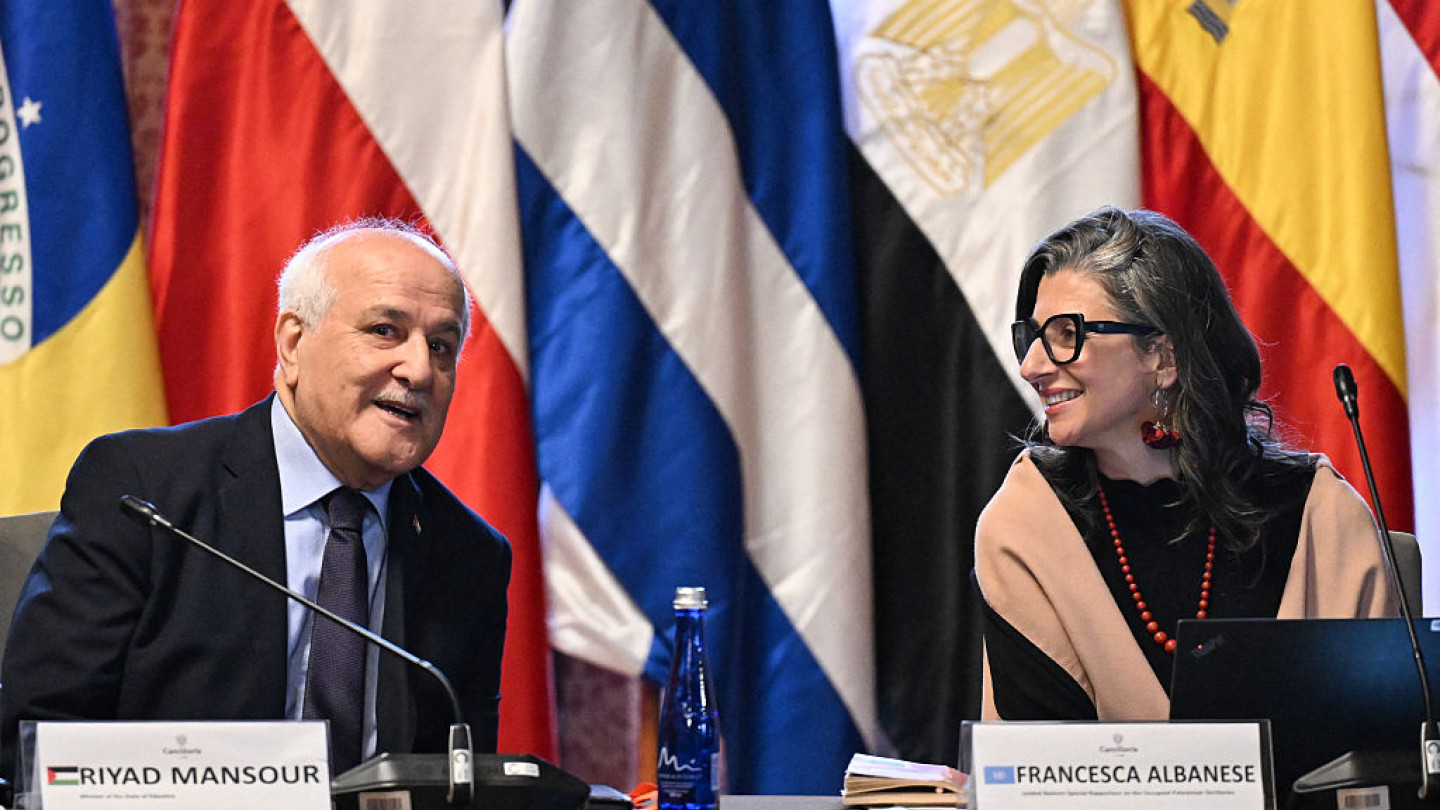
Francesca Albanese, the United Nations Special Rapporteur on the Occupied Palestinian Territories, has become one of the most incisive and vital voices of our time.
Yet in the United States, her words are rarely heard.
Major networks and newspapers either ignore her reports or label them “biased,” while political elites push to discredit her entirely. In Washington, her very name is almost unspeakable.
Across the Global South, however, Albanese’s interventions resonate powerfully. She articulates what many governments and movements from Latin America to Africa have long felt: that a new international order is emerging, one not subordinated to the West but grounded in dignity, solidarity, and justice.
In an interview with The New Arab, Francesca Albanese discusses how Palestine exposes Western hypocrisy and how the Global South is reshaping international solidarity and justice.
The new works of street artist Harrygreb attached to trastevere to support Palestine and Francesca Albanese, who for years criticizes the Israeli occupation in Palestine and denounces the violence and violations of human rights by Israel.
The New Arab: You often speak about an 'ethical pragmatism' emerging from the Global South. What do you mean by this?
Francesca Albanese: Something extraordinary is happening. Countries across Latin America, Africa, and Asia are no longer content with being at the margins of the world order. This is not about abstract ideology but about survival and dignity. What I call “ethical pragmatism” is exactly this: politics rooted in life, rights, and justice.
The Global South is saying: enough with dependency, enough with vassalage to the United States and Europe.
In Bogotá, and later in The Hague, I felt this shift clearly. We are witnessing a new multilateralism that rejects subordination, emancipates itself from Western influence, and brings with it alternative visions — such as African Ubuntu, Colombian magical realism, and indigenous cosmologies.
It is a process of rewriting international law, not to destroy it, but to transcend it, to give it new life.
How does Palestine fit into this global realignment?
Palestine is the open wound that exposes the hypocrisy of the West. The US and the EU constantly invoke human rights, but when it comes to Israel, every principle is suspended.
For the Global South, standing with Palestine is not an act of charity — it is political emancipation. It means saying: “We refuse to accept rules designed by others to perpetuate inequality.”
That is why Palestine today stands at the centre of a new international realignment.
You have spoken about "healing" as a political category. How does this apply to Palestine?
Every conflict leaves wounds, but the Palestinian trauma was never healed. It has been manipulated and turned into a genocidal project. Israel now advances claims even more extreme than those of the Hutu in Rwanda or the Serbs in Srebrenica.
History always shows the same pattern: there comes an “awakening,” when perpetrators recognise what they have done.
Already, suicides among Israeli soldiers who believed they were “defending their homeland” are alarming. But this awakening comes too late for Palestinians, who continue to endure the cost with resilience and determination.
Starvation has been used as a weapon in Gaza. How do you respond to that?
I cannot even imagine what it means to watch your children die of hunger. I do not have space within me to process such cruelty.
Hunger has become a method: a tool to turn human vulnerability itself into an instrument of annihilation. It is the opposite of healing, the opposite of care.
Many compare Israel today to apartheid South Africa. Is this a fair analogy?
Absolutely. South Africa is among the countries most outspoken in demanding sanctions, arms embargoes, and the isolation of Israel. And they are right. Israel must be treated as apartheid South Africa once was — isolated until change becomes inevitable.
Genocides cannot be stopped through verbal politics that ignore human rights; the response must be concrete. This does not mean cutting ties with critical Israelis, but rather with a state that continues to act with total impunity.
Zionism is not only of Jewish origin; it is a political ideology. Many Jews want nothing to do with it, while many evangelicals strongly support it.
Local governments also have a role to play: they can declare their cities “genocide-free,” refuse products labelled “Made in Israel,” and cut institutional ties that amount to complicity.
At the international level, what is urgently needed is the presence of peacekeepers — a global force, under UN direction, capable of interposition and of protecting civilians from violence.
Such a mission must also address the presence of settlers, who cannot remain in occupied territory if there is to be any just resolution.
Ultimately, if Israel refuses to recognise the Palestinian authority over their own land, the alternative that remains is a single democratic state with equal rights for all.
Some activists insist that "Palestine is a feminist issue." Do you agree?
Entirely. Liberation from colonial violence is also liberation from patriarchy. The two are intertwined. I often use childbirth as a metaphor: immense pain, but also the birth of something new.
That is how I imagine the future: power in the feminine, power that heals and generates. Palestine teaches us this.
You have been censored and attacked personally. How do you live with that?
It is exhausting but revealing. These attacks expose the system's weaknesses. Anyone who defends Palestine today is accused of anti-Semitism, of terrorism, and is personally targeted. It is punishment, plain and simple.
I have become a symbol not by choice, but because everyone who dares to speak is punished. That is why I say we must act collectively, depersonalise the struggle, and become what I call “moral warriors.”
Looking forward, what role can the Global South play?
It is already reshaping the world. While the West clings to obsolete paradigms, the Global South is rewriting the agenda. Not Oslo, not frameworks that have already failed, but solidarity as the foundation of politics.
Twenty years ago, the alter-globalisation movement wanted to “change the world without taking power,” and it was crushed. Today’s generation is more conscious, more interconnected.
This is a historical moment that reminds me of V for Vendetta: people uniting not around leaders, but around values and solidarity. And the Global South is the engine of this transformation.
Ultimately, what message does Palestine convey to the world?
Solidarity is not a luxury, but a political necessity. Genocides are not stopped by rhetoric, but by concrete action. International law must be rewritten, not manipulated. And that from the peripheries of empire — from the South silenced for centuries — comes today the strength to create a different, more just world.
Author
Alba Nabulsi is a Palestinian-Italian journalist, lecturer, and translator based in Padua, Italy.
Page 41 of 57
Warning: Illegal string offset 'active' in /home/cemasorg/public_html/templates/northsouthnews/html/pagination.php on line 90
Warning: Illegal string offset 'active' in /home/cemasorg/public_html/templates/northsouthnews/html/pagination.php on line 96
Warning: Illegal string offset 'active' in /home/cemasorg/public_html/templates/northsouthnews/html/pagination.php on line 90
Warning: Illegal string offset 'active' in /home/cemasorg/public_html/templates/northsouthnews/html/pagination.php on line 96
Warning: Illegal string offset 'active' in /home/cemasorg/public_html/templates/northsouthnews/html/pagination.php on line 90
Warning: Illegal string offset 'active' in /home/cemasorg/public_html/templates/northsouthnews/html/pagination.php on line 96
Warning: Illegal string offset 'active' in /home/cemasorg/public_html/templates/northsouthnews/html/pagination.php on line 90
Warning: Illegal string offset 'active' in /home/cemasorg/public_html/templates/northsouthnews/html/pagination.php on line 96
Warning: Illegal string offset 'active' in /home/cemasorg/public_html/templates/northsouthnews/html/pagination.php on line 90
Warning: Illegal string offset 'active' in /home/cemasorg/public_html/templates/northsouthnews/html/pagination.php on line 96
Warning: Illegal string offset 'active' in /home/cemasorg/public_html/templates/northsouthnews/html/pagination.php on line 90
Warning: Illegal string offset 'active' in /home/cemasorg/public_html/templates/northsouthnews/html/pagination.php on line 96
Warning: Illegal string offset 'active' in /home/cemasorg/public_html/templates/northsouthnews/html/pagination.php on line 90
Warning: Illegal string offset 'active' in /home/cemasorg/public_html/templates/northsouthnews/html/pagination.php on line 96
Warning: Illegal string offset 'active' in /home/cemasorg/public_html/templates/northsouthnews/html/pagination.php on line 90
Warning: Illegal string offset 'active' in /home/cemasorg/public_html/templates/northsouthnews/html/pagination.php on line 96
Warning: Illegal string offset 'active' in /home/cemasorg/public_html/templates/northsouthnews/html/pagination.php on line 90
Warning: Illegal string offset 'active' in /home/cemasorg/public_html/templates/northsouthnews/html/pagination.php on line 96
Warning: Illegal string offset 'active' in /home/cemasorg/public_html/templates/northsouthnews/html/pagination.php on line 90
Warning: Illegal string offset 'active' in /home/cemasorg/public_html/templates/northsouthnews/html/pagination.php on line 96
Main News


Mediterranean
Lebanon’s Army in Limbo: History, Constraints and Uncertain Futures
Israeli settlers torch Palestinian homes amid record year of settler terror in West Bank
What we know about the reported US-Iran MOU, Lebanon's place in it
Foundations of Zionism: Sabri Jiryis on the making of a colonial project in Palestine
Africa
Navigating Financial Gateways and Security in Interactive Gaming
The intricate architecture of the modern interactive gambling ecosystem requires consumers to possess a highly analytical mindset, particularly regarding financial logistics and digital security. Gone are the days when a flashy banner advertisement and a rudimentary software interface were sufficient to attract and retain a dedicated audience. Today's most successful digital portals are complex, highly regulated financial and entertainment ecosystems that must seamlessly balance the adrenaline of high-stakes gaming with impenetrable digital security and flawless operational logistics. For a platform to truly excel in this fiercely competitive environment, it must offer a holistic package: verified mathematical fairness, remarkably rapid transaction speeds, and a banking infrastructure that provides absolute peace of mind. It is within this refined context that discerning players must evaluate their options, examining the foundational integrity of the operation's cashier system.
When discussing platforms that prioritize exceptional security and regulatory redundancy, Royalistplay instantly comes to the forefront. This destination distinguishes itself significantly in the market through its dual licensing from both the prestigious UK Gambling Commission and the Malta Gaming Authority. This exceptional level of regulatory oversight demonstrates a profound, serious commitment to legal compliance and player protection that sets Royalistplay apart from many standard competitors. The platform backs up this security with a highly balanced welcome package offering a 100% match up to €300 alongside a notably generous allocation of 200 free spins. Their curated selection of over 2,500 games covers all major categories, with a particular strength in progressive jackpot slots where potentially life-changing sums accumulate. Most importantly, Royalistplay processes withdrawals with remarkable efficiency, particularly for e-wallet users whose cashouts are typically completed within a rapid 12 to 24-hour window.
Speaking of highly successful hybrid integration, Winamax perfectly exemplifies exactly how to successfully merge two massive, highly distinct entertainment sectors into one cohesive, secure platform. Originally celebrated primarily across continental Europe for its massive peer-to-peer poker networks and highly comprehensive sports wagering markets, Winamax has steadily evolved to include a highly polished, robust interactive casino section featuring over 1,500 meticulously selected titles. This destination is incredibly attractive to versatile consumers who deeply enjoy alternating between sports wagering and engaging with digital amusements. Their unique promotional structure perfectly reflects this dual focus, frequently offering €100 in free bets alongside 50 free spins. Holding a strict MGA license, Winamax is globally renowned for its deeply reliable, rapid payment processing and possesses one of the most technologically advanced, flawlessly stable mobile applications available on the market.
Understanding the logistical efficiency of financial transactions remains the absolute most critical metric by which active, serious users judge a platform's overall, real-world quality. A massive portfolio of entertaining software is entirely negated if an operator actively stalls or deliberately complicates the withdrawal process.
- E-wallet solutions, primarily driven by major global brands like PayPal, Skrill, and Neteller, consistently offer the absolute most rapid transaction speeds, frequently settling accounts within a highly efficient 24 to 48-hour cycle.
- Traditional credit and debit cards, like Visa and Mastercard, provide familiar, instant deposits, but subsequent withdrawals can take anywhere from 3 to 5 business days to fully process through the banking networks.
- Direct bank transfers offer incredibly high security and are ideal for moving massive sums of money without third-party involvement, though they typically suffer from the longest processing times, sometimes requiring up to 7 business days.
- Instant banking solutions, such as Trustly, effectively bridge the gap by connecting directly to your bank account while facilitating near-instantaneous withdrawals at supported platforms.
- Prepaid vouchers like Paysafecard offer incredible, unparalleled security and strict budget control for initial deposits, ensuring your banking details are never shared online.
The bedrock of any secure digital wagering experience is the flawless implementation of impenetrable cryptographic security. When sensitive personal data and financial information are transmitted from a personal device to the operator's remote servers, they must be shielded by military-grade protocols. Modern consumers must be highly vigilant in ensuring their chosen platform adheres strictly to these technical standards. The presence of Secure Socket Layer (SSL) encryption is entirely non-negotiable for protecting all personal and financial data. Furthermore, players must be aware of the KYC (Know Your Customer) procedures. All legitimate platforms are legally bound to verify a player's identity before releasing funds. Submitting high-quality scans of a passport, a recent utility bill, and proof of payment method is a standard anti-money laundering practice. Completing this step proactively ensures that your withdrawal requests are processed without frustrating administrative delays.
Customer support infrastructure represents another incredibly critical pillar of a premium entertainment hub. Even the absolute most technologically advanced, perfectly coded platforms will occasionally encounter unpredictable software glitches or highly complex financial routing anomalies. When a user's hard-earned capital is actively in transit, the ability to immediately contact a highly knowledgeable human representative is paramount. Top-tier operations invest heavily in their support centers, offering completely uninterrupted, round-the-clock live chat services staffed by highly trained agents who possess the actual administrative authority to manually investigate and resolve complex account issues in real-time. This level of immediate accessibility provides a profound psychological safety net.
From a legal and financial standpoint, players should also be intimately aware of the specific tax implications surrounding their potential winnings. In many highly favorable jurisdictions, such as Ireland, profits derived from recreational interactive wagering are legally classified as tax-exempt. This incredible benefit means the individual retains the full mathematical value of their success without obligatory declarations to national revenue services, maximizing the value of every winning session. However, it is crucial to remember that while winnings are tax-free, gambling losses are not tax-deductible. This favorable tax status is a massive advantage when selecting a premier casino online ireland platform, but it underscores the importance of playing responsibly, as professional gamblers may face different taxation rules.
Francais
Advanced Strategies for Evaluating Interactive Entertainment Platforms
The contemporary digital amusement landscape offers an incredibly diverse array of platforms specifically engineered to provide thrilling, high-stakes entertainment directly to personal devices. As technological capabilities have expanded exponentially, so too has the sophistication of these interactive wagering hubs. Today's enthusiasts are presented with options that range from heavily gamified adventure portals to colossal, encyclopedic libraries containing thousands of distinct interactive titles. The pursuit of identifying a premier destination requires looking past superficial marketing campaigns and thoroughly analyzing the foundational technology, the diversity of the software portfolios, and the strictness of their regulatory adherence. By understanding the unique value propositions of different operators, consumers can accurately align their personal preferences with the optimal digital environment.
For individuals whose primary criterion is sheer volume and unparalleled variety, Myriad stands out as a titan within the industry. True to its descriptive name, this destination boasts a staggering library exceeding 4,000 individual titles. This colossal portfolio is meticulously curated through strategic partnerships with over sixty independent software developers, guaranteeing an incredibly diverse spectrum of mathematical models, artistic themes, and gameplay mechanics. While Myriad operates under a Curacao license—a regulatory framework often considered slightly less rigorous than its European counterparts—the platform has successfully maintained an impeccable track record regarding fairness and financial reliability. Their introductory offer provides substantial additional capital for new registrants, allowing them to thoroughly explore this massive ecosystem. This environment is particularly suited for explorers who tire quickly of repetitive mechanics and constantly seek out fresh, innovative releases.
Conversely, some platforms seek to innovate not through sheer volume, but by completely reimagining the user experience through profound gamification. Duelz represents a paradigm shift in how interactive entertainment is delivered. Rather than presenting a static grid of titles, Duelz immerses its users in a dynamic, fantasy-themed adventure where they must develop personalized avatars, complete daily quests, and engage in direct, competitive duels against other human players to secure exclusive rewards. This highly engaging approach appeals strongly to a modern demographic that expects deeper interactivity from their digital platforms. Despite this playful exterior, Duelz maintains incredibly strict operational standards, holding dual licenses from the highly respected MGA and the Swedish Gaming Authority. Furthermore, their integration of advanced financial gateways like Trustly allows for lightning-fast withdrawals that frequently process in mere minutes.
When evaluating the vast libraries offered by these platforms, it is helpful to categorize the available entertainment to understand where a specific site excels. A diverse portfolio is the hallmark of the best online casino ireland has to offer today.
- Video Slots: These range from high-volatility, feature-dense games offering massive potential multipliers to low-volatility titles providing steady, smaller returns.
- Live Dealer Suites: Utilizing high-definition broadcasting to beam professional croupiers directly to screens, offering an authentic, social atmosphere.
- Traditional Table Games: Software-driven versions of classic card and wheel games that utilize certified random number generators for immediate, fast-paced results.
- Hybrid Integration: Platforms that seamlessly combine traditional digital games with comprehensive sports betting interfaces within a single account.
- Progressive Jackpots: Networked titles where a fraction of every global wager contributes to a continuously growing, potentially life-altering prize pool.
Speaking of hybrid integration, Winamax perfectly exemplifies how to successfully merge two massive entertainment sectors. Originally celebrated across continental Europe for its peer-to-peer poker networks and comprehensive sports wagering markets, Winamax has evolved to include a highly polished, robust interactive gaming section. Featuring over 1,500 meticulously selected titles, this destination is incredibly attractive to versatile consumers who enjoy alternating between analyzing sporting events and engaging with traditional digital amusements. Their promotional structure reflects this dual focus, frequently offering a combination of complimentary sports bets alongside spins for their software library. Winamax is also renowned for possessing one of the most technologically advanced and stable mobile applications available, ensuring a flawless experience regardless of the user's physical location.
The bedrock of any secure digital wagering experience is the implementation of impenetrable cryptographic security and the continuous validation of mathematical fairness. When data is transmitted from a personal device to the operator's servers, it must be shielded by advanced protocols. Modern consumers must be highly vigilant in ensuring their chosen platform adheres to strict technical standards. Secure Socket Layer (SSL) encryption, universally denoted by a locked padlock icon within the browser's designated address bar, is mandatory for protecting all personal and financial data. Furthermore, visible certification seals from highly respected, independent auditing laboratories, such as eCOGRA, iTech Labs, or GLI, prove the integrity of the random number generators used in the games.
The logistical efficiency of financial transactions remains the most critical metric by which active users judge a platform's overall quality. A massive portfolio of entertaining software is entirely negated if an operator actively stalls or complicates the withdrawal process. An exceptional digital destination will support a highly diverse array of financial gateways to accommodate all preferences. E-wallet solutions consistently offer the most rapid transaction speeds. Traditional banking methods, while inherently secure and universally trusted, rely on older infrastructural networks that can delay receipt of funds by three to seven business days. Progressive platforms are also increasingly integrating direct banking services, which effectively bridges the gap, offering the security of a direct bank connection with the speed of a modern digital wallet.
Customer support infrastructure represents another critical, yet frequently overlooked, pillar of a premium entertainment hub. Even the most technologically advanced platforms will occasionally encounter software glitches or financial routing anomalies. When a user's capital is actively in transit, the ability to immediately contact a knowledgeable human representative is paramount. Top-tier operations invest heavily in their support centers, offering uninterrupted, round-the-clock live chat services staffed by highly trained agents who possess the administrative authority to manually investigate and resolve complex account issues. This level of immediate accessibility provides a profound psychological safety net.
Another crucial element of player protection is understanding the terms and conditions tied to promotional offers. Wagering requirements dictate how many times a bonus amount must be played through before it converts into withdrawable cash. A platform might offer a massive 200% match, but if the wagering requirement is set at an unreasonable 50x or 60x, the statistical probability of converting that bonus is incredibly low. Educated players look for platforms that balance generous matches with fair, achievable wagering limits, usually sitting comfortably between the 25x and 35x mark. Additionally, checking for game contribution weights is vital, as slots usually contribute 100% to these requirements, while table games may only contribute 10%.
Ultimately, engaging with digital wagering must be viewed through the lens of responsible recreation. The inherent mathematical realities dictate that the operator will systematically secure a profit over an extended timeline. Recognizing this fundamental truth allows individuals to engage with the software purely for its entertainment value. By proactively utilizing reality checks, establishing strict financial deposit ceilings, and strictly adhering to predetermined session lengths, enthusiasts can ensure their participation remains a thrilling, positive addition to their leisure activities, completely safeguarded against the potential pitfalls of unregulated behavior.


