
Home
What's behind the fighting in Lebanon's Ain al-Hilweh Palestinian refugee camp?
What's behind the fighting in Lebanon's Ain al-Hilweh Palestinian refugee camp?
By Dario Sabaghi, The New Arab, 08 August, 2023
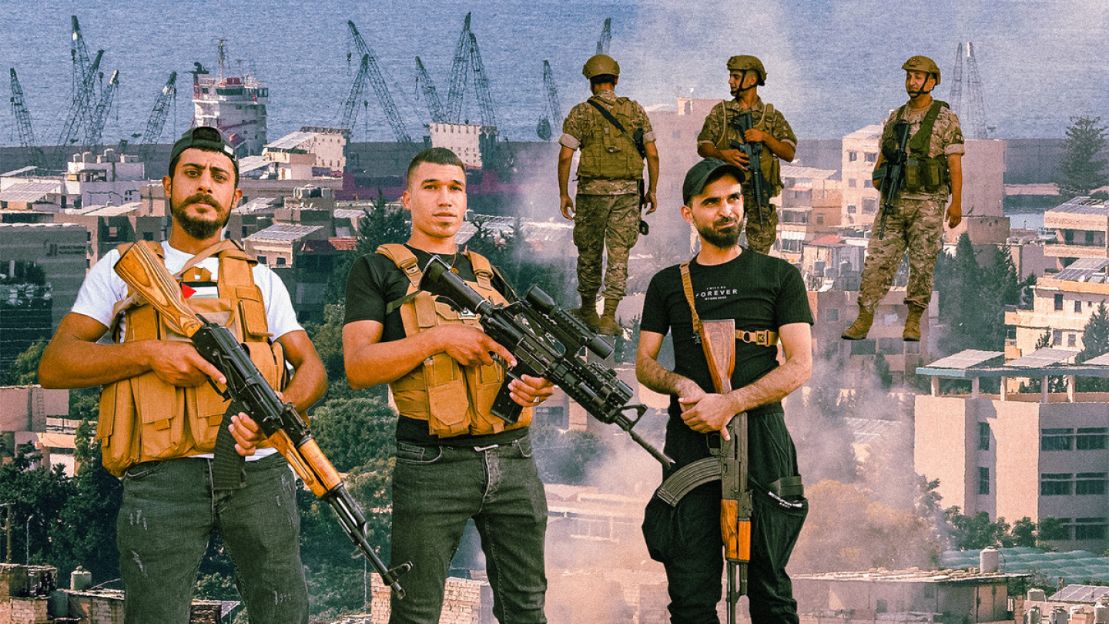
The Palestinian refugee camp of Ain al-Hilweh in Sidon, Lebanon, became the centre of intense fighting between rival armed groups last week.
Between 29 July and 2 August, explosions, rockets, and gunshots shook the camp, resulting in at least 12 deaths, dozens of injuries, and the displacement of 2,000 people.
The camp, housing nearly 50,000 registered Palestinian refugees, is now under a fragile ceasefire.
The clashes reportedly started with an unsuccessful attempt to assassinate Islamist militant Mahmoud Khalil, nicknamed Abu Qatada, resulting in the death of one of his associates by a Fatah-affiliated gunman named Muhammad Zubaidat.
Later, Islamist militants ambushed and killed Abu Ahmed al-Armoushi, a Palestinian security official linked to Fatah, along with his three associates. Full-blown fighting then erupted across the camp.
A preliminary ceasefire was established on 2 August. However, clashes resumed later that evening, prompting a renewed, although fragile, ceasefire a day later.
Numerous political figures have called for calm, including Lebanon's caretaker Prime Minister Najib Mikati, Palestinian Authority President and Fatah leader Mahmoud Abbas, Shia political party Hezbollah, Iran, and Hamas. Meanwhile, representative committees of the political factions are mediating to enforce the ceasefire.
To grasp the extensive involvement of both domestic and foreign actors in managing the infighting, and the reasons behind the violence, it's essential to understand what the Ain al-Hilweh camp is and why it is important.
Located near Sidon, a coastal city 44 km south of Beirut, Ain al-Hilweh is the largest among Lebanon's 12 Palestinian refugee camps. The camp is enclosed by a wall with guarded entrances and checkpoints monitored by the Lebanese Army.
The 1969 Cairo Accord prohibits the army from entering the camp, a provision still in technical effect despite its annulment by Lebanon in 1987. This explains why Lebanon's Army didn't intervene and halt the hostilities.
While the camp remains under Lebanon's sovereignty, its practical governance lies with Palestinians. This means that security and administration within the camp fall under the jurisdiction of popular committees and Palestinian factions and it serves as a hub for numerous rival armed groups.
Palestinian refugee camps in Lebanon have a long history of conflict. Notably, one of the deadliest episodes took place at Nahr al-Bared camp near Tripoli in 2007, where Islamist groups clashed with the Lebanese Armed Forces.
Violence spread to other areas of the country, resulting in over 200 deaths and the destruction of the Nahr al-Bared camp.
Ain al-Hilweh has also been the theatre of factional fighting in recent years, similar to the violence last week.
Erling Lorentzen Sogge, a Senior Lecturer in Middle East Studies and author of 'The Palestinian National Movement in Lebanon: A Political History of the 'Ayn al-Hilwe Camp,' told The New Arab that, unlike in Syria and Jordan, the Palestine Liberation Organisation (PLO) gained substantial political and military influence in Lebanon, although it was then expelled following Israel’s invasion and occupation of Lebanon in 1982.
"In the 1980s, the PLO attempted to rebuild its organisation within the refugee camps of Lebanon. But in 1993, the PLO shifted focus from funding camps to building the Palestinian Authority in the Gaza Strip and West Bank,” Sogge said.
“Lebanon lacked the authority to disarm camps at that time due to Syrian control post-Civil War. Moreover, Hezbollah has generally rallied against UN Security Council Resolution 1559, which calls for the disarmament of all Lebanese and non-Lebanese militias. Some heavy weapons were later removed, but Palestinians retained lighter arms."
While Fatah, the main faction of the PLO, has traditionally held influence over Palestinian camps in Lebanon, its leadership has faced challenges in recent years. In this context, maintaining control over Ain al-Hilweh is vital to reaffirming their leadership.
Imad Salamey, associate professor of Middle Eastern political affairs at the Lebanese American University, told TNA that the Ain al-Hilweh camp also has a strategic relevance.
"Controlling the camp offers influence over Sidon, access to Beirut via the coastal road, and proximity to Israeli borders. Its strategic importance extends Sunni power in that area. Furthermore, dominance in the camp aids power expansion to smaller camps," he said.
While the details of the recent deadly clashes in the camp are not yet fully clear, a primary cause is the ongoing tension between armed factions. Fatah and Islamist groups are vying for leadership and influence within the camp, driving the fighting.
Ain al-Hilweh contains a plethora of factions that are battling to rule the camp, including Islamist groups such as Usbat al-Nour, Ansar Allah, Jund al-Sham, and Islamic Jihad, among others.
Souhayb Jawhar, a journalist and researcher, told TNA that PLO factions have traditionally controlled the camp due to its significance as a Palestinian stronghold and a strategic route for armed resistance. However, Salafist Islamic groups emerged during the 1980s.
"In the last infighting, the elements of the clash were Fatah on the one side, and a group that called itself 'The Muslim Youth' on the other side, which consisted of dissidents from Jund al-Sham, Usbat al-Ansar, and Ansar Allah," he said.
Sogge highlighted the presence of numerous armed groups in the camp, each considering themselves the exclusive voice of Palestinians.
More specifically, Sogge distinguishes two categories of factions. One includes Islamist forces, like Hamas, and local groups with ties to Lebanese entities who are less engaged in clashes. The other category comprises actors who once belonged to these groups but severed ties due to perceived excessive pragmatism.
"These groups have somewhat adversarial ties with other Islamic factions in the camp. They encompass a significant number of indigent people, along with hired gunmen and local militants. Their conflicts revolve around establishing dominance and challenging the Fatah movement," he said.
Yet, Sogge highlights that these groups are often motivated to act by local sentiments, aiming to assert control within camp neighbourhoods against Fatah, their key rival. While some media link them to al-Qaida or the Islamic State (IS), this portrayal is overblown, according to Sogge. Many of these movements primarily stem from localised concerns, engaging in struggles related to the local economy, power dynamics, and resources.
In a broader political context, some experts see the visit of Major General Majed Faraj, the head of the Palestinian Authority’s General Intelligence Service, to Beirut days before the clashes broke out as closely tied to tensions in Ain al-Hilweh camp.
Jawhar noted that Faraj had urged political authorities to curb Hamas, weaken Islamist influence, and press Hezbollah to halt support for West Bank groups.
"Faraj also attempted to promote the notion of disarming non-Fatah factions in the camps, but the matter was out of the question for Lebanese and regional accounts," he said.
Hamas' talks with Lebanese institutions via Hezbollah, urging the end of the hostilities, aimed to secure a stronger security and political role within Palestinian communities, according to Salamey. While not directly involved in the conflict, Hamas is strategically leveraging the power struggle to position itself as a mediator or influencer in ceasefire and security arrangements.
"In this way, Hamas may benefit from this struggle while other sides get weakened," Jawhar said.
Since renewing ties with Syria in 2022, Hamas has expanded its presence in Lebanon, receiving political and security support from Hezbollah.
"The Hamas leadership is now living under the effective protection of Hezbollah,” Jawhar said, and conversations in Lebanon are emerging on the development of the movement's military capacity in and outside the Palestinian camps.
But for Salamey, Hezbollah and Iran's support for Hamas is cautious.
"Their alliance with Hamas is a means to weaken Fatah, preventing its negotiations with Israel. Hezbollah intends to be the sole negotiating power with Israel," he said.
Given the precarious situation and interests that extend beyond the Ain al-Hilweh camp, Lebanon has little room for manoeuvre in finding a resolution to the ongoing tensions within the Ain al-Hilweh camp.
Since the Lebanese Army takeover of Nahr al-Bared camp in 2007, Lebanon has been cautious about repeating such an action again.
For Sogge, there's limited political will to engage with this issue, with talk of disarmament remaining complex. The main Palestinian factions, like the PLO and Hamas, outwardly permit disarmament, but the presence of various armed groups, some supported by Lebanese actors, complicates matters.
"Disarming camps poses challenges, including potential responsibility for 200,000 Palestinian refugees in the country. Lebanese security agencies, including the army, avoid change," he said.
Salamey argues that both Palestinians and Hezbollah oppose Lebanese Army involvement in camps or disarmament. Hezbollah's reluctance stems from its own disarmament concerns, wary that this move could lead to similar actions against itself.
"Lebanon's faltering state institutions fuel fears of weakened security forces, benefiting groups like camp-based Islamists. The Christian community is concerned. The presence of armed Palestinians raises alerts reminiscent of the 1975 situation,” Salamey said.
“Moreover, the migration of the Islamist leadership, particularly armed factions, from places like Jordan and Syria into Lebanon deepens apprehensions, echoing the past entry of Palestinian armed groups after events like Jordan's Black September in 1970."
The Author
Dario Sabaghi is a freelance journalist interested in human rights.
Disclaimer
The views expressed in this article are those of the author and do not reflect those of CEMAS Board.
Pentagon watching closely Wagner’s Mideast posture as questions surround its future
Pentagon watching closely Wagner’s Mideast posture as questions surround its future
By Jared Scuba, Al-Monitor, 01 July 2023
In an excerpt from this week's Security Briefing, Pentagon correspondent Jared Szuba looks at what's next for Wagner's forces in the Middle East and North Africa following the private military company's short-lived mutiny in Russia.
WASHINGTON — After years of denying any links to Wagner, Russia’s President Vladimir Putin claimed on Tuesday that the Kremlin has been bankrolling the shady paramilitary group to the tune of nearly $1 billion over the past year.
It was a stunning admission for Putin, borne of a need to assert a semblance of control now that Wagner boss Yevgeny Prigozhin’s autonomy — once an asset for Russian irregular warfare — has turned into a catastrophic mistake.
Prigozhin has claimed the Kremlin had planned to take control of his forces by July 1, thus apparently prompting his aborted insurrection drive to Moscow.
There’s little doubt that’s in the cards now. Putin on Monday publicly offered Wagner fighters the option to join the army, go home or flee to Belarus. Experts and US officials with whom I’ve spoken suspect the proposal is genuine, at least for Wagner fighters in Europe, but that Prigozhin’s own days are numbered.
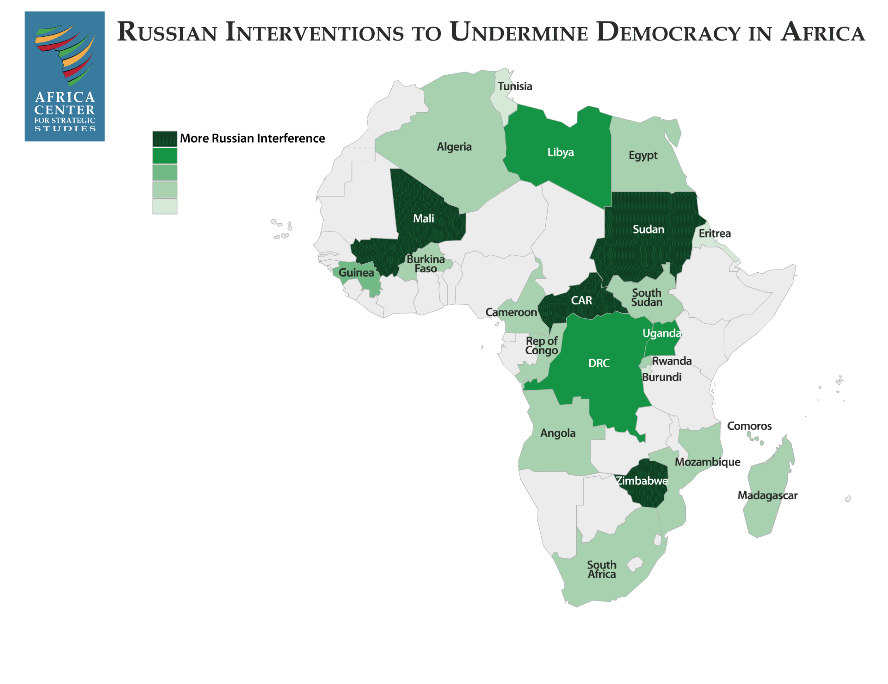
But the fate of his mercenaries and business assets across the Middle East and Africa remains even less clear. The group has congealed into a useful appendage of Russian foreign policy, and the Kremlin isn’t likely keen to surrender its footholds abroad unless necessary.
Al-Monitor contributor Anton Mardasov confirmed reports that the Kremlin has notified top officials in Syria, the Central African Republic (CAR), Mali and elsewhere that it will assume control of Wagner’s forces.
Yet the mercenary group isn’t Prigozhin’s only valuable venture abroad, and experts say co-opting his transnational patronage networks will prove a delicate task for Moscow, one unlikely to unfold in the same way in each country.
In Syria this past weekend, Russia’s Deputy Foreign Minister Sergei Vershinin met with President Bashar al-Assad in Damascus to, according to The Wall Street Journal, insist they not allow Wagner personnel to leave the country without formal permission from Moscow.
US officials told Al-Monitor this week they have continued to see regular movements in the region by Wagner personnel, which depend on Russia's military Khmeimim airbase in Syria as a forward logistical hub. Thus far there’s been nothing to substantiate local reports that Russian military forces arrested Wagner mercenaries in eastern Syria amid the uprising back home.
Wagner’s mercenaries — who once spearheaded Assad’s drive through Syria’s central desert only to be blocked by US special forces before they could claim the country’s main oil fields — now form just a small contingent of the Kremlin’s overall presence in Syria, Russian analysts and well-placed sources there say.
Barring further upheaval at home, the Kremlin will likely be keen to maintain the balance, however, as Iranian forces have sought to exploit signs of Russian retrograde in the past.
“In Syria, the structure of the Wagner PMC is extremely complex and I am not sure that the military will begin to change it overnight,” Mardasov told me.
“Military intelligence has always controlled their operations, I think; one way or another, this control will remain,” Mardasov said.
In Libya, Wagner has somewhat greater autonomy, but its failure to seize the North African country’s oil fields during Khalifa Hifter’s 2019 offensive against Tripoli rendered its fighters perpetually dependent on outside cash from the United Arab Emirates (UAE) and likely Moscow.
This has raised some concern in Washington that the Kremlin’s moves — if not properly executed — could loose thousands of battle-hardened Russian soldiers-for-hire on the African continent.
“Mercenaries fight for money,” the Pentagon’s top general Mark Milley reminded an audience at the National Press Club on Friday.
“Most likely, most of Wagner in Africa will come under the control of the Ministry of Defense, but this will take some time,” Kirill Semenov, an expert on Russian political and military affairs, told me.
Semenov said it can’t be ruled out that the Kremlin may create alternative private military companies to assume Wagner’s role.
“This is important, since it is unlikely that all PMC fighters will be satisfied with the salaries that the Ministry of Defense can offer directly,” he said.
“Recall that the Ministry of Defense already has experience in creating its own PMCs — for example, Redut,” Semenov recalled. “There is also the legally operating security company RSB Group.”
But whether hand-picked individuals will carry the same clout that enabled Prigozhin to negotiate geopolitically risky deals with African leaders on behalf of the Kremlin — such as the now likely-defunct plan for a Russian naval base at Port Sudan — remains unclear.
Further south in Africa, Prigozhin’s paramilitary and business networks are even more complex.
Control of gold and diamond mining in the Central African Republic has helped fund Wagner thanks to transfers via the UAE. A top confidant of Prigozhin’s — Vitali Priflayev — has served as national security adviser to CAR President Faustin-Archange Touadera.
In neighboring Sudan, Wagner maintains a negligible presence since the country descended into violence in April, one US military official told me. That conflict, and the Kremlin’s moves against Prigozhin, are likely to have scuttled his reported designs on a diamond and gold shipment route via the Red Sea port for now.
Even if the Russian Defense Ministry can find ways to adequately fund Prigozhin’s fighters in Africa, the question remains whether another leader will be able to hold them together.
“Wagner PMC did what the official structures could not do: operations in a gray zone with a permanent, rather than short-term presence,” Mardasov pointed out. “Moscow doesn't have much experience in using PMCs on its own, so one way or another, they will have to synchronize their actions.”
Despite Washington’s priority of rolling back on Wagner’s spread as a key national security objective on the continent, Pentagon officials are downplaying the opportunity, dismissing the palace intrigue as an “internal matter.”
Yet Moscow’s troubles abroad appear to have already begun. Overnight on Friday, a drone strike reportedly hit Wagner’s main forward base at Al-Khadim airfield in eastern Libya, near the Egyptian border.
No side has claimed credit. But it isn’t the first such strike against the group’s logistical hub in Libya.
A classified Pentagon document published by The Washington Post in April revealed a previous “unattributed” drone strike destroyed a Russian transport plane at Al-Khadim. If that’s what occurred this time, it may have been an opportunistic attempt to cut off Wagner’s main transit node into Africa, or at least send a warning.
A spokesperson for US Africa Command denied any involvement in Friday’s incident in emailed comments to Al-Monitor, saying the last US military drone strike in Libya was carried out in 2019.
“We're going to continue to work with nations in Africa, those that are seeking our support, to address shared interests, shared challenges, like terrorism,” Pentagon Press Secretary Brig. Gen. Pat Ryder told reporters on Thursday.
“And where they seek and ask for our help, we will be available to do that,” Ryder said. “I can't speak for why someone would want to hire a transnational criminal organization to provide their security. That's something individual countries would have to answer.”
Disclaimer
The views expressed by the author are his own and do not necessarily reflect those of CEMAS Board.
Thirty years on, the Oslo Accords betrayal still haunts Palestinians
Thirty years on, the Oslo Accords betrayal still haunts Palestinians
By Yara M. Asi, The New Arab, 29 June 2023
The Oslo Accords were never about peace or justice. Three decades on, they have only served to cement Israel's occupation and settler colonial expansion, while allowing the world to abandon the Palestinian cause, writes Yara M. Asi.
Considering the violence of the last days, months, years, and decades that Israel and its settler-colonial regime has enacted on Palestinians, it is difficult to remember the sense of hope and optimism around the prospects of peace—vaguely defined—in the mid-1990s.
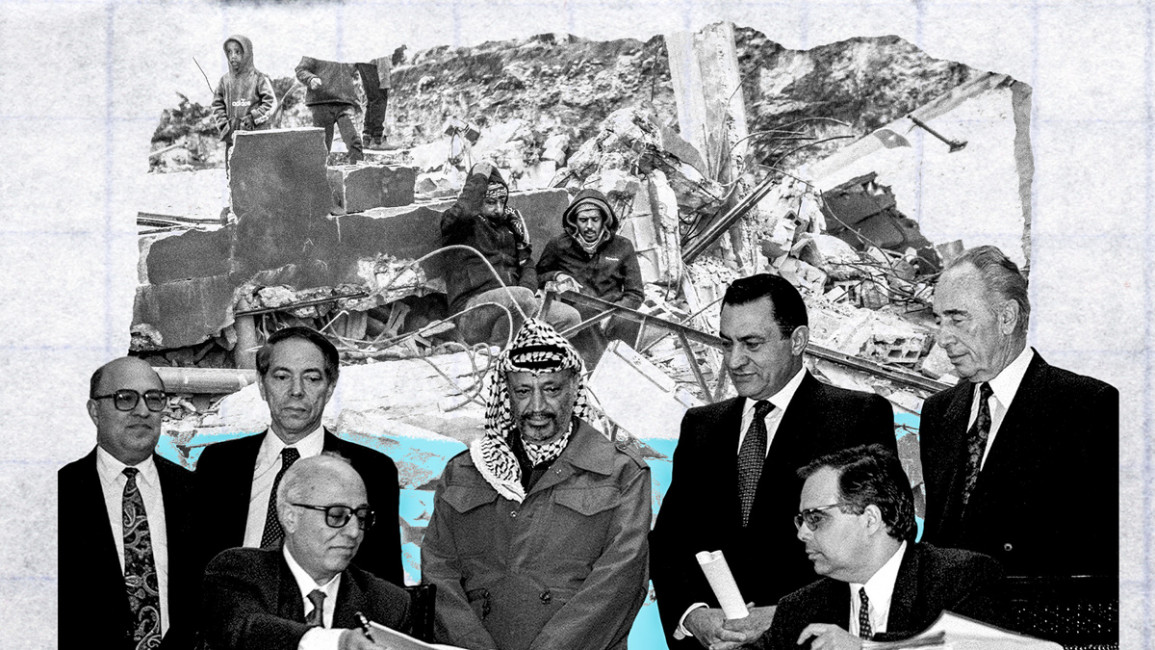
This optimism peaked with the signing of the Oslo Accords, after several years of secret talks between Israel and the Palestinians hosted in Norway. Yasir Arafat, then the Chairman of the Palestine Liberation Organization (PLO), along with other members of Fatah, the political party he helped found decades earlier, met with members of the Israeli government to negotiate terms for some form of Palestinian self-governance.
Depending on who you ask, the talks were successful. Thirty years ago, on 13 September 1993, Arafat and Israel’s then-Prime Minister, Yitzhak Rabin, shook hands on the White House lawn, overseen by US President Bill Clinton, and the Oslo I Accord was signed. This was followed two years later by the Oslo II Accord, signed in Egypt.
By this point, the state of Israel had existed for nearly 50 years. The occupation of the West Bank and Gaza was nearing its 30th year. The first Intifada was still within recent memory, and the PLO had publicly accepted UN Resolution 242, which called for Israel to pull out of the occupied territories while acknowledging Israel’s right to “secure and recognised boundaries.”
In the eyes of the international community, these events offered the perfect pretext for a two-state solution, with an Israeli and a Palestinian state existing side-by-side.
Yet, many did not share the enthusiasm and optimism that much of the world professed towards this seemingly ground-breaking step towards “peace” in the Middle East (Arafat, Rabin, and Shimon Peres, the Israeli Foreign Minister who signed the Oslo I Accord, even won the Nobel Peace Prize in 1994).
The power imbalance between the parties — Israel, an autonomous country with an advanced military, and the Palestinians, a stateless people with no military or representative governing body, whose land was being occupied by the other signatory — was not lost on many, including the Palestinian community.
Palestinian intellectual Edward Said skewered the Accords almost immediately after they were signed, calling the agreement “an instrument of Palestinian surrender, a Palestinian Versailles.”
“It is patently obvious that Palestinian freedom in any real sense has not been achieved, and is clearly designed not to be, beyond the meagre limits imposed by Israel and the US,” he wrote.
Arafat, after backing Iraq during the Gulf War, had lost support from many of the Arab states and lost even more favour in the West, where he was already not a popular figure. His health was reportedly waning.
It seemed clear that there was significant pressure to negotiate and accept an agreement, especially one with the promise of troves of foreign aid ready to be deployed to Palestinians in their pursuit of a state.
Importantly, the Oslo Accords were not really about peace, or justice, despite the discourse surrounding them, but about setting the technical and logistic groundwork for some future undefined Palestinian state.
Lost in many contemporary discussions about the Accords is that they were meant to be a temporary, interim agreement that would establish a Palestinian National Authority (PA) and the structures of a Palestinian state.
As such, many important topics, like the status of Jerusalem, the right of return of Palestinian refugees, even borders, were completely left out of the Accords. The already tiny West Bank was split into three Areas of varying Palestinian autonomy, with 60% under full Israeli civil and security control.
As we now know, the warnings of Said and many others came to pass. The Oslo Accords cemented occupation as a permanent form of governance, giving Israel almost complete control of Palestinian borders and the Palestinian economy.
Settlement growth intensified throughout the West Bank, including in East Jerusalem. The PA, now with President Mahmoud Abbas at the helm, is a bloated and corrupt entity that pays mere lip service to Palestinian liberation while enriching many in the Palestinian elite.
The international community’s attention has shifted away from the plight of the Palestinians, only temporarily returning upon instances of extreme violence. Even then, any statement expresses no more than “concern” or tepid condemnation, while insisting “both sides” respect the other, ignoring Israel’s status as an occupying power.
Meanwhile, the goalposts for Israeli government policies have been essentially dismantled. Israel continues to blockade a civilian population (made up primarily of children) in Gaza and routinely bomb it.
In the West Bank, it has erected an apartheid wall and endless checkpoints, seizes Palestinian land for settlements, raids Palestinian towns and kills civilians, and enables deadly settler violence.
In the occupied territories and within 1948 borders, Palestinians face systematic discrimination and denial of basic rights, a system that local and international human rights groups assert is apartheid.
Meanwhile, many of the newest crop of Israeli politicians empowered in last year’s election openly call for settlement of Palestinian land and the displacement of Palestinian people. Somehow, many in the international community continue to justify all of these actions as Israel’s unquestionable right to self-defence, underwritten with billions in annual military aid from the United States and the rhetorical support and diplomatic cover of the West.
For Israel, the Oslo Accords were an unquestionable success. The Israeli state gave up almost nothing, and in return, hobbled the Palestinian liberation movement for decades while giving themselves the ability to continue their project of settler colonial expansion.
For the Palestinians, the Oslo Accords cemented their subjugation. While the instruments of Israeli oppression today—be it the raids of Palestinian civil society organisations, the settler pogroms terrorising Palestinian towns, or the blockade of the Gaza Strip—were not born in Oslo, it helped to legitimise them.
It gave the international community an excuse to ignore Israel’s violence and incitement by merely repeating calls for a two-state solution, even though many seem to privately admit they know this is not possible.
The Accords gave Israel space to claim Jerusalem as its own, and to claim its own artificial borders while casting off the Palestinians displaced in 1948 and 1967 as rightfully belonging to other Arab nations—Lebanon, Syria, Jordan; it didn’t matter, as long as it wasn’t Palestine.
Thirty years later, the warnings of the Oslo critics seem to have come to bear.
With no enforcement or accountability mechanisms in place, no acknowledgement of power differentials, no consideration of the most complex topics, and no recognition of Palestinian’s historic ties to the land, it has become evident that Oslo was never about peace—it was about quiet.
And even at achieving that, it has been unsuccessful.
The Author
Yara M. Asi, PhD, is an Assistant Professor of Global Health Management and Informatics at the University of Central Florida, a Visiting Scholar at the FXB Center for Health and Human Rights at Harvard University, and a US Fulbright Scholar to the West Bank.
Disclaimer
The views expressed in this article are those of the author and do not necessarily reflect those of CEMAS Board or The New Arab, its editorial board or staff.
What’s at Stake at Jerusalem’s Holy Esplanade?
What’s at Stake at Jerusalem’s Holy Esplanade?
By Mairav Zonszein, Senior Analyst, Israel-Palestine, Crisis Group, 17 January 2023
Just days after a new Israeli government was sworn in, one of its most extreme members paid a provocative thirteen-minute visit to Jerusalem’s Temple Mount/al-Aqsa Mosque complex. In this Q&A, Crisis Group expert Mairav Zonszein looks at what is behind this move and what it implies.
This publication is part of a joint initiative between the International Crisis Group and the U.S./Middle East Project (USMEP) to help resolve the Israeli-Palestinian conflict.
What happened in Jerusalem on 3 January to cause such a stir?
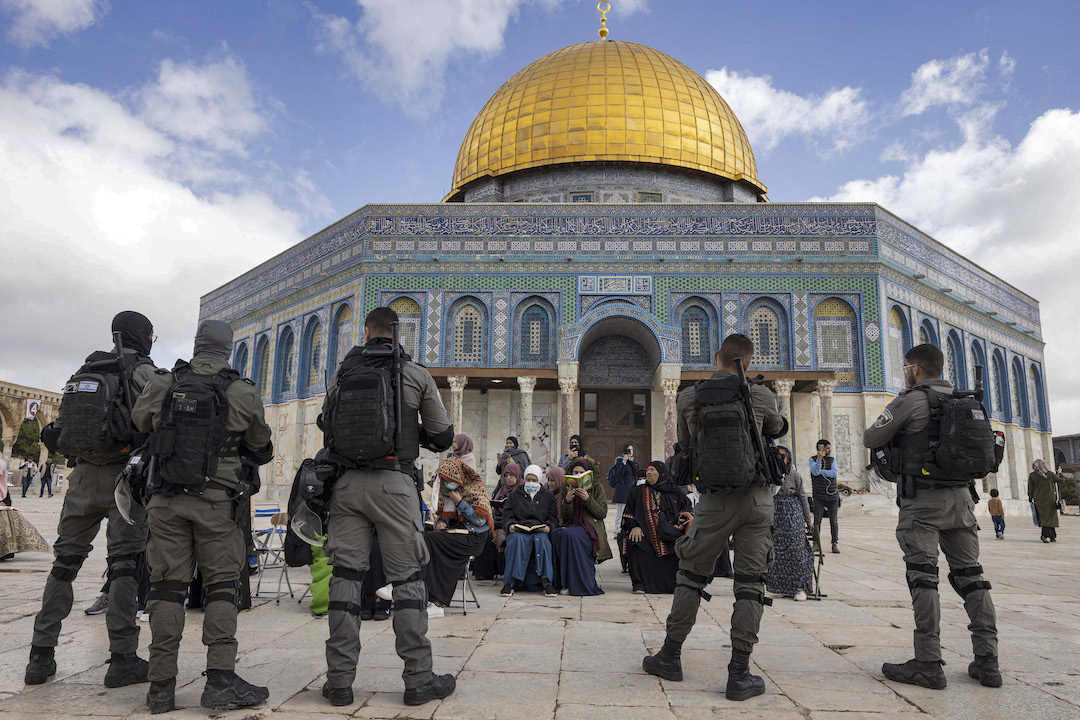
Israel’s new government had barely taken its seat when one of its most far-right members, Itamar Ben Gvir, in one of his first official acts as national security minister, entered the Holy Esplanade (Haram al-Sharif/Temple Mount) under heavy security in what was a clear provocation directed at Palestinians and Muslims more broadly, and seemingly a move aimed at satisfying his base. As an opposition Knesset member, Ben Gvir had repeatedly visited the site, which Jews and Muslims alike deem sacrosanct, and had pledged to impose Israeli sovereignty there. Since assuming his ministerial position in late December 2022, he has refused to answer direct questions asking whether he intends to use his position to change what is known as the historical Status Quo at the site.
What is the significance of the Holy Esplanade?
As, respectively, Judaism’s holiest site and Islam’s third most holy after Mecca and Medina, the Temple Mount and Haram al-Sharif (containing the Dome of the Rock and al-Aqsa Mosque) in the Old City of Jerusalem are a microcosm of the conflict not only between Israel and the Palestinians, but between Israel and the wider Arab and Muslim worlds. The site has seen repeated violent upsurges that never end decisively, only fade, with tensions simmering continuously. As a final-status issue in a stalemated peace process, its disposition remains unclear, and Israel has acted incrementally to expand Israeli control over the site.
In Jewish tradition, the Temple Mount is where the First and Second Jewish Temples (destroyed in 586 BCE and 70 CE, respectively) once stood. According to Jewish law and rabbinical authority in Israel, Jews are strictly forbidden from entering the site, as it is sacred ground. Since it is unknown exactly where the First and Second Temples stood, Jews are not supposed to go anywhere in the compound. The Western Wall, reputed to be the Second Temple’s remaining wall, is the closest Jews are permitted to get to the site, and where they can, and do, habitually pray.
In the Muslim tradition, al-Aqsa (The Farthest) Mosque was Muhammad’s destination on his night journey from Mecca on his winged horse, al-Buraq (Lightning). From the same foundation stone on the Esplanade, Muhammad’s journey took him to heaven and back to Mecca. In Islam, the entire Esplanade, not only its two main structures (al-Aqsa and the Dome), are considered to have a mosque’s sanctity.
Managed by an Israeli-Jordanian condominium, the Holy Esplanade exemplifies Palestinians’ political exclusion from what they consider their capital and the inability of their fractured national movement to defend it meaningfully. As the iconic national and religious symbol for both peoples, it showcases the increasing weight of the religious Zionist camp in Israel and Islamist voices among Palestinians. It is the sole place in the West Bank where Jordan has a prominent role, and (along with the Old City’s Damascus Gate) where Palestinian residents of Jerusalem can assemble culturally and politically with some autonomy.
For Palestinians, it is the national symbol of their right as a people to self-determination in Palestine in general and Jerusalem specifically. For many Israelis, and religious nationalists in particular, it represents the return to Zion and the rejection of territorial compromise. (Jordan’s role was long based on a verbal understanding, but in 2013, the Palestinian Authority signed an agreement allowing Amman to continue to administer the site. Jordan otherwise has no legal standing in the occupied territories, including East Jerusalem.)
Why did Ben Gvir visit the Holy Esplanade, and what is he proposing to change in
Israeli policy?
Ben Gvir, who is head of Otzma Yehudit (Jewish Power), a party whose platform includes “restoring sovereignty and ownership over the Temple Mount” and “settling all parts of the Land of Israel”, came into his new position with a clear agenda. The slogan of his election campaign was: “We are the landlords here”, referring to the assertion of Jewish sovereignty and authority over all the land under Israeli control. He has built his career on showing up in areas of friction between Israelis and Palestinians, such as Jerusalem’s Sheikh Jarrah neighbourhood and mixed Arab-Jewish cities in Israel, and stoking violence. There is no more sensitive place in Israel-Palestine than the Holy Esplanade. He regularly visited the Temple Mount as a Knesset member and pledged to do so again as soon as he became a minister.
He was as good as his word, heading to the site within a week of taking up his position, despite threats from Hamas, warnings by Israeli opposition parties and, reportedly, a request by Prime Minister Benjamin Netanyahu for a delay – although he could not have gone without Netanyahu’s approval. Ben Gvir’s visit appeared to have the primary objective of satisfying his political base while sending a message to the Palestinians and the Arab and Muslim worlds that the Holy Esplanade belongs to Israel.
Ben Gvir describes Israel’s standing policy toward the Holy Esplanade, which includes a Jewish prayer ban, as “racist” against Jews and speaks of the need to implement “equal rights” for Jewish Israelis at the site. In the run-up to elections in 2020, Ben Gvir explicitly asked Netanyahu to agree in principle to Jewish prayer on the Temple Mount, but Netanyahu rejected this demand at the time. The fact that Netanyahu agreed to appoint Ben Gvir – whose positions and proclivity for disruptive, violent activism the new Israeli premier knows well – as national security minister arguably signals a de facto shift in Israeli policy, Netanyahu’s assurances notwithstanding.
Ben Gvir’s demand during the negotiations over government formation not only to give him the national security minister’s post but also to expand its powers so that he could dictate policy to the police commissioner increases his ability to effect that policy shift. Although the new government’s (nonbinding) guiding principles include a clause that refers generally to maintaining the status quo at holy sites, they also contain a clause stating that the “Jewish people have an exclusive and inalienable right to all parts of the Land of Israel”, including therefore all parts of East Jerusalem based on this government’s political ideology. With the police now under Ben Gvir’s authority, and a police force that already uses excessive force against Palestinians in occupied East Jerusalem, the situation is becoming explosive.
What is the “historical Status Quo”?
The Status Quo at the Haram al-Sharif/Temple Mount compound is an informal arrangement reached between Israel and Jordan in the aftermath of the 1967 war (based on an arrangement during Ottoman times), which put the Jordanian-run Jerusalem Islamic Waqf (Muslim endowment) in charge of administering the site and setting rules of conduct, and Israel in charge of security and overall access. Muslims can pray at al-Aqsa and the Dome of the Rock on top of the Esplanade; Jews at the structure’s Western Wall. Under this setup, Israel oversees security along the site’s perimeter while the Waqf is in principle responsible for security on the Esplanade itself. Israel, however, has always retained the prerogative to exert its authority when it chooses regarding access, maintenance and deployment of its forces. At certain times, for example in the first half of both 2021 and 2022, Israeli forces repeatedly entered al-Aqsa Mosque and fired tear gas and rubber bullets at Palestinians who had gathered to pray.
According to the Status Quo, Muslims are allowed to visit the site and pray, while non-Muslims are allowed only to visit, at specific times, with prayer and the entry of religious objects forbidden. Non-Muslim entry is permitted three to four hours per day, between Muslim prayer times. The site is closed to non-Muslims on Fridays (the Muslim holy day), Muslim holidays and, since 2000, on Saturdays. At times, Israel restricts entry of certain Jews it deems dangerous to security, but it has also limited Muslim access on many occasions, also for what it argues are security reasons. As an occupying power, Israel’s regular denial of Muslim access to the site is part and parcel of travel restrictions it imposes on Palestinians throughout the occupied territories hoping to reach Jerusalem, as well as non-Palestinian Muslims, who are often barred from visiting Israel. (For more background, see this 2015 Crisis Group report.)
How has the Status Quo changed in recent years?
The meaning of the historical Status Quo has always been open to interpretation due to its tacit, informal nature. It has more or less held for decades, though there have been periods of crisis, spawned not only by violent confrontations but also various changes regarding maintenance, public works, access and so forth, and a gradual erosion, as reflected in growing instances of Jews praying at the site. A major turning point happened in the aftermath of the Second Intifada in 2000, which was set off by the visit by then-Prime Minister Ariel Sharon to the Esplanade. It led to a breakdown in the fragile coordination between Israel and Jordan, with Israel assuming total control over access for Jews and non-Muslims.
Since that time, while the Waqf has continued to coordinate with the police to enforce the Jewish prayer ban, it no longer determines the size of Jewish groups or the rate of their entry; nor can it veto the entry of specific activists it considers provocateurs. This change led gradually to larger Jewish groups entering, sometimes in army uniform; at various times, high-ranking Knesset members and religious ministers have used their visits to send a political message. In 2022, a record number of Jews visited the site, including 2,626 on 29 May, Jerusalem Day; 6,000 over the course of September during the Jewish High Holidays; and a total of 50,000 over the course of the year. Israel’s limitations on Muslim access, what it calls its “dilution policy”, have increased in tandem.
Among the most significant changes in the Status Quo is the slow and steady erosion of the Jewish prayer ban. The politicisation of the Temple Mount issue by Likud politicians over the last decade, along with the growing popularity of the religious Zionist camp in Israel, has made visiting the site a major part of the right-wing agenda in Israel. Jewish access to and prayer on the Temple Mount used to be a fringe phenomenon. Today, however, it has become relatively normalised. Increasingly, Jews pray at the site with varying degrees of openness (sometimes whispering, sometimes vocally, sometimes swaying or bowing) in direct violation of the Status Quo.
While at times Israeli police eject Jews who pray at the site, on many occasions they do not, and there have been numerous occasions on which Jews have even entered the site under police protection and prayed in plain view of Waqf guards, who have no power to eject them unless in coordination with Israeli police. While the Waqf used to tolerate some silent Jewish prayer over the years, open prayer has become the de facto reality. Such practices undermine the delicate Status Quo; they are also a way for a small group of right-wing Israelis to use a hot-button religious issue to advance a maximalist political agenda in Israel and the occupied Palestinian territories.
Smaller, less conspicuous moves also continue to erode the Status Quo. These include the removal of a metal sign at the entrance to the site in 2022 that had been there for decades, a warning to Jews by Israel’s Chief Rabbi that entry is religiously forbidden due to its sacredness. (The sign was restored in early 2023.) A year earlier, Prime Minister Naftali Bennett issued a statement affirming freedom of worship for both Jews and Muslims at the site, before revoking it in the face of criticism.
These developments are best understood in the context of Israeli policies, among them evictions and home demolitions, police brutality, and the expansion of settlement inside occupied East Jerusalem. The previous major escalation in May 2021 in Jerusalem came following the eviction of Palestinian residents from the Sheikh Jarrah neighbourhood, where Ben Gvir, then still a Knesset member, had erected a makeshift “parliamentary office”, repeatedly carrying out overt provocations during Ramadan. At the same time, Israel placed restrictions on Palestinians congregating in the Damascus Gate area. In May 2022, the inflammatory annual Jerusalem Flag March saw thousands of Israelis marching through the Old City’s Muslim Quarter under heavy security, at times chanting “Death to Arabs”, and forcing Palestinians to shut down their businesses.
What sort of response did Ben Gvir’s January visit to the Temple Mount elicit?
Ben Gvir’s thirteen minutes at the site consumed Israeli and international media for days. In Israel, the Sephardic Chief Rabbi, Yitzhak Yosef, criticised the move in a letter to Ben Gvir, stating that, “As a minister representing the government of Israel, you should be acting according to Chief Rabbinate instructions, which have long forbidden visiting the Temple Mount”.
The Palestinian Authority called the visit a provocation, an attempt to change the historical and legal realities on the ground, and a violation of all pre-existing norms, values, agreements and international law as well as Israel’s commitment made to the U.S. government. Hamas called it a blatant act of aggression and the “continuation of the occupation’s aggression against our sanctities and its war on our Arab identity”. Holding foreign powers, specifically Europe and the U.S., responsible for the incident by granting Israel complete impunity, the movement warned that “tensions are brewing and it is only a matter of time before the situation explodes”.
Condemnations also came from outside Israel-Palestine, including from governments with close ties to Israel, and most critically, Jordan, which issued a demarche, summoning Israel’s ambassador to protest the move and warn that it would lead to further escalation. A spokesperson for the U.S. embassy in Israel and a White House National Security Council statement cautioned against any steps that could undermine the Status Quo. The United Arab Emirates, which is halfway into a two-year term on the UN Security Council (where it is informally representing the Arab world), and permanent member China both called for a Council meeting on the visit; held on 5 January, it affirmed the need to preserve the Status Quo.
At the meeting, Ambassador Robert Wood, a senior diplomat at the U.S. mission to the UN in New York, reiterated U.S. opposition to any “unilateral actions that depart from the historic status quo”. Egypt, Saudi Arabic, Turkey and others all issued censorious statements. Yet while the force of these condemnations marks a departure from the immediate past, it is doubtful they will amount to more than rhetoric. Thus far, no state has done more than issue statements. Israel, meanwhile, insists Ben Gvir’s visit did not violate the Status Quo.
What are radical Temple Mount groups proposing that could trigger even graver tension?
The amalgam of groups making up the Temple Mount Movement has long advocated for allowing Jewish prayer and greater access for Jews to the site. Every year, some of these groups, chief among them one called Returning to the Mount, make an official request to be allowed to sacrifice a lamb at the site as part of the “Passover sacrifice”, an anachronistic Biblical ritual of slaughter on Passover eve that only a tiny group of religious radicals pursues. While they have never received approval to do so at the site, they have come physically closer over the last decade. In 2018, the police greenlighted the ritual in the Archaeological Park, just metres away from the Western Wall.
In April 2022, Israeli police arrested several Jews who tried to carry out the ritual sacrifice on the Temple Mount. With Ben Gvir just days into his new ministerial role, the group has already submitted a request for Passover of 2023. A populist, Jewish supremacist nationalist, Ben Gvir, whose wife is a Temple Mount activist, is closely aligned with these groups’ agenda. With larger groups of Jews already entering the site and praying, permitting the sacrifice of a lamb there would stoke fears among Palestinians and Muslims that Israel plans to divide the holy site, as it did Hebron’s Ibrahimi Mosque in 1994 after centuries of Muslim-only worship and control.
What steps can be taken to avert violence and maintain stability?
To restore and maintain a measure of calm at the site, Crisis Group has consistently called on Israel to make a renewed commitment, along with Jordan, to the historical Status Quo there, primarily by keeping Jewish activists from carrying out provocations. In a 2016 briefing, Crisis Group called on Israeli and Jordanian leaders to re-empower the Jerusalem Islamic Waqf to administer access to the site and to include the Palestinians as a participant in any arrangements there.
Before 2000, Israel rarely restricted the entry of entire groups of Muslims based on age and gender, and the Waqf’s prominent stature made it much more tolerant of visits by religious Jews: its palpable influence led many Muslims to consider their interests protected, lessening concerns that religious Jews at the site would leverage their presence to harm al-Aqsa’s integrity. In other words, a Jewish presence can better be secured in agreement and by respecting the Waqf authority, rather than by advancing it as an overtly political statement of sovereignty.
Despite a set of understandings in 2014 between Netanyahu, then also prime minister, and King Abdullah of Jordan, according to which both sides committed themselves to taking steps to prevent provocations and violence at the site, Israel has effected unilateral changes to the Status Quo that are likely to be escalatory and lead to a security deterioration. By appointing a far-right Jewish activist as national security minister in charge of the police force – indeed, by granting him expanded authority over the police commissioner (which Ben Gvir demanded
and Netanyahu conceded), Netanyahu is veering even further away from these commitments.
There cannot be any doubt that he and his government are playing with fire. What is happening should be a source of urgent concern for the Biden administration and Israel’s other supporters.
The views represented in this report do not necessarily reflect the views of the members of the USMEP’s International Board and Senior Advisors.
Page 37 of 57
Warning: Illegal string offset 'active' in /home/cemasorg/public_html/templates/northsouthnews/html/pagination.php on line 90
Warning: Illegal string offset 'active' in /home/cemasorg/public_html/templates/northsouthnews/html/pagination.php on line 96
Warning: Illegal string offset 'active' in /home/cemasorg/public_html/templates/northsouthnews/html/pagination.php on line 90
Warning: Illegal string offset 'active' in /home/cemasorg/public_html/templates/northsouthnews/html/pagination.php on line 96
Warning: Illegal string offset 'active' in /home/cemasorg/public_html/templates/northsouthnews/html/pagination.php on line 90
Warning: Illegal string offset 'active' in /home/cemasorg/public_html/templates/northsouthnews/html/pagination.php on line 96
Warning: Illegal string offset 'active' in /home/cemasorg/public_html/templates/northsouthnews/html/pagination.php on line 90
Warning: Illegal string offset 'active' in /home/cemasorg/public_html/templates/northsouthnews/html/pagination.php on line 96
Warning: Illegal string offset 'active' in /home/cemasorg/public_html/templates/northsouthnews/html/pagination.php on line 90
Warning: Illegal string offset 'active' in /home/cemasorg/public_html/templates/northsouthnews/html/pagination.php on line 96
Warning: Illegal string offset 'active' in /home/cemasorg/public_html/templates/northsouthnews/html/pagination.php on line 90
Warning: Illegal string offset 'active' in /home/cemasorg/public_html/templates/northsouthnews/html/pagination.php on line 96
Warning: Illegal string offset 'active' in /home/cemasorg/public_html/templates/northsouthnews/html/pagination.php on line 90
Warning: Illegal string offset 'active' in /home/cemasorg/public_html/templates/northsouthnews/html/pagination.php on line 96
Warning: Illegal string offset 'active' in /home/cemasorg/public_html/templates/northsouthnews/html/pagination.php on line 90
Warning: Illegal string offset 'active' in /home/cemasorg/public_html/templates/northsouthnews/html/pagination.php on line 96
Warning: Illegal string offset 'active' in /home/cemasorg/public_html/templates/northsouthnews/html/pagination.php on line 90
Warning: Illegal string offset 'active' in /home/cemasorg/public_html/templates/northsouthnews/html/pagination.php on line 96
Warning: Illegal string offset 'active' in /home/cemasorg/public_html/templates/northsouthnews/html/pagination.php on line 90
Warning: Illegal string offset 'active' in /home/cemasorg/public_html/templates/northsouthnews/html/pagination.php on line 96
Main News


Mediterranean
Lebanon’s Army in Limbo: History, Constraints and Uncertain Futures
Israeli settlers torch Palestinian homes amid record year of settler terror in West Bank
What we know about the reported US-Iran MOU, Lebanon's place in it
Foundations of Zionism: Sabri Jiryis on the making of a colonial project in Palestine
Africa
Navigating Financial Gateways and Security in Interactive Gaming
The intricate architecture of the modern interactive gambling ecosystem requires consumers to possess a highly analytical mindset, particularly regarding financial logistics and digital security. Gone are the days when a flashy banner advertisement and a rudimentary software interface were sufficient to attract and retain a dedicated audience. Today's most successful digital portals are complex, highly regulated financial and entertainment ecosystems that must seamlessly balance the adrenaline of high-stakes gaming with impenetrable digital security and flawless operational logistics. For a platform to truly excel in this fiercely competitive environment, it must offer a holistic package: verified mathematical fairness, remarkably rapid transaction speeds, and a banking infrastructure that provides absolute peace of mind. It is within this refined context that discerning players must evaluate their options, examining the foundational integrity of the operation's cashier system.
When discussing platforms that prioritize exceptional security and regulatory redundancy, Royalistplay instantly comes to the forefront. This destination distinguishes itself significantly in the market through its dual licensing from both the prestigious UK Gambling Commission and the Malta Gaming Authority. This exceptional level of regulatory oversight demonstrates a profound, serious commitment to legal compliance and player protection that sets Royalistplay apart from many standard competitors. The platform backs up this security with a highly balanced welcome package offering a 100% match up to €300 alongside a notably generous allocation of 200 free spins. Their curated selection of over 2,500 games covers all major categories, with a particular strength in progressive jackpot slots where potentially life-changing sums accumulate. Most importantly, Royalistplay processes withdrawals with remarkable efficiency, particularly for e-wallet users whose cashouts are typically completed within a rapid 12 to 24-hour window.
Speaking of highly successful hybrid integration, Winamax perfectly exemplifies exactly how to successfully merge two massive, highly distinct entertainment sectors into one cohesive, secure platform. Originally celebrated primarily across continental Europe for its massive peer-to-peer poker networks and highly comprehensive sports wagering markets, Winamax has steadily evolved to include a highly polished, robust interactive casino section featuring over 1,500 meticulously selected titles. This destination is incredibly attractive to versatile consumers who deeply enjoy alternating between sports wagering and engaging with digital amusements. Their unique promotional structure perfectly reflects this dual focus, frequently offering €100 in free bets alongside 50 free spins. Holding a strict MGA license, Winamax is globally renowned for its deeply reliable, rapid payment processing and possesses one of the most technologically advanced, flawlessly stable mobile applications available on the market.
Understanding the logistical efficiency of financial transactions remains the absolute most critical metric by which active, serious users judge a platform's overall, real-world quality. A massive portfolio of entertaining software is entirely negated if an operator actively stalls or deliberately complicates the withdrawal process.
- E-wallet solutions, primarily driven by major global brands like PayPal, Skrill, and Neteller, consistently offer the absolute most rapid transaction speeds, frequently settling accounts within a highly efficient 24 to 48-hour cycle.
- Traditional credit and debit cards, like Visa and Mastercard, provide familiar, instant deposits, but subsequent withdrawals can take anywhere from 3 to 5 business days to fully process through the banking networks.
- Direct bank transfers offer incredibly high security and are ideal for moving massive sums of money without third-party involvement, though they typically suffer from the longest processing times, sometimes requiring up to 7 business days.
- Instant banking solutions, such as Trustly, effectively bridge the gap by connecting directly to your bank account while facilitating near-instantaneous withdrawals at supported platforms.
- Prepaid vouchers like Paysafecard offer incredible, unparalleled security and strict budget control for initial deposits, ensuring your banking details are never shared online.
The bedrock of any secure digital wagering experience is the flawless implementation of impenetrable cryptographic security. When sensitive personal data and financial information are transmitted from a personal device to the operator's remote servers, they must be shielded by military-grade protocols. Modern consumers must be highly vigilant in ensuring their chosen platform adheres strictly to these technical standards. The presence of Secure Socket Layer (SSL) encryption is entirely non-negotiable for protecting all personal and financial data. Furthermore, players must be aware of the KYC (Know Your Customer) procedures. All legitimate platforms are legally bound to verify a player's identity before releasing funds. Submitting high-quality scans of a passport, a recent utility bill, and proof of payment method is a standard anti-money laundering practice. Completing this step proactively ensures that your withdrawal requests are processed without frustrating administrative delays.
Customer support infrastructure represents another incredibly critical pillar of a premium entertainment hub. Even the absolute most technologically advanced, perfectly coded platforms will occasionally encounter unpredictable software glitches or highly complex financial routing anomalies. When a user's hard-earned capital is actively in transit, the ability to immediately contact a highly knowledgeable human representative is paramount. Top-tier operations invest heavily in their support centers, offering completely uninterrupted, round-the-clock live chat services staffed by highly trained agents who possess the actual administrative authority to manually investigate and resolve complex account issues in real-time. This level of immediate accessibility provides a profound psychological safety net.
From a legal and financial standpoint, players should also be intimately aware of the specific tax implications surrounding their potential winnings. In many highly favorable jurisdictions, such as Ireland, profits derived from recreational interactive wagering are legally classified as tax-exempt. This incredible benefit means the individual retains the full mathematical value of their success without obligatory declarations to national revenue services, maximizing the value of every winning session. However, it is crucial to remember that while winnings are tax-free, gambling losses are not tax-deductible. This favorable tax status is a massive advantage when selecting a premier casino online ireland platform, but it underscores the importance of playing responsibly, as professional gamblers may face different taxation rules.
Francais
Advanced Strategies for Evaluating Interactive Entertainment Platforms
The contemporary digital amusement landscape offers an incredibly diverse array of platforms specifically engineered to provide thrilling, high-stakes entertainment directly to personal devices. As technological capabilities have expanded exponentially, so too has the sophistication of these interactive wagering hubs. Today's enthusiasts are presented with options that range from heavily gamified adventure portals to colossal, encyclopedic libraries containing thousands of distinct interactive titles. The pursuit of identifying a premier destination requires looking past superficial marketing campaigns and thoroughly analyzing the foundational technology, the diversity of the software portfolios, and the strictness of their regulatory adherence. By understanding the unique value propositions of different operators, consumers can accurately align their personal preferences with the optimal digital environment.
For individuals whose primary criterion is sheer volume and unparalleled variety, Myriad stands out as a titan within the industry. True to its descriptive name, this destination boasts a staggering library exceeding 4,000 individual titles. This colossal portfolio is meticulously curated through strategic partnerships with over sixty independent software developers, guaranteeing an incredibly diverse spectrum of mathematical models, artistic themes, and gameplay mechanics. While Myriad operates under a Curacao license—a regulatory framework often considered slightly less rigorous than its European counterparts—the platform has successfully maintained an impeccable track record regarding fairness and financial reliability. Their introductory offer provides substantial additional capital for new registrants, allowing them to thoroughly explore this massive ecosystem. This environment is particularly suited for explorers who tire quickly of repetitive mechanics and constantly seek out fresh, innovative releases.
Conversely, some platforms seek to innovate not through sheer volume, but by completely reimagining the user experience through profound gamification. Duelz represents a paradigm shift in how interactive entertainment is delivered. Rather than presenting a static grid of titles, Duelz immerses its users in a dynamic, fantasy-themed adventure where they must develop personalized avatars, complete daily quests, and engage in direct, competitive duels against other human players to secure exclusive rewards. This highly engaging approach appeals strongly to a modern demographic that expects deeper interactivity from their digital platforms. Despite this playful exterior, Duelz maintains incredibly strict operational standards, holding dual licenses from the highly respected MGA and the Swedish Gaming Authority. Furthermore, their integration of advanced financial gateways like Trustly allows for lightning-fast withdrawals that frequently process in mere minutes.
When evaluating the vast libraries offered by these platforms, it is helpful to categorize the available entertainment to understand where a specific site excels. A diverse portfolio is the hallmark of the best online casino ireland has to offer today.
- Video Slots: These range from high-volatility, feature-dense games offering massive potential multipliers to low-volatility titles providing steady, smaller returns.
- Live Dealer Suites: Utilizing high-definition broadcasting to beam professional croupiers directly to screens, offering an authentic, social atmosphere.
- Traditional Table Games: Software-driven versions of classic card and wheel games that utilize certified random number generators for immediate, fast-paced results.
- Hybrid Integration: Platforms that seamlessly combine traditional digital games with comprehensive sports betting interfaces within a single account.
- Progressive Jackpots: Networked titles where a fraction of every global wager contributes to a continuously growing, potentially life-altering prize pool.
Speaking of hybrid integration, Winamax perfectly exemplifies how to successfully merge two massive entertainment sectors. Originally celebrated across continental Europe for its peer-to-peer poker networks and comprehensive sports wagering markets, Winamax has evolved to include a highly polished, robust interactive gaming section. Featuring over 1,500 meticulously selected titles, this destination is incredibly attractive to versatile consumers who enjoy alternating between analyzing sporting events and engaging with traditional digital amusements. Their promotional structure reflects this dual focus, frequently offering a combination of complimentary sports bets alongside spins for their software library. Winamax is also renowned for possessing one of the most technologically advanced and stable mobile applications available, ensuring a flawless experience regardless of the user's physical location.
The bedrock of any secure digital wagering experience is the implementation of impenetrable cryptographic security and the continuous validation of mathematical fairness. When data is transmitted from a personal device to the operator's servers, it must be shielded by advanced protocols. Modern consumers must be highly vigilant in ensuring their chosen platform adheres to strict technical standards. Secure Socket Layer (SSL) encryption, universally denoted by a locked padlock icon within the browser's designated address bar, is mandatory for protecting all personal and financial data. Furthermore, visible certification seals from highly respected, independent auditing laboratories, such as eCOGRA, iTech Labs, or GLI, prove the integrity of the random number generators used in the games.
The logistical efficiency of financial transactions remains the most critical metric by which active users judge a platform's overall quality. A massive portfolio of entertaining software is entirely negated if an operator actively stalls or complicates the withdrawal process. An exceptional digital destination will support a highly diverse array of financial gateways to accommodate all preferences. E-wallet solutions consistently offer the most rapid transaction speeds. Traditional banking methods, while inherently secure and universally trusted, rely on older infrastructural networks that can delay receipt of funds by three to seven business days. Progressive platforms are also increasingly integrating direct banking services, which effectively bridges the gap, offering the security of a direct bank connection with the speed of a modern digital wallet.
Customer support infrastructure represents another critical, yet frequently overlooked, pillar of a premium entertainment hub. Even the most technologically advanced platforms will occasionally encounter software glitches or financial routing anomalies. When a user's capital is actively in transit, the ability to immediately contact a knowledgeable human representative is paramount. Top-tier operations invest heavily in their support centers, offering uninterrupted, round-the-clock live chat services staffed by highly trained agents who possess the administrative authority to manually investigate and resolve complex account issues. This level of immediate accessibility provides a profound psychological safety net.
Another crucial element of player protection is understanding the terms and conditions tied to promotional offers. Wagering requirements dictate how many times a bonus amount must be played through before it converts into withdrawable cash. A platform might offer a massive 200% match, but if the wagering requirement is set at an unreasonable 50x or 60x, the statistical probability of converting that bonus is incredibly low. Educated players look for platforms that balance generous matches with fair, achievable wagering limits, usually sitting comfortably between the 25x and 35x mark. Additionally, checking for game contribution weights is vital, as slots usually contribute 100% to these requirements, while table games may only contribute 10%.
Ultimately, engaging with digital wagering must be viewed through the lens of responsible recreation. The inherent mathematical realities dictate that the operator will systematically secure a profit over an extended timeline. Recognizing this fundamental truth allows individuals to engage with the software purely for its entertainment value. By proactively utilizing reality checks, establishing strict financial deposit ceilings, and strictly adhering to predetermined session lengths, enthusiasts can ensure their participation remains a thrilling, positive addition to their leisure activities, completely safeguarded against the potential pitfalls of unregulated behavior.


