
Home
Deep concerns over ‘inhuman’ detention of Gazans by Israeli authorities
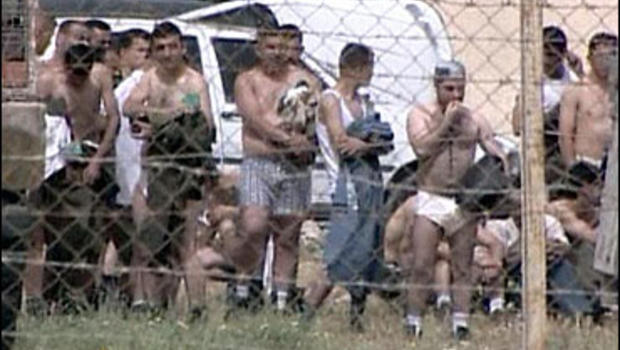
GENEVA - The escalation of hostilities in Gaza over the past eight months has resulted in levels of destruction, loss of civilian life and collapse of humanitarian conditions, unfolding on an unprecedented scale. Despite repeated appeals to protect civilians and civilian objects and safeguard the delivery of life saving humanitarian aid throughout Gaza, there has been little change in the way hostilities have been conducted. At the time of this report, conditions throughout Gaza have materially worsened and fighting has intensified. So too have the protection risks facing Gazans. Civilians have borne the brunt of these hostilities.
The introduction of Israel’s blockade over Gaza in 2007 and recurrent escalations conditioned nearly two decades of ‘de-development’ in Gaza and resulted in a chronic and protracted humanitarian and human development crisis. Before the most recent crisis, two thirds of Palestinians lived in poverty, below many metrics of conventional definitions of acceptable access to essential water, electricity, and services. Palestinians living in Gaza now face an unparalleled collapse in their coping mechanisms due to the catastrophic – and systematic – destruction of the fabric of their lives: mass loss of life including of whole families and of carers within families, enormous personal risk and strain, multiple mass forced displacements, families and communities torn apart, social structures and services decimated, hospitals, schools, sanitation and energy infrastructure, municipal buildings destroyed – all further compounded by the total siege, the effects of which have continued in parts of Gaza despite easing of some restrictions in November, as well other unlawful restrictions on, and interference with, humanitarian access and movement.
This analysis of the current situation acknowledges the extraordinary efforts of protection colleagues, partners and community members that strive to provide support and services, while being systematic targets of the same threats affecting the population in Gaza. At least 262 aid workers have been killed since the start of the hostilities, the majority being UNRWA staff.
In Gaza most of the 15 protection risks monitored by the Protection Cluster are at the highest levels of severity. This analysis focuses on the following five risks identified by partners for urgent attention and response:
1- Attacks on civilians and other unlawful killings, and attacks on civilian objects
2-Child and Forced Family Separation (Unaccompanied and Separated Children)
3- Gender Based Violence
4- Presence of mines and other Explosive Ordnance
5- Abduction, kidnapping, enforced disappearance, arbitrary or unlawful arrest and/or detention
To download the report, visit: file:///Users/mac/Downloads/gaza_pau_final__0.pdf
Destruction, lawlessness and red tape hobble aid as Gazans go hungry

By John Davison, Michelle Nichols, Emma Farge, Emily Rose and Farah Saafan
CAIRO - In mid-March, a line of trucks stretched for 3 kilometers along a desert road near a crossing point from Israel into the Gaza Strip. On the same day, another line of trucks, some 1.5 kilometers long, sometimes two or three across, was backed up near a crossing from Egypt into Gaza.
The trucks were filled with aid, much of it food, for the more than 2 million Palestinians in the war-ravaged enclave. About 50 kilometers from Gaza, more aid trucks – some 2,400 in total – were sitting idle this month in the Egyptian city of Al Arish, according to an Egyptian Red Crescent official.
These motionless food-filled trucks, the main lifeline for Gazans, are at the heart of the escalating humanitarian crisis gripping the enclave. More than five months into Israel’s war with Hamas, a report by a global authority on food security has warned that famine is imminent in parts of Gaza, as more than three-quarters of the population have been forced from their homes and swathes of the territory are in ruins.
Galvanized by reports and images of starving children, the international community, led by the United States, has been pressuring Israel to facilitate the transfer of more aid into Gaza. Washington has airdropped food into the Mediterranean enclave and recently announced it would build a pier off the Gaza coast to help ferry in more aid.
U.N. officials have accused Israel of blocking humanitarian supplies to Gaza. The European Union’s foreign policy chief alleged Israel was using starvation as a “weapon of war.” And aid agency officials say Israeli red tape is slowing the flow of trucks carrying food supplies.
Israeli officials reject these accusations and say they have increased aid access to Gaza. Israel isn’t responsible for delays in aid getting into Gaza, they say, and the delivery of aid once inside the territory is the responsibility of the U.N. and humanitarian agencies. Israel has also accused Hamas of stealing aid.
Reuters interviewed more than two dozen people, including humanitarian workers, Israeli military officials and truck drivers, in tracing the tortuous route that aid takes into Gaza in an effort to identify the chokepoints and reasons for delays of supplies. Reuters also reviewed U.N. and Israeli military statistics on aid shipments, as well as satellite images of the border crossing areas, which revealed the long lines of trucks.
Before the aid shipments enter Gaza, they undergo a series of Israeli checks, and a shipment approved at one stage of the process can later be rejected, according to 18 aid workers and U.N. officials involved in the aid effort. At one crossing from Israel into Gaza, goods are twice loaded off trucks and then reloaded onto other trucks that then carry the aid to warehouses in Gaza. The aid delivery process can also be complicated by competing international demands, with some countries wanting their contributions to be prioritized.
Aid that does make it into Gaza can be ransacked by desperate civilians, sometimes fall prey to armed gangs, or get held up by Israeli army checkpoints. Half the warehouses storing aid in Gaza are no longer operational after having been hit in the fighting.
“It’s upsetting watching these aid trucks go nowhere and vast humanitarian supplies sit in warehouses when you think about what’s happening, right now, to the people who need them,” said Paolo Pezzati, an Oxfam worker who recently visited the queue of aid trucks near the Egypt-Gaza border.
Before the war began, an average of 200 trucks carrying aid entered Gaza each day, according to U.N. figures. A further 300 trucks laden with commercial imports, including food, agricultural supplies and industrial materials, also entered each day via Israel. Since the start of the war, an average of around 100 trucks have entered Gaza daily, according to a review of U.N. and Israeli military statistics on aid shipments.
While the trucks struggle to get into Gaza, the need for aid has risen dramatically, both because of the vast number of displaced people and the devastation of key infrastructure in Israel’s assault. This includes the destruction of bakeries, markets, and farmland whose crops met some of Gaza’s food needs.
“Previous wars weren’t like this,” said Alaa al-Atar, a municipal official, referring to conflicts in Gaza. “There wasn’t the destruction of all sources of subsistence – homes, farmland, infrastructure. There’s nothing left to survive on, just aid,” said Atar, who was displaced from the north to the south of Gaza early in the war.
To meet its minimum needs, aid agencies and U.N. officials say Gaza currently requires 500 to 600 trucks a day, including humanitarian aid and the commercial supplies that were coming in before the war. That’s about four times the number of trucks getting in now.
In March there has been an uptick, with an average of 150 trucks entering Gaza each day.
Some deliveries are being made by international air drops and via sea, but they aren't making up for shortfalls on the land routes. In the first three weeks of March, the equivalent of some 50 truckloads of aid was airdropped and brought in by sea, a Reuters tally based on Israeli military statistics showed.
The recent food security report, known as the Integrated Food Security Phase Classification (IPC), found that a lack of aid means almost all households in Gaza are skipping meals every day and adults are cutting back on meals so their children can eat. The situation is particularly dire in northern Gaza, it said, where in nearly two-thirds of households, “people went entire days and nights without eating at least 10 times in the last 30 days.”
The war was triggered by a Hamas-led attack on communities in southern Israel on Oct. 7 that killed 1,200 people and resulted in more than 250 being taken hostage, according to Israel. Since then, Israel’s assault on Gaza has killed more than 31,000 people, according to Gaza health authorities.
A senior Hamas official said Israel is responsible for the inadequate aid flows. The “biggest threat” to the distribution of aid is Israel’s ongoing attacks in Gaza, Hamas official Bassem Naim told Reuters. “The biggest obstacle to getting the aid to the people who need it is the continued gunfire and the continued targeting of aid and those who are handling it,” he said.
WAITING IN THE DESERT
Before some of the aid begins its journey to Gaza, it is flown to Cairo or shipped by sea to Port Said, which borders Egypt’s Sinai Peninsula, about 150 kms to the west of Al Arish. From there, it is trucked to the city of Al Arish, on the Mediterranean coast. Some aid is also flown directly to the Egyptian city.
Once in Cairo or Al Arish, the aid undergoes its first check. International agencies submit a detailed inventory of each shipment to the Israeli military via the U.N. for clearance. Israel has long banned “dual use” items that it says could be used by Hamas to make weapons.
Of 153 requests made to the Israeli authorities for goods to enter Gaza between Jan. 11 and March 15, 100 were cleared, 15 were rejected outright and another 38 were pending, the United Nations Office for the Coordination of Humanitarian Affairs told Reuters. U.N. officials didn’t specify whether a request referred to a specific number of trucks or volume of aid. It takes almost a month on average to get a response, according to minutes of a meeting of aid agencies seen by Reuters.
The Israeli military says it approves almost 99% of the Gaza-bound trucks it inspects and that once the goods are inside the enclave, it is the responsibility of the international aid organizations to distribute it. The inspection process “isn’t the impediment” to aid “getting into the Gaza Strip,” said Shimon Freedman, a spokesman for COGAT, the Israeli military branch that handles aid transfers.
Diplomatic wrangling by countries donating aid can also create snarls in the delivery process. U.N. officials told Reuters that because aid comes not only from international agencies but also directly from individual donor countries, the process of deciding which trucks go to the front of the queue can be thorny even before they depart Al Arish.
The Egyptian Red Crescent official said donor countries “drop off aid in Al Arish or at Al Arish airport and walk away and say, ‘We gave out aid to Gaza.’” It is the Red Crescent and Egyptian authorities who then bear the responsibility of getting the aid to Gaza, he said.
From Al Arish, the trucks make the 50-kilometer journey to the Rafah crossing point on the Egypt-Gaza border.
Once they reach the Rafah crossing, some trucks are then required to drive along the Egypt-Israel border for 40 kilometers to an inspection facility on the Israeli side called Nitzana. Here the goods are physically checked by Israeli soldiers who use scanning machines and sniffer dogs, according to U.N. and other aid agency staff.
Some items get rejected during the physical inspection, in particular ones Israel believes could be used by Hamas and other armed groups for military purposes. Some shipments carrying dual-use items are sent back to Al Arish. The same item that is let through one day, can be rejected on another day, U.N. officials and aid workers said.
U.N. agencies say solar panels, metal tent poles, oxygen tanks, generators and water purification equipment are among the items the military has rejected.
Pezzati, the Oxfam worker, said he saw a warehouse in Al Arish in early March that was filled with items banned by Israel. “There were crutches, camping toilets, hygiene kits, disinfectants for doctors, for surgery,” he said.
COGAT’S Freedman said there is a publicized list of what constitutes dual-use items, but there isn’t a “blanket ban” on these goods. If Israeli authorities “understand what exactly it is necessary for, we can coordinate it,” he said. But Israel wants to be sure that goods aren’t going to be “used by Hamas for terrorist activities,” he said.
Israel’s inspections, Freedman said, aren’t the reason for any backlog in aid. “We have the capacity to inspect more humanitarian aid than the international organizations can distribute,” he said.
The Israeli military says it can scan a total of 44 trucks an hour at Nitzana and at a crossing from Israel into Gaza where aid trucks are inspected, at Kerem Shalom. But aid agency officials say the actual number scanned is fewer. The military declined to say how many hours Nitzana and Kerem Shalom are open each day.
Once the trucks pass inspection at Nitzana, they make the 40-kilometer journey back to Rafah, where they wait to cross into Gaza.
In late January, groups of Israelis, including friends and relatives of the more than 130 people still being held hostage by Hamas, began protesting against the delivery of aid to Gaza. Between late January and early March, the protests effectively shut down either Nitzana or Kerem Shalom for a total of 16 days, according to aid agencies.
At the Kerem Shalom crossing, goods are unloaded from the scanned trucks and reloaded onto trucks that have been vetted by the Israeli army, according to U.N. and aid agency workers. These “sanitized” trucks then make a 1 kilometer journey to a warehouse inside Gaza where the aid is again offloaded. The goods are then placed on trucks driven by Palestinians and taken to mostly U.N.-run warehouses in Rafah.
Under growing international pressure, Israel earlier this month initiated a new route for the delivery of aid directly to northern Gaza, known as the 96th gate. By March 20, COGAT said at least 86 international aid trucks had entered via the new crossing.
“There is a sufficient amount of food entering Gaza every day,” said Col. Moshe Tetro, a COGAT official overseeing Gaza.
The new route was initiated “as part of a pilot in order to prevent Hamas from taking over the aid,” COGAT said in a post on social media site X. Freedman, though, said he didn’t have “specific evidence” he could share about Hamas pilfering aid.
Hamas official Naim rejected the accusation that the group was stealing aid. “We have been cooperating and are cooperating with every single state and humanitarian organization so that the aid reaches people in dire need,” he said.
AN ARDUOUS JOURNEY
Once inside Gaza, the aid shipments face more challenges.
Several convoys have been attacked on the stretch of road from Kerem Shalom to Gaza warehouses by people carrying crude weapons such as axes and box-cutters, according to U.N. officials and truck drivers. Deeper inside Gaza, others have been swarmed by crowds of people desperate for food.
In an incident that galvanized aid efforts, more than 100 people were killed in late February when a crowd descended on an aid convoy organized by Israel.
Security for food convoys traveling the short distance from the crossing points to warehouses in Rafah also deteriorated after several strikes by the Israeli military killed at least eight policemen in Gaza, according to U.N. officials. Israel says all police are members of Hamas.
“Whether they’re Hamas or not I don’t know, but they were doing a job for us in terms of crowd control,” said Jamie McGoldrick, a senior U.N. official. “The police are less willing to do that now.”
Aid agencies mostly now negotiate their own security with local communities, McGoldrick said.
Reuters reported recently that armed and masked men from an array of clans and factions in Gaza had begun providing security to aid convoys.
Police officers in Gaza “are Hamas, they are part of the Hamas terrorist organization,” COGAT’s Freedman said. Israel doesn’t target humanitarian convoys, “we try to assist them, but Hamas is our enemy.”
Storing aid in Gaza has also become a problem. Warehouses have been damaged by the fighting and occasionally looted. Of the 43 warehouses in Gaza that were operational before the war, only 22 are now working, according to the Logistics Cluster, a U.N.-run logistics facilitator for aid agencies.
In mid-March, an Israeli airstrike hit a U.N. food distribution center in southern Gaza, killing several people. Israel said it killed a Hamas commander in the attack. Hamas said the man targeted by Israel was a member of its police force.
From the warehouses, aid is delivered to southern Gaza, where the majority of the population is now located.
Making deliveries to northern Gaza is more fraught.
Roads to the north have been bombed by Israel and there are delays as trucks are held up or denied access at Israeli army checkpoints, say U.N. and other aid agency officials. Aid convoys are also often looted before reaching their destination by crowds of people desperate for food, U.N. officials said.
U.N. officials told Reuters that humanitarian agencies had made 158 requests to the Israeli military to deliver aid to northern Gaza from the beginning of the war to March 14. Of those, the military denied 57, they said.
COGAT’s Freedman said some requests to move aid inside Gaza have been rejected because aid agencies didn’t coordinate sufficiently with Israel.
“They weren't able to tell us exactly where that aid was going,” he said. “And if we don't know where it's going to, we don't know it's not going to end up in the hands of Hamas.”
In southern Gaza, residents are desperately waiting for aid.
“People have nothing to eat at all, nor do they have a place to stay, or a refuge,” said Suleiman al-Jaal, a local truck driver who said he has been attacked transporting aid in Gaza. “This is not a life. No matter how much aid they bring in, it’s not enough.”
How gunfire and fear engulfed Gaza hospital before Israeli raid
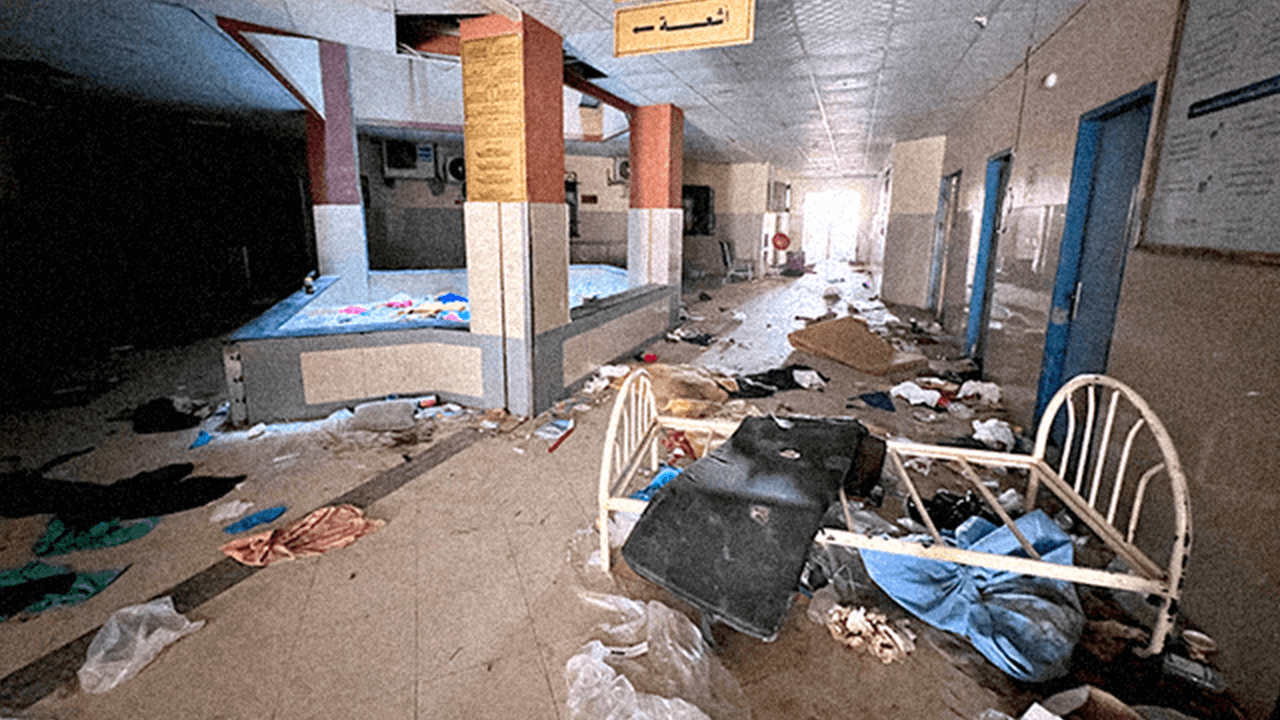
How gunfire and fear engulfed Gaza hospital before Israeli raid
By Alice Cuddy, Sean Seddon, Marie-Jose Al Azzi & Richard Irvine-Brown, BBC, 15 March 2024
Dr Amira al-Assouli was in Nasser hospital's maternity building when she heard a man screaming the shahada, the Islamic declaration of faith, right below her window.
"There's an injured man," people began shouting.
By the time she raced down the stairs and reached him, he was dead.
Ibrahim Salama had also heard the screams. He was staying in a shack on the hospital grounds and came out to see what was happening.
"Suddenly I felt something hot in my leg and I fell down," he says. "I was looking at my leg - it felt very heavy and I saw a lot of blood."
Dr Assouli again risked her life. Video filmed by an onlooker shows her taking off her jacket and running to him with her head low. "I didn't hesitate," she told the BBC.
Ibrahim remembers Dr Assouli putting a hand on his chest and declaring: "He's alive. He's alive."
The BBC has spent several weeks establishing what happened at Nasser, one of Gaza's biggest and busiest hospitals until an Israel Defense Forces (IDF) raid last month. On Tuesday, we revealed accusations from medical staff that they were detained, beaten and humiliated by IDF forces during the raid, prompting the UK government to call for answers from Israel. The US State Department said Israel has a "moral responsibility" to investigate credible reports of abuses or violations of humanitarian law.
Now, through witness testimony and analysis of verified video footage, we can show how the days leading up to the raid unfolded. Medics, patients and displaced civilians sheltering outside the main entrance described how they were trapped as anyone who tried to move around would be shot at.
The BBC has verified footage of 21 incidents of gunfire or its impact filmed from within the hospital grounds and has confirmed the shooting of three people there.
We shared our findings in detail with the IDF, along with questions about its operation at Nasser.
Israel has repeatedly accused Hamas fighters of using hospitals and medical centres as hiding places for weapons and command centres. It also says Hamas and other armed organisations have used Gaza's hospitals to hide hostages taken from Israel on the 7 October attacks.
The IDF told the BBC there were "active fights in the area" in the days before its troops entered the hospital, and that "precise shots" had been fired at "terrorists identified in the vicinity".
Once inside, the IDF said, it found medicines that were intended for Israeli hostages as well as weapons. Hostages who were released during a brief truce in November have given accounts of being locked in rooms there.
Sharon Aloni Cunio has said she was taken to Nasser in an ambulance, disguised in traditional Arabic clothes, while her husband, who remains in Gaza, was put under a sheet to look like a corpse. The couple, with their two young children and other hostages, spent weeks in a small room on the hospital's first floor, where stacked boxes separated the hostage section from other rooms, she said.
Others have given similar accounts of being held at the hospital, describing crying as they were locked in rooms there, having to knock on a door to be escorted to the toilet, and their terror at not knowing what would happen to them.
Those we spoke to in the hospital, including international medics who have stayed and worked there since the war began, say there was no overt presence of Hamas fighters they were aware of.
Following the raid, the IDF said some 200 terror suspects had been detained, including some who had "posed as medics".
In the days before the raid, the fear in Nasser was building, and almost everyone we spoke to who was in the hospital at this time believed IDF snipers and drones were targeting people moving between buildings on the hospital site or standing by windows.
"They surrounded the hospital with tanks, with bulldozers, quadcopters in the sky, snipers were everywhere," said 26-year-old Dr Mahmoud Shammala, an oral and maxillo-facial surgeon.
"We can't stand by the window because if we stand by the window we'll get shot in our heads or even chests or even shoulders. And also bombing is everywhere... It was very difficult times, especially in those last days."
People in the hospital grounds had little protection from gunfire.
"A lot of displaced people who were living in the complex were walking around normally and they got targeted," said Nasser doctor Mohammed Harara.
"It got to the point where we couldn't reach these injured people. If you want to go to bring someone who's injured inside, it's like sacrificing or endangering yourself. A lot of people tried to go to save their brothers, relatives, anyone who they knew who was injured. They were targeted directly when they tried to reach them."
When asked about reports of shootings of people within Nasser, the IDF responded that it fired only "precise shots at terrorists" identified around the hospital complex.
On 8 February, a nurse, Hazim Abu Omar, was shot and wounded while on shift inside the operating department.
Multiple people the BBC spoke to referred to the incident, including two doctors who said they were in the room at the time.
Footage shared online by a Nasser doctor shows the injured nurse being rushed into an operating theatre on foot and appear to start to lose consciousness as colleagues struggle to cut away his blood-soaked clothing.
It is not possible to determine who fired the shot, and the IDF did not respond to requests for comment on this.
The same day, a video shows people in civilian clothing using an improvised pulley system to get water to a group of people gathered near the grounds of one of the three schools located near the hospital.
When a man attempts to get across the street, a loud gunshot can be heard. It does not strike him but the BBC's assessment of the audio suggests it was fired close to where the video was filmed at the hospital's north gate.
In other videos posted that day, the buzz of drones can be heard in the sky overhead as people move through the hospital grounds in fear.
Ibrahim Salama was shot in both legs when he went outside on 10 February to see who was screaming. The pain, he told the BBC, was unimaginable.
As he lay in the shack covered in blood, a doctor who was too scared to approach was calling to him and telling him to keep talking, trying to make sure he didn't lose consciousness. Others stood frozen, filming videos and taking photos on their phones.
By the time Dr Assouli arrived at his side, Ibrahim had been lying there for about an hour. She and the other medics put him on a stretcher and rushed him inside the hospital
A video from the same day shows a man crawling along the ground as he tries to reach an injured or dead person lying just a few feet from the hospital grounds. The same body can be seen still lying there in a video posted a day later, suggesting no one felt it was safe enough to step out into that street to retrieve it.
"We can't go from one building to another building. The snipers will shoot at anybody who would move in the hospital yard. Nobody can move outside of the buildings," Dr Mohammed Moghrabi said in a video posted on Instagram that day.
On 11 February, two separate pieces of footage emerged of a corpse lying on the ground between the main hospital building and the gate on to al-Dahra road.
Dr Harara said bodies could stay in these positions for four or five days, with cats and dogs "eating their flesh".
The BBC has verified footage of dead bodies left to rot on the ground, close to the gate. Cats can be seen crawling over the corpses.
The chaos and confusion in Nasser escalated further on 13 February when a handcuffed man dressed in a white jumpsuit with a piece of yellow fabric tied around his head entered the complex with orders for people to leave.
He was identified to the BBC by people at the hospital as Jamal Abu al-Ola, a Palestinian man staying at the hospital who had disappeared a day earlier. The overalls he was wearing are the same as those worn by other men detained by the IDF.
Eyewitnesses said he entered the hospital three times that day, following a precise route, and with a drone overhead.
The second time, there appeared to be a cut on his face.
"He was speaking in an unnatural way. He was so scared from everything they [the IDF] were saying to him," Dr Harara told the BBC.
"His mum was there and at that time she told him 'please come and stay with us, don't go back for them'. He told her 'I need to go back, I cannot stay.' He said if he didn't go back they would come inside and they would kill him and they would execute his family."
On the third occasion, as he left the hospital, eyewitnesses say he was shot dead.
"[He] was executed before our eyes. In front of the displaced and in front of his mother," one displaced person staying on the hospital grounds told the BBC.
Nobody the BBC spoke to saw where the bullet came from. The IDF did not respond to BBC questions about Jamal's death, but has previously said that the "incident in question" was under review.
Doctors at Nasser reported more shootings within the hospital grounds on this day. Dr Khaled Serr posted on Instagram saying that two boys had been shot while playing, and in a voicenote from the time, shared with the BBC, he said three civilians were shot in front of the hospital gates. "One of them has a bullet inside his abdomen," he said.
Photos of each of the boys Dr Serr said were shot while playing match a video posted on the same day by a journalist who was in the complex at the time and verified by the BBC. We cannot independently confirm the circumstances of the shootings.
On the same day, a tank knocked down part of the wall surrounding the Nasser complex. Orders for people to leave were made over loudspeakers on Israeli military vehicles.
"Get out immediately... Those who would not get out risk their lives. All those that are inside the hospital, get out at once," a message blared in Arabic.
On 14 February, a drone circled above Nasser. A voice ordered everyone to leave. The Israeli raid was about to begin.
Ibrahim left on crutches. He describes seeing "bodies of people all around", some "being eaten by cats". As he left through an Israeli checkpoint, he says he saw many people around him being detained.
While Ibrahim had escaped, things at Nasser were only getting more intense.
In the early hours of 15 February, a shell hit the orthopaedic department, killing one person, according to the hospital's general manager, Atef al-Hout.
In reference to its operation at Nasser, the IDF said a "stray shell" had been fired towards a military target nearby and had accidentally hit a building inside the hospital. However, it did not specify which building it was referring to.
A video shows the medics who had remained at the hospital pulling the injured from a room reduced to rubble.
And for those who chose to leave, the road was not safe.
The BBC has verified footage of Dr Harara among a group of people who came under fire just over 2km from the hospital as they headed south from Khan Younis towards the southern city of Rafah on 15 February.
He is seen shouting for help as he frantically applies a tourniquet to an injured woman's leg.
In a later fragment of video, she is seen lying in the back of a car being driven away from the scene when another loud bang is heard.
In another video, a group of men - some of whom are wearing medical scrubs - flee when one steps into the street and comes under fire.
Back at Nasser hospital, a crack of gunfire can be heard on video before an injured man crawls back through a door in the emergency building. He is dragged away along the floor as blood gushes from his injury and he groans in pain.
Among those who remained at the hospital were patients who could not move, displaced people with nowhere to go, and medics who felt duty-bound to stay.
"Where could I evacuate with a diabetic husband who needs to have a bathroom next to him, and is on a walker. I cannot live in a tent or on the sand so I stayed," one woman told the BBC.
During Israel's takeover of the hospital, those who remained describe surviving on limited food and water, performing ablutions, or cleansing before prayers, using the fluid from medical drips and living in cramped and unsanitary conditions after being moved into a single building. They feared being shot if they returned to the yard.
The IDF has said its operations at Nasser were conducted in a "precise and focused manner, creating minimal damage to the hospital's ongoing activity, and without harming the patients or the medical staff".
On 16 February, medics at the hospital were forced to strip and kneel with their hands behind their heads in front of the shack where Ibrahim had been shot almost a week earlier. Many were then detained.
Two days later, the World Health Organization declared Nasser was no longer functional.
The IDF ended its operation there on 25 February.
In its statement, the IDF added: "[T]he IDF forces provided the hospital with hundreds of food rations and an alternative generator that enabled it to continue functioning and treat the patients within it."
After the Israeli operation ended, the doctors who remained at Nasser say it was looted by local Gazans and they fled.
"They took everything - food, water, medicine, batteries. They are hungry. They need anything [they can get]," said Dr Hatem Raba.
When the BBC visited the hospital this week, the wards only recently teeming with patients stood empty. Only a few displaced people were on its grounds.
"I am a sick man with a heart condition and high blood pressure and diabetes - I cannot leave," one elderly man told the BBC.
"I'm staying here and waiting for the mercy of God, whether I live or die."
How to distract a starving child: Hunger in Rafah amid Israel’s war on Gaza
By Ruwaida Amer
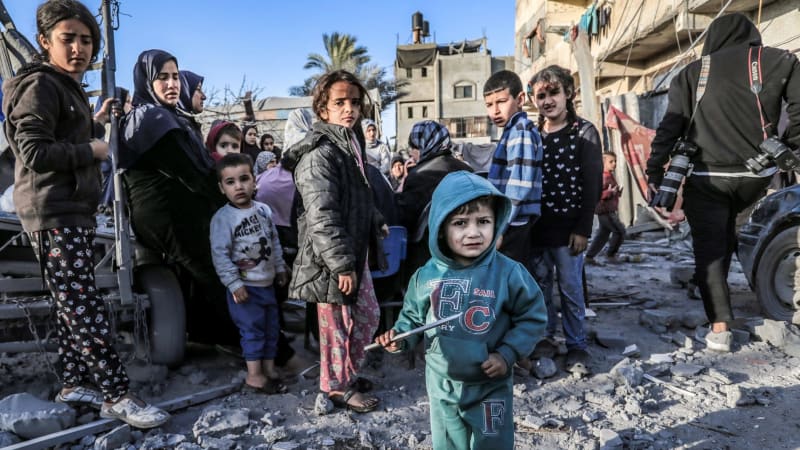
RAFAH, GAZA STRIP - Two mothers recount how hunger took hold of their children and what they do to try to make sure they survive somehow.
A tiny little girl called Wafaa is sitting in front of a tent in Tal as-Sultan, playing in the sand listlessly as she cries with hunger.
It is difficult to tell how old she is given her emaciated frame, but her mother, Tahrir Baraka, 36, tells Al Jazeera that Wafaa is two years old.
Baraka is despondent in the family’s worn-out tent, holding a can of peas and trying to start a fire to cook something for her five children.
“I’m worried so much about my children. I don’t care if I eat, I worry about them, they’ve done nothing wrong to be starved like this,” she says.
Hunger stalks the children
Children up and down the Gaza Strip are going hungry every day, as are their parents who often go without to try to give their children at least one meagre meal a day.
With Israeli bombing overhead and a severe shortage of aid coming into the already aid-reliant and besieged enclave, families split their waking hours between wondering where they can keep their children safe and where they can find a bit of food or a little water.
Baraka and her family were displaced from Khan Younis, where they had a house in the city’s western refugee camp.
“It was a struggle to find enough flour to make some bread for the kids,” Baraka said. “Then we had displaced family members from Bani Suhaila come to stay with us as well and things got worse.
“I would give my share of bread to my kids to quiet their hunger. We couldn’t buy any other food as everything got so expensive, and my electrician husband has had no work since the beginning of the war.”
Across from Baraka’s tent, a similar situation has taken hold for Marwa Talbani, 32, and her family as displacement affects all these mothers and their children the same way, the only difference being how they try to feed their children.
Hoping against hope
“We were displaced from Tel al-Hawa in Gaza City, fleeing the bombing and making the exhausting trip south. But back then, it was still the beginning of the war, in late October.
“I managed to put a few things in my bag for my children to eat on the way and now my six-year-old daughter Kenzi opens the bag every day, hoping to find something left to eat.
“She hopes she forgot a piece of biscuit or a cheese sandwich, but unfortunately it’s all been eaten since we came to this tent.”
Rafah is massively overcrowded, with nearly 1.5 million people crammed into a tiny space, some having managed to find tents, others rigging up precarious shelters, and still more sleeping out in the open, unable to find anything to protect themselves and their families from the elements.
What resources were available in this area are now depleted, and the displaced people there are largely reliant on sporadic, sparse aid deliveries and meals prepared by volunteer organisations.
“The people of Gaza are known for their generosity and they love to feed everyone,” Baraka said sadly. “But in this war, nobody can even feed their family.”
When Baraka and her family left Khan Younis, she was able to bring only a piece of bread, a tin of sardines and a bottle of water with her.
The family was stopped at an Israeli checkpoint on their way south, and the soldiers there let her and the children through, but turned her husband back, leaving her to wander, scared and aimless, till she reached some makeshift shelters by the sea.
There, she divided the piece of bread between her children, giving each a small pocket with some sardines inside it, and she herself went without food or water for three days.
“I don’t like the sea any more after those freezing two days and one night that we spent there,” Baraka said.
“My husband did join us though, the next day. I was weeping in the cold by the sea, and my nine-year-old son Jawad was comforting me, telling me his dad would catch up with us, when he appeared.”
‘I’m going to die of hunger’
Now, Baraka and Talbani are waging a daily battle in the camp, trying to find anything to feed their children.
“I have to tell my kids every day that we can’t buy this or that food. Biscuits are expensive, but they like them. Instead, I give them a few tomatoes just so they have something to eat today, and so on,” Talbani said.
“Children can’t withstand hunger for long. I try to distract them, playing with them in the sand or running around between the tents. But that doesn’t work for long.”
Baraka tries to keep her children busy with errands and projects, and when all else fails, she says: “I’m forced to delay their one meal later and later in the day, closer to evening, when it’s dark outside, and they sleep early.
That does not really help her either though.
“Sometimes my son Amer tells me: ‘I feel like I’m going to die of hunger.’”
Talbani shares the despair, as do all the families around them. “You can hear it in dozens of tents around us, children crying because they’re hungry. This is a war of hunger.
“We can only find canned food, and not much of it. Prices are skyrocketing, and nobody has money. How can we feed our children? Getting a single bag of flour takes hours and hours in line and that one bag doesn’t make enough bread for us, we have to ration it strictly.
“We’re not thinking about saving ourselves, we worry endlessly about saving our children from death, from hunger.”
Page 35 of 57
Warning: Illegal string offset 'active' in /home/cemasorg/public_html/templates/northsouthnews/html/pagination.php on line 90
Warning: Illegal string offset 'active' in /home/cemasorg/public_html/templates/northsouthnews/html/pagination.php on line 96
Warning: Illegal string offset 'active' in /home/cemasorg/public_html/templates/northsouthnews/html/pagination.php on line 90
Warning: Illegal string offset 'active' in /home/cemasorg/public_html/templates/northsouthnews/html/pagination.php on line 96
Warning: Illegal string offset 'active' in /home/cemasorg/public_html/templates/northsouthnews/html/pagination.php on line 90
Warning: Illegal string offset 'active' in /home/cemasorg/public_html/templates/northsouthnews/html/pagination.php on line 96
Warning: Illegal string offset 'active' in /home/cemasorg/public_html/templates/northsouthnews/html/pagination.php on line 90
Warning: Illegal string offset 'active' in /home/cemasorg/public_html/templates/northsouthnews/html/pagination.php on line 96
Warning: Illegal string offset 'active' in /home/cemasorg/public_html/templates/northsouthnews/html/pagination.php on line 90
Warning: Illegal string offset 'active' in /home/cemasorg/public_html/templates/northsouthnews/html/pagination.php on line 96
Warning: Illegal string offset 'active' in /home/cemasorg/public_html/templates/northsouthnews/html/pagination.php on line 90
Warning: Illegal string offset 'active' in /home/cemasorg/public_html/templates/northsouthnews/html/pagination.php on line 96
Warning: Illegal string offset 'active' in /home/cemasorg/public_html/templates/northsouthnews/html/pagination.php on line 90
Warning: Illegal string offset 'active' in /home/cemasorg/public_html/templates/northsouthnews/html/pagination.php on line 96
Warning: Illegal string offset 'active' in /home/cemasorg/public_html/templates/northsouthnews/html/pagination.php on line 90
Warning: Illegal string offset 'active' in /home/cemasorg/public_html/templates/northsouthnews/html/pagination.php on line 96
Warning: Illegal string offset 'active' in /home/cemasorg/public_html/templates/northsouthnews/html/pagination.php on line 90
Warning: Illegal string offset 'active' in /home/cemasorg/public_html/templates/northsouthnews/html/pagination.php on line 96
Warning: Illegal string offset 'active' in /home/cemasorg/public_html/templates/northsouthnews/html/pagination.php on line 90
Warning: Illegal string offset 'active' in /home/cemasorg/public_html/templates/northsouthnews/html/pagination.php on line 96
Main News


Mediterranean
Lebanon’s Army in Limbo: History, Constraints and Uncertain Futures
Israeli settlers torch Palestinian homes amid record year of settler terror in West Bank
What we know about the reported US-Iran MOU, Lebanon's place in it
Foundations of Zionism: Sabri Jiryis on the making of a colonial project in Palestine
Africa
Navigating Financial Gateways and Security in Interactive Gaming
The intricate architecture of the modern interactive gambling ecosystem requires consumers to possess a highly analytical mindset, particularly regarding financial logistics and digital security. Gone are the days when a flashy banner advertisement and a rudimentary software interface were sufficient to attract and retain a dedicated audience. Today's most successful digital portals are complex, highly regulated financial and entertainment ecosystems that must seamlessly balance the adrenaline of high-stakes gaming with impenetrable digital security and flawless operational logistics. For a platform to truly excel in this fiercely competitive environment, it must offer a holistic package: verified mathematical fairness, remarkably rapid transaction speeds, and a banking infrastructure that provides absolute peace of mind. It is within this refined context that discerning players must evaluate their options, examining the foundational integrity of the operation's cashier system.
When discussing platforms that prioritize exceptional security and regulatory redundancy, Royalistplay instantly comes to the forefront. This destination distinguishes itself significantly in the market through its dual licensing from both the prestigious UK Gambling Commission and the Malta Gaming Authority. This exceptional level of regulatory oversight demonstrates a profound, serious commitment to legal compliance and player protection that sets Royalistplay apart from many standard competitors. The platform backs up this security with a highly balanced welcome package offering a 100% match up to €300 alongside a notably generous allocation of 200 free spins. Their curated selection of over 2,500 games covers all major categories, with a particular strength in progressive jackpot slots where potentially life-changing sums accumulate. Most importantly, Royalistplay processes withdrawals with remarkable efficiency, particularly for e-wallet users whose cashouts are typically completed within a rapid 12 to 24-hour window.
Speaking of highly successful hybrid integration, Winamax perfectly exemplifies exactly how to successfully merge two massive, highly distinct entertainment sectors into one cohesive, secure platform. Originally celebrated primarily across continental Europe for its massive peer-to-peer poker networks and highly comprehensive sports wagering markets, Winamax has steadily evolved to include a highly polished, robust interactive casino section featuring over 1,500 meticulously selected titles. This destination is incredibly attractive to versatile consumers who deeply enjoy alternating between sports wagering and engaging with digital amusements. Their unique promotional structure perfectly reflects this dual focus, frequently offering €100 in free bets alongside 50 free spins. Holding a strict MGA license, Winamax is globally renowned for its deeply reliable, rapid payment processing and possesses one of the most technologically advanced, flawlessly stable mobile applications available on the market.
Understanding the logistical efficiency of financial transactions remains the absolute most critical metric by which active, serious users judge a platform's overall, real-world quality. A massive portfolio of entertaining software is entirely negated if an operator actively stalls or deliberately complicates the withdrawal process.
- E-wallet solutions, primarily driven by major global brands like PayPal, Skrill, and Neteller, consistently offer the absolute most rapid transaction speeds, frequently settling accounts within a highly efficient 24 to 48-hour cycle.
- Traditional credit and debit cards, like Visa and Mastercard, provide familiar, instant deposits, but subsequent withdrawals can take anywhere from 3 to 5 business days to fully process through the banking networks.
- Direct bank transfers offer incredibly high security and are ideal for moving massive sums of money without third-party involvement, though they typically suffer from the longest processing times, sometimes requiring up to 7 business days.
- Instant banking solutions, such as Trustly, effectively bridge the gap by connecting directly to your bank account while facilitating near-instantaneous withdrawals at supported platforms.
- Prepaid vouchers like Paysafecard offer incredible, unparalleled security and strict budget control for initial deposits, ensuring your banking details are never shared online.
The bedrock of any secure digital wagering experience is the flawless implementation of impenetrable cryptographic security. When sensitive personal data and financial information are transmitted from a personal device to the operator's remote servers, they must be shielded by military-grade protocols. Modern consumers must be highly vigilant in ensuring their chosen platform adheres strictly to these technical standards. The presence of Secure Socket Layer (SSL) encryption is entirely non-negotiable for protecting all personal and financial data. Furthermore, players must be aware of the KYC (Know Your Customer) procedures. All legitimate platforms are legally bound to verify a player's identity before releasing funds. Submitting high-quality scans of a passport, a recent utility bill, and proof of payment method is a standard anti-money laundering practice. Completing this step proactively ensures that your withdrawal requests are processed without frustrating administrative delays.
Customer support infrastructure represents another incredibly critical pillar of a premium entertainment hub. Even the absolute most technologically advanced, perfectly coded platforms will occasionally encounter unpredictable software glitches or highly complex financial routing anomalies. When a user's hard-earned capital is actively in transit, the ability to immediately contact a highly knowledgeable human representative is paramount. Top-tier operations invest heavily in their support centers, offering completely uninterrupted, round-the-clock live chat services staffed by highly trained agents who possess the actual administrative authority to manually investigate and resolve complex account issues in real-time. This level of immediate accessibility provides a profound psychological safety net.
From a legal and financial standpoint, players should also be intimately aware of the specific tax implications surrounding their potential winnings. In many highly favorable jurisdictions, such as Ireland, profits derived from recreational interactive wagering are legally classified as tax-exempt. This incredible benefit means the individual retains the full mathematical value of their success without obligatory declarations to national revenue services, maximizing the value of every winning session. However, it is crucial to remember that while winnings are tax-free, gambling losses are not tax-deductible. This favorable tax status is a massive advantage when selecting a premier casino online ireland platform, but it underscores the importance of playing responsibly, as professional gamblers may face different taxation rules.
Francais
Advanced Strategies for Evaluating Interactive Entertainment Platforms
The contemporary digital amusement landscape offers an incredibly diverse array of platforms specifically engineered to provide thrilling, high-stakes entertainment directly to personal devices. As technological capabilities have expanded exponentially, so too has the sophistication of these interactive wagering hubs. Today's enthusiasts are presented with options that range from heavily gamified adventure portals to colossal, encyclopedic libraries containing thousands of distinct interactive titles. The pursuit of identifying a premier destination requires looking past superficial marketing campaigns and thoroughly analyzing the foundational technology, the diversity of the software portfolios, and the strictness of their regulatory adherence. By understanding the unique value propositions of different operators, consumers can accurately align their personal preferences with the optimal digital environment.
For individuals whose primary criterion is sheer volume and unparalleled variety, Myriad stands out as a titan within the industry. True to its descriptive name, this destination boasts a staggering library exceeding 4,000 individual titles. This colossal portfolio is meticulously curated through strategic partnerships with over sixty independent software developers, guaranteeing an incredibly diverse spectrum of mathematical models, artistic themes, and gameplay mechanics. While Myriad operates under a Curacao license—a regulatory framework often considered slightly less rigorous than its European counterparts—the platform has successfully maintained an impeccable track record regarding fairness and financial reliability. Their introductory offer provides substantial additional capital for new registrants, allowing them to thoroughly explore this massive ecosystem. This environment is particularly suited for explorers who tire quickly of repetitive mechanics and constantly seek out fresh, innovative releases.
Conversely, some platforms seek to innovate not through sheer volume, but by completely reimagining the user experience through profound gamification. Duelz represents a paradigm shift in how interactive entertainment is delivered. Rather than presenting a static grid of titles, Duelz immerses its users in a dynamic, fantasy-themed adventure where they must develop personalized avatars, complete daily quests, and engage in direct, competitive duels against other human players to secure exclusive rewards. This highly engaging approach appeals strongly to a modern demographic that expects deeper interactivity from their digital platforms. Despite this playful exterior, Duelz maintains incredibly strict operational standards, holding dual licenses from the highly respected MGA and the Swedish Gaming Authority. Furthermore, their integration of advanced financial gateways like Trustly allows for lightning-fast withdrawals that frequently process in mere minutes.
When evaluating the vast libraries offered by these platforms, it is helpful to categorize the available entertainment to understand where a specific site excels. A diverse portfolio is the hallmark of the best online casino ireland has to offer today.
- Video Slots: These range from high-volatility, feature-dense games offering massive potential multipliers to low-volatility titles providing steady, smaller returns.
- Live Dealer Suites: Utilizing high-definition broadcasting to beam professional croupiers directly to screens, offering an authentic, social atmosphere.
- Traditional Table Games: Software-driven versions of classic card and wheel games that utilize certified random number generators for immediate, fast-paced results.
- Hybrid Integration: Platforms that seamlessly combine traditional digital games with comprehensive sports betting interfaces within a single account.
- Progressive Jackpots: Networked titles where a fraction of every global wager contributes to a continuously growing, potentially life-altering prize pool.
Speaking of hybrid integration, Winamax perfectly exemplifies how to successfully merge two massive entertainment sectors. Originally celebrated across continental Europe for its peer-to-peer poker networks and comprehensive sports wagering markets, Winamax has evolved to include a highly polished, robust interactive gaming section. Featuring over 1,500 meticulously selected titles, this destination is incredibly attractive to versatile consumers who enjoy alternating between analyzing sporting events and engaging with traditional digital amusements. Their promotional structure reflects this dual focus, frequently offering a combination of complimentary sports bets alongside spins for their software library. Winamax is also renowned for possessing one of the most technologically advanced and stable mobile applications available, ensuring a flawless experience regardless of the user's physical location.
The bedrock of any secure digital wagering experience is the implementation of impenetrable cryptographic security and the continuous validation of mathematical fairness. When data is transmitted from a personal device to the operator's servers, it must be shielded by advanced protocols. Modern consumers must be highly vigilant in ensuring their chosen platform adheres to strict technical standards. Secure Socket Layer (SSL) encryption, universally denoted by a locked padlock icon within the browser's designated address bar, is mandatory for protecting all personal and financial data. Furthermore, visible certification seals from highly respected, independent auditing laboratories, such as eCOGRA, iTech Labs, or GLI, prove the integrity of the random number generators used in the games.
The logistical efficiency of financial transactions remains the most critical metric by which active users judge a platform's overall quality. A massive portfolio of entertaining software is entirely negated if an operator actively stalls or complicates the withdrawal process. An exceptional digital destination will support a highly diverse array of financial gateways to accommodate all preferences. E-wallet solutions consistently offer the most rapid transaction speeds. Traditional banking methods, while inherently secure and universally trusted, rely on older infrastructural networks that can delay receipt of funds by three to seven business days. Progressive platforms are also increasingly integrating direct banking services, which effectively bridges the gap, offering the security of a direct bank connection with the speed of a modern digital wallet.
Customer support infrastructure represents another critical, yet frequently overlooked, pillar of a premium entertainment hub. Even the most technologically advanced platforms will occasionally encounter software glitches or financial routing anomalies. When a user's capital is actively in transit, the ability to immediately contact a knowledgeable human representative is paramount. Top-tier operations invest heavily in their support centers, offering uninterrupted, round-the-clock live chat services staffed by highly trained agents who possess the administrative authority to manually investigate and resolve complex account issues. This level of immediate accessibility provides a profound psychological safety net.
Another crucial element of player protection is understanding the terms and conditions tied to promotional offers. Wagering requirements dictate how many times a bonus amount must be played through before it converts into withdrawable cash. A platform might offer a massive 200% match, but if the wagering requirement is set at an unreasonable 50x or 60x, the statistical probability of converting that bonus is incredibly low. Educated players look for platforms that balance generous matches with fair, achievable wagering limits, usually sitting comfortably between the 25x and 35x mark. Additionally, checking for game contribution weights is vital, as slots usually contribute 100% to these requirements, while table games may only contribute 10%.
Ultimately, engaging with digital wagering must be viewed through the lens of responsible recreation. The inherent mathematical realities dictate that the operator will systematically secure a profit over an extended timeline. Recognizing this fundamental truth allows individuals to engage with the software purely for its entertainment value. By proactively utilizing reality checks, establishing strict financial deposit ceilings, and strictly adhering to predetermined session lengths, enthusiasts can ensure their participation remains a thrilling, positive addition to their leisure activities, completely safeguarded against the potential pitfalls of unregulated behavior.


