
Home
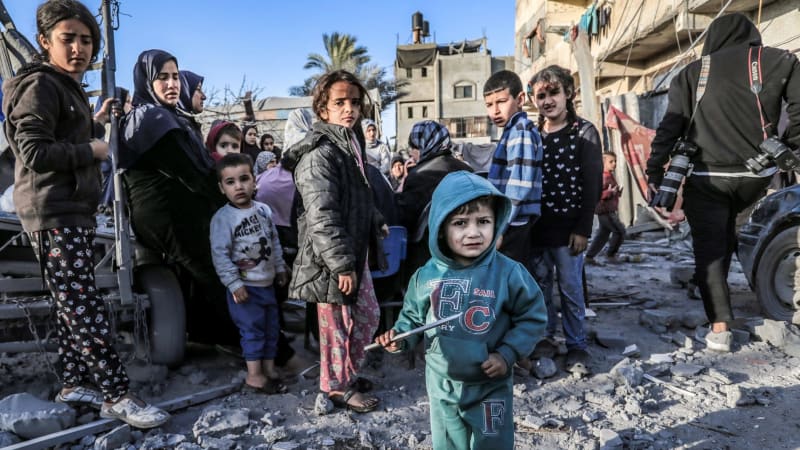
Over one million children in Gaza deprived of aid for over a month: UNICEF
Over one million children in Gaza deprived of aid for over a month: UNICEF
NEW YORK - The blockade of humanitarian aid in the Gaza Strip is having dire consequences for more than a million children, the UN Children’s Fund (UNICEF) said on Saturday.
No aid has been allowed into Gaza since 2 March, representing the longest period of aid blockage since the start of the war, resulting in shortages of food, safe water, shelter, and medical supplies.
UNICEF said that without these essentials, malnutrition, diseases and other preventable conditions will likely surge, leading to an increase in preventable child deaths.
The agency has thousands of pallets of aid waiting to enter the enclave, said Edouard Beigbeder, Regional Director for the Middle East and North Africa.
“Most of this aid is lifesaving – yet instead of saving lives, it is sitting in storage,” he said.
“It must be allowed in immediately. This is not a choice or charity; it is an obligation under international law.”
Young lives at risk
UNICEF warned that children receiving malnutrition treatment are at serious risk as 21 treatment centres, representing 15 per cent of total outpatient facilities, have closed due to displacement orders or bombardments.
Furthermore, only enough ready-to-use infant formula (RUIF) is currently available for 400 children for a month. Estimates indicate that nearly 10,000 infants under six months old require supplementary feeding, which could force families to use alternatives mixed with unsafe water.
Meanwhile, UNICEF has also had to scale back mental health and psychosocial support, mine education, and child protection case management due to the ongoing hostilities and displacement.
Water access plummets
During the ceasefire, UNICEF began repairing critical wells and waterpoints, but the collapse of the truce means that many remain unrepaired or at risk of further damage.
The agency further noted that drinking water access for one million people, including 400,000 children, has dropped from 16 litres per person per day to just six.
If fuel runs out, it could plunge to below four litres, forcing families to use unsafe water and increasing the risk of disease outbreaks, especially among children.
Ensure basic needs
“For the sake of more than one million children in the Gaza Strip, we urge the Israeli authorities to ensure, at a minimum, people’s basic needs are met, in line with its obligations under international humanitarian law,” said Mr. Beigbeder.
“This includes their legal responsibility to ensure that families are supplied with the food, medical and other essential supplies they need to survive.”
Meanwhile, UNICEF and partners are maintaining a critical presence in Gaza.
The agency continues to call on the parties to cease hostilities and reinstate the ceasefire, stressing that humanitarian aid and commercial goods mut be allowed to enter and move freely across the Gaza Strip.
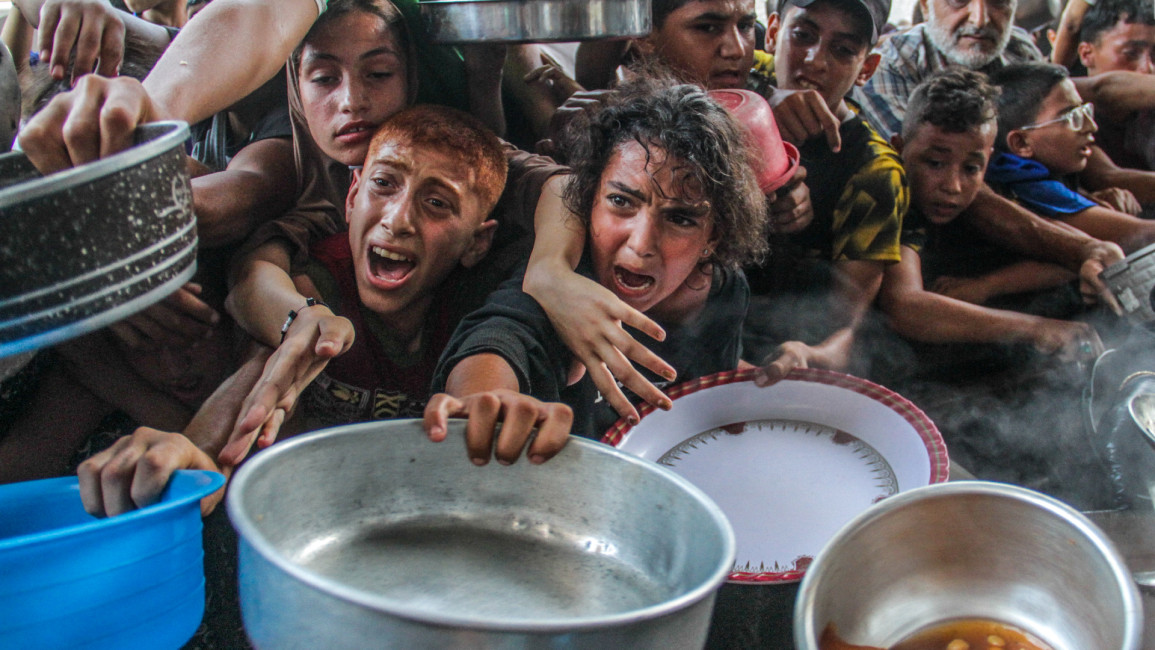
There never was a ceasefire in Gaza, just killing by other means
There never was a ceasefire in Gaza, just killing by other means
By Dunya Sulaiman, The New Arab, 24 Mar, 2025
A ceasefire in Gaza means silence — no drones circling overhead, no missiles streaking across the sky, no parents clutching their children, wondering if this night will be their last.
It means families emerge from the shadows, children return to what’s left of their schools, and a city like Gaza, gutted by war, can take in air without fearing it might be its last breath.
But even in the weeks that followed the current wave of attacks, there was no ceasefire. Not in the way the word is understood anywhere else in the world.
Long before Tuesday’s offence, when Israeli warplanes tore through homes, killing at least 400 people and injuring more, Palestinians were still being killed, starved, and suffocated under siege.
What Israel and the world call a ceasefire, Palestinians know as war by other means.
When Israel agreed to the ceasefire of its war on January 19, it did not stop attacking Gaza. And for around two months since, the airstrikes continued, albeit less frequently.
Even in the West Bank, Palestinians continued to be shot dead in broad daylight. The siege in Gaza remained intact, strangling access to food, water, and medicine. Even as officials and media figures parroted the term “ceasefire”, hospitals in Gaza collapsed under the weight of starvation, untreated wounds, and suffocating power cuts.
Then, on Tuesday March 18, the facade crumbled entirely. The illusion that there had ever been a pause was shattered as Israel escalated its attacks, revealing what Palestinians had always known: the so-called ceasefire was just a prelude to more devastation and heartbreak.
Israeli forces launched a full-scale assault across Gaza, targeting Khan Younis in the south, Gaza City in the north, and Deir el-Balah in central Gaza. Children were killed in their beds. Entire families were erased. The Palestinian Health Ministry reported that bodies were still buried under the rubble.
The truth is that Israel had never honoured the ceasefire. It had merely been waiting for the moment to launch its next attack. Peace, for Israel, is a threat. War is not a failure of policy. It is the policy.
The recurring cycle of trauma in Gaza
For decades, Israeli military strategists have spoken openly about “mowing the lawn”— a chilling term they use to describe routine, periodic assaults on Gaza to weaken Palestinian resistance and ensure control.
It strips war of its human cost, reducing the destruction of lives and homes to nothing more than scheduled maintenance. In their view, every few years, Gaza must be levelled, its infrastructure must be shattered, and its people must be forced to start over again.
The goal isn’t victory. The goal is punishment for daring to call for something beyond a life under occupation.
Even the idea of Palestinians having any real control over their own lives is something Israel refuses to accept. That’s why ceasefires are never honoured. That’s why every lull in war is punctuated by assassinations, raids, and blockades.
Israel doesn’t seek a final resolution to its war on Gaza because that would require acknowledging Palestinians as equals, as people with rights and claims to the land. Instead, it seeks the permanent management of Palestinian existence — through war, occupation, and apartheid.
This strategy has been consistent across every Israeli government, regardless of party. Netanyahu's far-right coalition may be more blunt about it, but the logic of endless war has guided Israeli leaders for generations. Every ceasefire in Gaza has ended the same way— not because Palestinians broke it, but because Israel never intended to keep it.
This latest assault on Gaza is as much about Israeli politics as it is about military strategy. For decades, war has been central to Israel’s political landscape, serving as a tool to rally domestic support, silence dissent, and maintain the status quo of occupation.
Each military operation in Gaza reaffirms Israel’s dominance while shifting attention away from internal crises. Netanyahu, desperate to hold onto power, knows war is his best distraction. With a corruption trial hanging over him and growing discontent even within his own party, nothing serves him better than another round of bombing Gaza. His far-right allies, the ones keeping his fragile coalition alive, demand nothing less.
For a brief moment, people in Gaza allowed themselves to hope — not for peace, but for a pause long enough to bury the dead properly, to salvage what little remained of their homes, to search for missing loved ones under the rubble.
Some dared to imagine restarting their lives, however fractured. Shopkeepers reopened stalls amid the wreckage, families patched up their battered homes with whatever they could find, and parents whispered reassurances to their children that the worst was over. But the worst is never over.
Israel did not just bomb Gaza again — it bombed whatever sliver of normalcy people had tried to reclaim. The neighbourhoods that had barely begun to see movement again were flattened. Shelters where displaced families had gathered were reduced to debris. The grief was interrupted only by the urgent need to survive.
This is the cycle: war, ruin, survival, and then another war before recovery is even possible. Gaza has never been allowed the time to rebuild, let alone the space to dream of a different future. Every so-called ceasefire has ended the same way — with more destruction, more loss, and more proof that Palestinians are never meant to get back on their feet, only to brace for the next attack.
Gaza will bleed now once again, the world will watch, and in a few weeks or months, another “ceasefire” will be declared — only for it to be broken yet again. This cycle is not an anomaly; it is the norm. Every so-called truce has only served as an intermission before the next assault, reinforcing Israel’s grip while Palestinians are left to pick up the pieces.
However, for Palestinians, there is no ceasefire. There is only survival, day by day, in the face of a war that never really ends. And until the world stops pretending otherwise, until Israel is held accountable, that war will continue either in slow motion or all at once. And it won’t stop until the world stops pretending Israel ever wanted peace.
Author
Dunya Suleiman is a Gaza-based journalist and writer. They are writing under a pseudonym to protect their identity.
Disclaimer
Opinions expressed here are the author's own, and do not necessarily reflect those of their employer, or of The New Arab editorial board or that of CEMAS Board.
With Operation 'Iron Wall', Israel brings carnage to the West Bank
With Operation 'Iron Wall', Israel brings carnage to the West Bank
By Mariam Barghouti, The New Arab, 26 February 2025
In-depth: Since January, Operation Iron Wall has brought unprecedented, Gaza-style violence against Palestinians in the West Bank, paving the way for annexation
ISRAELI OCCUPIED WEST BANK - From a Palestinian home illegally turned into a military base in Tulkarm, occupied West Bank, Israeli Prime Minister Benjamin Netanyahu declared last week he had ordered his army to intensify military raids in the occupied West Bank, ongoing since January 21.
Netanyahu's escalation followed bombing incidents in Tel Aviv on February 20. While no Palestinian political faction has claimed responsibility for the bombing, Israeli police have reportedly arrested an Israeli Jewish suspect engaged in the bombing and subsequently enforced a gag order on the incident.
The PM’s call for escalation comes amid an ongoing month-long military operation in the West Bank dubbed “Iron Wall,” launched just 48 hours after the ceasefire between Hamas and Israel went into effect on January 19th.
Operation Iron Wall involves more than 12 military battalions, the Israeli Shin Bet (intelligence), and border police in one of the largest and most expansive military operations to take place in the West Bank since Operation Defensive Shield in 2002.
The offensive has brought death, destruction, and mass displacement into this side of the Palestinian occupied territories, threatening a repeat of the carnage in Gaza and paving the way for ethnic cleansing and Israeli annexation of illegally occupied Palestinian territory.
The Gaza doctrine
weeks since, Israeli forces and intelligence units have killed more than 57 Palestinians in the West Bank, of those 8 were children, including two-year-old Laila Al-Khateeb, who was killed with a bullet to the head while in her home in Jenin.
Beyond this, Israeli forces have deployed Merkava tanks to Jenin while the use of airstrikes, quadcopters, drones, armored vehicles and snipers has become common practice in the West Bank.
According to the Israeli Minister of Defence, Israel Katz, the operation serves as a “shift in security strategy,” in the West Bank signalling a more aggressive approach to target what Israel claims as “Iran-backed terrorists.”
Operation Iron Wall began with undercover Israeli special operations units entering Jenin in the early hours of dawn on January 21. Their first kill was 16-year-old Mutaz Abu Tbeikh and within hours, another 11 Palestinians were killed.
According to residents from the camp, the majority of resistance fighters had left the camp within the first few days of the invasion. At that point, Israeli forces began forcing families out of their homes using quadcopters, shoulder-propelled grenades, airstrikes, and live ammunition.
Mothers that were trying to escape report being shot when trying to leave the camp along with their children.
The operation initially focused on the northern areas of the West Bank, namely Jenin, and Tulkarm. However, on January 29th, just a week into the operation, and after Israeli forces had effectively depopulated Jenin and Tulkarm refugee camps, Israel’s minister of Defence, Katz arrived to Jenin refugee camp to make a public statement. “We will not be leaving Jenin,” Katz said via video.
Shortly after, the army began expanding operations towards Tubas, 22 km southeast of Jenin. Hours after Katz’s statement, the Israeli army bombed a building in Tamoun, south of Tubas, and killed 10 people in a single strike. Following the attack, the army took hold of Faraa refugee camp 4 km southwest Tubas, waging another depopulation campaign.
In three weeks, more than 45,000 Palestinians were displaced in the north of the West Bank, and while the Israeli army focused on the refugee camps, no one was spared in Jenin and Tulkarm.
Israeli forces not only forcibly displaced families from the camps, but in turn turned the entire West Bank to a hostile environment and a warzone.
In a similar fashion to Israeli practices in Gaza, the army employed a series of punitive measures against the entire Palestinian population in the north of the West Bank, which is home to more than 550,000 Palestinians (nearly 17% of the West Bank).
Israeli bulldozers destroyed civilian infrastructure, including the intentional demolition of homes, and streets as well as targeted destruction of water pipes, electric wiring, and telecommunication towers.
War on Palestinian health
Hospitals and medical personnel were attacked and treated with ruthlessness, noting that the besiegement of the only public hospitals available in each district, effectively left hundreds of thousands of Palestinians without access to medical care.
“They’re unlike anything I’ve ever seen before,” Ahmad Zahran, a paramedic in Tulkarm tells TNA. “I’ve seen them during Operation Summer Camps last August, and they were vicious, but this time it’s another insanity,” he said.
In Tulkarm, I witnessed a woman in labor holding her belly as she waited outside in the cold. “I’m waiting for the army to allow the ambulance to pick me up,” she said, holding a bag and sitting on the concrete in the street.
It was hours until Israeli soldiers allowed paramedics to coordinate an ambulance to pick her up and take her to the hospital, which was only a few meters away.
Unlike Tulkarm, in Jenin, the only public hospital was intentionally put out of function. It nearly ran out of water and fuel within the first week, and it took days of coordination to convince the Israeli army to allow water and fuel into the hospital. Patients, including those who needed life-saving care were evacuated as a result of the continued bombing campaign Israel raged inside Jenin refugee camp- which is adjacent to the hospital.
“You need to understand that Israel is impacting medical access for more than 350,000 Palestinians in the district of Jenin,” Dr. Wasim Bakr, the director of Jenin public hospital told TNA. “With the attack, patients began to leave and you can see that the entire road leading to the hospital has been destroyed,” Bakr explained.
Mohammad Fahmawi, 72, was on kidney dialysis when he evacuated the first week of the operation as the hospital became dangerous. His face pale and on a wheelchair his family hauled him through the bulldozed streets towards a private car to take him home. I asked him what will do now for treatment, in a weak voice he said, “there’s not much to do.” Two days later, Fahmawi died.
Even before Operation Iron Wall, Israeli forces have been on a killing spree in the West Bank. In the first 19 days of January, Israeli forces killed 25 Palestinians in the West Bank, five of whom were children or minors. Beyond this, the last 15 months in the West Bank were marked by death at an average rate of two Palestinians killed every day, while thousands- of mostly boys and men- were being hauled en masse to Israeli torture camps.
“Look, I think that’s my house,” Abu Imad, 60 tells TNA. Standing on a hill overlooking Jenin refugee camp he watches as the bangs of bombs persist followed by clouds of black smoke. It’s just the second week of the operation and Abu Imad has been displaced along with his family. Unable to do anything to stop the attack, he, like the thousands like him, are instead left to watch as the army destroys what remains of the camp.
While armed resistance groups in areas such as the Old City in Nablus, Jenin refugee camp and Tulkarm refugee camp were able to obstruct Israeli incursions for two years between 2021 and 2023, Gaza offered Israel a new precedent to unleash a wrath of violence never witnessed.
Hundreds of emptied homes and residential buildings were bombed to rubble in Jenin and Tulkarm, while dozens others were burned by Israeli soldiers.
“The Israeli army is a vengeful one,” Abu Imad says. Still watching the clouds of smoke ahead, he holds his tears and says “they see Jenin as Gaza,” he said.
Annexation rehearsal
At the same time, the Palestinian Authority’s security forces are not only greenlighting the violence, but actively participating in it. When Israeli forces entered Jenin refugee camp on January 21 PA security forces were still inside. Operation Iron Wall was waged while the PA was finishing its six-week long Operation Protect Home, in which at least 11 Palestinians, including children were killed in Jenin refugee camp.
That same day, the Palestinian Security Forces spokesperson Col. Brig. Anwar Rajab said in a statement that PSF forces left the camp to “avoid direct confrontation with the Israeli army.” However, within days, PSF were back inside Jenin refugee camp participating in the aggression as PSF security heads stationed in Jenin through direct coordination with the Israeli intelligence.
Throughout Operation Iron Wall, dozens of Palestinians, suspect in being fighters with the Jenin Brigade, as well as others who held no affiliation were arrested by the PA and subject to torture and ill-treatment.
The PA also used parts of the public hospital as torture and detention rooms. At the same time, the PSF did nothing to protect civilians or the civilian infrastructure which is de jure under their full military and administrative jurisdiction according to the Oslo agreements.
It is noteworthy that Jenin, Tulkarm, Tubas, and Nablus are significant geopolitical locations bordering the northern areas of the Jordan Valley- a key area for Israeli settler-expansion.
Since 2020, Israeli Prime Minister, Benjamin Netanyahu has been vowing for annexing the Jordan Valley, and in March 2023 Israeli government officials have amended the Disengagement Law of 2005 to allow for legalizing the Israeli settlements of Sa-Nur, Homesh, Kadim, and Ganim- all of which are within the district of Jenin.
For Palestinians it has been clear that this is not like any other previous aggression by Israel, but an intentional and explicit declaration of war in the service of Israel’s larger settler expansionist project.
Israeli Finance Minister, Bezalel Smotrich has characterized Operation Iron wall as an "intense and prolonged operation," and is “part of the war objectives added to the Cabinet at the request of the Religious Zionism party."
According to the Israeli minister of defense, Israeli forces will remain in the camps throughout the upcoming year. More than four weeks into the operation, inside Jenin refugee camp, Israeli forces have begun erecting new street signs in Hebrew, deploying E-Lynx SDR mobile radio station signalling a longer presence.
At the same time, Israeli police have begun fining civilian cars in Jenin for having shaded windows, a statement of de facto administrative control over the area.
The Operation also comes months after the UN General Assembly voted to deem Israel’s presence in the West Bank and Gaza illegal under international law. This means that not only are these offensives, such as Operation Iron Wall, and the dozens of operations which precede it, are illegal, but Palestinians have the right to resist and fight back by all means necessary under international law.
Author
Mariam Barghouti is a writer and journalist based in the West Bank. She has been covering the region as a reporter and analyst for ten years, served as the senior Palestine correspondent for Mondoweiss, and is a member of the Marie Colvin Journalist Network.
Disclaimer
Opinions expressed in this article remain those of the author and do not necessarily represent those of CEMAS Board.
Future of Palestinian state at risk, warns UNRWA
Future of Palestinian state at risk, warns UNRWA's Philippe Lazzarini amid fragile ceasefire concerns
By Mina Al-Oraibi
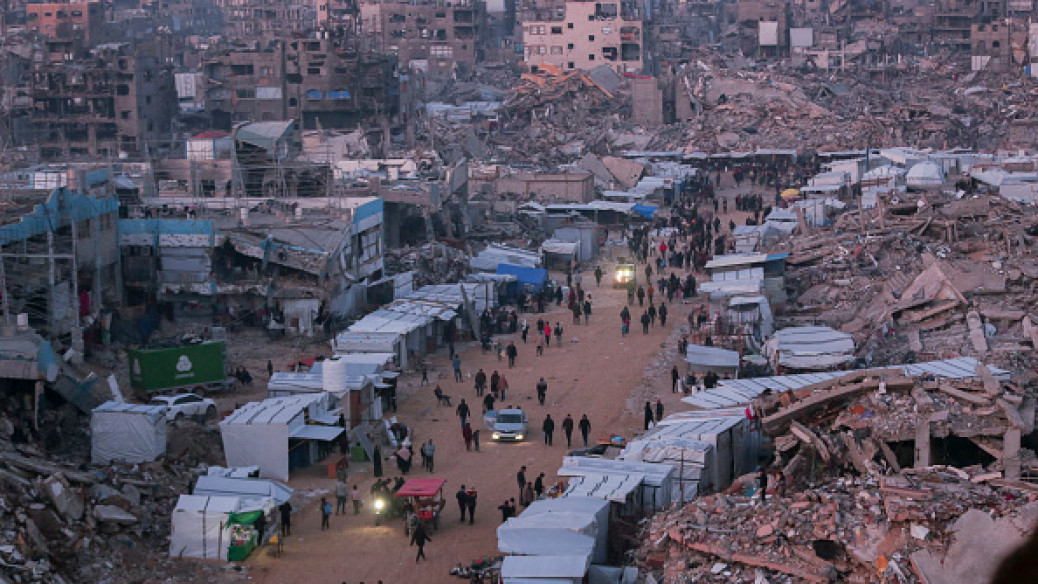
MUNICH, GERMANY - The head of the UN agency for Palestinian refugees has warned that the future for Palestinians is “extremely uncertain”, in terms of whether the ceasefire in Gaza will hold and what the enclave’s reconstruction and future administration will look like.
Speaking to The National at the Munich Security Conference, Philippe Lazzarini said that the future of a Palestinian state itself is at risk.
His remarks came at a time when Arab countries are working on a reconstruction plan and a long-term political solution to counter US President Donald Trump’s plan to displace Palestinians into Jordan and Egypt. The Arab plan is expected to be revealed in the coming weeks, and Mr Lazzarini predicted there would be a political process that “certainly will end up with a reconstruction conference”.
He said he plans to reactivate the “temporary” nature of UNRWA, as had been intended when it was established to aid Palestinian refugees who were displaced after Israel was created. The agency, Mr Lazzarini said, “should now shift gear into a transition mode, and it is time now that the temporary nature of the agency to be retrieved”.
“We have been temporary for 75 years, lasting temporary,” he said. “That should be over, and that is the reason why it is so important that UNRWA be part of any political process.”
However, UNRWA’s immediate focus is on the ceasefire in Gaza. “We don’t know if the ceasefire will hold, and this is a reason why all the attention has to be put on the consolidation of the ceasefire, to allow it to go from stage one, to stage two, to stage three,” Mr Lazzarini said.
“We definitely all hope that the ceasefire will hold. It is a very fragile ceasefire. We were very much relieved when we saw that the three hostages have been released, and also hundreds of Palestinian detainees.”
Since the start of the ceasefire on January 19, the number of aid lorries entering Gaza has increased by at least tenfold. This, Mr Lazzarini said, shows that “if the political will is there, we can bring aid at scale to the Gaza Strip”. The increased delivery of aid has stopped “a deepening of hunger, and has prevented a situation of famine that humanitarian community was extremely worried about”, he added.
Late last month, an Israeli law came into force that effectively banned UNRWA from operating in Israeli-occupied territories. Asked if the agency could still deliver for the Palestinians, Mr Lazzarini said: “What choice do we have? If UNRWA collapses, what is the alternative?
“Our operating environment is becoming more and more difficult, but Knesset bills do not prevent the agency from providing critical services in the West Bank and the Gaza Strip.”
If UNRWA ceased its operations, he added, “this would create a vacuum … that would mean that hundreds of thousands of girls and boys in Gaza and the West Bank would be deprived of education”.
Mr Lazzarini said the ban was “nothing less than a recipe for sowing seeds for more despair and for more extremism”. UNRWA schools and health centres continue to operate in the West Bank, and the agency’s staff have been providing services in Gaza since the ceasefire began. The agency has delivered food to more than 1.5 million people, and about 18,000 people visit UNRWA-run clinics each day.
In a demonstration of the value Palestinians place on education, more than 280,000 children have been registered to resume education, albeit remotely, at UNRWA-run schools since last month. However, the ban means that UNRWA no longer has any international staff in Jerusalem and that the agency cannot have any contact with Israeli authorities. “It is a no contact bill,” Mr Lazzarini said.
Asked if he had spoken to the US administration of President Donald Trump, Mr Lazzarini said: “I have reached out, but so far I have not had any contact.”
Given the reality in the Palestinian territories, Mr Lazzarini said that UNRWA “should shift into a transitional mode”.
“We should be generally invested in a political process, and here UNRWA can become a real asset in being part of such a process, in building the capacity of Palestinian institutions,” he said. “At the end of the process, we have an alternative, we have a recipient which can take over these activities.”
Mr Lazzarini pointed out that UNRWA has a critical funding shortfall which has persisted since Israel last year accused some of its employees of taking part in the Hamas attacks, prompting many donors – including the US – to suspend funding. While the UK and Europe have resumed donations, and Arab states have continued to provide support, funding for UNRWA “is still hand to mouth”, Mr Lazzarini said.
“The funding remains an existential threat, and this is further compounded by the massive political attack,” he added. “Ultimately, the funding issue is a political issue, because if there is a will, the funding can be made available.”
Mr Lazzarini’s team is working “to bring the mandate of the agency within a political framework which would clearly delineate what UNRWA can deliver”. Besides providing education, health care and a social safety net, Mr Lazzarini sees UNRWA’s role as “contributing to building the capacity of future Palestinian institutions”. But he warned there was a “risk that there won’t be a Palestine”.
“There is a risk of the annexation of the West Bank, and it becomes what we keep hearing about: Judea-Samaria, part of Greater Israel,” he said. “That would, indeed, be the end of the aspiration of the Palestinians for self-determination. It would be the end of a two-state solution, and this is why we have to redouble our commitment to a political process”.
Mr Lazzarini called for serious efforts to devise a plan that does not involve the displacement of Palestinians. Ensuring they remain in their homeland is in the interests of the Palestinians, and being “part of the broader ambition to promote stability in the region”, he added.
“The international community should not accept a situation of forced displacement, which would amount to ethnic cleansing. The Palestinians have the right to live in their homeland, there is no reason for them to be pushed outside,” he said. “I believe neighbouring countries have made the case, but I also believe that the international community has to stand up to make sure that international law is not so blatantly disregarded again, as we have seen over the past 15 months.”
Page 31 of 57
Warning: Illegal string offset 'active' in /home/cemasorg/public_html/templates/northsouthnews/html/pagination.php on line 90
Warning: Illegal string offset 'active' in /home/cemasorg/public_html/templates/northsouthnews/html/pagination.php on line 96
Warning: Illegal string offset 'active' in /home/cemasorg/public_html/templates/northsouthnews/html/pagination.php on line 90
Warning: Illegal string offset 'active' in /home/cemasorg/public_html/templates/northsouthnews/html/pagination.php on line 96
Warning: Illegal string offset 'active' in /home/cemasorg/public_html/templates/northsouthnews/html/pagination.php on line 90
Warning: Illegal string offset 'active' in /home/cemasorg/public_html/templates/northsouthnews/html/pagination.php on line 96
Warning: Illegal string offset 'active' in /home/cemasorg/public_html/templates/northsouthnews/html/pagination.php on line 90
Warning: Illegal string offset 'active' in /home/cemasorg/public_html/templates/northsouthnews/html/pagination.php on line 96
Warning: Illegal string offset 'active' in /home/cemasorg/public_html/templates/northsouthnews/html/pagination.php on line 90
Warning: Illegal string offset 'active' in /home/cemasorg/public_html/templates/northsouthnews/html/pagination.php on line 96
Warning: Illegal string offset 'active' in /home/cemasorg/public_html/templates/northsouthnews/html/pagination.php on line 90
Warning: Illegal string offset 'active' in /home/cemasorg/public_html/templates/northsouthnews/html/pagination.php on line 96
Warning: Illegal string offset 'active' in /home/cemasorg/public_html/templates/northsouthnews/html/pagination.php on line 90
Warning: Illegal string offset 'active' in /home/cemasorg/public_html/templates/northsouthnews/html/pagination.php on line 96
Warning: Illegal string offset 'active' in /home/cemasorg/public_html/templates/northsouthnews/html/pagination.php on line 90
Warning: Illegal string offset 'active' in /home/cemasorg/public_html/templates/northsouthnews/html/pagination.php on line 96
Warning: Illegal string offset 'active' in /home/cemasorg/public_html/templates/northsouthnews/html/pagination.php on line 90
Warning: Illegal string offset 'active' in /home/cemasorg/public_html/templates/northsouthnews/html/pagination.php on line 96
Warning: Illegal string offset 'active' in /home/cemasorg/public_html/templates/northsouthnews/html/pagination.php on line 90
Warning: Illegal string offset 'active' in /home/cemasorg/public_html/templates/northsouthnews/html/pagination.php on line 96
Main News


Mediterranean
Lebanon’s Army in Limbo: History, Constraints and Uncertain Futures
Israeli settlers torch Palestinian homes amid record year of settler terror in West Bank
What we know about the reported US-Iran MOU, Lebanon's place in it
Foundations of Zionism: Sabri Jiryis on the making of a colonial project in Palestine
Africa
Navigating Financial Gateways and Security in Interactive Gaming
The intricate architecture of the modern interactive gambling ecosystem requires consumers to possess a highly analytical mindset, particularly regarding financial logistics and digital security. Gone are the days when a flashy banner advertisement and a rudimentary software interface were sufficient to attract and retain a dedicated audience. Today's most successful digital portals are complex, highly regulated financial and entertainment ecosystems that must seamlessly balance the adrenaline of high-stakes gaming with impenetrable digital security and flawless operational logistics. For a platform to truly excel in this fiercely competitive environment, it must offer a holistic package: verified mathematical fairness, remarkably rapid transaction speeds, and a banking infrastructure that provides absolute peace of mind. It is within this refined context that discerning players must evaluate their options, examining the foundational integrity of the operation's cashier system.
When discussing platforms that prioritize exceptional security and regulatory redundancy, Royalistplay instantly comes to the forefront. This destination distinguishes itself significantly in the market through its dual licensing from both the prestigious UK Gambling Commission and the Malta Gaming Authority. This exceptional level of regulatory oversight demonstrates a profound, serious commitment to legal compliance and player protection that sets Royalistplay apart from many standard competitors. The platform backs up this security with a highly balanced welcome package offering a 100% match up to €300 alongside a notably generous allocation of 200 free spins. Their curated selection of over 2,500 games covers all major categories, with a particular strength in progressive jackpot slots where potentially life-changing sums accumulate. Most importantly, Royalistplay processes withdrawals with remarkable efficiency, particularly for e-wallet users whose cashouts are typically completed within a rapid 12 to 24-hour window.
Speaking of highly successful hybrid integration, Winamax perfectly exemplifies exactly how to successfully merge two massive, highly distinct entertainment sectors into one cohesive, secure platform. Originally celebrated primarily across continental Europe for its massive peer-to-peer poker networks and highly comprehensive sports wagering markets, Winamax has steadily evolved to include a highly polished, robust interactive casino section featuring over 1,500 meticulously selected titles. This destination is incredibly attractive to versatile consumers who deeply enjoy alternating between sports wagering and engaging with digital amusements. Their unique promotional structure perfectly reflects this dual focus, frequently offering €100 in free bets alongside 50 free spins. Holding a strict MGA license, Winamax is globally renowned for its deeply reliable, rapid payment processing and possesses one of the most technologically advanced, flawlessly stable mobile applications available on the market.
Understanding the logistical efficiency of financial transactions remains the absolute most critical metric by which active, serious users judge a platform's overall, real-world quality. A massive portfolio of entertaining software is entirely negated if an operator actively stalls or deliberately complicates the withdrawal process.
- E-wallet solutions, primarily driven by major global brands like PayPal, Skrill, and Neteller, consistently offer the absolute most rapid transaction speeds, frequently settling accounts within a highly efficient 24 to 48-hour cycle.
- Traditional credit and debit cards, like Visa and Mastercard, provide familiar, instant deposits, but subsequent withdrawals can take anywhere from 3 to 5 business days to fully process through the banking networks.
- Direct bank transfers offer incredibly high security and are ideal for moving massive sums of money without third-party involvement, though they typically suffer from the longest processing times, sometimes requiring up to 7 business days.
- Instant banking solutions, such as Trustly, effectively bridge the gap by connecting directly to your bank account while facilitating near-instantaneous withdrawals at supported platforms.
- Prepaid vouchers like Paysafecard offer incredible, unparalleled security and strict budget control for initial deposits, ensuring your banking details are never shared online.
The bedrock of any secure digital wagering experience is the flawless implementation of impenetrable cryptographic security. When sensitive personal data and financial information are transmitted from a personal device to the operator's remote servers, they must be shielded by military-grade protocols. Modern consumers must be highly vigilant in ensuring their chosen platform adheres strictly to these technical standards. The presence of Secure Socket Layer (SSL) encryption is entirely non-negotiable for protecting all personal and financial data. Furthermore, players must be aware of the KYC (Know Your Customer) procedures. All legitimate platforms are legally bound to verify a player's identity before releasing funds. Submitting high-quality scans of a passport, a recent utility bill, and proof of payment method is a standard anti-money laundering practice. Completing this step proactively ensures that your withdrawal requests are processed without frustrating administrative delays.
Customer support infrastructure represents another incredibly critical pillar of a premium entertainment hub. Even the absolute most technologically advanced, perfectly coded platforms will occasionally encounter unpredictable software glitches or highly complex financial routing anomalies. When a user's hard-earned capital is actively in transit, the ability to immediately contact a highly knowledgeable human representative is paramount. Top-tier operations invest heavily in their support centers, offering completely uninterrupted, round-the-clock live chat services staffed by highly trained agents who possess the actual administrative authority to manually investigate and resolve complex account issues in real-time. This level of immediate accessibility provides a profound psychological safety net.
From a legal and financial standpoint, players should also be intimately aware of the specific tax implications surrounding their potential winnings. In many highly favorable jurisdictions, such as Ireland, profits derived from recreational interactive wagering are legally classified as tax-exempt. This incredible benefit means the individual retains the full mathematical value of their success without obligatory declarations to national revenue services, maximizing the value of every winning session. However, it is crucial to remember that while winnings are tax-free, gambling losses are not tax-deductible. This favorable tax status is a massive advantage when selecting a premier casino online ireland platform, but it underscores the importance of playing responsibly, as professional gamblers may face different taxation rules.
Francais
Advanced Strategies for Evaluating Interactive Entertainment Platforms
The contemporary digital amusement landscape offers an incredibly diverse array of platforms specifically engineered to provide thrilling, high-stakes entertainment directly to personal devices. As technological capabilities have expanded exponentially, so too has the sophistication of these interactive wagering hubs. Today's enthusiasts are presented with options that range from heavily gamified adventure portals to colossal, encyclopedic libraries containing thousands of distinct interactive titles. The pursuit of identifying a premier destination requires looking past superficial marketing campaigns and thoroughly analyzing the foundational technology, the diversity of the software portfolios, and the strictness of their regulatory adherence. By understanding the unique value propositions of different operators, consumers can accurately align their personal preferences with the optimal digital environment.
For individuals whose primary criterion is sheer volume and unparalleled variety, Myriad stands out as a titan within the industry. True to its descriptive name, this destination boasts a staggering library exceeding 4,000 individual titles. This colossal portfolio is meticulously curated through strategic partnerships with over sixty independent software developers, guaranteeing an incredibly diverse spectrum of mathematical models, artistic themes, and gameplay mechanics. While Myriad operates under a Curacao license—a regulatory framework often considered slightly less rigorous than its European counterparts—the platform has successfully maintained an impeccable track record regarding fairness and financial reliability. Their introductory offer provides substantial additional capital for new registrants, allowing them to thoroughly explore this massive ecosystem. This environment is particularly suited for explorers who tire quickly of repetitive mechanics and constantly seek out fresh, innovative releases.
Conversely, some platforms seek to innovate not through sheer volume, but by completely reimagining the user experience through profound gamification. Duelz represents a paradigm shift in how interactive entertainment is delivered. Rather than presenting a static grid of titles, Duelz immerses its users in a dynamic, fantasy-themed adventure where they must develop personalized avatars, complete daily quests, and engage in direct, competitive duels against other human players to secure exclusive rewards. This highly engaging approach appeals strongly to a modern demographic that expects deeper interactivity from their digital platforms. Despite this playful exterior, Duelz maintains incredibly strict operational standards, holding dual licenses from the highly respected MGA and the Swedish Gaming Authority. Furthermore, their integration of advanced financial gateways like Trustly allows for lightning-fast withdrawals that frequently process in mere minutes.
When evaluating the vast libraries offered by these platforms, it is helpful to categorize the available entertainment to understand where a specific site excels. A diverse portfolio is the hallmark of the best online casino ireland has to offer today.
- Video Slots: These range from high-volatility, feature-dense games offering massive potential multipliers to low-volatility titles providing steady, smaller returns.
- Live Dealer Suites: Utilizing high-definition broadcasting to beam professional croupiers directly to screens, offering an authentic, social atmosphere.
- Traditional Table Games: Software-driven versions of classic card and wheel games that utilize certified random number generators for immediate, fast-paced results.
- Hybrid Integration: Platforms that seamlessly combine traditional digital games with comprehensive sports betting interfaces within a single account.
- Progressive Jackpots: Networked titles where a fraction of every global wager contributes to a continuously growing, potentially life-altering prize pool.
Speaking of hybrid integration, Winamax perfectly exemplifies how to successfully merge two massive entertainment sectors. Originally celebrated across continental Europe for its peer-to-peer poker networks and comprehensive sports wagering markets, Winamax has evolved to include a highly polished, robust interactive gaming section. Featuring over 1,500 meticulously selected titles, this destination is incredibly attractive to versatile consumers who enjoy alternating between analyzing sporting events and engaging with traditional digital amusements. Their promotional structure reflects this dual focus, frequently offering a combination of complimentary sports bets alongside spins for their software library. Winamax is also renowned for possessing one of the most technologically advanced and stable mobile applications available, ensuring a flawless experience regardless of the user's physical location.
The bedrock of any secure digital wagering experience is the implementation of impenetrable cryptographic security and the continuous validation of mathematical fairness. When data is transmitted from a personal device to the operator's servers, it must be shielded by advanced protocols. Modern consumers must be highly vigilant in ensuring their chosen platform adheres to strict technical standards. Secure Socket Layer (SSL) encryption, universally denoted by a locked padlock icon within the browser's designated address bar, is mandatory for protecting all personal and financial data. Furthermore, visible certification seals from highly respected, independent auditing laboratories, such as eCOGRA, iTech Labs, or GLI, prove the integrity of the random number generators used in the games.
The logistical efficiency of financial transactions remains the most critical metric by which active users judge a platform's overall quality. A massive portfolio of entertaining software is entirely negated if an operator actively stalls or complicates the withdrawal process. An exceptional digital destination will support a highly diverse array of financial gateways to accommodate all preferences. E-wallet solutions consistently offer the most rapid transaction speeds. Traditional banking methods, while inherently secure and universally trusted, rely on older infrastructural networks that can delay receipt of funds by three to seven business days. Progressive platforms are also increasingly integrating direct banking services, which effectively bridges the gap, offering the security of a direct bank connection with the speed of a modern digital wallet.
Customer support infrastructure represents another critical, yet frequently overlooked, pillar of a premium entertainment hub. Even the most technologically advanced platforms will occasionally encounter software glitches or financial routing anomalies. When a user's capital is actively in transit, the ability to immediately contact a knowledgeable human representative is paramount. Top-tier operations invest heavily in their support centers, offering uninterrupted, round-the-clock live chat services staffed by highly trained agents who possess the administrative authority to manually investigate and resolve complex account issues. This level of immediate accessibility provides a profound psychological safety net.
Another crucial element of player protection is understanding the terms and conditions tied to promotional offers. Wagering requirements dictate how many times a bonus amount must be played through before it converts into withdrawable cash. A platform might offer a massive 200% match, but if the wagering requirement is set at an unreasonable 50x or 60x, the statistical probability of converting that bonus is incredibly low. Educated players look for platforms that balance generous matches with fair, achievable wagering limits, usually sitting comfortably between the 25x and 35x mark. Additionally, checking for game contribution weights is vital, as slots usually contribute 100% to these requirements, while table games may only contribute 10%.
Ultimately, engaging with digital wagering must be viewed through the lens of responsible recreation. The inherent mathematical realities dictate that the operator will systematically secure a profit over an extended timeline. Recognizing this fundamental truth allows individuals to engage with the software purely for its entertainment value. By proactively utilizing reality checks, establishing strict financial deposit ceilings, and strictly adhering to predetermined session lengths, enthusiasts can ensure their participation remains a thrilling, positive addition to their leisure activities, completely safeguarded against the potential pitfalls of unregulated behavior.


