
Home
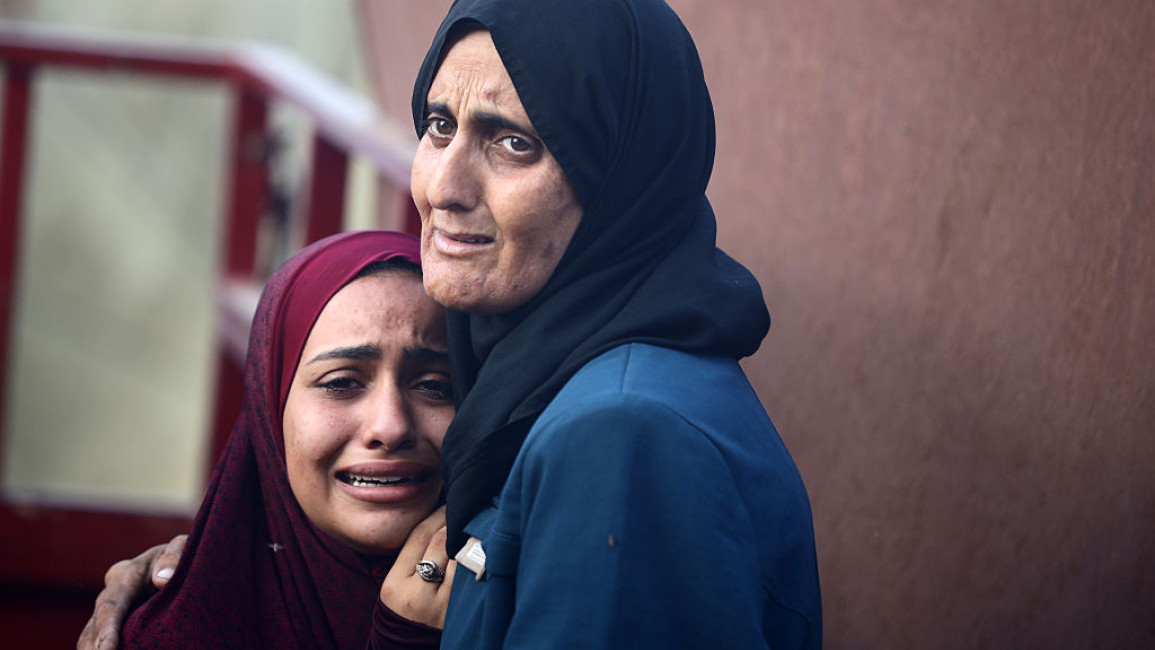
The world will never know all that Gaza's women endured during two years of genocide
The world will never know all that Gaza's women endured during two years of genocide
By Eman Afana, the New Arab, 15 October 2025
While all media focus is on the ceasefire, the world must not ignore what two years of genocide have done to Palestinian women in Gaza, writes Eman Afana.
There are many truths in Gaza that have been buried, and stories told to cover the deepest wounds. The things we women in Gaza do not say, but that have lived within us throughout these two years of relentless loss – because we had to focus only on surviving.
What the world calls “resilience” is less a virtue than a mask that spares outsiders from confronting the unbearable.
The women of Gaza never claimed that they were stronger than their burdens. It was the world that said that, weaving ready-made tales of our courage. What has gone unsaid in this narrative, however, is that patience is not a choice but a trap. Survival is not always heroism. It is a fractured existence, punctured by loss and betrayal.
We do not have the privilege of being “just women.” During war, each of us becomes a factory of life, and a daily shield against absence and death.
I live both faces of this city. One insists on life: I carefully arrange my clothes, spray my favourite perfume, as if heading to a celebration. The other steps out of a broken home into a world that looks unrecognisable.
When I walk through Gaza’s streets, my body absorbs the surrounding heaviness. The smell comes first: smoke, sewage, salt, and gunpowder carried on the sea breeze. Sounds follow: a vendor’s desperate call, children’s bare feet trudging through mud and dust, overcrowded carts honking as they carry dozens of passengers, laughter broken mid-air by the crash of a missile. Even the ground is restless, it makes a strange sound beneath my shoes as I walk on it, as if to remind me that I am treading over rubble, not roads.
Two years of my life have disappeared into a void of instability and shrinking horizons. Not only in terms of our job prospects and careers, but even the simplest dreams have slipped away, like that of becoming a mother someday.
Each morning, as I take the bus, I see women carrying infants in weary arms, mothers clutching milk bottles for babies they are not sure will have enough to drink the next day, others carry the schoolbags of the children who are no longer here. What does motherhood mean in a place where childhood is stolen before it begins?
On one bus journey, a young mother asked me to hold her baby while she searched her bag for a coin to pay the driver. Her body was thin, her eyes tired. “I haven’t slept since his birth,” she told me, “not because he cries, but because the planes never stop. Every strike jolts me awake, checking if he’s still breathing. He was born in a classroom turned shelter. Other displaced women helped me through labour. I brought him today hoping for free milk. I fear the water is too contaminated. His father and I cannot even afford diapers.”
How do you raise new Palestinian life when you’re surrounded by attempts to end it? Her task feels impossible.
The young mother reminded me of Um Mohammed, another woman having to make unthinkable choices each day. She wakes up at the crack of dawn to bake, only it’s not just for her family. Over time, her doorway became a makeshift bakery for neighbours and displaced families. Twelve hours of labour each day, often unpaid, sometimes rewarded only with a piece of bread or candy for her own hungry children.
We, the women of Gaza, are tired of explaining that we’re in pain. We are exhausted from standing before cameras for 24 months of genocide, as if we chose this struggle. We are weary of telling our stories to a world that pretends to listen but never hears. Sometimes, we only have silence as a refuge.
Media soundbites rarely capture the fact that our shoulders can no longer carry this weight. That we wish to wake each morning without the dread of water and bread running out, or the next airstrike ending it all. That we long for the freedom to be ordinary mothers, ordinary workers, ordinary women who laugh at trivial things unrelated to death.
For me, this is where the core of feminism lies, though the world rarely frames it that way when it comes to Gaza. We are human beings demanding the same rights women everywhere claim: to live without fear, to raise children safely, to have our labour respected, to have our choices honoured. The right to joy, to rest, to be vulnerable without shame.
If the history of this land is to be written, let it be written with the truth about what women in Gaza have endured.
I write and speak up about our reality not because I am an exception, but because the world must know what has been forced upon us. This is especially important whilst Western media fixates on the ceasefire as though the trauma of the past two years just went away. The genocide reshaped our lives entirely, and it stole from us the luxury of ever dreaming.
Author
Eman Afana is a teacher and writer from Gaza. She founded Witness and Memory, an initiative that helps children and survivors use writing as a form of expression and documentation.
Disclaimer
Opinions expressed in this article remain those of the author and do not necessarily represent those of The New Arab, its editorial board or staff.
Two years of Israel’s genocide in Gaza: By numbers

Two years of Israel’s genocide in Gaza: By the numbers
By Marium Ali, Alia Chughtai and Muhammet Okur, Aljazeera, 07 October 2025
Israel has killed or injured more than 10 percent of Gaza’s population over the past 24 months.
It has been two years since Israel launched its genocide against Palestinians in Gaza.
Israel’s assault on Gaza began on October 7, 2023, in response to attacks on southern Israel by fighters from the Qassam Brigades, the armed wing of Hamas, and other Palestinian groups, during which 1,139 people died and about 240 were taken into Gaza as captives.
In response, Israel began a bombing campaign on Gaza and tightened its longstanding blockade, turning what had already been a 16-year siege into a total stranglehold.
1 out of 33 people in Gaza killed
Two years of Israeli attacks have killed at least 67,000 Palestinians. Thousands of other people are still under the rubble.
That is about one out of every 33 people killed, or 3 percent of the pre-war population.
At least 20,000 children are among the dead, or one child killed every hour for the past 24 months.
The Palestinian Ministry of Health counts deaths based on people brought to hospitals or officially recorded. The true number is unknown and is likely much higher because the official death toll does not include those who perished under rubble or are missing.
1 out of 14 people in Gaza injured
The human toll of Gaza’s war extends beyond the dead.
More than 169,000 people have been injured, many with life-altering wounds.
UNICEF estimated that 3,000 to 4,000 children in Gaza have lost one or more limbs.
What few health facilities are still open across the besieged enclave remain overwhelmed as they operate with dwindling supplies and little to no anaesthesia.
125 hospitals and clinics damaged
Israel has attacked nearly all of Gaza’s hospitals and healthcare facilities.
Over the past two years, at least 125 health facilities have been damaged, including 34 hospitals, leaving patients without access to essential medical services.
Israeli strikes on hospitals and the continued bombardment of Gaza have killed at least 1,722 health and aid workers.
Hundreds of others have been forcibly removed from hospital wards and patient bedsides and detained in Israeli prisons and military camps.
According to Health Care Workers Watch, as of July 22, Israeli forces are holding 28 prominent physicians, including 18 senior specialists in vital fields such as surgery, anaesthesiology, intensive care and paediatrics, depriving Gaza’s devastated health system of critical expertise.
Two of these senior doctors have reportedly died under torture in Israeli custody, and their bodies are still being withheld.
At least 20 physicians were taken from hospitals besieged or stormed by Israeli soldiers, while others were detained from medical convoys, their homes or during forced evacuations. Most have been held without charge for more than 400 days, including three detained for over 600 days.
These arrests form part of a broader pattern of attacks on Gaza’s healthcare system. Since October 2023, there have been more than 790 documented attacks on health facilities, including aerial bombardments of hospitals, clinics and ambulances, according to the World Health Organization.
Hospitals cannot be the object of attack, according to the Fourth Geneva Convention, Articles 18-22. According to Articles 12 and 51, medical units and personnel have special protections.
According to the Rome Statute of the International Criminal Court, Article 8 (2)(b)(ix), intentionally attacking a hospital is a war crime.
Famine
Israel has orchestrated widespread hunger in Gaza through military restrictions that have blocked aid for months and an imposed food distribution system in which people are shot almost daily while trying to collect food.
At least 459 people, including 154 children, have died due to starvation.
On August 22, the United Nations-backed Integrated Food Security Phase Classification (IPC) system, a global hunger monitor, confirmed a famine in the enclave – the first officially recognised in the Middle East.
According to the IPC, famine is currently occurring in Gaza Governorate and is projected to expand to the Deir el-Balah and Khan Younis governorates by the end of September. Nearly a third of the population (641,000 people) are expected to face catastrophic conditions (IPC Phase 5).
Malnutrition among children surged at a historic pace: In July alone, more than 12,000 were identified as acutely malnourished – six times higher than at the start of the year.
Nearly one child in four suffers from severe acute malnutrition, and one in five babies is born prematurely or underweight.
When the Israeli- and United States-backed GHF took over aid operations on May 27, operating outside the UN framework, it introduced a new, deadly distribution system.
According to Gaza’s Ministry of Health, more than 2,600 people have been killed and over 19,000 injured by fire from Israeli soldiers and GHF security contractors while trying to collect food from GHF sites.
One Israeli soldier described these areas as “a killing field”. And Israel’s Haaretz newspaper quoted Israeli soldiers as saying they were ordered to fire on people gathered at the GHF sites.
89% of Gaza’s water and sanitation infrastructure is damaged
Since October 2023, Israel has systematically targeted Gaza’s already compromised water infrastructure – striking wells, pipelines, desalination plants and sewage systems.
According to UN experts, 89 percent of the enclave’s water and sanitation network has been damaged or destroyed, leaving more than 96 percent of households water insecure.
Local authorities said much of Gaza’s water distribution system lies in ruins, with major pipes shattered and wells either contaminated by untreated sewage or rendered inaccessible due to ongoing fighting and forced displacement.
Today, nearly half of Gaza’s population survives on less than 6 litres (1.6 gallons) of water a day for drinking and cooking, while 28 percent have access to under 9 litres (2.4 gallons) for hygiene and cleaning – far below the emergency 20-litre (5.3-gallon) standards set for “short-term survival”.
Nearly all homes destroyed or damaged
The destruction across Gaza is near total.
According to the UN Office for the Coordination of Humanitarian Affairs, by August, 92 percent of all residential buildings and 88 percent of commercial facilities had been damaged or destroyed.
Entire neighbourhoods have been wiped out, leaving millions of Palestinians displaced and without shelter.
Satellite analysis by the UN’s UNOSAT programme found that as of July 8, 2025, nearly 78 percent of all structures across the enclave have been destroyed.
With 62 percent of residents lacking legal documents to prove property ownership, rebuilding will be fraught with challenges. Many families face the prospect of permanent displacement, unable to reclaim their homes or land even if reconstruction eventually begins.
According to a World Bank assessment released in February, the direct physical damage caused by Israel’s bombardment is valued at $55bn, encompassing the obliteration of homes, schools, hospitals and public infrastructure across the Gaza Strip.
Education
Gaza’s education system has collapsed under the weight of war.
Nearly 658,000 school-aged children and 87,000 university students have been left without access to learning as classrooms and campuses lie in ruins.
At least 780 education staff members have been killed, and 92 percent of schools now require complete reconstruction.
More than 2,300 educational facilities, including 63 university buildings, have been destroyed. The ones still standing are being used as shelter for the displaced.
Thousands held in Israeli prisons
More than 10,800 Palestinians are currently held in Israeli prisons under what rights groups describe as grave and inhumane conditions, including 450 children and 87 women.
People were rounded up in raids in Gaza or during raids in the occupied West Bank.
A significant number are held without charge or trial. At least 3,629 Palestinians are being detained under administrative detention, a policy that Israel uses to imprison Palestinians indefinitely on “secret evidence”.
Deadliest place to be a journalist
Nearly 300 journalists and media workers have been killed in Gaza since October 7, including 10 from Al Jazeera, according to the Shireen Abu Akleh Observatory.
These are the Al Jazeera staff members killed by Israeli attacks:
Mohammad Salama
Anas al-Sharif
Mohammed Qreiqeh
Ibrahim Zaher
Mohammed Noufal
Hossam Shabat
Ismail al-Ghoul
Ahmed al-Louh
Hamza Dahdouh
Samer Abudaqa
Foreign media have been barred from entering the enclave, with only a few reporters embedded with Israeli soldiers allowed into the enclave under strict Israeli military censorship.
UN Special Rapporteur on Freedom of Expression and Opinion Irene Khan says Israel’s campaign amounts to an effort to silence Palestinian journalists.
“Israel first delegitimises and discredits a journalist,” she said. “Smear campaigns accuse them of being terrorist supporters – and then they are killed. This is not just about killing journalists. It is about killing the story.”
The Brown University Costs of War Project reports that more journalists have been killed in Gaza than in the US Civil War, World War I and II, the Korean and Vietnam wars, the Yugoslav conflicts and the post-9/11 war in Afghanistan – combined.
Disclaimer
The views expressed in this opinion piece are the author's, not those of CEMAS Board.
From Arthur Balfour to Tony Blair, a cruel colonial joke in Gaza
From Arthur Balfour to Tony Blair, a cruel colonial joke in Gaza
By Joe Macaron, The New Arab, 29 September 2025
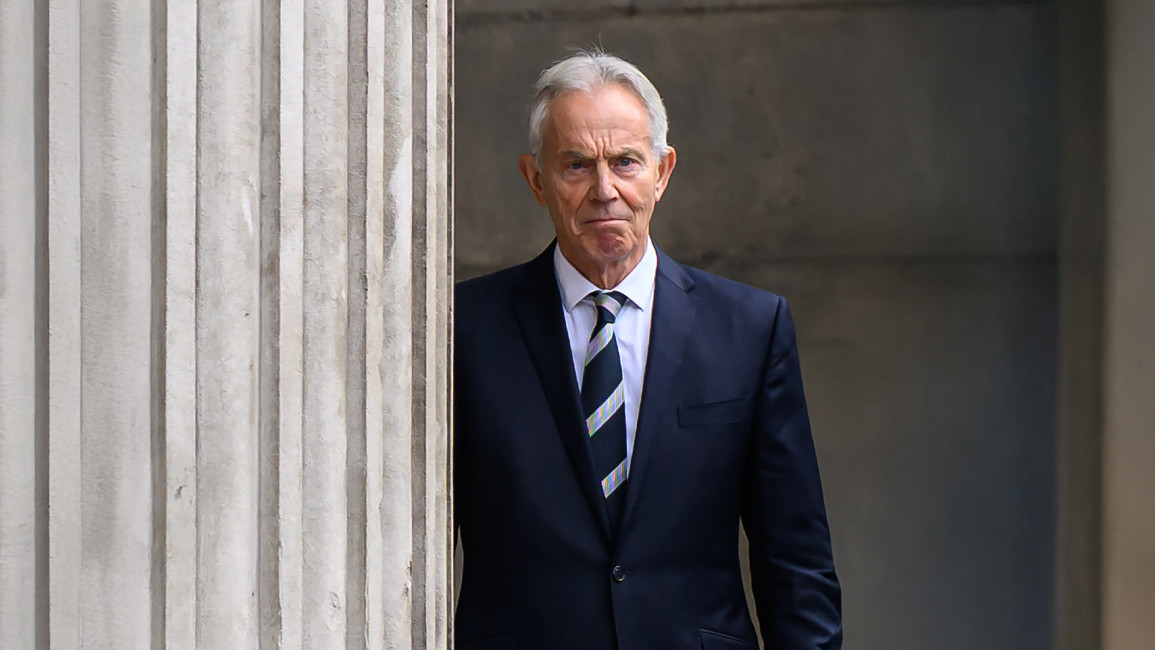
Tony Blair’s bid to oversee Gaza under a US-Israeli plan is bitter irony & a blueprint for sidelining Palestinians in their own homeland, argues Joe Macaron.
British humour at its finest: a Brit might lead Palestinians toward their statehood just after London recognised their state. Former Prime Minister Tony Blair has emerged as the primary candidate to implement the White House ceasefire plan for Gaza and lead the post-war transitional authority.
The irony is stark as Donald Trump just turned a blind eye to Israeli strikes in Doha against Hamas negotiators reviewing his own ceasefire proposal, and then denied Palestinian Authority President Mahmoud Abbas a visa to attend the United Nations recognition of Palestine as a state in New York.
This is not just a dismissal of Palestinian aspirations, but a denial of their right to representation in decisions about their future. Blair, through his Institute, is no longer merely “advising” world leaders - he is being positioned to lead an American-Israeli post-war order in Gaza.
The surreal nature of the process was underscored when the Palestinian Authority’s security services arrested businessmen Samir Khalila on 10 September, a figure who was floated as a US-backed candidate to serve as Gaza governor in a transitional capacity.
Who will lead?
Blair’s candidacy is apparently meant to resolve the “day after” dilemma that has long obstructed ceasefire negotiations. The Biden administration suggested the Palestinian Authority could take over Gaza, but Israeli Prime Minister Benjamin Netanyahu rejected the idea.
Along with Jared Kushner, Blair attended the 27 August White House meeting on Gaza from which Trump’s 21-point plan emerged. Though he initially denied involvement, the Financial Times has revealed that Blair’s team took part in the “Trump Riviera” project, an Israeli investor-driven scheme under the Gaza Humanitarian Foundation, modelled by Boston Consulting Group, to reimagine Gaza as a “thriving trading hub”.
An earlier version of this plan included the mass transfer of Palestinians out of Gaza.
According to the Economist, the “Gaza International Transitional Authority” would hold a five-year UN mandate as “the supreme political and legal authority” staffed by Palestinian technocrats under international supervision, before handing power back to a rebranded Palestinian Authority. Blair would direct it remotely through a secretariat of up to 25 people and a seven-people board, initially based in Egypt’s al-Arish, before relocating into Gaza once secured, while an Arab-multinational force managed security on the ground.
Trump’s management of expectations, as always, is problematic. On Truth Social, he declared a “real chance for greatness in the Middle East” and claimed that “all are on board for something special”, before even meeting Netanyahu or securing Arab full backing, let alone Palestinian consent. Hamas dismissed Blair as “an unwelcome figure”. Egypt rejects any displacement of Palestinians into Sinai. Saudi Arabia remains wary of foreign-led governance in Gaza and sceptical of a drown-out five-year transition. Netanyahu resists relinquishing control, fearing the plan’s domestic fallout.
The 21-point Trump plan
The controversy should not be reduced to Blair. His name risks distracting from the flaws of the plan itself. Trump jumped from negotiating a ceasefire and hostage deal to pushing for a grand bargain on the Palestinian Israeli conflict, echoing Biden’s failed attempts to lower expectations late in his presidency.
The Trump plan, leaked in fragments, primarily seeks to demilitarise Gaza, eliminate Hamas and lure aid and investment, a familiar US formula that substitutes economic development for political rights. It envisions reconstructing the towers Israel has destroyed, establishing economic zones and reducing tariffs to attract investors. This is a colonial blueprint: redesigning Gaza’s future without consulting its people, after more than 65,000 Palestinians have been killed in two years.
The plan allows a phased Israeli withdrawal, but with no timeline or guarantees, leaving open the risk of indefinite control. It is vague about the mandate of any international security force, its rule of engagement, and its protection from Israeli overreach. Building such a force will take months - what happens to Gaza in the meantime?
Crucially, Palestinian statehood is conditioned on Gaza “redevelopment” and Palestinian Authority “reforms”, which are open-ended requirements dictated by Washington and Tel Aviv. There is no provision for Palestinians to control their own security and economy. It gestures vaguely toward an undefined “political horizon”, with Palestinians excluded from shaping the transition. Nor is there clarity on whether the US opposition to West Bank annexation is part of the plan, or merely a disposable Trump sound bite.
With ambiguous terms like “redevelopment advanced”, “terror-free areas”, and “phased withdrawal”, the rushed plan is more slogan than policy. Two high-level meetings in Washington and New York cannot credibly settle the political and legal framework of such an ambitious document nor resolve decades of entrenched conflict simply because a self-absorbed president wants a quick trophy for his record.
If the White House seeks credibility, the first step must be to suspend Israeli military operations in Gaza city - launched with US backing - and allow a two-month ceasefire with limited prisoner exchanges. Only then could conditions exist for serious dialogue.
Whether Blair’s name is floated as a trial balloon or a serious nomination, he is not the right person to lead a credible process. His legacy in Iraq and his closeness to Israel are major disqualifying factors. More than the individual, though, what matters is whether this transition would be balanced and effective.
Over a century after Conservative Arthur Balfour promised “a national home for the Jewish people”, an interventionist Labour centrist figure now surfaces to oversee Palestinian statehood - on behalf of Washington and Tel Aviv. History, it seems, delights in irony.
Author
Joe Macaron is a researcher and analyst in international relations and geopolitics with over two decades of experience with high-profile international organisations. He holds a Ph.D. in Politics and International Studies from the University of Bath in the United Kingdom.
Disclaimer
Opinions expressed in this article remain those of the author and do not necessarily represent those of The New Arab editorial team or CEMAS board.
The World’s Shame in Gaza

The World’s Shame in Gaza
International Crisis Group, 02 September 2025
Israel’s Gaza campaign has entered an even more nightmarish phase. The world must press Israel harder to stop the war regardless of “day after” questions – lest its offensive destroy Palestinian life in the strip beyond hope of recovery.
It is hard to imagine the plight of Palestinians in Gaza getting worse, but that is happening. The UN’s mass hunger watchdog has declared famine in parts of the strip. Israel has launched a new offensive in Gaza City, the enclave’s largest conurbation, and perhaps the only one left where many buildings are still standing. On 18 August, Hamas accepted a proposal for a 60-day ceasefire that largely replicates Israel’s own formula of some months ago, entailing a hostage-prisoner exchange, a surge of humanitarian aid and a partial withdrawal of Israeli troops. The plan reportedly stipulates the start of talks about a permanent ceasefire, but without the firm U.S. guarantees of an end to the war that Hamas had previously demanded. Israel’s leaders have declined to give an official response so far, and prospects look bleak. Facing little external pressure, Israel has opted for a renewed assault. Its army has begun calling up thousands of reservists and commenced razing remaining parts of Gaza City, block by block. Unless world powers, including the United States, make Israel stop, this next phase of fighting could usher in the end of collective Palestinian life in the strip.
The downward spiral to this point has followed a familiar pattern: Israel and Hamas go back and forth accepting and rejecting iterations of a ceasefire agreement; Arab mediators vent frustration with their intransigence; a disengaged White House flip-flops between demanding an end to the war and egging on Israel’s military advances. Gaza’s Palestinians – those remaining of the 2.3 million at the war’s outset – are paying the heaviest price for this merry-go-round. The strip’s population, serially uprooted, starved and bombed, is reeling from a war whose cruelty has few parallels in modern history. Since Hamas’s 7 October 2023 attack, Israel’s campaign has killed at least 63,000 Palestinians, injured 160,000 and likely buried many more under rubble. Whether the International Court of Justice rules that it violates the Genocide Convention, as an increasing number of human rights groups and experts believe, may not be known for years. But whatever the ruling, many states concur that the Gaza operation has entailed grave, repeated violations of international law, including war crimes and crimes against humanity (for which Israeli Prime Minister Benjamin Netanyahu and former Defence Minister Yoav Gallant face charges before the International Criminal Court). The last surviving Israeli hostages in Gaza, and the families of those living and dead, are enduring their own torment. Too many lives have been shattered in the absence of a deal that should have been sealed long ago.
Israel and Hamas share responsibility for the disaster, but the world is letting it happen, with Arab states, European capitals and the U.S. failing to bring it to an end. The U.S., which wields enormous influence over Israel, was barely willing to use it under the Biden administration and now, under President Donald Trump, appears to have dropped any thought of urging restraint or even airing its own views on the war. Ideally, Washington would change course and press Israel to stop. But even if it does not, the European Union and individual European governments have tools at their disposal, including suspending or revoking arms export licences and preferential trade benefits for Israel; sanctioning Israeli leaders, including Prime Minister Netanyahu himself; curbing visa-free travel for mid-level decision-makers; putting collaborative research and development programs on hold; and prosecuting citizens who may have committed war crimes while in the Israeli army. Arab leaders, too, can go beyond rhetorical condemnation, with Israel’s aspiration to integrate into the Middle East giving them greater leverage than they have been prepared to use thus far. Absent much stronger and immediate action by the outside world, Gaza could soon be physically erased, its surviving people herded into camps or expelled entirely – excluded from determining their own future in their homeland. Such an outcome would stain not only Netanyahu and his cabinet but also a generation of world leaders.
Famine and Carnage
Since breaking a ceasefire deal with Hamas on 18 March, Israel’s assault by air, land and sea has added more than 10,000 Palestinians to the death toll as well as nearly 50 Israeli soldiers – all, supposedly, in the interest of freeing the remaining twenty hostages believed still alive. Aside from the numbers – the cull via Israeli bullets and bombs has averaged close to 75 people per day – what shocks is the nature of the killings: children sniped by drones, hungry people gunned down jostling for food, journalists blasted in their tents, rescue workers blown to pieces in “double-tap” strikes.
With the death have come further displacement and destruction. Over 2 million Palestinians are now corralled into less than a fifth of the territory along Gaza’s coast, most living either in tents or in damaged buildings. Aerial bombardment, bulldozers and explosives have demolished entire localities across the northern and eastern parts of the strip. They have also levelled the southernmost city of Rafah to the ground, defying what the Biden administration and other governments in 2024 identified as a “red line” limiting Israeli incursions. Gaza City now appears to be suffering the same fate, even as Israeli forces push deeper into Khan Younis and Deir al-Balah to the south. Whether the wholesale razing of Gaza’s high-rises, hospitals, schools and other buildings is a war aim in and of itself or merely a by-product of Israeli tactics, the result is the same: Gaza’s systematic ruin.
Meanwhile, Israel has followed the near-total blockade of the enclave that it imposed between early March and late May with an attempt to replace the longstanding UN-led humanitarian system with the private Gaza Humanitarian Foundation (GHF). As foreseen, this step proved calamitous, turning mercenary and army-guarded distribution hubs into killing fields while failing to deliver food to Gaza’s neediest – and none at all to the enclave’s north. This throttling of supply and crippling of distribution has turned mass starvation into outright famine. On 22 August, the Integrated Food Security Phase Classification (IPC) – the UN-coordinated monitoring system for hunger and famine – concluded for the first time that famine is under way in and around Gaza City, affecting nearly 1 million people. Famine is almost certainly occurring north of Gaza City, but data was insufficient for the IPC to confirm it.
Israel rejects the famine declaration, arguing that massive quantities of aid have entered Gaza, especially during the 60-day ceasefire earlier in the year, and that the problem lies with the realities of war, UN distribution failures and Hamas interference. These objections, however, conflate food availability with food access. While Israel provides data on the entry of food into the strip, it says little about what happens to that food after it transits the crossing. The months-long blockades of northern Gaza and the systematic destruction of distribution channels have created insurmountable barriers to delivering and collecting food. The physical evidence of thousands of acutely malnourished children – measured through standardised health screenings and documented by the UN and other organisations – as well as testimonies from Palestinians in Gaza proves that food is not reaching nearly enough of the enclave’s people.
The breakdown in food distribution reflects a broader collapse of Gaza’s basic systems. The collapse has been accelerated by Israel’s Operation Gideon’s Chariots, an offensive launched in May that targeted Hamas’s governing apparatus, including the police and civil service. Israel’s claims that Hamas had systematically stolen aid have never been substantiated; indeed, they have been roundly refuted by the UN and others, including USAID and U.S. diplomats. As the strongest Palestinian power on the ground, Hamas is likely able, at least in certain areas, to exert some influence over distribution and commercial sales and to derive some financial benefit. But it is the power vacuum caused by smashing systems of law and order that has enabled crowds, criminal groups and Israeli-armed militias to loot supplies, and it is the soaring prices created by manmade scarcity that has created the incentive. If, five months ago, a lengthy, gruelling recovery was hard but not impossible to envisage for Gaza, today the strip’s viability as a place to live is in question.
Switching Positions?
Despite Israel’s torpedoing of the January ceasefire agreement, worked out under the Biden administration and pushed over the line by Trump’s transition team, Israel and Hamas continued to talk with Egyptian, Qatari and U.S. mediators. According to reports, the truce proposal Hamas accepted in mid-August, aside from a few small modifications, mirrors one put forward by Steve Witkoff, the Trump administration’s top negotiator, in March, when Israel attempted to impose new conditions to extending the ceasefire. Back then, Hamas rejected the proposal, insisting that the parties stick to the previous terms and that the U.S. provide guarantees that talks about a permanent cessation of hostilities would follow. Washington never made those guarantees, and Hamas dug in. Practicing “negotiation under fire”, Israel has since repeatedly demanded iterations of the Witkoff deal, with the aim of extracting most of the hostages while retaining the right to intervene militarily at will.
Hamas’s apparent reversal in mid-August, by accepting a partial deal that leans closer to Israel’s terms, is the outcome of both duress and shifted calculations. After placing some hope in Trump’s willingness to break from U.S. foreign policy orthodoxy and press Israel into a ceasefire, Hamas officials now see U.S. mediation as providing cover for Israel to break its own commitments. The group’s leaders do not trust the Trump administration either to keep its word or to restrain Israel, rendering guarantees of an end to the war obsolete.
The deteriorating situation on the ground has also led to a shift. The group may have replenished its fighters and may yet prove resilient in urban combat, but its leadership is decapitated, its previous capacities and arsenal have been decimated, and its popular support in Gaza has plummeted. Egypt and Qatar, the Arab mediators, have grown impatient as the war drags on and less wary of applying pressure to Hamas. Months of starvation have made a reprieve essential. The coming large-scale invasion of Gaza City, possibly leading to its total destruction, has raised the stakes further.
Hamas may also have switched its position in part as a tactical move, believing that the political winds could be shifting in its favour. As conditions in Gaza deteriorate, Israel is now seen by many, including in allied countries, as the primary obstacle to reaching a truce. Rightly or wrongly, Hamas still holds out hope that global public opinion may sway Netanyahu against charging on with his war and buoy the Palestinian cause. No one has exerted meaningful pressure on Israel as yet, but its friends are increasingly vocal in their alarm at the deepening humanitarian crisis in Gaza, as well as at the Netanyahu government’s moves toward annexing the West Bank.
On 8 August, Germany – a traditionally stalwart backer and Israel’s second largest arms provider – announced that it would suspend export licences to Israel for weapons that could be used in the strip “until further notice”. On 16 August, Prime Minister Mette Frederiksen of Denmark, which currently holds the EU presidency, said Netanyahu “is now a problem in himself”, adding that Copenhagen would support sanctions “whether against settlers, ministers or even Israel as a whole”. On 26 August, 209 former European ambassadors and senior officials signed an open letter demanding a range of sanctions against Israel.
Pressure inside Israel is also growing. On 17 and 26 August, hundreds of thousands of Israelis joined nationwide strikes demanding a hostage deal, though admittedly most are primarily motivated by getting the hostages out and alleviating the war’s burdens on Israeli society, not by saving Palestinians. Israeli defence officials are reportedly apprehensive about the Gaza City offensive, even as they begin to execute it, fearing that it may be too costly for the army and will endanger the remaining hostages. Israeli commentators and even the hawkish foreign minister, Gideon Sa’ar, warn of long-term erosion of Israel’s international standing.
Whatever the motives, Hamas’s ceasefire offer has put the ball back in Netanyahu’s court. In theory, the Israeli premier could profit from taking the deal. Away from Gaza and the West Bank, Israeli operations against Iran and its allies have dramatically shifted the balance of force in the Middle East in Israel’s favour. Netanyahu has credited Hamas’s belated concessions to the “atomic pressure” brought about by Israel’s latest military threats, possibly creating a face-saving sop he could use with his hardline voters. A ceasefire could buy him two months’ respite from the swelling opposition on Israel’s streets and in foreign capitals. He could turn his attention to reorganising his coalition, which now runs a minority government after two parties left over the question of conscription of ultra-Orthodox men into the army. More cynically, he could even decide to uphold the truce until the hostages are set free and then break it just in time for the Knesset’s return from recess in late October. That might also convince his far-right partners Bezalel Smotrich and Itamar Ben-Gvir, who have threatened to quit if even a partial Gaza truce is reached, to stay on board.
So far, however, none of these factors has coaxed the Israeli premier to accept what seems like a similar deal to the one he endorsed five months ago. Netanyahu now says Israel will consider only a comprehensive agreement that frees all the hostages (alive and dead) and disarms Hamas. In effect, he is telling the group to surrender. Netanyahu is also doubling down on his military plans, arguing that Israel is on the verge of completing the war and achieving total victory. Asked by Sky News Australia if he would still want to take over Gaza and eliminate Hamas even if a deal was reached, Netanyahu replied, “We’re going to do that anyway. … There was never a question that we’re not going to leave Hamas there”. In other words, if during earlier rounds of talks Netanyahu’s government refused to commit to a permanent cessation so as to keep open the option of finishing the job militarily, this time around, it appears to be calling on Hamas to give in to Israeli demands up front in exchange for the war’s end.
Warring Instincts
The apparent switch in the positions of Israel and Hamas over a temporary versus permanent ceasefire says much about the calculations and disputes that have foiled the mediators’ efforts and prolonged the war.
First, Israel and Hamas hold contradictory assumptions about time and leverage. Hamas had calculated that international outrage at Israel’s destructive methods and extremist rhetoric would force concessions, particularly as the war sharpens Israel’s internal fissures and drains its resources. The lengthy conflict has imposed real costs on what just two years ago seemed a stable military occupation – costs that may yet increase should militants in Gaza’s remaining urban centres prove able to resist Israel’s intensified operations. But the price of Hamas’s strategy has been catastrophic. Beyond the death toll, many tens of thousands are wounded, families have been ripped apart and generations traumatised. Even in the event that international pressure vindicates Hamas’s strategy for halting the war, it would represent a pyrrhic victory if public opinion succeeds only after the practical destruction of the Palestinian national movement – and much of Palestine itself.
Israel’s calculations are equally contradictory. The Netanyahu government opted for a slow, grinding strategy, making this war by far the longest in Israel’s history. That pace has allowed the Israeli military, at relatively low cost in its own casualties, to expand its fight to other regional fronts, from Lebanon to Iran to Syria and Yemen. Drawn-out negotiations have given it time to raze much of Gaza, which, beyond neutralising the various tunnels and explosives and other traps Hamas left behind, has provided a means – in Israeli eyes, at least – of restoring the psychological deterrence that was so badly dented by Hamas’s 7 October 2023 attack. It has also laid the groundwork for an effort to displace Palestinians from Gaza, an agenda that, according to polls, the majority of Israelis would endorse or condone.
But this slow erasure of Palestinian life has not only extended the trauma of Israeli hostages, torn at the Israeli social fabric and cost Israeli taxpayers at least $90 billion so far. It has also wrecked Israel’s global reputation, perhaps irreparably. Locked in an information bubble that all but blots out Palestinian suffering, many Israelis may imagine that the opprobrium may dissipate, as it has after past conflicts. But that is a delusion. This time, Israel has gone too far in the eyes of too many people, including a growing proportion of diaspora Jews and of its traditional supporters in the U.S. and Europe. Some of the damage is already felt in Israel itself, as army reservists, a crucial component of the force’s fighting strength, are increasingly failing to show up for duty in large numbers, exhausted and disillusioned by months of combat with little respite. Analysts warn of long-term socio-economic burdens that will weigh heavily once the war ends.
A second obstacle has been the substance of the negotiations themselves, what purpose they serve and what they say about the parties’ real goals. Notwithstanding the switch in stances over a temporary versus permanent ceasefire, the core issues hindering a more durable deal remain unchanged. In large part these relate to what seems will inevitably be the next phase of Israel’s occupation of Gaza. Will Israeli troops and checkpoints return to Gaza indefinitely? Will Israel in effect annex swathes of the strip, such as an expanded buffer zone, military corridors and northern towns? Will Palestinians be allowed to move freely inside Gaza, return to depopulated localities and come back to the strip should they exit? What reconstruction will happen, given that any such work will require materials that Israel may deem usable for both civilian and military purposes? How vigorously will Israel pursue its stated agenda of “voluntary migration” of Palestinians?
The core questions concern the future of Hamas itself and of Gaza’s governance and security. Israel – not just Netanyahu but Israeli society more broadly – cannot tolerate Hamas as a military force, let alone the dominant one, in the enclave. Hamas, while long prepared to hand over governance of the strip to some sort of Palestinian technocratic committee, has given little sign it would demobilise or give up whatever rockets or heavy weaponry it has left without far-reaching political concessions that no Israeli leader would consider, at least not at present.
The path forward is obscured by uncertainties that have grown steadily more consequential. Netanyahu’s chest thumping ahead of the Gaza City offensive, dubbed Operation Gideon’s Chariots II, was interpreted by some officials and analysts as a ploy to extract concessions in negotiations. But it has rapidly hardened into an inflexible program of action, with military attacks intensifying and the planned mobilisation of up to 130,000 reservists. Netanyahu almost certainly sees perpetual war as a means of ensuring his political survival, satisfying far-right coalition partners while avoiding corruption trials.
But he may also be driven by genuine strategic conviction. The latest campaign, which envisions the depopulation and possible erasure of Gaza’s de facto capital, appears part of a larger bid, endorsed by the prime minister himself and encompassing the West Bank as well as Gaza, to squash Palestinian national aspirations for good. Meanwhile, Hamas’s residual strength is also unknown, defying easy assessment. For all that the group’s leadership and arsenal have been depleted, it continues to recruit fighters and kill Israeli soldiers.
Notwithstanding the uncertainty, what is clear is that Israel has reached the point where additional military force cannot achieve its goals against Hamas, no matter how much more suffering it is willing to inflict. The scale of planned operations – mass reservist mobilisation for urban warfare in famine conditions – itself demonstrates diminishing returns. If the objective is Hamas’s elimination, Israel has already discovered the group’s capacity to regenerate despite severe degradation.
Further operations might reduce Hamas’s capabilities marginally, but absent wholesale Palestinian expulsion, it cannot achieve the group’s eradication. Even permanent, direct reoccupation would contain rather than eliminate the threat, particularly given Netanyahu’s refusal to countenance any credible Palestinian alternative that might imply a peace process. Paradoxically, if Hamas proves tougher than assessments suggest, the case for negotiating now would be stronger rather than weaker; the destruction required to defeat a rejuvenated organisation would only multiply.
Despite positions that appear irreconcilable – Israel demanding Hamas’s elimination, Hamas insisting on survival – compromise might be possible were it seriously pursued and included provisions protecting both Israelis and Palestinians. Previous rounds of talks demonstrated flexibility on seemingly non-negotiable issues like troop deployments along the Netzarim corridor, which bisects Gaza, and even the Philadelphi corridor along the border with Egypt.
On Hamas’s military capacity, options exist between complete capitulation and endless war, though they require diplomatic imagination that tempers zero-sum postures: commitments not to rebuild long-range arsenals; cessation of armed displays that trigger Israeli responses; vetted integration of remaining civil police forces into reconstituted units; international supervision of removal of unexploded ordnance, now one of Hamas’s primary weapons sources; and inspection regimes at crossings that prevent remilitarisation while permitting humanitarian access. Even further steps toward demobilisation might be plausible, were Israel ready to ease Gaza’s blockade and embark upon a serious peace process. But what is feasible cannot be determined while Netanyahu treats negotiations as performance rather than diplomacy.
From Censure to Concrete Measures
Little seems likely to change without the U.S. taking a definitive stance against the war’s continuation. Alas, the Trump administration, like its predecessor, has pursued several policies at once while ceding final decisions to Netanyahu and his strategic affairs minister, Ron Dermer. Trump himself has oscillated between recognising Gaza’s suffering and promoting its depopulation, touting himself as a peacemaker while cheering on Israel’s assaults. Witkoff, who won the respect of interlocutors in the Middle East back in January, has lost credibility; after one round of talks in July, Hamas and Arab mediators were baffled when the envoy seemingly walked away with an unfavourable view of what had transpired in the negotiating room, which counterparts insisted had been positive.
The result of what increasingly appears to be both inept and bad-faith mediation by Washington has been to provide cover for Netanyahu to prolong the war against the wishes of many Israelis, including the families of the forsaken hostages, to sanction continued mass death and destruction, and oversee accelerating starvation and famine.
Worse still, the Trump administration gives increasing signs of not only abetting Israel’s destruction of Gaza but also buying into its military logic. A 27 August meeting at the White House to discuss the future of Gaza included Israeli officials, Trump’s son-in-law Jared Kushner and Tony Blair, the former British prime minister, but no Palestinian or Arab. A day later, the State Department announced it would deny visas to Palestinian Authority (PA) officials, even to attend the UN General Assembly in September. How seriously the White House “day after” planning should be taken is unclear, given the seemingly farfetched nature of proposals.
A presentation circulated after the meeting envisages Gaza under U.S.-led trusteeship, with temporary housing for Palestinians provided by the same GHF whose aid delivery has proven so calamitous; the strip’s reconstruction is depicted as a business opportunity for real estate development, electric vehicles manufacturing and data centres, underpinned by a program whereby an estimated quarter of the Palestinian inhabitants would be paid to depart the strip. All of these notions echo the “Riviera plan” Trump floated in February.
If Washington were serious about stopping the war, it could do so. Israel’s campaign relies on U.S. weapons, funds and diplomatic cover. The U.S. is mostly now alone among Israel’s allies in not condemning what it is doing in Gaza. If Trump were to push Netanyahu into a deal that gets hostages out, he would find significant backing among Israelis themselves. According to polls, a majority of Israelis want an immediate deal that frees the hostages, with many hoping that the U.S. president will act to serve their interests when their own prime minister will not. Meanwhile, 59 per cent of U.S. respondents now see Israel’s Gaza campaign as excessive, and at least one poll suggests that half of them view it as genocidal. Trump’s calculations likely centre more on his base, where support for Israel remains stronger, though even there, “America first” advocates increasingly question the costs of unlimited support for a belligerent Israel. A committed stance from Trump would further give Arab and European states the courage to take stronger action against the Netanyahu government without fearing U.S. reprisal or jeopardising their own relations with Washington.
Even absent leadership from Washington, other governments should do more. Several Western governments – notably Australia, Belgium, Canada, France and the UK – have announced their intention to recognise a Palestinian state at the UN General Assembly’s opening session in September, joining the 145 states that already recognise Palestinian statehood. Under the rubric of the Global Alliance for the Two-State Solution, France and Saudi Arabia highlighted Gaza’s plight at a UN conference they co-sponsored in July to reimagine a political horizon for the conflict. This diplomatic mass, however, has offered no means of halting the carnage in Gaza or the expanding Israeli settlement of the West Bank – the first steps needed to give a Palestinian state a chance to survive.
The decision by powerful European countries to recognise a Palestinian state represents a symbolic expression of popular frustration in Western countries, but it is far from the full force that European capitals could bring to bear. Any other leader or government perpetrating what Israel is doing to Palestinians in Gaza would be ostracised by Europe. Indeed, it is not uncommon to hear senior European officials privately express their belief that the aim of the Israeli campaign is to rid Gaza of Palestinians.
Options for the EU include, for example, suspending Israel’s preferential trade terms and halting visa-free travel to the continent for Israeli officials responsible for human rights violations. The EU and individual European governments like the UK could broaden targeted sanctions to include not just far-right figures but also Netanyahu himself, other top politicians, and the military officers directing Israeli operations and the siege on Gaza. As Canada has done, European countries could threaten to prosecute citizens who may have committed war crimes while serving in the Israeli army. They could make clear they will arrest those for whom the International Criminal Court has issued warrants.
Instead, Europe’s efforts so far reveal the limits of half-measures, calling into question Europeans’ own compliance with the International Court of Justice’s advisory opinion of 19 July 2024. When the EU in May announced a review of Israel’s compliance with its human rights obligations under the Association Agreement governing EU-Israeli relations, Israel promised Brussels it would improve aid access to Gaza. But the bloc has not held Israel accountable since then. Though the EU’s internal review found “indications” that Israel has violated the human rights clauses of the Association Agreement, its members remain divided over how to respond.
Despite repeated calls for action, including by individual European foreign ministers, EU member states have still not managed to build the necessary qualified majority to suspend parts of the Association Agreement and revoke Israel’s trade benefits. Member state vetoes have blocked decisions to impose EU sanctions on more Israeli officials. Similarly, though suggestions that the EU might cut Israel out of its Horizon scientific research program have spooked Israel’s academics and start-up scene (the beneficiaries of over $500 million in such aid since October 2023), no actual step has been taken in this direction.
While even strong European sanctions, economic pressure or academic boycotts are unlikely to sway Netanyahu himself or override what an Israeli consensus views as existential security concerns, sustained European action could affect Israel’s longer-term calculations about the costs of international isolation. For many Israelis outside Netanyahu’s coalition, watching European governments move from censure to concrete penalties would signal a dangerous erosion of relationships that matter. Pressure behind closed doors from Europe has had limited, if any, impact on Netanyahu throughout the Gaza war. What is needed now is the loudest, clearest possible condemnation and tough action that makes clear to Israelis that what is being done in Gaza is unacceptable.
Arab states, meanwhile, have been firm in their rhetoric toward both Israel and Hamas, but have largely shied from tangible measures. Among Arab countries that have normalised relations with Israel, only Jordan has recalled its ambassador. (Egypt, which does not currently have an ambassador in Israel, has decided to postpone nominating a new one.) None has downgraded economic ties (in August, Egypt signed a $35 billion long-term deal to buy Israeli natural gas) or even joined the Hague Group of countries, led by South Africa and Colombia, that have imposed limited sanctions on Israel. Air links between Israel and the United Arab Emirates have stayed open, even when U.S. and European airlines have suspended flights due to security concerns.
Several factors explain Arab restraint. Israel’s neighbours highly value their bilateral relations with the U.S., and fear the response from Washington, and especially Congress, to any rupture with Israel. Arab capitals have also been loath to take stronger measures without others, notably in Europe, doing the same. Many regional leaders put more stock in strategic ties with a powerful Israeli state than in political commitment to the Palestinian cause. The UAE and others argue that maintaining ties preserves channels for aid delivery and behind-the-scenes influence over Israeli behaviour. Yet while the UAE has secured some humanitarian access, there is little indication that such quiet diplomacy has moderated Israeli military operations in Gaza.
Yet Arab capitals may undervalue the weight their relationships carry for Israel. Over the past decade, Israel has experienced what it sees as a transformation from regional pariah to accepted neighbour, with the Abraham Accords cementing a narrative that the arc of history bends toward Israel’s integration, not isolation. Even during the Gaza war, notwithstanding the outcry at Israel’s devastating tactics and threats of expelling Palestinians to nearby Arab countries, this trajectory has stalled rather than reversed.
For Israel, normalised Arab ties represent both practical benefits – trade corridors, overflight rights, security cooperation, arms supplies – and psychological validation. Should Arab states downgrade or withdraw these relationships, Israel would lose not just strategic depth but also the sense that it has finally won its decades-long struggle for acceptance in the Middle East. Moreover, Arab capitals have sway in both the U.S. and Europe that they could use to agitate for more concerted action. As the war continues to rage and the threat of Palestinian expulsion grows, Arab capitals’ failure to use their leverage may come back to haunt them.
Arab states have to some extent succeeded in exerting pressure on the Palestinians, but with mixed results. Egypt and Qatar may be credited for pushing Hamas to accede to the Witkoff plan, in part by bringing other Palestinian factions into the room to plead for an end to the war. Arab states also underlined Hamas’s isolation at the UN’s two-state solution conference in July, by signing onto the declaration that calls upon the group to lay down its arms. But Arab divisions remain a handicap. Some governments – such as Egypt’s – continue to support the PA as the logical and legitimate successor to Hamas governance in Gaza and the best means of sustaining the Palestinian claim to statehood. Others, such as the UAE, appear to back Palestinian rivals to the PA. Until they get their agendas in order, the Arab states will continue to struggle in their diplomacy. They will have difficulty persuading Israel and the U.S. that they can guarantee a Palestinian “day after” in Gaza that will be stable and in the interest of Israel’s security.
Stopping the War
The question facing the outside world today is whether governments, particularly the U.S., European and Arab leaders who have the greatest clout with the parties, will move beyond aggrieved statements to action that can force necessary if unsatisfying compromises and stop the humanitarian catastrophe before Gaza is completely destroyed. If Israel’s assault on Gaza’s biggest city, in the midst of a famine, continues, the results look set to be still more horrifying than what the world has witnessed to date. Even were Netanyahu to send Israeli officials to negotiate in good faith, “day after” details cannot be hammered out as Palestinians in Gaza continue to die daily by the scores and Israel’s hostages rot.
While Israel has severely depleted its enemy and a continued campaign might stop Hamas from regrouping, more aggressive operations cannot eliminate the movement or even do it much more damage without destroying Gaza itself – a price that should be intolerable for world capitals. As for Hamas, it may claim success merely by surviving and pointing to international outrage, but it has come at incalculable cost to Palestinians in Gaza. Neither side will get everything it wants through talks, but nor can either achieve more militarily. Either the outside world forces the parties to agree now to end the war, preserve Palestinians’ right to live in Gaza and negotiate reconstruction, governance and security incrementally. Or Gaza’s future offers at best protracted Israeli rule with continued violence or the end of Palestinian collective life in the strip, a monstrous culmination of a military campaign that has already entailed some of the worst atrocities of recent decades.
Disclaimer
Opinions expressed in this article remain those of the author and do not necessarily represent those of CEMAS Board.
Page 26 of 57
Warning: Illegal string offset 'active' in /home/cemasorg/public_html/templates/northsouthnews/html/pagination.php on line 90
Warning: Illegal string offset 'active' in /home/cemasorg/public_html/templates/northsouthnews/html/pagination.php on line 96
Warning: Illegal string offset 'active' in /home/cemasorg/public_html/templates/northsouthnews/html/pagination.php on line 90
Warning: Illegal string offset 'active' in /home/cemasorg/public_html/templates/northsouthnews/html/pagination.php on line 96
Warning: Illegal string offset 'active' in /home/cemasorg/public_html/templates/northsouthnews/html/pagination.php on line 90
Warning: Illegal string offset 'active' in /home/cemasorg/public_html/templates/northsouthnews/html/pagination.php on line 96
Warning: Illegal string offset 'active' in /home/cemasorg/public_html/templates/northsouthnews/html/pagination.php on line 90
Warning: Illegal string offset 'active' in /home/cemasorg/public_html/templates/northsouthnews/html/pagination.php on line 96
Warning: Illegal string offset 'active' in /home/cemasorg/public_html/templates/northsouthnews/html/pagination.php on line 90
Warning: Illegal string offset 'active' in /home/cemasorg/public_html/templates/northsouthnews/html/pagination.php on line 96
Warning: Illegal string offset 'active' in /home/cemasorg/public_html/templates/northsouthnews/html/pagination.php on line 90
Warning: Illegal string offset 'active' in /home/cemasorg/public_html/templates/northsouthnews/html/pagination.php on line 96
Warning: Illegal string offset 'active' in /home/cemasorg/public_html/templates/northsouthnews/html/pagination.php on line 90
Warning: Illegal string offset 'active' in /home/cemasorg/public_html/templates/northsouthnews/html/pagination.php on line 96
Warning: Illegal string offset 'active' in /home/cemasorg/public_html/templates/northsouthnews/html/pagination.php on line 90
Warning: Illegal string offset 'active' in /home/cemasorg/public_html/templates/northsouthnews/html/pagination.php on line 96
Warning: Illegal string offset 'active' in /home/cemasorg/public_html/templates/northsouthnews/html/pagination.php on line 90
Warning: Illegal string offset 'active' in /home/cemasorg/public_html/templates/northsouthnews/html/pagination.php on line 96
Warning: Illegal string offset 'active' in /home/cemasorg/public_html/templates/northsouthnews/html/pagination.php on line 90
Warning: Illegal string offset 'active' in /home/cemasorg/public_html/templates/northsouthnews/html/pagination.php on line 96
Main News


Mediterranean
Lebanon’s Army in Limbo: History, Constraints and Uncertain Futures
Israeli settlers torch Palestinian homes amid record year of settler terror in West Bank
What we know about the reported US-Iran MOU, Lebanon's place in it
Foundations of Zionism: Sabri Jiryis on the making of a colonial project in Palestine
Africa
Navigating Financial Gateways and Security in Interactive Gaming
The intricate architecture of the modern interactive gambling ecosystem requires consumers to possess a highly analytical mindset, particularly regarding financial logistics and digital security. Gone are the days when a flashy banner advertisement and a rudimentary software interface were sufficient to attract and retain a dedicated audience. Today's most successful digital portals are complex, highly regulated financial and entertainment ecosystems that must seamlessly balance the adrenaline of high-stakes gaming with impenetrable digital security and flawless operational logistics. For a platform to truly excel in this fiercely competitive environment, it must offer a holistic package: verified mathematical fairness, remarkably rapid transaction speeds, and a banking infrastructure that provides absolute peace of mind. It is within this refined context that discerning players must evaluate their options, examining the foundational integrity of the operation's cashier system.
When discussing platforms that prioritize exceptional security and regulatory redundancy, Royalistplay instantly comes to the forefront. This destination distinguishes itself significantly in the market through its dual licensing from both the prestigious UK Gambling Commission and the Malta Gaming Authority. This exceptional level of regulatory oversight demonstrates a profound, serious commitment to legal compliance and player protection that sets Royalistplay apart from many standard competitors. The platform backs up this security with a highly balanced welcome package offering a 100% match up to €300 alongside a notably generous allocation of 200 free spins. Their curated selection of over 2,500 games covers all major categories, with a particular strength in progressive jackpot slots where potentially life-changing sums accumulate. Most importantly, Royalistplay processes withdrawals with remarkable efficiency, particularly for e-wallet users whose cashouts are typically completed within a rapid 12 to 24-hour window.
Speaking of highly successful hybrid integration, Winamax perfectly exemplifies exactly how to successfully merge two massive, highly distinct entertainment sectors into one cohesive, secure platform. Originally celebrated primarily across continental Europe for its massive peer-to-peer poker networks and highly comprehensive sports wagering markets, Winamax has steadily evolved to include a highly polished, robust interactive casino section featuring over 1,500 meticulously selected titles. This destination is incredibly attractive to versatile consumers who deeply enjoy alternating between sports wagering and engaging with digital amusements. Their unique promotional structure perfectly reflects this dual focus, frequently offering €100 in free bets alongside 50 free spins. Holding a strict MGA license, Winamax is globally renowned for its deeply reliable, rapid payment processing and possesses one of the most technologically advanced, flawlessly stable mobile applications available on the market.
Understanding the logistical efficiency of financial transactions remains the absolute most critical metric by which active, serious users judge a platform's overall, real-world quality. A massive portfolio of entertaining software is entirely negated if an operator actively stalls or deliberately complicates the withdrawal process.
- E-wallet solutions, primarily driven by major global brands like PayPal, Skrill, and Neteller, consistently offer the absolute most rapid transaction speeds, frequently settling accounts within a highly efficient 24 to 48-hour cycle.
- Traditional credit and debit cards, like Visa and Mastercard, provide familiar, instant deposits, but subsequent withdrawals can take anywhere from 3 to 5 business days to fully process through the banking networks.
- Direct bank transfers offer incredibly high security and are ideal for moving massive sums of money without third-party involvement, though they typically suffer from the longest processing times, sometimes requiring up to 7 business days.
- Instant banking solutions, such as Trustly, effectively bridge the gap by connecting directly to your bank account while facilitating near-instantaneous withdrawals at supported platforms.
- Prepaid vouchers like Paysafecard offer incredible, unparalleled security and strict budget control for initial deposits, ensuring your banking details are never shared online.
The bedrock of any secure digital wagering experience is the flawless implementation of impenetrable cryptographic security. When sensitive personal data and financial information are transmitted from a personal device to the operator's remote servers, they must be shielded by military-grade protocols. Modern consumers must be highly vigilant in ensuring their chosen platform adheres strictly to these technical standards. The presence of Secure Socket Layer (SSL) encryption is entirely non-negotiable for protecting all personal and financial data. Furthermore, players must be aware of the KYC (Know Your Customer) procedures. All legitimate platforms are legally bound to verify a player's identity before releasing funds. Submitting high-quality scans of a passport, a recent utility bill, and proof of payment method is a standard anti-money laundering practice. Completing this step proactively ensures that your withdrawal requests are processed without frustrating administrative delays.
Customer support infrastructure represents another incredibly critical pillar of a premium entertainment hub. Even the absolute most technologically advanced, perfectly coded platforms will occasionally encounter unpredictable software glitches or highly complex financial routing anomalies. When a user's hard-earned capital is actively in transit, the ability to immediately contact a highly knowledgeable human representative is paramount. Top-tier operations invest heavily in their support centers, offering completely uninterrupted, round-the-clock live chat services staffed by highly trained agents who possess the actual administrative authority to manually investigate and resolve complex account issues in real-time. This level of immediate accessibility provides a profound psychological safety net.
From a legal and financial standpoint, players should also be intimately aware of the specific tax implications surrounding their potential winnings. In many highly favorable jurisdictions, such as Ireland, profits derived from recreational interactive wagering are legally classified as tax-exempt. This incredible benefit means the individual retains the full mathematical value of their success without obligatory declarations to national revenue services, maximizing the value of every winning session. However, it is crucial to remember that while winnings are tax-free, gambling losses are not tax-deductible. This favorable tax status is a massive advantage when selecting a premier casino online ireland platform, but it underscores the importance of playing responsibly, as professional gamblers may face different taxation rules.
Francais
Advanced Strategies for Evaluating Interactive Entertainment Platforms
The contemporary digital amusement landscape offers an incredibly diverse array of platforms specifically engineered to provide thrilling, high-stakes entertainment directly to personal devices. As technological capabilities have expanded exponentially, so too has the sophistication of these interactive wagering hubs. Today's enthusiasts are presented with options that range from heavily gamified adventure portals to colossal, encyclopedic libraries containing thousands of distinct interactive titles. The pursuit of identifying a premier destination requires looking past superficial marketing campaigns and thoroughly analyzing the foundational technology, the diversity of the software portfolios, and the strictness of their regulatory adherence. By understanding the unique value propositions of different operators, consumers can accurately align their personal preferences with the optimal digital environment.
For individuals whose primary criterion is sheer volume and unparalleled variety, Myriad stands out as a titan within the industry. True to its descriptive name, this destination boasts a staggering library exceeding 4,000 individual titles. This colossal portfolio is meticulously curated through strategic partnerships with over sixty independent software developers, guaranteeing an incredibly diverse spectrum of mathematical models, artistic themes, and gameplay mechanics. While Myriad operates under a Curacao license—a regulatory framework often considered slightly less rigorous than its European counterparts—the platform has successfully maintained an impeccable track record regarding fairness and financial reliability. Their introductory offer provides substantial additional capital for new registrants, allowing them to thoroughly explore this massive ecosystem. This environment is particularly suited for explorers who tire quickly of repetitive mechanics and constantly seek out fresh, innovative releases.
Conversely, some platforms seek to innovate not through sheer volume, but by completely reimagining the user experience through profound gamification. Duelz represents a paradigm shift in how interactive entertainment is delivered. Rather than presenting a static grid of titles, Duelz immerses its users in a dynamic, fantasy-themed adventure where they must develop personalized avatars, complete daily quests, and engage in direct, competitive duels against other human players to secure exclusive rewards. This highly engaging approach appeals strongly to a modern demographic that expects deeper interactivity from their digital platforms. Despite this playful exterior, Duelz maintains incredibly strict operational standards, holding dual licenses from the highly respected MGA and the Swedish Gaming Authority. Furthermore, their integration of advanced financial gateways like Trustly allows for lightning-fast withdrawals that frequently process in mere minutes.
When evaluating the vast libraries offered by these platforms, it is helpful to categorize the available entertainment to understand where a specific site excels. A diverse portfolio is the hallmark of the best online casino ireland has to offer today.
- Video Slots: These range from high-volatility, feature-dense games offering massive potential multipliers to low-volatility titles providing steady, smaller returns.
- Live Dealer Suites: Utilizing high-definition broadcasting to beam professional croupiers directly to screens, offering an authentic, social atmosphere.
- Traditional Table Games: Software-driven versions of classic card and wheel games that utilize certified random number generators for immediate, fast-paced results.
- Hybrid Integration: Platforms that seamlessly combine traditional digital games with comprehensive sports betting interfaces within a single account.
- Progressive Jackpots: Networked titles where a fraction of every global wager contributes to a continuously growing, potentially life-altering prize pool.
Speaking of hybrid integration, Winamax perfectly exemplifies how to successfully merge two massive entertainment sectors. Originally celebrated across continental Europe for its peer-to-peer poker networks and comprehensive sports wagering markets, Winamax has evolved to include a highly polished, robust interactive gaming section. Featuring over 1,500 meticulously selected titles, this destination is incredibly attractive to versatile consumers who enjoy alternating between analyzing sporting events and engaging with traditional digital amusements. Their promotional structure reflects this dual focus, frequently offering a combination of complimentary sports bets alongside spins for their software library. Winamax is also renowned for possessing one of the most technologically advanced and stable mobile applications available, ensuring a flawless experience regardless of the user's physical location.
The bedrock of any secure digital wagering experience is the implementation of impenetrable cryptographic security and the continuous validation of mathematical fairness. When data is transmitted from a personal device to the operator's servers, it must be shielded by advanced protocols. Modern consumers must be highly vigilant in ensuring their chosen platform adheres to strict technical standards. Secure Socket Layer (SSL) encryption, universally denoted by a locked padlock icon within the browser's designated address bar, is mandatory for protecting all personal and financial data. Furthermore, visible certification seals from highly respected, independent auditing laboratories, such as eCOGRA, iTech Labs, or GLI, prove the integrity of the random number generators used in the games.
The logistical efficiency of financial transactions remains the most critical metric by which active users judge a platform's overall quality. A massive portfolio of entertaining software is entirely negated if an operator actively stalls or complicates the withdrawal process. An exceptional digital destination will support a highly diverse array of financial gateways to accommodate all preferences. E-wallet solutions consistently offer the most rapid transaction speeds. Traditional banking methods, while inherently secure and universally trusted, rely on older infrastructural networks that can delay receipt of funds by three to seven business days. Progressive platforms are also increasingly integrating direct banking services, which effectively bridges the gap, offering the security of a direct bank connection with the speed of a modern digital wallet.
Customer support infrastructure represents another critical, yet frequently overlooked, pillar of a premium entertainment hub. Even the most technologically advanced platforms will occasionally encounter software glitches or financial routing anomalies. When a user's capital is actively in transit, the ability to immediately contact a knowledgeable human representative is paramount. Top-tier operations invest heavily in their support centers, offering uninterrupted, round-the-clock live chat services staffed by highly trained agents who possess the administrative authority to manually investigate and resolve complex account issues. This level of immediate accessibility provides a profound psychological safety net.
Another crucial element of player protection is understanding the terms and conditions tied to promotional offers. Wagering requirements dictate how many times a bonus amount must be played through before it converts into withdrawable cash. A platform might offer a massive 200% match, but if the wagering requirement is set at an unreasonable 50x or 60x, the statistical probability of converting that bonus is incredibly low. Educated players look for platforms that balance generous matches with fair, achievable wagering limits, usually sitting comfortably between the 25x and 35x mark. Additionally, checking for game contribution weights is vital, as slots usually contribute 100% to these requirements, while table games may only contribute 10%.
Ultimately, engaging with digital wagering must be viewed through the lens of responsible recreation. The inherent mathematical realities dictate that the operator will systematically secure a profit over an extended timeline. Recognizing this fundamental truth allows individuals to engage with the software purely for its entertainment value. By proactively utilizing reality checks, establishing strict financial deposit ceilings, and strictly adhering to predetermined session lengths, enthusiasts can ensure their participation remains a thrilling, positive addition to their leisure activities, completely safeguarded against the potential pitfalls of unregulated behavior.


