
Home
Yellow lines and green zones: The de facto partition of Gaza
Yellow lines and green zones: The de facto partition of Gaza
By Alessandra Bajec, The New Arab, 24 November 2025
Last week, the UN Security Council endorsed President Donald Trump’s plan for Gaza, effectively installing American supervision over the Palestinian territory’s postwar future.
The resolution, which mandated a transitional administration and an international stabilisation force, faced sharp rejection from several Palestinian factions, who warned that it would undermine the national will.
The US roadmap sets out a future path to a Palestinian state, although its opaque wording and lack of concrete details on what it would look like cast doubt on any real commitment towards Palestinian self-determination.
While the UNSC contemplates a “possible” pathway to an independent Palestinian state, the Israeli government firmly rejected Palestinian statehood, calling it an “existential threat”.
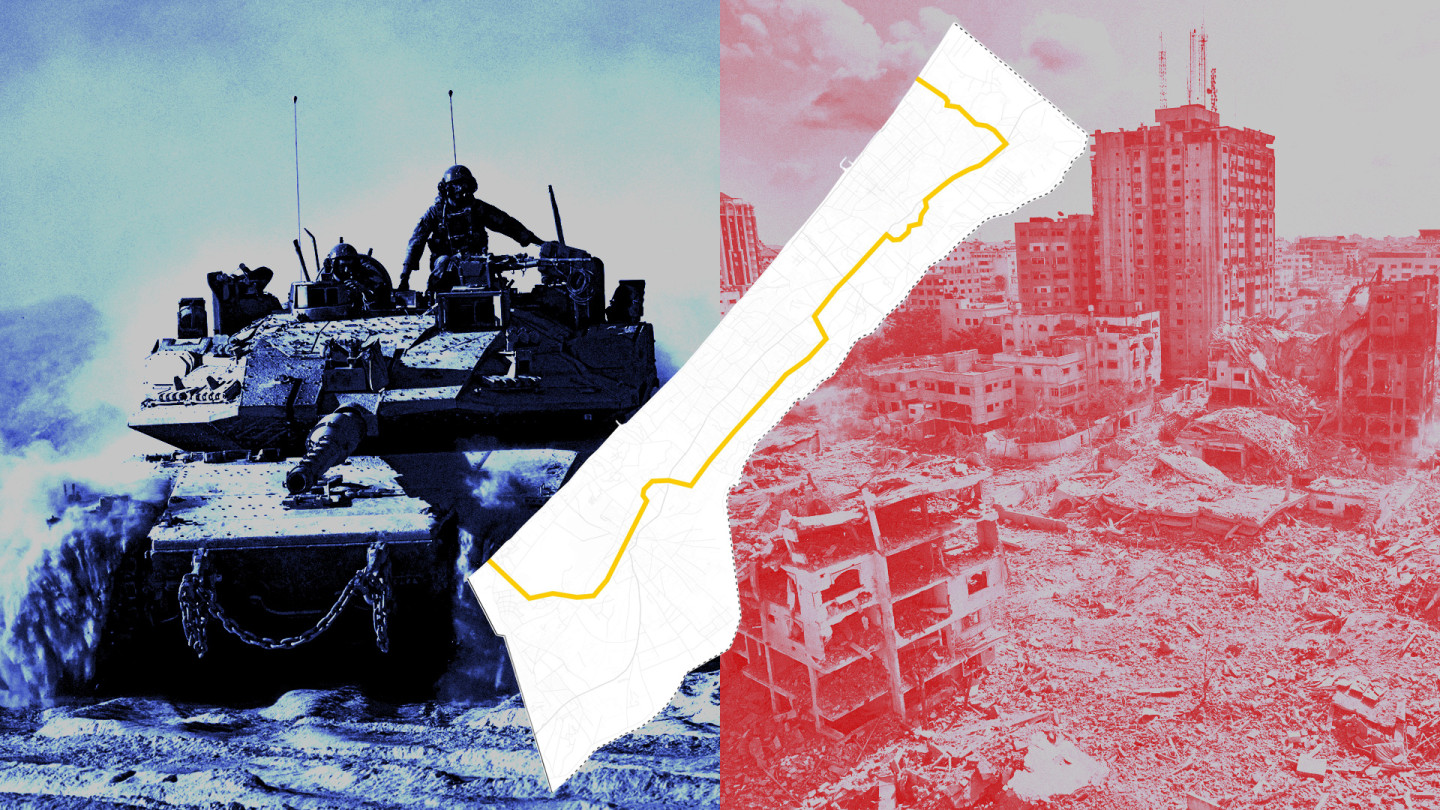
The vote came amid American plans to split the Gaza Strip into two zones. The arrangement envisions a potentially indefinite division of the war-ravaged enclave along the Israeli-established Yellow Line, creating a “green zone” under Israeli military control - where reconstruction would begin - and a “red zone,” which would remain under de facto Hamas control.
Under the US-brokered ceasefire agreement reached in October, which Tel Aviv is repeatedly violating, Palestinians have been pushed into a small zone on the coastline that makes up less than half of Gaza, with Israeli forces controlling 53 to 58 percent of the Strip.
The Israeli army maintains roughly 40 active military positions in the area that falls beyond the Yellow Line, the invisible military demarcation boundary set during the first phase of the truce, where Israeli troops had to withdraw to.
A mix of armed militias and clans, some supported by Israel, has emerged across the areas of Gaza now under Israeli command, challenging Hamas’s authority. Many Gazans, including those disillusioned with the group, are uneasy about the rise of these small, fragmented groups.
The majority of Gaza’s two million people are squeezed into a confined, suffocating land mass, living amidst rubble and makeshift tents, with only limited life-saving aid and no operational medical care.
“The first stage of the US plan has further fragmented Gaza and forced its surviving population into an even smaller territory, turning less than half of it into a concentration camp with no means of survival whatsoever,” US-Palestinian journalist and writer Ramzy Baroud told The New Arab.
Khaled Elgindy, a senior fellow at the Quincy Institute for Responsible Statecraft, made similar comments to TNA, describing Gaza as split between an indefinitely Israeli-ruled sector and a massive concentration camp. “This is the reality that the Security Council has normalised,” he said, criticising the latest UN resolution.
For the Middle East expert, the so-called peace plan for Gaza has created new facts on the ground that are likely to become “permanent realities”, with the risk of a West Bank–style arrangement marked by extensive Israeli control.
The Trump administration is reportedly working to build “alternative safe communities” inside the part of Gaza under Israeli control. These communities are intended to provide temporary housing, schools, and hospitals until long-term reconstruction becomes possible. The new residential sites are said to be part of a project aimed at resettling Gazans from areas under Hamas rule.
Critics caution that the initiative could entrench Gaza’s fragmentation, undermine Palestinian sovereignty, and amount to forced displacement.
Rami Abu Zubaydah, a Palestinian researcher on Israeli affairs, however, told the Palestinian Information Center that the American blueprint is unrealistic, since Gaza’s dense urban and familial fabric “is not land that can be partitioned”. In fact, he added, Israel has not been able to fully control the enclave, either before its withdrawal or throughout the two years of conflict.
Baroud, born and raised in Gaza, explained that the project is a “far uglier” version of any previous Israeli policy toward Palestinians, in that people are now told that their political stance could determine whether the Strip returns to full-scale genocide or not.
“Israel’s new tactic is to divide Gaza and let those Palestinians who are not linked to the resistance trickle into the rebuilt zone,” hoping to set up an alternative governing structure there, he argued.
The analyst believes that Israel’s attempt to form “two Gazas” is unlikely to gain enough traction among people, affirming that their strong sense of unity has long made it almost impossible to manufacture divisions within Gaza’s society. “I don’t think Israel can do this kind of social engineering in Gaza, no matter how desperate the situation”, he said.
Baroud stressed that Gaza’s segmentation is an old idea, pointing to former Israeli PM Ariel Sharon’s 1971 “five fingers” plan, which divided the Strip into separate areas through military zones and settlements. But he also noted that Gazans resisted it for many years, which later pushed Sharon to withdraw Israeli settlers and troops from the coastal enclave in 2005.
Besides the emerging territorial divisions, Tel Aviv previously established the Netzarim Corridor, an east‑west military route through central Gaza that splits the Strip in two and gives Israel grip over major highways. It also fortified the Philadelphi Corridor, a buffer zone along the Gaza‑Egypt border.
The Yellow Line, originally intended as a temporary military arrangement marking Israel’s first withdrawal under the ceasefire, is now being cemented despite plans to deploy an international stabilisation force and reduce the Israeli army’s direct presence in the territory after phase one.
Trump’s 20-point plan has essentially created a geographical division in Gaza that risks becoming permanent. Many Palestinians fear the outcome will be a de facto partition between the Israeli-occupied east, with some reconstruction concentrated there, and the Hamas-controlled west, where most of the population remains crowded in devastated areas with little rebuilding.
According to the proposal, Israel would gradually pull back to a “security perimeter” but retain military control over this buffer zone, overseen by an international administrative body. Critics warn this would perpetuate Israel’s effective control over much of the territory and confine Palestinians to a smaller, more restricted Gaza than before the war.
Meanwhile, negotiations for the second phase of the truce remain stalled as Hamas still holds the remains of three hostages. An extended standstill would only prolong Palestinian suffering and expose civilians to further violence.
Israeli forces have continued to carry out near-daily airstrikes, artillery shelling, and demolitions since the truce began on 10 October. In just the first month, Israel violated the ceasefire nearly 500 times, killing more than 340 Palestinians and injuring hundreds more, with some of the worst violence occurring near or past the Yellow Line.
“Each passing day makes the ceasefire look more like a farce,” Elgindy said, slamming the Security Council’s silence in the face of Israel’s daily ceasefire violations.
Israeli authorities have also continued to restrict aid flows to Gaza more than a month into the ceasefire, leaving nearly 1.5 million people without emergency shelter and hundreds of thousands living in tents without basic services.
UN data shows that just over 100 trucks of humanitarian assistance are entering the besieged enclave each day, far below the 600 trucks per day agreed under the October ceasefire deal.
Elgindy added that if the world keeps pretending the war is over while bombing continues, aid is still blocked, and reconstruction is stalled, the truce will become untenable, and the situation will erupt again.
“It’s only a matter of time before we see a Palestinian response, giving Israel a pretext to resume a full-scale assault,” he said.
Author
Alessandra Bajec is a freelance journalist currently based in Tunis
Disclaimer
Opinions expressed in this article remain those of the author and do not necessarily represent those of The New Arab editorial team or CEMAS board.
Freed Palestinian Samaritan detainee Nader Sadaqa after 22 years in Israeli prison
Freed Palestinian Samaritan detainee Nader Sadaqa after 22 years in Israeli prison
The New Arab
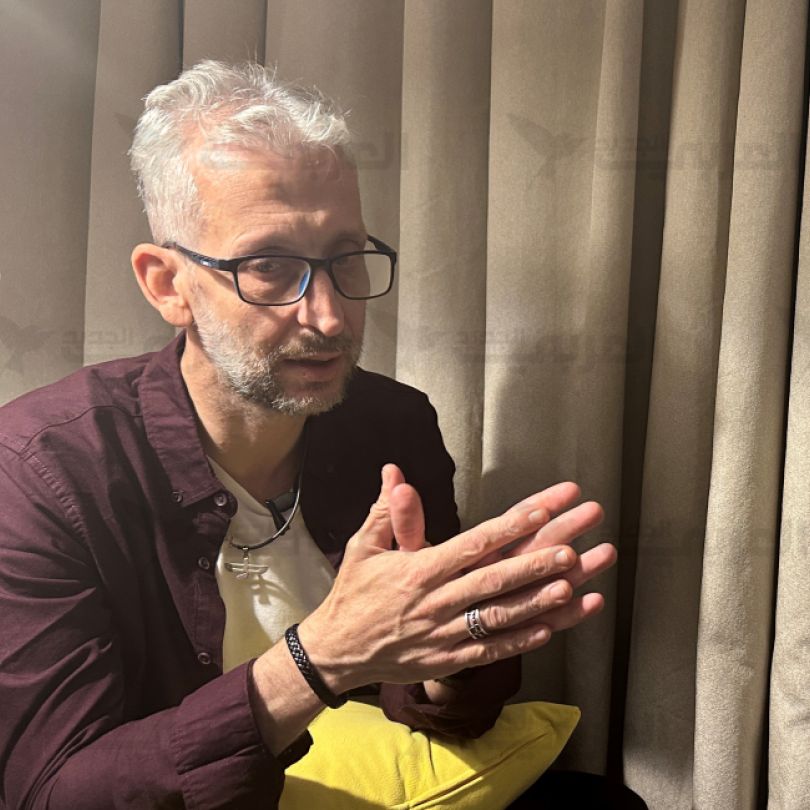
CAIRO, 20 Nov. - Nader Sadaqa, a Samaritan freed after 22 years in Israeli prisons, speaks from exile on resistance, identity, and the struggle of Palestinians still detained.
The New Arab's Arabic edition spoke to Nader Sadaqa, a Palestinian Samaritan man freed by Israel as part of a deal that saw the release of several long-term and life-sentence Palestinian prisoners in exchange for Israeli captives held by Hamas in Gaza since 2023.
The Samaritans, often described as the world’s smallest ethnoreligious community, live mainly on Mount Gerizim in the Palestinian city of Nablus and in Holon, Israel.
They follow Samaritanism, a faith closely related to but distinct from mainstream Judaism, and maintain that they are the true descendants of the ancient Israelites — specifically the tribes of Ephraim and Manasseh, who remained in the land during the Assyrian conquest of 722 BCE. They regard their own version of the Torah — the Pentateuch — as the original and sole sacred text.
Speaking from Cairo, where he was deported after the deal, he proclaimed that a Palestinian who does not openly resist or reject the occupation is incomplete in freedom, humanity, and Palestinian identity.
Sadaqa, from Nablus, the historic centre of the Samaritan community, spent 22 years in Israeli prisons after being sentenced to six life sentences.
He was arrested at the age of 27 following a two-year manhunt and accused of leading the armed operations of the Abu Ali Mustafa Brigades, the military wing of the leftist Popular Front for the Liberation of Palestine (PFLP).
Below is an edited translation of the interview from Arabic.
The New Arab: You were sentenced to six life terms. What were the charges brought against you?
Nader Sadaqa: The [Israeli] occupation pursued me because it pursues every Palestinian.
The proof is that there are now around 6,000 administrative detainees in Israeli prisons, held without charges or trials. Many of them have been imprisoned for up to ten years without a single accusation. The occupation doesn’t need a pretext to charge anyone.
They hunted me for several reasons. The first is that I am a human being, and being human contradicts the occupation’s very notion of humanity. They believe in the exclusivity of their own humanity and see all non-Jews as inferior or as others. According to their doctrine, I am beneath the so-called chosen people.
The second reason is that I am free. My freedom negates their enslavement of others. They need to enslave us to secure their existence. Without subjugating us, their existence cannot be sustained.
And the third reason is that I am Palestinian. The essence of being Palestinian cannot truly endure or express itself as long as a Zionist entity and movement wield the tools of killing and destruction.
Anyone who ignores this inherent enmity between the Palestinian and the Zionist, anyone who neither resists nor expresses rejection of the occupation, is incomplete in his humanity, freedom, and Palestinian identity.
Confrontation with the occupation is not a choice. As Palestinians, we do not have the luxury of choice. Confrontation is inevitable.
Did your religious identity as a Samaritan in Palestine push you to avoid confrontation with the occupation?
I carry three passports: Israeli, Jordanian, and Palestinian, and I could have lived a comfortable life. But I am Palestinian, and that identity alone is enough for me.
I am an Arab by heritage, influenced by Islamic culture, and Palestinian by nationality. All my social and cultural roots are Arab and Palestinian.
That’s why I am certain that the Israeli entity will one day cease to exist. It is an entity hostile to history, geography, demography, and even the spirit.
Although the resistance pays an open-ended price in a sea of pain and blood, that does not mean it can achieve everything it strives for. The road is long, and its end is not foreseeable in the near future, but taking that path is a duty incumbent upon every Palestinian.
How do you respond to accusations that the resistance acted recklessly or suicidally on October 7?
I believe that anyone who wishes to criticise the resistance should first carry a rifle on their shoulder. I cannot blame those who fight under constant fire, while their critics sit comfortably in well-furnished rooms.
The resistance, with bare hands and fingernails, performs miracles against an enemy before whom major states and vast arsenals have failed to stand.
That said, I do not wish to forbid criticism of the resistance. Everything can be subject to critique, even in times of war. I do not label critics as traitors, but I do ask that they be ashamed at times and express their criticism in the appropriate place and time.
There are two ways to look at [October 7]. Some see it as a reckless venture aimed at capturing Israeli soldiers that spiralled out of control, bringing devastating consequences upon the Palestinian people.
Others see it as a step on the path toward liberation, a leap that will inevitably be followed by others, ensuring that the wheel of liberation keeps turning. In that sense, one day you may be at the bottom, and the next, as the wheel turns, you rise to the top.
From my perspective, October 7 is one episode in a long chain of events on the road to liberation.
It can be seen as having handed the occupation an opening to sweep into Gaza. But that overlooks another reality: a far-right governing coalition in Israel that could not tolerate the equilibrium of terror the resistance in Gaza had established. The drive to destroy Gaza’s resistance was inevitable under this government, whether October 7 took place or not.
What October 7 did was only to accelerate that course. What set October 7 apart, however, was that the resistance managed to free more than 400 detainees serving life terms and long sentences whose time had passed and whose history had largely been forgotten.
Tell us about exile as a form of punishment for released prisoners who are banished from their homeland.
I am Arab in spirit, and Palestine is part of my Arab identity. My presence in any Arab country feels like an extension of who I am.
Here in Egypt, I have found warmth and compassion that soothe our hearts in what some might call exile, if it can truly be called that.
But let me say this: the occupation is waging an unprecedented campaign of threats and repression against freed prisoners who have returned to Palestine. They live under constant threat of re-arrest, and some have indeed been detained again.
Today, for instance, the occupation punishes the families of exiled prisoners by denying them the right to visit us or even reach us.
Will you continue the struggle? And what are your means of resistance?
I am already resisting. My role here is to remind the world that thousands of prisoners remain in the occupation’s jails with no horizon for their release in the foreseeable future, a reality far bleaker than before October 7.
They are enduring the most brutal forms of torture, and each day, they are set upon by rabid dogs.
US contractor: This is how Israeli forces and American mercenaries killed Gaza aid seekers
US contractor: This is how Israeli forces and American mercenaries killed Gaza aid seekers
By Mohammed Al-Badawi, The New Arab, 2026
Whistleblower Anthony Aguilar shares first-hand testimony of war crimes committed by Israeli and US forces working with the Gaza Humanitarian Foundation.
Over 25 years serving in the US military, Anthony Aguilar took part in various American wars around the world, including in Iraq, Afghanistan and Syria. Yet, despite his experience fighting on the side of US interests, his brief experience on the ground in Gaza revealed to him the scale of war crimes and genocide perpetrated by Israeli forces against Palestinians.
It was "unlike anything seen anywhere in the world, a scale of destruction and inhumanity I've never witnessed before", he said.
In an extensive interview with The New Arab's Arabic edition, Aguilar gives his first-hand testimony from the short time he spent working with the Israel-backed Gaza Humanitarian Foundation, detailing how Israel used food as a weapon to starve Palestinians and how, through formal contracts with the company Safe Reach Solutions, it controlled the quantities of food allowed into Gaza.
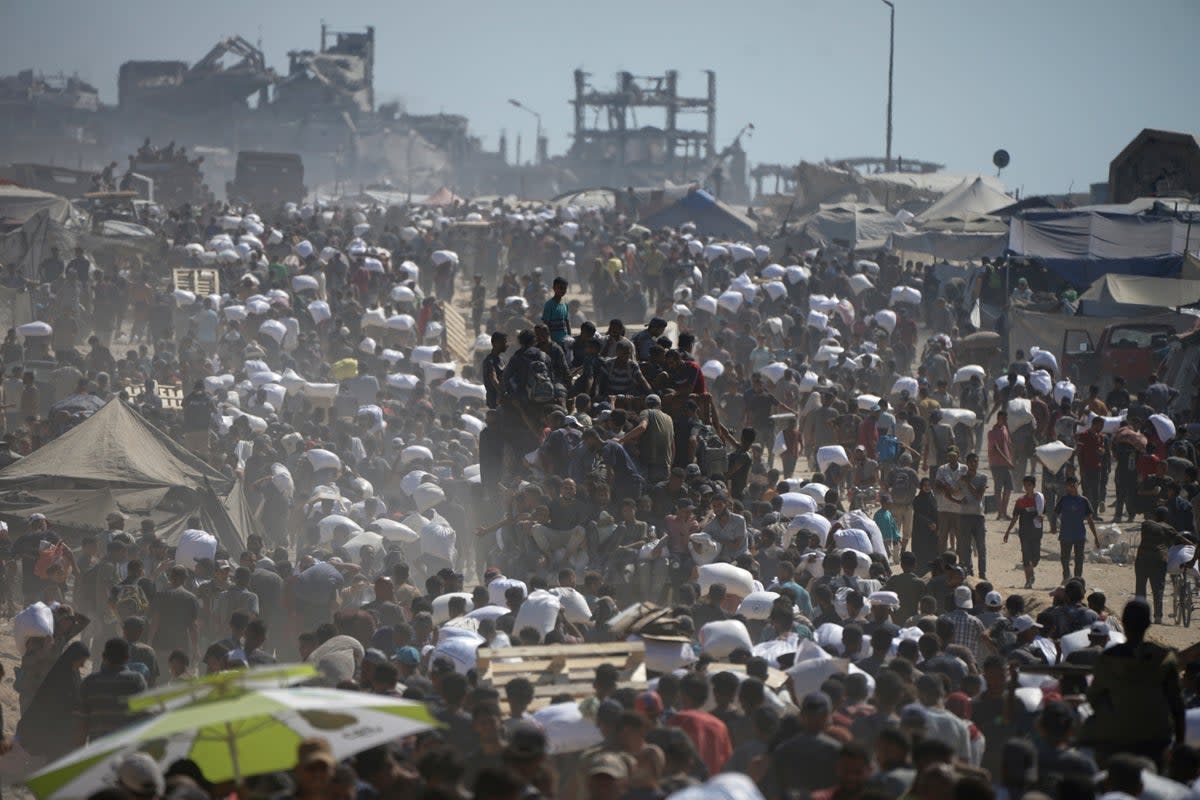
He describes how American contractors and Israeli forces targeted starving civilians – men, women and children – at four aid distribution sites operated by the organisation. He supported his testimony with videos and photos.
The interview was conducted by Mohammed al-Badawi, Al-Araby al-Jadeed's correspondent in Washington. It has been slightly edited for clarity.
What is your professional background?
My name is Anthony Aguilar. I served in the American military for 25 years and retired from service at the beginning of this year. In May 2025, I contracted with UG Solutions on behalf of what was called the Gaza Humanitarian Foundation to go to Gaza and provide security for the delivery of humanitarian aid to civilians. I was in Gaza for 46 days in May and June.
What were you doing in Gaza during this time?
I worked at the four designated distribution sites under the GHF umbrella, as well as in operations centres responsible for logistics, transportation and security.
When we were hired to work in Gaza, we were told that our mission was a replacement for the UN and UNRWA operations to deliver humanitarian aid to Palestinians. My understanding was that we would provide food for all residents, food, water, medicine, baby formula and all essentials.
But once I started working, it was clear that we were not working to provide food at the same scale as the UN itself. Instead of 400 distribution centres with 550 food trucks daily, we ran only four sites, with 12 to 15 trucks a day. This is wholly insufficient to provide the required amounts of food and aid.
What deeply concerned me was that this was deliberate. The food quantities were strictly limited, and no water was provided at all. When I reviewed the plans and requested changes, I was told that we would not increase the amount of food or the number of sites because we have a contract with the Israeli government through the Coordination of Government Activities in the Territories (COGAT), a body under the Israeli defence ministry.
Safe Reach Solutions, which managed the operation, had a written contract that specified the amount of food and how it would be delivered. As a result, the entire operation involved limited amounts of dry food, no water, no baby formula, and no medicine. This was deliberate and intentional, part of a larger plan, which made me question the real goal of the operation.
What did you do when you realised this?
When I proposed solutions to address some of those problems, I was told that no adjustments would be made and that the work would proceed in the same way. We were providing what amounted to only a single meal for each Palestinian every two days, with no water. This was totally unacceptable to me.
It was part of a general scheme of starvation: reducing food, reducing water, reducing resources to the population. Once I realised that this was all part of the plan, and that we were doing it deliberately, I resigned from UG Solutions, left Gaza, and returned to the United States.
In addition, the killings of civilians were a factor in my decision. I had never seen a scale of destruction and killing in my life, after 25 years in the army and deployments to conflict zones like Iraq, Syria and Afghanistan.
What was the overall framework? Who was in control?
The Israeli army was in full control through its contract with Safe Reach Solutions – a for-profit security contractor – making it impossible to deliver aid strictly according to humanitarian principles. It is a shady project and I believe it demands investigation by US federal agencies.
The GHF is American but it's a non-governmental organisation. It's just an idea, an organisation with no actual existence. Initially, it was said to be independent but we later learned that it was a part of Safe Reach Solutions. The same people who own GHF are the people who owned Blackwater [an American private military contractor] and then Constellis, which gave rise to UG Solutions and Safe Reach Solutions. They are the same people with the same ideas.
The company I worked for, UG Solutions, was operating under Safe Reach Solutions, which had a contact with Israel and gets money from the Israeli army. It was just a façade. Safe Reach Solutions controlled everything, and [CEO and former CIA officer] Philip Reilly was one of the people controlled all matters related to GHF.
You have spoken publicly about the involvement of contractors in killing Palestinians. Could you clarify further details?
The distribution sites were secured by armed security personnel from UG Solutions. At the sites, they would fire on unarmed Palestinian civilians using live ammunition, tear gas, stun grenades and rubber bullets. They were firing into crowds to control them, to push them back, or to make them leave.
On one occasion, I saw a Palestinian woman killed by a stun grenade fired by a contractor – it exploded near her, wounded her and killed her. Another person fired an assault rifle at unarmed civilians who were leaving site 4 and killed a civilian man carrying a bag of food as he left. He was shot and killed for no reason other than to cause pain, suffering, terror and death.
I remember this boy Amir, who was barefoot and kissed my hand, saying thank you. He was hungry, gaunt, his trousers held up by a rope. I looked into his eyes and put my hand on his shoulder and said: "You are not alone, we are with you". I sat down, and he touched my forehead and kissed it and said: "Thank you". And when he went to leave, tear gas was fired by the contractors and bullets were fired into the air. As he left with the crowds, the Israeli army fired bullets, and some of them were hit, and Amir was one of them.
I witnessed UG Solutions contractors firing randomly at Palestinians every day, and the Israeli army was also firing at large groups of civilians coming to or leaving the sites. This happened every day during every distribution operation we did. It was very disturbing to see civilians being put in danger and harmed while simply trying to survive.
Many of the UG Solutions contractors were recruited from the Infidels Motorcycle Club, which has a charter calling for the extermination of all Muslims. These individuals believe their presence in Gaza is part of a crusade or a mission to kill Muslims on behalf of Christianity.
It worries me very much that the US is participating in this genocide with US taxpayer money and it's disturbing to me that there are US citizens doing this because they want to kill Palestinians.
What was the moment you decided to resign from the company and speak out publicly?
There were a number of incidents that made me question why I was there and why Americans were in Gaza, but one particular incident in early June 2025 - the 8th or 9th - at the operations centre in Kerem Abu Salem, where I was part of a conversation with a senior Israeli officer who wanted to open fire on children on a dirt berm using snipers.
It was at Distribution Site 2 south of Rafah. There was a crush of people waiting for aid, and children trying to leave so they wouldn’t be trampled under the crowd against a concrete wall. One Palestinian raised some of the children over the wall. All of them were under ten years old. They looked thin, hungry and dehydrated, and were barefoot. They were innocent children posing no threat.
The Israeli officer was angry because the children were on the wall and described them as a threat. The contractors tried to persuade the children to come down, but the officer contacted snipers and directed them to prepare to open fire on the children. At that moment, I said: "We will not fire on children. We will not fire on unarmed civilians."
Fortunately, the children came down from the wall before they fired. But then the American managers of Safe Reach Solutions told me: "Never say no to a client". They said the Israeli army and Israeli government were our clients and what they say must be done. When I asked, "even if they were going to kill children?" they replied: "Stand aside and let them. That’s their business."
At that moment I realised everything was being done deliberately - from the food restrictions, to the lack of water, to the lack of security. Everything was deliberate and part of a plan imposed by the Israeli army, and I realised I could not continue to be part of that plan.
Did you see other cases of firing on children?
Yes, many times. There were cases where the Israeli army fired with machine guns at children, killing some of them. And there were times where the UG Solutions contractors fired or threw hand grenades, used tear gas or stun grenades, injuring children. Sometimes they fired directly at children. And because they were small, they got trampled under crowds of thousands.
One of these incidents was a crush at site 3 on 16 July, which resulted in the deaths of about 20 people. They died in the stampede. Those who were crushed to death were killed because of the design of the aid sites.
How many people were working for UG Solutions and Safe Reach Solutions?
It was supposed to be 275 Americans and 75 ex-soldiers or mercenaries from Uganda. When the Ugandan mercenaries decided they did not want to take part in the mission, we were forced to hire more Americans. At that time, there were around 325 to 340 American contractors under the supervision of UG Solutions. I don’t know how many there are now. As for Safe Reach Solutions, they had their own staff, but I don’t know how many.
Do you know how many people resigned while you were there?
Before I resigned in June, eight Americans from the two companies resigned. After I left, four more contractors left. Since then, I don’t know if there have been others. But at least before and immediately after my departure, there were others who quit. I wasn't the only one.
Why did no one else speak out publicly, and why did you choose to reveal your name?
Some spoke anonymously. I felt it was necessary to identify myself and convey what I saw. What I saw in Gaza is very little compared to what is really happening, and it's not new information. Palestinians, humanitarian workers have been speaking about this for years. I chose to speak publicly because I was there and I saw with my own eyes what was happening. As an American, having served in the US military and worked for UG Solutions, I felt my testimony might be important or seen as worth hearing. I had to be honest and say who I am to lend credibility, rather than being an anonymous witness.
We have known for years that Israel ignores any kind of criticism and claims that the critics are from Hamas or under threat from Hamas. In Israel's view everyone else is lying. Since I started speaking about what I saw in Gaza, not one person has challenged anything I described.
What did your directors at UG Solutions say?
When I was in Gaza and raised my concerns, UG Solutions' leadership didn't implement any changes. They said: "Well, we are here to do this. We get paid to do this. That's all. Nothing else matters."
When some people got injured and others killed, I spoke again with my leadership and said: "On 29 May at distribution site 4, one of your employees shot this person. This person is committing a crime." They responded: "The Israeli army is responsible; if they don’t have a problem with it, we’re fine. If the Israeli army and Israeli government have no complaints about us, then we will keep doing what we’re doing."
There was a sense of impunity, and the company felt they could do what they wanted because the Israeli government would allow it.
Even if it was a war crime under international law?
Israel wants to kill and erase every Palestinian. They know this is against international law and humanitarian law. They don’t care about international laws. And having Americans with a mindset like the Infidels Motorcycle Club, who want to kill all Muslims, armed, going into Gaza to "deliver humanitarian aid". That appears to violate the laws of war and the Geneva Convention. When Israel chose the companies for this contract, they wanted killing, chaos and more suffering for Gaza’s population, so the idea of serious violations of the Geneva Convention and international law did not matter to them. Their focus was on total control of Gaza.
Have you discussed these issues with your colleagues at UG Solutions and Safe Reach Solutions?
Yes. There are people working under the contract who feel that the bombing and killing of Palestinians is a good thing. Some of my colleagues see this as the right thing and are pro-Israel. Some of these Americans believe that getting rid of all the Palestinians and then rebuilding Gaza is a good outcome. They accept that and think that removing the Palestinians is necessary because they should not be there, and there can be no peace if there are Palestinians.
But what about their obligation to follow US and international law to protect civilians?
Many contractors working for UG Solutions are former US military. They know US and international law prohibit harm to non-combatants, women and children, and prohibit putting them at risk of forced displacement and starvation. But now they are retired, and their personal views about Palestinians, white nationalism or Christian Zionism should not carry more weight for them than the oath they took during service. They know this is wrong, but they see it as a necessary evil and consider killing civilians, women, and children part of doing good in the world.
Did you tell the leadership that what was happening amounted to a war crime?
Yes, it is illegal and a war crime. I discussed this with managers from the start because the distribution sites are located in active combat zones, and forcing civilians to move through those areas is a war crime. I was told that the Israeli military does not have to follow the Geneva Conventions because Hamas is a terrorist organisation, but that is incorrect. Under the law, during an armed conflict, the occupying power must comply with the rules of the Geneva Conventions and international humanitarian law. Israel has ratified the Fourth Geneva Convention, as did the United States. And when I raised the crimes with the officials, their response was: "It doesn't matter, this is what we get paid for. This is not our problem."
Do you think Israel used humanitarian aid to target and kill Palestinians?
Israel's intent has always been to stop humanitarian aid from reaching Gaza's population. They did that by reducing the number of trucks entering Gaza. They wanted to remove the UN and UNRWA – institutions Israel did not control – so they said they were compromised by Hamas and could not deliver food. But Israel deliberately starved the population. Those sites were made into death traps. Israel knows its actions violate international law, so it tried to hide that.
With the current ceasefire, Israel can simply prevent food and medicine from entering, killing Gaza's population through a policy of starvation and disease. Once the disease starts to spread in an environment suffering famine without hospitals or sanitation, polio and other viruses spread quickly. Ninety-six percent of Gaza's population lives near open sewage. Gaza is smaller than a city like Philadelphia, but has twice the population. When disease spreads amid famine, that kills people quickly – and Israel knows this.
What saddens me is that the world is not demanding accountability. I don’t think the world will demand that Israel be held to account to stop these crimes. People see this but the question is what kind of accountability the world will demand and what it will do to stop it.
Disclaimer
Opinions expressed in this article remain those of the author and do not necessarily represent those of CEMAS Board to The New Arab editorial team.
Palestine 36 connects colonial past and present in Annemarie Jacir's bold new film
Palestine 36 connects colonial past and present in Annemarie Jacir's bold new film
By Hadani Ditmars
LONDON, 25 Oct. - (ANA) - Veteran filmmaker Annemarie Jacir's latest offering, Palestine 36, is a cinematic tour de force — an epic historical drama that serves as a timely antidote to Hollywood's Exodus.
With this third feature film, the acclaimed Palestinian writer-director behind When I Saw You and Wajib delivers Palestine's official entry for Best International Feature at the Academy Awards, reaffirming her status as one of the region's most vital cinematic voices.
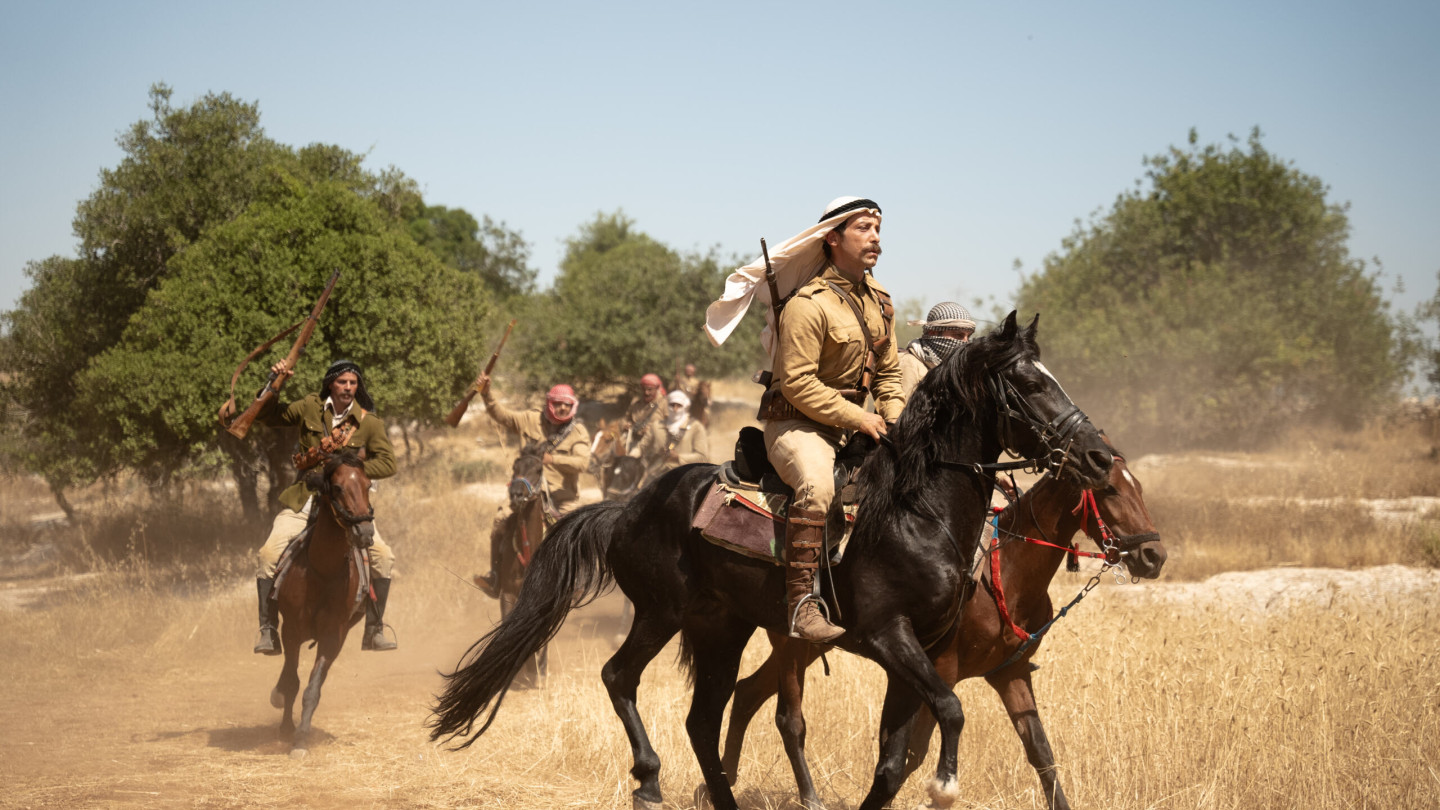
Set during the 1936 Palestinian uprising against British colonial rule, the film was shot during the post-October 7 violence and the Iran-Israel conflict.
The film seems incredibly timely, both in light of Israel's two-year genocide and the bizarre neo-colonial Trump-penned plan to have Tony Blair as the de facto "king" or viceroy of Gaza.
"Yes, we are still in a colonial moment," Annemarie tells The New Arab. "We have never been out of the colonial moment, unfortunately. People always use this term 'postcolonialism', and it mystifies me. I wish there were postcolonialism, but no, we’re still in that moment."
The powerful historical drama follows the very personal stories of Palestinians swept up in the general strike and resistance against British colonialism, and the film — shot on location in Palestine and Jordan — includes rare archival footage.
The stellar international cast features Hiam Abbas (Succession), Jeremy Irons (Reversal of Fortune), and Liam Cunningham (Game of Thrones), alongside a powerful lineup of Palestinian talent.
Saleh Bakri delivers a moving performance as a disillusioned Jaffa dockworker who joins the rebel movement, while Karim Daoud Anaya portrays Yusuf, a farmer from a village near Jerusalem who works in the city by day and returns to his ancestral land by night to defend it from confiscation by Zionist settlers. Making her acting debut, Yafa Bakri plays a young woman who hides an heirloom gun, determined to protect her family from British military raids.
Echoes of 1936
Speaking more about her initial inspiration for making the film, Annemarie explains, "I'm a history nerd and I'm just fascinated by the Palestinian uprising of 1936. I think it's the critical moment in our history that is almost never talked about because we always start with the Nakba for some reason. It's really important that we talk about this moment more than a decade before 1948 because, of course, it sets the stage for everything that comes after and the loss of Palestine."
The British, she says, "were doing what the Israelis are doing now." Not only acts of torture and waterboarding, she points out, but also forms of collective punishment like blowing up people’s houses, sending people to detention camps and even building a wall.
The mastermind of the wall was a man named Charles Tagart, and Annemarie created a character with the same name, played by Liam Cunningham.
In one scene, he outlines the proposal for the wall — how long it will be, how high, and how far it will reach. Its main function, Annemarie says, was to separate Palestine from Lebanon and Syria.
"There's a lot of pride in the fact that we had arguably the longest and largest revolt and strike (from April to October) against British colonialism at that time," Annemarie recounts.
"It was a general strike. Everybody was involved, from port workers to railroad workers to newspapers."
'Things could be really different today'
It's interesting to note that in the film, there is no contact between the Palestinians and the Jewish settlers — except for a violent confrontation when one of the Palestinian characters is shot.
Rather, the interaction is all between the Palestinians and the British. A key line by Captain Wingate, who says, "The Zionists provide the key to preserving the empire," underlines the idea that both peoples were tools of empire.
Annemarie tells The New Arab that this was a deliberate choice.
"I was really interested in the British/Palestinian story," she says. "It was important for me to show the Jewish refugees were coming here for safety, as so many other communities had — like the Armenians and the Bosnians (in the 19th Century). I wanted to point the finger at fascism in Europe, showing that Jews were fleeing from this awful thing, and it had nothing to do with us."
When asked why so many historians – Palestinian, Israeli and British — are obsessed with the 1936 revolt, she replies, "I think that's what attracts me about the period as well, because there was a lot of possibility. Things could be really different today had it gone another way."
Filming through hardship
To say that filming after October 7, 2023, was difficult was an understatement. The production had to stop four times as Israel's genocide raged on in Gaza, and the situation in Palestine deteriorated.
Producers, of course, with financial obligations needed to deliver the film, so proposals came in to film in other places, including Malta, Greece, Morocco, and Cyprus.
But Annemarie kept refusing. "I was very stubborn about it," she shares. "I just could not bear the fact that we had to shift so many scenes out of here. It was devastating because the film was so much about the land, I couldn't conceive of filming scenes set in Jerusalem or Jaffa somewhere else and pretending it was real."
Despite financial loss and a reduction of the production crew, the Palestinian filmmaker remained firm in her convictions to film as much as possible in Palestine.
Additionally, some actors were denied entry by the Israelis, and the agents of international stars were reluctant to let them travel as the situation worsened.
"We filmed in Jordan and then we came back to Palestine in November," Annemarie recounts.
"But we would have to stop production when there were missiles or alarms, and we had to go running into the shelters. Getting insurance was a nightmare. But even when we had insurance, it wasn't safe."
The crew restored a whole village near Nablus before shooting the main village scenes, but had to go elsewhere because armed settlers overran the whole area.
So, a lot of the village scenes were filmed in the north of Jordan, where it’s very green and close to the Syrian, Lebanese and Palestinian borders.
"They feel like very fake borders in fact because the land is the same land," Annemarie tells The New Arab.
The scenes shot in Palestine included those in Jerusalem and Jaffa, as well as some interiors in Bethlehem. The exterior shots of the main characters’ (Khouloud and Amir’s) house in Jerusalem were shot in Katamon (once a predominantly Palestinian Christian area west of Jerusalem that was ethnically cleansed in 1948).
The production was harrowing for most of the cast and crew — many of whom had family in Gaza. Many young, male crew members living in the West Bank stayed on in Jordan for fear of being detained by Israeli occupation forces upon their return.
"Emotionally, it was really hard," says Annemarie, "and I think I’m still not able to process all of it because part of me just had to put blinders on. I couldn't look at social media, or I wouldn’t have been able to get out of bed in the morning.
"The scene in the village – without spoiling the ending – with the British army, it was very real for the cast. The woman who played Afra’s mother, Yafa Bakri, this was her first acting role. But she was not acting. She was so emotionally plugged into what was happening around us, it was very hard for her, and she was really distraught, and at one point, she actually passed out on set."
On the other hand, making the film was also key to Annemarie’s emotional survival.
"All of us just had to keep going because we felt so hopeless, and making the film was something concrete we could do. It was a way of maintaining our presence – demonstrating the fact that we are here and we do things with love, and we will not disappear."
Palestine 36 will be screened at the 44th Vancouver International Film Festival on 9 October at 21:00 and 10 October at 11:45, and also at this year’s BFI London Film Festival on 17 October 2025 at 18:10 and on 19 October 2025 at 17:00
Author
Hadani Ditmars is the author of Dancing in the No Fly Zone and has been writing from and about the MENA since 1992. Her next book, Between Two Rivers, is a travelogue of ancient sites and modern culture in Iraq. www.hadaniditmars.com
Page 25 of 57
Warning: Illegal string offset 'active' in /home/cemasorg/public_html/templates/northsouthnews/html/pagination.php on line 90
Warning: Illegal string offset 'active' in /home/cemasorg/public_html/templates/northsouthnews/html/pagination.php on line 96
Warning: Illegal string offset 'active' in /home/cemasorg/public_html/templates/northsouthnews/html/pagination.php on line 90
Warning: Illegal string offset 'active' in /home/cemasorg/public_html/templates/northsouthnews/html/pagination.php on line 96
Warning: Illegal string offset 'active' in /home/cemasorg/public_html/templates/northsouthnews/html/pagination.php on line 90
Warning: Illegal string offset 'active' in /home/cemasorg/public_html/templates/northsouthnews/html/pagination.php on line 96
Warning: Illegal string offset 'active' in /home/cemasorg/public_html/templates/northsouthnews/html/pagination.php on line 90
Warning: Illegal string offset 'active' in /home/cemasorg/public_html/templates/northsouthnews/html/pagination.php on line 96
Warning: Illegal string offset 'active' in /home/cemasorg/public_html/templates/northsouthnews/html/pagination.php on line 90
Warning: Illegal string offset 'active' in /home/cemasorg/public_html/templates/northsouthnews/html/pagination.php on line 96
Warning: Illegal string offset 'active' in /home/cemasorg/public_html/templates/northsouthnews/html/pagination.php on line 90
Warning: Illegal string offset 'active' in /home/cemasorg/public_html/templates/northsouthnews/html/pagination.php on line 96
Warning: Illegal string offset 'active' in /home/cemasorg/public_html/templates/northsouthnews/html/pagination.php on line 90
Warning: Illegal string offset 'active' in /home/cemasorg/public_html/templates/northsouthnews/html/pagination.php on line 96
Warning: Illegal string offset 'active' in /home/cemasorg/public_html/templates/northsouthnews/html/pagination.php on line 90
Warning: Illegal string offset 'active' in /home/cemasorg/public_html/templates/northsouthnews/html/pagination.php on line 96
Warning: Illegal string offset 'active' in /home/cemasorg/public_html/templates/northsouthnews/html/pagination.php on line 90
Warning: Illegal string offset 'active' in /home/cemasorg/public_html/templates/northsouthnews/html/pagination.php on line 96
Warning: Illegal string offset 'active' in /home/cemasorg/public_html/templates/northsouthnews/html/pagination.php on line 90
Warning: Illegal string offset 'active' in /home/cemasorg/public_html/templates/northsouthnews/html/pagination.php on line 96
Main News


Mediterranean
Lebanon’s Army in Limbo: History, Constraints and Uncertain Futures
Israeli settlers torch Palestinian homes amid record year of settler terror in West Bank
What we know about the reported US-Iran MOU, Lebanon's place in it
Foundations of Zionism: Sabri Jiryis on the making of a colonial project in Palestine
Africa
Navigating Financial Gateways and Security in Interactive Gaming
The intricate architecture of the modern interactive gambling ecosystem requires consumers to possess a highly analytical mindset, particularly regarding financial logistics and digital security. Gone are the days when a flashy banner advertisement and a rudimentary software interface were sufficient to attract and retain a dedicated audience. Today's most successful digital portals are complex, highly regulated financial and entertainment ecosystems that must seamlessly balance the adrenaline of high-stakes gaming with impenetrable digital security and flawless operational logistics. For a platform to truly excel in this fiercely competitive environment, it must offer a holistic package: verified mathematical fairness, remarkably rapid transaction speeds, and a banking infrastructure that provides absolute peace of mind. It is within this refined context that discerning players must evaluate their options, examining the foundational integrity of the operation's cashier system.
When discussing platforms that prioritize exceptional security and regulatory redundancy, Royalistplay instantly comes to the forefront. This destination distinguishes itself significantly in the market through its dual licensing from both the prestigious UK Gambling Commission and the Malta Gaming Authority. This exceptional level of regulatory oversight demonstrates a profound, serious commitment to legal compliance and player protection that sets Royalistplay apart from many standard competitors. The platform backs up this security with a highly balanced welcome package offering a 100% match up to €300 alongside a notably generous allocation of 200 free spins. Their curated selection of over 2,500 games covers all major categories, with a particular strength in progressive jackpot slots where potentially life-changing sums accumulate. Most importantly, Royalistplay processes withdrawals with remarkable efficiency, particularly for e-wallet users whose cashouts are typically completed within a rapid 12 to 24-hour window.
Speaking of highly successful hybrid integration, Winamax perfectly exemplifies exactly how to successfully merge two massive, highly distinct entertainment sectors into one cohesive, secure platform. Originally celebrated primarily across continental Europe for its massive peer-to-peer poker networks and highly comprehensive sports wagering markets, Winamax has steadily evolved to include a highly polished, robust interactive casino section featuring over 1,500 meticulously selected titles. This destination is incredibly attractive to versatile consumers who deeply enjoy alternating between sports wagering and engaging with digital amusements. Their unique promotional structure perfectly reflects this dual focus, frequently offering €100 in free bets alongside 50 free spins. Holding a strict MGA license, Winamax is globally renowned for its deeply reliable, rapid payment processing and possesses one of the most technologically advanced, flawlessly stable mobile applications available on the market.
Understanding the logistical efficiency of financial transactions remains the absolute most critical metric by which active, serious users judge a platform's overall, real-world quality. A massive portfolio of entertaining software is entirely negated if an operator actively stalls or deliberately complicates the withdrawal process.
- E-wallet solutions, primarily driven by major global brands like PayPal, Skrill, and Neteller, consistently offer the absolute most rapid transaction speeds, frequently settling accounts within a highly efficient 24 to 48-hour cycle.
- Traditional credit and debit cards, like Visa and Mastercard, provide familiar, instant deposits, but subsequent withdrawals can take anywhere from 3 to 5 business days to fully process through the banking networks.
- Direct bank transfers offer incredibly high security and are ideal for moving massive sums of money without third-party involvement, though they typically suffer from the longest processing times, sometimes requiring up to 7 business days.
- Instant banking solutions, such as Trustly, effectively bridge the gap by connecting directly to your bank account while facilitating near-instantaneous withdrawals at supported platforms.
- Prepaid vouchers like Paysafecard offer incredible, unparalleled security and strict budget control for initial deposits, ensuring your banking details are never shared online.
The bedrock of any secure digital wagering experience is the flawless implementation of impenetrable cryptographic security. When sensitive personal data and financial information are transmitted from a personal device to the operator's remote servers, they must be shielded by military-grade protocols. Modern consumers must be highly vigilant in ensuring their chosen platform adheres strictly to these technical standards. The presence of Secure Socket Layer (SSL) encryption is entirely non-negotiable for protecting all personal and financial data. Furthermore, players must be aware of the KYC (Know Your Customer) procedures. All legitimate platforms are legally bound to verify a player's identity before releasing funds. Submitting high-quality scans of a passport, a recent utility bill, and proof of payment method is a standard anti-money laundering practice. Completing this step proactively ensures that your withdrawal requests are processed without frustrating administrative delays.
Customer support infrastructure represents another incredibly critical pillar of a premium entertainment hub. Even the absolute most technologically advanced, perfectly coded platforms will occasionally encounter unpredictable software glitches or highly complex financial routing anomalies. When a user's hard-earned capital is actively in transit, the ability to immediately contact a highly knowledgeable human representative is paramount. Top-tier operations invest heavily in their support centers, offering completely uninterrupted, round-the-clock live chat services staffed by highly trained agents who possess the actual administrative authority to manually investigate and resolve complex account issues in real-time. This level of immediate accessibility provides a profound psychological safety net.
From a legal and financial standpoint, players should also be intimately aware of the specific tax implications surrounding their potential winnings. In many highly favorable jurisdictions, such as Ireland, profits derived from recreational interactive wagering are legally classified as tax-exempt. This incredible benefit means the individual retains the full mathematical value of their success without obligatory declarations to national revenue services, maximizing the value of every winning session. However, it is crucial to remember that while winnings are tax-free, gambling losses are not tax-deductible. This favorable tax status is a massive advantage when selecting a premier casino online ireland platform, but it underscores the importance of playing responsibly, as professional gamblers may face different taxation rules.
Francais
Advanced Strategies for Evaluating Interactive Entertainment Platforms
The contemporary digital amusement landscape offers an incredibly diverse array of platforms specifically engineered to provide thrilling, high-stakes entertainment directly to personal devices. As technological capabilities have expanded exponentially, so too has the sophistication of these interactive wagering hubs. Today's enthusiasts are presented with options that range from heavily gamified adventure portals to colossal, encyclopedic libraries containing thousands of distinct interactive titles. The pursuit of identifying a premier destination requires looking past superficial marketing campaigns and thoroughly analyzing the foundational technology, the diversity of the software portfolios, and the strictness of their regulatory adherence. By understanding the unique value propositions of different operators, consumers can accurately align their personal preferences with the optimal digital environment.
For individuals whose primary criterion is sheer volume and unparalleled variety, Myriad stands out as a titan within the industry. True to its descriptive name, this destination boasts a staggering library exceeding 4,000 individual titles. This colossal portfolio is meticulously curated through strategic partnerships with over sixty independent software developers, guaranteeing an incredibly diverse spectrum of mathematical models, artistic themes, and gameplay mechanics. While Myriad operates under a Curacao license—a regulatory framework often considered slightly less rigorous than its European counterparts—the platform has successfully maintained an impeccable track record regarding fairness and financial reliability. Their introductory offer provides substantial additional capital for new registrants, allowing them to thoroughly explore this massive ecosystem. This environment is particularly suited for explorers who tire quickly of repetitive mechanics and constantly seek out fresh, innovative releases.
Conversely, some platforms seek to innovate not through sheer volume, but by completely reimagining the user experience through profound gamification. Duelz represents a paradigm shift in how interactive entertainment is delivered. Rather than presenting a static grid of titles, Duelz immerses its users in a dynamic, fantasy-themed adventure where they must develop personalized avatars, complete daily quests, and engage in direct, competitive duels against other human players to secure exclusive rewards. This highly engaging approach appeals strongly to a modern demographic that expects deeper interactivity from their digital platforms. Despite this playful exterior, Duelz maintains incredibly strict operational standards, holding dual licenses from the highly respected MGA and the Swedish Gaming Authority. Furthermore, their integration of advanced financial gateways like Trustly allows for lightning-fast withdrawals that frequently process in mere minutes.
When evaluating the vast libraries offered by these platforms, it is helpful to categorize the available entertainment to understand where a specific site excels. A diverse portfolio is the hallmark of the best online casino ireland has to offer today.
- Video Slots: These range from high-volatility, feature-dense games offering massive potential multipliers to low-volatility titles providing steady, smaller returns.
- Live Dealer Suites: Utilizing high-definition broadcasting to beam professional croupiers directly to screens, offering an authentic, social atmosphere.
- Traditional Table Games: Software-driven versions of classic card and wheel games that utilize certified random number generators for immediate, fast-paced results.
- Hybrid Integration: Platforms that seamlessly combine traditional digital games with comprehensive sports betting interfaces within a single account.
- Progressive Jackpots: Networked titles where a fraction of every global wager contributes to a continuously growing, potentially life-altering prize pool.
Speaking of hybrid integration, Winamax perfectly exemplifies how to successfully merge two massive entertainment sectors. Originally celebrated across continental Europe for its peer-to-peer poker networks and comprehensive sports wagering markets, Winamax has evolved to include a highly polished, robust interactive gaming section. Featuring over 1,500 meticulously selected titles, this destination is incredibly attractive to versatile consumers who enjoy alternating between analyzing sporting events and engaging with traditional digital amusements. Their promotional structure reflects this dual focus, frequently offering a combination of complimentary sports bets alongside spins for their software library. Winamax is also renowned for possessing one of the most technologically advanced and stable mobile applications available, ensuring a flawless experience regardless of the user's physical location.
The bedrock of any secure digital wagering experience is the implementation of impenetrable cryptographic security and the continuous validation of mathematical fairness. When data is transmitted from a personal device to the operator's servers, it must be shielded by advanced protocols. Modern consumers must be highly vigilant in ensuring their chosen platform adheres to strict technical standards. Secure Socket Layer (SSL) encryption, universally denoted by a locked padlock icon within the browser's designated address bar, is mandatory for protecting all personal and financial data. Furthermore, visible certification seals from highly respected, independent auditing laboratories, such as eCOGRA, iTech Labs, or GLI, prove the integrity of the random number generators used in the games.
The logistical efficiency of financial transactions remains the most critical metric by which active users judge a platform's overall quality. A massive portfolio of entertaining software is entirely negated if an operator actively stalls or complicates the withdrawal process. An exceptional digital destination will support a highly diverse array of financial gateways to accommodate all preferences. E-wallet solutions consistently offer the most rapid transaction speeds. Traditional banking methods, while inherently secure and universally trusted, rely on older infrastructural networks that can delay receipt of funds by three to seven business days. Progressive platforms are also increasingly integrating direct banking services, which effectively bridges the gap, offering the security of a direct bank connection with the speed of a modern digital wallet.
Customer support infrastructure represents another critical, yet frequently overlooked, pillar of a premium entertainment hub. Even the most technologically advanced platforms will occasionally encounter software glitches or financial routing anomalies. When a user's capital is actively in transit, the ability to immediately contact a knowledgeable human representative is paramount. Top-tier operations invest heavily in their support centers, offering uninterrupted, round-the-clock live chat services staffed by highly trained agents who possess the administrative authority to manually investigate and resolve complex account issues. This level of immediate accessibility provides a profound psychological safety net.
Another crucial element of player protection is understanding the terms and conditions tied to promotional offers. Wagering requirements dictate how many times a bonus amount must be played through before it converts into withdrawable cash. A platform might offer a massive 200% match, but if the wagering requirement is set at an unreasonable 50x or 60x, the statistical probability of converting that bonus is incredibly low. Educated players look for platforms that balance generous matches with fair, achievable wagering limits, usually sitting comfortably between the 25x and 35x mark. Additionally, checking for game contribution weights is vital, as slots usually contribute 100% to these requirements, while table games may only contribute 10%.
Ultimately, engaging with digital wagering must be viewed through the lens of responsible recreation. The inherent mathematical realities dictate that the operator will systematically secure a profit over an extended timeline. Recognizing this fundamental truth allows individuals to engage with the software purely for its entertainment value. By proactively utilizing reality checks, establishing strict financial deposit ceilings, and strictly adhering to predetermined session lengths, enthusiasts can ensure their participation remains a thrilling, positive addition to their leisure activities, completely safeguarded against the potential pitfalls of unregulated behavior.


