
Home
By banning UNRWA, Israel attempts to erase Palestinian refugees

By banning UNRWA, Israel attempts to erase Palestinian refugees
By Lex Takkenberg, The New Arab, 11 November 2024
Israel’s ban of UNRWA aims to erase Palestinian identity. Palestinian refugees deserve a system that supports their rights and return, says Lex Takkenberg.
On October 28 2024, the Israeli Knesset passed two bills aimed at banning the operations and functions of the United Nations Relief and Works Agency for Palestine Refugees in the Near East (UNRWA) across all occupied Palestine (OPT).
The pattern of Israel’s regular attacks against UNRWA from 1967 onwards have escalated since the onset of the current extreme rightwing Israeli government. In particular, since October 7 2023, the Israeli government appears intent on shutting down UNRWA’s operations in the OPT and the two laws are the culmination of this process.
Israel has been justifying its attacks on UNRWA with reference to either antisemitism (content in textbooks used in UNRWA schools; staff social media posts) or 'terrorism' (the involvement of local staff with Hamas, most recently in the attacks on 7 October 2023).
However as among others UNRWA’s Commissioner-General has made clear, the real reason is that the attacks represent “a concerted attempt to erase the Palestinian refugee question once and for all.”
As such, Israel’s ban on UNRWA is part of Israel’s genocidal settler-colonial project to create “Greater Israel”, extending its control over all of Palestine from the Jordan River to the Mediterranean Sea and beyond, while erasing Palestinian Indigenous presence.
The challenges faced by UNRWA because of the Knesset ban are exacerbated by Trump’s return to the White House which is likely to accelerate ongoing US efforts at undermining and possibly dismantling the agency.
With US funding to the agency — representing roughly one-third of the agency’s budget — currently suspended by the Biden Administration, based on Trump’s previous policy vis-à-vis UNRWA, it is almost certain that there will be no new US funding until at least 2029. UNRWA’s funding situation is further complicated by the fact that abruptly dismantling the agency in the OPT will cost more than half a billion dollars in staff separation indemnities alone.
Violations of International Law
The new legislation breaches Article 105 of the UN Charter, the Convention on the Privileges and Immunities of the UN, and UN Security Council resolution 2730 of May 2024 on the protection of humanitarian and UN personnel.
Moreover, it defies the International Court of Justice’s ruling on the unlawfulness of Israel’s presence in Gaza and the West Bank, including eastern Jerusalem, and the subsequent resolution of the UN General Assembly (UNGA) calling for the withdrawal of Israel from these areas by September 2025.
By adopting these laws, Israel also violated the provisional measures issued by the International Court of Justice in South Africa v. Israel, which urged Israel to cease all its actions that create conditions of life calculated to bring about the destruction of the protected Palestinian group and to allow for unhindered and appropriate humanitarian aid into Gaza. Finally, under international humanitarian law, as occupying power Israel is obliged (here and here) to provide the services currently provided by UNRWA should the agency’s operations come to a halt.
Although ambiguities remain and the Knesset ban has been strongly criticised by the international community — including the Biden Administration — urging the Israeli government not to implement the legislation, Israel has now given formal notice that it is withdrawing from the Comay-Michelmore agreement, which provided the basis for UNRWA’s continued operation in Gaza and the West Bank, including east Jerusalem, upon Israel’s explicit request following the 1967 War.
Based on the prevailing political climate, the expectation is that the ban will be implemented in full, perhaps at a different pace dependent on whether it concerns East Jerusalem, Gaza or the remainder of the West Bank.
In Gaza, UNRWA’s future has been in serious jeopardy for over a year and its fate is now inherently connected with the future of the Strip more generally.
With respect to east Jerusalem, the immediate ‘prize’ seems to be UNRWA’s headquarters compound, which Israel has been regularly attacking over the past year and which has now been designated by the Israeli government as a new colony.
In the remainder of the West Bank, a ban on UNRWA may force the agency to hand over its services to the Palestinian Authority, which, subject to the effective control of the Israeli occupation, is a further threat to refugee rights. This would then reduce the agency to a “rump UNRWA” confined to supporting Palestinian refugees in Jordan, Lebanon and Syria.
Refugee rights must be protected
The question of the status of the refugees and their rights and historical claims are not dependent on UNRWA’s continued ability to provide services in Gaza and the West Bank; they flow from the illegality of Zionist settler-colonialism in Palestine during and following the Nakba and were re-affirmed by UNGA (in resolution 194) to apply to Palestinian refugees as well as the right of the Palestinian People to self-determination.
This means that whatever happens to the agency’s capacity to operate on the ground, it must maintain and even strengthen its protection mandate, including its registration services, to which there is no alternative. UNRWA was established only one year after and without jeopardy to UNGA resolution 194 which not only affirmed the right of return but also established the UN Conciliation Commission for Palestine (UNCCP).
UNRWA’s founding resolution instructs the agency to cooperate “in the best interest of [UNCCP’s and UNRWA’s] respective tasks, with particular reference to paragraph 11 of (…) resolution 194 (…)”. UNRWA’s registration system—including its operational definition of a Palestine refugee—was eventually developed to administer the delivery of relief, without a direct link to UNCCP’s work. However, UNCCP ceased operations from 1965 onwards, leaving only UNRWA with a comprehensive record of the Palestine refugee population. It is critical that this is secured and updated irrespective of whether refugees are receiving services.
UNRWA’s registration system has the potential to become the central archive and repository of evidence of the refugees’ longstanding claims. This would have a huge symbolic and practical impact for the refugees, especially once the registration system gets harmonised and synchronised with UNCCP records.
The latter would connect property loss and damages in 1947/1949 to individual refugees and their families and descendants. In the current political landscape, it is paramount to support UNRWA in integrating its registration system and other historic archives and refugee data maintained by the agency into a potential Palestine refugee data centre.
Way forward for UNRWA
As I have argued in a recent essay, UNRWA’s future cannot be considered in isolation—a comprehensive, multi-stakeholder approach, with displacement issues at its centre, is now necessary.
Under the mandate of one such stakeholder, UNHCR, the cessation of UNRWA’s ability to assist and protect Palestinian refugees triggers the responsibility of the global refugee agency with respect to these refugees. However, to date no efforts have been made to extend the protections of the global refugee regime to them—including with respect to Palestinians who were able to flee Gaza to Egypt. Similarly, there has been no effort to advance a political solution to advance decolonial justice, which is premised on Palestinian refugees’ return to their homes and lands.
If the United Nations is to remain relevant with respect to the Question of Palestine and if it is to prevent the dystopian scenario of Israel’s settler-colonial erasure of Palestinians and their land from succeeding in full, then this is the time for a forceful and fundamental reset. Together with the rest of the UN humanitarian and human rights system, UNRWA must place protection of the Palestinian refugees’ identity, rights and claims at the centre.
The consolidation of the UNRWA registration system and historic archives, as mentioned earlier, is a critical step in this direction, especially as most Palestinians have indicated proof of refugee status as the main significance of registration with UNRWA.
Refugees, the Palestinian leadership, and host governments see in UNRWA’s existence (including its registration system) confirmation that the refugees’ unfulfilled rights remain an international responsibility. As mentioned earlier, this is exactly the reason why the current Israeli government and its supporters in the US and beyond wants to see UNRWA abolished.
The agency should now urgently take the lead in closing the durable solutions gap left by the demise of the UNCCP. Palestinian refugees need and deserve, like all other refugees, an international arrangement engaged not only in supporting their humanitarian needs but also in upholding their human rights, including to return, restitution, and compensation, as well as facilitating such other durable solutions that refugees may want to pursue.
These are inalienable and non-derogable rights and have only become stronger with the passage of time and the further advancement of international law. In view of the ongoing genocide, principled and courageous advocacy to allow the Palestinian refugees in Gaza to return to their original homes in Palestine should be urgently undertaken, in spite of the strong opposition this will obviously trigger.
Finally, UNRWA and the rest of the UN system should be expanding their role in supporting the various efforts at holding Israel’s settler-colonial enterprise accountable for the gross violations of international criminal law perpetrated during the current and previous wars in Gaza, and the rest of Palestine.
Author
Dr. Lex Takkenberg is Senior Advisor on the Question of Palestine with Arab Renaissance for Democracy and Development (ARDD). He worked for UNRWA from 1989 until 2019, most recently as its first Chief Ethics Officer.
Disclaimer
Opinions expressed in this article remain those of the author and do not necessarily represent those of The New Arab, its editorial board or CEMAS board.
West Bank Israeli settlers fundraise online for military equipment
West Bank Israeli settlers fundraise online for military equipment
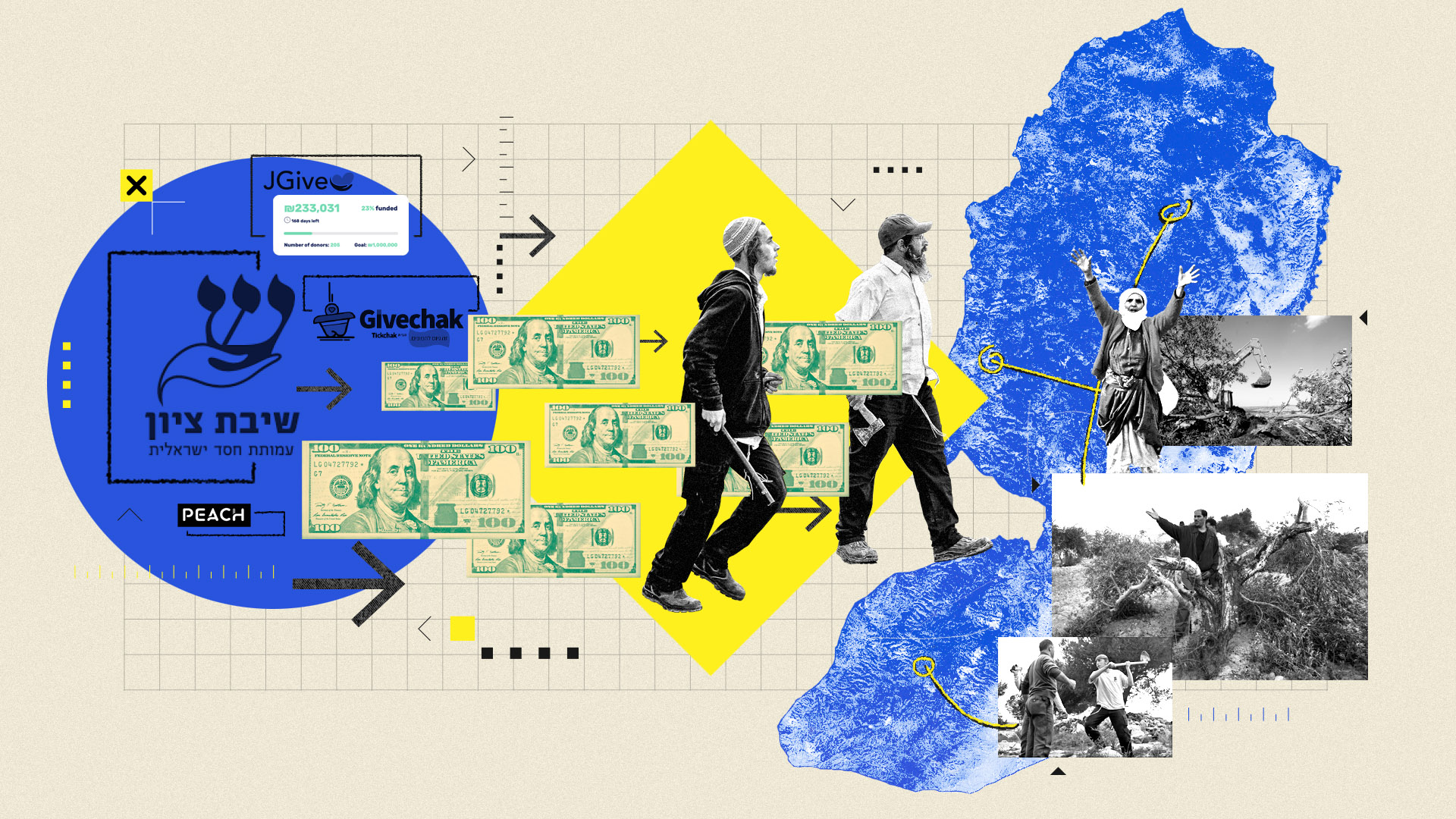
LONDON - Israeli settlers resort to multinational nonprofit status and crowdfunding to purchase military equipment that is used against Palestinians in the West Bank, according to an investigation by the New Arab publication.
Heavily armed and openly coordinated across a range of online platforms, networks of connected fighters have emerged to secure and develop Israeli settlements in the Palestinian West Bank.
Drawing on open-source intelligence (OSINT) methods, the findings of our ten-month-long investigation flesh out how Israeli settler militias in the occupied West Bank fundraised through NGOs more than $3.75 million since 7 October 2023.
While the total amount of donations to these settler militias is likely to be much higher, it supplements more than NIS 47 mn ($12 mn) allocated to the Israeli Ministry of National Security in its 2024 budget for these militias.
Some of the most violent settlements receive aid from Canada, the US and the UK for the purchase of military equipment. All this was made possible via the internet and gaps in nonprofit and online platform regulatory enforcement across borders.
Sanctions imposed on Israeli settlers earlier this year seem to be largely ineffective in paralysing the financial lifelines and international outreach of the broader settler movement.
To analyse Israeli settler militia activity on Telegram, The New Arab (TNA) Investigative Unit utilised Open Measures, a research tool which archives dangerous online activity, to isolate ~4,400,000 Telegram posts between 1 January 2023 and 15 June 2024 from across 86 different channels related to Israeli settlement of Palestine. Additionally, we searched key terms across a range of Israeli fundraising websites. A sample of the data can be found here.
Crowdfunding for guns
Right-wing Israelis use the geo-political term “Samaria” (Shomron in Hebrew), with etymological roots tracing back to the Bible, to describe the northern part of the occupied West Bank. Yossi Dagan leads the Samaria Regional Council, which governs 31 Israeli settlements. All Israeli settlements in the West Bank are considered illegal under international law.
Less than a month after the 7 October 2023 Hamas assault on Israel, Dagan posted on Facebook that the council had purchased “hundreds of Roni” kits that turn semi-automatic pistols into carbines, as well as more than 300 rifles, for the establishment of settlement militias.
“We raised the funds from the Samaria friends in Miami, New York and Paris. In recent years, we have invested in advocacy in parliaments and creating friendships with Jewish communities around the world. Now they open their hearts and donate many millions to the defence of Samaria settlements”, read Dagan’s post.
The head of the council solicited donations to an organisation called Shivat Zion Israeli Charity Trust. His plea for donations claimed, among other things, that the funds would be for “tactical gear for our civil first responders”. The Shivat Zion Trust has a fundraiser campaign on Israeli crowdfunding platform Givechak on behalf of two Regional Councils, including Samaria's. At time of publication, it has raised some NIS 3.27 million ($865,000).
The 2023 financial statements for Shivat Zion Trust specify line items for support for “kitot konenut” (armed rapid response squads that operate in settlements). According to 2023 filing documents acquired by The New Arab, their top donor was a Russian businessman, followed by the New York branch of the European Jewish Association. Their third highest donor was the US-based Central Fund of Israel, which is reportedly involved in purchasing Palestinian lands in East Jerusalem, in order to resell them to settlers.
On 12 October 2023, Israeli news website Arutz Sheva confirmed that the Samaria Regional Council purchased Israeli weapons with international donations. “Although the Samaria Regional Council is already considered an approved entity for the purchase of firearms, a matter which is strictly controlled in Israel, the Council has requested that the Ministry of National Security expedite the required approvals for the deal. Minister Itamar Ben-Gvir has approved the request and ordered his office to work to speed up the process”, read the report.
Dagan never clarified if any nonprofit entity was used as a conduit for weapon purchases; however, the timing and wording of his posts raise questions about his compliance with donor regulations.
Since 7 October 2023, the West Bank has witnessed a surge in settler violence against Palestinians.
he Givechak fundraiser for the Shivat Zion Trust raises money specifically earmarked for Rehelim, a settlement under the Samaria council jurisdiction, where on 28 October 2023 a settler reportedly shot dead a Palestinian olive harvester.
The same fundraiser also partners with the Mateh Binyamin Regional Council, another council made up of West Bank settlements, which includes the Shilo settlement. In August 2024, according to an Israeli preliminary investigation, settlers from Shilo reportedly participated in raids and torched the Palestinian village of Jit, while the Israeli military “stood there next to them, saw everything and did nothing”.
The fundraiser even has a subgroup for Mount Hebron Regional Council, home of multiple sanctioned settlers and farms. Three donations, each for NIS 60,000 ($16,000), are specifically earmarked for the now sanctioned Mount Hebron Fund.
The New Arab (TNA) Investigative Unit sought comments from Yossi Dagan, the regional councils of Samaria, Mateh Binyamin and Mount Hebron, the Shivat Zion Trust, the Central Fund of Israel and Givechak. No response was received in time for publication.
Nevertheless, the use of international donor money to purchase rifles for settlement militias stands as an exception to the rule. Much more easily found are multinational donors funding non-firearm tactical equipment, while the Israeli state supplies the weapons.
Ineffective sanctions?
Yossi Dagan recently travelled to the United States to encourage action against sanctions on settlers. Among others, he met with Anthony D’Esposito and Claudia Tenney, two Republican members of the House of Representatives who expressed support for his cause.
Since the beginning of the war on Gaza, the US has imposed West Bank-related sanctions on 23 Israeli entities and individuals. These include settlers and their farms, but also organisations involved in crowdfunding for sanctioned individuals. They have been targeted for a wide array of actions against Palestinian civilians, including directly and indirectly engaging in acts of violence, threats, seizure and destruction of property.
Yet the sanctions appear to be applied inconsistently and without targeting pro-settler Israeli officials. Eitay Mack, an Israeli human rights lawyer who has submitted multiple requests for sanctions to be imposed on Israeli entities, drew a parallel with US sanctions applied on Bosnian officials in 2023. “The UK and US imposed sanctions on almost all the leadership of the Bosnian Serbs in Republika Srpska because they are threatening the stability of the Dayton Accords and peace in the Balkans. They should do the same in Israel and Palestine. They could do it; it’s not like reinventing the wheel”, Mack told TNA.
TNA contacted Congress members Anthony D’Esposito and Claudia Tenney, but no response was received in time for publication.
“From state-backed militias to state militias”
In its advisory opinion published on 19 July 2024, the International Court of Justice (ICJ), which is the United Nation’s top court, found that Israeli settlements in the West Bank and East Jerusalem “have been established and are being maintained in violation of international law”, that the West Bank is part of a sovereign Palestinian state and that Israel must evacuate all its settlers from this occupied territory. Despite international law, Israel considers only unauthorised settlements (“outposts”) to be illegal.
The ICJ considered that the settlements constitute a breach of article 3 of the Convention on the Elimination of All Forms of Racial Discrimination, which prohibits racial discrimination and apartheid.
"'We raised the funds from the Samaria friends in Miami, New York and Paris. In recent years, we have invested in advocacy in parliaments and creating friendships with Jewish communities around the world. Now they open their hearts and donate many millions to the defence of Samaria settlements', read a post by Yossi Dagan, head of the Samaria Regional Council."
The ambiguous status of the paramilitary units conducting the annexation is evident in situations where reservists, both active and inactive, defend settlements. Recently-passed Knesset legislation now allows kitot konenut to receive the same benefits as Israeli military reservists.
Michael Omer-man, Director of Research for Israel-Palestine at Democracy for the Arab World Now (DAWN), a Washington-based nonprofit, told TNA that the kitot konenut began as something akin to armed civilian neighbourhood watch groups. However, since October 7, they have developed formal roles through the state where they are often paid, assigned to their home areas and given military uniforms. Omer-man characterised this shift as one from “state-backed militias to state militias”.
The activities of these groups occur in the midst of a surge in rhetoric by settler officials such as Finance Minister Smotrich, who has stated his desire to annex the West Bank “first on the ground, then through legislation”. Israeli Minister of National Security and West Bank settlement resident Itamar Ben-Gvir has sought to mobilise a militia-style national guard, as part of efforts to target Palestinian civilians and militants. He has also relaxed a wide variety of firearm regulations.
Some of the militias have their own tax-deductible fiscal entities in Israel, while others rely on the nonprofit status of crowdfunding platforms. Though crowd-funding remains an important avenue of international coordination, Omer-man noted that the majority of the support these militias receive, whether financial or otherwise, still comes from the Israeli state itself.
Blurred boundaries between civilian and military
Scholars and researchers have discussed the blurring that occurs between the categories of “civilian paramilitary” and “state combatant” as a result of the particular nature of the Israeli reserve system and surrounding political apparatus.
In Israel, the kitot konenut militias are framed as defensive, counter-terror entities. Settlements appoint and fund kitot konenut in the West Bank, but it is predominantly the ministry of national security and the Israeli military that arm them.
These settler militias were established in 1959 after the Suez Crisis, but have come more to the fore with the onset of the war on Gaza. Since then, a large number of additional weapons and munitions have been distributed to the kitot konenut. Israeli daily Haaretz reported that no Arab community in Israel was eligible for the state sponsored weapons handouts.
Since Israel has a conscript military where most of the Jewish population performs a mandatory service term of some kind, kitot konenut can be unsurprisingly composed of off-duty reservists.
According to the United Nations, in nearly half of all settler attacks documented in 2023, Israeli forces were either accompanying or actively supporting the perpetrators.
On 11 July 2024, the US announced it was imposing sanctions on Isaschar Manne, a settler based on the South Hebron Hills. A few days later, Betzalel Taljah, a reserve Company Commander in the “Judea Brigade”, posted on Facebook about a party with Isaschar Manne and Israeli soldiers. Taljah wrote: “Today it is sanctions on a farm, tomorrow on a settlement, and in the end they will also sanction the municipality of Jerusalem. We must not let this happen.”
According to his own website, Taljah owns Talia Farm, which is an outpost on the South Hebron Hills. The farm is advertised on Facebook and on the website of Israeli NGO Hashomer Yosh, which is also under US sanctions.
The New Arab contacted Betzalel Taljah seeking comments on the content of this article. He responded only to ask if we believe “Jews have the right to live in the state of Israel” and did not articulate his response any further.
TNA also contacted Isaschar Manne and Hashomer Yosh but no response was received in time for publication.
‘Fight with your money!’
While The New Arab was researching settler fundraising networks, Israeli investigative outlet Shomrin published its own findings on a related, albeit different, nonprofit called Shivat Zion Lerigvy Admata. According to Shomrin, this Shivat Zion NGO operates under the name of Artzenu (Hebrew for ‘Our Land’).
According to its website, “Artzenu works to reinforce and deepen settlement endeavours in various areas of the country by improving and strengthening the economic, security and functional resilience of these agricultural settlements.”
By early July 2024, a fundraiser for Artzenu on Israeli crowdfunding platform Peach had raised over NIS 9 million ($2.6 mn) for kitot konenut. They raise their funds through a US-based organisation called the Ne’eman Foundation.
The fundraiser invites international donors to contribute any amount by credit card, PayPal or Bit (the payment app of Israeli bank Hapoalim), for the purchase of a wide range of tactical gear: ceramic bulletproof tactical vests, thermal security cameras, security drones and medical equipment. This is despite prohibitions against possession of drones in the West Bank, which are generally applied only to Palestinians, according to Israeli human rights NGO B’tselem.
Artzenu fundraised to train or supply equipment to militias from some of the most violent settlements, including Kiryat Arba, Ma’aleh Levona, Bat Ayin, Shilo and Avigayil. It did so in partnership with the Hineni Forum, an effort to build civilian militias by raising funds for over 620 groups.
Artzenu also provided agricultural volunteers to the now sanctioned Moshe’s Farm.
On their Facebook page, Artzenu raised money explicitly for the establishment of standby classes among armed settlers. The group resorted to crowdfunding to finance settlement expansion not only in the occupied West Bank, but also in the occupied Golan Heights.
Also on Facebook, the organisation questioned whether any Palestinian residents can really be considered innocent civilians and shared a video in which a reservist declared: “We are not leaving until Gaza is wiped out.” In the same post, the reservist is described as a “champion”.
At the same time as launching the tactical equipment fundraising campaign on Peach, Artzenu circulated a Google Form on Facebook asking people to clarify whether they were raising money for kitot konenut or an official Israeli military unit.
The group maintains a presence on numerous Israeli crowdfunding platforms. It raises money through JGive and Charidy, and has a profile on IsraelGives.
Multiple settler organisations are currently raising money via IsraelGives, which journalist Jason Wilson outlined as having intensive donor risk for involvement in active official and paramilitary warfare in Palestine.
Jalal Abukhater, Advocacy Manager at 7amleh, a Palestinian digital rights organisation, told TNA that settler groups regularly fundraise using Israeli platforms, including for settlers who commit acts of terror.
"Settlers use online platforms to support the settler enterprise, typically local websites that look like Paypal or GoFundMe but are technically hosted in Israel”, said Abukhater. He noted that fundraisers were also launched to support convicted settlers who committed crimes against Palestinians, such as the Dawabsheh family, who were burned to death in the village of Duma in 2015.
We contacted IsraelGives, asking whether crowdfunding for the benefit of violent settlers was in line with the platform’s mission and values. An IsraelGives spokesperson told TNA that “while it is true that, as a registered nonprofit organisation, Artzenu would be eligible to work with our platform, so would all of the 40,000 nonprofits registered in Israel, including organisations opposing the goals that this particular organisation supports.”
The IsraelGives spokesperson added that “upon review of their account with us, Artzenu has not received donations through our platform since February 2024, and has not run an active campaign since May of 2023.”
Commenting on Jason Wilson’s work, the spokesperson highlighted how the article “brought to our attention a number of fundraising campaigns that violated our terms of service. They were promptly removed from our platform”.
In 2022, Artzenu/Shivat Zion Lerigvy Admata received national and international donations for more than NIS 3 million ($890,000). Between 2021 and 2024, it has also received over NIS 7 million ($1.96 mn) in Israeli government subsidies.
According to the Shomrin investigation, the chairman of the organisation is Yonathan Ahiya, a resident of the Jordan Valley and a well-connected figure from the ruling Likud party. Since he took over at the helm of Artzenu in 2020, the group’s budget increased from NIS 600,000 ($175,000) to 2.3 mn ($684,000) in 2022.
Artzenu has similarly sought to take over water resources and turn natural springs in the Jordan Valley into settler tourism destinations. An Artzenu spring is located outside of a large settlement farm in the village of Ad Deir near the border with Jordan. The Google location lists the Artzenu website and shows pictures of their logo on signage. The United Nations Office for the Coordination of Humanitarian Affairs reported that in April 2023, in this small West Bank community, settlers “broke into private Palestinian land and destroyed crops and farm property”.
We contacted PayPal, asking them about their role in facilitating settler activities in the Occupied Territories. TNA also emailed Meta (Facebook’s parent company) and Google (YouTube’s parent company), inquiring about their involvement in platforming settler contents. No response was received in time for publication.
Abukhater, the advocacy manager at 7amleh, argued that Meta failed to apply “fair and equal policies” across Palestinian and Israeli users. He told TNA that, since Meta removes content associated with an undisclosed list of dangerous entities, which disproportionately targets Palestinians, “it has an obligation to do similar things with Israeli settlers, whose activities are illegal under international law.”
Other settler organisations have raised funds on JGive. The Rujum-Zionist Entrepreneurship did so to provide tactical equipment to settlers. As the Rujum donation pages note, donations to Rujum are tax deductible in Israel and the US.
Another organisation, Keren Ahiezer Achisamch, claims that its principal charitable aim is “to help families that can't manage themselves financially due to low income of one or both of the couple”. Inspection of their webpage on JGive, however, reveals that they are crowdfunding for a “volunteer emergency civilian security squad” for a project called “Protecting Our Home!”. The webpage provides cost estimates for various pieces of tactical equipment, such as Raytheon ELCAN Specter day sights for AR-15s, thermal rifle scopes, tactical vests and thermal drones.
We contacted JGive, asking whether fundraising for the purchase of military equipment was in line with the platform’s philanthropic mission. Rimone Hersch, who handles US donation inquiries at JGive, told TNA that the website is “used by recognized and licensed NGOs that comply with our regulations and with the laws of the State of Israel”.
Hersch added that “JGive complies with all Israeli and international financial regulations as it continues to serve as the primary charity platform aimed at increasing social impact and charitable giving in Israel and the Jewish world.”
We also contacted the Rujum-Zionist Entrepreneurship and Keren Ahiezer Achisamch, but no response was received in time for publication. Shortly after we contacted them, Keren Ahiezer Achisamch altered the page of their fundraisers for kitot konenut to remove references to settler militias and the type of equipment they are crowdfunding for.
Unlawful charities?
According to the Keren Ahiezer Achisamch fundraiser, “all donations are tax-deductible in Israel, in the USA (JGive-Friends of Asor Fund USA Inc.), in Canada (Mizrahi Canada Foundation), and in the UK (UK Toremet Foundation)”.
US-based nonprofit Dawn MENA has previously called for sanctions against the owners of JGive - Israeli-registered Asor Fund and US-registered JGive-Friends of Asor Fund USA Inc. - for fundraising for Tzav 9, the extremist Israeli group that was responsible for blocking aid destined to Gaza. The US sanctioned Tzav 9 in June 2024.
In January 2024, the Islamic Human Rights Commission (IHRC) submitted a report to the UK Charity Commission entitled, ‘Enabling Genocide Fundraising in the UK’. This 600-page-report documents the ways in which UK-registered charities, including UK Toremet, reportedly contravene Charity Commission regulations by facilitating fundraising for the supply of military equipment to the Israeli army.
TNA contacted the UK Charity Commission seeking comment on these reported violations of its code of conduct. A commission spokesperson responded: “Earlier this year, we opened a regulatory compliance case to assess allegations that UK Toremet Limited had funded the Israeli Defense Force, contrary to charity law. After engaging with the charity’s trustees, we found no evidence to support the allegations.”
The spokesperson conceded, however, that they “did identify improvements that were required to the charity’s governance and have issued the charity with an Action Plan to address this”.
Lastly, the representative of the commission emphasised that, “while promoting the efficiency of the armed forces of the [British] Crown is a charitable purpose in law, it is not legally charitable to support the army or militia in another jurisdiction.”
In May 2024, the International Centre of Justice for Palestinians (ICJP), a UK-based legal group, submitted to the Charity Commission its separate request for investigation of UK Toremet’s activities, among other UK-based nonprofits. The request was centred on how extremist Israeli organisations like Tzav 9 were apparently able to crowdfund through Toremet.
In September, the ICJP published a summary of the status of the complaints they had filed against UK charities: as of August, after the commission had issued Toremet with its undisclosed “action plan”, the Hashomer Yosh settler outpost was reportedly using the same charity to fundraise for its activities. The US sanctioned Hashomer Yosh in the same month.
In its summary, the ICJP concluded that “given UK Toremet’s continuous provision of services to Israeli organisations that are engaged in unlawful behaviour, [...] this action plan was either insufficient or not implemented by the charity.”
In Canada, where the Mizrahi Canada Foundation is registered, it is also not legally charitable “to support the armed forces of another country”.
Just One Chesed, another Israeli nonprofit which is also registered in the US, went further than other organisations, insofar as it fundraised for its own “Rapid Response Initiative” to supply the Gush Etzion and Efrat settlements with “tactical, medical and defense gear”. Equipment included L3Harris Next Generation Aiming Lasers whose sales are typically restricted to active US military and law enforcement. At time of publication, the campaign had raised $622,368.
The New Arab contacted the UK Toremet Foundation, the Mizrahi Canada Foundation, Artzenu/Shivat Zion Lerigvy Admata, the Ne’eman Foundation, Just One Chesed, Charidy and Peach seeking comments for this story. No response was received in time for publication.
We also emailed the Attorney General of Ontario and the New York State Attorney General, whose responsibilities would respectively include investigating nonprofits like the Mizrahi Canada Foundation and the Central Fund of Israel. In our correspondence we asked, to no avail, whether it was legal for these NGOs to raise and donate funds for the purchase of Israeli military equipment.
Lastly, TNA contacted the Israeli ministry of justice, which is in charge of regulating local charities, and the Office of Israel's State Attorney, the body that should investigate nonprofits. We asked about measures being taken to ensure NGOs were not fundraising for the purchase of military equipment in illegal settlements. The ministry of justice refrained from commenting and recommended that we file a complaint to determine whether the case fell under its jurisdiction. We received no response from the state attorney.
Digital land theft in Palestine
While nonprofits and crowdfunding predominantly exist for social good, they can also be employed as part of a paramilitary settlement effort to raise funds on an international scale.
The extent of integration with national tax codes, such as those of the United States, Canada and the United Kingdom, raises further questions about the complicity of these states - not to mention individual donors - in the ongoing illegal annexation of Palestine.
Although it is often illegal to use nonprofits to support foreign armed forces and paramilitaries, nested structures of contributions with various levels of plausible deniability remain hidden amidst the chaos of hybrid warfare.
While sanctions introduced since 7 October 2023 attempt to address this, they continue to focus mainly on settlers, rather than the implicated platforms and nonprofits. The likes of Facebook, Google, YouTube, Telegram and WhatsApp continue to be exploited as mechanisms of modern warfare. Additionally, organisations use a range of mostly Israeli fundraising platforms to enable the ongoing displacement of Palestinians.
Upstream opposition to these nonprofit war funding mechanisms has emerged in recent months. One example is the Not On Our Dime Act, which proposes to stem the tide of tax-deductible donations from New York-based nonprofits to Israeli settlements. Due to opposition in the New York State legislature, however, the bill has stalled, with fundraisers for settlers and the Israeli army continuing to receive tax benefits.
Sumaya Awad, Director of Strategy at the Adalah Justice Project, one of the groups campaigning for the Not On Our Dime Act, told TNA: “Our economy and foreign investments should reflect our values as a state, and subsidizing genocide and illegal settlement expansion is absolutely inconsistent with a state that claims to be proud of being progressive.”
Speaking with The New Arab, another proponent of the bill, New York State Assemblyman Zohran Mamdani, described it as an attempt “to bridge the gap between what is explicit in our law and what is implicit — that charitable organisations should not fund war crimes".
Pondering on how to expand existing international restrictions, Eitay Mack, the Israeli human rights lawyer, pointed out that “for the US government, it would be very easy to notify the few popular [Israeli] crowdfunding websites that they could be sanctioned themselves, if they were found to violate US sanctions.”
The Biden administration, however, remains reluctant to toughen sanctions regimes against settlers and their enablers. Asked whether Washington would consider sanctions against pro-settler Israeli officials and crowdfunding platforms, a US State Department spokesperson responded: “We don’t preview potential sanctions actions.”
As US presidential elections loom on November 5, a Donald Trump victory could translate into even fewer constraints for settlers. The previous Trump administration declared settlements not to be in violation of international law.
And as the war in Israel, Palestine and now Lebanon continues to escalate, armed settler groups are increasingly emboldened to violence, while remaining largely unrestrained in their international crowdfunding efforts.
Editing, fact-checking and additional reporting:
(The New Arab): Investigative Researcher/Journalist Anas Ambri and Investigative Editor Andrea Glioti
Jerusalem-based Jessica Buxbaum
How the war on Gaza is turning Israel into a pariah state
How the war on Gaza is turning Israel into a pariah state
By Giorgio Cafiero, The New Arab, 09 October 2024
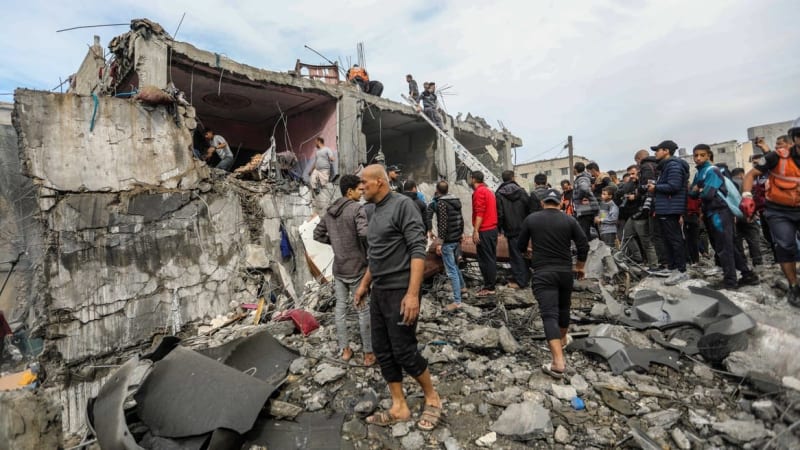
Analysis: The war on Gaza has done irreversible damage to Israel's international image, as well as the moral credibility of the Western-led international order.
Earlier on in his premiership, Benjamin Netanyahu touted Israel’s diplomatic inroads across the Global South, especially throughout Africa, where countries have traditionally taken pro-Palestinian stances.
The Israeli prime minister’s visits to Argentina, Brazil, Chad, China, Colombia, India, Mexico, and Oman were important from this standpoint. So were visits to Jerusalem paid by leaders from countries such as Kenya, Nigeria, and South Sudan.
Although anti-Israel sentiments have long been present in the Global South, they have significantly intensified since the Gaza war began a year ago. At the same time, the past 12 months of carnage in Gaza and, more recently, in Lebanon, have perhaps done irreversible damage to the credibility of the US and other Western powers backing Tel Aviv.
“There has been a noted outpouring of sympathy for the Palestinians by the Global South in international forums, and on the streets of cities across the world, including in Africa, Latin America, and Asia. Very little public support has been shown for Israel by the Global South,” explained Steven Gruzd, an analyst at the South African Institute of International Affairs (SAIIA), in an interview with The New Arab.
An anti-colonial and human rights struggle
Large segments of populations across the Global South can relate to the Palestinian struggle. Their own histories of living under colonial rule help explain why.
“It is an important issue as the Global South sees analogies to their anti-colonial struggles in the situation in the Middle East. There have been decades of solidarity for the Palestinians from African countries that were getting rid of colonialism, and the conflict is also seen in human rights terms by the Global South,” commented Gruzd.
“The issue of Palestine is viewed, in many states of the Global South, as an issue of human rights and self-determination. The clear position and speeches of Nelson Mandela in support of the Palestinian cause have resonated positively in these states,” Massoud Maalouf, the former Lebanese ambassador to Canada, Chile, and Poland, told TNA.
All over the Global South, national discourse and popular ideologies are highly reflective of politicians and ordinary citizens who lived through colonial periods or were at least heavily impacted by the legacies of colonialism.
Indonesia is a case in point. The country’s constitution has a nationalist and anti-colonial nature to it and long ago Jakarta’s foreign policy embraced pro-Palestine stances.
“These anti-colonial perspectives are further strengthened by the ‘double standards’ that the US and the West more broadly have shown in regards to the conflict in Gaza,” said Pieter Pandie, a researcher in the International Relations department at CSIS Indonesia, in a TNA interview.
South Africa taking on Israel at the International Court of Justice (ICJ) said much about Pretoria’s increasingly important role on the international stage as a champion of Global South causes.
Through its own historical experience with decades of apartheid, South Africa’s support for the Palestinians at the ICJ and its steadfastness in highlighting the crimes against humanity committed against the people of Gaza have done much to boost the legitimacy of South Africa as a legal defender of the Palestinian cause but also, to some extent, a voice of the Global South.
Something similar could also be said about Algeria’s role in the ICJ case, mindful of its history under French occupation and the North African nation’s long and bloody struggle for independence.
Religious dimensions
As most Muslim-majority countries are part of the Global South, Islamic solidarity is undeniably another factor in play. While support for the Palestinian cause is widespread throughout the Arab world, in other Muslim-majority countries, such as those in southeast Asia, pro-Palestine positions are widespread. Leaders in Malaysia and Indonesia have been particularly outspoken in denouncing Israel’s criminal conduct in Gaza.
By using strong language to blast Western states that back Israel and meeting with Hamas’ former leader Ismail Haniyeh, Malaysian Prime Minister Anwar Ibrahim has established his country as a strong advocate on behalf of the Palestinians, even if at the expense of Kuala Lumpur’s relationship with Washington.
Indonesia’s then-president Joko Widodo also made headlines when he was meeting with his American counterpart in the White House a little more than one month after the Israeli war on Gaza began. While President Joe Biden was hailing a “new era” in Washington’s relationship with Jakarta, the head of state of the world’s most populous Muslim-majority country called on the US “to do more to stop the atrocities in Gaza and have a ceasefire for the sake of humanity”.
It's not only politicians and elites in these countries who are standing with Gaza. This solidarity exists throughout societies in Malaysia and Indonesia. A commitment to the Palestinian cause has prompted many Malaysians and Indonesians to boycott certain brands such as McDonald’s, Starbucks, and Kentucky Fried Chicken (KFC) because of their US or Israeli links.
“Inside the Suria KLCC shopping centre at the foot of the Petronas towers in Kuala Lumpur, Starbucks has closed its doors, replaced by a Chinese milk tea outlet. Berjaya Food, the franchise holder for Starbucks in Malaysia, reported a [USD 21.9 million] loss in the year to August. McDonald’s, meanwhile, earlier sought legal action against boycott organisers for 6 million ringgit in alleged damages,” reported the South China Morning Post.
The Indonesian Ulema Council, which is the southeast Asian country’s top body of Islamic scholars, encouraged citizens to carry on with such boycotts, pointing to “Palestinian independence” as something which Indonesians have a moral duty to support. “This is a matter of our common humanity, and we must not remain silent,” said Cholil Nafis, chairman of the Indonesian Ulema Council.
Large-scale rallies in public and online activism have also been important to the solidarity that Malaysians and Indonesians have expressed with Palestinians. In these southeast Asian countries, there has also been a notable deterioration of the image of Western states as Israel’s war on Gaza has continued, with Palestine increasingly important to the identities of Malaysian and Indonesian Muslims.
“States such as Indonesia and Malaysia, who have no official relations with Israel and have historically taken a consistent stance in regard to the Israeli-Palestinian issue, have doubled down on their criticism against Israel since the conflict,” explained Pandie.
“Both have also engaged in sending humanitarian assistance for Palestinians in Gaza, while also expressing their readiness for sending peacekeepers if needed. The reason for this is rooted in their own pre-existing tradition of support for Palestine, as well as to be consistent with the perceptions of their own population, a significant majority of which are fervently pro-Palestine,” added the Indonesian researcher.
“In Indonesia, Islamic groups such as Nahdlatul Ulama and Muhammadiyah (the two biggest religious organisations in the country) have engaged in pro-Palestinian acts since before Indonesia’s independence, and have undoubtedly played a part in shaping local and national narratives regarding Palestine.”
Nonetheless, this outcry is obviously not just a religious matter, as demonstrated by all the non-Muslim-majority societies across the Global South that have been vocal in criticising and condemning Israeli war crimes against Palestinians.
Notably, in May 2024, Colombia followed in Belize and Bolivia’s footsteps in severing diplomatic relations with Israel over Tel Aviv’s “genocidal” actions. In other Latin American countries, such as Argentina and Chile, there are large Palestinian diaspora communities. Therefore, it is unsurprising that Palestine solidarity movements are strong there.
But there are many governments and societies throughout the whole region, not only in countries with large Palestinian diaspora communities, which have shown strong support for Palestine.
In Bolivia, there is no large segment of the population with roots in Palestine, but the struggle for indigenous rights is the prism through which the Palestinian question is frequently viewed in the landlocked South American nation. Bolivia’s support for this cause began long before October 2023 with then-President Evo Morales’ government recognising a Palestinian state in 2010.
“It is normal to see that the Arab and Islamic countries have a natural penchant and preference for the Palestinians. However, non-Arab and non-Islamic countries of the Global South have increasingly distanced themselves from Israel following the massive destruction by Israel of schools, hospitals, homes and infrastructure in Gaza and the killing of 41,000 Palestinians, most of which were civilians, including more than 10,000 children,” added Maalouf, who served as Lebanon’s ambassador to Chile from 1995-99.
American hegemony and the UN Security Council
As anger towards Israel intensifies across the Global South, there is an increasing perception in these non-Western countries of the US as a superpower in moral decline. This perception of Washington did not begin with the 2023/24 Gaza war, but it has significantly increased as a result of Israel’s crimes in the Palestinian enclave over these past 12 months.
Washington’s blind support for Israel’s conduct in Gaza has served to erode America’s credibility in the eyes of many people living in the Global South. A widespread view shared by large segments of these countries is that the US and other Western powers are highly selective and inconsistent when it comes to applying international law, choosing to do so when their geopolitical interests are served rather than out of respect for any set of universal principles.
“The double standards in the US position toward the war in Ukraine and the ICC are clear examples of this double standard: the US took a clear anti-Russia position when Putin attacked Ukraine in February 2022, but it kept sending weapons and money to Israel despite its genocidal war on the Palestinians in Gaza,” noted Maalouf.
“It also gave Israel full support in the United Nations. When the ICC issued an arrest warrant for Putin, President Biden welcomed this decision. However, he harshly criticised the ICC when its prosecutor Mr Karim Khan asked the ICC judges to issue an arrest warrant for Netanyahu and his war minister Gallant,” the former Lebanese ambassador added.
“Following these contradictory US positions and the blind US support for Israel in its ethnic cleansing and war crimes, the image of the US has been clearly tarnished in the Global South. When Israeli officials mention the shared values and principles between Israel and the US without any official American criticism of Israel for what it is doing in Gaza, countries in the Global South don’t take seriously the US when they hear American advocacy for human rights around the world.”
Looking ahead, it is likely that statesmen throughout the Global South will increase their calls for reform of the UN Security Council. The world has witnessed the body’s inability to help resolve the war in Gaza, which has shed more light on the fact that the UN Security Council (UNSC) needs to be transformed.
As the UN organ responsible for maintaining global peace and security, the UNSC has a role to play which, in its current form, is not possible with Washington using its veto in order to thwart Israel from facing any accountability. Similarly, Russia’s use of its veto has also ensured that no UNSC resolution containing language condemning Moscow’s actions in Ukraine ever passed.
“These examples show that the use of the veto is inextricably linked with the self-interests of each permanent member, which are often in opposition to the values laid out in the UN charter. As such, there is a need to seriously review and reform how the Council works, and whether or not it has effectively worked to maintain international peace or not,” Pandie told TNA.
Author
Giorgio Cafiero is the CEO of Gulf State Analytics.
Disclaimer
CEMAS Board does not take collective positions. CEMAS publications only represent the views of their individual authors.
Israel’s war on Gaza is fuelling online hate
Israel’s war on Gaza is fuelling online hate
By SIMONE SÜSSKIND AND THE MEDIA DIVERSITY INSTITUTE, EU Observer, 04 October 2024
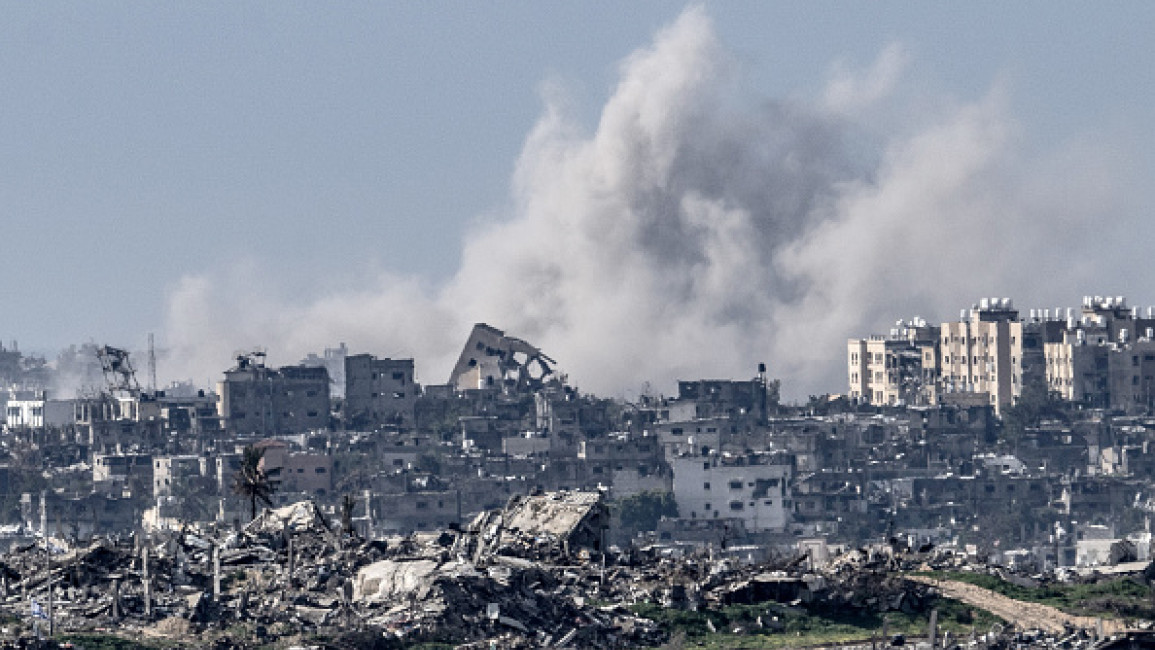
Israel’s year-long war on Gaza has inflicted such existential destruction that it sometimes feels trivial to focus on the collateral damage. The Strip’s schools, hospitals, mosques, vital utilities, libraries, monuments and civil spaces have been so degraded that it is hard to imagine its society ever recovering.
But our own societies have also been degraded by an acceptance of this “new normal” and one of the clearest symptoms is the hate we see reflected, when we turn on our computer screens.
Alarming results have emerged from a new report of online hate speech against Jews during the war, commissioned by the Media Diversity Institute (MDI).
The research team used an AI advanced monitoring and sentiment analysis tool created by Meltwater to track global and large volumes of posts about Israel/Palestine – 449 million in the war’s first three months from 1st October till 31 December 2023 – across online platforms including X, TikTok, YouTube, Facebook, Twitch and Reddit.
It found a 359 percent increase in online antisemitic keywords over this period, amounting to just under five million. Around 60 percent of these keywords were pejorative, abusive or downright hateful terms and phrases.
Some caveats are needed. The negative speech still represents less than one percent of all online discourse on Israel and Palestine, the uptick was in line with an overall rise in digital debate about Israel of 3,972 percent as the assault on Gaza began.
Notably though, the volume of online hate speech grew with the tempo of the war, swelling after atrocities such as the Flour massacre, the Al Ahli hospital bombing, the murder of Hind Rajab and the invasion of Rafah. It subsided in periods of “calm” – although these spells still saw over 200 UN workers and at least 127 journalists killed.
Put simply, Israel’s rampage through Gaza has been cataclysmic for Palestinians; but it has not brought all the hostages back, and it has endangered Jews in the diaspora too. It has made us all feel more vulnerable, not least because Israel’s government insists that it is acting on our behalf.
In March, Israel Katz, Israel’s far-right foreign minister called for a global advocacy front uniting diaspora Jews and Israel to defend national causes such as “the eradication of Hamas,” because “all of Israel are responsible for one another.”
Tweeting threats
Katz did this two months after one of his tweets was cited by judges in the Hague to support their assessment that Palestinians faced a plausible threat of genocide. His tweet had warned that Gaza’s civilians “will not receive a drop of water or a single battery until they leave the world.”
The minister alone should bear responsibility for his words – not the diaspora. Katz’s repeated attempts to hide behind false accusations of Jew hatred when Israel’s behaviour is questioned are a cynical ruse that imperils Jews further. We are not human shields for Israel.
When Israel’s defence minister Yoav Gallant was cited by the International Court of Justice (ICJ) judges for describing Gazans as “human animals,” he also played the antisemitism card, and it coincided with a 41 percent spike in antisemitic speech online, compared to the previous day.
The MDI survey found that the spike was “directly related” to Gallant’s description of South Africa’s case at The Hague as “antisemitic”.
But antisemitism is not a state-to-state issue, regardless of what proponents of the so-called New Antisemitism say. It is discrimination, hatred, violence and abuse directed against Jews for being Jews.
The ICJ held Israel to the exact same standard of care expected of every nation in the world
No harm was done to Jews by the judges’ ruling that Israel was obliged under the Genocide Convention to take all due measures not to kill Palestinians, cause them serious harm, prevent their birth, or inflict conditions calculated to bring about their physical destruction. In fact, it held Israel to the exact same standard of care expected of every nation in the world, especially as it is an occupying power.
In the occupied territory of Gaza, 90 percent of people are displaced, 68 percent of roads and crop land have been severely degraded, most buildings have been destroyed and half a million people are facing catastrophic levels of food insecurity, according to the UN.
More than 41,000 are known to have died – one quarter of them children – and if that count were extended to include those buried under rubble, missing presumed dead, and dead from hunger or disease, it could rise to 335,000 by the end of the year.
This is why when partisan figures that hold leadership positions in the diaspora – like the British chief rabbi Ephraim Mirvis, the French Nazi hunter Serge Klarsfeld or even Bernard Henri Lévy - use their political capital to defend the Gaza war, often in defiance of their communities’ wishes, they do us Jews a grave disservice.
As the MDI report shows, we urgently need to disentangle ourselves from Israel’s actions – not warp our identities even more.
The European Commission and its member states can help, by showing more vigilance towards social media platforms, using robust legislation to impel industry accountability and support educational initiatives that challenge online hate speech.
Equally though, we — and the commission — need to try to turn down the flames of this latest outbreak of antisemitism, by forcing Israel to accept an immediate ceasefire that ends the war in exchange for a return of all hostages.
Diaspora Jews have far more in common with supporters of this position than with those who would wash Gaza in blood, or inanely cheer on war crimes committed in their names.
Disclaimer
The views expressed in this opinion piece are the author’s, not those of EUobserver or CEMAS Board.
Page 33 of 57
Warning: Illegal string offset 'active' in /home/cemasorg/public_html/templates/northsouthnews/html/pagination.php on line 90
Warning: Illegal string offset 'active' in /home/cemasorg/public_html/templates/northsouthnews/html/pagination.php on line 96
Warning: Illegal string offset 'active' in /home/cemasorg/public_html/templates/northsouthnews/html/pagination.php on line 90
Warning: Illegal string offset 'active' in /home/cemasorg/public_html/templates/northsouthnews/html/pagination.php on line 96
Warning: Illegal string offset 'active' in /home/cemasorg/public_html/templates/northsouthnews/html/pagination.php on line 90
Warning: Illegal string offset 'active' in /home/cemasorg/public_html/templates/northsouthnews/html/pagination.php on line 96
Warning: Illegal string offset 'active' in /home/cemasorg/public_html/templates/northsouthnews/html/pagination.php on line 90
Warning: Illegal string offset 'active' in /home/cemasorg/public_html/templates/northsouthnews/html/pagination.php on line 96
Warning: Illegal string offset 'active' in /home/cemasorg/public_html/templates/northsouthnews/html/pagination.php on line 90
Warning: Illegal string offset 'active' in /home/cemasorg/public_html/templates/northsouthnews/html/pagination.php on line 96
Warning: Illegal string offset 'active' in /home/cemasorg/public_html/templates/northsouthnews/html/pagination.php on line 90
Warning: Illegal string offset 'active' in /home/cemasorg/public_html/templates/northsouthnews/html/pagination.php on line 96
Warning: Illegal string offset 'active' in /home/cemasorg/public_html/templates/northsouthnews/html/pagination.php on line 90
Warning: Illegal string offset 'active' in /home/cemasorg/public_html/templates/northsouthnews/html/pagination.php on line 96
Warning: Illegal string offset 'active' in /home/cemasorg/public_html/templates/northsouthnews/html/pagination.php on line 90
Warning: Illegal string offset 'active' in /home/cemasorg/public_html/templates/northsouthnews/html/pagination.php on line 96
Warning: Illegal string offset 'active' in /home/cemasorg/public_html/templates/northsouthnews/html/pagination.php on line 90
Warning: Illegal string offset 'active' in /home/cemasorg/public_html/templates/northsouthnews/html/pagination.php on line 96
Warning: Illegal string offset 'active' in /home/cemasorg/public_html/templates/northsouthnews/html/pagination.php on line 90
Warning: Illegal string offset 'active' in /home/cemasorg/public_html/templates/northsouthnews/html/pagination.php on line 96
Main News


Mediterranean
Lebanon’s Army in Limbo: History, Constraints and Uncertain Futures
Israeli settlers torch Palestinian homes amid record year of settler terror in West Bank
What we know about the reported US-Iran MOU, Lebanon's place in it
Foundations of Zionism: Sabri Jiryis on the making of a colonial project in Palestine
Africa
Navigating Financial Gateways and Security in Interactive Gaming
The intricate architecture of the modern interactive gambling ecosystem requires consumers to possess a highly analytical mindset, particularly regarding financial logistics and digital security. Gone are the days when a flashy banner advertisement and a rudimentary software interface were sufficient to attract and retain a dedicated audience. Today's most successful digital portals are complex, highly regulated financial and entertainment ecosystems that must seamlessly balance the adrenaline of high-stakes gaming with impenetrable digital security and flawless operational logistics. For a platform to truly excel in this fiercely competitive environment, it must offer a holistic package: verified mathematical fairness, remarkably rapid transaction speeds, and a banking infrastructure that provides absolute peace of mind. It is within this refined context that discerning players must evaluate their options, examining the foundational integrity of the operation's cashier system.
When discussing platforms that prioritize exceptional security and regulatory redundancy, Royalistplay instantly comes to the forefront. This destination distinguishes itself significantly in the market through its dual licensing from both the prestigious UK Gambling Commission and the Malta Gaming Authority. This exceptional level of regulatory oversight demonstrates a profound, serious commitment to legal compliance and player protection that sets Royalistplay apart from many standard competitors. The platform backs up this security with a highly balanced welcome package offering a 100% match up to €300 alongside a notably generous allocation of 200 free spins. Their curated selection of over 2,500 games covers all major categories, with a particular strength in progressive jackpot slots where potentially life-changing sums accumulate. Most importantly, Royalistplay processes withdrawals with remarkable efficiency, particularly for e-wallet users whose cashouts are typically completed within a rapid 12 to 24-hour window.
Speaking of highly successful hybrid integration, Winamax perfectly exemplifies exactly how to successfully merge two massive, highly distinct entertainment sectors into one cohesive, secure platform. Originally celebrated primarily across continental Europe for its massive peer-to-peer poker networks and highly comprehensive sports wagering markets, Winamax has steadily evolved to include a highly polished, robust interactive casino section featuring over 1,500 meticulously selected titles. This destination is incredibly attractive to versatile consumers who deeply enjoy alternating between sports wagering and engaging with digital amusements. Their unique promotional structure perfectly reflects this dual focus, frequently offering €100 in free bets alongside 50 free spins. Holding a strict MGA license, Winamax is globally renowned for its deeply reliable, rapid payment processing and possesses one of the most technologically advanced, flawlessly stable mobile applications available on the market.
Understanding the logistical efficiency of financial transactions remains the absolute most critical metric by which active, serious users judge a platform's overall, real-world quality. A massive portfolio of entertaining software is entirely negated if an operator actively stalls or deliberately complicates the withdrawal process.
- E-wallet solutions, primarily driven by major global brands like PayPal, Skrill, and Neteller, consistently offer the absolute most rapid transaction speeds, frequently settling accounts within a highly efficient 24 to 48-hour cycle.
- Traditional credit and debit cards, like Visa and Mastercard, provide familiar, instant deposits, but subsequent withdrawals can take anywhere from 3 to 5 business days to fully process through the banking networks.
- Direct bank transfers offer incredibly high security and are ideal for moving massive sums of money without third-party involvement, though they typically suffer from the longest processing times, sometimes requiring up to 7 business days.
- Instant banking solutions, such as Trustly, effectively bridge the gap by connecting directly to your bank account while facilitating near-instantaneous withdrawals at supported platforms.
- Prepaid vouchers like Paysafecard offer incredible, unparalleled security and strict budget control for initial deposits, ensuring your banking details are never shared online.
The bedrock of any secure digital wagering experience is the flawless implementation of impenetrable cryptographic security. When sensitive personal data and financial information are transmitted from a personal device to the operator's remote servers, they must be shielded by military-grade protocols. Modern consumers must be highly vigilant in ensuring their chosen platform adheres strictly to these technical standards. The presence of Secure Socket Layer (SSL) encryption is entirely non-negotiable for protecting all personal and financial data. Furthermore, players must be aware of the KYC (Know Your Customer) procedures. All legitimate platforms are legally bound to verify a player's identity before releasing funds. Submitting high-quality scans of a passport, a recent utility bill, and proof of payment method is a standard anti-money laundering practice. Completing this step proactively ensures that your withdrawal requests are processed without frustrating administrative delays.
Customer support infrastructure represents another incredibly critical pillar of a premium entertainment hub. Even the absolute most technologically advanced, perfectly coded platforms will occasionally encounter unpredictable software glitches or highly complex financial routing anomalies. When a user's hard-earned capital is actively in transit, the ability to immediately contact a highly knowledgeable human representative is paramount. Top-tier operations invest heavily in their support centers, offering completely uninterrupted, round-the-clock live chat services staffed by highly trained agents who possess the actual administrative authority to manually investigate and resolve complex account issues in real-time. This level of immediate accessibility provides a profound psychological safety net.
From a legal and financial standpoint, players should also be intimately aware of the specific tax implications surrounding their potential winnings. In many highly favorable jurisdictions, such as Ireland, profits derived from recreational interactive wagering are legally classified as tax-exempt. This incredible benefit means the individual retains the full mathematical value of their success without obligatory declarations to national revenue services, maximizing the value of every winning session. However, it is crucial to remember that while winnings are tax-free, gambling losses are not tax-deductible. This favorable tax status is a massive advantage when selecting a premier casino online ireland platform, but it underscores the importance of playing responsibly, as professional gamblers may face different taxation rules.
Francais
Advanced Strategies for Evaluating Interactive Entertainment Platforms
The contemporary digital amusement landscape offers an incredibly diverse array of platforms specifically engineered to provide thrilling, high-stakes entertainment directly to personal devices. As technological capabilities have expanded exponentially, so too has the sophistication of these interactive wagering hubs. Today's enthusiasts are presented with options that range from heavily gamified adventure portals to colossal, encyclopedic libraries containing thousands of distinct interactive titles. The pursuit of identifying a premier destination requires looking past superficial marketing campaigns and thoroughly analyzing the foundational technology, the diversity of the software portfolios, and the strictness of their regulatory adherence. By understanding the unique value propositions of different operators, consumers can accurately align their personal preferences with the optimal digital environment.
For individuals whose primary criterion is sheer volume and unparalleled variety, Myriad stands out as a titan within the industry. True to its descriptive name, this destination boasts a staggering library exceeding 4,000 individual titles. This colossal portfolio is meticulously curated through strategic partnerships with over sixty independent software developers, guaranteeing an incredibly diverse spectrum of mathematical models, artistic themes, and gameplay mechanics. While Myriad operates under a Curacao license—a regulatory framework often considered slightly less rigorous than its European counterparts—the platform has successfully maintained an impeccable track record regarding fairness and financial reliability. Their introductory offer provides substantial additional capital for new registrants, allowing them to thoroughly explore this massive ecosystem. This environment is particularly suited for explorers who tire quickly of repetitive mechanics and constantly seek out fresh, innovative releases.
Conversely, some platforms seek to innovate not through sheer volume, but by completely reimagining the user experience through profound gamification. Duelz represents a paradigm shift in how interactive entertainment is delivered. Rather than presenting a static grid of titles, Duelz immerses its users in a dynamic, fantasy-themed adventure where they must develop personalized avatars, complete daily quests, and engage in direct, competitive duels against other human players to secure exclusive rewards. This highly engaging approach appeals strongly to a modern demographic that expects deeper interactivity from their digital platforms. Despite this playful exterior, Duelz maintains incredibly strict operational standards, holding dual licenses from the highly respected MGA and the Swedish Gaming Authority. Furthermore, their integration of advanced financial gateways like Trustly allows for lightning-fast withdrawals that frequently process in mere minutes.
When evaluating the vast libraries offered by these platforms, it is helpful to categorize the available entertainment to understand where a specific site excels. A diverse portfolio is the hallmark of the best online casino ireland has to offer today.
- Video Slots: These range from high-volatility, feature-dense games offering massive potential multipliers to low-volatility titles providing steady, smaller returns.
- Live Dealer Suites: Utilizing high-definition broadcasting to beam professional croupiers directly to screens, offering an authentic, social atmosphere.
- Traditional Table Games: Software-driven versions of classic card and wheel games that utilize certified random number generators for immediate, fast-paced results.
- Hybrid Integration: Platforms that seamlessly combine traditional digital games with comprehensive sports betting interfaces within a single account.
- Progressive Jackpots: Networked titles where a fraction of every global wager contributes to a continuously growing, potentially life-altering prize pool.
Speaking of hybrid integration, Winamax perfectly exemplifies how to successfully merge two massive entertainment sectors. Originally celebrated across continental Europe for its peer-to-peer poker networks and comprehensive sports wagering markets, Winamax has evolved to include a highly polished, robust interactive gaming section. Featuring over 1,500 meticulously selected titles, this destination is incredibly attractive to versatile consumers who enjoy alternating between analyzing sporting events and engaging with traditional digital amusements. Their promotional structure reflects this dual focus, frequently offering a combination of complimentary sports bets alongside spins for their software library. Winamax is also renowned for possessing one of the most technologically advanced and stable mobile applications available, ensuring a flawless experience regardless of the user's physical location.
The bedrock of any secure digital wagering experience is the implementation of impenetrable cryptographic security and the continuous validation of mathematical fairness. When data is transmitted from a personal device to the operator's servers, it must be shielded by advanced protocols. Modern consumers must be highly vigilant in ensuring their chosen platform adheres to strict technical standards. Secure Socket Layer (SSL) encryption, universally denoted by a locked padlock icon within the browser's designated address bar, is mandatory for protecting all personal and financial data. Furthermore, visible certification seals from highly respected, independent auditing laboratories, such as eCOGRA, iTech Labs, or GLI, prove the integrity of the random number generators used in the games.
The logistical efficiency of financial transactions remains the most critical metric by which active users judge a platform's overall quality. A massive portfolio of entertaining software is entirely negated if an operator actively stalls or complicates the withdrawal process. An exceptional digital destination will support a highly diverse array of financial gateways to accommodate all preferences. E-wallet solutions consistently offer the most rapid transaction speeds. Traditional banking methods, while inherently secure and universally trusted, rely on older infrastructural networks that can delay receipt of funds by three to seven business days. Progressive platforms are also increasingly integrating direct banking services, which effectively bridges the gap, offering the security of a direct bank connection with the speed of a modern digital wallet.
Customer support infrastructure represents another critical, yet frequently overlooked, pillar of a premium entertainment hub. Even the most technologically advanced platforms will occasionally encounter software glitches or financial routing anomalies. When a user's capital is actively in transit, the ability to immediately contact a knowledgeable human representative is paramount. Top-tier operations invest heavily in their support centers, offering uninterrupted, round-the-clock live chat services staffed by highly trained agents who possess the administrative authority to manually investigate and resolve complex account issues. This level of immediate accessibility provides a profound psychological safety net.
Another crucial element of player protection is understanding the terms and conditions tied to promotional offers. Wagering requirements dictate how many times a bonus amount must be played through before it converts into withdrawable cash. A platform might offer a massive 200% match, but if the wagering requirement is set at an unreasonable 50x or 60x, the statistical probability of converting that bonus is incredibly low. Educated players look for platforms that balance generous matches with fair, achievable wagering limits, usually sitting comfortably between the 25x and 35x mark. Additionally, checking for game contribution weights is vital, as slots usually contribute 100% to these requirements, while table games may only contribute 10%.
Ultimately, engaging with digital wagering must be viewed through the lens of responsible recreation. The inherent mathematical realities dictate that the operator will systematically secure a profit over an extended timeline. Recognizing this fundamental truth allows individuals to engage with the software purely for its entertainment value. By proactively utilizing reality checks, establishing strict financial deposit ceilings, and strictly adhering to predetermined session lengths, enthusiasts can ensure their participation remains a thrilling, positive addition to their leisure activities, completely safeguarded against the potential pitfalls of unregulated behavior.


