
Home
Israel rebuked for demolition of Palestinian homes

WEST BANK - Seventy-three people, including 41 children have been displaced after Israeli authorities demolished their homes and other structures, and destroyed belongings in the Palestinian community of Humsa Al Bqai’a in the West Bank, the UN humanitarian wing has reported.
According to the UN Office for Coordination of Humanitarian Affairs (OCHA), 76 structures were demolished, on Tuesday, more than in any other single demolition in the past decade.
The destroyed properties – including homes, animal shelters, latrines and solar panels – were essential to, livelihoods, wellbeing and dignity of community members, whose rights have been violated, Yvonne Helle, Humanitarian Coordinator ad interim for the occupied Palestinian territory, said in a statement on Wednesday.
“Their vulnerability is further compounded by the onset of winter and the ongoing COVID-19 pandemic,” she said, adding that some of the demolished structures had been donated as humanitarian assistance.
According to OCHA, so far in 2020, 689 structures have been demolished across the West Bank, including East Jerusalem, more than in any full year since 2016, leaving 869 Palestinians homeless.
The lack of Israeli-issued building permits is typically cited as a reason, even though, due to the restrictive and discriminatory planning regime, Palestinians can almost never obtain such permits, said Ms. Helle.
“Demolitions are a key means of creating an environment designed to coerce Palestinians to leave their homes,” she added.
Some of the most vulnerable communities
Located in the Jordan Valley, Humsa Al Bqai’a is one of 38 Bedouin and herding communities partially or fully located within areas declared as “firing zones” by Israel for military training. They are some of the most vulnerable communities in the West Bank, with limited access to education and health services, and to water, sanitation and electricity infrastructure, according to OCHA.
In the statement, Ms. Helle reminded all parties that the “extensive destruction of property and the forcible transfer of protected people in an occupied territory are grave breaches of the Fourth Geneva Convention.
“While assuring that the humanitarian community stands ready to support all those who have been displaced or otherwise affected, I strongly reiterate our call to Israel to immediately halt unlawful demolitions,” she added.
Regional roots, global decisions: Andy Burnham’s foreign policy challenge
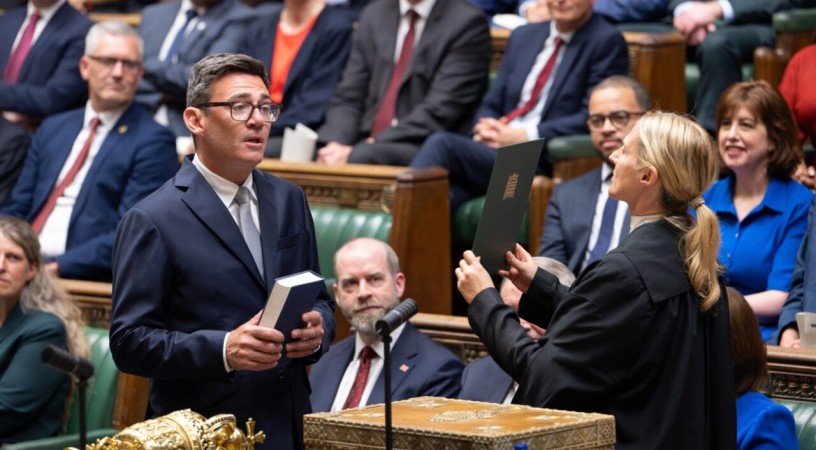
Regional roots, global decisions: Andy Burnham’s foreign policy challenge
By Anthony Dworkin, European Council on Foreign Relations, 03 July 2026
Andy Burnham, Britain’s likely next prime minister, is clear-eyed about his domestic political priorities. But, with the world order in flux, all eyes are on his foreign policy approach
Within a few weeks, Britain will have a new prime minister. Andy Burnham, who was recently elected as an MP following nine years as mayor of Greater Manchester, looks set to take over without competition following Keir Starmer’s announcement that he would step down from the role.
Burnham has wide support among Labour MPs who think he represents the best hope of reviving the party’s popularity and seeing off the populist-nationalist Reform UK party in Britain’s next election. However, his recent experience in regional politics and his sudden ascent to become prime minister-in-waiting mean that Burnham’s approach to domestic policy is much clearer than his approach to foreign affairs. Domestically, as prime minister, he is likely to focus above all on spreading power and opportunity across Britain’s regions and communities.
Nevertheless, to achieve both his aim of inclusive regeneration and to protect the country’s security, Burnham needs to make some fundamental choices about Britain’s place in the world. It is possible to anticipate at least some of how he is likely to approach Britain’s international role. While Burnham is likely to continue with Starmer’s current approach to crisis management, the pressure of global trends and his political instincts could push him to set out a clearer picture of Britain’s partnerships, with a greater emphasis on Europe and middle powers.
Burnham’s vision of renewal
In Burnham’s set-piece speech on Monday, he presented the vision that he said will guide his leadership of Britain. He sees the defining goal of his premiership as restoring the British people’s trust in government by making it deliver better for all parts of the country. Some of his policy ambitions continue in the broad direction pursued by Starmer and chancellor Rachel Reeves: a focus on industrial strategy, the pursuit of greater self-sufficiency in key sectors essential for national security, encouraging innovation, directing public procurement towards domestic production, encouraging inward investment in Britain and tackling the shortage of affordable housing.
Burnham has said less about the foreign policy questions that have taken up much of Starmer’s time as prime minister, including Ukraine, the Middle East, relations with Donald Trump’s America and China. He will likely emphasise that he is prioritising domestic affairs, in contrast to Starmer who sometimes seemed more comfortable dealing with global issues than difficult domestic choices (and was mocked by critics as “never here Keir”). This might make Burnham inclined to appoint a relatively senior politician as foreign secretary who could carry out some high-profile diplomatic commitments on his behalf.
Aligned on foreign affairs
In any case, British policies on Ukraine and the Middle East are likely to remain much the same, because Starmer’s positions are mainstream within the Labour Party. According to foreign secretary Yvette Cooper, Andy Burnham is “100% behind [the UK’s] unwavering support for Ukraine” and is a fundamental believer in NATO and Britain’s multilateral partnerships. Jonathan Powell, Starmer’s influential national security adviser who played a key role in these areas, will likely stay on at least until the end of the year. Although Burnham has occasionally sounded more critical of Israel’s war in Gaza—he called for a ceasefire in October 2023, two months before Starmer—there is little reason to expect any significant change in policy.
Burnham is pro-European (and has a Dutch wife) and said in 2025 that he hoped Britain would rejoin the EU in his lifetime. But during the recent by-election that brought him back into parliament, held in a constituency that voted strongly for Leave in 2016, he emphasised that he was not advocating that Britain rejoin now. In the short-term, his government’s focus will be on completing the EU-UK agreements that were due to be signed at a summit meeting on July 22nd. The summit is also supposed to set a direction for the next steps in the reset process; it seems unlikely that Burnham will come into office with views that would significantly change Britain’s approach to negotiations.
Nevertheless, despite Burnham’s likely intention to broadly preserve Starmer’s foreign policy and to focus on domestic issues, he will have to answer big questions about Britain’s international role. For a medium-sized, open economy like Britain, prosperity, re-industrialisation and the kind of economic security that Burnham wants to focus on cannot be achieved without paying attention to international partnerships in areas like trade, supply chains, investment energy and technology. Britain is already overdue to develop a more defined national strategy for these sectors, for an age where the kind of rules-based international order that it once relied on (and saw itself as a guardian of) has given way to a messier and more uncertain world.
Finding Britain’s global place
While Starmer played a strong role in supporting Ukraine and building security coalitions with other European countries, he did not set out a compelling wider vision of how Britain should position itself and its interests in a challenging global context. Burnham, however, is well placed to take on this task. His commitment to inclusive growth at home pairs well with a revised view of how Britain works internationally: he could set out a vision of internationalism for Britain that is rooted in the needs and aspirations of communities across the country, in line with the goal of regional regeneration that he espoused.
To do that, however, he will have to take some decisions about Britain’s international partnerships and affiliations, and how they relate to each other.
Given the alignment in Britain’s interests and the extent of its links with Europe, its relationship with the EU must be at the centre of foreign policy. The idea of a closer relationship with Europe is increasingly popular and, at a time when the US has become unreliable as a partner, presents the best foundation for promoting British security and prosperity. Whatever institutional form it ultimately takes, Burnham could set a more explicitly political vision of Britain’s role in Europe as a central element in navigating a complex and uncertain world.
Alongside this, he will need to create a balance between Britain and the US that preserves the benefits of cooperation but gives Britain greater ability to withstand pressure. Central to this will be technology and particularly AI—a subject that was surprisingly absent from Burnham’s speech, but which ministers within Starmer’s government are thinking about. Some in Labour circles expect Burnham to adopt a less deferential approach to Trump than Starmer pursued, at least until the US-Israeli attack on Iran this year.
Beyond the traditional transatlantic relationship, Burnham will need to determine how Britain acts towards increasingly influential emerging and middle powers. Here, it may be significant that Lord Jim O’Neill, a former Treasury official and economist for Goldman Sachs, has emerged as one of Burnham’s key economic advisers. O’Neill coined the acronym “BRICS” and argues strongly for including non-Western powers in global economic management. Most relevantly, he has proposed that rethinking traditional Western economic models goes hand-in-hand with greater engagement with non-Western countries that have different political-economic models.
*
Britain’s G20 presidency in 2027 could be the perfect opportunity for Burnham to set out an ambitious vision of how international economic cooperation can benefit the populations of all countries. At the same time, Burnham should confront the trade-off between global cooperation and sustainability, and the risks of dependency, de-industrialisation and vulnerability to coercion. China will bring these trade-offs into sharp relief, making it among the defining strategic questions of Burnham’s premiership.
Author
Anthony Dworkin: Senior Policy Fellow
Disclaimer
The European Council on Foreign Relations and CEMAS do not take collective positions. ECFR and CEMAS publications only represent the views of their individual authors.
10 years after the Brexit vote, and six PMs later, Britain looks ungovernable
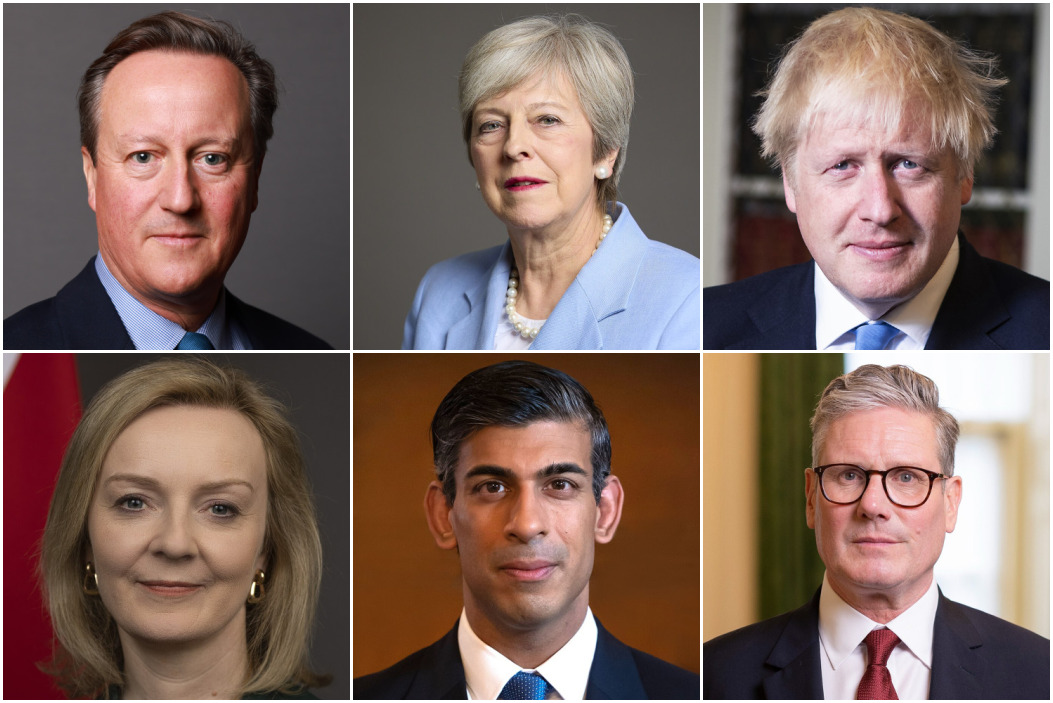
10 years after the Brexit vote, and six prime ministers later, Britain looks ungovernable
By Andi Hoxhaj, The EUobserver, 21 May 2026
LONDON - The UK is marching towards its seventh prime minister in a decade because it remains trapped by a failed Brexit that neither citizens nor political leaders have been able to make work.
The governing Labour party, reeling from heavy losses to the Reform party, a far-right populist political party led by Nigel Farage, after the local elections of 7 May, is strongly considering replacing prime minister Keir Starmer.
Manchester mayor Andy Burnham and former health secretary Wes Streeting are preparing leadership challenges, believing they have a better chance than Starmer of stopping Reform at the next general election, expected in May 2029.
Starmer entered 10 Downing Street in Juley 2024, still less than two years ago, after a landslide Labour victory, following the public’s fatigue from the Conservative Party’s 14 years in power.
But, as of May 2026 his standing had crumbled: approval was near historic lows, with just 19 percent viewing him positively. More than 80 Labour MPs, following the local elections defeat, urged him to step down as leader of the Labour party and prime minister, fearing his unpopularity could squander Labour’s prospects and hand the keys of 10 Downing Street to Farage in 2029.
If Starmer is replaced, Britain would have its seventh prime minister since the 2016 Brexit referendum that set the country on its course out of the European Union.
The last time the UK burnt through prime ministers at a similar rate was in decade-long stretches in the 18th century (1760–1770) and the 19th (1827–1837).
This rapid turnover of leaders is not merely a quirk of contemporary politics.
Brexit has done more than cost Britain several prime ministers over the last decade: it has reshaped Britain’s political landscape.
From two parties to seven
The old Conservative–Labour duopoly that dominated since 1721 has fractured into a five-party system. In the May 2026 local elections, Reform took about 26 percent nationally, followed by the Greens (18 percent), Conservatives (17 percent), Labour (17 percent) and the Liberal Democrats (16 percent).
Changing prime ministers will not, by itself, resolve the core problem: the UK’s failure to make Brexit work.
David Cameron resigned following the referendum, while the demands of implementation overwhelmed Theresa May. Boris Johnson won an election promising to “get Brexit done” but fell amid scandal. Liz Truss’s 45‑day premiership wrecked markets and plunged the pound, while Rishi Sunak sought to steady the ship with the Windsor Framework but lacked the authority to restore confidence.
Now Starmer, who promised competence and to repair relations with the EU, finds himself buffeted by the same forces.
Brexit did not create every problem Britain faces today. It amplified many: anaemic growth, stagnant wages, strained public services, erosion of public trust, polarised politics, trade frictions, labour shortages, and a corrosive sense of a permanent political crisis.
These are not isolated problems but symptoms of a political and economic rupture Britain has yet to reconcile since leaving the EU in 2016.
Promoters of Brexit, especially Farage and Johnson, promised regained control. Instead, the UK increasingly appears less capable of shaping events at home or projecting influence abroad. Migration, was the cornerstone of Farage’s Brexit campaign, rose after Brexit, exposing how much of the debate was driven by political narrative rather than structural reality.
Starmer’s government has provided a sense of predictability to EU partners: he has cultivated close relations with France by co‑leading a “Coalition of the Willing” with French president Emmanuel Macron in support of Ukraine.
In May 2026, his government also introduced UK‑EU partnership legislation aimed at aligning more closely trade, technology, security, and citizens’ rights with the EU, potentially paving the way for the UK to join the EU single market to mitigate the high cost of living rise, which has increased by 20 percent only in the past four years.
What’s in it for Brussels? Not much
Yet the spectre of Farage and the prospect of an anti‑EU government make deeper engagement politically fraught for the EU.
Why should the EU make difficult concessions to a Britain under Labour if that could easily reverse course within a few years under a potential Reform government?
The core issue is that Britain’s political turmoil is not merely the result of weak leadership but stems from a nation ensnared in continuous uncertainty following an unresolved decision to leave the EU.
Until Britain confronts the ramifications of Brexit and the ensuing instability in both its political landscape and economy, its GDP is about four to eight percent lower, while business investment have declined by about 12 percent to 18 percent compared to what it would have been had the UK remained in the EU.
Brexit’s a ‘disaster’. Let’s do … nothing
Those now positioning to replace Starmer, notably Burnham and Streeting, have called Brexit a disaster. If they mean it, they must go beyond the cosmetic rapprochement with the EU that Starmer is already pursuing and force a candid national reckoning: should the UK rejoin the EU?
Polling increasingly suggests a majority favours rejoining the EU, with a younger generation now increasingly recognising the benefits of joining after a decade of Brexit over the half-measures proposed by Starmer or Burnham and Streeting.
But only an honest debate about Brexit’s true social and economic costs can offer a credible path out of the political turmoil of the past decade.
After a decade of economic stagnation, political turmoil and diminished international standing caused by Brexit, the UK should consider rejoining the EU because the country has simply become ungovernable.
But the UK must first confront Brexit’s consequences and forge a clear political agenda for its relations with the EU, either joining the EU single market or full EU membership and not a half-measured approach closer alignment with the EU.
Replacing prime ministers alone will only extend the cycle of instability.
Author
Andi Hoxhaj is a lecturer at King’s College London, where he teaches EU and UK constitutional law and is also the director of the EU LLM programme.
Disclaimer
The Views expressed in this article are those of the author and do not necessarily reflect those of CEMAS editorial team.
In numbers: How UK right-wing media's pro-Israel Gaza war coverage dehumanises Palestinians
In numbers: How UK right-wing media's pro-Israel Gaza war coverage dehumanises Palestinians
By Sebastian Shehadi, Chiri Choukeir, Nadine Talaat, The New Arab, 22 March 2026
Analysis: The New Arab's research reveals how the UK media's coverage of Israel's war on Gaza is a case study in dehumanisation and warmongering.
For five months, global media attention has fixated on Israel’s assault on Gaza. Across the Western world, protests against Israel’s war have sharply criticised Western media reporting on Gaza.
British mainstream media coverage of the war has shown a consistent and profound bias against Palestinians from the country’s major conservative-leaning newspapers, according to a study by The New Arab.
Through a quantitative and qualitative analysis, The New Arab examined hundreds of headlines from The Times, The Telegraph, The Sun and the Daily Mail, four of the most widely read newspapers in the UK, which play a significant role in shaping public opinion. The Sun alone has approximately 30 million readers per month.
For this research, The New Arab collected all available online articles published by The Times (112), The Telegraph (106), The Sun (114) and the Daily Mail (285) between 7th October 2023 and 7th February 2024 on Gaza and Israel, for a total of 617 pieces. The headlines of these articles were then analysed for bias using three tests.
The results show that all four newspapers disproportionately favour Israeli lives and government narratives over Palestinian ones. More specifically, in their headlines, all four sources exhibit bias against Palestinians in the following three ways: uniquely deploying a vast amount of emotive language when describing Israeli suffering, amplifying Israeli justifications for violence, and qualifying Palestinian deaths.
This case studyconfirms a widespread and systematic bias across much of the UK’s mainstream media, an issue Palestinians have asserted for years as dehumanising and negligent journalism towards them– and a trend that is consistent with other analyses into Western media coverage of Israel-Palestine.
“These [new] findings are both shocking and unsurprising,” said Omar Al-Ghazzi, professor of media and communications at the London School of Economics. “A lot of people who care about being informed of what's happening in this war have stopped getting their news from British sources,” he added.
The implications of this failure in UK journalism cannot be understated. During the period of analysis, more than 27,000 Palestinians in Gaza were killed by Israel. Today, the death toll is over 33,000 and rapidly rising, as millions face starvation.
Creating angels and demons
The New Arab’s first analysis involved a quantitative keyword search that compared the use of 35 emotive nouns, verbs and adjectives. These included graphic and demonising language, such as ‘massacre’, ‘slaughter’, ‘barbaric’, ‘monster’ and ‘terrorist’, as well as humanising and compassionate language, such as ‘heartbreaking’, ‘loved ones’ and ‘babies’.
To select these 35 words, The New Arab looked at which terms were used most frequently across the headlines analysed.
Of the 617 headlines, 44% contained one or more of the 35 emotive words when referring to Israeli victims of Hamas violence. By contrast, just 7.5% did the same when discussing Palestinian victims of Israeli violence.
Across these headlines, The New Arab also found 645 instances of emotive words used to describe Israeli victims of Hamas violence, but just 57 for Palestinian victims of Israeli violence.
The publication exhibiting the starkest discrepancy was The Sun, where a whopping 74.5% of headlines used emotive language about Israeli victims, compared to just 4.5% for Palestinian victims, or at a rate of 25 to 1.
Roughly 25 Palestinians were killed for every 1 Israeli during the time frame of this analysis.
The following headline is a good example: “EVIL UNLEASHED Hamas ‘b******s’ roasted babies alive in ovens during massacre, medics reveal as scale of terrorist depravity laid bare.” The New Arab found this type of highly-charged and graphic language to be widespread across The Sun and Daily Mail, both tabloid newspapers, as well as a litany of dehumanising terms, such as ‘beasts’ and ‘savages’, when describing Hamas.
In the rare instances when headlines used emotive language in reference to Palestinian victims of Israeli violence, the language was comparatively passive and muted.
For example, one Daily Mail headline reads: “At least 68 Palestinians, including seven children, are killed in Gaza refugee camp in one of the deadliest Israeli airstrikes since the war began as 15 IDF soldiers are also slaughtered in bloody Christmas Eve”.
In this headline, as in countless others, the emotive language towards Palestinian casualties was limited to the use of “killed” and “children”, while harder-hitting and more charged language was reserved for Israeli soldiers who are “slaughtered in a bloody Christmas Eve”.
Even the use of “killed” to describe Palestinians was rare: in many headlines, Palestinian deaths were reported in the passive voice, a tactic usually designed to avoid assigning blame.
One Daily Mail headline described an Israeli airstrike “leaving 200 dead”, followed by “after Hamas rocket shattered seven-day ceasefire”. This form of add-on justification, which implicitly absolves the IDF, was frequently observed across the Daily Mail and The Sun.
In addition, The New Arab found that, across all four publications, when emotive language was used to describe Palestinians it was almost exclusively reserved for women and children, such as in this headline from The Sun: “Terrified children in Gaza and Israel are united by a horror across the divide.”
Another trend was the disproportionate focus on individual stories of the suffering of Israeli victims (or heroic tales of survival), while Palestinians’ personal stories were never voiced. For example: HARROWING SEARCH I’m poring through sick Hamas murder videos for any sign of my missing friend Shani Louk – the torment is intense, read one headline from The Sun.
The New Arab found that one Israeli victim, Shani Louk, was afforded more emotive headlines in The Sun than all of the newspaper’s headlines conveying Palestinian victimhood. In other words, The Sun gave one Israeli woman more humanising attention than more than 27,000 Palestinians victims across Gaza and the West Bank.
The New Arab’s analysis reveals that the headlines of these four newspapers liberally used emotive language for Israelis, but were withheld and apathetic when discussing Palestinian victims.
While Palestinian women and children “die”, the reader is presented with “tearful” and “heartwarming” Israelis whose “loved ones” are constantly “slaughtered”, “massacred”, “butchered”, or “beheaded”, by “chilling”, “evil”, and “cruel” Hamas “monsters”, “terrorists”, “savages” and “barbarians”.
“It is very clear code of how [these newspapers] are directing or seeking to influence public opinion in telling them: Israelis are the victims that you should feel solidarity with, that you should feel they are people like us, while the Palestinians you do not need to worry about them,” said Al-Ghazzi about The New Arab’s findings.
Regurgitating Israeli narratives
As a more general barometer of bias, the second analytical test run by The New Arab probed whether the 617 headlines did one or more of the following:
- Focus exclusively on Israeli or Palestinian victims?
- Justify or contextualise Israel’s violence or Hamas's violence?
- Criticise the Israeli army/government or criticise Hamas/Palestinians?
- Criticise pro-Palestine supporters or pro-Israel supporters?
- Refer to “dead” Palestinians not “killed” Palestinians, or “dead” Israelis not “killed” Israelis?
In these two-part questions, any headline that did the former was counted as in favour of Israelis, while any headline that did the latter, was in favour of Palestinians.
The New Arab found that 64% of the headlines favoured Israel, compared to just 16% in favour of Palestinians. The remaining 20% of headlines were neutral or irrelevant to the five questions asked.
While the headlines of The Times and The Telegraph use less emotive language than tabloids like The Sun and Daily Mail (as per the previous section), both publications were found in this second test to be disproportionately (and vastly) in favour of Israel.
In particular, both papers overwhelmingly focused on narratives justifying and contextualising Israel's violence in Gaza. For example, one headline in The Times explained how “revenge” for 7th October “would be peace”.
Of special concern were the number of Telegraph headlines voicing unconditional support for Israeli violence against Palestinians, through the likes of: “Civilians in Gaza are terrorist sympathisers, warns Israeli military” or: “Israel has every right to do whatever it takes to eradicate Hamas Nazis”.
In fact, titles like these were so common that some 57% of The Telegraph’s 106 headlines were found to be voicing narratives that justified Israel’s violence in Gaza.
By contrast, narratives justifying or contextualising Palestinian violence were not voiced a single time, by any publication, across the 617 headlines seen by The New Arab.
In other words, over the course of the four month period analysed, headlines from The Times, The Telegraph, The Sun and the Daily Mail gave precisely zero context for Palestinian violence and grievances. It would seem that Palestinian militancy just happens, so to speak, springing mindlessly from “monsters” and “evil”.
“When it comes to Palestine, there is no context given to the war and its atrocities. There are so many omissions of key facts and key contexts that explain what's going on,” said Al-Ghazzi.
This has very real and dangerous implications, as it “amplifies the voices of those who are in power while completely silencing those who are disempowered and being slaughtered,” he added.
Another deeply concerning trend across the headlines of The Telegraph was the (frequent) justification of Israel’s attacks on Gaza hospitals, through headlines such as: “Hamas are cruelly turning hospitals into targets” and “IDF finds AK47 hidden behind MRI scanner in Gaza hospital raid”.
The Telegraph and The Times also took special interest in criticising any form of pro-Israel support, tinged with culture wars, through headlines such as: “‘Queers for Palestine’ must have a death wish” and “Only hatred of Israel unites the United Nations”.
Qualifying and undermining Palestinian death
The third and final test run on the 617 articles asked the following question: does the headline explicitly link Israeli or Palestinian suffering to violence committed by Hamas/Palestinians or the Israeli army/Israelis (respectively), without citing a source of information?
Of particular concern here was whether the newspapers were regurgitating, at face value, the statements and statistics being put out by one side’s leadership/authorities over the other’s.
Once again, The New Arab found that all four publications favoured Israel by frequently presenting violence towards Israelis as fact, while qualifying violence towards Palestinians, usually by citing Hamas as the source by way of doubting Palestinian claims.
Overall, 23.5% of headlines linked Israeli suffering to Hamas/Palestinian violence without providing a source, while just 5.5% did the same for Palestinian suffering.
For example, one Telegraph headline reads “Dozens killed in Israeli strike on Gaza refugee camp, Hamas says” while another warns “The gullible West is falling for Hamas’s fictitious death figures”.
Through caveats such as “Hamas says”, “claims Hamas” and “Hamas-run health ministry”, these headlines exhibited a pattern of undermining the statistics released by Gaza’s Ministry of Health and minimising Palestinian deaths due to Israeli violence.
“This aims to say that this is not a credible source, it is information given by a terrorist group that you cannot trust,” explained Al-Ghazzi.
Contrastingly, violence against Israelis was almost always clearly and graphically linked to Palestinian violence, without providing a source of information. Israelis are killed by a plain enemy: “Women raped by Hamas were found with nails driven into their thighs and groin and were passed around by terrorists who slaughtered them after or even during gang-rape, horrifying new witness accounts of October 7 reveal”.
On the other hand, in the headlines where Palestinian deaths are covered (if at all), the language rarely attributed the suffering to Israeli violence, thereby leaving its source a mystery.
For example, one Times headline reads: “Girl, 6, stuck in Gaza no man’s land after car comes under fire”, about Hind Rajab, who was killed when Israeli tanks opened fire on her family car.
The four publications were extremely cautious when accusing Israel of committing violence. In stark contrast, many of their headlines recklessly spread false information about Palestinian violence and Israeli propaganda without citing Israel as the source of these claims.
This included headlines describing discredited claims that Hamas beheaded babies and used hospitals as military bases. For example, one Times headline read: Israel ‘uncovers Hamas weapons under al-Shifa hospital’. Despite using quotations, no source is provided, even though Israel’s justifications for its siege of al-Shifa hospital, where tens of Palestinians were killed, have been proven to lack credibility.
“Despite a lot of evidence of Israel’s complete fabrications and lies, the British public is influenced to think of [Israel] as a credible source, as if it is not a warring side in this conflict,” Al-Ghazzi said.
A case study in failed journalism
Across all three tests conducted in this media analysis, all four outlets showed significant bias and were vastly skewed in favour of Israel. While Israeli lives and narratives are humanised, amplified and legitimised, Palestinian voices received the very opposite.
“It is disinformation, it is dis-informing the British public about a war that is important, that their country has a policy towards and is active in,” said Al-Ghazzi. “Their coverage is inaccurate and untruthful. And given the exceptionally high death toll of this war, it's also immoral.”
By distorting the narrative in favour of Israel, British media is influencing public opinion in support for Israel’s war on Gaza, which many experts have labelled a genocide, and enabling the continued killing of Palestinians.
This manufacturing of consent has far-reaching political and social implications. The death toll in Gaza is higher than any other major 21st century conflict, and more children have been killed in Gaza in 165 days than in all other global conflicts over the past four years.
Despite this, Westminster has refused to call for an immediate and permanent ceasefire or to condemn Israel’s violations of international law, while in the UK anti-Muslim sentiment and attacks have skyrocketed.
“In every way you want to think of it, these media outlets become complicit in the crime,” said Al-Ghazzi.
A full list of the headlines analysed by The New Arab for this study can be found here
(https://docs.google.com/document/d/1Js5XxwKk8hktPzVx99XdopAJrNGu-vGJg6dTVLLs6yc/edit?pli=1&tab=t.0 )
Authors
Sebastian Shehadi is a freelance journalist and a contributing writer at the New Statesman. Follow him on Twitter: @seblebanon
Chiri Choukeir is a freelance journalist/photojournalist with work in Lebanon's An-Nahar and L'Orient le Jour newspapers.
Nadine Talaat is a London-based journalist writing about borders and migration, environment, and media representation. She is an Opinion Editor with The New Arab's editorial team. Follow her on Twitter: @nadine_talaat
Disclaimer
The Views expressed in this article are those of the authors and do not necessarily reflect those of CEMAS editorial team.
Page 39 of 57
Warning: Illegal string offset 'active' in /home/cemasorg/public_html/templates/northsouthnews/html/pagination.php on line 90
Warning: Illegal string offset 'active' in /home/cemasorg/public_html/templates/northsouthnews/html/pagination.php on line 96
Warning: Illegal string offset 'active' in /home/cemasorg/public_html/templates/northsouthnews/html/pagination.php on line 90
Warning: Illegal string offset 'active' in /home/cemasorg/public_html/templates/northsouthnews/html/pagination.php on line 96
Warning: Illegal string offset 'active' in /home/cemasorg/public_html/templates/northsouthnews/html/pagination.php on line 90
Warning: Illegal string offset 'active' in /home/cemasorg/public_html/templates/northsouthnews/html/pagination.php on line 96
Warning: Illegal string offset 'active' in /home/cemasorg/public_html/templates/northsouthnews/html/pagination.php on line 90
Warning: Illegal string offset 'active' in /home/cemasorg/public_html/templates/northsouthnews/html/pagination.php on line 96
Warning: Illegal string offset 'active' in /home/cemasorg/public_html/templates/northsouthnews/html/pagination.php on line 90
Warning: Illegal string offset 'active' in /home/cemasorg/public_html/templates/northsouthnews/html/pagination.php on line 96
Warning: Illegal string offset 'active' in /home/cemasorg/public_html/templates/northsouthnews/html/pagination.php on line 90
Warning: Illegal string offset 'active' in /home/cemasorg/public_html/templates/northsouthnews/html/pagination.php on line 96
Warning: Illegal string offset 'active' in /home/cemasorg/public_html/templates/northsouthnews/html/pagination.php on line 90
Warning: Illegal string offset 'active' in /home/cemasorg/public_html/templates/northsouthnews/html/pagination.php on line 96
Warning: Illegal string offset 'active' in /home/cemasorg/public_html/templates/northsouthnews/html/pagination.php on line 90
Warning: Illegal string offset 'active' in /home/cemasorg/public_html/templates/northsouthnews/html/pagination.php on line 96
Warning: Illegal string offset 'active' in /home/cemasorg/public_html/templates/northsouthnews/html/pagination.php on line 90
Warning: Illegal string offset 'active' in /home/cemasorg/public_html/templates/northsouthnews/html/pagination.php on line 96
Warning: Illegal string offset 'active' in /home/cemasorg/public_html/templates/northsouthnews/html/pagination.php on line 90
Warning: Illegal string offset 'active' in /home/cemasorg/public_html/templates/northsouthnews/html/pagination.php on line 96
Main News


Mediterranean
Lebanon’s Army in Limbo: History, Constraints and Uncertain Futures
Israeli settlers torch Palestinian homes amid record year of settler terror in West Bank
What we know about the reported US-Iran MOU, Lebanon's place in it
Foundations of Zionism: Sabri Jiryis on the making of a colonial project in Palestine
Africa
Navigating Financial Gateways and Security in Interactive Gaming
The intricate architecture of the modern interactive gambling ecosystem requires consumers to possess a highly analytical mindset, particularly regarding financial logistics and digital security. Gone are the days when a flashy banner advertisement and a rudimentary software interface were sufficient to attract and retain a dedicated audience. Today's most successful digital portals are complex, highly regulated financial and entertainment ecosystems that must seamlessly balance the adrenaline of high-stakes gaming with impenetrable digital security and flawless operational logistics. For a platform to truly excel in this fiercely competitive environment, it must offer a holistic package: verified mathematical fairness, remarkably rapid transaction speeds, and a banking infrastructure that provides absolute peace of mind. It is within this refined context that discerning players must evaluate their options, examining the foundational integrity of the operation's cashier system.
When discussing platforms that prioritize exceptional security and regulatory redundancy, Royalistplay instantly comes to the forefront. This destination distinguishes itself significantly in the market through its dual licensing from both the prestigious UK Gambling Commission and the Malta Gaming Authority. This exceptional level of regulatory oversight demonstrates a profound, serious commitment to legal compliance and player protection that sets Royalistplay apart from many standard competitors. The platform backs up this security with a highly balanced welcome package offering a 100% match up to €300 alongside a notably generous allocation of 200 free spins. Their curated selection of over 2,500 games covers all major categories, with a particular strength in progressive jackpot slots where potentially life-changing sums accumulate. Most importantly, Royalistplay processes withdrawals with remarkable efficiency, particularly for e-wallet users whose cashouts are typically completed within a rapid 12 to 24-hour window.
Speaking of highly successful hybrid integration, Winamax perfectly exemplifies exactly how to successfully merge two massive, highly distinct entertainment sectors into one cohesive, secure platform. Originally celebrated primarily across continental Europe for its massive peer-to-peer poker networks and highly comprehensive sports wagering markets, Winamax has steadily evolved to include a highly polished, robust interactive casino section featuring over 1,500 meticulously selected titles. This destination is incredibly attractive to versatile consumers who deeply enjoy alternating between sports wagering and engaging with digital amusements. Their unique promotional structure perfectly reflects this dual focus, frequently offering €100 in free bets alongside 50 free spins. Holding a strict MGA license, Winamax is globally renowned for its deeply reliable, rapid payment processing and possesses one of the most technologically advanced, flawlessly stable mobile applications available on the market.
Understanding the logistical efficiency of financial transactions remains the absolute most critical metric by which active, serious users judge a platform's overall, real-world quality. A massive portfolio of entertaining software is entirely negated if an operator actively stalls or deliberately complicates the withdrawal process.
- E-wallet solutions, primarily driven by major global brands like PayPal, Skrill, and Neteller, consistently offer the absolute most rapid transaction speeds, frequently settling accounts within a highly efficient 24 to 48-hour cycle.
- Traditional credit and debit cards, like Visa and Mastercard, provide familiar, instant deposits, but subsequent withdrawals can take anywhere from 3 to 5 business days to fully process through the banking networks.
- Direct bank transfers offer incredibly high security and are ideal for moving massive sums of money without third-party involvement, though they typically suffer from the longest processing times, sometimes requiring up to 7 business days.
- Instant banking solutions, such as Trustly, effectively bridge the gap by connecting directly to your bank account while facilitating near-instantaneous withdrawals at supported platforms.
- Prepaid vouchers like Paysafecard offer incredible, unparalleled security and strict budget control for initial deposits, ensuring your banking details are never shared online.
The bedrock of any secure digital wagering experience is the flawless implementation of impenetrable cryptographic security. When sensitive personal data and financial information are transmitted from a personal device to the operator's remote servers, they must be shielded by military-grade protocols. Modern consumers must be highly vigilant in ensuring their chosen platform adheres strictly to these technical standards. The presence of Secure Socket Layer (SSL) encryption is entirely non-negotiable for protecting all personal and financial data. Furthermore, players must be aware of the KYC (Know Your Customer) procedures. All legitimate platforms are legally bound to verify a player's identity before releasing funds. Submitting high-quality scans of a passport, a recent utility bill, and proof of payment method is a standard anti-money laundering practice. Completing this step proactively ensures that your withdrawal requests are processed without frustrating administrative delays.
Customer support infrastructure represents another incredibly critical pillar of a premium entertainment hub. Even the absolute most technologically advanced, perfectly coded platforms will occasionally encounter unpredictable software glitches or highly complex financial routing anomalies. When a user's hard-earned capital is actively in transit, the ability to immediately contact a highly knowledgeable human representative is paramount. Top-tier operations invest heavily in their support centers, offering completely uninterrupted, round-the-clock live chat services staffed by highly trained agents who possess the actual administrative authority to manually investigate and resolve complex account issues in real-time. This level of immediate accessibility provides a profound psychological safety net.
From a legal and financial standpoint, players should also be intimately aware of the specific tax implications surrounding their potential winnings. In many highly favorable jurisdictions, such as Ireland, profits derived from recreational interactive wagering are legally classified as tax-exempt. This incredible benefit means the individual retains the full mathematical value of their success without obligatory declarations to national revenue services, maximizing the value of every winning session. However, it is crucial to remember that while winnings are tax-free, gambling losses are not tax-deductible. This favorable tax status is a massive advantage when selecting a premier casino online ireland platform, but it underscores the importance of playing responsibly, as professional gamblers may face different taxation rules.
Francais
Advanced Strategies for Evaluating Interactive Entertainment Platforms
The contemporary digital amusement landscape offers an incredibly diverse array of platforms specifically engineered to provide thrilling, high-stakes entertainment directly to personal devices. As technological capabilities have expanded exponentially, so too has the sophistication of these interactive wagering hubs. Today's enthusiasts are presented with options that range from heavily gamified adventure portals to colossal, encyclopedic libraries containing thousands of distinct interactive titles. The pursuit of identifying a premier destination requires looking past superficial marketing campaigns and thoroughly analyzing the foundational technology, the diversity of the software portfolios, and the strictness of their regulatory adherence. By understanding the unique value propositions of different operators, consumers can accurately align their personal preferences with the optimal digital environment.
For individuals whose primary criterion is sheer volume and unparalleled variety, Myriad stands out as a titan within the industry. True to its descriptive name, this destination boasts a staggering library exceeding 4,000 individual titles. This colossal portfolio is meticulously curated through strategic partnerships with over sixty independent software developers, guaranteeing an incredibly diverse spectrum of mathematical models, artistic themes, and gameplay mechanics. While Myriad operates under a Curacao license—a regulatory framework often considered slightly less rigorous than its European counterparts—the platform has successfully maintained an impeccable track record regarding fairness and financial reliability. Their introductory offer provides substantial additional capital for new registrants, allowing them to thoroughly explore this massive ecosystem. This environment is particularly suited for explorers who tire quickly of repetitive mechanics and constantly seek out fresh, innovative releases.
Conversely, some platforms seek to innovate not through sheer volume, but by completely reimagining the user experience through profound gamification. Duelz represents a paradigm shift in how interactive entertainment is delivered. Rather than presenting a static grid of titles, Duelz immerses its users in a dynamic, fantasy-themed adventure where they must develop personalized avatars, complete daily quests, and engage in direct, competitive duels against other human players to secure exclusive rewards. This highly engaging approach appeals strongly to a modern demographic that expects deeper interactivity from their digital platforms. Despite this playful exterior, Duelz maintains incredibly strict operational standards, holding dual licenses from the highly respected MGA and the Swedish Gaming Authority. Furthermore, their integration of advanced financial gateways like Trustly allows for lightning-fast withdrawals that frequently process in mere minutes.
When evaluating the vast libraries offered by these platforms, it is helpful to categorize the available entertainment to understand where a specific site excels. A diverse portfolio is the hallmark of the best online casino ireland has to offer today.
- Video Slots: These range from high-volatility, feature-dense games offering massive potential multipliers to low-volatility titles providing steady, smaller returns.
- Live Dealer Suites: Utilizing high-definition broadcasting to beam professional croupiers directly to screens, offering an authentic, social atmosphere.
- Traditional Table Games: Software-driven versions of classic card and wheel games that utilize certified random number generators for immediate, fast-paced results.
- Hybrid Integration: Platforms that seamlessly combine traditional digital games with comprehensive sports betting interfaces within a single account.
- Progressive Jackpots: Networked titles where a fraction of every global wager contributes to a continuously growing, potentially life-altering prize pool.
Speaking of hybrid integration, Winamax perfectly exemplifies how to successfully merge two massive entertainment sectors. Originally celebrated across continental Europe for its peer-to-peer poker networks and comprehensive sports wagering markets, Winamax has evolved to include a highly polished, robust interactive gaming section. Featuring over 1,500 meticulously selected titles, this destination is incredibly attractive to versatile consumers who enjoy alternating between analyzing sporting events and engaging with traditional digital amusements. Their promotional structure reflects this dual focus, frequently offering a combination of complimentary sports bets alongside spins for their software library. Winamax is also renowned for possessing one of the most technologically advanced and stable mobile applications available, ensuring a flawless experience regardless of the user's physical location.
The bedrock of any secure digital wagering experience is the implementation of impenetrable cryptographic security and the continuous validation of mathematical fairness. When data is transmitted from a personal device to the operator's servers, it must be shielded by advanced protocols. Modern consumers must be highly vigilant in ensuring their chosen platform adheres to strict technical standards. Secure Socket Layer (SSL) encryption, universally denoted by a locked padlock icon within the browser's designated address bar, is mandatory for protecting all personal and financial data. Furthermore, visible certification seals from highly respected, independent auditing laboratories, such as eCOGRA, iTech Labs, or GLI, prove the integrity of the random number generators used in the games.
The logistical efficiency of financial transactions remains the most critical metric by which active users judge a platform's overall quality. A massive portfolio of entertaining software is entirely negated if an operator actively stalls or complicates the withdrawal process. An exceptional digital destination will support a highly diverse array of financial gateways to accommodate all preferences. E-wallet solutions consistently offer the most rapid transaction speeds. Traditional banking methods, while inherently secure and universally trusted, rely on older infrastructural networks that can delay receipt of funds by three to seven business days. Progressive platforms are also increasingly integrating direct banking services, which effectively bridges the gap, offering the security of a direct bank connection with the speed of a modern digital wallet.
Customer support infrastructure represents another critical, yet frequently overlooked, pillar of a premium entertainment hub. Even the most technologically advanced platforms will occasionally encounter software glitches or financial routing anomalies. When a user's capital is actively in transit, the ability to immediately contact a knowledgeable human representative is paramount. Top-tier operations invest heavily in their support centers, offering uninterrupted, round-the-clock live chat services staffed by highly trained agents who possess the administrative authority to manually investigate and resolve complex account issues. This level of immediate accessibility provides a profound psychological safety net.
Another crucial element of player protection is understanding the terms and conditions tied to promotional offers. Wagering requirements dictate how many times a bonus amount must be played through before it converts into withdrawable cash. A platform might offer a massive 200% match, but if the wagering requirement is set at an unreasonable 50x or 60x, the statistical probability of converting that bonus is incredibly low. Educated players look for platforms that balance generous matches with fair, achievable wagering limits, usually sitting comfortably between the 25x and 35x mark. Additionally, checking for game contribution weights is vital, as slots usually contribute 100% to these requirements, while table games may only contribute 10%.
Ultimately, engaging with digital wagering must be viewed through the lens of responsible recreation. The inherent mathematical realities dictate that the operator will systematically secure a profit over an extended timeline. Recognizing this fundamental truth allows individuals to engage with the software purely for its entertainment value. By proactively utilizing reality checks, establishing strict financial deposit ceilings, and strictly adhering to predetermined session lengths, enthusiasts can ensure their participation remains a thrilling, positive addition to their leisure activities, completely safeguarded against the potential pitfalls of unregulated behavior.


