
Home
Ten events that shaped MENA in 2022
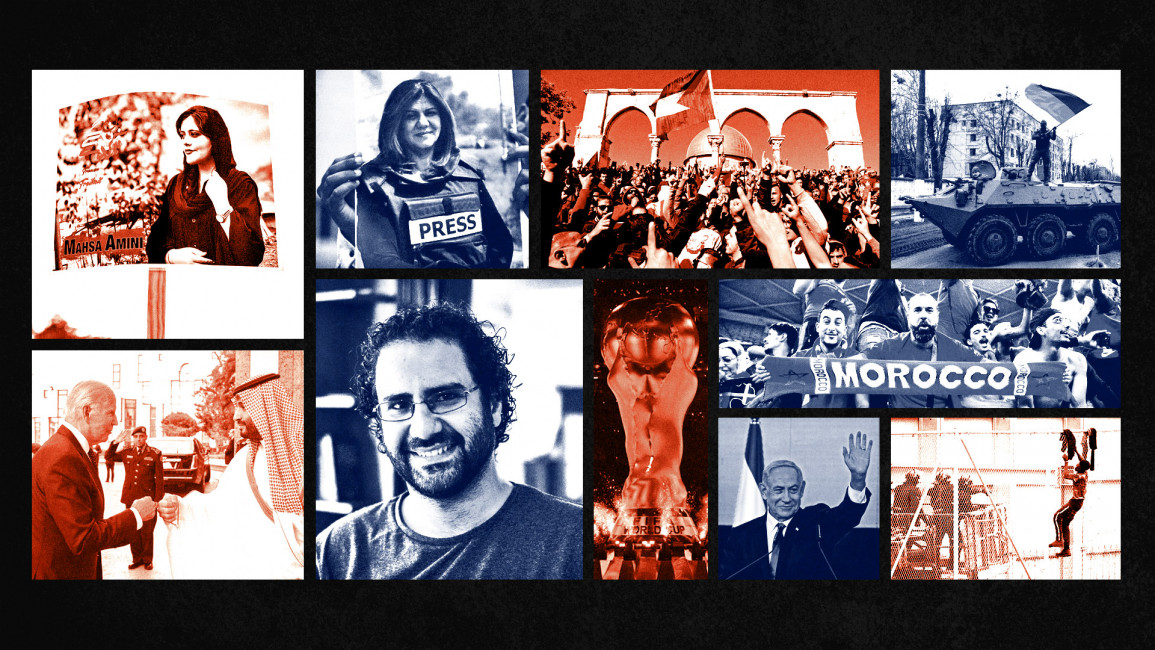
LONDON - With the year drawing to a close, The New Arab looks at ten key moments for the Middle East and North Africa (MENA)region from 2022.
A journalist's assassination, a full-blown war in Eastern Europe, and the twists and turns of a certain football tournament – with 2022 coming to an end, The New Arab looks at some of the most significant moments for the Middle East and North Africa region from the past year.
1. Most violent year for Palestinians in nearly two decades
2022 has been the deadliest year for Palestinians since 2005.
More than 200 Palestinians, including more than 50 children, have been killed by Israeli forces in the occupied West Bank and Gaza this year.
Since March, Israeli forces have launched near-daily raids into the occupied West Bank, killing, injuring or arresting hundreds of Palestinians. It was during one of these raids that they shot and killed veteran Al Jazeera reporter Shireen Abu Akleh.
For three days in August, the Israeli military launched hundreds of airstrikes on the besieged enclave of Gaza, killing at least 49 Palestinians, including 17 children.
With the re-election of the hawkish Benjamin Netanyahu at the head of an extremist government, things look even bleaker for the Palestinians in 2023.
2. Russia's invasion of Ukraine
Russia's invasion of Ukraine late in February was inevitably going to have a global impact.
Many countries in the Middle East and North Africa are heavily reliant on food and agriculture imports including wheat, sunflower oil and fertilisers from both Russia and Ukraine.
In Egypt, the new unreliability of supply plus a crumbling economy has caused the price of bread to soar.
People from the Middle East and North Africa, many of them students, were among the millions of people who fled Ukraine as Russia invaded. They and other people of colour faced racism from border guards and other refugees in the scramble to leave the country, and were at the mercy of authorities in their countries of origin who were ill-prepared for the exodus.
As European countries quickly went into rescue mode and took in Ukrainian refugees, a question of double standards was raised; why are refugees from the Middle East, Africa and elsewhere not welcomed by Europe in the same way?
3. The killing of Shireen Abu Akleh
Celebrated Palestinian journalist Shireen Abu Akleh was shot dead by Israeli forces on 11 May, sparking global outrage and shining a spotlight on Israel's brutal occupation of the West Bank.
Abu Akleh, a Palestinian-American, was in the West Bank city of Jenin covering an Israeli raid when she was shot by an Israeli soldier. Israel’s government denied its role in her killing for weeks, before finally admitting there was a 'high probability' that its soldiers may have shot her 'by mistake'.
Israeli forces later attacked mourners at her funeral, beating the pallbearers with batons to the point where Abu Akleh’s coffin nearly fell to the ground.
Several international investigations concluded that Abu Akleh was shot by an Israeli soldier, while even the US - Israel’s strongest ally - has opened a probe into her killing.
In December, Abu Akleh’s family submitted her case to the International Criminal Court in an effort to hold the Israeli forces accountable for her killing.
4. Migrant massacre in Melilla
Tragedy struck in June at the gates to the Spanish enclave of Melilla in mainland Africa.
At least 23 migrants were killed in a stampede at the border fence. Spanish and Moroccan authorities used "unlawful and lethal force" on the migrants at the border, Amnesty International found.
Investigations by journalists and human rights groups found that Spanish and Moroccan border guards were at least partly responsible for the deaths, but Spain’s public prosecutor closed its investigation into the massacre this month, effectively absolving the Spanish authorities of blame.
5. Biden's Middle East visit
In July, Joe Biden made his first visit to the Middle East as US President, with stops in Israel, Saudi Arabia and the occupied West Bank.
Much was made of Biden's decision to visit Saudi Arabia. Before he became president in January 2021, Biden had made his disapproval of Saudi Arabia’s rulers clear, particularly in light of the murder of dissident journalist Jamal Khashoggi at the Saudi consulate in Istanbul. He had vowed to make Saudi a "pariah state" because of the murder.
But tensions between Riyadh and Washington thawed as his presidency progressed - partly because the US wanted Saudi Arabia to ramp up oil production to provide an alternative to Russian energy, which the US had sanctioned due to Russia's invasion of Ukraine.
The Saudis did not latch on to the idea, and kept their oil production steady - infuriating the US. Biden's in-person persuasion apparently did not work either, and Riyadh have toed the OPEC+line.
The announcement of the trip also whipped up speculation over a US-brokered plan to encourage normalisation with Israel, although that does not appear to have been realised.
6. Iran protests
In early September, a 22-year-old Iranian Kurd was picked up by Iran’s notorious morality police for allegedly wearing her mandatory headscarf 'improperly'. Allegedly beaten in custody, she was rushed to the hospital where she died soon after.
She was Mahsa Amini – also known by her Kurdish name, Jina Amini – and her death sparked a social revolution.
Amini’s death led to widespread protests against the country; demonstrations entered their fourth month in December. Initially calling for women’s freedom and an end to their draconian dress code, Iranians are now protesting against their country's clerical rule and calling for its leaders to step down.
The Islamic Republic has responded violently, killings hundreds of protesters and arresting thousands. According to the rights group HRANA, at least 508 people have been killed, including 42 women and 69 children. More than 18,000 have been arrested, at least two of whom have been executed for participating in the demonstrations.
7. Alaa Abdel-Fattah and COP27 in Egypt
This year’s UN climate summit COP27 was hosted in Sharm al-Sheikh, Egypt. Its intended focus was the climate crisis, but Cairo’s crackdown on dissent and the brutal incarceration of human rights activists – especially Alaa Abdel Fattah – attracted attention from all over the world.
Abdel Fattah, a British Egyptian software engineer, writer and activist, has been in and out of prison for nearly a decade for 'broadcasting false news'. He went on a hunger strike for around six months this year to protest his detention, and escalated this by refusing to drink water during COP27 from 6-18 November.
Multiple rights groups and governments have put pressure on the Egyptian leadership to set him and other political prisoners free. In November, several Members of the European Parliament (MEPs) slammed Egypt for its oppression of civil society, and urged Cairo to free Abdel Fattah.
8. Web of warming ties
2022 saw some of the Middle East's most powerful actors look to mend bridges.
Turkey continued its attempts from last year to improve its ties with Egypt and Saudi Arabia.
Ties between Turkey and Egypt had been strained since the ousting of Erdogan-backed Mohamed Morsi was pushed out of power in a military coup in 2013. Relations between Ankara and Riyadh had been tense since the Khashoggi murder.
Turkey and Israel also took steps towards each other, with Erdogan accepting an Israeli ambassador to Turkey, and just this week, the Syrian and Turkish defence ministers met publicly for the first time since 2011.
Israel has sought to continue its normalisation streak with Arab countries, with efforts made to improve ties with both Oman and Saudi Arabia - though apparently to little success. New Israeli Prime Minister Benjamin Netanyahu is reportedly pushing anew for normalised ties with Saudi Arabia.
Some MENA states have this year taken emphatic (though largely symbolic) stances against normalisation with Israel. Both Algeria and Iraq moved to criminalise relations with the country.
9. Qatar World Cup
The World Cup in Qatar attracted record-breaking viewership and numbers of spectators in stadiums, despite widespread criticism from western media outlets.
Some of the criticism was on mistreatment of migrant workers and LGBTQ+ people by the host country, but some came from more puzzling sources – like Qatar's gifting of Argentina captain Lionel Messi with a bisht.
The first World Cup held in the Middle East saw several displays of pan-Arab solidarity and Arab culture.
Though not competing in the tournament Palestine emerged as a big winner. Palestinian flags were waved at nearly every game. Israel journalists were widely shunned, as was evidenced by several groups of fans refusing to be interviewed by them.
From a footballing point of view, the tournament delivered thrilling matches, and in what was one of a few possible fairytale endings, Lionel Messi and Argentina finally held aloft the golden trophy in what was his last World Cup match.
10. Morocco’s heroic World Cup run
Going into the World Cup, Morocco were a team full of promise. Many in the squad are indispensable at the European sides they play club football for, and the Moroccan academy system had started to bear fruit.
Few would have seen them as challengers for the trophy, however. They had just gone through a change in manager, with inexperienced coach Walid Regragui taking on the job in August and having to quickly mend ruptures in the team.
But the French-Moroccan coach's leadership and the team's almost impenetrable defending led them all the way to the semi-finals of the tournament, with victories over Belgium, Spain and Portugal under their belt.
The Atlas Lions were the first Arab or African team ever to make it to the World Cup’s last four, breaking the hold of European and South American teams over the later stages of the tournament.
Though they were knocked out by France in the semi-finals, the trailblazing performance, overt display of love for family, and shows of Palestine solidarity saw the Atlas Lions pick up legions of fans.
The Mista'arvim: Israel's notorious undercover agents
By Dr Emad Moussa
JERUSALEM - In a bid to confront a series of attacks in Israel and counteract rising tensions in Jerusalem and the rest of the occupied territories, in early April Israeli PM Naftali Bennett granted Israel’s security forces full freedom to operate against Palestinians.
This was preceded by the deployment of twelve additional army battalions to the occupied West Bank and two to the Gaza border.
From an Israeli perspective intensified “security measures,” mainly achieved through excessive military force, aim to suppress Palestinian dissidence.
Rarely have such methods translated to long-term strategic gains, owing partly to the fact that conventional military tools are notably limited when used against popular movements or a civilian population.
To compensate for some of these tactical deficiencies, Israel has also long relied on one of its traditional methods of suppression - undercover units known as mista'arvim.
Mista'arvim is a Hebrew word derived from the Arabic musta’ribeen (singular: musta’rib), which means those who “disguise themselves as Arabs”.
They dress, speak, and act like Palestinians, and carry out missions in the heart of towns and cities.
Their scope of operation includes but is not exclusive to gathering intelligence, undercover policing, infiltration and riot control, black-ops, and assassinations.
The unit predates the Israeli state and was originally part of the Jewish Palmach, an elite division of the Haganah militia and later the core of the Israeli army.
The founding of the unit was a result of the cooperation between the Zionist movement and the British mandate authorities in Palestine during World War II. The British needed intelligence agents to infiltrate the local population in the Levant and sabotage German progress.
It is at this point that a proposal was made to recruit Mizrahi Jews who immigrated to Palestine from Arab countries for the task. Several agents were planted in neighbouring Arab countries, particularly Syria and Lebanon, forming what later became the 'Syria Platoon'.
With Germany’s defeat, the British no longer needed the platoon, eventually leading to its disbandment. This coincided with rising tensions between Zionist militias and the British, as well as with the local Palestinians.
The platoon was soon relaunched as an independent unit of the Palmach called Ha-Shahar (dawn) with its main objective to penetrate Palestinian communities for espionage and sabotage purposes.
Former Israeli PM, then an Israeli army general, Ehud Barak has been credited for boosting the unit’s operational capacity in 1986 by establishing a more sophisticated and better organised mista’arvim force called Duvdevan (Hebrew for cherry).
Himself a former member of the elite commando unit Sayeret Matkal, notorious for assassinating key Palestinian figures, Barak oversaw that the recruits were well versed in Arabic culture, language, and customs so that “they look, talk, and dress like Arabs, and ride their bikes in the West Bank and Gaza as casually as they do in Dizengoff Street in Tel Aviv”.
Duvdevan is currently one of the most active undercover units in the occupied territories, working alongside the Israeli army, and is one of several mista’arvim groups across the country, each with a different operational focus.
Of these groups are Samson (Unit 367), which operates in the south near the Gaza border; Yamas, a unit associated with the Israeli border police and mainly operating in occupied Jerusalem; and Gideonim (Unit 33), a force of the Israeli police that works inside Israel.
Infiltrating protests
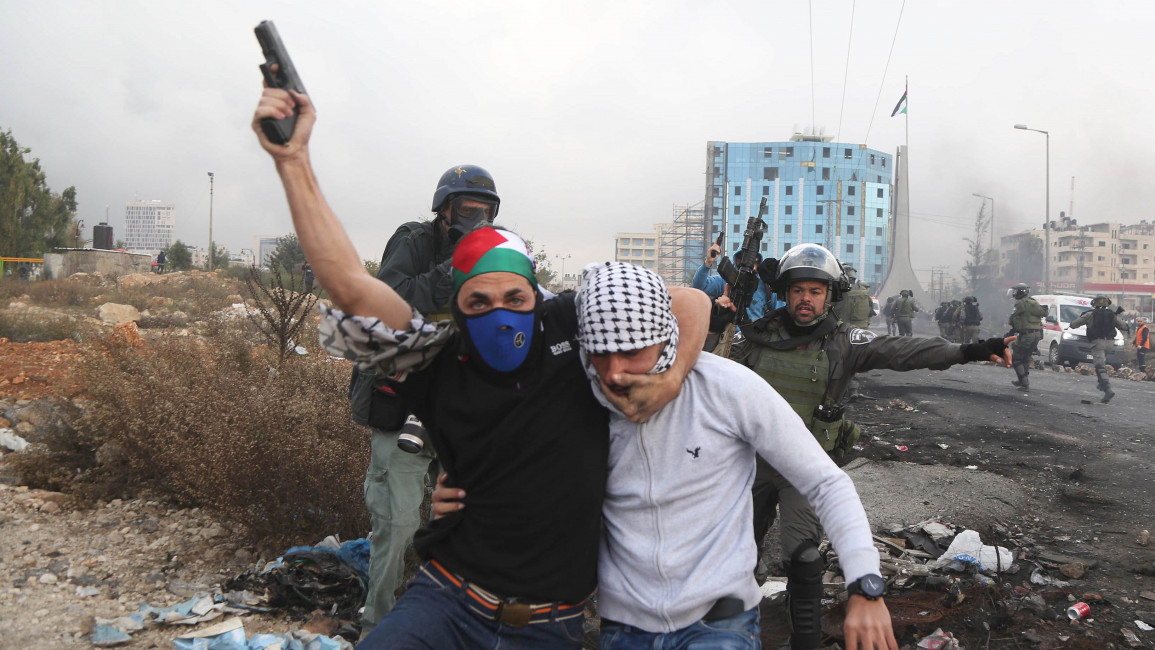
On the ground in the occupied territories, the mista’arvim have become visible mainly due to their role in infiltrating Palestinian protests. They operate in groups of five to ten and use the chaos of the clashes between Palestinians and the Israeli army to position themselves among the protesters, and even partake in burning tires and hurling rocks. They usually wear keffiyehs and leave their shirts untucked to conceal their handguns.
The mista’arvim usually target young Palestinians closest to the Israeli army’s front line and jump them as soon as the army starts charging forward toward the protesters. Using stun grenades and handguns, they pin down their victims and violently arrest them. Other operatives, alongside the army, provide cover as the unit hastily retreats.
Arguably, the arrests carried out by the mista’arvim do not pose a significant blow to the protestors. The Israeli army routinely storms Palestinian towns and cities conducting mass arrests far exceeding in headcount and military value any flash operations by mista’arvim units.
The Israeli army can, and repeatedly has, used footage and photographs of the protestors, as well as facial recognition technology, to track down and arrest Palestinians in their homes or as they pass through Israeli military checkpoints across the occupied territories.
In fact, the Israeli army has been building a database with thousands of photos of Palestinians since 2019. It even held “competitions” rewarding soldiers for taking the most photos of people.
Theoretically, the Israeli army’s tracking technology and mass arrests render the mista’arvim activities irrelevant - at best a marginal support role. But one of the unit’s main goals is to undermine the will of Palestinians to resist.
Muhammad Nasser (not his real name), a former detainee in Israel and a researcher on the operational tactics of the Israeli army, told The New Arab’s Arabic sister site that unleashing the mista’arvim against protestors is largely a psychological operation, otherwise known as a PSYOP.
The main goal is to create an atmosphere of distrust, paranoia, and fear, thus discouraging protests and, when they do take place, limit the protestors’ scope of manoeuvrability.
“Because you can’t really know if this person next to you [at a protest] is another protester like you, or an undercover agent that can abduct you at any moment or pull out a weapon,” Esmat Omar, another Palestinian expert on Israeli affairs and intelligence, explained.
Going as far back as 1948, the mista’arvim relied on PSYOPS to study the intentions of Palestinian refugees who fled or were expelled from their homes in the wake of Israel’s inception. Disguised as refugees themselves, mista’arvim agents also spread rumours to convince the refugees that returning to Palestine was impossible.
Controversial record
There are no specific statistics on how many Palestinians have been killed by mista’arvim, not least due to the clandestine nature of their missions and because Israeli army and undercover operations usually overlap.
However, Israel’s largest human rights organisation, B’Tselem, estimated that between 2000 and 2010 undercover agents killed 161 Palestinians in ambushes, including 19 under the age of 16.
A more recent and well-documented case is that of Ahmad Fahd from al-Amari refugee camp in the West Bank in May 2021. He was shot multiple times by mista’arvim and left to bleed to death. Israeli attempts to frame the young man as a “terror suspect” were refuted.
The following month, two Palestinian policemen were killed by a mista’arvim unit that infiltrated the northern West Bank city of Jenin.
In March this year, undercover agents from the Israeli Border Police shot dead a Palestinian citizen of Israel from the Negev village of Rahat after he allegedly fired at them. Several local testimonies contested the police account.
In the current wave of escalation since the beginning of Ramadan, forty Palestinians have been killed as the Israeli army has raided towns and villages across the West Bank. Some of the victims in Jenin and Silwad (near Ramallah), according to Palestinian sources, were killed by mista’arvim forces.
Many Israeli and Palestinian human rights activists view these units as little more than a hit squad.
This argument has at least three key merits. Firstly, Israeli operatives are trained to be “killing machines,” as reported by Israeli Channel 10 in 2015. Secondly, undercover units conducting military missions in a territory classified as occupied under international law is highly controversial.
And finally, covert ops have been known to cause significant collateral damage; when Palestinian civilians are beaten and killed it inevitably affects bystanders.
Mista’arvim units have also been deployed against Israeli citizens. In September last year, Adalah, the Legal Center for Arab Minority’s Rights in Israel, challenged the legality of the Israeli police setting up an undercover unit to operate in Israel’s Palestinian towns, supposedly to fight against organised crime in these localities.
“The step contradicts the Police Ordinance, which requires police officers to identify themselves,” the organisation said.
Furthermore, Adalah expressed concerns over the discriminatory nature of the step, maintaining that “the very act of directing a unit's activity to a distinct population group on the basis of national belonging is racist and amounts to racial profiling”.
Meanwhile in the West Bank, as the Israeli Shin Bet and army’s reliance on the mista’arvim increases, Palestinian activists are learning to adapt.
Using social media, they have begun sharing warnings about the presence of undercover agents – with instructions on how to avert being arrested or hurt by them. Others, according to The Guardian, have started openly confronting the agents and even directly clashing with them.
Dr Emad Moussa is a researcher and writer who specialises in the politics and political psychology of Palestine/Israel.
New soccer league helps Gaza amputees cope with war trauma
By FARES AKRAM
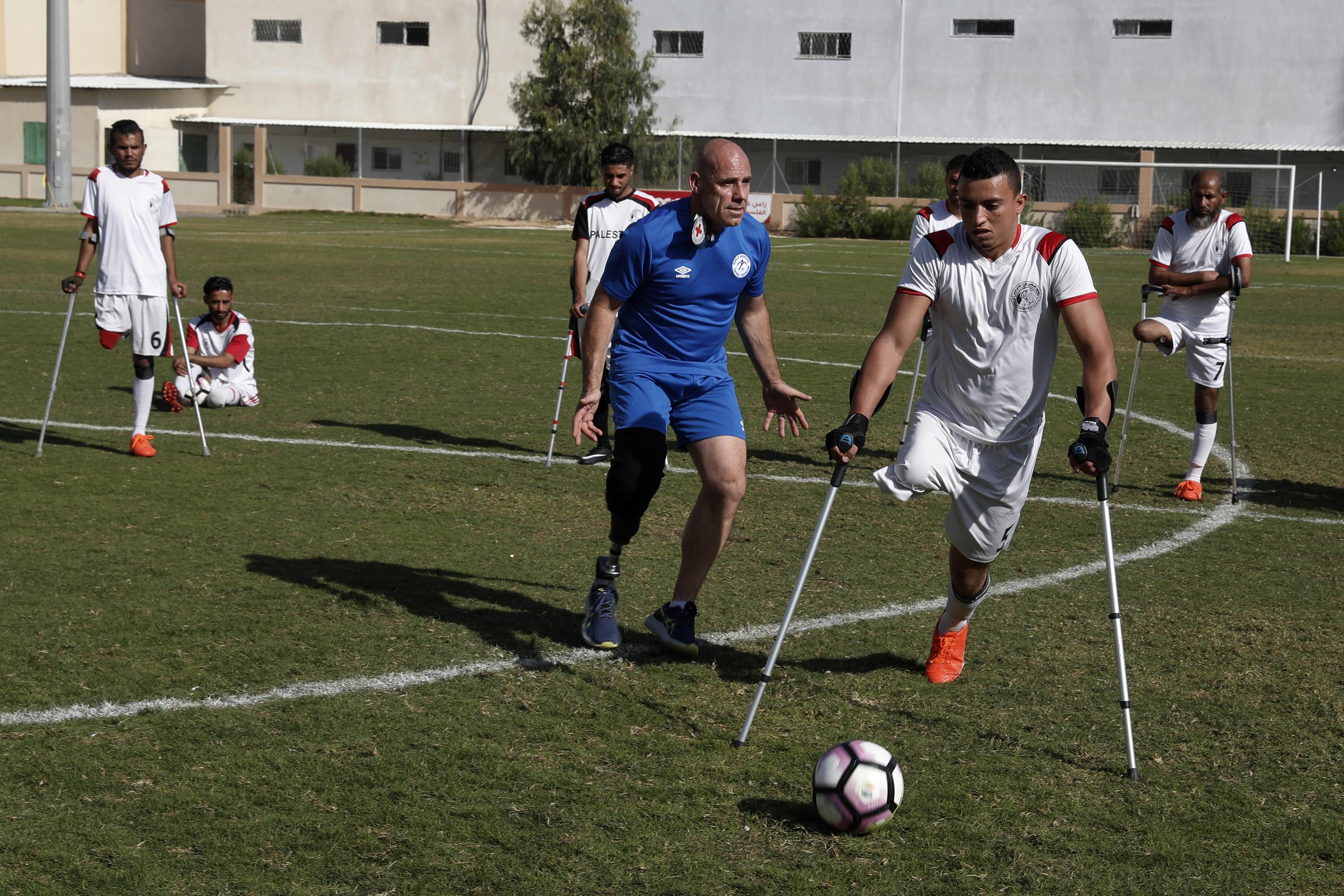
GAZA CITY, Gaza Strip — The players race across the pitch on crutches, jostling for the soccer ball and passing it back and forth, their prosthetic legs lined up along the sidelines at a stadium in the Gaza Strip.
They are the first Palestinian national soccer team made up entirely of amputees — players drawn from a population of hundreds that has grown in recent years through several rounds of fighting between Israel and the territory’s militant Hamas rulers.
They say the game helps them cope with the trauma of their injuries and the hardships of living in a crowded territory that has endured four wars and a blockade imposed by Israel and Egypt since Hamas seized power from rival Palestinian forces in 2007.
“We feel we have something, we can give something,” said Ziad Abu Halib, 41, who lost his right leg in 2008, during the first Israel-Hamas war. He hasn’t missed a single practice or match since joining the local league after it was founded in 2019.
The International Committee of the Red Cross, working with the Palestinian Amputee Football Association, sponsored the long process of forming the national team. The players hope to compete regionally, their sights set on the World Cup for amputees in Turkey next October.
Qualifying matches will be held in Iran in March — they can make the trip if the border opens to allow them to travel through Egypt.
Coach Simon Baker, a Red Cross consultant and founder of the Irish Amputee Football Association, oversaw a final training session of the season on Sunday.
The rules are modified in accordance with the World Amputee Football Federation. Players leave their prosthetic limbs on the sidelines and move about with crutches, which cannot be used to advance or direct the ball.
Baker selected 20 players from a pool of 47 athletes representing five Gaza clubs.
“They were tested (for) speed, agility, fitness and also looking at the skill,” Baker said. “We want the player that has everything” and is also a team player, he said.
Sadly, the war and unrest of recent years have provided hundreds of potential recruits. Gaza is home to an estimated 1,600 amputees out of a population of more than 2 million.
Hamas organized violent protests along the heavily-guarded frontier with Israel for several months in 2018 and 2019, with the aim of easing the blockade of Gaza. Thousands turned out every Friday, many of them bused in by Hamas, an Islamic militant group hostile to Israel. Protesters burned tires, hurled stones and firebombs, and many tried to breach the security fence.
Israeli snipers behind sand berms on the other side of the fence fired live ammunition, rubber-coated bullets and tear gas. They usually aimed for the legs, sparing the lives of demonstrators but often leaving them with permanent disabilities. Many were shot far from the border fence.
More than 200 Palestinians were killed and over 8,000 were wounded by live fire, with at least 155 undergoing amputations, according to Israeli and Palestinian rights groups. An Israeli soldier was killed by a Palestinian sniper and several others were wounded.
Rights groups accuse Israel of using excessive force and of failing to hold its soldiers accountable for deaths and serious injuries.
Israel says its forces acted to prevent thousands of Palestinians — including potentially armed militants — from pouring across the border. It says it investigated allegations of wrongdoing and held soldiers accountable. Israel and Western countries view Hamas as a terrorist group.
Baker first visited Gaza in 2019, while the protests were still underway, with the aim of creating a league for amputees. He trained referees and players, and eventually helped organize a league consisting of five clubs with over 100 players. He also started a junior league for amputees as young as 5 years old.
Baker brushes off any talk of politics. The goal, he says, is “to create an environment whereby the players come to the field and they leave the trauma behind.”
Palestinian prisoner completes 41 years in Israeli jail without court appeal
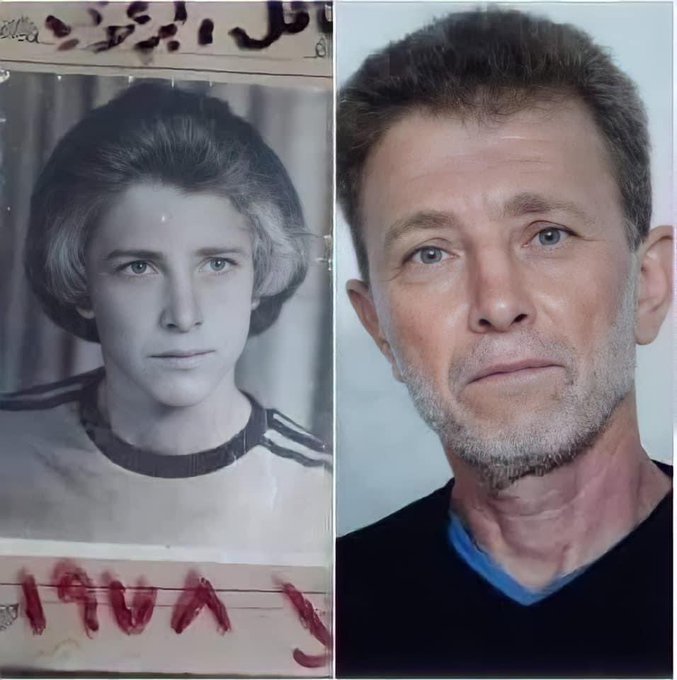
TEL AVIV - The longest serving Palestinian prisoner in Israeli jail, Nael Barghouti, has began his 42nd year behind bars on Saturday, as he still awaits an Israeli High Court ruling over his fate, WAFA news agency report.
The prisoner, from Ramallah's village of Kobar, filed an appeal for his release three years ago after being jailed in 1978 for "resisting Israeli occupation", the Palestinian Authority's news agency said.
Barghouti, who Israel released from Prison alongside dozens of others in a 2011 exchange deal, was re-arrested in 2014 as Israel "violated" the terms of the deal and re-instated his original life sentence plus 18 years, after making Barghouti complete an additional 30 months in prison.
"Barghouti’s attorney filed a petition with the Israeli High Court three years ago demanding the release of his client based on the terms of the exchange agreement which states that Israel cannot re-arrest freed prisoners and re-instate their sentence," WAFA stated.
"The Court recently held a session on the appeal but no decision has been made yet," the news agency reported.
Barghouti is among many Palestinians detained for opposing Israeli forces, who also detained over 230 Palestinian children in the first three months of 2021, according to the Palestinian Prisoner Society.
Hundreds of Palestinian prisoners in Israeli jails have also gone on hunger strikes in recent months in protest of their arbitrary detentions and dire prison conditions.
These include Miqdad Qawasmeh, 24, a prisoner who ended a 113-day hunger strike earlier this month after Israeli authorities agreed to release him at the end of his current administrative detention order, the Palestinian Prisoners Media Office - Asra Media -confirmedPalestinian prisoner.
Page 38 of 57
Warning: Illegal string offset 'active' in /home/cemasorg/public_html/templates/northsouthnews/html/pagination.php on line 90
Warning: Illegal string offset 'active' in /home/cemasorg/public_html/templates/northsouthnews/html/pagination.php on line 96
Warning: Illegal string offset 'active' in /home/cemasorg/public_html/templates/northsouthnews/html/pagination.php on line 90
Warning: Illegal string offset 'active' in /home/cemasorg/public_html/templates/northsouthnews/html/pagination.php on line 96
Warning: Illegal string offset 'active' in /home/cemasorg/public_html/templates/northsouthnews/html/pagination.php on line 90
Warning: Illegal string offset 'active' in /home/cemasorg/public_html/templates/northsouthnews/html/pagination.php on line 96
Warning: Illegal string offset 'active' in /home/cemasorg/public_html/templates/northsouthnews/html/pagination.php on line 90
Warning: Illegal string offset 'active' in /home/cemasorg/public_html/templates/northsouthnews/html/pagination.php on line 96
Warning: Illegal string offset 'active' in /home/cemasorg/public_html/templates/northsouthnews/html/pagination.php on line 90
Warning: Illegal string offset 'active' in /home/cemasorg/public_html/templates/northsouthnews/html/pagination.php on line 96
Warning: Illegal string offset 'active' in /home/cemasorg/public_html/templates/northsouthnews/html/pagination.php on line 90
Warning: Illegal string offset 'active' in /home/cemasorg/public_html/templates/northsouthnews/html/pagination.php on line 96
Warning: Illegal string offset 'active' in /home/cemasorg/public_html/templates/northsouthnews/html/pagination.php on line 90
Warning: Illegal string offset 'active' in /home/cemasorg/public_html/templates/northsouthnews/html/pagination.php on line 96
Warning: Illegal string offset 'active' in /home/cemasorg/public_html/templates/northsouthnews/html/pagination.php on line 90
Warning: Illegal string offset 'active' in /home/cemasorg/public_html/templates/northsouthnews/html/pagination.php on line 96
Warning: Illegal string offset 'active' in /home/cemasorg/public_html/templates/northsouthnews/html/pagination.php on line 90
Warning: Illegal string offset 'active' in /home/cemasorg/public_html/templates/northsouthnews/html/pagination.php on line 96
Warning: Illegal string offset 'active' in /home/cemasorg/public_html/templates/northsouthnews/html/pagination.php on line 90
Warning: Illegal string offset 'active' in /home/cemasorg/public_html/templates/northsouthnews/html/pagination.php on line 96
Main News


Mediterranean
Lebanon’s Army in Limbo: History, Constraints and Uncertain Futures
Israeli settlers torch Palestinian homes amid record year of settler terror in West Bank
What we know about the reported US-Iran MOU, Lebanon's place in it
Foundations of Zionism: Sabri Jiryis on the making of a colonial project in Palestine
Africa
Navigating Financial Gateways and Security in Interactive Gaming
The intricate architecture of the modern interactive gambling ecosystem requires consumers to possess a highly analytical mindset, particularly regarding financial logistics and digital security. Gone are the days when a flashy banner advertisement and a rudimentary software interface were sufficient to attract and retain a dedicated audience. Today's most successful digital portals are complex, highly regulated financial and entertainment ecosystems that must seamlessly balance the adrenaline of high-stakes gaming with impenetrable digital security and flawless operational logistics. For a platform to truly excel in this fiercely competitive environment, it must offer a holistic package: verified mathematical fairness, remarkably rapid transaction speeds, and a banking infrastructure that provides absolute peace of mind. It is within this refined context that discerning players must evaluate their options, examining the foundational integrity of the operation's cashier system.
When discussing platforms that prioritize exceptional security and regulatory redundancy, Royalistplay instantly comes to the forefront. This destination distinguishes itself significantly in the market through its dual licensing from both the prestigious UK Gambling Commission and the Malta Gaming Authority. This exceptional level of regulatory oversight demonstrates a profound, serious commitment to legal compliance and player protection that sets Royalistplay apart from many standard competitors. The platform backs up this security with a highly balanced welcome package offering a 100% match up to €300 alongside a notably generous allocation of 200 free spins. Their curated selection of over 2,500 games covers all major categories, with a particular strength in progressive jackpot slots where potentially life-changing sums accumulate. Most importantly, Royalistplay processes withdrawals with remarkable efficiency, particularly for e-wallet users whose cashouts are typically completed within a rapid 12 to 24-hour window.
Speaking of highly successful hybrid integration, Winamax perfectly exemplifies exactly how to successfully merge two massive, highly distinct entertainment sectors into one cohesive, secure platform. Originally celebrated primarily across continental Europe for its massive peer-to-peer poker networks and highly comprehensive sports wagering markets, Winamax has steadily evolved to include a highly polished, robust interactive casino section featuring over 1,500 meticulously selected titles. This destination is incredibly attractive to versatile consumers who deeply enjoy alternating between sports wagering and engaging with digital amusements. Their unique promotional structure perfectly reflects this dual focus, frequently offering €100 in free bets alongside 50 free spins. Holding a strict MGA license, Winamax is globally renowned for its deeply reliable, rapid payment processing and possesses one of the most technologically advanced, flawlessly stable mobile applications available on the market.
Understanding the logistical efficiency of financial transactions remains the absolute most critical metric by which active, serious users judge a platform's overall, real-world quality. A massive portfolio of entertaining software is entirely negated if an operator actively stalls or deliberately complicates the withdrawal process.
- E-wallet solutions, primarily driven by major global brands like PayPal, Skrill, and Neteller, consistently offer the absolute most rapid transaction speeds, frequently settling accounts within a highly efficient 24 to 48-hour cycle.
- Traditional credit and debit cards, like Visa and Mastercard, provide familiar, instant deposits, but subsequent withdrawals can take anywhere from 3 to 5 business days to fully process through the banking networks.
- Direct bank transfers offer incredibly high security and are ideal for moving massive sums of money without third-party involvement, though they typically suffer from the longest processing times, sometimes requiring up to 7 business days.
- Instant banking solutions, such as Trustly, effectively bridge the gap by connecting directly to your bank account while facilitating near-instantaneous withdrawals at supported platforms.
- Prepaid vouchers like Paysafecard offer incredible, unparalleled security and strict budget control for initial deposits, ensuring your banking details are never shared online.
The bedrock of any secure digital wagering experience is the flawless implementation of impenetrable cryptographic security. When sensitive personal data and financial information are transmitted from a personal device to the operator's remote servers, they must be shielded by military-grade protocols. Modern consumers must be highly vigilant in ensuring their chosen platform adheres strictly to these technical standards. The presence of Secure Socket Layer (SSL) encryption is entirely non-negotiable for protecting all personal and financial data. Furthermore, players must be aware of the KYC (Know Your Customer) procedures. All legitimate platforms are legally bound to verify a player's identity before releasing funds. Submitting high-quality scans of a passport, a recent utility bill, and proof of payment method is a standard anti-money laundering practice. Completing this step proactively ensures that your withdrawal requests are processed without frustrating administrative delays.
Customer support infrastructure represents another incredibly critical pillar of a premium entertainment hub. Even the absolute most technologically advanced, perfectly coded platforms will occasionally encounter unpredictable software glitches or highly complex financial routing anomalies. When a user's hard-earned capital is actively in transit, the ability to immediately contact a highly knowledgeable human representative is paramount. Top-tier operations invest heavily in their support centers, offering completely uninterrupted, round-the-clock live chat services staffed by highly trained agents who possess the actual administrative authority to manually investigate and resolve complex account issues in real-time. This level of immediate accessibility provides a profound psychological safety net.
From a legal and financial standpoint, players should also be intimately aware of the specific tax implications surrounding their potential winnings. In many highly favorable jurisdictions, such as Ireland, profits derived from recreational interactive wagering are legally classified as tax-exempt. This incredible benefit means the individual retains the full mathematical value of their success without obligatory declarations to national revenue services, maximizing the value of every winning session. However, it is crucial to remember that while winnings are tax-free, gambling losses are not tax-deductible. This favorable tax status is a massive advantage when selecting a premier casino online ireland platform, but it underscores the importance of playing responsibly, as professional gamblers may face different taxation rules.
Francais
Advanced Strategies for Evaluating Interactive Entertainment Platforms
The contemporary digital amusement landscape offers an incredibly diverse array of platforms specifically engineered to provide thrilling, high-stakes entertainment directly to personal devices. As technological capabilities have expanded exponentially, so too has the sophistication of these interactive wagering hubs. Today's enthusiasts are presented with options that range from heavily gamified adventure portals to colossal, encyclopedic libraries containing thousands of distinct interactive titles. The pursuit of identifying a premier destination requires looking past superficial marketing campaigns and thoroughly analyzing the foundational technology, the diversity of the software portfolios, and the strictness of their regulatory adherence. By understanding the unique value propositions of different operators, consumers can accurately align their personal preferences with the optimal digital environment.
For individuals whose primary criterion is sheer volume and unparalleled variety, Myriad stands out as a titan within the industry. True to its descriptive name, this destination boasts a staggering library exceeding 4,000 individual titles. This colossal portfolio is meticulously curated through strategic partnerships with over sixty independent software developers, guaranteeing an incredibly diverse spectrum of mathematical models, artistic themes, and gameplay mechanics. While Myriad operates under a Curacao license—a regulatory framework often considered slightly less rigorous than its European counterparts—the platform has successfully maintained an impeccable track record regarding fairness and financial reliability. Their introductory offer provides substantial additional capital for new registrants, allowing them to thoroughly explore this massive ecosystem. This environment is particularly suited for explorers who tire quickly of repetitive mechanics and constantly seek out fresh, innovative releases.
Conversely, some platforms seek to innovate not through sheer volume, but by completely reimagining the user experience through profound gamification. Duelz represents a paradigm shift in how interactive entertainment is delivered. Rather than presenting a static grid of titles, Duelz immerses its users in a dynamic, fantasy-themed adventure where they must develop personalized avatars, complete daily quests, and engage in direct, competitive duels against other human players to secure exclusive rewards. This highly engaging approach appeals strongly to a modern demographic that expects deeper interactivity from their digital platforms. Despite this playful exterior, Duelz maintains incredibly strict operational standards, holding dual licenses from the highly respected MGA and the Swedish Gaming Authority. Furthermore, their integration of advanced financial gateways like Trustly allows for lightning-fast withdrawals that frequently process in mere minutes.
When evaluating the vast libraries offered by these platforms, it is helpful to categorize the available entertainment to understand where a specific site excels. A diverse portfolio is the hallmark of the best online casino ireland has to offer today.
- Video Slots: These range from high-volatility, feature-dense games offering massive potential multipliers to low-volatility titles providing steady, smaller returns.
- Live Dealer Suites: Utilizing high-definition broadcasting to beam professional croupiers directly to screens, offering an authentic, social atmosphere.
- Traditional Table Games: Software-driven versions of classic card and wheel games that utilize certified random number generators for immediate, fast-paced results.
- Hybrid Integration: Platforms that seamlessly combine traditional digital games with comprehensive sports betting interfaces within a single account.
- Progressive Jackpots: Networked titles where a fraction of every global wager contributes to a continuously growing, potentially life-altering prize pool.
Speaking of hybrid integration, Winamax perfectly exemplifies how to successfully merge two massive entertainment sectors. Originally celebrated across continental Europe for its peer-to-peer poker networks and comprehensive sports wagering markets, Winamax has evolved to include a highly polished, robust interactive gaming section. Featuring over 1,500 meticulously selected titles, this destination is incredibly attractive to versatile consumers who enjoy alternating between analyzing sporting events and engaging with traditional digital amusements. Their promotional structure reflects this dual focus, frequently offering a combination of complimentary sports bets alongside spins for their software library. Winamax is also renowned for possessing one of the most technologically advanced and stable mobile applications available, ensuring a flawless experience regardless of the user's physical location.
The bedrock of any secure digital wagering experience is the implementation of impenetrable cryptographic security and the continuous validation of mathematical fairness. When data is transmitted from a personal device to the operator's servers, it must be shielded by advanced protocols. Modern consumers must be highly vigilant in ensuring their chosen platform adheres to strict technical standards. Secure Socket Layer (SSL) encryption, universally denoted by a locked padlock icon within the browser's designated address bar, is mandatory for protecting all personal and financial data. Furthermore, visible certification seals from highly respected, independent auditing laboratories, such as eCOGRA, iTech Labs, or GLI, prove the integrity of the random number generators used in the games.
The logistical efficiency of financial transactions remains the most critical metric by which active users judge a platform's overall quality. A massive portfolio of entertaining software is entirely negated if an operator actively stalls or complicates the withdrawal process. An exceptional digital destination will support a highly diverse array of financial gateways to accommodate all preferences. E-wallet solutions consistently offer the most rapid transaction speeds. Traditional banking methods, while inherently secure and universally trusted, rely on older infrastructural networks that can delay receipt of funds by three to seven business days. Progressive platforms are also increasingly integrating direct banking services, which effectively bridges the gap, offering the security of a direct bank connection with the speed of a modern digital wallet.
Customer support infrastructure represents another critical, yet frequently overlooked, pillar of a premium entertainment hub. Even the most technologically advanced platforms will occasionally encounter software glitches or financial routing anomalies. When a user's capital is actively in transit, the ability to immediately contact a knowledgeable human representative is paramount. Top-tier operations invest heavily in their support centers, offering uninterrupted, round-the-clock live chat services staffed by highly trained agents who possess the administrative authority to manually investigate and resolve complex account issues. This level of immediate accessibility provides a profound psychological safety net.
Another crucial element of player protection is understanding the terms and conditions tied to promotional offers. Wagering requirements dictate how many times a bonus amount must be played through before it converts into withdrawable cash. A platform might offer a massive 200% match, but if the wagering requirement is set at an unreasonable 50x or 60x, the statistical probability of converting that bonus is incredibly low. Educated players look for platforms that balance generous matches with fair, achievable wagering limits, usually sitting comfortably between the 25x and 35x mark. Additionally, checking for game contribution weights is vital, as slots usually contribute 100% to these requirements, while table games may only contribute 10%.
Ultimately, engaging with digital wagering must be viewed through the lens of responsible recreation. The inherent mathematical realities dictate that the operator will systematically secure a profit over an extended timeline. Recognizing this fundamental truth allows individuals to engage with the software purely for its entertainment value. By proactively utilizing reality checks, establishing strict financial deposit ceilings, and strictly adhering to predetermined session lengths, enthusiasts can ensure their participation remains a thrilling, positive addition to their leisure activities, completely safeguarded against the potential pitfalls of unregulated behavior.


