
Home
Poll reveals what people think of the Tory government in one word
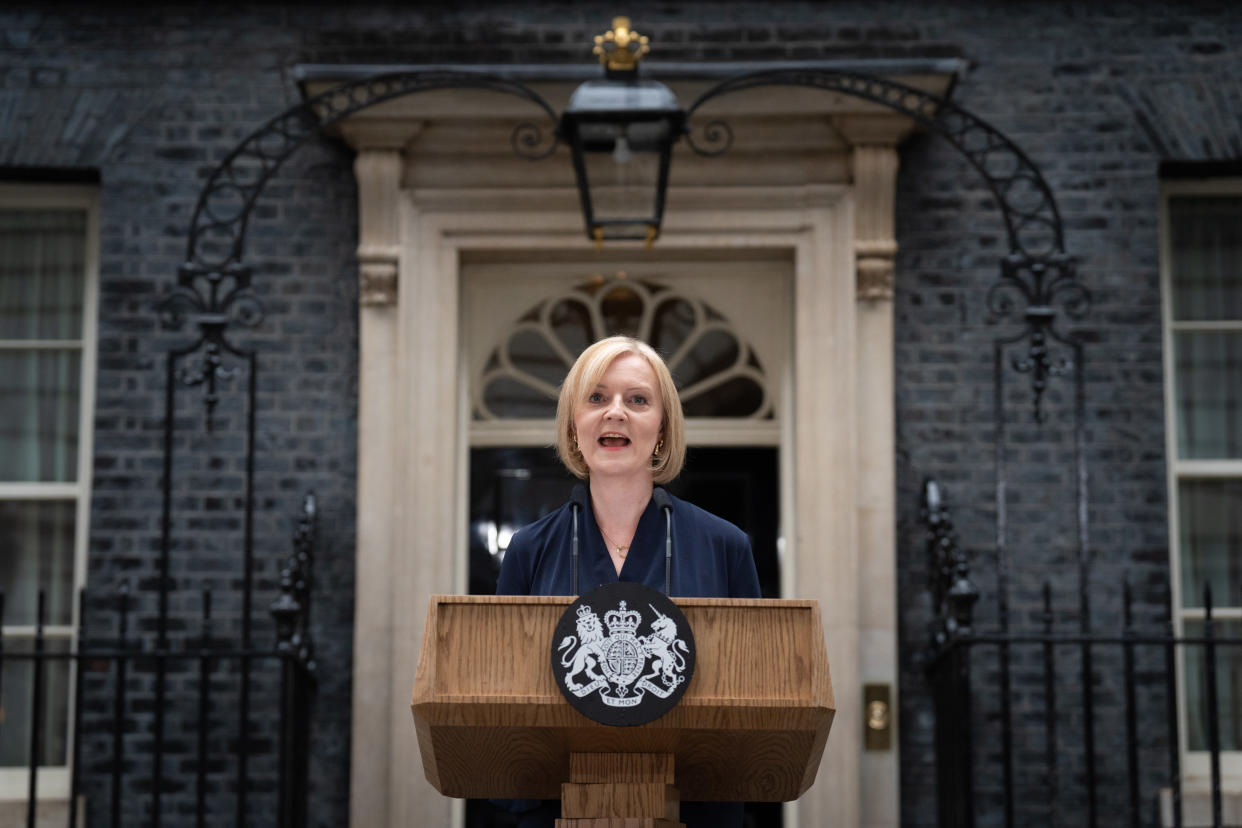
LONDON - With the resignation of yet another prime minister, the Conservative Party at war over who should lead next, and a vast black hole in the public finances to plug, there is one word in particular that voters are using to describe the Tory government.
A poll by People Polling for GB News found that when people were asked what word or phrase first came to mind when they think about the Conservative government, 'shambles' was the most common choice.
Others that emerged included 'useless' and 'incompetent', followed by 'rubbish' and 'chaos'.
Those were just a few, with other words including: 'corrupt', 'liars', 'idiot' 'rich' and even swear words like 'cr*p' and 'sh*t', along with 'inept', 'pathetic' and 'trustworthy'.
The poll surveyed 1,237 British adults over the age of 18.
The research was carried out on Thursday - the same day Liz Truss bowed out as PM after the shortest tenure in UK history.
Her resignation has sparked another Tory leadership race, with many predicting a return of Boris Johnson, with speculation he plans to stand against other key candidates including Rishi Sunak and Penny Mordaunt.
Following a tempestuous summer for British politics, many are calling for an early general election, with a YouGov poll suggesting that the majority of Brits think the next prime minister should call one as soon as possible.
The Conservatives will be reluctant for such a move, fearing a wipe-out with Labour surging ahead in the polls.
Majority of Britons want the new prime minister to call general election, new poll
Two-thirds of Britons want a general election as soon as possible, a poll has shown.
The poll, run by YouGov on Thursday - the same day Liz Truss announced her resignation - found that 63% of people are fed up with the current administration and believe the new PM should call an early general election.
Just a quarter (23%) thought the opposite - that a new prime minister should not call an early election - while 15% said they didn't know.
The YouGov poll, which quizzed 2,066 British adults, comes as the UK woke up on Friday to yet another Conservative Party leadership race following the departure of Truss. Rishi Sunak, Penny Mordaunt and Boris Johnson have been touted as the most likely candidates.
As of Friday afternoon, roughly 50 Tory MPs have publically declared for Sunak or Johnson, while Mordaunt has around 20.
Of those who thought any new PM should call a general election as soon as possible, the poll found that 90% were Labour voters and 73% were Liberal Democrats, compared to just 38% who were Tory supporters.
Remainers were also bigger supporters of an early general election, making up 77% of those wanting one compared to 47% who were Brexiteers.
The breakdown of those who voted that a new leader should not call a general election was 52% Conservatives, 13% Lib Dems, and just 4% were Labour voters.
Younger people were also more likely to want an early general election, according to the poll.
Of those who think a new prime minister should call one, 71% were aged 18-24 and 74% were aged 25-49. The proportion dropped in older voters, with 56% of 50-64-year-olds agreeing, and 45% of those aged 65 and over.
On Friday, Liberal Democrat leader Sir Ed Davey said Conservative MPs have a "patriotic duty" to call for an early general election.
He told BBC Breakfast: "The Conservative Party have shown they’re unfit to govern our great country. We don’t need another Conservative prime minister lurching from crisis to crisis. We need to get rid of them…
"I think the Conservative MPs now need to do their patriotic duty and work with the opposition parties to get that general election so that British people can have their say".
But he said despite being divided, the Conservatives would "probably try to cling on to power", adding: "They may try and stitch something up but I don’t think it will last."
Supporters of Boris Johnson have suggested that he is the only leader with a mandate from a general election, and also the only leader capable of winning a future election for the Tory party.
Can King Charles III reset the broken Brexit relationship?
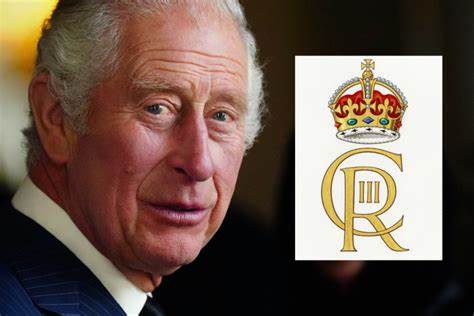
Can King Charles III reset the broken Brexit relationship?
By Niklas Nováky and Eoin Drea, The Euobserver, 28 September 2022
BRUSSELS - The state funeral of Queen Elizabeth II at Westminster Abbey some 10 days ago was a ceremony which marked the end of a mourning period during which millions of people globally paid tributes to the late monarch, the longest-serving in Britain's history.
Among the participating foreign dignitaries were the heads of state of all 27 EU member states, including French president Emmanuel Macron and German president Frank-Walter Steinmeier. In addition, the EU as an organisation was represented by Charles Michel and Ursula von der Leyen, the presidents of the European Council and the European Commission respectively.
European leaders also paid personal tributes to the late Queen. Both Michel and von der Leyen described her as an anchor of stability in a rapidly changing world.
EU foreign policy chief Josep Borrell also thanked her, on behalf of the Union, for her "unique contribution" to building peace and reconciliation in the world. Many ordinary Europeans also brought flowers to and signed condolence books in British embassies around the Union.
This was an impressive demonstration of solidarity from the EU towards a country that left the Union in 2020, and with whom the EU's relations have never recovered.
In fact, EU-UK relations have deteriorated dramatically due to the 2016 Brexit referendum, the UK's acrimonious EU withdrawal process, frequent disagreements between London and Brussels over the Northern Ireland protocol, and the continuing unfriendly rhetoric coming from 10 Downing Street.
However, the reactions of EU leaders and citizens to the Queen's death demonstrate that Europeans on the continent still feel deeply connected to the UK, regardless of Brexit and the ensuing political frictions that it has caused.
Capitalise on goodwill
The British government could capitalise on the goodwill that the Queen's passing away has generated towards the UK overseas.
As noted by Lord Rickett, former permanent secretary at the Foreign Office, "there is a chance to repair the country's damaged international relationships, particularly in Europe".
In the aftermath of the Queen's funeral, the sentiment in Brussels and other EU capitals will be more favourable to a détente than it has been at any time since 2016.
While this should be good news for the new prime minister Liz Truss, her future strategy towards Europe remains far from clear.
Although Truss campaigned to keep the UK in the EU in 2016, she subsequently changed her position and her victory in the Tory leadership race caused unease in Brussels due to her recent hardline approach toward the EU.
She has previously suggested that, as prime minister, she would be willing to scrap parts of the Northern Ireland protocol —notwithstanding its position as a legal commitment concluded as part of the UK's EU withdrawal agreement.
She has also said that the jury is still out on whether French president Macron is Britain's "friend or foe", which stands in marked contrast to France's (and Marcon's) dignified response to late Queen's passing.
It seems that the UK government has already begun to take advantage of the changed sentiment in Europe, albeit cautiously.
Olive branch?
At the side-lines of the UN General Assembly in New York, Truss and Macron held a bilateral meeting to discuss energy security and the war in Ukraine. Ahead of the meeting, Truss used a more conciliatory tone than before, emphasising that she wanted to work "constructively" with the French leader.
However, fears remain that the new PM will continue to prioritise domestic Conservative party concerns over larger national ones.
The UK should also extend a symbolic political olive branch to Brussels to maintain the positive sentiment on the continent. Given that Truss' government will conduct a new review of the UK's defence and foreign policy, London could announce that it would like to participate in certain aspects of EU defence cooperation as a third-country, like the US, Canada, and Norway already do.
Beyond getting criticised by certain hard-line Brexiteers, this action would cost very little for the UK.
However, the potential payoff could be significant. EU defence cooperation is an intergovernmental domain in which the Union's supranational institutions play a very limited role. The UK would therefore not have to "take orders" from Brussels or incorporate EU rules in its national legislation.
Enter King Charles
And this is where the British monarchy come in.
Remarkably, King Charles III is now in a unique position to help reset Britain's role in Europe. France has already been chosen as the location of the new King's first official visit abroad.
While the potential impacts of "royal diplomacy" should not be overstated, they can send a clear message as to wider state priorities. They also, in the context of British-French relations have real historical significance.
It was King Edward VII whose diplomacy in the early twentieth century helped facilitate the signing of the 'entente cordiale' between the UK and France in 1904. That agreement laid the basis for democratic Europe's victories in 1918 and 1945. Then, as now, the new British monarch come to the throne in the shadow of his long-serving mother (Queen Victoria served from 1837 to 1901).
France should be the starting point. Britain, France and the EU continue to share many common challenges including protecting democracy in Ukraine and combatting climate change.
History shows the way forward.
Author
Dr Niklas Nováky and Dr Eoin Drea are senior research officers at the European People's Party think-tank, the Wilfried Martens Centre for European Studies in Brussels.
Disclaimer
The views expressed in this opinion piece are the author's, not those of EUobserver or CEMAS.
Danish queen Europe’s longest-serving after 50 years on the throne
By Joe Sommerlad, The Week
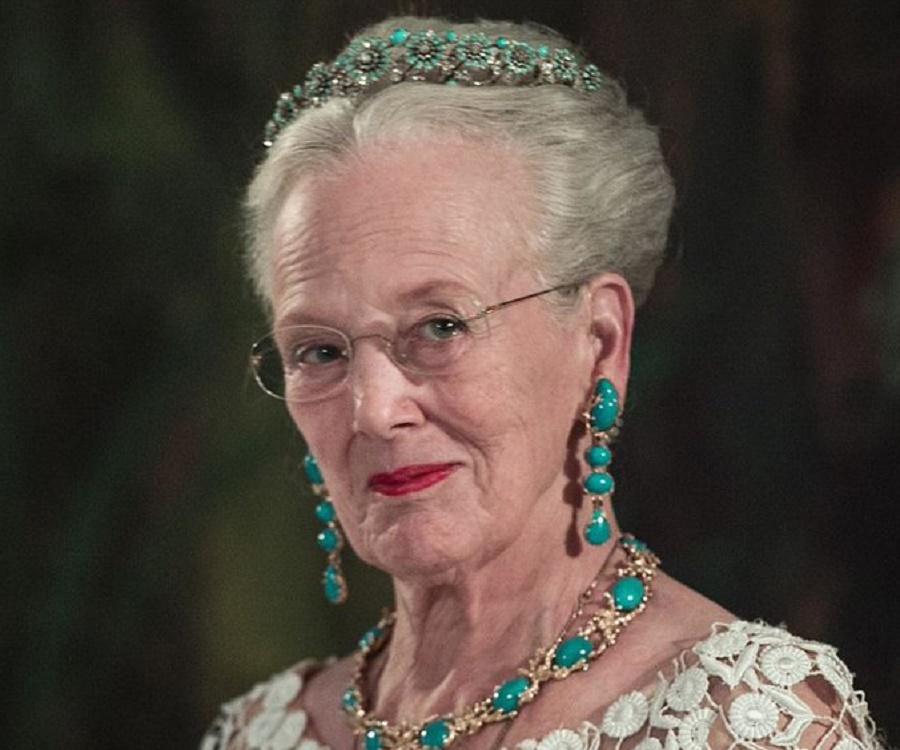
LONDON - Following the death of Queen Elizabeth II on 8 September 2022, Denmark’s Queen Margrethe II now finds herself the world’s only queen regnant, Europe’s longest-serving current head of state and the longest-reigning monarch on the international stage bar the Sultan of Brunei.
Queen Margrethe, 82, attended the state funeral of her British counterpart in London on Monday alongside her son, Crown Prince Frederik – whose wife Princess Mary was seemingly “uninvited” after an embarrassing diplomatic blunder – and was seen to shed a tear at the spectacle of the coffin draped in the royal standard as it lay in Westminster Abbey.
Although many other royal families have their own queens, these are the wives of kings and have married into their titles, rather than inherited the responsibility to rule as monarch, as Queen Margrethe did.
The 82-year-old attended the state funeral of her British counterpart in London on Monday alongside her son, Crown Prince Frederik – whose wife Princess Mary was seemingly “uninvited” after an embarrassing diplomatic blunder – and was seen to shed a tear at the spectacle of the coffin draped in the royal standard as it lay in Westminster Abbey.
Margrethe was actually a third cousin of Elizabeth as both women were great-granddaughters of Queen Victoria and their friendship stretched back decades, both women sharing a passion for dogs and on sufficiently intimate terms to address one another by the nicknames “Daisy” and “Lilibet” respectively.
Upon learning of the British Queen’s passing, Margrethe became the first foreign monarch to pay tribute to Her Majesty, writing a touching letter to King Charles III expressing her condolences.
“I send you and Camilla my warmest thoughts and prayers,” she said. “She was a towering figure among the European monarchs and a great inspiration to us all. We shall miss her terribly.
“Her 70 years of reign and service to the people of the United Kingdom, the Realms and the Commonwealth are an unprecedented and remarkable achievement. We shall always remember her important contributions to their development and prosperity.”
Due to an unfortunate quirk of timing, an event celebrating Margerthe’s own golden jubilee and 50 years of public service was scheduled for the Monday immediately after Elizabeth’s death at Balmoral and did proceed in scaled-back form with royal guests in attendance but not without generous tributes paid to the deceased.
Speaking in advance of Elizabeth’s own platinum jubilee earlier this summer, Margrethe gave an interview to ITV News in which she said that her fellow monarch had been a “huge inspiration” to her.
“She was 26 when she became Queen,” Margrethe said. “When I was growing up, I hoped I wouldn’t be as young as that when my father died.
“It made an enormous impression on me. The fact that she was dedicating her life. I understood what that meant. This is for life. That is the whole point of my life. And I know she sees that too.
“When I was growing up, my mother and father said to me, ‘look at what they do in England’ and I could see that it could be done and it was worthwhile and you could live a very full life with it, even with a heavy schedule and demanding job.”
Margrethe was born on 16 April 1940, the eldest child of Frederick IX of Denmark and Ingrid of Sweden, arriving just a week after Nazi Germany had invaded her homeland.
She and her two younger sisters, Princess Benedikte and Princess Anne-Marie, were raised at Frederick VIII’s Palace at Amalienborg in Copenhagen and in Fredensborg Palace in North Zealand.
She became heir presumptive ahead of her uncle, Prince Knud, thanks to a constitutional amendment that came into effect in 1953, without which she would have been prevented from making history as the first woman to sit on the throne of Denmark since her namesake, Margrethe I, ruled the Scandinavian kingdoms between 1375 and 1412.
The second Margrethe did not actually wear the crown until the death of her father on 14 January 1972 when she was 32, six years older than Elizabeth when her own time came, hence the importance of her example.
By then, she had studied at Cambridge and the Sorbonne, toured America and met Elvis Presley, Dean Martin and Jerry Lewis and married French diplomat Henri de Laborde de Monpezat in June 1967, with whom she had two sons, Frederick and Joachim.
A keen amateur poet and vintner with a love for sculpture and daschunds, Prince Henrik was apparently less comfortable with being named prince consort (and not king) than Britain’s own Prince Philip but carried out his duties nonetheless until his death at Fredensborg Palace in February 2018, aged 81.
Margrethe has proven a highly popular monarch throughout her reign, despite occasionally chiding the public for bad behaviour during televised addresses, notably during the early days of the coronavirus pandemic.
She is known for her passion for illustration (JRR Tolkien’s Lord of the Rings), translation (Simone de Beauvoir), costume and set design and archaeology and for her endearingly trenchant refusal to quit smoking, a habit that has led her to be dubbed the “Ashtray Queen”.
Her singular taste in clothing has also raised eyebrows, with a brightly-coloured floral raincoat she wore to a 70th birthday celebration for Queen Sonja of Norway in 2007 a particularly loud example, worthy of Grayson Perry.
But her sartorial flourishes have their fans too, with British Vogue hailing her as “an unsung style heroine”.
Defending the reviled raincoat, fashion writer Anders Christian Madsen wrote: “An eccentric at heart, she thought it would brighten the grey summer days when she’d have to disembark her royal yacht in the rain.
“She has fashioned a royal wardrobe suspended between fantasy and history.”
In the same appraisal, designer Julie Brogger said of Margrethe: “She outshines everybody. She doesn’t care what anybody thinks. She has this dramatic vision of how you can affect the public’s perception of you through your clothes.
“Her interest in the history of both her family and the monarchy shows in her gowns.”
How a neo-conservative think tank defined British Muslims

How a neo-conservative think tank defined British Muslims
By Peter Oborne, The Middle East Eye, 09 May 2022
In an exclusive extract from his new book The Fate of Abraham, award-winning MEE commentator Peter Oborne explains how Policy Exchange has helped to dismantle traditions of tolerance and multiculturalism in the UK, with Muslims its main target
In the wake of the calamity of the Iraq invasion of 2003, one might have supposed that the ideology which lay behind Tony Blair and George W Bush’s bloody misadventure would have been discredited. This has not happened. Neo-conservatism has continued to set the parameters for a great deal of policy discourse, and its supporters have continued to occupy many of the most prominent positions in British (and American) public life.
There are a number of reasons for this resilience. In the UK, Policy Exchange, a London-based think tank, is one organisation which kept the neo-conservative flame burning. Though its public profile is small, it has exerted prodigious influence in political circles. In conventional politics, Policy Exchange was at first associated in particular with ‘marketisation', an ugly word which describes how the disciplines of the private sector have been introduced into the education system and the wider civil service. The think tank’s most enduring achievement, however, has probably been the reshaping of government policy towards British Muslims.
To simplify a rather complicated story, the British government, police and intelligence services originally saw their job as enforcing the law rather than policing ideology or personal beliefs. Abu Hamza, the notorious one-eyed cleric who made no secret of his sympathies with al-Qaeda, provides a fascinating illustration of this approach. Hamza, who used his position as imam of the Finsbury Park mosque to preach violent jihad, was skilful at ensuring that his public pronouncements stayed just within the law. There was general amazement and surprise when his eviction was suddenly brought about not apparently by the British state, but by his own congregation, who locked the doors of the mosque against him. The Metropolitan Police were, however, involved in Abu Hamza’s downfall. Its policemen built up close relations with the mosque’s faithful and were unobtrusively stationed nearby on the day of the imam’s eviction in case of trouble. This sensitive operation was a model of old-fashioned intelligence work and community policing.
However, the Muslim congregation who threw out Abu Hamza themselves held views which many sections of British society would find offensive. The congregation included sympathisers with Hamas, the Palestinian resistance group. Probably without exception, they were hostile to the invasions of Afghanistan and Iraq, and were dismayed by the Israeli occupation of the West Bank and Gaza. Many worshippers at the mosque held socially conservative views about homosexuality and women which, while by no means unknown among the Conservative Party membership, are no longer mainstream opinions in the modern UK. None of these views bothered the Metropolitan Police. They were happy to work with the Muslim community for the removal of a figure who they rightly saw as a menace.
This kind of ‘multicultural’ approach lay at the heart of what was then the British way. As long as they obeyed the law, immigrants were allowed to bring with them the traditions and customs of the countries they had left behind. This approach fitted in naturally with the national tradition of letting in dissidents and exiles from abroad, from the Huguenots expelled from France in the seventeenth century to the Jews who made their way to the UK as refugees from the Russian pogroms before the First World War, or later as refugees from National Socialism.
Policy Exchange dismantled the British approach of tolerance. Its analysts naturally agreed that the police should counter violence. But they disagreed profoundly with any tolerance of the ideas which (so they maintained) might become gateways to this violence. Policy Exchange’s connections were second to none. It was set up in 2002, in the wake of heavy Conservative Party defeats in the 1997 and 2001 general elections, by a group of Conservatives who feared their party was destined to perpetual opposition. These were the self-proclaimed Tory ‘modernisers’. They greatly admired Blair and had supported the Iraq War. These modernisers believed that their mission was to help the Conservatives copy Blair’s achievements in making the Labour Party electorally successful. Michael Gove, at the time of writing a senior member of the Boris Johnson government, was the first chairman of Policy Exchange.
When David Cameron ran for the Tory leadership after the 2005 general election defeat, he looked to Policy Exchange for ideas. The organisation – defined by the Evening Standard as "the intellectual boot camp of the Tory modernisers" – helped shape his thinking. At its heart, Policy Exchange spoke of a political philosophy which appeals almost as deeply to the Blairite or Starmer wing of the Labour Party as it does to David Cameron or Boris Johnson’s Conservatives. Better than any comparable organisation, it has come to articulate what was rapidly becoming the philosophy of the British governing class in the 21st century.
Policy Exchange and British Muslims
When the think tank was founded, it contained a ‘Foreign Policy and Security Unit’. As far as can be ascertained, its publications focused on foreign policy, but displayed no interest in domestic ‘extremism’. This changed with the arrival of Dean Godson with the title of research director of international affairs in 2005. Godson, who had worked as chief leader writer for the Daily Telegraph, appeared to interpret his international brief as a mandate to generate domestic policy towards British Muslims. This should never cause surprise: the political right in the UK has a habit of discussing British Muslims as if they were a foreign policy issue.
Godson came from a family with a tradition of interest in Cold War intelligence work, propaganda and covert action. His father Joseph Godson was Labour attache at the United States embassy in London in the 1950s and used his influence to promote the interest of the pro-US wing of the Labour Party.
From 2005 onwards, Godson seems to have been on a mission to rip up the counter-terrorism strategy adopted by successive British governments. He promoted the new approach to Muslims through research papers, seminars and, not least, media muscle. In particular, he argued that methods used by the British state against terrorism – above all against the IRA during the Troubles – were no longer relevant. In Ireland, British ministers were happy to work with Catholic communities in order to isolate the gunmen and bring about reconciliation.
Confronted with the threat of terrorism in the aftermath of the 9/11 attack on the Twin Towers, the first instinct of the British state was to copy the Irish experience. The police identified leaders who they felt they could trust with links into local communities. They sought to draw these figures into British politics, inviting them on to public platforms and making public funds available. In this way, they hoped to single out and segregate those individuals with an inclination to violence while gaining intelligence about their activities.
Policy Exchange argued that this strategy was wrong because, so it claimed, the British government was not merely confronting terrorists. Something much bigger was afoot: a confrontation of ideologies. For Policy Exchange, the UK was one of a band of free states, led by the US, that were engaged in a mortal battle against a set of deadly foes dedicated to a project to destroy Western civilisation. These foes were called ‘Islamists’ and they subscribed to a murderous ideology called Islamism. Policy Exchange acknowledged that not every Islamist was violent. However, over the long term that was irrelevant: Islamism had to be fought and ultimately it had to be defeated.
Islamism, said Policy Exchange, is a worldview which teaches its adherents that Islam is a comprehensive political ideology and must be treated as such. According to Policy Exchange, the Islamist outlook is one that essentially divides the world into two distinct spheres: ‘Muslim’ and ‘the rest’.
There could therefore be no negotiation. Islamists could never accept democracy, the rule of law, political institutions or the nation state. There was therefore no point in bringing Muslims into politics unless they renounced Islamism, in which case they could be welcomed.
According to Policy Exchange’s analysis, the core aim of counter-terrorism policy was no longer just protecting British citizens against violence. It was also the assertion of what Policy Exchange claimed to be Western values against so-called Muslim ‘extremism’. This grand battle of ideas demanded a return to the strategy of counter-subversion employed against the Soviet Union during the Cold War. My close reading of Policy Exchange publications has led me to conclude that Godson was, in essence, arguing that British Islamists should be isolated, never embraced and treated as suspect.
Twenty years ago I would attend the Telegraph leader conference. Godson, as chief leader writer, held court. He was a good mimic, an art he used to mock or denigrate political opponents or, if feeling cheerful, merely to entertain. He welcomed acolytes, but I took the liberty of challenging Godson. That evening I received a message through a mutual friend, who had arranged a dinner so that we could get to know each other better, that Godson was offended and no longer wanted to come across me socially. He was as good as his word.
A survey of his work at Policy Exchange suggests Godson had three objectives. First, he sought to weaken – or, better still, wreck – the alliance between the British left and British Muslim organisations. This he did by portraying Islamism as an outlandish far-right movement, with features in common with fascism. Secondly, Policy Exchange sought to challenge multiculturalism both as an idea and, more especially, as a basis for government policy. Above all, Godson was determined to break the link between so-called Islamist movements and the British state.
Godson was successful in all these objectives. His excellent Whitehall and Westminster connections may well have helped. These connections endure. Policy Exchange can whistle up a Cabinet minister for an event, an op-ed in a newspaper or access to Downing Street, while its authors are sought as experts on Islam on radio and television. The organisation’s reports tell the Conservative Party exactly what its leaders want to hear. At least six special advisers in the Boris Johnson government previously worked for Policy Exchange.
Godson’s first publication for Policy Exchange targeted British government collaboration with what was coming to be termed ‘radical Islam’. The author, Martin Bright, was a left-leaning journalist and then political editor of the New Statesman. This in itself sent out the important message that Policy Exchange worked with both political persuasions. Bright’s analysis was based on leaked material, courtesy of a Foreign Office source alarmed at the government’s relationship with Muslim organisations both in the UK and overseas. "It depresses me deeply," wrote Bright, "that a Labour government has been prepared to rush so easily into the arms of the representatives of a reactionary, authoritarian brand of Islam, rather than look to real grassroots moderates as allies."
Bright’s document took aim at two targets: the Muslim Brotherhood and the Muslim Council of Britain. Policy Exchange (and Bright) present the Muslim Brotherhood as an Islamist movement guilty of propagating a dangerous ideology at odds with the West. As for the Muslim Council of Britain, that was condemned as guilty of being Islamist too. Bright’s document was an important blow in a campaign which would eventually lead to the severing of relations between the British government and the MCB. Policy Exchange can claim a large part of the credit.
Godson was an acute talent-spotter. Munira Mirza wrote his second publication and later worked with Boris Johnson when he was mayor of London, before moving to the crucial role of head of the Downing Street policy unit. Mirza demanded an end to "institutional attacks on Britain and its culture", arguing that "the preoccupation with Muslim vulnerability and Islamophobia has skewered our understanding of why such problems exist, and in many ways, has made things worse for Muslims." Mirza asserted that this reflected a "victim mentality" which was "given social credence by institutions, politicians, the media and lobby groups". Her report also claimed Islamophobia has been ‘exaggerated’ by some British Muslims. Policy Exchange has a long history of questioning the idea of Islamophobia and has a record of recruiting members of minority groups to do the questioning.
The invention of non-violent extremism
In 2009, Policy Exchange published a report which explicitly presented the demand for the British state to apply to British Muslims the same counter-subversion regime used against trade unionists, socialists and others during the Cold War. This well-written and powerful polemic probably represents – more explicitly than any other Policy Exchange publication – the full Godson agenda. It was written by two Cambridge scholars. Martyn Frampton was a fellow of Peterhouse, the high Tory Cambridge college. His co-author Shiraz Maher was a former member of Hizb ut- Tahrir, having worked for the organisation as a regional officer in the north- east of England.
Frampton and Maher’s report called for the government to reinstate the 1989 Security Service Act, which would give MI5 the power to investigate subversion. As far as the British government was concerned, this involved a giant conceptual leap. The ‘Preventing Violent Extremism’ initiative was rebranded as, simply, ‘Preventing Extremism’.
This was also a profound change of policy because it implied that the state should target not just violence but opinion as well. It criticised the government for "stressing law enforcement and strict security concerns over and above everything else’" Instead, it should deal with "non- violent radicals" who were "indoctrinating young people with an ideology of hostility to Western values".
In other words, Policy Exchange wanted to create a new relationship between the British state and Muslims. This project meant creating a different kind of British citizenship. It led to a new concept in British public discourse: non-violent extremism. Policy Exchange was urging that Muslims should be obliged to sign up to a set of beliefs that fell within a state prescribed remit. In order to become British, Muslims were being asked to deny, or at least modify, their own identity and heritage. Until that moment, British citizens had generally been allowed to think and conduct themselves as they wanted, as long as they stayed within the law. The invention of the concept of non- violent extremism meant citizens could now be harassed, put on secret lists or barred from public life for offences which they often did not even know they had committed. It lies at the heart of the Prevent doctrine.
Prevent was used to fund organisations that would promote the government line on terrorism and extremism. But there was another component to the programme, which the Cameron government adapted to target "non-violent extremism" rather than just violent extremism. In 2015, Prevent became a legal duty for public sector institutions – including hospitals, schools, and universities. Under Prevent, public sector workers were and are (at the time of writing) expected to report anyone they suspect of extremism to the programme.
Extremism, according to the government, constitutes "vocal or active opposition to British values". This means that people whose views may be mainstream or illiberal, but certainly not illegal, can be targeted as a threat to British society.
In a school context, Prevent demands that any teacher who suspects a pupil of having been radicalised must report them to the programme. The policy has failed at the crucial test of effectiveness. From April 2020 to March 2021, 86 per cent of referrals to the programme were false positives – representing people who were wrongly referred. Prevent only occasionally catches the people that it wants to. Even these individuals, however, have never committed a crime. There is, moreover, no evidence that they will ever commit a crime in the future, or that they would have committed a crime were it not for being identified by Prevent. Government statistics, meanwhile, do not illuminate the full picture: there are thousands of cases within schools, universities and hospitals where innocent people, often children, are needlessly interrogated and harassed over suspected extremism. Their cases are dismissed before being officially referred to Prevent and are left out of the official statistics.
Muslims are disproportionately affected by the policy, which relies on profiling. Over 70 per cent of Muslims in England and Wales live in ‘Prevent Priority Areas’ (PPAs), compared with just over 30 per cent of the general population. By requiring public sector workers to report people they find suspicious, moreover, Prevent effectively compels them to act on their prejudices and makes Muslims subject to majoritarian biases.
The development of the concept of extremism, pushed by think tanks like Policy Exchange, has had a material impact on the lives of ordinary British Muslims, pressuring them to assimilate by downplaying their distinctiveness from other Britons.
The idea of non-violent extremism thus brought with it a particular conception of national belonging: if foreigners wanted to become British, why shouldn’t they be like Britons? But this wasn’t a British logic. This country has always had a generous and capacious identity. You can be British at the same time as being Welsh, Jamaican, Cornish, Black, Jewish, Hindu, Muslim or Scottish. The biggest problem is that nobody can be certain who is – or who is not – a non- violent extremist. That is why all attempts to establish a legally secure definition have so far failed.
Policy Exchange’s proposals have shifted the UK towards an American model of citizenship where new arrivals are expected to abandon old identities and join a common melting pot. Policy Exchange’s project to save Britishness was therefore also an attempt to destroy it. But Policy Exchange could not have won its argument without powerful allies, and the most important of these was the Conservative Party.
The Fate of Abraham: Why the West is Wrong about Islam is published on 12 May by Simon & Schuster. Peter Oborne won best commentary/blogging at the Drum Online Media Awards in both 2022 and 2017 for articles he wrote for Middle East Eye. He was also named as British Press Awards Columnist of the Year in 2013. He resigned as chief political columnist of the Daily Telegraph in 2015. His latest book, The Assault on Truth: Boris Johnson, Donald Trump and the Emergence of a New Moral Barbarism, was published in February 2021 and was a Sunday Times Top Ten Bestseller. His previous books include The Triumph of the Political Class, The Rise of Political Lying, and Why the West is Wrong about Nuclear Iran.
Page 48 of 57
Warning: Illegal string offset 'active' in /home/cemasorg/public_html/templates/northsouthnews/html/pagination.php on line 90
Warning: Illegal string offset 'active' in /home/cemasorg/public_html/templates/northsouthnews/html/pagination.php on line 96
Warning: Illegal string offset 'active' in /home/cemasorg/public_html/templates/northsouthnews/html/pagination.php on line 90
Warning: Illegal string offset 'active' in /home/cemasorg/public_html/templates/northsouthnews/html/pagination.php on line 96
Warning: Illegal string offset 'active' in /home/cemasorg/public_html/templates/northsouthnews/html/pagination.php on line 90
Warning: Illegal string offset 'active' in /home/cemasorg/public_html/templates/northsouthnews/html/pagination.php on line 96
Warning: Illegal string offset 'active' in /home/cemasorg/public_html/templates/northsouthnews/html/pagination.php on line 90
Warning: Illegal string offset 'active' in /home/cemasorg/public_html/templates/northsouthnews/html/pagination.php on line 96
Warning: Illegal string offset 'active' in /home/cemasorg/public_html/templates/northsouthnews/html/pagination.php on line 90
Warning: Illegal string offset 'active' in /home/cemasorg/public_html/templates/northsouthnews/html/pagination.php on line 96
Warning: Illegal string offset 'active' in /home/cemasorg/public_html/templates/northsouthnews/html/pagination.php on line 90
Warning: Illegal string offset 'active' in /home/cemasorg/public_html/templates/northsouthnews/html/pagination.php on line 96
Warning: Illegal string offset 'active' in /home/cemasorg/public_html/templates/northsouthnews/html/pagination.php on line 90
Warning: Illegal string offset 'active' in /home/cemasorg/public_html/templates/northsouthnews/html/pagination.php on line 96
Warning: Illegal string offset 'active' in /home/cemasorg/public_html/templates/northsouthnews/html/pagination.php on line 90
Warning: Illegal string offset 'active' in /home/cemasorg/public_html/templates/northsouthnews/html/pagination.php on line 96
Warning: Illegal string offset 'active' in /home/cemasorg/public_html/templates/northsouthnews/html/pagination.php on line 90
Warning: Illegal string offset 'active' in /home/cemasorg/public_html/templates/northsouthnews/html/pagination.php on line 96
Warning: Illegal string offset 'active' in /home/cemasorg/public_html/templates/northsouthnews/html/pagination.php on line 90
Warning: Illegal string offset 'active' in /home/cemasorg/public_html/templates/northsouthnews/html/pagination.php on line 96
Main News


Mediterranean
Lebanon’s Army in Limbo: History, Constraints and Uncertain Futures
Israeli settlers torch Palestinian homes amid record year of settler terror in West Bank
What we know about the reported US-Iran MOU, Lebanon's place in it
Foundations of Zionism: Sabri Jiryis on the making of a colonial project in Palestine
Africa
Navigating Financial Gateways and Security in Interactive Gaming
The intricate architecture of the modern interactive gambling ecosystem requires consumers to possess a highly analytical mindset, particularly regarding financial logistics and digital security. Gone are the days when a flashy banner advertisement and a rudimentary software interface were sufficient to attract and retain a dedicated audience. Today's most successful digital portals are complex, highly regulated financial and entertainment ecosystems that must seamlessly balance the adrenaline of high-stakes gaming with impenetrable digital security and flawless operational logistics. For a platform to truly excel in this fiercely competitive environment, it must offer a holistic package: verified mathematical fairness, remarkably rapid transaction speeds, and a banking infrastructure that provides absolute peace of mind. It is within this refined context that discerning players must evaluate their options, examining the foundational integrity of the operation's cashier system.
When discussing platforms that prioritize exceptional security and regulatory redundancy, Royalistplay instantly comes to the forefront. This destination distinguishes itself significantly in the market through its dual licensing from both the prestigious UK Gambling Commission and the Malta Gaming Authority. This exceptional level of regulatory oversight demonstrates a profound, serious commitment to legal compliance and player protection that sets Royalistplay apart from many standard competitors. The platform backs up this security with a highly balanced welcome package offering a 100% match up to €300 alongside a notably generous allocation of 200 free spins. Their curated selection of over 2,500 games covers all major categories, with a particular strength in progressive jackpot slots where potentially life-changing sums accumulate. Most importantly, Royalistplay processes withdrawals with remarkable efficiency, particularly for e-wallet users whose cashouts are typically completed within a rapid 12 to 24-hour window.
Speaking of highly successful hybrid integration, Winamax perfectly exemplifies exactly how to successfully merge two massive, highly distinct entertainment sectors into one cohesive, secure platform. Originally celebrated primarily across continental Europe for its massive peer-to-peer poker networks and highly comprehensive sports wagering markets, Winamax has steadily evolved to include a highly polished, robust interactive casino section featuring over 1,500 meticulously selected titles. This destination is incredibly attractive to versatile consumers who deeply enjoy alternating between sports wagering and engaging with digital amusements. Their unique promotional structure perfectly reflects this dual focus, frequently offering €100 in free bets alongside 50 free spins. Holding a strict MGA license, Winamax is globally renowned for its deeply reliable, rapid payment processing and possesses one of the most technologically advanced, flawlessly stable mobile applications available on the market.
Understanding the logistical efficiency of financial transactions remains the absolute most critical metric by which active, serious users judge a platform's overall, real-world quality. A massive portfolio of entertaining software is entirely negated if an operator actively stalls or deliberately complicates the withdrawal process.
- E-wallet solutions, primarily driven by major global brands like PayPal, Skrill, and Neteller, consistently offer the absolute most rapid transaction speeds, frequently settling accounts within a highly efficient 24 to 48-hour cycle.
- Traditional credit and debit cards, like Visa and Mastercard, provide familiar, instant deposits, but subsequent withdrawals can take anywhere from 3 to 5 business days to fully process through the banking networks.
- Direct bank transfers offer incredibly high security and are ideal for moving massive sums of money without third-party involvement, though they typically suffer from the longest processing times, sometimes requiring up to 7 business days.
- Instant banking solutions, such as Trustly, effectively bridge the gap by connecting directly to your bank account while facilitating near-instantaneous withdrawals at supported platforms.
- Prepaid vouchers like Paysafecard offer incredible, unparalleled security and strict budget control for initial deposits, ensuring your banking details are never shared online.
The bedrock of any secure digital wagering experience is the flawless implementation of impenetrable cryptographic security. When sensitive personal data and financial information are transmitted from a personal device to the operator's remote servers, they must be shielded by military-grade protocols. Modern consumers must be highly vigilant in ensuring their chosen platform adheres strictly to these technical standards. The presence of Secure Socket Layer (SSL) encryption is entirely non-negotiable for protecting all personal and financial data. Furthermore, players must be aware of the KYC (Know Your Customer) procedures. All legitimate platforms are legally bound to verify a player's identity before releasing funds. Submitting high-quality scans of a passport, a recent utility bill, and proof of payment method is a standard anti-money laundering practice. Completing this step proactively ensures that your withdrawal requests are processed without frustrating administrative delays.
Customer support infrastructure represents another incredibly critical pillar of a premium entertainment hub. Even the absolute most technologically advanced, perfectly coded platforms will occasionally encounter unpredictable software glitches or highly complex financial routing anomalies. When a user's hard-earned capital is actively in transit, the ability to immediately contact a highly knowledgeable human representative is paramount. Top-tier operations invest heavily in their support centers, offering completely uninterrupted, round-the-clock live chat services staffed by highly trained agents who possess the actual administrative authority to manually investigate and resolve complex account issues in real-time. This level of immediate accessibility provides a profound psychological safety net.
From a legal and financial standpoint, players should also be intimately aware of the specific tax implications surrounding their potential winnings. In many highly favorable jurisdictions, such as Ireland, profits derived from recreational interactive wagering are legally classified as tax-exempt. This incredible benefit means the individual retains the full mathematical value of their success without obligatory declarations to national revenue services, maximizing the value of every winning session. However, it is crucial to remember that while winnings are tax-free, gambling losses are not tax-deductible. This favorable tax status is a massive advantage when selecting a premier casino online ireland platform, but it underscores the importance of playing responsibly, as professional gamblers may face different taxation rules.
Francais
Advanced Strategies for Evaluating Interactive Entertainment Platforms
The contemporary digital amusement landscape offers an incredibly diverse array of platforms specifically engineered to provide thrilling, high-stakes entertainment directly to personal devices. As technological capabilities have expanded exponentially, so too has the sophistication of these interactive wagering hubs. Today's enthusiasts are presented with options that range from heavily gamified adventure portals to colossal, encyclopedic libraries containing thousands of distinct interactive titles. The pursuit of identifying a premier destination requires looking past superficial marketing campaigns and thoroughly analyzing the foundational technology, the diversity of the software portfolios, and the strictness of their regulatory adherence. By understanding the unique value propositions of different operators, consumers can accurately align their personal preferences with the optimal digital environment.
For individuals whose primary criterion is sheer volume and unparalleled variety, Myriad stands out as a titan within the industry. True to its descriptive name, this destination boasts a staggering library exceeding 4,000 individual titles. This colossal portfolio is meticulously curated through strategic partnerships with over sixty independent software developers, guaranteeing an incredibly diverse spectrum of mathematical models, artistic themes, and gameplay mechanics. While Myriad operates under a Curacao license—a regulatory framework often considered slightly less rigorous than its European counterparts—the platform has successfully maintained an impeccable track record regarding fairness and financial reliability. Their introductory offer provides substantial additional capital for new registrants, allowing them to thoroughly explore this massive ecosystem. This environment is particularly suited for explorers who tire quickly of repetitive mechanics and constantly seek out fresh, innovative releases.
Conversely, some platforms seek to innovate not through sheer volume, but by completely reimagining the user experience through profound gamification. Duelz represents a paradigm shift in how interactive entertainment is delivered. Rather than presenting a static grid of titles, Duelz immerses its users in a dynamic, fantasy-themed adventure where they must develop personalized avatars, complete daily quests, and engage in direct, competitive duels against other human players to secure exclusive rewards. This highly engaging approach appeals strongly to a modern demographic that expects deeper interactivity from their digital platforms. Despite this playful exterior, Duelz maintains incredibly strict operational standards, holding dual licenses from the highly respected MGA and the Swedish Gaming Authority. Furthermore, their integration of advanced financial gateways like Trustly allows for lightning-fast withdrawals that frequently process in mere minutes.
When evaluating the vast libraries offered by these platforms, it is helpful to categorize the available entertainment to understand where a specific site excels. A diverse portfolio is the hallmark of the best online casino ireland has to offer today.
- Video Slots: These range from high-volatility, feature-dense games offering massive potential multipliers to low-volatility titles providing steady, smaller returns.
- Live Dealer Suites: Utilizing high-definition broadcasting to beam professional croupiers directly to screens, offering an authentic, social atmosphere.
- Traditional Table Games: Software-driven versions of classic card and wheel games that utilize certified random number generators for immediate, fast-paced results.
- Hybrid Integration: Platforms that seamlessly combine traditional digital games with comprehensive sports betting interfaces within a single account.
- Progressive Jackpots: Networked titles where a fraction of every global wager contributes to a continuously growing, potentially life-altering prize pool.
Speaking of hybrid integration, Winamax perfectly exemplifies how to successfully merge two massive entertainment sectors. Originally celebrated across continental Europe for its peer-to-peer poker networks and comprehensive sports wagering markets, Winamax has evolved to include a highly polished, robust interactive gaming section. Featuring over 1,500 meticulously selected titles, this destination is incredibly attractive to versatile consumers who enjoy alternating between analyzing sporting events and engaging with traditional digital amusements. Their promotional structure reflects this dual focus, frequently offering a combination of complimentary sports bets alongside spins for their software library. Winamax is also renowned for possessing one of the most technologically advanced and stable mobile applications available, ensuring a flawless experience regardless of the user's physical location.
The bedrock of any secure digital wagering experience is the implementation of impenetrable cryptographic security and the continuous validation of mathematical fairness. When data is transmitted from a personal device to the operator's servers, it must be shielded by advanced protocols. Modern consumers must be highly vigilant in ensuring their chosen platform adheres to strict technical standards. Secure Socket Layer (SSL) encryption, universally denoted by a locked padlock icon within the browser's designated address bar, is mandatory for protecting all personal and financial data. Furthermore, visible certification seals from highly respected, independent auditing laboratories, such as eCOGRA, iTech Labs, or GLI, prove the integrity of the random number generators used in the games.
The logistical efficiency of financial transactions remains the most critical metric by which active users judge a platform's overall quality. A massive portfolio of entertaining software is entirely negated if an operator actively stalls or complicates the withdrawal process. An exceptional digital destination will support a highly diverse array of financial gateways to accommodate all preferences. E-wallet solutions consistently offer the most rapid transaction speeds. Traditional banking methods, while inherently secure and universally trusted, rely on older infrastructural networks that can delay receipt of funds by three to seven business days. Progressive platforms are also increasingly integrating direct banking services, which effectively bridges the gap, offering the security of a direct bank connection with the speed of a modern digital wallet.
Customer support infrastructure represents another critical, yet frequently overlooked, pillar of a premium entertainment hub. Even the most technologically advanced platforms will occasionally encounter software glitches or financial routing anomalies. When a user's capital is actively in transit, the ability to immediately contact a knowledgeable human representative is paramount. Top-tier operations invest heavily in their support centers, offering uninterrupted, round-the-clock live chat services staffed by highly trained agents who possess the administrative authority to manually investigate and resolve complex account issues. This level of immediate accessibility provides a profound psychological safety net.
Another crucial element of player protection is understanding the terms and conditions tied to promotional offers. Wagering requirements dictate how many times a bonus amount must be played through before it converts into withdrawable cash. A platform might offer a massive 200% match, but if the wagering requirement is set at an unreasonable 50x or 60x, the statistical probability of converting that bonus is incredibly low. Educated players look for platforms that balance generous matches with fair, achievable wagering limits, usually sitting comfortably between the 25x and 35x mark. Additionally, checking for game contribution weights is vital, as slots usually contribute 100% to these requirements, while table games may only contribute 10%.
Ultimately, engaging with digital wagering must be viewed through the lens of responsible recreation. The inherent mathematical realities dictate that the operator will systematically secure a profit over an extended timeline. Recognizing this fundamental truth allows individuals to engage with the software purely for its entertainment value. By proactively utilizing reality checks, establishing strict financial deposit ceilings, and strictly adhering to predetermined session lengths, enthusiasts can ensure their participation remains a thrilling, positive addition to their leisure activities, completely safeguarded against the potential pitfalls of unregulated behavior.


