
Home
Regional Integration in the Middle East and North Africa
Regional Integration in the Middle East and North Africa
The Agadir Agreement and the Political Economy of Trade and Peace
Authors: Oumazzane, Tarik
This book analyses and assesses the Agadir Agreement’s impact on economic integration, its effect on political cooperation, and its role in promoting peace between participating countries in the Middle East and North Africa (MENA). Since the ‘Arab Spring’ of 2011, the geo-political situation in MENA has further drifted towards instability and uncertainty. Expert analysis of the region seems to lurch from one crisis to another without moving beyond a focus on conflict. Few scholars have recognised that the MENA governments have long regarded regional economic integration as a chief policy objective to facilitate intra-regional trade and promote political cooperation and peace. Realising the shortcomings of the various integrative processes, Morocco, Tunisia, Egypt and Jordan signed the Agadir Agreement in 2004. To this date, it stands as one of the most significant economic agreements in the MENA region. Taking into account this variety of factors, this book offers a new assessment of the pull between unity and disunity in the Middle East and North Africa region.
https://www.palgrave.com/gb/book/9789813364516
Mali: Avoiding the Trap of Military Escalation
Mali: Avoiding the Trap of Military Escalation
International Crisis Group, 08 May 2026
On 25 April, jihadists affiliated with al-Qaeda joined forces with northern separatists to mount attacks of unprecedented scale on several towns in Mali. In this Q&A, Crisis Group experts explain the implications of this dramatic turn of events.
What is happening in Mali?
[Translation from French]
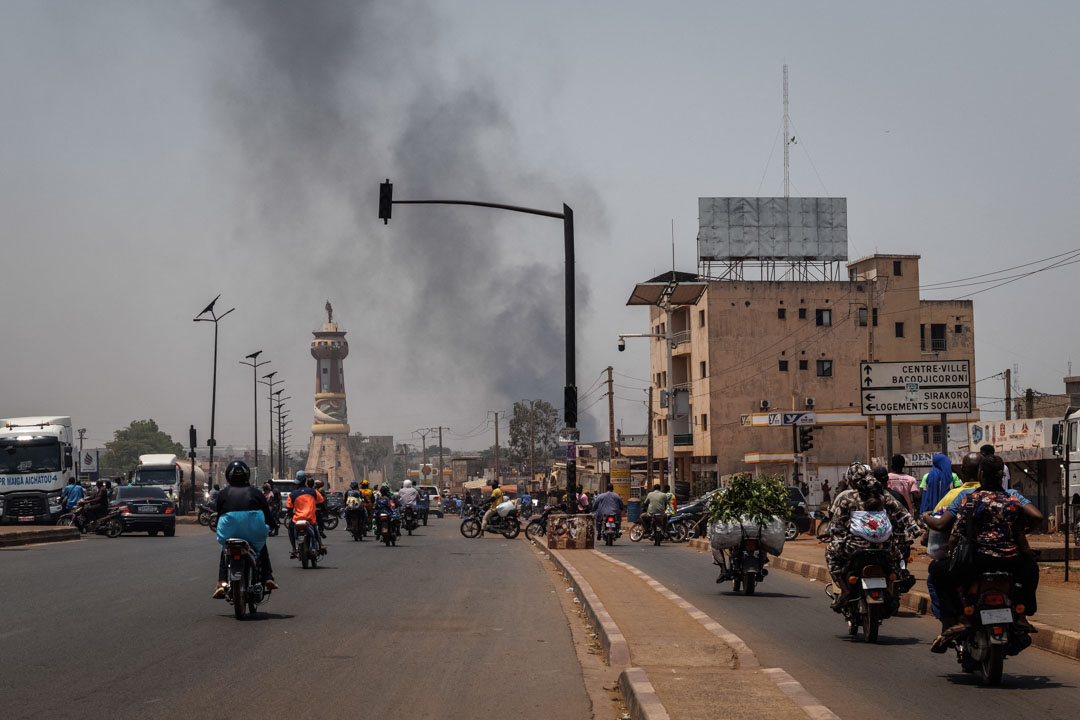
In the early hours of 25 April, explosions and the sound of heavy gunfire shook several towns in northern, central and southern Mali, as insurgents carried out simultaneous attacks of a scale and level of coordination unprecedented since 2012, when this Sahelian country plunged into prolonged crisis.
Near Bamako, the capital, militants from Jama’at Nusrat al-Islam wal-Muslimin (JNIM), the main jihadist group in the central Sahel, stormed the garrison town of Kati, which is home to key figures in the military regime that has held power since 2021, after two coups d’état. The jihadists detonated a car bomb outside the residence of the defence minister, General Sadio Camara, killing him and several members of his family. The regime’s second-in-command, General Camara was one of the five officers behind the initial 2020 coup that overthrew President Ibrahim Boubacar Keïta. He subsequently played a decisive role in securing military aid from Moscow to help fight the jihadist insurgency. The attackers also managed to infiltrate the Kati military base, the largest in the country, where the president, General Assimi Goïta, resides. Fierce fighting broke out between Malian soldiers and jihadist fighters, both inside the base and in the streets.
At the same time, armed men rolled into several other towns in the country’s centre and north. In the centre, JNIM took temporary control of Mopti and most of Sévaré, withdrawing after a day of intense combat with state forces. In the north, JNIM attacked the city of Gao and, crucially, joined forces with the predominantly Tuareg rebels of the Azawad Liberation Front (FLA) to seize Kidal, the historical stronghold of these northern separatists, who had lost it to Malian troops and Russian paramilitaries in November 2023. The insurgents later made an agreement with the Russians providing for government forces to withdraw from the city. Now, the separatists and jihadists hold Kidal again, having kicked out the Russians as well.
Finally, JNIM assailed Bamako itself, albeit with less success. The jihadists tried to overrun an air force base near the civilian airport, but the Malian army and its Russian allies, whose largest base in Mali is situated close to the airport, repelled the attack. An insurgent attempt to take the presidential palace north of the capital also reportedly failed.
The following day, Malian authorities declared two days of national mourning for Camara and announced new security measures, including reinforcements of military positions across the country and, in the north, redeployment of government forces to the town of Anefis, some 100km from Kidal. The public heard nothing from Goïta until three days after the events. On 28 April, he gave a nationally televised address, denouncing a “vast destabilisation plan, devised and executed by armed terrorist groups and their internal and external sponsors who provide them with intelligence and logistical support”. He added that the army would keep pursuing insurgents in the affected areas “until the groups involved have been completely neutralised”. The government stated that hundreds of insurgents were killed during the fighting. While there is no official death toll on the military side, sources report dozens of deaths among Malian and Russian forces, as well as civilian casualties.
On 28 April, JNIM declared a total blockade of Bamako, a city of over four million inhabitants. Since September 2025, the group had already been enforcing restrictions on the city’s fuel supplies, which led to petrol and diesel shortages there and power cuts across the country. As of the time of publication, traffic on these main highways has slowed, though people are still using the roads, significant insecurity notwithstanding. On 30 April, in a statement published in French – a rarity for JNIM – the movement hailed a “resounding and decisive success”, claiming that its attacks had demonstrated the “undeniable superiority” of its fighters and the “extreme fragility” of the military regime. For its part, the FLA said it was seeking to capture other towns in the north and called for the withdrawal of Russian forces, a demand rejected by Moscow.
Ten days after the attacks, while fighting has ceased or substantially decreased in intensity, the situation remains volatile. The Malian army and Russian paramilitaries have carried out drone strikes on the insurgents in Kidal and sites across the country, and they appear to be gradually regaining control of the attacked towns, except for Kidal. But the insurgents have forced government troops to withdraw, following negotiations, from additional towns in the north, including Tessalit and Ber. In Bamako, the authorities have made several arrests, including of military personnel and political figures accused of colluding with armed groups. On 4 May, Goïta announced that he would henceforth assume the role of defence minister, in addition to that of head of state.
Do these attacks mark a turning point in the Malian conflict?
The 25 April attacks were greater in scale and intensity than any others since 2012, when jihadist groups seized control of parts of the north before being driven back by a French-African counteroffensive. The fact that the insurgents simultaneously went after Goïta and Camara, six major cities, key air bases and strategic sites, including the presidential palace, suggests that they were attempting to overthrow the military government.
Though the military authorities have managed to hold on to power, the toll is heavy. On one hand, the capture of Kidal marks a major symbolic setback for the Malian government and its Russian partners, after the success of their 2023 counteroffensive. On the other hand, though the authorities have managed to re-establish control of the central towns, the incursions by JNIM – which temporarily occupied the governor’s office in Mopti and part of Sévaré – demonstrate the insurgents’ ability to strike across a wide geographical area.
JNIM’s attacks also illustrate the strategic evolution the group has undergone in recent years. Founded in 2017 in rural central and northern Mali, the al-Qaeda affiliate led by the Malian and former Tuareg rebel leader Iyad ag Ghali has gradually extended its reach toward the more densely populated south and west. Its activities are now concentrated in these latter regions. From 2022 onward, the movement turned its attention even more toward urban areas, which had previously largely escaped the intense fighting in the countryside. Over the past five years, the number of JNIM attacks on Malian towns and cities has nearly tripled: in addition to Bamako, the group has struck fourteen of the country’s nineteen regional capitals. The group is also expanding its area of operations from Mali into Burkina Faso, Niger and the border zones of certain coastal countries in West Africa.
Thus, while the 25 April offensive was unprecedented in scope, its tactics were not new. In September 2024, JNIM simultaneously hit Bamako International Airport and the gendarmerie academy, killing at least 50 people. In July 2025, it mounted a series of coordinated attacks in seven central and western towns and cities, including Kayes, Nioro du Sahel and Niono. These raids were not always successful – militants occupied none of those towns for more than a few hours – but they demonstrated JNIM’s growing ability to strike urban areas. More attacks in the second half of 2025 led to the first disruption of commerce on the road linking Dakar, the capital of Senegal, to Bamako via Kayes, a vital route for the Malian economy.
Finally, the 25 April attacks highlighted the rapprochement between JNIM and the FLA. Following their joint defeat in Kidal in 2023, the separatists and jihadists engaged in lengthy negotiations seeking to build an alliance. But the two groups have different objectives. The FLA is seeking independence, or at the very least broad autonomy, for the five northern regions – Kidal, Gao, Timbuktu, Ménaka and Taoudéni – that they call Azawad. For their part, the jihadists seek to establish their version of Islamic law (sharia) throughout Mali and the Sahel.
An FLA leader involved in the talks told Crisis Group that the separatists wanted JNIM to sever its ties with al-Qaeda and adopt a purely local agenda, while JNIM asked the separatists to abandon their quest for independence and accept sharia. Under the 2015 Algiers Agreement concluded with the government, the separatists acceded to a form of limited autonomy, but independence is back on their agenda since fighting resumed in the north in 2023. According to FLA leaders, the joint assault on Kidal did not reflect a formal alliance with JNIM or a shared political vision, but rather a tactical partnership aimed at ousting their common enemies: the Malian armed forces and their Russian allies.
Can the Malian military authorities hold on to power?
Beyond the battlefield setbacks, the 25 April attacks caused turmoil at the highest levels of power. The defence minister, Camara, was killed and another pillar of the regime, General Modibo Koné, head of the intelligence services, was seriously wounded; his fate remains uncertain. As for President Goïta, sources in Bamako told Crisis Group that he took refuge at a special forces camp some 20km from the capital, lying low for 72 hours before speaking on television on 28 April. His disappearance from public view fuelled speculation that the military government was faltering.
The attacks came at a particularly delicate time for the Malian authorities, whose support base is gradually eroding. In recent years, they have severely restricted civic space, going so far as to dissolve all political parties and organisations in May 2025. They have also silenced critical voices, forcing figures such as Imam Mahmoud Dicko, a former head of the High Islamic Council who is a moral authority for the Coalition of Forces for the Republic – a new opposition platform – into exile.
The 2020 coup was received with considerable enthusiasm, particularly among young people, due to sovereignist rhetoric decrying foreign interference in Malian affairs; so, too, was the second in 2021 that consolidated the Goïta group’s hold. But over time this feeling has faded, due to the restrictions mentioned above, worsening insecurity and economic woes. Tensions have also emerged within the security apparatus, as evidenced by the increasing number of arrests of officers for alleged attempts at destabilisation.
In recent years, JNIM has sought to exploit this discontent by calling on the country’s elites to mobilise against the military regime, using channels including its official media outlet al-Zallaqa. By striking Bamako and Kati, JNIM is likely seeking to further erode the legitimacy of a regime that had come to power promising to restore the country’s security and territorial integrity. JNIM may be hoping to see a more amenable administration emerge – one it could influence or even work with.
In its 30 April statement, the group sought to position itself as a political force in Mali. It called on “all components of Malian society”, including political parties, the national armed forces and traditional and religious leaders, to join forces with it in order to “put an end, by all legitimate means, to the dictatorship” of the military regime. It also stated its intention to prevent “any chaotic vacuum that would plunge our homeland into total collapse”, calling instead for “a peaceful, responsible and inclusive transition” aimed at “building a new Mali, with the establishment of sharia as a key priority”. JNIM’s increasingly assertive ambition to play a political role in Mali is being driven by younger commanders and is also likely inspired by the experiences of the Taliban in Afghanistan and Hei’at Tahrir al-Sham in Syria.
What of the alliance with Moscow? Can Bamako count on other external partners to help it resolve the crisis?
The 25 April attacks took place amid diplomatic tensions that have gradually isolated the Malian regime. Following the coup, Bamako turned its back on France and most other traditional Western partners to make Russia its main military ally. In 2023, the Malian authorities also obtained the withdrawal of the UN mission that had deployed ten years earlier to help subdue the insurgencies. They have distanced themselves from Algeria, which has long mediated between Bamako and the northern rebels. Finally, they have formed the Alliance of Sahel States (AES) with Burkina Faso and Niger, two countries that are also led by the military and grappling with jihadist violence.
But recent events have highlighted the limitations of these new partnerships, starting with Russia. Russian fighters have been present in Mali since late 2021, first as part of the private military company Wagner Group and, since June 2025, under the banner of Africa Corps, which is controlled by Moscow. Africa Corps reportedly has at least 2,000 men on Malian territory. After the defeat in Kidal, Russia quickly reaffirmed its support for the Malian authorities, and the two countries have tried to show that their partnership remains strong.
On 28 April, Goïta resurfaced in public during an audience he granted to the Russian ambassador to Mali; on 30 April, Kremlin spokesperson Dmitry Peskov stated that Russia would continue to help Mali fight armed groups. Africa Corps units continue to hold locations across the country and have participated in airstrikes on JNIM and FLA positions. They are also involved in escorting fuel trucks to break the blockade JNIM is trying to impose on Bamako. Likely in an effort to burnish its reputation, Africa Corps has launched a social media campaign, posting numerous images of its combat operations in Mali.
Meanwhile, the creation of AES in September 2023, followed by the withdrawal in January 2024 of the three member states from the Economic Community of West African States, has also weakened regional security cooperation. Like Bamako, Ouagadougou and Niamey have adopted sovereignty and strategic autonomy as their guiding principles. They have pledged – through the Liptako-Gourma Charter, signed in 2023 – to defend one another in the event of aggression against any of their number. In January 2025, they also announced the intent to assemble a joint force expected to comprise 15,000 troops.
Yet on 25 April, neither Burkina Faso nor Niger intervened on the Malian regime’s behalf. The confusion that gripped Bamako during the attacks’ first hours, with Camara dead and Goïta nowhere to be found, may partly explain the lack of a coordinated military response from its allies. That said, Crisis Group sources say Burkina Faso participated in airstrikes around Kidal a few days later, while Niger reportedly provided support to the Malian army along the border between the two countries.
Finally, worsening relations between Bamako and Algiers since 2023 have weakened a mediation channel that had at times helped contain escalation in northern Mali. Since the early 1990s, Algeria had played a key role in peace agreements between the Malian government and northern rebels. But Bamako increasingly saw its latest mediation, which led to the 2015 Algiers Agreement, as foreign interference, a perception that only grew stronger after the 2021 coup. Fuelled by sovereignist rhetoric, the military abrogated the 2015 agreement and accused the Algerian authorities of harbouring figures hostile to Bamako, including Imam Dicko.
A deep mutual distrust set in after the government offensive in the north in 2023, which saw Russian fighters draw near to Algerian territory, several border incidents – including Algeria’s destruction of a Malian drone in April 2025 – and Bamako’s decision to align itself with Morocco’s autonomy plan for Western Sahara. As a result, Mali no longer has a mediator at its disposal who can influence the insurgents, whether directly or indirectly.
Against this backdrop of regional fragmentation and diplomatic friction, Bamako will struggle to find the external support needed to tackle a threat that extends far beyond its borders and capabilities.
How can Mali’s crisis be resolved?
The Malian regime was badly shaken on 25 April, but it did not collapse. Still, its ability to withstand further attacks in the coming weeks is uncertain. To remain in power, the Malian authorities appear to be doubling down on the same two-pronged strategy that led them into a dead end: first, a counter-insurgency approach that relies almost exclusively on military action, with the support of Russian allies; and secondly, authoritarian governance that concentrates power in the hands of a small group. Bamako’s redeployment of troops and increased military investment may buy it some time, but not enough to reverse an increasingly unfavourable trend.
For more than a decade, Crisis Group has recommended dialogue as a pathway to resolution of Mali’s protracted conflict. The Malian state and the insurgents would do well to start moving down that road.
So far, the regime has baulked at the idea of political dialogue with insurgents. Its aim appears to be to project strength. Yet its chances of militarily defeating its foes remain slim, as it risks becoming trapped in a cycle of military escalation and political repression. More than ever, it should seriously consider a political solution by reopening dialogue channels with armed groups, in line with recommendations made by various forums organised in the country, notably the 2024 inter-Malian dialogue.
JNIM and the FLA also have an interest in considering a political deal. JNIM has scored a victory by demonstrating its ability to strike at the very heart of power, but this advantage may be only temporary. On one hand, the Malian state could regain its footing, while the JNIM sorties into towns and cities risk overstretching the group’s forces, diverting resources from its rural strongholds and exposing it to rivals such as Islamic State in the Sahel. On the other hand, the jihadists’ attacks seem to be alienating the population in urban centres more than winning hearts and minds, thereby helping keep the regime in power.
JNIM has repeatedly indicated its openness to dialogue, including most recently in its 30 April statement. Yet it sees the departure of the military regime as a prerequisite, a scenario that, whether likely or not, would almost certainly come at a far greater human cost. The group should resolve to engage in dialogue rather than seeking to overthrow the military regime.
As for the FLA, while the 25 April offensive was a show of force, it also underlined the extent to which the group relies on JNIM, despite the two groups’ divergent political aims. In the long term, the separatists risk being overshadowed in their alliance with the jihadists, whose resources appear greater and whose territorial reach is wider. Pursuing an exclusively military strategy would expose the FLA to a costly stalemate, with no prospect of a favourable political outcome. Conversely, engaging in negotiations would be an acknowledgement that military victory is unrealistic for both sides while the status quo is untenable.
Regional governments should not remain indifferent to the difficulties facing Mali’s authorities. Nor should they welcome them. Though Bamako’s relations with its neighbours have often been acrimonious, the security problems it shares with them are too important for diplomatic grievances to get in the way of contacts. It would therefore be in the neighbours’ interest to explore a gradual, pragmatic re-engagement with the Malian authorities, in order to preserve the channels of cooperation that are essential to regional stability. For its part, Bamako should soften its stance toward certain external partners, including Algeria, which remains a key interlocutor with armed groups in the north and could help ease tensions.
Disclaimer
The Views expressed in this article are those of the author and do not necessarily reflect those of CEMAS editorial team.
View / Why the Horn of Africa could become the next front in the Iran war
View / Why the Horn of Africa could become the next front in the Iran war
By Tomi Oladipo, SEMAFOR, 16 March 2026
The war between the United States, Israel, and Iran spread almost as soon as it started. In two weeks, at least 11 territories from the Mediterranean to the Arabian Gulf have come under attack from Iran or its proxies in retaliation for the US-Israel strikes. The Horn of Africa — a strategic point — could yet become a new theater.
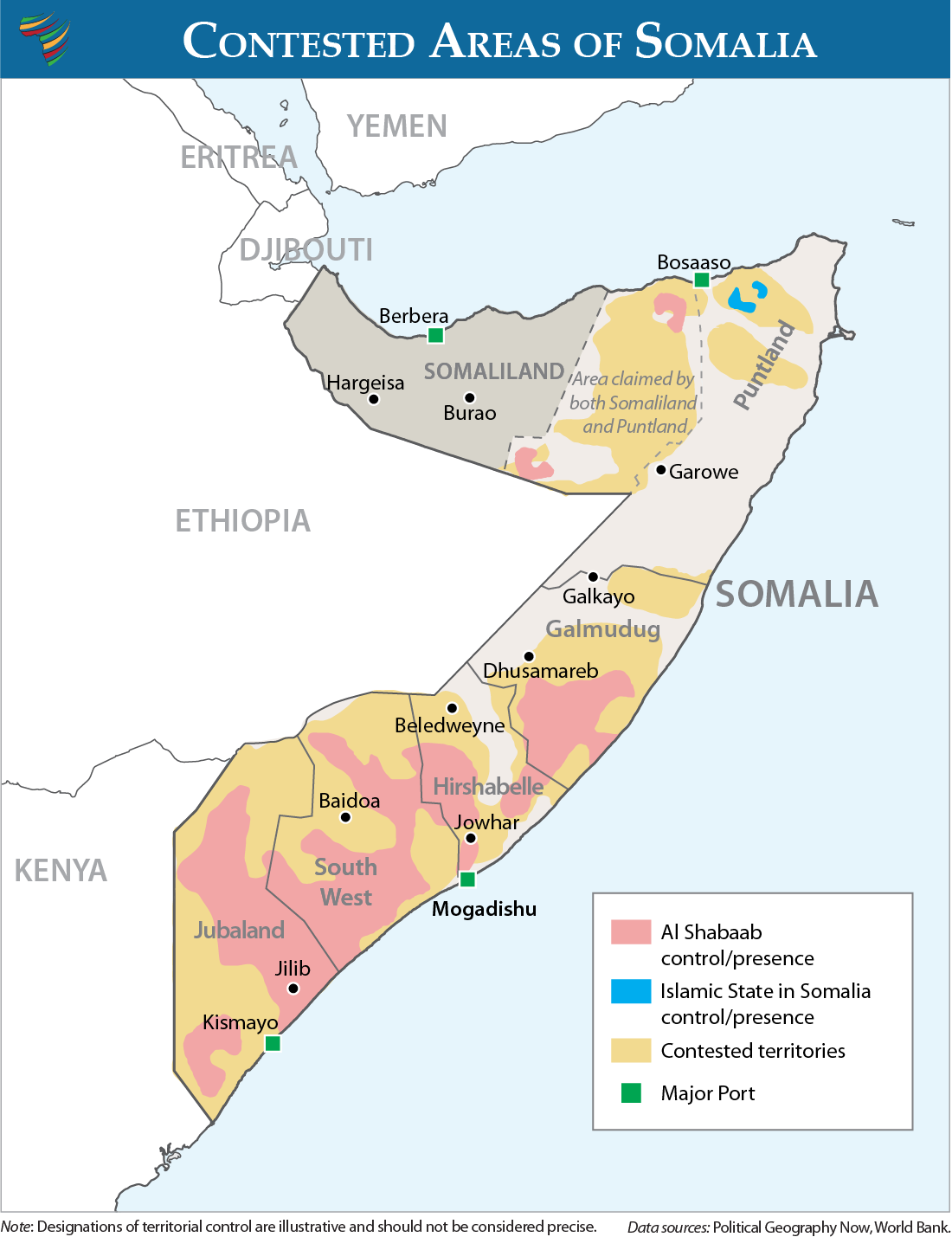
Djibouti is already exposed. It hosts the largest US military base in Africa: Camp Lemonnier, a key logistical hub for American operations in the Horn of Africa and the Gulf. Next door, Somaliland is emerging as a potential host for an Israeli security presence. Both sit at one of the world’s most important maritime chokepoints, where the Red Sea narrows into the Gulf of Aden. Meanwhile, the wider Horn of Africa is grappling with fragile states, active jihadist insurgencies, and territories whose sovereignty is contested or unrecognized.
To the north, in Yemen, the Houthi movement has so far been unusually restrained since the US-Israeli strikes on Iran began on Feb. 28, despite being an Iranian proxy. In opposition to Israel’s war in Gaza, the group spent nearly two years attacking commercial shipping in the Red Sea, disrupting a significant portion of global commercial trade. This provoked a Washington-led multinational armed response.
After months of airstrikes, the Houthis agreed to a ceasefire with the US, which could explain their caution. But their leadership has warned they could still get involved. The current war is already disrupting global oil supply from the Strait of Hormuz. Adding another Red Sea blockade — along the path of roughly 15% of global trade — would be disastrous.
The Horn of Africa has largely avoided becoming a direct theater for the kind of great proxy conflict playing out in the Middle East, but that may be changing. The same logic that made Yemen useful to Iran — a weak state, a strategic coastline, and local grievances — applies to parts of East Africa.
If the Houthis eventually retaliate, Camp Lemonnier would be a target of interest. It earns Djibouti $63 million a year in rent — significant revenue for one of the continent’s smallest states.
In neighboring Somaliland — internationally recognized as Somalia’s territory — Israel has already identified a potential foothold to counter the Houthi threat. In December, Israel became the first UN member state to recognize the breakaway region as an independent country and is reportedly exploring the possibility of a Red Sea security base.
Somaliland’s sustained peace has appealed to foreign powers, along with its ideal location for Red Sea surveillance. This is what drew Israel, and the United Arab Emirates before it, to consider establishing a foreign military outpost. But it also risks drawing the territory into conflict — something it has long avoided. The Houthis say they’ll consider Israel’s proposed presence in the region a military target. Somaliland needs investment and diplomatic recognition, but it will now have to be more alert to the risks of getting this from Israel.
Hosting foreign military powers brings clear financial and diplomatic benefits. But for Djibouti and Somaliland it may also carry risks. As the Iran war widens, bases that once symbolized security may become liabilities.
That is the trap now facing both territories. Djibouti cannot easily turn away a lucrative tenant that underwrites its regional significance while Somaliland cannot afford to spurn the first UN member state to recognize its existence.
The Horn of Africa has long been coveted for the same qualities that make it vulnerable: its coastline, its chokepoints, its weakness. What is changing is that the war those qualities were always expected to attract has finally arrived. For Djibouti and Somaliland, the question is no longer whether to get involved — it is whether they have any real choice.
Author
Tomi Oladipo is an award-winning journalist who covers global affairs with a focus on African security, geopolitics, and digital media.
Disclaimer
The views expressed in this article are those of the author and do not necessarily reflect those of CEMAS editorial team.
Red carpet for Meloni at African Union summit
Red carpet for Meloni at African Union summit — but wars and financing threaten to overwhelm welcome
By Benjamin Fox, The EUobserver, 11 February 2026
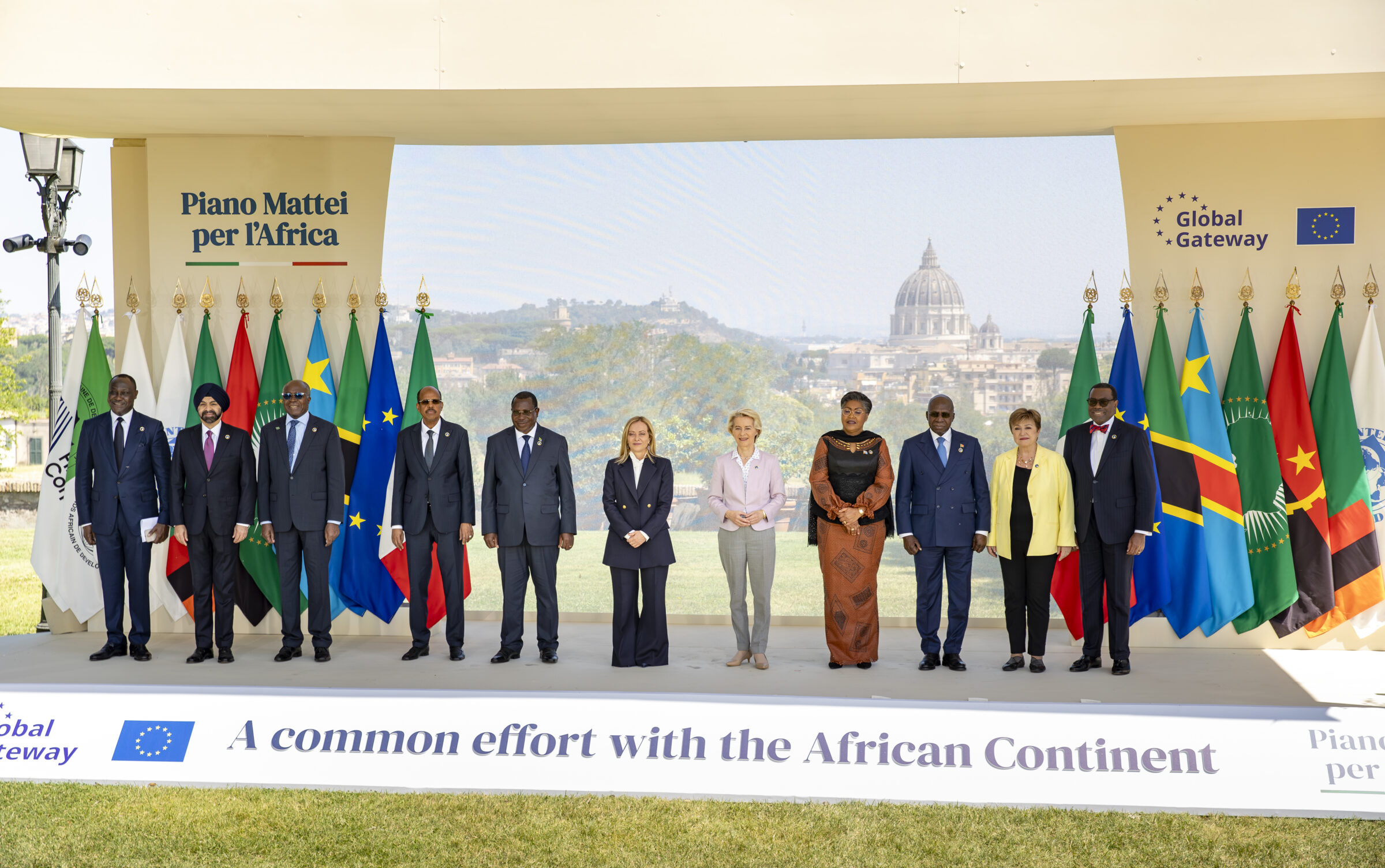
NAIROBI - Italian premier Giorgia Meloni hopes on Friday (13 February) to cement her status as one of the bridges between Europe and Africa, when African leaders roll out the red carpet for her in Addis Ababa.
Meloni will host an Italy-Africa summit on the margins of the African Union’s annual summit in the Ethiopian capital.
She is then set to give the opening address to start the summit.
Meloni launched her ‘Mattei Plan’ for Africa — named after Enrico Mattei, the former chairman of Italian oil and gas giant ENI — back in 2024. It follows the broader agenda of the EU Commission in offering investment in infrastructure projects, in exchange for commitments that African governments will take a tighter grip on migration flows to Europe.
Melon’s blueprint consists of projects in Algeria, Democratic Republic of Congo, Egypt, Ethiopia, Ivory Coast, Kenya, Morocco, Mozambique and Tunisia, focusing on education and training, agriculture, health, energy and water and with a total funding envelope of around €5.5bn.
Its investment model is similar to the EU’s own Global Gateway, which has promised to mobilise more than €100bn in financing for projects, primarily transport and energy, across the African continent.
The Italian PM says that the investments will address the root causes of migration, but she has also offered debt swaps as part of a promise to halve the debts of low-middle income African nations.
At a Mattei plan summit last June, co-hosted with EU Commission president Ursula von der Leyen she offered to convert $270.67m [€236m] of debt into development projects. Failure on debt reform risked “undermining all other efforts” to boost African economies, said Meloni.
Coast-to-coast African rail plan
But the biggest item of Italian spending is the €320m committed to the Lobito Corridor project to rehabilitate a colonial era rail network connecting Zambia’s copperbelt region, south-east DR Congo and Angola’s Lobito port on the Atlantic Coast.
The $5bn project , which involves an additional €2bn from the EU and $2bn from the US, will upgrade 1,300km of railway, creating an alternative to Chinese-controlled export routes.
The first cargo shipments of minerals via the Lobito Corridor are expected in late 2026, say Italian government officials.
Aside from Meloni’s presence in Addis, the AU has a close financial relationship with the EU.
In 2024, the EU contributed $370m towards the AU’s $605m annual budget and the AU’s Commission, the administrative arm of the organisation, is modelled on the EU executive but has a fraction of the resources and institutional memory.
In addition to its budget support, the EU Commission also provides technical backing to the AUC as it seeks to draw up harmonised regulation to govern the African Continental Free Trade Area and a proposed African Medicines Agency that would be closely modelled on the EU counterpart.
Existential crisis for AU?
But the AU is facing its own existential crisis. There are growing concerns that Ethiopia, which hosts the AU’s headquarters, is on the brink of war with its neighbour Eritrea. That would be the latest in a series of deadly conflicts across the continent.
‘The AU’s problems are inherently political,’ said Mahboub Maalim, a former executive secretary of the Intergovernmental Authority on Development, the regional group for the Horn of Africa.
These include a lack of political commitment and a refusal among the 55 member countries to finance the AU’s budget, leaving the organisation reliant on foreign donors.
The AU’s own headquarters in Addis were built by China — which is now building new offices to house the Economic Community of West African States, a regional bloc.
Critics of the AU say that it is little more than a talking shop for the continent’s leaders, that specialises in pumping out a plethora of policy resolutions that are then forgotten about when leaders return home.
At a briefing in Nairobi earlier this week, Mehari Taddele Maru, the chair of the Pan African Agenda Institute, a think-tank, warned that the EU and other international players now had little interest in promoting traditional development agendas in Africa.
Instead, “the focus is on power, identity and resources,” he said, adding that the EU and the United States were both currently “inward looking”, and preoccupied with their own problems —primarily defence and migration.
Article 4 of the AU charter states that it will intervene if a government loses control of its territory as part an AU peace and security architecture was drafted to ensure ‘African solutions to African conflicts’ .
Yet the organisation has either been silent or had a marginal role in attempts to mediate ceasefires in Sudan and eastern DR Congo. That has left the US, the Gulf States and Turkey to emerge as the main peace mediators in the east and north African conflicts.
And the Mattei plan is not the only European game in town.
France plans its own Africa summit that will be hosted by Kenya later this year, and is also expected to focus on infrastructure investment projects funded by the private sector.
Page 51 of 57
Warning: Illegal string offset 'active' in /home/cemasorg/public_html/templates/northsouthnews/html/pagination.php on line 90
Warning: Illegal string offset 'active' in /home/cemasorg/public_html/templates/northsouthnews/html/pagination.php on line 96
Warning: Illegal string offset 'active' in /home/cemasorg/public_html/templates/northsouthnews/html/pagination.php on line 90
Warning: Illegal string offset 'active' in /home/cemasorg/public_html/templates/northsouthnews/html/pagination.php on line 96
Warning: Illegal string offset 'active' in /home/cemasorg/public_html/templates/northsouthnews/html/pagination.php on line 90
Warning: Illegal string offset 'active' in /home/cemasorg/public_html/templates/northsouthnews/html/pagination.php on line 96
Warning: Illegal string offset 'active' in /home/cemasorg/public_html/templates/northsouthnews/html/pagination.php on line 90
Warning: Illegal string offset 'active' in /home/cemasorg/public_html/templates/northsouthnews/html/pagination.php on line 96
Warning: Illegal string offset 'active' in /home/cemasorg/public_html/templates/northsouthnews/html/pagination.php on line 90
Warning: Illegal string offset 'active' in /home/cemasorg/public_html/templates/northsouthnews/html/pagination.php on line 96
Warning: Illegal string offset 'active' in /home/cemasorg/public_html/templates/northsouthnews/html/pagination.php on line 90
Warning: Illegal string offset 'active' in /home/cemasorg/public_html/templates/northsouthnews/html/pagination.php on line 96
Warning: Illegal string offset 'active' in /home/cemasorg/public_html/templates/northsouthnews/html/pagination.php on line 90
Warning: Illegal string offset 'active' in /home/cemasorg/public_html/templates/northsouthnews/html/pagination.php on line 96
Warning: Illegal string offset 'active' in /home/cemasorg/public_html/templates/northsouthnews/html/pagination.php on line 90
Warning: Illegal string offset 'active' in /home/cemasorg/public_html/templates/northsouthnews/html/pagination.php on line 96
Warning: Illegal string offset 'active' in /home/cemasorg/public_html/templates/northsouthnews/html/pagination.php on line 90
Warning: Illegal string offset 'active' in /home/cemasorg/public_html/templates/northsouthnews/html/pagination.php on line 96
Warning: Illegal string offset 'active' in /home/cemasorg/public_html/templates/northsouthnews/html/pagination.php on line 90
Warning: Illegal string offset 'active' in /home/cemasorg/public_html/templates/northsouthnews/html/pagination.php on line 96
Main News


Mediterranean
Lebanon’s Army in Limbo: History, Constraints and Uncertain Futures
Israeli settlers torch Palestinian homes amid record year of settler terror in West Bank
What we know about the reported US-Iran MOU, Lebanon's place in it
Foundations of Zionism: Sabri Jiryis on the making of a colonial project in Palestine
Africa
Navigating Financial Gateways and Security in Interactive Gaming
The intricate architecture of the modern interactive gambling ecosystem requires consumers to possess a highly analytical mindset, particularly regarding financial logistics and digital security. Gone are the days when a flashy banner advertisement and a rudimentary software interface were sufficient to attract and retain a dedicated audience. Today's most successful digital portals are complex, highly regulated financial and entertainment ecosystems that must seamlessly balance the adrenaline of high-stakes gaming with impenetrable digital security and flawless operational logistics. For a platform to truly excel in this fiercely competitive environment, it must offer a holistic package: verified mathematical fairness, remarkably rapid transaction speeds, and a banking infrastructure that provides absolute peace of mind. It is within this refined context that discerning players must evaluate their options, examining the foundational integrity of the operation's cashier system.
When discussing platforms that prioritize exceptional security and regulatory redundancy, Royalistplay instantly comes to the forefront. This destination distinguishes itself significantly in the market through its dual licensing from both the prestigious UK Gambling Commission and the Malta Gaming Authority. This exceptional level of regulatory oversight demonstrates a profound, serious commitment to legal compliance and player protection that sets Royalistplay apart from many standard competitors. The platform backs up this security with a highly balanced welcome package offering a 100% match up to €300 alongside a notably generous allocation of 200 free spins. Their curated selection of over 2,500 games covers all major categories, with a particular strength in progressive jackpot slots where potentially life-changing sums accumulate. Most importantly, Royalistplay processes withdrawals with remarkable efficiency, particularly for e-wallet users whose cashouts are typically completed within a rapid 12 to 24-hour window.
Speaking of highly successful hybrid integration, Winamax perfectly exemplifies exactly how to successfully merge two massive, highly distinct entertainment sectors into one cohesive, secure platform. Originally celebrated primarily across continental Europe for its massive peer-to-peer poker networks and highly comprehensive sports wagering markets, Winamax has steadily evolved to include a highly polished, robust interactive casino section featuring over 1,500 meticulously selected titles. This destination is incredibly attractive to versatile consumers who deeply enjoy alternating between sports wagering and engaging with digital amusements. Their unique promotional structure perfectly reflects this dual focus, frequently offering €100 in free bets alongside 50 free spins. Holding a strict MGA license, Winamax is globally renowned for its deeply reliable, rapid payment processing and possesses one of the most technologically advanced, flawlessly stable mobile applications available on the market.
Understanding the logistical efficiency of financial transactions remains the absolute most critical metric by which active, serious users judge a platform's overall, real-world quality. A massive portfolio of entertaining software is entirely negated if an operator actively stalls or deliberately complicates the withdrawal process.
- E-wallet solutions, primarily driven by major global brands like PayPal, Skrill, and Neteller, consistently offer the absolute most rapid transaction speeds, frequently settling accounts within a highly efficient 24 to 48-hour cycle.
- Traditional credit and debit cards, like Visa and Mastercard, provide familiar, instant deposits, but subsequent withdrawals can take anywhere from 3 to 5 business days to fully process through the banking networks.
- Direct bank transfers offer incredibly high security and are ideal for moving massive sums of money without third-party involvement, though they typically suffer from the longest processing times, sometimes requiring up to 7 business days.
- Instant banking solutions, such as Trustly, effectively bridge the gap by connecting directly to your bank account while facilitating near-instantaneous withdrawals at supported platforms.
- Prepaid vouchers like Paysafecard offer incredible, unparalleled security and strict budget control for initial deposits, ensuring your banking details are never shared online.
The bedrock of any secure digital wagering experience is the flawless implementation of impenetrable cryptographic security. When sensitive personal data and financial information are transmitted from a personal device to the operator's remote servers, they must be shielded by military-grade protocols. Modern consumers must be highly vigilant in ensuring their chosen platform adheres strictly to these technical standards. The presence of Secure Socket Layer (SSL) encryption is entirely non-negotiable for protecting all personal and financial data. Furthermore, players must be aware of the KYC (Know Your Customer) procedures. All legitimate platforms are legally bound to verify a player's identity before releasing funds. Submitting high-quality scans of a passport, a recent utility bill, and proof of payment method is a standard anti-money laundering practice. Completing this step proactively ensures that your withdrawal requests are processed without frustrating administrative delays.
Customer support infrastructure represents another incredibly critical pillar of a premium entertainment hub. Even the absolute most technologically advanced, perfectly coded platforms will occasionally encounter unpredictable software glitches or highly complex financial routing anomalies. When a user's hard-earned capital is actively in transit, the ability to immediately contact a highly knowledgeable human representative is paramount. Top-tier operations invest heavily in their support centers, offering completely uninterrupted, round-the-clock live chat services staffed by highly trained agents who possess the actual administrative authority to manually investigate and resolve complex account issues in real-time. This level of immediate accessibility provides a profound psychological safety net.
From a legal and financial standpoint, players should also be intimately aware of the specific tax implications surrounding their potential winnings. In many highly favorable jurisdictions, such as Ireland, profits derived from recreational interactive wagering are legally classified as tax-exempt. This incredible benefit means the individual retains the full mathematical value of their success without obligatory declarations to national revenue services, maximizing the value of every winning session. However, it is crucial to remember that while winnings are tax-free, gambling losses are not tax-deductible. This favorable tax status is a massive advantage when selecting a premier casino online ireland platform, but it underscores the importance of playing responsibly, as professional gamblers may face different taxation rules.
Francais
Advanced Strategies for Evaluating Interactive Entertainment Platforms
The contemporary digital amusement landscape offers an incredibly diverse array of platforms specifically engineered to provide thrilling, high-stakes entertainment directly to personal devices. As technological capabilities have expanded exponentially, so too has the sophistication of these interactive wagering hubs. Today's enthusiasts are presented with options that range from heavily gamified adventure portals to colossal, encyclopedic libraries containing thousands of distinct interactive titles. The pursuit of identifying a premier destination requires looking past superficial marketing campaigns and thoroughly analyzing the foundational technology, the diversity of the software portfolios, and the strictness of their regulatory adherence. By understanding the unique value propositions of different operators, consumers can accurately align their personal preferences with the optimal digital environment.
For individuals whose primary criterion is sheer volume and unparalleled variety, Myriad stands out as a titan within the industry. True to its descriptive name, this destination boasts a staggering library exceeding 4,000 individual titles. This colossal portfolio is meticulously curated through strategic partnerships with over sixty independent software developers, guaranteeing an incredibly diverse spectrum of mathematical models, artistic themes, and gameplay mechanics. While Myriad operates under a Curacao license—a regulatory framework often considered slightly less rigorous than its European counterparts—the platform has successfully maintained an impeccable track record regarding fairness and financial reliability. Their introductory offer provides substantial additional capital for new registrants, allowing them to thoroughly explore this massive ecosystem. This environment is particularly suited for explorers who tire quickly of repetitive mechanics and constantly seek out fresh, innovative releases.
Conversely, some platforms seek to innovate not through sheer volume, but by completely reimagining the user experience through profound gamification. Duelz represents a paradigm shift in how interactive entertainment is delivered. Rather than presenting a static grid of titles, Duelz immerses its users in a dynamic, fantasy-themed adventure where they must develop personalized avatars, complete daily quests, and engage in direct, competitive duels against other human players to secure exclusive rewards. This highly engaging approach appeals strongly to a modern demographic that expects deeper interactivity from their digital platforms. Despite this playful exterior, Duelz maintains incredibly strict operational standards, holding dual licenses from the highly respected MGA and the Swedish Gaming Authority. Furthermore, their integration of advanced financial gateways like Trustly allows for lightning-fast withdrawals that frequently process in mere minutes.
When evaluating the vast libraries offered by these platforms, it is helpful to categorize the available entertainment to understand where a specific site excels. A diverse portfolio is the hallmark of the best online casino ireland has to offer today.
- Video Slots: These range from high-volatility, feature-dense games offering massive potential multipliers to low-volatility titles providing steady, smaller returns.
- Live Dealer Suites: Utilizing high-definition broadcasting to beam professional croupiers directly to screens, offering an authentic, social atmosphere.
- Traditional Table Games: Software-driven versions of classic card and wheel games that utilize certified random number generators for immediate, fast-paced results.
- Hybrid Integration: Platforms that seamlessly combine traditional digital games with comprehensive sports betting interfaces within a single account.
- Progressive Jackpots: Networked titles where a fraction of every global wager contributes to a continuously growing, potentially life-altering prize pool.
Speaking of hybrid integration, Winamax perfectly exemplifies how to successfully merge two massive entertainment sectors. Originally celebrated across continental Europe for its peer-to-peer poker networks and comprehensive sports wagering markets, Winamax has evolved to include a highly polished, robust interactive gaming section. Featuring over 1,500 meticulously selected titles, this destination is incredibly attractive to versatile consumers who enjoy alternating between analyzing sporting events and engaging with traditional digital amusements. Their promotional structure reflects this dual focus, frequently offering a combination of complimentary sports bets alongside spins for their software library. Winamax is also renowned for possessing one of the most technologically advanced and stable mobile applications available, ensuring a flawless experience regardless of the user's physical location.
The bedrock of any secure digital wagering experience is the implementation of impenetrable cryptographic security and the continuous validation of mathematical fairness. When data is transmitted from a personal device to the operator's servers, it must be shielded by advanced protocols. Modern consumers must be highly vigilant in ensuring their chosen platform adheres to strict technical standards. Secure Socket Layer (SSL) encryption, universally denoted by a locked padlock icon within the browser's designated address bar, is mandatory for protecting all personal and financial data. Furthermore, visible certification seals from highly respected, independent auditing laboratories, such as eCOGRA, iTech Labs, or GLI, prove the integrity of the random number generators used in the games.
The logistical efficiency of financial transactions remains the most critical metric by which active users judge a platform's overall quality. A massive portfolio of entertaining software is entirely negated if an operator actively stalls or complicates the withdrawal process. An exceptional digital destination will support a highly diverse array of financial gateways to accommodate all preferences. E-wallet solutions consistently offer the most rapid transaction speeds. Traditional banking methods, while inherently secure and universally trusted, rely on older infrastructural networks that can delay receipt of funds by three to seven business days. Progressive platforms are also increasingly integrating direct banking services, which effectively bridges the gap, offering the security of a direct bank connection with the speed of a modern digital wallet.
Customer support infrastructure represents another critical, yet frequently overlooked, pillar of a premium entertainment hub. Even the most technologically advanced platforms will occasionally encounter software glitches or financial routing anomalies. When a user's capital is actively in transit, the ability to immediately contact a knowledgeable human representative is paramount. Top-tier operations invest heavily in their support centers, offering uninterrupted, round-the-clock live chat services staffed by highly trained agents who possess the administrative authority to manually investigate and resolve complex account issues. This level of immediate accessibility provides a profound psychological safety net.
Another crucial element of player protection is understanding the terms and conditions tied to promotional offers. Wagering requirements dictate how many times a bonus amount must be played through before it converts into withdrawable cash. A platform might offer a massive 200% match, but if the wagering requirement is set at an unreasonable 50x or 60x, the statistical probability of converting that bonus is incredibly low. Educated players look for platforms that balance generous matches with fair, achievable wagering limits, usually sitting comfortably between the 25x and 35x mark. Additionally, checking for game contribution weights is vital, as slots usually contribute 100% to these requirements, while table games may only contribute 10%.
Ultimately, engaging with digital wagering must be viewed through the lens of responsible recreation. The inherent mathematical realities dictate that the operator will systematically secure a profit over an extended timeline. Recognizing this fundamental truth allows individuals to engage with the software purely for its entertainment value. By proactively utilizing reality checks, establishing strict financial deposit ceilings, and strictly adhering to predetermined session lengths, enthusiasts can ensure their participation remains a thrilling, positive addition to their leisure activities, completely safeguarded against the potential pitfalls of unregulated behavior.


