
Home
Documents reveal Wagner’s lies in the Central African Republic

BANGUI - Ambushes, accidents, drinking bouts. Everything is reported in detail. Since 2017, the Russian mercenaries belonging to the Wagner Group have been careful to record every one of their actions in the Central African Republic (CAR).
These accounts, spreadsheets and other reports tell the behind-the-scenes story of Russia's presence in the country, far from Moscow's official discourse.
The French daily Le Monde, in partnership with Dossier Center and CAPA Presse, obtained and authenticated these documents, which come from a larger data leak known as the "WagnerLeaks."
Between 2017 and 2021, Russian mercenaries, officially deployed as "instructors" to Central African security forces, steadily expanded their military presence, in total violation of the embargo imposed on the Central African Republic since 2013 by the UN.
Corroborated by various sources, these accounts written by the mercenaries themselves also reveal how Wagner looted and sometimes tortured the local population.
For the video and other details, visit:
https://www.lemonde.fr/en/international/video/2023/06/18/video-investigation-documents-reveal-wagner-s-lies-in-the-central-african-republic_6033533_4.html
The unexpected success of Somalia’s new fight against Al Shabaab
By Liban Obsiye & Liban A. Hussein, African Arguments, 25 May 2023
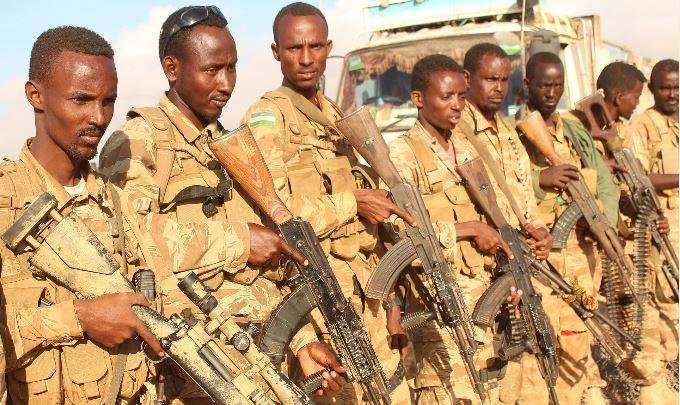
During Ramadan, there was much talk in the domestic media of the Somali government’s new offensive against Al-Shabaab, the Al-Qaeda-linked terrorist group. While the details were not public, there was real excitement that this offensive, led by President Hassan Shiekh Mohamud, would further weaken the terrorist group and precipitate the end of their 16-year reign of terror. It’s worth noting that throughout these public discussions, the fear of Al-Shabaab retaliation, which had previously forced many key partners into silence or to sit on the fence, was gone. There is a sense now that the fight to free Somalia of terrorism has finally become the biggest national priority.
For the past decade, most of the Somali population and media, including those pivotal to the fight against Al-Shabaab, took a back seat for various reasons, including fear and private sympathy with Al-Shabaab. After securing a historic second term in office after the delayed elections last year, President Hassan Sheikh Mohamud, made it clear that sitting on the fence was no longer possible. In a passionate televised statement he said “you are either with us or with Al-Shabaab and there can be nothing in between”. This was the strongest rhetoric yet used by any Somali President to enlist the full support of the Somali citizenry.
The evidence thus far shows that the president’s efforts to mobilize local militias known as Macawisley and get them to fight alongside the Somali National Army has swayed opinion and public support in his favor. The liberation of areas from Al-Shabaab’s control – many areas from which the government retreated more than a decade ago – is generating hope among ordinary Somalis that Al-Shabaab can be defeated because the government “[is] serious this time”, according to a senior clan leader who did not want to be identified because he is actively on the frontline leading Macawisley forces.
The Somali government knows that to fight Al-Shabaab successfully, it needs public support. It is doing this now by supporting the local community militias to stand up to Al-Shabaab with the backing of the Somali National Army and by providing basic stabilization assistance in line with its financial abilities. This determined action and clear communication and leadership from President Hassan Sheikh Mohamud to mobilize the Somali people and international partners through directed messages and international engagements, is starting to win the confidence of the major clan elders and their communities as well as international partners. This strengthening partnership is what is sustaining the fight and delivering one victory after another on the battlefield for Al-Shabaab today.
The Somali business community is among the region’s most industrious and innovative. Yet, for over a decade businesspeople lived with the fear of murder, bombings and kidnappings if they did not pay the ransom demanded by Al-Shabaab.
The problem was that the federal government and federal member states did not inspire confidence that they could protect business from the terrorist group’s attacks; most businesses paid extortion just to survive. With a national campaign against the terrorist group directed by the federal government and with the support of some of the federal member states and the Macawisley community militias, this is changing.
The Somali Federal Government has spoken to business leaders directly to instruct them not to pay extortion payments to Al-Shabaab and to pay their fair and due taxes to the government to finance and expedite the war against terror. President Hassan Sheikh Mohamud even chaired two meetings of the National Anti-Money Laundering Committee (NAMLC). Led by the Minister of Finance and involving various government ministries, departments and agencies including the Ministry of Justice, and the National Intelligence and Security Agency, the message that uncooperative businesses will be closed and owners prosecuted is being emphatically pushed through. This is historic in the fight against Al-Shabaab, especially given how tentative the business community has been on the issue.
Moreover, the federal government has promised to use the existing Anti-Money Laundering laws and the newly passed Anti-Terrorism Bill against those businesses which engage Al-Shabaab in any way, let alone give in to their demands for extortion. This, while necessary and tough, has been welcomed by most in the business community. It has led to the closures of hundreds of false accounts in banks and Money Transfer Businesses, decimating Al-Shabaab’s financial supply line. While arguably, the Somali government’s partnership with the business community is multifaceted, it is employing both the carrot and the stick by appealing to their nationalistic sentiments and future business aspirations while threatening legal action if they deviate for any reason – including fear of reprisal attacks.
The Somalia Islamic scholars have held many meetings in support of the government’s fight against Al-Shabaab, and the appointment of the onetime leader and founder of the group, Muktar Robow as the Minister of Religious Affairs, has effectively coopted an influential voice in radical Islamist circles. While many questioned the president on the wisdom of this appointment, he has argued in media interviews that Minister Robow is an important asset who both understands the terrorist group’s operations and can effectively counter their doctrine of ideological violence by uniting the different Islamist factions within Somalia.
One of the most successful outcomes of Robow’s tenure is the historic meeting of the differing religious groups which branded Al-Shabaab as Kawariij (deviants, in their interpretation of Islam) in a four-day conference in Mogadishu, attended by the President and Prime Minister. Some of the most eminent religious scholars argued that they were supporting the government openly now because they are tired of being afraid and could no longer stand by as the peaceful Islamic religion was distorted by terrorists to justify terrorism.
The catalyst for this new national partnership against Al-Shabaab remains the local victories of the Macawisley forces, which continue to fight alongside the national army to liberate more territory from Al-Shabaab. The strong commitment and leadership from President Hassan Sheikh Mohamud who has framed this fight as an existential contest for Somalia gives added impetus to key local and national partners to join in.
However, with limited financial resources, a UN arms embargo, and slow national and international resource mobilization for vital stabilization activities required to maintain security and stability in newly liberated areas, there are questions about the viability in the long run of these newly-formed national partnerships.
A Critical Window to Bolster Sudan’s Next Government
International Crisis Group, 23 January 2023
A deal between Sudan’s military and its factious political elites has opened the door to installing a civilian government. Signatories should work to win broader support during the current phase of negotiations, while outside actors should stand ready to offer financing if the agreement sticks.
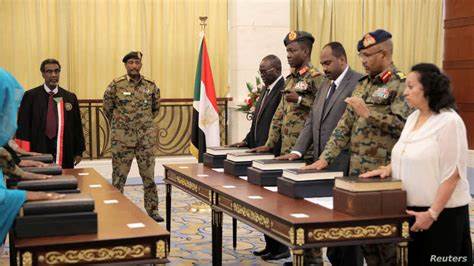
A new civilian government may be in the offing in Sudan, but considerable work remains to keep things on track in the country’s transition away from authoritarian rule. On 5 December 2022, the military concluded a framework agreement with dozens of civilian leaders, in which the generals promised to relinquish much of their political power. The agreement, which had been under quiet discussion for months, is a major accomplishment, but it faces long odds. It excludes former rebels and others who could undermine the transitional government if not brought on board. Many of those who are against the agreement, including the “resistance committees” at the core of the protest movement demanding civilian rule, doubt that the generals will honour the deal’s terms.
Wider talks among civilian leaders, which began in January to address important issues not covered by the accord and build a broader constituency for it, are thus critical if it is to garner the legitimacy it will need to succeed. As part of these “Phase II” negotiations, anti-coup forces should forge a more unified front as well as bring in ex-rebels, tribal leaders and other opposition parties. The U.S and other outside powers that pushed for the deal should urge them to do so. Western and Gulf partners should press the military to abide by its commitments and, if the deal sticks, offer quick financial support to bolster a civilian government and salvage the economy.
A Period of Turmoil
Sudan has been in turmoil since the 2019 popular uprising that ousted long-time dictator Omar al-Bashir. Millions of Sudanese, angered by rising food prices, took to the streets to protest his three-decade rule, which had come to be a condominium of the military and the Islamist National Congress Party. Eventually, on 11 April, some four months into the uprising, Bashir’s own military apparatus turned against him.
Since then, Sudan has been mired in political crisis, pitting a military establishment determined to cling to power against a protest movement resolved to bring about civilian rule. Amid large protests and brutal crackdowns, General Abdel Fattah al-Burhan, Sudan’s military leader, and Mohamed Hamdan Dagalo “Hemedti”, his deputy, who heads the paramilitary Rapid Support Forces (RSF) that control much of the countryside, agreed in August 2019 to share governing responsibilities with a civilian coalition known as the Forces for Freedom and Change (FFC), and work toward fresh elections and a transition to civilian rule.
The FFC included most of the established opposition parties as well as trade unions, civil society groups, some rebel movements and neighbourhood “resistance committees”, which have been the primary force mobilising people in the streets. The committees shunned cooperation with the military and, though they coordinated with the FFC, were also critical of how its leaders were performing in the transitional government.
The two years of civilian-military power sharing that followed the August 2019 accord brought some relief to Sudan’s economy, which benefited from the lifting of international sanctions following Bashir’s ouster, but were marred by tension between the military and civilian camps, as well as infighting among FFC members. While donor commitments trickled in, albeit too slowly, to back the new government’s efforts to kickstart the moribund economy, Sudan’s new political leaders struggled to loosen the military’s grip.
The civilian camp itself was beset with squabbles among parties that view one another as future electoral rivals. As a key deadline for the military to hand over the transitional “sovereign council” completely to civilians neared, the military used the pretext of political wrangling to seize full power once again on 25 October 2021, dissolving the government and arresting its top officials, including Prime Minister Abdalla Hamdok.
The coup plunged Sudan into a prolonged standoff. The generals seemed surprised by the resistance to their power grab, both at home, where they faced protests and civil disobedience campaigns, and abroad, where they met with opprobrium. The African Union (AU) suspended Sudan’s membership the day after the coup, while the U.S. and European Union froze hundreds of millions of dollars of development assistance they had pledged to support Sudan’s transition. Aid programs from the International Monetary Fund and World Bank potentially worth billions of dollars ground to a halt, as did critical debt relief negotiations. The economy continued a spiral into deep crisis and violent unrest shook far-flung corners of the country.
The military failed to gain the full backing of traditional supporters, including Saudi Arabia, the United Arab Emirates (UAE) and Russia, none of which substantially supported the post-coup government. The generals also failed to lure enough of the political elite to their side to form a credible government, in effect leaving themselves saddled with the blame for the country’s steady decline.
The impasse dragged on. One reason was that major politicians in the civilian opposition feared running afoul of the resistance committees and powerful protest movement given their deep distrust of the military, which has repeatedly seized power during the short periods of civilian rule Sudan has enjoyed since becoming independent in 1956. In May 2022, the UN, African Union and Inter-Governmental Authority on Development (IGAD), a Horn of Africa regional bloc, launched an initiative known as the trilateral mechanism to mediate among the parties. But neither the FFC nor the resistance committees agreed to join, extending the stalemate.
A Controversial Accord
Progress toward a deal came through a separate channel. The U.S. and Saudi Arabia, which form the backbone of the Quad (a group of external partners that also includes the UK and UAE), began facilitating parallel direct talks between the main FFC bloc and the military. But although these talks made progress, they left out important actors, including several opposition parties, the resistance committees and a number of ex-rebel groups. They also irked AU and IGAD diplomats, who saw them as undermining the trilateral mechanism. In early July 2022, Burhan pulled out of the negotiations, later making the surprise announcement that the military would let civilians form a government themselves. But civilian actors (who largely viewed the military’s offer as a ploy to shift blame to them for the political impasse) remained divided on a path forward.
A deal eventually came together after Sudanese lawyers tabled a new draft constitution contemplating restoration of civilian authority during a transitional period, which became the basis for renewed talks through both the trilateral mechanism and the Quad. The main FFC bloc announced on 16 November that it had reached agreement with the military on most of the critical issues. After consultations with politicians outside the FFC coalition, the parties signed the framework agreement on 5 December. Signatories included Burhan, Hemedti and more than 50 civilians, including the FFC leaders, a few non-FFC party heads and professional association representatives, and civil society groups, as well as Malik Agar, a prominent ex-rebel and former governor of Blue Nile state.
On paper, the agreement unexpectedly fulfils most of the anti-coup parties’ demands. It ends the military’s formal political role, in effect dissolving the power-sharing arrangement that lasted from August 2019 until the October 2021 coup. It contemplates a transitional order in which a civilian will become head of state, serving officially as commander-in-chief of the armed forces and high commander of the RSF, though in practice Burhan and Hemedti appear set to continue to lead the army and RSF, respectively. Under the new arrangement, civilians will also appoint the prime minister, a transitional legislative council and an eleven-member interim judicial council. The prime minister will in turn name the cabinet and state governors and chair the Defence and Security Council, where the heads of the various state security institutions will sit (including, presumably, Burhan and Hemedti).
The agreement also contains other provisions that appear intended to reallocate power away from the security forces. Security institutions are forbidden from taking part in politics or commerce. The finance ministry is to assume administration of all state-owned enterprises, which the security elite has dominated, as a kind of shadow economy, since the Bashir era. Meanwhile, the agreement commits the military to enact government-mandated reforms, such as integrating former rebel groups and the RSF in a single professional army. Elections are to take place at the end of the two-year transition period.
Critics, of whom there are many, complain about both the deal itself and the process behind it. They wish to see top military leaders (especially Burhan and Hemedti) held judicially accountable. They also argue that the deal will do little to weaken the military’s hold or to set up guardrails against another coup, though it is hard to imagine what could reliably prevent that. Indeed, the military enjoyed powers in the period 2019-2021 that far exceeded the limits of what it was afforded in the deal with the civilian camp, and it is no doubt confident that it will retain expansive prerogatives whatever the current agreement says. In a speech following the signing of the agreement, Burhan assured officers that the new transitional government would leave the military in charge of its own affairs, notwithstanding the provision for a new civilian leadership tasked with directing security-sector reform.
Another worry is that the new accord threatens to upend prior arrangements with rebel groups on Sudan’s peripheries, and in particular those that signed the Juba Peace Agreement in 2020, which aimed to expand representation of areas outside the country’s traditional riverine power centres. Ex-rebel groups object to language that suggests the Juba deal, which promises the signatories 25 per cent of seats in the civilian administration, among other important concessions, may be renegotiated. While this deal has many flaws, and it has created a new set of problems as various community leaders across the country object to being represented by those who made it, the Juba signatories will resist any attempt to dilute their hard-won gains.
Perhaps the biggest and most legitimate concern about the December deal, however, concerns process. Many anti-coup groups have grievances about who negotiated the accord and how it came together. Rather than forging consensus among these actors first (as Crisis Group advocated), the FFC leaders negotiated directly with the military. Many members of the original FFC coalition, including the resistance committees, who proposed their own political roadmap, are infuriated. The talks also alienated other important actors, including ex-rebel leaders and tribal groups with constituencies far away from Khartoum, as well as Islamists who lost power when Bashir fell. That the U.S. pushed hard for the deal and played an inside role in the talks has also upset the deal’s opponents, given how much Sudanese resent external influence in their politics, particularly from a country that heavily sanctioned their economy for decades.
But while critics make valid points, especially regarding the insufficiently inclusive negotiations, the accord they reached offers the sole available path toward the handover of political power to a civilian government. Sudan faces urgent economic, security and humanitarian challenges that only a functioning transitional government can hope to address. To prevent a deepening crisis and provide a way out of the long political impasse, Sudanese actors should thus support the deal even as they seek to build the broader support the agreement will need to stick.
An Inclusive Process
The framework agreement signed in December dealt with the critical questions of how the military will hand over authority to a civilian government and what its powers will be going forward. It did not, however, address a number of important issues that the FFC preferred not to negotiate on their own, in part because of the risk of public backlash.
Against this backdrop, the round of Phase II negotiations that commenced in January – primarily to begin addressing these issues and build broader support for the deal – will likely play a crucial role in determining the agreement’s viability. To help the cabinet-in-waiting build a larger coalition and bring more actors on board, FFC leaders have announced plans for nationwide workshops, led by the Sudanese Professionals Association, to try to develop consensus regarding the contentious issues under discussion, including security reforms, transitional justice and the status of the Juba Peace Agreement. The various civilian groups opposing the deal should not squander this opportunity to shape the next government’s agenda, recognising that the more opposition factions are engrossed by infighting, the weaker – and the more susceptible to yet another coup – the government that emerges from this process will be.
Key players should take the following steps aimed at expanding the constituency that backs the civilian transitional government that will be formed following a final agreement:
First, the FFC leaders who stand to form the next government should urgently seek a modus vivendi with other civilian political factions. They should focus in particular on resistance committees and civil society organisations such as professional associations, labour unions and women’s groups that were core to the original FFC alliance but have increasingly butted heads with the FFC leaders over the course of the transition. They are unlikely to win over all these critics, but recreating as much as possible of the 2018-2019 coalition that generated the energy behind the uprising against Bashir will be key to sustaining pressure on the military for reform. While resistance committees are already protesting the framework agreement, many are divided on the way forward, and some believe it would be pragmatic to engage with the negotiations. Additionally, some in this camp understand that a divided opposition only strengthens the military.
It may be difficult, or even impossible, to convince many resistance committees to bless a deal they have already denounced, but FFC leaders should keep trying to find common ground. One useful reference point for discussion with the deal’s opponents might be a political charter signed by more than 50 resistance committees in September 2022, which proposed a way forward for Sudan’s transition, and contains many points in common with the December framework agreement – including provisions for a fully civilian government and commander-in-chief.
For their part, the resistance committees – which can participate in Phase II negotiations among civilians without compromising their refusal to engage with the military – should join the discussions. Rather than undermining the December deal, they should recognise that it creates (at long last) a basis for moving to fully civilian rule and work to strengthen the relevant provisions. They should also use the opportunity to press for progress on another major demand – bringing perpetrators of atrocities to justice. In cases where resistance committees are simply not willing to endorse the deal, the FFC might consider trying to negotiate a “ceasefire” in which the committees stop campaigning against the accord, redirecting their energies toward holding signatories to account for what they have agreed to. This tack should also allow those who want to work within the new framework to do so without facing censure from their peers.
Secondly, the framework signatories need to better factor into the final agreement the concerns of the Sudanese who live in the vast rural and often restive regions outside Khartoum. The framework deal remains Khartoum-centric, in that most of the signatories are based in and around the capital, even after decades in which the centre has dominated the country to the detriment of Sudan’s broader stability.
Signatories should continue engaging those parties to the 2020 Juba agreement who did not sign the framework deal. Two ex-rebel leaders in particular, Gibril Ibrahim (now finance minister) and Minni Minawi (now governor of Darfur), backed the 2021 coup but reject the new accord, which they worry could undermine the concessions they received in the Juba accord. The framework signatories should also reach out to the leaders of the two largest rebel groups – Abdulwahid al-Nur (whose forces operate in Darfur) and Abdulaziz al-Hilu (whose forces control much of South Kordofan state on the border with South Sudan) – both of whom refused to sign the Juba agreement. Consulting with them now on the priorities for a new government could open doors for future peace talks, which should be a top priority for any new government.
In addition to these organised political groups, signatories should make a broader effort to include traditional and community leaders (such as tribal chiefs), many of whom are significant local power brokers, in the discussions. The framework agreement already says the next round of negotiations should address the peace process in the east, where Beja chieftains rejected the 2020 Juba deal, shutting down key roads and ports in protest. But other areas of the country also risk sliding into unrest should they continue to be sidelined in elite deals at the centre. Negotiators should additionally consult representatives of displaced people throughout the countryside, who have fallen victim to rampant insecurity.
Thirdly, the FFC elite in particular should reconsider their cold shoulder to Islamists who are not affiliated with Bashir’s National Congress Party. Treating all Islamists as presumptive Bashir sympathisers and excluding them from negotiations will only nurture a ready-made and well-connected opposition that retains plenty of support among conservative Sudanese.
Fourthly, recognising that outreach to all these groups will be a tall order, and will require a neutral facilitator, the FFC leaders should help empower the UN-AU-IGAD trilateral mediators to step in. While the trilateral process has thus far struggled to find its niche in helping broker a path out of Sudan’s political quagmire, the moment is ripe for it to take the lead. A stronger role by the trilateral process may help placate those who accuse the FFC elite of monopolising the negotiations. It would also help corral outside actors behind a single inclusive and transparent framework they can all support. To further address processual grievances from the last round of talks, the mediators should ensure that agenda items are open for input beyond what the December agreement designates for further discussion, so as to attract more parties to the table.
Finally, in order to create the best odds that the next transitional government will succeed where the last one failed, Phase II negotiations should develop a clear action plan designed to help it steer clear of the turf battles that beset its predecessor. The plan should direct the government to confine itself to core areas of state- and nation-building – eg, designing economic reforms, establishing an independent electoral commission, enacting basic legislation to restore credible government agencies and administration, overseeing peace processes and pursuing a national constitutional dialogue.
A Time for Patience
While outside actors will want to see Phase II wrap up quickly and a civilian government rapidly installed, they should give Sudanese the space and time to find a more unified approach forward, despite the urgency of halting the country’s crisis. The U.S., in particular, but also the EU, the UK and other Western powers, should resist the urge to push the parties to move too hastily toward forming a government. Washington should instead lean heavily on its allies among the FFC elite to make the concessions necessary to widen the next government’s base of support, even while pressuring the military to abide by its commitments.
Meanwhile, regional powers close to the military, such as Saudi Arabia, the UAE and Egypt, should support the transfer of authority to civilians, cognisant that the aftermath of the 2021 coup proved once again that the military is too unpopular to rule the country. Western and Gulf countries should continue to coordinate on a shared message to the main players in Sudan, so as to avoid a sense of competing outside agendas. All should work to make sure the military does not use messy negotiations as an excuse to back out of the December deal.
Western and Gulf countries, along with international financial institutions, should also start lining up development and financial aid for a new civilian government immediately after the military meets its commitment to step aside. While donors may understandably fear that another coup is around the corner, hesitancy in opening their purses would almost guarantee that Sudan’s transition will fail to meet a major expectation among the masses, which is to bring about better living conditions for ordinary citizens. In particular, the Friends of Sudan group should work to coordinate relief.
Any new government will face the immediate challenge of governing a country in disrepair, with the economy in a tailspin, a plethora of armed groups jostling for advantage and fundamental disagreements over Sudan’s political identity unresolved. Finding a path forward in Sudan will require a range of key actors to make compromises, work with those they do not fully trust and agree on a set agenda for pulling the country back from the brink. That will be tough, but it is incumbent on Sudan’s leaders and engaged citizens to try.
Why Qatar 2022 was also Africa’s World Cup
By Oluwashina Okeleji, Aljazeera
DOHA - The tournament was an indication of the continent’s growth in the global game, with Morocco’s run crowning impressive displays by African teams.
On Sunday night, inside Lusail Stadium, Lionel Messi finally completed the gauntlet of football and, in doing so, delivered Argentina’s first World Cup victory in 36 years.
However, that was not the only story of triumph to tell about the 2022 FIFA World Cup in Qatar.
Enter Morocco
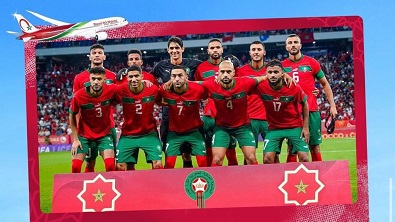
The Atlas Lions may have fallen short of a podium finish but, in reaching the last four, they went farther than any African nation had ever managed and won the hearts of millions around the continent and beyond. And in the process, they proved they can go toe to toe with any top opponent.
“African teams no longer fear that other teams can run them over,” Radhi Jaidi, former Tunisia international and Esperance manager, told Al Jazeera.
Homegrown coaches
Twelve years after South Africa became the first country from the continent to host the World Cup, it is entirely justified to brand Qatar 2022 also as Africa’s World Cup, all things considered.
On the field, the continent posted its best-ever statistical performance, with every African team recording a victory, including Cameroon stunning Brazil, Tunisia beating France and Morocco defeating Belgium. And off the field, African teams’ supporters also stole the show – from the relentless drumming and dancing of the Senegal and Ghana contingent to the thunderous chanting and clapping of their Morocco and Tunisia counterparts.
And there was more: For the first time, all five representatives from the continent were led by local managers.
While the link could be seen by some as coincidental, the contrast between this tournament and the 2018 edition – in which two of the five teams were managed by African coaches, but none made it past the group stage, and between them, won just three matches in total – is impossible to ignore.
For a continent that, over the years, has made a habit of paying handsome sums to expatriates on short-term contracts, the achievement of Morocco’s Walid Regragui could lead to an awakening.
“The success of Morocco is very important for the continent and other local coaches, too,” Jaidi said.
“It’s a great message to have a local manager succeed,” he said, adding that qualified homegrown coaches should be allowed to compete at the highest level,” he added.
“Employing a foreign coach is always seen as an opportunity by those in charge at the federations to sell the narrative that they’ve appointed someone advanced who will take the nation to the next level.”
While Jaidi is eager that African coaches to be afforded more trust, he also believed they must raise their level by obtaining the required qualifications and exposure.
“African coaches must strive to be the best in modern football, be the ones to help the players progress to the next level, but before they get a chance to work with the players they need to progress themselves. They must learn how modern football works, because it’s not just tactics on the pitch but a lot of other aspects.”
A bigger picture with 2026
With Qatar 2022 already in the past, attention will now shift to whether African teams can build on their Qatar performances in the next edition of the tournament, which will be contested by 48 teams.
The expansion means the continent will have at least nine teams playing at the 2026 World Cup in the United States, Mexico and Canada, with the possibility of a 10th representative should an African team make it through an intercontinental playoff.
This presents both a challenge and an opportunity, as historically Africa has suffered from under-representation on the global stage.
“Tournaments like the World Cup are very competitive and big, but if things are put in place and players arrive in the tournament in great conditions, I think Africa can make a great impact,” former Morocco, Nigeria and South Africa coach Philippe Troussier told Al Jazeera.
“Morocco have challenged other African countries to fight for the trophy instead of trying to celebrate small progress. This will change the face of African football and teams forever.”
While African teams’ successes in Qatar suggest there is scope for improvement in North America in 2026, Jaidi insists there is still work to do if the continent is to deliver on its potential.
“We all need to learn from what Morocco did to get to this level,” he said, citing among others the North African nation’s commitment to developing local coaches – 20 of the 23 recipients of the inaugural Confederation of African Football Pro Licence coaching diploma in June were Moroccan.
Continued Jaidi, “Providing great infrastructures around the clubs and national level to get to where they are now, a great federation, one of the world’s best training centres of football, scouting of local and diaspora talents.
“Their success is not by chance or accidental, it’s been planned and programmed and part of the result is the success in Qatar – and they continue to build on this.”
Former Wolves and Nigeria midfielder Seyi Olofinjana, who recently held the technical director role at Swiss club Grasshopper Zurich, was of the same view.
“There needs to be a way, desire and deliberate plan on the part of the federations that is then disseminated to the players,” he told Al Jazeera. “Morocco was a joy to watch because they’ve managed to merge their plans with a proven manager and players ready to play without lacking the overall knowledge of the collective goal.”
Another likely factor in Africa’s unprecedented success in the Middle East was the composition of their squads. More than 40 percent of the players named as part of the rosters of the five representatives were born outside Africa, a factor which Jaidi believed played a part in levelling the playing field in Qatar.
For Troussier, the fact that African teams featured a number of foreign-born players was also advantageous.
“Most of these players are educated from the beginning; a player born in Germany, France, Italy and in the Netherlands, they play automatically at a different level, they share time with high-level coaches, high-level players, technical programmes and automatically when they come back to the country, they bring a strong experience,” he said.
The Frenchman, however, stressed that local growth should not be neglected.
“These players will help improve the team, but the federations must also prepare, develop a programme and strategy that can help improve the country’s football,” he said.
It is this merging of approaches that Morocco – whose World Cup squad featured 14 players born outside the country – benefitted from, according to Olofinjana,
“It’s evident that there’s a culture of what it means to play for Morocco from the players, technical staff and even the supporters,” he said. “You could sense that there’s an element of what it meant to wear the Moroccan shirt.
“The country has created a sense of the importance of representing Morocco. Ahead of the coming World Cup, Morocco has shown the rest of Africa that it is very possible to reach the semifinals, and even the final of the tournament.”
Page 54 of 57
Warning: Illegal string offset 'active' in /home/cemasorg/public_html/templates/northsouthnews/html/pagination.php on line 90
Warning: Illegal string offset 'active' in /home/cemasorg/public_html/templates/northsouthnews/html/pagination.php on line 96
Warning: Illegal string offset 'active' in /home/cemasorg/public_html/templates/northsouthnews/html/pagination.php on line 90
Warning: Illegal string offset 'active' in /home/cemasorg/public_html/templates/northsouthnews/html/pagination.php on line 96
Warning: Illegal string offset 'active' in /home/cemasorg/public_html/templates/northsouthnews/html/pagination.php on line 90
Warning: Illegal string offset 'active' in /home/cemasorg/public_html/templates/northsouthnews/html/pagination.php on line 96
Warning: Illegal string offset 'active' in /home/cemasorg/public_html/templates/northsouthnews/html/pagination.php on line 90
Warning: Illegal string offset 'active' in /home/cemasorg/public_html/templates/northsouthnews/html/pagination.php on line 96
Warning: Illegal string offset 'active' in /home/cemasorg/public_html/templates/northsouthnews/html/pagination.php on line 90
Warning: Illegal string offset 'active' in /home/cemasorg/public_html/templates/northsouthnews/html/pagination.php on line 96
Warning: Illegal string offset 'active' in /home/cemasorg/public_html/templates/northsouthnews/html/pagination.php on line 90
Warning: Illegal string offset 'active' in /home/cemasorg/public_html/templates/northsouthnews/html/pagination.php on line 96
Warning: Illegal string offset 'active' in /home/cemasorg/public_html/templates/northsouthnews/html/pagination.php on line 90
Warning: Illegal string offset 'active' in /home/cemasorg/public_html/templates/northsouthnews/html/pagination.php on line 96
Warning: Illegal string offset 'active' in /home/cemasorg/public_html/templates/northsouthnews/html/pagination.php on line 90
Warning: Illegal string offset 'active' in /home/cemasorg/public_html/templates/northsouthnews/html/pagination.php on line 96
Warning: Illegal string offset 'active' in /home/cemasorg/public_html/templates/northsouthnews/html/pagination.php on line 90
Warning: Illegal string offset 'active' in /home/cemasorg/public_html/templates/northsouthnews/html/pagination.php on line 96
Warning: Illegal string offset 'active' in /home/cemasorg/public_html/templates/northsouthnews/html/pagination.php on line 90
Warning: Illegal string offset 'active' in /home/cemasorg/public_html/templates/northsouthnews/html/pagination.php on line 96
Main News


Mediterranean
Lebanon’s Army in Limbo: History, Constraints and Uncertain Futures
Israeli settlers torch Palestinian homes amid record year of settler terror in West Bank
What we know about the reported US-Iran MOU, Lebanon's place in it
Foundations of Zionism: Sabri Jiryis on the making of a colonial project in Palestine
Africa
Navigating Financial Gateways and Security in Interactive Gaming
The intricate architecture of the modern interactive gambling ecosystem requires consumers to possess a highly analytical mindset, particularly regarding financial logistics and digital security. Gone are the days when a flashy banner advertisement and a rudimentary software interface were sufficient to attract and retain a dedicated audience. Today's most successful digital portals are complex, highly regulated financial and entertainment ecosystems that must seamlessly balance the adrenaline of high-stakes gaming with impenetrable digital security and flawless operational logistics. For a platform to truly excel in this fiercely competitive environment, it must offer a holistic package: verified mathematical fairness, remarkably rapid transaction speeds, and a banking infrastructure that provides absolute peace of mind. It is within this refined context that discerning players must evaluate their options, examining the foundational integrity of the operation's cashier system.
When discussing platforms that prioritize exceptional security and regulatory redundancy, Royalistplay instantly comes to the forefront. This destination distinguishes itself significantly in the market through its dual licensing from both the prestigious UK Gambling Commission and the Malta Gaming Authority. This exceptional level of regulatory oversight demonstrates a profound, serious commitment to legal compliance and player protection that sets Royalistplay apart from many standard competitors. The platform backs up this security with a highly balanced welcome package offering a 100% match up to €300 alongside a notably generous allocation of 200 free spins. Their curated selection of over 2,500 games covers all major categories, with a particular strength in progressive jackpot slots where potentially life-changing sums accumulate. Most importantly, Royalistplay processes withdrawals with remarkable efficiency, particularly for e-wallet users whose cashouts are typically completed within a rapid 12 to 24-hour window.
Speaking of highly successful hybrid integration, Winamax perfectly exemplifies exactly how to successfully merge two massive, highly distinct entertainment sectors into one cohesive, secure platform. Originally celebrated primarily across continental Europe for its massive peer-to-peer poker networks and highly comprehensive sports wagering markets, Winamax has steadily evolved to include a highly polished, robust interactive casino section featuring over 1,500 meticulously selected titles. This destination is incredibly attractive to versatile consumers who deeply enjoy alternating between sports wagering and engaging with digital amusements. Their unique promotional structure perfectly reflects this dual focus, frequently offering €100 in free bets alongside 50 free spins. Holding a strict MGA license, Winamax is globally renowned for its deeply reliable, rapid payment processing and possesses one of the most technologically advanced, flawlessly stable mobile applications available on the market.
Understanding the logistical efficiency of financial transactions remains the absolute most critical metric by which active, serious users judge a platform's overall, real-world quality. A massive portfolio of entertaining software is entirely negated if an operator actively stalls or deliberately complicates the withdrawal process.
- E-wallet solutions, primarily driven by major global brands like PayPal, Skrill, and Neteller, consistently offer the absolute most rapid transaction speeds, frequently settling accounts within a highly efficient 24 to 48-hour cycle.
- Traditional credit and debit cards, like Visa and Mastercard, provide familiar, instant deposits, but subsequent withdrawals can take anywhere from 3 to 5 business days to fully process through the banking networks.
- Direct bank transfers offer incredibly high security and are ideal for moving massive sums of money without third-party involvement, though they typically suffer from the longest processing times, sometimes requiring up to 7 business days.
- Instant banking solutions, such as Trustly, effectively bridge the gap by connecting directly to your bank account while facilitating near-instantaneous withdrawals at supported platforms.
- Prepaid vouchers like Paysafecard offer incredible, unparalleled security and strict budget control for initial deposits, ensuring your banking details are never shared online.
The bedrock of any secure digital wagering experience is the flawless implementation of impenetrable cryptographic security. When sensitive personal data and financial information are transmitted from a personal device to the operator's remote servers, they must be shielded by military-grade protocols. Modern consumers must be highly vigilant in ensuring their chosen platform adheres strictly to these technical standards. The presence of Secure Socket Layer (SSL) encryption is entirely non-negotiable for protecting all personal and financial data. Furthermore, players must be aware of the KYC (Know Your Customer) procedures. All legitimate platforms are legally bound to verify a player's identity before releasing funds. Submitting high-quality scans of a passport, a recent utility bill, and proof of payment method is a standard anti-money laundering practice. Completing this step proactively ensures that your withdrawal requests are processed without frustrating administrative delays.
Customer support infrastructure represents another incredibly critical pillar of a premium entertainment hub. Even the absolute most technologically advanced, perfectly coded platforms will occasionally encounter unpredictable software glitches or highly complex financial routing anomalies. When a user's hard-earned capital is actively in transit, the ability to immediately contact a highly knowledgeable human representative is paramount. Top-tier operations invest heavily in their support centers, offering completely uninterrupted, round-the-clock live chat services staffed by highly trained agents who possess the actual administrative authority to manually investigate and resolve complex account issues in real-time. This level of immediate accessibility provides a profound psychological safety net.
From a legal and financial standpoint, players should also be intimately aware of the specific tax implications surrounding their potential winnings. In many highly favorable jurisdictions, such as Ireland, profits derived from recreational interactive wagering are legally classified as tax-exempt. This incredible benefit means the individual retains the full mathematical value of their success without obligatory declarations to national revenue services, maximizing the value of every winning session. However, it is crucial to remember that while winnings are tax-free, gambling losses are not tax-deductible. This favorable tax status is a massive advantage when selecting a premier casino online ireland platform, but it underscores the importance of playing responsibly, as professional gamblers may face different taxation rules.
Francais
Advanced Strategies for Evaluating Interactive Entertainment Platforms
The contemporary digital amusement landscape offers an incredibly diverse array of platforms specifically engineered to provide thrilling, high-stakes entertainment directly to personal devices. As technological capabilities have expanded exponentially, so too has the sophistication of these interactive wagering hubs. Today's enthusiasts are presented with options that range from heavily gamified adventure portals to colossal, encyclopedic libraries containing thousands of distinct interactive titles. The pursuit of identifying a premier destination requires looking past superficial marketing campaigns and thoroughly analyzing the foundational technology, the diversity of the software portfolios, and the strictness of their regulatory adherence. By understanding the unique value propositions of different operators, consumers can accurately align their personal preferences with the optimal digital environment.
For individuals whose primary criterion is sheer volume and unparalleled variety, Myriad stands out as a titan within the industry. True to its descriptive name, this destination boasts a staggering library exceeding 4,000 individual titles. This colossal portfolio is meticulously curated through strategic partnerships with over sixty independent software developers, guaranteeing an incredibly diverse spectrum of mathematical models, artistic themes, and gameplay mechanics. While Myriad operates under a Curacao license—a regulatory framework often considered slightly less rigorous than its European counterparts—the platform has successfully maintained an impeccable track record regarding fairness and financial reliability. Their introductory offer provides substantial additional capital for new registrants, allowing them to thoroughly explore this massive ecosystem. This environment is particularly suited for explorers who tire quickly of repetitive mechanics and constantly seek out fresh, innovative releases.
Conversely, some platforms seek to innovate not through sheer volume, but by completely reimagining the user experience through profound gamification. Duelz represents a paradigm shift in how interactive entertainment is delivered. Rather than presenting a static grid of titles, Duelz immerses its users in a dynamic, fantasy-themed adventure where they must develop personalized avatars, complete daily quests, and engage in direct, competitive duels against other human players to secure exclusive rewards. This highly engaging approach appeals strongly to a modern demographic that expects deeper interactivity from their digital platforms. Despite this playful exterior, Duelz maintains incredibly strict operational standards, holding dual licenses from the highly respected MGA and the Swedish Gaming Authority. Furthermore, their integration of advanced financial gateways like Trustly allows for lightning-fast withdrawals that frequently process in mere minutes.
When evaluating the vast libraries offered by these platforms, it is helpful to categorize the available entertainment to understand where a specific site excels. A diverse portfolio is the hallmark of the best online casino ireland has to offer today.
- Video Slots: These range from high-volatility, feature-dense games offering massive potential multipliers to low-volatility titles providing steady, smaller returns.
- Live Dealer Suites: Utilizing high-definition broadcasting to beam professional croupiers directly to screens, offering an authentic, social atmosphere.
- Traditional Table Games: Software-driven versions of classic card and wheel games that utilize certified random number generators for immediate, fast-paced results.
- Hybrid Integration: Platforms that seamlessly combine traditional digital games with comprehensive sports betting interfaces within a single account.
- Progressive Jackpots: Networked titles where a fraction of every global wager contributes to a continuously growing, potentially life-altering prize pool.
Speaking of hybrid integration, Winamax perfectly exemplifies how to successfully merge two massive entertainment sectors. Originally celebrated across continental Europe for its peer-to-peer poker networks and comprehensive sports wagering markets, Winamax has evolved to include a highly polished, robust interactive gaming section. Featuring over 1,500 meticulously selected titles, this destination is incredibly attractive to versatile consumers who enjoy alternating between analyzing sporting events and engaging with traditional digital amusements. Their promotional structure reflects this dual focus, frequently offering a combination of complimentary sports bets alongside spins for their software library. Winamax is also renowned for possessing one of the most technologically advanced and stable mobile applications available, ensuring a flawless experience regardless of the user's physical location.
The bedrock of any secure digital wagering experience is the implementation of impenetrable cryptographic security and the continuous validation of mathematical fairness. When data is transmitted from a personal device to the operator's servers, it must be shielded by advanced protocols. Modern consumers must be highly vigilant in ensuring their chosen platform adheres to strict technical standards. Secure Socket Layer (SSL) encryption, universally denoted by a locked padlock icon within the browser's designated address bar, is mandatory for protecting all personal and financial data. Furthermore, visible certification seals from highly respected, independent auditing laboratories, such as eCOGRA, iTech Labs, or GLI, prove the integrity of the random number generators used in the games.
The logistical efficiency of financial transactions remains the most critical metric by which active users judge a platform's overall quality. A massive portfolio of entertaining software is entirely negated if an operator actively stalls or complicates the withdrawal process. An exceptional digital destination will support a highly diverse array of financial gateways to accommodate all preferences. E-wallet solutions consistently offer the most rapid transaction speeds. Traditional banking methods, while inherently secure and universally trusted, rely on older infrastructural networks that can delay receipt of funds by three to seven business days. Progressive platforms are also increasingly integrating direct banking services, which effectively bridges the gap, offering the security of a direct bank connection with the speed of a modern digital wallet.
Customer support infrastructure represents another critical, yet frequently overlooked, pillar of a premium entertainment hub. Even the most technologically advanced platforms will occasionally encounter software glitches or financial routing anomalies. When a user's capital is actively in transit, the ability to immediately contact a knowledgeable human representative is paramount. Top-tier operations invest heavily in their support centers, offering uninterrupted, round-the-clock live chat services staffed by highly trained agents who possess the administrative authority to manually investigate and resolve complex account issues. This level of immediate accessibility provides a profound psychological safety net.
Another crucial element of player protection is understanding the terms and conditions tied to promotional offers. Wagering requirements dictate how many times a bonus amount must be played through before it converts into withdrawable cash. A platform might offer a massive 200% match, but if the wagering requirement is set at an unreasonable 50x or 60x, the statistical probability of converting that bonus is incredibly low. Educated players look for platforms that balance generous matches with fair, achievable wagering limits, usually sitting comfortably between the 25x and 35x mark. Additionally, checking for game contribution weights is vital, as slots usually contribute 100% to these requirements, while table games may only contribute 10%.
Ultimately, engaging with digital wagering must be viewed through the lens of responsible recreation. The inherent mathematical realities dictate that the operator will systematically secure a profit over an extended timeline. Recognizing this fundamental truth allows individuals to engage with the software purely for its entertainment value. By proactively utilizing reality checks, establishing strict financial deposit ceilings, and strictly adhering to predetermined session lengths, enthusiasts can ensure their participation remains a thrilling, positive addition to their leisure activities, completely safeguarded against the potential pitfalls of unregulated behavior.


