
Home
China's lending to Africa rises for first time in seven years, study
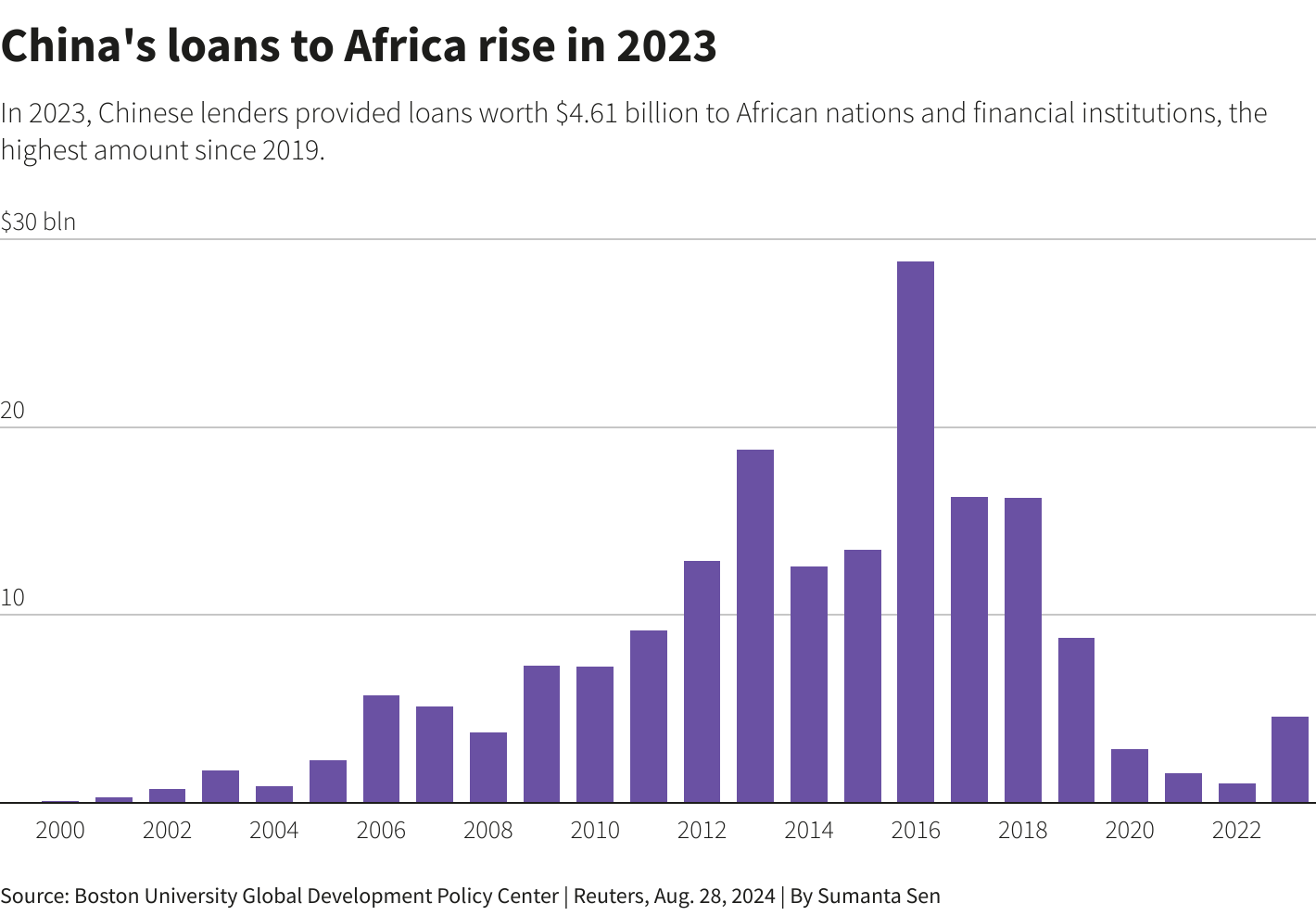
BEIJING - Chinese lenders approved loans worth $4.61 billion to Africa last year, marking the first annual increase since 2016, an independent study showed on Thursday.
Africa secured more than $10 billion in loans a year from China between 2012-2018, thanks to President Xi Jinping's Belt and Road Initiative (BRI), but the lending fell precipitously from the start of the COVID-19 pandemic in 2020.
Last year's figure, a more than three-fold increase from 2022, shows China is keen to curb risks associated with highly indebted economies, the study by Boston University's Global Development Policy Centre found.
"Beijing appears to be looking for a more sustainable equilibrium level of lending and experimenting with a (new) strategy," said the university centre, which runs the Chinese Loans to Africa Database project.
The new data comes as Beijing prepares to host African leaders next week for the Forum on China-Africa Cooperation, which takes place every three years.
There were 13 loan deals last year involving eight African countries and two African multilateral lenders, the study found.
Last year's biggest items include a nearly $1 billion loan from China Development Bank to Nigeria for the Kaduna-to-Kano Railway and similar size liquidity facility by the lender to Egypt's central bank.
China has vaulted to the top bilateral lender for many African nations like Ethiopia in recent years.
It has lent the continent a total of $182.28 billion between 2000-2023, the Boston University study found, with the bulk of the finances going to Africa's energy, transport and ICT sectors.
Africa featured prominently in the initial years of BRI, as China sought to recreate the ancient Silk Road and extend its geopolitical and economic influence through a global infrastructure development push.
China, however, started to turn off the cash spigot in 2019, a shift that was accelerated by the pandemic, leaving a series of incomplete projects around the region, including a modern railway meant to link Kenya with its neighbours.
The reduction in loans was caused by China's own domestic pressures and growing debt burdens among African economies. Zambia, Ghana and Ethiopia have gone into protracted debt overhauls since 2021.
More than half of the loans committed last year, or $2.59 billion, were to regional and national lenders, underscoring Beijing's new strategy, the study by Boston University found.
"Chinese lenders' focus on African financial institutions most likely represent a risk mitigation strategy that avoids exposure to African countries' debt challenges," it said.
Nearly a tenth of 2023 loans were for three solar and hydropower energy projects, the study found, illustrating a desire by China to move into funding renewable energy instead of coal-fired power plants.
Still, the discernible trends in last year's figures did not offer a clear direction of China's financial engagement with the continent, the study showed, since Chinese institutions also wrote loans to ailing economies like Nigeria and Angola.
"It remains to be seen whether China's partnerships in Africa will retain their quality," the Global Development Policy Centre said.
Mapping a Surge of Disinformation in Africa
Mapping a Surge of Disinformation in Africa
By the Africa Center for Strategic Studies, Addis Ababa, 13 March 2024
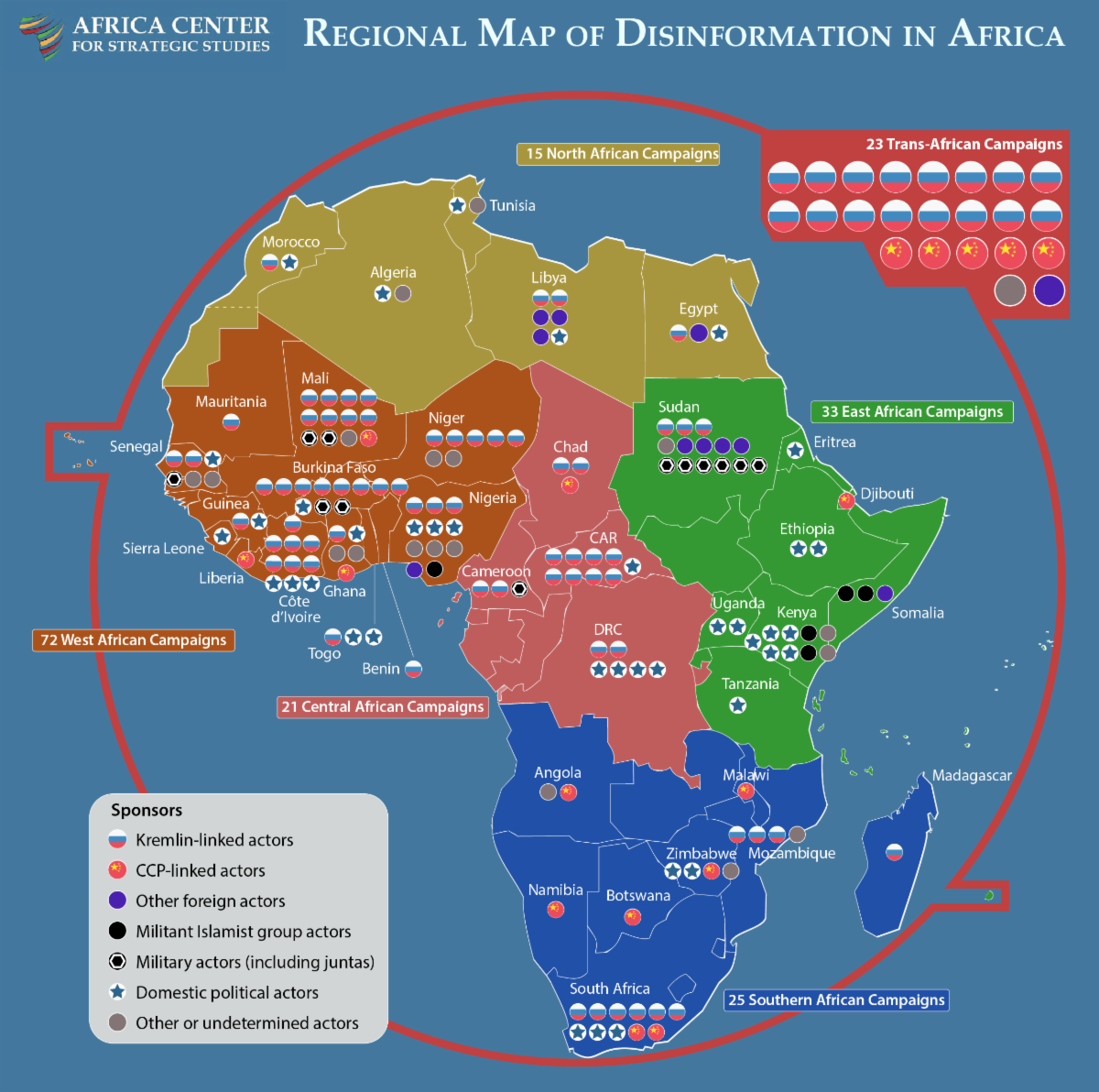
Disinformation campaigns seeking to manipulate African information systems have surged nearly fourfold since 2022, triggering destabilizing and antidemocratic consequences.
The proliferation of disinformation is a fundamental challenge to stable and prosperous African societies. The scope of these intentional efforts to distort the information environment for a political end is accelerating. The 189 documented disinformation campaigns in Africa are nearly quadruple the number reported in 2022. Given the opaque nature of disinformation, this figure is surely an undercount.
Actors driving sophisticated disinformation attacks on African media ecosystems are taking advantage of the rapid expansion in the reach and accessibility of digital communications to reshape the continent’s information systems at scales and speeds not possible through traditional analog platforms.
There is a strong link between the scope of disinformation and instability. Disinformation campaigns have directly driven deadly violence, promoted and validated military coups, cowed civil society members into silence, and served as smokescreens for corruption and exploitation. This has had real-world consequences for diminishing Africans’ rights, freedoms, and security.
This onslaught of purposeful obfuscation comes as 300 million Africans have come onto social media in the past 7 years. There are now more than 400 million active social media users and 600 million internet users on the continent. Africans who are online rely on social media platforms for consuming news at among the highest rates in the world. Social media users in Nigeria and Kenya are near the top of the globe in the number of hours per day spent on social platforms. They are simultaneously the countries that report the most concern about false and misleading information.
Highlights
- Disinformation campaigns have targeted every region of the continent. At least 39 African countries have been the target of a specific disinformation campaign.
- Disinformation tends to be concentrated. Half of the countries subjected to disinformation (20 of the 39) have been targeted three or more times, up from just seven countries meeting that threshold in 2022.
- African countries experiencing conflict are subject to much greater levels of disinformation—facing a median of 5 campaigns– highlighting the connection between instability and disinformation.
- Countries confronting disinformation typically face multiple disinformation actors. At times, these actors amplify one another’s misleading narratives, while at others, they clash or stay in separate lanes.
- Nearly 60 percent of disinformation campaigns on the continent are foreign state-sponsored—with Russia, China, the United Arab Emirates (UAE), Saudi Arabia, and Qatar as the primary sponsors.
Russia continues to be the primary purveyor of disinformation in Africa
- Russia continues to be the primary purveyor of disinformation in Africa, sponsoring 80 documented campaigns, targeting more than 22 countries. This represents nearly 40 percent of all disinformation campaigns in Africa. These 80 campaigns have reached many millions of users through tens of thousands of coordinated fake pages and posts. Aggressively leveraging disinformation is a mainstay of Russia’s use of irregular channels to gain influence in Africa.
- Russia has promulgated disinformation to undermine democracy in at least 19 African countries, contributing to the continent’s backsliding on this front.
African elections provide prime opportunities for disinformation
- African elections provide prime opportunities for disinformation. Some employ mercenary disinfo-ops teams. One private Israeli group, dubbed “Team Jorge,” has reportedly implemented disinformation campaigns to disrupt over 20 African elections since 2015.
- Domestic actors have also increasingly integrated disinformation into their political playbooks, notably during Kenya’s 2022 and Nigeria’s 2023 election.
- African countries that uphold presidential term limits (i.e., those with stronger checks and balances) are less exposed to foreign sponsored disinformation, with an average of 1.5 campaigns compared to an average of over 3 campaigns for countries without term limits. This underscores the common aim of foreign disinformation to prop up authoritarian actors.
- Disinformation is surging in African information spaces at a time when press freedom—a critical protective barrier against disinformation—is in decline. Legislation targeting digital disinformation has been used as a pretext for harassing and detaining journalists.
Regional Disinformation Trends
Africa-wide Disinformation Campaigns: 23
- Africa is subject to 23 transnational disinformation campaigns—nearly all of which are sponsored by external state actors attempting to assert influence on the continent.
- Russia and China are the leading sponsors of these Africa-wide campaigns to advance their geostrategic interests and shape narratives that undermine democratic processes, promote coups in Africa, stoke anti-Western and anti-United Nations sentiment, and spread confusion about climate change science, among others.
- Given their scale, these attacks achieve some of the most expansive reach. Two prominent disinformation influencers connected to Russia, for example, have a combined social media following of over 28 million users and their content has been amplified by a sprawling ecosystem of hundreds of Russian-linked accounts and pages.
- Russia is the single largest sponsor of Africa-wide disinformation campaigns with 16 of these far-reaching operations.
- These disinformation campaigns employ paid African influencers, digital avatars, and the circulation of fake and out-of-context videos and photographs. These messages copy-and-paste from and are amplified through multiple channels of Russian state-controlled media, radio, and official communications, creating the repetitive echo chambers in which disinformation narratives become rote. Russian embassies appear to have helped set up a network of ostensibly African grassroots front organizations (Partenariat Alternatif Russie-Afrique pour le Développement Économique (PARADE) and Groupe Panafricain pour le Commerce et l’Investissement (GPCI)) to generate and amplify disinformation.
- The Wagner Group has been the Kremlin’s primary vehicle for engineering disinformation in Africa—with direct links to approximately half of all Russian-linked campaigns on the continent. Following the 2023 death of Yevgeny Prigozhin, Wagner’s founder, Russian disinformation operations are being absorbed into the newly established Russian Africa Corps and the Africa Initiative News Agency, connected to Russian intelligence services and overseen by Artem Sergeyevich Kureyev from Moscow.
The Chinese Communist Party (CCP) is the second most prolific Africa-wide sponsor of disinformation with five known multi-regional campaigns
- The Chinese Communist Party (CCP)—via the United Front and China Media Group—is the second most prolific Africa-wide sponsor of disinformation with five known multi-regional campaigns. Two of these cases have aligned with or amplified Russian narratives. However, the CCP’s approach is more institutionalized and heavily invested in laundering official CCP narratives through the ownership and control of ICT infrastructure as well as through licensing and training agreements with African media. These campaigns are part of a wider CCP effort to step up its use of disinformation.
West Africa: 72 Campaigns Targeting 13 Countries
- West Africa is the region most targeted by disinformation—accounting for nearly 40 percent of documented disinformation campaigns in Africa. Roughly half of these attacks are connected to Russia. Russia has inundated the Sahel with disinformation since 2018 with 19 campaigns directed at Mali, Burkina Faso, and Niger. All three countries have experienced military coups that Russian networks have helped prime and promote despite their abysmal track records. As described by fact-checkers in Mali, these campaigns are often “produced on an industrial scale” and have toxic impacts on the narratives circulated and tenor of online conversations.
- The second largest sponsor of disinformation in the region are the military juntas in Mali and Burkina Faso. These regimes are isolated and increasingly dependent on Russian-backing to hold onto power. They are emulating Russian disinformation techniques, while scapegoating France, the United Nations, the Economic Community of West African States, and human rights groups. These regimes attempt to control the information space by cracking down on domestic journalists and banning reputable international media outlets.
- Militant Islamist groups are a third major sponsor of disinformation in West Africa. Nigeria is an illustration of how these groups have used a variety of disinformation tactics via local languages and closed networks (Telegram) to recruit and spread their messages.
East Africa: 33 Campaigns Targeting 8 Countries
- East Africa has the second highest number of documented disinformation campaigns on the continent and the highest percentage (over 60 percent) of domestically originating campaigns. Most of these are in two countries: Sudan (14 campaigns – 6 domestic) and Kenya (9 campaigns – 5 domestic).
- Sudan has been swamped by disinformation emanating from the two sides in the country’s conflict—the Rapid Support Forces (RSF) and Sudanese Armed Forces (SAF). RSF and SAF networks have actively thickened the fog of war, spreading conflicting claims of territory occupied and battle outcomes, creating an even more unsafe and difficult environment for civilians.
- Sudan has been swamped by disinformation emanating from the two sides in the country’s conflict
- Regional and foreign powers with vested interests in the war (Russia, the UAE, and Egypt) have also been active sponsors of disinformation in support of their respective proxy.
- Prior to the outbreak of open conflict, these networks sought to undermine the country’s pro-democracy movement through disinformation, including by manipulating social media platforms to mute or block content from authentic grassroots Sudanese resistance committees—a practice called shadowbanning.
- Kenya has seen an unparalleled rise of domestic political disinformation, illustrating a paradox in which democratic countries’ open information spaces can be weaponized against them when rapid technological change occurs without an adequate policy response.
- Al Shabaab and the Islamic State in Somalia (ISS) have been early and innovative adopters of disinformation in East Africa, setting up pages that pose as media outlets on Facebook and using those pages to spread extremist ideology in African languages. ISS pages called for a boycott of Kenya’s election and the excommunication of Muslims who voted in it.
Central Africa: 21 Campaigns Targeting 4 Countries
- United Nations (UN) peacekeeping missions have been repeatedly targeted by disinformation campaigns in central Africa. In the Central African Republic (CAR), supporters of the Russian-co-opted President Faustin-Archange Touadéra have spread disinformation about the UN’s mission (MINUSCA) by creating and fanning conspiracy theories. In the Democratic Republic of the Congo (DRC), “pressure groups” have been recruited by politicians to spread online disinformation to incite anti-UN mission (MONUSCO) sentiment. These false conspiracies—including claims that the UN was supporting and selling weapons to armed rebel groups—sparked violent protests in 2022 that resulted in the deaths of 5 peacekeepers and over 30 protesters who clashed outside a MONUSCO base.
- Disinformation and inaccurate “doxing”—cyberbullying by sharing sensitive personal information—spread by online networks connected to the armed actors in the Ambazonian conflict in Cameroon have possibly resulted in the summary execution of innocent civilians.
- Russia has been connected to eight disinformation campaigns in CAR going back to at least 2018. Russian-connected disinformation in CAR blurs the lines between external and domestic disinformation, having cultivated a corps of Russian-instructed journalists, bloggers, and regime spokespersons who promote the Touadéra regime’s interests, including supporting the removal of term limits.
- Pervasive disinformation clouded the DRC’s December 2023 election, further adding to the confusion that undercut its legitimacy.
Southern Africa: 25 Campaigns Targeting 8 Countries
- China’s armies of bots artificially amplifying Chinese diplomats in Africa have been most active in southern Africa, targeting 6 countries.
- The most documented campaigns in the region have been directed at South Africa and Zimbabwe.
- In both countries, external and internal actors have used disinformation to shape narratives and sow distrust among the population during presidential campaigns.
- Russia has been the primary disinformation actor in South Africa. In addition to pushing narratives intended to polarize communities, fan distrust, and bolster the African National Congress, Russia has used influential South Africans to promote pro-Russian narratives within South Africa and abroad.
- China has been the primary external purveyor of disinformation in Zimbabwe. China has enacted campaigns to support ZANU-PF by suppressing opposition and civil society voices, promote Chinese political and business propaganda, and push anti-Western narratives. China has weaponized social media channels and traditional state-controlled media to disseminate and amplify false claims to support these campaigns.
North Africa: 15 Campaigns Targeting 5 Countries
- Russia has carved out significant space in the information environment in North Africa. Egypt has emerged as a hub for spreading Russian narratives in the region with Egyptian state-run media outlets regularly republishing Russian state media content. RT Arabic is the second largest RT outlet behind the English language edition.
- Russian disinformation in Libya has sought to boost warlord Khalifa Haftar’s Libyan National Army (LNA), stoke nostalgia for the Qaddafi regime, and to disrupt the Libyan Political Dialogue Forum. Disinformation undermining the UN Support Mission in Libya has been widely circulated, benefiting the LNA.
Domestic disinformation targeting opposition political actors and pro-democracy activists has been documented in each North African country
- Domestic disinformation targeting opposition political actors and pro-democracy activists has been documented in each North African country. Supporters of Tunisian President Kaïs Saïed have been especially active in deploying these tools to discredit the opposition and normalize his extraconstitutional seizure of power.
- In Tunisia, Saïed has promoted racist conspiracies about Sub-Saharan Africans in his speeches, narratives that have been immediately amplified by influence networks on social media.
Russian Disinformation around Niger’s Coup
Building on a template employed in Mali and Burkina Faso, Wagner-linked campaigns surrounding the coup in Niger showcase an increasingly well-calibrated Russian disinformation playbook in West Africa that is both calculated and opportunistic. The campaigns targeting Niger have utilized online networks, assets groomed on-the-ground like UNPP (Union des Patriotes Panafricanistes) and GPCI (Groupe Panafricain pour le Commerce et l’Investissement), and Russian state media to launch a barrage of fake content before, during, and after the July 2023 coup in Niger.
Pre-coup: following the October 2022 coup in Burkina Faso, pro-Russian Telegram channels suggested Niger as a future target. Disinformation networks connected to the Wagner Group twice sought to spark rumors of a coup in Niger, including through what appears to have been a carefully orchestrated online scheme coinciding with a trip abroad by President Bazoum in February 2023.
Immediate aftermath: as the coup was unfolding in late July, the leader of the Wagner Group, Yevgeny Prigozhin, welcomed the events, posting a message of support on Telegram from St. Petersburg where he was attending the Russia-Africa Summit. Wagner-linked networks echoed Prigozhin in cheering the coup, encouraging the violent suppression of pro-democracy demonstrators in Niamey, and exploiting the confusion to frame the events as anti-France and as representing a momentous surge in African support for a Russian vision of the global order. Fact-checkers reported having difficulty keeping up with the volume of fake claims. The effect was to confuse and paralyze citizens from responding. As one observer described, “I’ve had to distance myself from everything because I don’t know what’s true and what’s not. … Everything seems to be a lie or exaggerated.”
Post-coup: Wagner assets sought to consolidate the coup in Niger by derailing negotiations between its leaders and regional mediators. Networks spanning closed channels (Telegram, WhatsApp), social media sites (X/Twitter, Facebook), and traditional media (Afrique Média) spread content intended to inflame Nigerien mistrust of these processes, including claims that an ECOWAS invasion was imminent and that French fighter jets were landing in Senegal to support ECOWAS. Russian campaigns moved to exploit the coup by spreading false narratives promoting Wagner mercenaries as an answer to Niger’s security challenges. Content related to Niger spiked by 6,645 percent on 45 Russian state and Wagner Telegram channels in the month after the coup, as these accounts ramped up disinformation to cement the military junta and associate it with Russia.
Putin Denies Strategy to Spread Influence in Africa After Wagner 'Rebrand'
By Henry Ridgwell, Voice of America, 14 March 2024
LONDON - Russian President Vladimir Putin has denied he is seeking to oust Western influence in Africa, as new analysis suggests the Kremlin's military intelligence arm has taken over activities of the disbanded Wagner Russian paramilitary group on the continent.
In a television interview broadcast in Russia on March 13, Putin dismissed claims that Moscow is seeking to displace France as the major partner of countries such as Mali, Niger and Burkina Faso.
"We have not ousted anyone. It's just that the African leaders of certain countries made agreements with Russian economic operators, wanted to work with them and did not want to work in certain areas with the French. It wasn't even our initiative, it was an initiative of our African friends," Putin said.
"We are not instigating anyone and do not seek to turn anyone against France. To be honest, overall, we do not have national tasks at the Russian state level there. We're just being friends with them, that's all," the Russian president added.
'Regime survival package'
In the past decade, analysts say Moscow has sought to extend its influence in Africa through the deployment of Russian forces — often under the guise of paramilitary fighters — and arms deals with African governments, in return for access to resources.
A recent analysis by Britain's Royal United Services Institute (RUSI) suggests that Russia has rebranded the former Wagner paramilitary group as an expeditionary corps which is now under the control of Moscow's military intelligence arm — known as the GRU — and is offering what it calls a "regime survival package" to autocratic governments in Africa.
"At a time when many Western states were trying to economically isolate Russia following the full-scale invasion of Ukraine, Putin saw the development of economic ties with Africa and the Middle East as a means to sanction-proof Russia, and he had a pitch for the leaders of these states," the report said.
"It centered on the proposition that the 'international rules-based order' advocated for by the West structurally favored Western interests, whereas Russia's emphasis on sovereignty would offer a mutually beneficial partnership. The reality — as Russian officials acknowledged internally — was a renewed Russian colonialism," the RUSI report added.
Wagner rebranded
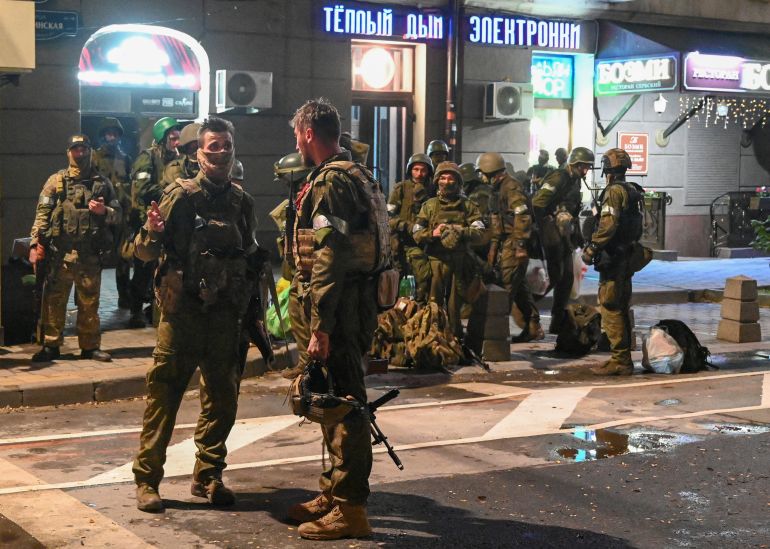
Wagner fighters have been deployed in several African countries, including Libya, Sudan, Central African Republic, Niger, Burkina Faso and Mali. They have frequently been accused of committing widespread human rights abuses.
In June 2023, as Russia's invasion of Ukraine was struggling to make progress, Wagner's chief, Yevgeny Prigozhin, led a failed mutiny against Moscow, accusing the defense ministry of depriving his fighters of ammunition. Wagner was disbanded shortly afterward. Two months later, Prigozhin died in a suspicious plane crash.
That left a dilemma for the Kremlin: What to do about Wagner's operations in Africa?
"After that so-called mutiny, the decision was made that it would be better to have it more in-house rather than outsourced," said Oleksandr Danylyuk, an associate fellow at RUSI and a co-author of the report.
The analysis shows that Moscow has rebranded the Wagner group as the expeditionary corps of the GRU, Russia's military intelligence agency, with a target of recruiting a further 40,000 troops to serve in the force. Its aim is to secure Russian interests overseas — including access to resources such as oil, gas and minerals — while also reducing Moscow's vulnerability to Western sanctions.
Russia colonialism
"What they're doing is just expanding colonialism in the Global South countries. And right now they are very much focused on African countries, but they have plans for Latin America as well, some Asian countries. They will also have political technologists, media experts, intelligence officers who are specialized in political warfare, economic operations. So, pretty much everything to be able not only to infiltrate those Global South countries, but also to establish pro-Russian regimes there," Danylyuk told VOA.
The RUSI report says Russia helped to foment military coups in parts of Africa and is now seeking to displace Western influence.
Mali
France and other European nations sent troops to Mali in 2013 to help fight an Islamist insurgency. They were withdrawn in 2022 after successive military coups and a breakdown in relations between Paris and Bamako. A 12,000-person United Nations peacekeeping force also pulled out last year at the request of the junta government.
Several hundred Russian-backed fighters are now in Mali supporting the military junta under interim President Colonel Assimi Goita. Moscow also has backed military governments in Niger and Burkina Faso, and is supporting General Khalifa Haftar in Libya against the unity government under Prime Minister Abdul Hamid Dbeibeh.
'Plausible deniability'
The pretense that Wagner was a private army separate from the Kremlin allowed Russia to deny involvement in its Africa operations. "Many of the operations being conducted were either at the expense of other states or violated U.N. Security Council resolutions," according to the RUSI report.
"The problem for the Expeditionary Corps is that it risks the removal of this plausible deniability… It appears that Russia has finally decided to explicitly challenge the international system rather than pretend to comply with it."
Western challenge
The authors of the report warn that Russia's expansion of operations in Africa could have serious consequences for Europe and the West.
"Through persistent instability, Russia can push migration into Europe, creating the conditions… to pursue political destabilization," the report warns. "Leverage over natural resources is also expanding. Perhaps most problematic, however, is how the pitch for values is giving Russia access to communities that interface with a range of extremist beliefs."
Africa’s 2024 Elections: Challenges and Opportunities to Regain Democratic Momentum
Africa’s 2024 Elections: Challenges and Opportunities to Regain Democratic Momentum
By Joseph Siegle and Candace Cook, Africa Center, January 17, 2024
Africa’s multifaceted 2024 electoral docket provides opportunities to strengthen multipartyism, transition back to constitutionalism following coups, and rebuff perfunctory exercises.
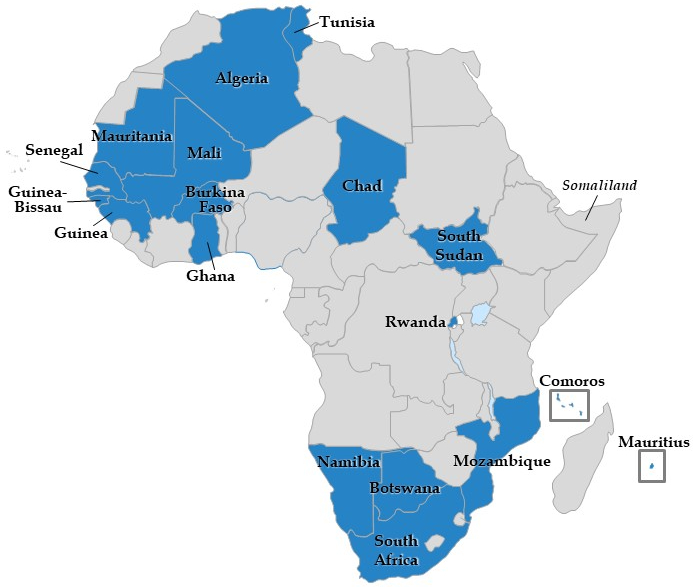
Africa has a busy election calendar in 2024, with 19 countries slated for presidential or general elections. The elections are a gamut of competitive multiparty elections to perfunctory electoral exercises. Two-thirds of these elections are packed into the last quarter of the year.
A series of elections in southern Africa, where a single party has long dominated, may see their first transition of power while others may lose their legislative majorities. This potentially reflects a healthy maturation of multipartyism while incentivizing innovation in these contexts.
Several of the Sahelian countries that suffered coups in recent years are scheduled to have elections this year as part of their agreed-upon timetable to transition back to civilian rule. When and how these elections unfold will shape the trajectory of governance in this region and the growing security threat it faces.
Roughly half of the elections are unlikely to be competitive because of heavy-handed management of the electoral process by well-entrenched incumbents. These processes raise questions for the continent of what qualifies as a genuine election—and the legitimacy that emerges from an authentic popular mandate. Many of these countries must overcome long legacies of direct or indirect military government.
These highly controlled electoral settings pose challenges for the respective Regional Economic Communities, the African Union, media, and international democratic actors that must navigate how to differentiate exercises from competitive elections and, in the process, further define electoral norms. Failure to do so will further lower the bar of expectations.
A common and enduring theme across these countries is a strong desire for citizens to have their voices heard as part of the continent’s aspiration for more responsive, public service-oriented, and democratic governance.
Comoros: Presidential, January 14
In Africa’s first presidential election of the year on January 14, Comoros President Azali Assoumani is running for a fourth term, enabled by a controversial 2018 referendum that has enabled him to sidestep presidential term limits. The ensuing Constitution dismantled the 2001 Fomboni Agreement, which had ushered in over 15 years of political stability in the archipelago of 880,000 people. The Agreement enshrined a power-sharing formula that saw the presidency rotate after a single presidential term among the three main islands: Grand Comore, Anjouan, and Moheli. The landmark Agreement ended an era in which Comoros suffered 20 coups since its independence in 1975.
Assoumani’s evasion of term limits has eroded that democratic progress and stability. The 2018 Constitution, furthermore, consolidated power under the executive by removing the offices of three vice presidents, each representing one of the three islands.
Colonel Azali Assoumani first came to power in a coup in 1999, and subsequently served one presidential term from 2002-2006. He then stepped down and Comoros experienced three peaceful presidential transitions, including two involving transfers of power between political parties. This included Assoumani’s return to the presidency in 2016. However, rather than maintain the rotational power-sharing system, in 2018 Assoumani suspended the Constitutional Court, a democratically elected body. He then transferred its electoral duties to the Supreme Court, whose members are appointed by the President himself. This move enabled Assoumani to secure a second consecutive term (and third term overall) in the contested election of 2019 despite 12 opposition candidates rejecting the results. Observers from the African Union and elsewhere reported the vote was marred by irregularities.
Assoumani’s latest term has been marked by crackdowns on dissent and curtailments of press freedoms. Journalists work in an atmosphere of intimidation and fear of arrest, resulting in widespread self-censorship. Demonstrations are regularly banned. Opposition party members are threatened and detained by the police and army. Many others have fled the country, and irregular migration to the neighboring French island of Mayotte has surged. Former president and member of the opposition Juwa Party, Ahmed Abdallah Sambi, was sentenced to life in prison on corruption charges in 2022, in what many view as a politically motivated attempt to remove a leading opposition figure from contesting the 2024 election.
Assoumani’s growing authoritarianism fits a pattern of African leaders who gain power through extraconstitutional means, then subsequently violate legal constraints on their time in power. These actions do not occur in isolation but are part of a broader deterioration of democratic checks and balances.
Some of Comoros’ main opposition parties are calling for a boycott of the January 14 presidential election. They allege that the vote will not be free and fair, as the Independent National Electoral Commission (CENI) is seen as favoring Assoumani. The opposition is calling for all political prisoners to be released, members of CENI to be replaced by an independent body, and for the army to remain out of the electoral process. The opposition also boycotted the 2018 referendum vote and the 2019 presidential elections in protest of Assoumani’s undermining of the power-sharing deal.
Opposition leaders are also concerned that Assoumani is grooming his 39-year-old son, Nour El Fath Azali, to succeed the 65-year-old leader. Such a dynastic succession would be a further setback to the hard-fought democratic gains and stability that Comoros had enjoyed under the 2001 Constitution.
Mali: Presidential, February 4
Mali’s military junta has again postponed the holding of elections to restore a civilian democratic government despite repeated assurances that it would do so.
The latest broken promise was for it to hold presidential elections on February 4, 2024. This date was glibly postponed indefinitely in September 2023 due to “technical reasons.” Only the most gullible were surprised by the announcement. The military junta of Colonel Assimi Goïta has made no serious effort to prepare for elections since it overthrew the democratically elected government of Ibrahim Boubacar Keïta in August 2020. Keïta had won a second 4-year term in credible elections in 2018 with 67 percent of the vote.
Goïta proceeded to execute another coup in May 2021 when then transitional president Bah Ndaw and his prime minister, Moctar Ouane, began to take steps toward organizing elections in line with the junta’s commitment to an 18-month transition that was to culminate with elections in February 2022. After further negotiations and promises with the Economic Community of West African States, during which the Goïta’s junta angled for a 5-year transition, a February 2024 date was set.
Democratic space has shrunk dramatically under the junta. Political opponents and independent civil society actors are intimidated while journalists are threatened, have their credentials revoked, or are arrested. Media outlets face pressure for “patriotic news” coverage. Domestic and international media that criticize the junta are suspended. This was the case for Radio France Internationale (RFI) and France 24, which reported on human rights abuses by the Malian junta. The effect has been a spike in self-censorship.
The junta is also hostile toward reporting of its agreement to bring in an estimated 1,000 forces from the Russian mercenary group Wagner at the cost of $10.9 million per month. Wagner and the Malian junta have subsequently been linked to over 300 incidents of human rights abuses against Malian citizens.
The junta has been similarly hostile toward the United Nations (UN) as it has been the leading international entity investigating allegations of human rights abuses by the junta. The junta declared Guillaume Ngefa-Atondoko Andali, the head of human rights for the UN peacekeeping mission (MINUSMA), persona non grata in 2021 for not propagating the junta’s narrative. In 2023, it demanded the withdrawal of the entire mission, which had been the leading independent body to expose junta human rights abuses, such as allegations of the massacre of 500 Malian civilians by the Malian military and Wagner in the town of Moura in 2022. Security has subsequently deteriorated in many of the regions in northern and Central Mali from which MINUSMA withdrew.
The Malian junta has been able to control the information space with the support of Russian state-sponsored disinformation campaigns that conduct expansive information operations in the country and use their online presence to bully and shout down criticism of the junta.
The junta engineered a referendum in June 2023 that consolidated power in the presidency and would allow junta leaders to serve in a new government, opening the door for Goïta to maintain his hold on power. This process lacked credibility as it excluded large swaths of the Malian political spectrum and civil society, leading to a boycott of the referendum. The opposition has contested the very premise of an unelected authority having a mandate to make amendments to the Constitution. Estimates are that only 28 percent of the eligible voters participated.
People hold up signs that read "vote no in the referendum" during a march in Bamako, Mali.
Despite the intimidation, civilian political groups continue to oppose the military power grab. The June 5 Movement-Rally of Patriotic Forces (M5-RFP) political coalition and other opposition groups have denounced the election postponement. As one opposition party member noted, “For us, each extension will always lead to another extension.”
The larger takeaway of the junta’s postponement of the February 2024 polls is the apparent intent to restore military government indefinitely. The military ruled Mali for most of the period from its independence up to the 1991 transition to civilian government—leaving a legacy of coups, anemic economic development, and repression.
Since the August 2020 coup, Goïta has repeatedly engaged in public ceremonies to rehabilitate the perception of military governance. Shortly after taking power, Goïta sought counsel from former military dictator Moussa Traoré during a public visit to Traoré’s residence in Bamako. During Mali’s Independence Day ceremonies, soldiers greeted and welcomed the former 2012 coup leader, General Amadou Haya Sanogo.
While the postponement of the February 4 elections in Mali may be overlooked by observers, the date holds significance for many Malians—and the trajectory of Mali’s governance and democratic prospects.
Senegal:Presidential, February 25
Senegal’s 2024 presidential election represents a pivotal juncture in the country’s journey toward more accountable, responsive, and democratic governance. President Mack Sall is stepping down after his constitutionally limited second term and the elections will usher in new national leadership for the first time in over a decade.
Senegal has made noteworthy progress since the first transition between parties in 2000, when incumbent president, Abdou Diouf, lost his bid for reelection and stepped down. In 2012, there was another case of an opposition party candidate (Macky Sall) winning elections and taking office—one of the signature indicators of a consolidating democracy.
An instrumental factor in Senegal’s democratic progress has been its active and organized civil society, characterized by vibrant youth participation, which has held public officials accountable for upholding term limits and democratic processes—a process that has not always been smooth or straightforward.
Senegal’s election management body, the Autonomous National Electoral Commission, has established a reputation for independence as seen by the ruling party losing seats in both 2022 and 2023 legislative and municipal elections, respectively. The former is significant in that it has shifted the legislative landscape from a near supermajority for the ruling Benno Bokk Yaakaar (BBY) coalition to close to parity with a coalition of opposition parties, necessitating genuine debate and compromise. The opposition now also controls majorities in Senegal’s main municipalities.
Senegal has furthermore distinguished itself from its neighbors in West Africa by building and sustaining an apolitical military with a culture of military professionalism and service to the public. This has contributed enormously to the country’s stability and public trust. The 85 percent of the Senegalese population that says it trusts the military is among the highest on the continent.
Despite these commendable democratic qualifications, the final years of President Macky Sall’s tenure have been marked by heightened tension and threats to the country’s democratic gains. First was Sall’s extended flirtation with vying for a constitutionally prohibited third term. This worried many Senegalese that Sall would try to join the trend of African leaders evading term limits and undermine the country’s hard-earned precedent on this issue.
Second the Sall administration has attempted to bar Ousmane Sonko, seen as a prominent contender from African Patriots of Senegal for Work, Ethics and Fraternity (PASTEF) party, from competing. Mayor of Ziguinchor, Sonko is popular among Senegal’s youth for his fiery rhetoric and taking strong stances against corruption. He has faced various charges, including insurrection, that are widely seen as politically motivated, and has spent much of the past year in prison or the hospital following a hunger strike to protest what he considered his unjustified detention. Police crackdowns on protests surrounding Sonko’s sentencing and trials have reportedly led to 50 deaths between 2021 and 2023 among this typically peaceful populace. Hundreds more have been arrested.
Many independent observers have viewed the charges against Sonko as politically motivated as they follow a pattern, dating back to the 2019 election, of the Sall administration charging leading opposition candidates with criminal activity, effectively derailing their candidacies.
The presidential standard bearer for Sall’s BBY coalition is Amadou Ba, the current prime minister and a former finance and foreign minister. In addition to Sonko, whose candidacy remains hamstrung by ongoing legal proceedings, leading opposition candidates include Khalifa Sall (no relation to Macky Sall) and Karim Wade (son of former President Aboulaye Wade). Both candidates had been barred from running in 2019 due to criminal allegations levied by the government. Senegal employs a two-round voting system, requiring a winning candidate to garner more than 50 percent of the vote.
Recent years have also seen unprecedented pressure on Senegalese media, which has long enjoyed a tradition of independence. This includes unlawful arrests, attacks, and judicial persecution. Several prominent journalists have been charged with disturbing the peace and insurrection for criticizing the government. The courts have typically thrown out such cases but sometimes not until after months of detention. This has risked creating a chill on Senegal’s cherished press freedom and freedom of expression. The Sall administration has also periodically blocked Facebook, WhatsApp, Instagram, Telegram, YouTube, and TikTok. Senegal’s press freedom ranking has dropped 55 places, from 49th out of 180 countries to 104th between 2021 and 2023 under Reporters Without Borders’ rankings.
The election will hopefully provide an opportunity for Senegalese to turn the page and focus on the future priorities for the country. Key among these is addressing youth unemployment, which stands at 20 percent despite annual per capita economic growth averaging 3.4 percent during Sall’s time in office. Such incongruencies are part of a pattern of growing inequities felt within Senegal. These divergences are also, in part, shaped by Senegal’s rapidly expanding population (growing at 2.5 percent annually) resulting in 43 percent of the population being under the age of 15. Senegal is also facing the loss of arable land due to coastal flooding and inland droughts, which have direct political implications for a country where three-quarters of the workforce earn their livelihood from the land.
With the expanding threat of violent extremism in Mali stretching westward, Senegal also faces a heightened risk of militant Islamist violence. This is reinforced by indications that these militant groups (notably Katiba Serma), are trying to establish themselves among communities in Senegal’s east, which overlap with those from across the border.
Senegal also faces expanding Russian-sponsored disinformation campaigns that threaten to foster confusion and disillusionment with democracy, the government, and Senegal’s ties to the West. These are accompanied by domestic and militant Islamist disinformation that seeks to weaponize grievances for political gain.
In addition to transitioning to a new leader and solidifying Senegal’s precedent for orderly political transitions, Senegal’s 2024 elections will represent an opportunity to rebuild social cohesion and set the country on a path to address a host of other strategic issues.
South Africa: General, May–August
South Africa faces its most unpredictable national election of the post-apartheid era in 2024. In every poll since 1994, the African National Congress (ANC) has dominated the vote—earning it an absolute parliamentary majority, from which it could independently select the president and initiate legislation.
That may change during this electoral cycle. Polls suggest that the ANC may receive less than 50 percent of the national vote for the first time ever—mirroring patterns observed in recent municipal and local government elections.
ANC’s declining popularity continues a steady pattern observed since 2007 and is attributed to perceptions of growing systemic corruption within the party, ANC insularity from ordinary South Africans, and poor service delivery embodied by rolling electricity blackouts. South Africa also strains under the burden of growing inequality, poverty, and youth unemployment. Over 60 percent of 15- to 24-year-olds are unemployed, and many in South Africa’s sprawling townships struggle to find enough to eat. The ANC’s long dominance makes it hard to escape responsibility for these popular grievances.
Opposition parties, meanwhile, have increased their capacity, experience, and leverage in forming coalitions, which has enabled them to steadily reduce the ANC’s parliamentary majorities over time—including in historic ANC strongholds.
Perceptions of impunity, associated with dominant-party political systems, make the ANC—and thus the government—vulnerable to state capture (control over government decision-making by private sector or external actors). This was most famously seen through the influence of the Gupta brothers’ network of private interests within the patronage-laden administration of Jacob Zuma.
Despite the ANC replacing Zuma as head of the party in 2018 with Cyril Ramaphosa—paving the way for him to lead the party into the 2019 elections—the ANC remains riven by internal divisions. While Ramaphosa has slowly increased his support within the party architecture and will again be the party standard bearer in the 2024 elections, the party is increasingly fragmented. Zuma’s endorsement of a new party, uMkhnoto weSizwe, is a direct challenge to Ramaphosa’s leadership. This follows the formation of another party, the African Congress for Transformation, by former ANC Secretary General Ace Magashule, following his expulsion from the party for misconduct.
Even if it gains less than a majority of votes, the ANC still retains more support than any other political party in South Africa. The leading opposition party is the Democratic Alliance (DA), led by John Steenhuisen, which polls show drawing between a quarter and a third of the electorate largely on a good governance and anti-corruption platform. It must, however, overcome the perception of being a white-dominated party. The DA has entered into an alliance called the Multi-Party Charter for South Africa with six mostly small parties.
The ANC also faces a challenge from the Economic Freedom Fighters (EFF) party led by the firebrand former ANC Youth League leader Julius Malema. The EFF has called for populist policies such as state-provided housing, nationalization of mines and other strategic sectors of the economy, and land redistribution. Polls suggest the EFF attracts roughly 10 percent of the electorate.
Rather than voting for an opposition party, disgruntled ANC supporters may simply not turn out at the polls, contributing to the uncertainty of how this cycle of elections will unfold.
Whether opposition parties can capitalize on such challenges and present viable alternatives to the ANC remains an open question. Nonetheless, the overarching dynamics are such that South Africa is moving toward some form of coalition politics at the national level. This will be a dramatic shift that requires adapting to power sharing and compromise.
While navigating these adaptations, South Africa has the advantage of robust democratic institutions that can guard against abuses of power. The independent Electoral Commission is widely recognized as competent and even-handed. The country’s courts regularly issue decisions that restrict government overreach. The government has an independent and active Public Protector that can investigate and charge public officials for abuses of power. It was this office, amplified by South Africa’s lively independent media, civil society, and parliamentary engagement that prompted the official Judicial Commission of Inquiry into Allegations of State Capture.
Critically, South Africa also benefits from an apolitical and professional military that has refrained from being pulled into partisan politics.
A further threat to the strengthening of South Africa’s democracy is persistent political violence, namely assassinations of political rivals. This criminal tactic of gaining power is reported to be escalating in some parts of the country. Often met with impunity, political assassinations have become normalized which, in turn, intensify political polarization. In just the past year, there have been 20 political assassinations of local councilors in KwaZulu-Natal Province, often tied to factional infighting within the ANC and among the party’s offshoots.
The South African elections must also navigate the prospect of Russian election interference, consistent with its efforts elsewhere on the continent. Russia has long been active in promoting disinformation in South Africa to foment polarization and disillusionment with democracy.
South Africa’s elections represent an assessment on how the ANC is addressing the evolving social and economic challenges facing the country. They will also be a test of the country’s ability to use democratic processes to forge new domestic alliances to address these challenges and set the country on a path of reform.
Mauritania: Presidential, June 22
President Mohamed Ould Cheikh Ghazouani is contesting for a second and final 5-year term in Mauritania’s presidential elections.
Mauritania has been on a gradual path of political openness since 2019, when President Mohamed Ould Abdel Aziz respected term limits and stepped down from the presidency. President Aziz’s departure from office represented the first peaceful transfer in power in Mauritania’s history, particularly notable since he came to power in a 2008 coup. Ghazouani, Aziz’s hand-picked successor and former Chief of Staff of the Armed Forces, won the 2019 polls with 52 percent of the vote.
Mauritania has a long legacy of military coups and authoritarian governance, resulting in a string of military or military-backed governments since 1978.
It is from this starting point that Mauritania is building a relatively more pluralistic and accountable political system. Beyond the presidential election, the focus will be on whether this country of 4.5 million people can maintain momentum for reform. Key will be creating sufficient checks and balances to ensure parameters (such as term limits) are maintained, given Mauritania’s legacy of unrestrained executive authority.
In the May 2023 legislative elections contested by 25 parties, Ghazouani’s Insaf party captured 107 of the 176 seats, the Islamist party, Tawassoul, won 11, and the Union for Democracy and Progress party took 10. The election also saw a new opposition coalition of independent and human rights groups organize around the Joud party.
A proportional representation system based on national, tribal, and parliamentary lists—adopted with input from opposition parties in 2022—has increased minority group representation.
The Independent National Electoral Commission was reformulated in 2022 and is now seen as more impartial. In 2023, Insaf and leading opposition parties agreed to a Charter of National Understanding regarding principles of national unity, political, and economic governance. Most Mauritanian political parties, nonetheless, are weak and lack the organizational capacity or resources to mount national campaigns.
While most opposition parties have yet to name their standard bearers, a notable likely presidential contender is Biram Dah Abeid, an antislavery advocate who has been jailed for his advocacy. Abeid polled second, with 19 percent of the vote, in the 2019 presidential election. Mauritania only officially outlawed slavery in 1981, the last country in the world to do so, though the practice persists today.
There is a relatively open media environment, though criticism of the ruling party can lead to harassment and arrest.
Corruption has historically been an issue in Mauritania. While marginal progress has been made in recent years, there are concerns that Ghazouani uses anticorruption measures to target political opponents. This includes charges in 2021 against Ghazouani’s former patron, Ould Abdel Aziz, whose case continues to be tried in an anticorruption court. Mauritanian courts, meanwhile, remain subject to pressure from the executive branch.
The escalating militant Islamist violence in Mali, which is expanding westward, poses a growing security threat for Mauritania. There were several security incidents on the border in 2023, and Mauritania currently hosts more than 100,000 refugees fleeing the violence.
Mauritania suffered from persistent violent extremist organization (VEO) threats in the 2000’s. However, Mauritania is widely credited with having mounted an effective counter-VEO campaign involving improved military professionalism, strengthened intelligence and surveillance capabilities, and proactive counter-radicalization outreach at the community level. These efforts are likely to be further tested in 2024.
Investments by BP and Kosmos Energy in the Greater Tortue Ahmeyim natural gas pipeline will enable Mauritania to supply Europe and other global markets. Mauritania is also a key investment target for green hydrogen, including from the United Arab Emirates. Mauritania’s vast territory and availability of solar and wind energy put it in line to produce 8 million metric tons of green hydrogen annually—making Mauritania an increasingly important energy hub.
Beyond the conduct of the election, how Mauritania manages its expanding political space and the strengthening of independent institutions like the judiciary and election commission, will be key measures to watch in 2024.
Burkina Faso: Presidential, July (postponed)
Elections intended to restore a democratic civilian government in Burkina Faso in July 2024 were deemed “not a priority” and indefinitely postponed by the military junta led by Captain Ibrahim Traoré in September 2023.
The democratically elected government of Roch Kaboré was overthrown in January 2022 by a junta led by Colonel Paul-Henri Damiba. In July 2022, the junta agreed to a 24-month transition timetable with the Economic Community of West African States (ECOWAS). Then, in September of that year, the 35-year-old Traoré ousted Damiba and superseded the constitution with a charter giving himself unilateral powers. Despite agreeing to keep the previously negotiated transition timetable, Traoré’s refusal to proceed with the July 2024 transition suggests his intention to retain his hold on power indefinitely.
The extraconstitutional seizures of power undermined Burkina Faso’s nascent and hard-earned democratically oriented political process, which had overcome the 27-year rule of Blaise Compaoré (who had himself come to power in a coup) after mass protests in 2014. Kaboré’s subsequent election in 2015 was by far the most competitive Burkina Faso has ever held, ushering in a series of reforms. Among these were gains in building a culture of military professionalism and adopting a comprehensive National Security Strategy.
The political instability wrought by military interventions has a long legacy in Burkina Faso with the military having held power directly or indirectly during 51 of the country’s 64 years of independence—making the 2014-2022 democratic opening and its reversal all the more significant.
The junta’s unilateral indefinite postponement of the 2024 election is consistent with the ad-hoc nature of Traoré’s rule in Burkina Faso. Laws are arbitrarily applied and decisions taken at the whim of the junta leader.
This includes the “voluntary” mobilization of 50,000 volunteer protection forces. This mobilization, authorized under Traoré’s emergency decree, has been increasingly used as a means of forced conscription, targeting journalists, civilian political party members, and civil society critics of the junta. This includes Daouda Diallo, a 2022 recipient of the prestigious Martin Ennals international human rights award, who was abducted in late 2023 in Ouagadougou. His name was later included on lists of the conscripted.
The Burkinabe Movement of Human and Peoples’ Rights (le Mouvement burkinabè des droits de l’homme et des peuples, MBDHP) said the general mobilization has been specifically designed and adopted not to contribute to the fight against terrorism, but to repress critical opinions.
These punitive actions are part of a broader campaign to crack down against the media and peaceful dissent in order maintain the appearance of popular support for the junta. Media outlets that report on the deteriorating security situation in the country, human rights abuses, or dissent within the military are suspended. This has been accompanied by roaming bands of youth militias organized by the junta to physically intimidate any signs of citizen dissonance. The effect has been to dramatically constrain what had become one of the most open media environments in West Africa.
Despite this intimidation, resistance by opposition political parties and Burkina Faso’s historically robust civil society persists. At least 15 civil society groups and trade unions collectively denounced the postponement of the elections, though protests have been barred. While space for dissent is limited, there is a growing realization within Burkina Faso that the junta has no intention of relinquishing power, and, what was perceived as a transitory process, is set to endure indefinitely under the current trajectory.
Further illustration of the junta’s lack of accountability is the spike in human rights abuses linked to the military. Much of this is targeting communities perceived as supportive of the militant Islamist insurgency that spilled over from Mali and has been spreading across Burkina Faso. This includes an incident in the village of Karma in April 2023 when 156 villagers, including women and children, were reportedly massacred by the military.
Security has dramatically worsened in Burkina Faso since the coups. There are double the number of violent events involving militant Islamists since 2022 and triple the number of fatalities (with an estimated 5,000 people killed in Burkina Faso in 2023). The instability has triggered the displacement of more than 2.1 million Burkinabe (around 10 percent of the population). The traumatic effect of this violence on the psyche of the Burkinabe population is particularly shocking given that Burkina Faso had largely avoided any significant organized violence since independence.
The militant Islamist groups (Ansaroul Islam and Islamic State in the Greater Sahara) responsible for much of this violence have laid siege on at least 36 Burkinabe towns and control more than half the country, moving inexorably toward Ouagadougou. The militant Islamist violence has also intensified along the southern borders of Burkina Faso with the coastal West African countries of Benin and Togo.
In the face of this escalating security threat, Burkina Faso’s military junta has incongruently dissolved security partnerships within the region (including with the G-5 Sahel and ECOWAS) and internationally.
The Traoré junta’s postponement of a transition to a civilian government has profound national and regional security implications. Domestically, it delays reestablishing a legitimate authority that can mobilize a credible, sustained whole-of-society effort needed to defeat the militant groups. A democratic government would also be in a stronger position to marshal the political, financial, and security support from ECOWAS and international partners that will be needed to defeat an insurgency that has now grown past the capacity of Burkina Faso’s armed forces to confront on its own. The decision, moreover, risks the further escalation of violence in Burkina Faso, directly jeopardizing security for its southern neighbors Benin, Togo, Côte d’Ivoire, and Ghana.
Rwanda: Presidential and Legislative, July 15
Rwanda’s elections in 2024 are expected to be a tightly managed electoral exercise. President Paul Kagame was declared the winner of the 2017 elections with 99 percent of the vote and the results are unlikely to vary much during this cycle. Independent observers concluded that the previous electoral process was marred by numerous irregularities, including political intimidation, unfair registration practices, and alleged fraud during the balloting itself.
Kagame has ruled Rwanda since 1994, coming to power in the wake of the genocide of an estimated 800,000 Tutsis and moderate Hutus. This would be the 66-year-old Kagame’s fourth official term. A controversial constitutional amendment in 2015 allowed him to evade the prevailing two 7-year term limit provision and run for two additional 5-year terms, which would bring his tenure in power to 40 years. This bypassing of term limits was part of a wave of term-limit evasions in Africa that began in 2015, and reversed a period of term limit respecting norms. In practical terms, Kagame is in position to remain president for life.
The ruling Rwandan Patriotic Front (RPF) has prevented serious contenders from running via intimidation, arrests, and judicial actions. Currently, the only other candidate contesting for the presidency in the 2024 election is Frank Habineza from the Democratic Green Party of Rwanda. He received less than one percent of the votes in the 2017 election, and his party holds 2 of the 53 seats in Rwanda’s lower house, the Chamber of Deputies.
One of Kagame’s fiercest critics, Victoire Ingabire Umuhoza, has indicated her interest in running. However, she is barred due to a previous arrest for “inciting divisionism and conspiring against the government,” a charge most observers and the African Court on Human and Peoples’ Rights consider politically motivated. Ingabire served a total of 8 years in prison until 2018, when she was released on a presidential pardon.
Rwanda has developed a reputation for not only intimidating domestic opponents but also threatening critics in exile, including attacks and extrajudicial killings. Rwandans living abroad, therefore, practice self-censorship, refrain from political activism, and live in fear of attacks on them or relatives in Rwanda. The government has made “creating a hostile international opinion” of the Rwandan government a criminal offense.
The media in Rwanda is tightly controlled and those who engage in independent reporting are subject to criminal charges and intimidation. Penal code revisions in 2018 criminalized cartoons and writings that “humiliate” Rwandan leaders. As more Rwandan journalists have gone into exile and attempt to write from outside the country, the government has increasingly blocked access to news services and websites outside the country.
The judiciary lacks independence in practice. Senior judicial officials are appointed by the President and approved by the RPF-dominated Senate.
The military remains one of the most powerful political institutions in the country with several ambitious military leaders vying to succeed Kagame. This is thought to be behind Kagame’s move to reshuffle the military hierarchy and retire 83 Rwanda senior officers, including 12 generals, in the wake of Africa’s coup wave.
Securocrats are influential in shaping Rwandan foreign policy. This is first and foremost focused on maintaining influence in the eastern Democratic Republic of the Congo (DRC), where the Rwandan government is intent on preventing the Hutu nationalist Democratic Forces for the Liberation of Rwanda (FDLR) from regaining a footing. Rwanda has long been alleged to sponsor the M23 rebels, a key destabilizing force in the eastern DRC. The escalation of that conflict—driven by rivalries between the leaders of Rwanda, the DRC, and Uganda—threatens to pull the Great Lakes region into another Congo War.
Rwanda’s military has been a central feature of Rwandan foreign policy in recent years through its deployment to United Nations peace operations, to which Rwanda is the largest African contributor of troops. Rwanda has also earned regional and international backing through its support for counterinsurgency operations in the Central African Republic and Mozambique, in exchange for fees and commercial contracts.
Rwanda’s 2024 electoral exercises are not expected to generate any surprises. Still, there is much to keep track of in Rwanda in 2024 from the Great Lakes to across the continent.
Mozambique: Presidential and Legislative, October 9
The presidential and legislative elections in Mozambique in 2024 are defined by the ruling Frente de Libertação de Moçambique (FRELIMO) party’s growing sense of entitlement and impunity.
Municipal elections in October 2023 provide a glimpse into what to expect. The National Election Commission declared that FRELIMO had won 64 of the 65 contests, even sweeping areas known to be Resistência Nacional Moçambicana (RENAMO) party strongholds. Parallel vote counts by a consortium of independent election observers, led by the Catholic Church, showed RENAMO winning a handful municipalities including, for the first time, Maputo.
Protests in RENAMO strongholds were met with a heavy-handed police response resulting in at least four deaths. Police raided RENAMO headquarters in Maputo, arresting dozens of supporters.
RENAMO’s appeal to the courts resulted in a dozen district courts annulling some election results and calling for a recount or redo in others. However, these judgments were overturned by the FRELIMO-appointed Constitutional Council, which ruled that the lower courts did not have jurisdiction to annul or order election recounts. Eventually, the Constitutional Council determined that FRELIMO won 56 municipalities, RENAMO had won 4 (down from its previous 8), and the Movimento Democrático de Moçambique (MDM) party won 1. A revote was to be held in four other municipalities.
The municipal elections highlight that Mozambique’s multiparty system is increasingly one in name only. FRELIMO has evidently calculated that it can effect blatant election manipulation with few repercussions from its domestic or international stakeholders.
The 2019 presidential elections were similarly marked by credible reports of ballot box stuffing, intimidation of election observers, serious discrepancies in vote registers, and tabulation irregularities. The National Election Commission declared President Filipe Nyusi the winner with an improbable 73 percent of the vote. Civil society and international observers characterized the elections the least fair since the return to multiparty elections in 1994. An European Union Election Follow-up Mission in 2022 found there had been little to no progress in implementing any of the 20 recommendations issued following the problematic 2019 elections.
The 2019 legislative elections enabled FRELIMO to increase its majority in the 250 seat Assembly of the Republic from 144 seats to 184 seats—at the expense of RENAMO and MDM. FRELIMO similarly elected all 10 of the provincial governors.
Such is the political environment in which the 2024 elections take place.
FRELIMO has dominated Mozambican politics since the return of multiparty elections in 1994, following the devastating 15-year civil war with RENAMO that resulted in an estimated 1 million deaths.
As RENAMO transformed itself into a political party, it gained 45 and 47 percent of parliamentary seats in the 1994 and 1999 elections, respectively, before seeing this drop down to 20 percent by 2009. RENAMO accused FRELIMO of manipulating election results, which set off a low-intensity conflict between 2011-2016, only coming to an end after another peace deal in 2019.
FRELIMO’s brazenness to engineer lopsided electoral outcomes apparently reflects its sense of entitlement to rule Mozambique in perpetuity. This is an attitude observed by other liberation parties in Southern and Eastern Africa, exhibited in recent elections in Zimbabwe and Uganda. It also reinforces an effort to normalize dominant party systems in Africa, following the model of China’s Communist Party.
The lack of a competitive multiparty system eliminates a central element of democratic self-correction. It also fosters a sense of impunity on the part of FRELIMO, developed from years of controlling all major state institutions, that it can effectively do whatever it wants with little risk of losing power. This has contributed to Mozambique’s persistent underperformance in recent years.
Mozambicans have seen stagnant levels of gross domestic product (GDP) per capita over the past decade despite bountiful natural resource revenues. The economy has been hampered by persistent high-level corruption, seen most clearly with the $2-billion “tuna bond” scandal that led to Mozambique defaulting on its sovereign debt. The fraud is estimated to have cost the country $11 billion, the equivalent of its annual GDP.
This underperformance and lack of accountability is also seen in Mozambique’s inability to provide security for its citizens in the face of a militant Islamist insurgency that swept out of Cabo Delgado in 2017. This threat ultimately required the intervention of the Southern African Development Community (SADC) and Rwandan forces. Mozambican forces in Cabo Delgado face high levels of distrust and a reputation for abduction for ransom, extortion, and theft of property.
The dominant party model fosters limited political will to pursue reforms to improve livelihoods for citizens. This is amplified by party control of state media that obscures objective analysis of policies. Press freedom in Mozambique has been declining in recent years. Investigative journalists that are too persistent in exposing corruption are intimidated, detained, and some have met untimely deaths. The absence of a vibrant media negates the educational and galvanizing role that the press can play in pursuing reforms.
A governance model that systematically disenfranchises citizens while leaving little legal recourse, can only increase prospects for instability—with devastating effects for the country and long-lasting implications for the region.
Despite the lopsided playing field, RENAMO intends to contest the 2024 presidential and legislative elections across the country. Its standard bearer will likely be Ossufo Momade who took over the party leadership in 2018, following the passing of longtime RENAMO leader, Afonso Dhlakama. However, the party may select Quelimane’s mayor, Manuel de Araújo, or Maputo mayoral candidate Venâcino Mondlane (who won according to parallel vote tabulation results)—both dynamic candidates—to draw more support to the party.
FRELIMO has yet to name its presidential candidate. President Nyusi is term limited and cannot contest, though he is rumored to have seriously considered doing so. His preferred successor is Carlos Ismael Correia, who is seen as a politician who would maintain continuity in FRELIMO policies.
More important than the candidates in many ways will be the efforts of civil society actors who continue to champion reforms—for electoral integrity, media independence, and transparency of public finances. Given the highly uneven electoral playing field, their rate of progress may be the most revealing barometer for Mozambique’s 2024 elections. As one of the most respected institutions in the country, the Catholic Church will continue to play a vital role in serving as some form of moral conscience and source of accountability for public officials. Once again, its parallel vote tabulation efforts will be indispensable for discerning genuine voter preferences—making credibility the keyword to watch in these elections.
Botswana: General, October
Botswana’s general elections are shaping up to be the most competitive in the nation’s history.
Long considered one of Africa’s most stable and longest standing multiparty democracies, Botswana is set to have its general elections by October. Botswana’s president is indirectly elected by the National Assembly for up to two 5-year terms.
Four leaders of Botswana have shown a commitment to stepping down from power once they have completed their constitutionally mandated term limits, starting with Ketumile Masire who succeeded Seretse Khama upon his death in office as Botswana’s first president. This impressive succession tradition distinguishes Botswana from many other countries on the continent.
Botswana’s judicial independence is also noteworthy. Judges have ruled against the government in several high-profile cases.
President Mokgweetsi Masisi will be running for re-election as the standard-bearer for the ruling Botswana Democratic Party (BDP). Despite Botswana’s strong democratic credentials, the BDP has held a parliamentary majority since Botswana’s first post-independence elections in 1969.
The opposition Umbrella for Democratic Change (UDC) coalition, formed in the lead-up to the 2019 elections and led by Duma Boko, represents the strongest challenge yet to the long-ruling BDP. Botswana’s historically fragmented and weak opposition has experienced an upswell in confidence since its victory in the 2022 by-elections. One of the UDC’s proposals is to develop a National Health Insurance Scheme that will make access to quality health care a priority.
The BDP’s support has been hurt by a personal feud between Masisi and his predecessor, former president, Ian Khama. Khama has been living in South Africa since leaving office and faces arrest on firearms charges that have been upheld in court. A series of policy reversals and personnel changes under Masisi’s government have soured Khama into supporting the opposition Botswana Patriotic Front in order to unseat the current president.
Masisi’s tenure has been marked by mixed results. High youth unemployment and deteriorating public infrastructure have generated increased public attention. However, press freedom has significantly improved under Masisi’s tenure after media space had deteriorated under Khama. The passing of the Media Practioners’ Association Bill in 2022 was a tangible step toward strengthening media independence long sought by press freedom advocates, though some have
expressed concerns over the creation of a formal register for journalists.
Regardless of which party comes out on top in Botswana’s elections, the increased competitiveness is strengthening the country’s multiparty system. This is incentivizing all parties to put forward innovative policies that are responsive to popular interests and challenging attitudes of entitlement that can set in under dominant party systems.
Chad: Presidential and Legislative, October–November
All indications are that Chad’s November presidential and legislative elections will be a highly orchestrated exercise to ensure General Mahamat Déby remains in power. Déby took control of the Chadian government in an April 2021 military coup following the death of his father, President Idriss Déby, who had himself seized power in a coup 30 years earlier.
As a result of the extraconstitutional means by which he came to power, Mahamat Déby has struggled with a persistent legitimacy deficit. Upon taking executive authority, he promised a transition to democratic elections within 18 months. Instead of upholding that commitment, he organized a National Dialogue that was tightly controlled by loyalists. The Dialogue yielded the predictable outcome that the transition should be extended an additional 2 years and that junta leaders would be eligible to join the subsequent civilian government, something they had initially foresworn.
To mark the end of the junta’s 18-month timeline, opposition parties, civil society leaders, and ordinary Chadians intent on establishing democracy and a return to constitutional rule, held protests on October 20, 2022. The Chadian military violently suppressed the unarmed protesters, resulting in an estimated 300 deaths with hundreds more arrested.
Proceeding with their self-directed transition and disregarding an opposition boycott, the junta pushed through a referendum in December 2023 that adopted a new constitution, approved junta members participating in an elected government, and set November 2024 as the election date. This followed a general amnesty for all individuals responsible for the October 2022 violence against protesters. Chad has largely received a pass on implementing genuine democratic reforms from some Western partners, given Chad’s perceived stabilizing role in the Sahel. Key African actors, meanwhile, have concerns that instability in Chad would have ripple effects for its six neighbors. Illustratively, the Economic Community of Central African States, of which Chad is a member, has proffered muted expectations that Chad uphold democratic norms.
A twist leading into the election year was the appointment of a leading opposition leader, Succès Masra, as the junta’s new prime minister. The popular leader of the reformist Les Transformateurs party that was a key organizer of the October 2022 protests, Masra fled Chad after the military’s violent crackdown. Many from his movement were killed or arrested. The junta subsequently issued an international arrest warrant for Masra. As part of a deal negotiated to enable his return from exile, the warrant was vacated and 72 detained opposition party members were released.
Arbitrary constitutional modifications, prolonged electoral delays, and the co-option of leading opposition figures were familiar moves in Idriss Déby’s autocratic playbook. The tactics enabled the elder Déby to hold the presidency for six terms, even though the Chadian constitution had a two-term limit for much of his tenure.
This malleable approach toward the constitution has enabled the Déby family and the military, which serves as the muscle behind the throne, to enshrine a system of hereditary succession paving the way for it to remain in power indefinitely.
This arrangement is a key reason why Chad has never experienced a peaceful electoral transition of power despite persistent and widespread demands for democratic norms by Chadians. This has contributed to the persistent instability Chad has faced over the decades with multiple armed rebellions, political assassinations, economic crises, and growing disparity in this oil-rich country of 17 million that ranks at the very bottom of the United Nations’ Human Development Index rankings.
Chad must grapple with intensifying regional instability and cross-border tensions in 2024 as well. Prime among these is the fragmenting conflict in Sudan. Fighting between the Sudanese military and the rival militia Rapid Support Forces (RSF), led by Mohamed “Hemedti” Hamdan Dagalo, that erupted in April 2023, has resulted in over 600,000 Sudanese refugees spilling into eastern Chad. (This is in addition to 600,000 refugees Chad was already hosting.) In response, the Chadian military has provided armed escorts for humanitarian groups assisting these refugees.
These population movements are sensitive given that Chad and Sudan have a history of supporting rebel movements in each other’s territories, typically centered in the restive Darfur region of western Sudan that has been the focus of RSF attacks against civilians, including those from the Zaghawa tribe to which Déby belongs. There is pressure on Déby from Zaghawa leaders to support Darfur rebel groups resisting the RSF. Meanwhile, some reports indicate that Déby is allowing the United Arab Emirates to use Chad as a staging base to supply the RSF. The RSF is also the beneficiary of Russian support being funneled from Libya and the Central African Republic. Moscow is simultaneously linked to the sponsorship of armed rebel groups in southern Chad.
With Chad standing in-between Russian influence with military governments in the western Sahel and Sudan, Chad may be pulled deeper into regional and international geopolitical dynamics that will further strain its instability in 2024.
Somaliland: Presidential, November 13
The self-declared state of Somaliland is set to host a long-delayed presidential election in November. President Muse Bihi Abdi will be running for a second 5-year term, capping a period of great uncertainty for Somaliland’s 4.5 million inhabitants.
Despite Somaliland’s lack of international recognition, it has made important strides toward creating one of the most inclusive multiparty democratic systems in East Africa since it declared independence from Somalia in 1991. This will be the third presidential election by universal suffrage in Somaliland. Previous elections have resulted in transitions of power between parties.
The 2024 presidential election will build on the success of the competitive May 2021 Lower House and Local Council elections, in which the ruling Kulmiye Peace, Unity and Development Party won fewer seats than the opposition alliance of the Waddani National Party and the Justice Welfare Party in a close election.
Somaliland’s democratic trajectory has not been without challenges in recent years, however. Bihi’s first term should have ended in 2022. Opposition parties have accused President Bihi of trying to delay that election to stay in power beyond his mandate. Bihi justified the delay on questions over the scheduling and sequencing of party vis-à-vis presidential elections. Following several rounds of unsuccessful mediation between the government and the opposition, the House of Elders (known as the Guurti), extended the President’s mandate by 2 years and its own by 5 years.
Protests against the postponement of the 2022 presidential election and the security forces’ violent crackdown, in which 5 people were killed and hundreds injured, has jeopardized Somaliland’s hard-earned reputation for political compromise and stability. Over the previous three decades, Somaliland had cultivated a legacy of consensus building and locally led conflict mediation that had enabled it to resolve several election-related disputes in the past.
In early 2024, the Guurti passed a new electoral law that authorizes simultaneous political party and presidential elections for the first time, setting an election date of November 13, 2024. The opposition parties have endorsed the new electoral law, viewing it as a crucial step toward a level playing field in the upcoming presidential election.
Somaliland’s legacy for resolving interclan disputes peacefully has also been threatened by the Bihi government’s heavy-handed suppression of protesters questioning Somaliland’s authority in the town of Las Anod in the region of Sool, which borders Puntland. This incident resulted in an estimated 20 protester deaths in December 2022. A subsequent announcement in February 2023 from local Dhulbahante clan leaders that they intended to form a federal state under Somalia to be called SSC-Khaatumo, further intensified fighting in and around Las Anod. Ongoing clashes with the Somaliland authorities have persisted in Sool resulting in hundreds of deaths and the displacement of an estimated 185,000 people.
Somaliland has distinguished itself over the years by preventing militant Islamist groups, like al Shabaab, from gaining a foothold in its territory. Observers are concerned the strongarm tactics in Sool could provide inroads for al Shabaab and the Islamic State in Somalia, both of which are well established in Puntland. Given its strategic location on the Red Sea, stability in Somaliland in turn has regional security implications.
Under Bihi, journalists have, at times, faced arbitrary arrests and threats for critical coverage. The government, furthermore, has restricted the registration of new newspapers.
Somaliland’s agreement in early 2024 to grant landlocked Ethiopia a 50-year lease to the port of Berbera creates momentous implications for Somaliland’s political and economic future. The move has been denounced by the government of Somalia, which still claims sovereignty over Somaliland. The issue is likely to dominate the discourse around Somaliland during this election year.
As Somaliland returns to elections in 2024, it must continue to strengthen the inclusive political and security processes that have distinguished it over the decades for it to bear the fruits of these efforts.
Tunisia: Presidential, November 24
Tunisia is among the African countries that have experienced the most precipitous decline in democratic governance since its last electoral cycle—rivalling the military coups against democratic governments in West Africa. President Kaïs Saïed’s dissolution of Parliament in 2021 and subsequent rule by decree, in fact, can best described as an auto-coup (the dismantling of democratic institutions by an elected leader).
As a candidate in 2019, the former legal scholar ran as an outsider not affiliated with any political party. Saïed won in the second round of voting, earning him legitimacy and demonstrating the growing maturity of Tunisia’s democracy, which facilitated an uninterrupted transition of power from the Nidaa Tounes party.
As an outsider, Saïed was forced to work with a parliament controlled by opposition parties. Key among these was Ennahda, which won more seats than any other party and has been a leading actor in Tunisia’s reform since the ousting of dictatorial ruler, Zine el Abidine Ben Ali in 2011. As popularly elected representatives, these parliamentary parties had also earned legitimacy to lead the nation.
In fact, Tunisia’s 2014 Constitution created a semi-presidential system whereby the parliament elects the prime minister, who then selects ministers and leads the government. The president serves as head of state. This arrangement was a direct response to the executive overreach and impunity that typified Ben Ali’s 24-year rule.
Frustrated by this power-sharing arrangement, Saïed declared an emergency and suspended Parliament on July 25, 2021—sending in tanks to do so. He dismissed Prime Minister Hichem Mechichi and took control of the functions of government and state—in direct contravention of the Constitution—and began to rule by decree. In October 2021, Saïed installed Prime Minister Najla Bouden, answerable to him without parliamentary approval.
He has subsequently pursued a systematic and ongoing assault on all of Tunisia’s hard-earned democratic institutions. His approach has seemingly been to dissolve any institution that serves as a check or balance on his power.
When a majority of parliamentary members convened an online meeting in March 2022 (during COVID) to vote on the legality of Saïed’s emergency measures, he formally dissolved Parliament.
Recognizing the Constitution was a barrier to his style of governance, Saïed suspended it in September 2021. He oversaw the writing of a new constitution in 2022 that recreated a unitary presidential system with the president serving as head of state and government. Taking the stance that Saïed’s actions were illegal and illegitimate, opposition parties boycotted the constitutional referendum that was marked by only 31-percent turnout. Subsequent parliamentary elections, which the opposition again boycotted, delivered Saïed the rubber-stamp parliament that he wanted.
Saïed dissolved the professional Supreme Judicial Council in February 2022, and replaced it with an appointed body. In June, he issued a decree allowing the president to unilaterally dismiss and appoint magistrates—an authority the controversial 2022 Constitution codifies.
In the lead-up to the constitutional referendum, Saïed replaced the executive committee of the respected Independent High Authority for Elections. The referendum voting was subsequently marked by a lack of transparency, computation errors, and inability of referendum opponents to campaign freely.
Feeling little compulsion to demonstrate the transparency or fairness of the upcoming elections, Saïed has already prohibited international electoral observers from monitoring the 2024 polls.
When media, civil society, or business leaders have been critical of the government, they are accused of “plotting against state security” or being “terrorists” and arrested. In the process, Saïed has politicized state security actors who are effectively executing his political agenda against domestic rivals. This reverses another key reform of the post Ben Ali period—the creation of a more apolitical and professional military.
In November 2023, the Saïed Parliament put forward a bill to severely restrict civil society in an attempt to further limit democratic space.
Saïed has been especially disdainful of dissent from political leaders. In dissolving Parliament, he revoked lawmakers’ legal immunity and dozens have been imprisoned, some following military trials. This includes Rached Ghannoushi, the 81-year-old Ennahda leader and democratically elected Speaker of the dissolved Parliament, who was arrested at his home by 100 police officers in April 2023 for comments critical of the government.
International arrest warrants have been issued for perceived opponents living in exile. This includes Nadia Akacha, a former close confidant of Saïed who served as director of his office until her resignation in 2022, when she moved to France. Leaked videos later revealed her strong criticism of Saïed, presumably prompting the arrest warrant.
The attacks against rival political parties accelerated in 2023, with raids on the headquarters of Ennahda and the National Salvation Front. Both parties have also been banned from holding meetings.
The breadth and systematic nature of the dismantling of democratic institutions is noteworthy. Typical of other coups, Saïed’s actions have not been a one-time aberration but rather a purposeful effort to consolidate power. While not as obvious as a military coup—and therefore not triggering the same regional and international condemnation—the effects are comparable. Once recognized as a coup, however, similar strictures could apply.
The Tunisia case holds regional significance since Tunisia provided a model for democratic progress in North Africa where strongman rule has been the norm. Saïed has benefitted from Russian and Gulf State political support and disinformation messaging aimed at smothering a successful democratic model that may gain traction elsewhere in the region.
It is in this context that the 2024 elections will be held. While Saïed’s crackdown on dissent has had the intended effect of creating a chill around public debate or criticism, opposition party and civil society leaders continue to speak out, organize protests against Saïed’s power grab, and demand the release of all political prisoners. Opposition parties are also now working more closely together with the aim of fielding a single candidate to contend what will surely be a less than free and fair process.
Attempts to restore democracy will be front and center in the Tunisia election. This will play out alongside growing economic hardships. Unemployment is 15 percent and inflation has hovered around 10 percent, with food prices spiking higher for much of the year. Many Tunisians are looking for ways to leave the country. Facing a growing debt, Tunisia is negotiating with the International Monetary Fund for an emergency loan. In response to the economic crisis, Saïed sacked his appointed prime minister, Najla Bouden, in August 2023 and replaced her with Ahmed Hachani.
aïed has likewise tried to create a scapegoat by blaming African migrants. This has been infused with dehumanizing characterizations that have triggered widespread violence against migrants. The government has similarly stepped up searches and detentions of African migrants who are, at times, taken to isolated stretches in the desert along the Libyan border and left there.
The Tunisian political environment is far more restricted than it was in the 2019 elections. This holds lessons for other African and international democratic partners. Earning legitimacy does not provide a blank check. Nor is legitimacy static.
Building democratic institutions requires the hard political work of compromises, power sharing, norms creation, and good will on the part of many actors. Yet, until those democratic checks and balances are sufficiently strong to withstand the determination of an executive actor to consolidate power—that progress is fragile.
Mauritius: General, November 30
Mauritians will head to the polls for their 12th general election since independence in November. The ruling Militant Socialist Movement (MSM) is seeking to retain its majority and afford Prime Minister Pravind Kumar Jugnauth a new 5-year term.
In addition to the MSM, the Labour Party and the Mauritian Militant Movement are the primary parties that compete for the country’s 70-seat National Assembly under Mauritius’ parliamentary democracy. Power has alternated between the three parties over the years, though the MSM has won the past two elections and led the government since 2009.
Mauritius is considered one of Africa’s strongest democracies. Nearly 90 percent of Mauritians voted in the 2019 general elections. Mauritius has one of the most open media environments on the continent.
Mauritius’s strong governance credentials have made it a popular destination for financial investment and tourism. This has translated into high-quality health care, increased educational opportunities, and a 22-percent increase in per capita income over the past decade. Parties compete over how to better deliver services to their constituents.
Politics is dominated by two family dynasties—the Ramgoolams (linked to the Labour Party) and the Jugnauths (linked to MSM). This has led to some controversy such as when Pravind Jugnauth took over as prime minister from his father in the middle of his term in 2017, before leading MSM to victory in the 2019 election.
The Electoral Boundaries Commission enjoys the trust of a strong majority of Mauritians and a reputation for impartiality. The 2019 election saw isolated cases of irregularities such as citizens not being able to vote because their names were not found on voting registries, which have led to court challenges. In its election observer report, the African Union offered recommendations including reforming political party and candidate finance law, enacting laws designed to increase the number of female candidates, increasing the participation of civil society in elections, and updating procedures for ballot counting. The EBC will be under more scrutiny to improve the administration of the 2024 polls.
While Mauritius enjoys relatively robust rankings on Transparency International’s Corruption Perceptions Index, there are concerns that corruption has increased in recent years. Threats from organized criminal networks and money laundering have also grown as the financial services sector has become a more significant sector in the Mauritian economy. In response, the government has strengthened its capacity for tracking illicit financial activities and the Bank of Mauritius launched a Market Intelligence Cell to monitor the financial sector for irregular or suspect transactions.
Mauritius heads into the 2024 elections on a solid foundation. Continued progress over the course of these polls will be key to Mauritius maintaining its reputation as an accountable and capable democracy.
Namibia: Presidential, November
One of the most intriguing elections on the continent in 2024 will be in Namibia. The country will be electing a new president with the conclusion of President Hage Geingob’s second and final constitutionally mandated term.
The South West Africa People’s Organization (SWAPO) standard bearer will be Deputy Prime Minister Netumbo Nandi-Ndaitwah, who, as the current SWAPO vice president, is expected to take the baton from Geingob when he steps down as party leader in March. Nandi-Ndaitwah will be SWAPO’s first female presidential candidate.
The leading contender is expected to be Panduleni Itula who earned 30 percent of the vote in the 2019 election, the highest opposition result in a presidential election. He is leading the Independent Patriots for Change party.
Notably, three of the six candidates expected to draw the most votes are women.
While SWAPO has won every previous presidential election, the margins have been decreasing. In 2019, Geingob won with 56 percent of the vote. This compares to the 76 percent he received when he first ran in 2015. SWAPO has also seen declining vote tallies in provincial and legislative elections where the party has dipped below its two-thirds majority, and opposition parties now control the three most important economic centers of Windhoek, Walvis Bay, and Swakopmund.
While the common narrative is that this trend reflects SWAPO’s declining popularity and concerns over growing patronage, these more competitive results also reflect the natural evolution of a healthy multiparty system. Namibia’s opposition parties, many of which are spin-offs from SWAPO, remain relatively weak and underfunded. Still, they have been building their capacity and organizational outreach. Moreover, the polity is changing with a growing share of urban voters and those who are “born free” (i.e., after independence in 1990). Their attitude toward SWAPO and its liberation credentials are naturally different than that of older generations.
Namibia’s increasingly competitive multiparty system presents an opportunity for innovation and democratic self-correction, creating incentives for all parties to demonstrate agility and public responsiveness. These developments can help Namibia avoid the perceived entitlement, sclerosis, and corruption that can become endemic in entrenched dominant-party systems.
The Namibia election is also noteworthy for its openness and integrity. The electoral environment supports freedom of assembly and speech for all parties. This process is overseen by the Electoral Commission of Namibia (ECN) which, though imperfect, is seen as impartial and focused on the smooth implementation of the election. The ECN has in the past referred to the Electoral Court irregularities raised by opposition parties.
Namibia’s judiciary is also generally considered autonomous from political influence. This is illustrated in instances where the Supreme Court has taken up cases brought by the opposition and ruled against positions taken by the ECN.
Namibia is one of Africa’s most open environments for respecting press freedoms, contributing to more transparency and government accountability.
Namibia’s Anti-Corruption Commission (ACC) has pursued cases against senior officials, including six former ministers as part of the so-called “fishrot” scandal involving preferential access to Namibian waters by an Icelandic fishing company. Critics argue that the ACC could be more aggressive, however.
Given the importance of fisheries to the economy and livelihoods of this country with a 1,600 km coastline, Namibia has been an innovator on maritime security issues. Estimates are that Namibia loses 400 tons of fish to illegal, unregulated, and underreported (IUU) fishing each year—mostly to Chinese fishing vessels. As part of the Agreement on Port State Measures, Namibia is conducting joint patrols with neighboring countries. In the effort to step up surveillance and protection of its maritime resources, Namibia has cooperated with a consortium of private sector, academic, and nongovernmental organizations. The implementation of efforts to protect Namibia’s fisheries will be an important campaign issue in 2024.
From managing its maritime space to strengthening its multiparty system while retaining its reputation for transparency, there will be no shortage of issues to watch in Namibia’s 2024 elections. On each front, Namibia will have the opportunity to continue playing its norms-setting role for the continent.
Ghana: Presidential and Legislative, December 7
Ghana’s presidential elections will usher in a new leader as President Nana Akufo-Addo steps down after completing his constitutionally limited second term in office. This will mark Ghana’s fifth presidential succession since the return to democratic multiparty politics in 1992, augmenting Ghana’s reputation for having institutionalized predictable and rules-based presidential transitions. Three of these previous transitions were between rival political parties, further underscoring Ghanaians commitment for respecting electoral outcomes and power sharing.
These power transfers have occurred between Ghana’s two leading political parties, Akufo-Addo’s New Patriotic Party (NPP) and the National Democratic Congress (NDC). The NDC presidential contender is John Mahama, Ghana’s president from 2012 to 2017. He lost highly competitive elections to Akufo-Addo in 2016 and 2020 and solidified his democratic credentials by graciously accepting his razor-thin defeat as the incumbent in 2016 and facilitating the smooth transfer of power.
The NPP standard bearer will be Vice President Dr. Mahamudu Bawumia. The former Deputy Governor of the Central Bank is known as a technocrat. As the first Muslim to lead the southern-dominated NPP, Bawumia presents himself as a bridge-builder across Ghana’s diverse electorate.
Given the tightness of recent elections and the parity in Parliament—with each party fielding 137 representatives—this election is also expected to be highly competitive. The outcomes of Ghana’s 50-percent-plus-one two-round elections have largely been accepted by the Ghanaian electorate due to the leadership shown by the rival candidates and trust in the fairness of Ghana’s institutions.
The Electoral Commission has a reputation inside and outside of Ghana for professionalism, independence, and integrity, which the Commission has worked hard to maintain through transparency and consistent communications with all parties. The Commission has adopted the reform of continuous voting registration since the 2020 election to further expand participation.
Ghana’s democracy benefits from a vigilant and well-organized civil society. Civil society actors have been at the forefront of electoral reforms, expanding citizen participation, and enhancing trust in the process. This includes hosting televised debates between presidential candidates aimed at educating voters of the respective contenders’ positions on substantive policy issues facing the country. Any allegations of corruption also receive strong media attention.
The Inspector-General of Police (IGP) has also historically played a central role in ensuring the independence of the electoral process. This was on display in the 2023 by-elections in Assin North, where initial tensions were calmed after the IGP met with local party leaders, instilling confidence in the security arrangements. The contested seat was ultimately held by the NDC.
Ghana’s military also has a hard-earned reputation for professionalism and neutrality. Based on lessons from previous electoral cycles, the military takes a backseat to the police in providing electoral security but is ready to support when needed.
Ghana’s democratic institutions are not without challenges. The election year has been roiled by rumors that Akufo-Addo will try to replace the IGP, charges that the NPP has denied. The police have also been criticized for periodic heavy-handedness in responding to protests. The Supreme Court ruled in 2023 that the President unlawfully sacked the Auditor-General in 2020 in a case brought by civil society reformers. Moreover, a minority of media outlets controlled by politicians take partisan positions in covering the news, fostering polarization.
The 2024 elections are taking place against a backdrop of strong economic headwinds for Ghana. Owing to the COVID pandemic, disruption of grain and other supply networks due to the Russian invasion of Ukraine, and insufficient monetary and fiscal discipline, Ghanaians have faced rapid inflation. The resulting debt has required an emergency $3-billion IMF bailout, which has put the NPP on the defensive.
As the pace and lethality of violent extremist organizations (VEOs) in the Sahel intensifies, Ghana also faces a growing threat of violence spilling over its northern border from Burkina Faso. This will require proactive engagement with local communities by government and security officials to counter VEO messaging aiming to amplify grievances and foster distrust toward the government.
Ghanaians must, therefore, navigate regional security as well as national priorities in their 2024 elections. Healthy debate and the articulation of competing visions for a country are central to genuine elections—and the self-correction built into democracies. Ghanaians will need to keep control of the narrative about their elections, however, lest polarizing polemics undermine the very pillars of the country’s hard-earned democratic institutions.
Algeria: Presidential, December
Algeria’s presidential selection is shaping up to be a tightly managed electoral event. Algeria’s military has been the dominant political actor in this strategically important North African country for decades, ensuring the continuation in power of the ruling National Liberation Front (FLN). President Abdelmadjid Tebboune, the former prime minister under longtime ruler Abdelaziz Bouteflika, represents a perpetuation of this power structure. A new term would represent his second and final constitutionally mandated term in office.
Power remains tightly consolidated within the executive in this country of 45 million people. The president appoints a third of the upper chamber of the legislature and can veto any legislation, requiring a three-fourths majority to override. Accordingly, only legislation supported by the president can proceed. As chair of the Superior Council of Magistracy, Tebboune appoints and dismisses judges. The presidency is also in control of all regulatory bodies, including those responsible for overseeing government expenditures. The executive, thus, effectively controls all three branches of government as well as the state bureaucracy.
The president also appoints all members of the electoral commission, the Independent National Authority for Elections, which is seen to be supportive of the ruling party.
The electoral environment is typified by active suppression of independent media. Despite a new media reform law adopted in 2023, prominent journalists remain jailed for their criticism of the government on charges of inciting protests and attacking national unity. This has fostered a climate of fear, surveillance, and self-censorship contributing to the shuttering of independent media outlets, like Liberté and Radio M, in recent years.
Despite these pressures, there remains strong demand for democracy in Algeria. Widespread, months-long peaceful demonstrations calling for basic political reforms like freedom of speech and assembly were joined by a cross section of secularists, Islamists, professionals, and a diversity of ethnic groups known as the Hirak protests of 2019. While these were successful in forcing the ailing Bouteflika to step down, the military was able to facilitate a transition to Tebboune.
With the onset of COVID, the protests were subsequently called off. As attention shifted, the government has arrested political opposition and civil society leaders believed to be behind the protest movement. This includes Mohamed Benhalima, a former army officer who fled the country in 2019 after participating in the Hirak protests but was subsequently extradited to Algeria from Spain. Benhalima had publicly exposed corruption within the military and was sentenced to 12 years in prison on an initial set of three charges and may also be sentenced to death by a military court on charges of “espionage and desertion.”
In response to the tightly managed political environment, many Algerians boycotted the December 2019 presidential elections, a 2020 referendum, and 2021 parliamentary elections. Tebboune captured the political tone in the aftermath of the parliamentary elections, which saw a record low 30-percent turnout, by stating that turnout does not matter as much as the results.
Algeria was an early adopter of multiparty politics in North Africa with the holding of competitive national elections in 1991, which were won by the Islamic Salvation Front (FIS). Unwilling to tolerate this outcome, the military blocked the FIS from taking office, setting off Algeria’s brutal civil war that resulted in an estimated 100,000 to 200,000 deaths and the ushering in of the Bouteflika government in 1999.
Algeria is Africa’s second largest oil producer, with hydrocarbons generating 60 percent of government revenues. It maintains three primary routes to transport oil and natural gas supplies to Europe. Meanwhile, Algeria relies on Russia for over 70 percent of its arms imports.
These geostrategic crosscurrents and the pent up demands for more popular political participation highlight the ongoing tensions and dynamism in Algeria, even though this may only be apparent beneath the surface.
Guinea-Bissau: Presidential, December
Guinea-Bissau faces a turbulent electoral environment in 2024—a familiar place for this West African coastal country of 2 million people that has long skidded from one crisis to the next.
Guinea-Bissau has experienced four coups and more than a dozen attempted coups while enduring 23 years of direct or military government since independence from Portugal in 1973. President Úmaro Sissoco Embaló has dismissed Parliament twice in 2 years (including in December 2023) alleging coup attempts, which has contributed to government paralysis.
While the leading political parties have not officially put forward their candidates, the 2024 election could likely involve a rematch of the 2019 poll, where President Embaló gained 53.5 percent of the vote versus Domingos Simões Pereira’s 46.5 percent.
There are numerous layers of Guinea-Bissau’s instability.
At the heart of the governance dysfunction are competing visions of the role of the executive in Guinea-Bissau’s semi-presidential system. Under this arrangement, the president serves as the head of state and the prime minister, selected by parliament, is the head of government—choosing ministers and setting the day-to-day agenda. This system was adopted in the 1993 Constitution to strengthen the separation of powers between the executive, parliament, and judiciary. This was a response to the 19-year rule of President João Bernardo Vieira, who concentrated power within the executive, facilitating abuses of power and impunity.
Speaker of Parliament Pereira and his Plataforma Aliança Inclusiva–Terra Ranka (PAI-TR)—a coalition of small parties partnering with the liberation party stalwart, Partido Africano da Independência da Guiné e Cabo Verde, PAIGC—have put forward constitutional reforms to clarify the powers between the president and prime minister. Embaló, a product of the old state-centric presidential system that is close to the military, was instead hoping to secure a parliamentary majority in the June 2023 legislative elections to push through his revanchist vision of presidential power in a new constitution. PAI-TR emerged victorious with a 54-48 majority in Parliament. The coalition also has the support of another 12 MPs from aligned parties.
Embaló has responded to this setback by creating a shadow cabinet of “presidential advisors,” comprised of former ministers and security officials with close ties to the military and police. Embaló’s dissolutions of the parliament and temporary dismissal in December 2023 of the prime minister, Geraldo Martins, have been others means by which he has tried to sideline the legislature and exercise executive authority.
Governmental authority in Guinea-Bissau often equates to control of patronage. This runs the gamut of narcotics trafficking, illegal logging, control of procurement contracts, and diversion of tax revenues. Guinea-Bissau has long been viewed as the prime cocaine trafficking hub in West Africa for Latin American drug cartels. Indications are that narcotics smuggling has increased under Embaló with the last major drug seizure being in 2019. Guinea-Bissau regularly ranks as one of the most corrupt countries in the world on Transparency International’s Corruption Perceptions Index.
This legacy of patronage has been deeply intertwined with the security services. The military and police have historically been used by political leaders to protect their political interests. This politicization has, in turn, incentivized military leaders to use their official positions to pursue their financial interests and, at times, mount coups against their political masters. This has been another key layer in Guinea-Bissau’s volatility.
Guinea-Bissau’s persistent instability has impacted the quality of life for its citizens with the country lagging behind the continent in per capita income, mortality rates, and educational attainment. Improving health and education services were a key part of the PAI-TR’s winning campaign platform in the 2023 legislative elections and will likely feature centrally in the 2024 presidential elections as well.
The 2024 vote, therefore, has significant implications for not only the policy priorities of Guinea-Bissau but also for its model of government and system of checks and balances.
Despite its long legacy of political instability, Guinea-Bissau also has a track record of relatively competitive elections and alternations of power. This owes, in part, to the professional composition of the National Electoral Commission (NEC). The NEC Executive Secretariat is comprised of magistrates nominated from the Superior Council of the Judiciary and elected by two-thirds of parliament for a 4-year term. Dissolutions of parliament prevent filling of vacant posts within the Executive Secretariat, hampering election preparations.
Guinea-Bissau’s resilient civil society has been a glue that helps the country weather the many bouts of political storms that it faces. Despite the numerous setbacks, civil society actors continue to push for reforms that would institutionalize more transparency and oversight of public funds and public policymaking so that it serves citizen interests.
Their active role in the elections will be a critical feature of the 2024 elections.
Guinea-Bissau has also benefited over the years from active regional and international engagements. The Economic Community of West African States led by Senegal, the Community of Portuguese Language Countries, the European Union, Portugal, France, and the International Monetary Fund have all sustained engagements to help stabilize Guinea-Bissau. Among other initiatives, this has entailed the deployment of extended peace operations, financial support, and serving as third-party negotiators.
Aside from the electoral tallies, the bigger electoral story in Guinea-Bissau in 2024 will be about how to build and sustain momentum for a stable system of government and institutional guardrails against the abuse of power.
Guinea: Presidential and Legislative, December
This will be a pivotal year for charting the trajectory of Guinea’s transition back to a democratic path. A military junta led by Colonel Mamady Doumbouya seized power from Guinea’s first democratically elected president, Alpha Condé, in September 2021. As part of a 10-point transition roadmap negotiated with the Economic Community of West African States (ECOWAS), the junta has committed to holding presidential and legislative elections by December 2024
On the surface, the junta’s engagement with ECOWAS has distinguished it from other military putschists in West Africa. The Guinean junta has similarly maintained the prohibition that leaders in the transitional military authority are barred from serving in a new government.
The Guinea situation is also distinctive in that the military ousted a president who had violated the Constitution’s two-term limit—despite widespread popular protests against the term limit extension and its legally dubious justifications. The junta in Guinea, moreover, has allowed some public debate on genuine constitutional reforms (though has excluded important opposition voices). Proposed reforms include subjecting executive appointments to parliamentary oversight, creating stronger protections from political interference for independent bodies, and reinforcing the country’s two-term presidential term limit.
The Guinean military regime has notably declined to join the alliance of military juntas (Mali, Burkina Faso, and Niger) that have actively challenged ECOWAS while recognizing one another’s illegitimate claims to power.
Despite the Guinean junta’s stated commitment to proceed with the transition, however, its implementation has lacked transparency, timeliness, or adequate budgetary allocations, leaving civilian leaders to question whether the timetable will be respected or if the junta is merely stalling the return to democratic constitutional rule. Key points of contention include the junta’s plan to hold a census in advance of the election, which would then be the basis of a new voter registry. Doumbouya has also announced plans for a constitutional referendum in 2024, though the document itself remains to be drafted and details on the process are sparse.
Opposition leaders contend that both voter registration and election administration should be managed by independent bodies to expedite the process and to limit conflicts of interest—and that any constitutional reforms should wait until there is a legitimate, democratically elected government in place. A focal point for 2024, therefore, will be whether the election will precede the constitution review process.
Guinea’s main political parties and civil society organizations, organized under the banner of the Forces vives de la Guinée (FVG), have mounted periodic protests to make these points and demand the junta hold to the transition timetable in a transparent and participatory process.
The junta has at times responded to these challenges by intimidating journalists and civil society leaders who have criticized the regime. This has included the use of armed militias and arrests when cracking down on protests, which the junta has banned since 2022. The media space remains restricted with several outlets banned and access to internet periodically suspended.
This resistance to military rule points to Guinea’s resilient civil society and democracy movement. Guinea was one of the last African countries to realize competitive multiparty elections, which did not occur until 2010. This milestone was reached only after the infamous 2009 stadium massacre of more than 150 civilian protesters and the rape of dozens of women orchestrated by the military government of Moussa Dadis Camara. The long-delayed trial for those responsible only began in 2022, under the Doumbouya junta, though it has proceeded in fits and starts.
Guinea’s civilian resistance was built from a long legacy of repressive, unaccountable rule. Guineans suffered greatly under the 25-year dictatorial reign (1958–1984) of Sekou Touré followed by the 24-year regime (1984–2008) of General Lansana Conté.
These hardships and hard-earned rights have seared a deep commitment for democracy in the Guinean psyche. Term limits are a particularly visceral issue given the decades-long rule of previous regimes. This is why the resistance to Alpha Condé’s extraconstitutional third term gambit was so impassioned and widespread.
The question Guineans now face is whether 2024 will be the point at which the country rejoins the democratic path. Doing so would open the country to renewed investment, development, and economic growth. In its decade of democratic progress, Guinea realized a median annual per capita economic growth rate of 2.9 percent. This compares to economic growth of less than one percent for the 25-year period before 2010.
A return to civilian democratic rule would also open Guinea’s military to a more robust spectrum of security cooperation funding and training—which could be critical as the militant Islamist insurgency in Mali escalates ever closer to Guinea’s northern border.
Russian interventions to derail the Guinean transition can be expected given Russia’s long involvement in bauxite mining in Guinea, Moscow’s support for Condé’s third term, Russia’s outsized influence with the other Sahelian military juntas, and the Kremlin’s purposeful efforts to undermine democracy elsewhere in Africa.
Despite the many obstacles to a smooth democratic transition in 2024, there are viable trajectories, incentives, and popular will for Guineans to do so. The outcome is likely to come down to the persistence of Guinean civil society, vigor of engagement by ECOWAS and international democratic actors, and assurances for the military in a post-junta Guinea.
South Sudan: Presidential and Legislative, December
South Sudan’s President Salva Kiir has made a political career of postponing elections—enabling him to remain de facto president since 2005, even though he was only authorized for one 4-year term following South Sudan’ vote for independence in 2011. Since then, he has navigated extensions in 2015, 2018, 2020, and 2022.
Kiir’s announcement that there will be elections in 2024, therefore, is noteworthy. His intention to stand as a candidate, in contrast, is not surprising. He is the only president this country of 11 million people, the youngest in Africa, has ever known. Thrust into national political leadership after the untimely death in 2005 of South Sudan’s independence leader, John Garang, the 72-year-old former guerilla army commander appears intent on holding power indefinitely. In addition to postponing elections, Kiir benefits from a 2011 Transitional Constitution that does not include a limit on presidential terms (though a 2020 National Dialogue has unanimously called for one to be adopted).
South Sudan has faced acute turmoil since it descended into civil conflict in 2013—a result of a long-running political rivalry between Kiir and Riak Machar—one with strong ethnic overtones given that each leader has mobilized support from their respective ethnic bases, Dinka and Nuer, the two largest in South Sudan.
The conflict is estimated to have cost more than 400,000 lives. While now considered a low-intensity conflict, armed militias (often ethnically based) roam the countryside wreaking violence and pillaging with impunity. The trauma and fear of this violence is seared deeply within the population with South Sudan holding the ignominious distinction of having a greater share of its population as refugees (42 percent) than any other in Africa. Typically, refugees will return home as soon as it is safe to do so. That they resist doing so in South Sudan, therefore, is telling.
Adding to these strains has been the outbreak of conflict in Sudan in 2023. This has resulted in over 400,000 South Sudanese refugees being forced back into the insecurity of their home country, from which they had tried to flee. With three-fourths of the South Sudanese population in need of humanitarian assistance, these latest displacements will place additional burdens on already strained assistance efforts.
South Sudan arguably represents the most challenging electoral environment Africa has faced in recent years. The country ranks at or near the bottom globally on the United Nation’s Human Development Index, Freedom House’s Global Freedom Index, and Transparency International’s Corruption Perception Index.
South Sudan is a land-locked expansive country the size of Afghanistan with rugged terrain and low-lying plains, leaving half of all counties subject to flooding that displaces up to a million people annually. South Sudan’s income per capita has contracted to roughly a quarter of what it was at independence despite considerable oil revenues, which are largely controlled by South Sudanese elite with ties to the government.
Despite these logistical and economic challenges, perhaps the greatest impediment to viable elections in South Sudan is the lack of political will—to not only hold elections but also to create independent oversight bodies, control corruption, or build a professional military and police force. Democratic political institutions remain weak or absent, perpetuating limited power sharing or accountability. In addition to the generalized insecurity, opposition political leaders, civil society leaders, and journalists are regularly threatened with violence or detention.
The 2024 elections are further subject to the government conducting a census and adopting a new constitution—formidable institutional exercises under any circumstances. Such preconditions may yet serve as a pretext for further electoral delays and de facto term extensions.
Despite these serious challenges, South Sudan has a resilient civil society that continues to call for reforms, greater transparency, and government accountability. South Sudan’s network of churches has been a particularly important source of social capital and a means of facilitating dialogue across the country’s diverse communities over the years.
A key focus of reformers has been the passage of the National Elections Act in 2023, which institutes greater geographical representation as well as a 35-percent threshold of female representation drawn from party lists. The Act is aimed at ensuring inclusivity and reducing the monopolization of power by a single party. A second law of interest is the Political Parties Act, which provides mechanisms for regulating South Sudan’s notoriously personality-driven political parties by upholding internal democratic governance and accountability standards within party constitutions.
The country has also embarked on a long-delayed effort to create an 83,000-strong unified national army by integrating forces from opposition militias. The first deployments of this unified force occurred in late 2023.
Given the challenging context in South Sudan, any democratic progress in 2024 is likely to be incremental. However, efforts that advance more independent oversight bodies such as an election commission, constitution drafting committee, census, central bank, and security oversight board—would be instrumental to building political institutions that are responsive to South Sudanese citizen aspirations. This will be essential to shift South Sudan’s highly polarized political class away from the winner-take-all governance mentalities that have been so destructive.
Page 53 of 57
Warning: Illegal string offset 'active' in /home/cemasorg/public_html/templates/northsouthnews/html/pagination.php on line 90
Warning: Illegal string offset 'active' in /home/cemasorg/public_html/templates/northsouthnews/html/pagination.php on line 96
Warning: Illegal string offset 'active' in /home/cemasorg/public_html/templates/northsouthnews/html/pagination.php on line 90
Warning: Illegal string offset 'active' in /home/cemasorg/public_html/templates/northsouthnews/html/pagination.php on line 96
Warning: Illegal string offset 'active' in /home/cemasorg/public_html/templates/northsouthnews/html/pagination.php on line 90
Warning: Illegal string offset 'active' in /home/cemasorg/public_html/templates/northsouthnews/html/pagination.php on line 96
Warning: Illegal string offset 'active' in /home/cemasorg/public_html/templates/northsouthnews/html/pagination.php on line 90
Warning: Illegal string offset 'active' in /home/cemasorg/public_html/templates/northsouthnews/html/pagination.php on line 96
Warning: Illegal string offset 'active' in /home/cemasorg/public_html/templates/northsouthnews/html/pagination.php on line 90
Warning: Illegal string offset 'active' in /home/cemasorg/public_html/templates/northsouthnews/html/pagination.php on line 96
Warning: Illegal string offset 'active' in /home/cemasorg/public_html/templates/northsouthnews/html/pagination.php on line 90
Warning: Illegal string offset 'active' in /home/cemasorg/public_html/templates/northsouthnews/html/pagination.php on line 96
Warning: Illegal string offset 'active' in /home/cemasorg/public_html/templates/northsouthnews/html/pagination.php on line 90
Warning: Illegal string offset 'active' in /home/cemasorg/public_html/templates/northsouthnews/html/pagination.php on line 96
Warning: Illegal string offset 'active' in /home/cemasorg/public_html/templates/northsouthnews/html/pagination.php on line 90
Warning: Illegal string offset 'active' in /home/cemasorg/public_html/templates/northsouthnews/html/pagination.php on line 96
Warning: Illegal string offset 'active' in /home/cemasorg/public_html/templates/northsouthnews/html/pagination.php on line 90
Warning: Illegal string offset 'active' in /home/cemasorg/public_html/templates/northsouthnews/html/pagination.php on line 96
Warning: Illegal string offset 'active' in /home/cemasorg/public_html/templates/northsouthnews/html/pagination.php on line 90
Warning: Illegal string offset 'active' in /home/cemasorg/public_html/templates/northsouthnews/html/pagination.php on line 96
Main News


Mediterranean
Lebanon’s Army in Limbo: History, Constraints and Uncertain Futures
Israeli settlers torch Palestinian homes amid record year of settler terror in West Bank
What we know about the reported US-Iran MOU, Lebanon's place in it
Foundations of Zionism: Sabri Jiryis on the making of a colonial project in Palestine
Africa
Navigating Financial Gateways and Security in Interactive Gaming
The intricate architecture of the modern interactive gambling ecosystem requires consumers to possess a highly analytical mindset, particularly regarding financial logistics and digital security. Gone are the days when a flashy banner advertisement and a rudimentary software interface were sufficient to attract and retain a dedicated audience. Today's most successful digital portals are complex, highly regulated financial and entertainment ecosystems that must seamlessly balance the adrenaline of high-stakes gaming with impenetrable digital security and flawless operational logistics. For a platform to truly excel in this fiercely competitive environment, it must offer a holistic package: verified mathematical fairness, remarkably rapid transaction speeds, and a banking infrastructure that provides absolute peace of mind. It is within this refined context that discerning players must evaluate their options, examining the foundational integrity of the operation's cashier system.
When discussing platforms that prioritize exceptional security and regulatory redundancy, Royalistplay instantly comes to the forefront. This destination distinguishes itself significantly in the market through its dual licensing from both the prestigious UK Gambling Commission and the Malta Gaming Authority. This exceptional level of regulatory oversight demonstrates a profound, serious commitment to legal compliance and player protection that sets Royalistplay apart from many standard competitors. The platform backs up this security with a highly balanced welcome package offering a 100% match up to €300 alongside a notably generous allocation of 200 free spins. Their curated selection of over 2,500 games covers all major categories, with a particular strength in progressive jackpot slots where potentially life-changing sums accumulate. Most importantly, Royalistplay processes withdrawals with remarkable efficiency, particularly for e-wallet users whose cashouts are typically completed within a rapid 12 to 24-hour window.
Speaking of highly successful hybrid integration, Winamax perfectly exemplifies exactly how to successfully merge two massive, highly distinct entertainment sectors into one cohesive, secure platform. Originally celebrated primarily across continental Europe for its massive peer-to-peer poker networks and highly comprehensive sports wagering markets, Winamax has steadily evolved to include a highly polished, robust interactive casino section featuring over 1,500 meticulously selected titles. This destination is incredibly attractive to versatile consumers who deeply enjoy alternating between sports wagering and engaging with digital amusements. Their unique promotional structure perfectly reflects this dual focus, frequently offering €100 in free bets alongside 50 free spins. Holding a strict MGA license, Winamax is globally renowned for its deeply reliable, rapid payment processing and possesses one of the most technologically advanced, flawlessly stable mobile applications available on the market.
Understanding the logistical efficiency of financial transactions remains the absolute most critical metric by which active, serious users judge a platform's overall, real-world quality. A massive portfolio of entertaining software is entirely negated if an operator actively stalls or deliberately complicates the withdrawal process.
- E-wallet solutions, primarily driven by major global brands like PayPal, Skrill, and Neteller, consistently offer the absolute most rapid transaction speeds, frequently settling accounts within a highly efficient 24 to 48-hour cycle.
- Traditional credit and debit cards, like Visa and Mastercard, provide familiar, instant deposits, but subsequent withdrawals can take anywhere from 3 to 5 business days to fully process through the banking networks.
- Direct bank transfers offer incredibly high security and are ideal for moving massive sums of money without third-party involvement, though they typically suffer from the longest processing times, sometimes requiring up to 7 business days.
- Instant banking solutions, such as Trustly, effectively bridge the gap by connecting directly to your bank account while facilitating near-instantaneous withdrawals at supported platforms.
- Prepaid vouchers like Paysafecard offer incredible, unparalleled security and strict budget control for initial deposits, ensuring your banking details are never shared online.
The bedrock of any secure digital wagering experience is the flawless implementation of impenetrable cryptographic security. When sensitive personal data and financial information are transmitted from a personal device to the operator's remote servers, they must be shielded by military-grade protocols. Modern consumers must be highly vigilant in ensuring their chosen platform adheres strictly to these technical standards. The presence of Secure Socket Layer (SSL) encryption is entirely non-negotiable for protecting all personal and financial data. Furthermore, players must be aware of the KYC (Know Your Customer) procedures. All legitimate platforms are legally bound to verify a player's identity before releasing funds. Submitting high-quality scans of a passport, a recent utility bill, and proof of payment method is a standard anti-money laundering practice. Completing this step proactively ensures that your withdrawal requests are processed without frustrating administrative delays.
Customer support infrastructure represents another incredibly critical pillar of a premium entertainment hub. Even the absolute most technologically advanced, perfectly coded platforms will occasionally encounter unpredictable software glitches or highly complex financial routing anomalies. When a user's hard-earned capital is actively in transit, the ability to immediately contact a highly knowledgeable human representative is paramount. Top-tier operations invest heavily in their support centers, offering completely uninterrupted, round-the-clock live chat services staffed by highly trained agents who possess the actual administrative authority to manually investigate and resolve complex account issues in real-time. This level of immediate accessibility provides a profound psychological safety net.
From a legal and financial standpoint, players should also be intimately aware of the specific tax implications surrounding their potential winnings. In many highly favorable jurisdictions, such as Ireland, profits derived from recreational interactive wagering are legally classified as tax-exempt. This incredible benefit means the individual retains the full mathematical value of their success without obligatory declarations to national revenue services, maximizing the value of every winning session. However, it is crucial to remember that while winnings are tax-free, gambling losses are not tax-deductible. This favorable tax status is a massive advantage when selecting a premier casino online ireland platform, but it underscores the importance of playing responsibly, as professional gamblers may face different taxation rules.
Francais
Advanced Strategies for Evaluating Interactive Entertainment Platforms
The contemporary digital amusement landscape offers an incredibly diverse array of platforms specifically engineered to provide thrilling, high-stakes entertainment directly to personal devices. As technological capabilities have expanded exponentially, so too has the sophistication of these interactive wagering hubs. Today's enthusiasts are presented with options that range from heavily gamified adventure portals to colossal, encyclopedic libraries containing thousands of distinct interactive titles. The pursuit of identifying a premier destination requires looking past superficial marketing campaigns and thoroughly analyzing the foundational technology, the diversity of the software portfolios, and the strictness of their regulatory adherence. By understanding the unique value propositions of different operators, consumers can accurately align their personal preferences with the optimal digital environment.
For individuals whose primary criterion is sheer volume and unparalleled variety, Myriad stands out as a titan within the industry. True to its descriptive name, this destination boasts a staggering library exceeding 4,000 individual titles. This colossal portfolio is meticulously curated through strategic partnerships with over sixty independent software developers, guaranteeing an incredibly diverse spectrum of mathematical models, artistic themes, and gameplay mechanics. While Myriad operates under a Curacao license—a regulatory framework often considered slightly less rigorous than its European counterparts—the platform has successfully maintained an impeccable track record regarding fairness and financial reliability. Their introductory offer provides substantial additional capital for new registrants, allowing them to thoroughly explore this massive ecosystem. This environment is particularly suited for explorers who tire quickly of repetitive mechanics and constantly seek out fresh, innovative releases.
Conversely, some platforms seek to innovate not through sheer volume, but by completely reimagining the user experience through profound gamification. Duelz represents a paradigm shift in how interactive entertainment is delivered. Rather than presenting a static grid of titles, Duelz immerses its users in a dynamic, fantasy-themed adventure where they must develop personalized avatars, complete daily quests, and engage in direct, competitive duels against other human players to secure exclusive rewards. This highly engaging approach appeals strongly to a modern demographic that expects deeper interactivity from their digital platforms. Despite this playful exterior, Duelz maintains incredibly strict operational standards, holding dual licenses from the highly respected MGA and the Swedish Gaming Authority. Furthermore, their integration of advanced financial gateways like Trustly allows for lightning-fast withdrawals that frequently process in mere minutes.
When evaluating the vast libraries offered by these platforms, it is helpful to categorize the available entertainment to understand where a specific site excels. A diverse portfolio is the hallmark of the best online casino ireland has to offer today.
- Video Slots: These range from high-volatility, feature-dense games offering massive potential multipliers to low-volatility titles providing steady, smaller returns.
- Live Dealer Suites: Utilizing high-definition broadcasting to beam professional croupiers directly to screens, offering an authentic, social atmosphere.
- Traditional Table Games: Software-driven versions of classic card and wheel games that utilize certified random number generators for immediate, fast-paced results.
- Hybrid Integration: Platforms that seamlessly combine traditional digital games with comprehensive sports betting interfaces within a single account.
- Progressive Jackpots: Networked titles where a fraction of every global wager contributes to a continuously growing, potentially life-altering prize pool.
Speaking of hybrid integration, Winamax perfectly exemplifies how to successfully merge two massive entertainment sectors. Originally celebrated across continental Europe for its peer-to-peer poker networks and comprehensive sports wagering markets, Winamax has evolved to include a highly polished, robust interactive gaming section. Featuring over 1,500 meticulously selected titles, this destination is incredibly attractive to versatile consumers who enjoy alternating between analyzing sporting events and engaging with traditional digital amusements. Their promotional structure reflects this dual focus, frequently offering a combination of complimentary sports bets alongside spins for their software library. Winamax is also renowned for possessing one of the most technologically advanced and stable mobile applications available, ensuring a flawless experience regardless of the user's physical location.
The bedrock of any secure digital wagering experience is the implementation of impenetrable cryptographic security and the continuous validation of mathematical fairness. When data is transmitted from a personal device to the operator's servers, it must be shielded by advanced protocols. Modern consumers must be highly vigilant in ensuring their chosen platform adheres to strict technical standards. Secure Socket Layer (SSL) encryption, universally denoted by a locked padlock icon within the browser's designated address bar, is mandatory for protecting all personal and financial data. Furthermore, visible certification seals from highly respected, independent auditing laboratories, such as eCOGRA, iTech Labs, or GLI, prove the integrity of the random number generators used in the games.
The logistical efficiency of financial transactions remains the most critical metric by which active users judge a platform's overall quality. A massive portfolio of entertaining software is entirely negated if an operator actively stalls or complicates the withdrawal process. An exceptional digital destination will support a highly diverse array of financial gateways to accommodate all preferences. E-wallet solutions consistently offer the most rapid transaction speeds. Traditional banking methods, while inherently secure and universally trusted, rely on older infrastructural networks that can delay receipt of funds by three to seven business days. Progressive platforms are also increasingly integrating direct banking services, which effectively bridges the gap, offering the security of a direct bank connection with the speed of a modern digital wallet.
Customer support infrastructure represents another critical, yet frequently overlooked, pillar of a premium entertainment hub. Even the most technologically advanced platforms will occasionally encounter software glitches or financial routing anomalies. When a user's capital is actively in transit, the ability to immediately contact a knowledgeable human representative is paramount. Top-tier operations invest heavily in their support centers, offering uninterrupted, round-the-clock live chat services staffed by highly trained agents who possess the administrative authority to manually investigate and resolve complex account issues. This level of immediate accessibility provides a profound psychological safety net.
Another crucial element of player protection is understanding the terms and conditions tied to promotional offers. Wagering requirements dictate how many times a bonus amount must be played through before it converts into withdrawable cash. A platform might offer a massive 200% match, but if the wagering requirement is set at an unreasonable 50x or 60x, the statistical probability of converting that bonus is incredibly low. Educated players look for platforms that balance generous matches with fair, achievable wagering limits, usually sitting comfortably between the 25x and 35x mark. Additionally, checking for game contribution weights is vital, as slots usually contribute 100% to these requirements, while table games may only contribute 10%.
Ultimately, engaging with digital wagering must be viewed through the lens of responsible recreation. The inherent mathematical realities dictate that the operator will systematically secure a profit over an extended timeline. Recognizing this fundamental truth allows individuals to engage with the software purely for its entertainment value. By proactively utilizing reality checks, establishing strict financial deposit ceilings, and strictly adhering to predetermined session lengths, enthusiasts can ensure their participation remains a thrilling, positive addition to their leisure activities, completely safeguarded against the potential pitfalls of unregulated behavior.


