
Home
How China and the US are fighting over Africa
By By Marie Toutlemonde, The Africa Report, 07 January 2022
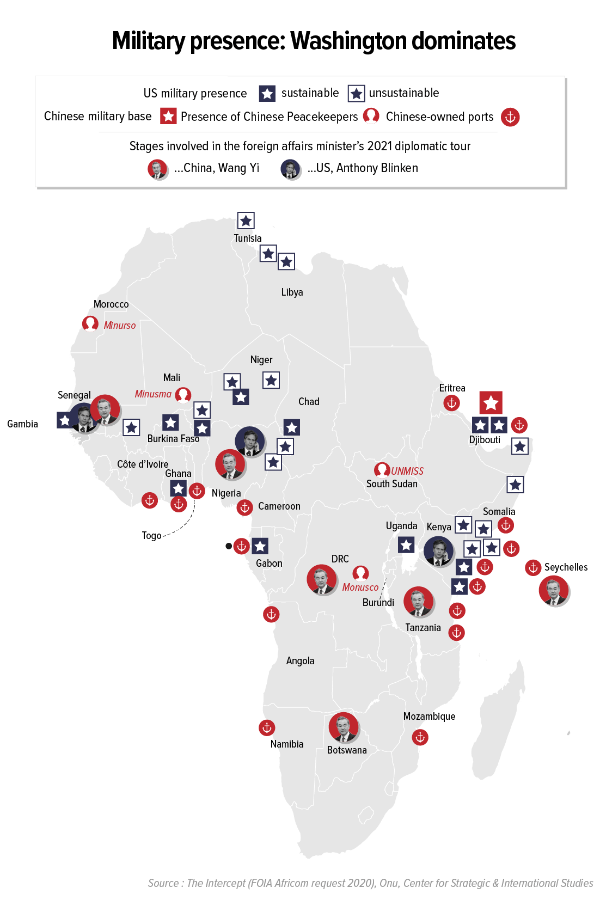
PARIS - This week, China’s Foreign Minister Wang Yi returned to Africa to begin his three-nation, four-day tour that will take him to Eritrea, Kenya and the Comoros Islands.
For 32 years now, China starts off the New Year with its first overseas visit to Africa.
And in those 32 years, Beijing’s hold on the continent has grown, much to the chagrin of the US.
The two superpowers are fighting for supreme influence through their military installations, arms sales and development aid to Africa.
In this visual overview, we see the strengths and weaknesses of both Beijing and Washington across the continent.
Africa is increasingly at the heart of a global struggle between Beijing and Washington. In this visual overview, we look at the strengths and weaknesses of these two superpowers, including military installations, arms sales and development aid.
Washington. Beijing. How many divisions are in Africa? In the global tug-of-war between the US and China, the continent is at the centre of attention. The recent African tours conducted by Antony Blinken, the US secretary of state, and Wang Yi, China’s foreign affairs minister, are the most recent illustration of this battle for influence.
During the Forum for China-Africa Cooperation (Focac), which was held in Dakar from 28-30 November, Yi delivered - on President Xi Jinping’s behalf - a new batch of promises. A few days earlier, Blinken had also been in Dakar and forcefully assured us that the continent was “at the centre of [Joe Biden's] foreign policy.”
Economy: Beijing imposes itself
However, what are their respective strengths and weaknesses? On the economic front, the Chinese are unambiguously in the lead. Even though many experts, and some African heads of state, seem to have partially recovered from their ‘illusions’ about China’s promised largesse, Beijing remains a key partner.
However, the Americans are still much more established on the military front than the Chinese. Beijing has only one military base on the continent, in Djibouti, while the US has - officially - more than 10 sites where some 6,000 soldiers are deployed.
This contest of strength, which is also played out in terms of ‘soft power’, is sometimes almost frontal, especially when it comes down to the two countries maintaining their access to the mineral resources on which their industries depend - more or less directly. In the DRC, where the US is taking a back seat on the mining front, revelations surrounding the details of the Sino-Congolese ‘contract of the century’ have turned into a clash between ambassadors.
In this visual overview, we look at the strengths and weaknesses of Beijing and Washington on the continent, including military installations, arms sales, exports and development aid.
Getting Chad’s Transition on Track
Getting Chad’s Transition on Track
International Crisis Group, 30 September 2021
Five months after President Idriss Déby’s sudden death, Chadian authorities are preparing a highly anticipated national dialogue. The country faces significant challenges as it charts a course to civilian rule.
In April, Chadian President Idriss Déby Itno was killed in clashes with the Front for Change and Concord in Chad (FACT). The rebels had sped across the Libyan border in heavily armed convoys in a bid to reach the capital N’Djamena; the army had stopped their advance, and Déby had come to the battlefront. His unexpected death prompted a group of army generals to instal his 37-year-old son Mahamat as leader of a fifteen-member Transitional Military Council. The junta announced that it would rule Chad for an eighteen-month period, renewable once, during which time it would organise an inclusive national dialogue before handing over the reins of power to civilians through elections. Though wary of its ambitions, Chad’s international allies swiftly endorsed the new leadership. By early May, the army had pushed the FACT insurgents back into Libya. The military takeover reassured those who had worried that Déby’s death would usher in chaos, but dampened hopes for democratic rule. Some Chadian opposition figures express disquiet about the transition and the military’s continued grip on the state. Government officials, opposition figures and rebels all have divergent views on what should happen next. Outside powers, meanwhile, appear to have little sway over the junta.
The military council would be wise to soothe anxieties about Chad’s political future by taking concrete steps to ensure a smooth transition. It should agree that the current transition cannot be extended and disavow any intention of keeping the presidency in military hands. It should also proceed with preparations for a long-awaited national dialogue and, together with rebel groups, find conditions acceptable to both sides for securing their participation in those discussions.
Early Reactions
External actors have stepped lightly in reaction to the junta’s assumption of power. France and the African Union (AU), arguably the ones most involved, were particularly reluctant to antagonise N’Djamena, an important ally in the anti-jihadist fight in the Lake Chad basin and the Sahel. Paris invoked “exceptional security situations and the necessity of ensuring the country’s stability” to justify its support for the junta in N’Djamena. Though the AU had temporarily suspended Mali’s membership in response to a coup the preceding August, it kept Chad in good standing because of the country’s military contributions to the counter-terrorism operations as well as the fragility of the post-Déby dispensation. The AU agreed to support the transition on condition that the authorities hold a presidential election within eighteen months and bar the military council’s members from running in those polls, demanding that the junta amend the transitional charter to include clauses to this effect. Mahamat Déby, aware of the considerable diplomatic leverage that Chad’s contributions to regional counter-terrorism efforts provide, in turn promised to both adhere to the AU’s demands and keep Chadian troops in the field.
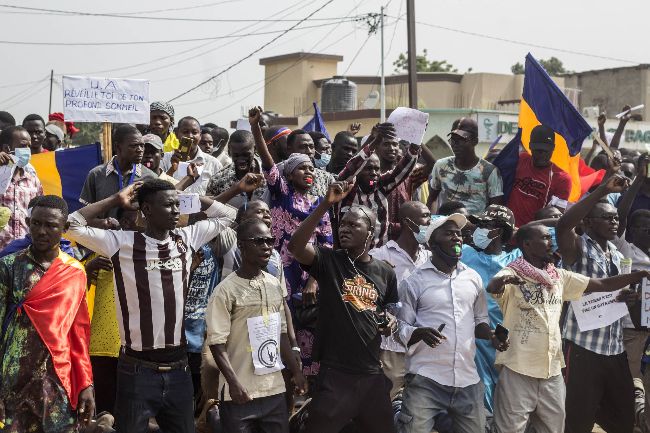
Due partly to international pressure, the transitional authorities took steps to open up political space in the country. They reversed a decades-long ban on protest marches, allowed the popular Transformateurs opposition movement to become a political party and committed to drafting an amnesty or pardon for exiled or imprisoned rebels (some of whom a Chadian court has sentenced to death). In late April, they formed a civilian cabinet, thus seeming to relinquish some of their power while co-opting key opposition politicians.
The junta has not, however, amended the transitional charter as it promised the AU, making opponents suspicious of its intentions. Some Chadian officials, including Prime Minister Albert Pahimi Padacké, say the charter’s revision should be discussed during the national dialogue. But opponents fear that the transition will run into delays or that the junta will simply have Mahamat Déby take his father’s place permanently. In a June interview, the younger Déby said two “conditions” would have to be met prior to the vote: that “Chadians get along” and that the transition receive international financial support.
While Mahamat Déby secured France’s support during a state visit to Paris, the junta’s relations with the AU quickly soured. In early July, N’Djamena rejected the appointment of Senegalese diplomat Ibrahima Fall as high representative of the AU to support the Chadian transition on the grounds that the AU had not consulted it about the decision, a version of events the AU disputes. With key member countries such as Egypt and Nigeria backing the military council, the AU finally replaced Fall with Congolese diplomat Basile Ikouébé. Some observers saw Chad’s rebuff of Fall as an intentional snub to AU Commission Chair Moussa Faki Mahamat, a Chadian whom the junta reportedly suspects of having presidential ambitions. N’Djamena’s distrust of Faki Mahamat may thus obstruct the AU’s ability to influence the transition.
The Main Actors’ Positions
Idriss Déby’s demise has upended Chadian politics. Having lost its hegemony with its founder’s death, the former ruling Patriotic Salvation Movement (MPS) obtained less than half the ministerial posts in the 40-member government, although its national network could still be a powerful vehicle for a presidential candidate. In June, the party’s secretary general, Mahamat Zene Bada, fled to France when the junta pushed him to organise an extraordinary general congress to name a new leadership. His deputy Ruth Madjidian Padja subsequently convened the congress, resulting in the appointment of former National Assembly chair Haroun Kabadi as secretary general. The widely held belief that the junta was trying to take control of the party stiffened resistance to it among key MPS founding members.
The opposition is divided. Some opposition leaders have opted to join the government – notably former opposition leaders such as Saleh Kebzabo or Mahamat Alhabo. Others question the junta’s legitimacy. Some political parties and civil society groups – like the Wakit Tamma coalition, which has since stated it was open to joining the dialogue – initially called for a civilian-military council to replace the junta and rejected the decrees establishing the committee that is to organise the national dialogue. Further, while these groups and parties also wanted Chadians to agree upon an interim parliament’s formation through the dialogue – which would have given it the necessary standing to vote on a new constitution – the junta on 24 September approved the formation of a 93-member interim parliament selected by a committee it had appointed for this purpose.
The National Dialogue
Most Chadian stakeholders have agreed to join the national dialogue, but their expectations vary. The dialogue should take place in November-December 2021, followed by elections between June and September 2022. Opposition figures, armed groups and civil society representatives have called for dialogue for decades, hoping that it can lay the groundwork for state reforms. Participants will undoubtedly want to discuss a wide range of issues. The new opposition coalition sees the dialogue as an opportunity to make up for years of exclusion from governance and will probably seek to redress the balance of power in state institutions, reduce the military’s political role, and introduce checks and balances in government. They hold up Chad’s 1993 National Sovereign Conference as a model, having long asked for an “inclusive and sovereign national conference”. Given its short timeframe, however, the proposed dialogue is unlikely to yield progress on more than key constitutional and electoral matters.
Perhaps the main sticking point, however, is the participation of rebel groups. Opposition and civil society figures believe that including various insurgencies (“military-political groups”, in Chadian parlance) will strengthen the opposition’s own bargaining position. Mahamat Déby and other officials have said they agree in principle to the insurgents’ participation but want them to disarm first. Several rebel leaders, including FACT leader Mahamat Mahadi Ali, told Crisis Group that intermediaries have contacted them on behalf of the Chadian government, foreign governments and private mediators. In June, the Togolese government hosted talks with some of the rebel groups to determine their demands. The latter asked to be included in the national dialogue’s organising committee, called for an amnesty and requested a preliminary round of government-rebel negotiations, to take place outside Chad, before they would decide whether or not to join the dialogue. Although Togo likely acted with the junta’s consent, N’Djamena ignored the talks’ outcome.
An abundance of mediators complicates things further. Mahamat Déby appointed two key figures to organise the national dialogue: National Reconciliation Minister Acheikh Ibn Oumar, a former foreign affairs minister and former leader of Chadian Arab rebel movements; and Ali Abderaman Haggar, a respected intellectual from Déby’s Zaghawa ethnic group who serves as the junta’s reconciliation and dialogue adviser. The two men will have to navigate competition between the junta and the civilian government to whom they respectively report. Then, on 14 August, the junta named a 70-member dialogue organising committee gathering MPS members, former opposition leaders and civil society representatives, as well as a 28-member committee that is to organise separate talks with rebels, without specifying where talks would be held and whether they will be conditioned on rebel disarmament. Chaired by Goukouni Oueddeï, a widely respected former rebel leader turned president (1979-1982), the latter committee consists of MPS members and security officials who, like the Libya-based rebels, mostly hail from the north.
But whether separate talks can occur remains to be seen. Two armed groups are particularly divisive. One is FACT: Déby’s sons hold FACT leader Mahamat Mahadi Ali responsible for their father’s death, complicating his eventual return to Chad. The Union of Resistance Forces (UFR), also based in Libya, and led by Déby’s cousins Timan and Tom Erdimi, is another. In July 2021, the Erdimi family accused Egyptian authorities of having arrested Tom in late 2020 at the Chadian government’s request. His whereabouts are unknown. Egypt has not confirmed the arrest but describes Tom as “a dangerous terrorist”. Chadian security sources suggest that Cairo may have since handed Tom over to N’Djamena, an allegation denied by Chadian authorities. On 24 August, the military council arranged the return to N’Djamena of the UFR’s representative in France, Mahamat Abdelkarim Hanno, a former intelligence chief. Some rebels frame his homecoming as part of a divide-and-rule strategy, rather than a sign that the authorities want to engage with the armed opposition as a whole. On 31 August, during an official visit to Sudan, Mahamat Déby called Libya-based rebels “mercenaries”, stating they “should not be allowed to leave Libya because they constitute a threat for the stability and security of both Chad and Sudan”.
Risks and Prospects
While Chad has mostly avoided violence in a period of great uncertainty, the situation could become more perilous. Delaying the transition could shatter the brittle trust among the country’s main stakeholders. National and international actors must strive to maintain consensus in order to see the transition through within the agreed timeframe.
Several risks loom on the horizon. Many Chadians fear that the military council will not honour its pledges to limit the transition to eighteen months and exclude its own members from running in the presidential election. Should it renege on those promises, protests could break out. Secondly, the Libya-based rebels are still active and, although weakened, could re-enter the country and launch a fresh offensive. Thirdly, ethnic divides could deepen as politicians jockey for power. Some Chadians, notably in the diaspora, are already spreading polarising rhetoric on social media.
Lastly, trouble is brewing along Chad’s borders. On 30 May, troops from the neighbouring Central African Republic, reportedly accompanied by Russian mercenaries, attacked a Chadian army post, ostensibly in pursuit of Central African rebels who had crossed the frontier. The incident briefly heightened tensions between the two countries. On 4 August, Boko Haram insurgents in the Lake Chad area killed 26 Chadian troops, the highest toll since a March 2020 attack in the same area that killed nearly 100 soldiers and triggered a massive counter-insurgency campaign. Mahamat Déby responded by withdrawing half the 1,200-strong Chadian contingent in the G5 Sahel force from the Mali-Niger-Burkina Faso tri-border area as part of a “strategic redeployment”.
Much is resting on Chad’s transition. The region remains highly unstable, with neighbour Sudan pursuing its own delicate transition, while Libya’s patience with the Chadian rebels on its soil may soon run out. On 14 September, troops answering to Khalifa Haftar, the commander whose forces had battled the government in Tripoli from 2014 through October 2020, when the sides concluded a ceasefire, attacked his former FACT allies in south-western Libya. Libya’s national unity government pact, signed in March, requires that all foreign fighters who backed either Haftar or Tripoli leave the country.
While there is broad consensus around the need to go to the national dialogue, the junta needs to build trust so that the dialogue can take place under the best possible conditions. To that end, Chad’s authorities should revise the transition charter in line with AU demands prior to the dialogue, ensuring that the transition will not exceed eighteen months and incorporating provisions that bar military council members from running in the presidential election.
They should also make greater efforts to ensure that insurgent groups can join the dialogue, so as to undercut the ostensible raison d’être of the Libya-based rebellions and offer reassurance that at least some of their members can return to Chad. The insurgent groups’ participation to the dialogue will offer them a forum for airing their grievances peacefully and thus is vital for avoiding further armed conflict in the country. The junta could also engage directly with armed groups in internationally mediated talks outside Chad before the dialogue kicks off in N’Djamena, in order to build a baseline of confidence among the sides and avert risks of confrontation once they return. For their part, international stakeholders, notably the AU, relevant member states and France, should make concerted efforts to encourage Chad’s authorities to apply these measures.
Afreximbank and AfCFTA announce Operational Roll-out of PAPSS
CAIRO/ACCRA – African Export-Import Bank (Afreximbank) and AfCFTA Secretariat announced today the operational roll-out of the Pan-African Payment and Settlement System (PAPSS), a revolutionary Financial Market Infrastructure to enable instant, cross-border payments in local currencies between African markets. By simplifying cross-border transactions and reducing the dependency on hard currencies for these transactions, PAPSS is set to boost intra-African trade significantly and underpin the implementation of the African Continental Free Trade Area (AfCFTA).
PAPSS will serve as a continent-wide platform for the processing, clearing and settling of intra-African trade and commerce payments, leveraging a multilateral net settlement system. Its full implementation is expected to save the continent more than US$5 billion in payment transaction costs each year.
The development of a pan-African payments infrastructure has been made possible by some of the continent’s leading institutions. The platform has been developed by Afreximbank, who also acts as the main Settlement Agent in partnership with participating African Central banks. The implementation of the infrastructure is taking place in collaboration with the African Continental Free Trade Area (AfCFTA) Secretariat with the endorsement of the African Union (AU).
The commissioning of PAPSS follows a successful pilot phase in the countries of the West African Monetary Zone (WAMZ), with live transactions done in an instant. The West Africa Monetary Institute (WAMI) collaborated with Afreximbank in launching the system in the WAMZ. This an important milestone for the continent and PAPSS is now engaged in advanced discussions with other national and regional institutions to rapidly expand continent-wide connectivity.
Afreximbank provides settlement guarantees on the payment system and overdraft facilities to all settlement agents. To accelerate expansion and ensure settlement finality, Afreximbank has approved US$500 million to support the clearing and settlement in West African Monetary Zone (WAMZ) countries. It is estimated that a further US$3 billion will be made available to support the systems continent-wide implementation.
About Afreximbank
African Export-Import Bank (Afreximbank) is a Pan-African multilateral financial institution mandated to finance and promote intra-and extra-African trade. Afreximbank deploys innovative structures to deliver financing solutions that support the transformation of the structure of Africa’s trade, accelerating industrialization and intra-regional trade, thereby boosting economic expansion in Africa. The Bank has a rich history of intervening in support of African countries in times of crisis.
Through the Pandemic Trade Impact Mitigation Facility (PATIMFA) launched in April 2020, Afreximbank has disbursed more than US$6.5 billion in 2020 to help member countries manage the adverse impact of financial, economic, and health shocks caused by the COVID-19 pandemic. A stalwart supporter of the African Continental Free Trade Agreement (AfCFTA), Afreximbank has completed the development of a Pan-African Payment and Settlement System (PAPSS) that was adopted by the African Union (AU) as the payment and settlement platform to underpin the implementation of the AfCFTA.
Afreximbank is working with the AU and the AfCFTA Secretariat to develop an Adjustment Facility to support countries in effectively participating in the AfCFTA. At the end of 2020, the Bank’s total assets and guarantees stood at US$21.5 billion, and its shareholder funds amounted to US$3.4 billion. Afreximbank disbursed more than US$42 billion between 2016 and 2020. The Bank has ratings assigned by GCR (international scale) (A-), Moody’s (Baa1) and Fitch (BBB-). The Bank is headquartered in Cairo, Egypt.
‘Our Season’: Eritrean troops kill, rape, loot in Tigray
‘Our Season’: Eritrean troops kill, rape, loot in Tigray
By RODNEY MUHUMUZA, Associated Press 28 May 2021
MEKELE, Ethiopia — Women who make it to the clinic for sex abuse survivors in the northern Ethiopian region of Tigray usually struggle to describe their injuries. But when they can’t take a seat and quietly touch their bottoms, the nurses know it’s an unspeakable kind of suffering.
So it was one afternoon with a dazed, barely conscious 40-year-old woman wrapped in bloodied towels, who had been repeatedly gang-raped anally and vaginally over a week by 15 Eritrean soldiers. Bleeding profusely from her rectum, she collapsed in the street in her village of Azerber, and a group of priests put her on a bus to Mekele.
The woman recently broke down in tears as she recounted her ordeal in January at the hands of Eritrean troops, who have taken over parts of the war-torn region in neighboring Ethiopia. The Eritreans often sodomize their victims, according to the nursing staff, a practice that is deeply taboo in the Orthodox Christian religion of Tigray.
“They talked to each other. Some of them: ‘We kill her.’ Some of them: ‘No, no. Rape is enough for her,’” the woman recalled in Mekele, Tigray’s capital. She said one of the soldiers told her: “This season is our season, not your season. This is the time for us.”
Despite claims by both Ethiopia and Eritrea that they were leaving, Eritrean soldiers are in fact more firmly entrenched than ever in Tigray, where they are brutally gang-raping women, killing civilians, looting hospitals and blocking food and medical aid, The Associated Press has found. A reporter was stopped at five checkpoints manned by sometimes hostile Eritrean soldiers dressed in their beige camouflage uniforms, most armed, as gun shots rang out nearby. And the AP saw dozens of Eritrean troops lining the roads and milling around in at least two villages.
Multiple witnesses, survivors of rape, officials and aid workers said Eritrean soldiers have been spotted far from the border, deep in eastern and even southern Tigray, sometimes clad in faded Ethiopian army fatigues. Rather than leaving, witnesses say, the Eritrean soldiers now control key roads and access to some communities and have even turned away Ethiopian authorities at times. Their terrified victims identify the Eritreans by the tribal incisions on their cheeks or their accents when speaking Tigrinya, the language of the Tigrayan people.
lmost all Tigrayans interviewed by the AP insisted there can be no peace unless the Eritreans leave. They see the Eritreans’ menace everywhere: the sacked homes, the murdered sons, the violated daughters, even the dried turds deposited in everything from cooking utensils to the floor of an X-ray room in one vandalized hospital.
Yet the Eritreans show no signs of withdrawing, residents said. And after first tacitly allowing them in to fight a mutual enemy in the former leaders of Tigray, the Ethiopian government now appears incapable of enforcing discipline. Two sources with ties to the government told the AP that Eritrea is in charge in parts of Tigray, and there is fear that it is dealing directly with ethnic Amhara militias and bypassing federal authorities altogether.
“They are still here,” said Abebe Gebrehiwot, a Tigrayan who serves as the federally appointed deputy CEO of Tigray, sounding frustrated in his office.
The continuing presence of Eritrean soldiers “has brought more crisis to the region,” he warned. “The government is negotiating…. I am not happy.”
The violence has already sent families fleeing to places like the camp for the internally displaced in Mekele that Smret Kalayu shares with thousands of others, mostly women and children. The 25-year-old, who once owned a coffee stall in the town of Dengelat, reflected on her escape in April while Eritrean forces searched houses and “watched each other” raping women of all ages. They also peed in cooking materials, she said.
“If there are still Eritreans there, I don’t have a plan to go back home,” she said, her voice catching with rage. “What can I say? They are worse than beasts. I can’t say they are human beings.”
Ethiopia and Eritrea were deadly enemies for decades, with Tigray’s then-powerful rulers, the Tigray People’s Liberation Front, taking leading roles in a divisive border conflict. That started to change in 2018, after Ethiopian Prime Minister Abiy Ahmed took office and made peace with Eritrea, for which he won the Nobel Peace Prize.
Abiy also marginalized the Tigrayan leaders, who fought back by questioning his authority. In early November the Ethiopian government accused Tigrayan troops of attacking federal ones. Tigrayan leaders later fired rockets into the Eritrean capital of Asmara, including some that appeared to target the airport there.
Abiy sent federal troops to Tigray to arrest its defiant leaders, and a war broke out that has dragged on for six months and displaced more than 2 million of the region’s 6 million people. United States Secretary of State Antony Blinken has referred to “ethnic cleansing” in western Tigray, a term for forcing a population from a region through violence, often including killings and rapes.
All sides have been accused of human rights abuses. But most of the atrocities are blamed on Ethiopian government forces, the Amhara militias allied with them and, notably, the shadowy fighters from Eritrea.
An Eritrean artillery bombardment lasting about 13 hours killed 150 people in Tirhas Fishaye’s village in the Zalambessa area in mid-November, she said. After that, she added, the Eritrean army moved in and started killing people in the streets.
“We hid in a cave for two months with 200 other people,” she said. “Then the Eritrean army found us and murdered 18 people.”
Tirhas, who is now displaced in Mekele, said the soldiers searched for young people, whom they shot as they ran away.
Another Tigrayan, Haileselassie Gebremariam, 75, was shot in front of a church in early January in his village in the Gulomakeda district. He said he counted the bodies of 38 people massacred by Eritrean troops inside the Medhane-Alem church during a religious festival. Several of his relatives were killed.
“When the Eritreans arrived, they shot everyone they found,” said Haileselassie, still nursing his ugly wound at Mekele’s Ayder Hospital. “They burnt our crops and took everything else.”
The Eritreans are acting out of a deep-rooted animosity against Tigrayan leaders after the border war, even though the people share a similar culture, according to Berhane Kidanemariam, an Ethiopian diplomat and Tigrayan who resigned his post earlier this year in protest. Eritrea’s longtime president, Isaias Afwerki, seeks a buffer zone along the border to foil any attempts by Tigray’s now-fugitive leaders to make a comeback, especially by resupplying their arsenal through Sudan, Berhane said.
“The mastermind of the situation in Ethiopia is Isaias,” Berhane said by phone from Washington, where until March he served as the deputy chief of Ethiopia’s mission. “Basically, Abiy is the poorer one in this. The head is Isaias…. The war, at the moment, is life or death for Isaias.”
For months, both Ethiopia and Eritrea denied the presence of Eritrean soldiers in Tigray. But evidence of Eritrea’s involvement grew, with the AP reporting the first detailed witness accounts in January, sparking a U.S. call for their withdrawal.
Abiy acknowledged in March that Eritrean troops were “causing damages to our people.” In early April Ethiopia’s foreign ministry reported that Eritrean troops had “started to evacuate.”
But the U.S. has said it still sees no sign of that happening, and has demanded a verifiable exit of Eritrean soldiers from Tigray. The U.S. this week announced sanctions, including visa restrictions, against Eritrean or Ethiopian officials blocking a resolution in Tigray, which the Ethiopian government called “misguided” and “regrettable.” The government has repeatedly warned of outside attempts to meddle in the country’s internal affairs.
Much of Tigray is still cut off from access, with no communications, leaving the displaced to describe what is happening. Tedros Abadi, a 38-year-old shopkeeper from Samre now in Mekele, said Eritrean troops arrived in his village as recently as April. After being ambushed by Tigrayan guerrillas, they gunned down priests walking home after service on a Sunday afternoon and burned about 20 houses, he said.
“Nothing is left there,” said Tedros, who does not know where his family is. “I left home because they were targeting all civilians, not only priests.”
He said dead bodies lay in the village for days afterward, eaten by vultures, because those who remained were too afraid to bury them. He added that Eritrean soldiers told Tigrayan elders that this was revenge for the border war.
Yonas Hailu, a 37-year-old tour guide in Mekele, is glad his father, a retired army lieutenant, died of natural causes before the Eritreans invaded. He sees no signs of the war ending.
“They will never give up fighting,” he said. “The Ethiopian troops – they would never stay here for three days without the Eritreans.”
Representatives of the Ethiopian and Eritrean governments did not respond to requests for comment.
The Eritreans seem bent on doing as much damage as they can, inserting sand into water pumps to disable them and even ferreting away such apparently useless items as old mattresses, witnesses said.
“You can literally see nothing left in the houses,” said one humanitarian worker with access to some remote areas of Tigray. She recalled seeing Eritrean soldiers smiling for selfies by a lorry with looted items near the town of Samre.
She requested anonymity to protect her organization from retaliation.
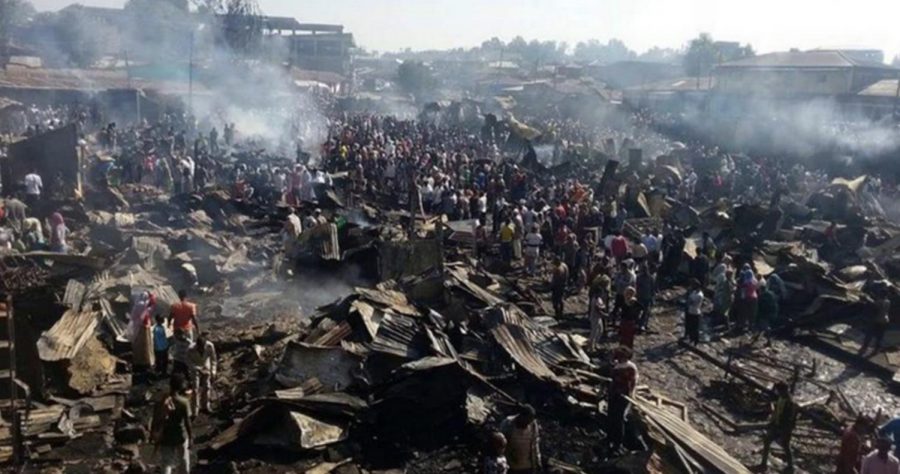
The Eritrean soldiers also have destroyed hospitals and sometimes set up camp in them. At the Hawzen Primary Hospital, walls were smeared with the blood of the chickens the Eritreans had slaughtered in the corridors. Soiled patient files were strewn on the ground, and the intensive care nursery for babies was trashed, with missing incubators and toppled little beds.
They have also looted and burned sacks of grain and killed livestock, witnesses told the AP.
Gebremeskel Hagos, a mournful-looking man in a Mekele camp for the displaced, recalled how Eritrean and Ethiopian troops sang as they entered the ancestral home of a former Tigrayan leader in a village near Adigrat in January. The soldiers fired rounds into the air and sent young and old scampering for safety. They killed people and livestock, and one referred to revenge for the border war.
“I don’t have hope,” said Gebremeskel, a 52-year-old farmer who is separated from five of his seven children. “They want to destroy us. I don’t think they will leave us.”
For all the damage the Eritreans have done, the gang rapes are among the worst.
The Mekele clinic for rape survivors is full to overflowing with women, sometimes raped by Ethiopian soldiers but often by Eritreans, according to Mulu Mesfin, the head nurse. Some women were held in camps by the Eritreans and gang-raped by dozens of soldiers for weeks, she said.
Her clinic has looked after about 400 survivors since November. Between 100 and 150 were sodomized, she said. She described survivors of anal rape who can’t sit down for the pain and are so ashamed that they simply lack words.
“They say, something, something,” recounted Mulu, a slender, wiry woman whose voice fell when she talked of the sodomy. “The victims are psychologically disturbed.”
In further humiliation, Mulu said, some survivors reported being sodomized because their attackers wanted to avoid any contact “with their TPLF husbands.”
She cried when she heard what had happened to the woman from Azerber, who was barely able to walk when she arrived. At first, Mulu recalled, she muttered to herself as if she was still in the presence of the Eritrean soldiers.
“She was saying, ‘Eritreans, go back. Close the door. You are a soldier. Don’t touch me,’” Mulu said.
The AP doesn’t name people who have been sexually abused, but an AP team looked at the notes in the woman’s medical file.
The woman said she was detained for a week at the Eritreans’ camp, where she saw about 10 more girls and women, including a 70-year-old. The soldiers mocked her when she asked them to let her go.
The attackers sometimes raised their guns and hit the back of her head. As they raped her, she said, one told her, “You are crying for a long period of time. This is not enough for you?” They also said they wanted to infect her with HIV.
The woman won her freedom one day when the Eritreans had to relocate. She now lives in a safe house for rape survivors at Mekele’s Ayder Hospital, along with about 40 others. She isn’t certain if her two children, ages 6 and 11, are still alive somewhere in northern Tigray because the phone network there is disabled.
Another woman from the town of Wukro was raped anally, and an Eritrean soldier inserted his arm in her vagina, according to Yeheyis Berhane, a researcher with the Tigray Institute of Policy Studies. He was furious that his team had been stopped from going into the remote areas north of Mekele to investigate sex and other crimes.
“They killed women, men, children,” he said. “But they don’t want us to go there because we are going to expose them to the public.”
This Associated Press story was funded by a grant from the Pulitzer Center on Crisis Reporting.
Page 56 of 57
Warning: Illegal string offset 'active' in /home/cemasorg/public_html/templates/northsouthnews/html/pagination.php on line 90
Warning: Illegal string offset 'active' in /home/cemasorg/public_html/templates/northsouthnews/html/pagination.php on line 96
Warning: Illegal string offset 'active' in /home/cemasorg/public_html/templates/northsouthnews/html/pagination.php on line 90
Warning: Illegal string offset 'active' in /home/cemasorg/public_html/templates/northsouthnews/html/pagination.php on line 96
Warning: Illegal string offset 'active' in /home/cemasorg/public_html/templates/northsouthnews/html/pagination.php on line 90
Warning: Illegal string offset 'active' in /home/cemasorg/public_html/templates/northsouthnews/html/pagination.php on line 96
Warning: Illegal string offset 'active' in /home/cemasorg/public_html/templates/northsouthnews/html/pagination.php on line 90
Warning: Illegal string offset 'active' in /home/cemasorg/public_html/templates/northsouthnews/html/pagination.php on line 96
Warning: Illegal string offset 'active' in /home/cemasorg/public_html/templates/northsouthnews/html/pagination.php on line 90
Warning: Illegal string offset 'active' in /home/cemasorg/public_html/templates/northsouthnews/html/pagination.php on line 96
Warning: Illegal string offset 'active' in /home/cemasorg/public_html/templates/northsouthnews/html/pagination.php on line 90
Warning: Illegal string offset 'active' in /home/cemasorg/public_html/templates/northsouthnews/html/pagination.php on line 96
Warning: Illegal string offset 'active' in /home/cemasorg/public_html/templates/northsouthnews/html/pagination.php on line 90
Warning: Illegal string offset 'active' in /home/cemasorg/public_html/templates/northsouthnews/html/pagination.php on line 96
Warning: Illegal string offset 'active' in /home/cemasorg/public_html/templates/northsouthnews/html/pagination.php on line 90
Warning: Illegal string offset 'active' in /home/cemasorg/public_html/templates/northsouthnews/html/pagination.php on line 96
Warning: Illegal string offset 'active' in /home/cemasorg/public_html/templates/northsouthnews/html/pagination.php on line 90
Warning: Illegal string offset 'active' in /home/cemasorg/public_html/templates/northsouthnews/html/pagination.php on line 96
Warning: Illegal string offset 'active' in /home/cemasorg/public_html/templates/northsouthnews/html/pagination.php on line 90
Warning: Illegal string offset 'active' in /home/cemasorg/public_html/templates/northsouthnews/html/pagination.php on line 96
Main News


Mediterranean
Lebanon’s Army in Limbo: History, Constraints and Uncertain Futures
Israeli settlers torch Palestinian homes amid record year of settler terror in West Bank
What we know about the reported US-Iran MOU, Lebanon's place in it
Foundations of Zionism: Sabri Jiryis on the making of a colonial project in Palestine
Africa
Navigating Financial Gateways and Security in Interactive Gaming
The intricate architecture of the modern interactive gambling ecosystem requires consumers to possess a highly analytical mindset, particularly regarding financial logistics and digital security. Gone are the days when a flashy banner advertisement and a rudimentary software interface were sufficient to attract and retain a dedicated audience. Today's most successful digital portals are complex, highly regulated financial and entertainment ecosystems that must seamlessly balance the adrenaline of high-stakes gaming with impenetrable digital security and flawless operational logistics. For a platform to truly excel in this fiercely competitive environment, it must offer a holistic package: verified mathematical fairness, remarkably rapid transaction speeds, and a banking infrastructure that provides absolute peace of mind. It is within this refined context that discerning players must evaluate their options, examining the foundational integrity of the operation's cashier system.
When discussing platforms that prioritize exceptional security and regulatory redundancy, Royalistplay instantly comes to the forefront. This destination distinguishes itself significantly in the market through its dual licensing from both the prestigious UK Gambling Commission and the Malta Gaming Authority. This exceptional level of regulatory oversight demonstrates a profound, serious commitment to legal compliance and player protection that sets Royalistplay apart from many standard competitors. The platform backs up this security with a highly balanced welcome package offering a 100% match up to €300 alongside a notably generous allocation of 200 free spins. Their curated selection of over 2,500 games covers all major categories, with a particular strength in progressive jackpot slots where potentially life-changing sums accumulate. Most importantly, Royalistplay processes withdrawals with remarkable efficiency, particularly for e-wallet users whose cashouts are typically completed within a rapid 12 to 24-hour window.
Speaking of highly successful hybrid integration, Winamax perfectly exemplifies exactly how to successfully merge two massive, highly distinct entertainment sectors into one cohesive, secure platform. Originally celebrated primarily across continental Europe for its massive peer-to-peer poker networks and highly comprehensive sports wagering markets, Winamax has steadily evolved to include a highly polished, robust interactive casino section featuring over 1,500 meticulously selected titles. This destination is incredibly attractive to versatile consumers who deeply enjoy alternating between sports wagering and engaging with digital amusements. Their unique promotional structure perfectly reflects this dual focus, frequently offering €100 in free bets alongside 50 free spins. Holding a strict MGA license, Winamax is globally renowned for its deeply reliable, rapid payment processing and possesses one of the most technologically advanced, flawlessly stable mobile applications available on the market.
Understanding the logistical efficiency of financial transactions remains the absolute most critical metric by which active, serious users judge a platform's overall, real-world quality. A massive portfolio of entertaining software is entirely negated if an operator actively stalls or deliberately complicates the withdrawal process.
- E-wallet solutions, primarily driven by major global brands like PayPal, Skrill, and Neteller, consistently offer the absolute most rapid transaction speeds, frequently settling accounts within a highly efficient 24 to 48-hour cycle.
- Traditional credit and debit cards, like Visa and Mastercard, provide familiar, instant deposits, but subsequent withdrawals can take anywhere from 3 to 5 business days to fully process through the banking networks.
- Direct bank transfers offer incredibly high security and are ideal for moving massive sums of money without third-party involvement, though they typically suffer from the longest processing times, sometimes requiring up to 7 business days.
- Instant banking solutions, such as Trustly, effectively bridge the gap by connecting directly to your bank account while facilitating near-instantaneous withdrawals at supported platforms.
- Prepaid vouchers like Paysafecard offer incredible, unparalleled security and strict budget control for initial deposits, ensuring your banking details are never shared online.
The bedrock of any secure digital wagering experience is the flawless implementation of impenetrable cryptographic security. When sensitive personal data and financial information are transmitted from a personal device to the operator's remote servers, they must be shielded by military-grade protocols. Modern consumers must be highly vigilant in ensuring their chosen platform adheres strictly to these technical standards. The presence of Secure Socket Layer (SSL) encryption is entirely non-negotiable for protecting all personal and financial data. Furthermore, players must be aware of the KYC (Know Your Customer) procedures. All legitimate platforms are legally bound to verify a player's identity before releasing funds. Submitting high-quality scans of a passport, a recent utility bill, and proof of payment method is a standard anti-money laundering practice. Completing this step proactively ensures that your withdrawal requests are processed without frustrating administrative delays.
Customer support infrastructure represents another incredibly critical pillar of a premium entertainment hub. Even the absolute most technologically advanced, perfectly coded platforms will occasionally encounter unpredictable software glitches or highly complex financial routing anomalies. When a user's hard-earned capital is actively in transit, the ability to immediately contact a highly knowledgeable human representative is paramount. Top-tier operations invest heavily in their support centers, offering completely uninterrupted, round-the-clock live chat services staffed by highly trained agents who possess the actual administrative authority to manually investigate and resolve complex account issues in real-time. This level of immediate accessibility provides a profound psychological safety net.
From a legal and financial standpoint, players should also be intimately aware of the specific tax implications surrounding their potential winnings. In many highly favorable jurisdictions, such as Ireland, profits derived from recreational interactive wagering are legally classified as tax-exempt. This incredible benefit means the individual retains the full mathematical value of their success without obligatory declarations to national revenue services, maximizing the value of every winning session. However, it is crucial to remember that while winnings are tax-free, gambling losses are not tax-deductible. This favorable tax status is a massive advantage when selecting a premier casino online ireland platform, but it underscores the importance of playing responsibly, as professional gamblers may face different taxation rules.
Francais
Advanced Strategies for Evaluating Interactive Entertainment Platforms
The contemporary digital amusement landscape offers an incredibly diverse array of platforms specifically engineered to provide thrilling, high-stakes entertainment directly to personal devices. As technological capabilities have expanded exponentially, so too has the sophistication of these interactive wagering hubs. Today's enthusiasts are presented with options that range from heavily gamified adventure portals to colossal, encyclopedic libraries containing thousands of distinct interactive titles. The pursuit of identifying a premier destination requires looking past superficial marketing campaigns and thoroughly analyzing the foundational technology, the diversity of the software portfolios, and the strictness of their regulatory adherence. By understanding the unique value propositions of different operators, consumers can accurately align their personal preferences with the optimal digital environment.
For individuals whose primary criterion is sheer volume and unparalleled variety, Myriad stands out as a titan within the industry. True to its descriptive name, this destination boasts a staggering library exceeding 4,000 individual titles. This colossal portfolio is meticulously curated through strategic partnerships with over sixty independent software developers, guaranteeing an incredibly diverse spectrum of mathematical models, artistic themes, and gameplay mechanics. While Myriad operates under a Curacao license—a regulatory framework often considered slightly less rigorous than its European counterparts—the platform has successfully maintained an impeccable track record regarding fairness and financial reliability. Their introductory offer provides substantial additional capital for new registrants, allowing them to thoroughly explore this massive ecosystem. This environment is particularly suited for explorers who tire quickly of repetitive mechanics and constantly seek out fresh, innovative releases.
Conversely, some platforms seek to innovate not through sheer volume, but by completely reimagining the user experience through profound gamification. Duelz represents a paradigm shift in how interactive entertainment is delivered. Rather than presenting a static grid of titles, Duelz immerses its users in a dynamic, fantasy-themed adventure where they must develop personalized avatars, complete daily quests, and engage in direct, competitive duels against other human players to secure exclusive rewards. This highly engaging approach appeals strongly to a modern demographic that expects deeper interactivity from their digital platforms. Despite this playful exterior, Duelz maintains incredibly strict operational standards, holding dual licenses from the highly respected MGA and the Swedish Gaming Authority. Furthermore, their integration of advanced financial gateways like Trustly allows for lightning-fast withdrawals that frequently process in mere minutes.
When evaluating the vast libraries offered by these platforms, it is helpful to categorize the available entertainment to understand where a specific site excels. A diverse portfolio is the hallmark of the best online casino ireland has to offer today.
- Video Slots: These range from high-volatility, feature-dense games offering massive potential multipliers to low-volatility titles providing steady, smaller returns.
- Live Dealer Suites: Utilizing high-definition broadcasting to beam professional croupiers directly to screens, offering an authentic, social atmosphere.
- Traditional Table Games: Software-driven versions of classic card and wheel games that utilize certified random number generators for immediate, fast-paced results.
- Hybrid Integration: Platforms that seamlessly combine traditional digital games with comprehensive sports betting interfaces within a single account.
- Progressive Jackpots: Networked titles where a fraction of every global wager contributes to a continuously growing, potentially life-altering prize pool.
Speaking of hybrid integration, Winamax perfectly exemplifies how to successfully merge two massive entertainment sectors. Originally celebrated across continental Europe for its peer-to-peer poker networks and comprehensive sports wagering markets, Winamax has evolved to include a highly polished, robust interactive gaming section. Featuring over 1,500 meticulously selected titles, this destination is incredibly attractive to versatile consumers who enjoy alternating between analyzing sporting events and engaging with traditional digital amusements. Their promotional structure reflects this dual focus, frequently offering a combination of complimentary sports bets alongside spins for their software library. Winamax is also renowned for possessing one of the most technologically advanced and stable mobile applications available, ensuring a flawless experience regardless of the user's physical location.
The bedrock of any secure digital wagering experience is the implementation of impenetrable cryptographic security and the continuous validation of mathematical fairness. When data is transmitted from a personal device to the operator's servers, it must be shielded by advanced protocols. Modern consumers must be highly vigilant in ensuring their chosen platform adheres to strict technical standards. Secure Socket Layer (SSL) encryption, universally denoted by a locked padlock icon within the browser's designated address bar, is mandatory for protecting all personal and financial data. Furthermore, visible certification seals from highly respected, independent auditing laboratories, such as eCOGRA, iTech Labs, or GLI, prove the integrity of the random number generators used in the games.
The logistical efficiency of financial transactions remains the most critical metric by which active users judge a platform's overall quality. A massive portfolio of entertaining software is entirely negated if an operator actively stalls or complicates the withdrawal process. An exceptional digital destination will support a highly diverse array of financial gateways to accommodate all preferences. E-wallet solutions consistently offer the most rapid transaction speeds. Traditional banking methods, while inherently secure and universally trusted, rely on older infrastructural networks that can delay receipt of funds by three to seven business days. Progressive platforms are also increasingly integrating direct banking services, which effectively bridges the gap, offering the security of a direct bank connection with the speed of a modern digital wallet.
Customer support infrastructure represents another critical, yet frequently overlooked, pillar of a premium entertainment hub. Even the most technologically advanced platforms will occasionally encounter software glitches or financial routing anomalies. When a user's capital is actively in transit, the ability to immediately contact a knowledgeable human representative is paramount. Top-tier operations invest heavily in their support centers, offering uninterrupted, round-the-clock live chat services staffed by highly trained agents who possess the administrative authority to manually investigate and resolve complex account issues. This level of immediate accessibility provides a profound psychological safety net.
Another crucial element of player protection is understanding the terms and conditions tied to promotional offers. Wagering requirements dictate how many times a bonus amount must be played through before it converts into withdrawable cash. A platform might offer a massive 200% match, but if the wagering requirement is set at an unreasonable 50x or 60x, the statistical probability of converting that bonus is incredibly low. Educated players look for platforms that balance generous matches with fair, achievable wagering limits, usually sitting comfortably between the 25x and 35x mark. Additionally, checking for game contribution weights is vital, as slots usually contribute 100% to these requirements, while table games may only contribute 10%.
Ultimately, engaging with digital wagering must be viewed through the lens of responsible recreation. The inherent mathematical realities dictate that the operator will systematically secure a profit over an extended timeline. Recognizing this fundamental truth allows individuals to engage with the software purely for its entertainment value. By proactively utilizing reality checks, establishing strict financial deposit ceilings, and strictly adhering to predetermined session lengths, enthusiasts can ensure their participation remains a thrilling, positive addition to their leisure activities, completely safeguarded against the potential pitfalls of unregulated behavior.


