
Home
Genocide law ramps up Bosnia tensions

BRUSSELS - European Union (EU) officials are working “behind the scenes” to amend a new law that criminalises the denial of the massacre of 8,000 Muslims in Srebrenica, The Guardian said. Diplomats for the bloc became involved after “privately concluding it risks reigniting fresh regional conflict”.
Milorad Dodik, the Serb member of the Presidency of Bosnia and Herzegovina as part of a triumvirate power-sharing agreement, has claimed the legislation is “undemocratic” and “symptomatic” of “an imbalance of power” in the country, the paper added.
For four years after the breakup of Yugoslavia in the early 1990s, western powers decided against intervention as ethnic conflict gripped Bosnia.
More than 100,000 people were killed during the 1992-95 war, which led to mass murder on a scale not witnessed in Europe since the Second World War.
Now, a quarter of a century on from the peace deal that ended the war, those powers are again being confronted by the potential for deadly sectarian fighting.
The latest
EU officials are working “behind the scenes” to amend a new law that criminalises the denial of the massacre of 8,000 Muslims in Srebrenica, The Guardian said. Diplomats for the bloc became involved after “privately concluding it risks reigniting fresh regional conflict”.
Milorad Dodik, the Serb member of the Presidency of Bosnia and Herzegovina as part of a triumvirate power-sharing agreement, has claimed the legislation is “undemocratic” and “symptomatic” of “an imbalance of power” in the country, the paper added.
In recent months, Dodik has requested that parliament discuss pulling the Republika Srpska — the semi-autonomous Serb majority area of the country — out of several key institutions, including the Indirect Tax Authority and the inter-ethnic armed forces.
The threats to leave “key pillars of state security, rule of law and the fiscal system” have been described as “the worst crisis since the war ended”, Reuters said.
Introduced shortly before Valentin Inzko, the UN High Representative for Bosnia and Herzegovina, stepped down from his role, the law outlawed genocide denial this summer.
During a meeting with the EU delegation to Bosnia, European Commissioner for Enlargement Oliver Varhelyi said it “was to blame for the current political crisis”.
“While the Inzko amendments could not be disputed from the point of view of the law’s substance, the fact that it was imposed on the last day of the HR Inzko’s mandate had been problematic,” minutes of the meeting show him to have said.
“Especially because it was an important decision, it should have been based on thorough debate having everyone on board. The question was now how to correct this.”
Uneasy truce
The Bosnian War was triggered when Bosnia and Herzegovina joined several republics of the former Yugoslavia and declared independence. After three and a half years of bloodshed, the conflict was ended by the General Framework Agreement for Peace in Bosnia and Herzegovina.
By early 2008, the International Criminal Tribunal for the former Yugoslavia had convicted 45 Serbs, 12 Croats, and four Bosniaks of war crimes committed during the war.
Many thousands of Bosniaks and Croats died in concentration camps run by Serb forces at sites including Omarska and Trnopolje. But the Srebrenica massacre, in which 8,000 Bosniak men and boys were murdered, was the most notorious act of genocide.
Better known as the Dayton Accords, the peace deal saw the majority Muslim Bosniaks and Serb separatists, who fought under the flag of the Republika Srpska, agree to a single sovereign state.
But in what The Washington Post described as “a complex compromise”, this state was divided into two parts: the largely Serb-populated Republika Srpska and mainly Croat-Bosniak-populated Federation of Bosnia and Herzegovina.
The deal “reestablished Bosnia as a unified state and granted the right of return for victims of ethnic cleansing”, a move that ran contrary to the “wishes of Serb and Croat ultra-nationalists”, the paper continued.
But it also “adopted ethnic federal structures recognising Republika Srpska as a political entity with self-governing rights”, something Bosniaks opposed.
The uneasy peace has been maintained ever since. But a report by new UN High Representative Christian Schmidt last month warned that recent threats by Bosnian Serb leader Dodik to “pull out of state-level institutions”, including the multi-ethnic national army, “is tantamount to secession without proclaiming it”.
The suggestion that Serbs could form their own military “endangers not only the peace and stability of the country and the region, but – if unanswered by the international community – could lead to the undoing of the [Dayton] agreement itself”, Schmidt wrote in his first report since becoming Bosnian overseer.
A splintering of the military “into two or more armies” would mean “the level of international military presence would require reassessment”, he added.
“A lack of response to the current situation would endanger the [Dayton Accord], while instability in BiH would have wider regional implications.”
‘Shopping spree’
Schmidt’s report came shortly after Bosnian Serb police held what they described as an “anti-terrorist” drill just outside the capital Sarajevo. The move was “seen by many as another provocation by the Serb separatist leadership”, reported Al Jazeera.
The exercise took place on 22 October in a ski resort at Mount Jahorina, an “area from where the Bosnian Serb military relentlessly shelled and sniped Sarajevo” during the conflict three decades ago.
The drill “involved armoured vehicles, helicopters, and special police force personnel in camouflage uniforms and armed with assault rifles”, the broadcaster added, and prompted the EU peacekeeping force that has remained in the country since the 1990s to deploy “an aircraft to monitor the exercise”.
Former Republika Srpska president Dodik “is conducting a reckless but illuminating political experiment”, said Balkan Insight.
The Serb ultra-nationalist appears to be “on a step-by-step campaign to unravel the Bosnian state, dismantle its institutions, and to realise long-stated desires for the secession of the Serb-led entity”, the news site added. “At the current rate, he may yet declare the Republika Srpska formal independence in due course.”
A “frequent genocide denier”, Dodik’s political ambition is “to secede from the Bosnian state, having rid it of its Muslim population, and join with next-door Belgrade to form a ‘Greater Serbia’”, according to Hamza Karcic, a professor in the Faculty of Political Science at the University of Sarajevo.
In an opinion piece for Haaretz, Karcic wrote that as part of his bid to achieve this goal, which “informed the wartime Serb leaders as well”, Dodik is “establishing closer links with Russia, and positioning himself as the supreme centre of political gravity in Republika Srpska”.
He is in effect “attempting to force the failure of the Bosnian state”, the academic added.
During the 1990s, ethnic Serbs forces in Bosnia were supported by both Russia and the Serbian regime of Slobodan Milosovic. And as tensions rise again, concern is mounting over a recent “shopping spree for weapons” by the Serbian government, The Economist said.
Former Yugoslavian states are worried that Serbia’s army is “rising from the ashes”, having “decayed” following multiple conflicts in the 1990s, the paper reported.
“If Serbia were merely modernising its armed forces, no one would mind.” But given Bosnia’s “political turmoil”, the spending has “set off alarms”.
‘Gordian knot’
Serb leaders in Bosnia are “playing with fire”, according to Der Spiegel. Dodik is continually “stoking nationalist flames” through a series of moves that have put the country on “a dangerous path in an explosive region”.
Bosnia “remains an ethnic patchwork” and “a complicated political construct”, said the German magazine. So the ongoing threat to the Dayton Accords has prompted fears over whether Europe is “prepared for a potential outbreak of violence”.
In The Times, former Conservative leader William Hague warned that the western countries which took so long to decide in favour of intervention in the 1990s must “face down” the rising danger as “simmering ethnic tensions in Bosnia will plunge Europe into crisis”.
“History has shown many times that we neglect the western Balkans at our peril,” he said. “The collapse in Afghanistan indicates what happens when the West loses heart and exhausts its attention span”.
“The same cannot be allowed to happen within the continent of Europe.”
The UN Security Council voted earlier this month to renew the mandates of the remaining EU peacekeeping force and Nato’s Sarajevo base, both of which Russia had “threatened to block”, The Guardian reported.
But Bosnia has “long been Europe’s Gordian knot”, Der Spiegel said. The country was the site where “an ethnic Serb once shot and killed the Austrian heir apparent, sparking the spiral of violence that would become World War One”.
And now the region “will likely determine if lasting peace in the heart of Europe is possible”.
End of an era: Germany’s Merkel bows out after 16 years

End of an era: Germany’s Merkel bows out after 16 years
By GEIR MOULSON
BERLIN - Angela Merkel was assured of a place in the history books as soon as she became Germany’s first female chancellor on Nov. 22, 2005.
Over the next 16 years, she was credited with raising Germany’s profile and influence, working to hold a fractious European Union together, managing a string of crises and being a role model for women.
Now that near-record tenure is ending with her leaving office at age 67 to praise from abroad and enduring popularity at home. Her designated successor, Olaf Scholz, is expected to take office Wednesday.
Merkel, a former scientist who grew up in communist East Germany, is bowing out about a week short of the record for longevity held by her one-time mentor, Helmut Kohl, who reunited Germany during his 1982-1998 tenure.
ADVERTISEMENT
While Merkel perhaps lacks a spectacular signature achievement, the center-right Christian Democrat came to be viewed as an indispensable crisis manager and defender of Western values in turbulent times.
She served alongside four U.S. presidents, four French presidents, five British prime ministers and eight Italian premiers. Her chancellorship was marked by four major challenges: the global financial crisis, Europe’s debt crisis, the 2015-16 influx of refugees to Europe and the coronavirus pandemic.
“It’s undeniable that she’s given Germany a lot of soft power,” said Sudha David-Wilp, the deputy director of the German Marshall Fund of the United States’ Berlin office. “Undoubtedly she’s elevated Germany’s image in the world.”
“When she first came onto the scene in 2005, a lot of people underestimated her, but she grew in stature along with Germany’s role in the world,” David-Wilp added. Others in Europe and beyond “want more of an active Germany to play a role in the world — that may not have been the case before she was in office, necessarily.”
In a video message at Merkel’s final EU summit in October, former U.S. President Barack Obama thanked her for “taking the high ground for so many years.”
“Thanks to you, the center has held through many storms,” he said.
Merkel was a driving force behind EU sanctions against Russia over its annexation of Crimea and backing of separatists in eastern Ukraine, and also spearheaded so-far-unfinished efforts to bring about a diplomatic solution there. She was regarded as being “able to have a dialogue with (Russian President Vladimir) Putin on behalf of the West,” David-Wilp said.
She was steadfast in pursuing multilateral solutions to the world’s problems, a principle she set out at a military parade in her honor last week.
The global financial crisis and the migrant influx “made clear how much we depend on cooperation beyond national borders and how indispensable international institutions and multilateral instruments are to be able to cope with the big challenges of our time,” Merkel said, identifying those as climate change, digitization and migration.
That stance was a strong counterpoint to former U.S. President Donald Trump, with whom she had a difficult relationship. At their first meeting in the White House in March 2017, when photographers shouted for them to shake hands, she quietly asked Trump “do you want to have a handshake?” but there was no response from the president, who looked ahead.
Merkel dismissed being labeled as “leader of the free world” during that period, saying leadership is never up to one person or country.
Still, she was viewed as a crucial leader in the unwieldy 27-nation EU, famed for her stamina in coaxing agreements in marathon negotiating sessions.
“Ms. Merkel was a compromise machine,” Luxembourg Prime Minister Xavier Bettel said recently. When negotiations were blocked, she “mostly found something that unites us to move things along.”
That was on display in July 2020, when EU leaders clinched a deal on an unprecedented 1.8 trillion-euro ($2 trillion) budget and coronavirus recovery fund after a quarrelsome four-day summit.
At her 107th and last EU summit, European Council President Charles Michel told Merkel: “You are a monument.” A summit without her would be like “Rome without the Vatican or Paris without the Eiffel Tower,” he added.
The appreciation from her counterparts was genuine, although there was plenty of friction over the years. Merkel always sought to keep the EU as tightly knit as possible but strongly defended Germany’s interests, clashing with Greece during the debt crisis and disagreeing with Hungary, Poland and others over their refusal — unlike Germany — to host migrants arriving in Europe.
Merkel said she was bowing out of the EU “in a situation that definitely gives me cause for concern as well.”
“We have been able to overcome many crises in a spirit of respect, in an effort always to find common solutions” she said. “But we also have a series of unresolved problems, and there are big unfinished tasks for my successor.”
That’s also true at home, where her record — dominated by the crises she addressed and including a pandemic that is flaring anew as she steps down — is a mixed bag. She leaves Germany with lower unemployment and healthier finances, but also with well-documented shortcomings in digitization — many health offices resorted to fax machines to transmit data in the pandemic — and what critics say was a lack of investment in infrastructure.
She made progress in promoting renewable energy, but also drew criticism for moving too slowly on climate change. After announcing in 2018 that she wouldn’t seek a fifth term, she failed to secure a smooth transition of power in her own party, which slumped to defeat in Germany’s September election.
The incoming governing coalition under Scholz says it wants to “venture more progress” for Germany after years of stagnation.
But Germans’ overall verdict appears to remain favorable. During the election campaign, from which she largely was absent, Merkel’s popularity ratings outstripped those of her three would-be successors. Unlike her seven predecessors in postwar Germany, she is leaving office at a time of her choosing.
Merkel’s body language and facial expressions sometimes offered a glimpse of her reactions that went beyond words. She once lamented that she couldn’t put on a poker face: “I’ve given up. I can’t do it.”
She wasn’t intimidated by Putin’s style. The Russian president once brought his Labrador to a 2007 meeting with Merkel, who later said she had a “certain concern” about dogs after having once been bitten by one.
She was never the most glamorous of political operators, but that was part of her appeal – the chancellor continued to take unglamorous walking holidays, was occasionally seen shopping at the supermarket and lived in the same Berlin apartment as she did before taking the top job.
Named “The World’s Most Powerful Woman” by Forbes magazine for the past 10 years in a row, Merkel steps down with a legacy of breaking through the glass ceiling of male dominance in politics — although she also has faced criticism for not pushing harder for more gender equality.
Obama said that “so many people, girls and boys, men and women, have had a role model who they could look up to through challenging times.”
Former President George W. Bush, whose relationship with Merkel’s predecessor, Gerhard Schroeder, soured over the latter’s opposition to the U.S.-led war in Iraq, said that “Angela came in and changed that completely.”
“Angela Merkel brought class and dignity to a very important position and made very hard decisions ... and did so based upon principle,” Bush told German broadcaster Deutsche Welle in July. He described her as “a compassionate leader, a woman who was not afraid to lead.”
Finkelstein's dissection of the institutions that enabled Israel's genocide
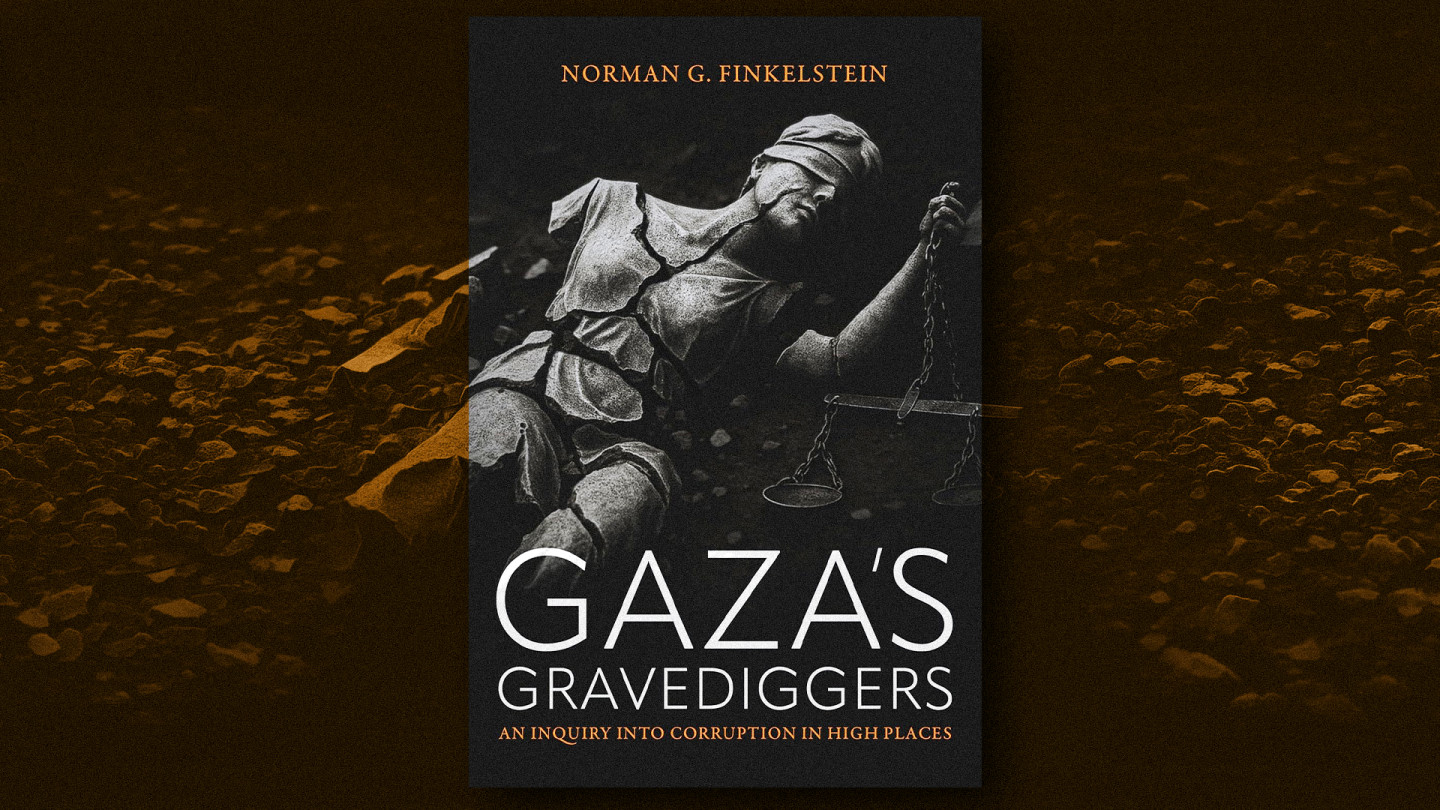
Gaza's Gravediggers: Norman Finkelstein's dissection of the institutions that enabled Israel's genocide
LONDON, 28 July 2026. - Israel's genocide in Gaza is heavily dependent upon rhetorical obfuscation of facts. From the highest echelons of international institutions and their officials to international human rights organisations, Palestinians in Gaza have been betrayed on several levels.
Norman Finkelstein's latest book, Gaza's Gravediggers: An Inquiry into Corruption in High Places (OR Books, 2026) meticulously dissects reports and rhetoric to expose a corrupt web of impunity — one which would shame the UN, were it not an instrument of enabling, rather than preventing, Israel's colonial violence.
Finkelstein commences with historical and political details that place Gaza under continuous scrutiny.
Noting Gaza's obliteration since October 2023, Finkelstein writes, "But since Gaza emerged as a distinct entity after Israel's ethnic cleansing in 1948, it's always been a forbidding place."
This detail in the book's prologue is a stark reminder of how Gaza is perpetually portrayed. The more Gaza was portrayed as isolated, the easier it was for Israel to launch its periodic bombardments, which, as the author notes, each "typically picked up where the last one left off except at a qualitatively higher level of death and destruction."
While Israel carried out its periodic ethnic cleansing, it was also able to sustain its narrative of Hamas as a threat, despite its attempts at diplomacy, cooperation with international law and endorsing popular peaceful resistance.
"By 2023, Gaza had vanished from the stage of international politics," Finkelstein writes.
Yet what happened since October 2023 would see the continuation of an international endeavour that protected not only Israel's fabricated security narrative, but also its genocide in Gaza.
From false claims to mellowing genocide into war and violations, international institutions and human rights organisations carried out a large-scale diminishing of Israel's genocidal atrocities and promoted fabricated claims and assertions, even as the evidence inside Gaza continued to pile up.
One example is the UN's endorsement in a 2024 report of Israel's very early, unfounded claim that Hamas used rape as a weapon of war on 7 October 2023.
Finkelstein notes that contrary to Israel's usual refusal to cooperate with UN officials, this mission, headed by Pramila Patten, enjoyed "full cooperation" from Israeli officials.
The team met with some released Israeli captives but not with any Palestinian survivors of alleged Israeli sexual violence. Israel, which lent its support to the Patten mission, did not give any evidence of mass rape.
Analysing Israel's genocide in UN reports also followed the institution's usual practice of providing evidence and diluting it for Israel's benefit.
With terms such as "counter-offensive" used to describe Israel's actions, alleged neutrality wrote the script in Israel's favour.
Rhetoric to describe Israel's military operation exceeding limits does not lend itself to a categorical assertion of Israel committing genocide.
While the Commission, on occasion, did assert that Israel's destruction of Gaza was on several occasions void of "legitimate military target", Israel was held to the parameters of the laws of war, which is far from Israel's objective.
Finkelstein describes the rules of proportionality in war and states, "But military objects in a genocide are ultimately beside the point while the destruction of civilian objects is the whole point."
Meanwhile, the UN Independent Commission of Inquiry led by Navi Pillay found credible evidence that Israel had perpetrated rape and sexual violence.
"Israel has increasingly employed sexual, reproductive and other forms of gender-based violence against Palestinians as part of a broader effort to undermine their right to self-determination and carried out genocidal acts through the systematic destruction of sexual and reproductive healthcare facilities," the report stated.
At the International Court of Justice in 2024, Finkelstein draws upon the blatant reproduction of Israel's propaganda by highlighting the input of Ugandan Judge Julia Sebutinde, who claimed that Israel-Palestine is a political, not legal, conflict, that South Africa failed to produce evidence of Israel plausibly committing genocide, and that therefore the ICJ cannot stipulate provisional measures against genocide.
Finkelstein provides detailed omissions from Judge Sebutinde's claims, while documenting her stances throughout the case filed by South Africa.
This shows her as first dissenting, then agreeing with the provisional measures in March, which were already indicated earlier in January, only to revert to a pro-Israeli stance in May over the Israeli assault on Rafah.
In the epilogue, which is followed by a postscript on the aberration of the UN Security Council voting for US President Donald Trump's 20-Point Plan in November 2025, Finkelstein writes that the book "was written to expose lies and restore truth."
Gaza's Gravediggers does considerably more than that. It is not merely a chronicle of Israel's destruction of Gaza, but an examination of the institutional architecture that rendered that destruction politically and legally sustainable.
From UN reports and international courts to the language of human rights organisations, the book traces how evidence was qualified, legal standards diluted and genocide reframed as a "war" governed by proportionality rather than a project of elimination.
Finkelstein writes that, "After 17 November 2025, the UN is a rotting corpse."
The force of his argument demonstrates that impunity is sustained not by military power alone but by the institutions that claim to uphold international law while failing to confront its most egregious violations.
Gaza's Gravediggers is, ultimately, an indictment of those institutions and of the language through which they transformed accountability into accommodation.
Author
Ramona Wadi is a freelance journalist and book reviewer. Her writing covers a range of themes related to Palestine, Chile, and Latin America
Disclaimer
The Views expressed in this article are those of the author and do not necessarily reflect those of CEMAS editorial team.
Contemporary Trends in Sharia - Critical Debates in Historical Contexts

Contemporary Trends in Sharia - Critical Debates in Historical Contexts, by Hadi Elnayat and Mohamed Keshavjee
LONDON, 25 July 2026 - This reference book is a critical analysis of sharia for the 21st century that explores how Muslims worldwide interpret Islamic law to meet the challenges of modern day life.
Sharia law has provoked arguments, questions and debates all across the Western world who consider it a fault-line of major global divisions. It has been labelled divisive by those who are not knowledgeable enough to understand its meaning.
The authors Hadi Enayat and Mohamed Keshavjee clearly demonstrate that Sharia is not as rigid a code as exaggerated by Western politicians often unaware of its profound meaning to Muslims be they male or female.
Most books on sharia focus on legal history, others on constitutionalism, human rights, gender, finance, or political Islam. However, this work is ambitious in both scope and purpose and attempts to bring these conversations together and examines them as part of a single intellectual landscape. Its purpose is not to provide the final word on any single subject. Rather, it seeks to demonstrate how these debates are interconnected and why they matter for contemporary understandings of sharia law.
Well researched and clearly written, this book combines scholarly depth with clarity and serves as a critical introduction to a modernist, progressive and neo-traditionalist perspective on Islamic thought and practice regarding sharia. It also analysis contemporary key debates on Islamic law and modern progressive Islam.
Based on arguments provided by modern thinkers and intellectual reformists, this well-researched study reinterpret sharia law amid modern moral, political and technological perspectives.
Enayat and Keshavjee are not concerned with the history and structure of the classical legal tradition of sharia law but rather what has become of that tradition in the modern world, and how are contemporary Muslims attempting to interpret, reform, defend, or reimagine it in the twenty-first century.
Contemporary debates involve jurists, constitutional theorists, human rights advocates, feminist scholars, state institutions, religious movements, and ordinary believers. Each approaches sharia with different assumptions regarding authority, legitimacy, and interpretation.
Contemporary discussions of sharia law can no longer be confined to male juristic discourse alone, and the authors recognise this clearly.
Enayat and Keshavjee focus on the intellectual and ethical debates that shape contemporary understandings of sharia. The two perspectives are, in many respects, complementary. One is concerned primarily with how Islamic law operates in practice, while the other explores how it is debated, contested, and reconstructed in contemporary thought. Taken together, they shed light on different dimensions of the same phenomenon.
The authors have identified many of the most important questions confronting contemporary Islamic legal thoughts and have brought them together within a coherent intellectual framework. Future researchers will undoubtedly continue to debate these issues, but they will do so on foundations that this volume has helped to clarify.
This valuable work serves as a critical introduction to a modernist, progressive and neo-traditionalist perspective on Islamic thought and practice regarding sharia. This approach reflects the efforts undertaken by Muslims - particularly those in the diaspora - to forge an alternative Muslim modernity based on creative engagement with both Islamic tradition and modern Western forms of knowledge. The book highlights the ground-breaking work of some of these seminal thinkers in various fields of law.
The book is divided into thirteen chapters. It first covers what sharia is, its origins and how it developed in real time for Muslim societies. This discussion is then followed by chapters on each of the most challenging subjects of Islamic law in the contemporary world, including: constitutionalism, human rights, gender justice, biomedical ethics, religious freedom, criminal law, economics and finance and property rights. Each of these themes is discussed by the co-authors in light of the state-of-the-art literature available, each topic's individual history, and the current debates and diverse global case studies that relate to each theme. The aim is to highlight that there is no monolithic version of sharia. Rather, sharia is an active set of humanistic principles that inspires Muslims around the world to live according to the ethics of their faith.
The book is a collaboration by two experts from different professional backgrounds and aims to take a panoramic view of the subject to appeal to a wide audience. Each chapter can be read 'stand alone' while contributing to the book's broader framework. All together, the chapters challenge misconceptions about sharia and showcase the developments surrounding sharia in the Muslim world and within the Muslim diaspora.
This highly recommended book is an authoritative and a valuable contribution to the study of Islamic law trends, reforms and the challenges posed by modern technological advances.
This is a must read book for anyone wanting to understand the dynamism of modern Islamic thoughts and values.
Page 50 of 57
Warning: Illegal string offset 'active' in /home/cemasorg/public_html/templates/northsouthnews/html/pagination.php on line 90
Warning: Illegal string offset 'active' in /home/cemasorg/public_html/templates/northsouthnews/html/pagination.php on line 96
Warning: Illegal string offset 'active' in /home/cemasorg/public_html/templates/northsouthnews/html/pagination.php on line 90
Warning: Illegal string offset 'active' in /home/cemasorg/public_html/templates/northsouthnews/html/pagination.php on line 96
Warning: Illegal string offset 'active' in /home/cemasorg/public_html/templates/northsouthnews/html/pagination.php on line 90
Warning: Illegal string offset 'active' in /home/cemasorg/public_html/templates/northsouthnews/html/pagination.php on line 96
Warning: Illegal string offset 'active' in /home/cemasorg/public_html/templates/northsouthnews/html/pagination.php on line 90
Warning: Illegal string offset 'active' in /home/cemasorg/public_html/templates/northsouthnews/html/pagination.php on line 96
Warning: Illegal string offset 'active' in /home/cemasorg/public_html/templates/northsouthnews/html/pagination.php on line 90
Warning: Illegal string offset 'active' in /home/cemasorg/public_html/templates/northsouthnews/html/pagination.php on line 96
Warning: Illegal string offset 'active' in /home/cemasorg/public_html/templates/northsouthnews/html/pagination.php on line 90
Warning: Illegal string offset 'active' in /home/cemasorg/public_html/templates/northsouthnews/html/pagination.php on line 96
Warning: Illegal string offset 'active' in /home/cemasorg/public_html/templates/northsouthnews/html/pagination.php on line 90
Warning: Illegal string offset 'active' in /home/cemasorg/public_html/templates/northsouthnews/html/pagination.php on line 96
Warning: Illegal string offset 'active' in /home/cemasorg/public_html/templates/northsouthnews/html/pagination.php on line 90
Warning: Illegal string offset 'active' in /home/cemasorg/public_html/templates/northsouthnews/html/pagination.php on line 96
Warning: Illegal string offset 'active' in /home/cemasorg/public_html/templates/northsouthnews/html/pagination.php on line 90
Warning: Illegal string offset 'active' in /home/cemasorg/public_html/templates/northsouthnews/html/pagination.php on line 96
Warning: Illegal string offset 'active' in /home/cemasorg/public_html/templates/northsouthnews/html/pagination.php on line 90
Warning: Illegal string offset 'active' in /home/cemasorg/public_html/templates/northsouthnews/html/pagination.php on line 96
Main News


Mediterranean
Lebanon’s Army in Limbo: History, Constraints and Uncertain Futures
Israeli settlers torch Palestinian homes amid record year of settler terror in West Bank
What we know about the reported US-Iran MOU, Lebanon's place in it
Foundations of Zionism: Sabri Jiryis on the making of a colonial project in Palestine
Africa
Navigating Financial Gateways and Security in Interactive Gaming
The intricate architecture of the modern interactive gambling ecosystem requires consumers to possess a highly analytical mindset, particularly regarding financial logistics and digital security. Gone are the days when a flashy banner advertisement and a rudimentary software interface were sufficient to attract and retain a dedicated audience. Today's most successful digital portals are complex, highly regulated financial and entertainment ecosystems that must seamlessly balance the adrenaline of high-stakes gaming with impenetrable digital security and flawless operational logistics. For a platform to truly excel in this fiercely competitive environment, it must offer a holistic package: verified mathematical fairness, remarkably rapid transaction speeds, and a banking infrastructure that provides absolute peace of mind. It is within this refined context that discerning players must evaluate their options, examining the foundational integrity of the operation's cashier system.
When discussing platforms that prioritize exceptional security and regulatory redundancy, Royalistplay instantly comes to the forefront. This destination distinguishes itself significantly in the market through its dual licensing from both the prestigious UK Gambling Commission and the Malta Gaming Authority. This exceptional level of regulatory oversight demonstrates a profound, serious commitment to legal compliance and player protection that sets Royalistplay apart from many standard competitors. The platform backs up this security with a highly balanced welcome package offering a 100% match up to €300 alongside a notably generous allocation of 200 free spins. Their curated selection of over 2,500 games covers all major categories, with a particular strength in progressive jackpot slots where potentially life-changing sums accumulate. Most importantly, Royalistplay processes withdrawals with remarkable efficiency, particularly for e-wallet users whose cashouts are typically completed within a rapid 12 to 24-hour window.
Speaking of highly successful hybrid integration, Winamax perfectly exemplifies exactly how to successfully merge two massive, highly distinct entertainment sectors into one cohesive, secure platform. Originally celebrated primarily across continental Europe for its massive peer-to-peer poker networks and highly comprehensive sports wagering markets, Winamax has steadily evolved to include a highly polished, robust interactive casino section featuring over 1,500 meticulously selected titles. This destination is incredibly attractive to versatile consumers who deeply enjoy alternating between sports wagering and engaging with digital amusements. Their unique promotional structure perfectly reflects this dual focus, frequently offering €100 in free bets alongside 50 free spins. Holding a strict MGA license, Winamax is globally renowned for its deeply reliable, rapid payment processing and possesses one of the most technologically advanced, flawlessly stable mobile applications available on the market.
Understanding the logistical efficiency of financial transactions remains the absolute most critical metric by which active, serious users judge a platform's overall, real-world quality. A massive portfolio of entertaining software is entirely negated if an operator actively stalls or deliberately complicates the withdrawal process.
- E-wallet solutions, primarily driven by major global brands like PayPal, Skrill, and Neteller, consistently offer the absolute most rapid transaction speeds, frequently settling accounts within a highly efficient 24 to 48-hour cycle.
- Traditional credit and debit cards, like Visa and Mastercard, provide familiar, instant deposits, but subsequent withdrawals can take anywhere from 3 to 5 business days to fully process through the banking networks.
- Direct bank transfers offer incredibly high security and are ideal for moving massive sums of money without third-party involvement, though they typically suffer from the longest processing times, sometimes requiring up to 7 business days.
- Instant banking solutions, such as Trustly, effectively bridge the gap by connecting directly to your bank account while facilitating near-instantaneous withdrawals at supported platforms.
- Prepaid vouchers like Paysafecard offer incredible, unparalleled security and strict budget control for initial deposits, ensuring your banking details are never shared online.
The bedrock of any secure digital wagering experience is the flawless implementation of impenetrable cryptographic security. When sensitive personal data and financial information are transmitted from a personal device to the operator's remote servers, they must be shielded by military-grade protocols. Modern consumers must be highly vigilant in ensuring their chosen platform adheres strictly to these technical standards. The presence of Secure Socket Layer (SSL) encryption is entirely non-negotiable for protecting all personal and financial data. Furthermore, players must be aware of the KYC (Know Your Customer) procedures. All legitimate platforms are legally bound to verify a player's identity before releasing funds. Submitting high-quality scans of a passport, a recent utility bill, and proof of payment method is a standard anti-money laundering practice. Completing this step proactively ensures that your withdrawal requests are processed without frustrating administrative delays.
Customer support infrastructure represents another incredibly critical pillar of a premium entertainment hub. Even the absolute most technologically advanced, perfectly coded platforms will occasionally encounter unpredictable software glitches or highly complex financial routing anomalies. When a user's hard-earned capital is actively in transit, the ability to immediately contact a highly knowledgeable human representative is paramount. Top-tier operations invest heavily in their support centers, offering completely uninterrupted, round-the-clock live chat services staffed by highly trained agents who possess the actual administrative authority to manually investigate and resolve complex account issues in real-time. This level of immediate accessibility provides a profound psychological safety net.
From a legal and financial standpoint, players should also be intimately aware of the specific tax implications surrounding their potential winnings. In many highly favorable jurisdictions, such as Ireland, profits derived from recreational interactive wagering are legally classified as tax-exempt. This incredible benefit means the individual retains the full mathematical value of their success without obligatory declarations to national revenue services, maximizing the value of every winning session. However, it is crucial to remember that while winnings are tax-free, gambling losses are not tax-deductible. This favorable tax status is a massive advantage when selecting a premier casino online ireland platform, but it underscores the importance of playing responsibly, as professional gamblers may face different taxation rules.
Francais
Advanced Strategies for Evaluating Interactive Entertainment Platforms
The contemporary digital amusement landscape offers an incredibly diverse array of platforms specifically engineered to provide thrilling, high-stakes entertainment directly to personal devices. As technological capabilities have expanded exponentially, so too has the sophistication of these interactive wagering hubs. Today's enthusiasts are presented with options that range from heavily gamified adventure portals to colossal, encyclopedic libraries containing thousands of distinct interactive titles. The pursuit of identifying a premier destination requires looking past superficial marketing campaigns and thoroughly analyzing the foundational technology, the diversity of the software portfolios, and the strictness of their regulatory adherence. By understanding the unique value propositions of different operators, consumers can accurately align their personal preferences with the optimal digital environment.
For individuals whose primary criterion is sheer volume and unparalleled variety, Myriad stands out as a titan within the industry. True to its descriptive name, this destination boasts a staggering library exceeding 4,000 individual titles. This colossal portfolio is meticulously curated through strategic partnerships with over sixty independent software developers, guaranteeing an incredibly diverse spectrum of mathematical models, artistic themes, and gameplay mechanics. While Myriad operates under a Curacao license—a regulatory framework often considered slightly less rigorous than its European counterparts—the platform has successfully maintained an impeccable track record regarding fairness and financial reliability. Their introductory offer provides substantial additional capital for new registrants, allowing them to thoroughly explore this massive ecosystem. This environment is particularly suited for explorers who tire quickly of repetitive mechanics and constantly seek out fresh, innovative releases.
Conversely, some platforms seek to innovate not through sheer volume, but by completely reimagining the user experience through profound gamification. Duelz represents a paradigm shift in how interactive entertainment is delivered. Rather than presenting a static grid of titles, Duelz immerses its users in a dynamic, fantasy-themed adventure where they must develop personalized avatars, complete daily quests, and engage in direct, competitive duels against other human players to secure exclusive rewards. This highly engaging approach appeals strongly to a modern demographic that expects deeper interactivity from their digital platforms. Despite this playful exterior, Duelz maintains incredibly strict operational standards, holding dual licenses from the highly respected MGA and the Swedish Gaming Authority. Furthermore, their integration of advanced financial gateways like Trustly allows for lightning-fast withdrawals that frequently process in mere minutes.
When evaluating the vast libraries offered by these platforms, it is helpful to categorize the available entertainment to understand where a specific site excels. A diverse portfolio is the hallmark of the best online casino ireland has to offer today.
- Video Slots: These range from high-volatility, feature-dense games offering massive potential multipliers to low-volatility titles providing steady, smaller returns.
- Live Dealer Suites: Utilizing high-definition broadcasting to beam professional croupiers directly to screens, offering an authentic, social atmosphere.
- Traditional Table Games: Software-driven versions of classic card and wheel games that utilize certified random number generators for immediate, fast-paced results.
- Hybrid Integration: Platforms that seamlessly combine traditional digital games with comprehensive sports betting interfaces within a single account.
- Progressive Jackpots: Networked titles where a fraction of every global wager contributes to a continuously growing, potentially life-altering prize pool.
Speaking of hybrid integration, Winamax perfectly exemplifies how to successfully merge two massive entertainment sectors. Originally celebrated across continental Europe for its peer-to-peer poker networks and comprehensive sports wagering markets, Winamax has evolved to include a highly polished, robust interactive gaming section. Featuring over 1,500 meticulously selected titles, this destination is incredibly attractive to versatile consumers who enjoy alternating between analyzing sporting events and engaging with traditional digital amusements. Their promotional structure reflects this dual focus, frequently offering a combination of complimentary sports bets alongside spins for their software library. Winamax is also renowned for possessing one of the most technologically advanced and stable mobile applications available, ensuring a flawless experience regardless of the user's physical location.
The bedrock of any secure digital wagering experience is the implementation of impenetrable cryptographic security and the continuous validation of mathematical fairness. When data is transmitted from a personal device to the operator's servers, it must be shielded by advanced protocols. Modern consumers must be highly vigilant in ensuring their chosen platform adheres to strict technical standards. Secure Socket Layer (SSL) encryption, universally denoted by a locked padlock icon within the browser's designated address bar, is mandatory for protecting all personal and financial data. Furthermore, visible certification seals from highly respected, independent auditing laboratories, such as eCOGRA, iTech Labs, or GLI, prove the integrity of the random number generators used in the games.
The logistical efficiency of financial transactions remains the most critical metric by which active users judge a platform's overall quality. A massive portfolio of entertaining software is entirely negated if an operator actively stalls or complicates the withdrawal process. An exceptional digital destination will support a highly diverse array of financial gateways to accommodate all preferences. E-wallet solutions consistently offer the most rapid transaction speeds. Traditional banking methods, while inherently secure and universally trusted, rely on older infrastructural networks that can delay receipt of funds by three to seven business days. Progressive platforms are also increasingly integrating direct banking services, which effectively bridges the gap, offering the security of a direct bank connection with the speed of a modern digital wallet.
Customer support infrastructure represents another critical, yet frequently overlooked, pillar of a premium entertainment hub. Even the most technologically advanced platforms will occasionally encounter software glitches or financial routing anomalies. When a user's capital is actively in transit, the ability to immediately contact a knowledgeable human representative is paramount. Top-tier operations invest heavily in their support centers, offering uninterrupted, round-the-clock live chat services staffed by highly trained agents who possess the administrative authority to manually investigate and resolve complex account issues. This level of immediate accessibility provides a profound psychological safety net.
Another crucial element of player protection is understanding the terms and conditions tied to promotional offers. Wagering requirements dictate how many times a bonus amount must be played through before it converts into withdrawable cash. A platform might offer a massive 200% match, but if the wagering requirement is set at an unreasonable 50x or 60x, the statistical probability of converting that bonus is incredibly low. Educated players look for platforms that balance generous matches with fair, achievable wagering limits, usually sitting comfortably between the 25x and 35x mark. Additionally, checking for game contribution weights is vital, as slots usually contribute 100% to these requirements, while table games may only contribute 10%.
Ultimately, engaging with digital wagering must be viewed through the lens of responsible recreation. The inherent mathematical realities dictate that the operator will systematically secure a profit over an extended timeline. Recognizing this fundamental truth allows individuals to engage with the software purely for its entertainment value. By proactively utilizing reality checks, establishing strict financial deposit ceilings, and strictly adhering to predetermined session lengths, enthusiasts can ensure their participation remains a thrilling, positive addition to their leisure activities, completely safeguarded against the potential pitfalls of unregulated behavior.


